Jones Family Of Companies Saddened To Announce The Passing Of Former CEO Ralph Jones, Jr.

HUMBOLDT, Tenn. — June 8, 2020 — Jones Family of Companies is saddened to announce the passing of Ralph Jones, Jr. He passed away peacefully at his home in Humboldt, Tenn., on June 4, 2020, at age 95. Before his tenure as President, CEO, and Chairman of the Jones Family of Companies, Jones enlisted and served in the United States Army during WWII. He was honorably discharged in 1945 after receiving the Combat Infantry Badge, Bronze Star, Purple Heart, European Theatre Ribbon with four Battle Stars, and the Presidential Unit Citation. After returning home, he enrolled in the Textile Engineering program at North Carolina State University and obtained his engineering degree in 1949. Jones joined his father at Jones Family of Companies and became the third generation of his family in textiles.

Outside of his commitment to work, Jones was a devoted husband and father. In 1947, he married the love of his life, Bettie Jean “BJ” Graves. She preceded him in death in 2016 after 69 years of marriage. Together, they had four children, 11 grandchildren, and 13 great grandchildren.

Beyond his work and his family, the community was of great importance to Jones. His service included: the Humboldt City School Board where he was named “Tennessee Outstanding School Board Member” and served as both chair and member; President of the Humboldt Chamber of Commerce; President of the Humboldt Jaycee’s Club; coached Humboldt Little League (17 years); coached the Humboldt PeeWee Basketball League (12 years). For his work within youth sports and the Humboldt School System, the football field house at Humboldt High School was named in his honor and he was inducted into the Gibson County Sports Hall of Fame. The Exchange Club also recognized his community service by bestowing on him the “Book of Golden Deeds.”

He was forever thankful for the richness of life he experienced in his hometown. Jones’ actions spoke clearly of his faith in God, love of Country, love of family, and love for his community.

Posted June 8, 2020

Source: Jones Family of Companies

HeiQ Viroblock Tested Successfully Against Virus That Causes COVID-19

ZURICH — June 8, 2020 — HeiQ Viroblock NPJ03 is among the first textile technologies in the world to be proven effective against SARS-CoV-2 in the laboratory. Tests conducted by Swiss textile innovator HeiQ with the Peter Doherty Institute for Infection and Immunity in Melbourne, Australia (Doherty Institute) showed that treated fabric achieved 99.99% reduction of the virus.

HeiQ Viroblock NPJ03 is a textile treatment for industrial use, designed to provide textiles with antiviral and antibacterial properties. The combination of silver antimicrobial technology and vesicle technology rapidly destroy enveloped viruses including coronaviruses. It has previously been tested against coronavirus 229E, another strain of virus in the Coronavirus family.

The latest testing with SARS-CoV-2 virus was conducted by researchers at the Doherty Institute, a joint venture between the University of Melbourne and The Royal Melbourne Hospital, an internationally renowned institution combining research, teaching, public health and reference laboratory services, diagnostic services and clinical care into infectious diseases and immunity.

The research project involved a disinfection test protocol that simulated the real-life interaction of small aerosol droplets contaminating clothing. A known concentration of SARS-CoV-2 virus was contacted with the sample fabric for 30 minutes followed by measurement of remaining infectious SARS-CoV-2 viruses

The fabric sample treated with HeiQ Viroblock NPJ03 had no infective viruses left after 30 minutes. The result indicated a SARS-CoV-2 virus reduction of 99.99% relative to the inoculum control.

Carlo Centonze, Swiss co-founder and CEO of HeiQ Group, stated: “The confirmation of antiviral activity of HeiQ Viroblock against SARS-CoV-2 is an important milestone. This data forms part of our ongoing efforts to help provide textiles with greater levels of protection against viruses and contribute to efforts towards mitigation of the global pandemic.”

“HeiQ appreciates the work of the Doherty Institute in conducting these tests and the tremendous efforts of their researchers in contributing to the global understanding of the COVID-19 pandemic,” said Australian Dr. Murray Height, co-founder and chief science officer of HeiQ Group.

Dr. Julie McAuley, senior research officer at the Doherty Institute, stated, “A key part of the Institute’s current COVID-19 research focus is on testing different ways to achieve an antiviral effect against the SARS-CoV-2 virus.”

“Testing the action of different disinfectants and surface treatments is one way that our research can help provide insights towards helping to stop the pandemic,” Dr. McAuley added.

Posted June 8, 2020

Source: HeiQ Materials AG

Magellan Aerospace Orders Airborne’s Most Advanced Automated Kitting System To Date

THE HAGUE — June 8, 2020 — Magellan Aerospace, a global enterprise providing integrated products to the aerospace industry worldwide, has awarded the contract for the delivery of an integrated Automated Kitting solution to Airborne. The delivery to Magellan Aerospace in Winnipeg, Canada, marks the starting point of Airborne’s global expansion into the North American market. The solution is tailored to the specific requirements of Magellan Aerospace and will support their goal to reduce material waste and increase productivity and repeatability through automation.

Airborne’s Automated Kitting solution increases cutting and kitting productivity by increasing capacity, reducing the amount of manual labor, and minimizing material scrap. It also enables a flexible and digital workflow. The translation from nesting files to machine controls and sorting optimization is fully automated by Airborne’s proprietary algorithm on-the-fly. At any moment the production manager can change the ply nest and the system follows, no programming is needed. The system also ensures full digital tracking of the sorting and sequencing process, thus eliminating kitting mistakes.

The Automated Kitting solution is scheduled to be installed at Magellan Aerospace’s Winnipeg facility in early 2021. A number of customized features tailored to Magellan’s unique requirements will enable flexible use and further increase productivity. Initially, the kitting solution will be used to support efficient and cost effective manufacturing of composite horizontal tail assemblies for the Lockheed Martin F35 fighter aircraft. Airborne’s Automated Kitting solution is ideally suited to be tailored to the specific needs and material requirements of any production program for the aerospace industry, or other industrial applications.

Jeff Pastula, director, business procurement and IT, Magellan Aerospace, said: “Working with the knowledgeable team at Airborne to select and customize the automated cloth cutter and kitting solution for Magellan’s Advanced Composite Manufacturing Centre was ideal. Their thorough understanding of the requirements for our program enabled us to come up with an innovative solution that we are looking forward to adopting into our process.”

Arno van Mourik, CEO Airborne, added: “We are thrilled Magellan has chosen to invest in Airborne’s integrated Automated Kitting solution as the next step in their strategy enabling their customers to meet their goals with regard to improving their time-to-market as well as their production schemes. This is exactly our vision on how to rise up to the enormous challenges the aerospace industry is facing.”

Next step in advanced composites manufacturing

Magellan Aerospace is dedicated to a continuous investment in advanced technologies for the manufacturing of aero structures components and assemblies. Recently, Magellan has invested in an advanced composites manufacturing and assembly centre that houses multiple best-in-class technologies in a single, environmentally controlled facility. Airborne’s integrated Automated Kitting solution will help Magellan to increase its shop floor productivity, specifically with regard to the ply cutting and kitting process.

Posted June 8, 2020

Source: Magellan Aerospace Corp.

Face Masks Constructed With AKAS Textiles Fabrics Outperforms N95 Respirator In University Test

BENSALEM, Pa. — June 5, 2020 — A new study was done on the “Effectiveness of Common Fabrics to Block Aqueous Aerosols of Virus-like Nanoparticles.” The study shows that in an aqueous media under positive pressure of 20 Kilo Pascal, stimulating the sneeze/cough, found that the top performer Face Mask, was one constructed using fabrics manufactured by AKAS Textiles, a Pennsylvania-based textile manufacturer. The study by Northeastern University’s Department of Chemical Engineering tested more than 70 different common fabric combinations and masks, including the N95 respirator, for their ability to block the transmission of virus-like nanoparticles.

The mask with the best filtration was made of layers of AKAS ProCool® Performance Fabrics combined with Zorb® 3D Stay Dry Dimple fabric. The combination of these fabrics tested 72 percent more effective than the N95 respirator.

The study was published recently in ACS Nano, a monthly, peer-reviewed scientific journal published by the American Chemical Society. The authors wrote: “Layered systems of commonly available fabric materials can be used by the public and healthcare providers in face masks to reduce the risk of inhaling viruses with protection that is about equivalent to or better than the filtration and adsorption offered by 5-layer N95 respirators. The masks were evaluated with steady-state, forced convection air flux with pulsed aerosols that simulate forceful respiration”. The study was done at 14 liters per minute air flow, which is more than twice the human ventilation, at rest.

ProCool® Performance Fabrics are two-sided fabrics which are inter-knitted to provide filtration. The special wicking fibers in it help in managing the moisture. Zorb® 3D Stay Dry Dimple is made with surface layers of wicking Stay Dry fibers with an innermost core of dense cellulosic fibers, which work as the filter. This unique, 3D, in-house engineered pattern provides great filtration and keeps the mouth area dry and fresh.

“In February we offered our customers some guidance on layering fabrics for face mask, using our knowledge of fabric engineering, that leveraged the hydrophilic and hydrophobic characteristics of various fabric combinations,” said Wazoodle CEO Archana Sharma. “It is very gratifying to know that our assumptions and recommendations were on the right track, and that the performance of our fabrics can help keep people safe.”

Posted June 8, 2020

Source: AKAS Textiles & Wazoodle

NRF: Pandemic’s Impact On Imports Easing, But Numbers Are Still Below Last Year

WASHINGTON — June 8, 2020 — The impact of COVID-19 at major U.S. retail container ports appears to be easing slightly, with projected imports remaining below last year’s levels but not as much as previously forecast, according to the Global Port Tracker report released today by the National Retail Federation and Hackett Associates.

“The numbers we’re seeing are still below last year, but are better than what we expected a month ago,” NRF Vice President for Supply Chain and Customs Policy Jonathan Gold said. “It may still be too soon to say but we’ll take that as a sign that the situation could be slowly starting to improve. Consumers want to get back to shopping, and as more people get back to work, retailers want to be sure their shelves are stocked.”

“Imports are erratic, with one month up and the next down,” Hackett Associates Founder Ben Hackett said. “Getting 40 million people back to work will take time, especially with many fearful of catching the virus and staying home. That makes a rapid return to an economic boom unlikely.”

U.S. ports covered by Global Port Tracker handled 1.61 million Twenty-Foot Equivalent Units in April, the latest month for which after-the-fact numbers are available. That was down 7.8 percent from a year earlier, but up 17 percent from a four-year low seen in March and significantly better than the 1.51 million TEU previously expected. A TEU is one 20-foot-long cargo container or its equivalent.

May was estimated at 1.58 million TEU, down 14.6 percent year-over-year, but up from the 1.47 million TEU forecast a month ago. June is forecast at 1.56 million TEU, down 12.9 percent from last year but up from the previous forecast of 1.46 million TEU, while July is forecast at 1.62 million TEU, down 17.4 percent from last year but up from 1.58 million TEU previously expected. August is forecast at 1.71 million TEU, just below the 1.73 million TEU expected a month ago and down 12.9 percent from last year, while September is forecast at 1.66 million TEU, slightly lower than the 1.7 million TEU expected a month ago and down 11.3 percent from last year. October, which was not previously forecast, is expected to total 1.73 million TEU, down 7.9 percent from last year. That would mark the first time since April that the year-over-year decline would drop from double digits to single digits.

Imports for the six-month period from April through September are expected to total 9.74 million TEU, a 3 percent improvement from the 9.46 million TEU expected a month ago.

The first half of 2020 is forecast to total 9.46 million TEU, down 10 percent from the same period last year but better than the 9.15 million TEU expected a month ago. Before the extent of the pandemic was known, the first half of the year was forecast at 10.47 million TEU.

Imports during 2019 totaled 21.6 million TEU, a 0.8 percent decrease from 2018 amid the trade war with China but still the second-highest year on record.

Global Port Tracker, which is produced for NRF by the consulting firm Hackett Associates, provides historical data and forecasts for the U.S. ports of Los Angeles/Long Beach, Oakland, Seattle and Tacoma on the West Coast; New York/New Jersey, Port of Virginia, Charleston, Savannah, Port Everglades, Miami and Jacksonville on the East Coast, and Houston on the Gulf Coast. The report is free to NRF retail members, and subscription information is available at NRF.com/PortTracker.

Posted June 8, 2020

Source: National Retail Federation (NRF)

INDA Presents Critical Metrics On North American Nonwovens Supply & Trade At Two Upcoming Member Webinars

CARY, N.C. — June 8, 2020 — Key highlights and insights from the seventh edition of the INDA North American Supply Report will be revealed exclusively, at no cost, to the association’s members at two upcoming webinars.

The new INDA report found that North American nonwoven production exceeded capacity increases for the third year, while nonwoven material trade decreased, primarily due to declines with China.

Both webinars will start at 2 p.m. and will focus on the following key results:

  • June 23 – Capacity and production supply-side developments on the nonwoven industry’s improving operating rates and crucial supply/demand balance as the market entered the pandemic
  • June 24 – Highlights of trade, imports and exports of nonwoven material with a focus on the decline from China and an increase from the rest of the world

The programs will include a 25-minute live webinar presentation with 25 minutes dedicated to answering members’ online chat questions in real-time. For registration information, visit: https://www.inda.org/inda-webinars/

The report is based on extensive research, producer surveys and interviews with industry leaders, including INDA members and nonmembers. It provides an overall view of North American supply, including the key metrics of capacity, production and operating rates in addition to regional trade.

“INDA’s North American Supply Report furthers our objective of providing valuable data and actionable industry information to enhance decision-making,” said Brad Kalil, director of Market Intelligence & Economic Insights. “As always, the increasing participation of nonwoven producers providing their insights and results makes our success possible.”

In the 2017 report, INDA introduced production by end-use market. For the 2019 report, production by raw material usage has been added. The 70-page report contains 34 figures and 11 tables.

Along with the quarterly INDA Market Pulse and monthly Price Trends Summary, the annual report is provided to the 365 INDA member companies and associates as part of a member’s only benefit. The data gathered for this report serves as the foundation for the biannual North American Nonwovens Industry Outlook, which will be available for purchase this fall.

A sample of findings from this year’s Supply Report include:

  • In 2019, North American nonwoven capacity increased to 5.479 million tons, a net increase of only 0.9 percent (51 thousand tons) over 2018. This growth figure accounts for the addition of new lines and machine productivity increases as well as line closures to arrive at a net increase growth figure. In the last three years, 64 lines have come online and 23 lines have shut down. The majority of the new lines are producing engineered materials for transportation, home/office furnishings, and filtration markets.
  • North American imports and exports, in tonnage, decreased 3 percent and 18.6 percent, respectively, year-over-year, led by declines in trade with China. However, the trends of downward exports and upward imports continued. Over the last five years, exports have declined 7.7 percent annually and imports have increased 7.8 percent annually. Even with the significant shifts in North American trade dynamics, nonwovens tend to stay where they are produced, with the net trade balance (imports less exports) accounting for less than 5 percent of the region’s capacity.

Posted June 8, 2020

Source: INDA, the Association of the Nonwoven Fabrics Industry

Toray Composite Materials America Implements Operational Reductions And Restructuring

TACOMA, Wash. — June 5, 2020 — Toray Composite Materials America Inc. (CMA) is announcing a realignment of U.S. operations and a corresponding reduction in headcount to better position for an extended downturn in its commercial business streams.

CMA will immediately suspend operations in its Spartanburg, S.C., plant and significantly reduce capacity in its Tacoma, Wash., prepreg facility. These actions will result in a reduction of roughly 25 percent of the workforce across CMAs facilities in the United States.

“Decisions that directly impact our associates and their livelihood are never ones that we take casually,” said Dennis Frett, president and CEO. “But, these actions are absolutely necessary to reduce our costs and position the company for the future,” he added.

Due to COVID-19 and the corresponding collapse of global air travel, demand for passenger aircraft has been significantly reduced. Furthermore, global macro-economic conditions are reducing the demand for industrial products. “Considering industry analysts and recent actions by other aerospace companies, we see a three-to-five-year timeline until we return to a sales volume that resembles anything pre-pandemic,” says Timothy Kirk, vice president of Aerospace Sales.

These urgent actions will enable CMA to reduce its costs to partially mitigate the immediate downturn in business. Additionally, CMA will enhance its cooperation with business units in the United States to better meet customer expectations and adapt to a changing market.

Posted June 5, 2020

Source: Toray Composite Materials America

EcoBrite Linen Earns Hygienically Clean Healthcare Certification

ALEXANDRIA, Va. — June 5, 2020 — Ecobrite Linen, a full service linen and laundry service provider to long term care health facilities, recently achieved the Hygienically Clean Healthcare certification for its Skokie, Ill., plant. Hygienically Clean is the quantified, validated standard and measure for hygienically clean textiles in North America since 2011, and this certification reflects this laundry’s commitment to best management practices (BMPs) in laundering as verified by on-site inspection and its capability to produce hygienically clean textiles as quantified by ongoing microbial testing.

The Hygienically Clean Healthcare certification confirms the organization’s continuing dedication to infection prevention, compliance with recognized industry standards and processing healthcare textiles using BMPs as described in its quality assurance documentation, a focal point for Hygienically Clean inspectors’ evaluation. The independent, third-party inspection must also confirm essential evidence that:

  • Employees are properly trained and protected;
  • Managers understand regulatory requirements;
  • OSHA-compliant; and
  • Physical plant operates effectively.

To achieve certification initially, laundries pass three rounds of outcome-based microbial testing, indicating that their processes are producing Hygienically Clean Healthcare textiles and diminished presence of yeast, mold and harmful bacteria. They also must pass a facility inspection. To maintain their certification, they must pass quarterly testing to ensure that as laundry conditions change, such as water quality, textile fabric composition and wash chemistry, laundered product quality is consistently maintained. Re-inspection occurs every two to three years.

This process eliminates subjectivity by focusing on outcomes and results that verify textiles cleaned in these facilities meet appropriate hygienically clean standards and BMPs for hospitals, surgery centers, medical offices, nursing homes and other medical facilities.

Hygienically Clean Healthcare certification acknowledges laundries’ effectiveness in protecting healthcare operations by verifying quality control procedures in linen, uniform and facility services operations related to the handling of textiles containing blood and other potentially infectious materials.

Certified laundries use processes, chemicals and BMPs acknowledged by the federal Centers for Disease Control and Prevention (CDC), Centers for Medicare and Medicaid Services, Association for the Advancement of Medical Instrumentation, American National Standards Institute and others. Introduced in 2012, Hygienically Clean Healthcare brought to North America the international cleanliness standards for healthcare linens and garments used worldwide by the Certification Association for Professional Textile Services and the European Committee for Standardization.

Objective experts in epidemiology, infection control, nursing and other healthcare professions work with Hygienically Clean launderers to ensure the certification continues to enforce the highest standards for producing clean healthcare textiles.

“Congratulations to EcoBrite Linen on their certification,” said Joseph Ricci, TRSA president and CEO. “This achievement proves their commitment to infection prevention and that their laundry takes every step possible to prevent human illness.”

Posted June 5, 2020

Source: TRSA

Sensient Technologies Corp. To Sell Its Digital Ink Business To Sun Chemical And DIC Corp.

MORGES, Switzerland — June 5, 2020 — Sensient Technologies Corp. announced today that it has entered into a definitive agreement to sell 100 percent of its shares of Sensient Imaging Technologies and certain other assets related to the production of inks to Sun Chemical and its parent company, DIC Corp. The transaction is expected to be finalized in the second quarter of 2020.

Sensient Imaging Technologies S.A. has built a trusted brand that delivers innovative digital technology to its customers, setting the standard for digital inkjet printing. As a supplier of digital inks, Sensient has a reputation for high quality solutions that add value to customers around the world. Sensient’s experience in water-based solutions has resulted in innovations for a number of industrial markets and the ability to align these developments with Sun will further strengthen this proposition.

“As announced last year, the sale of the inkjet ink business will strengthen our focus on our core businesses,” said Paul Manning, Sensient’s chairman, president, and CEO. “We are pleased that we can transition the business to a buyer that is committed to the industry. Our service and quality commitments to our customers will be maintained, and we will work to ensure a seamless transition.”

Posted June 5, 2020

Source: Sensient Technologies

W+D/BICMA Develops Face Mask Line Capable Of Up To 1 Million Disposable Surgical Masks Per Day With A Lower Cost Mask Design

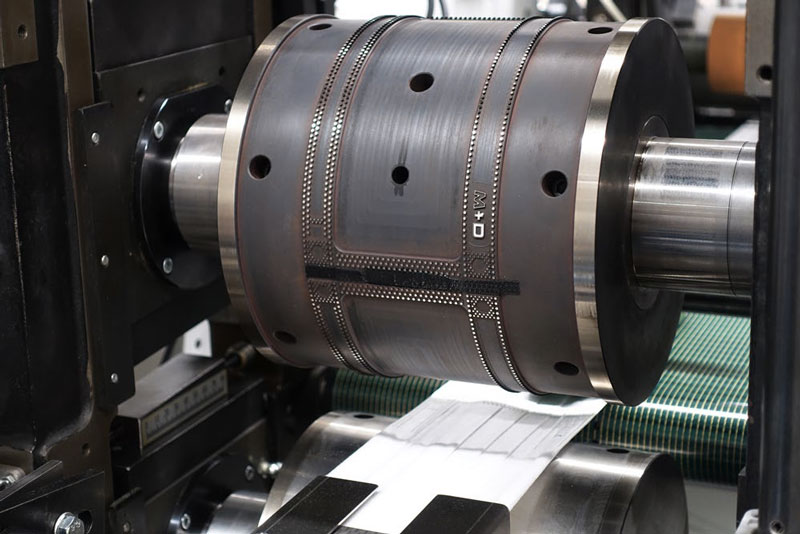
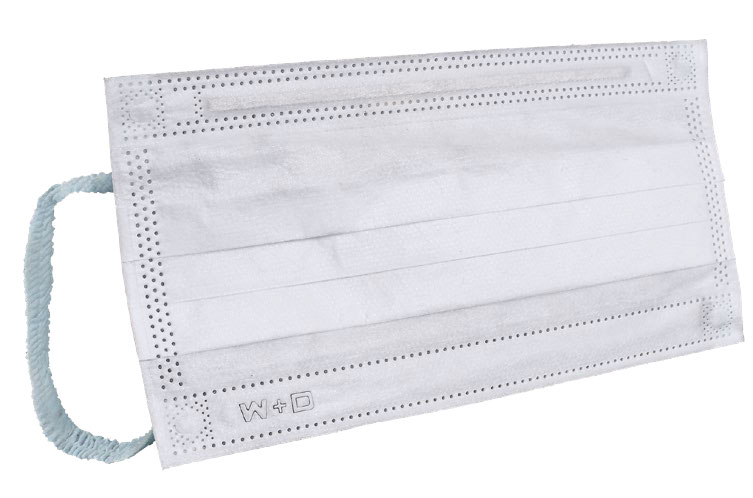
NEUWIED, Germany — June 4, 2020 — Reacting to the worldwide shortage and peak demand for high quality lower cost face masks, the W+D/BICMA hygiene group of Winkler+Dünnebier has developed a fully automatic, high-speed face mask converting line for the production of high quality disposable face masks: Auxilium FM. This new converting line has a speed of up to 150 meters per minute (492 feet per minute) and is able to produce up to 1 million high quality face masks per day making it one of the fastest mask production machines in the world, according to the company.

Adding to the manufacturing throughput efficiency of up to 800 face masks per minute is also a unique product concept, reducing the costs per piece by using for the ear loops standard materials which are common in the hygiene industry. The machine comes with CE sign and is suitable for Industry 4.0 applications. It can be equipped with various options such as fully automatic stacking, camera system for inline quality control, inline flexoprinting and many more.

The Auxilium FM mask line laminates and converts three or more layers of appropriate nonwoven materials (spunbond, meltblown, thermobonded or others). By converting suitable raw materials, producers may apply for EN 14683 I, II or IIR certification for masks they made on this quality machine. It combines W+D/Bicma’s proven technology in highspeed nonwoven processing with newly designed features like nose clip and earloop application.

Posted June 5, 2020

Source: Winkler+Dünnebier GmbH

Sponsors