A Sticky Subject: Studying Shellfish For Advanced Adhesives

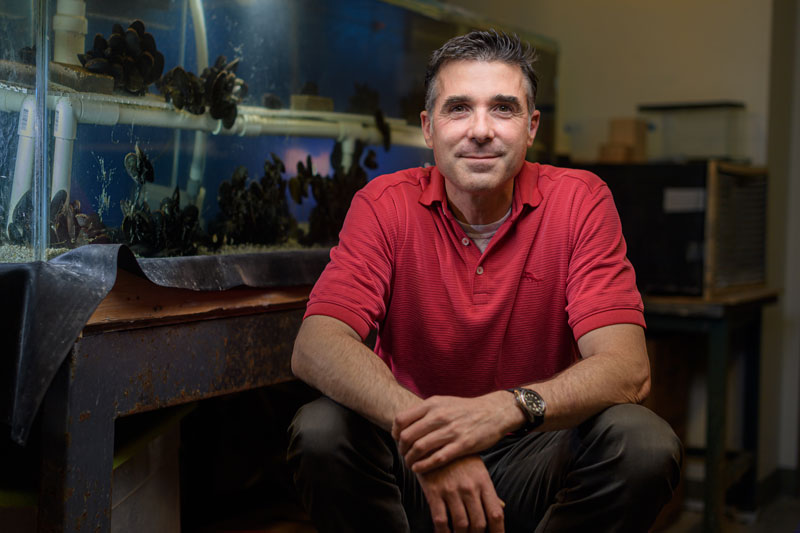
Jonathan Wilker, a Purdue professor of chemistry, studies shellfish to develop adhesives that are more sustainable and stronger, and work in a wider range of environments than current adhesives. Image courtesy of Purdue University/Rebecca McElhoe

By Brittany Steff

Don’t look now, but you’re surrounded. Really. Within arm’s reach – probably even touching you – are troublesome, sticky, potentially even toxic, substances. Bad for the planet, permanent, maybe even bad for your health. They’re in your shoes, in your phone, in your laptop, lurking in the folds of envelopes, on books, in the chair you’re sitting in, the flooring beneath your feet, and in uncountable other objects in your house, office and everyday world.

They are adhesives. Vital to daily life, nearly unnoticeable, but also deeply problematic. They can be toxic and are usually permanent. Purdue University chemists are studying shellfish to develop new, safer and more sustainable adhesives for uses ranging from bandages and medical applications to clothing, household items, electronics and more.

Humans have been trying to stick things to other things for millennia. But shellfish have been doing it for eons longer. And they are far better at it than humans. Which is why Purdue chemists got to wondering: Why don’t we just use whatever they’re using? Anyone who has ever tried to unstick a barnacle from a rock knows that it’s nearly impossible.

That success is something Jonathan Wilker, a Purdue professor of chemistry and materials engineering, and his lab are hoping to learn from — and build on.

Shellfish And Saltwater: Underwater Adhesion That Works

“We start by looking at animals that make adhesives,” Wilker said. “We’re still working to understand the fundamentals of how animals like mussels and oysters do what they do, how the chemistry and engineering work together. We are even seeing how the environment around them and the surface they’re sticking to influences what they do.”

Critters such as barnacles, mussels and oysters live in places where they are continually battered by waves and wind and pried at by potential predators. Their very lives depend on being able to cling to rocks and their neighboring shellfish.

Sutures, screws and staples are all widely used to close wounds, bind tissues and set bones, but they are all very damaging and extremely painful. If doctors had a chemical adhesive that they could use instead, healing would increase and collateral damage would decrease. The body, however, is a challenging environment for adhesives: wet and constantly in motion. A lot like the sea.
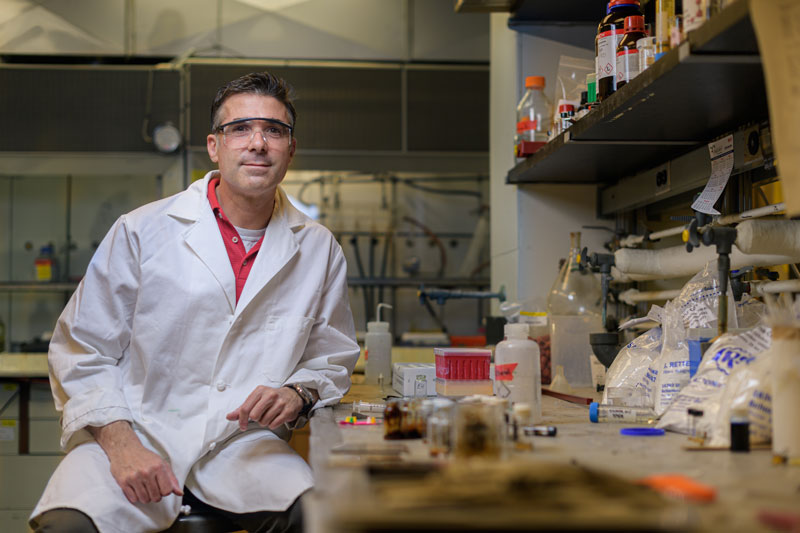
Jonathan Wilker’s lab at Purdue studies how shellfish create adhesives and what components of the adhesives perform active roles in bonding. Researchers in the lab test new synthetic and biomimetic adhesives to determine their efficacy, feasibility and performance. Image courtesy of Purdue University/Rebecca McElhoe

Scientists in Wilker’s lab — which includes two postdoctoral researchers, five graduate students, four undergraduate researchers and 1,000 shellfish — study how shellfish create materials, what components of the adhesives play active roles in bonding and test new synthetic and biomimetic glues to determine their efficacy, feasibility and performance. They are building on that understanding to develop adhesives that work underwater, are stronger, more sustainable, made from food products and that can be un-stuck when needed.

We’re making adhesives with new functionalities” Wilker said. “We can add in new chemical groups to target all sorts of properties, be that wet bonding, rubber-like flexibility or the ability to bond and then de-bond. One of our systems can even be stronger than what the animals make underwater. In that case, we are using chemistry that is inspired by the shellfish but, overall, our system is a simplification of what the animals produce.”

Gunning For New Glue: Making Adhesives Nontoxic, Reversible

Every product in the glue aisle at the hardware store has a downside. Many are toxic. Particle board, laminate flooring and hardwood plywood are all held together with formaldehyde-based resins, which can be carcinogenic. Additionally, many adhesives are permanent. There is no way to dissolve the bond when a product is at the end of its life, which often prevents the components from being recycled.

“Almost every common glue is petroleum-based and not degradable,” Wilker said. “When your laptops or cell phones, shoes or furniture are no longer needed, most of them go straight to a landfill. Even materials like cardboard often do not get recycled because of the adhesives.”

Many glues are nearly permanent, a factor many people have discovered when trying to remove the gumminess from a sticker or price tag from a product — or, more unfortunately, from a car window where a child sat. Being able to reverse stickiness at will would give humans more control over their environment.

Increasing the sustainability and the functionality of adhesives can improve human life in a myriad of ways: by limiting exposure to harmful chemicals, by making healing more comfortable, and by making products more sustainable and more recyclable to preserve resources and the planet. Wilker’s lab is working to make glues out of bio-based and even food-based compounds.

Adhesion is a rapidly evolving field with huge potential. It’s a field in which Wilker is a recognized expert, thanks to a stray thread of curiosity encountered in the ocean.
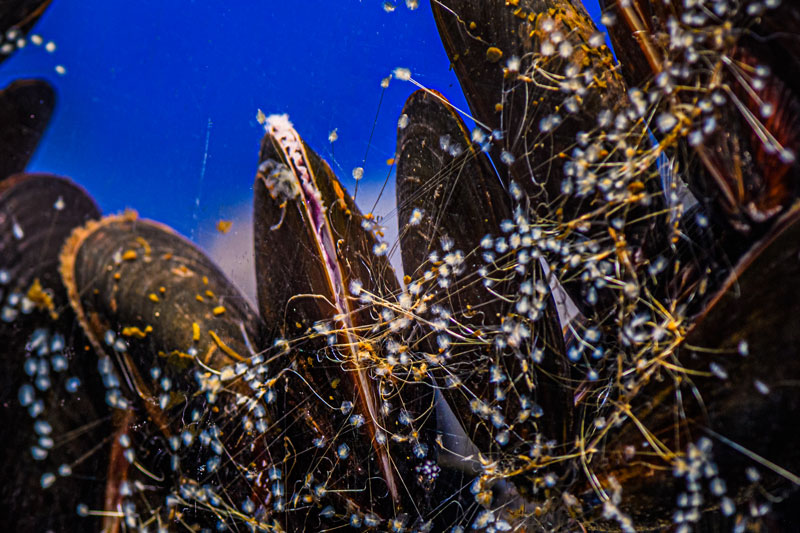
Jonathan Wilker notes that not everyone in his Purdue lab has a chemistry degree. Some lab members are shellfish – about 1,000 of them. The shellfish play a valuable role by demonstrating how they make adhesives so scientists can build upon their biological strategies. Image courtesy of Purdue University/Rebecca McElhoe

“The core ideas in our lab come from spending time underwater,” Wilker said. “I was SCUBA diving, saw shellfish sticking to rocks and thought, ‘I wonder how that works?’ When I got back into the lab, I was surprised to learn about what remained unknown. There are so many exciting possibilities and applications to pursue if we can figure it all out.”

As both a professor of chemistry in the College of Science and a professor of materials engineering, Wilker bridges the worlds of science and engineering in his efforts to tap the natural world for innovative solutions to adhesion problems. The Office of Naval Research and the National Science Foundation help fund his research.

Wilker has worked with the Purdue Research Foundation Office of Technology Commercialization to apply for patents on his adhesives from the U.S. Patent and Trademark Office. He is starting to make them commercially available through commercial ventures including a startup, Mussel Polymers Inc.


Editor’s Note: Brittany Staff is a science writer at Perdue University


June 2021

June 2021: Textile Activity At A Glance

June 2021

Worker Shortage Cripples Industry Resurgence

By Jim Phillips, Yarn Market Editor

As an increasing number of U.S. citizens become vaccinated against COVID-19, more and more areas of the economy have begun to ramp up operations at or near pre-pandemic levels. Unemployment levels have been dropping at many types of organizations.

According to the U.S. Bureau of Labor Statistics (BLS), some 9.3 million Americans were out of work in April 2021. Interestingly, in May, BLS announced there were 9.3 million job openings in the nation. That equates to a job for every single unemployed worker.

Yet, a number of industries, including yarn spinners and related businesses throughout the fiber/textile/apparel complex, are having a difficult time finding sufficient human resources to operate at desired capacities.

Some economists attribute the labor shortage to federal unemployment subsidies, which have allowed some people to be paid at a rate higher than the wages they were earning before they lost their jobs. As a result, 22 states have announced they will cease participation in the federal program by early July.

The U.S. textile industry was among the first and hardest hit industries as the coronavirus swept across the land in 2020. Now, has some semblance of normalcy has returned, the industry finds itself in critical need of workers.

NCTO President Kim Glas recently told The Washington Post that the need for workers has intensified as the pandemic ebbs and consumers have opened their wallets to purchase back-to-school and casual apparel. She told the post that “shortages are so acute that manufacturers have had to turn down contracts from businesses that want to make their goods in America.”

The irony is not lost on those who have followed the resurgence of the U.S. industry. As hard as yarn and fabric manufacturers have fought to regain America’s place in the global textile market, these same companies are now having to tell valued customers to go elsewhere because of a lack of resources.

Those who lean toward conservative ideals say the reduction or elimination of the federal unemployment subsidy will go a long way toward resolving the issue and that, once normal state unemployment guidelines are back in place, many of these folks will return to work. On the other hand, those with more liberal views say they believe many will refuse to rejoin the workforce for the same jobs they lost until the minimum wage is raised to the point where a normal family with a primary earner making the minimum is able to live above the poverty level.

However, subsidized unemployment compensation and low minimum wages are not the only reasons for the labor shortage in the industry. Since the pandemic began, pay for non-management level textile workers has risen almost 18 percent, to $880 a week. This has led to intense compensation between industry sectors for those qualified employees who do want to work.

Nylon Dumping

The U.S. Department of Commerce announced in late May that imports of polyester textured yarn from Indonesia, Malaysia, Thailand and Vietnam are being unfairly sold below their fair value in the United States.

U.S. Customs and Border Protection will now begin collecting antidumping duties in the amount equal to the dumping cash deposits rates for imports from each country. Importers will be required to post duty deposits to be collected until the Commerce Department and U.S. International Trade Commission conclude their investigations later this year. At that time, the duties could change.

Imports of polyester textured yarn from China and India are currently subject to significant double- and triple-digit charges and countervailing duties as a result of prior investigations that concluded in January 2020.

The recent allegations were initiated by two major U.S. synthetic yarn producers — Unifi Manufacturing Inc. and Nan Ya Plastics Corp., America. These companies filed petitions with the Commerce Department and the Trade Commission claiming that dumped imports of polyester textured yarn from Indonesia, Malaysia, Thailand, and Vietnam were causing material injury to the domestic industry.  The Commerce Department initiated the investigations in November 2020, and the Trade Commission issued a preliminary determination in December 2020 that imports from the four countries are causing injury to the U.S. domestic industry.

Cotton Prices

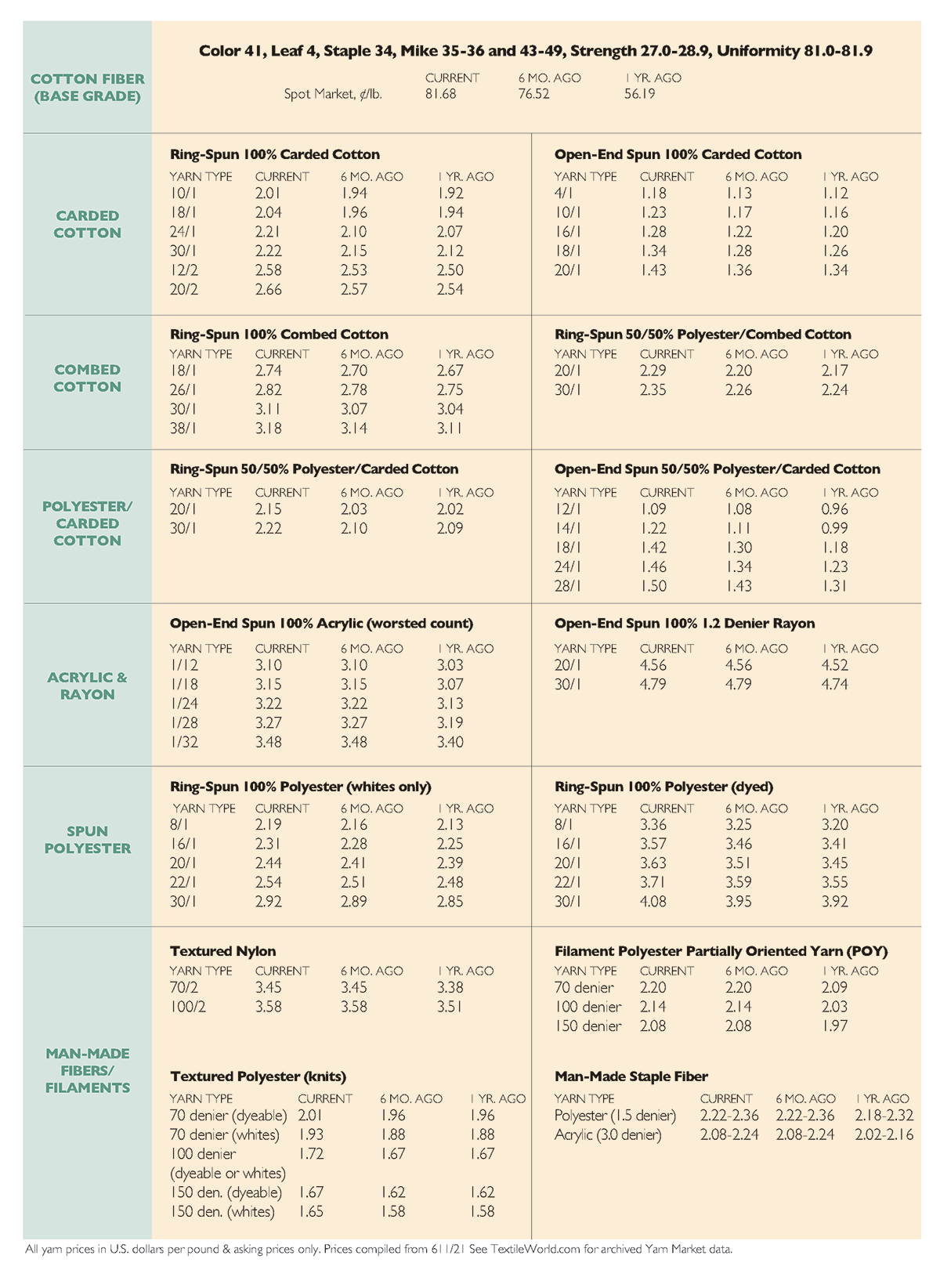
Quotations for the base quality of cotton (color 41, leaf 4, staple 34, mike 35-36 and 43-49, strength 27.0-28.9, and uniformity 81.0-81.9) in the seven designated markets measured by the USDA averaged 81.68 cents per pound for the week ending Thursday, June 10, 2021. The weekly average was up from 79.41 cents from the previous week and from 56.19 reported the corresponding period a year ago. The ICE July settlement price ended the week at 87.36 cents, compared to 84.21 cents the previous week.

Domestic mill buyers inquired for a moderate volume of 2021-crop cotton, color 41 and better, leaf 4 and better, and staple 34 and longer for fourth quarter 2021 through fourth quarter 2022 delivery. Yarn demand remained good, while mills continued to operate below capacity due to persistent labor personnel shortages. Personal protective equipment continued to be produced for frontline workers and consumers.

June 2021

Carbios Awarded As Technology Pioneer By World Economic Forum

CLERMONT-FERRAND, France — June15, 2021— Carbios, a company pioneering new enzymatic solutions to reinvent the lifecycle of plastic and textile polymers, was selected among hundreds of candidates as one of the World Economic Forum’s “Technology Pioneers”. Carbios is opening new sustainable and competitive avenues for the virtuous management of the life cycle of plastic and textile materials. Through its enzymatic recycling technology, Carbios provides an industrial solution to the recycling of PET plastics and textiles (the dominant polymer in bottles, trays and textiles made of polyester). Unlike conventional processes, Carbios’ innovation allows the production of 100-percent recycled and 100-percent recyclable PET products, without loss of quality.

The World Economic Forum’s Technology Pioneers are early to growth-stage companies from around the world that are involved in the use of new technologies and innovation that are poised to have a significant impact on business and society.

With Carbios’ selection as Technology Pioneer, Deputy CEO Martin Stephan Carbios will be invited to participate at World Economic Forum activities, events and discussions throughout the year. Carbios will also contribute to Forum initiatives over the next two years, working with global leaders to help address key industry and societal issues.

“We’re excited to welcome Carbios to our 2021 cohort of Technology Pioneers,” said Susan Nesbitt, head of the Global Innovators Community, World Economic Forum. “Carbios, and its fellow pioneers are developing technologies that can help society solve some of its most pressing issues. We look forward to their contribution to the World Economic Forum in its commitment to improving the state of the world.”

“It’s great to be acknowledged as pioneer by the World Economic Forum”, said Martin Stephan, deputy CEO of Carbios. “It is a confirmation our technology is among the most unique in the world and can engage a sustainable transition to true circular economy model. Our commitment to designing solutions with a positive impact, fuels our long-term competitiveness in order to meet the immense needs of the markets concerned. Carbios’ biological solution to deconstruct some of the most common plastics on the market is a world’s first and will give endless value to post consumer plastic and textile waste. We look forward to contributing to the Forum dialogues on this challenge.”

2021 Tech Pioneer firms are shaping the future by advancing technologies such as AI, IoT, robotics, blockchain, biotechnology and many more.

Technology Pioneers have been selected based on the community’s selection criteria, which includes innovation, impact and leadership as well as the company’s relevance with the World Economic Forum’s Platforms.

Posted June 16, 2021

Source: Carbios

Hilco Global And Gordon Brothers Launch New Retail Store Called Shopper’s Find In Former Lord & Taylor Locations

NORTHBROOK, Ill. — June15, 2021— Hilco Global, the world’s preeminent financial services organization, announced today that its Hilco Retail Solutions platform, in a joint venture with Gordon Brothers, has been working with HBC to launch Shopper’s Find, a new retailer that is opening in former Lord & Taylor locations. Shopper’s Find is the department store for every shopper, offering savings of up to 60-percent off apparel for women, men, and children, fine jewelry, cosmetics, fragrances, handbags, footwear, designer furs and accessories, home décor, rugs, furniture, small appliances, mattresses, and much more.

The Shopper’s Find team works directly with manufacturers and wholesalers to find the best possible price and bring in new merchandise virtually every week, so shoppers will find fresh selections each visit. Shopper’s Find has something for every shopper seeking great buys and bargains. Shopper’s Find carries high quality, stylish, on trend, brand name, and famous name designer merchandise, all up to 60-percent off. The products are sourced from excess inventory, out of season merchandise, overstock goods, clearance merchandise, and more. Shopper’s Find will be open for a limited time, so consumers should plan to stop by often to take advantage of these amazing savings and discover new finds before they are gone. Since merchandise offered is a one-time opportunity, it is available only while supplies last.

Posted June 16, 2021

Source: Hilco Global

Integrated Polymer Solutions Acquires Swift Textile Metalizing

BLOOMFIELD, Conn. — June16, 2021— Integrated Polymer Solutions Inc. (IPS), a portfolio company of Arcline Investment Management, today announced the acquisition of Swift Textile Metalizing LLC (STM).

STM is a designer and manufacturer of highly engineered metalized fabrics used in electromagnetic and radio frequency interference shielding applications. The company maintains key positions on long-lived aerospace, naval, and ground defense platforms critical to the next generation of national defense. Located in Bloomfield, Conn,, STM was founded in 1955 and throughout its history has remained at the forefront of conductive and reflective fabric materials science. Since 2015, the Company has been owned by Steve Sigmon, who has guided the business into new end markets and impressive growth.

Sigmon, owner and President of STM, said: “STM has found an ideal partner in IPS that will continue STM’s legacy of innovation, problem-solving, and collaboration while diligently supporting our customers to solve their most difficult challenges. It was clear from my time with the IPS team that we share similar visions for the future, and I couldn’t be more excited for the future of the business.”

Rich McManus, president and CEO of IPS, commented: “Since we first met Steve and were introduced to STM, we have continued to be impressed by not only the quality of his company, but also the experience, depth, and dedication of his team. It is truly an exceptional organization, and we take the responsibility of partnering with Steve and his team for STM’s next chapter very seriously and with great humility. Together we are excited to continue building a world-class materials science business.”

Posted June 16, 2021

Source: Arcline Investment Management

Heimtextil 2022: Good Prospects For The Restart

FRANKFURT, Germany— June16, 2021— The plans for the coming Heimtextil are being drawn up against the background of an optimistic perspective for 2022. A promising number of registrations and a positive echo from the sector are encouraging signals for the restart in seven months.

The sector is raring to go and yearning for a return to the international stage. Personal discussions, physical product presentations and valuable inspiration — the call for an international and multifaceted meeting place for the sector is loud and clear seven months before the next scheduled edition of the trade fair. At present, the falling corona infection rates, as well as the associated moves to relax restrictions and open up businesses, offer good reason for optimism at home and abroad. “At last, we can see light at the end of the tunnel. And, although this is no reason for euphoria, it gives us a solid ground for taking a positive approach. We have excellent contacts to our international customers who have expressed a great need for personal encounters, a direct exchange of information and new impressions”, says Olaf Schmidt, vice president,Textiles & Textile Technologies, Messe Frankfurt. This is also reflected by the reassuringly high number of registrations already received after more than a year of pandemic and with seven months still to go before the leading trade fair for home and contract textiles opens its doors again. Thus, around 80 percent of exhibitors at Heimtextil 2020 are interested in taking part in the coming edition of the fair.

Trend Space: tomorrow’s furnishing trends

For visitors interested in design, the highlight of the programme of events in 2022 will once again be the Trend Space inspiration area in Hall 4.0. The coming edition will show how the pandemic has changed our lives and, therefore, the way we furnish our homes. In this connection, particular attention will be given to the mega subject of ‘new work’, which will be viewed with new facets. As in the past, the director of the Trend Space is Anja Bisgaard Gaede and her team from SPOTT Trends & Business.

Digital service to supplement the trade fair

Digital services will supplement the spectrum of products to be seen at Heimtextil 2022 in Frankfurt. In planning are live streams and online contributions from the program of lectures. They will cover a variety of topics, such as ‘sleep’, the Heimtextil Trends and Interior.Architecture .Hospitality, the service for (interior) architects and hospitality experts. Lectures will illuminate the sustainability theme and the Future Materials Library. Nextrade, the order and data-management portal, is another digital service offered by Messe Frankfurt and provides an around-the-clock business relationship between dealers and suppliers. As the first digital B2B marketplace for home and living, Nextrade brings together demand and supply from the entire sector and thus creates significant value added for both sides: www.nextrade.market

Posted June 16, 2021

Source: Messe Frankfurt Exhibition GmbH

Indorama Ventures Adds New Production To Its Naphthalates Business To Become The World’s Largest Merchant Producer Of PNDA

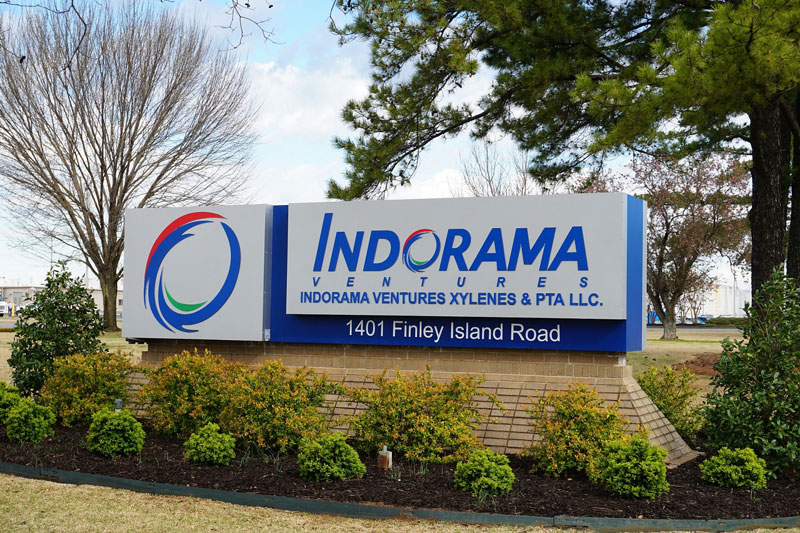
BANGKOK, Thailand — June16, 2021— Indorama Ventures Xylenes & PTA LLC (IVXP), a subsidiary of global chemical producer Indorama Ventures Public Co. Ltd. (IVL), announced new purified 2,6-naphthalene dicarboxylic Acid (PNDA) production unit, making IVXP the world’s largest PNDA producer. The unit is located at IVXP’s integrated manufacturing site in Decatur, Ala.

The company used in-house technology to design and develop the new unit, which was built with equipment mostly made in the Unietd States. IVXP’s PNDA maintains the highest 99.8 percent purity level, with extremely low levels of metals and other organics. The unit can produce enough PNDA to fulfil current and forecast global demand for the next 10 years.

IVL is the only large-scale commercial producer of dimethyl 2,6-naphthalene dicarboxylate (NDC) monomers. In addition to PNDA and NDC production, it offers a wide range of naphthalate polymers such as (polyethylene naphthalate (PEN), PEN-Copolymers, polybutylene naphthalate (PBN), and other specialty naphthalates.

D. K. Agarwal, CEO of Combined PET, IOD and Fibers Business at Indorama Ventures, said: “The additional PNDA production extends IVL’s specialty chemical portfolio. Along with NDC, the new unit will serve high-end polyester markets. This is part of our continuous commitment to providing our customers with a reliable and integrated source of important monomers for their specialty polymer production. This helps our customers to capture the growth in 5G and related end-use markets.”

PNDA is the carboxylic acid counterpart to NDC, which is also produced at IVXP’s Decatur facility. The product is produced as a white solid powder and is used to make specialty polyester polymers for electronic and electrical parts, packaging, high-temperature performance polymers, chemical intermediates as well as liquid crystal chemicals and polymers. Samples are available for testing, qualification, and product development in metric ton quantities.

Posted June 16, 2021

Source: Indorama Ventures

Advanced Pricing Ends This Week for Techtextil North America 2021

ATLANTA — June 16, 2021— Early bird registration for Techtextil North America 2021, being held August 23-25, 2021, in Raleigh, N.C., ends this Friday.

Techtextil North America’s tired pricing structure provides significant savings to those who register in advance. All Symposium registrations include three days of exhibit hall access. Advanced Pricing ends this week, so new registrants or those looking to upgrade their badge to include symposium sessions are encouraged to take advantage of the savings before prices increase.

Advanced Pricing (through June 18th, 2021):

  • $800 for Full Symposium* pass, offering the best value for education;
  • $500 for One Day Symposium*, Monday, August 23 or Tuesday, August 24;
  • $165 for One Day Symposium*, Wednesday August 25; or
  • $90 for Exhibit Hall only.

The highly-acclaimed Symposium will give attendees the opportunity to listen and learn from industry leaders and subject matter experts as they discuss some of the most pivotal advancements in research and technology within the last year and explore the future of textiles. This year’s lineup features sessions led by the biggest names in industry and academia, covering today’s hot topics.

To explore the full session schedule, visit: https://techtextil-north-america.us.messefrankfurt.com/us/en/themesandevents/SymposiumSchedule.html.

The Standard Pricing tier will remain active from June 19th through the last day of the show. Full pricing details can be found on the show’s website. Additional discounts are available for students and military, for discount inquiries, contact: Ali.rosenberger@usa.messefrankfurt.com.

Registration can be accessed here: https://www.xpressreg.net/register/TTNA0821/start.asp?sc=PR2

For more information on the upcoming edition of Techtextil North America, August 23-25, 2021 in Raleigh, North Carolina, please visit: www.techtextilna.com.

Posted June 16, 2021

Source: Messe Frankfurt North America

Texo Trade Services Introduces Sustainable Textile Line: GREEN Textiles

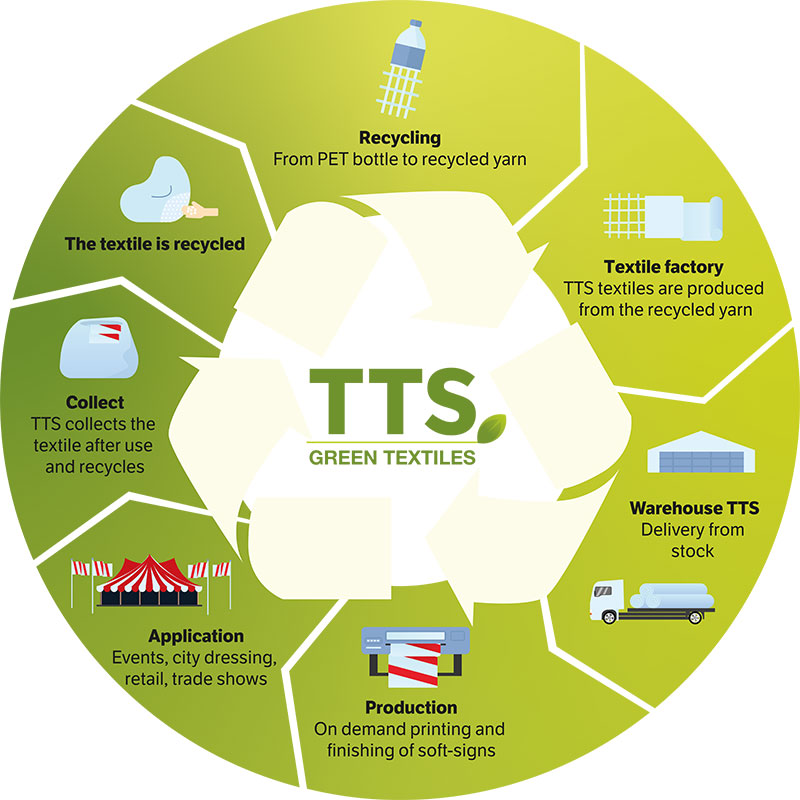
MOORDRECHT, the Netherlands — June16, 2021 — Texo Trade Services (TTS) is helping its customers run their businesses in a socially and environmentally responsible way by launching a sustainable textile line: GREEN Textiles. These products are made from recycled PET yarn, and will allow businesses to meet market demand for eco-friendly print products and make a direct contribution to a sustainable future.

Leading the way in environmentally aware business practices

This launch marks a new era for TTS as it aims to lead the way in corporate social responsibility and environmental awareness. TTS had previously invested in energy-neutral business premises, taken steps to recycle all its waste flows and minimise its use of product packaging. The company set up a Textile Recycling Service to facilitate logistics and offer its customers in the Benelux (and later in Northern France too) the possibility of collecting and recycling used sublimation printed textiles. This gives its soft signage customers the chance to offer circular signage to their own customers.

TTS GREEN Textiles

The whole textile range offered by TTS is already 100-percent PVC-free. This means a huge reduction in waste because products made of polyester are often half the weight of comparable PVC ones. Additionally, polyester textile can be made from recycled PET bottles. However, this still doesn’t always happen, even though demand for sustainable print products is increasing. TTS is set to change all this though with its GREEN textile line: it is offering a green variant of every type of textile, made from 100-percent recycled polyester. The yarn used for this purpose is produced in a sustainable way from recycled PET bottles, without affecting the properties of the original textile.

A high quality, sustainable alternative

TTS has a recycled alternative to almost every form of soft signage that uses both sublimation and UV inks. For example, nonwoven outdoor banners, flag cloth, display cloth and lightbox textile. Not only are festival organizers looking for this kind of product, so are large retail companies, and garments made from recycled yarns are increasingly filling the racks of fashion chains. It would be even better if the chains could follow this trend when decorating their stores. Opting for a green textile variant means choosing quality as well as sustainability.

Posted June 16, 2021

Source: Texo Trade Services (TTS)

Sponsors