Combining Expertise For More Sustainable Fashion

TW Special Report

Ever wonder how much water was used to make your favorite cotton T-shirt? About 2,700 liters, or roughly three years of drinking water. What first comes to mind is probably the water that was essential to growing the cotton crop. Surprisingly, cotton is a drought-tolerant plant, and often less recognized is the strain that can be put on water resources to dye cotton textiles.

Progress is being made across the industry to lessen the strain on our precious water resources. Over the past several years, Dow has collaborated with Cotton Incorporated to research and validate Dow’s product — ECOFAST™ Pure Sustainable Textile Treatment — that can help drastically reduce water and chemical use during the dyeing process. Major fashion brands like Ralph Lauren are integrating it into their supply chain to dye more sustainably, without sacrificing color or quality.

Problem

Cotton dyeing is very resource-intensive and puts strain on local waterways. A large amount of water is used in the dyeing process — up to 5 trillion liters a year, or nearly enough to supply all of humanity with drinking water. Significant amounts of chemicals and dye are needed to get the desired colors consumers expect too. This is part of the reason textile mills account for 20 percent of industrial water pollution globally. Wastewater from the dyeing process can be polluting and require costly treatment and these challenges are found in regions that already face water scarcity.

Solution

Reforming processes in an industry as established as textiles is no easy feat. Collaboration across the sector is needed to bring about sustainable change. With that in mind, Cotton Incorporated approached Dow. They wanted help scaling a cotton technology to support more sustainable textile dyeing. It turned out we were developing a similar technology that had improved performance, and we were looking for help too. Leveraging Cotton Incorporated’s industry expertise and Dow’s material science knowledge, we worked together to understand and validate the benefits of our patented ECOFAST Pure Sustainable Textile Treatment.

How Can Colors Be More Responsible? 

ECOFAST Pure is a pretreatment applied before the dyeing process to produce cationic cotton. This means the charge of cotton is permanently changed from negative to positive, so it acts like a magnet to attract negatively charged dye to the material. How does that benefit the textile mill? It significantly decreases the amount of water, chemicals, dye and energy needed to color cotton. A third party reviewed and validated life cycle assessment, available by request, helped further prove the benefits.

Click to watch the LCA video

Why Is Collaborating Across The Value Chain Essential?

Collaboration is critical for change to be meaningful and sustainable. As a not-for-profit focused on conducting research to benefit every link in the cotton supply chain, Cotton Incorporated has a unique expertise that complements our own. Working with Cotton Incorporated gave important insights about our product in application. Insights that would have taken much longer to discover without the industry expertise they offered.

Together we were able to evaluate the benefits of ECOFAST Pure compared to existing cationic chemistries. This was critical, because cationic cotton isn’t a new concept and this research helped prove our new product was advantaged over others — including no odor in application. We were also able to test compatibility across a variety of popular dyes, connect with expert consultants and more through this collaboration.

Still, Cotton Incorporated and Dow are only two players at two distinct points in the textile value chain. Like we’ve seen in our work with Ralph Lauren, we have to reach further — collaborating with brands, mills and others — to color cotton with integrity. Will you join us?

June 16, 2021


Inkjet Printing Shows Promise As New Strategy For Making E-Textiles

By Laura Oleniacz

In a new study, North Carolina State University researchers demonstrated they could print layers of electrically conductive ink on polyester fabric to make an e-textile that could be used in the design of future wearable devices.

Since the printing method can be completed at room temperature and in normal atmospheric conditions, researchers believe inkjet printing could offer a simpler and more effective method of manufacturing electronic textiles, also known as e-textiles. In addition, researchers said the findings suggest they could extend techniques common in the flexible electronic industry to textile manufacturing. They reported their findings in the journal ACS Applied Materials & Interfaces.

“Inkjet printing is a rapidly advancing new technology that’s used in flexible electronics to make films used in cellphone displays and other devices,” said the study’s corresponding author Jesse S. Jur, professor of textile engineering, chemistry and science at NC State. “We think this printing method, which uses materials and processes that are common in both the electronics and textiles industries, also shows promise for making e-textiles for wearable devices.”

In the study, researchers described how they used a FUJIFILM Dimatix inkjet printer to create a durable and flexible e-textile material, what they did to reliably create the e-textile, and its properties. Part of their challenge was to find the right composition of materials so the liquid ink would not seep through the porous surface of the textile materials and lose its ability to conduct electricity.

“Printing e-textiles has been a very big challenge for the e-textile industry,” said the study’s first author Inhwan Kim, a former graduate student at NC State. “We wanted to build a structure layer by layer, which has not been done on a textile layer with inkjet printing. It was a big struggle for us to find the right material composition.”

They created the e-textile by printing layers of electrically conductive silver ink like a sandwich around layers of two liquid materials, which acted as insulators. They printed those sandwich layers on top of a woven polyester fabric. After they printed the layers of silver ink and insulating materials — made of urethane-acrylate, and poly(4-vinylphenol)  –— they monitored the surface of the material using a microscope. They found that the chemical properties of the insulating materials, as well as of the textile yarns, were important to maintaining the ability of the liquid silver ink to conduct electricity, and prevent it from penetrating through the porous fabric.

“We wanted a robust insulation layer in the middle, but we wanted to keep it as thin as possible to have the entire structure thin, and have the electric performance as high as possible,” Kim said. “Also, if they are too bulky, people will not want to wear them.”

The researchers evaluated the electrical performance of the e-textile after they bent the material multiple times. They tested more than 100 cycles of bending, finding the e-textile didn’t lose its electrical performance. In future work, they want to improve the materials’ electrical performance compared to e-textiles created using methods that require special facilities and atmospheric conditions, as well as increase the material’s breathability.

Eventually, they want to use the printing method to create an e-textile that could be used in wearable electronics such as biomedical devices that could track heart rate, or used as a battery to store power for electronic devices.

“We were able to coat the ink on the fabric in a multi-layer material that’s both durable and flexible,” Kim said. “The beauty of this is, we did everything with an inkjet printer – we didn’t use any lamination or other methodologies.”

The study, “Microstructures in All-Inkjet Printed Textile Capacitors with Bilayer Interfaces of Polymer Dielectrics and Metal-Organic Decomposition Silver Electrodes” was published online in ACS Applied Materials & Interfaces. In addition to Jur and Kim, the other authors were Beomjun Ju, Ying Zhou and Braden Li. It was funded by VF Corp. The authors also acknowledge Liquid X Printed Metals for the preparation of the reactive silver inks used in this study. The authors acknowledge the U.S. Department of Defense and the Air Force Research Laboratory for provision of the Science Mathematics and Research for Transformation (SMART) scholarship to Li. This work was supported by the National Science Foundation through Nanosystems Engineering Research Center for Advanced Self Powered Systems for Integrated Sensors and Technologies under Grant EEC 1160483.


Editor’s Note: Laura Oleniacz is Public Communications Specialist at NC State News Services.


June 16, 2021

Beaver Paper Group Appoints Allen Wheeler TexSewn® Product Manager

ATLANTA — June15, 2021— Beaver Paper Group, a manufacturer of sublimation media and TexSewn® cut & sew papers is pleased to announce the promotion of Allen Wheeler to the new position of TexSewn® product manager.

As the new TexSewn Product Manager, Wheeler will play a pivotal role in generating new sales and market opportunities for Beaver Paper’s TexSewn product portfolio.  Wheeler is responsible for developing new products and initiatives that will increase sales and awareness for the brand.

“We are thrilled to have Allen move into this leadership position. He is extremely knowledgeable about the Sewn Products industry and will be key in developing new markets for TexSewn,” explained Tobias Sternbeck, CEO of Beaver Paper. “Allen’s deep industry knowledge and experience makes him a perfect fit for his new role.”

“I am honored to be able to use my extensive experience to spearhead and breathe new life into a legacy product line that is still heavily used in the sewn products industry,” Wheeler said.

Wheeler has been with Beaver Paper for more than six years in progressive roles including National TexSewn Sales Representative and Southeast Regional Sales Representative before being promoted to his new management position.

Posted June 15, 2021

Source: Beaver Paper Group

Shawmut Corp. Announces New Military & Protective Materials Business Unit

WEST BRIDGEWATER, Mass. — June 15, 2021— Today, Shawmut Corp. announced the creation of a new Military & Protective Materials Business Unit that will apply the company’s trademark advanced materials, textile manufacturing and process innovation techniques to produce high-quality, U.S.-made, ultra-high-specification and high-performance technical fabric solutions. Shawmut’s military and protective solutions feature waterproof, windproof, flame-resistant and chemical and biological protection applications and are ideal for high-stakes usages required in military and in-the-field professionals who need high-performance gear to safely do their jobs.

This new Military & Protective Materials Business Unit is a natural extension of Shawmut’s 105-year history in advanced materials manufacturing and builds upon the company’s deep experience in high-performance materials innovation, design and manufacturing expertise. Dating back to World War I, Shawmut has been supplying engineered materials and garments for critical military applications. Shawmut is also widely recognized as a leading producer of laminated components for high-performance technical fabric applications, such as wind, flame and water resistance used in rainwear, packs, footwear, body armor and more.

“Military personnel and other high-performing individuals in the utility industry are living and working in a high-spec, high-stakes world. Yet, many of the leading market fabrics and designs for military and protective wear are not up to par with the demands of these jobs,” said James Wyner, CEO of Shawmut. “We’re excited to leverage our expertise in textile engineering, process innovation and commitment to excellence to produce the highest quality materials for the highest performing individuals.”

Shawmut’s Military & Protective Materials division integrates the company’s textile manufacturing, dyeing, finishing and lamination capabilities to develop game-changing new technologies and establish Shawmut as a key player within the US textile and garment industry. The new division positions Shawmut as a catalyst for change and innovation in this highly specialized industry in need of advancements.

To lead the development of this new business unit, Shawmut has hired Noelle Christensen, a seasoned leader in the military and high-performance protective materials industry with more than 20 years of supply chain and business development experience. Noelle brings a diverse perspective and wealth of knowledge across textile manufacturing, domestic and federal garment supply chain, business development, operations and innovation to Shawmut. As the leader of this new business unit, she will position the company as a key provider of innovative textile technology for high performance applications, with a focus on military and protective materials.

Prior to joining Shawmut, Noelle spent 14 years at Massif, a developer of advanced flame-resistant clothing for military and other high-performance applications. Most recently, she served as Massif’s vice president/general manager where she led the brand through exponential growth as it launched new textile innovations and high-performance clothing categories.

“As a previous customer of Shawmut, I bring a unique perspective to the team, having witnessed its engineers solving seemingly unsolvable problems,” said Christensen. “I am excited about how much more Shawmut has to offer than the market is aware of, such as our ability to quickly solve complex problems and test products on the fly for rapid innovation, and our dedication to quality control that ensures premium, consistent outputs for our customers. The commitment the company is making to sustainability initiatives while expanding our presence in this market is a natural extension of its core expertise learned in another exacting market vertical – automotive.”

Posted June 15, 2021

Source: Shawmut Corp.

Xinfengming Group Invests In Innovative Staple Fiber Technology From Oerlikon Neumag

NEUMUENSTER/SHANGHAI — June15, 2021— In the context of the ITMA ASIA + CITME currently taking place in Shanghai, Oerlikon has now announced that it has concluded the largest staple fiber plant order in the history of Oerlikon Neumag with the major Chinese group Xinfengming in the run-up to the trade fair. This involves eight complete staple fiber lines with a total of 320 spinning positions for the production of synthetic staple fibers. Oerlikon will not only supply the technology, but will also take over the engineering of the lines. Delivery is scheduled for 2022.

With a total capacity of 1,800 t/d, the project is Oerlikon Neumag’s largest staple fiber plant order to date. The eight two-step lines will produce cotton-type staple fibers in a titer range of 1.0 – 1.4 denier. With this investment, the Xinfengming Group is expanding its product portfolio. As one of the world’s leading FDY and POY polyester filament yarn producers, the Chinese company has relied on Oerlikon Barmag technologies for decades and now also on those of Oerlikon Neumag.

Posted June 15, 2021

Source: Oerlikon

Barco® Uniforms Hits A new Sustainability Milestone: 40 Million Plastic Bottles Recycled

LOS ANGELES — June 8, 2021 — Barco™ Uniforms has announced in honor of World Ocean’s Day that due to record sales of its top-selling brands of sustainable healthcare scrubs, the company has collectively recycled over 40 million plastic bottles, marking a 115-percent year-over-year increase.

Barco’s in-house design team relies on the innovative rPET process, where plastic bottles are cleaned, shredded into pellets, and spun into thread woven into polyester.

In 2016, Barco launched the Barco One sustainable brand of scrubs, which has quickly become the number one choice not only for healthcare professionals, but also for veterinarians who love the proprietary fabric’s anti-static and temperature-regulating properties, and Barco’s Quick-Shed technology, which releases animal hair quickly from the surface of the fabric. Barco One incorporates five recycled plastic bottles into the fabric of each garment. The Skechers by Barco scrub brand, launched in 2017, incorporates seven recycled bottles per garment.

If these bottles were lined up end-to-end, they would stretch approximately 4,875 miles – close to a round-trip from Los Angeles to Pittsburgh.

Research shows that every day, more than one million plastic bottles are sold per minute around the world. Worse yet, studies also show that approximately 91% of plastic is still not recycled and ends up in the ocean instead.

“Healthcare professionals have shown a growing preference for brands that make a difference and are aligned with their values, with sustainability being at the top of the list,” explained Ron Wagenseil, president and CEO of Barco Uniforms. “Barco’s commitment to improving its sustainable practices is a natural extension of our mission to lead with purposeful innovation.

“It’s clear that our customers agree, as both Barco One and Skechers by Barco have shown dynamic and sustained sales growth year-over-year.”

Consumers may purchase Barco sustainable products by visiting the BarcoMade.com online store or finding a local retailer through the Barco retail store locator.

Posted June 15, 2021

Source: Barco

SGS Launches One-Stop-Shop For Mattress Testing In Farmingdale, N.Y.

FARMINGDALE, N.Y. — June 10, 2021 — SGS — a testing, inspection and certification company — has announced an expansion of its mattress testing services in its testing facility in Farmingdale, N.Y.

The 15,000-square-foot physical and fire testing facility now offers a one-stop-shop to those manufacturers and retailers seeking a complete mattress testing service. New physical testing equipment now broadens the labs scope to include Cornell Impact Testing and Roller Testing.

This covers the following standards:

  • ASTM F1550-16;
  • BFD IX-11;
  • 16 CFR Part 1633;
  • BS 6807:2006;
  • BS EN 597-1 2015; and
  • BS EN 597-2-2015.

Bobby Brown, director of operations, said: “We’re proud of the excellent reputation we have established within fire and flammability testing for a host of industries from apparel to aerospace.

“Sleep products have always been a core aspect of our service and we are delighted to expand our testing capability to support an industry that affects all of our lives. To consumers around the world, we believe it’s only trusted because it’s tested.”

SGS Furniture Testing Services

SGS offers a comprehensive furniture testing to help the industry assess the safety and the durability of a wide range of indoor and outdoor furniture products for adults and children, including:

  • Mechanical testing;
  • Chemical testing;
  • Finish testing;
  • Textile testing;
  • Flammability testing;
  • Electrical safety and performance testing; and
  • Comparison testing/fit for use (FFU) test/performance test.

Posted June 15, 2021

Source: SGS

Luxury Bags Created With Eco-Friendly Compo-SiL® Vegan Leather

HSINCHU, Taiwan — June 3, 2021 — Experienced silicone product manufacturer General Silicones (GS) is proud to share the creation of luxury fashion handbags and tote bags using Compo-SiL® vegan leather. The prototypes are designed and manufactured by an experienced local OEM bag manufacturer.

It was the first time for the manufacturing partner to use silicone-based vegan leather.

“It was a pleasant surprise how easy it was for our manufacturing partner to work with Compo-SiL vegan leather,” said Allen Yang, head of Business Development of GS. “Thanks to our patented technology, the bag maker combined our silicone leather without difficulty to the bag’s different inner material with HMA adhesives. Compo-SiL is the only silicone rubber began leather that accepts adhesion with HMA adhesives, giving designers the opportunity to explore the many advantages silicone rubber can add to products to the fullest. The prototypes were created to demonstrate that Compo-SiL is an excellent vegan fabric for the luxury fashion industry.”

An Eco-friendly Alternative to PVC Based Faux Leather

The demand for animal cruelty-free leather alternatives is growing each year. Finding high-quality animal leather alternatives without opting for plastic and harmful PVC-based faux leather products is not always easy. Compo-SiL leather by General Silicones is an eco-friendly fabric made of silicone rubber. Silicone has a low carbon footprint during manufacturing and is environmentally friendly. The material is widely used for skin-friendly baby and medical products for its harmless properties.

A Versatile High-quality Vegan Fabric for Luxury Brands

General Silicones developed the patented Compo-SiL technology allowing the company to create silicone rubber sheets suitable for the mass production of leather products. The fabric’s surface can be embossed to create the structure and feel of various types of leather. The pigmentation is adjusted to clients’ demands with eco-friendly pigments. Hot glue adhesions and roll-to-roll processing of large quantities of this silicone leather is possible thanks to unique and patented Compo-SiL technology.

Fashion brands and leather goods manufacturers can contact the sales team of General Silicones at compo-sil@gsweb.com.tw for more information on the prototypes, or visit www.compo-sil.com.

Posted June 15, 2021

Source: General Silicones

A Case Study Examining The Benefits Of Digital Color Management For Yarn & Threads

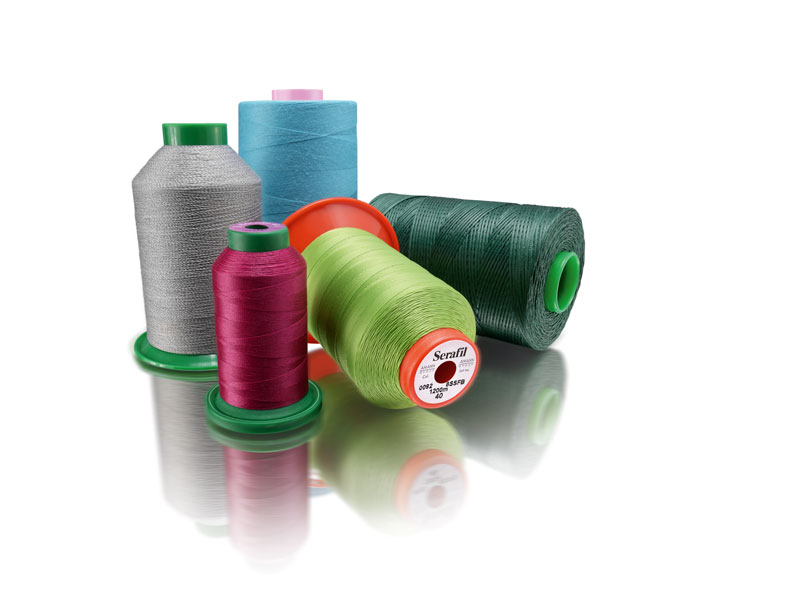
Amann Group is a manufacturer of sewing and embroidery threads, and smart yarns. Image courtesy of Amann Group


By Michael Strittmatter

Digitalization has been on the rise in the textile industry for quite some time, but throughout the recent COVID-19 pandemic, it has taken off at an accelerated pace, especially as the industry continues adapting to non-traditional remote work environments. Because of this shift to digitalization in the industry, more and more textile and apparel companies are starting to embrace the efficiencies of a fully digital color management workflow, which can offer a myriad of benefits.

Take, for instance, the yarn and thread experts from Amann Group, an international manufacturer of high-quality sewing threads, embroidery threads and Smart Yarns. They are a prime example of a company that has benefited tremendously from adopting comprehensive digital color management solutions throughout its entire global structure.

Why Digital?

Yarn quality and consistency is a top priority at Amann. This includes getting color right, every time — when product colors are inconsistent, consumers will view a brand as inferior or cheap. Because quality is so crucial to Amann’s business and their customers, they decided to standardize all of their production locations to guarantee consistent color globally.

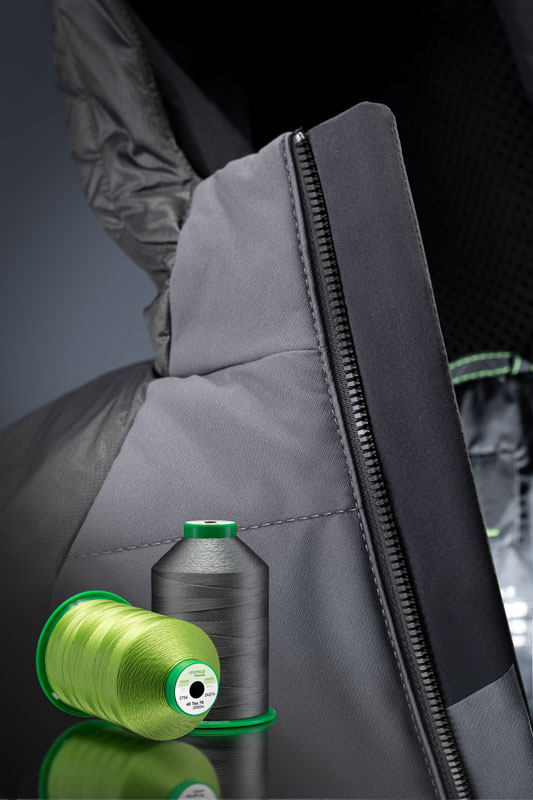
Image courtesy of Amann Group

Achieving consistent color across multiple components of one garment that has different components — such as the zippers, buttons, trims and snaps of a jacket or the lace, mesh, sole and body of an athletic shoe — is challenging. Quality control can be especially difficult when products have different coatings and gloss levels. Additionally, a single garment can contain multiple types of yarns stitched close together, which means a lot can go wrong if color is not controlled properly.

This is why a uniform digital color management approach across the supply chain is crucial to ensuring quality and customer satisfaction. By implementing digital color management solutions, textile and apparel companies can have confidence that colors will be accurate and repeatable.

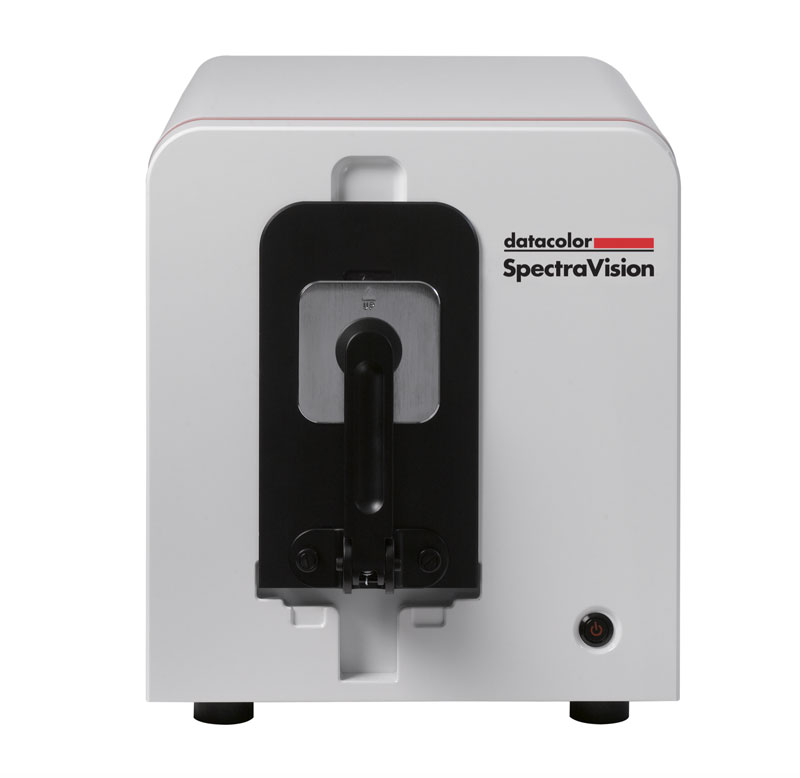
Image courtesy of Datacolor

Controlling Color from Start to Finish

At Amann and other textile companies that implement digital color management throughout the entire supply chain, the process starts at the very beginning with raw materials. Different substrates have different colors and whiteness levels, so it is important to include whiteness tolerances in supplier specifications before dyeing begins.

After a batch is dyed, a sample is prepared to remove temperature and humidity variation. Then, it goes through both visual and digital assessments to ensure the color meets expectations. Adding a digital component to this step is key, as relying on visual evaluations alone can be problematic, leading to potential delays and costly errors. We all see colors differently, so someone may see a perfect match where another sees variation. Digital measurements, combined with visual evaluations, removes the typical subjectivity associated with dyeing (and re-dyeing), resulting in a faster color match.

Amann has finishing machines installed in all dye houses to simulate the process. When the approval process can be done immediately after dyeing, companies can quickly determine if a batch is within specifications or has to be reworked, improving speed and efficiency even further.

A final visual and digital color evaluation check happens before a product leaves Amann’s production site, providing an extra layer of confidence that the customers will receive the highest quality possible.

Amann dye houses span across the globe, from Romania to Germany to China, and they all dye on the same material, so the results must be identical. Amann utilizes virtual samples across the global supply chain, so each dye house can access centralized data for quality checks. With digital color data, recipes can be exchanged among different facilities with a guarantee that results will be identical since every location has access to the same data. We have seen Amann successfully meet important quality requirements by leveraging a full suite of digital color management solutions every step of the way.

Post-Production Best Practices

Even after a product leaves a company’s production site, there are still steps companies must take to ensure quality and consistency down the road. Part of a fully digital workflow includes instrument monitoring to compare measurement values of all devices across all locations, as well as regular maintenance. Amann has seen first-hand how important it is to receive ongoing maintenance and support, to ensure that every device across the supply chain is within the same tolerance range and that the entire digital process is running smoothly.

Image courtesy of Datacolor

Looking Ahead At The Latest Advancements

Textile and apparel companies have come a long way in implementing a fully digital approach to color management. However, there is still room to grow and digitize even further as technology continues to advance. Amann has plans to start using data from previous production lots to increase accuracy of future batches.

As sustainability continues to be a priority in the textile and apparel industry, we expect to see other companies embrace sophisticated digital color management solutions to not only increase efficiencies, but to also decrease the amount of waste they are producing from dyes, water and chemicals. In fact, technology now allows development of an entire season digitally without a single physical sample. Reducing physical samples can help companies drastically minimize environmental impact and with digital color management solutions, they can be eliminated completely.

Digital color management is the future. A fully digitalized workflow offers extensive benefits to textile companies. Thanks to their fully digital workflow, Amann has been able to reach their goal of deciding during the color development process whether the batch is within specifications or needs to be reworked, saving time and money. From speeding up color development and improving quality control to cutting costs and increasing sustainability, a digitized color management system can truly streamline the entire process.


Editor’s Note: Michael Strittmatter is a sales Manager at Datacolor, Lawrenceville, N.J.


June 15, 2021

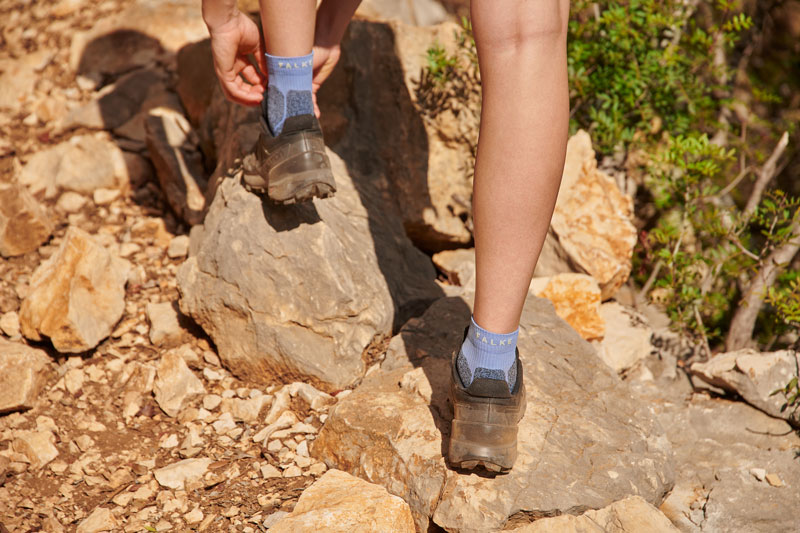
German Heritage Brand FALKE Launches Online Store In Six U.S. States

SCHMALLENBERG, Germany — June 14, 2021 — Quality, craftsmanship and innovation have always been FALKE’s core maxims. FALKE products are available in the best department stores and specialized trade shops worldwide. After strong growth in the digital business in Europe, the next step is to enter the US market with the full product range online. Socks and tights engineered in Germany and produced in FALKE factories in Europe are shipped directly from the central warehouse in Schmallenberg, Sauerland. Deliveries are initially made to the six populous states of California, Texas, New York, Florida, Illinois and Pennsylvania.

The range includes legwear for men, women and children, as well as a wide selection of functional sports socks. Highlights include the FALKE Luxury Line socks made of particularly high-quality materials, such as cashmere, baby camel and silk. FALKE products are characterized by materials of the highest quality, which are carefully processed in the individual production steps. Timeless, modern products for everyday life and special moments are created. Characteristics are the excellent fit and the outstanding choice of materials.

Founded in 1895, FALKE can look back on a varied and eventful company history. FALKE is run as a family business in the fourth generation and has developed into an internationally active family business. Our expertise in high-quality legwear and fashion is recognized worldwide.  It is the result of a long process that led from handicraft tradition, through the special skills of a manufactory, to industrial production. The idea was and still is – to offer uniqueness in series.

This idea is based on a solid foundation of values: unconditional quality, highest craftsmanship and constant innovation accompanied by filigree specialization, creative design and last but not least continuity and absolute reliability.

FALKE Ergonomic Sport System

The FALKE Ergonomic Sport System is a concept with the purpose of optimally supporting every athlete and achieving their individual goals. Ergonomic products in sports adapt to body shapes, facilitate movement sequences and create optimal climatic conditions on the body. They also protect during prolonged practice of a sport and prevent injuries. The systematic combination of function, comfort, innovation and design characterizes the unique FALKE products.

The focus is on running, hiking, biking and skiing with a wide range of functional socks and underwear.

Posted June 15, 2021

Source: Falke

Sponsors