MEMPHIS, Tenn. — June 21, 2023 — American Cotton Shippers Association (ACSA), a Memphis-based trade association primarily made up of cotton merchants, today announced the promotion of Shea Ishee to vice president. Ishee will have an integral role in all association activities including member service, operations, policy development and advocacy.
“Shea has been a key part of our success, and we were thrilled to promote her to this well-deserved position. Our team and the membership of ACSA are lucky to have such a committed advocate working on their behalf,” said Buddy Allen, president and CEO of ACSA.
Ishee joined ACSA in 2020 as director of Information Management and quickly displayed leadership, oversight and management of several key association functions that led to this promotion.
Ishee earned both her undergraduate degree in Environmental Economics and Management and her master’s degree in Agricultural Economics from Mississippi State University. She represents Women in Cotton on their Americas Working Group and has been nominated by industry leadership to serve on the Agricultural Technical Advisory Committee to the United States Department of Agriculture.
The American Cotton Shippers Association (ACSA) is a trade association primarily made up of cotton merchants founded in 1924. Collectively, our members handle the vast majority of U.S. cotton production and foreign growths traded globally. Our services consist of merchandising, delivery logistics, and risk management.
Posted: June 22, 2023
Source: American Cotton Shippers Association (ACSA)
BRADFORD, England — June 22, 2023 — The Society of Dyers and Colourists has elected a new president for 2023-4 as well as other new and returning faces to its board.
Announcements were made at the educational charity’s AGM at its headquarters, Perkin House, in Bradford, England, with delegates from around the world joining remotely.
Professor Chris Carr, a former trustee of the SDC, who in 2015 was awarded the society’s Gold Medal for outstanding contribution to Textile and Colour Education, is the new president.
He takes over from outgoing president Ullhas Nimkar, the chairman and managing director of India-based NimkarTek Technical Services, who focused his tenure on the global challenge of sustainability for the coloration industry.
Dr Susan Kay-Williams
Dr. Susan Kay-Williams, is the SDC’s president-elect, meaning she will serve as president in 2024/5.
Carr said: “I’m delighted to take on this role and aim to continue to progress the sustainability agenda that Ullhas did such a good job of moving forward. I also want to ensure that the Society is the ‘voice for the industry’ as it evolves in the 21st Century.”
Chris, a liveryman in the Dyers Co., has focused his research and academic interests on the modification of fibrous materials, to improve performance and associated analysis of material, in particular its surface chemistry.
He has collaborated with many international companies and European institutes on projects which have encompassed coloration, dry and wet processing of textiles, laundering, healthcare textiles/materials, fiber degradation and protective mechanisms.
Carr obtained both his undergraduate degree and Ph.D. from University College Cardiff and has worked in Australia, the United States, the Scottish College of Textiles, Heriot Watt University, UMIST and the University of Manchester prior to joining the School of Design, University of Leeds, as Professor of Textile Technology in 2013.
Susan Kay-Williams is chief executive of the Royal School of Needlework (RSN) and was made a fellow of the SDC in 2015 for her work on the history of color. Her recent books include 2013s The Story of Colour in Textiles and An Unbroken Thread, published in 2022 to coincide with the 150th anniversary of the RSN.
Kay-Williams commented: “While my research interest in color is in its past, my upcoming time as president I will want to look at the importance of color in so many aspects of manufacturing today and in the future — and encourage people from all spheres to be more interested in sharing their knowledge and interest.”
Four new trustees were elected to serve for the next three years on the Society’s board, following a turnout of 24.5 percent of voting members.
They are dyehouse manager Adam Pursell, digital print specialist Linda Hodgson, retired designer, educator and technical consultant Dr. Kate Wells, and academic Prof Parik Goswami.
Wells and Goswami were re-elected for a second term of office. While Pursell was a Trustee before, he stood aside for a year meaning he was eligible for re-election. At a meeting immediately after the AGM, the Society’s board re-elected Gavin Thatcher as chair and elected Adam Pursell as vice chair.
CONGLETON, England — June 22, 2023 — The co-founder of England-based Meryl Fabrics® has been announced as a NW regional finalist in a trio of categories in the prestigious Great British Entrepreneur Awards 2023.
Kevin Simpson has been honored with the accolades of Sustainability Entrepreneur of the Year, The Maker and Creator of the Year and Equity Backed Entrepreneur of the Year in the highly regarded awards initiative which “celebrates the exceptional achievements and impact of entrepreneurs across the United Kingdom, showcasing their outstanding contributions to their industries and communities.”
The recognition follows a record year of awards in 2022 for Meryl Fabrics®, which chalked up an impressive 11 winner, highly commended and finalist trophies presented by international and U.K. bodies in recognition of their firm’s major achievements in achieving sustainability with textile innovation. And following on from this the pioneering firm has secured another 4 major finalist accolades in the first quarter of 2023.
Most notably the firm was named Winner of the Circular and Recycling Award, National Sustainability Awards 2022; Winner – Industry Award for Sustainability, Professional Clothing Industry Association Worldwide Ltd (PCIAW®) and Winner of the Sustainability Award, Med-Tech Innovation 2022.
“It is an honor to receive such distinguished and much-coveted recognition for our efforts to revolutionize the way we think about, use and dispose of textiles,” Simpson said. “Our company is hugely passionate about mitigating the adverse impact that the textile industry is having on our environment, with the development of highly innovative yarns and fabrics which do not release microplastics, are manufactured with minimal water consumption and no use of chemicals, and are 100 percent recyclable.”
Driven by problem solving, the award-winning Meryl Fabrics uses Nylstar Hydrogen bonding technology to enhance the molecular structure of fibers; seal-in microplastics within the yarn and improve the durability of garments. Their continual innovation in Meryl Eco Dye offers a waterless dyeing process, saving thousands of liters of water during manufacture of fabric as they re-engineer the present of apparel. Meryl Fabrics seeks to replace cotton with its exceptionally soft touch fabrics that feature natural stretch and moisture management properties that are designed to be recycled and offer other businesses a fully circular model in one place.
GHENT — June 22, 2023 — DOMO Chemicals, a global supplier of polyamide-based engineered material solutions and services, has published its latest annual Sustainability Report, detailing progress on its sustainability journey, including notable reductions in greenhouse gas emissions. DOMO’s mission is to engineer polyamide solutions that contribute to a better, more sustainable world. In publishing its second annual Sustainability Report, DOMO enters a new phase in its decarbonization quest, with confidence in its long-term aspiration to set the standard for sustainability in the industry by 2030.
“DOMO is pursuing a strategy of sustainable value growth and strives to become, by 2030, a benchmark for sustainable development and social responsibility, and to be recognized among the best in our industry,” said Yves Bonte, CEO, DOMO Chemicals. “We are proud to have made significant progress on our sustainability journey in 2022, together with all our stakeholders.”
DOMO’s 2022 Sustainability Report was prepared for the first time in accordance with Global Reporting Initiative’s (GRI) Standards, the most widely recognized reporting framework for sustainability. DOMO also became a signatory to the Responsible Care Charter in 2022, joining forces to strengthen sustainability within the global chemicals industry.
Notably, the Sustainability Report details DOMO’s achievements in 2022 toward realizing its 2030 sustainability goals. In terms of decarbonization and broader environmental achievements, against a 2019 baseline, the company:
Reduced scope 1 and 2 greenhouse gas emissions by 27 percent, making significant progress toward its target of 40-percent reduction by 2030 and carbon neutrality by 2050;
Increased renewable electricity throughout operations to 12 percent;
Reduced waste by 24 percent; and
Lowered water intake by 4.5 percent.
In addition, as provider of polyamide-based sustainable and circular solutions, DOMO:
Achieved more than 11 percent of engineered materials sales based on sustainable feedstock, making excellent progress toward its 2030 target of 20 percent; and
Allocated 25 percent of research and development resources to enhanced recycling.
Moreover, fostering talent and ensuring the well-being of its workforce as a responsible employer is essential for sustainable growth, and 2022 highlights include:
Increased share of women in senior positions from 22 percent in 2021 to 30 percent in 2022; and
Providing a safe and inclusive working environment that encourages personal and professional development as well as a global safety culture.
“Our 2022 Sustainability Report summarizes a full year of achievements and our inspiring sustainability journey will continue,” said Bouchra Caret-Rhers, Sustainability director, DOMO Chemicals. “Our focus remains on making progress on our decarbonization roadmap, partnering to develop sustainable and circular solutions and offering a safe and inclusive work environment for our employees.”
AMSTERDAM — June 22, 2023 — Better Cotton, the world’s largest cotton sustainability initiative, yesterday hosted its inaugural Member Awards at its conference in Amsterdam, the Netherlands.
The two-day Better Cotton Conference got underway on June 21, convening supply chain actors from the cotton sector and beyond to discuss four key themes: Climate Action, Sustainable Livelihoods, Data & Traceability, and Regenerative Agriculture.
On the evening of the opening day, at a networking dinner held at Strand Zuid, Better Cotton Chief Executive Officer Alan McClay and COO Lena Staafgard presented the awards.
The Member Awards were established to celebrate the contribution of members to the growth and success of the Better Cotton framework and will be replicated annually at future conferences.
The first of four awards was the Global Sourcing Award, which was given to the Retail and Brand Member and Supplier & Manufacturer Member that sourced the highest volume of Better Cotton in 2022.
The winners were H&M Group and Louis Dreyfus Co., having surpassed all other members in the volume of Better Cotton sourced.
The second honor was the Impact Storyteller Award which recognized an organization with which Better Cotton has collaborated to spotlight compelling stories from the field.
The winner was IPUD (İyi Pamuk Uygulamaları Derneği — the Good Cotton Practices Association), following the production of content from a field trip to Turkey — covering the topics of decent work and children’s education — which generated the most coverage on Better Cotton’s website last year.
The Outstanding Contribution Award followed, and was bestowed upon organisations who contributed “in an exceptional way” to Better Cotton’s revision of its Principles & Criteria, announced earlier this year.
Representatives from the Alliance for Water Stewardship, High Conservation Value Network, Pesticides Action Network, and Solidaridad were all recognized at the ceremony for their support and input in refining the framework.
The fourth and final honor — the Transformer Award — was awarded to an organization that’s been instrumental in shaping Better Cotton’s work since its conception. IDH — the Sustainable Trade Initiative — claimed the inaugural award due to its continued and priceless contribution since 2010.
McClay commented: “I’m grateful for this opportunity to demonstrate Better Cotton’s gratitude to the businesses and organizations that have helped shape our initiative. Without them, our mission to help cotton communities survive and thrive while protecting and restoring the environment, wouldn’t be possible.”
OBERTSHAUSEN, Germany — June 22, 2023 — After all the trade show restrictions and cancellations of the past few years due to the pandemic, ITMA 2023 ended with record visitor numbers, including for the KARL MAYER GROUP. Under the tag line of ‘Master the Change — “profitable, flexible, sustainable,” the company exhibited solutions and innovations designed to maximize customer success over an area spanning 1,350 square meters. The KARL MAYER GROUP exhibited a total of 11 machines from all of its business units, along with numerous innovative, on-trend textile applications with exceptional new business potential, and a number of digital solutions.
Right from day one, the KARL MAYER GROUP stand was inundated with what could only be described as a visitor stampede. With just under 2,900 recorded contacts, the number of visitors exceeded all expectations significantly. The original KARL MAYER business units of warp knitting, warp preparation and technical textiles recorded a 20- to 30-percent increase in the number of visitors compared to ITMA 2019 in Barcelona. There was also huge interest in the exhibition by the business unit STOLL, which joined the others in 2020. The stand area dedicated to flat knitting was the Group’s busiest. Positive figures were also recorded in terms of the high number of new contacts made, which represented around 30 percent of the total. Many textile brands, but also visitors who did not hail from this industry, were interested in the potential with regard to sustainability and business development offered by innovations along the entire textile manufacturing chain, in which the KARL MAYER GROUP and its valuable solutions represent an important link.
Besides the number of visitors, the quality of the conversations with the customers also provided grounds for optimism.
“Most of the talks were very specific project discussions and in-depth expert conversations. All things considered, it can safely be assumed that the outlook is positive for us and our customers until at least the end of next year,” explained Arno Gärtner, CEO of the KARL MAYER GROUP.
That said, the extent to which the expectations will be met depends on the recovery of the worldwide textile markets and future geopolitical developments. The most recent global dynamics have already led to shifts in supply structures, which was reflected in the proportion of visitors from the various countries who visited the KARL MAYER GROUP stand. Most of them hailed from India, Turkey, Italy and Germany. The warp preparation business unit also saw lively interest from visitors from Pakistan. The flat knitting business unit, STOLL, handled many enquiries from the USA and from Bangladesh.
Tuser Biswas conducts research that aims to develop modern medical textiles that are good for both the environment and human health. Textiles with antimicrobial properties could reduce the use of antibiotics.
By Lina Färm. Translation by Eva Medin.
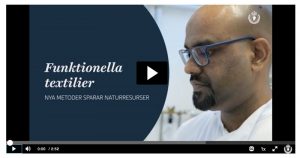
The conventional textile industry devours natural resources in the form of water, energy, and chemicals. A more resource-efficient way to produce textiles is with ink jet printing. Tuser Biswas, who recently defended his doctoral thesis in Textile Material Technology at the University of Borås, seeks to develop methods for functional textiles. He has shown that it is possible to print enzymes on textiles. These are proteins that function as catalysts in the body, as they set chemical processes in motion without themselves changing. They could, for example, be used in medical textiles with antimicrobial properties or to measure biological or chemical reactions.
“Ever since the industrial revolution, our society has used an abundance of synthetic and harsh chemicals. Our research works to replace these chemicals with environmentally friendly and bio-based materials,” Biswas said.
Promising Results With Enzymes On Textiles
Developing a good enzyme ink was not entirely easy and it took a number of attempts before he finally, to his great joy, had successful results. Tuser Biswas explained that the most important result is to show how a printed enzyme could bind another enzyme to the surface of a fabric. Although the activity of the enzymes decreased by 20 to 30 percent after printing, the results are still promising for future applications. At the same time, the work has provided new knowledge about many fundamental questions about printing biomaterials on fabric.
“Before starting the project, we found several related studies that focused on producing a finished product,” Biswas said. “But we wanted to study the fundamental challenges of this subject, and now we know how to make it work.”
He is now seeking funding to continue researching the subject and has so far received a grant from the Sjuhärad Savings Bank Foundation. During a Days of Knowledge event in April, he spoke about his research to representatives from the City of Borås and business, the Sjuhärad Savings Bank Foundation, and the University of Borås.
Medical Textiles Instead Of Antibiotics
Biswas hopes that continued research in textile technology can provide alternatives to using antibiotics. With increasing antibiotic resistance, it is an important issue not only locally but worldwide.
“Instead of treating the patient with a course of antibiotics, one can act preventively and more effectively by damaging the bacteria on the surface where they start to grow,” Biswas said. “In a wound dressing, for example. Nanoparticle-based antimicrobials can reduce growth effectively. It is possible as nanoparticles can interact better with the bacterial membrane and reach the target more easily than conventional antimicrobials.”
“Overall, I have enjoyed my time as a student at the University of Borås,” Biswas noted. “I have met many friendly people and learned about many new cultures. I also faced challenges with my residence permit, but received a lot of help from my manager, supervisor, and other colleagues.”
NEW YORK CITY — June 21, 2023 — Stylitics, the category leader in AI-powered digital merchandising and styling technology, today announced that it has appointed Juliana Prather as chief marketing officer, effective immediately. Prather will be responsible for developing and executing the company’s global marketing and brand strategies, reporting directly to Stylitics’ Founder and CEO Rohan Deuskar.
“We are thrilled to welcome Juliana to Stylitics,” Deuskar said. “Her experience and leadership as a global marketing leader in the retail industry make her the perfect addition to our company. She understands the importance of the customer experience for retail success and the power of AI-driven retail tech to help retailers scale and drive personalized style inspiration. We look forward to adding her extensive knowledge at Stylitics during this exciting stage of growth.”
Prather brings more than 25 years of branding and marketing experience to Stylitics, where she will lead the company’s messaging and growth initiatives including new retail tech SaaS solutions coming this fall. Fluent in three languages, Prather will help lead the next evolution of Stylitics’ growth through her deep retail domain knowledge and extensive knowledge of international markets. She has held leadership positions and worked with some of retail’s most well-known fashion brands including Givenchy, Nine West, Superga USA and Liz Claiborne Inc. among others; she most recently served as chief marketing officer at global retail analytics provider EDITED. Juliana also adds an increased company focus on DEI and women’s rights by expanding Stylitics’ already diverse leadership team. She is passionate about women in retail and women in tech mentor programs which she is excited to expand at Stylitics; she currently serves on the board of the Girl Scouts of Greater New York.
“Stylitics has positioned itself as a leader in retail tech with solutions for customer-first shopping experiences. I am very excited to be a part of the company in this phase of innovation and product expansion,” Prather said. “I am a believer in the company’s mission and ability to transform the shopping experience by supporting retailers with technologies that drive revenue and support their product and brand strategies. The team and leadership at Stylitics are committed to better experiences for retailers and shoppers and I look forward to being a part of this journey.”
Stylitics as the leader in product outfitting and bundling at scale is driving the next wave of retail technology with a breakthrough AI-powered software platform that delivers Inspirational Commerce, where better product presentations in outfits, shoppable visuals, designed rooms and shops create an elevated customer experience and higher revenue. The platform’s core solution recommends outfits and bundles in over 50 billion shopper sessions a year, resulting in an average 23-percent increase in units per transaction and a 21-percent increase in average order value for its global brand and retail clients. To date, Stylitics has driven more than $4 billion in incremental revenue for its customers with 200 million plus additional units sold from more than 4,500 brands and retailers.
ZÜRICH, Switzerland — June 21, 2023 — Global Textile is an integrated textile company in Uzbekistan, producing cotton, yarns, grew and dyed knitted fabrics. The company started production in 2018. The factories are located near the largest transportation hubs of Uzbekistan, in Tashkent and Fergana.
Christian Schindler, director general of ITMF, stated that: “the decision of Global Textile to join the ITMF as a Corporate Member is a clear indicator that Uzbekistan has evolved from a mainly cotton producing and exporting country to an international supplier of yarns, fabrics, apparel, and home textiles. For an integrated producer ranging from cotton to finished knitted fabrics ITFM can offer Global Textile an international forum that provides a unique international network covering the entire textile value chain including textile machinery and chemical companies. This will help Global Textile to better understand international markets, increase visibility, and connect with relevant international players in the industry. ITMF members will have the opportunity to discover Uzbekistan both as a production alternative as well as a customer and partner”.
Muzaffar Razakov, chairman of Global Textile, commented: “Joining ITMF is enabling Global Textile to receive statistics and publications in a timely manner, participate in surveys, webinars, workshops, or conferences, and to participate in the discussions about the trends shaping the future of the industry. It is vital for a company like Global Textile, Uzbekistan textile ambassador to the world, to be an active part of a global community and expand its network, and ITMF is offering this in a unique way.”
Posted: June 21, 2023
Source: International Textile Manufacturers Federation
LONDON — June 14, 2023 — Gainsborough and AO Textiles collaborate to offer a unique service combining a natural dye color consultancy with bespoke jacquard woven textile production.
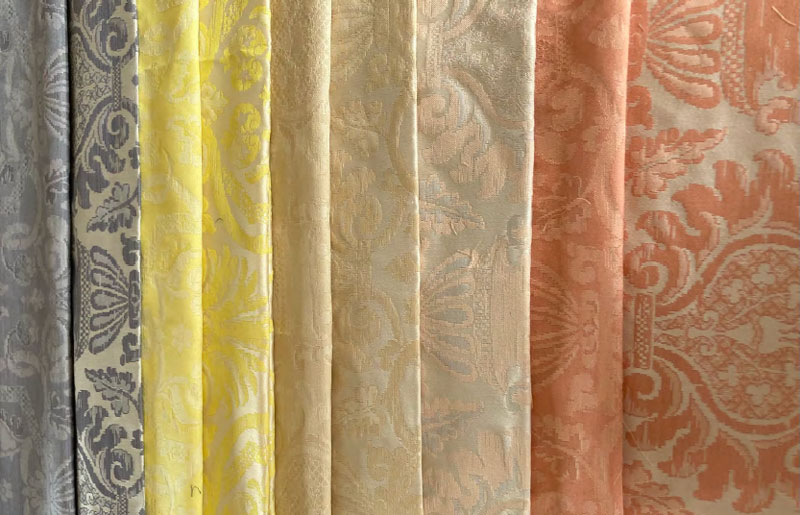
Together they have developed techniques that revive heritage alongside modern production methods; in particular, the use of natural plant-based colors for contemporary textile production.
All production, from dyeing the yarn to weaving the fabric, is done in-house. The partnership has established that color sourced from sustainable botanicals, including madder, weld and chestnut, can play a part in circular 21st century textile production, making an environmentally conscious move away from the synthetic petroleum-based colors common in textile manufacture today. The fabrics are created using naturally derived color that are scalable, repeatable, and of the quality demanded by industry.
The plants include :
WELD — creates bright yellows as seen in the palette color but can also be used to create light and dark green.
CHESTNUT — Chestnut produces a range of soft brown colors. The chestnut extract they source is from Occitanie and is produced sustainably by KINGTREE, in the Haut-Languedoc Regional Natural Park. The dye is obtained from natural regrowth of chestnut wood (Castanea sativa Mill). Vegetable tannins (ellagic tannins) are extracted using wood water and concentration, therefore in a closed loop without water consumption or effluents. A good example of co-recovery since the extracted wood is then used to manufacture building biomaterials.
MADDER — is sourced from the roots of the madder plant and creates anything from a dark rusty red to subtle pale pinks.
LOGWOOD — The heartwood of Haematoxylum campechianum. Logwood can be used to create a variety of colors from deep, rich, red-purples to orchid blues.
The colors include Campeche, Luteola, Rubea, Pale Rubea and Casteneda.
The partnership will be launched at the Sustainable Angle Future Fabrics Expo in London from June 26-28, 2023.
About Sustainability
All aspects of textile production; from the replacement of synthetic color with natural dyes to sustainably sourced silk yarn, obtained through an environmentally friendly process that does not involve the use of pesticides and plays a key role in supporting rural communities.
Certified by Oeko-tex Standard 100 certification. The AO textiles dyeing process received the stamp of approval from Greenpeace International’s Detox Fashion Campaign in 2013. Using 100-percen sustainably sourced Oeko-tex Standard 100, Class I-IV natural dyes, which are compliant with the requirements of the ZDHC Manufacturing Restricted Substances List V2.0. Additionally, mordants and dyes are GOTS certified.
The exhaustion process employed in the dye house reduces wastewater and dye to negligible levels. Excess heat from steam pipes is channeled via a heat exchanger into the drying cupboard to dry yarn using no additional energy. Production has been reduced to almost zero waste as all fabric is made to order. Any yarn that is not woven is donated to recycling charities and to students. Gainsborough fabrics are designed with longevity in mind and often exceed their expected life span of 25 years.