Just A Few Of The “Cool” Things On Display — The ITMA 2023 Edition

Technology highlights from the industry’s largest textile machinery show mostly focused on sustainability.

Technology highlights from the industry’s largest textile machinery show mostly focused on sustainability.

By Rachael S. Davis, Executive Editor

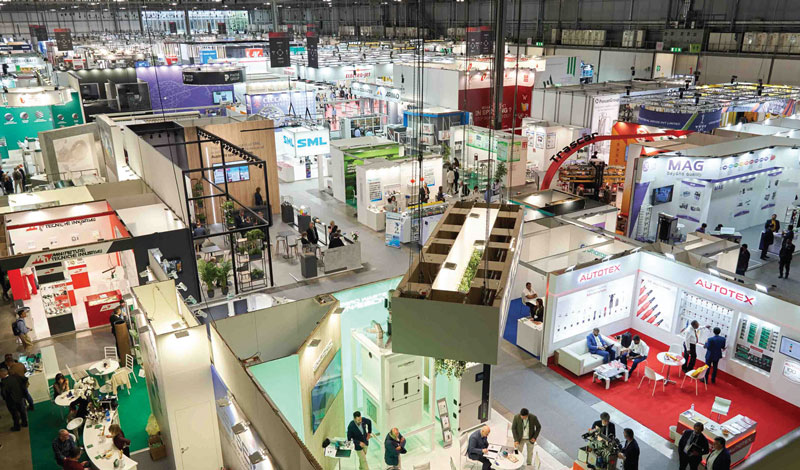
For those not familiar with the ITMA tradeshow, it’s hard to accurately convey the sheer magnitude of the event from the expansive exhibit halls filled with technology loaded lavish booths to the huge volume of visitors wandering the halls. In 2023, ITMA — a quadrennial textile trade show owned by the European Committee of Textile Machinery Manufacturers (CEMATEX) and organized by Brussels-based ITMA Services —occupied 200,000 gross square meters of exhibition space with 1,709 exhibitors from 47 countries taking up 118,300 net square meters of exhibit space at the Fiera Milano Rho in Milan, Italy, to showcase their innovations.

The overall theme for ITMA 2023 was “Transforming the World of Textiles.” Under that banner idea, several key ideas critical to defining and ultimately transforming the industry were highlighted including Sustainability and Circularity, Innovative Technologies, Automation and Digital Future, and Advanced Materials. It was clear observing the show floor that exhibitors embraced the sustainability pillar full on. Many of the technologies focused on sustainable manufacturing and recycling processes. Interestingly, the industry is moving on from Industry 4.0 and is already embracing the idea of Industry 5.0 — adding human, environmental and social aspects back into the Industry 4.0 ideas focused on robots and smart machines. This acceptance of robots and smart machines working alongside people in a sustainable and harmonious way certainly does paint a picture of a transformed textile industry.

Approximately 111,000 visitors from all over the globe attended the event over seven days.
No matter how long a visitor spent exploring the show floor — be it one day or all seven days — it would be impossible to visit every booth to view all of the technologies and developments. Similarly, it is impossible for TW editors to identify and select all the unique, eye catching and “cool” things on display at the show. But what follows is a slice of some of the interesting technologies displayed during ITMA 2023 from across the exhibit sectors and presented in no particular order.

There is much, much more to share from ITMA 2023, and in-depth, sector-specific coverage will be presented in future issues of TW beginning in the September/October 2023 issue.



Zimmer’s STR System WENK

Zimmer Austria: Rotascreen Duplex Printer & STR System WENK

While digital printing continues its evolution and ascent in the textile printing world, by far the majority of textiles continue to be printed using screen printing technologies. Austria-based J. Zimmer Maschinenbau GmbH introduced a modified version of its Rotascreen technology at ITMA that allows duplex printing so a fabric may be printed on the front and the back at the same time. The Rotascreen line now also can be supplied in an open or closed bearing option depending on the manufacturer’s needs.

Zimmer also launched the STR System WENK, a rotary screen stripping and ironing machine also known as the “Green Machine.” The machine uses only water and high-pressure jets to clean photo emulsion from rotary screens so they can be reused up to 20 times. No chemicals or acids are required — just standard fresh water. Stripping time will depend on the emulsion used. The high-pressure jets also remove any creases to effectively “iron” the screens. After treatment, the cleaned screens emerge in a near to new condition. Developed in conjunction with Italy-based partner WENK S.r.l., the Green Machine may be fitted with an optional water recycling system to recapture and reuse the water in an economic and sustainable process.


Benninger’s SingeRay singing technology

Benninger: SingeRay

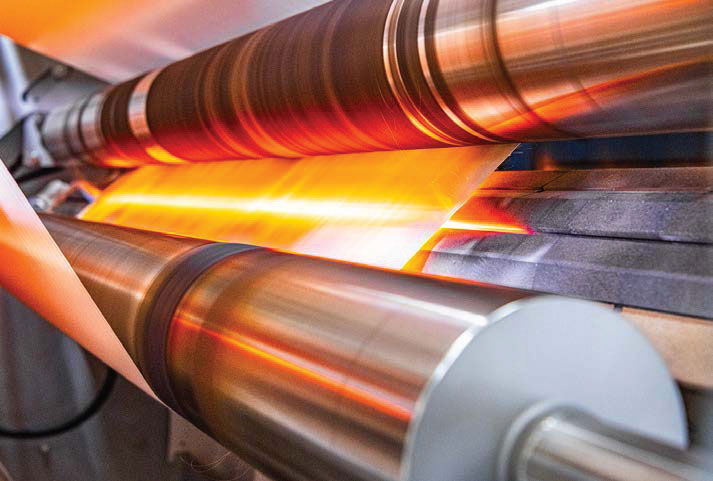
Switzerland-based Benninger AG reports its new SingeRay singeing machine has exceeded all expectations selling more units already this year than ever anticipated. The machine was designed with energy savings, natural gas in particular, in mind. Made in Germany, the SingeRay features four singeing positions as well as two special aluminum burners with ceramic flame guiding bricks, which offer higher production speed and higher heat intensity. Its silicium carbide burning chambers with four cooling channels ensure complete combustion and a constant burner temperature, which also helps to keep the nozzle strip straight. The machine can be adapted to accommodate different widths of fabric and rather than just shutting down sections of the flame bar, the actual chamber width can be modified to close the gap on each side thus aiding heat conservation and saving energy.



A fabric created using Stratasys’ 3DFashion™ color, translucent, rigid or flexible 3D printing technology.

Stratasys: 3DFashion™ Direct-To-Textile 3D Printing Technology

In terms of being “different” and eye-catching, Israel-based Stratasys Ltd.’s 3DFashion™ direct-to-textile 3D printing technology was a stand-out. The 3D printing technology is some 30 years old, but the company said inquiries from customers drove it to develop the idea of 3D printing onto textile substrates. Stratasys offers advanced materials — full-color, translucent, rigid or flexible — that can be adhered to textiles and garments using the J850 TechStyle™ 3D printer. The company was at ITMA to introduce the concept and gauge interest in the technology.

The colors and geometries are basically unlimited and hindered only by the creativity of the designer, although for garment applications, the weight of the 3D printed material has to be taken into account. Initial tests show the resins can last about 20 washes currently, but the company is continuing its research and development for textile applications. Stratasys also is developing a 2D to 3D software tool to help J850 TechStyle printer users to adjust the height, color and texture of 2D images to transform them into 3D printed elements.
Examples of the technology on display at the booth included colorful wall art, embellished denim and bags, as well as technical textiles for auto-motive applications.

“ … Stratasys is ushering in a new era of textile printing that puts 3D printing technology directly in the hands of this community, opening up unlimited possibilities for them to introduce entirely new attention-grabbing added-value applications within their offering and drive new revenue streams,” said Enrico Toson, Stratasys’ marketing manager.


Savio’s Lybra Smartspinner®

Savio: Lybra Smartspinner® Air-Jet Spinning Machine

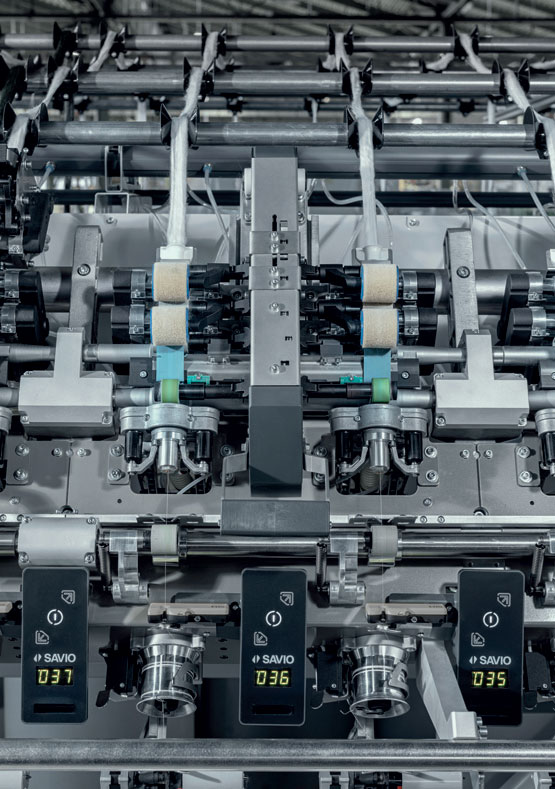
Italy-based Savio Macchine Tessili S.p.A., long a specialist in yarn winding technologies, introduced its Lybra Smartspinner® air-jet spinning machine at ITMA 2023. Marketing and communication manager Eva Babbo acknowledged that other companies already do air-jet spinning technology very well and with the existing level of competition, Savio was determined to get it right and has been working to perfect its offering since 2016. In order to bring something to the space, Savio focused on the concept “We spin different.” The Lybra machine takes advantage of the Coanda effect, which is the tendency of a fluid jet to stay attached to a convex surface. As fibers enter the spinning nozzle, high-speed air jets create a helical flow that twists the fibers into a yarn.

One unique feature on the machine is the Multi Blend unit, which allows manufacturers to create mélange yarns as well as blended colors or blended fiber yarns. The flexible unit combines two slivers directly at the spinning unit, so instead of needing to preblend a sliver before spinning, a yarn manufacturer can blend and mix fibers as they are fed into the machine. The system can be adjusted to change the blend — from say a 50 percent white/50 percent blue sliver to a 30 percent white/70 percent blue combination — using the machine’s controls in a practically instantaneous manner. The machine is designed for high production rates, but with versatility and cost savings in mind.


DiloGroup’s MicroPunch needlepunching technology

DiloGroup: MicroPunch

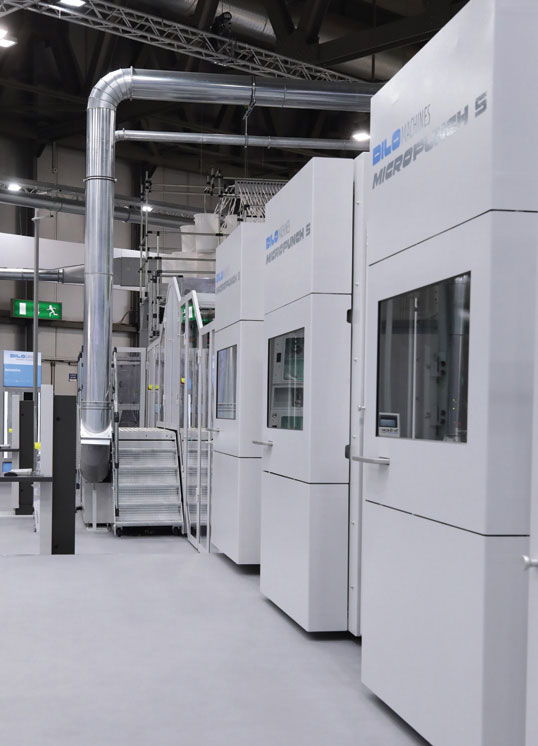
Ever the innovator, Dilo-Group did not disappoint with the introduction of its MicroPunch at ITMA 2023. The machine took approximately 20 years of study and research to come to fruition and the demonstration unit was ready just in time for  the big reveal at the show.

Needlepunching technologies have traditionally been better suited for medium to high fabric weight ranges in part because the needles leave a mark in the resulting nonwoven structure, which is more apparent at lower weight ranges. Hydroentanglement is most suited to weight ranges less than 100 grams per square meter — resulting in fewer applications for these types of fabrics, although they have a stronghold in wipes making up approximately 85 percent of the market. However, the water and energy requirements for hydroentangling are great. Enter DiloGroup’s MicroPunch, a new option for lightweight needlepunched nonwovens ranging from 30 to 100 grams per square meter. The machine features an insane 45,000 needles per meter per board made possible with an innovative needle and needle board design developed in conjunction with Groz-Beckert. The needles move in and out of the fiber web in a manner that minimizes as much as possible any needle marks in the finished nonwoven. The machine runs at 160 to 170 meters per minute and the company reports up to 50 percent savings in energy per kilogram of fabric depending on the product. Fabrics made using the MicroPunch are strong and have more volume than a lightweight hydroentangled fabric. DiloGroup CEO Johann Philipp Dilo said interest in the machine was overwhelming during ITMA.


A sample produced on Stoll’s new ADF 530-16/4 ki WWK E7.2 concept machine.

Stoll by Karl Mayer: ADF Concept Machine

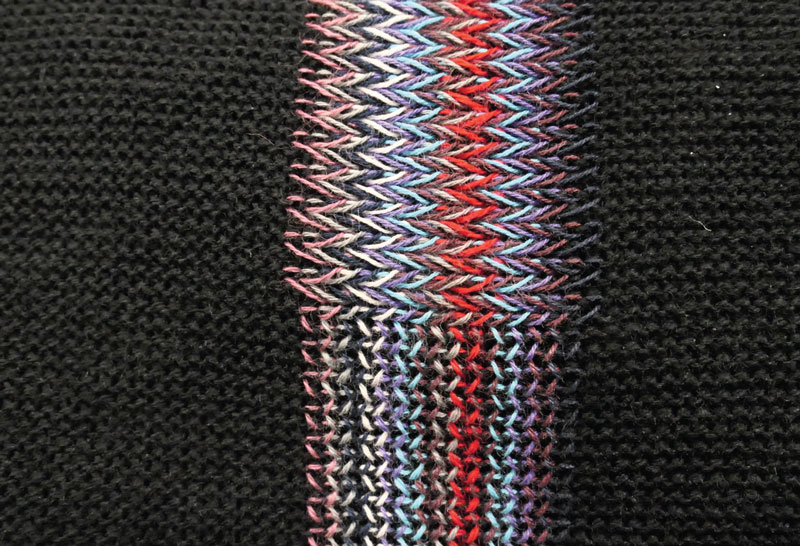
Germany-based Stoll, a member of the Karl Mayer Group, introduced a prototype concept machine at ITMA 2023 — the ADF 530-16/4 ki WWK E7.2. The technology fuses flat knitting, warp knitting and weaving into one machine. The inno-vative yarn guides capable of 3D movement along with corresponding yarn feeding modules on this ADF model enable structures with sectoral poly-directional reinforcements and zones, which in con-junction with special and standard yarns can produce unique designs and functional structures with decorative seam effects. In particular, the machine offers interesting possibilities for medical structures, according to Matt Llewellyn, director of sales and marketing. Stoll also introduced the ADF 530-32 ki BcW E20 ultrafine gauge machine.

In addition, Stoll reports all its machines are 12-percent more efficient than previous models thanks to new needles and optimized cams, and feature a new oiling system that is easier to clean and allows the oil to be filtered and reused.
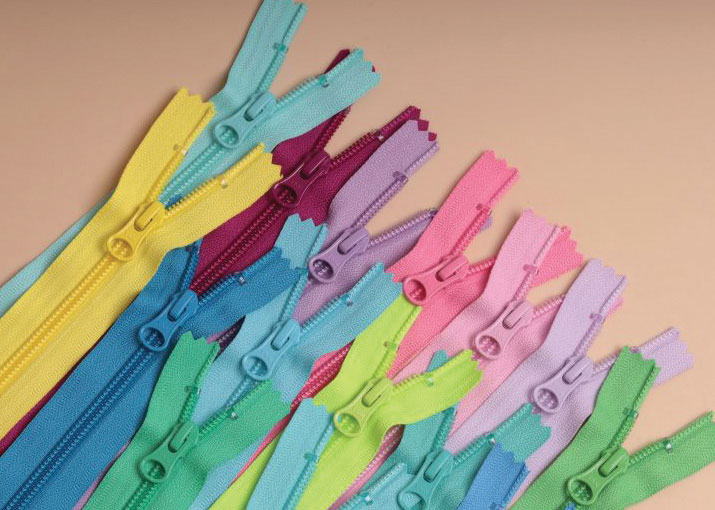


YKK is using REVECOL® auxiliaries

Erca Textile Chemistry Solutions: REVECOL® Textile Auxiliaries

Italy-based ERCA Textile Chemistry Solutions introduced a new generation of auxiliary chemicals made from used vegetable oil. The REVECOL® (Recycle Vegetable Cooking Oil) by ERCA product line features a complete range of chemical auxiliaries — such as dyeing pretreatments, leveling agents, softeners, and emulsifiers/detergents among other products — that may be used on all fiber types including virgin and recycled fibers. ERCA’s safe and environmentally friendly manufacturing process takes the waste oil and transforms it into high-performing auxiliaries with circular DNA. All products are certified by Global Recycled Standard, Recycled Claim Standard, bluesign®, Global Organic Textile Standard and listed in the ZDHC Chemical Gateway. Additionally, a bluesign Product Carbon Report revealed that REVECOL LV-TS has a 72-percent lower carbon footprint than the conventional chemical auxiliaries ERCA manufactures. ERCA recently collaborated with Patagonia® and YKK Corp. to successfully implement the use of REVECOL in YKK’s dyeing processes at Vietnam-based production sites.

“We at ERCA are always looking for innovative solutions through the development of products that are increasingly high performing, competitive and sustainable at the same time,” said Fabio Locatelli, head of ERCA’s textile business unit. “REVECOL is the perfect example of this and it represents the ‘so far missing piece’ for the production of textile materials that enable the approach to an increasingly responsible and certified supply chain without any compromise in performance.”



Pailung’s AlterKnit offers unlimited design possibilities including typography and logos.

Pailung: AlterKnit/Vanguard Pailung: High-Speed Production Machine

Taiwan-based Pailung Machinery Mill Co. Ltd. launched the AlterKnit™ circular knitting technology at ITMA. This upgraded version of inverse plating knits alternate yarns into the fabric’s structure allowing yarns of different colors or composition to be knit together within the same row. Intricate patterns with sharp borders are possible and the fabric is reversible. The finished fabric may be highly patterned and does not need to be dyed or printed for colorful effects, which saves energy and resources. Both a single-knit and double-knit machine are available. The process also does not result in yarn floats that may make a fabric uncomfortable to wear and reduces yarn waste.

Monroe, N.C.-based Vanguard Pailung also introduced a newly designed circular knitting machine for high-speed production. The machine is now driven from the bottom to reduce torque and stress on the knitting elements; and the knitting elements are elevated further from the ground to accommodate fabric rolls up to 500 pounds for customers that dye fabric in large batches. The machine housing also was redesigned in a square format, which is cheaper to build for a more economical machine. In addition, the square design saves floor space. Vanguard reports four of the new machines can fit in the footprint that previously held only three machines.



Officina39’s Recycrom pigments are made from recycled textiles.

Officina39: Recycrom™ Dyestuffs & Ecobinder R

Italy-based Officina39 operates under the tag line “Chemistry Plus Creativity,” and the company has certainly found some creative resources to use as starting mate-rials for its Ecobinder R Series and Recycrom™ dyestuff products. The Ecobinder R Series is a binder suitable for printing, spray, coating and dyeing applications that is made using 100-percent post-consumer recycled polymer obtained from recycled windshields and other types of laminated and safety glass.

In 2018, the company introduced its Recycrom pigment powders — derived from 100-per-cent recycled used clothing, fibrous material and textile scraps. The waste textiles are processed using an upcycling process developed by Officina39 to create the pigment dyes. The company has continued to develop and refine this process and at ITMA 2023, launched the Recycrom Ready to Dye Dark and Bright line. The line offers 15 standard, in stock colors made using a minimum of 65 percent recycled textile pre- and post-consumer materials. The Ready to Dye pigments are suitable for use on cotton, wool or nylon as well as any cellulosic and natural fiber or blends. According to the company, 100 kilograms of textile waste can produce enough Recycrom Ready to Dye pigment to dye 20,000 T-shirts. Recycrom Pure allows manufacturers to partner with Officina39 to create custom dyes using their own scraps and textile waste.

According to Officina39, Ecobinder R can be combined with Recycrom pigments for a circular solution.
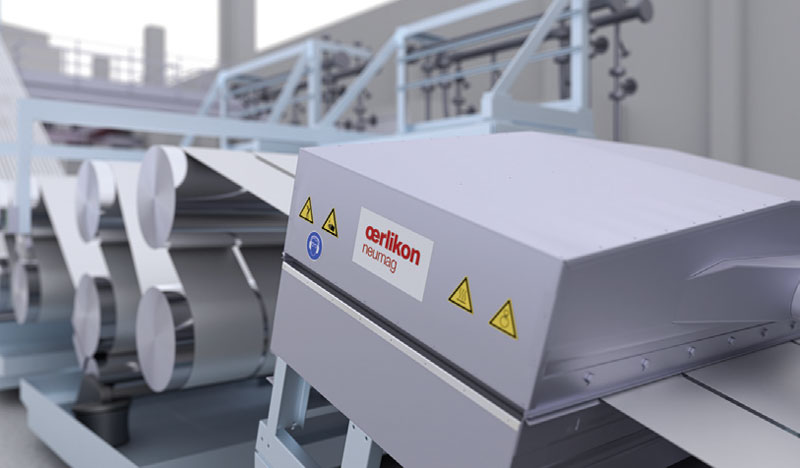


EvoSteam features an innovative draw point release using a vapor curtain for improved quality.

Oerlikon Neumag: EvoSteam

While the demand for recycled yarns continues to grow, so does global demand for polyester staple fiber. The EvoSteam process introduced at ITMA by Germany-based Oerlikon Neumag is aiming to revolutionize the polyester staple fiber production process and make it economical, resource- and environment-friendly. According to the company, the EvoSteam process offers a 12-percent increase in efficiency, a reduction in production waste of up to 50 percent, energy savings of up to 8 percent, and a reduction in carbon footprint by up to 20 percent, compared to conventional staple fiber systems. Instead of using a liquid immersion bath, a coordinated setup of godets and pulsed spray nozzles adds only the precise amount of moisture needed to the process, which results in water savings of up to 10 million liters a year. The process also reduces the amount of spin finish needed, and energy required to produce the fiber is reduced since the fiber requires less drying at the end of the process.
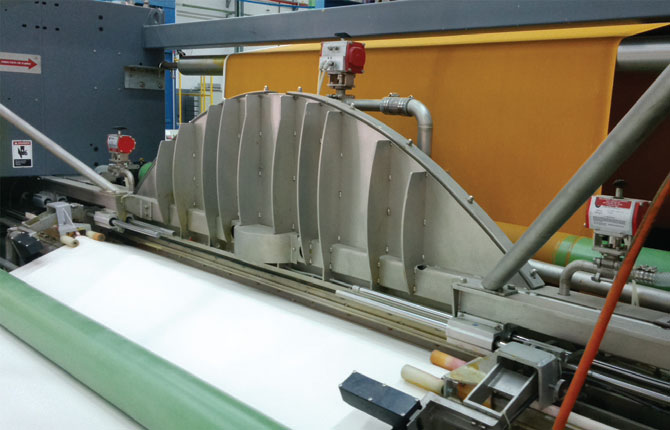


Gaston Systems’ foam technology

Navis Tubetex: Gaston Systems Chemical Foam Solutions (CFS®)

The President and CEO of Lexington, N.C.-based Navis Tubetex, Will Motchar, noted there was a lot of interest at ITMA in the company’s Gaston Systems’ foam technology for applying a low water foamed chemistry onto or into a substrate. The technology was originally used for chemical finishing where the precision applicators allow one chemical to be applied to the front of a fabric while a different chemical is applied on the back. But further applications for this proprietary technology are developing because of the ability to reduce chemical waste, as well as water and energy consumption.

The company recently collaborated with biofabrication company Modern Meadow who was searching for a partner that offered an application technology suitable for its Bio-FREED™ powered by Bio-Alloy™ plant-based protein and biopolymer. When used as a dyeing pretreatment, the bio-based technology makes the fabric much more receptive to dyes. Research is continuing, but the process is interesting for its ability to reduce energy, water, and dyes and chemicals use during dyeing. When applied to a blended textile substrate using the Gaston Technologies foam equipment, Bio-FREED results in an estimated 95-percent reduction in water, 75-percent reduction in energy, and an 80-percent reduction in the amount of dyes and chemicals needed. A partnership to develop the technology among Navis TubeTex, Modern Meadow Bio-FREED and Italy-based manufacturer Limonta was one of the three finalists for the 2023 ITMA Innovation Award. “We believe that sustainability should be at the fore-front of every industry, including textile manufacturing,” Motchar said.

“Teaming up with Modern Meadow allows us to offer our clients cutting-edge solutions that align with their sustainability goals. Together, we can drive meaningful change and shape the future of the textile industry.”
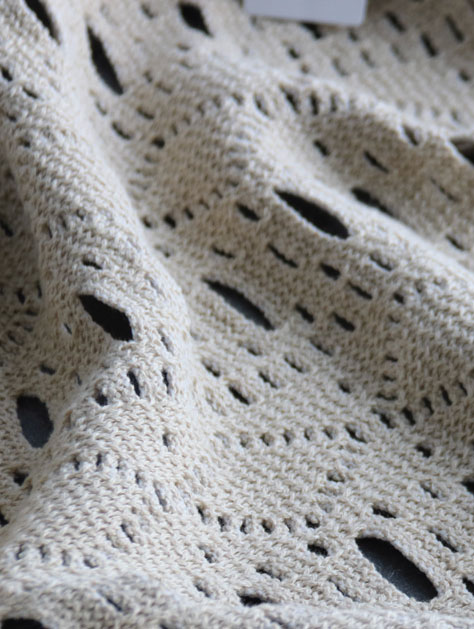


Handmade natural fiber fabric made on Karl Mayer’s “Crochet-Knit” machine.

Karl Mayer: RSJFS 4/1 EL Warp Knitting Machine

ITMA made it clear that the interest in natural fibers and especially recycled natural staple fibers is on the rise. In some instances however, these recycled and natural yarns can present problems in manufacturing. The latest Raschel crochet machine from Germany-based Karl Mayer— the RSJFS 4/1 EL, 130” E14 “Crochet-Knit” model — features enhanced knit-ting parts as well as a synchronized suction and blowing system that helps manage excess lint so recycled yarns may be processed with ease. The machine can produce dense and complex patterns in crochet or knitted styles for handmade looks suitable for fashion applications. The machine features a fall plate as well as double switching technology in the jacquard bars to enable a wide range of floating designs and complex patterns. The Crochet-Knit machine will be available in early 2024.



Thies Signature Series

Thies: Signature Series Jet-Dyeing Machine

Germany-based Thies Textilmaschinen GmbH & Co. KG debuted the Signature Series machine, which was developed to dye cotton fabrics at the lowest possible liquor ratio using no salt. The jet-dyeing machine operates at an ultra-low liquor ratio as low as 1:2.3. For each batch, the liquor ratio is determined based on the fabric’s adsorption level plus a small quantity of water roughly equal to 0.6 liters per kilogram to ensure the pump used to circulate the dye liquor remains flooded. By removing water from the process, more of the dyestuff goes on to the fabric instead of hydrolyzing and ending up as a waste product. The machine delivers small amounts of highly concentrated dye throughout the dye cycle to ensure a level dyeing.

The machine can be used in three modes to dye using full salt, low salt or no salt. No salt dyeing reduces the effluent, which helps companies in countries with strict effluent policies; and both no and low salt processes save dyestuff and chemicals for both cost savings as well as environmental advantages.

The Signature Series prepares, dyes and rinses the fabric without the need for intermediate processes or machines. As a high-pressure vessel, the machine also can be used to dye polyester and is a great option for a company that handles a variety of fabric substrates. An adjustable, curved J-box also means the machine can handle light and heavy fabrics in full and reduced loads.

“Thies is opening a new chapter in fabric coloration,” said Verena Thies, managing shareholder, Thies. “Signature’s innovative ultra-low liquor ratio significantly enhances dye effectiveness, resulting in up to 20 percent decrease in dyestuff consumption. By combining Thies’ cutting-edge advancements, water usage is minimized by 25 percent.” These decreases are based on a comparison with Thies’ iMaster, the Signature’s predecessor.
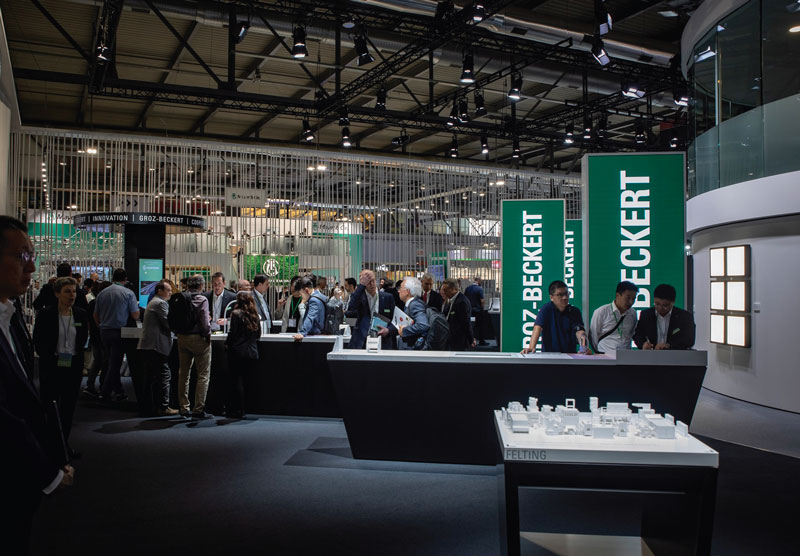


Groz-Beckert’s ITMA 2023 booth had examples of all its latest innovative needle technologies.

Groz-Beckert: Needle “Innovation Through Cooperation”

Needles may seem like such a small part, but they are an extremely important component of any knitting or nonwoven machine. Germany-based Groz-Beckert is an experienced and accomplished producer of needles for various industries. At ITMA, the company unveiled several new needles and needle systems developed in conjunction with industry partners under the motto “Innovation Through Cooperation.”

As noted earlier in this feature, the right felting needle was instrumental in DiloGroup’s development of the MicroPunch needlepunching machine. The design embeds Groz-Beckert needles as a module in a plastic mold. A new intensive needling technology developed especially for light grammages results in felting needle modules with very high deformation resistance and offers new dimensions in needle density. The modules also were designed for easy and economical assembly and replacement.

In the knitting sector, Groz-Beckert also collaborated with Vanguard, Santoni and Mayer + Cie. on new products.

Germany-based Mayer + Cie’s Relanit 3.2 HS circular knitting machine features the new LCmax™ needles and SNK-SF sinkers. The modified wave shape shank geometry of the LCmax simplifies handling and reduces friction. The needle reduces energy costs up to 20 percent through minimal power consumption and reduced machine temperatures. The SNK-SF sinker was designed to be much more wear resistant and can reduce dirt deposits to extend machine cleaning intervals.

The Innotas system, comprising the SAN™ DUO needle and SNK DUO-OL sinker, was developed for Italy-based Santoni’s Innotas large diameter, single jersey machine. Both components feature a low shank — to minimize soiling when using abrasive yarns — and a predetermined breaking groove, which enables controlled needle breakage at the desired place in the event of wear. The system is self-cleaning and does not need to be over-hauled and cleaned every eight weeks; and open cam parts allow fluff to be expelled, which reduces machine downtime.

Groz-Beckert also engineered a new compound needle for Monroe, N.C.-based Vanguard Pailung’s high-speed circular machines, which was designed for high productivity and high process reliability while reducing stress on the yarn. The needle, exclusive to Vanguard for now, can operate at a speed factor of 2200.
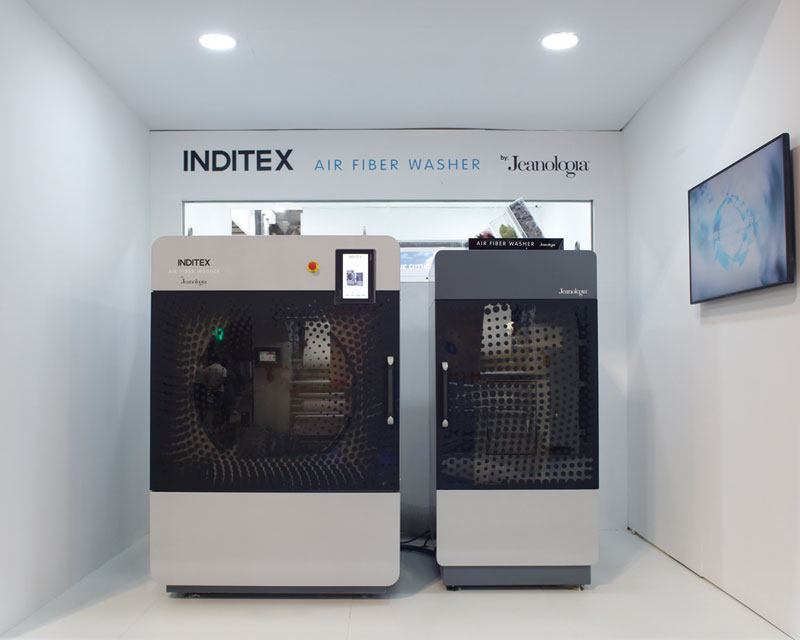


Jeanologia’s Air Fiber Washer on display at ITMA

Jeanologia: Atmos & Air Fiber Washer

Spain-based Jeanologia S.L. was founded in 1994 with the mission of transforming the textile industry, and developing technologies and eco-efficient production models. At ITMA, the company launched a number of technologies in the “era of air” — so called as it aims to enter a new era of denim production with no water, no waste and zero discharge. The new Atmos atmospheric washing process pairs its G2 ozone technology with the new patented INDRA system to produce a stonewashed, authentic vintage look on denim without using water, chemicals or pumice stones. “Thanks to INDRA, we can achieve perfect control of the humidity and atmosphere temperature to achieve exceptional garment abrasion and discoloration,” said Carmen Silla, global brand & marketing director, Jeanologia. “We attain the same effects that were previously only possible with water, chemicals and pumice stones, while ensuring perfect reproducibility and enhanced productivity in a more efficient, sustainable and safe way.”

Jeanologia also collaborated with Spain-based apparel giant INDITEX to come up with a solution to reduce the release of microfibers from garments. Their development — the Air Fiber Washer — is based on testing that shows the majority of fiber fragments are released in the first three washes at home. To combat this, the Air Fiber Washer features a polyhedric drum and uses air flow to extract microfibers from the garments. According to Jeanologia, the Air Fiber Washer extracts up to 60 percent of microfibers during the process, which are captured using a microfiltration system and may be repurposed or recycled. Estimates indicate each Air Fiber Washer will collect up to 325 kilograms of microfibers per year. “Working with Inditex is a great experience and source of pride,” said Enrique Silla, Jeanologia president. “This initiative is just the first step in the mission we have set for ourselves to minimize the impact of microfiber shedding in textile manufacturing and in the product life cycle.”


July/August 2023

Andritz Buys Dan-Web Machinery

Austria-based Andritz has signed an agreement to acquire Dan-Web Machinery A/S, a Denmark-based supplier of technologies for airlaid nonwovens used in baby diapers, feminine care, incontinence products and wipes applications, among other applications. The acquisition will strengthen Andritz’s nonwoven portfolio.

“I am delighted about joining forces with ANDRITZ,”said Kurt Soerensen, president of Dan-Web, “As part of the ANDRITZ GROUP, our product portfolio will be integrated into first-class process applications. Our common approach is to put a focus on further developing the range of environmentally friendly production technologies for the nonwovens industry.”

July/Augustu 2023

brrr° Completes $6.3 Million Capital Round

Atlanta-based brrr°, a developer of cooling yarns announced it has completed a $6.3 million round of Series B round of funding, which includes an investment from David Chu who has also joined the company’s board of directors. Chu plans to collaborate with brrr°to design fabrics and support sales through his own company DC Designs International.

“We are delighted to partner with David and bring his visionary expertise and global connections into the brrr° family,”said Founder Mary-Cathryn Kolb.“Together, brrr°and DC Designs International can accelerate each other’s growth with performance cooling fabrics that are both functional and beautiful.”

July/August 2023

Albany International To Acquire Heimbach

Albany International Corp., Rochester, N.Y., has entered into a definitive agreement to acquire Germany-based Heimbach Group, a supplier of paper machine clothing. The all cash transaction is valued at approximately 153 million euros and includes the assumption of 21 million euros net debt.

The deal is expected to close in the second half of 2023. Heimbach’s machinery is used to make textile products for a variety of sectors as well as all grades of paper and cardboard. The company has approximately 1,200 employees in Europe and China, and its annual revenue in 2022 was approximately 161 million euros.

July/August 2023

Toray Grows Carbon Fiber Production

Toray Composite Materials America Inc. (Toray CMA), Tacoma, Wash., is expanding its carbon fiber facility in Spartanburg, S.C. The planned 30,000-square-foot expansion will increase capacity at the plant by 3,000 metric tons by 2025. The investment will increase the supply of industrial strength carbon fiber for pressure vessel applications.

“The market for clean energy solutions is continuing to rapidly develop,”said Tim Kirk, Toray CMA’s vice president of marketing.“As released earlier this year under Toray’s Medium-Term Management Program, Project AP-G 2025, we are committed to accelerating tech-nologies that will greatly reduce our environmental burden. This next expansion enables us to keep-pace with the needs of our customers and maintain our leadership position.”

July/August 2023

Indorama, Carbios Make Plans For PET Biorecycling Plant

Bangkok-based Indorama Ventures Public Co. Ltd. and France-based Carbios have announced plans for a joint venture to build a PET biorecycling plant in France. Total capital investment is estimated around 230 million euros. Contract documentation should be finalized by the end of 2023, and both companies have acknowledged support for the project to move forward.

The memorandum of understanding signed between the two companies gives Carbios 13 hectares of land from an existing Indorama Ventures PET plant in Longlaville, France.

Permits are expected in Q3 2023 with construction to begin by the end of the year. The companies aim to commission the plant in 2025.

“Today’s announcement is a significant landmark in our partner-ship with Indorama Ventures and a major step forward in realizing our joint first-of-a-kind PET biorecycling plant,”said Emmanuel Ladent, CEO of Carbios.“The technical due diligence jointly undertaken with Indorama proves the robustness of Carbios’ disruptive technology. At Carbios, we are committed to bringing plastic and textiles into the circular economy. Our first reference unit at Longlaville is a springboard for our industrial and commercial deployment worldwide in order to reach our leadership goals in advanced recycling of PET.”

July/August 2023

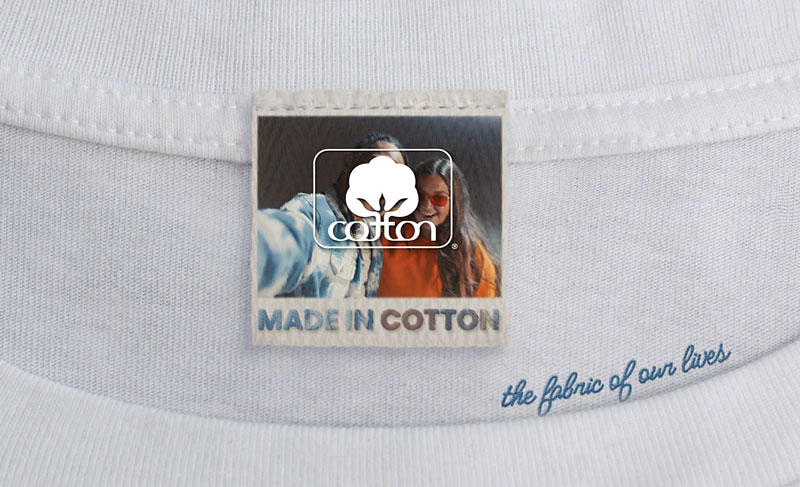
Cotton Incorporated Celebrates 50 Years Of The Iconic Seal Of Cotton

Cotton’s emblematic Seal of Cotton trademark is 50 years old.

Today, the Seal of Cotton is embraced by more than 950 brands across nearly 70 countries, becoming a globally recognized symbol associated with fashion, durability, quality, and sustainability.

TW Special Report

Cary, N.C.-based Cotton Incorporated is commemorating the 50th anniversary of the Seal of Cotton trademark, an emblematic logo that revolutionized cotton from a basic agricultural commodity into a globally recognized symbol of natural comfort, trust and sustainability. This iconic seal serves as the distinguishing mark and common thread for cotton, becoming an emblem for all things #MadeInCotton.

The Seal Of Cotton

Unveiled in 1973, the Seal of Cot-ton quickly gained recognition as a symbol of trust, quality, sustainability and dependability among consumers, retailers and textile brands. The brainchild of Susan Landor Keegin, daughter of branding pioneer Walter Landor, the design incorporated the natural elements of cotton. Inspired by the sight of cot-ton plants in the fields, with their rigid stems and soft bolls, Keegin envisioned the word “Cotton” growing from the roots. This visionary concept gave birth to the Seal of Cotton, enabling easy identification of cotton fibers and differentiation from synthetic alternatives.

“The assignment was to find a way to stand up against synthetics,” recalled Keegin of Landor Associates. “I was going to see relatives who lived in the area and saw cotton growing in the fields with the bolls puffed up. Something about seeing it in person, the rigidity of the stem and the softness of the boll, I had never seen that.”

Today, the Seal of Cotton is embraced by more than 950 brands across nearly 70 countries, becoming a globally recognized symbol associated with fashion, durability, quality and sustainability. According to Cotton Incorporated’s 2023 Seal of Cotton Consumer Research, nearly eight out of 10 consumers — some 78 percent — are aware of the seal, empowering them to make informed purchasing decisions in favor of a natural, sustainable fiber that is known and trusted. Furthermore, more than 80 percent of consumers express confidence in a brand and its product when featuring the Seal of Cotton, while 90 percent appreciate cotton fabric for its comfort and versatility.

In the current retail landscape, 46 percent of U.S. consumers are willing to pay more for a brand they trust. The Seal of Cotton fulfills this need for trust among consumers, brands, and retailers alike. When the seal appears on a product, four out of five or 79 percent of consumers believe that the brand is more trustworthy, 80 percent say it’s more authentic, and 84 percent report the product is likely to be purchased. Over the past 50 years, this symbol has facilitated consumers’ journeys by signifying reliability, transparency and high quality.

Understanding Consumer Focus

“The 50th anniversary of the Seal of Cotton is a celebration of a highly-recognizable icon that brings consumers a sense of emotional and physical comfort and familiarity,” said Kim Kitchings, senior vice president, consumer marketing for Cotton Incorporated. “Cotton has been woven throughout the eras of American culture and is part of monumental moments in each one of our lives. Fifty years of marketing and innovation has earned consumer affection, with over 90 percent stating that cot-ton is a preferred choice because of its comfort, softness, and versatility. We’re proud that the Seal of Cotton garners more than two times the awareness of other fiber logos and is a favored fabric.”

The focus on a long-term understanding of the consumer continues to be critical to Cotton’s focus.

“Brand recognition and relevancy is created by understanding the pulse of consumer’s needs,” Kitchings continued. “From the start, Cotton Incorporated invested in consumer research, listening to their voices, sharing it across the industry and weaving insights with quality fiber and products to transform a logo into an emblem of trust.”

And Cotton Incorporated also brings clarity to the entire cotton supply chain. “In a world that only seems to turn faster, the importance of accurate and timely information has become even more critical for addressing uncertainty,” noted Jon Devine, senior economist, Cotton Incorporated. “As a collaborator working with each stage of the sup-ply chain, Cotton Incorporated strives to build on the integrity of analysis established over the decades with the objective of enhancing profitability for all participants.”

The Seal of Cotton is is recognized by consumers and a survey showed a majority of consumers consider the brand to be trustworthy and authentic.

Manufacturers, Brands And Consumers

Throughout the years, the Seal of Cotton has made its mark and garnered preference among manufacturers, brands, and consumers. Its historical influence ranges from the “True Performance” advertising campaign of the 1980s, which show-cased the symbol on countless retail garments, to the establishment of the Blue Jeans Go Green™ denim recycling program in 2006, aimed at repurposing denim and reducing textile waste in landfills.

Cotton Incorporated celebrates the Seal of Cotton through the brand’s latest ad campaign focusing on the power of nostalgia, reminding consumers how powerful memories and fashion styles over the decades have one common thread: cotton. The campaign runs on television, streaming services and through digital partners. Additionally, Cotton Incorporated developed an exclusive iteration of the Seal for the 50th anniversary and the celebration continues throughout the year with additional activities in the months to come.

Building On A Strong Foundation

Cotton Incorporated has achieved what almost every brand aspires to — a legacy and deeply ingrained feeling of trust and quality.

“The strength of a brand encompasses much more than the visual representation of an iconic logo,” said J. Berrye Worsham, Cotton Incorporated’s president and CEO. “It includes the collective spirit and unwavering dedication of the team behind it. Growers, spinners, brands, retailers and Cotton Incorporated’s team of researchers and marketers helped build the Seal of Cotton legacy and are the custodians of its values, and the driving force that propels it towards longevity. It is in their commitment to excellence, innovation, and adaptability that this brand finds the resilience to transcend eras and inspiration for the future.”

July/August 2023

PFAS In The News

Glen Raven, producer of Sunbrella® brand performance fabrics, has announced plans to phase out the use of PFAS across its fabric portfolio.

As the per- and polyfluoroalkyl substances (PFAS) debate continues, textile companies are taking action and moving towards a future without PFAS.

By Rachael S. Davis, Executive Editor

Per- and polyfluoroalkyl sub-stances (PFAS), commonly referred to as forever chemicals, have been in the news for years, but the number of news stories seems to have picked up in 2023.

PFAS in textiles extend the life-time of a product, and in some cases, impart properties currently impossible to offer with other products. But with data from the Centers for Disease Control and Prevention (CDC) showing that approximately 97 percent of Americans have detectable PFAS levels in their blood, and the U.S. Environmental Protection Agency (EPA) noting that “current scientific research suggests that exposure to certain PFAS may lead to adverse health outcomes,” there is mounting pressure on legislators to regulate PFAS products, including their use in textile products.

Textiles Singled Out

Many industries utilize PFAS materials, and the textile industry consumes only a small fraction of the total PFAS products used. However, as noted by Hardy Sullivan in his article “PFAS — A Textile Perspective,” published in the May/June 2021 issue of Textile World: “… stain-resistant fabric gets top billing as a PFAS source in consumer-facing news articles,” and “Despite the tex-tile industry’s role as a minor user of PFAS, negative press coverage has dented PFAS usage in textiles.”

Sullivan also noted: “Challenges include the media spotlight, environmental persistence, confusion about the chemistries, customer perception, shrinking market attractiveness for fluorotelomer producers, ongoing safety studies and regulators’ desire to target low-hanging fruit. The cards are stacked against performance textile producers and finishers.”

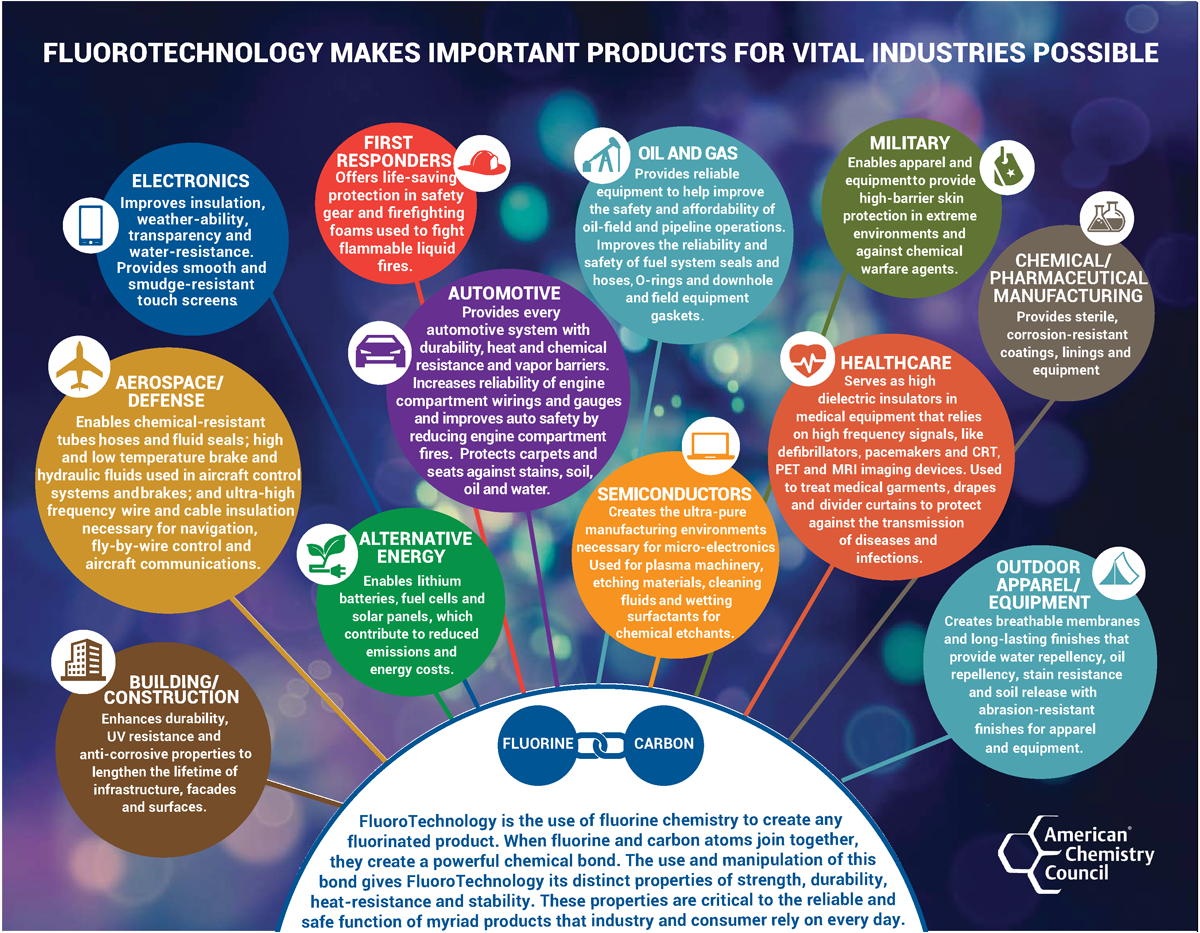
Descriptions of PFAS end-uses by industry according to the American Chemistry Council.

Legislation

There are no current federal bans on PFAS use in textiles, but a variety of state governments have passed legislation regulating PFAS in products including textiles.

California Governor Gavin Newsome passed bill AB 1817 late last year, which explicitly bans the use of PFAS in textile products including apparel, accessories and handbags starting in 2025. This ban represents the first U.S. ban on PFAS products used in textiles. One exception: Beginning in 2025, the state will require manufacturers to disclose the use of PFAS on outdoor apparel used for severe wet conditions, and the use of PFAS on such products must end by 2028. The new law also requires manufacturers to select the least toxic alternate to PFAS as they change their production processes.

Maine also passed legislation that adopts a phase-out plan. As of January 1, 2023, new carpets, rugs and fabric treatments containing PFAS may not be sold in the state, and the presence of PFAS chemicals in any product must be reported to the Maine Department of Environmental Quality (DEQ). By January 1, 2030, the law prohibits the sale of any products in the state that have intentionally added PFAS, except in the case of unavoidable use.

Other states have also restricted the use of PFAS on specific textiles such as apparel, carpet and upholstery, and more bans are likely in the coming years.

Of note, the federal government did phase out the use of long chain PFAS products such as perfluorootanoic acid (PFOA) and perfluorooctane sulfonate (PFOS) and eventually banned the use of such compounds in food contact applications. The federal government may eventually pass laws that impact PFAS use in textiles.

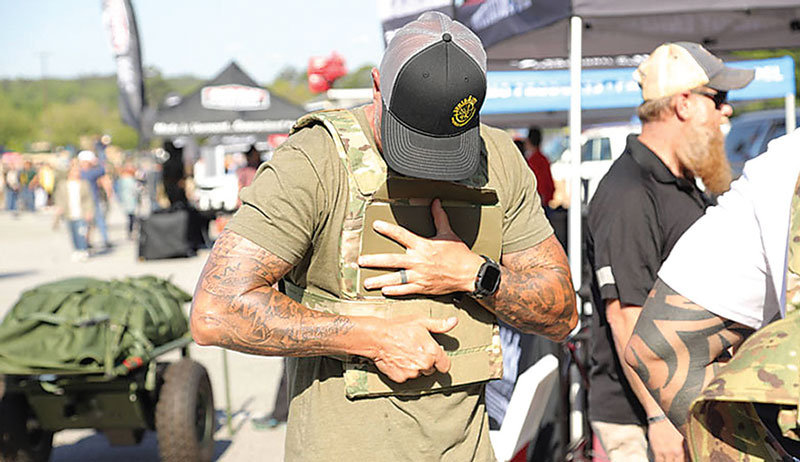
PFAS compounds are used to produce a variety of tactical gear and other warfighter products where high-performance alternatives for oil repellency or other required protective properties currently do not exist.

Fight For A “Not One Size Fits All” Solution

While textiles have earned a bad rap when it comes to PFAS products, people in the textile and chemical industries are urging legislators to learn and fully understand the issues surrounding PFAS as they consider legislation.

Brian Rosenstein in his opinion piece, “PFAS Regulation Challenges,” published in the November/December 2022 issue of TW suggested that it is important to determine essential versus non-essential end-uses for PFAS before implementing across-the-board bans. A lack of alcohol or oil protection on coveralls used by fuel handlers on aircraft carriers or reduced moisture protection for Kevlar® body armor would put warfighters lives on the line. And unfortunately, the industry has yet to develop suitable non-PFAS chemistries to confer the needed protection in certain applications.

The American Chemistry Council (ACC) published a blog post recently entitled, “Overly Broad PFAS Restrictions Could Endanger Healthcare Quality and Cost.” The ACC mentions many medical products that are protected by PFAS products including textile-based personal protective equipment that acts as a barrier against infections and disease transmission in hospitals.

“Accordingly, without an alternative that is both scientifically and economically feasible, overly broad restrictions on PFAS could have grave public health consequences for America,” reports the ACC. The organization urges federal and state policymakers to avoid heavy-handed measures and consider the lifesaving applications of PFAS. It suggests instead that legislators can ensure the “responsible production, use and management of this diverse family of chemistries can continue.”

Overly broad restrictions on PFAS compounds may have consequences in healthcare.

Understanding The Full Impact Of The Issue

The issue is most certainly complex. There are thousands and thousands of different PFAS compounds. All are environmentally persistent, but the state of matter as well as the size of the polymeric or non-polymeric substances impacts the ability of the compound to enter the body.

And while the U.S. Environmental Protection Agency (EPA) has been studying the environmental and human health profiles of PFAS chemistries since 2000, there is still much to be learned about the full human impact of PFAS.

It was announced earlier this year that Atlanta-based Emory University’s Rollins School of Public Health has partnered with the Chemical Insights Research Institute (CIRI) of UL Research Institutes, Chicago, to study human exposure to PFAS to understand how exposure occurs and its potential health consequences. Food products, water and air contaminated with PFAS chemicals pose a risk, but studies are limited on the exposure risk posed by everyday consumer and occupational products that contain PFAS. The research will focus on firefighter gear as well as consumer wearables.

“Research emphasis will include identification of specific PFAS chemicals in the materials, their levels, and how they can potentially enter the human body,” noted Dr. Dana Barr and Dr. Barry Ryan, professors in the Rollins School of Public Health and co-principal researchers. “To our knowledge, this study will be among the very first to focus on exposure to PFAS through contact with textiles. Knowledge of such exposures can lead to a better understanding of the role of such materials in aggregate exposure to these ubiquitous chemical compounds.”

Industry Action

Despite uncertainty and an unknown future, recent news confirms textile companies are looking at a future without PFAS.

Spartanburg, S.C.-based Milliken & Company had announced in early 2022 that it would eliminate PFAS from its textile finishes and fibers port-folio by the end of the year. In February, Milliken reported that it had achieved its goal, becoming the first U.S.-based multi-market textile manufacturer to eliminate the use of PFAS.

“This is a tremendous accomplishment and tribute to our team who worked around the clock to develop solutions that meet our customers’ performance requirements and reflect our purpose to positively impact the world for future generations,” said David Smith, executive vice president, Milliken & Company, and president, Milliken’s Textile Business.

In order to reach its aggressive goal, the company focus on three areas — durable water repellency (DWR), soil release and oil repellency. With many PFAS-free DWRs in the marketplace, Milliken was able to easily assess and implement alternatives in its production processes. Milliken’s internal research team developed a new proprietary soil release technology that has been integrated into suitable textile applications, although it is not currently an alternative for every soil-repellent finish application.

Interestingly, Milliken — a company long associated with textile chemistry innovations — announced that after searching for an alternative oil repellent finish, none was found, and the company decided to exit that line of business.

“Our work was intricate, and our team, including research and development, sourcing, compliance, sales, and many other functions, approached this initiative thoughtfully and with great care for our customers,” added Dr. Jeff Strahan, director of sustainability, compliance and research for the Textile Business. “We’re thrilled to be leading the industry in taking meaningful action that will have an immediate impact.”

Before Milliken’s announcement, Polartec® — a Milliken & Company brand — had also reported it had eliminated PFAS in its DWR treatments used to manufacture its performance fabrics including Hardface®, Power Shield®, Power Shield Pro, NeoShell® and Windbloc®. “Achieving non-PFAS treatments within our product line is an important milestone in our commitment to sustainably made performance fabrics,” noted Steve Layton, Polartec president. “It’s the latest step on our journey to an even more sustainable Polartec.”

Glen Raven Inc., Burlington, N.C., also recently announced it has begun to phase out the use of PFAS across its global fabric portfolio. The company has already begun the transition with a goal of moving to non-PFAS production by the end of the year. The company also reports any new products developed for its Sunbrella® brand will be specified as non-PFAS and will be manufactured using Glen Raven’s new non-PFAS solution.

“Since 2015, our global research and development team has been working with accredited research laboratories and universities to evaluate and develop the best alternatives to PFAS-based finishes,” said Dave Swers, president and COO of Glen Raven Custom Fabrics.

“We have invested significantly in this work and the solutions we’re introducing will allow us to continue providing anyone who purchases our fabrics with the best-in-class performance they expect while minimizing our environmental impact as an organization. Our Sunbrella Contract fabrics have included non-PFAS solutions since 2019 and we look forward to implementing non-PFAS solutions across our portfolio.”

Brands Also Driving Change

Textile manufacturers are making changes and brands are too. Seattle-based outdoor retailer REI recently reported it will ban PFAS in all textile products and cookware from suppliers beginning in the fall of 2024. Apparel items include, but are not limited to, apparel, accessories, footwear, and packs and bags. Professional, expedition-level apparel was granted a two-year extension to eliminate PFAS, to the fall of 2026. The company came under pressure from REI members who staged rallies and signed peti-tions urging REI to eliminate PFAS from the products it sells.

It was also reported in the news that Seattle-based Dick’s Sporting Goods quietly made a commitment ban PFAS in its own-brand textile products.

As of this spring, Patgonia reported some 66 percent of its materials made using water-repellent technologies are PFAS-free, and the company has committed to converting all of its water-repellent finishes to non-fluorinated versions by 2024. Patagonia notes that: “With no set industry-wide goal to eliminate the use of these chemistries, we see this as an opportunity to inspire others. By working within a shared supply chain and encouraging other apparel brands to utilize the solutions we’ve vetted and adopted, we hope to enable large-scale changes and success in more PFC-free products throughout the industry.”

Issue Goes Much Further Than Textiles

Whether as a result of public noise and pressure, or scientifically backed sound decision-making, PFAS products will continue to be phased out. This broad issue, with implications that extend well beyond the textile arena, is not going away.

The North Carolina DEQ currently is developing standards for PFAS compounds in surface and ground-water in the state. “PFAS contamination is a state-wide issue, larger than one company or one compound,” said DEQ Secretary Elizabeth S. Biser. “We are using every tool at our disposal to address these forever chemicals in a comprehensive way, reduce the amount of PFAS entering the environment and protect the health of North Carolinians.”

Seismic Shift

In the decades following the discovery of PFAS chemicals, manufacturers have relied on them for their ability to confer a variety of properties such as repellency, and chemical-, temperature- and fire-resistance, among other properties. Fluoropolymers — just one type of PFAS out of the thousands that exist — are used in medical products and implantable devices and are considered to be safe.

With the knowledge that PFAS compounds persist in the environment, it is important to take action. But trying to fully understand the intricacies of the issue first is essential to legislation that makes sense.

As the issue is studied and more is learned, perhaps in some cases, the benefits will continue to outweigh the risks.

July/August 2023

New Cutting Solutions From Lectra

France-based Lectra has launched a new generation of intelligent cutting equipment for low-ply fashion applications. The VectorFashion iX2 and VectorFashion Q2 are well-suited to quick transitions between small-volume production and larger orders and can cut all types of materials.

“As economies of scale are increasingly difficult to achieve, fashion manufacturers need to gain flexibility while controlling the costs associated with the production of the orders they receive,”said Maximilien Abadie, chief product officer at Lectra.“With optimized running costs and enhanced performance, the new generation of VectorFashion iX2 and VectorFashion Q2 cutting solutions offers them a better return on investment, and helps them increase their margins while also reducing their environmental footprint.”

July/August 2023

Midland Apparel Acquires Southern Point

Midland Apparel LLC, Columbus, Ga., reports it has acquired the Southern Point Co. brand from founder Brent Howell. The brand has become popular in the southeast and is known for its distinctive German Shorthair Pointer design and classic designs.“We are very excited about this acquisition,”said Scott Danford, president of Midland Apparel.

“We believe that Southern Point Co. is a very distinctive lifestyle brand and that we have a strategy that will enable us to further differentiate ourselves from the competition. We have big plans for the brand.”

July/August 2023

Sponsors