Blockchain For Social Change

Blockchain technologies can be used to empower suppliers and workers.

TW Special Report

Gone are the days when compliance meant checking off boxes on a form. A myriad of new due diligence legislation is in the pipeline, and legislation already in effect is revealing heavy consequences.

One noteworthy example is a case against IKEA regarding the labor conditions for IKEA suppliers in Bangladesh and Pakistan. This case was brought about because of the Norwegian Transparency Act implemented in 20221. The act requires companies to carry out due diligence activities to ensure they operate responsibly, respecting human rights and decent working conditions. The Norwegian Consumer Protection Authority (NCPA) investigating the case ruled that IKEA did not breach the law, but this verdict was based on time constraints: the complaint was issued on the day the law came into force. Notably, the NCPA warned that companies are expected to deliver a higher level of due diligence from now on, with little room for exemption based on contractual confidentiality.
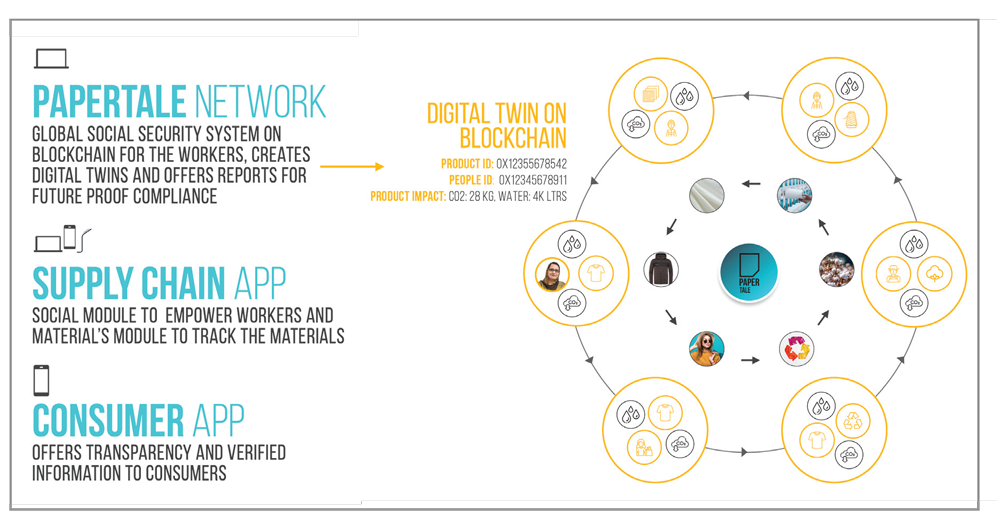
A diagram illustrating how the PaperTale technology works

Stricter legislation also extends beyond European borders. This is demonstrated by legislative developments in the United States. The Corporate Governance Improvement and Investor Protection Act was passed by the house in June 2021 and is currently before the senate. This act would require companies to periodically disclose information, including metrics, related to social and governance performance2.

It can thus be concluded that the conventional approach of relying solely on audits is becoming obsolete from a regulatory standpoint. But pressure regarding due diligence is also increasing from non-legislative parties. According to a survey conducted in 2020 by Fashion For Good, 69 percent of consumers want to know how their clothes were made, as opposed to 59 percent in 20183.

Furthermore, in a 2020 survey conducted by Eurobarometer, nearly half of Europeans “totally agreed that clothes labeling should contain information on both environmental impact and working conditions of the workers4.” Additionally, in September, Nike’s shareholders issued a letter, pressing the company to pay $2.2 million to compensate garment workers who had claimed wage theft at supplier factories.

These pressures raise the question of how companies can stand strong in the face of this rapidly evolving compliance landscape. Companies need to put themselves in a future-proof position, to withstand legislation that becomes increasingly stringent and maintain a relationship of trust with consumers and shareholders.

Here, PaperTale, a Sweden-based technology company steps in as a transformative enabler, using block-chain technology as a unique tool.
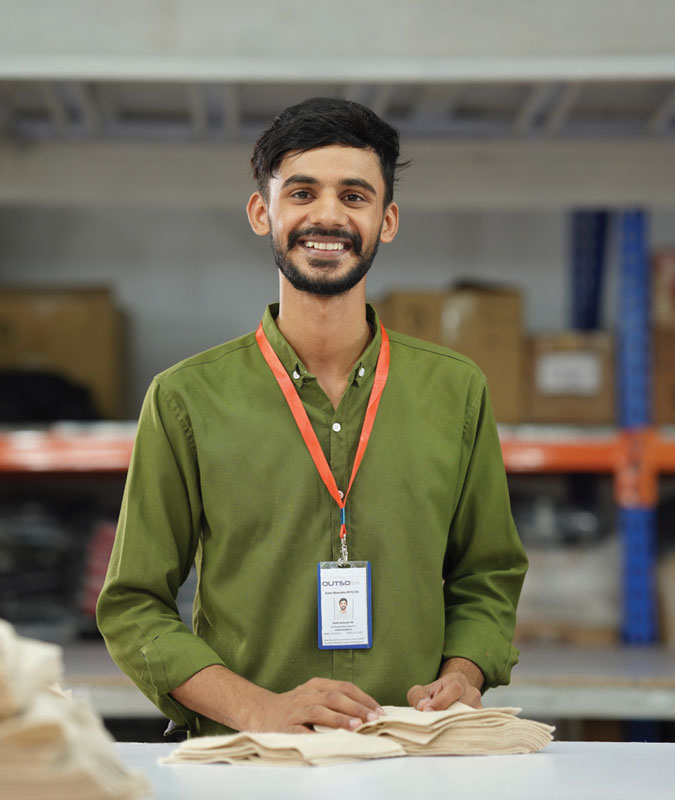
The happiness of a factory worker is the primary inspiration behind the PaperTale app.

Common Application Of Blockchain Technology

Blockchain technology already is in use as a tool for tracing materials. This is one way in which PaperTale uses the technology — its system creates a digital duplicate, also known as a “digital twin,” for each material. When the physical material moves to the next party in the supply chain, the same action is mirrored in the digital realm. This transaction is recorded on the blockchain, along with confirmation from the receiving party that the physical material matches its digital twin. For an extra layer of validation, evidence of material purchase can also be included. Through this process, materials can be tracked throughout the entire supply chain.

With blockchain, transactions are validated and stored by a community as opposed to conventional systems where data is stored by one party, in which case the data can easily be manipulated by that party. The benefit of involving multiple parties is that it becomes nearly impossible to change the data: before recording the data, all parties have to validate it together. Once data is recorded, every party maintains the data history in chronological order, so that changes cannot be made without notifying the entire community.
PaperTale’s use of blockchain technology is unique because it employs a public blockchain rather than a private one. Because the community recording and validating data is open to everyone in a public blockchain, PaperTale argues that it results in a more inclusive type of transparency. However, the degree of transparency is still customizable: every party using the solution can choose to put some data on the Blockchain, while restricting access to other — more sensitive — data.

The type of data that the blockchain is applied to is another way that distinguishes PaperTale’s use of the technology. PaperTale uses blockchain for data related to environmental impact and material tracking, which is fairly common. The innovative aspect of PaperTale’s technology lies especially in applying the technology to the social impact of production, as this is still largely unexplored.

Using Blockchain For Social Governance

First, it is possible to map out the workforce in a factory by registering workers’ IDs. This is done by simply integrating PaperTale’s system with enterprise resource planning (ERP) and product lifecycle management (PLM) systems, which are already in place in a large part of the industry. PaperTale tested multiple methods for the verification of IDs and landed on banks as a suitable third party. ID registration opens the door for the main asset of using blockchain in social governance — wage verification of workers along the supply chain. Wage transactions can then directly be connected to the blockchain. As a result, other parties like brands, consumers, and legislators have direct insight into verified wage payments, with high confidence that this data is authentic and has not been manipulated. It is worth noting that displaying the exact wage is optional with blockchain. Currently, the PaperTale system checks whether the wages are above the threshold defined by the local law of the area where a facility is located.

It could be argued that payment according to law is not high enough as a standard, but PaperTale’s solution is being developed with a focus on the supplier’s perspective. As sup-pliers can face financial pressures, increasing wages by a fixed amount can be difficult in the short term. Instead of raising the wage threshold in the system, PaperTale therefore came up with a different approach —the profit-sharing system. Here, a percentage of the net profits are shared amongst all employees of the factory. This percentage is distributed in a way that promotes equal opportunity and reflects the collective effort and dedication of the entire workforce. The mechanism of distribution is still being fine-tuned, as well as educating workers about how the calculation takes place.

Whereas capturing the financial reality of workers is quite black and white, other factors of social governance, such as workplace safety, are more of a gray zone. However, having ventured into this uncharted territory, PaperTale reports that it is possible to connect social governance-related data with a fairly high confidence level to the blockchain.

A worker using the PaperTale Workers App on a kiosk located in the Outso factory in Pakistan.

A Supplier’s Perspective

Building on the ID registration of the workers, PaperTale built an app for the workers to use. This app opened up further possibilities to gather on-site data, and for connecting workers directly to the system. The app gives workers the ability to view their contracts and salaries. In turn, they can check whether the two correspond, and press “verify” if this is the case. The percentage of workers that have verified their wages then turns into data about the facility. For example, facilities where more than 80 percent of workers have confirmed their wages can be rewarded. Likewise, workplace safety can be measured by sending forms to workers that allow them to answer questions about their working environment. Worker attendance can be tracked through devices that allow workers to record the clock-in and clock-out times for their shifts, using fingerprint scanning and facial recognition technology. After implementing this, PaperTale found that attendance data can be combined with the contractual functionality of the workers’ app and functionality was added that requires employers to request overtime from the workers through the app. In this way, over-time hours are added automatically to the wage calculation, which workers can then monitor for themselves and verify through the app.

With this method, PaperTale’s system is a tool for worker empowerment in parallel with supplier empowerment, breaking the cycle of imposing demands on suppliers that they are unable to meet due to resource constraints. The system allows suppliers to showcase their efforts, and use this as an enabler to build trust for compliance. Brands can then extend this trust to their consumers and shareholders.

Although PaperTale’s system has not reached a 100-percent confidence level for data related to working conditions, manipulating this system would take significantly more effort than manipulating audits. But while audits are not the main focus of PaperTale’s new method, they still play a role. Rather than being the centerpiece, they are a component of PaperTale’s solution. For example, periodical audits are used to measure building safety. These audits are performed by auditing bodies that can verify the results in PaperTale’s system, after which the results are published onto the blockchain. In this way, conventional methods like audits are combined with innovation to form building blocks of a more solid system.

To optimize results, innovation should continuously take place with ongoing reflection on outcomes. PaperTale’s technology is being implemented and tested on the ground in the Outso Wearables factory, in Lahore, Pakistan. Outso has successfully implemented worker ID and wage registration, verification of wages by workers through the app, recording attendance, and even the profit-sharing mechanism. One gap PaperTale identified is training workers to educate them about their rights and thereby maximize their ability to benefit from the technology. Outso’s workers are closely involved in PaperTale’s solution development. To measure worker satisfaction, the Outso factory carried out an anonymous survey that measured the satisfaction level of workers as compared to their previous workplace. After implementing the measures mentioned above, worker satisfaction had improved from 71 to 93 percent. The factory also experienced fewer delays and improved quality of work.

Moving Beyond Blockchain’s Hype

PaperTale is eager to demonstrate that recording certification on blockchain technology is only the start of what the technology can do. By supplementing certification with real-time environmental and social data, the full potential of blockchain technology can be unlocked.
The aforementioned usage of a public blockchain is another way of going beyond blockchain’s hype, and to tackle the issue of techwashing. The company noticed that the phrase “Blockchain Technology” is frequently used for public relations-related reasons rather than practical, on-the-ground innovation. Such blockchain-related techwashing came as no surprise to PaperTale, given the share of obstacles the company had to overcome to develop a scalable blockchain solution that does not become a burden for brands or suppliers and is built for reality.

Becoming Future-Proof

PaperTale envisions a future in which ethical and sustainable practices are not goals but essential components of every business. The company’s transformational approach that empowers both workers and suppliers sets the stage for a future in which trust is the foundation of business. A future-proof industry can be built if brands, suppliers, and consumers come together in a collective commitment to social and environmental responsibility. PaperTale aims to be the catalyst for the continuous innovation and collaboration needed to realize such a future. The current crises we face as a society did not arise in isolation. As such, the change required to address them cannot occur in isolation either.


References:
11 Act relating to enterprises’ transparency and work on
fundamental human rights and decent working condi-tions (Transparency Act) — Lovdata
22 H.R.1187 — 117th Congress (2021-2022): Corporate
Governance Improvement and Investor Protection Act
3 Consumer Survey Report : Fashion Revolution

4 Surveys — Eurobarometer


November/December 2023

 

November/December 2023

Tajikistan-based terry products manufacturer Arvis LLC has joined the Zurich-based International Textile Manufacturers Federation (ITMF) as a corporate member.

The Lycra Co., Wilmington, Del., has launched Lycra® FiT400™ fiber, a bicomponent fiber engineered for optimal performance in knits.

Q-Lab, Westlake, Ohio, recently was honored with two National Top Workplace awards — one for employee appreciation and a second for employee well-being. Previously recognized with Regional Top Workplace awards, this is the first time the company was honored at the national level.

Culp Inc.’s mattress fabrics division, Culp Home Fashions, has been recognized as an Environmental Partner by the North Carolina Department  of Environmental Quality’s Environmental Stewardship Initiative.

Spartanburg, S.C.-based Milliken & Company was named one of America’s Best Employers for Veterans 2023, by Forbes and Statista.

The Association of the Nonwoven Fabrics Industry (INDA), Cary, N.C., has published a new report, the “North American Nonwovens Industry Outlook, 2022-2027.” The 12th edition of the report provides demand data from 2017-2022 with additional forecasts through to 2027.

Germany-based Freudenberg Performance Materials Apparel has added two thermal insulation products to its comfortemp® range. Down Feel WA 150LB and Fiberball WB 400LB are made using low-level bisphenol A recycled PET fiber.

Switzerland-based Datatex recently opened new offices in Coimbatore, India, and Lahore, Pakistan.

Switzerland-based Archroma reports its Castellbisbal, Spain-based sulfur dye manufacturing and research hub is 100 years old. The company marked the milestone with a ceremony with some 250 guests.

November/December 2023

November/December 2023

Jeff Crisco

Jeff Crisco was named president of Asheboro Elastic Corp. (AEC Narrow Fabrics), Asheboro, N.C. He will work closely with current CEO Charles Adams until he retires at the end of the year to ensure a smooth leadership transition.

Dr. Andreas Raps has been named CEO and Marco Altherr CFO of Germany-based Freudenberg Performance Materials, effective January 1, 2024.

Wes Fisher, director of Government Affairs with the Association of the Nonwoven Fabrics Industry (INDA), Cary, N.C., was named a 2023 Top Lobbyist by the National Institute for Lob-bying and Ethics (NILE).

Anne Cavassa

PrimaLoft Inc., Latham, N.Y., has appointed Anne Cavassa president.

The French Textile Machinery Association (UCMTF), Paris, named Mireille Jautzy secretary general. She replaced Christian Guinet who retired.

Delos Custom Rugs & Carpet, Calhoun, Ga., recently hired Lacey Stinnett as director of design and Tina Johnson as business development manager.

Paris-based Chargeurs PCC has promoted Giorgio Marcarino to worldwide chief commercial officer. Francisco Ros has moved into the role of general manager, EMEA, vacated by Marcarino. In addition, the company has hired Luca Faccioli as chief information officer and Bertrand Venault as chief people officer.

Home Furnishings International, Gaffney, S.C. has added Bally Faudar as senior vice president and Erin Gallagher-Brinskele as vice president, Kitchen Textiles. Both hires report to Amy Bell, executive vice president and chief merchandising officer.

Shawn Curran

Gap Inc. veteran Shawn Curran has joined Baltimore-based Under Armour as chief supply chain officer. He reports to President and CEO Stephanie Linnartz.

South Korea-based Hyosung recently appointed Laura Nilo U.S. marketing manager, West Coast; and Christiane Rauch was named senior consultant, Northern Europe–Hyosung Spandex.

Minette Bellingan was named COO of Germany-based C&A Europe.

November/December 2023

Unlocking Athlete Potential

Garments featuring Rheon Labs’ RHEON™ energy-absorbing super polymer help
athletes perform at the top of their game.

By Rachael S. Davis, Executive Editor

Rheon Labs® originated with a National Aeronautics and Space Administration (NASA) project. Dr. Dan Plant was investigating alternatives for a foam-based material that would not explode in space when he discovered materials that behave in a non-Newtonian way, changing their behavior depending on the forces applied. After the discovery, Dr. Plant worked with a team of engineers, scientists and designers at Imperial College London for 15 years to refine the material.

The technology is known today as energy-absorbing super polymer RHEON™.

The ingredient technology is soft and flexible in its natural state, but stiffens when subjected to force. As the material intelligently strengthens in response to changes in movement, it can control the energy of any amplitude or frequency from small vibrations to life-threatening impacts, according to the company.

Dr. Plant’s interest in the world of sports engineering led him to first explore sport applications for RHEON. Supported by university partners, Rheon Labs’ Head of Design Olga Kravchenko has explored algorithmic design for more than a decade. This work helps the company generate data to create products based on an athlete’s motion. “Our technology has combined years of biomechanical research with complex chemistry in a way that will unlock a new world of athlete potential and shape a new era of performance,” said Simon Huntsman, director of Apparel at Rheon Labs. “RHEON has a unique chemistry which means it can be formed into almost endless formats,” Huntsman added.

“In apparel, RHEON film is simply heat-pressed onto base textiles to give them responsive properties. RHEON has worked primarily with synthetic knits and wovens in the early stages of our apparel category, however we have seen few compatibility issues with a range of fabrics so far. The first step of any project is to run compatibility tests on the brand’s textiles, to identify how RHEON can be applied to be most effective.”

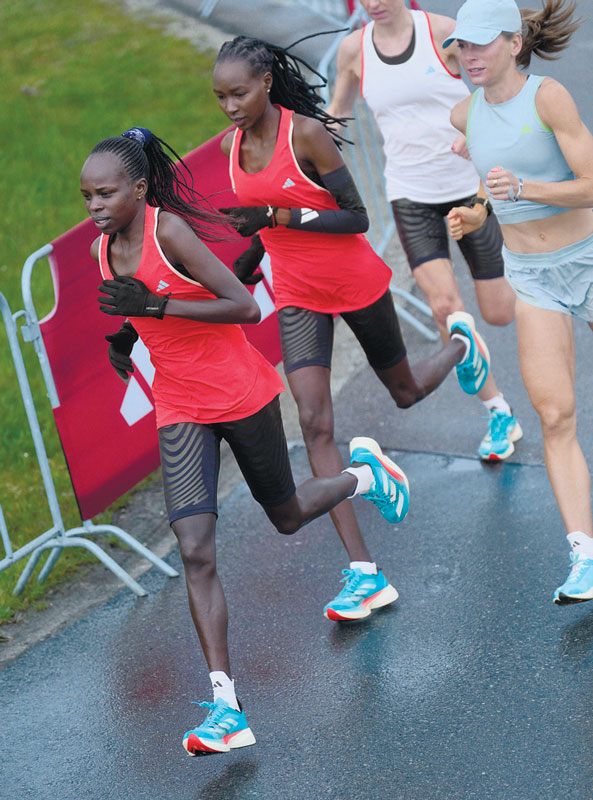
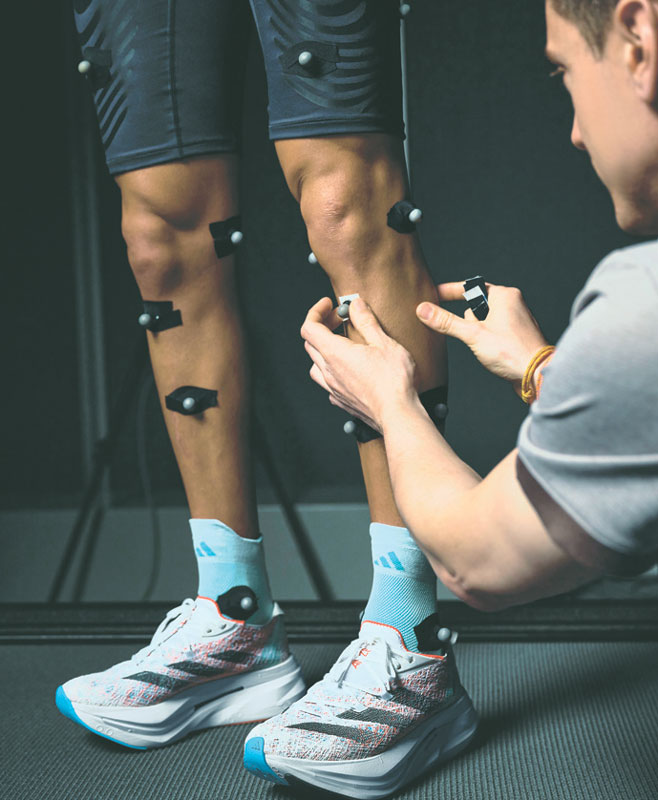
Adidas recently launched an Adizero Control x RHEON collection featuring garments designed for elite-level runners. The garments help “athletes reduce wasted energy and maximize their running performance” by reducing unwanted muscle movements known as shearing. Computer modeling was used to determine the best positioning for strips of Rheon to best support the most important muscle groups when running. According to Rheon Labs, early test results show the material has the potential to control up to four times more energy than typical elastane-based fabrics.

This is the second Adidas apparel collection to feature RHEON. The Techfit Control x RHEON collaboration, launched earlier this year focused on tops and full-length leggings for high-intensity gym workouts and weight training.

The company believes there are almost endless applications and possibilities for the technology including vibration-dampening saddles, responsive sports bras or ballistic vests. “Adidas were very early to show interest in the RHEON material technology,” Huntsman noted. “As an ingredient brand, having partners that share our vision for the potential of RHEON is one of our key factors in deciding who we partner with. The products you see today are just the first step of that journey.”


For more information about RHEON™, contact Ross Flew, head of Sales Operations at
Rheon Labs, ross.flew@ rheonlabs.com; rheonlabs.com.


November/December 2023

Champion® Athleticwear Unveils New Reverse Weave Iconic Styles With CiCLO® Technology To Reduce Microplastic Pollution

WINSTON SALEM, N.C. — November 29, 2023 — Today, Champion® Athleticwear, the iconic lifestyle brand born from sport in 1919, announced its newest innovation: Eco Future Reverse Weave with CiCLO® technology, a patented and science-based solution that allows synthetic textiles to behave more like natural fibers when they enter the environment.

Champion has a rich history of addressing athlete and consumer problems head-on through product innovation. With an understanding that knowledge and consumer needs are constantly evolving, Champion is using cutting-edge design and technology to craft with purpose and create a better tomorrow.

Champion® Athleticwear, the iconic lifestyle brand born from sport in 1919, announced its newest innovation: Eco Future Reverse Weave with CiCLO® technology, a patented and science-based solution that allows synthetic textiles to behave more like natural fibers when they enter the environment. Photo: Business Wire

More than 60 percent of today’s textiles are made with plastic-based synthetic fibers like polyester and nylon, which remain indefinitely in the environment because they are not inherently biodegradable. By incorporating CiCLO technology, the Eco Future Reverse Weave reduces plastic textile fibers in the environment by giving polyester an eventual expiration date. The collection also features dyes with ingredients derived from nature, including pomegranate, annatto fruit and terminalia chebula fruit. The new collection lets fans feel even better about purchasing their favorite hoodie knowing that they can reduce microplastic pollution caused by the shedding of synthetic textiles reducing the impact on our environment.

“As we continue to innovate and evolve, Champion is dedicated to creating solutions through products that will ensure a better tomorrow for our planet and the people living on it,” said Vanessa LeFebvre, president of Global Activewear at Champion. “Through our partnership with CICLO, we aim to be a catalyst for positive change in the fashion industry, driving conscious choices, responsible actions and continuous improvements, while providing every Champion a canvas to live their true purpose.”

The product launch comes on the heels of Champion’s first global brand campaign, “Champion What Moves You”, which redefines what it means to Champion by shifting the brand name from a title or indication of winning, toward a means to take action and create something with real impact.

The Eco Future Reverse Weave with CiCLO includes crewnecks and joggers. The collection will be available in-store and on Champion.com beginning December 6.

Posted: November 29, 2023

Source: HanesBrands

Polygiene Launches Textile-Protection Polygiene ShedGuard™ Innovation Project

MALMÖ, Sweden — November 29, 2023 — On November 29, at the prestigious ISPO trade show, Polygiene launched a new innovation project, Polygiene ShedGuard™.

Designed to minimize micro-fiber loss and improve resistance to fabric wear during washing, Polygiene ShedGuard extends textiles’ expected lifespans, ensuring customers benefit from longer-lasting products. By facilitating the production of more durable textiles, Polygiene is putting its Mindful Living® philosophy into practice by encouraging the transition from consumables to durables and a more sustainable approach to product design and delivery.

The Polygiene ShedGuard innovation project is in the latter stages of development, with final testing and refinement due to take place in conjunction with selected Polygiene partners during 2024.

An effective, long-lasting solution

Polygiene Shedguard consists of a unique blend of polymers that form a film around the fiber bundles. The film prevent microfibrils from separating, splitting, and tearing away from the fabric structure.

Our research shows that Polygiene Shedguard reduces microfiber loss by up to 70 percent. At the same time, it benefits manufacturers and consumers by:

  • Reducing wear from fabric abrasion.
  • Prevents the release of fiber fragments into the surrounding environment.
  • Enhances the performance of other Polygiene technologies, such as Polygiene StayFresh™, Polygiene StayFreshBIO™ and Polygiene OdorCrunch™, by locking in their antimicrobial and odor-control properties for even longer.

Polygiene’s ShedGuard voted Best Product

Polygiene ShedGuard has been recognized as the Best Product at ISPO Textrends in the Performing Finishes category. This event showcases the latest and most innovative garments, accessories, fabrics, fibers, and components for the sports and outdoor industries. The award is given twice a year and highlights the upcoming trends in the textile and apparel sectors, predicted by industry experts two years in advance. Participants are evaluated by an international panel of judges, and the winners are presented at the ISPO Munich and OutDoor by ISPO Textrends exhibition.

Polygiene ShedGuard and Polygiene StayFreshBIO at ISPO

The Polygiene ShedGuard innovation project is launching on November 28 and 29 at the ISPO trade show. The Polygiene team is in attendance and able to answer questions concerning Polygiene ShedGuard, Polygiene StayFreshBIO or any of our other products.

Posted: November 29, 2023

Source: Polygiene Group™

Trützschler Card Clothing Z-Wire: Outstanding Web Forming At High Speeds

NEUBULACH, Germany — November 29, 2023 — Speed is exciting – but it can be challenging too. In nonwovens production, for example, hydroentangling lines can hit production speeds of up to 300 meters per minute (m/min) at the winder. That creates difficulties for carding and web forming. Now, innovators at Trützschler Card Clothing have created the solution to this high-speed problem. It’s called Z-Wire…

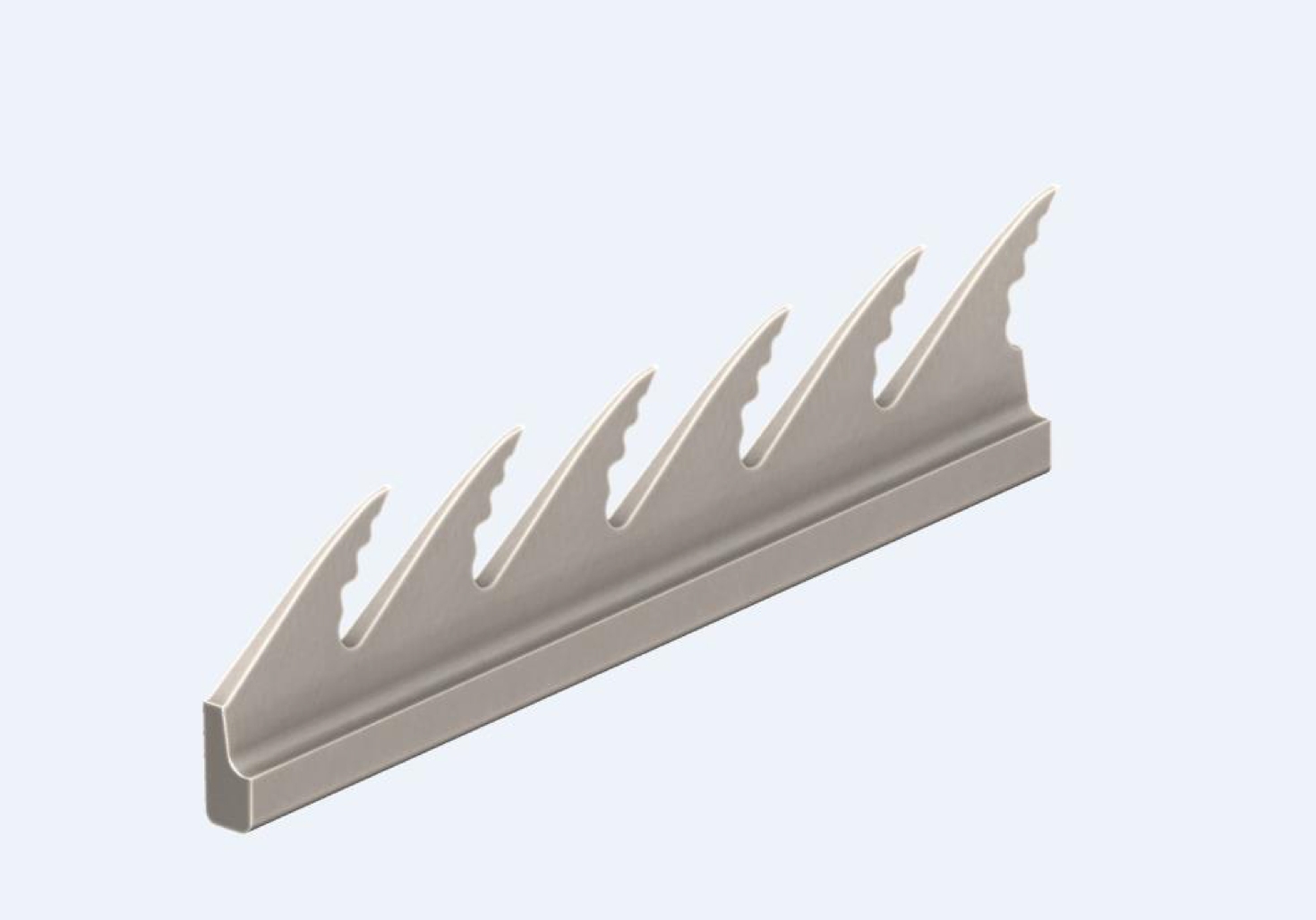
Every company in every industry is constantly pushing for more efficiency and productivity. For nonwoven textile producers, that means high-speed production lines that achieve excellent quality within a faster timeframe. Trützschler’ s Z-Wire clothing for worker, stripper and doffer rollers empowers our customers to move forward with their ambitions for speed, efficiency and quality. It has serrated contours to make sure fibers are continuously held in position, even at high production speeds. The fibers are then released at exactly the right moment to be transferred and orientated. This controlled transfer from roll to roll enables uniform web formation, while fiber fly is minimized, the risk of fiber migration is reduced and the operational reliability of the line increases.

These advantages make the Z-Wire the perfect fit for Trützschler Nonwoven ́s NCT. The optimized interaction between machine and clothing enables maximum performance from high- speed cards. As a result, the Z-Wire is now successfully established on the market worldwide.

Feedback from our customers

Our customer TWE has shared direct feedback about how the Z-Wire performs in real-world production situations. TWE was founded in 1912 and is a proven specialist in innovative nonwovens solutions worldwide. The company processes a wide range of fibers such as viscose, polyester and polypropylene in fineness of 1.7 to 17 dtex. It has an annual fiber throughput of 1.85 million kilograms. TWE uses the Trützschler Z-Wire at its site in Emsdetten, Germany.

Andreas Wolbring, Head of Production TWE

“We use the ZDAB2 wire for worker and stripper rollers on several plants — and we are completely satisfied,” said TWE Head of Production Andreas Wolbring. “We achieve higher production speeds compared to the standard wires. The worker rollers, for example, operate at a production speed of 200 m/min. There is also less contamination because there are no grooves on the sides. Since we started using Z-wires, our production has become much more efficient.”

Posted: November 29, 2023

Source: Trützschler Card Clothing GmbH — Subsidiary of The Trützschler Group SE

World-Changing Topics & Personnel Changes – Change Colloquium At The Institute Of Textile Technology (ITA) Augsburg GmbH

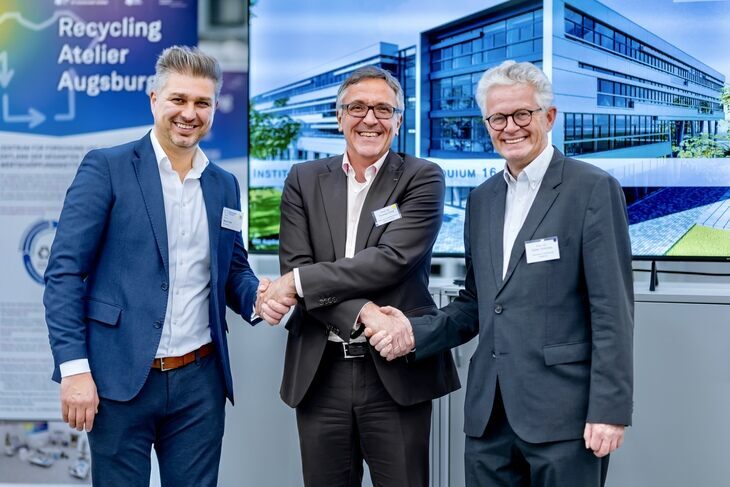
AUGSBURG, Germany — November 29, 2023 — It is now official – the baton of leadership of the Institute of Textile Technology Augsburg has been passed from Prof. Dr. Stefan Schlichter to Prof. Dr. Mesut Cetin. During the festive changeover colloquium, impulses were given, extensive discussions were held, and congratulations were offered.

Congratulations on the change of leadership: Prof. Cetin, Prof. Gries, Prof. Schlichter

The event was opened by the Mayor of Augsburg, Eva Weber, and the President of Augsburg University of Applied Sciences, Prof. Dr. Dr. h.c. Gordon Thomas Rohrmair. Ms. Weber, who as Head of Economic Development and Deputy Mayor encouraged and always constructively supported the founding of the company at the time, praised the innovations and investments of the “new player” ITA Augsburg, which has positioned itself perfectly in the ecosystem between the Innovation Park, Technology Center, University and Augsburg University of Applied Sciences (THA). Prof. Rohrmair emphasized the close cooperation between ITA and THA and referred to the showcase project “Recycling Atelier”, which makes a relevant contribution to the establishment of sustainable textile process chains in an industry-oriented manner.

Prof. Schlichter outlined the historical development of the ITA, which has been dedicated to sustainability in the field of textile materials since 2014. He presented the three central research fields of ITA: Web Based Composites (sustainable fibre composite concepts), Recycling Atelier (recycling of apparel textiles) and Artificial Intelligence (AI to support textile production chains). The initial objective of the ITA was the reuse of carbon fibres and CFRP components produced with high energy consumption in new textile structures. The research work, which has been ongoing for almost 10 years, has been crowned with success and has led, among other things, to the establishment of this class of materials in industry and research. The increasing relevance of the textile circular economy led to the founding of the “Recycling Atelier” in 2022. The model workshop was presented as an important industrial research project that covers all process steps of textile recycling and is supported and used by industry-leading companies. The close interlinking of digitalization, artificial intelligence and sustainable process design plays an increasingly relevant role, which led to the establishment of the third research field “Artificial Intelligence”.

As the new head of the institute, Prof. Cetin brought fresh impetus and presented innovative approaches in the field of mechanical recycling of used textiles. Against the backdrop of unstable international supply chains, he emphasized the need to make the German industrial landscape more resilient. He sees the circular economy as an opportunity to secure the supply of raw materials and revitalize the textile industry in Germany. In addition, current research projects at ITA were presented, including “Design-4-Recycling” for the component production of wind turbines and “AI-supported pile optimization” in nonwoven production. The cooperation with the ITA Group and Augsburg University of Applied Sciences as well as the integration of AI in the production of nonwovens were emphasized as decisive steps for the future. In addition, the development and research work is always carried out with the involvement of the know-how and infrastructure of the entire ITA Group, emphasized Professor h.c. (MGU) Dr.-Ing. Prof. Gries, head of the ITA Group during the concluding panel discussion.

With a broad network of research and industry, we are taking big steps towards an environmentally friendly, cycle-oriented future. Interested parties, from SMEs to large corporations, are cordially invited to visit the ITA Augsburg at any time.

Posted: November 29, 2023

Source: The Institute Of Textile Technology (ITA) Augsburg gGmbH

Origify From Bosch Gives Sneakers And Other Products A Digital Fingerprint As Protection Against Counterfeiters

The label attached to the shoe shows that this pair of sneakers can be authenticated via the Origify app. ©Bosch Origify

STUTTGART, Germany — November 29, 2023 — Sneakers from various manufacturers are coveted collector’s items and investments. Certain models are even traded for five-figure sums. These expensive cult models have long been counterfeited on a massive scale – turning a supposedly good purchase into an expensive flop for some customers and damaging the image of the manufacturer. Even the authenticity features on the product or packaging are counterfeited and it can even take acknowledged experts a few minutes to authenticate a product such as a pair of rare and therefore valuable sneakers.

With Origify, Bosch offers a solution that provides luxury products with a digital fingerprint as early as the production or packaging phase. For this purpose, each individual product is optically recorded, i.e. photographed, in a standardized manner during production. The suitable areas of the product are defined when the technology is set up and are then automatically captured during production. The image is then converted into a binary and non-manipulable data record of just a few kilobytes, which is stored in a secure cloud.

Authenticity check via app

Once registered, these products, such as a pair of sneakers, can be checked in just a few seconds in future. All you need is a suitable smartphone and the Origify app or a manufacturer app that is connected to the Origify database via an interface or a software development kit. For a pair of shoes, the app provides a mask of the area to be photographed. If the cell phone is aligned accordingly, Origify’s technology can compare in a moment whether the features correspond to the data record stored during production.

The Origify app specifies the defined image section, which is compared with the data set stored by this shoe. ©Bosch Origify

This even works if small parts of the surface have changed due to storage or use. However, if a shoe or other product shows signs of heavy use that have affected the surface, the technology no longer enables reliable identification. “The core of our technology is an optical system that records unique distinguishing features that are imperceptible to the eye, even during ongoing mass production, converts them into a data set that cannot be manipulated and thus enables the identification and traceability of a product via an app. This is possible for many products from a wide range of sectors — shoes, glasses, watches, and jewelry and many more,” says Oliver Steinbis, who is responsible for the project within the Bosch Group.

Initial recording as part of quality assurance

Bosch offers its own Origify camera module for the initial recording of a product during production or packaging. Companies that already work with image-based processes in quality assurance can also use these systems for recording, depending on their requirements. It takes just a few seconds to convert the image into a binary data set, which is then automatically stored in the secure cloud. “For us as a Group, one of the development principles was that the technology can also be integrated into industrial processes in order to record products in large quantities in a cost-efficient manner.

Scan process with a sneaker: A suitable smartphone with the Origify app is all you need. ©Bosch Origify

Manufacturers benefit in several ways from the system, which does not require any intervention in the products, marking or the attachment of NFC chips. The app functionalities for authentication by retailers, customers or other authorized persons can be integrated into existing manufacturer apps for retailers or end customers via our software development kit,” says Oliver Steinbis, describing the features of Origify. The technology offers added security for end customers, retailers, and the manufacturers themselves – in addition to authentication, the supply chain or OEM producers who manufacture goods on behalf of a major brand can also be better monitored.

Posted: November 29, 2023

Source: Origify from Bosch

Ocean Lanka: Weaving a Sustainable Future Beyond Fabric

Ocean Lanka invested in installing solar power at its Malwana Facility in the Biyagama Exporter Processing Zone

MALWANA, Sri Lanka — November 29, 2023 — From a commitment to sustainable waste management, the transition to renewable energy and environmental protection, the phrase “sustainable manufacturing” is not unfamiliar to Ocean Lanka.

Founded in 1996, the Company, which has been in operation for over twenty years, is not only Sri Lanka’s largest weft-knitted fabric manufacturer but is also the first within the textile and apparel industry of Sri Lanka to enter into a system partnership with Bluesign®. Working with international brands, the Company has maintained a steadfast commitment to environmental responsibility. The rhythmic hum of looms within the facility not only symbolizes craftsmanship, but also signifies Ocean Lanka’s dedication to providing a sustainable model for many industries worldwide. Partnering with certification bodies like the Global Organic Textile Standard, Better Cotton Initiative and Global Recycled Standard, the Company has initiatives set out for water and energy management as well as biomass consumption by over 3 percent in its operations over the next five years.

Ocean Lanka’s Holistic Approach to Waste Management

In an industry that generates over 92 million tonnes of waste annually, Ocean Lanka’s journey toward circularity begins at the point of waste generation. The facility employs a comprehensive waste categorization system for eleven main areas in accordance with strict guidelines. Generating 275,00 kilogrammes of fabric waste annually, when the volume surpasses the storage capacity, the administrative team initiates an auction for registered waste fabric buyers listed with Ocean Lanka. The entire lot is then sold to the highest bidder as is excess cardboard, paper and polythene. “Before exceeding the capacity, the team needs to consider the time required for calling tenders and selling to prevent the overflow of fabric,” says Compliance Manager Anuruddha Weerasekera.  “Additionally, the team must ensure that suppliers have the necessary licenses for fabric disposal. They are also responsible for maintaining a record of waste fabric disposal within the facility, summarizing the information monthly in terms of weight in kilograms.”

Ocean Lanka’s Innovative Water Conservation Efforts

Ocean Lanka, in collaboration with the Open University of Sri Lanka, is actively working on developing eco-friendly technologies and innovative processes to reduce or recycle wastewater from dyeing operations. The facility currently consumes 7,000 cubic meters of water daily for the fabric dyeing process, posing a significant financial burden. At times, the existing effluent treatment facility struggles to adequately handle the wastewater from the dyeing department.

Effluent Treatment Plant at Ocean Lanka

Notes Weerasekera: “We are exploring practical approaches that can be employed for textile wastewater treatment and reuse, aiming to conserve water resources and minimize pollution discharged into the environment. One option we are considering is the reuse of textile pretreatment liquor or wash liquor in the scouring and bleaching of cotton fabric.”

Pioneering Sustainability Initiatives in Energy Conservation and Renewable Resources

Aligning with its goals to reduce water, electricity and biomass consumption, Ocean Lanka has also embarked on several energy conservation projects initiated in 2019, demonstrating significant progress. This includes transitioning from CFL to LED lamps and enhancing boiler systems for more efficient biomass energy production. The Company has also invested half a billion Rupees in installing solar power at its Malwana Facility in the Biyagama Exporter Processing Zone, covering 250,000 square feet and generating 3,800 units per 1 MW daily. This ambitious initiative aims not only to harness solar energy for efficient power generation but also to establish a sustainable financial model over twenty years.

Over one thousand hectares in Opatha Estate, Ratnapura dedicated to sustainable fuelwood harvesting

Efforts are also being made towards sustainable fuelwood cultivation to meet thermal energy requirements. Over one thousand hectares in Opatha Estate, Ratnapura will be dedicated to cultivating a special species of bamboo and Gliricidia Sepium to supply 100 MT of firewood annually. This will meet Ocean Lanka’s fuelwood demand. “We don’t want to depend on external sources for firewood to fuel our biomass boilers,” explains Weerasekera.  “Cultivating our own firewood not only enhances traceability in our raw material sources but also benefits the community and the environment. We collaborate with smallholders in the estate to produce bamboo and purchase it from them. So, it’s a win-win for all.”

Beyond Factory Walls: Ocean Lanka’s GHG Policy

Ocean Lanka not only invests in operational sustainability but also actively works towards reducing greenhouse gas emissions, aiming to create a prosperous and resilient low-carbon future. The Company, guided by its GHG Policy, seeks to implement short, medium, and long-term projects aligned with relevant Sustainable Development Goal (SDG) pillars. These projects involve transforming energy generation, adopting cleaner manufacturing processes, exploring wind turbine options and administering the Greenhouse Gas Emissions Policy for major processes.

Several initiatives have been launched to achieve targets, among which is the implementation of carbon-neutral agriculture within its facility. One is a reforestation programme aimed at restoring fauna and flora in select green cover. Over 16 hectares has been dedicated to developing a model forest to promote effective forest management and stewardship practices, resulting in the planting of over 25,000 saplings over the past few years. Now, over 60% of these saplings have grown into young and healthy trees with a height of over 8 feet. Additionally, the Company collaborates with the NGO “Rainforest Trust” to preserve virgin forests in several locations across the island, extending its commitment to environmental protection beyond its walls.

“Ocean Lanka is not just weaving fabric; we are weaving a sustainable future,” concludes Weerasekera. “Our commitment goes beyond our factory walls, embracing holistic initiatives from waste management to energy conservation, renewable resources and carbon neutrality. Through collaboration, innovation and a steadfast dedication to environmental responsibility, we aspire to set a model for industries worldwide, demonstrating that sustainability is not just a goal but a journey towards a better, greener future.”

Posted: November 29, 2023

Source: Ocean Lanka

Sponsors