Syre — a new venture developed by Vargas and H&M Group, both based in Sweden — was recently launched with the objective to decarbonize and dewaste the textile industry. Beginning with polyester, the venture will focus on textile-to-textile recycling, with the opportunity to reduce carbon dioxide emissions by up to 85 percent compared to emissions created when producing oil-based virgin polyester. Syre is supported by an offtake supply agreement with H&M worth some $600 million over seven years to fulfill H&M’s long-term need for recycled polyester in an increasingly competitive bottle-to-fiber marketplace. Syre’s first production facility for textile-to-textile circular polyester (cPET) recycling will be built in North Carolina and is expected to be operational in 2024.The company plans a rapid scale up with 12 gigascale plants in operation within 10 years generating more than 3 million metric tons of cPET. The platform also may be expanded into other fibers in the future.
“Syre marks the start of the great textile shift. We envision a world where every textile fiber sees a new day. By implementing true textile-to-textile recycling at hyperscale, we want to drive the transition from a linear to a circular value chain by putting textile waste to use, over and over again,” said Dennis Nobelius, Syre CEO.
“The new venture Syre is an important next step on H&M Group’s journey to integrate circularity across our business.With this solution to rapidly scale textile-to-textile recycling, we want to continue to drive and inspire more industry players to join us in closing the loop and accelerating the shift towards a more sustainable future,” said Daniel Ervér, H&M Group CEO.
Milliken & Company was named to the list of America’s Best Midsize Employers for the sixth year running.The list — compiled by Forbes magazine and data company Statista after a survey of more than 170,000 employers — honored 400 U.S.-based organizations employing between 1,000 and 4,000 people. Milliken is the only organization headquartered in South Carolina to make the list, and one of only 17 manufacturing and engineering companies. Milliken notes that it has introduced a number of employee-centric education and development programs over the past year, as well as continued to invest in its diversity and inclusion initiative.
“At Milliken, we know that success is rooted in the engagement of our people. Together, we’re creating a culture that encourages teamwork and promotes respect,”said Milliken President and CEO Halsey Cook.“We’re thrilled to be recognized for our efforts to make a positive impact in the lives of our people, and on the world around us.”
San Francisco-based Gap Inc. has announced that beginning in 2026, it will use cycora® fiber at scale in its Athleta apparel. Cycora is a regenerated polyester produced by Ambercycle, Los Angeles. Ambercycle’s technology uses end-of-life textiles as feedstock for the molecular regeneration process to produce new fiber that is on par with virgin polyester with regards to quality.
“As a mission-driven, B Corp-certified brand, Athleta is committed to reducing our environmental footprint by using recycled materials like cycora, which not only aligns with our values but also meets our uncompromising quality standards,” said Athleta CEO Chris Blakeslee.
“As the demand for circular materials rises, we are delighted to collaborate with like-minded brands in the performance sector, such as Athleta. Together, we are not only creating high-quality garments but also driving forward the circular fashion movement,” said Shay Sethi, CEO of Ambercycle.
The Jones Family of Companies, Humboldt, Tenn., reports Ralph Jones III, CEO and chairman of the board, is now the company’s majority shareholder. Jones represents the third generation of family leadership for the company and is excited to reinvest in the company. “Jones has been in my family for nearly nine decades,” Jones said. “It is important not just to me but to the employees and customers of this company to show my dedication to helping our Jones Family of Companies to remain industry leaders for the next generations.”
In addition, the company has expanded production capacity at a facility in Charlotte, N.C., and acquired Cades Consulting, a mechanical and engineering company providing consulting and maintenance services to the textile industry.
“Bringing Cades on board will dramatically increase our services to the nonwovens industry,” Jones noted.“We now have the ability to not only grow our own business, but also provide support services to other nonwovens manufacturers across the U.S.”
Patagonia provided 8,000 pounds of unusable apparel — comprised of pre- and post-consumer textile waste — to Eastman, Kingsport, Tenn., to recycle using its molecular recycling technology.
“We know apparel waste is a major problem, and consumers increasingly want better, more sustainable solutions when their most loved clothing reaches the end of its life,” said Natalie Banakis, materials innovation engineer for Patagonia.
“Our collaborations show the world what’s possible when it comes to sustainability,”said Carolina Sister Cohn, global marketing lead for Eastman textiles.“We have the technology to make the textiles industry circular, and we know it requires collaboration with innovative brands to make circular fashion possible. This is only the beginning, and we look forward to more collaborations throughout 2024.”
Public safety and military supplier GALLS®, Lexington, Ky., has acquired LVI, a third party logistics partner with more than 28 years of experience supporting the Defense Logistics Agency, Army, Navy, USMC and Air Force with clothing and textiles, logistics and supply chain solutions.
“The recent acquisition of LVI aligns seamlessly with our strategic objec-tives, bolstering our commitment to the men and women in uniform,” said Mike Fadden, CEO, GALLS. “It provides GALLS with unique opportunities to enter DLA contracts and solidifies our relationships with key branches of the military, including the U.S. Army and Navy.”
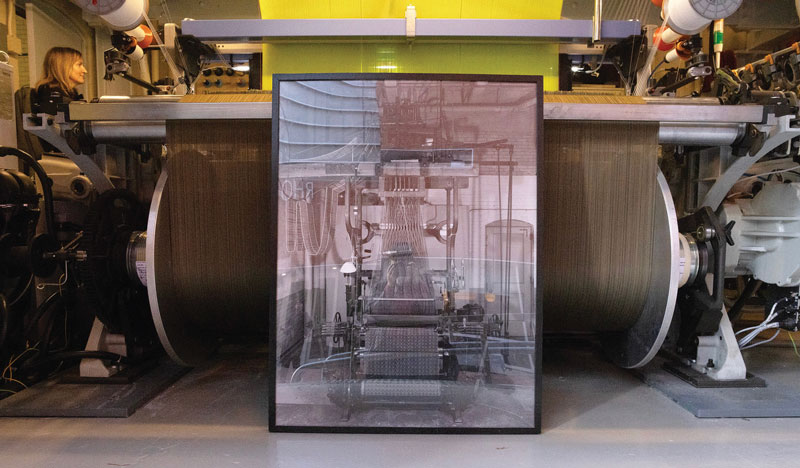
“Then and Now” image showing RISD’s old and new looms.
The Rhode Island School of Design (RISD) recently installed a state-of-the-art Itema jacquard loom to elevate the offerings of its Textiles department. In order to complete the installation in its Metcalf Building, the school had to perform some structural changes including a steel I-beam “cage” to support the weight of the loom.
The purchase of the new loom from the Italy-based machinery company was a collaborative effort between faculty, staff, engineers, manufacturing partners, as well as funding from the Pevaroff-Cohn Endowed Chair discretionary funds and industry partnerships. Contributors to the project of note include former Mary Anne Friel, Textiles department head, Jack Silva, vice president of Campus Services, among other contributors.
The machine was selected for its flexibility. The weaving machine supports a wide range of student projects in a research and development setting.“The flexibility of the equipment is extremely important,”said Anna Gitelson-Kahn, head of the Textiles department.
The United States’ industrial history is largely tied to the search and location of inexpensive, reliable sources of power that were harnessed to turn the wheels of industry.
In the form of waterpower — turning mill-stones at the local grist mill to the powerful flow of Brandywine Creek grinding together the explosive components of DuPont’s gun-powder — or as coal mined from deep within Pennsylvania or Virginia, energy was, and is, the life blood of industry and everyday living.
The U.S. textile industry transitioned from the dammed rivers of the North to the electrified South as hydroelectric power transformed the agrarian South into the new manufacturing frontier with open land and an approachable workforce.
Power is at the core of life in modern America.
Coal — abundant, local and inexpensive —blazed an energy trail forward complementing hydroelectric power, which soon was met with nuclear technologies.
Environmental awareness rose in the 1960s, and several accidents later — Three Mile Island, Chernobyl, and Fukushima — the use of nuclear technology set alarm bells ringing. Mounting concerns about nuclear waste didn’t help. And for better or worse, the power industry was forced onto a new path.
Now, in the early 21st century, understanding the unintended consequences of the nation’s energy development, there is a thirst for a new source of power — clean, cheap and reliable.
The green movement has focused, in what some might characterize as a knee-jerk reaction, on an all-in renewable energy future with no time to spare. This is a lofty and virtuous goal with a heartfelt central tenet of decarbonization but, unfortunately, without existing technology to support aggressive timelines.
Fossil fuels maintain an important role in generating power and providing refined industrial components. A focus on using them efficiently with the lowest emissions possible only makes sense. Developing a portfolio of improved energy generating technologies — wind, solar, natural gas, clean coal, hydrogen, and yes, nuclear — seems to be the smart road.
The real Holy Grail, however, will be new clean technologies built around nuclear fission and more so, fusion. Though advanced small modular reactors (SMRs) based on fission are gaining in interest, the technology still faces the fuel and waste challenges. Fusion technology, however, is the real game changer. With ever abundant hydrogen as fuel with no waste, fusion technology is a remarkable answer to a historically confounding problem.
Fusion technology took a big step forward in December of 2022 when scientists at Livermore, Calif.-based Lawrence Livermore National Laboratory’s National Ignition Facility achieved fusion and generated more power than what was used to cause the reaction —net positive power production. Proof positive that fusion is possible, and with the advancements in computational power, material science and artificial intelligence — a glide path to commercialization appears to be forming.
Fusion is the transformative, clean technology that will change power generation and everyday life as we know it in unimaginable ways.
Power is power, and harnessing fusion technology completely changes the environment, economy, global fossil fuel-based power structure and everyday life.
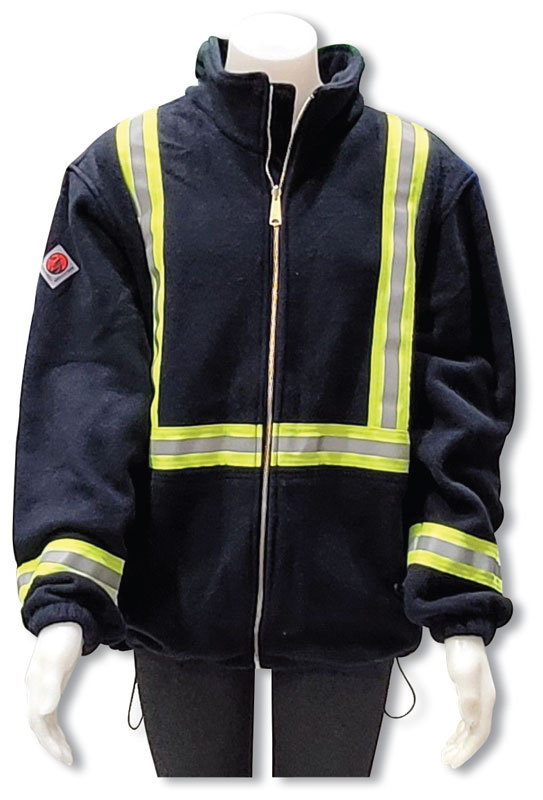
Workwear jacket featuring recycled Nomex® fleece produced by Canada-based Oratex Inc.
In a closed-loop process, General Recycled collects and shreds flame-resistant workwear into recycled fiber for new FR garments that are just as effective as virgin fiber products.
By Rachael S. Davis, Executive Editor
Flame-resistant (FR) workwear performs an extremely important function keeping workers in high-risk jobs in industries where there is a danger of exposure to fire hazards, electrical arcs or combustible dust — such as oil and gas workers, electricians, welders, airline and commercial laundry employees, and fire-fighters, among other occupations — safe while at work. Sadly, these all-important garments become a nuisance at the end of their useful life.
They cannot be incinerated because of the benzene found in the polymer’s chemical structure as well as possible hazardous chemical finishes, and instead, must be sent to a landfill. Estimates vary on how much aramid fiber is produced each year and it’s difficult to quantify how many garments are discarded annually. Some estimates suggest annual demand for para- and meta-aramid fibers exceeds 100,000 tons. But there is no question it is a global issue adding hazardous waste to landfills. Additionally, garments produced using meta- and para-aramid fabrics are 100-percent non-biodegradable. And even if the garments eventually begin to break down, any residual chemicals released into the landfill are toxic. In some cases, landfills are refusing to take such waste because of this persistence and the associated environmental issues. The clear answer is to keep them out of landfills in the first place, but where can the garments go and what can we do with the material?
These are questions asked more than 10 years ago by Ted Parker, Dave Kasper and Larry Suzuki — three men with more than 100 combined years of experience in the textile industry. “There was a conversation among colleagues, and we realized that fiber from used meta and para-aramid garments would have some value at the end of their lifecycle if we could turn the garments back into fibers, yarns and fabrics,” Parker recalled. However, while the men had lots of textile industry experience, textile recycling was new to them and they had to learn a lot very quickly.
Their initial conversation led to the formation of General Recycled Ltd., a Canada-based FR garment recycling business established in 2012 where Parker is president, Suzuki is vice president of Finance, and Kasper is vice president of Sales & Product Development. The company is headquartered in Burnaby, British Columbia, operates an aramid shredding facility in Val-des-Sources, Quebec, and owns a warehouse in Leduc, Alberta. “Quebec is where the textile infrastructure in Canada is located, along with some of the value chain, and it made sense for us to build our facility there,” Parker said.
“Canada is a big oil and gas producer with the third largest global oil reserves, which means there are a lot of workers wearing aramid personal protective equipment for protection against flash fire hazards abundant within the industry,” Parker added.
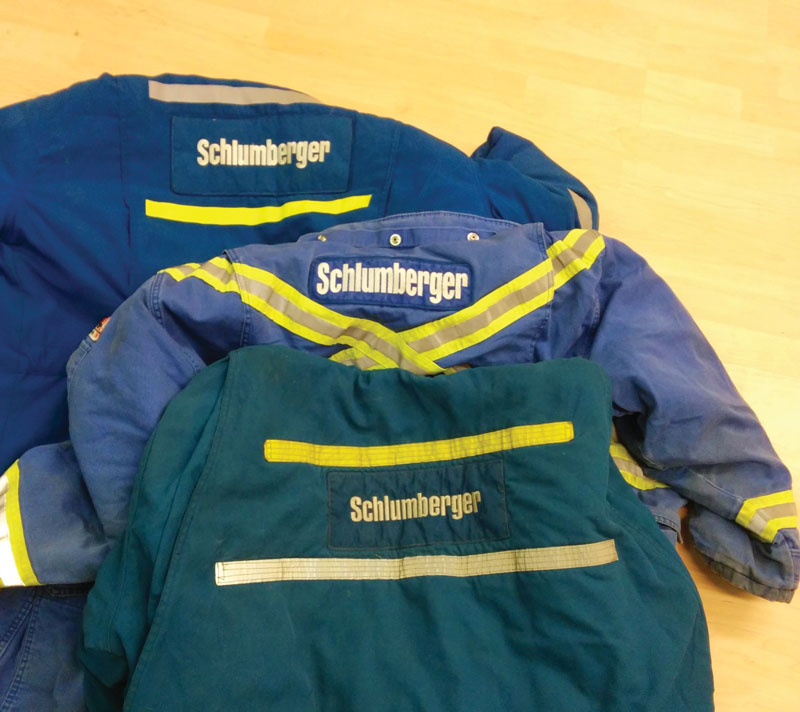
End-of-life royal blue coveralls collected from Schlumberger— an oilfield service company — showing the wide variances in color prior to shredding.
Tackling The Problem
The first step in recycling FR workwear is to gather the discarded garments. Clean FR garments are collected from end-users — a single source, companies and governments. To make this process as easy as possible, General Recycled works with the end-use companies to create a collection process that works for them and there is no one size fits all solution.
“Some customers control their own flow of garments on the back end where we will arrange for our transport to pick up, or they can ship their garments to us,” Kasper said. “Other customers use commercial laundries for their garment program, and it is easy for us to arrange collection at those pick-up points. We also help customers to identify costs associated with disposal that they currently are faced with to work those costs into the cost of the recycling program. Even with collection costs included, there are savings to be had by using recycled aramid fiber in yarns, fabrics and finished products. Everyone in the respective supply chains will know that 20 to 50 percent of the fiber input of recycled fabrics will be significantly cheaper than if they had used virgin fiber.”
When collecting garments, General Recycled is looking for fiber content — the type of garment isn’t of importance. “Because we are dealing with standards, all garments are typically labeled accordingly so it is easy to identify fiber content,” Kasper noted. All garments must be clean with no residual contamination and any oils collected during the dry-cleaning process can be recycled. Before the garments are shredded, any brass zippers or brass snaps are removed also to be recycled. In addition, any high-visibility FR reflective striping can be recycled too. “Each garment is decommissioned manually to remove the zippers and snaps, and if there is any doubt as to the fiber content, the garment is removed from the waste stream,” Parker said.
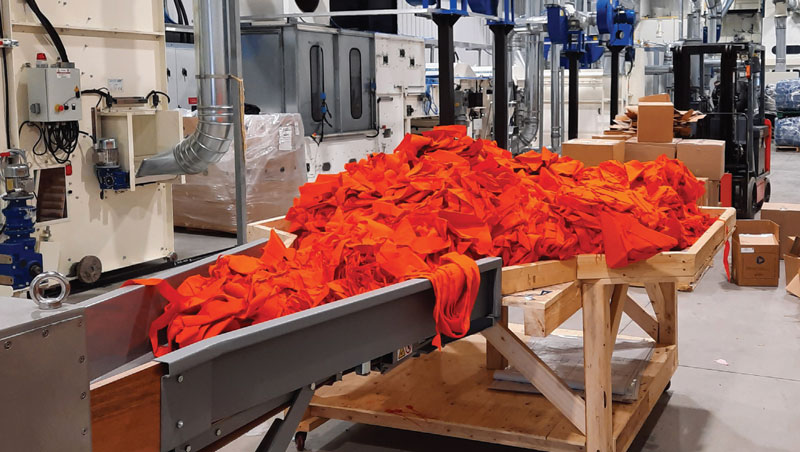
Reclaimed orange Nomex® scraps running through General Recycled’s carbon blade cutting system.
Tough To Shred
Aramid fibers are aromatic polyamides prized for their strength and abrasion resistance, as well as their low melting point and low flammability. But these positive attributes become a detriment at an FR garment’s end-of-life. “A regular pair of scissors won’t work to deconstruct the garments, and aramids eat machinery,” Parker stressed. “Unless the machinery is purposefully built to handle aramids, a conventional shredding line would go down very quickly costing tens of thousands of dollars to repair.”
Knowing this, General Recycled worked with machinery suppliers to develop a shredding line that features a carbon blade cutting system, reinforced tearing drums and twin carding and opening systems that can handle aramid fiber. The bonus to this type of machinery is that if it can handle aramids, it can shred any type of fiber, so General Recycled also can recycle any other type of textile garment. “Yes, our focus has been primarily on aramids, but we quickly understood that the proposed shredding plant we were building would be able to handle other fibers as well,” Parker noted.
The plant shreds a variety of fibers including Nomex IIA®, Kermel®, Kevlar®, Nomex®, Conex, Twaron, polybenzimidazole (PBI) fiber and Tecasafe® Plus. It also handles a limited amount of treated cotton and cotton/nylon blend fabrics, while conducting research and development on these recycled fibers and blends.
Next Steps
Once the garments are shredded into reuseable fiber, the fiber is blended. General Recycled can blend the fiber, or, most often, the spinners blend the fiber in their own operation.
Fiber is processed based on color. “So royal blue only gets combined with royal blue, navy with navy and orange with orange, for example,” Parker said. “We receive every shade imaginable from the same end-user because variables such as how many times has the garment been washed and has it experienced ultraviolet degradation, among others, impact the color.”
The recycled fiber is shorter than a virgin aramid fiber — as is typical for any shredded, recycled fiber — so in order to ensure the fiber is suitable for spinning, it is blended with some quantity of virgin fiber based on a patented formula developed by General Recycled. The resulting fiber blends contain between 20 and 50 percent post-consumer recycled aramid fiber depending on the desired yarn count. “Generally speaking, the coarser the yarn count, the more recycled content can be used in the blend,” Kasper explained. “When blending for a coverall or shirt and pant application, there may be between 20 and 30 percent recycled fiber in the blend. But in the case of a very heavy fleece or cut sleeve application, the recycled content may be as high as 50 percent.
“Think of it as baking a cake,” he continued. “We follow our recipe or create a new one for the end user. Our patents are on process and product with a wide margin to play with fiber input.” Depending on what specification the customer has and the standards they wish to achieve, the virgin aramid may be Nomex, Conex, Yantai or Arawin. The blends also may contain different modacrylics, antistatics or FR viscose fiber.
Ring spinning, open-end spinning and Vortex spinning have all been used to make yarn using the recycled fiber with successful results.
“We are shortening the staple fiber during recycling, and as a result, the fiber can never be as strong as a fiber made from a standard 50- to 51-millimeter-long virgin fiber,” Kasper said. “That being said, once blended with virgin fiber, the result is a product just about on par with virgin aramid in terms of strength with no loss of performance. Our recycled aramid products compare very favorably, meeting the same parameters as virgin aramid products on the market.”
According to Kasper, the cost of recycled aramid fibers is significantly less than virgin fiber. “It’s never a race to the bottom on price though as even generic aramid fiber is expensive,” Kasper said. “But there absolutely are savings to be had.”
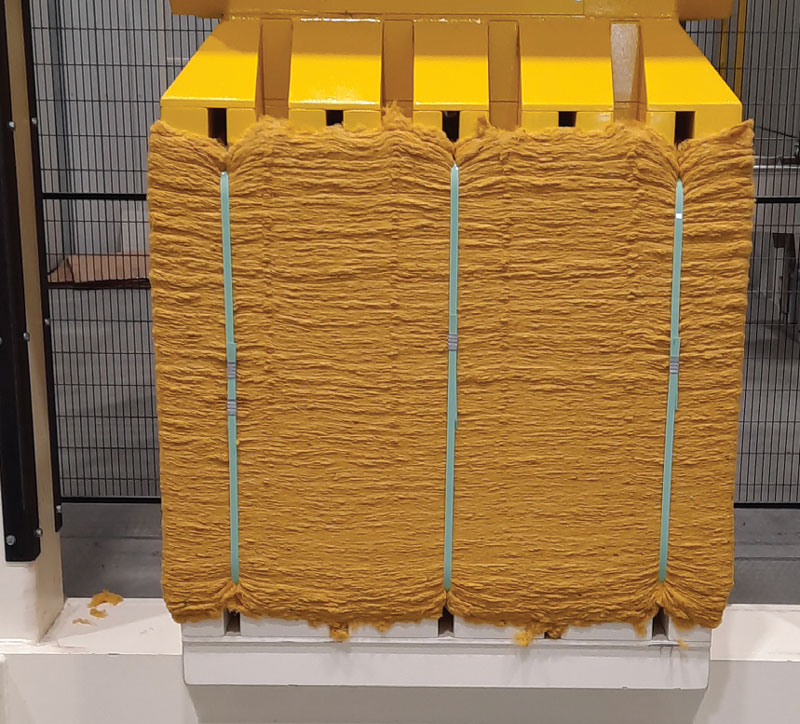
A finished bale of recycled yellow Nomex® III.
Downstream Processing
General Recycled is just the recycler. So once the fiber bales are ready for spinning, they move downstream in the process to yarn spinners and then fabric manufacturers, followed by dyehouses and garment producers. The company has developed its own value chain of spinners, weavers and knitters across North America, but also sells fiber to existing value chains that an end user of FR garments already has in place. Key to its program is the idea that the recycling program does not upset existing value chains that an end-user has established. “Typically we would sell recycled fiber to an end-users preferred yarn spinner who would sell the yarn to the end-users fabric supplier who would sell the fabric to the garment supplier,” Parker said. “The only difference is that garments made using our fiber now contain some recycled content. And importantly, these very garments can be recycled repeatedly. In fact, the best thing about the process is that recycled garments can be recycled repeatedly in a closed-loop process.”
Industry partners include:
• Yarn spinners — Regitex Inc., Saint-Josephe-de-Beauce, Que-bec; Coats Group in the United States; and Mexico-based Argen-tum Textil;
• Circular knitting, dyeing and fin-ishing — Montreal-based Oratex Inc.; and
• Aramid fiber suppliers — The Netherlands-based Teijin Aramid; France-based Kermel; and Yantai Tayho Advanced Materials Co. Ltd., China.
Performance And Accidental Discovery
Fabric styles most commonly are 4.5-ounce plain weaves, 6- and 7-ounce twills, plaited jersey, athletic fleece, polar fleece and FR cuffs. The fiber also may be used to produce nonwovens.
All fabrics are certified by independent third parties such as Groupe CTT, Saint-Hyacinthe, Quebec, Toronto-based Kinectrics and the Protective Clothing & Equipment Research Facility at the University of Alberta. The third party testing established that the recycled fabrics meet or exceed the necessary flash fire and arc flash protection requirements determined by the following standards: Canadian General Standards Board (CGSB) 155.20; National Fire Protection Association (NFPA) 2112 Flash Fire Standard; Canadian Standards Association CSA Z462, Workplace Electrical Safety Standard; and NFPA 70E, Electrical Safety in the Workplace.
UL certification also can be provided, and additional tests may be performed when requested.
A well-known aramid fiber manufacturer published some 4 second manikin burn test results showing that its fiber, in a 6 ounce fabric, achieved 40 and 45 percent combined second- and third-degree burns. “We suspect aramid producers like to show this result to highlight how well aramids perform in a 4 second burn test compared to a cotton/nylon or 100-percent cotton fabric that has been treated with a fire retardant,” Kasper surmised. “These fabrics, usually heavier than aramids, perform very well at 3 seconds, but fail miserably at 4 seconds where it is not uncommon to see 85 to 90 percent combined second- and third-degree burns. It would be impossible to survive such a scenario.”
A 6 ounce fabric incorporating General Recycled fiber showed excellent results in a 3 second manikin burn test achieving only 7.3 percent second-degree burns, surpassing any results compared to virgin aramid garments of the same or similar fabric weights. To have an idea of where the fabric truly failed, the company decided to experiment and test in a 5 second manikin burn scenario to see what happened. “On a 5 second test, we achieved 21.5 percent second degree burn only!” Kasper reported. “This was excellent and unexpected and 100 percent better than the leading aramid fabric of the same weight. We knew we were onto something.”
It was discovered that the inclusion of recycled fiber in the yarn process builds additional thermal protective characteristics into the final yarn composition. General Recycled’s customers report similar test results in their independent testing.
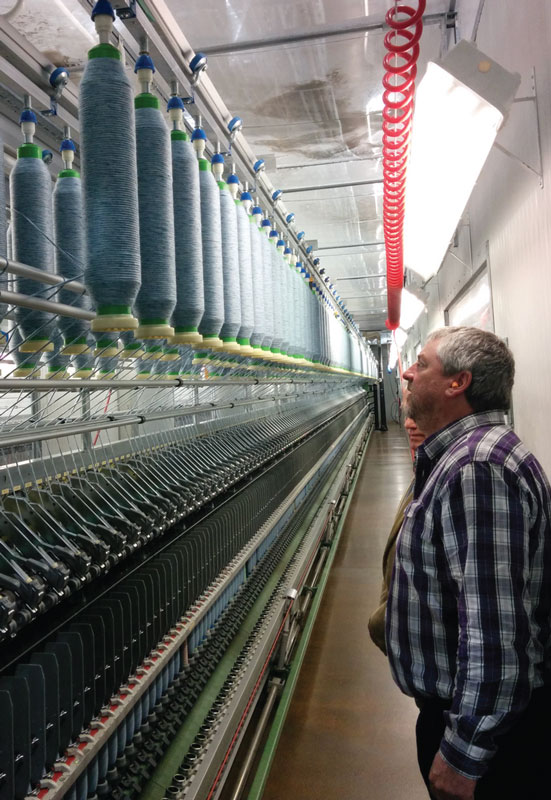
Dave Kasper observing recycled fiber running on a ring-spinning machine.
Getting The FR Garment Industry On Board
In order to help the adoption of its recycled fiber, General Recycled focused on education. “We knocked on doors, made presentations and pushed for companies to trial our process,” Kasper noted. “We discovered early on that speaking to procurement was not necessarily the right way to go about things. It was important to also have waste management people in the room. The program starts with collection and we needed to educate the industry about the costs associated with dis-posing of these hazardous garments, which was easily zeroed in on by the waste management folks. Safety techs also helped to tell the story as the recycled fabrics were certified prior to testing in the field.”
Paradigm Shift
According to Parker, aramid recycling is a global issue that has a global impact. Sadly, there has been only a slow movement towards recycling. “Aramids are specified the world over to most personnel working in the oil and gas sectors,” he said. However, he also expressed that there is more interest in the process from jurisdictions outside of North America than in North America.
“Companies need to follow through on their sustainability messaging,” Parker urged. “They tend to spread the message that they are doing all they can in relation to sustainable practices and waste management but continue to allow used garments to go to landfill. Knowing that it’s possible to recycle the garments into a new garment that performs the same or better than a virgin fiber product in a cost-effective manner should make the choice a no brainer. Companies send their garbage to landfills because they can with impunity.”
Parker expressed that a paradigm shift in thinking is needed. “A company has to be open to considering the options for recycling their garment waste properly,” he said. “FR garment recycling doesn’t appear to be high on anyone’s list, and far too often, the ‘out of sight, out of mind’ mentality gets in the way. But that doesn’t mean non-biodegradable FR garments shouldn’t be disposed of properly when there are technologies available to give them a second life. This problem only continues to grow and will continue to be a major problem in the future.”
Parker also emphasized that extended producer responsibility (EPR) — a policy approach that gives the manufacturer a greater level of responsibility to manage the end-of-life for products they make — puts pressure on producers to get involved and make the shift.
The Solution Exists
General Recycled has created a true closed-loop and cost-effective recycling program for the proper disposal and reuse of aramid workwear. The company wants the industry to see that the solution is here because garments made using recycled content are cheaper, provide increased thermal insulation protection, are third-party independently certified and can be recycled repeatedly. The recycling process also solves a tricky environmental issue. “Does the idea require a different way of looking at the disposal issue? Yes!” Kasper said. “But the proof is here for all to see.
“Chasing the technology and developing what we have has been exciting as well as challenging,” Kasper mused. “Every step of the way, people have told us we are nuts and it will never work. And yet, every step of the way we have proved the naysayers wrong. Recycling aramids not only works, but the resulting recycled products are without a doubt just as good, if not better, than the leading virgin products. That is exciting!”
Part II of a two-part feature reviewing improved tests for fabric performance along with automated inspection and digitalization technologies that reduce product defects and waste to help improve the textile supply chain.
By Dr. Kavita Mathur
In the January/February 2024 issue of Textile World, Part I of “Innovations In Testing & Quality Control” focused on fiber and yarn measurement, and fabric performance testing. Part II delves into color measurement and communication, tactile measurement, and quality control measurement technologies.
Color Measurement And Communication
Grand Rapids, Mich.-based X-Rite Inc.(Pantone) offers solutions for color specification and communication, color formulation for textile dyeing, production and quality control, and visual assessment. The company presented its industry-leading color measurement solutions for all aspects of the workflow on a variety of textile materials and applications. For color specification, there was the Ci7860 Sphere Benchtop Spectrophotometer, an instrument for digital color standard generation that provides measurement flexibility with switchable reflectance and optional transmission apertures, and the Color iQC, a feature-rich quality control software that monitors color from specification to material suppliers to manufacturing and assembly. For color formulation for textile dyeing, the Color iMatch software accurately identifies recipes containing the most likely dye combinations using proprietary search metrics and provides tools to optimize and improve existing legacy color data from a variety of systems. For production and quality control, the company presented its MetaVue VS3200, a non-contact imaging spectrophotometer used to measure color on multicolored fabric samples to quantify the true color and ensure design intent is achieved on wet and dry paints, plastics, cosmetics, and small and odd-shaped samples. For visual assessment, the company offers the SpectraLight QC light booth to assess large samples and evaluate special effects under all relevant lighting conditions. The booth includes seven different light sources, including a dimmable filtered-tungsten halogen daylight and an optional LED.
England-based VeriVide Ltd. launched three new products — UltraView and VisionView, both all-LED light booths; and OmniStretch, a fabric opacity assessment tool. UltraView brings a range of sustainable new benefits to designers, mills and brands; and is configured with all-LED tunable calibrated light sources as standard including CIE D65, CIE D50, L40-8, L35-8, L30-8, L31-9, CIE illuminant A, and UV. As the light is tunable, suppliers can avoid purchasing multiple light cabinets and the LEDs eliminate the need for the regular bulb changes necessary with fluorescents, providing significant energy savings. The UltraView incorporates the company’s A rated CIE D65 and CIE D50 artificial daylight light sources while being fully tunable for recalibration to the individual requirements of each customer.
VeriVide’s VisionView product includes a DigiEye viewing station for non-contact color measurement and digital imaging. It allows for visual and digital color assessment by combining both visual and digital color workflows in a single light booth. DigiEye overcomes the limitations of spectrophotometers, which are limited to products with a solid color appearance. Normally, spectrophotometers can only measure “average” color, assessing only the area of the fabric exposed in the instrument’s aperture. Additional limitations arise if the product has multicolored characteristics or appearance, an uneven or inconsistent surface, a color area too small to be captured by the instrument or any kind of surface effect, for example carpet pile or the sheen of satin and silk.
The company’s OmniStretch enables stretch-based opacity assessment of knitted fabrics, across different stretch levels. Two assessment plates are included with the product, which enables grading the translucency of fabrics and assesses “grinning” associated with undyed elastane to guarantee the product is squat proof.
Thousand Lights Lighting (Changzhou) Ltd. (Thouslite), China, exhibited its multi-channel LED lighting technology. The company emphasized its concept of Total Appearance for communication and reproduction of color using the LED-Simulator. This digital communication platform with cabinet aims to shorten the design cycle and eliminate wasteful sampling. It allows reproducibility of color, texture, gloss and translucency. The LEDSimulator features the LEDView cabinet and the ColorWay color design software. It is a powerful tool for communicating Total Appearance throughout the supply chain, allowing color to be visualized on a wide range of textures and matched between virtual and real samples. The system has a viewing cabinet that includes the standard CIE illuminants D50, D65 and D75 to reproduce any phase of daylight in terms of Color Rendering Index (CIE Ra) 99 and Metamerism Index (MI) Grade A.
Lawrenceville, N.J.-based Datacolor offers a series of color management tools and software, including benchtop and portable spectrophotometers, color lab dispensing systems for visual evaluation and multiple color management software applications. At ITMA, the company focused on providing insights and best practices on color solutions with guests, and Datacolor speakers gave presentations and spoke on a range of topics. Particular attention was given to its new product CloudQC, a cloud-based quality control software to manage, evaluate and share QTX files for fast color approval, to work remotely or from different office locations and eliminate time-consuming and costly evaluation of physical samples between manufacturers and customers.
Italy-based Barbieri Electronic’s competencies center on intelligent instruments such as spectrophotometers and color measuring instruments to enable accurate and consistent color reproduction on almost any kind of media. At ITMA, the company showcased its award-winning spectrophotometer Spectro LFP qb Textile edition. The instrument is a fully automated reflection/transmission spectrophotometer for color management in dye-sublimation and direct-to-garment printing. It has a dedicated software and accessories including a special textile holder for easy and secure fixation of fabrics for measurements. Many textiles —such as cotton, silk, polyester, viscose, wool, linen and mixed fabrics — can be automatically measured. The spectrophotometer comes with an air blowing system to prevent textile fibers from contaminating the optics.
Tactile Measurement
Testing device manufacturer Emtec Electronic GmbH, Germany, showcased the new features of its Tactile Sensation Analyzer (TSA). Originating in the tissue paper industry under the name Tissue Softness Analyzer, the TSA has since become an established industry standard for haptic measurement worldwide. This is a redesigned model that has been adapted to meet the specific needs of the textile and nonwovens industry. Some of the needs of the industry include assigning an objective number to the way a fabric subjectively feels to the touch. The TSA measures the three basic parameters that determine the human hand feeling — the real softness, which comes from the fiber stiffness; the roughness, which comes from the surface profile of the sample; and the stiffness, which is determined by the fiber behavior, the production technology and chemicals. The availability of these three basic parameters— roughness/smoothness, real softness and stiffness/deformation —allows the use of the device in various application areas.
The TSA already offers a unique approach to softness measurement by simulating the sensory capacities of the human hand via sound analysis. Haptic parameters such as softness, smoothness, flexibility, deformation and springback behavior can be objectively measured and the results digitized within a fraction of the time needed for traditional hand-panel testing methods — 90 seconds is standard. The digitized results can be searched and reproduced from anywhere in the world. This is done via a new cloud-based haptic library by the updated TSA. The company says that especially for garments there is a strong need to quickly and reliably reproduce certain haptic qualities that consumers prefer.
Thermetrics LLC introduced Liz, a full-body thermal manikin for clothing and environmental testing on the female form. The Seattle-based company uses Liz for testing women’s performancewear. Featur-ing 30 independent thermal zones and with a maximum power output of 700 Watt per square meter, the manikin — at 5 feet, 5 inches (167 centimeters) in height — provides realistic garment properties and ther-mal comfort data, more applicable to the actual end-user. The product is useful for companies developing per-formance wear or protective apparel for women or for institutions that establish worker safety guidelines.
In addition to its line of fabric performance and testing mentioned in part I, Roaches International chose ITMA 2023 as the ideal platform to launch its highly anticipated Sentire product line for measuring finished fabric tactile properties. To provide customers with a better understanding of how specific garments will feel and perform, since 2020 the company has been developing its performance haptics tester in collaboration with Leeds University, based on the Leeds University Fabric Handle Evaluation System (LUFHES). The product works by placing fabric samples into LUFHES, which then runs a series of tests to generate quantitative fabric tactile properties. This is akin to a fingerprint for the fabric, which can then be communicated digitally to partners in different locations and compared against other samples.
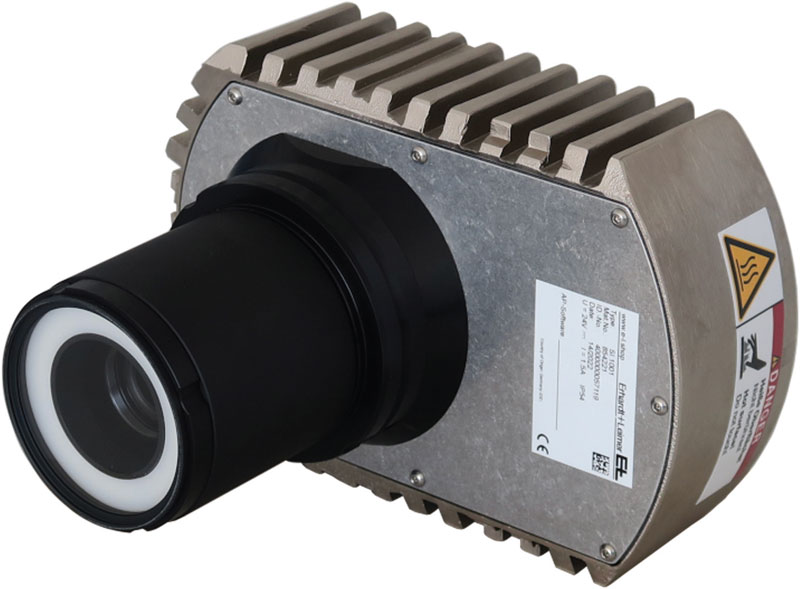
Erhardt+Leimer’s ELSEAMTEX SI 1001
Quality Control Measurement
Germany-based Erhardt+Leimer presented novel products in the area of inspection technology including the ELSEAMTEX SI 1001 seam sensor for detecting cross seams, and the Elmeta MDA 1005/1006 metal detector that can be used to optimize production processes and make them safer.
The Elseamtex SI 1001 seam sensor detects optically, and therefore without contact, any type of seam on printed or single-color fabrics. Especially when there are large differences in thickness, such as with carpets and towels, no adjustment work is necessary. Software based on artificial intelligence makes it possible for the first time to detect cross-seams at the level of human perception. Along with a light transmitter and a matrix camera with lens, the sensor also includes a WLAN card for reliable communication with a smartphone, tablet or any other mobile terminal device. A dedicated app is also available. Special seams can be tested or defined offline. If a cross-seam is detected, a digital output in the sensor is switched so that for example the calendar rollers can be opened, the shearing blade raised briefly, or the seam left to run through the digital printing press without printing.
During the production of textiles, small metal particles find their way into the web due to the various processing steps. If these particles are not all detected, extremely costly damage may occur on the downstream calendar rollers and shearing tools. In addition, there is also a risk of catalytic reactions in wet finishing. As a result, whole web sections are often converted into scrap. The metal detector Elmeta MDA 1005/1006 reliably and accurately detects the smallest metal particles over the entire width of the web at production speeds from 2 to 500 meters per minute (m/min). For each segment — 300 millimeters — a signal LED on the sensor indicates the position of the metal particle in the web. The metal detector can be used for dry and damp web textiles, nonwoven fabrics and carpets.
China-based Suntech Textile Machinery invited its customers to learn about its latest artificial intelligence (AI) fabric inspection technology at its booth at ITMA. The company offers a large range of textile equipment, but highlighted the AI Automated Visual Inspection System (ST-Thinkor). The ST-Thinkor can be incorporated into many types of fabric inspection machines. The system is designed to help textile manufacturers automate the textile inspection process and keep them focused on quality. The ST-Thinkor provides automatic defect marking, automatic linear fabric end-cutter, 24 hours unmanned operation in the inspection section and high efficiency, at production speeds of up to 60 m/min. With AI deep learning, precision detection is also highly improved as well.
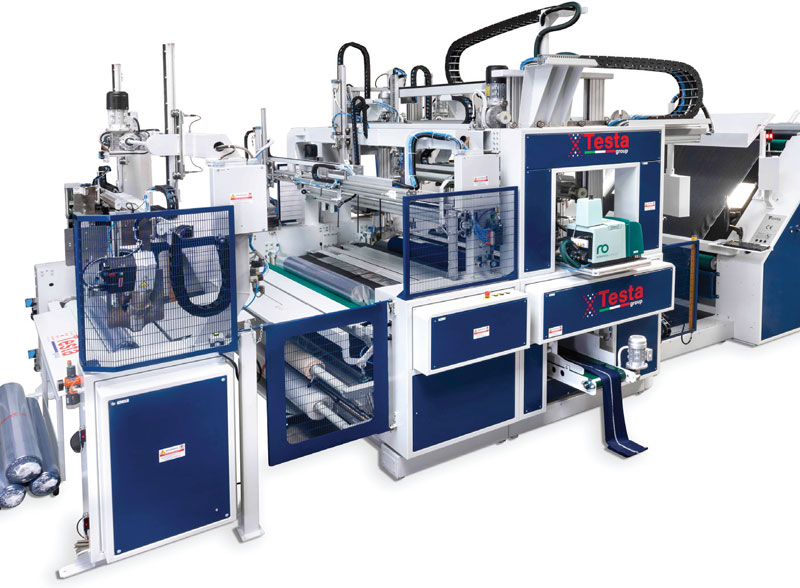
Testa Group’s SuperTestaRossa
Italy-based Testa Group S.r.l. specializes in machines for inspection, cutting and packaging to help reduce fabric waste. Testa Group’s systems allow customers to have machines able to work with all types of fabrics, from elastic ones and denim, to all ranges of technical materials. At its ITMA 2023 booth, the company presented its SuperTestaRossa model, an automatic cutting and packing machine. A high-performance machine, it is equipped with some significant technical innovations. The inspection and cutting process consist of a first phase fabric inspection with no cuts, followed by a cutting optimization that takes into account a mapping of the defects of the fabric batch and then establishing a cutting execution plan performed according to the capabilities of the cutting machine. This optimized management of the inspection and cutting phases, improves quality control and reduces the amount of production waste and the number of machines involved in the process of roll packaging.
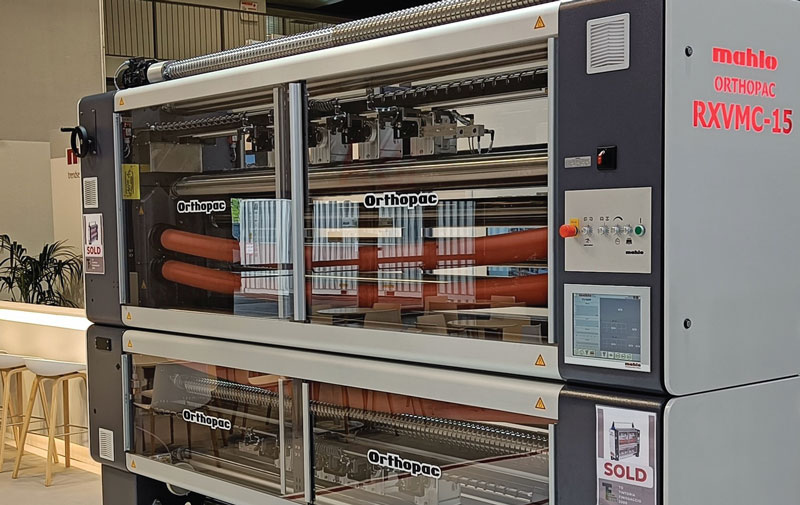
Germany-based Mahlo GmbH & Co. KG — with an offering focused on in-line measurement, control and automation solutions for continuous processes in textile manufacturing —presented its latest developments for process optimization. The company has a modular system architecture with a wide variety of sensors, which allows its customers to optimize their production sustainably with individualized solutions that allow for measuring critical material properties such as thickness, weight, density, moisture, and temperature. For distortion detection and correction, the company showcased its new Orthopac RXVMC straightening concept, which was presented for the first time in Milan and that can remove distortions in textile fabric webs even faster and more precisely than other systems. The company’s Patcontrol PCS for pattern recognition and the Famacont PMC for controlling weft and stitch course density were also on display. Both systems help producers maintain the residual shrinkage values they guarantee in their products. Mahlo also presented its continuously developed digital smart data environment mSmart. This allows historical data to be used to optimize processes and eliminate weak points.
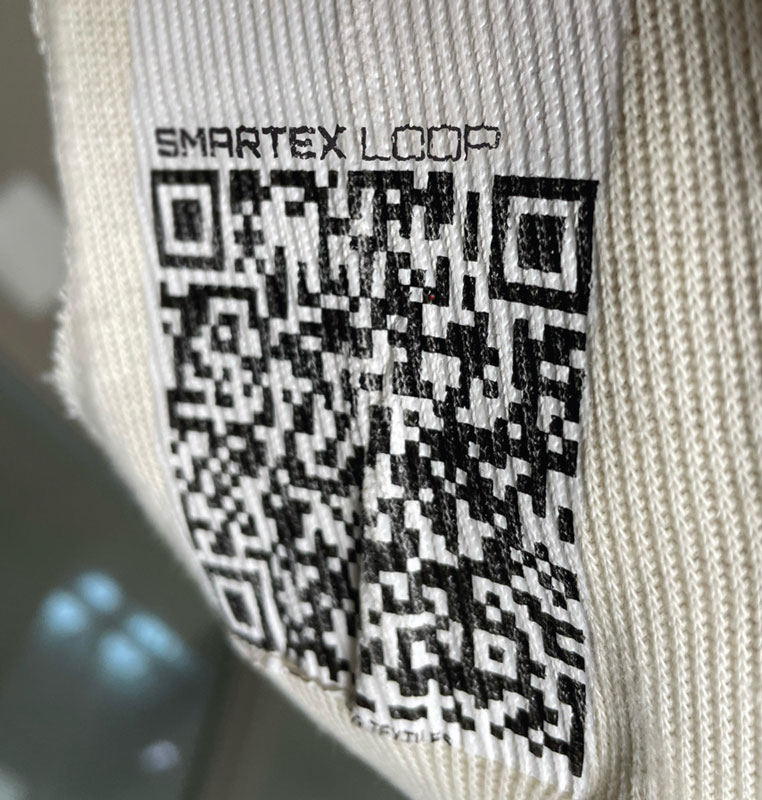
Smartex LOOP fabric traceability tool
Smartex, Portugal, which originally developed its Smartex CORE, an AI-enabled automated quality control product, presented the Smartex LOOP fabric roll level traceability tool. Smartex LOOP enables suppliers to take advantage of fabric-roll level data collection as well as directly address the call from fashion brands for better supply chain data. This solution represents a significant advancement to revolutionize supply chain communication for the modern textile factory. Users can quickly scan any fabric roll’s information or review all of their rolls on the Smartex Platform via their desktop or mobile and instantly access a wealth of information about that roll’s production history and quality. Smartex LOOP allows factories to pinpoint fabric roll issues, identifying the exact machine, worker or yarn supplier involved. Smartex LOOP provides irrefutable evidence of product quality through a digital roll map, to prevent supply chain disputes.
England-based Shelton Machines Ltd. (Shelton Vision) provides automated surface inspection systems using machine vision to help reduce waste in many applications within the textile and apparel industries. The company presented a new fabric inspection technique for accurately detecting the most subtle defects on patterned fabrics during high-speed production. Fully validated and already in use on industrial installations, this patent-pending system has been integrated into the company’s WebSpector platform. The Shelton WebSpector machine vision system offers automated defect detection of more than 97 percent, while traditional methods for defect detection that rely on human inspection have detection rates under 65 percent. The WebSpector system has been until now restricted to plain textiles, but now the company has developed template-matching techniques for the resolution of complex pattern deformations. This allows the system to detect defects in the pattern as well as underlying defects.
Supply Chain Improvements
ITMA 2023 in Milan included a good number of innovations in testing and quality control, and provided an excellent platform to assess the future direction of the textile industry in this area, which builds expectations for the next ITMA in Hanover in 2027. Advances in QC and testing technologies have a significant effect on standardization and improve today’s textile supply chain. Test methods and standards also are in constant development. In today’s textile manufacturing environment, testing and QC are at the center of meeting tight specifications required to satisfy the performance and quality expectations of consumers.
By reducing product defects, automating inspection via digitalization and improving tests for fabric performance, the QC and testing machinery showcased will surely help with energy, water and other resource optimization for textile manufacturing. Inline process controls, sensors and simulation systems will take textile manufacturing, dyeing and finishing beyond the current realm of the black-box of trial-and-error. QC and improved testing will also help with the ultimate goal of replacing the fossil resources that heavily dominate today’s textile industry. Human-assisted or semi-autonomous AI systems already are helping predict and optimize manufacturability, material compositions and physical parameters, minimize production resource footprint and provide data for traceability, reporting and certification requirements.
Editor’s Note: Dr. Kavita Mathur is an associate professor in the department of Textile and Apparel, Technology and Management, at Raleigh, N.C.-based NC State’s Wilson College of Textiles. This article was adapted for Textile World from a paper by Dr. Mathur published in the NC State Wilson College of Textiles’ Journal of Textile and Apparel, Technology and Manage-ment (JTATM). Part I of this article appeared in the January/February 2024 issue of TW.