SGS Offers Azo Dye Testing

SGS Consumer Testing Services, Fairfield, N.J. has added azo dye testing to its U.S. textile
testing services. The new capabilities will reduce testing lead time for U.S. retailers, buyers and
manufacturers and help U.S. finishers and converters meet demands for shortened production cycles.

Azo dyes produce bright, high-intensity colors, have fair to good fastness properties, are
economical to produce and account for more than half of all commercial dyes used. Depending on
other chemical features, they are categorized according to the fibers for which they have an
affinity or their application methods.

The dyes have aroused concern because carcinogenic aromatic amines used in producing the
dyes may be released from a finished textile by perspiration or saliva, causing health risks from
skin contact or ingestion. Azo dyes may contain any of more than 20 carcinogenic amines listed
under California’s Proposition 65 requiring the state to publish a list of chemicals known to cause
cancer, birth defects or other reproductive harm. These carcinogens have been banned in China,
Japan, India, Vietnam, and the European Union; and a variety of products including T-shirts, denim
jeans, scarves, dresses, hats and bed linens have been included in azo dye-related product recalls
and other enforcement actions.

“Most retailers and brands recognize the need to be aware of increasing restrictions on
toxic chemicals for their products in the global markets they sell,” said Sanjeev Gandhi, global
technical director, Consumer Products, SGS Consumer Testing Services. “For textile products, a key
area of concern is azo dyes. Being able to source necessary testing from a U.S. company both
streamlines and simplifies the process of protecting yourself from enforcement action that can
damage your brand and result in a loss of sales.”

September/October 2011

September/October 2011

The Arlington, Va.-based
American Apparel & Footwear Association (AAFA) has named
Suzanne Shomers vice president, finance and administration.

Messe Frankfurt USA, Atlanta, has promoted
Stephanie Everett to vice president, responsible for U.S. and Canada shows.

PeopleEverett

Everett

The Board of Directors of
Tranoco Inc., Travelers Rest, S.C., has elected
Larry W. Byars president and
Elizabeth Kraft vice president.

China General Plastics Corp. of America (Enduratex), City of Industry, Calif., has
named
Eric D. Peterson national sales manager.


PeoplePeterson

Peterson

SATO Corp., Tokyo, has named
Kazuo Matsuyama president and CEO effective October 3; and
J. Michael Fowler general manager, International Business Division.

Saint-Gobain, Paris, has named
John Crowe president and CEO Saint-Gobain Corp. and CertainTeed Corp.

Milliken & Company, Spartanburg, has elected
Harold Chandler chairman of the Board.

Oxford Industries Inc., Atlanta, has promoted
Wesley Howard to president, Lanier Clothes.

Assofibre CIRFS Italia, Italy, has named
Maurizio Radici, RadiciGroup, president.

Stork Prints America Inc., Charlotte, has named
Edward Scheppink managing director and
Alan J. Fenno sales manager, Textiles.

PeopleScheppinkPeopleFenno

Scheppink (left) and Fenno

Glen Raven, N.C.-based
Glen Raven Inc.‘s Technical Fabrics division has promoted
Gary Zumstein to vice president of R&D, Protective Market; and has named
Rodney Holland director of sales.

The Cotton Board, Memphis, Tenn., has elected
John Clark, Michar LLC, chairman.

Paris-based
Lectra has named
Anastasia “Stacey” Charbin marketing director, fashion.

PeopleCharbin

Charbin

Americhem Inc., Cuyahoga Falls, Ohio, has named
Marty Staten account manager, fibers business unit.

Secant Medical, Perkasie, Penn., has appointed
Karen West senior vice president, strategic development; and has promoted
Jeff Koslosky to vice president, advanced technologies, and
Carlos Valdes to operations integration.

San Francisco State University student designer
Amy Dorie has won Salt Lake City-based
Outdoor Retailer‘s Project OR Cycle 7 competition.

Radiant Energy Systems Inc., Hawthorne, N.J., has appointed
Terry Perdue engineering manager, and
Stephen J. Miggels project engineer.

The
Technical Association of the Pulp, Paper, Packaging and Converting Industries’
(TAPPI’s)
NET Division has named
Dr. Anthony Atala, Wake Forest Institute for Regenerative Medicine and Wake Forest
Baptist Medical Center, winner of the 2011 Innovation in Nonwovens Award;
Dr. William M. “Bill” Ferry, ExxonMobil Chemical Co., winner of the Technical
Award and Mark Hollingsworth Prize; and
Bill Bittle, SciEnTech, winner of the NET Division Leadership & Service Award
and Haas Prize.

Propex Operating Co. LLC, Chattanooga, Tenn., has named
John Maynie director of marketing.

Vancouver, Canada-based
Naturally Advanced Technologies Inc. has named
Thomas C. Robinson COO,
Jay Nalbach chief marketing officer and Ryan Leverenz director, global corporate
communications.

Xennia Technology Ltd., United Kingdom, has appointed
Laurie Geldenhuys commercial director.


Bunting Magnetics Co.
, Newton, Kan., has named
Dr. Pete Lipetzky general manager of Magnet Applications’ Dubois, Pa., facility;
and
Matthew Mason,
Cory Dreiling and
Brandon Bousquet design engineers, Material Handling product line.

PeopleLipetzsky

Lipetzky

September/October 2011

Global Sourcing In New York

Recent fabric trade shows in New York City saw an upswing in exhibitor and buyer numbers. At
Première Vision Preview, innovation caught interest. The 460-plus total exhibitors at colocated
Texworld USA, the International Apparel Sourcing Show and the Home Textiles Sourcing Expo ranged
from fibers and yarns to finished product. At Kingpins, there is a waiting list for exhibitors.

KA1

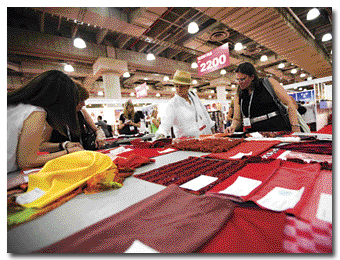
Texworld USA visitors examine fabric samples on display.


Première Vision Preview


Jacques Brunel, managing director of Paris-based Première Vision S.A., noted changes in
buying habits. “The market has come back,” he said, “but it’s a different buyer than it was three
years ago. Those shopping this show are open to new developments and creativity. And they are
buying fewer fabrics from Asian resources.”

At Première Vision Preview, cashmere, alpaca and mohair were in demand. Lively colors were
selling, and new technologies focused on comfortable functional fabrics.

Robert Noble, Scotland, has restyled traditional tartans, Donegals and tweeds. Larger
patterns and lively, lush colors look new. Shades of eggplant, mauve, berry and brown are enlivened
with a spot of pink or coral. Shetland and lambswool are soft and light, and blended with cashmere
or cotton. At Picchi S.p.A., Italy, it’s classics, cashmere and color. Twills have hairy surfaces,
and meltons have sheen. Buyers are asking for knitted outerwear fabrics.

C.O.T.O., Japan, describes its line as “modern design based on tradition.” Fibers include
wool, cotton and washi — a paper derivative. Wool knits have a lot of contrast. There are thick,
fuzzy patterns with irregular open spaces; heavy/sheer ribs; tree-bark stripes; black-and-white
checked bouclés with metallic splashes; color-flecked tweeds; and double-faced tartans.


Two Italian techno specialists showed new ways of weaving and finishing. Frizza S.p.A. has wax
finishes on peach-touch fabrics, waterproof and breathable membrane-backed cloths, crushed
surfaces, and metallic luster. At Olmetex S.p.A., a double-faced cashmere/wool coating is backed
with quilted nylon. Water-repellent double-faced silks reverse from matte to metallic. Classic
tonal patterns are wax-finished, washed and brushed.

Creativity stretches the imagination at two French firms, Philea and Velcorex since 1828.
Corduroy specialist Velcorex has jacquard-patterned, printed, laser-cut or flocked corduroy. There
are cut and fringed ribs, suede or velvet touches, denim, and fur looks. Philea’s casual, classic,
feminine line includes pigment-dyed double-faced stretch satins, silky denim-look jacquards and
melting patterns. New wool/Tencel® flannels are soft to the touch and have a lot of drape.

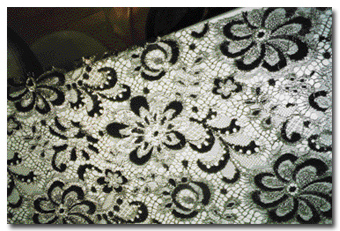
A photo of Kate Middleton in her Alexander McQueen wedding gown of Solstiss lace centered the
display at Solstiss, France. Popular laces include delicate florals, chenilles and metallics. Denis
et fils, France, has metallic jacquards in ethnic patterns or small tie-like designs. Hand-painted
crepon with a gold jacquard flower is new.

There is a demand for printed fabrics. Popular base fabrics at Confetti Tekstil, Turkey, are
rayon knits, crepe marocaine, georgette and challis. Small florals and dimensional geometrics are
among the design choices. Deveaux, France, showed cotton crinkle plaids, shirtings woven with
colorful mélange yarns, and burnished shine. Fractured geometric prints and small conversationals
are popular.

Miroglio Textile S.r.l., Italy, showed darker colors, winter paisleys, artistic flowers,
sweet 1950s retros, color blocking and new ways with animal skins. At KBC, Germany, flowers are
abstract, stylized or Japanese-inspired. There are Art Deco and Art Nouveau influences. Feathers,
birds and stars are conversational themes; and animal skins appear with lace or flowers, or in
patchwork variations.

KA2

KA3

KA4

KA5


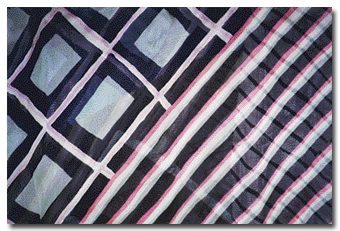
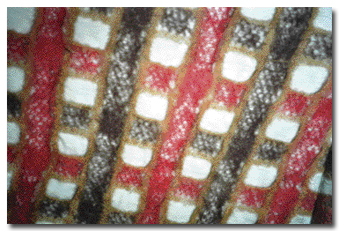
Companies exhibiting at Première Vision Preview included (top to bottom)


Denis et fils,


Confetti Tekstil, C.O.T.O. and Solstiss.


Texworld USA


With 323 exhbitors, Texworld USA was 13-percent larger than the July 2010 show. Natolyn
Tapscott, director of fabric research & development for Maggy London, said she thought this
year’s show was more upscale.

Lenzing AG, Austria, introduced Tencel C, a variant with cosmetic properties, to the U.S.
market. Pozzi Electa, Italy; Borkenstein, Austria; and Hermann Bühler AG, Switzerland, are working
on product development. Another Lenzing innovation is an online service that provides resource
information through the supply chain.

Bühler subsidiary Buhler Quality Yarns Corp., Jefferson, Ga., reports demand for yarns
containing MicroModal®, Tencel and Supima® cotton. The company showed a piqué stitch knit that has
a dry, slick hand.

Tuscarora Yarns Inc., Mt. Pleasant, N.C., showed polyester/cotton/rayon and
polyester/Modal®/cotton tri-blend yarns. A mélange natural/man-made fiber blend; and slub, mock
twist and voile yarns also were of interest.

At the International Apparel Sourcing Show, Shima Seiki Mfg. Ltd., Japan, demonstrated
WholeGarment knitwear production and computer-generated textile design systems. At its Monroe
Township, N.J. facility, five 7-gauge and 10 12-gauge seamless garment machines are available to
produce apparel for the industry.

Shima Seiki’s SDS-One Apex3 textile design system creates fabric design, texture, pattern,
print and colorway from scratch or from scanned photos or fabrics. Yarns can be scanned into the
yarn database. Mélange, space-dyed and twisted yarns can be created. Simulated or scanned fabric
can be draped onto garment or accessory images. Connected to Microsoft® Windows-based networks,
design presentations can be quickly confirmed in the boardroom and instantly transferred to the
factory

(See “Virtual Solution For Fashion Design,” this issue)
.

FesslerUSA offers full-package services from its solar-powered facility in Orwigsburg, Pa.
“It’s all about speed,” said CEO Walter Meck. “Along with creativity, we have the ability to be
nimble.” The company has added more performance products for active- and outerwear and is
developing lightweight flame-retardant products. It is also developing fine-gauge jersey of
18.5-micron Italian merino wool and is working with a group of alpaca farmers

(See
“FesslerUSA: Onshore And On Time,” this issue)

.

At Texollini, Long Beach, Calif., it’s high-quality and high-tech. Alpaca, wool, Tencel and
spandex are going into fine-gauge circular knits for activewear and intimates.

Arvind Ltd., India, was at Texworld and Kingpins showing space-dyed knits, French terry,
bonded fabrics, crepes, and subtle textures with slubs. French terry was also a favorite at Laguna
Fabrics, Los Angeles, as were open-stitch, lightweight sweater knits of acrylic blended with Modal
or cotton.

Textil Santanderina, Spain, showed wool-touch Tencel/polyester twill and cotton/Tencel
stretch denim. Sustainability is a priority through dyeing and finishing.

In the Home Textiles Sourcing Expo, many Chinese exhibitors showed quilts, pillows and
bedding. Jian Santai showed woven FR polyester jacquards and basics for hospital, hotel and
decorative fabrics markets.

Several Egyptian firms, including Nile Textile Industries S.A.E. and Pyramids Free Zone Co.,
showed terry bath products. The Kozman Group has classic jacquards in silk, cotton and synthetic
blends for upholstery and bed coverings, and organzas and voiles for curtains.


Kingpins


With a focus on denim, cotton is king at Kingpins.

Cary, N.C.-based Cotton Incorporated’s fabric archives include more than 5,000 swatches going
back more than 30 years, and offer technical details as well as sourcing information. Fabrics in
demand include novelty stonewashed denims, slubbed denim and tweed looks. Knitted development
fabrics include indigo-dyed French terry, Storm-treated piqué and jersey interlocks, cotton/wool
brushed flannel, and double-sided thermal knits.

With its superior strength, Bayer CropScience Inc.’s Texas-grown extra-long-staple FiberMax®
cotton, grown on more than 39 percent of U.S. cotton acreage, is in demand globally.

Supima, Phoenix, displayed jeans, chinos, shirts and sweaters from the Brooks Brothers Supima
collection. During Fashion Week in New York, Supima showed a collection designed by students from
several schools offering fashion design.

Invista, Wichita, Kan., showed Lycra dualFX™, integrating Lycra and T400®, which in jeans
provides 30-percent stretch and improved comfort and shape retention.

Cone Denim, Greensboro, N.C., reported interest in soft-hand, high-stretch denim for women.
Men are asking for classic, authentic jeans with stretch. Tavex, Spain, showed supple, soft-hand
vintage denims, and is promoting sustainable new coatings and resin finishes for denim.

September/October 2011

Virtual Solution For Fashion Design

Japan-based Shima Seiki Mfg. Ltd. has introduced Shima Design Solutions, a virtual design system
that consists of all the necessary hardware and software to cover the whole fashion design market,
and is built around the Shima Seiki SDS-One Apex3 workstation.

Color is one of the most important issues in fashion design, so special care was taken to
utilize a color management system. The system starts with a color-calibrated Adobe® RGB color gamut
monitor and ends with a color-calibrated printer output using an I1 photospectrophotometer included
for measuring exact colors. This setup ensures the highest possible color fidelity all the way from
monitor to printer, Shima Seiki reports.

The system is aimed at the fashion design market and includes software to develop designs
for flat bed knitwear, prints, circular knitwear and woven fabric.

The concept uses newly designed yarns, scanned yarns, or simulated twisted yarns to generate
virtually spun yarns that can be used in realistic loop simulation to create convincing fabric
textures. These creations can be used to generate a realistic-looking complete virtual garment or a
virtual sample. This capability is based on Shima Seiki’s knowledge about how yarns move through a
knitting machine.

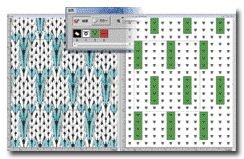
ShimaSeikiA

Using a mesh mapping technique, SDS-One Apex3 enables a virtual sample to be superimposed on
top of a photograph following the modulation of the light in the photograph.


Color variations can be created within the system using Pantone® color selection or color
variations that the system generates by picking up colors in an image. The colors selected in this
manner can be replaced automatically by the nearest Pantone color.

A library of more than 1,000 stitch patterns allows a designer to develop knitwear without
having to know how to create the actual machine program for the knitting machine. New patterns
easily can be created by combining and editing existing stitch data, according to Shima Seiki.


System Advantages


The system offers several advantages. The time to market for the fashion design is
drastically shortened because it takes less time to develop a virtual sample on the SDS-One Apex3
computer than it would take to make a real sample.

For example, the time needed to prepare the machinery to produce the sample and the shipping
time from factory to designer is eliminated. The designer can create a realistic virtual sample in
just a few hours instead of waiting weeks to receive the actual sample.

Also, large cost reductions can be realized because there is no need to order small
quantities of yarn, with the associated surcharges, to produce samples. Nor is it necessary to stop
expensive equipment in production to create the samples, not to mention saving the time required by
the technician to create the samples.

All that is required is less than 1 meter of the yarn that is going to be used for the
project and the SDS-One Apex3 workstation to make a complete virtual sample. And even the yarn is
not necessary because the system also can create yarns — including mélange yarns — that then may be
made into actual yarns in cooperation with a yarn spinner.

ShimaSeikiB

Jacquard patterns and basic structure patterns are stored in a database. For knitwear, a
generic machine code (right) is generated based on the virtual sample (left).


The SDS-One Apex3 also facilitates communication between the designer and the factory. For
circular or flat bed knitwear, a generic machine code is generated that can be used by the
technician in the factory to jumpstart the programming of the machinery. Shima Seiki notes that
every design aspect, whether it be a cable or a color accent, is guaranteed to be spot-on at the
right position on the garment as it was designed on the SDS-One Apex3.

For woven fabrics, the system outputs a complete layout of the yarns and colors to be used
to create the fabric.

With regards to print design, the system allows easy creation of a repeat image and shows
both normal and stepped repeats on screen, simulating a complete print design. Using specialized
tools like Pattern Pen, embroidery options, effects filters and source images, a designer has the
freedom to let his or her creativity blossom, Shima Seiki reports.

All of this design work can be turned into a product presentation using a technique called
mesh mapping. This function employs an existing photograph on which the virtual loop simulation
image is superimposed following the modulation of light on the photograph. Mapping produces a
realistic representation of how the final product will look and is useful for customer
presentations as well as visual merchandising.

The SDS-One Apex3 is supplied with a full-fledged Pattern, Grading and Marking system (PGM),
allowing designers first to develop a pattern and then to use Shima Seiki’s newly developed 3D
fitting simulator to ensure correct fit. The system offers standard mannequins, or users may opt to
input their own mannequin information using an optional 3D scanner or by using readymade digital
mannequins.

September/October 2011

FesslerUSA: Onshore, On Time

“Made in the USA” is a mantra increasingly heard in the textile and apparel industry — signaling a
turning of the tide that has sent so much sourcing offshore. Since its founding 111 years ago,
private-label knitwear and fabric manufacturer FesslerUSA has held fast to that mantra.

The company’s beginnings trace back to 1900, when Walter Meck, grandfather of current CEO
Walter Meck, left the family farm and founded Meck & Co., a cotton underwear manufacturer in
the Pennsylvania Dutch river port of Schuylkill Haven. After surviving two world wars, a depression
and two recessions, the company was sold in 1960 by Walter’s son, Charles, to H.H. Fessler Knitting
Co. In 1994, the Meck family reacquired the company and restructured it with the goal of keeping
manufacturing in the United States.
FesslerTs

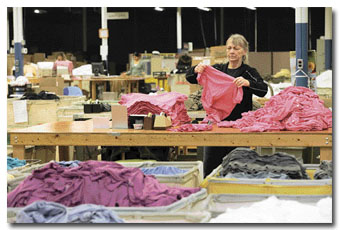
An employee sorts jersey knit T-shirts at FesslerUSA’s distribution facility.

Today, FesslerUSA remains a family-owned and -operated business, led by CEO Walter Meck; COO
and Chief Sustainability Officer Bonnie Meck, Walter’s wife; and their son, Brian, who serves as
vice president of sales and marketing. The company is a full-package supplier of knitted fabrics
and apparel for more than 100 brands and retailers, producing more than 100,000 garments a week at
its 150,000-square-foot Deer Lake facility — a state-of-the-art, vertically integrated
manufacturing plant in Orwigsburg, Pa. FesslerUSA also runs a sewing facility in Reading, Pa.; and
has a showroom in New York City where it meets with customers.


Vertically Integrated Manufacturing


FesslerUSA’s ability to produce its own fabric is one aspect that sets it apart from other
apparel manufacturers remaining in the United States. “We made a decision very early on to be
different from everyone else by being vertical and having fabric production. That’s been key to our
success and our ability to get through the economic downturn,” said Walter Meck.

A custom software program drives the entire manufacturing process. The company does all of
its design services, knitting, cutting, sewing, folding, packing and final processing in-house.
Dyeing and finishing is done by a local dyer with whom the company has done business for more than
40 years.

Yarn is purchased primarily from domestic manufacturers, including Buhler Quality Yarns
Corp., Jefferson, Ga.; Parkdale Mills Inc., Gastonia, N.C.; Unifi Inc., Greensboro, N.C.; and
RadiciSpandex Corp., Gastonia, N.C. Trims come from Key Manufacturing Textiles, Allentown, Pa., a
FesslerUSA subsidiary that also produces trims for 40 other manufacturers. Laces and elastics come
mostly from overseas sources, as there aren’t many U.S. manufacturers.

“As a domestic manufacturer, we have a big challenge from a supply chain perspective to be
able to offer all the different types of dyed-to-match trims and laces, zippers, and buttons that
our overseas competitors have access to in their local marketplace,” said Brian Meck. “There are
parts of a garment we still need to import, or we need to work within the limitations of what is
available domestically.”

Knitting is done on Vanguard and Monarch circular knitting machines. Brian Meck said that
while knitting technology hasn’t changed much, the machinery has become more efficient, and
FesslerUSA has switched from coarser-gauge to finer-gauge machines. Pattern-making, marker-making
and spreading and cutting equipment is supplied by Gerber Technology.

FesslerGerber

FesslerUSA utilizes Gerber Technology spreading and cutting equipment, such as the GT7250 shown
here, in its cutting facility.


Focus On Fabric


FesslerUSA knits a range of fabrics in various yarn qualities, including rib, jersey,
interlock, piqué, pointelle, thermal, heather and terry. The company runs a lot of Supima®,
Supima/MicroModal® and Supima/MicroTencel® blends; 100-percent MicroModal and MicroTencel; and
polyester/rayon blends. Currently, there is a lot of interest in wool fabrics and blends. The
company recently introduced Tencel®/cashmere, and it is developing several new fabrics including an
alpaca/wool blend.

“We’ve also added flat bed knitting and have developed a new collection of piqué fabrics so
we can make polo shirts with fashion colors and welts,” Brian said. “And we have quite a few
stretch performance and baselayer fabrics in different stages of development.”

The company offers more than 400 fabrics, and only 10 to 15 percent of production involves
use of fabrics customers might find from another supplier. In addition, FesslerUSA has been
designing its own garments for about 10 years. Customers use the styles as is or make adjustments
and add them to their lines.

The company exports less than 5 percent of its production, and supplies the rest domestically
to brands and retailers mostly in the women’s and children’s fashion market, but also in the
outdoor and performancewear market. A major core customer is Nordstrom, whose relationship with
FesslerUSA spans more than 10 years. Michael Stars has been a customer for well over 20 years.
Walter said good brands such as their largest and core customers don’t change much. Smaller or
startup brands may shift their product lines or designs and move away from what FesslerUSA offers,
but then, the company will pick up a new brand.
Fesslerknit

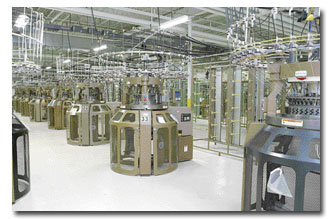
FesslerUSA’s 34,000-square-foot knitting facility includes more than 50 circular rib and jersey
knitting machines as well as a full testing lab.


Value-Added Services


While FesslerUSA’s customers range from small startups to high-end department stores, all
need some level of design support. The company’s Design Support Services team takes a customer’s
creative design request through the entire costing and sampling process, from pattern-making,
garment-engineering and sewing through quality-testing, and, finally, through fits and revisions
leading up to final approval and production. Brian noted that expectations of accuracy and quality
for sampling, and especially turn times, have changed dramatically over the past five to 10 years.
“People seem to be waiting closer to their ship dates and in-store dates to submit sample requests;
or they’ve come to know we can turn samples quickly and fill orders if needed. We get a lot of
sample requests that we need to turn in two to three days, whereas our average sample turn time
used to be two to three weeks.” Those shorter lead times are an advantage gained from working with
a domestic supplier, Brian emphasized, because it allows customers to quickly replenish styles
within season.

FesslerUSA also offers customer service and production planning services to help customers
create and manage their design and production time and action calendars. “Helping our customers
stay on time and on schedule is a big part of the service we provide. Our customers save a lot of
time and money not having to hire a production team to manage and oversee the process.”

A growing segment of FesslerUSA’s business comes through its Design Consulting Services,
which assists newer brands or startups that have ideas of something they want to bring to market,
but no production knowledge or expertise. The company assigns a team of people who, for a fee, help
with fabric and style development, brand strategy planning, financial planning and supply chain
development.

FesslerUSA also offers a range of value-added services post-production such as washing,
screen printing, transfer printing, pressing, bagging and tagging. “Pretty much anything that can
be done to a garment, we provide as part of our production process,” Brian said.


The Sustainable Vision


FesslerUSA’s sustainability program began several years ago, with two coinciding events: The
company began making garments from organic cotton and sustainable fibers, and it purchased the Deer
Lake building, which needed renovations.

“When we bought the building, it was very dark and dingy and had old, very inefficient
fluorescent lighting,” Bonnie Meck said. The company began renovating the building phase by phase,
replacing fluorescent bulbs with T5 and T8 lighting and painting the walls using highly reflective,
low-volatile-organic-compound paint, to reduce the amount of lumens needed to provide light.

“But we soon learned that there was more to sustainability than organic cotton and
energy-efficient lighting,” Bonnie said. “It was about the entire carbon footprint — having a
factory that sustainably minimizes electricity usage; responsibly reducing, then recycling our
manufacturing byproducts; minimizing the distance that garments move; using low-impact dyes and
sustainably produced fibers.”

The company invested in variable speed drives to lower its peak electricity usage and utility
costs. “We did that long before we put the solar power system in, because even though we knew we
were going to be generating electricity from the sun, we still wanted to be using less energy
overall,” Bonnie said.

FesslerUSA recently completed its solar power generation system, which consists of more than
1,600 solar panels covering about half of the facility’s roof. The 450-kilowatt system will
generate more than 540,000 kilowatt hours of electricity per year — enough to power 35 homes — and
will provide half to two-thirds of the facility’s electricity needs. A live Web-based monitoring
system is broadcast on a large flat-screen TV in the middle of the offices to increase employee
awareness of the energy savings being accomplished.

Fesslersolar

More than 1,600 solar panels are mounted on the roof of FesslerUSA’s Deer Lake
facility.

One future goal is to convert the company’s hot water system from electric to solar thermal
power, which Bonnie anticipates will make a difference in the company’s energy usage. “When we
started, it wasn’t with the goal of what the return on investment would be — but it does help to
keep us globally competitive. Most sustainability translates to the bottom line,” she said.

The next project in the works involves redoing the office space on a low-carbon basis using
solar tubes and lighting that adjusts according to outside sunlight. Bonnie said the company
actively seeks ways to reuse where it can, such as installing gently used cubicles instead of
purchasing new ones. Although neither the factory nor the office space are fancy, Walter said, “we
want them to make a statement and reflect our culture and the way we do business: simple, elegant,
with a low-carbon footprint.”

The Mecks have received extremely positive customer response to their sustainability efforts
– especially regarding the solar power system, which “makes them aware of the importance of their
carbon footprint, because as energy costs go up, the size of that footprint will directly affect
both brands’ and retailers’ competitiveness,” Walter said. And, as Bonnie stressed, “Most of what
we do never leaves the continental United States in terms of the supply chain. When we buy yarn
spun in Georgia with cotton grown in California, Texas or Arizona, and we bring that yarn to
Pennsylvania, and then we knit the fabric and do everything here under one roof, and then we ship
those garments to distribution centers all over the United States, there’s no way to compare that
to the carbon footprint of something you’re bringing in from China.”


A Culture Of Sustainability


When the company implemented its sustainability plan, Bonnie said, “we learned that
sustainability is a journey, not a destination — a journey that requires everyone to be on board —
from every employee, to vendors, and, most importantly, our customers. As a family and a business,
we chose to personalize and adopt the pursuit of sustainability for FesslerUSA.”

The company’s volunteer employee Sustainability Team has helped develop corporate initiatives
including a sustainability Bulletin Board; a Sustainability Corner in each of the company’s
newsletters; a Swap Shop for employees to swap gently used clothing; a lending library for
exchanging books; and coupon boxes in the lunchrooms. Sustainability Awards are given to employees
who go above and beyond expectations.

“We are trying to create that spirit in our employees, even encouraging them to be more
sustainable in their personal lives,” Bonnie said. “We want them to be proud and involved in what
we’re doing. It takes time, but it becomes a thought process, a way of life.”

Bonnie noted that sustainability awareness has increased significantly in the apparel
industry in the last few years. When FesslerUSA began the process, a few companies in the industry
that were further along in the journey were willing to share their advice and experience. “I found
that to be very refreshing, because we’re in a very competitive industry where people typically
don’t share information,” she said. “I want to be generous with our knowledge so we can keep
promoting the culture of sustainability.”


It’s All In The Family


Although FesslerUSA has built a reputation as a family-owned and operated business, Walter
emphasizes that “when we say ‘family,’ we mean more than just immediate family; I consider every
one of my employees to be part of my family. We think the key to running a successful business is
not just making money, but making sure the needs of our employees — our family — are being met.
Employee welfare is a very important part of sustaining a company.”

The company’s health and wellness committee implements various initiatives to encourage its
150 employees to live a healthy lifestyle. Initiatives have included a contest in which pedometers
were given out to see who walked the most steps; weight-loss competitions; smoking cessation
programs; and an annual health fair that offers skin cancer testing, chair massages, blood pressure
checks, and healthy lunches supplied by local vendors.

The committee currently is working on a project to put a fitness trail around the building’s
perimeter. Naturally, to stay in line with its focus on reuse, the sustainability committee is
looking for a way to make the markers out of something recycled from the factory.


All About Adaptation


In order to survive, a company must be flexible, Walter said. “I tell our people, the one
thing I can promise them is constant change. We continually look for opportunities — whether it’s
in a different market, looking at different brands, acquiring a brand, or partnering with a
retailer — we are always actively open to considering alternatives.”

In the past, most if not all of FesslerUSA’s fabric production was used for garments, but the
company recently started to sell fabric directly to customers. “That has become one of our most
rapidly growing segments,” Walter said. “Another thing we did during the downturn was ask how else
we could use our facility for niches inside or outside the apparel market.”

One such niche is the outdoor performancewear market, which is growing, is custom, and fits
right into FesslerUSA’s “sweet spot,” as Walter said. “We’ve even taken on a few customers that do
some very unusual things, but that our equipment is uniquely set up to produce, such as non-apparel
items in the medical industry.

“To be a U.S. vertical apparel manufacturer, you have to recognize that you can’t compete
with China on the lowest landed cost and you can’t compete at the big-box store level,” Walter
said. “Where we compete is when a customer, retailer or brand needs something more, something they
can’t get overseas; and when they understand the value of taking time, overhead and/or carbon
footprint out of the sourcing cycle.”

While the company was affected by the recent economic downturn and lost customers that
couldn’t survive or decided the grass is greener in China, Walter said, “we’ve seen some come back,
who decided the service we provide is more important than the slight premium in cost that comes
from being Made in the USA.”

Walter also said that people have finally adjusted to the fact that the market has
contracted. “After almost two years of ordering on a trial-and-error basis, customers are more
confident in placing purchases six months out. The uncertainty is slowly but clearly going away,
and the market has adjusted to the new realities of the economy.”

Though competing as a U.S. manufacturer in the global marketplace certainly has its
challenges, Walter said FesslerUSA receives a lot of support from retailers and other suppliers who
serve the apparel industry. “Everyone wants to see apparel Made in the USA, and the support that we
receive from all sides is not only refreshing, but it keeps us focused and keeps us from giving
up.”

“We’re constantly moving forward, looking to do better, remaining a leader in our industry,”
Bonnie said, “and that’s the best we can do — keep moving along that path.”

“Life is adapting to the situation,” Walter added. “We’ve adapted, and we’ll continue to
adapt.”

September/October 2011

Some Hopeful Signs

The current textile outlook — despite all of today’s economic uncertainties — remains modestly
upbeat, with solid confirmation coming from year-to-date numbers covering demand, employment,
imports and costs. Looking at demand first, mill output now tops comparable 2010 levels, with basic
mill sector output increasing an impressive 10 percent. Producers’ dollar shipments show a similar
pattern, and downstream domestic apparel manufacturing is equally positive, with dollar shipments
running about 4 percent ahead of a year ago. And there’s little to suggest this apparel
manufacturing pattern won’t continue. Further downstream, retail apparel sales are also looking up,
with totals also above year-ago levels. At last report, consumer purchases were running close to 8
percent above last year. Another sign that gains will persist: Inventories at the textile mill and
apparel levels remain well under the peaks of a few years back — suggesting that new orders will
quickly be translated into new production. In short, the U.S. textile and apparel industries aren’t
doing too badly in today’s relatively sluggish economy. Fewer Job Losses

The industry’s employment situation is also a bit less gloomy. The total number of U.S. mill
workers has held quite stable over the past 12 months — a refreshing change from the almost
uninterrupted declines of the past decade. What makes this job total especially encouraging is that
this has occurred even in the face of rising productivity — a trend that has enabled the industry
to employ fewer and fewer workers to turn out a given amount of mill product. The job picture for
apparel isn’t all that bad either. To be sure, employment totals here are down some 2 percent vis à
vis a year earlier. But again, that’s an improvement over the declines of previous years. And if
there’s still any question about a less negative job situation, compare the current numbers for
aggregate textile and apparel employment with the huge more-than-50-percent decline noted over the
past decade. More important, this current stabilizing employment trend is expected to persist
through year end and probably well into 2012.

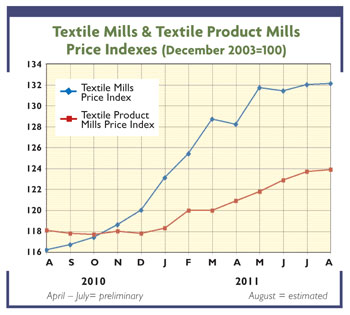
BFgraph


An Improving Import Picture


More good news comes from the latest batch of import statistics. Year-to-date incoming
shipments of textiles and apparel on a square-meters-equivalent basis are up by less than 1
percent. That’s far less than the close-to-double-digit increases of just a few years back. Even
more noteworthy, the increases from China — far and away the United States’ biggest supplier — have
virtually disappeared over the past few months. To be sure, some of this import deceleration is
probably because foreign suppliers have already captured most of the U.S. market – and, as
such, there’s very little more to tap. But some of the restraint may also be attributable to the
fact that the foreign price advantage has been narrowing of late — especially in China, where
production costs, particularly in the labor sphere, have jumped significantly over the past year or
so. Put another way, import bargains are now harder to come by. Indeed, this could well be one
reason why domestic textile and apparel activity has been holding up as well as it has in today’s
troubled economic times.


Bottom-Line Pressure Is Lower


Still further optimism can be gleaned from the sharp decline in cotton costs over the past
few months. As of Textile World’s press time, for example, this key fiber input had dropped down to
around the $1 per pound mark. That’s a little more than half the almost $2-plus-per-pound early
2011 peak price and only about 20 cents per pound above year-ago levels. And forecasts for another
good crop year, both here and abroad, suggest raw cotton will remain at or near current reduced
levels. Nor is the other major cost drain — labor — likely to cause any near-term problems. Worker
costs per unit of output are up only fractionally over the past 12 months.

To sum it all up: Clearly, all of these new numbers offer pretty firm evidence that the
recent cost-price squeeze is winding down — and, more importantly, that 2011 profit performance
won’t be all that bad. And

TW
expects further confirmation of the industry’s basic financial health next month when new,
more up-to-date earnings and margin data become available.

September/October 2011

Quality Fabric Of The Month: Recycling Energy While You Sleep

The Ironman® brand is well-known among endurance athletes, as Ironman triathlon competitions are held around the globe by the World Triathlon Corp., Tampa, Fla. The brand is sublicensed to companies that offer athletic apparel and gear, and nutritional and sleep products geared to helping athletes and others achieve peak performance levels.

T3 Recovery Products™, Seattle, offers sleep products under the sublicense The Official Sleep Products of Ironman®, including mattresses, toppers and pillows featuring Celliant® regenerative healing technology from Hologenix LLC, Santa Monica, Calif. T3 has named Novo Textiles Co., Vancouver, Canada, the exclusive North American manufacturer and distributor of Ironman home
textiles; and a topper and two pillow styles are the first products to be offered, with other home textile products to follow quickly.

Celliant technology is not as easy to understand as more straightforward technologies, but Hologenix has conducted a number of clinical trials to establish the science behind it beyond a reasonable doubt, said Seth Casden, the company’s CEO.

“The technology is not readily apparent, but the product works on the cellular level,” Casden explained. “The body gives off light, emitting about 100 watts of energy at any given time. Minerals embedded in a fiber or yarn can capture that energy and reflect it back to the body. We’ve proven that Celliant can increase blood flow and oxygen levels in muscle tissue, which helps with recovery, performance and overall health.” Celliant also has been shown to balance body temperature, further enhancing comfort and well-being.

QFOM

Based on findings that acute and chronic pain as well as the type of mattress can affect sleep quality, Hologenix conducted a pilot study to determine Celliant’s effect on pain and sleep quality. The researchers found that sleep efficiency increased for the subjects who slept on
mattress pads containing Celliant.

The technology involves embedding minerals, ground to a diameter of 1 to 2 microns, in a polyester polymer masterbatch. Hologenix supplies the masterbatch to Fiber Innovation Technology Inc., Johnson City, Tenn., which turns it into staple fiber that can be spun into yarn or supplied as fiber. Palmetto Synthetics LLC, Kingstree, S.C., has a yarn that blends Celliant with its NatureSpun® recycled fibers. Celliant also can be blended with other fibers. Celliant fabrics used to cover T3’s toppers and pillows are knitted by Deslee Textiles USA, Inman, S.C.

QFOMmattress

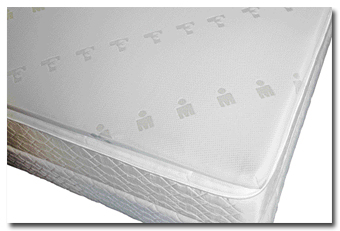
The Ironman Natural Latex Topper manufactured by Novo Textiles for T3 Recovery Products is
covered with a knitted Celliant fabric.

The Ironman products made by Novo Textiles for T3 include a Natural Latex Topper and Talalay Latex Pillow covered with the knitted Celliant fabric, and a Microgel Pillow with a 50/50 Celliant/microgel fiber filling and a microfiber pillow cover.


For more about T3 Recovery Products™ The Official Sleep Products of Ironman®, contact Richard Brass +206-601-7169; rbrass@t3recovery.com. For more about Cellliant® technology, contact Kira Kohrherr +646-756-4217; kira@kpr-nyc.com. For more about Novo Textiles Co., contact Jason Zanatta +604-531-2155; jasonz@novotextilesco.com.


September/October 2011
Fiber First

When designing and manufacturing a sustainable textile product, raw material production and
processing into fiber come first. If the raw material is a natural plant fiber, there may be
questions about the amount of water and chemicals needed to ensure a successful harvest of
high-quality material. If a manufactured fiber, there are questions about the nature of the raw
material and the way it is processed into fiber — does the raw material come from a renewable or
recyclable/recycled source; is a closed-loop process in place to minimize environmental impact;
what kinds of chemicals are used in the process and what is their impact; how much energy is
required and what is its impact; and can the end product be recycled or composted at the end of its
useful life?

As part of its series of articles on sustainability in textile manufacturing,

Textile World
last year featured initiatives aimed at recycling plastics and textile materials into new
fibers for use in the textile and apparel industry

(See “From Waste To Worth,”
TW, November/December 2010)

. The following article will discuss several plant-based natural and man-made fibers.

Sustainability1

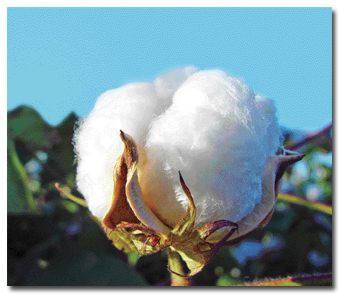
New, more productive cotton varietals being planted today and improved cultivation practices
are helping the fiber to reduce its environmental footprint.


Cotton


Cotton claims a 36-percent share of the textile fibers market. The fiber is prized for its
comfortable, soft, breathable, absorbent qualities, which make it the fiber of choice for numerous
apparel articles plus bedsheets, towels and a range of other textile products. With recent
developments of various technical treatments, it also is finding its way into performance markets,
such as athletic and outdoor apparel, that traditionally have been dominated by man-made fibers.

Conventional cotton often comes under fire because of a misperception that its cultivation
requires huge amounts of water and pesticides, and leaches nutrients from the soil, but the fiber
has cleaned up its act, so to speak. New, more productive varietals need minimal irrigation and are
more resistant to damage by the boll weevil and other pests, and improved conservation tillage
practices have led to a balance between soil erosion and soil creation. Cotton Incorporated, Cary,
N.C., the research and marketing company that promotes Upland cotton, has dedicated a section of
its website,
www.cottoninc.com, to the sustainability issue, and provides
considerable data supporting its contention that cotton is a sustainable crop. The Memphis,
Tenn.-based National Cotton Council of America’s website,
www.cotton.org, includes a section that lists conservation
programs available to help cotton growers reduce the environmental impacts of cultivation.


According to Cotton Incorporated, approximately 50-percent more cotton is produced on the same
acreage today compared with 40 years ago. Worldwide, cotton is grown on 2.5 percent of the
cultivated agricultural land and uses 3 percent of the water required for agricultural production.
Two-thirds of the U.S. cotton crop requires no irrigation, and pound-for-pound, 45-percent less
irrigation water is needed today compared with 25 years ago. Pesticide and herbicide use has also
decreased, and many pesticides target specific pests and do not harm beneficial insects. Since
1996, there has been a 23-percent reduction in use of insecticide active ingredients, and a
28-percent reduction in environmental impact. In addition, according to the Bremen Cotton Exchange,
Germany, tests conducted in 2008-09 showed no pesticide or heavy metal residue on raw cotton fiber
from 15 countries. Cotton cultivation also stores more carbon dioxide (CO2) than it emits, with 2.2
kilograms (kg) of CO2 per kg of fiber stored in fiber and soil compared with 1.8 kg of CO2 emitted
into the air during production.

While conventional cotton’s eco-credentials have improved considerably, biotechnology plays a
major role in giving the plants characteristics that help reduce their vulnerability to pests and
increase productivity, and chemical pesticides and herbicides are used to protect the crops.
Organic cotton producers, by contrast, plant non-genetically modified seeds and practice methods
such as crop rotation; soil fortification through the addition of organic matter; physical removal
and cultivation practices to control weeds; maintenance of soil conditions that encourage the
presence of natural predators; and use of beneficial insects, trap crops and other means to control
pests. According to the Organic Trade Association, Brattleboro, Vt., global organic cotton output
in 2008-09 grew 20 percent over the previous year to total nearly 803,000 bales, which represents
0.76 percent of total global cotton output. And consumer demand for organic cotton textiles is
growing as well: In 2009, world sales of organic cotton apparel and home textiles rose 35 percent
over the previous year to an estimated $4.3 billion.


Bast Fibers


Bast fibers are receiving renewed attention in the quest to increase the use of sustainable
fibers in all kinds of textile products, but particularly for apparel. Naturally Advanced
Technologies Inc. (NAT), Vancouver, Canada, has licensed technologies from Alberta Innovates to
process bast fibers such as flax and hemp using enzymes to soften them and remove the lignin. The
resultant materials, branded CRAiLAR®, fit well in the sustainable fibers niche on a number of
counts: As crops, flax and hemp are fast-growing, can be cultivated using minimal to no pesticides
or herbicides, and require no irrigation except in drought conditions. In the Southeast, flax can
be cultivated as a winter crop in alternation with warm-weather crops. In addition, the enzymatic
process is non-polluting and economical. NAT is ramping up its production of Crailar Flax, which it
sees as an ingredient fiber to blend with cotton for apparel applications, among other uses

(See “NAT Announces CRAiLAR® Flax Developments,” Fiber World News, this issue)
. The flax fiber exhibits reduced shrinkage and improved dye uptake and wicking compared with
cotton, and also dries more quickly, the company reports.

NAT also produces CRAiLEX® dissolving pulp, derived from hemp or flax, using technology
licensed from Alberta Innovates. The process does not use harsh chemicals and is more economical
than traditional kraft pulping equipment. The pulp exhibits a high viscosity and purity and shows
promise for use as an additive and functional ingredient for commercial products, and as an
ingredient in a textile yarn extruded using an eco-friendly modified closed-loop lyocell process.
Crailex developments are still in early stages.

When bamboo first was marketed for textile applications, much attention was focused on its
sustainable attributes, including the plant’s fast-growing, carbon-absorbing, pest-resistant
properties, but in all the marketing hype, the viscose process most often used to turn bamboo into
a textile fiber — and which turns it into something quite different from the original bast fiber —
was discreetly disregarded. The Federal Trade Commission now requires that bamboo viscose fiber
must be qualified as such. The viscose process uses caustic chemicals, and unless methods are used
to capture and recycle them, harmful byproducts can be released into the air and water. Meanwhile,
a lyocell process also can be used.

Litrax AG, Switzerland, offers a mechanically and enzymatically processed bamboo fiber,
marketed as Litrax-1®, that retains the bast fiber’s intrinsic properties and can claim all the
eco-benefits of its natural plant characteristics and its cultivation. The environmentally-friendly
enzymatic process softens the fiber, which offers good breathability and moisture management as
well as water and odor absorbency. Litrax-1 also blends well with cotton, Tencel®, silk, merino
wool and other fibers — providing complementary properties to or reinforcing properties of the
partner fiber.


Sustainability2


German fashion designer Michaela Bieling uses Litrax-1®/Tencel® fabrics in a collection for her
MY CHILI apparel line.


Regenerated Cellulosic Fibers


Lenzing AG, Austria, has been manufacturing viscose for nearly 70 years, and more recently
also has been producing lyocell fibers — including Tencel — as well as Lenzing Modal®. All fibers
are derived from wood.

The viscose process is controversial in sustainability circles for reasons noted above.
However, Lenzing has evolved its viscose process so that the byproducts are recovered to be
recycled or sold, and the company has earned the European Environmental Award in recognition of its
efforts to minimize the environmental impact of all of its processes.

Tencel is derived from fast-growing eucalyptus trees harvested from sustainably managed
plantations. The plant requires no irrigation nor pesticides, and it can be grown on land that is
not prime food-producing land. The fiber’s closed-loop lyocell manufacturing process uses a
water-soluble auxiliary, and the processing chemicals are recovered. The resulting fibers are
biodegradable and 99-percent recyclable, Lenzing reports, as well as being hypoallergenic, soft,
breathable, moisture-wicking and bacteria-growth-inhibiting. Its applications range from apparel
and home textiles to automotive and industrial uses.

Modal is a particularly soft fiber derived from beechwood. Again, Lenzing reports the
processes are optimized for sustainability, and the byproducts are recovered for use in the
production of sweeteners and other foods, as well as glass.


Biobased Man-Made Fibers


Renewably sourced man-made fibers offer numerous environmental advantages over
petroleum-based fibers, and they provide desirable performance benefits as well. The polymers used
to make these fibers are derived all or in part from plant sugars or oils.

Ingeo™ polylactide (PLA) biopolymer is produced by NatureWorks LLC, Minnetonka, Minn., using
lactic acid derived from corn sugar, although it also can be derived from other cellulosic raw
materials including agricultural waste and non-food plants. According to NatureWorks, Ingeo is
produced using 50-percent less non-renewable energy and its production emits 60-percent less
greenhouse gases (GHGs) than polyethylene terephthalate and other petroleum-based polymers. The
company continues to improve its environmental footprint as it implements measures including use of
a new plant-based feedstock and renewable energy such as wind and biomass, as well as optimizing
the manufacturing process.

Ingeo is used to make textile fibers as well as a range of plastic products. U.S. fiber and
yarn producers licensed to produce Ingeo products include Fiber Innovation Technology Inc., Johnson
City, Tenn.; O’Mara Inc., Rutherford College, N.C.; and Palmetto Synthetics LLC, Kingstree, S.C.

Sustainability3

France-based Sommer Needlepunch’s Eco2punch® carpet made with Ingeo™ biobased fiber can be
recycled and converted back to virgin-quality lactic acid.


PLA properties include low moisture absorption and good wicking, low flammability and smoke
generation, good ultraviolet resistance, low refraction index, and low specific gravity. Textile
applications include apparel, outdoor furnishings, carpet and nonwovens. Eco-friendly end-of-life
options for product disposal include composting of contaminated items and recycling of clean items.
Off-grade feedstock is recycled at NatureWorks’ processing plant in Blair, Neb.

DuPont™ Sorona® polytrimethylene terephthalate (PTT) polymer is produced by Wilmington,
Del.-based DuPont at its plant in Kinston, N.C. PTT fiber is known by the sub-generic designation
triexta, assigned in recognition of a unique combination of properties that include the ability to
blend with and improve performance of other fibers. Sorona’s makeup includes 37-percent annually
renewably sourced plant-based ingredients by weight and 28-percent biobased carbon. DuPont is
working to find other materials to make the fiber more sustainable. Compared to production of
polyamide (PA) 6, for which it can be substituted, Sorona is produced using 30-percent less energy
because it is extruded at lower temperatures, and its production generates 63-percent less GHG
emissions. It also contains no heavy metals and is intrinsically stain-resistant. Other properties
include fade resistance, wrinkle resistance and quick-drying properties. Fibers and fabrics can be
dyed at 212°F, and no additional heat, pressure or chemicals are required, DuPont reports.

In carpet applications, Sorona offers durability and wear resistance as well as permanent
stain and bleach resistance. Used as a face fiber, it can be recycled by shaving it off of the
carpet backing and repelletizing it to process into new carpet fiber.

Rilsan® PA 11, produced by France-based chemical company Arkema, is derived from the oil of
castor beans. The polymer has been used in high-performance technical industrial applications since
it was developed in 1942. In recent years, it has been processed into apparel and carpet fiber. The
castor bean plant grows in poor, non-irrigated soil conditions, and fiber production generates half
the carbon dioxide and potential GHG emissions compared with PA 6,6 production.

A Rilsan technical apparel yarn branded Greenfil® is offered by France-based yarn
manufacturer Groupe Sofila. Invista, Wichita, Kan., includes 10-percent Rilsan in its Antron®
Bio_Legacy™ white dyeable nylon carpet fiber and is exploring ways to increase that percentage.
Invista reports PA 11 and PA 6,6 — the other nylon component in the fiber — are very compatible and
can be recycled back into polymer for new fiber using PA 6,6 methods.

September/October 2011
September/October 2011

Gastonia, N.C.-based
RadiciSpandex Corp.‘s Tuscaloosa, Ala., manufacturing facility has been awarded a
certificate of achievement for No Lost Time Injuries in 2011 by the Alabama Department of
Industrial Relations.


Huntsman Textile Effects
, Singapore, has been named a member of the Founding Circle
of the Sustainable Apparel Coalition.

Madeira USA, Laconia, N.H., now offers UPS Express Critical™ shipping on Saturday
and Sunday for its embroidery supplies. The company also has added a Trendspotting page to its
website,
madeiramart.com.

Charleston, S.C.-based
Sawgrass Technologies Inc.‘s Consumer Division now offers a technical support
section on its website,
sawgrassink.com.

Cuyahoga Falls, Ohio-based
Americhem Inc. now offers technical support services from its facility in Germany
for its European customers.

NGC Software, Miami, has been named to SupplyChainBrain’s 2011 100 Great Supply
Chain Partners list.

Aurora Specialty Textiles Group Inc., Aurora, Ill., has added profiles to its
website for the Northern Lights Printable Textiles collection.


C.A. Litzler Co. Inc.
, Cleveland, has been elected to the American Fiber
Manufacturers Association’s High Performance Fiber Council.

Teijin Fibers Ltd., Tokyo, has received Frost & Sullivan’s 2011 Global
Automotive Carbon Composites Technology Award for its carbon fiber reinforced plastic (CFRP) mass
production technologies.

BBTeijin

Teijin’s electronic vehicle concept car features a CFRP body structure.


PVH Corp.
, New York City, has received Oeko-Tex® Standard 100 certification for its
men’s dress shirt lines.


Kumaraguru College of Technology
, India, and
Texas Tech University, Lubbock, Texas, have extended until Oct. 15, 2011, the
deadline for submission of papers for presentation at the 7th International Conference on Advances
in Textiles, Machinery, Nonwoven and Technical Textiles-ATNT 2011, to be held Dec. 15-17, 2011, in
Coimbatore, India. For more information, visit
atnt2011.com.

DyStar, Singapore, has released its first carbon footprint report.

The
Professional Awning Manufacturers Association, Roseville, Minn., now offers a
video, titled “Six Tips to Protect Your Pet from Sun & Heat,” featuring safety tips for pets
exposed to sun and heat. The video is available at
awninginfo.com.


Unicraft Corp.
, Miami, has relocated to 18957 NE 3rd Court, Miami, 33179;
+305-770-1300; fax +305-770-1344. Toll-free number and email address will remain the same.


Consolidated Laundry Machinery
, Ponoma, Calif., now offers onsite dryer upgrading
and refurbishing services to its customers.


LTM Textile Resources LLC
, Huntington Beach, Calif., has introduced the Heavy
Traffic collection of home decorator fabrics for high traffic environments.

BBLTM

The Genesis line in LTM’s Heavy Traffic collection

Shelton, Conn.-based
GrayWolf Sensing Solutions has released two print brochures detailing its airspeed
probes and pitot static tubes. High-resolution PDFs may be downloaded from
wolfsense.com.

The
Specialty Graphic Imaging Association (SGIA), Fairfax, Va., offers a Retail
Resources page on its website, located at
sgia.org/retail/index.cfm.

Zepol Corp., Minneapolis, has released its first U.S. Import Compliance Guidebook.
The report may be downloaded from
zepol.com.

The Research Triangle Park, N.C.-based
American Association of Textile Chemists and Colorists (AATCC) Committees RA57,
Floor Covering Test Methods and RA63, Water Resistance, Absorbency, and Wetting Agent Evaluation
Test Methods have developed four test methods: AATCC Test Method 196-2011, Colorfastness to Sodium
Hypochlorite of a Textile Floor Covering; AATCC Test Method 197-2011, Vertical Wicking of Textiles;
AATCC Test Method 198-2011, Horizontal Wicking of Textiles; and AATCC Test Method 199-2011, Drying
Time of Textiles: Moisture Analyzer Method. In addition, AATCC Test Method 134-201, Electrostatic
Propensity of Carpets and the AATCC monograph titled “Standardization of Home Laundry Test
Conditions” have been revised.


International Newsletters Ltd.
, United Kingdom, has published “World Markets for
Technical Textiles to 2017,” a report by the European Man-Made Fibres Association (CIRFS).

September/October 2011

DAK Americas Announces Price Increase Of PSF Products

CHARLOTTE — September 13, 2011 — Global paraxylene supply to the polyester industry is running at
very high operating rates.

As a result, a significant increase in the global cost of paraxylene is working through the
polyester value chain.

Due to the increased cost of polyester raw materials, DAK Americas will increase prices for
all Polyester Staple Fiber (PSF) products.

Effective October 1, 2011; DAK Americas will increase PSF prices by $0.04 per pound.

DAK is committed to the polyester staple fibers business and will continue to supply quality
products, services and innovation to its customers.

Posted on September 12, 2011

Source: DAK Americas LLC

Sponsors