U.S. Manufacturing Sector Grew In February — PMI® at 50.1%; GDP Growing at 2.1%; February 2020

TEMPE, Ariz.— March 2, 2020 — Economic activity in the manufacturing sector grew in February, and the overall economy grew for the 130th consecutive month, say the nation’s supply executives in the latest Manufacturing ISM® Report On Business®.

The report was issued today by Timothy R. Fiore, CPSM, C.P.M., Chair of the Institute for Supply Management® (ISM®) Manufacturing Business Survey Committee: “The February PMI® registered 50.1 percent, down 0.8 percentage point from the January reading of 50.9 percent. The New Orders Index registered 49.8 percent, a decrease of 2.2 percentage points from the January reading of 52 percent. The Production Index registered 50.3 percent, down 4 percentage points compared to the January reading of 54.3 percent. The Backlog of Orders Index registered 50.3 percent, an increase of 4.6 percentage points compared to the January reading of 45.7 percent. The Employment Index registered 46.9 percent, an increase of 0.3 percentage point from the January reading of 46.6 percent. The Supplier Deliveries Index registered 57.3 percent, up 4.4 percentage points from the January reading of 52.9 percent. The Inventories Index registered 46.5 percent, 2.3 percentage points lower than the January reading of 48.8 percent. The Prices Index registered 45.9 percent, down 7.4 percentage points as compared to the January reading of 53.3 percent. The New Export Orders Index registered 51.2 percent, a decrease of 2.1 percentage points as compared to the January reading of 53.3 percent. The Imports Index registered 42.6 percent, an 8.7-percentage point decrease from the January reading of 51.3 percent.

“Comments from the panel were generally positive, with sentiment cautious compared to January. The PMI® remained in expansion territory, but at a weak level. Demand slumped, with (1) the New Orders Index contracting at a weak level, despite new export order expansion, (2) the Customers’ Inventories Index remaining at ‘too low’ status and (3) the Backlog of Orders Index expanding for the first time in several months, but at a slow rate. Consumption (measured by the Production and Employment indexes) contributed negatively (a combined 3.7-percentage point decrease) to the PMI® calculation. Inputs — expressed as supplier deliveries, inventories and imports — strengthened in February, due primarily to supplier deliveries expanding, offset partially by inventories declining. Despite imports contraction returning at a strong rate, inputs contributed positively to the PMI® calculation, a reversal from the previous month. (The Supplier Deliveries and Inventories indexes directly factor into the PMI®; the Imports Index does not.) Prices returned to contraction, at moderately strong levels.

“Global supply chains are impacting most, if not all, of the manufacturing industry sectors. Among the six big industry sectors, Food, Beverage & Tobacco Products remains the strongest, followed by Computer & Electronic Products. Petroleum & Coal Products is the weakest. Overall, sentiment this month is marginally positive regarding near-term growth,” says Fiore.

Of the 18 manufacturing industries, the 14 that reported growth in February — listed in order — are: Wood Products; Furniture & Related Products; Plastics & Rubber Products; Printing & Related Support Activities; Paper Products; Textile Mills; Primary Metals; Food, Beverage & Tobacco Products; Computer & Electronic Products; Miscellaneous Manufacturing; Electrical Equipment, Appliances & Components; Fabricated Metal Products; Machinery; and Chemical Products. The three industries reporting contraction in February are: Petroleum & Coal Products; Transportation Equipment; and Nonmetallic Mineral Products.

What Respondents Are Saying

“There are always supply chain challenges with Lunar New Year shutdowns, and this year is no different. Coronavirus is wreaking havoc on the electronics industry. Companies are delayed in starting up production, which is resulting in longer lead times, constraints and increased pricing. It’s a mad dash to dual source stateside in case China isn’t back online soon.” (Computer & Electronic Products)

“January started out strong, but the effects of the virus in China [and] the continued grounding of the 737 Max have suppressed new orders. We are still expected to be flat to slightly up [year-over-year] for 2020 sales, based on those issues.” (Chemical Products)

“Layoffs are here.” (Transportation Equipment)

“Coronavirus and its impact on the supply chain: We will see some softness in demand, but also [experience] havoc on items sourced from China that may cause significant delays to production.” (Food, Beverage & Tobacco Products)

“Energy markets seem to be responding to a potential drop in demand that may be related to responses [to] the coronavirus.” (Petroleum & Coal Products)

“Coronavirus continues to be front and center as a major supply chain risk to our company. Access to information in China — from our supply base and customers — is slow to come by.” (Fabricated Metal Products)

“Sales continue to be strong, with the supply base able to support as required. The major concern is the China virus and what that crisis could affect in getting parts. The company is putting plans in place to source out locations, especially in the U.S., for parts.” (Machinery)

“Business continues to be strong. We had a little January slowdown, but February has been fantastic.” (Plastics & Rubber Products)

“We have seen an increase of sales for our products.” (Furniture & Related Products)

“Current favorable forecast to budget for first-quarter sales.” (Primary Metals)

MANUFACTURING AT A GLANCE

February 2020

Index Series 
IndexFeb Series 
IndexJan Percentage

Point

Change

Direction Rate of 
Change Trend* 
(Months)
PMI® 50.1 50.9 -0.8 Growing Slower 2
New Orders 49.8 52.0 -2.2 Contracting From Growing 1
Production 50.3 54.3 -4.0 Growing Slower 2
Employment 46.9 46.6 +0.3 Contracting Slower 7
Supplier Deliveries 57.3 52.9 +4.4 Slowing Faster 4
Inventories 46.5 48.8 -2.3 Contracting Faster 9
Customers’ Inventories 41.8 43.8 -2.0 Too Low Faster 41
Prices 45.9 53.3 -7.4 Decreasing From Increasing 1
Backlog of Orders 50.3 45.7 +4.6 Growing From Contracting 1
New Export Orders 51.2 53.3 -2.1 Growing Slower 2
Imports 42.6 51.3 -8.7 Contracting From Growing 1
OVERALL ECONOMY Growing Slower 130
Manufacturing Sector Growing Slower 2

Manufacturing ISM® Report On Business® data is seasonally adjusted for the New Orders, Production, Employment and Inventories indexes.

*Number of months moving in current direction.

COMMODITIES REPORTED UP/DOWN IN PRICE AND IN SHORT SUPPLY

Commodities Up in Price
Capacitors; Crude Oil* (2); Resistors; Steel — Hot Rolled* (4); and Steel Products.

Commodities Down in Price
Aluminum; Aluminum Products (2); Copper; Corrugate; Crude Oil*; Natural Gas (3); Polypropylene (4); Scrap; Steel — Hot Rolled*; and Steel — Stainless.

Commodities in Short Supply
None.

Note: The number of consecutive months the commodity is listed is indicated after each item.

*Indicates both up and down in price.

FEBRUARY 2020 MANUFACTURING INDEX SUMMARIES

PMI®

Manufacturing expanded in February, as the PMI® registered 50.1 percent, a 0.8-percentage point decrease from the January reading of 50.9 percent. “The PMI® expanded in February, but at a slower rate. Four of the big six industries expanded, at similar rates compared to January. Four of the  PMI®’s 10 subindexes recorded expansion, down from six the previous month,” says Fiore. A reading above 50 percent indicates that the manufacturing economy is generally expanding; below 50 percent indicates that it is generally contracting.

A PMI® above 42.8 percent, over a period of time, generally indicates an expansion of the overall economy. Therefore, the February PMI® indicates growth for the 130th consecutive month in the overall economy, and the second month of growth following five months of contraction in the manufacturing sector. “The past relationship between the PMI® and the overall economy indicates that the PMI® for February (50.1 percent) corresponds to a 2.1-percent increase in real gross domestic product (GDP) on an annualized basis,” says Fiore.

THE LAST 12 MONTHS

Month PMI® Month PMI®
Feb 2020 50.1 Aug 2019 48.8
Jan 2020 50.9 Jul 2019 51.3
Dec 2019 47.8 Jun 2019 51.6
Nov 2019 48.1 May 2019 52.3
Oct 2019 48.5 Apr 2019 53.4
Sep 2019 48.2 Mar 2019 54.6
Average for 12 months – 50.5

High – 54.6

Low – 47.8


New Orders

ISM®’s New Orders Index registered 49.8 percent in February, a decrease of 2.2 percentage points when compared to the 52 percent reported for January. This indicates that new orders contracted after growing in January. “Of the top six industry sectors, four expanded, with Computer & Electronic Products; Fabricated Metal Products; and Food, Beverage & Tobacco Products expanding respectably. Transportation Equipment and Petroleum & Coal Products continue to be challenged,” says Fiore. A New Orders Index above 52.5 percent, over time, is generally consistent with an increase in the Census Bureau’s series on manufacturing orders (in constant 2000 dollars).

Of the 18 manufacturing industries, 16 reported growth in new orders in February, in the following order: Wood Products; Paper Products; Printing & Related Support Activities; Primary Metals; Apparel, Leather & Allied Products; Electrical Equipment, Appliances & Components; Plastics & Rubber Products; Textile Mills; Furniture & Related Products; Computer & Electronic Products; Miscellaneous Manufacturing; Nonmetallic Mineral Products; Fabricated Metal Products; Machinery; Food, Beverage & Tobacco Products; and Chemical Products. The two industries reporting a decline in new orders in February are: Petroleum & Coal Products; and Transportation Equipment.

New Orders %Higher %Same %Lower Net Index
Feb 2020 28.8 49.1 22.0 +6.8 49.8
Jan 2020 24.8 54.4 20.8 +4.0 52.0
Dec 2019 18.6 51.2 30.2 -11.6 47.6
Nov 2019 20.5 48.3 31.2 -10.7 46.8


Production

ISM®’s Production Index registered 50.3 percent in February, 4 percentage points lower than the 54.3 percent reported for January, registering two months of growth following five consecutive months of contraction. “Two of six big industry sectors expanded, down from five in the previous month. Production was restricted due to disruptions in the supply chain across multiple industry sectors,” says Fiore. An index above 51.7 percent, over time, is generally consistent with an increase in the Federal Reserve Board’s Industrial Production figures.

The 12 industries reporting growth in production during the month of February — listed in order — are: Wood Products; Paper Products; Printing & Related Support Activities; Furniture & Related Products; Plastics & Rubber Products; Primary Metals; Textile Mills; Miscellaneous Manufacturing; Fabricated Metal Products; Machinery; Electrical Equipment, Appliances & Components; and Food, Beverage & Tobacco Products. The three industries reporting a decrease in production in February are: Apparel, Leather & Allied Products; Nonmetallic Mineral Products; and Transportation Equipment.

Production %Higher %Same %Lower Net Index
Feb 2020 26.4 53.5 20.1 +6.3 50.3
Jan 2020 25.3 55.9 18.8 +6.5 54.3
Dec 2019 15.8 49.8 34.4 -18.6 44.8
Nov 2019 20.3 56.3 23.4 -3.1 48.0


Employment

ISM®’s Employment Index registered 46.9 percent in February, an increase of 0.3 percentage point compared to the January reading of 46.6 percent. “This is the seventh month of employment contraction, but at a slower rate compared to January. Among the six big industry sectors, two expanded and four contracted. Panelist comments were generally cautious regarding future employment potential,” says Fiore. An Employment Index above 50.8 percent, over time, is generally consistent with an increase in the Bureau of Labor Statistics (BLS) data on manufacturing employment.

Of the 18 manufacturing industries, three reported employment growth in February: Food, Beverage & Tobacco Products; Plastics & Rubber Products; and Computer & Electronic Products. The nine industries reporting a decrease in employment in February, in the following order, are: Petroleum & Coal Products; Paper Products; Primary Metals; Textile Mills; Transportation Equipment; Machinery; Miscellaneous Manufacturing; Fabricated Metal Products; and Chemical Products. Six industries reported no change in February compared to January.

Employment %Higher %Same %Lower Net Index
Feb 2020 11.7 69.1 19.2 -7.5 46.9
Jan 2020 11.7 66.0 22.3 -10.6 46.6
Dec 2019 11.5 63.7 24.8 -13.3 45.2
Nov 2019 13.9 64.9 21.2 -7.3 46.8


Supplier Deliveries†


The delivery performance of suppliers to manufacturing organizations was slower in February, as the Supplier Deliveries Index registered 57.3 percent. This is 4.4 percentage points higher than the 52.9 percent reported for January. “Suppliers continue to struggle to deliver, at a stronger rate compared to January. The index reached its highest level since November 2018, when it registered 61 percent. Lead times are generally stable. Concerns about current and ongoing reliable Asian supply dominated the comments from panelists,” says Fiore. A reading below 50 percent indicates faster deliveries, while a reading above 50 percent indicates slower deliveries.

The 13 industries reporting slower supplier deliveries in February — listed in order — are: Textile Mills; Apparel, Leather & Allied Products; Computer & Electronic Products; Chemical Products; Furniture & Related Products; Electrical Equipment, Appliances & Components; Paper Products; Nonmetallic Mineral Products; Miscellaneous Manufacturing; Transportation Equipment; Fabricated Metal Products; Food, Beverage & Tobacco Products; and Machinery. The only industry reporting faster supplier deliveries in February is Primary Metals.

Supplier Deliveries %Slower %Same %Faster Net Index
Feb 2020 20.3 74.0 5.7 +14.6 57.3
Jan 2020 16.8 72.3 10.9 +5.9 52.9
Dec 2019 11.5 81.4 7.0 +4.5 52.2
Nov 2019 11.3 80.8 8.0 +3.3 51.7


Inventories

The Inventories Index registered 46.5 percent in February, a 2.3-percentage point decrease from the 48.8 percent reported for January. “The index contracted for a ninth straight month at a faster rate, and reaching its lowest level since September 2019, when it registered 46.3 percent. Inventories are expected to grow as disruptions in the supply chain lead to inefficiencies in material conversion,” says Fiore. An Inventories Index greater than 44.3 percent, over time, is generally consistent with expansion in the Bureau of Economic Analysis (BEA) figures on overall manufacturing inventories (in chained 2000 dollars).

The five industries reporting higher inventories in February are: Furniture & Related Products; Wood Products; Primary Metals; Plastics & Rubber Products; and Food, Beverage & Tobacco Products. The nine industries reporting a decrease in inventories in February — listed in order — are: Apparel, Leather & Allied Products; Electrical Equipment, Appliances & Components; Nonmetallic Mineral Products; Chemical Products; Computer & Electronic Products; Transportation Equipment; Machinery; Miscellaneous Manufacturing; and Fabricated Metal Products.

Inventories %Higher %Same %Lower Net Index
Feb 2020 14.9 66.6 18.5 -3.6 46.5
Jan 2020 18.2 61.2 20.6 -2.4 48.8
Dec 2019 17.5 58.1 24.4 -6.9 49.2
Nov 2019 15.4 60.2 24.4 -9.0 47.2


Customers’ Inventories†


ISM®’s Customers’ Inventories Index registered 41.8 percent in February, which is 2 percentage points lower than the 43.8 percent reported for January, indicating that customers’ inventory levels were considered too low. “Customers’ inventories are too low for the 41st consecutive month and continue to move away from ‘about right’ territory. These inventories remain at a healthy level to support future production output,” says Fiore.

Of 18 industries, the only industry reporting higher customer inventories in February is Transportation Equipment. The 11 industries reporting customers’ inventories as too low during February — listed in order — are: Plastics & Rubber Products; Wood Products; Textile Mills; Electrical Equipment, Appliances & Components; Computer & Electronic Products; Fabricated Metal Products; Paper Products; Chemical Products; Machinery; Primary Metals; and Food, Beverage & Tobacco Products. Six industries reported no change in customers’ inventories orders in February.

Customers’ Inventories % Reporting %Too High %About Right %Too Low Net Index
Feb 2020 76 6.6 70.4 23.0 -16.4 41.8
Jan 2020 77 10.1 67.5 22.4 -12.3 43.8
Dec 2019 79 8.8 64.7 26.5 -17.7 41.1
Nov 2019 76 9.7 70.6 19.7 -10.0 45.0


Prices†

The ISM® Prices Index registered 45.9 percent in February, a decrease of 7.4 percentage points from the January reading of 53.3 percent, indicating raw materials prices decreased after increasing for two consecutive months. “Prices contracted in February, driven primarily by steel, scrap steel, aluminum, natural gas, corrugate, copper and all basic manufacturing fundamentals,” says Fiore. A Prices Index above 52.5 percent, over time, is generally consistent with an increase in the Bureau of Labor Statistics (BLS) Producer Price Index for Intermediate Materials.

The five industries reporting paying increased prices for raw materials in February are: Wood Products; Textile Mills; Computer & Electronic Products; Miscellaneous Manufacturing; and Fabricated Metal Products. The eight industries reporting a decrease in prices for raw materials in February — listed in order — are: Petroleum & Coal Products; Furniture & Related Products; Paper Products; Primary Metals; Plastics & Rubber Products; Machinery; Food, Beverage & Tobacco Products; and Transportation Equipment.

Prices %Higher %Same %Lower Net Index
Feb 2020 16.6 58.6 24.8 -8.2 45.9
Jan 2020 23.8 59.2 17.1 +6.7 53.3
Dec 2019 16.5 70.5 13.0 +3.5 51.7
Nov 2019 14.6 64.2 21.3 -6.7 46.7


Backlog of Orders†

ISM®’s Backlog of Orders Index registered 50.3 percent in February, 4.6 percentage points higher than the 45.7 percent reported in January, indicating order backlogs grew after contracting for nine consecutive months. “Backlogs entered expansion territory, a positive for the future months, but at weak levels. Backlog growth is supported by suppliers having trouble delivering materials to support production. The index recorded its strongest performance since April 2019, when it registered 53.9 percent. Three of the six big industry sectors’ backlogs contracted during the period, up from two the previous month,” says Fiore.

Eleven of the 18 industries reported growth in order backlogs in February, in the following order: Apparel, Leather & Allied Products; Textile Mills; Wood Products; Primary Metals; Paper Products; Furniture & Related Products; Computer & Electronic Products; Electrical Equipment, Appliances & Components; Nonmetallic Mineral Products; Machinery; and Fabricated Metal Products. Four industries reported lower order backlogs in February: Petroleum & Coal Products; Food, Beverage & Tobacco Products; Miscellaneous Manufacturing; and Chemical Products.

Backlog of Orders % Reporting %Higher %Same %Lower Net Index
Feb 2020 88 21.8 57.0 21.3 +0.5 50.3
Jan 2020 88 17.1 57.2 25.6 -8.5 45.7
Dec 2019 89 12.6 61.4 26.0 -13.4 43.3
Nov 2019 90 16.2 53.7 30.1 -13.9 43.0


New Export Orders†


ISM®’s New Export Orders Index registered 51.2 percent in February, a decrease of 2.1 percentage points compared to the January reading of 53.3 percent. This is the second consecutive month of growth. “New export orders remained in expansion territory, but at weaker levels compared to the prior month. Three of the six big industry sectors expanded during the period, up from two the previous month. Many respondents reported that their operations were impacted by the coronavirus outbreak,” said Fiore.

The eight industries reporting growth in new export orders in February, in the following order, are: Wood Products; Paper Products; Furniture & Related Products; Electrical Equipment, Appliances & Components; Food, Beverage & Tobacco Products; Fabricated Metal Products; Transportation Equipment; and Machinery. The four industries reporting a decrease in new export orders in February are: Nonmetallic Mineral Products; Plastics & Rubber Products; Chemical Products; and Miscellaneous Manufacturing.

New Export Orders % Reporting %Higher %Same %Lower Net Index
Feb 2020 78 14.8 72.9 12.3 +2.5 51.2
Jan 2020 77 15.4 75.9 8.8 +6.6 53.3
Dec 2019 79 11.3 72.2 16.6 -5.3 47.3
Nov 2019 77 11.0 73.9 15.1 -4.1 47.9


Imports†

ISM®’s Imports Index registered 42.6 percent in February, a decrease of 8.7 percentage points when compared to the 51.3 percent reported for January. This indicates that imports contracted after growing for one month. “Imports returned to contraction territory, with the index recording its weakest performance since May 2009, when it recorded 38.5 percent. Respondents noted the combined effects of the Lunar New Year as well as the coronavirus. Lower imports will continue as the effects of the virus are better understood,” says Fiore.

The five industries reporting growth in imports in February are: Wood Products; Printing & Related Support Activities; Nonmetallic Mineral Products; Furniture & Related Products; and Plastics & Rubber Products. The 10 industries reporting a decrease in imports in February — in the following order — are: Electrical Equipment, Appliances & Components; Apparel, Leather & Allied Products; Primary Metals; Petroleum & Coal Products; Fabricated Metal Products; Transportation Equipment; Machinery; Computer & Electronic Products; Chemical Products; and Food, Beverage & Tobacco Products.

Imports % Reporting %Higher %Same %Lower Net Index
Feb 2020 85 12.2 60.8 27.0 -14.8 42.6
Jan 2020 84 13.6 75.4 11.0 +2.6 51.3
Dec 2019 85 13.3 71.0 15.7 -2.4 48.8
Nov 2019 82 10.3 76.1 13.6 -3.3 48.3


The Supplier Deliveries, Customers’ Inventories, Prices, Backlog of Orders, New Export Orders and Imports indexes do not meet the accepted criteria for seasonal adjustments.

Buying Policy

Average commitment lead time for Capital Expenditures increased by three days in February to 143 days. Average lead time for Production Materials decreased by one day in February to 64 days. Average lead time for Maintenance, Repair and Operating (MRO) Supplies decreased by one day in February to 31 days.

Percent Reporting
Capital Expenditures Hand-to-Mouth 30 Days 60 Days 90 Days 6 Months 1 Year+ Average Days
Feb 2020 22 5 7 19 28 19 143
Jan 2020 22 4 10 20 25 19 140
Dec 2019 20 5 9 19 26 21 147
Nov 2019 20 6 11 16 27 20 144
Production Materials Hand-to-Mouth 30 Days 60 Days 90 Days 6 Months 1 Year+ Average Days
Feb 2020 10 34 28 19 7 2 64
Jan 2020 11 34 27 18 8 2 65
Dec 2019 11 33 28 20 6 2 63
Nov 2019 12 36 28 16 6 2 61
MRO Supplies Hand-to-Mouth 30 Days 60 Days 90 Days 6 Months 1 Year+ Average Days
Feb 2020 40 38 14 6 2 0 31
Jan 2020 40 36 14 8 2 0 32
Dec 2019 40 35 15 5 4 1 37
Nov 2019 41 36 16 4 3 0 31


Posted March 2, 2020

Source Institute for Supply Management® (ISM®) — Manufacturing ISM® Report On Business®
Crothall Laundries Recertify For Hygienically Clean Healthcare

ALEXANDRIA, Va. — February 28, 2020 — Crothall Healthcare, a healthcare support services provider serving clients in 45 states, has recently had the following locations recertified Hygienically Clean for Healthcare: Mobile, Ala. (Coastal Laundry); La Mirada and Ontario, Calif.; Rome, Ga.; Winston-Salem, N.C.; Johnson City, Tenn.; and Milwaukee, Wis. Hygienically Clean is the quantified, validated standard and measure for hygienically clean textiles in North America since 2011, and this re-certification reflects this laundry’s ongoing commitment to best management practices (BMPs) in laundering as verified by on-site inspection and their capability to produce hygienically clean textiles as quantified by ongoing microbial testing. Nine of Crothall’s laundries currently carry the Hygienically Clean Healthcare certification. In addition to the above, the other laundries are located in Phoenix, Ariz., and Manteca, Calif.

Crothall Healthcare’s renewals of this certification confirms the organization’s continuing dedication to infection prevention, compliance with recognized industry standards and processing healthcare textiles using BMPs as described in its quality assurance documentation, a focal point for Hygienically Clean inspectors’ evaluation. The independent, third-party inspection must also confirm essential evidence that:

  • Employees are properly trained and protected;
  • Managers understand regulatory requirements;
  • OSHA-compliant; and
  • Physical plant operates effectively.

To achieve certification initially, laundries pass three rounds of outcome-based microbial testing, indicating that their processes are producing Hygienically Clean Healthcare textiles and diminished presence of yeast, mold and harmful bacteria. They also must pass a facility inspection. To maintain their certification, they must pass quarterly testing to ensure that as laundry conditions change, such as water quality, textile fabric composition and wash chemistry, laundered product quality is consistently maintained. Re-inspection occurs every two to three years.

This process eliminates subjectivity by focusing on outcomes and results that verify textiles cleaned in these facilities meet appropriate hygienically clean standards and BMPs for hospitals, surgery centers, medical offices, nursing homes and other medical facilities.

Hygienically Clean Healthcare certification acknowledges laundries’ effectiveness in protecting healthcare operations by verifying quality control procedures in linen, uniform and facility services operations related to the handling of textiles containing blood and other potentially infectious materials.

Certified laundries use processes, chemicals and BMPs acknowledged by the federal Centers for Disease Control and Prevention (CDC), Centers for Medicare and Medicaid Services, Association for the Advancement of Medical Instrumentation, American National Standards Institute and others. Introduced in 2012, Hygienically Clean Healthcare brought to North America the international cleanliness standards for healthcare linens and garments used worldwide by the Certification Association for Professional Textile Services and the European Committee for Standardization.

Objective experts in epidemiology, infection control, nursing and other healthcare professions work with Hygienically Clean launderers to ensure the certification continues to enforce the highest standards for producing clean healthcare textiles.

“Congratulations to Crothall on the re-certification of these laundries,” said Joseph Ricci, TRSA president and CEO. “This achievement proves their continued commitment to infection prevention and that their laundry takes every step possible to prevent human illness.”

Posted February 28, 2020

Source TRSA

KARL MAYER Acquires STOLL – A New Strong Brand In The KARL MAYER Group

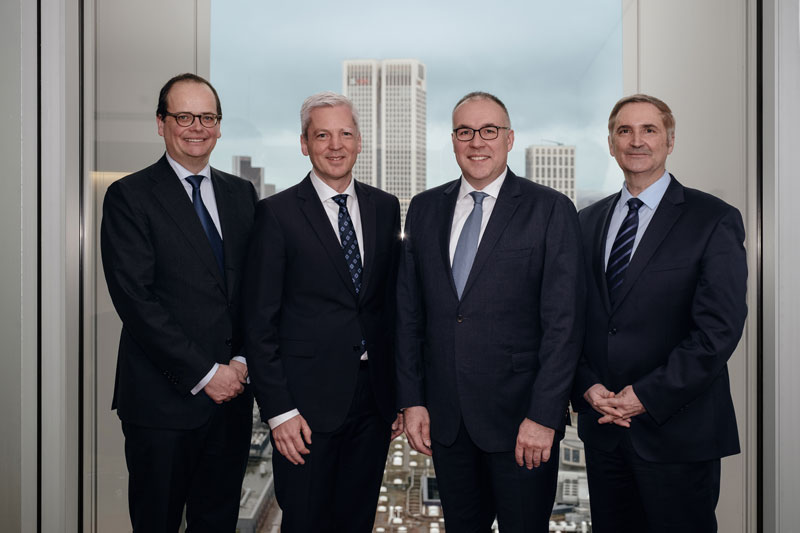
(left to right): Jochen Franke, CFO, STOLL; Andreas Schellhammer, CEO, STOLL; Arno Gärtner, CEO, KARL MAYER; and Dr. Helmut Preßl, CFO, KARL MAYER

OBERTSHAUSEN, Germany — February 28, 2020 — As part of its growth strategy, the KARL MAYER Group has concluded an agreement to acquire the STOLL Group. The contract was signed on February 26, 2020, and the Stoll Group is to be part of the Karl Mayer Group from July 1, 2020.

By acquiring Stoll, Karl Mayer is opening up additional technological growth potential and an innovative solutions portfolio in the flat knitting sector. Stoll is an international industry leader with approximately 1,000 employees and offers innovative tools and services for the knitting of tomorrow.

Karl Mayer is an innovative market leader for solutions in Warp Knitting, Warp Preparation for Weaving and Technical Textiles, with more than 2,300 employees worldwide.

“The acquisition is an important step in our growth strategy and we are proud to welcome Stoll into our Group. Stoll is an internationally recognised brand in the textile industry and has comprehensive technological expertise and an experienced team in the knitting sector,” explains Arno Gärtner, CEO of the Karl Mayer Group.

With the acquisition, Stoll will become part of the global Karl Mayer Group, an independent family business. As a result, Stoll will benefit from the broad global positioning of Karl Mayer’s sales, service and production sites, and from the opportunities for joint development, such as in the field of digital solutions.

“This alliance brings together two very strong brands in textile machinery building whose solutions portfolios and regional presence complement each other brilliantly. This will enable us to expand and accelerate our innovation strategy in the areas of digitalization and technology, and strengthen our global presence. Our customers will be able to benefit directly from this and increase their competitiveness in the dynamically changing textile industry,” says Andreas Schellhammer, CEO of Stoll.

Both family-owned companies can look back on a long and successful company history, and at the same time prove themselves time and again as trendsetters. In their respective market segments, they represent innovation, quality, long-term orientation, reliability and comprehensive expertise.

The complementary product portfolios and an even greater regional presence in all relevant markets will create new, high-level expertise in the international textile market. Karl Mayer is thus the only company in the textile industry to offer industry-leading solutions for the two main stitch-forming processes: knitting and warp knitting.

The group of companies will thus be even more broadly positioned in the future with the business areas: Warp Knitting, Technical Textiles, Warp Preparation, Flat Knitting and Digital Solutions. Customers can be accompanied beyond the boundaries of technology.

The contract is an asset deal. The well-established Stoll brand will be continued unchanged within the Group. Karl Mayer is therefore not only expanding its portfolio, but is also strengthening its market position with the new brand.

“Our clients were always our focus when preparing the transaction. By becoming part of the Karl Mayer Group, customers will benefit from additional impetus for innovation, particularly with regard to overarching issues such as digitalization. There will be no change to the usual customer support and service,” the CEOs of both companies are keen to emphasize.

Posted February 28, 2020

Source KARL MAYER Group

INX International Ink Co. Addresses Supply Chain Impact Amid Coronavirus Outbreak

SCHAUMBURG, Ill. — February 28, 2020 — INX International Ink Co. is working hard to insure that the supply of their products to customers remain constant and secure while they manage through the global Covid-19 coronavirus situation.

“We are very cognizant of the impact we have on the overall supply chain,” said John Hrdlick, president and CEO of INX International. “Thanks to our vendors, INX manufacturing facilities are adequately stocked with raw materials and based on communications with them, we expect the supply from China to resume well before we have inventory concerns. We will continue to keep our customers updated during this process and are committed to making sure supply disruptions are minimized.

“Our hearts,” continued Hrdlick, “go out to everyone around the globe who have been negatively impacted by this outbreak in so many ways, including the loss of family and friends. We are keeping them in our thoughts and are hopeful Covid-19 runs its course as soon as possible.”

Posted February 28, 2020

Source INX International Ink Co.

INDEX™20 Exhibition Postponed To October 20-23, 2020

GENEVA, Switzerland — February 28, 2020 — By ordinance entering into force on February 28, 2020, at 10:00 a.m., the Swiss Federal Council has prohibited all events bringing together more than 1,000 people.  In the current circumstances, the situation is qualified as a force majeure event. As a result, taking into account the negative evolution of the situation, INDEX™20 is postponed to October 20-23, 2020.

The situation has recently significantly deteriorated with the appearance of the first confirmed cases of coronavirus in Switzerland. The organizers had no other choice than to review their assessment of the situation and to act in strict compliance with the ordinance of the Swiss Federal Council.

“We sincerely regret this situation, as large numbers of people around the world have invested in ensuring that the event takes place. However, the well-being and health of all INDEX™ exhibitors, visitors, and exhibition staff, as well as their business needs and expectations, remain our highest priority. We trust that all participants will understand this forced decision.” said Pierre Wiertz, EDANA General Manager.

The world continues to discover the important role of nonwovens in protecting healthcare staff and patients through medical devices and personal protective equipment, such as surgical masks, respirators, gowns, drapes and coveralls. It is of course unfortunate that the biggest nonwovens trade show ever, with more than 730 exhibitors and covering 24,700 square meters, has had to be postponed because of the largest epidemic in decades.

PALEXPO and EDANA remain at disposal for any further information.

Posted February 28, 2020

Source EDANA

Levi Strauss & Co. Announces Industry-Leading Paid Family Leave Benefit

ANN ARBOR, Mich. — February 27, 2020 — Levi Strauss & Co. today announced its new paid family leave benefit for all U.S. corporate and benefits-eligible retail employees. The new policy provides up to eight weeks of paid time off per year to care for an immediate family member with a serious health condition, and extends the company’s commitment to building a best-in-class workplace that supports well-being and enables its employees to take care of themselves and their family members in the moments they need it most.

Today’s modern workforce is balancing growing demands from their work and personal lives. According to a Pew Research Center study, more than one in ten U.S. adults are caring for an aging parent or immediate family member at the same time they are raising their own children. This so-called “sandwich generation” is growing due to an increased aging population, greater prevalence of chronic diseases and geographically dispersed families. The National Business Group on Health reports that 88 percent of adult caregivers correlate the additional responsibility of tending to a sick family member with a negative impact on their own health, and 44 percent experience financial strain.

“Some of the most important investments we make are in the well-being of our employees. We are introducing paid family leave to offer our employees the flexibility to care for ill family members without worrying about the stability of their job or finances,” said Chip Bergh, president and chief executive officer of Levi Strauss & Co. “Access to paid family leave addresses the needs of the modern workforce and can help boost employee retention and loyalty. It’s not only the right thing to do for employees, it’s the smart thing to do for business.”

LS&Co.’s paid family leave benefit provides up to eight weeks of paid time off annually to care for an ill spouse, domestic partner, parent or stepparent, child or stepchild up to 18 years of age. The benefit builds on LS&Co.’s paid parental leave program announced in 2016, which provides eight weeks of paid time off to welcome or care for a new child. Paid family leave is available immediately to qualifying LS&Co. employees.

“We applaud Levi Strauss & Co.’s expansion of its industry-leading paid parental leave policy to include paid family leave for both its corporate and benefits-eligible hourly workers,” said Debra Ness, president of the National Partnership for Women & Families. “Levi Strauss & Co.’s CEO Chip Bergh and his leadership team understand that when working people can take the time they need to care for a loved one — whether it’s an aging family member or a new child — it’s good for business, workers and our economy.”

Posted February 27, 2020

Source Levi Strauss & Co.

Los Angeles-Based Garment Maker USTRIVE Manufacturing Is First In United States To Gain GOTS, OCS Certification

LOS ANGELES — February 27, 2020 — USTRIVE Manufacturing, a Los Angeles-based garment maker specializing in knitwear, has become the first and only vertical clothing manufacturer in North America to be certified to both the Global Organic Textile Standard (GOTS) and Textile Exchange’s Organic Content Standard (OCS), the world’s two leading organic textile standards. USTRIVE enables brands to meet both Made in America and organic criteria throughout their entire supply chain from cut and sew to dyeing, finishing, screen printing, embroidering, packaging and storage — all within 12 miles.

USTRIVE is four companies vertically integrated into one: Tour Image, Jin Clothing, Care-Tex Industries and S&B Printing and Embroidery, all of which have deep roots in the local apparel industry. Tour Image is a 30-year-old sales and design-development company, while Jin Clothing is a family owned private-label apparel manufacturer that has been in business in Los Angeles for more than 28 years. Care-Tex Industries is a full-service dye and finishing facility that uses water-based low impact GOTS certified organic dyes, and S&B Printing specializes in nontoxic, water-based printing and embroidery using organic thread. USTRIVE partners with nearby Laguna Fabrics — the first US knitter to gain GOTS certification — for its organic fabrics.

The Global Organic Textile Standard includes both environmental and social provisions for post-harvest to retail shelf management, addressing all the processing stages (ginning, spinning, knitting, weaving, dyeing and manufacturing) of 70-100 percent organic fiber-containing products and prohibiting the use of toxic inputs. The Organic Content Standard verifies that five to 100 percent of the raw fiber in the product was grown to the US Department of Agriculture’s National Organic Program organic crop or livestock standards (in the US) no matter where in the world it was grown or raised, and allows blending of conventional and organic cotton as well as synthetic fibers.

“The GOTS certification process took over eight months to complete and included a complete retooling of our dyeing, printing and packaging methods in order to meet the standard’s stringent non-toxic chemical requirements,” said Scott Wilson, USTRIVE Founder and Partner. “At the same time, we chose to have OCS certification because it allows us to offer a broader range of organic fiber-based fabrics for our customers to choose from,” he continued.

USTRIVE also is ahead of the game when it comes to worker compensation. The company pays its workers hourly instead of by piece, ensuring that work is carried out at a pace that ensures quality. This means it guarantees a consistent wage (versus a variable wage) translating to approximately 25 percent higher wages per month than other similar knitwear contractors in Los Angeles.

On Friday, March 6, Wilson will present about USTRIVE at the Global Organic Textile Standard Roundtable to be held at the LA Textile Show in Los Angeles. For more information, see https://global-standard.org/gots-conferences-and-meetings.html. Contact Sandra Marquardt as soon as possible if interested in participating in the Friday afternoon bus tour to USTRIVE.

Posted February 27, 2020

Source USTRIVE Manufacturing

GreenShield Introduces GreenShield ZERO — Fluorine Free Textile Finish

ROCHESTER, N.Y. — February 26, 2020 — The GreenShield Co., a division of BigSky Technologies LLC, has announced the introduction of a new fluorine-free finish for textiles; GreenShield® ZERO. Responding to the needs of the marketplace for a fluorine-free solution for stain resistance on fabrics, GreenShield ZERO offers protection from water-based spills; such as sodas, coffee and wine. GreenShield finishes utilize nanoparticle based innovations to reduce the health and environmental impact of stain resistant finishes.

“We are pleased to bring the next generation of GreenShield to the textile industry,” said Dr. Cathy Fleischer, managing partner and co-founder of BigSky Technologies, “with GreenShield C6XL and now GreenShield ZERO, we give our customers a choice between a fluorine free finish and a finish with the lowest amount of fluorochemicals in the marketplace.”

The demand for environmentally friendly products and non-fluorinated solutions continue to grow, pushing furniture manufacturers and fabric distributors to look for “greener” finishes for their performance fabrics. “The healthcare industry is a good example,” said Fleischer, “GreenShield ZERO makes it easier to select furniture and materials that meet the Healthier Hospital Initiative.”

GreenShield ZERO can be used on many materials, including polyester, cotton, nylon, and solution dyed fibers. It is also recyclable and can contribute to LEED for Healthcare credit for furniture and medical furnishings.

BigSky Technologies LLC is a materials science company that manufacturers textile finishes inspired by nature. The company develops cost-effective solutions for the coatings, fabrics, and composite industries using sustainable manufacturing processes while reducing or eliminating the use of harmful chemicals. BigSky Technologies LLC produces GreenShield®, an environmentally friendly stain resistant fabric finish.

Posted February 27, 2020

Source The GreenShield Co.

Oerlikon Manmade Fibers Segment Sets A Trend With Three Customer Days In India

REMSCHEID, Germany — February 27, 2020 — For more than a decade now, the Manmade Fibers segment of the Swiss Oerlikon Group has been hosting a comprehensive technology symposium at the beginning of each year in the Indian region around Silvassa/Daman. Numerous Indian manmade fiber producers have settled in this area, around a four-hour drive north of Mumbai. Fed from Oerlikon polycondensation and extrusion systems, these companies manufacture polyester, nylon and polypropylene on large-scale installations with Oerlikon Barmag WINGS POY, WINGS FDY, IDY and DTY product lines and using Oerlikon Neumag’s staple fiber and BCF technologies. Reason enough for the Manmade Fibers segment’s experts to regularly provide their clientèle with detailed specialist presentations in India on the latest developments of the product and service portfolio.

And this was once again the case at the event held at the beginning of 2020, where around 450 managers and employees from local businesses took the opportunity to exchange ideas and information. For the third time in succession, Oerlikon also entered into dialog with the next generation of managers at major Indian polyester and nylon manufacturers in a separate event hosted in Mumbai beforehand. The technology symposium was again held — for the very first time — just a few days later and in a slightly modified form at a second venue: in Kolkata in West Bengal, a potential second future key location for manufacturing manmade fibers in India according to plans revealed by the Indian government. Here, the discussions held by the Oerlikon experts focused above all on the transfer of technologies for manufacturing polyester, nylon and polypropylene. Oerlikon is able to offer the entire process chain — from the melt to the textured yarn or the fibers and including the necessary semi- and fully-automated logistics process — from a single source. This is of interest above all for potential new customers and investors in West Bengal and neighboring Bangladesh, as some do not have decades of expertise in manufacturing manmade fibers, as is the case for most companies in the region around Silvassa/Daman.

Clean Technology. Smart Factory

The focus of all events was on the latest product and service developments from the Oerlikon Barmag, Oerlikon Neumag and Oerlikon Nonwoven brands. With their “Clean Technology. Smart Factory.” motto, the engineers from Germany presented selected machines and systems specifically designed for the Indian market, along with the associated services. Needless to say, the innovations unveiled at the last ITMA were of particular interest to all attendees.

eAFK Evo and WINGS FDY PA6 promise greater productivity

Philip Jungbecker, Senior Technology Manager for texturing machines at Oerlikon Barmag, presented the new Oerlikon Barmag eAFK Evo generation of machines. “The eAFK Evo promises superior speeds, greater productivity and consistently high product quality, along with lower energy consumption and simpler operation vis-à-vis comparable market solutions”, comments Jungbecker. In particular, the machine concept’s numerous new value-added features include two that are excelling with fantastic technology: the optimized, innovative EvoHeater and the EvoCooler, a completely newly-developed active cooling unit. These proved to be of huge interest to the attendees of the technology symposium.

WINGS FDY is now also available for the polyamide 6 process. To this end, the new 24-end winding concept makes the efficient production of FDY PA6 yarns a reality”, explained Guido Dresen, Regional Sales Manager at Oerlikon Barmag. Extending the polyamide yarn production from 12 to 24 ends with DIO and WINGS FDY pays yarn producers dividends, particularly in terms of investment expenditure (CAPEX) and operating expenditure (OPEX): significant savings with regards to energy, footprint and – due to the more ergonomic design – string-up time are among the concept’s most convincing arguments. The enclosed draw unit ensures low spin finish emissions, offering a safe working environment. Offering swift string-up, the optimized yarn path of the tried-and-tested WINGS FDY PET system is united with the high relaxing performance of conventional polyamide systems to create a completely new concept. The 24-end WINGS FDY PA hence profitably combines the benefits of both processes. The result: outstanding yarn properties, superlative dyeability, optimum process performance and high full package rate. A perfect package build guarantees excellent further processing properties in the downstream processes. With a 116-mm stroke, this winder makes high package weights possible, therefore delivering added-value yarns for further processing. As a consequence, yarn manufacturers can give themselves a competitive advantage in the marketplace.

The BCF S8’s impressive performance data

With the new BCF S8 production platform, Nis Lehmann-Matthaei, Sales Manager at Oerlikon Neumag, promised manufacturers of carpet yarns greater performance within this fiercely-competitive market: “Superlative spinning speeds, up to 700 individual filaments and fine titers of up to 2.5 dpf — our new system’s performance data and technological finesse are truly impressive. Our customers’ feedback on the new system is outstanding”, comments Lehmann-Matthaei.

Zero-waste philosophy successfully implemented

With the new VacuFil® recycling range, Oerlikon Barmag is now offering — in cooperation with its joint venture partner, BBEngineering — a zero-waste philosophy solution. Decades of experience in the areas of extrusion, filtration and spinning systems have been bundled into a new, innovative core component — the vacuum filter. It unites gentle large-scale filtration and controlled intrinsic-viscosity build-up for consistently outstanding melt quality. The vacuum unit — located adjacent to the filter — swiftly and reliably removes volatile contamination (such as spinning oil, for example). The excellent degasification performance additionally relieves energy-intensive predrying”, explained Dr. Klaus Schäfer, Managing Director of BBEngineering. The modular structure of the VacuFil range offers numerous possibilities for the process guiding system. Whether as a standalone solution with downstream granulation or as an inline variant with 3DD additive feed – customer requirements can be optimally catered for with various system configurations.

Exciting podium discussion on digitalization, automation and recycling

In addition to presenting the four 2019 world premières, the program also included talks on further technology innovations. To this end, the latest developments of the relatively nascent Oerlikon Nonwoven brand were unveiled and the upgrade packages for the CW and ACW winder generations were explained. Within the context of a podium discussion, Jochen Adler, chief technology officer of the Manmade Fibers segment, together with further Oerlikon experts, answered questions relating to the future of digitalization, automation and recycling along the textile value chain, among other things.

Here, Jochen Adler stated: “Digitally upgrading our machines and production systems for manufacturing yarns, fibers and nonwovens along the textile value chain is increasingly becoming a focus of our customers’ interest. Here, our promise is: creating digital value-added beyond our excellent hardware. We want to further optimize the efficiency of our systems and the quality of the end products with our digital solutions. True to our e-save philosophy, our mission is to protect the environment and to promote the sustainability of our solutions — in future undoubtedly also with a focus on recycling. For this, we are deploying the know-how of our entire large-scale systems engineering team, including full-automation, transport, packaging and warehouse logistics and end-product automated quality control. We combine these with our process competencies and digital data handling using our Plant Operation Center, or POC for short, and our artificial intelligence-based software solutions — known as ‘AIM’, our abbreviation for ‘Artificial Intelligence Manufacturing’. This has created innovative Industrie 4.0-solutions for our customers — with integrated storage and communication capabilities, wireless sensors, embedded actuators and intelligent software systems. In turn, this allows us to build bridges between data and material flows and between the virtual and real worlds.

Complex large-scale systems from a single source

Michael Roellke, Head of Global Factory Sales, showed the interested audience how the Oerlikon Manmade Fibers segment experts execute complex large-scale systems, simultaneously accompanying its customers with its decades of experience and expertise from day one. In his talk, he also once again emphasized the Oerlikon Group’s performance, including supporting the financing of projects as well. Roellke also explained the benefits of executing a factory project with Oerlikon: “Our customers have a contract partner who assumes the responsibility. There is a project manager as the primary contact partner. This reduces the number of interfaces and means less organization on the customers’ part. We have a huge network of experts. All core components come from Oerlikon’s in-house manufacturing facilities. We offer planning reliability, high efficiency as a result of continual process optimization, an optimized CAPEX/OPEX ratio as well as comprehensive handling of quality data — from the raw material all the way through to the individual package.” This is absolutely unique in this form within the manmade fiber industry.

Economic center of gravity returns to Asia

Eagerly anticipated by the audience, André Wissenberg, Vice President, Head of Marketing, Corporate Communications and Public Affairs, spoke about the uncertain times amidst the global trade conflict between the US and China and the emerging countries suffering as a result. He determined that the manufacture of manmade fibers in countries such as India and Bangladesh has tremendous potential for the future. He stated: “Over the next few years, the manmade fiber industry will — to an above-average extent — continue to benefit from market growth and the shift of market shares from cotton to manmade fibers. Currently, growth of polyester lies at +2.4% CAGR. According to a study compiled by Wood Mackenzie, the anticipated growth rate for all polyester fibers between 2016 and 2030 is +3.3%, with +2.1% for staple fibers and even +3.8% for filaments. The per-capita consumption in India, which was 5.9 kg in 2018, is expected to reach 8.5 kg by 2030.”

New challenges for China, India and Bangladesh

“This rapidly-changing global scenario is presenting us all with new challenges”, continues Wissenberg. “Almost 50% of the population will in future live in cities, and the demand for water, food and energy will rise considerably, above all in Asia and Africa. The quest for political and economic solutions for emerging countries will impact on all aspects of life, and the textile industry in particular. The economic center of gravity will continue to shift towards Asia. And we have to be ready for this.” The US and Europe will definitely lose ground to China and India. In terms of gross domestic product, China ranked no. 1 in 2016, followed by the US, India, Japan and Germany. By 2050, India will be ranked second, with US shifting to third, while Indonesia displaces Japan to take fourth. And — with Africa — a new demographic giant will emerge, whose young and growing population could become a powerful growth engine for the continent, as long as there is sufficient investment in education, health and the economy. Africa’s population growth will be responsible for around 58% of global growth between 2018 and 2050.

Commenting on the situation in China, Wissenberg stated: “The trends in China in 2019 have shown us that the country has transitioned from a high-speed economy into a society with high-quality growth. China’s economy slowed from 6.9% in 2017 to 6.6 % in 2018, which is predominantly down to the tightening of financial supervision within the banking sector and the expanding trade conflict with the US. A further slowdown of 6.2% and 6% respectively is forecast for 2019 and 2020. Here, the impact of the coronavirus epidemic has not be taken into account.” The reforms in China have progressed in several key areas, including: 1. Strengthening of the financial rules; 2. Control of local authority investments; 3. Slowdown of debt accumulation; 4. New FDI law and redrafting of the list of FDI entries. The general government deficit is currently estimated to be 11% of GDP. If the trade dispute were to further escalate, there are rumors emanating from China that fiscal incentives, above all, would be justified.

Overall, the global economy would benefit from a more open, more stable and more transparent rule-based international trading system. Wissenberg listed the biggest challenges for the Indian economy: maintaining and achieving annual average growth of between 9 and 10%, providing investor-friendly rights and taxation systems, limiting financial reporting and budgetary deficits, developing a world-class infrastructure for maintaining growth in all economic sectors, reducing currency devaluation, removing environmental obstacles for foreign direct investment, controlling inflation and permitting foreign direct investment in various areas. Overall, Wissenberg therefore sees an optimistic mood for the manmade fiber industry in India in this new decade, but simultaneously warns of the above-mentioned global risks.

Cultural highlights

Both technology symposiums were each accompanied by a cultural highlight. In Daman, a musical and dance performance showcased the history of Kashmir, while the ‘Amar Sonar Bangla’ program entertained the attendees in Kolkata. Here, Debabrata Ghosh, General Manager Sales at Oerlikon Textile India Ltd., demonstrated particular commitment and created both programs with the internationally-renowned ‘Sukalyann d’entourage’ dance studio in Mumbai and Toronto.

Posted February 27, 2020

Source Oerlikon

TINTEX @ Première Vision Presents Naturally Advanced Evolution

PARIS — February 27, 2020 — Thanks to its renown expertise, premium collaborations with some of the most influential fashion brands and an array of international awards, Jersey manufacturer TINTEX has established itself as a global leader in smart innovation. The commitment to support brands in creating responsible collections is interwoven into his motto Naturally Advanced.

At Première Vision the company presents its S/S 2021 collection and a new strategic approach to make the world a better place, a garment at a time. “That’s why we decided to update our statement-motto in Naturally Advanced Evolution: a promise and an invitation to work together to develop further collections combining an environment-driven approach with cutting-edge technology,” said Ricardo Silva, Head of Operations of TINTEX.

“Textile producers and fashion brands should develop their partnership in a much more collaborative way.” Say at TINTEX. In a move towards his partners, the company has re- organised its products collection into 4 distinct categories and further evolved its production process in order to guarantee the highest quality and performance of its fabrics and, at the same time, to become more competitive and to allow its clients to orientate better and easily find the most suitable and practical solution.

COLLECTION focuses on seasonal proposals while EXPRESSIONS includes a range for all-year- round collections. The PROJECTS experimental category comprises cutting-edge research designs that haven’t reached the market yet and are able to inspire out-of-the-box collections. ESSENTIALS is the solid base of TINTEX’ world; it features all the most successful basic items — ready to order and deliver.

As a demonstration of the positive collaborations with brands that are already ongoing, TINTEX share the unique stories of:

  • Hanro: the “Balance Shirt” is made of 100-percent Tencel™ fabric by TINTEX enriched by the premium Naturally Clean finishing and thereby the basic shirt for everyday wear — it’s high-quality, functional and has a relaxed, comfortable fit. “These days, consumers are looking for versatile clothing that you can wear from desk to the gym.” explains Claudia Brugger Product manager Hanro International. The understated “Balance Shirt” by HANRO puts the focus on the basic, quality lyocell fabric, which ensures a soft drape and a subtle sheen.
  • J.Lindeberg was created around Johan Lindeberg’s vision of a modern lifestyle brand, built on progressive values, combining fashion and sport in a ground breaking way. Today Lindeberg offers versatile products designed for an active life always finding new ways of doing things; new materials, new design and new technologies. Focus is on details, fit and execution. The brand selects smart cotton knits by TINTEX in pure versions or in blend with Tencel or recycled polyester.
  • Founded in 2008 by Abe
Burmeister and Tyler Clemens,
OUTLIER makes hardcore,
performance-driven clothing that empowers the wearer to do more while owning less. The brand selected 100% smart cotton options by TINTEX to develop an experimental, box cut, heavyweight T-shirt unlike any other. At 8oz it’s very heavy for a tee, but thick cotton yarns knit at a low-gauge give the fabric a stand-off-the- body structure and hidden openness for wide ranging comfort. The T-shirt is enriched by a GOTS certified 100% Organic cotton RIB for the neck.

THE SS 2021 COLLECTION is imbued with sustainability, innovation and a collaborative attitude. The new range comprises 24 new references built focusing on responsible materials — including recycled or recyclable (100-percent same raw material), tactile finishes and active performances with smart and cutting-edge technical background. “The main area we developed for the S/S 2021 collection was carefully selected starting from the inputs we had from our partners during some of the most successful collaborations in the past 2 years,” adds Ana Eusebio, designer.

“S/S 2021 is all about NOW and NO WASTE. The key values of the improved production process have not been compromised: no season, no gender, upcycling and monochromatic.” Facts and figures? 25% of upcycling or reused stock materials, 33% optimization — e.g. substitution of conventional ingredients with more sustainable ones – and 42% of new articles.

Special focus of this season are:

  1. Texloop¡ by Circular Systems: Texloop is an innovative processing system that converts pre and post-consumer 100-percent cotton and cotton blend textile waste into recycled fiber, yarns and fabrics.
  2. Supreme Green Cotton® by Varvaressos: the new generation of smart cotton that saves up to 40 percent of water, born from an innovative and socially-responsible system granting sustainability from the cotton seed to the garment while supporting farmers and businesses at the foot of Mount Olympus. A pioneering satellite-powered drip irrigation system, Made in Europe and a set of influential eco-certifications that grant 100-percent traceable products and attest corporate responsibility.

And just to keep the conversation about sharing innovation at best, TINTEX is officially shading the light on its Coating Unit that, thanks to continuous investments, will be able to deliver Naturally Advance Solutions in terms of finishings, not just for TINTEX but also for woven producers that are aligned with the corporate commitment. Come to discover TINTEX portfolio of smartly developed coatings at its booth at Smart Creation, hall 3.

Continued Silva: “At TINTEX we believe that being a market leader is not a status, not a label or a throne, but a responsibility. The responsibility to innovate and to collaborate with designers, brands and other key players to give what consumers are asking out loud: sustainable fashion.”

Posted February 27, 2020

Source TINTEX

Sponsors