GreenShield Introduces GreenShield ZERO — Fluorine Free Textile Finish

ROCHESTER, N.Y. — February 26, 2020 — The GreenShield Co., a division of BigSky Technologies LLC, has announced the introduction of a new fluorine-free finish for textiles; GreenShield® ZERO. Responding to the needs of the marketplace for a fluorine-free solution for stain resistance on fabrics, GreenShield ZERO offers protection from water-based spills; such as sodas, coffee and wine. GreenShield finishes utilize nanoparticle based innovations to reduce the health and environmental impact of stain resistant finishes.

“We are pleased to bring the next generation of GreenShield to the textile industry,” said Dr. Cathy Fleischer, managing partner and co-founder of BigSky Technologies, “with GreenShield C6XL and now GreenShield ZERO, we give our customers a choice between a fluorine free finish and a finish with the lowest amount of fluorochemicals in the marketplace.”

The demand for environmentally friendly products and non-fluorinated solutions continue to grow, pushing furniture manufacturers and fabric distributors to look for “greener” finishes for their performance fabrics. “The healthcare industry is a good example,” said Fleischer, “GreenShield ZERO makes it easier to select furniture and materials that meet the Healthier Hospital Initiative.”

GreenShield ZERO can be used on many materials, including polyester, cotton, nylon, and solution dyed fibers. It is also recyclable and can contribute to LEED for Healthcare credit for furniture and medical furnishings.

BigSky Technologies LLC is a materials science company that manufacturers textile finishes inspired by nature. The company develops cost-effective solutions for the coatings, fabrics, and composite industries using sustainable manufacturing processes while reducing or eliminating the use of harmful chemicals. BigSky Technologies LLC produces GreenShield®, an environmentally friendly stain resistant fabric finish.

Posted February 27, 2020

Source The GreenShield Co.

Oerlikon Manmade Fibers Segment Sets A Trend With Three Customer Days In India

REMSCHEID, Germany — February 27, 2020 — For more than a decade now, the Manmade Fibers segment of the Swiss Oerlikon Group has been hosting a comprehensive technology symposium at the beginning of each year in the Indian region around Silvassa/Daman. Numerous Indian manmade fiber producers have settled in this area, around a four-hour drive north of Mumbai. Fed from Oerlikon polycondensation and extrusion systems, these companies manufacture polyester, nylon and polypropylene on large-scale installations with Oerlikon Barmag WINGS POY, WINGS FDY, IDY and DTY product lines and using Oerlikon Neumag’s staple fiber and BCF technologies. Reason enough for the Manmade Fibers segment’s experts to regularly provide their clientèle with detailed specialist presentations in India on the latest developments of the product and service portfolio.

And this was once again the case at the event held at the beginning of 2020, where around 450 managers and employees from local businesses took the opportunity to exchange ideas and information. For the third time in succession, Oerlikon also entered into dialog with the next generation of managers at major Indian polyester and nylon manufacturers in a separate event hosted in Mumbai beforehand. The technology symposium was again held — for the very first time — just a few days later and in a slightly modified form at a second venue: in Kolkata in West Bengal, a potential second future key location for manufacturing manmade fibers in India according to plans revealed by the Indian government. Here, the discussions held by the Oerlikon experts focused above all on the transfer of technologies for manufacturing polyester, nylon and polypropylene. Oerlikon is able to offer the entire process chain — from the melt to the textured yarn or the fibers and including the necessary semi- and fully-automated logistics process — from a single source. This is of interest above all for potential new customers and investors in West Bengal and neighboring Bangladesh, as some do not have decades of expertise in manufacturing manmade fibers, as is the case for most companies in the region around Silvassa/Daman.

Clean Technology. Smart Factory

The focus of all events was on the latest product and service developments from the Oerlikon Barmag, Oerlikon Neumag and Oerlikon Nonwoven brands. With their “Clean Technology. Smart Factory.” motto, the engineers from Germany presented selected machines and systems specifically designed for the Indian market, along with the associated services. Needless to say, the innovations unveiled at the last ITMA were of particular interest to all attendees.

eAFK Evo and WINGS FDY PA6 promise greater productivity

Philip Jungbecker, Senior Technology Manager for texturing machines at Oerlikon Barmag, presented the new Oerlikon Barmag eAFK Evo generation of machines. “The eAFK Evo promises superior speeds, greater productivity and consistently high product quality, along with lower energy consumption and simpler operation vis-à-vis comparable market solutions”, comments Jungbecker. In particular, the machine concept’s numerous new value-added features include two that are excelling with fantastic technology: the optimized, innovative EvoHeater and the EvoCooler, a completely newly-developed active cooling unit. These proved to be of huge interest to the attendees of the technology symposium.

WINGS FDY is now also available for the polyamide 6 process. To this end, the new 24-end winding concept makes the efficient production of FDY PA6 yarns a reality”, explained Guido Dresen, Regional Sales Manager at Oerlikon Barmag. Extending the polyamide yarn production from 12 to 24 ends with DIO and WINGS FDY pays yarn producers dividends, particularly in terms of investment expenditure (CAPEX) and operating expenditure (OPEX): significant savings with regards to energy, footprint and – due to the more ergonomic design – string-up time are among the concept’s most convincing arguments. The enclosed draw unit ensures low spin finish emissions, offering a safe working environment. Offering swift string-up, the optimized yarn path of the tried-and-tested WINGS FDY PET system is united with the high relaxing performance of conventional polyamide systems to create a completely new concept. The 24-end WINGS FDY PA hence profitably combines the benefits of both processes. The result: outstanding yarn properties, superlative dyeability, optimum process performance and high full package rate. A perfect package build guarantees excellent further processing properties in the downstream processes. With a 116-mm stroke, this winder makes high package weights possible, therefore delivering added-value yarns for further processing. As a consequence, yarn manufacturers can give themselves a competitive advantage in the marketplace.

The BCF S8’s impressive performance data

With the new BCF S8 production platform, Nis Lehmann-Matthaei, Sales Manager at Oerlikon Neumag, promised manufacturers of carpet yarns greater performance within this fiercely-competitive market: “Superlative spinning speeds, up to 700 individual filaments and fine titers of up to 2.5 dpf — our new system’s performance data and technological finesse are truly impressive. Our customers’ feedback on the new system is outstanding”, comments Lehmann-Matthaei.

Zero-waste philosophy successfully implemented

With the new VacuFil® recycling range, Oerlikon Barmag is now offering — in cooperation with its joint venture partner, BBEngineering — a zero-waste philosophy solution. Decades of experience in the areas of extrusion, filtration and spinning systems have been bundled into a new, innovative core component — the vacuum filter. It unites gentle large-scale filtration and controlled intrinsic-viscosity build-up for consistently outstanding melt quality. The vacuum unit — located adjacent to the filter — swiftly and reliably removes volatile contamination (such as spinning oil, for example). The excellent degasification performance additionally relieves energy-intensive predrying”, explained Dr. Klaus Schäfer, Managing Director of BBEngineering. The modular structure of the VacuFil range offers numerous possibilities for the process guiding system. Whether as a standalone solution with downstream granulation or as an inline variant with 3DD additive feed – customer requirements can be optimally catered for with various system configurations.

Exciting podium discussion on digitalization, automation and recycling

In addition to presenting the four 2019 world premières, the program also included talks on further technology innovations. To this end, the latest developments of the relatively nascent Oerlikon Nonwoven brand were unveiled and the upgrade packages for the CW and ACW winder generations were explained. Within the context of a podium discussion, Jochen Adler, chief technology officer of the Manmade Fibers segment, together with further Oerlikon experts, answered questions relating to the future of digitalization, automation and recycling along the textile value chain, among other things.

Here, Jochen Adler stated: “Digitally upgrading our machines and production systems for manufacturing yarns, fibers and nonwovens along the textile value chain is increasingly becoming a focus of our customers’ interest. Here, our promise is: creating digital value-added beyond our excellent hardware. We want to further optimize the efficiency of our systems and the quality of the end products with our digital solutions. True to our e-save philosophy, our mission is to protect the environment and to promote the sustainability of our solutions — in future undoubtedly also with a focus on recycling. For this, we are deploying the know-how of our entire large-scale systems engineering team, including full-automation, transport, packaging and warehouse logistics and end-product automated quality control. We combine these with our process competencies and digital data handling using our Plant Operation Center, or POC for short, and our artificial intelligence-based software solutions — known as ‘AIM’, our abbreviation for ‘Artificial Intelligence Manufacturing’. This has created innovative Industrie 4.0-solutions for our customers — with integrated storage and communication capabilities, wireless sensors, embedded actuators and intelligent software systems. In turn, this allows us to build bridges between data and material flows and between the virtual and real worlds.

Complex large-scale systems from a single source

Michael Roellke, Head of Global Factory Sales, showed the interested audience how the Oerlikon Manmade Fibers segment experts execute complex large-scale systems, simultaneously accompanying its customers with its decades of experience and expertise from day one. In his talk, he also once again emphasized the Oerlikon Group’s performance, including supporting the financing of projects as well. Roellke also explained the benefits of executing a factory project with Oerlikon: “Our customers have a contract partner who assumes the responsibility. There is a project manager as the primary contact partner. This reduces the number of interfaces and means less organization on the customers’ part. We have a huge network of experts. All core components come from Oerlikon’s in-house manufacturing facilities. We offer planning reliability, high efficiency as a result of continual process optimization, an optimized CAPEX/OPEX ratio as well as comprehensive handling of quality data — from the raw material all the way through to the individual package.” This is absolutely unique in this form within the manmade fiber industry.

Economic center of gravity returns to Asia

Eagerly anticipated by the audience, André Wissenberg, Vice President, Head of Marketing, Corporate Communications and Public Affairs, spoke about the uncertain times amidst the global trade conflict between the US and China and the emerging countries suffering as a result. He determined that the manufacture of manmade fibers in countries such as India and Bangladesh has tremendous potential for the future. He stated: “Over the next few years, the manmade fiber industry will — to an above-average extent — continue to benefit from market growth and the shift of market shares from cotton to manmade fibers. Currently, growth of polyester lies at +2.4% CAGR. According to a study compiled by Wood Mackenzie, the anticipated growth rate for all polyester fibers between 2016 and 2030 is +3.3%, with +2.1% for staple fibers and even +3.8% for filaments. The per-capita consumption in India, which was 5.9 kg in 2018, is expected to reach 8.5 kg by 2030.”

New challenges for China, India and Bangladesh

“This rapidly-changing global scenario is presenting us all with new challenges”, continues Wissenberg. “Almost 50% of the population will in future live in cities, and the demand for water, food and energy will rise considerably, above all in Asia and Africa. The quest for political and economic solutions for emerging countries will impact on all aspects of life, and the textile industry in particular. The economic center of gravity will continue to shift towards Asia. And we have to be ready for this.” The US and Europe will definitely lose ground to China and India. In terms of gross domestic product, China ranked no. 1 in 2016, followed by the US, India, Japan and Germany. By 2050, India will be ranked second, with US shifting to third, while Indonesia displaces Japan to take fourth. And — with Africa — a new demographic giant will emerge, whose young and growing population could become a powerful growth engine for the continent, as long as there is sufficient investment in education, health and the economy. Africa’s population growth will be responsible for around 58% of global growth between 2018 and 2050.

Commenting on the situation in China, Wissenberg stated: “The trends in China in 2019 have shown us that the country has transitioned from a high-speed economy into a society with high-quality growth. China’s economy slowed from 6.9% in 2017 to 6.6 % in 2018, which is predominantly down to the tightening of financial supervision within the banking sector and the expanding trade conflict with the US. A further slowdown of 6.2% and 6% respectively is forecast for 2019 and 2020. Here, the impact of the coronavirus epidemic has not be taken into account.” The reforms in China have progressed in several key areas, including: 1. Strengthening of the financial rules; 2. Control of local authority investments; 3. Slowdown of debt accumulation; 4. New FDI law and redrafting of the list of FDI entries. The general government deficit is currently estimated to be 11% of GDP. If the trade dispute were to further escalate, there are rumors emanating from China that fiscal incentives, above all, would be justified.

Overall, the global economy would benefit from a more open, more stable and more transparent rule-based international trading system. Wissenberg listed the biggest challenges for the Indian economy: maintaining and achieving annual average growth of between 9 and 10%, providing investor-friendly rights and taxation systems, limiting financial reporting and budgetary deficits, developing a world-class infrastructure for maintaining growth in all economic sectors, reducing currency devaluation, removing environmental obstacles for foreign direct investment, controlling inflation and permitting foreign direct investment in various areas. Overall, Wissenberg therefore sees an optimistic mood for the manmade fiber industry in India in this new decade, but simultaneously warns of the above-mentioned global risks.

Cultural highlights

Both technology symposiums were each accompanied by a cultural highlight. In Daman, a musical and dance performance showcased the history of Kashmir, while the ‘Amar Sonar Bangla’ program entertained the attendees in Kolkata. Here, Debabrata Ghosh, General Manager Sales at Oerlikon Textile India Ltd., demonstrated particular commitment and created both programs with the internationally-renowned ‘Sukalyann d’entourage’ dance studio in Mumbai and Toronto.

Posted February 27, 2020

Source Oerlikon

TINTEX @ Première Vision Presents Naturally Advanced Evolution

PARIS — February 27, 2020 — Thanks to its renown expertise, premium collaborations with some of the most influential fashion brands and an array of international awards, Jersey manufacturer TINTEX has established itself as a global leader in smart innovation. The commitment to support brands in creating responsible collections is interwoven into his motto Naturally Advanced.

At Première Vision the company presents its S/S 2021 collection and a new strategic approach to make the world a better place, a garment at a time. “That’s why we decided to update our statement-motto in Naturally Advanced Evolution: a promise and an invitation to work together to develop further collections combining an environment-driven approach with cutting-edge technology,” said Ricardo Silva, Head of Operations of TINTEX.

“Textile producers and fashion brands should develop their partnership in a much more collaborative way.” Say at TINTEX. In a move towards his partners, the company has re- organised its products collection into 4 distinct categories and further evolved its production process in order to guarantee the highest quality and performance of its fabrics and, at the same time, to become more competitive and to allow its clients to orientate better and easily find the most suitable and practical solution.

COLLECTION focuses on seasonal proposals while EXPRESSIONS includes a range for all-year- round collections. The PROJECTS experimental category comprises cutting-edge research designs that haven’t reached the market yet and are able to inspire out-of-the-box collections. ESSENTIALS is the solid base of TINTEX’ world; it features all the most successful basic items — ready to order and deliver.

As a demonstration of the positive collaborations with brands that are already ongoing, TINTEX share the unique stories of:

  • Hanro: the “Balance Shirt” is made of 100-percent Tencel™ fabric by TINTEX enriched by the premium Naturally Clean finishing and thereby the basic shirt for everyday wear — it’s high-quality, functional and has a relaxed, comfortable fit. “These days, consumers are looking for versatile clothing that you can wear from desk to the gym.” explains Claudia Brugger Product manager Hanro International. The understated “Balance Shirt” by HANRO puts the focus on the basic, quality lyocell fabric, which ensures a soft drape and a subtle sheen.
  • J.Lindeberg was created around Johan Lindeberg’s vision of a modern lifestyle brand, built on progressive values, combining fashion and sport in a ground breaking way. Today Lindeberg offers versatile products designed for an active life always finding new ways of doing things; new materials, new design and new technologies. Focus is on details, fit and execution. The brand selects smart cotton knits by TINTEX in pure versions or in blend with Tencel or recycled polyester.
  • Founded in 2008 by Abe
Burmeister and Tyler Clemens,
OUTLIER makes hardcore,
performance-driven clothing that empowers the wearer to do more while owning less. The brand selected 100% smart cotton options by TINTEX to develop an experimental, box cut, heavyweight T-shirt unlike any other. At 8oz it’s very heavy for a tee, but thick cotton yarns knit at a low-gauge give the fabric a stand-off-the- body structure and hidden openness for wide ranging comfort. The T-shirt is enriched by a GOTS certified 100% Organic cotton RIB for the neck.

THE SS 2021 COLLECTION is imbued with sustainability, innovation and a collaborative attitude. The new range comprises 24 new references built focusing on responsible materials — including recycled or recyclable (100-percent same raw material), tactile finishes and active performances with smart and cutting-edge technical background. “The main area we developed for the S/S 2021 collection was carefully selected starting from the inputs we had from our partners during some of the most successful collaborations in the past 2 years,” adds Ana Eusebio, designer.

“S/S 2021 is all about NOW and NO WASTE. The key values of the improved production process have not been compromised: no season, no gender, upcycling and monochromatic.” Facts and figures? 25% of upcycling or reused stock materials, 33% optimization — e.g. substitution of conventional ingredients with more sustainable ones – and 42% of new articles.

Special focus of this season are:

  1. Texloop¡ by Circular Systems: Texloop is an innovative processing system that converts pre and post-consumer 100-percent cotton and cotton blend textile waste into recycled fiber, yarns and fabrics.
  2. Supreme Green Cotton® by Varvaressos: the new generation of smart cotton that saves up to 40 percent of water, born from an innovative and socially-responsible system granting sustainability from the cotton seed to the garment while supporting farmers and businesses at the foot of Mount Olympus. A pioneering satellite-powered drip irrigation system, Made in Europe and a set of influential eco-certifications that grant 100-percent traceable products and attest corporate responsibility.

And just to keep the conversation about sharing innovation at best, TINTEX is officially shading the light on its Coating Unit that, thanks to continuous investments, will be able to deliver Naturally Advance Solutions in terms of finishings, not just for TINTEX but also for woven producers that are aligned with the corporate commitment. Come to discover TINTEX portfolio of smartly developed coatings at its booth at Smart Creation, hall 3.

Continued Silva: “At TINTEX we believe that being a market leader is not a status, not a label or a throne, but a responsibility. The responsibility to innovate and to collaborate with designers, brands and other key players to give what consumers are asking out loud: sustainable fashion.”

Posted February 27, 2020

Source TINTEX

Gerber Revolutionizes 3D Workflow With New February 2020 Release Of AccuMark®

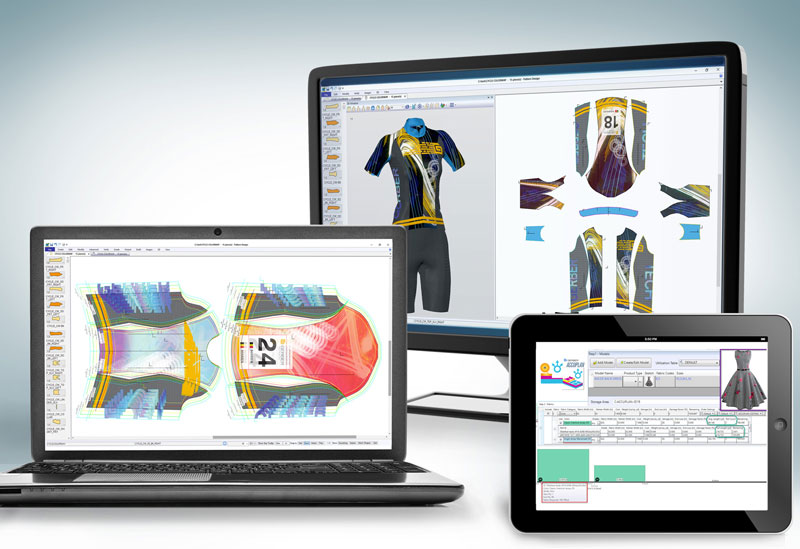
NEW YORK CITY  — February 27, 2020 — Gerber is proud to announce the February 2020 release of its robust software platform, AccuMark®, AccuMark 3D, AccuNest™ and AccuPlan™, which continues to revolutionize the industry by digitizing the supply chain from 3D design right through production, making product development and production even faster, more efficient and sustainable. Already applauded by customers, the new release makes developing production-ready garments quick and easy with powerful 2D-to-3D integration and increased digital printing capabilities. AccuMark February 2020 also streamlines production with tight integration between cut planning software and the customer’s ERP system. Whether the customer is creating customized, made-to-measure or mass-produced garments, AccuMark February 2020 accelerates time to market, improves fabric consumption, and dramatically cuts costs.

“The February 2020 release of AccuMark opens up a whole new world of design opportunities, it’s so easy to create customized suits and other garments, and it’s fun,” said Darren Beaman of Adrian Jules.

“After speaking with our customers, we found that they were spending millions of dollars and countless hours making thousands of samples per year,” said Melissa Rogers Senior Vice President and General Manager for Software at Gerber. “So for this release, we completely enhanced our 3D workflow so that our customers could validate their designs without spending valuable time and money making physical samples, for a truly streamlined and efficient workflow.”

The AccuMark February 2020 release will help exceed consumers expectations of speed, sustainability, and quality by decreasing lead time from 3 weeks to 48 hours while reducing material waste by as much as 40 percent. The new release will empower on-demand manufacturing like never before with improved digital printing capabilities and true-to-life virtual samples, making ideas production ready 60 percent faster than manual processes.

“The ability to develop 3D production-ready samples, with the correct fit and the cost estimation, has allowed me to reduce the number of physical samples I have to make from 20 to 5, saving me about 75 percent in development time,” said Beaman.

Brands, retailers, and manufacturers of all sizes will see major improvements in their production process as well with up to 25 percent fabric savings thanks to the powerful duo of Gerber’s automated nesting solution, AccuNest, and powerful cut planning software, AccuPlan.

“AccuPlan enables us to speed up the process of breaking down purchase orders and fully automate the marking and cutting process,” said Jenny Yu of Superior Uniform. “This helps eliminate human data entry errors, which allows us more time to focus on creativity, pattern design, and customer satisfaction. We now can process 10 tickets in 1 minute when it used to take 7 minutes!”

The newest addition to the AccuMark legacy offers enhanced 3D capabilities that will allow designers to edit directly in the 3D workspace, completely streamlining the design and development process. Users will be able to visualize their entire collection in multiple fabric options and colorways while validating style and fit, using the same model, without ever having to make a single physical sample.

“The new tools around colorways and 3D editing streamline the design workflow all the way to production,” said Tobe Bashor of Digital Performance Gear. “Our designers can use the concise image functionality in 3D to quickly align graphic placement, export shareable renders to confirm design approval, and generate color-accurate print files. The February 2020 release is a step up and a game changer.”

Posted February 27, 2020

Source Gerber Technology

Inkcups Expands European Operations With New Sales Director and Additional Technical Support Staff

Hendrik Koemans has joined Inkcups as Sales Director Europe, strengthening the company’s European operations.

DANVERS, Mass. — February 26, 2020 — Global printing industry supplier Inkcups announced that Hendrik Koemans has joined the company as sales director Europe, strengthening the company’s European operations, together with the additional hiring of several local service technicians. With over 26 years of demonstrated leadership in the European print industry, Koemans brings his extensive knowledge and experience working in several international management positions within leading promotional product organizations.

“Hendrik’s wide network and expertise in the promotional market will open up many doors and opportunities for Inkcups in Europe,” said Benjamin Adner, CEO of Inkcups. “This move is part of a plan and commitment to build up our presence in Europe as the market grows and our customer base there expands. We are thrilled to add Hendrik to our team.”

Prior to joining Inkcups, Koemans spent most of his career in sales and marketing with Philip Morris International and in a key account management role at Berendsen Hygiene and Textile. He earned his specialization in marketing from the Netherlands Institute for Marketing (NIMA) and B.S. from Titus College in Velp, Gelderland, Netherlands.

“I am pleased to be working with Inkcups and excited about this grand opportunity. Having worked with the company for many years as a customer before, I can attest to the quality and value they offer,” said Hendrik Koemans, Inkcups’ sales director Europe. “At Inkcups, we don’t just sell printing machines, we offer the complete picture: a turnkey package with all the equipment, supplies and services needed. This is what makes us unique, and will make us stand out in Europe.”

Inkcups has also expanded the number of local service technicians to better service existing and new customers in Europe. “We are serious about providing the best service to all customers, globally,” said Ron Howell, Inkcups’ Digital Service Manager. “While growth is important, having a strong support team behind the company is paramount in providing the best in class service and support that we have here.”

Koemans and the new technicians will be based out of Inkcups’ Europe office in Germany: Gewerbestrasse 15 D-57258, Freudenberg, Germany.

Posted February 26, 2020

Source Inkcups

Iconic Patterns On Groundbreaking, Sustainable Fabrics — Demo Products By Marimekko And Spinnova Paving The Way For A More Sustainable Future Of The Textile Industry

HELSINKI, Finland — February 26, 2020 — Marimekko and the Finnish fiber technology company Spinnova present the first ever printed clothes made of Spinnova’s wood-based fiber containing no harmful chemicals. The Marimekko prototype outfits featuring the iconic Unikko (poppy) print and the company’s signature stripes demonstrate the great potential of the fiber innovation for a more sustainable future of the textile industry.

“Sustainability starts with design. At Marimekko, we believe that timeless and long-lasting design that brings joy to our customers for many years is also a sustainable choice. The work to maximize a product’s life cycle and make it as sustainable as possible begins on the designer’s drawing board and material choices play an important role in this. The Marimekko textile printing factory in Helsinki, which serves not only as our production facility but also very much as our creative hub, offers us unique opportunities to actively participate in research and development projects taking the textile industry towards a more sustainable future. Together with Spinnova we have been able to take major steps in developing new sustainable materials from wood-based fibers, and we are proud to present the Marimekko prototype outfits made of these transformational sustainable fabrics and featuring our distinctive, bold patterns,” says Minna Kemell-Kutvonen, Design and Product Development Director of Prints and Home Products at Marimekko.

The denim-like jacket and bag sporting the monochromatic Unikko print as well as the striped jersey shirt, all in strong primary colors of blue and red, comprise the timeless design elements of Marimekko. Playing with these classics, Marimekko’s ready-to-wear designer Riikka Buri gave the demo products a modern twist with oversized proportions and fresh color combinations. Both the woven and the jersey fabric used in these products were made of the Spinnova fiber, combined with cotton and/or lyocell. The outfits were designed, printed and manufactured by Marimekko at the Marimekko House in Helsinki, Finland.

The cooperation of Marimekko and Spinnova on the development and market entry of new, wood-based textiles began in 2017. In just two years, the collaboration has brought great progress in creating the end products made with Spinnova’s technology that fulfil the fashion and textile industry’s quality and sustainability requirements.

“Having a brave, expert partner like Marimekko’s view on the fiber and the applications it suits early on has been very valuable to us. Introducing the first prototypes with a globally renowned, iconic brand like this is a very proud moment for the Spinnova team,” says Spinnova’s CEO and co-founder Janne Poranen.

As part of its ambitious sustainability agenda, one of the key objectives of Marimekko is to continuously increase the share of sustainable cotton and other more sustainable materials in its products and packaging. The Spinnova fiber represents a very promising new sustainable material innovation.

With Spinnova’s technology, wood pulp can be spun into textile fiber without regenerating, dissolving or harmful chemicals. The method is considerably less of a strain on the environment than e.g. viscose or cotton production. The manufacture of the Spinnova fiber consumes some 99 percent less water than cotton production. A fabric made with Spinnova fiber is fully circular post-consumer and biodegrades quickly, which further reduces the environmental footprint of the fiber’s entire life cycle.

Posted February 26, 2020

Source Marimekko Corporation

From Bottle To Fabric: Seat Upholstery Made Of PET

INGOLSTADT, Germany — February 25, 2020 — Sustainability is a central pillar in the Audi corporate strategy. This applies to technology as well as to the production processes. Seat upholstery made from secondary raw materials are being used for the first time in the fourth generation of the Audi A3. Up to 89 percent of the textile used consists of recycled PET bottles, which are transformed into yarn in an elaborate procedure. This results in fabrics that guarantee the same quality standards in terms of look and feel as conventional textile upholstery.

Turning the old into the new

The bottle disappears in the hole of the reverse vending machine, and the customer in Germany gets 0.25 euros. But what happens then? While still in the shop, the disposable bottles are compressed for truck transport in order to save space. Once they have arrived at the recycling plant, they are sorted by color, size and quality. Foreign matter such as the caps are separated. A mill then crushes the bottles into flakes, which are washed, dried and melted down. Nozzles shape continuous plastic strands out of the mass. Once they have dried, a machine chops them into small pieces. This results in granulate, otherwise known as recyclate, and this undergoes extrusion to create threads. Wound onto coils, these are used in the final stage to manufacture materials.

More than 100 PET bottles in a single A3

All in all, up to 45 PET bottles with a capacity of 1.5 liters are used per seating system. On top of this, an additional 62 PET bottles were recycled for the carpet in the new Audi A3. Other components in the interior are also increasingly made of secondary raw materials, e.g. insulating materials and absorbers, the side panel trims of the luggage compartment, the loading floor and the mats. The goal is clear: The percentage of recycled material in the Audi fleet is to rise considerably in the coming years. In the process, the premium brand will continue to offer its customers products with the high level of quality that they are used to.

At present, the seat upholstery is not yet made completely of recyclable material. “The lower layer of woven material, which is connected to the upper material with adhesive, is what poses the challenge. We are working on replacing this with recyclable polyester,” says Ute Grönheim, who is in charge of material development in the textiles division at Audi. “It is our goal to make the seat upholstery completely from unmixed material so that it can be recycled again. We are no longer very far away from this.” In the long term, all seat upholstery across all model series will be made of recycled material.

Three recycled covers on offer

There are three different material designs for the Audi A3; they have an up to 89 percent share of recycled material. One of these is the steel gray material “Torsion” for the design selection on which yellow contrasting stitching creates visual highlights. In addition, the material “Puls” is available. In the S line, it features the black and silver color combination and is accentuated by rock gray contrasting stitching. Later on, it follows in black and red with contrasting stitching. In the equipment line in question, these designs form the basic offering and can be combined with side bolsters made of artificial leather.

Posted February 26, 2020

Source Audi

Gerber’s Innovation Center Empowers The Digitization Of The Furniture Industry

NEW YORK CITY — February 25, 2020 — The Gerber Innovation Center in New York City opened for the furniture industry on February 19 with a one-of-a-kind microfactory experience. The undisputed leader of connected platforms hosted a full day of workshops, live demonstrations, and customer case studies to discuss the current challenges the furniture industry is experiencing with customization. Gerber demonstrated how companies of all sizes can conquer customization, creativity, speed and eCommerce challenges by integrating their entire process from design through production using the latest software and hardware solutions.

“Gerber’s furniture microfactory experience is unlike anything else,” said Ketty Pillet, vice president of Marketing at Gerber Technology. “We designed this experience for the furniture manufacturers to be able to actually experience the on-demand process from design to print to production, leveraging the latest innovative technology.”

Like all industries, upholstered furniture is currently seeing a large demand for customized products and faster delivery times, causing a bind for companies who are still relying on manual processes. Those who fail to digitize supply chains relatively soon will continue to struggle as Gen Z, a generation who chooses to ignore predefined trends, starts to enter the furniture market.

The event was truly an end-to-end experience with an overview of industry trends and challenges, a customer testimonial from Bassett Furniture, and several presentations on the most innovative technology including CAD, digital printing, automated cutting, and even a laser solution from Virtek which aids in assembly.

During their all-day event, Gerber showed just how quickly on-demand manufacturing can happen by leveraging their integrated and connected platform to develop customized seats and pillows. The integrated solution, which features the latest in pattern making, digital printing, and IoT enabled digital cutting, streamlines the entire process and allows the company to remain both cost effective and sustainable by connecting different groups of users. The company also announced the launch of AccuMark February 2020 for the furniture industry which will allow them to reduce their time to market and allow for more creativity with a digital printing embedded process.

“Gerber’s solutions have helped us dramatically improve our process by reducing costly mistakes,” said Roger Leonhardt of Bassett Furniture. “Since using their software, we’re saving as much as 1 to 1.5 yards for every mistake that is prevented, which is up to $20,000 in savings.”

One of the biggest values of Gerber’s platform is its ability to connect the print-to-cut process. As Mike Sanders of Top Value Fabrics stated, digital printing is a crucial component for on-demand production because it allows a designer to take their artwork and turn it into a unique decor piece that no one else has. By implementing a digital printing process, designers are able to do any quantities of yardage in as many colors as they like with photo exact prints, unleashing creativity.

“Digital printing is so much further along than I thought,” said Bruce Beamer of Teknion Limited as he watched vibrantly printed textiles pass from the Kornit Presto direct-to-textile printer to the GERBERcutter® Z1. “Today’s event has really educated me on the latest technologies out there, some of which I was not aware of.”

The Z1 is equipped with Gerber’s PrintSync device which integrates the printing and cutting process into one step, allowing for shorter lead times and reduced labor costs. The device can connect with any direct-to-textile printer with in-line drying capability.

Posted February 26, 2020

Source Gerber Technology

Public Relations Agency Carmichael Lynch Relate Expands Home And Design Practice With Sunbrella Brand

MINNEAPOLIS — February 26, 2020 — Performance textile supplier Sunbrella has selected Carmichael Lynch Relate as its public relations agency of record following a competitive search. The agency was selected based on its creative reputation as well as its industry knowledge and strong relationships in the home and design space. Sunbrella is the newest member of the agency’s home and design practice group, which includes Formica, Marvin, MasterBrand Cabinets, Sherwin-Williams and TruStile. Carmichael Lynch Relate will handle strategic planning and media relations as well as influencer strategy and execution for the iconic brand.

“We were looking for a collaborative, strategic partner in our journey to strengthen engagement and preference for the Sunbrella brand and share our story as an innovative category leader that provides value for our customers,” said Steve Pawl, chief marketing officer at Sunbrella. “Carmichael Lynch Relate demonstrated that they’re expert practitioners of public relations with a deep commitment to data, insights and results. We look forward to working with them alongside our other agency partners to build on the Sunbrella heritage and take it to the next level in this increasingly competitive category.”

“Sunbrella is an ideal addition to our home and design practice and we’re thrilled to be working with them to make the brand even more memorable,” said Julie Batliner, president of Carmichael Lynch Relate. “Its heritage, design leadership and performance expertise provides powerful storytelling opportunities and the team is committed to bringing these to life.”

Introduced in 1961, Sunbrella is an innovative fabric brand that has defined performance and satisfied customers for decades. Supported by a rich family heritage, commitment to innovation and impressive design leadership, Sunbrella has revolutionized the way the world thinks about fabrics. Sunbrella fabrics integrate style and comfort with exceptional performance qualities: proven durability, fade resistance and easy care, with offerings crafted for a variety of home, marine and commercial applications.

Posted February 26, 2020

Source Carmichael Lynch Relate

Archroma Tianjin Named “Green Factory” By Tianjin Authorities

REINACH, Switzerland — February 26, 2020 — Archroma, a global supplier of color and specialty chemicals towards sustainable solutions, today announced that its affiliate in Tianjin, China, has been named “Green Factory” by the Tianjin authorities.

The nomination was granted as of January 1, 2020, following an evaluation process conducted under the authority of the Tianjin Bureau of Industry and Information Technology, which selected 56 other companies only to receive that same distinction.

The Green Factory list comprises companies comprehensively evaluated and scored against 92 indicators, in areas such as site intensification, production cleanliness, energy consumption efficiency, raw material recycling, environmental impact, product ecological profile, and carbon footprint. The initiative takes place in the wider framework of fostering Green manufacturing, one of the nine strategic objectives defined by the Chinese Authorities under the “Made in China 2025” plan, which led to the Industrial Green Development Plan published by The Ministry of Industry And Information Technology in 2016.

The production site in Tianjin is fully integrated into the Archroma Management System and was externally certified to ISO 9001. In the preparational system upgrade, additional external certifications to ISO 14001, ISO 50001 and OHSAS 18001 were completed in November 2019. Commitments to the United Nations Global Compact and Responsible Care® are complementing the local framework.

This distinction adds on to a long list of previous initiatives by Archroma to further foster sustainable operations in Tianjin, such as the upgrade of the site boilers with low emission technology in 2017, the ‘safe enterprise’ award given by the local industry park in 2018, and the investment in advanced ozone oxidation technology for waste water treatment.

“We continuously challenge the status quo to make our industry sustainable. Therefore, this is a fantastic and pioneering recognition for us all at Archroma and underpins that we are on the right track”, comments Andreas Wickli, president of operations at Archroma.

Rongwen Wang, Archroma’s head of operations in China, adds: “With that in mind, we are constantly deploying tremendous efforts towards running an eco-advanced production operation in China, focusing in particular on reducing waste and preserving water and energy. We are therefore extremely grateful and proud to be listed as Green Factory by the Tianjin Bureau of Industry and Information Technology. Because it’s our nature!”

Posted February 26, 2020

Source Archroma

Sponsors