Otis Instruments Releases Master Controller

BRYAN, Texas — July 27, 2020 — Otis Instruments Inc. introduces a new, innovative Master Controller to its Otis Link Automation & Controls Division product line.

The Master Controller is an information system providing complete monitoring, control and management of field assets — both remotely and on-site. With the Master Controller, the user has access to a flexible interface and customizable master screen designed to meet the demanding, complex needs of an industry — process equipment management, complete pump monitoring, 100-channel gas detection system management, location status at all levels, emergency shut-in and notification, on-site controls, as well as remote cellular and computer interaction.

Through Otis Link’s advanced technology and innovative strategy to create a complete controls system, numerous features are available to any operation, including: PLC’s; wired and wireless communication; secure cloud storage; telemetry; real-time data logging; generated charts and reports; alerts received by SMS text messaging or email; remote access and control of equipment; small to large integration systems with expansion capabilities; AC, DC and Solar powered systems; direct ethernet to internet modem and cellular communication options; and VPN access by phone, laptop and desktop.

With its Lan, WAN and Cellular Data collection with remote access to secure data and full-system control, the Master Controller is a true management solution for many applications and industries, including (but not limited to): Agriculture, Chemical Plants, Food & Beverage, Manufacturing, Oil & Gas, Waste & Wastewater, Textiles and Pharmaceutical.

Posted July 27, 2020

Source: Otis Instruments Inc.

U.S. Senator Lindsey Graham: Road To Bringing PPE Supply Chain Back To The U.S. Runs Through South Carolina

WASHINGTON — July 23, 2020 — U.S. Senator Lindsey Graham (R-S.C.) today spoke with the media about the importance of securing a reliable domestic supply chain of Personal Protective Equipment (PPE) following a tour of the Parkdale Mills manufacturing facility in Gaffney. Parkdale Mills is the largest cotton yarn spinner in the United States and has helped lead a coalition of textile and apparel companies to produce millions of face masks for frontline healthcare workers.

Graham has lead the effort to ensure the United States is no longer reliant on China for critical PPE. In early May 2020, Senator Graham introduced the COVID-19 Accountability Act, which called for a domestic purchasing requirement of PPE for the Strategic National Stockpile. In July 2020, Senator Graham introduced the U.S. MADE Act which again called for strict purchasing requirements of PPE and a manufacturing production tax credit to further spur domestic manufacturing and job creation.

The provisions outlined in the U.S. MADE Act will be included in the upcoming CARES II package.

GRAHAM: “What have we learned from the coronavirus? It’s been a wakeup call for America. Ninety percent of the personal protective equipment that our doctors and nurses and our healthcare workers use to keep us safe is made in China. And we’ve become captive to China — the entire world has. So I have legislation that I’ve been working on with the South Carolina textile industry, really the national textile industry, to bring back the medical supply chain into the United States. The road to bringing back medical supplies to the United States, when it comes to PPE, runs through the state of South Carolina.”

GRAHAM: “I’m creating a $7.5 billion tax credit for companies that will go back into the PPE business to make gowns, masks, gloves, bedding, all the swabs, everything associated with caring for people under the pandemic. This tax credit will help revitalize an industry and bring back into the United States that PPE supply chain so that we’ll no longer beholden to China. But equally important, we’re going to treat PPE manufacturing the same as making American uniforms for the military. Under the Berry Amendment of the defense bill, there’s a requirement that American military uniforms be made in America. Many of our textile plants in South Carolina, North Carolina, and Georgia get a good piece of their business by making American uniforms. My legislation would put PPE manufacturing under the Berry Amendment so our strategic stockpile would have to be made up of American-made PPE. The goal is to have 100-percent American-made in the strategic stockpile of PPE in the next five years. We believe that can be done through the tax credit and requiring PPE to be placed under the Berry Amendment.”

GRAHAM: “What does this mean to the South Carolina textile manufacturing? It means new jobs, it means a new market. What does it mean to the public? No longer being dependent upon China. What does it mean to our hospitals, our doctors and nurses? That you’ll have a supply chain in U.S. hands where we don’t have to beg China or other places in the world for the equipment we need to make sure we can safely fight this virus.”

GRAHAM: “I made a promise to myself and the state that I want to end our dependency on China for PPE. This bill that’s going to be introduced this afternoon in the United States Senate is fulfilling that promise. I could not have done it without the support of the textile industry at large. They have weighed in…I am confident [this bill] is going to become law.”

https://www.facebook.com/watch/live/?v=699679547544594&ref=watch_permalink

Posted July 27, 2020

Source: Office of U.S. Senator Lindsey Graham

COTTON NEWS: The Proof to Meet Your Promises

A new data-driven and verifiable standard for more sustainably-grown cotton

Sponsored Content

Consumers are expecting more from their go-to brands and retailers. Customer demand for brands that align with their own personal beliefs has been on the rise for several years.

A global pandemic and mass protests for social reform are just amplifying consumers’ need for the apparel industry’s commitment to the environment and a more equal society.

According to Nielsen, nearly half of U.S. consumers would change their consumption habits to reduce their impact on the environment. Brands and retailers have responded by signing onto industry-wide pledges and commitments, including the UN’s Sustainable Development Goals (SDGs) and the Fairtrade Foundation’s SustainableCotton Communiqué.

Consumers are moving beyond simply demanding promises of sustainability — now they want proof. While companies have committed to sustainability goals, they need data to show customers their progress. The U.S. Cotton Trust Protocol is designed to bring brands and retailers the sophisticated data collection and independent third-party verification they need to meet their own sustainability promises, while setting a new standard for more sustainably grown cotton.

“Consumers want to engage with brands that share their values and transparently demonstrate their practices in every part of their business, from raw materials choices onward,” said Garry Bell, former vice president of marketing and communications at Gildan and U.S. Cotton Trust Protocol advisor. “While U.S. cotton is known for superior quality and consistency, brands have asked for a systemic approach to demonstrate its sustainability. The U.S. Cotton Trust Protocol is an important step in helping brands drive sustainability throughout supply chains.”

Brands and retailers that align with the Trust Protocol will receive year-over-year aggregate data from growers through extensive questionnaires and the Fieldprint calculator, devised by the Trust Protocol’s data partner, Field to Market: The Alliance for Sustainable Agriculture.

This data-based approach, backed up by independent, third-party verification from Control Union Certifications North America, gives brands and retailers the critical assurances that the cotton fiber element of their supply chain is more sustainably grown.

Additionally, Trust Protocol cotton was recently named one of the 36 preferred fibers and materials that more than 170 participating brands and retailers can select from as part of Textile Exchange’s Material Change Index program.

“I’ve spent most of my life working with cotton and have committed the past several decades to helping U.S. farmers raise the bar for sustainable stewardship of their land,” said Dr. Andy Jordan, Consultant, Jordan & Associates and a U.S. Cotton Trust Protocol advisor.

“The U.S. Cotton Trust Protocol is groundbreaking because of its commitment to data and its scalability. The data allows brands and retailers to demonstrate their commitments to their science-based sustainability targets and allows us to walk with U.S. cotton growers on a road of continuous improvement.”

In addition to meeting the sustainability needs of apparel companies, the Trust Protocol will support U.S. growers to keep improving their responsible growing practices to meet the UN’s SDGs.

The Trust Protocol has set ambitious goals across six sustainability metrics for 2025 including land use, soil loss, water use, energy use, greenhouse gas emissions and soil carbon.

U.S. cotton will continue to approach these goals with the same methodology that has already made it a leader in responsibly grown cotton — utilizing a data-driven approach that relies on innovative new technologies, cutting-edge research and best management practices.

As public pressure continues to build, the U.S. Cotton Trust Protocol will allow brands and retailers to prove their sustainability commitments to their customers, while at the same time continuously reducing U.S. cotton’s environmental footprint.


This sponsored content has been provided by the U.S. Cotton Trust Protocol.


July/August 2020

U.S. Textiles: COVID-19 Impact

By Jim Borneman, Editor In Chief

So much has changed in so little time. Just six short months ago Textile World editors were busy reporting on stellar economic indicators and making forecasts of continued growth and prosperity in the United States. Excitement and anticipation also was building for the upcoming spring events including Techtextil North America and Texprocess Americas, and the Synthetic Yarn and Fabrics Association and Americas Apparel Producers’ Network meetings.

The global economy was showing cracks, but the United States, with energy independence, the then newly passed USMCA trade deal and pressure on China, was well positioned with record low unemployment, wage growth and low inflation.

Then rumblings began about a novel virus, and with limited and even false information, health around the globe started to erode and the COVID-19 pandemic took hold.

Slowly businesses and governments started to react. Truthfully, no-one wanted to accept what was coming and humans tend to err on the optimistic side of predictions. Things were so good, it was impossible to accept that the tide had turned and the incoming viral tsunami was about to change everything.

Interestingly, the virus brought to light facts that were apparent to many in the U.S. textile industry for years — the dangers of global trade interdependency, and the effects of offshoring manufacturing, drug production and personal protective equipment capabilities.

A lack of stockpiled medical equipment and ability to test for disease on a widespread scale also complicated a bad situation.

Though many took to pointing fingers, others took action — the U.S. textile industry and its leaders chose to take action and continue to do so.

Events are canceled, webinars are everywhere and Zoom meetings have replaced face-to-face contact for now.

Face coverings rule the day. Include the conflicts of peaceful social protest and violent unrest in the country’s largest cities and the total effect is devastating.

How people work, if they have a job or are “essential,” how education works, how people shop — or don’t — and the impact of social isolation will have lasting effects beyond the pandemic.

Some interesting facts were recently cited in a letter from U.S. Senators Thom Tillis (R-N.C.) and Mark Warner (D-Va.) addressed to Majority Leader Mitch McConnell (R-Ky.) and Minority Leader Chuck Schumer (D-N.Y.), “… urging the next round of COVID-19 assistance adequately address the magnitude of the losses felt throughout the cotton supply chain by cotton farmers, textile mills, and the cotton merchandising segment.”

They state: “From March through May, the Census Bureau reports that clothing sales are down by $44 billion, or 67 percent, relative to the same 3-month period in 2019. U.S. textile mills report a 90-percent drop in orders for the yarn they produce and are consuming cotton at a seasonally-adjusted annual rate of just 250,000 bales, down over 90-percent from year-ago levels. With mill consumption at an all-time low, the loss in monthly yarn production value is $200 to $300 million.”

Those facts don’t lie — but as COVID-19 cases continue, hopefully the industry will seize new opportunities, innovate new ways to do business and re-shore the U.S. textile supply chain.

July/August 2020

Senators Urge Senate Leaders To Include Cotton, Textile Industry Assistance In Next COVID-19 Relief Package

Senators Thom Tillis (R-N.C.) and Mark Warner (D-Va.) recently led a bipartisan push requesting the cotton and textile industries be considered in the next round of COVID-19 assistance in a letter that was sent to Senate Majority Leader Mitch McConnell (R-Ky.) and Minority Leader Chuck Schumer (D-N.Y).

In the letter, the senators stated: “Across the agricultural sectors, the U.S. cotton and textile industry is particularly hard hit as the COVID-19 pandemic is causing unprecedented demand destruction for cotton apparel and textiles. Billions of dollars of orders have been cancelled as retail shopping outlets remain closed or operate at reduced capacity. The collapse in cotton demand is being felt across the U.S. cotton industry from textile manufacturers to merchandisers to cotton producers, and all segments in between. The viability of the farms and businesses, and the jobs they represent, are at risk of not surviving this crisis.

“When Congress considers additional relief efforts in response to COVID-19, we believe any package should ensure USDA’s next round of agricultural assistance will adequately address the magnitude of the losses felt throughout the cotton supply chain by cotton farmers and include critical relief for textile mills and the cotton merchandising segment, all of which are facing unprecedented economic losses,” the Senators continued.

The letter contained data illustrating the devastating drop in clothing sales — down $44 billion or 67 percent, relative to the same three-month period in 2019 — a 90-percent drop in orders for yarns, and a loss of monthly yarn production value of $200 to $300 million. The drop in yarn production corresponds to a reduction in cotton consumption, and the U.S. Department of Agriculture has lowered its estimates of global mill use for this year and next by 23 million bales, which is valued at almost $8 billion. Cotton exports also are down, which results in additional carrying costs for the cotton industry such as storage, interest, insurance and freight costs associated with destination displacement.

The senators concluded their letter by saying, “We want to work closely with you and our other colleagues to ensure adequate relief for the U.S. cotton industry so that this critical industry receives the necessary assistance for all segments to survive and recover.”

Other Senators who joined Tillis and Warner in sending the letter were: Dr. Bill Cassidy (R-La.), Doug Jones (D-Ala.), Richard Burr (R-N.C.), John Cornyn (R-Texas), John Boozman (R-Ark.), Lindsey Graham (R-S.C.), Tom Cotton (R-Ark.), Tim Kaine (D-Va.), Martha McSally (R-Ariz.), Jerry Moran (R-Kan.), Kelly Loeffler (R-Ga.), Kyrsten Sinema (D-Ariz.), Cindy Hyde-Smith (R-Miss.), Marsha Blackburn (R-Tenn.), Tim Scott (R-S.C.), and Roger Wicker (R-Miss.).

July/August 2020

Techtextil North America, Texprocess Americas Canceled In 2020

Atlanta-based Messe Frankfurt Inc., organizer of Techtextil North America and Texprocess Americas, has announced that the collocated events have been postponed until their next editions as a result of the COVID-19 pandemic. Techtextil North America is scheduled to take place August 23-25, 2021, in Raleigh, N.C. The next edition of Texprocess Americas will be the collocated event with Techtextil North America that will take place May 17-19, 2022,  in Atlanta.

“We have been  monitoring the global spread of COVID-19 that began earlier this year, and to uphold our commitment to the industry, we postponed [the events] to October 1-3, 2020,” said Kristy Meade, group show director, said in a letter to exhibitors. “However, as coronavirus cases in the U.S continue to rise, we are once again faced with the difficult decision of whether or not to  proceed as planned.

“While we firmly believe that our health and safety plan exceeded all recommended guidelines to provide a safe trade show environment, several outside factors including travel restrictions, quarantine mandates and other governmental regulations across the globe have made moving forward with an in-person event impossible at this time.”

July/August 2020

COVID-19 Cancels More Trade Shows, Conferences

The uncertainty caused by the COVID-19 pandemic is wreaking havoc on the event industry.

Current and potential restrictions on travel and public events have resulted in most organizers moving events into 2021 and beyond, or moving  events to a virtual format.

The Cary, N.C.-based Association of the Nonwovens Fabric Industry (INDA), has moved two in-person events — the World of Wipes® International Conference and associated WIPES Academy training course scheduled in August, and the Research, Innovation & Science for Engineered Fabrics (RISE®) Conference scheduled  in September — to an all-virtual format.

“Survey results from INDA members are telling us companies have extended travel restrictions and  people still have personal concerns on travel — at least until the end of September,” said Dave Rousse, INDA president. “While we look forward to the industry reconvening  in person, Virtual WOW and Virtual RISE will provide an opportunity for our industry members to access relevant program content.”

The American Floorcovering Alliance (AFA), Dalton, Ga., has cancelled FloorTek Expo 2020. “We are going to use the time between now and the expected 2021 Expo in September or October to create even more cutting-edge events to help the industry thrive during these changing times,” said Stephanie Manis, AFA executive director. AFA will announce dates for the 2021 edition of FloorTek  as soon as possible.

July/August 2020

Unifi Achieves Recycling Milestone

Greensboro, N.C.-based Unifi Inc. recently met its goal set in 2017 to transform more than 20 billion polyethylene terephthalate (PET) bottles. The recycled content is used as the
raw material in Unifi’s REPREVE® recycled performance fibers, which uses less energy and water, and produces fewer greenhouse gas emissions when compared to manufacturing
virgin man-made fibers, according to the company.

“As we celebrate World Environment Day …, we want to thank all of our brand and mill partners around the globe for  helping us reach this  significant achievement and working with us to reduce plastic bottle waste,” said Tom Caudle, Unifi president and COO.

“Sustainability and recycling are key priorities for Unifi, and we are proud  to lead by example as we continue to drive awareness of the importance of recycling. Consumer demand for more sustainable products will continue to drive demand for REPREVE from our brand, retail, and mill partners, and that will help us reach our goal of transforming 30 billion bottles in 2022.”

July/August 2020

Cone Denim Transitions Some Capacity To Medical Fabrics

Greensboro, N.C., Cone Denim® has transitioned a portion of its weaving capacity over to making Maxima® medical fabrics for its sister division Burlington. Maxima fabrics are reusable, which is a key advantage currently when demand for medical personal protective equipment (PPE) is at an all-time high. The fabrics are available in a variety of constructions offering specific properties and meet the end-use applications (See “Quality Fabric of the Month: Time-Honored Protection,” TW, May/June 2020).

“Being a part of the larger Elevate Textiles family has opened many opportunities for Elevate’s brands including Cone, Burlington and American & Efird to collaborate and innovate to better serve apparel brands and others within the textile and apparel industry who are stepping up to produce lifesaving PPE,” said Steve Maggard, president, Cone Denim. “The Cone and Burlington technical teams have been working closely to quickly transition a portion of looms in our Cone Denim Yecapixtla operation in Mexico to produce Burlington medical fabrics. Production is set to ramp up in June.”

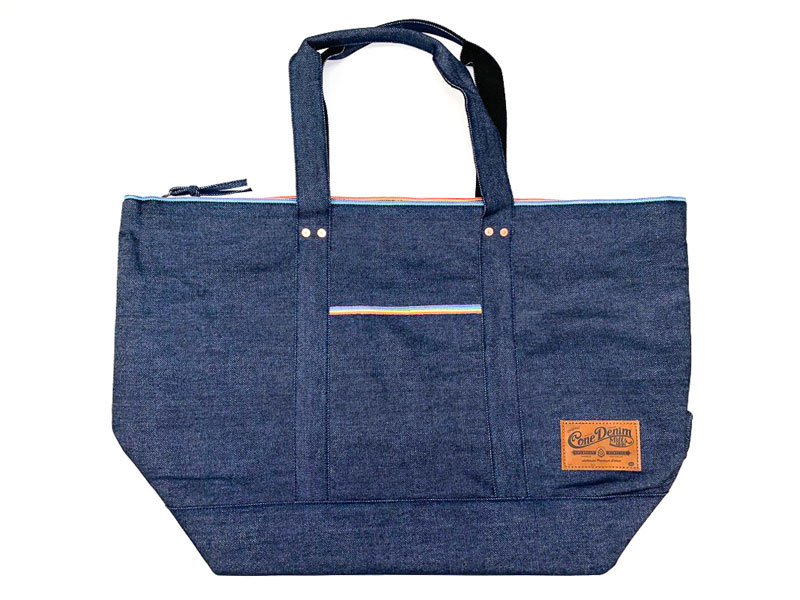
In other company news, Cone Denim released Pride Rainbow Selvage Denim in honor of Pride Month. The selvage edge on the fabric, which typically is white, is crafted using a unique rainbow set of colors. The denim is the latest style added to the Cone® Community Collection, which shows the company’s support of a wider and more inclusive community. Cone will donate a portion of the proceeds from the sale of Pride Denim and related accessories to the Human Rights Campaign.

July/August 2020

Lydall Signs $13.5 Million Contract Award With DoD

Lydall Inc., Manchester, Conn., has signed a $13.5 million contract award with the U.S. Department of Defense (DoD) that will support the company’s investment in two new production lines for meltblown nonwovens at its Rochester, N.H., facility. The company had previously announced the addition of one line, and the DoD contract supports and accelerates its capacity increases for this  filtration media critical in the  production of N95 respirators  and surgical masks. Lydall reports by May 2021 it expects to produce enough media for 140 million N95 respirators or 540 million surgical masks, as well as air filtration media for indoor spaces.

The investment will turn Lydall’s Rochester plant into the largest U.S. site for meltblown filtration media production, according to  the company.

“We are incredibly thankful to the U.S. government for recognizing the importance of accelerating domestic production of N95 and surgical face masks and providing the grant we need to do just that,” said Sara A. Greenstein, president and CEO, Lydall. “We have done everything within our capacity to ramp up our production of filtration media for N95 respirators and surgical face masks. With the support of the U.S. government, we will increase production even further.”

The contract award is a product of the ongoing collaboration between the Department of Defense and the Department of Health and Human Services, led by the Department’s Joint Acquisition Task Force and funded through the Coronavirus Aid, Relief, and Economic Security (CARES) Act.

July/August 2020

Sponsors