Bespoke cycling kits are created to the exact colour and sizing of the customer for optimal performance
NAGANO, Japan — September 28, 2023 — Founded in 2013, NOPINZ is a renowned U.K.-based manufacturer of clothing for cyclists and triathletes. The company’s first product was the “SpeedPocket,” a product that allows competitors to attach their race numbers more easily — and using no pins — while improving the all-important aerodynamics. Soon recognizing the customer demand for pre-made attire with incorporated number pockets, the company embarked on a mission to manufacture these new product lines itself. Today, NOPINZ boasts a diverse portfolio, with 60 percent of its products made in-house, catering to a growing customer base across the U.K. and international markets.
Gearing up to grow
“We tested out a few printers, before we ultimately settled on Mimaki,” NOPINZ Founder Blake Pond explained. Now the company’s line-up entirely consists of Mimaki’s textile dye sublimation solutions, purchased through Mimaki Authorised Partner, Xpres. With an initial investment in two TS300P-1800 in 2016, NOPINZ later upgraded its technology capabilities with a TS55-1800 in 2022.
“During our search we prioritized the ability to produce fluorescence and accurately replicate colors. Customers often come to us with existing kit made by other manufacturers, which they want to match, so accurately replicating color is extremely important. And even without existing kit, customers occasionally ask for specific Pantone colors. When it comes to cycling kit, color is often pivotal when considering where to buy from.”
As two flagship dye sublimation printers, both the TS300P-1800 and TS55-1800 are equipped to print on the various technical fabrics that are needed for cycling attire and faithfully reproduce colors to meet customer expectations.
NOPINZ places a strong emphasis on sustainability and is committed to minimizing its environmental impact. Using a microfactory approach gives better oversight and control of the manufacturing process, including sourcing materials sustainably and locally where possible, reducing transportation, and improving access to recycling. “Our ‘zero to landfill’ policy, means that we reduce our wastage where possible and either recycle or donate excess product to charity,” Blake added. “We hope to become a B-Corp company in the future.”
Making the production aerodynamic
With a steadily growing customer base across the UK and abroad, NOPINZ began to look for ways to fine-tune its processes. “Preparing orders for print was done manually and the time needed to do so had become a significant bottleneck in our production process,” Blake explained. “As we looked to scale up, we knew something needed to change. We got a recommendation for Early.Vision, which offer software solutions for the apparel industry, in May 2022 and since then, it’s been smooth sailing!”
Early.Vision software has helped NOPINZ eliminate existing bottlenecks in the design and production process
Early.Vision supports in streamlining the design to production workflow, allowing designers to focus on design and create nesting ready files that are prepared for production automatically based on eCommerce orders. It integrated its software to work seamlessly with Mimaki’s RIP software. “We immediately saw significant improvements, in both time and cost,” explained Blake. “It used to take us 36 hours to print 150 items, we can now do the same in 90 minutes!”
Beyond the printing process itself, NOPINZ have seen other benefits to taking on Early.Vision’s technology. “While we endeavour to produce mostly in-house — about 60 percent — when we do need to outsource, it’s much easier to send these print runs to other locations to be made. As we look to scale up our own production, this will also be a huge help.”
High-tech, high-accuracy NOPINZ creates speed suits for some of the world’s top cycling teams, as well as competitive amateurs. “A World Tour team is like a Premier League football team, winning and losing by very fine margins. A lot of the kit we make for them is custom fitted, completely bespoke, not just in terms of the print but the whole fit of the item. We even look at minute details such as the material placement to further improve the aerodynamics. We then use 3D scanning to get the measurements of the athlete exactly right. For this, the athlete stands in a booth, and are scanned, with those precise measurements being used in the creation of the kit,” explained Blake.
Global expansion with Mimaki
As NOPINZ eyes expansion into new territories, Blake expects that Mimaki dye sublimation solutions will remain the company’s printers of choice: “We’re looking to further expand in the USA and Australia and because we want to manufacture local to the market, that means setting up microfactories in those new locations. Considering its importance to our customers, we really want to keep colours consistent no matter where they order from, so we wouldn’t consider moving away from Mimaki as our preferred supplier.”
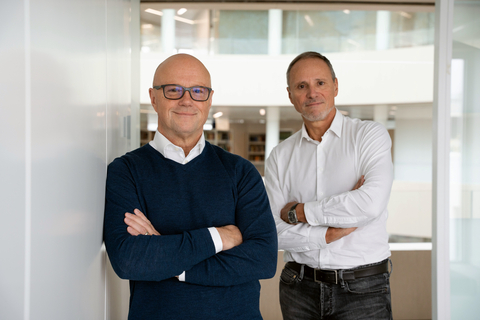
MADRID, Spain — September 28, 2023 — Recover™, a materials science company and scale producer of sustainable, high quality recycled cotton fiber and cotton fiber blends, today announced an expansion of its leadership team with the appointment of Anders Sjoblom as the company’s global CEO, effective January 1, 2024, to drive its next stage of growth. Sjoblom is a seasoned executive that will join Recover from the H&M Group where he is global managing director for H&M lifestyle brands. Concurrent with Sjoblom’s appointment, fourth-generation family steward of Recover, Alfredo Ferre, will transition to a newly created role of chief product and innovation officer allowing his full focus on continued innovation and technical leadership at Recover inclusive of ensuring unparalleled product quality and transparency. The appointment of Sjoblom follows Recover’s recent appointment of Matthew Neville as the company’s first global chief commercial officer to build a customer-centric sales team and provide exceptional customer focus.
“These leadership changes enable Recover to focus on ensuring operational and financial excellence while continuing to innovate and lead disruptive change for the apparel and textile industries,” said Olof Persson, Recover chairman and former CEO of the Volvo Group. “Anders has an outstanding track record of having successfully scaled global businesses while driving growth and brand awareness, while Alfredo will return to his roots as he focuses on strategic product vision and innovation.”
Recover has perfected the art and science of scaled production of sustainable recycled cotton fiber over more than 75 years across multiple generations of the Ferre family in Spain. Today, Recover is supported by leading institutional investors including STORY3 Capital, Goldman Sachs, Fortress Investment Group and Eldridge Industries, among others. The company offers plug and play supply chain integration, technical support, flexible applications, and collaborative innovation around circularity and serves some of the largest and most recognizable retailers, brands, and vendors in the world. The company opened the world’s largest technically advanced facility for mechanically recycling cotton fiber in the country of Bangladesh in 2022, adding to existing facilities in Spain and Pakistan and a planned facility in Vietnam.
“Recover is fundamentally transforming the apparel and textiles industries from a sustainability perspective with its innovative recycled cotton fiber and cotton fiber blends. It offers a much needed and proven scale solution to meaningfully reduce environmental impact while delivering a high-quality product and empowering consumers to drive a more sustainable future,” said Sjoblom. “Recover is at the forefront of its industry, developing differentiated, cutting-edge solutions to meet the needs of global retailers and brands. My focus will be on delivering these outstanding solutions with excellence. I am proud to take on the chief executive officer role and thrilled to have the opportunity to lead Recover’s exceptional team.”
Sjoblom has a strong passion for driving change and positive impact and currently serves as global head of H&M lifestyle brands with responsibility for H&M Home, H&M Move and H&M Beauty. The businesses he has overseen and led at the H&M Group have become market leading growth engines with inspired teams. Sjoblom joined the H&M Group in 2008 with increasing levels of leadership across the company including overall responsibility for the global vision, strategy, products, brand, and operations of the businesses under his oversight.
Recent innovations in the spinning sector focus on automation and process integration, higher efficiencies and better controls with remote access.
By Dr. Helmut H. Hergeth
“Cautiously moving forward” appears to be the overarching motto of the spinning sector at ITMA 2023 held recently in Milan, Italy. Of course there were some technical advances on display, but economically speaking, no new innovations that completely shake up existing business models. Some of the incremental investments1 of the 1980s are coming back to mind. Incremental investments allow textile manufacturers to utilize new or improved technologies without having to completely replace existing equipment. This conserves financial resources, which is relevant in uncertain economic times, as well as during times when technological directions are not yet clear. The theme of economic uncertainty was definitely visible and frequently mentioned in many conversations during ITMA.
Many machine manufacturers as well as their clients still mentioned “surviving COVID” in the post-COVID times. Economic activity is still reduced, and survival is simply more important than innovation, or at least more imminent. For equipment producers, just like for their clients, raw material prices have been very volatile and considerably higher than five years ago2. These kinds of cost increases impact machine prices, thus changing the cost/benefit analysis for new equipment and new technologies. Similar price increases and volatilities have taken place in raw materials for yarn producers — in cotton and polyester2 prices, for example — making long-term decisions like the purchase of new spinning equipment extremely difficult.
Additionally, like for most other industries, a lot of technological innovation is happening in the integration, control and coordination of textile processes. This upgrade requires computing equipment and semiconductors — items that are still in supply chain recovery mode since 2018. Shortages in some cases lead to “allocation” of equipment to existing or strategic customers only, most definitely not a desirable situation for the industry.
Some themes do emerge in the technology directions despite this economic backdrop.
Process Integration
Most of the equipment manufacturers at ITMA showed very sophisticated programs that monitor, control, optimize, and integrate processes within and between plants. Cloud computing, remote access and control, and a plethora of data analyses was shown by most of the companies at ITMA. Software programs are key to efficient plant management, and exhibitors integrate maintenance and spare part businesses into their plant management toolboxes. While spare parts have always been an important business component, today these services are strongly promoted, showing how much more important they have become to the suppliers.
MyTrützschler — available from Germany-based Trützschler Group SE — for example, allows users to access to detailed plant information with live feeds from practically any-where. The MyWires functions help optimize card clothing management, whether the spinning mill conducts its own wire maintenance or utilizes the service provided by Trützschler. Technologically, this kind of real time data allows for optimized plant management, optimized equipment maintenance, and faster and better decision making. Economically, it also shows how much more integrated the supply chain on the textile equipment side is. Not only are the textile equipment manufacturers much more integrated in bale handling through spinning, but also any of the auxiliary suppliers— such as monitoring and maintenance, for example — are tied into the supply chain through acquisitions and strategic alliances.
In similar fashion, digital solutions offered by Italy-based Marzoli Machines Textile S.r.l. optimize the spinning process and monitor key performance indicators (KPIs) in real time. According to the company, implementing its predictive maintenance program analyses a large volume of company data against benchmark values, resulting in maintenance cost savings of up to 30 per-cent. Using the cloud based marketing resource management (MRM) soft-ware, problems can be analyzed remotely and energy consumption and efficiencies can be optimized.
Trützschler’s TC 30i card
Spinning Equipment Innovations
On the equipment side, Trützschler showed the TC 19i card at ITMA 2023, with the T-GO gap optimizer, which automatically fine-tunes the carding gap to compensate for changing temperatures and conditions during operation, leading to higher production and better quality. The optical sensor of WASTECONTROL continuously monitors the waste quality at the licker-in and automatically optimizes the mote knife setting via the servo motor. With rising raw material costs, any raw material savings are an important cost factor, no matter what textile market is served. NEPCONTROL data is monitored and uploaded to the MyMill system, where any deviation in nep count can be analyzed and addressed at the machine level from anywhere in the world. The TC 30i card has been updated since Barcelona and shows an increased carding area — with approximately 1/3 more active flats plus a precarding and post-carding zone. While an increased carding surface is not a new idea or technology, the existing carding technology has certainly been improved, leading to higher production levels, better quality and more efficient waste management —including minimizing fiber waste and separating waste fibers to optimize the recovered value. Similar improvements can be seen in drafting — like the self-optimization of Trützschler’s TD 10 — leading to higher efficiencies, improved quality monitoring and better integration of mill management.
Rieter’s J70 air-jet spinning machine
Switzerland-based Rieter showed very similar directions in its developments, with the C77 and C81 carding machines featuring an increased carding surface — the company reports the C81 sports the “largest active carding area” in the market — automatic Carding Gap Control and optimized fiber yield using its Trash Level Monitor. Improvements in its spinning machines also continue, for example in ring-spinning with the G38 and G37 models; rotor-spinning, like the fully automatic R70; or in compact spinning, like the K48. How-ever, the J70 for air-jet spinning was specifically highlighted at ITMA. With a roughly 25-percent higher production speed compared to ring spinning and unusually high flexibility offered via the VARIOlot option — up to two different lots per machine side — the J70 matches the ever-changing market demands for smaller lot sizes. Cost and flexibility remain relevant.
Marzoli showed the FTM320 roving frame with the central headstock in the middle of the machine. This layout not only simplifies managing the machine itself and optimizes automated transport of bobbins to the spinning machines, but it significantly reduces exchange and cleaning times by almost 30 percent, according to the company, thus increasing efficiency and reducing cost — specifically energy cost — which is of course an ongoing concern in the textile industry. The layout of the FTM320 also reduces space requirements, and while looking at productive area versus non-productive area is not always one of the most urgent decision criteria considered, in some cases, space becomes an absolute deal-breaker or deal-maker. Marzoli’s MDS2 spinning frame also offers improved efficiency and reduced energy consumption, inline with the concerns of the industry. Energy consumption, and specifically air consumption, also are the key improvements seen in Marzoli’s comber CMX, with increased productivity and up to 10 combing heads.
In addition to the high degree of automation within each of the machines, from self-correcting adjustments to automated and integrated maintenance, Marzoli also showed the integration between machines. Automated transport and coordination between combing, roving, and spinning are key elements in addressing concerns about labor availability and reliability.
An overarching theme for Rieter also was automation and integration. Its ROBOspin fully automated piecing robot now is also available for compact spinning machines. Improved control systems allow quality control going into and out of the machines, and Rieter helps mills with its Rieter Digital Spinning Suite to monitor, manage and optimize spinning mills remotely. Service, maintenance, and spare parts, as well as carding wire management are an essential part of the Rieter business model.
Saurer’s Autocard SC7 carding machine
Saurer Intelligent Technology AG, Switzerland, also showed automation and process integration as a major theme. Like most equipment producers, it addresses automation as a managerial response to rising labor costs worldwide and independent of cost automation, which helps address reduced avail-ability of skilled labor in the industry. All equipment manufacturers mentioned training programs at ITMA —in person, online, or at the machines — as well as automation in order to address various labor issues — skill levels and ongoing training, availability and cost — that are an industry concern worldwide. Saurer offers training through the Saurer Academy. Additionally, automation and process integration can improve quality and efficiency by reducing human error. Saurer specifically showed the Autocard SC7 carding machine— which features automatic gap adjustment for recycling, and increased carding surface area for improved quality and production rates — and automation in automatic transportation or “linking” from one process to the next.
The ZI 72XL compact spinner, the Autoairo air spinning machine, the Autocoro 11 and BD8 with Twinsuction on both ends rotor spinning machines, and ZI 451 worsted com-pact-spinning machine were on dis-play, as well as twisters, cablers, and winders. Energy efficiency and reduction of energy consumption are an important topic in spinning, where energy cost often exceeds the cost of direct labor. Saurer addresses this through its Texparts product line, which introduced a smaller diameter spindle, Eshape, to reduce energy costs, among other variables.
Uster’s 360Q suite of solutions integrates equipment with digital tools and expert advice.
Automation in process and product monitoring and inspection is of course a key component in any textile manufacturing setting, and Switzerland-based Uster Technologies AG showed the 360Q solution suite as a fully integrated system helping with data generation, analysis, and solutions for quality as well as cost management. This leader in textile testing and monitoring has integrated in-line monitoring at all levels with analysis and decision-making tools. Human error is essentially removed from the equation. The RSO3D, Uster Quantum, and Uster Sentinel are key elements in mill management that existing and new spinning mills need to remain competitive.
Loepfe’s Yarn Master PRISMA yarn clearing sensor
The Yarn Master PRISMA from Loepfe Brothers Ltd., Switzerland, offers superior clearing with its dual measurement system — infrared and mass sensors — thus improving quality while saving costs — two key business drivers in yarn production. Using an innovative Autostart feature, set-up times are drastically reduced, allowing for faster and less costly product changes, which is a key aspect of agile manufacturing. Integrating software enables a complete management system, and as additions to existing equipment Uster and Loepfe technologies have always been part of new and incremental investment strategies in the industry.
Savio’s Proxima Smartconer automatic winder
Italy-based Savio Macchine Tessili S.p.A. also showed trends towards more automation with its Proxima Smartconer automatic winder, for example; and increased flexibility in air-jet spinning with its Lybra Smart-spinner, which allows changing fiber blend ratios in the yarn from two slivers via computer (See “Just A Few Of The “Cool” Things On Display — The ITMA 2023 Edition,” TW, July/August 2023).
There was much anticipation surrounding Japan-based Toyota Industries Corp.’s Helix vortex spinning machine, but unfortunately the machine was not on display at ITMA. Only videos were available to customers. According to company associates, production speeds are in the 50,000 revolutions per minute range with very fast start-up speeds. This technology is something to look forward to seeing in person at ITMA 2027!
Murata Machinery Ltd. (Muratec), Japan, manufacturer of the Vortex spinning system, had only a small booth with videos and chose not to display any machines at ITMA.
France-based NSC/N. Schlumberger SAS showed similar directions of improvement — in automation, energy savings and process integration— for long-staple-fiber yarns.
Spain-based Spinhole® Consulting offers consultancy services to help spinning mills change the configuration of the drafting zone and yarn guides to create a double “multi” balloon, allowing increased production speeds, reduced energy consumption, and thus reduced costs— a true incremental investment as defined above.
Italy-based C.P.S.TEX S.r.l. with its Greenspin technology, offers similar retrofitting drafting systems for worsted and woolen ring spinning machines.
Also, in winding, companies such as Dietze+Schell Maschinenfabrik GmbH & Co. KG and Georg Sahm GmbH & Co. KG, both based in Germany illustrated the trend towards more automation, higher production, increased flexibility — like the Flexible Traverse option from Sahm — as well as remote support and service.
It should be noted that in addition to the traditional spinning machinery producers, there are equipment producers from India — Lakshmi Machine Works Ltd. (LMW®) for example — or China — such as Jingwei Textile Machinery Co. Ltd. — that offer a full range of equipment for spinning mills.
Going Green
All major manufacturers of spinning equipment showed not only how energy consumption has been reduced, but also how the technologies can contribute to a circular economy. Recycling has moved from an also mentioned ability to a separate business concept that warrants complete business segments within the companies with dedicated equipment from opening through spinning. At ITMA, manufacturers market dedicated product lines specifically for recycled materials — such as TRUECYCLED by Trützschler or the COM4 Recycling process by Rieter, for example — and with raw materials being the biggest cost factor in textile processing, recycling makes sense economically as well as environmentally. Being able to process obsolete products into raw materials is as essential in the circular economy as any other step within this circle.
All of the equipment manufacturers also describe reduced energy consumption in their products; this is of course an ongoing trend, and economically highly relevant as energy costs in spinning tend to be more relevant than labor costs. Managerially speaking, cost savings are always easy to justify, especially when these costs are getting more volatile. Additionally, reduced energy consumption results in a smaller carbon dioxide footprint, which is good for the environment and a company’s corporate social responsibility report. While these are all easy concepts to sell, they are not necessarily easy concepts to implement into the equipment, and tend to make equipment more complex and difficult to maintain. This is where remote training programs, and service and maintenance programs offered by the manufacturers become an integral part of the business models.
Conclusion
The world economy is still recovering, and supply chain issues — specifically in the electronics areas — impact spinning equipment like any other machinery. In terms of innovation, there is not a completely new mouse-trap, but the existing mousetraps are continuously improving — higher efficiencies, more automation and process integration, better controls, and remote access. Most equipment features self-correcting systems that ensure higher speeds, more flexibility, and better quality. Simultaneously, manufacturers are aligning with cultural trends toward sustainability by embracing energy efficiency and product lines for the circular economy.
References:
1. H. Hergeth, “Investitionsstrategien für Stagnierende Branchen“, in der Reihe Empirische Wirtschafts-forschung Bd. 1, Münster, 1986. Also, H. Hergeth, Incremental Investments and their Results in the Textile and Apparel Industries, Ars Textrina 26, 1996, pp. 65-79. 2. Federal Reserve Bank of St. Louis, Commodity Prices for various products, https://fred.stlouisfed.org/.
Editor’s Note: Dr. Helmut H. Hergeth is an associate professor in the Wilson College of Textiles at North Carolina State University, Raleigh, N.C.
The Association of the Nonwoven Fabrics Industry (INDA), Cary, N.C., is collaborating with Belgium-based EDANA to implement the nonwoven industry’s first Quality and Audit Program (QAP) in the United States. The program— which grew from the inefficiency of facing multiple audits that assessed similar requirements, but according to different standards— will support manufacturers in the absorbent hygiene products and wet wipes industries, reducing complex-ity for suppliers and converters. After a testing and piloting phase, QAP initially rolled out in Europe over the summer.
“With this partnership, we believe QAP will become the global quality standard in the hygiene industry, thus ensuring that consumer products across the industry are
of the highest quality,” said Tony Fragnito, INDA president.
Turkey-based Lotus Teknik A.S., has chosen a Metris All-In-One digitalization platform from Austria-based ANDRITZ for its new Wetlace™ CP nonwovens line. The platform combines functionali-ties for production management, simulation and optimization using artificial intelligence methods; condition monitoring using smart sensors; and cyber security.
“We have already gained positive experience with a Metris installation on our spunlace line from ANDRITZ, and so we are confident that the comprehensive Metris All-In-One solution will take the production performance of our new ANDRITZ Wetlace CP line to an even higher level,” said Ceyhun Zincirkiran, co-owner and managing director of Lotus Teknik Tekstil.
The England-based Nonwovens Innovation And Research Institute (NIRI) recently opened Innovation House, a new state-of-the-art head-quarters location that expands its capacity for nonwoven and fiber product development. The new facility, which houses seven new laboratories, is more than double the size of its previous location.
“We’ve invested in more equip-ment, more people, bigger and better-equipped labs, said Chris Fowler, NIRI Group founder. “This move will help enable us to deliver our three-year strategy for growth, with the expansion of our functional chemistry, formulation, and polymer engineering capability; recruitment of 20 additional technical textile sci-entists; acquisition of complimentary operations, and the expansion of our U.S. and E.U. presence.”
Spain-based Textil Santanderina has launched the Advanced Black Denim collection in collaboration with Switzerland-based Archroma. The collection is dyed using Archroma’s new DIRESUL® Evolution Black LIQ dyestuff — an eco-friendly alternative that offers an overall impact reduction to 57 percent compared to a standard Sulfur Black 1 liquid, according to a life cycle analysis performed by Spain-based Ecoterrae.
“With the DIRESUL Evolution Black LIQ, Archroma is rewriting the future of denim for market leaders like Textil Santanderina that want to produce more sustainable collections with high-value aesthetics and top fabric quality,” said Umberto De Vita, director, Denim Market Segment, Textile Effects Division, Archroma.
Belgium-based Devan Chemicals NV, part of Pulcra Chemicals, reports it has achieved durability of 50 washes for its bio-based, biodegradable R-Vital® NTL microencapsulation technology. The product allows textile manu-facturers to add active ingredients — including aloe vera, avocado seed oil, CBD, multivitamins and vitamin E — to textile products for added value, and health and wellness functions. When incorporated in textiles, the active ingredients are gradually released to the skin as the microcapsules burst and release their content over time.
Amsterdam-based Mimaki Europe recently introduced the TxF300-75 direct-to-film (DTF) printer, which increases the print speed by three times compared to its first DTF printer, the Tx150-75, introduced earlier this year. The DTF series printers feature a built-in ink circulation system and a degassed ink pack for reliability.
“We believe in giving customers choice and anticipating their needs, which is why we are expanding our DTF printer line-up hot on the heels of the inaugural system,” said Arjen Evertse, general sales manager, Mimaki Europe.
Stoll’s ADF — Autarkic Direct Feeding —series machines feature yarn carriers that are independent of the carriage.
Themes in knitting evident at ITMA 2023 include advanced materials, robotics and AI, as well as sustainable production.
By Dr. Andre West, Technical Editor
ITMA, a pivotal platform for engaging textile and apparel leaders and machine makers worldwide, gathered 110,000 international participants at its latest edition held in Milan, Italy. This nexus facilitates insights and alliances, extending to a critical component constantly growing and innovating, the knitting machine industry.
During ITMA 2023, with a focus on “Pivoting Towards Digital Trans-formation and Circularity,” four themes in knitting emerged:
1. Advanced materials with an eye on sustainability are fueling innovative technical textiles with multi faceted functionalities that span fashion, sports, architecture, defense and healthcare.
2. Robotics and artificial intelligence (AI) are fostering automation in knitted textiles while 3D digitization reshapes supply chains. Open AI’s early integration allows for retooling and efficiency that were not possible before, and autonomous machines have started to amplify their reach.
3. Remarkable advancements have propelled textile production, defied pandemic expectations and encouraged technology introspection.
4. Sustainable practices are integrating innovative materials and processes, aligning with ecological goals. Creating virtual garments using 3D technology is accelerating prototypes and cutting waste.
The article breaks the knitting industry into key machine markets — flat, shoe/socks, circular and warp knitting. It is impossible to cover every machinery manufacturer’s innovations, and the report focuses on what is new rather than what is best. Some of these machine innovations will prevail and be featured at the next ITMA four years from now as a standard component.
Shima Seiki’s SES-R flat knitting machine
Flat Knitting Machines
Japan-based Shima Seiki Mfg. Ltd. showcased its innovation prowess at ITMA 2023, unveiling the newly branded R-Series — meaning Reborn. Moving away from the traditional green and blue knitting machines, the new line features nine grey flat knitting machines, including a cutting-edge prototype faster WHOLEGARMENT® machine. Hundreds of intricate fabric samples spanning fashion, sports, medical applications and more, were displayed on a bustling stand.
Shima Seiki embraced the traditional ethos of ITMA by introducing previously unveiled machinery while engaging clients to obtain feedback in this microfactory-oriented testing ground. The flagship WholeGarment knitting machines finally are part of the Shima Seiki ecosystem after more than 20 years of fine-tuning, streamlining planning, design and production. These machines enable agile sampling and custom knitwear crafting in limited quantities, enhancing efficiency and fit with the sustainable economy of far less waste with superior quality.
Shima Seiki revealed its fifth generation SWG-XR prototype knitting machine. This iteration showcases remarkable speed, quality, efficiency and dependability strides. An homage to the groundbreaking SWG-X, the pioneer four-needle bed device that birthed seamless, WholeGarment knitting, the SWG-XR introduces innovative attributes like a spring-based mobile sinker system, a compact carriage with four knitting systems and automated yarn carriers. These features boost productivity by more than 25 percent compared to the preceding MACH2 XS model. There were three prototype SWG-XR machines, each integrating new facets like needle defect detection, premium 18-gauge fabric knitting and automated yarn end finishing. SWG will now become a household name for knitwear manufacturers, just like the SEC and SES did in previous generations.
Not to be forgotten, Shima Seiki’s esteemed SES series was a pioneering machine in flat knitting, transforming garment creation with single garment, shaped piece innovation. Aiming to redefine the SES’s scope, the new prototype SES-R emerges, incorporating a novel sinker system for dimensional sinker patterns and short-row knitting paired with a pioneering transfer jack system. Enhanced productivity arises through automated yarn carriers, particularly intarsia, combined with loop pressers for inverse plating and inlay knitting. The exhibit showcased two SES-R prototypes, which emphasized the transfer jacks and highlighted the loop pressers.
In this author’s opinion, Dr. Shima’s legacy will always be innovative glove knitting technologies, which were showcased at ITMA in the SFG-R glove-knitting marvel. The machine boasts a new sinker system, belt-driven carriage and automated yarn carriers, which results in gloves that impeccably follow hand contours, enriching fit and design potential. The SPG-R pile glove knitting machine, a stalwart since 1979, also integrates a refreshed sinker system, belt-driven carriage and automated yarn carriers. This revitalization expands color choices, design possibilities, and market diversification into cozy gloves and mittens.
Furthermore, Shima Seiki is integrating its software and cloud presence wherever it can, giving its customers a genuinely virtual seam-less online package. The Apex4 series graphic design system has under-gone enhancements in knit programming, 3D capabilities, speed and user-friendliness. These augmentations — along with the cloud-based design system ApexFiz, digital yarn sourcing web service Yarnbank, and Shima’s Datamall digital content web service — enable users to procure valuable data for fashion planning, production, and sales; while Shima KnitManager functions as production management software. In addition, Shimanavi for training and the Shima HelpCenter all contribute to Shima Seiki’s one-stop shop for operations and support.
Germany-based Stoll — now also known as KARL MAYER STOLL Textilmaschinenfabrik GmbH after the company became part of the Germany-based Karl Mayer Group— expanded the renowned adaptability of its ADF series and finds total expression in the ADF 530-32 ki FLEX E7.2, which pushes flexibility to unparalleled heights. This universal machine epitomizes diverse knitted outputs, enabling prompt adaptation to order shifts or emerging business opportunities. Automated needle bed gap adjustment harmonizes varied knitting methods while augmenting fabric thickness and quality. A live demonstration during ITMA 2023 showcased production data tracking, enhancing transparency in manufacturing and optimizing workflows. The autonomous insertion of NFC chips into fabric patterns, inscribed with unique data by an integrated apparatus, underscores that wearable monitoring of human biomarkers is not far behind.
The ADF 830-24 Ki W knit and wear offers an 84-inch-long bed with a weave-in device with new yarn carriers with exchangeable tips and conical inlet to simplify and speed up the threading process and thus reduce the setup times. Also, ergonomic solutions to streamline a knitter’s daily work, such as a mirror and lighting for the belt take-down and fabrics in the storage area, seem like simple ideas, but their addition increases ease of use.
In contrast, the ADF 530-32 ki BCW E20, an actual 20-gauge machine, emerged as an ultra-fine marvel, crafting delicate flat-knitted textiles adorned with intricate patterns, promising innovation in flat knitting. In Milan, T-shirts exemplified aesthetics and sustainability. The machine is backed by a compact design, which reduces the ADF’s footprint by 7 percent and allows for expanded capabilities.
Looking to the future, Stoll unveiled the prototype ADF 530-16/4 ki WWK E7.2 — which merges weft knitting, warp knitting and weaving techniques — to yield versatile fabric structures with sectoral enhancements. Innovative yarn guides with 3D mobility underpin this advancement. This machine can be seen as the first significant development that has happened since the purchase of Stoll by Karl Mayer, a leader in warp knitting.
Stoll also offers its Knitelligence® software solutions, which encompasses design systems, automated and optimized production, and intellectual property protection products. Stoll PPS is a digital tool for flat knitting that contains production planning and manufacturing execution system (MES) functions. Real-time updates on pivotal production events bolster adaptability, while integration with enterprise resource planning (ERP) systems aids automation and remote maintenance. PPS’s display at the trade event highlighted its versatility and bottleneck detection capability. The group of Knitelligence products help facilitate creativity, streamline range development and curtail design-to-market timelines.
Italy-based Mandarin Knitting Technology S.r.l. unveiled an array of advanced computerized flat knit-ting machines, featuring its unique “designed in Italy, made in China” technology. Amidst the established machine builders, the company’s innovation garnered significant attention during ITMA 2023.
Mandarin’s F20 101 TD flat knitting machine
Founded in 2011 in Conegliano, Mandarin Knitting Technology is situated in northeast Italy’s Veneto region — an area renowned for knitwear production by giants like Benetton and Stefanel. Its ITMA exhibition highlight was the F20 101 TD in 1.5 gauge — a remarkable machine. Presented with a 1.5-gauge needle fitted with an enlarged hook, the machine can be knitted at a half gauge, effectively achieving a gauge of 0.75. Mandarin affirmed this to be the world’s coarsest flat knitting gauge. Notably, a 0.75-gauge F20 101 TD machine has found application in crafting carpets by an Italian rug manufacturer. This machine could be used in the bustling home furnishing market.
Switzerland-based Steiger Participation SA unveiled the four needlebed KS3-60MC-II, which marked a pivotal departure from its China-based parent company Ningbo Cixing Co. Ltd.’s prototype showcased in past textile machinery exhibitions. This momentous step integrates the Steiger brand into the Cixing Group’s flat knitting machines produced in China, shifting from earlier attempts to establish the Cixing identity beyond Chinese borders.
The Steiger KS3-60MC-II, presented as an 18-gauge model at ITMA 2023, was more than a prototype, but still awaits finalization before its market debut. This machine’s imminent market entry is anticipated at the threshold of the cutting-edge realm of four-needlebed technology. Steiger Sales Manager Gianni Zamarco indicated that meticulous testing involving Steiger’s clientele will precede its official release. Bearing a single head and three-system configuration, the KS3-60MC-II boasts a substantial 60-inch needle bed, attaining speeds of up to 1.6 meters per second. Standard models encompass 16 motorized yarn carriers. The takedown mechanism involves a flexible device, comb, and auxiliary roller apparatus complete with segmented adjustments. Steiger also unveiled a novel 3-gauge Antares 2.185 flat knitting machine. This distinct Swiss creation features 24 motorized yarn carriers, which caters to crafting coarse gauge intarsia sweater panels.
Lonati’s XT-MACHINE is used to knit intricate shoe uppers in a collaboration with HP and Decathlon.
Shoe Technology
Italy-based Lonati S.p.A. exhibited one of the most exciting knitting concepts at the show. Lonati Group, global technology company HP and sporting company Decathlon collaborated to unveil an innovative manufacturing paradigm that harnesses 3D printing. Their endeavor represents an eco-conscious approach to shoe production, employing cutting-edge technologies — HP’s Multi Jet Fusion and Lonati’s shoe-upper knitting machines — thereby redefining the creation of sustainable footwear.
Traditionally, the footwear manufacturing process necessitates multiple components, adhesives and extensive labor. However, HP, Decathlon, and Lonati have pioneered a transformative method, presenting a sports shoe that encapsulates the future of footwear. This distinctive shoe seamlessly integrates Lonati’s intricate sock with a 3D-printed midsole and out-sole created using HP’s Jet Fusion 5200 printer. Lonati’s XT-MACHINE and Double Cylinder E1530XS knit-ting machines allow single or double-layer fabric uppers to be made, blending comfort, performance, lightweight and quality.
The sole is 3D printed using Ultrasint® TPU01 thermoplastic polyurethane (TPU) powder from BASF for shock absorption, energy return and flexibility.
The collaboration underscores the industrial potential of 3D printing and digital knitting, accentuating the following focal points:
Personalization — The shoe presents extensive customization options, allowing consumers to tailor their footwear per individual preferences.
Sustainability and Repairability —The glue-free assembly approach facilitates seamless shoe repairs, avoiding the need to discard the entire shoe. Segregating cushion and upper components enables targeted fixes, prolonging product life and minimizing waste. Employing a single material, TPU, for grip and cushion elements enhances recyclability, contributing to an ecologically conscious product life cycle.
Pailung’s Fabric Defect Detection System
Circular Knitting Innovations
Taiwan-based Pailung is a global provider of circular textile machinery and solutions with a rich history and a strong reputation in the textile industry. Pailung’s advanced knitting machines, KS3B PLUS HS and KD3.2B PLUS, enhance fabric production speed, energy efficiency and capacity. The KS3B PLUS HS offers versatility with six fabric types and a maximum speed factor of 1350. To boost versatility, the machine can be modified using a conversion kit to further produce terry and 3-end fleece fabrics. On the other hand, the KD3.2B PLUS surpasses its predecessor in crafting six fabric types at an increased capacity.
Pailung’s innovative fabric technology can produce recyclable high pile fabrics without the need for adhesives. The Cozy Collection encompasses eco-friendly, warm, and versatile high-density, two-sided and three-layer high-pile fabrics. In-line with sustainability goals, these adhesive-free winterwear options ensure recyclability and durability. Pailung’s approach to high-pile fabric involves layered knitting to reduce labor, time, and power consumption, while preserving design flexibility. Enhanced fiber control during knit-ting amplifies design possibilities and minimizes subsequent shearing. Distinct from sliver knit fabric, Pailung’s high pile fabric achieves similar density using a unique circular knitting production process that directly creates fibers on the fabric, yielding lighter, denser, and fur-like textures that are unique.
To reduce waste and eliminate the chance of faulty fabric reaching a customer, Pailung has developed the Fabric Defect Detection system, which employs advanced computer vision and cameras within the knitting machine to stop fabric defects from continually occurring. Fabric waste translates into economic losses as well as an environmental impact. The system monitors production in real time and if a defect is identified, the machine halts.
Pailung’s AlterKnit is an evolved rendition of inverse plating, functioning by interweaving alternating yarns into the fabric’s framework. Using circular knitting machines, this process fuses yarns of varying colors or compositions within the same row. AlterKnit caters to the fashion and apparel sector, providing textile designers and manufacturers with the means to create intricate patterns incorporated directly into the knit structure, which eliminates the necessity for post-production printing or dyeing. This technology yields clear patterns with well-defined edges — a noticeable advancement over conventional inverse plating. Elements such as sports team emblems, complete with text and logos, may be created in the fabric. Single-knit AlterKnit styles also are reversible, with two mirrored iterations of the same design — comprising up to four colors — on either side.
Pailung also offers a comprehensive software suite. The Knitting Fabric Management System (KFMS) archives knitting data, facilitating the replication of fabric production. This knowledge transfer to the factory empowers any technician to reproduce saved styles. The Pailung Online Monitoring System (POMS) centrally oversees multiple knitting machines. Linked with KFMS-stored materials and parameters, POMS permits remote control, scheduling, and monitoring using a dashboard. Integration of KFMS, POMS, and the Manufacturing Execution System (MES) enhances textile factory ERP functionality. These systems can supply data to the ERP for resource management, error analysis and operational insights.
Mayer & Cie.’s OVJA 2.4 EM
Germany-based Mayer & Cie.’s prominent offering, the Relanit 3.2 HS, stands as a highly favored machine among customers, notably for its superior productivity in elastomeric plating. This mechanical single jersey model handles a diverse spectrum of yarns and qualities, boasting consistent reliability. It excels in energy efficiency, consuming up to 30-percent less energy than traditional circular knitting machines. The latest version of Relanit 3.2 HS incorporates an enhanced yarn guide, streamlining elastic thread feeding and facilitating retrofitting for existing units.
Among Mayer & Cie.’s repertoire tailored for mattress cover fabrics, the OVJA 2.4 EM is preeminent. Within a 38-inch diameter, it produces up to 30 kilograms of coveted 300 grams per square meter fabric hourly. This dual-layer apparatus extends its capabilities to encompass spacer fabric knitting in E18 to E20 gauges. Exhibited at ITMA, the machine adeptly crafts spacer fabric with intricate perforations, supported by the thread fluctuation system in alternate units that maintain constant tension and thwart thread irregularities. The OVJA 2.4 EM is further refined with a novel horizontal yarn guide, enhancing its reliability and user-friendliness. Accommodating thicker weft yarns with a larger bore, this innovation eliminates the need for rib dial height adjustments and bolster hold-down function, which is crucial for extended floats.
In response to prevailing trends in the apparel sector, Mayer & Cie. introduced the SF4-3.2 III. This machine ingeniously amalgamates elements from the S4 3.2 II and MBF 3.2, catering to the demand for lightweight elastic three-thread fleece fabrics, including cotton blends. Significantly, its impeccable plating prowess is demonstrated through discreet background yarn, removing the necessity for double dyeing in most cases.
In summation, Mayer & Cie.’s trio of machines — Relanit 3.2 HS, OVJA 2.4 EM, and SF4-3.2 III — epitomize the synergy of innovation, efficiency, and adaptability in contemporary knitting technology.
Warp Knitting Advances
ITMA 2023 witnessed Karl Mayer’s introduction of pioneering warp knitting machinery. The RSJFS 4/1 EL, 130 inch, E14 raschel machine stood out. Capable of intricately woven patterns and designs in both flat and circular knit aesthetics, it offers remarkable productivity. Its ability to work with staple fibers enhances sustainability, including 100-percent cotton and coarser yarns in the jacquard bars.
A debutant, the RDPJ 6/2 EL MC, 138 inch, introduces a double-bar raschel machine, revolutionizing spacer fabric design. Innovations in color and jacquard techniques permit vibrant multicolor designs, making these textiles appealing to fashion, footwear, and home sectors. The elimination of dyeing via the use of spun-dyed yarns reduces environmental impact and costs.
The HKS 3-M ON, E 32, 130 inch embodies digital tricot excellence. Leveraging cloud pattern data, this model ensures rapid adaptation to trends with reproducible patterns. Notably swift and efficient, it employs advanced yarn feed innovation for seamless production.
At ITMA 2023, Karl Mayer show-cased a myriad of samples to show the capabilities of its machinery. Everything from warp knit seamless garments devoid of seams and a 3D-seamless collection featuring relief-like designs to the warp-knit-ted crochet-knit fabrics made using 100-percent cotton and next-generation 4D-Knit insulating, two-color-effect spacer fabrics were on display. Among lace innovations, Karl Mayer showcased elastane-inclusive variants with exceptional wash resistance. Karl Mayer’s presentation encompassed a spectrum of inventive textiles with diverse applications that will continue to inspire the textile industry.
Trajectory Towards Sustainability, Digitalization
In conclusion, the recently concluded ITMA 2023, renowned as the pinnacle event in the textile machinery exhibition realm, marked a notable juncture. This ITMA ushered the textile industry into a dynamic phase characterized by its trajectory toward both sustainability and digitalization. Functioning as an avant-garde global showcase, ITMA 2023 substantiated its role as a premier platform for catalyzing innovation within the textile domain. Ranging from eco-conscious materials and processes to waste mitigation and conscientious manufacturing, ITMA 2023 underscored the non-negotiable importance of sustainability for a prosperous future. Knitting in general has always been an industry where technology innovation goes beyond sheer performance and speed. The engineers and technicians at these machinery companies have added amazing features that drive brands in the fashion and industrial world to think differently. It will be interesting to see the developments for consumers when these innovations get into the hands of the knitting designers.