Bally Ribbon Mills To Display High Performance 3-D Woven Composites At CAMX 2023

BALLY, Pa. — October 5, 2023 — Bally Ribbon Mills (BRM), an industry in designer, developer, and manufacturer of highly specialized engineered woven fabrics, announces that it will showcase its high-quality, high-performance products at CAMX 2023, taking place October 30-November 2, 2023 in Atlanta, Ga. BRM experts will be on hand in booth K46 to discuss the company’s 3-D woven joints, thermal protection systems (TPS), and other 3-D structures.

In partnership with NASA, BRM recently developed the 3D Orthogonally woven 3DMAT Quartz Material for the Orion Multi-Purpose Crew Vehicle (MPCV) compression pads. BRM and NASA efforts are a great example of NASA partnering with an American small business with a unique specialized technological capability that will further current and future exploration plans. The 3DMAT Quartz Material was recently named the 2023 NASA Government Invention of the Year.

BRM uses 3-D continuous weaving to create new joint structures and improve existing joints. Delivering the optimal blend of strength, durability, and structural integrity, BRM’s 3-D woven joints are available in “Pi – π,” double “T,” “H,” and other complex net shapes. 3-D woven joints from BRM lower weight and cost without sacrificing integrity and performance. Because of the nature of the 3-D weave, strength and support is translated in all 3 dimensions, thus enabling the join to reinforce the strength along the load paths of the sub-structures being joined together. These 3-D woven shapes for joining can be tailored to suit the architecture of the structure itself, as well as the sub-components being joined.

3-D woven composites by BRM are particularly successful in aviation heat shield applications such as thermal protection systems. These systems are mission-critical components, particularly in space exploration vehicles, and 3-D woven composites reduce weight and cost while maintaining excellent performance in TPS systems. The ability to vary yarn types, density, thickness, and width, as well as resin type, allows BRM to create fully customizable TPS to fit each specific mission or application’s needs.

Along with TPS systems, 3-D woven components also function well as engine parts in aircraft. Replacing traditional titanium engine components with 3-D woven carbon fiber composites serves to reduce weight and therefore lifetime cost, all while meeting the rigorous demands of manufacturing and use.

For more information, speak with BRM experts in booth K46 at CAMX 2023.

Posted: October 5, 2023

Source Bally Ribbon Mills (BRM)

Deakin University Explores Ways To Turn Waste Into New Products

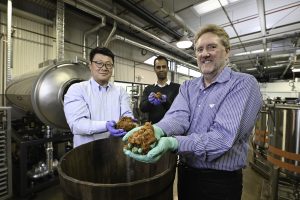
Deakin University – Waurn Ponds Campus. Deakin’s REACH partenership with Jet Technology. Howard Ju CEO of Jet Technology, Deakin Research Fellow Motilal Mathesh Shanmugam with Colin Barrow , Alfred Deakin Professor and Chair in Biology

GEELONG, Australia — October 5, 2023 — Australia creates more than 7.6 million metric tons of food waste annually, costing more than $36.6 billion and producing 17.5 million tonnes of greenhouse gas. Now, Deakin University’s Recycling and Clean Energy Commercialisation Hub (REACH) has partnered with Japanese company Jet Technology to address Australia’s landfill crisis by recycling organic waste into valuable products, including converting apple waste into organic fabrics and sugar waste into stock feed.

Alfred Deakin Professor and Deakin’s Chair in Biotechnology Colin Barrow and his team from the Centre for Sustainable Bioproducts will work with Jet Technology to explore the capability of the company’s Environmental Recycling System (ERS) to convert organic waste into reusable products.

Professor Barrow said sending organic waste to landfill was a missed opportunity to use it as a resource.

“Through this project we are exploring innovative methods to reduce organic waste, mitigate environmental impacts, and create value-adding products for a range of sectors,” he said.

Jet Technology’s CEO, Howard Ju, said there was great potential to improve organic resource recovery in Australia’s agricultural, dairy and fishery sectors and develop a circular economy.

“Australia’s agricultural and fishery resources represent significant tonnage of organic product that could be scaled-up for commercialisation. Through this pilot project we will develop a range of applications and solutions to resolve current organic waste issues for different sectors and improve Australia’s organic resource recovery,” Ju said.

“Our world leading ERS technology reduces the organic recycling process from weeks or months to a few hours. It is a clean process with almost zero pollution to the environment that will produce organic products such as fertiliser, cow feed and textiles.”

The four-year research project will be undertaken at the ‘BioFactory’ at Deakin’s Waurn Ponds campus. It will initially focus on processing agricultural waste, converting apple pomace into a bioproduct for the textile industry. Apple pomace consists of the apple skin, pulp, seeds and stems left over from apple juice manufacture. Its disposal in landfill can lead to greenhouse gas emissions and potential soil and groundwater contamination.

The project will also look at new ways to deal with one of Australia’s biggest organic waste problems. Bagasse, the material left over when sugar is made, accounts for around 20% of the nation’s organic waste. The researchers will investigate ways that Australia’s 10 million tonnes of bagasse can be reused as a food source for cows that has the potential to yield $1000 per tonne commercially.

“Supporting Jet Technology with supply chains and infrastructure, we will develop viable solutions for repurposing industry-generated organic waste to build a circular economy across different sectors, unlocking millions of dollars in value and strengthening domestic manufacturing,” said Professor Barrow.

If successful, it could lead to the establishment of a local multi-million-dollar bioeconomy where organizations such as councils, supermarkets and food and beverage businesses could cut costs while generating new revenue streams and job opportunities.

Deakin’s REACH initiative collaborates with progressive industry, government and education partners to establish a multi-billion-dollar bioeconomy in Victoria and push the limits of technological innovation to deliver energy and recycling solutions that reduce landfill, fossil fuel emissions and the devastating costs of global warming.

Posted: October 5, 2023

Source Deakin University

Freudenberg Performance Materials Extends ECO Range For Sustainable Carpet Backings

Freudenberg´s Colback ECO-R and Lutradur ECO-R backings contain a recycled content of between 51 and 90 percent.

WEINHEIM, Germany — October 5, 2023 — Freudenberg Performance Materials (Freudenberg) is extending its recently-introduced ECO range of sustainable nonwoven carpet backings: Lutradur ECO-R and Colback ECO-R backings contain high percentages of recycled raw materials. With its ECO portfolio Freudenberg supports carpet manufacturers in their transition towards an increasingly sustainable product offering.

ECO-R products

Freudenberg’s spunbond nonwoven primary and secondary carpet backings contribute to manufacturers’ easy and efficient production processes as well as to high-performance end products. The company is now extending its ECO range in Europe with Colback ECO-R and Lutradur ECO-R backings that contain a recycled content of between 51 and 90%. Replacing virgin raw materials with recycled polyester saves on natural resources and improves the carbon footprint of end products. The ECO-R backings are specifically suitable for carpet tiles, broadloom, dust control mats and automotive option mats.

ECO-RE products

The company launched its ECO range for sustainable primary backings earlier this year with the introduction of the ECO-RE resource-efficient backings that use less raw materials and support end product recyclability. To achieve this, Freudenberg R&D teams further developed the company’s proprietary yarn production technology allowing for extremely thin filaments.

ECO range

“With the extended ECO range, Freudenberg now offers a variety of different solutions supporting carpet manufacturers in making sustainable choices to suit their ambitions and processes,” said Albert Hammerschmied, director for EMEA carpet business with responsibility for New Business Development and Sustainability. “Freudenberg is a long-term supplier to the industry with a strong history of developing tailored solutions for and with our industry partners. The continuous development of backings with recycled content is one result of these efforts.”

Further CO2 savings

Freudenberg manufactures carpet backings with recycled content in Europe, North America and China, allowing customers within the world regions to further optimize their CO2 footprint thanks to short transportation routes.

Posted: October 5, 2023

Source Freudenberg Performance Materials Holding GmbH

Arvind And CIRCULOSE® Partner Exclusively On Denim Made In India

MUMBAI— October 5, 2023 — Arvind has formed a partnership with the CIRCULOSE® Supplier Network to actively promote sustainability and circularity within the industry, thereby strengthening its commitment to advancing it’s near century-long legacy of environmental consciousness in the textile industry.

Key Features

Circular Material: Denim is crafted from upcycled cotton textiles and viscose made with CIRCULOSE, diverting waste from landfills. CIRCULOSE is created by Renewcell which employs an advanced recycling process to break down worn-out garments into cellulose pulp, from which new fibers, and ultimately, new denim is created. This circular approach minimizes waste and resource consumption.

Quality and Durability: Despite its sustainable roots, denim made with CIRCULOSE does not compromise on quality. It retains the durability, comfort, and aesthetic appeal of conventional denim ensuring a long-lasting wardrobe staple.

Environmental Stewardship: Denim made with CIRCULOSE epitomizes Arvind’s commitment to sustainability. By recycling textile waste and adopting efficient production processes, it helps conserve natural resources and reduce textile waste, contributing to a cleaner environment.

Since 2022, Arvind has been actively participating as one of the partners for Accelerating Circularity, a non-profit entity that catalyzes new circular supply chains and business models; to turn worn-out garments into mainstream raw materials. Through this program,

Arvind has incorporated recycled and circular fibers into scalable products.

Fashion Forward: Denim made with CIRCULOSE is not just environmentally conscious but also fashion-forward. Arvind offers a diverse range of styles, washes, and finishes to cater to various tastes, proving that sustainability can be trendy.

Denim made with CIRCULOSE helps to close the loop on apparel production and highlights the importance of resource efficiency in textile manufacturing. It demonstrates that sustainable practices can be economically viable.

Posted: October 5, 2023

Source Arvind Limited

revalyu Resources Breaks Ground On Its First PET Recycling Facility In The United States

STATESBORO, Ga. — October 4, 2023 — Leaders from revalyu Resources, Heraeus Group, and the Development Authority of Bulloch County were joined by state and local officials to celebrate revalyu breaking ground on their first advanced PET (polyethylene terephthalate) recycling facility in America located at Gateway Regional Park in Statesboro, Ga. revalyu is investing more than $200 million to build a plant capable of recycling 200 million pounds (90,000 metric tons) of post-consumer PET plastic a year.

Customer applications have shown that the quality of recycled PET from plastic bottles is equivalent to that of virgin PET and can be used as a direct replacement. Once converted into high quality recycled PET, revalyu’s rPET chips can be used to produce any kind of sustainable PET product. Currently, it is mostly used in the textile industry for applications such as seamless knitting, weaving, denim, automotive, furniture or technical textiles.

revalyu has already recycled over 6 billion bottles in India. Due to its unique recycling process based on glycolysis, the quality of revalyu’s rPET (recycled PET) products enables its customers to replace conventional oil-based PET with revalyu’s more sustainable rPET. Compared to conventional PET, revalyu’s rPET is produced using 75-percent less water, 91-percent less energy, and saves around 0.7 barrels of oil and 0.2 cubic meters of landfill space per 2000 pounds of PET recycled.

According to Jan van Kisfeld, managing director of revalyu, the company plans to recycle the equivalent of 25 million plastic bottles per day at its Georgia facility. He noted that, “Our first plant in the US is a very important step for the global expansion of our company. Our existing and future US customers have a huge demand for our 100-percent recycled pellets, which are equivalent in quality to conventional oil-based PET pellets. This advanced recycling plant will serve our customers directly from the US, enabling quicker transportation time, lower cost and a smaller CO2 footprint.”

Dr. Vivek Tandon, Founder of revalyu stated: “Used PET plastic can now be efficiently, profitably and easily recycled again and again without degradation of quality.  Our already commercialized revolutionary process will transform the PET plastic industry as we know it.  In the years to come, less and less PET will be manufactured from oil as it is replaced by high quality recycled material. I thank Bulloch County for their incredible support, we could not have chosen a better partner for our international expansion.”

Benjy Thompson, CEO of the Development Authority of Bulloch County, said, “revalyu has a respected reputation for their plastics recycling process and the positive effects it will have on the environment. We are thrilled that our region will host the first U.S. site for revalyu and their truly innovative technology. In addition, we look forward to the positive impacts that revalyu will have on our community.” Thompson noted that revalyu is the first German-owned company to locate in Bulloch County.

Construction is expected to be complete in Q3 2025. Once complete, the facility will employ 71 people in Phase One and another 50 people in Phase Two, for a total of 121 jobs. For more information about revalyu (US), please go to www.revalyu.com.

Posted: October 5, 2023

Source: revalyu Resources GmbH

BENELUX Partner Pixia’s Strategic Partnership With Vanguard Europe

Pixia is the official distributor for the growing portfolio of Vanguard Europe products and software solutions for Belgium, The Netherlands and Luxembourg (BENELUX)

BRIXEN, Italy — October 5, 2023 — With product sales accelerating and a growing presence being established across Europe and beyond, Vanguard Europe has announced more details of its ongoing strategic partnership with Pixia.

Based in the Dutch-based Utrecht region, Pixia is the official distributor for the growing portfolio of Vanguard Europe products and software solutions for Belgium, The Netherlands and Luxembourg (BENELUX).

Pixia will be sharing information on its partnership with Vanguard Europe at a number of regional events, including SIGN2COM at Kortrijk Xpo in Belgium from 8-10 October. As part of the partnership, the company is providing demonstrations for customers, while installation and service support will come through Durst Benelux BV.

Pixia, which was founded in 2010 and has a strong background in large format print media, laminates, magnetic- and interior films, servicing signmakers as well as large online print service providers has recently expanded into new premises in Vianen. Pixia guarantees fast delivery throughout the entire region.

Pixia director Jeroen van Dortmont

“Pretty much 80% of our customer base have a need for the type of machines that Vanguard produce, so this is a perfect match,” said Pixia director Jeroen van Dortmont. “We already have three installations in the Benelux. We see a lot of confidence in the market and look forward to promoting these high quality, industrial speed production eco-friendly machines that are competitively priced in the marketplace.”

Fabian Sottsas, Managing Director of Vanguard Europe, said: “With the formalization of our relationship with Pixia earlier this year, we have been developing another important region for our Vanguard products. It yet again underpins our commitment to become market leader through providing true digital flatbed and roll-to-roll UV LED production printers. This strategic approach is being realized through growing profitable business together in partnership with our customers and partners such as Pixia.”

Posted: October 5, 2023

Source: Vanguard Europe GmbH

EURATEX And CIE Calls The EU Presidency To Relaunch The European Manufacturing Industry

BRUSSELS — October 5, 2023 — Ahead of your extraordinary Council on October 6 in Granada, EURATEX President, Alberto Paccanelli, and CIE President, Jose Vte Serna, call on the EU Presidency to develop a new competitiveness strategy, which can relaunch the European industry and ensure it will remain competitive in the decades to come. This means bringing together trade, energy, state aid and sustainability policies into a single, integrated, comprehensive approach, which can support a robust and modern European manufacturing industry.

To consolidate a strong industrial structure in Europe, the Union should 1) secure the supply of clean energy at a competitive cost; 2) support innovation and foster the necessary talent pool and 3) be more assertive in achieving an international level-playing field on sustainability, based on the European model.

During the past few years we observed the implementation of incoherent and conflicting objectives under the trade, energy, industrial and sustainability policy. As a matter of fact, while the circular economy promised to be a recipe for a competitive industry of the future, the likelihood of pushing the EU industry out of the market and driving investment elsewhere than in Europe is very high. If this approach were to continue in the next years, it will result in a de-industrialised Europe, depending on imports from abroad. Such a Europe would be more exposed to geopolitical turmoil, with no agency to deliver its vision of peace, well-being and a healthy environment to its citizens.

It is fundamental for Europe to pursue a more coherent set of policies that put the competitiveness of its domestic industry at the core. In this context, all the industrial manufacturing sectors should be in the scope, including the textile industry, given its importance in providing essential products and applications to our society. A first impactful action that can be taken in this direction, would be to expand the scope of the Net-Zero Industry Act (NZIA) to include the textiles and clothing industry.

The history of European industry is fully woven in the birth and expansion of the European textiles industry since the XVIII century. Still today, the European textiles and clothing industry holds a pivotal position in the market, encompassing a diverse range of sectors and applications. In terms of employment, our industry creates 1.3 million direct jobs in Europe, encompassing a wide range of roles, from design and production to distribution and retail. European textiles have a wide range of applications, the most common one is of course clothing and fashion. We have a long history of producing high-quality apparel, with various regions specializing in specific niches.

Beyond clothing, there is a wide range of industrial sectors were textiles play an essential role, including Automotive (used for upholstery, interior components, and even lightweight composite materials), Aircraft and Shipbuilding (where textiles are employed for their lightweight and high-strength properties, to enhance fuel efficiency, reduce emissions, and improve overall performance), Building and Construction (insulation, roofing, geotextiles, and architectural textiles), or Personal Protective Equipment, for medical personnel, firefighters, police and army officers. This includes masks, gowns, uniforms, helmets, and fire-resistant clothing, ensuring safety in hazardous environments.

Textiles are essential components of our society and our well-being. It is key for Europe to maintain its capacity to manufacture high-quality, sustainable and high-technology textiles. With this in mind, the competitiveness policy of the future and the related funds to support it, should include the textile ecosystem in its scope.

Posted: October 5, 2023

Source: EURATEX

Renewcell Expands The CIRCULOSE® Supplier Network To 116 Members, Increasing The Marketplace For Textiles Made With CIRCULOSE®

STOCKHOLM — October 5, 2023 — Renewcell, featuring textile-to-textile recycling at scale, announces the expansion of the CIRCULOSE® Supplier Network (CSN) to 116 members, marking a significant milestone in the journey toward a circular textile industry. This expansion brings an infusion of innovation, diversity, and global reach, increasing the number of materials made with CIRCULOSE that are available to source now.

The CIRCULOSE Supplier Network, initially composed of 47 yarn and textile producers, has now evolved to include a diverse range of 116 members. Particularly of note is the geographical expansion, with new members joining from regions such as Vietnam, Taiwan, and the Czech Republic. The extension into the Southeast Asian region reaffirms Renewcell’s commitment to advancing circular fashion on a global scale.

In addition to the geographic diversification, this growth includes onboarding a dozen knitters and more than thirty yarn spinners, enhancing the variety of qualities made with CIRCULOSE that are available for all brands to source. This expansion signifies a considerable step forward in ensuring that brands worldwide have access to a wide array of materials made with CIRCULOSE.

A significant development within this expansion is the inclusion of home textile suppliers for the first time, including Sharadha Terry Products, The Kadri Mills, and Yang Tsu. This strategic addition opens up new possibilities for integrating CIRCULOSE into various facets of the textile industry, reaffirming the network’s adaptability and potential.

Patrik Lundström, CEO at Renewcell, emphasizes the importance of this expansion: “The CIRCULOSE Supplier Network plays a pivotal role in scaling up the availability of yarns and fabrics made with CIRCULOSE. With a more diverse network across the textile supply chain, fashion brands now have a broader range of sustainable options to incorporate CIRCULOSE into their designs.”

“Right now, Sustainability is not just a trend. It’s our need to make the future green,” states Shakaib Nazim, general manager, Marketing at Indigo. “Indigo Textile mill isn’t just a place of production; it’s a hub of innovation for sustainable denim. Our CIRCULOSE denim fabric range is the perfect fit for style and sustainability. Our next step towards sustainability growth is to convert our core line fabrics with CIRCULOSE fiber.”

Hatice Ates, Product Design and Development manager at Ekoten, explains, “At Ekoten Fabrics, we are aware that circularity is the key to the fashion industry’s fight against climate change. We believe that the circularity of the fashion industry will be achieved through timeless designs and sustainable material selection. In this direction, we attach great importance to the use of cellulosic raw materials from secondary raw materials with low environmental impact. We are delighted to join the CIRCULOSE Supplier Network, which carries out disruptive innovation endeavors in this field.”

“The expansion of Renewcell’s Supplier Network is exciting! It makes CIRCULOSE even more accessible for brands and retailers,” said Nicole Rycroft, founder and executive director of environmental not-for-profit Canopy. “Renewcell is showing that take-make-waste production is a relic of the past as the market moves to low-carbon Next Gen alternatives. Congratulations to Renewcell and their supply partners for leading the charge. We look forward to supporting them as they continue to scale up their disruptive production.”

Priyanka Khanna, head of Asia Expansion, Fashion for Good commented: “Renewcell’s strides in growing the CIRCULOSE Supplier Network are instrumental in our collective pursuit of a circular textile industry. This growth is not only significant in driving the adoption of textile-to-textile recycled output but also in providing reach and accessibility to suppliers who are the first customers of these materials. By expanding across industry verticals and manufacturing regions, Renewcell is educating and enabling suppliers to easily access and test the output, which they can then develop and offer to their customers, the brands. Renewcell has been a part of Fashion for Good Cohort since 2020, participated in projects such as Full Circle Textile Projects, and we continue to support them in their journey to scale. We see them as a pioneering force in the textile-to-textile recycling arena, redefining industry standards and driving the transition towards a circular textile industry.”

With the expansion of the CIRCULOSE Supplier Network to 116 members, with operations in fifteen countries, the availability of materials made with CIRCULOSE is even more accessible to fashion, lifestyle, and home brands worldwide. The network continues to grow and evolve, driving positive change in the fashion supply chain.

The list of the newest CIRCULOSE Supplier Network members is below:

  • China: Advance Denim, AIT Apparel, Binkang Printing, Black Peony, Blue Diamond , Deyao, Free Silk, Freedom Denim, Gangjia, Gaosheng Wool, GKL Denim, Grace Textile, Great United, High Fashion, Honor, Houzheng, Jimay Printing & Dyeing, Jin Xiang Hui, Long Run Eco Melange Yarn, Long Run Textiles, Mizuda, Nansin Bleaching & Dyeing, New Dynasty, New Wide, Oushang Textile Co.,  Rawtex, Shilead, Stella Blu, Tian Ying, Titan, Xufeng, Yang Tsu
  • Czech Republic: NIL Textile
  • India: Kadri Mills, Shahi Exports, Sharadha Terry Products
  • Italy: Ghezzi , ICA Yarns
  • Pakistan: Al Karam, Artistic Denim Mills, Artmill, Azgard 9, Crescent, Diamond Denim, Indigo Textile, Kassim Denim, Siddiqsons, US Denim
  • Sri Lanka: Hela Apparel Holdings
  • Taiwan: A&A Textile, DJIC, Ecoinn, Far Eastern, Formosa Taffeta, Goang Li, Kingwhale, Laka Enterprise, Paradise/Alpine Creations, Tung Ho Textile
  • Turkey: Artesa, Aster, Barutcu Tekstil, DNM, Ekoten, Elyaf Tekstil, Kara Fiber, Pameks
  • Vietnam: Bros, DanX

For more information about Renewcell and the CIRCULOSE Supplier Network, please visit circulo.se.

Posted: October 5, 2023

Source: Renewcell


Digital Printing: Sustainable Innovation

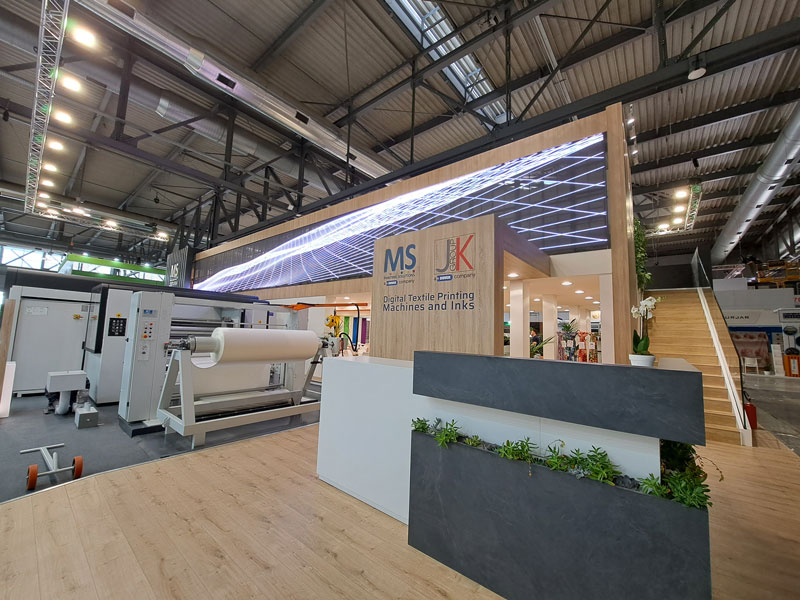
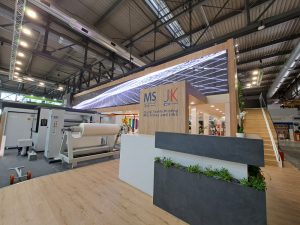
Sustainable innovation is the light that has been guiding MS Printing Solutions/JK Group in its projects over the past few years.

TW Special Report

MS Printing Solutions/JK Group looks to permeate its new products with sustainable innovations and this drive is evident in the technologies showed at ITMA 2023.

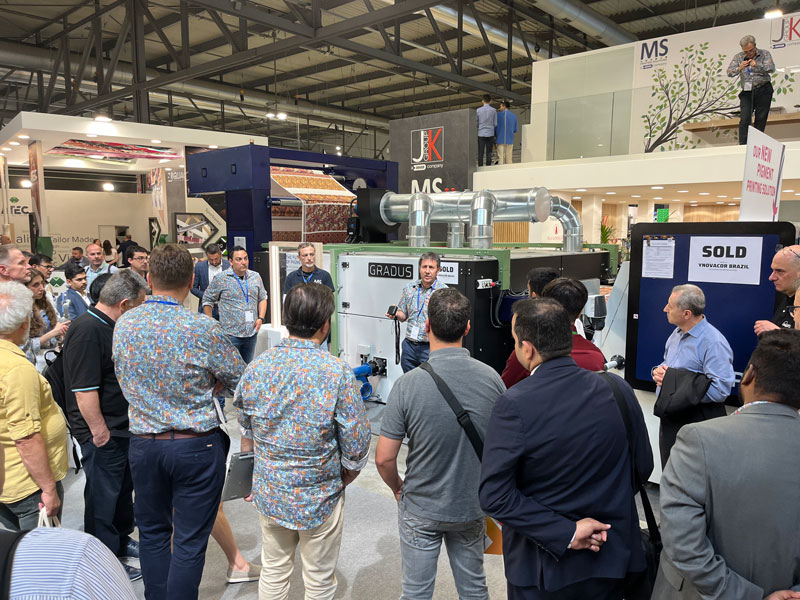
Among these products are the Pigment Solution — a whole system made up of four different components that together have proven to be innovative and useful.
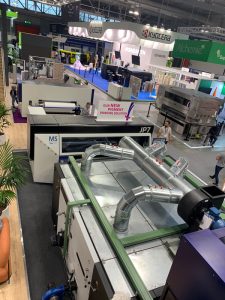
Digistar Pigment 4K is JK GROUP’s newest and patent pending digital pigment ink. It’s a new formula that doesn’t require pre- and post-treatment, and is a most environmentally friendly and sustainable ink option thanks to a 50-percent reduction of the printing process steps. If compared to the same process made with reactive inks, it offers an environmental impact reduced, on average, by 95 percent — decreased water and energy consumption, but also a reduction in chemical waste. As per hydric resources impact, for example, the reduction time is 85 percent; while when talking about CO2 emission it reaches a reduction of about 15 times. These data come from a study developed by Next Technology Tecnotessile Società Nazionale di Ricerca.

Digistar Pigment 4K boasts a significant general fastness: as per EN ISO 20315-M — alkaline and acid perspiration — EN ISO 20615–M — domestic washing at 40 degrees — all tests showed 5 as results. As per EN ISO 2035 — dry and wet rubbing — the result is a solid 4. These results are achieved all while maintaining a high printability. Textile Standard certifications are an extremely concrete and tangible guarantee of the sustainable and ecological production of our latest ink formula and its low hazardous profile: Digistar Pigment 4K is certified Ecopassport (certificate nr 22EP00004) and ZDHC L3.
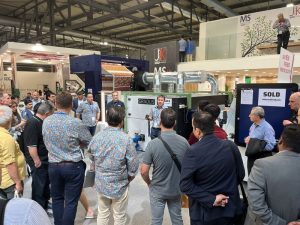
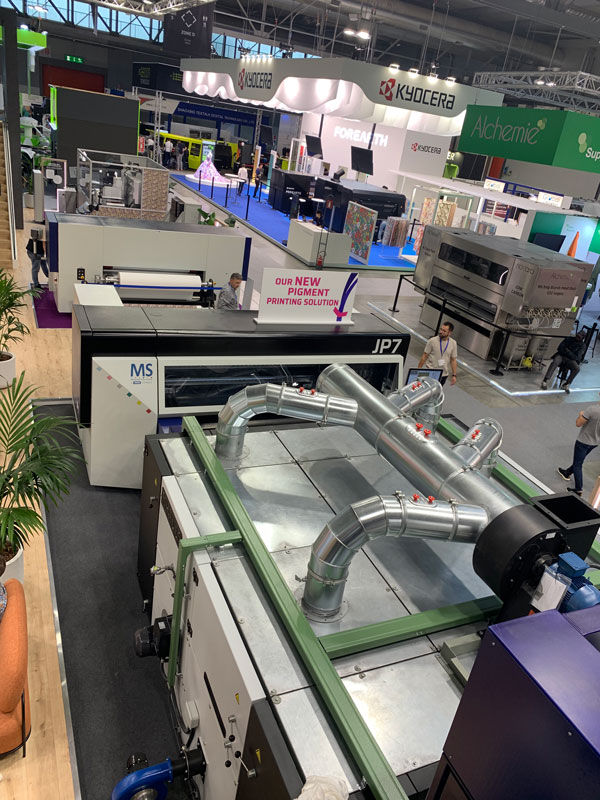
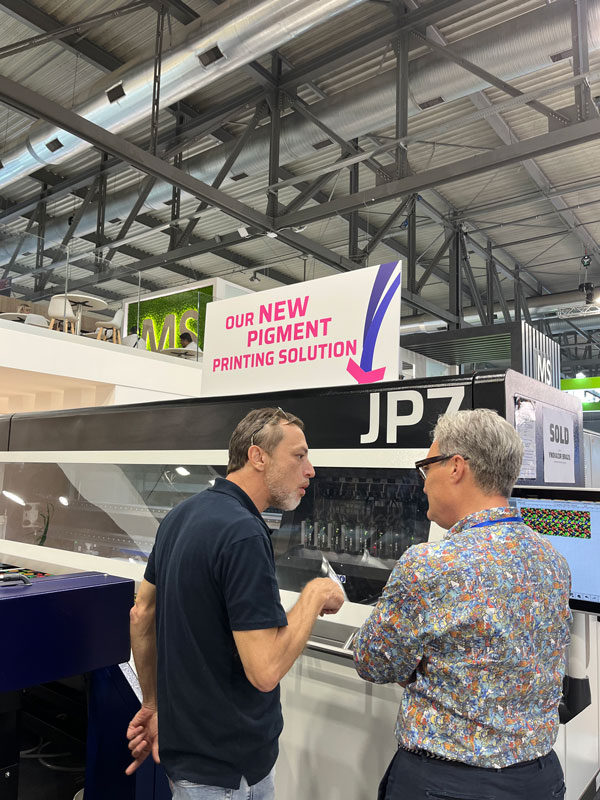
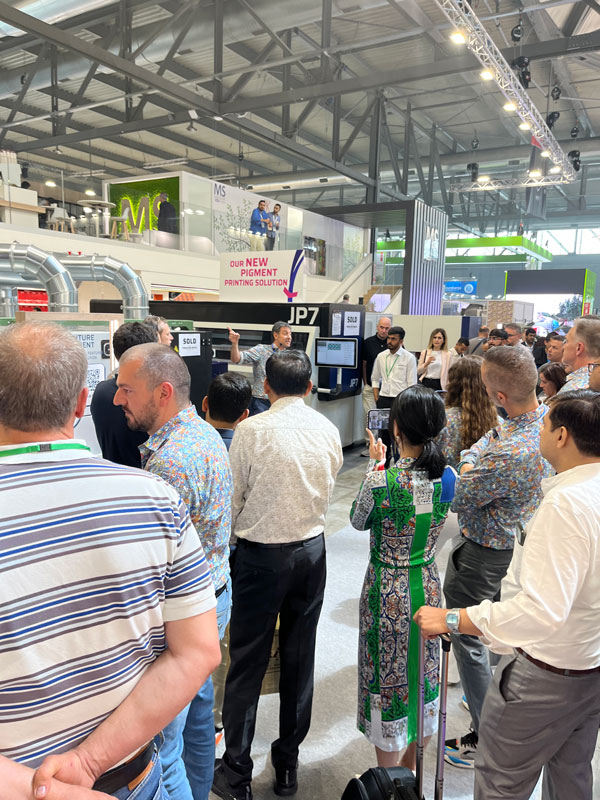
A completely re-engineered version of MS PRINTING SOLUTIONS popular digital scanning printing machine — the JP7 — is another fundamental component of the solution. MS Printing has revolutionized the JP7, both in electronics and mechanics, so that in combination with the new water-based pigment ink it can provide the best achievable results. The aim was process sustainability, which is why a new zero-wastewater recirculation system was implemented that will internally recycle a previously filtered fixed amount of water in a dedicated tank. Pigment printing already is a waterless process, the only water involved is the one used to clean the belt, and with this system the amount of cleaning water is reduced by up to 95 percent.

In addition, the JP7 machine has undergone other improvements. It has been implemented with the Ink Recirculation and the Nozzle Shooting System, both developed to work on IDLE and while printing. These upgrades help customers to keep the ink always running, therefore avoiding any sedimentation to keep the nozzles active. As a result, there is an improved printing quality, as well as an enhanced and sustainably maintained printhead lifetime. Such enhancements also increase the life of filters and degassers and allow to always offer the same printing quality and nozzles performances within different printing hobs or printing designs, since the Nozzle Shooting System keeps the nozzles active even when they are not used for a specific job or during the night.

Easy-Clean, the new carriage plate, is a further upgrade. It improves the cleaning process of the carriage plate, significantly avoiding damage, while also empowering printing quality and efficiency.
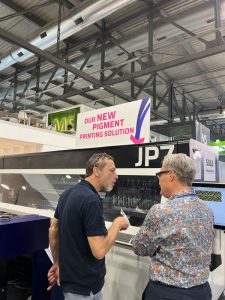
Last but not least, MS Printing also has changed the appearance of the JP7. The new casing is lighter, with an interior space layout made even more rational than before, thus assuring the best positioning of the new electronic and mechanical components.

Gradus is a new dryer designed ad-hoc to work in-line with the system. It enables drying and curing in one step, which is a unique offering that allows a white fabric roll to be inserted in the machine that exits the machine ready to be sold. A faster time to market, an almost print on-demand flow and reduced waste are all collateral effects of this solution. Moreover, Gradus has minimal energy consumption, the best achievable emission control and a modularity that contributes to CO2 emissions reduction in the whole process.

A new software that integrates both calibration and printing software has been designed to make the entire calibration procedure easy and intuitive. The full integration of such software into the system offers half the calibration time, increases the color yield up to 20 percent and increases the brightness of the colors by up to 15 percent.
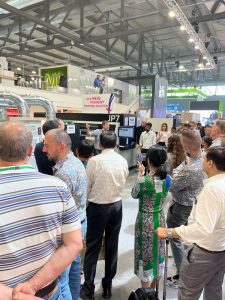
With MS Printing Solutions/JK Group’s innovative solution, pigment printing becomes an easy and waterless process, which enables customers to carry out a sustainable production chain ensuring a cost-effective printing output. One of the main advantages of the full inline printing solution is that it makes pigment printing almost on demand since no time goes by in between the order and the production. Customers have the chance to exploit this inline system, whose pieces have been developed to work together to maximize their output, with a significant reduction in costs, emissions, energy and water consumption. When MS Printing started the project, it had sustainability in mind — overproduction in the fashion industry results in billions of garments unsold and wasted every year.

Nowadays, it is fundamental to be careful towards the environmental impact as companies. This is a merit the European Parliament values a lot and it is evident in the commitment to policies and laws created to prevent, and ultimately to end, the waste of fast fashion. The EU’s microplastics restrictions, the EU waste framework directive, the EU Ecodesign Directive, the EU Ecolabel for textile and clothing products, and the directive on Green Claims are all clear signals of a requirement becoming more and more urgent day after day. The lack of clarity in the definition of what is greenwashing may mislead the members of the textile value chain who would like to rely on truly sustainable partners but have troubles in identifying them. On the other side, customers who are becoming more and more aware of the importance of supporting companies that work transparently, by working for them, buying from them and investing in them, find themselves with little to no guidance at all, in a mare magnum which is extremely difficult to navigate. There are some key factors to recognize the authenticity of a company’s commitment to sustainability, such as consistency, tradition, actions and certifications. The next steps companies have to take in this industry are clear — no more time to walk, let’s run to a greener future.

TECHINCAL IMPROVEMENTS MAIN BENEFITS
PATENT PENDING INK It is an innovative formula and a new, original, concrete and useful solution for the market
NO PRE – POST Environmentally friendly solution that doesn’t require any waste in terms of water, energy and reduces CO2 emissions
HIGH GENERAL FASTNESS It reduces the waste of fabrics, since you can use a piece of clothing again and again
NOZZLE SHOOTING SYSTEM It keeps the ink always running, therefore avoiding any sedimentation, while keeping the nozzles active, as a result there is an improved printing quality and a reduced use if chemicals
PHS PROTECTION SYSTEM It enables to fully exploit printheads’ lifetime, thus reducing printheads use
EASY CLEAN CARRIAGE It improves the cleaning process of the carriage plate, significantly avoiding damage, while also empowering printing quality and efficiency
NEW CASING It is lighter, with an interior space layout made even more rational than before, thus assuring the best positioning of the new electronic and mechanical components, thus improving the components’ lifespan

October 2023

Kontoor Brands Surpasses 10 Billion Liter Water Savings Goal Two Years Ahead Of Schedule, Thanks To Indigood® Program

GREENSBORO, N.C. — October 4, 2023 — Kontoor Brands Inc. — a global lifestyle apparel company with a portfolio led by two iconic consumer brands, Wrangler® and Lee® — today announced that it has surpassed its 2025 water savings goal of saving over 10 billion liters of freshwater since 2008.

The goal was reached under an accelerated timeline due to Kontoor’s focus on the implementation of the organization’s Indigood Program, a global initiative that initially focused on a foam-dyeing technology that reduced freshwater consumption in the dyeing process by up to 90 percent compared to conventional indigo dyeing. Since the expansion of the program in 2021 to include other technologies and water saving measures, Kontoor Brands has partnered with more than 30 mills across the globe to measure and validate their freshwater conversation claims. The Indigood Program is designed to set a global standard for water savings validation, a process that is disparate across the industry today.

“It is no secret that our industry uses a lot of water. Globally we are seeing climate change put pressure on the earth’s diminishing freshwater resources, making it imperative that the entire industry act now,” said President, CEO and Chair of the Board Scott Baxter. “The fact that Kontoor reached our water savings goal two years early is a testament to our commitment to sustainability and to the effectiveness of the Indigood Program, which is providing an important industry standard. I am proud of the work we are doing to save water and move towards a future where all jeans can be created using zero freshwater.”

In addition to expanding the Indigood program with partner mills around the globe, Kontoor has also deployed advanced water-savings technologies at its owned manufacturing facilities, which produce more than 50 million units of apparel and accessories each year. The company’s Torreon, Mexico plant was third-party verified as using zero fresh water in its laundry process, saving an estimated 250 million liters of water each year. In a city surrounded by desert, the Torreon facility is not only limiting its freshwater use, but also using wells on its property to provide fresh water to the municipal government.

“At Kontoor Brands, we are focused on advancing positive impacts by using resources wisely, driving sustainable innovations, and preserving and protecting the planet for future generations,” said Dhruv Agarwal, vice president, Sustainability, Innovation, & Development, Kontoor Brands. “Our approach is focused on a process of continuous improvement, and while we have met our water goal early, there is still much work to be done. We will continue to raise the bar on the environmental performance of our operations and partner mills across the globe, with a focus on doing the right thing for the communities where we operate.”

Kontoor’s freshwater conservation efforts are part of the company’s larger commitment to its people and the planet, which includes working with vendors that prioritize worker well-being, material selection, cutting greenhouse gas emissions, and reducing waste. Kontoor’s progress against other sustainability goals will be highlighted in the forthcoming 2021-2022 sustainability report.

Posted: October 4, 2023

Source: Kontoor Brands, Inc.

Sponsors