Quality Fabric Of The Month: Following The Way


C
ollaboration often is an effective way to bring innovation and creativity into product design and development — as the saying goes, two heads are better than one. Each source brings its own expertise and insights to the process, and the end product likely will offer greater interest and value than a creation that comes from a single source.

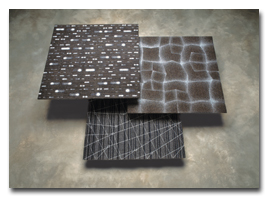
LaGrange, Ga.-based Milliken Carpet — a subsidiary of Spartanburg based Milliken & Company — and SOM Collaborative — a multidisciplinary operation within global architecture firm Skidmore, Owings & Merrill LLP (SOM) — have brought their respective talents together to develop Way, a new collection of 36-inch modular textured loop-pile carpet. Way’s three design families, each having three patterns within it, offer interior designers the flexibility to design floors with variable patterns, directions and colors. They are inspired by natural and man-made topography including rivers, glaciers, cityscapes, highway grids and traffic, bridges, airports and other images that lend an architectural element to a floor’s design.

The collection is the first to take advantage of Milliken’s latest-generation High-Definition Millitron® dye technology, which gives a sense of dimension through refined color gradations and visual texture. The collection’s six high-contrast colorways take their cues from geography, and bear names such as Asphalt (charcoals), Bedrock (browns), Glacier (silver-blues), Lake (blue-blacks), Lava (reds) and Meadow (greens).
qfom_Copy_19

Way’s three design families – (clockwise from upper left) Urbanscape, Riverbed and Forcefield – each comprise three
pattern variations, allowing designers flexibility to create floors with variable pattern
directions and complexities.

“With the new High-Definition technology, we have been able to get tremendous detail and pinpoint accuracy,” said Alison Kitchingman, director of marketing, Milliken Carpet. As examples, she noted background textural effects and overlay of the main pattern on top of texture in the Urbanscape design family, and subtle pattern gradations in Riverbed.

“We collaborated with SOM because the firm’s approach to carpet design and use is an architectural process,” Kitchingman said of the Milliken/SOM partnership. “We had this new technology, and wanted to collaborate with someone who
would push us to the absolute limit. SOM provided that.”

The collaborative’s Pattern Builder™ software allows designers to configure the patterns into a total concept using a click and drag tool. The software is available on CD and this spring will be offered on-line at www.millikencarpet.com.

Way is made with Milliken Certified WearOn® Type 6,6 nylon and Underscore™ polyvinyl chloride-free cushion backing or ES (Engineered for Sustainability) backing with recycled content. MilliGuard® soil protection and stain resistance, and AlphaSan® antimicrobial protection also are included. ES backing can be supplied with TractionBack® high-friction coating for glue-free installation. The carpet is 100-percent recyclable and renewable via Milliken’s Earth Square®
reclamation and reuse process.


April 2005

 

Administration Outlines FTA Agenda


T
he Bush administration has submitted to Congress its annual international trade report,
which outlines an “aggressive and trade-liberalizing agenda” in 2005 and the remainder of President
Bush’s second term. The report states that since 1985, the United States has completed negotiations
on free trade agreements (FTAs) with 12 countries, and 12 more currently are being negotiated. The
report also states that, taken together, these 24 FTAs constitute a $78 billion market, which would
be the third-largest market for

US exports.

Former US Trade Representative Robert B. Zoellick, who authored the report before moving to
the State Department, said the FTAs have “advanced America’s interests” by opening new markets for
products and services, increasing protection of intellectual property, streamlining customs
procedures and strengthening labor and environmental laws. He said the administration’s actions
have resulted in “leveling the playing field” and lowering costs of goods purchased by consumers in
the United States.

Turning to 2005, the report states the administration will expand on its previous record and
work toward more trade liberalization, with particular emphasis on more FTAs and conclusion of the
Doha Round of trade liberalization negotiations during Bush’s second term — stating completion of
the Doha Round is “a top priority for the administration.” While working to open new markets, the
report says the US government will continue to focus on monitoring and enforcing existing US trade
agreements and trade laws.

The report also reviews what the administration describes as “benefits to the US” during the
10-year history of the World Trade Organization (WTO), giving the WTO high marks for opening new
markets and enforcing international trade agreements.

“Without the WTO,” said Zoellick, “other countries could impose higher duties on American
exports. Without the WTO, the United States would not have the leverage it needs to address trade
barriers, including discriminatory tax policies and Customs procedures, subsidies and unjustified
antidumping actions.”


Industry Reaction

As expected, US textile manufacturers see 2004 and the agenda for 2005 in an entirely different
light. The American Manufacturing Trade Action Coalition (AMTAC), Washington, reports the
effectiveness of the FTAs has been undercut by loopholes that permit non-participating countries to
benefit, and it does not see any significant markets for US textiles in the countries where FTAs
have been negotiated.

”When you look at the countries with which we have negotiated free trade agreements, you see
very little opportunities for our exports,” said Auggie Tantillo, executive director, AMTAC. “For
the most part, those countries are small and poor and have little capacity to buy our products.”&
amp; amp; amp; amp; amp; amp; amp; amp; amp; amp; amp; amp; lt; /font>

AMTAC is opposed to textile and apparel tariff cuts in the Doha Round, saying they would negate
any benefits of the FTAs and simply open the US market to more imports from China, Pakistan and
India, which are expected to dominate trade in the quota-free world.

washingtonoutlook

AMTAC Executive Director Auggie Tantillo


What Importers See

Retailers and other importers of textile and apparel see 2004 as anything but a major success,
as government programs contributed to uncertainty and confusion; and they see 2005 in much the same
light. While they have supported the idea of FTAs as possible alternatives to becoming too
dependent on imports from China, they say the yarn forward rule of origin and problems with Customs
have had the practical effect of diverting more sourcing to China.

Erik O. Autor, vice president and trade counsel, National Retail Federation, Washington, said
the yarn forward rule of origin, which he describes as “the only triple transformation rule for any
commodity,“ is not commercially feasible. Retailers believe the Central American Free Trade
Agreement can be a viable alternative to a takeover of the US market by two or three Asian
manufacturers if it can win congressional approval, but that isn’t certain at this time.

Retailers also are concerned about the textile industry’s efforts to use the safeguard
mechanism in China’s WTO accession agreement to reimpose quotas on Chinese imports.


WTO Ruling Jeopardizes Cotton Competitiveness Program

A ruling by the WTO stating that a number of US cotton subsidies are illegal under international
trade rules could jeopardize the cotton competitiveness program that permits direct government
payments to cotton merchants and textile manufacturers when the price textile mills pay for raw
cotton is higher than world prices. Because US textile manufacturers under law are permitted to
import only a very limited amount of cotton, the program has been helpful to the domestic industry
in offsetting higher world prices that frequently are out of sync with domestic prices.

Acting on a complaint from Brazil, the WTO said the so-called Step 2 of the competitiveness
program is illegal. While the WTO does not have authority to take any direct actions against the
subsidies, Brazil would be permitted to retaliate against US products. The National Cotton Council,
Memphis, Tenn., and US government trade officials are studying the ruling and looking for ways for
the United States to have cotton programs that would be WTO-consistent. Any revisions in the
subsidy programs would require congressional action, and dropping or seriously harming the programs
is not likely to be very popular in Congress. Administration officials feel negotiations are the
best route to a solution.


Significant Import Rise After Quota Removal

Textile and apparel import data in the early months of this year following the January 1 removal
of import quotas have sent shock waves throughout the domestic textile industry. Its
representatives in Washington said the data clearly show how the Chinese are targeting key markets
and shipping massive amounts of clothing that eventually will monopolize the markets. They are
calling on the US government to take immediate steps to impose quotas on Chinese imports. In the
face of a major surge in Chinese imports, the industry representatives have called upon the
government to immediately self-initiate safeguard measures that would permit imposition of one-year
quotas with a 7.5-percent annual growth rate.

Although the industry and its labor union have filed a number of safeguard petitions based on
market disruption or a threat of market disruption, the self-initiating approach is new, and would
require considerably less time than the industry petitions.

Pointing out the industry-sponsored petitions process takes months and China’s import base is
growing rapidly, Cass Johnson, president of the National Council of Textile Organizations,
Washington, said, ”A long drawn-out safeguard petition process will only ensure that thousands of
US textile workers will lose their jobs to China’s unfair and predatory trading practices.” Johnson
pointed out that if an industry-sponsored safeguard procedure were started now, it would be at
least September before quotas could be put in place, and that would result in only a three-month
life for the quotas. At that point, the only way to get any meaningful results would be to re-file
the petitions as they expire, seeking year-to-year extensions.

Importers of textiles and apparel, who say they share the industry’s concern over domination
of the market by China, said this is no time to panic, and the early data do not necessarily
constitute a trend. The US Association of Importers of Textiles and Apparel, New York City,
contends “there is no current basis for safeguard measures whether self-initiated or by request of
the US industry.”

However, Tantillo argued the surge in Chinese exports is “just the tip of the iceberg,” and
if history is any indication, Chinese imports will continue to soar and gain a virtual monopoly of
the US market.

With all of these activities underway in the United States, European textile manufacturers
now have joined the effort to enact safeguards. EURATEX, the major textile and apparel trade
association in Europe, has filed 12 petitions with the European Union seeking action similar to
that taken in the United States.


April 2005


BASF Unveils Cyclanon Aftersoaping Agent

Germany-based BASF AG has developed Cyclanon® XC-W, the first aftersoaping agent to prevent
redeposition of unfixed dyes that have become detached from fibers during the washing-off process,
according to the company. When using the new agent, only a single rinsing bath before aftersoaping
is required, compared to three rinsing baths needed when using comparable agents. Cyclanon XC-W is
effective regardless of the water hardness, and even in the presence of salt.

Customer trails of Cyclanon® XC-W showed that it prevents redeposition of unfixed dyes during
the washing-off process (right) when compared to competitive products.

“Our trials to date show that, on average, two rinsing baths and 25 percent of water can be
saved in the exhaust process with Cyclanon XC-W,” said Andreas Bastian, project manager of
Cyclanon. “That means our customers increase their productivity and can reduce production
bottlenecks in the washing-off process. In addition, Cyclanon XC-W provides a consistently high and
reproducible level of fastness.”

April 2005

Bush Cites Need For Action On Chinese Currency Imbalance

Comments by President Bush and his secretary of the Treasury, John Snow, regarding a Chinese
currency imbalance, were music to the ears of textile manufacturers and others who have been
concerned about the way currency imbalance is resulting in a subsidy for Chinese imports. Snow told
the House Financial Services Committee that reform in China is one of the highest priorities of our
international economic policy, and, added that China needs to take action now on a more flexible
currency. In an interview with CNBC, President Bush urged China to take interim steps toward a
market-based currency.

A spokeswoman for the Coalition for a Sound Dollar, which includes textile interests, said: “We
view this as a very significant change in remarks by the Administration.” She added that given
China’s increase in its reserves and a burgeoning trade deficit with the United States, China
should be cited for currency manipulation in an upcoming report from the US Treasury Department.


AFA Members And Board Of Directors

Accent Yarns & Textiles Inc.

Adcock Financial

Admiral Travel

Advance Tufting Inc.

Airset LLC

Americhem Inc.

Bayer Chemicals Corp.

BB&T

BB&T Insurance Services

Belmont Textile Machinery Co.

Beta LaserMike

Better Backers

Bio-Pro Research LLC

Blue Ridge Carpets Inc.

Brown Industries

Brown Printing Co.

Burtco Enterprises Inc.

CCapitol USA LLC

Caraustar

Card-Monroe Corp.

Carpet & Rug Backing

Carpet Crafts Inc.

Carpet Industry Clearinghouse Inc.

Carpet Infosource

The Carpet Network Inc. dba NICHE

Carpet Shippers/Baker Carpets

Cherokee Carpets

Clark, Davies & Easley Insurance

Cobble/Tufting Machine Co. Inc.

Colbond Inc.

Complete Resource

COS Business Products & Interiors

Cushion by Design

Custom Design Graphics

Custom Image Embroidery

CW Industries LLC

CYP Technologies LLC

Daikin America Inc.

Dalton Foam, a Division of NCFID

 UK Dorsett Industries LP

Dust Control de Mexico

Duvall Chemicals Inc.

Dyesystems Inc.

Dyetech Inc.

Dyetron Inc.

Eagle Parts & Machinery Inc.

Easi-Step Global Marketing Ltd.

Elbit Vision Systems

Electric Motor Sales & Services Co.

Ellison, Boshell, Salmon, Tuller, Kelley LLP

Elliston, Bruce

Eltex US Inc.

EMM Carpet Tufting Inc.

Epic Enterprises

Euromac Inc.

Financial Services

Fletcher International Inc.

Fortune Contract

Garland Sales

Georgia Administrative Services Inc.

Gilbos of America

Global Textile Services LLC

Goulston Technologies Inc.

Grass-Tex Inc.

Harrell Machinery Sales Inc.

Ideal World Products Inc.

Independent Textile Testing Service Inc.

Industrial Belting & Supply

Industrial Steel Fabricators Inc.

Interstate Machine Works, a Division of United Manufacturing Industries

JJ.L.T. Sales Inc.

J.M.W. Inc.

L.T. Jenkins

Jimmy’s Industrial Maintenance Inc.

JMS Air Jet Texturing LLC

H. Greely Joiner LLC

Jerome Jones dba Contract Labor

KKMT Creative Group Inc.

Lakes Enterprises

LecStar Telecom

Leonard Insurance Agency Inc.

LESSCO Inc.

Lift Truck Specialties Inc.

Looptex Inc.

Lyle Industries Inc.

M Mannington Commercial

Manry & Heston Inc.

Marketing Alliance Group

Master Touch Carpets

Matrix Rugs LLC

Millennium Mat Co.

National Carpet Equipment

Natures Acoustics Inc.

NedGraphics Inc.

Northwest Carpets Inc.

Omni Trading Group

Otto Zollinger Inc.

PadTech Inc.

PAF Sales LLC

Parabond Consumer Products Inc.

Paradigm Printing

Perpetual Machine Co.

Pharr Yarns Trading Co.

The Pillow Co.

Precision Looper

Precision Products Inc.

Precision Rolls Inc.

Preferred Sample Inc.

Premier Textiles & Marketing Inc.

Propex Fabrics

Quality Finishing of Georgia

Rainbow Samples Inc.

S. Rasnick Co. Inc./Burton Waste Corp.

RBI Printing Co. Inc.

Donald R. Robertson Inc.

Rogers Finishing

RPT Inc. dba Reliable Product Transport

Sample/Skein Dyeing Service Inc.

Shaheen Carpet Mills Inc.

Shaw Industries Inc.

Sierra Samplebook

Slaton Specialty Yarns LLC

Smyth & Co.

Superior Swatching Service Inc.

Superior Yarn Technology

Supreme Carpet Inc.

Thermal Systems Inc.

Thom Engineering

Thomas Industries

Thomson Research Association

Three HD

Titan International Inc.

Tuftco Corp.

 Van de Wiele of America

Wayne-Tex Inc.

Wilcom America

Williams Co.

Xpress Global Systems Inc.

President: W. Lamar Brown, LESSCO Inc., P.O. Box1971, Dalton, Ga. 30722; Phone: (706) 278-0272,
Fax: (706) 275-6222, Term Expires 10/05

Vice President/Membership Chairman: Gree Joiner, H. Greely Joiner LLC, 100 N. Selvidge St.,
Dalton, Ga. 30720, Phone: (706) 277-4000, Fax: (706) 277-4004, Term Expires 10/05

Secretary/Treasurer: David Pope, BB&T, P.O. Box 1367, Dalton, Ga. 30722, Phone: (706)
278-3030, Fax: (706) 217-3980, Term Expires 10/05

Ex Efficio: Jim Shaheen, Shaheen Carpet Mills Inc., 3742 US Hwy. 41 NW, Resaca, Ga. 30735,
Phone: (706) 629-9544, Fax: (706) 625-5341

Staff:

Wanda Ellis, Executive Director

Amanda Mullins, Executive Assistant

Directors:

Fred Almy, Blue Ridge Carpets Inc., P.O. Box 507, Ellijay, Ga. 30540, Phone: (706) 276-2001,
Fax: (706) 276-2005, Term Expires 10/06

Thomas Poston, Daikin America Inc., 1806 Tolchester Road, Dalton, Ga. 30720, Phone: (706)
529-1814, Fax: (706) 629-0438, Term Expires 10/06

Bruce Elliston, 386 Old Hollow Trail, Cohutta, Ga. 30710, Phone: (706) 694-2393, Fax: (706)
277-4004, Term Expires 10/05

Will Robison, BB&T Insurance Services, 201W. Waugh St. Suite 400, Dalton, Ga. 30720, Phone:
(706) 278-1149, Fax: (706) 278-5012m Term Expires 10/05

Becky Kafka, Wilcom America, 5875 Peachtree Industrial Blvd.Suite 350, Norcross, Ga. 30092,
Phone: (770) 409-9503, Fax: (770) 409-9545, Term Expires 10/06

April 2005

WL Ross-Led Group Seeks To Acquire WestPoint Stevens

An investor group led by New York City-based WL Ross & Co. LLC has agreed to purchase the
assets of West Point, Ga.-based home textiles manufacturer WestPoint Stevens Inc. The group also
includes holders of a majority of the company’s senior credit facility.

WestPoint Stevens filed for Chapter 11 bankruptcy protection in June 2003, and filed a
reorganization plan with the bankruptcy court in January 2005. It now also has filed an asset
purchase agreement as an alternative to that plan, according to Lorraine D. Miller, senior vice
president, finance and external communications, WestPoint Stevens. The agreement calls for
distribution of equity in the new company to holders of outstanding senior secured debt and a
rights offering to raise $207.5 million of equity capital. Among other details, the companys’
common stock would be cancelled with no payment, and the company would emerge from bankruptcy
debt-free.

The agreement also sets a closing date of no later than July 31, 2005. Ross’s group is
positioned as the stalking horse in an open bidding process that must be approved by the bankruptcy
court. A $5 million breakup fee will be payable to the group if a higher bidder prevails. The
WestPoint Stevens acquisition would be WL Ross’s third textile acquisition in the United States,
following purchases in late 2003 and early 2004 of Greensboro, N.C.-based Burlington Industries
Inc. and Cone Mills Corp., which were consolidated into the International Textile Group (ITG).

WestPoint Stevens’ history mirrors the story of today’s textile industry, in which
consolidation, acquisitions and mergers, and refocused manufacturing strategies have become
necessary in order to compete successfully in the current global market. The present company is
itself the product of mergers and acquisitions involving textile giants West Point Manufacturing
Co., Pepperell Manufacturing Co. and J.P. Stevens & Co. Inc. While West Point was formed in the
South just after the Civil War to bring economic opportunities to the region and foster competition
with Northern manufacturers, both Pepperell and J.P. Stevens were founded some years earlier in New
England and later built mills in the South, which offered lower labor and other costs. This
situation can be likened to the present-day shifting of manufacturing operations to and product
sourcing from lower-wage countries.

“We expect that WestPoint would expand its business and would supplement its highly efficient US
manufacturing with manufacturing in other lower-wage-cost countries,” said Wilbur L. Ross,
chairman, WL Ross, commenting on his vision for the company’s future. Asked whether the company
might one day be consolidated with ITG, he added, “[T]heres no obvious synergy between the two.
Each is a large enough company to be independent.”

April 2005

American & Efird Acquires Ludlow Textiles Assets

American & Efird Inc. (A & E), a Mount Holly, N.C.-based manufacturer of industrial
and consumer sewing thread, has purchased certain assets of Ludlow, Mass.-based Ludlow Textiles Co.
Inc.’s thread and specialty yarn business for an undisclosed purchase price.

Founded in 1868, Ludlow had sales in 2004 totaling approximately $13 million and employs more
than 100 people. The sale of assets to A & E comes in conjunction with Ludlow’s
announcement that it will cease all operations over the next year. Operations acquired by
A & E will be transitioned into its own manufacturing operations over the same period.
“Our number-one priority is to support the many Ludlow customers that we will gain as a result of
this transaction,” said Fred A. Jackson, president, A & E. We will continue to offer the
products they are currently buying and provide the customer services they require.”

Ludlow’s product line includes threads, yarns, cords, twines and tapes used primarily by
non-apparel industries.

April 2005

EcoSqueeze Reduces Crease And Selvage Marks

Germany-based Lindauer Dornier GmbH has introduced the EcoSqueeze® circular squeezing machine
for use with tubular-knit fabrics. The machine features two squeezing units that each consist of
one outer pressure roller and two inner counter rollers. The units are driven around the fabric
tube in a circular motion via a drive rim, while they squeeze the fabric tube from the inside and
outside at the same time.

According to Dornier, the machine achieves the highest dewatering effects, eliminating as much
as 40 percent of residual moisture content. Other features include the reduction of crease and
selvage marks and mesh distortion; adjustability of a defined spreading and squeezing force on the
circular expander; and fully reproducible squeezing results due to computerized process parameters.
The machine can process tubular-knit goods ranging from 250 to 1,000 millimeters (mm) in width.

April 2005

Visuality Visual Design Tool Enhances Collaboration

Visuality on-line collaboration software from Global Apparel Network, New York City, enables
producers, retailers, brands, agents and suppliers to collaborate on product designs using graphics
and pictures. Users may create folios, slide show presentations or storyboards that may include
captions, notes and personal comments. They may share their work by sending a Visuality V-mail,
which allows collaborators to view products, add comments and engage in running dialogue in a
secure on-line environment, even if they don’t have Visuality software. The program records who and
when each person has reviewed, commented on or approved a project.

April 2005

TMI Introduces Lab Master Z-Directional Tensile Tester

Testing Machines Inc. (TMI), Ronkonkoma, N.Y., reports its Lab Master® Z-Directional Tensile
Tester determines internal bond strength to 113 kilograms with 4.5-gram resolution and
approximately 0.02-percent accuracy, and measures and controls position with 0.1-micron resolution
and 0.2-micron repeatability.

A materials peak force is measured by applying a Z-directional force until ply separation
occurs. The test, which conforms to TAPPI T 541 and exceeds ISO 7500-1 Class 0.5 Tension or
Compression requirements, also provides insight into the materials properties.

Lab Master® Tensile Tester with Z-Directional fixture (inset) from Testing Machines Inc.

April 2005


Sponsors