A Brighter Job Picture

Just-revised government employment figures, based on new, more detailed benchmark data, confirm the
feeling that the job picture is beginning to look a bit better. And that’s true for the U.S.
textile and apparel industries as well as for the U.S. economy in general. Looking at the
big-picture macroeconomic trend first, the number of American jobs created over the past year has
turned out to be significantly higher than reported only a month or so earlier — 2.2 million,
versus the 1.8 million previously estimated. Moreover, even with continuing Congressional haggling
over taxes, spending and the deficit, this forecast isn’t likely to change by much. Most economists
would seem to agree with this assessment as they remain cautiously optimistic. Their updated
consensus: the creation of some 170,000 jobs each month. Multiply this by 12, and it points to
another two-million-or-so job openings for 2013. This won’t be nearly enough to make any really
significant dent in the United States’ still-high unemployment numbers, with the rate still
expected to be above 7 percent by year-end. But the increasing number of new jobs is clearly better
than the substantial shrinkages noted over the recent recession. More importantly, a growing
workforce can be expected to translate into rising business optimism, higher incomes and more
consumer spending.
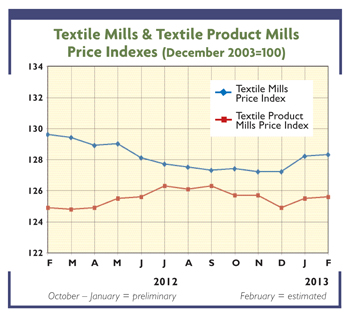
BFGraph


Better Mill Employment, Too


Indeed, this greater propensity to spend may already be helping to bolster textile and
apparel job numbers. Revised Washington figures on the mill level show employment relatively
unchanged from year-earlier levels. And the picture isn’t much different on the domestic apparel
front — with the year-to-year job total showing little more than a fractional decline. What really
makes all these numbers even more upbeat is the fact that they are occurring at a time when
industry productivity has been rising at a near 3-percent annual rate. Put another way, a 3-percent
productivity increase at a time when the workforce has been holding relatively steady suggests that
the U.S. textile and apparel industries turned out more goods in 2012 than they did in 2011. And
other Washington numbers clearly back up this conclusion, as shipments of mill products and
clothing now run 2- to 3-percent and 4- to 5-percent, respectively, above year-earlier levels.
Moreover, the uptrend seems likely to continue, with early 2013 Institute for Supply Management
surveys pointing to additional gains in industry activity for both January and February. Go beyond
the next few quarters, and equally encouraging news comes from still another recent government
study calling for only minimal declines in textile and apparel employment over the next three
years. True, that’s not the same thing as a gain, but it’s clearly a major change vis-à-vis the
steady declines of the past decade.


Improving Trade Trend


A brighter import-export picture could also be playing a major role in the U.S. industries’
more positive employment and demand outlooks. On the import front, final figures for 2012 show that
the volume of textile and apparel shipments is no longer rising. Credit a good part of this to
reshoring — it’s a strategy that a growing number of companies, including large ones like Walmart
and Brooks Brothers, are now increasingly touting. Walmart, for example, has already contracted to
carry a U.S.-made towel in 1,200 of its stores by sometime this fall. And what makes all of this
especially significant is that reshoring is occurring at a time when domestic demand is actually
rising. Other things being equal, this suggests that U.S. mills and apparel manufacturers may no
longer be losing market share. Meantime, the export side of the trade equation is also beginning to
look a little better — with last year’s exports of textiles and apparel, while still quite small,
actually managing to post the third consecutive year of modest increases. And while it might be
hard to believe, one U.S. hosiery mill now says it has even begun to sell some products to U.S.
archrival China. To be sure, the volume involved is small, but, combined with flattening imports,
this improving export trend does seem to indicate that the United States’ huge textile-apparel
deficits will continue to edge a bit lower.

March/April 2013
Turkish Textile Triplex Returns To Istanbul

In 2012, ITM merged with Texpo Eurasia to create the ITM Texpo Eurasia exhibition, to be held
triennially in Turkey. However, the current strong textile market in Turkey, demand from
exhibitors, and the void presented by a scarcity of major international textile shows scheduled in
2013 convinced co-organizers Teknik Fuarcılık Ltd. S¸ti. and Tüyap Tüm Fuarcılık Yapim A.S¸. to
seize the opportunity and present the merged show again in 2013. The organizers look forward to
capturing the momentum created by a strong show in 2012, and ongoing investment in Turkey’s textile
industry.

Teknik Fuarcılık reports that the government in Turkey recognizes the textile industry’s role
as one of the leading sectors in its economy, and has implemented several measures to increase the
competitiveness of the sector, including: introducing stimulus packages; reducing value-added-tax
rates; and increasing tax rates on imported fabric and ready-to-wear garments. They also have made
decisions on rationing for quotas on cotton yarn. These changes make doing business in Turkey more
attractive than ever, and hopefully create a climate conducive to hosting another successful
textile exhibition.

TurkeyTuyap

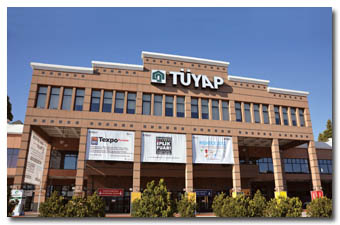
ITM Texpo Eurasia 2013, Hightex 2013 and the Istanbul Yarn Fair will converge at the Tüyap
Fair, Convention and Congress Center May 29-June 1.

As was the case in 2012, the 2013 edition of the show will colocate with the nonwovens and
technical textiles show Hightex 2013 and the 10th International Istanbul Yarn Fair. All three shows
will run from May 29 through June 1 at the Tüyap Fair, Convention and Congress Center in Istanbul.
This comprehensive gathering of machinery, technology and yarn suppliers to the traditional
textiles as well as nonwovens and technical textiles markets brings the whole textile industry to
Turkey at an economically favorable time.

Subsequent editions of the shows reportedly will occur during the second half of 2016.


Success In 2012


Organizers compiled some comprehensive statistics from the 2012 shows. A combined total of
1,037 companies from 37 countries exhibited at the three concurrent events.

A total of 42,991 visitors from 78 countries attended the fairs in 2012. Aside from Turkey,
the top 10 participating countries were Iran, Egypt, Russia, India, Syria, Jordan, Italy,
Uzbekistan, Bulgaria and Serbia. More than 50 percent of the visitors came from Asia Pacific
countries, and approximately 30 percent came from Europe. Visitors came from companies representing
the broad spectrum of the textile industry, with participants reporting activity in almost all
facets of the industry. The majority of the visitors, however, work in the dyeing, printing and
finishing; knitting; fiber and yarn; or weaving segments of the industry.

Turkey3

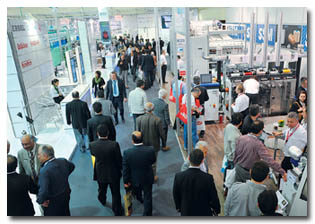
With three fairs running concurrently, exhibitors will cover the gamut of textile
technologies, providing a one-stop shop for show attendees.


ITM Texpo Eurasia 2013


Exhibits for ITM Texpo Eurasia — the 30th International Textile, Weaving, Spinning,
Finishing, Knitting, Hosiery Machines, Related Industries and Chemicals Exhibition — will be found
in Halls 2, 3, 4, 7, 8, 9 and 12 at the Tüyap Fair. Hall 2 will feature cotton and yarn preparation
machinery, yarn twisting machinery, and nonwovens and technical textiles machinery. Halls 3 and 7
will house dyeing, printing and finishing machinery; textile chemicals, laboratory equipment and
quality control systems; and CAD/CAM/CIM applications and automation systems. Hall 4 will house
machinery spare parts and accessories, as well as additional CAD/CAM/CIM applications and
automation systems exhibits. Weaving preparation machinery, weaving machines and weaving machine
accessories will be found in Halls 8 and 9; and flat and circular knitting machines, embroidery and
quilting machines, hosiery machines, and knitting preparation machines will be on view in Hall 12.


Hightex 2013


Hightex 2013, the 5th Istanbul Technical Textiles and Nonwovens Exhibition, is organized by
Teknik Fuarcılık with help from supporting partner the Turkish Textile Machinery Industrialist’
Association (TEMSAD).

Halls 2 and 10 of the Tüyap Fair will feature Hightex exhibitors, whose offerings will be
organized into five categories:

  • Technology: airlaid; crosslapping; drylaid; meltblown; needlepunch; spunbond; spunlace;
    stitchbond; thermobond; weblaid; wetlaid; and welding;
  • Machinery: adhesive blend and application systems; bonding and separation technology; braiding
    machinery; CAD/CAM software; coating and lamination systems; converting machinery; cutting and
    separation systems; dyeing, printing and finishing machinery; drying systems; embossing machinery;
    fiber breaking machinery; flocking-impregnation systems; laboratory measurement equipment; narrow
    textile production machinery; needling machinery; nonwoven processing machinery; tufting machinery;
    waste packaging and recycling technology; and weaving machinery; among other types of
    machinery;
  • Raw Materials: fiber; raw materials and composites; and yarn;
  • Finished Products: agricultural textiles; apparel textiles; building textiles; cosmetic and
    cleaning textiles; ecological textiles; food textiles; geotextiles; home furnishing textiles;
    industrial textiles; medical and hygiene textiles; packaging textiles; protection textiles; sport
    textiles; and transport textiles, among other types of finished products; and
  • Smart Textiles: antibacterial textiles; apparel for health; conditioning textiles;
    electrotextiles; medical textiles; military textiles; nano-technological fabrics; new-generation
    comfort apparel; protective apparel; smart polymers/materials; smart sportswear; textile-based
    conductors; textiles combined with nonwovens; textiles with sensor technology; and wearable
    computers.


Istanbul Yarn Fair


The 10th International Istanbul Yarn Fair is organized annually by Tüyap Tüm Fuarcılık and
touts itself as the most extensive yarn fair for raw materials, yarn and manufacturing in Turkey
and the Eurasia region. The show encompasses acrylic and acrylic-rich yarns; cotton and cotton-rich
yarns; elastane yarns; embroidery yarns; fiber, bobbin and reel; handknitting yarns; linen and
linen-rich yarns; metallic yarns; natural yarns; noble/fancy yarns; polyamide yarns; polyester and
polyester-rich yarns; polypropylene yarns; sewing yarns; silk and silk-rich yarns; technical yarns;
textured yarns; viscose and viscose-rich yarns; wool and wool-rich yarns; and related publications.

Yarn Fair exhibits will be located in Halls 5 and 6 at the Tüyap Fair, Convention and
Congress Center.


Spotlight: TEMSAD

The Turkish Textile Machinery Industrialist’ Association (TEMSAD) re-elected Adil Nalbant
chairman at its shareholders general meeting held recently in Istanbul. TEMSAD members — textile
machinery, spare parts and chemicals manufacturers — work together to promote a positive image for
Turkey’s textile machinery industry locally and internationally with a view to making its machinery
preferred and sought after.The association was established in 1998, and since then, its members
have committed to working toward shared goals and values for the future, including investing in a
textile sector that is a significant contributor to the Turkish economy. Part of this vision
includes support for various international textile trade fairs, such as ITM Texpo Eurasia and
Hightex, and TEMSAD leads its members in that process.

TEMSAD

Nalbant

For more information about ITM Texpo Eurasia 2013, Hightex 2013 and the Istanbul Yarn Fair, and
to register, visit itm2013.com; hightex2013.com; and  istanbulyarnfair.com.


March/April 2013

Moving Beyond Electrospinning: Melt Nanofiber Production

Nanofibers have long shown great promise for advancing textile and material performance in
applications ranging from air and liquid filtration to battery separators, to sound insulation and
fluid barriers in hygiene products. For example, in filtration, nanofibers have been shown
theoretically and empirically to demonstrate exceptional pressure drop ratings through the
engagement of the slip flow effect that cannot be achieved with bulk fiber. They are also best
suited for enabling the filtration mechanism of Brownian Diffusion, which can capture particulate
matter of .5 micron and smaller. Nanofibers also mimic the extracellular matrix that enables the
propagation of living cells for wound care and tissue engineering. These fibers, generally
described in commercial settings as having diameters of less than 1 micron, have been the subject
of intensive study for quite some time. Indeed, a literature review reveals an extensive field of
research and the reporting of performance improvements. One is hard-pressed to find a university
that does not have a makeshift electrospinning needle that is being used to demonstrate the
advances in material performance that occur at the nanoscale. Academia has applied great diligence
in characterizing and reporting these findings. Furthermore, a patent search quickly reveals that
many of the largest nonwovens, filtration and textile companies in the world have not only
performed extensive R&D in this area, but have also made significant investments in protecting
their position.

Nanofiber

However, it is clear that the commercialization of the total potential of nanofiber
technology has yet to be realized. In 2010, BCC Research LLC, Wellesley, Mass., estimated that the
entire market for nanofiber products would reach approximately $183 million in 2012. In comparison,
microfiber production today is several billions of dollars annually and growing rapidly, according
to International Nonwovens Consulting, Raleigh, N.C. However, Donaldson Filtration Co. Inc.,
Bloomington, Minn., began pioneering nanofiber filters in the mid- to late 1980s. This was not long
after meltblown microfibers began to make their way to the end market and Reicofil
spunbond-meltblown-spunbond (SMS) lines began to proliferate. In evaluating the driver behind this
divergence, one must look at the differences between melt-based processes and solvent-intensive
processes such as electrospinning. Indeed, the primary challenge in scaling electrospinning has
been the high solvent-to-polymer concentrations needed to produce the nanofiber. More solvents lead
to lower yields, dramatically increased operating expense and an environmental burden that is
counter to the vast sustainability efforts under way in most nonwovens and textile companies.
Indeed, research is underway to develop melt-based electrospinning. At a recent conference in
Japan, several leading electrospinning companies reported on the work they have done in this area,
but the data clearly demonstrated that significant challenges exist in converting electrospinning
to a melt-based process.


In an effort to finally begin to transfer the full potential of nanofiber technology to end
products, leading materials companies have addressed the challenges of productivity, profitability
and environmental responsibility by acquiring melt-based processes as the platforms they will
leverage into the future. This effort has initiated a new era beyond electrospinning that is
focused on melt nanofiber production technology. This article presents two process platforms that
exist today, the materials that are available in fiber form, the near-term markets for end
applications and the endless possibilities that are created when there is an unlimited availability
of nanofibers.


Melt Nanofiber Processes


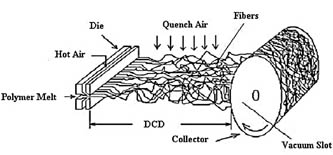
Meltblown is a one-step process in which high-velocity heated air blows a molten
thermoplastic resin from an extruder die tip onto a conveyor or take-up screen to create fibers.
Originally developed in its commercial form at Exxon in the late 1970s, meltblown has proven very
useful for making fibers with diameters in the range of tens of microns and higher, but the focus
of most of the development of this technology has been toward higher line speeds and integration
into spunbond lines. Recently, the effort has shifted away from higher-volume production and toward
finer fiber for advanced air filtration performance. Research conducted in Germany and the United
States has been focused almost solely on polypropylene (PP) and has shown gains in generating
fibers in the submicron range. The challenges faced in driving fiber diameter lower include the
importance of increasing the air-to-polymer mass flux ratio. This higher ratio leads to a need for
very high air velocities and limited polymer feed rates that increase operating cost and limit
productivity. Another challenge is the broad distribution of fiber diameters that can significantly
impact air filtration performance.

Recently, work has expanded beyond PP with gains being made by a research group at The
University of Tennessee in processing polylactic acid (PLA) nanofibers. PLA is coveted as an
eco-friendly thermoplastic with beneficial material performance. As work in meltblown continues to
expand into new materials, applications will increase as well.

FiberElectrodiagram

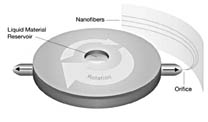
Melt nanofiber technologies include meltblown technology (above), diagram courtesy of Atul
Dahiya, “Meltblown Technology”; and Forcespinning® technology (below), diagram courtesy of FibeRio
Technology Corp.

Fibersdisk

Forcespinning® technology uses centrifugal force to process materials into nanofiber. A
spinneret cup is rotated at high speeds to initiate hydrostatic and shear forces that push a liquid
material, either melt or solution, though orifices lining the outer wall of a spinneret. As the
material enters the orifice chamber, molecules disentangle and then align directionally to form
nanofibers. This unique technology has only recently been developed to commercial-level production
by FibeRio Technology Corp., McAllen, Texas, and it has already gained significant momentum with
reporting of PP nanofibers with average diameters of less than 500 nanometers (nm). Furthermore, a
100-fold increase in productivity rate has enabled the technology to be viewed for more than air
filtration applications. Dramatic productivity gains have been demonstrated with both the
melt-based process and solution spinning via higher polymer concentration levels than those for
electrospinning.

Other materials that have been melt-spun include PLA, polybutylene terephthalate (PBT),
polyethylene terephthalate (PET), polyamides (PA), polyvinylidine fluoride, low-molecular-weight
polyethylene and thermoplastic polyurethane. The applications thereof are incredibly broad, ranging
from performance apparel to fuel filtration and more. However, the full potential of Forcespinning
technology will emerge as FibeRio sets its sites on melt processing engineered plastics into
nanofiber.


Melt-spun Nanofiber Applications


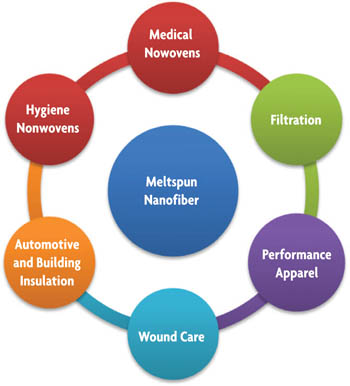
Medical Nonwovens: Global Industry Analysts Inc., San Jose, Calif., estimates that
the global disposable medical nonwovens market will reach $20.9 billion by 2017. Applications in
this area include surgical gowns, drapes and tray covers. Melt-spun PP nanofibers can be utilized
to provide the breathable barrier performance required for these products.

In the past year, FibeRio reported significant water-barrier performance improvements with
almost 60 millibar of hydrostatic head — a value compliant with Level 3 of the Association for the
Advancement of Medical Instrumentation (AAMI) PB70 standard — with only 6 grams per square meter
(gm2) of material compared to the traditional 15 gm2 of material from meltblown microfibers, making
the fabric lightweight and breathable through the use of nanofiber media.

Filtration: Nanofibers have been used for quite some time in air filtration
applications. However, the use of melt-based processes will expand their use in that market.
Melt-spun PP nanofiber from both meltblown and Forcespinning technology have demonstrated high
efficiency ratings with low pressure drop. The efficiency ratings are driven by the utilization of
Brownian Diffusion, while the pressure drop performance can be attributed to slip flow at the
surface of the fiber. These benefits create a significant opportunity for many filtration companies
because regulatory bodies have recently moved to eliminate the historical practice of
electrostatically charging the media to achieve high efficiency ratings as demonstrated by the new
European standard EN779:2012.

FibersSEM

The use of melt-based production processes will expand the use of nanofibers for air
filtration applications.

However, as fiber diameters continue to decrease, new applications such as water filtration
become available. Significant opportunities are created using melt-spun PP and PET nanofibers to
achieve pore sizes comparable to those of membranes while providing the lower pressure drop of a
fibrous media. Additionally, PBT nanofibers can be used in fuel filtration and blood separation
applications.


Performance Apparel
: Recently, nanofibers have found their way into end products
such as socks, jackets and even golf gloves. Materials have varied from PA 6 to PET. It is believed
that these processes were solvent-based, and it would stand to reason that the emergence of
melt-spun PET nanofibers, with higher annual capacities and lower operating expenses, could
substantially increase the use of nanofibers in these applications.

Wound Care: Management of moisture is driven by control over porosity, which is
why nanofibers have emerged as a critical tool in the wound-care industry. Furthermore, materials
must at the very least be biocompatible and preferably, in some cases, bioresorbable. In these
instances, toxic residue from solvents are a nonstarter and limit commercial opportunities.
Melt-spun PLA nanofibers and, in the future, melt-spun polycaprolactone fibers overcome this
challenge while simultaneously increasing productivity.


Acoustic Insulation
: Environmental awareness and rising costs of fuel have driven
the term “lightweighting” to the forefront of the automotive and aerospace transportation lexicon.
In this regard, nanofibers enable automotive suppliers to substantially reduce material weights
while improving acoustic insulation performance. The challenge until now has been the cost
sensitivity and high volumes of such an industry. However, melt-spun nanofiber overcomes that
challenge, and PP and PET are resins that are already familiar to the industry.


Future Directions


As the range of materials broadens, another area being evaluated is the use of nanofibers in
dispersions and as reinforcements in composites. Nanoscale fibers are capable of even distribution
in a polymer matrix and hold great promise for improving tear strength, regulating viscosity and
improving other properties. Staple nanofibers are just beginning to be considered by materials
engineers and could have vast applications far beyond composite reinforcement. Cost-effective
volume manufacturing will enable these applications to become commercially viable.

Other markets that will come online as melt nanofiber processing achieves productivity and
line speed scale-up will be applications in hygiene nonwovens. As private label suppliers continue
to take market share, branded product suppliers are searching for new paths to differentiation.
This development has led to a search for technologies that provide thinner materials and enhance
fluid management capability.

Efforts in meltblown and Forcespinning technology are removing productivity, operating
expense and environmental barriers. As final hurdles to high-volume nanofiber production are
overcome, the conversation will shift away from process challenges and toward new end-product
development and intellectual property required to compete. The future of nanofibers is primed for
any applications that are looking for ways to reduce weight while improving material performance.
Melt processing also enables the use of new, greener materials for existing applications.
Furthermore, novel capabilities are enabled through the use of new materials such as aromatics,
sulfones, fluoropolymers and urethanes. Already, these materials have demonstrated great promise at
the research level, and new developments will rapidly scale them to continuous industrial
production.


Editor’s Note: Bryce W. Davis, Ph.D., is materials engineer, and Kial Gramley is vice
president, marketing and business development, at FibeRio Technology Corp.


March/April 2013


Bibliography

Atul Dahiya, e. a. (2004). Meltblown Technology. Retrieved January 23, 2013, from Meltblown
Technology:

http://web.utk.edu/~mse/Textiles/Melt%20Blown%20Technology.htm

BCC Research. (2010). Nanofibers: Technologies and Developing Markets. Boston: BCC Research.

Bhat, G., & Akato, K. (2012). Meltblown Ingo Nano-fibers: Current Status and Future
Potential. ITR 2012. Orlando: NatureWorks LLC.

Caruntu, D., & al., e. (2013). Experimental study of nanofiber production through
forcespinning. Journal of Applied Physics.

Cooper, J., & al., e. (2006). Electrospun Nanofibers from Biopolymers and Their
Biomedical Applications. Modified Fibers with Medical and Specialty Applications, 67-80.

Davis, B. (2012). Medical Applications & Barrier Properties Using Nanofibers. Techtextil
NA (pp. 1-12). Atlanta: Messe Frankfurt.

Ellison, C. J., & al., e. (2007). Melt blown nanofibers: Fiber diameter distributions
and onset of fiber breakup. Polymer, 3306-3316.

Ellison, C., & al., e. (2012). Solventless High Throughput Manufacturing of
Poly(butylene terepthalate) Nanofibers. ACS Macro Letters, 960-964.

Global Industry Analysts, LLC. (2012). Medical Nonwoven Disposables – A Global Strategic
Business Report. San Jose: Global Industry Analysts, Inc.

Grafe, T., & Graham, K. (2002). Polymeric Nanofibers and Nanofiber Webs: A New Class of
Nonwovens. INTC 2002: International Nonwovens Technical Conference. Atlanta: INDA, TAPPI.

Katz, S. (2011, November 11). The Feminine Hygiene Market. Nonwovens Industry.

Lozano, K., & al., e. (2010). Electrospinning to Forcespinning. Materials Today, 12-14.

McCulloch, W. J. (1999). The History of the Development of Melt Blowing Technology.
Nonwovens Conference (pp. 110-121). TAPPI.

Ramkumar, S., & Singh, V. (2011, April 7). Nanofiber — New Developments. Nonwovens
Industry.

What’s In A Brand?

Comprehensive coverage of all the man-made fiber brands in the market today would be overwhelming.
Below is a small sampling of brands in selected fiber areas.


Polyester: A New Lease On Life For An Older Brand


Poole Company, Greenville, has breathed new life into ComFortrel®, a brand originally owned
by polyester manufacturer Wellman Inc., which exited the polyester staple fibers business in 2008.
Poole resurrected the fiber and the brand in late 2012.

ComFortrel’s proprietary polymer formula allows the fiber to be atmospherically dyed at
212°F, achieving superior colorfastness and washfastness. The fiber’s low tenacity and low modulus
provide an inherent soft hand to garments. It also offers inherent moisture wicking, which, along
with all other benefits, is permanently incorporated into the fiber rather than topically added.

“ComFortrel’s target customers are the major hosiery producers that can offer a wide range
of colors in hosiery without having to go to the expense of dyeing polyester under pressure to
achieve the desired color performance that polyester offers,” said David Reed, sales and technical
service manager, Poole Company. “In addition, ComFortrel’s inherent moisture-wicking properties
allow it to penetrate performance apparel markets.”


Recycled And Biobased Fibers


Numerous branded fibers are emphasizing their low carbon footprints, citing reduced energy
and resource consumption, and reduced greenhouse gas emissions. Fibers that have recycled content
are derived from post-industrial and post-consumer waste materials diverted from landfills, while
biobased fibers are derived from rapidly renewable feedstocks instead of petroleum-based
feedstocks.

EcoSure®, launched by Poole Company in 2008, is a fine-denier polyester fiber made from
post-consumer recycled (PCR) polyethylene terephthalate (PET) containers. It is comparable in
quality and performance to virgin polyester. Scientific Certification Systems (SCS) Global
Services, Emeryville, Calif., has certified the fiber’s 100-percent PCR PET content.


“EcoSure’s target customers are ones who want to make an environmental statement in reducing
landfill volumes, who want to reduce greenhouse gas emissions, who want to reduce energy and water
usage while getting all the downstream performance of a virgin chemical-based polyester fiber,”
Reed said.

Unifi Inc., Greensboro, N.C., launched Repreve® in 2006. Featured in apparel, outdoor gear,
home furnishings and automotive upholstery fabrics, the brand comprises both polyester and nylon
filament and staple fiber made from PCR and post-industrial waste including PET containers, used
clothing, and fiber and fabric waste. SCS has certified Repreve’s recycled content, and the fiber
is certified according to Oeko-Tex® Standard 100 to be free of harmful levels of restricted
chemicals. Unifi certifies Repreve’s sustainability through its U Trust™ Verification system, and a
product’s Repreve content can be analyzed using Unifi’s Fiberprint™ technology.

“Repreve provides a drop-in replacement for virgin polyester and nylon,” said Jay Hertwig,
vice president of global branding, Unifi. “The advanced technology behind Repreve also allows for
performance properties such as stretch and permanent moisture management to be added to the fiber.”

BrandedRepreve

American Flora uses REPREVE® 100-percent recycled-content yarns in its environmentally
responsible activewear such as the Jasmine top and Iris cropped yoga pant shown here.

Bristol, Va.-based Universal Fibers’ EarthSmart™ refreshfiber® by Universal Fibers® is a
solution-dyed 600-denier nylon 6,6 carpet fiber that has 30-percent recycled content including
20-percent post-industrial and 10-percent PCR content. The PCR content comes from used carpet that
has been diverted from landfills. The fiber is available in 284 colors, and the company reports it
is the only nylon 6,6 carpet fiber featuring PCR content that offers such a wide color selection.
Key properties include permanent, inherent ultraviolet (UV), bleach, oxidation and stain
resistance.

Universal Fibers is ramping up its marketing efforts for refreshfiber. “Several customers
are developing products with it,” said Joe Parry, the company’s global marketing and brand manager.

In the biobased arena, Minnetonka, Minn.-based NatureWorks LLC’s Ingeo® polylactide (PLA)
biopolymer is derived from corn sugar and other cellulosic raw materials including agricultural
waste and non-food plants, and has both fiber and plastics applications. Ingeo fiber has been
produced for more than 10 years, and annual production capacity for the biopolymer totals 320
million pounds. Benefits include inherent UV resistance and fire-resistant performance,
processability on conventional equipment and printability. Marketing partners include leading fiber
companies in Europe, North America and Asia. The fiber can replace polyester and other
petroleum-based fiber in apparel, outdoor furnishings, carpet and nonwovens.

Robert Green, director, North American nonwovens and fibers, NatureWorks, noted that over
the last decade, industry’s perception of biobased fibers has evolved beyond just seeing their
environmental benefits. “Ingeo fibers are today evaluated by customers on three attributes: overall
performance, industry-leading carbon footprint, and stable pricing as compared to petroleum-based
textiles.”

Brandsingeo

Revolution, an Ingeo®-based sunshade fabric from M+N Projecten, the Netherlands, meets
green design criteria and offers performance equivalent to that of polyester-based sunshade
fabrics.

In production since 2002, Wilmington, Del.-based DuPont’s DuPont™ Sorona® polytrimethylene
terephthalate (PTT) polymer contains 37-percent annually renewable plant-based ingredients. The
fiber’s distinctive molecular structure and crystalline morphology enable a combination of
properties including durability; stain, chlorine and UV resistance; soft hand; comfort stretch with
good recovery; dyeability at reduced temperatures and with good colorfastness; and quick drying
properties. It also blends well with and enhances fibers such as cotton, linen, wool, nylon and
polyester. Target applications include apparel and carpet.

Because of PTT’s unique properties, the U.S. Federal Trade Commission created the fiber
subgeneric triexta under which to classify PTT fibers.

BrandedfiberSorona

DuPont™ Sorona®’s soft hand and comfort stretch are among the properties that make it
suitable for jeans and other apparel applications.


Copper


Richmond, Va.- and Israel-based Cupron Inc.’s Cupron® technology integrates copper into a
polymer, primarily polyester. In full production since 2010, the technology is targeted to
applications such as hospital sheets; diabetic and military socks; and gloves, masks and
pillowcases that provide cosmetic benefits.

“Copper has been used for health, wellness and antimicrobial purposes for thousands of
years,” said Chris Andrews, president — Americas, Cupron Inc. “Copper is a known mineral that can
kill many species of bacteria, fungi, viruses and dust mites. Research also indicates its potential
value in stimulating the production of capillaries, collagen and other key proteins that help
stabilize skin layers, promote wound healing and improve the look and appearance of skin.”

In Fortify®Cu copper ion release yarns, launched in 2009 by Fiber & Yarn Products Inc.
(F&YP), Greenville, copper is cross-linked onto the fiber or yarn surface. “The nylon or
polyester yarn product has the ability to release measureable quantities of copper ions into the
moistened fabric substrate,” said Bradley Seese, product development and brand manager, F&YP.
“The particle load is micron-sized and has very little impact on the visible color of the final
product. By concentrating the active copper ion release on the surface of the fiber, it is possible
to much more efficiently utilize the available copper particles.”

Target applications are footwear, legwear and apparel that typically are worn next to the
skin.

BrandedCupron

Copper ions in Cupron® cosmetic pillowcases are activated by ambient moisture and interact with
the skin to help reduce the appearance of facial wrinkles and fine lines.


High-Profile Stretch


LYCRA®, Wichita, Kan.-based Invista’s spandex fiber, was launched in 1959. It is said to
enhance comfort, freedom of movement and shape retention as it provides stretch and recovery to
knit and woven apparel including swimwear, lingerie, hosiery, active sportswear, and other apparel.
Among consumers, 88 percent are aware of the brand, with 60 percent preferring Lycra over generic
spandex.

Lycra is a segmented polyurethane fiber comprising a bundle of tiny filaments with flexible
and rigid segments bonded together to provide elasticity. It can be stretched up to seven times its
original length and recovers completely when tension is released.

Production capacity is not disclosed, but, said Virginie Moille, Invista’s Europe/Middle
East/Africa communications manager, “If you would stretch all Lycra fiber produced annually,
considering all of it 40 denier, you could go to the sun and back way more than 200 times.”

March/April 2013

Spring/Summer ’14 Fabrics On View

Twice a year, international apparel textile trade shows open in New York City with news of what’s
ahead in fashion. According to Jacques Brunel, managing director, Première Vision S.A., Paris, “the
market wants to see something new” — and there was a lot of it at the most recent shows. Première
Vision Preview, Texworld USA and Kingpins all showed innovation from fiber producer through to
fabric knitter and weaver.


Première Vision Preview


Fiber producer Mitsubishi Rayon Co. Ltd., Japan, a first-time exhibitor at Première Vision
Preview, introduced Miyabi, a micro acrylic fiber, to the United States. The fiber is ultralight,
anti-pilling and warm.


Newlife™, developed by Filatura di Saluzzo, Italy, is polyester made from plastic bottles
recycled using a mechanical process. Its production consumes 94-percent less water and 60-percent
less energy, and produces 32-percent fewer emissions than virgin polyester production. Available in
yarn counts of 25 to 2,000 decitex, Newlife yarns are found in a wide range of fabrics from major
Italian producers including E. Boselli & C. S.p.A., Frantissor Créations, Frizza S.p.A., and
Tessile Fiorentina Co. S.r.l.

Japanese textile machinery company Shima Seiki Manufacturing Ltd. presented its all-in-one
design workstation that will create fabric patterns, prints and colorways; simulate texture; scan
yarns; and drape fabrics onto photos

or illustrations of garments. The company also showed its WHOLEGARMENT® flat-knitting
machines and other products.

Several years ago, French fabric exhibitor Philea purchased Velcorex since 1828, an old
corduroy company that was about to fold. Now, both lines complement each other. Philea has
purchased Tissage des Chaumes, a French tweed producer that sells to Chanel and has been in
business since 1908 — because today, “there is a mix of luxury with casual in a creative way.”
Summer tweeds have been reinterpreted: Some have glitter or are dyed in pastel and bright colors;
and there is a lot of white.

One popular fabric at Philea is a viscose satin-backed stretch that is enzyme-washed to give
it a casual look. Other fabrics include monotone, drapy romantic jacquards that look used. There
are flockings for texture, spots on linen knits, laminated lightweight fabrics and washed-down
whitened camouflage prints — and, for early winter 2014, an uncut stretch jacquard corduroy.

Esenteks Tekstil, Turkey, has breathable woven and knitted coated linens and metallic prints
that are shiny without feeling coated. Another Turkish company, BTD Tekstil, has summer tweeds with
small spots of metallic yarn or random thick-and-thin stripes. Its new pantweight double cloth
“fits like a girdle.” Deveaux, France, has solid and jacquard slinky matte jerseys, irregular
ethnic jacquards and Aztec stripes.

High-tech at Frizza can be dimensional; coated with aluminum; color-washed; crinkled and
coated; or double-faced with a shiny, laminated side reversing to a washed, aged surface or high
gloss on indigo denim. Olmetex S.p.A., Italy, has ultralight coated cottons and double-sided coated
fabrics woven with recycled polyester.

Luxe looks include laces from Solstiss S.A.S., France, that are coated on one or both sides.
Coatings are slick and shiny or soft and rubbery. Denis et Fils, France, has stretch lamé in
countless colors. Another French firm, Goutarel S.A., has colorful flowers and stripes on silk
brocades. Carlo Pozzi & C., Italy, has sheer bubble-textured double cloths, stretch shantung
and one-color jacquards.

Printed fabrics at KBC, Germany; Liberty Art Fabrics, United Kingdom; and Sprintex S.A.S.,
France, range from small ditsy shirtings to large photographic flowers, big paisleys, ethnics,
tie-dyes and stained-glass windows.

KAfeature1

Texworld visitors view fabrics on display at Jain Shawls, an India-based manufacturer of
shawls, scarves, and home textiles.


Texworld USA


Cellulosic fiber producer Lenzing AG, Austria, showing at both Texworld and Kingpins,
presented a lot pertaining to the 20th anniversary of Tencel®. At Texworld, the company introduced
to the United States dope-dyed Lenzing Modal® COLOR, whose production uses 80-percent less energy
and 75-percent less water than conventionally dyed Modal.

Buhler Quality Yarns Corp., Jefferson, Ga., spinner of yarns made with Modal and Tencel as
well as Supima® cotton, noted that a lot of knitting is returning to the United States, especially
to California.

Three U.S. knitters showed novelty. Vernon, Calif.-based Mansfield Textiles Inc.’s knits
showed a lot of surface interest including not-so-neon stripes that sometimes are raised or
combined with waffles, as well as knitted denim. Laguna Fabrics, Los Angeles, has French terry
sweater knits with streaked stripes in cotton/polyester/linen blends, ultralight and soft jersey of
Micro Tencel, and a lot of neps and nubs. At Vernon, Calif.-based SAS Textiles, there are denim
looks, small bubble checks, French terries, jacquards and a lot of novelty stripes.

Miroglio Group, Italy, was at Première Vision Preview and Texworld. At Texworld, the company
showed prints and fabrics that are styled in Italy but made in China. Prints are classic, sweet or
sophisticated; and feature dots, paisleys, monotones, tile-type geometrics and stripes.

Textil Santanderina, Spain, exhibiting at Texworld and at Kingpins, showed denim with animal
and geometric digital prints, flocking and doublefaces in pale/neon color combos.

KAfeature2

Lenzing AG’s Tricia Carey, merchandising manager, and Michael Kininmonth, project manager
marketing apparel, Textile Fibers business unit, were on hand at Texworld and Kingpins to show
Lenzing’s Tencel® and Modal® offerings.

In the Turkish Pavilion, Parlamis Tekstil sold dress shirtings, some with stretch. The range
includes crepes, chiffons, satins, prints and pleats. Kotonteks Tekstil showed stretch jacquards,
dobbies, and crinkles. There were animal skins, two-color flowers with dots, and small geometrics.

Hemp Fortex Industries Ltd., China, spins, weaves and knits organic cotton and hemp. Some
fabrics are blended with silk or LYCRA®. The line goes from basic poplins to light linen shirtings
and knitted stripes.

Labtex Co. Ltd., Taiwan, has knits and wovens that range from activewear, shirting and
uniform fabrics to novelty jacquards, crochet laces, French terry spotted with Lurex®, ribs, and
stripes. There are a lot of drirelease® fabrics.

At the Apparel Sourcing Pavilion, the National Association for the Sewn Products Industry
(SEAMS) and Panjiva specialize in sourcing. SEAMS, a not-for-profit organization based in Columbia,
S.C., supports the sewn products supply chain in the United States by providing networking
opportunities. If the Parks Department needs new uniforms, SEAMS will alert its 180 members, and
those interested may bid. New York City-based Panjiva is a subscription-based global organization.


Kingpins


With a focus on denim, Kingpins is the fastest-growing of the three shows and has the largest
number of fiber company exhibitors. This season, Lenzing joined the roster. With denim trends
moving to lighter weights, softer hand and stretch, Tencel and Modal are well-established. One of
the most interesting aspects of the Lenzing exhibit was to see the same denim fabric available in
two different garments — a long gown from Prada, available at Saks Fifth Avenue; and a blouse from
H&M.

Cotton Incorporated, Cary, N.C., focused on prints and finishing, showing 3-D digital prints
on jeans and T-shirts, delustered prints, washdowns and COOLTRANS™, a cold transfer printing
process from Shanghai-based Newtech Textile Development Co. Ltd. that is faster and cheaper than
digital printing. One new finishing treatment comprises thermal plastic resin coatings that can be
applied by spray or brush and heat pressure.

Invista, Wichita, Kan., developed three fashion trends, showing jeans made with its fibers in
each. In Fantasy, there are a lot of shine, prints and four-way stretch. Fabrics from Panther
Textiles Holding Co. Ltd., China; Artistic Denim Mills Ltd. (ADM), Pakistan; and Seazon, China, all
contained Lycra or Lycra T400®. Reality has authentic looks with performance stretch. One fabric,
from ADM, is woven of 65-percent TOUGH MAX™/35-percent Lycra T400. In the Harmony group, there are
jacquard denims and knit looks shown in fabrics from Prosperity Textile (HK) Ltd., Hong Kong;
Arvind Ltd., India; and Panther Textiles.

Denim producer Tavex Corp., Spain, is selling stretch and lighter weights for men and women.
Tavex’s newest treatment for denim fabrics is called Waxfit, a resin with pigment that comes from
South American palm trees and is soft, breathable and when washed takes on an aged look.

Cone Denim, Greensboro, N.C., showed denim made with recycled denim, and luxury stretch denim
with a soft hand and Tencel/ rayon/cotton warp. Also new is back-coated and dyed denim; stripes are
up-and-coming.

March/April 2013

Knitting Focus On India

Warp-knitting machinery manufacturer Karl Mayer Textilmaschinenfabrik GmbH claims to have a global
market share of some 80 percent and is continuously expanding its position. To bolster this
position, the Germany-based company started an offensive strategy in India in the middle of last
year. Now, the first results are known. Textile World talked to Tim Wollnik, senior manager,
marketing and sales, Karl Mayer, to get a first insight into the efforts made in this evermore
promising country in Asia.

At the end of June 2012, company Chairman Fritz P. Mayer opened a new market initiative in
India by welcoming customers to an event presenting the third generation of its HKS 3-M tricot
knitting machine. At the same time, the Karl Mayer Academy India and a new customer service center
opened in Surat, on the west coast of India in the state of Gujarat.


Strong Growth


Karl Mayer’s India service branch was inaugurated in 2009 in Mumbai. In the last two years,
the company noticed a growing demand for warp- knitting machines in India. After carefully
examining the situation, the Indian branch further developed its supply of services, training
programs and new machines and made improvements in keeping the necessary spare parts available.

The site in Surat is home to the Karl Mayer Academy, which offers operator courses as well as
basic courses, with the target of increasing the level of know-how in India’s warp-knitting
Industry. At the same site, Karl Mayer is sharing the location with its local representative,
A.T.E., which has located in Surat to offer spare parts storage and sales support.

WeavingIndia

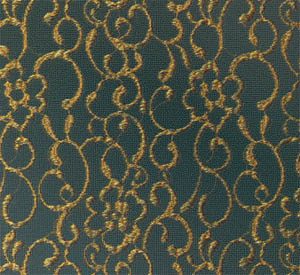
Figure 1: This pink and gold sari was produced on Karl Mayer’s FL 20/16 multibar raschel
machine.


India Focused On Warp-knitting Machines


At the June 2012 event, Karl Mayer presented the HKS 3-M with a special focus on the
different needs of the Indian textile manufacturers. The third-generation version is a versatile
and flexible high-performance machine. Thanks to the special knitting motion and knitting elements,
the model is said also to be suitable for very low stitch densities and coarse gauges. The
substantial lapping variety turns the HKS 3-M into a three-bar high-performance tricot machine with
highest versatility of products, according to the company.

The application range stretches from ground structures for embroidery, automotive textiles,
upholstery fabrics, sportswear, shoe fabrics, outerwear, ground fabrics for printing, billboards
and mosquito nets to coating substrates.


Fascination® Sari


India is the land of the sari, the beautiful dress for ladies. By creating a new range of
patterns on the Fascination® Lace FL 20/16 multibar raschel machine, that machine is said to offer
a new possibility to produce sari fabrics in a one-step process. Previously, a ground structure was
produced on a high-speed tricot machine such as the HKS 3-M, and the embroidery was made in a
separate step. With the FL 20/16, it is possible to produce a ground fabric and the embroidery-like
design directly in one process on the machine. The result is a ready-made sari fabric.

The FL 20/16 offers the following technical features:

  • Four ground guide bars and 16 pattern guide bars each feature Karl Mayer’s EL drive.
  • The Kamcos® computer platform features motion control/multi-speed facility. This advantage
    enables warp yarn delivery and fabric take-down speed to correspond to a pattern’s specific
    requirements.

When producing a complete sari measuring 5.5 meters long, the machine’s computer facilities
can handle the data sets to produce two matching saris next to each other.

Knittingtechfabric

WeavingMayer

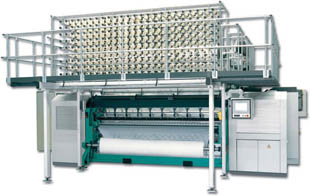
Figure 2: Karl Mayer’s FL 20/16 multibar raschel machine is able to produce embroidery-like
designs for sari fabrics.


Embroidery-like Effects


The fabric in the sari shown in Figure 1 features a filigree, lattice-like ground with a
dense, allover pattern. The 16 pattern bars on the marquisette ground construction create the
ensemble. In order to produce the 3-D design, the pattern bars are placed in positions 1 to 16, in
front of the four ground guide bars.

Ground construction worked on the FL 20/16 can range from marquisette to tulle constructions.
Patterns also may be created by processing yarns with different-colored sequences. Bright,
iridescent yarns may be combined with monochromatic yarns to create other colored accents.


Changing Market Demands


In recent years, India has changed from a mainly second-hand-machine market to a new-machine
market. Indian warp-knitting companies have realized the advantages of modern equipment in order to
reach highly efficient production as well as higher quality targets. In that regard, TW asked
Wollnik why Karl Mayer has made such an investment in Surat.

“Well, the biggest number of new machines was being sold in the area of Surat,” Wollnik
answered. “Therefore, this location was chosen for the academy.”

When asked about the company’s first experiences with the new academy, and whether ideas and
plans are being realized, Wollnik replied: “Yes, we are happy with the development. The academy is
in full operation, increasing the range of participants from customers to working together with
textile universities. Our expectations are entirely fulfilled.”


High Expectations


What does Karl Mayer expect from the Indian market?

“We see great opportunities and prospects for Indian warp knitters, considering the huge
local market as well as the possibilities for export of ready-made garments,” Wollnik said. “On the
other hand, the strongest market in Asia for the time being is China, and it has been for quite
some years. Nevertheless, other Asian countries such as India, but also South Korea and Taiwan, are
on the rise again. So, our expectations for the future are quite high.”

March/April 2013

Techtextil North America 2013 Will Showcase The Latest Developments In Technical Textiles And Nonwovens

ATLANTA — March 13, 2013 — Leading technical textile and nonwovens companies from around the world
will showcase the latest products and advanced technologies in textiles, nonwovens and materials
during Techtextil North America 2013 this month in Anaheim, California.

We are pleased to announce the first German Pavilion at Techtextil North America on the West
Coast. The companies in the pavilion represent the wide range of textile technology, yarns, textile
materials as well as the German technical textile association.

Some of the highlights of the 2013 exhibit hall include:


BASF Corporation (Booth 312)


The Dispersions & Pigments Division In North America offers a comprehensive portfolio of
resins, binders, latex, pigments and effect pigments, colorants, and systems to meet specific
application needs for the coatings, construction, and printing and packaging markets. BASF’s
innovative products also help manufacturers in the adhesives, nonwovens and fiber bonding
industries meet functional and performance demands. The addition of key product areas such as
formulation additives, rheology modifiers, light stabilizers, photoinitiators, and antioxidants
significantly enhances the existing BASF product portfolio for these markets.


Fidlock GmbH (German Pavilion)


Fidlock magnetic fastener technology delivers unique solutions for the closing of helmets,
backpacks, cycle accessories, all manner of apparel and a wide variety of additional applications.
It features one-handed operation, high reliability and provides a strong feeling of security.
Following the successful launch of SNAP push closures, Fidlock focuses its presence at Techtextil
North America on demonstrating SNAP pull, a new technology which utilises a dragging function. A
new “invisible look” enables designers more fexibiliy in both product design and logo placement. An
updated range of the latest SNAP push, called the SNAP push glossy, featuring a new gloss finish
with round edging made from high quality polycarbonate suitable for 20mm wide ribbon will also be
shown at their booth. In addition, two new slim versions of the existing SNAP buckle, called SNAP
buckle flat 30 and SNAP buckle flat 40, ideal for belt buckles.


Kufner Textil GmbH (German Pavilion)


Kufner Textil GmbH, Germany, is one of the world’s leading textile companies in the field of
specialised textiles. Their products range from, woven, knits, nonwovens, chemical finishings,
adhesive bonding, glue fabrics, SmartTex, heating surfaces and stabilization/ reinforcement of
leather and textiles. Kufner’s THS material is a heated textile that has been developed for many
applications. At Techtextil North America Kufner presents the latest versions of their new and
innovative THS Textile Heating System produced on a ground breaking state of the art knitting
machine commissioned in January 2013.


Mainsite Technologies (German Pavilion)


Mainsite Technologies, the expert for renewable technical fiber and membrane fiber plants, is
gaining a foothold in the fiber market. Exhibiting at Techtextil North America will expand their
presence in the US market. Mainsite Technologies estimates a positive growth on the West Coast and
in North America.


Nextrusion GmbH (German Pavilion)


Nextrusion GmbH is the leading manufacturer of high quality monofilaments for paper machine
clothing (PMC) and a major supplier of high-performance monofilament for demanding technical end
uses in the areas of filtration (especially solid-liquid separation), conveyor belt fabric,
reinforcing yarns in textile constructions, cables, ropes and sporting goods. The monofilaments are
made of polyester (PET) or polyamide (PA6, PA6.6, PA6.10) or other polymers such as PBT, PPS, PEN,
PE, PP, PLA and TPE-E. The standard product range covers the diameter range from 0.055 to 2.00 mm
of round wire or flat wire, in various technologies, molecular weights and colors.


Schenk Vision (Booth 400)


Dr. Schenk continues to set new standards for the inspection of surfaces through the
utilization of the latest technical advances in optics and electronics. Matt Walsh, Sales Manager:

“We at Dr. Schenk are looking forward to expanding on past successes by exhibiting at
Techtextil North America in 2013, helping to forge new and exciting business relationships with top
decision makers. The exhibition will also be a great opportunity for us to showcase our latest
product advancements, the Multi-Image Defect Analysis (MIDA) camera technology, and our EasyMeasure
material monitoring technology, both pushing the technological boundaries of defect detection and
analysis.”


Zwick USA (Booth 111)


With innovative product development, a comprehensive range and worldwide service, Zwick
supplies tailor-made solutions for the most demanding research and development and quality
assurance requirements in over 20 industries. Bill Becker, Managing Director: “Techtextil North
America has proven to be a viable source of lead generation and an opportunity to connect with
customers on next generation applications in technical textiles. Techtextil North America presents
us with opportunities to showcase the materials testing systems and measurement and control
software that our customers in the textiles industry rely upon to optimize test throughput in
accordance with major testing standards.”


Posted on March 18, 2013

Source: Messe Frankfurt USA

NGOs And Businesses Launch Major Initiative For Cleaning Seas

ARCO, TILBURG, LEIDEN, OISTERWIJK — March 18 2013 — Aquafil, ECNC Land & Sea Group and Star
Sock have together established the “Healthy Seas, a Journey from Waste to Wear” Initiative.

The main objective of this Healthy Seas Initiative is to remove waste, in particular fishing
nets, and other marine litter from the seas and oceans for the purpose of creating healthier seas
and recycling marine litter.

Recovered fishing nets are still all too often dumped into landfills or burned, but as part
of the Healthy Seas Initiative they will be transformed and regenerated into ECONYL® yarn, a
high-quality raw material used to create beautiful new products, such as socks, swimwear,
underwear, carpets, etc.

The dumping of fishing nets is an open wound in our ecosystem. According to a joint report by
FAO and UNEP, there are approximately 640,000 tons of abandoned fishing nets in the oceans,
accounting for one-tenth of all marine litter. These nets remain in the marine ecosystem for
hundreds of years and are responsible for accidental capture of dolphins and other animals, such as
turtles and marine birds, which often die once trapped.

The Healthy Seas Initiative will be launched in three main phases and the detailed
description of the relevant action plan will be made public before the end of April.

In the first phase, the Healthy Seas approach will be implemented in three pilot regions in
Europe: the North Sea (Netherlands and Belgium), the Adriatic Sea (Italy, Slovenia and Croatia) and
the Mediterranean Sea (Spain). The completion of this pilot phase will allow the three partners to
identify the most efficient practice to adopt in the future expansion of the Initiative into other
much wider areas.

The second phase will identify effective procedures which will discourage the abandonment of
fishing nets at sea and will make available, encourage, and facilitate responsible handling of
fishing nets at the end of their life, allowing their recovery and regeneration into new products.
The expansion of the Initiative to other areas will be part of this second phase.

During the third phase constructive proposals will be developed concerning implementable
actions. These will be submitted to governments and legislators to ensure that the Healthy Seas
Initiative will deliver long-term results and that public awareness will be maximised.

A “Healthy Seas Fund” will be established, with a focus on awareness-raising about the
importance of healthy seas, the removal of abandoned fishing nets from oceans and seas, and the
financing of local coastal and marine projects that support the objectives of the Healthy Seas
Initiative.

In addition to the three original founders, the Initiative will be open to other business and
NGO partners. Local communities, experts and operators will be involved in order to create best
practices that will improve the recovery and regeneration of fishing nets. At the same time, events
and training courses will be held to promote and raise the awareness of people, including the
younger generation, about the preservation of our seas’ environment and health.


Posted on March 18, 2013

Source: Aquafil/ECNC Land & Sea Group/Star Sock

TPP Negotiations Shift Into Higher Gear At 16th Round

Singapore — March 13, 2013 — At the close of the 16th Round of Trans-Pacific Partnership (TPP)
negotiations today, chief negotiators reported that they had achieved the goal set for the round:
to put the negotiations on an accelerated track toward conclusion of a next-generation,
comprehensive agreement in the 2013 time frame envisioned by President Obama and the Leaders of the
ten other TPP countries.

Through the TPP, the United States is seeking to help establish a trade and investment
framework that supports U.S. job creation by addressing the issues faced by U.S. stakeholders in
the 21st-century, promoting U.S. competitiveness, and expanding U.S. trade in the dynamic
Asia-Pacific region. The United States also is seeking to advance core U.S. values in the
agreement, such as transparency, labor rights, and environmental protection.

U.S. Chief Negotiator and Assistant U.S. Trade Representative Barbara Weisel reports that
building on the consensus the TPP countries have already achieved on a significant number of the
issues under negotiation, during this round the 11 delegations intensified their drive to find
mutually-acceptable paths forward on the remaining issues in the legal texts of the agreement. As a
result of active intersessional engagement, and the pragmatism and flexibility shown by all
countries during this round, the delegations succeeded in finding solutions to many issues in a
wide range of areas such as customs, telecommunications, investment, services, technical barriers
to trade, sanitary and phytosanitary measures, intellectual property, regulatory coherence,
development, and other issues. With this progress, some negotiating groups, including customs,
telecommunications, regulatory coherence, and development will not meet again to discuss the legal
texts in future rounds and any remaining work in these areas will be taken up in late-stage rounds
as the agreement is finalized. This will allow the TPP countries to concentrate their efforts on
resolving the most challenging issues that remain, including related to intellectual property,
competition, and environment.

The 11 countries also made progress during this round in continuing to develop the
comprehensive packages that will provide market access for goods, services and investment, and
government procurement. Productive exchanges occurred on tariff packages on industrial goods,
agriculture, and textiles, as well as on rules of origin and how best to promote the development of
regional supply chains in order to benefit companies based in the United States and the other TPP
countries. In addition, negotiators discussed each country’s proposals to open services and
investment and government procurement markets. The 11 countries agreed on additional intersessional
work to build on market access advances made since the last round, to continue movement toward
outcomes consistent with the high level of ambition that Leaders agreed to seek.

On March 6, the TPP negotiations adjourned temporarily so that negotiators could engage with
the more than 300 stakeholders from TPP countries who registered to join the stakeholder events in
Singapore. In response to stakeholder requests, Singapore arranged both for direct stakeholder
engagement with negotiators and for 60 stakeholders to make presentations on a wide variety of
issues. Also that day, Weisel and fellow Chief Negotiators briefed stakeholders and took questions
on the substance and process of the TPP talks.

In mid-April, TPP Trade Ministers will meet on the margins of the APEC Trade Ministers
meeting in Surabaya, Indonesia to discuss progress to date and provide further guidance to
negotiators. As the negotiations draw to a close, high-level officials will be more actively
engaged with one another on ways to address the remaining sensitive issues.

The 17th round of TPP negotiations will be held in Lima, Peru, from May 15-24.

Posted on March 18, 2013

Source: Office of the United States Trade Representative

INDA Releases New Latin America Nonwovens Industry Report

CARY, N.C. — March 13, 2013 — A comprehensive new report, “Latin American Nonwoven Markets: Trends,
Forecasts, and Analysis 2012-2017” is now available from INDA, Association of the Nonwoven Fabrics
Industry. Written by industry consultant, Rick Jezzi, A.D. Jezzi and Associates, LLC, this report
offers an in-depth look into nonwoven consumption, demand and technologies in disposable and
durable nonwoven market segments across the entire Latin America region.   

“Latin America is one of the most dynamic and vibrant regions in the nonwovens industry,”
says author Rick Jezzi. This report highlights the key demographics and trends that will impact
growth throughout the region. It offers a detailed look into the hygiene category with analysis of
market size and penetration rates, growth by product type and nonwoven consumption.

“For companies who are operating in Latin America, or those contemplating doing so, this
report serves as an excellent resource on the players, the drivers and the outlook for the most
important market segments and product categories,” says INDA President Dave Rousse. 

In addition to the hygiene and wipes markets, this report also includes coverage of the key
durable nonwoven market segments. Durable segments include medical, automotive, filtration,
furniture and bedding, shoes, geotextiles, construction, apparel and packaging.  “Nonwoven
production in Latin America continues to grow to meet the demands of the durables segment with
automotive and filtration showing the fastest growth,” says Jezzi.  

This report is available for immediate purchase. Author Rick Jezzi will be presenting a
synopsis of his full report during the conference portion of the upcoming IDEA 2013, International
Engineered Fabrics Conference & Exposition, April 22-25, 2013, Miami Beach, Florida USA.

For more information or to order this new report, visit:
http://www.inda.org/store/store_categories/research-reports/
<http://www.inda.org/store/store_categories/research-reports/> 

Posted on March 18, 2013

Source: INDA

Sponsors