Toray To Sell Limited Quantity Of Toraysee™ Reversible Cloth

CHUO-KU, Tokyo — March 22, 2019 — Toray Industries,Inc. today announced that it would start a limited quantity sale of ultra-fine fiber Toraysee™ Reversible Cloth (six color variations, 24cmx24cm, ¥700 excluding tax) at opticians and Toray shops around Japan from early April 2019.

Toray printed the latest trending colors on the reverse side of the best-selling six colors of the Toraysee Color Cloth, currently on sale, to create the Toraysee Reversible Cloth. These are not just simple colors, but colors that give a three-dimensional feel to the cloth and the company also created the black (dark grey) cloth for the first time in the Color Cloth series. These are expected to cater to the tastes of old as well as young people, both men and women, who are particular about their accessories, and the color contrast between the surface and back side also makes it ideal as a pocket handkerchief. We will launch it as a limited quantity product in a new simple and stylish packaging.

The Toraysee series is marking the 32nd anniversary since its launch in 1987 as a high-tech cleaning cloth for glasses that used 2-micron diameter (cross-section comparison: 1/1600 of hair) microfibers (100% polyester). The series has been acclaimed for the wide-ranging cleaning goods based on unique concepts that it has been offering. The gaps in the fiber, which cannot be seen with the naked eye, wipe up the dirt and enable cleaning up sebum and other dirt, which could not be fully cleaned with regular cleaning cloth, without scratch the lens. The material also has superior durability and can be repeatedly used as it can be washed to recover its cleaning ability. The fabric can be used for cleaning in various daily life scenarios in addition to cleaning of glasses, such as sebum stain on smartphone touch panels, accessories, wristwatches, CDs and mirrors.

Toray will continue to offer high value-added products specializing in polishing and cleaning in the daily lives of consumers through the development of new products under the Toraysee series.

Posted April 11, 2019

Source: Toray Industries Inc.

Techtextil 2019 Exhibitor Preview: SHIMA SEIKI

WAKAYAMA, Japan — April 11, 2019 —Computerized knitting machine manufacturer SHIMA SEIKI Mfg. Ltd., Wakayama, Japan, will be participating in the Techtextil exhibition in Frankfurt, Germany this May. The company will show at two different booths displaying different product lines. Flat knitting applications in technical textiles are shown with its Italian subsidiary SHIMA SEIKI ITALIA S.p.A., while cutting solutions are shown with TAJIMA GmbH.

Knitted applications in the field of technical textiles take advantage of key knitting characteristics: stretch and compression. Flat knitting provides further potential as the only textile production method that can shape fabric on the machine. Shima Seiki’s new SVR123SP flat knitting machine goes a step beyond with its extra loop presser bed, capa­ ble of inlay technique used to produce hybrid knit­weave patterns suited to technical textile production. Even materials that could not be knit before such as metallic and monofilament yarns can now be now be knit. SVR123SP at Techtextil furthermore features the new iPlating® option for even greater diversity.

Shima Seiki’s SDS­ONE APEX3 3D design system is available for demonstrations as well. Of particular interest is its ultra­realistic simulation capability that realizes Virtual Sampling. When countless variations must be evaluated before arriving at a final design, virtual product samples can be used to streamline the decision making process by minimizing the enormous amount of time, cost and material normally associated with producing actual samples for each variation. When approved, the same data can be used to program machines for immediate knitting, significantly reduc­ing lead times.

On display at the Tajima GmbH booth is the P­CAM131 multi­ply computerized cutting machine (NC cutting machine), shown for the first time at Techtextil. Shima Seiki’s fast, efficient and reliable P­CAM series computerized cutting machines are known for their innovative functions and Made-in-Japan quality, and boast the largest market share in Japan. A knife sharpening system produces a sharp, strong blade every time. Strong, robust components permit quicker response times for knife movement and more accurate cutting composites and other industrial materials. P­CAM machines are ideally suited to global production in a wide range of industrial applications in addition to apparel and textiles. Shima Seiki’s SDS­ONE APEX3 CAD system will also be on display at the Tajima booth.

Posted April 11, 2019

Source: Shima Seiki

ITMA 2019 Exhibitor Preview: Gneuss Recycling Technology

BAD OEYNHAUSEN, Germany — April 11, 2019 — At this year’s ITMA, Gneuss will present its innovative PET recycling process with Gneuss’ reactor technology.

The Gneuss Recycling Technology enables the pro­cessing of high-volume, industrial PET waste from fiber, nonwoven or film production, and from contaminated post-consumer bottle flakes. The recycling technology is based on the Gneuss Processing Unit (GPU) with MRS extruder, rotary filtration system and online viscome­ter, combined with Gneuss’ JUMP reactor. This is a sophisticated processing step to accurately boost the IV of the PET polymer in the melt phase.

The first important processing stage, melt decontamination, takes place in the GPU. With its excellent devolatilization capacity, the MRS extruder can process PET waste with high residual moisture levels and/or contamination (such as spin finish oils) without the need for any pretreatment of the waste. In the Multi Rotation Drum, 8 satellite screws produce a large melt surface and surface exchange rate, so that an optimum devolatilization and decontamination result can be achieved with conventional water ring vacuum pumps. All volatile foreign substances, such as water and/or spinning oils, are removed.

Solid impurities are subsequently filtered out by the melt filter. Rotary Filtration Systems operate continuously, process constant and automatically, and guarantee a particle-free melt thanks to finest filter elements with filter fineness down to below 20 µm.

During the second important stage of the process, the purified and homogenised polymer is delivered into the JUMP reactor. Here, too, a large surface area of the polymer melt and optimum residence time of the polymer under vacuum are decisive factors. The polymer passes over several slow turning elements, which create a polymer film, the surface of which is constantly renewed. The reactor vessel is kept under vacuum and by regulating the residence time and speed of rotation of the agitating devices, the polycondensation reaction can be altered to achieve higher viscosities. The IV value of the PET melt can be specifically influenced over a wide range so that an increase of 0.02 to a maximum of 0.3 dl/g is possible. The design of the JUMP prevents the entry of oxygen, so discolouration (yellowing) of the polymer is minimized.

After passing through a stilling section in the reactor, the polymer melt is pumped either directly into the production process (e.g. direct extrusion melt spinning, strapping) or into a pelletising (chip cutting) system.

With this recycling technology, combining an MRS extruder with the JUMP reactor, industrial waste can be turned into a high-quality and directly usable melt in a very short time. Thanks to the enormous line flexibility, different PET qualities can be produced.

The JUMP process is an extremely efficient alternative to a Solid State Polymerisation (SSP) as there is no energy needed to cool the polymer down and then reheat it. Further, the reaction time in the melt phase is considerably faster than in the solid phase, which also contributes to the better economics of the JUMP system. Last but not least, the JUMP offers major advantages over an SSP in terms of space requirements and even maintenance.

This recycling concept, which received an award for innovative performance last year, has convinced one of China’s largest fiber producers. The recycling concept for processing fiber waste into pellets will be implemented by the Chinese manufacturer before the end of this year.

An MRS130 will process up to 900 kg/h of fiber waste (Staple fiber and POY) into melt. All the spin finish oil and water and other volatiles will be taken out in the high efficient degassing section. There is a possibility for injecting additives into the MRS as well, so there is an optional adding of color (TiO2, carbon black …) as well as of other reactive additives. After the devolatilization in the MRS all solid particles will be filtered out by a RSFgenius175 equipped with 20 micron screens. The purified melt will be fed via a startup valve into the reactor for the IV lift. Alternatively, in this line set-up, there is an option to feed the melt directly (before the reactor) to a pelletizer to produce pellets with a lower IV.

The high IV melt coming out of the reactor will be added into a POY or staple fiber spinning line, closing the recycling loop.

Posted April 11, 2019

Source: Gneuss Kunststofftechnik GmbH

ITMA 2019 Exhibitor Preview: RETECH AG

MEISTERSCHWANDEN , Switzerland — April 11, 2019 — The blue thread moves on its way! For the third time since 2011 in Barcelona, 2015 in Milano und now 2019 again in Barcelona, Retech is exhibiting interesting innovations under the motto of the blue thread and thereby remains faithful to its line.

This coming June in Barcelona, Retech will show a diverse and interesting range of new products for different applications. In the forefront we shall show intentionally three innovations from different areas of activity. However there are further new things to be discovered on Stand B109 in Hall 7:

Retech as expert in monitoring your yarn tension to perfection will show in Barcelona a further development of the long proven and successful yarn tension sensor. This yarn tension sensor, which is based on HALL sensor technology, has established itself in the last 20 years as the leading technology for the on-line measurement of yarn tension. The main characteristics such as robustness, insensitivity to external influences, high accuracy, long term stability and user friendly service have led to the Retech yarn tension sensor becoming a ‘must’  in the production of filament yarns. The main range of application is in false-twist texturing production (DTY), but there are other applications such as in extrusion (FDY/BCF), in air jet texturing and in diverse winding processes, where the monitoring of yarn tension is essential for the continuous assurance of yarn quality. At any point technical or commercial boundaries are met, and so it is necessary to offer successful solutions in these technically related areas.

For this reason Retech has developed the proven yarn tension sensor with HALL technology in two directions. In Barcelona we shall show with considerable pride a version for application in extrusion. A sensor, which is foreseen with additional characteristics, in order to be able to withstand the even greater demands and influences of a spinning process at high speeds ( more than 4,000 m/min.) and higher yarn counts ( more than 3,000 dtex).

On the other hand we shall show a low cost version, which admittedly omits a few features, which are usually necessary and established. With this low cost version we have the possibility to enter also into areas of application and markets, where the price exhibits a central role. Where the absolute measurement stands less in the centre and where certain details can be compensated by means of modern technology and software. Especially in the area of OEM business, where the yarn tension sensor is integrated into the central machine control (center) of the machine builder, there appear to be interesting new opportunities. This new version of the proven HALL sensor principal with the application of the newest and further developed technology is showing already great interest from notable machine manufacturers.

Retech as expert in drawing your fibres to perfection will present with eager anticipation a new godet generation as their second main innovation in the area of today’s core business of heated godet rolls for the drawing and treatment of all kinds of synthetic yarns. Based on the proven and efficient motor technology by means of permanent synchron magnet technology, which enables a very economic operation, an interesting further development has taken place, which rounds off further the Retech godet roll range.

Retech sets its stall by the permanent synchron magnet motor technology and offers three product ranges. Based on a motor size of 80, godet rolls with diameters 100-127 mm are offered. The motor size 90 is concentrated on diameters 150-160 mm and the motor size 112 based on diameters 190-250 mm. All three ranges cover different godet roll lengths and heating possibilities (1 – 6 zones, STS (non-rotating PT100 temperature sensor) or RTS (rotating temperature sensor) including the necessary measured value transmitter and are consequently designed according to the modular system, which demonstrates interesting economic possibilities for the customer, even with small numbers of units.

Also in the case of smaller godet roll diameters in order to accommodate ever higher demands for speed and temperature, Retech has now developed further its range of motors and equipped it with the well-known features of the larger motor series (112), which comes into play in the case of high end godet rolls. Through this the godet roll range with diameter 160 mm opens up a new performance range, which enables a continuous operation at speeds up to 4500 m/min. and temperatures to 250 °C, whilst of course maintaining the usual quality, precision and long life. As with all godet rolls Retech has avoided the greasing of bearings and inductor cooling by means of the clever cooling and heat dissipation system. An important puzzle solution here is the permanent synchron magnet technology mentioned beforehand. Specifically this draws only sufficient current as the process actually demands and thereby leads to an energy saving and efficient operation.

Besides these new godet roll products further godet rolls will of course be shown in Barcelona. In addition to the already mentioned „standard“ godet rolls (whereby each godet roll is trimmed and optimized for the chosen range of application), godet rolls will also be exhibited for washing and drying processes for high performance fibres. Even so there are also godet rolls with external drives, which find application in different niche markets (artificial grass, medical applications, horizontal drawing lines, etc.).

The third part of the previously mentioned special innovations concerns the original Retech product range. Retech, whose name stands for regulation technology and whose origin springs from temperature regulation, is showing its newly developed temperature control and measured value transmission line. Under the name “Blue-Line”, the next generation of this system will be shown at ITMA Barcelona. This success story began in the middle of the 70’s with the analogue temperature controller RRU, followed by the first digital temperature controllers Microtronic-08, Microtornic-24 in the late 80’s, followed by DTC-24 and CR-03 (the first multizone temperature controller) at the end of the 90’s, up to today’s ETC-24 and CR-7 versions in combination with the UTR-4 with transmission of temperature measured values.

By means of the re-worked “Blue-Line,” the advantages of the individual systems are now combined and enable new interesting areas of application. This is on the one hand for our own regulation and control installation, but also for our OEM customer, who can integrate the individual components easily and securely in their control circuit systems and yet again for small “stand-alone“ applications.

Retech will show as a world premier in Barcelona:

  • UCR-6 temperature controller for multi-zone godet rolls (1-6 heating zones);
  • UCR-6P temperature controller for 6 independent heating positions (1 zone STS godet rolls or other heating components);
  • USC temperature converter (to convert the digital into an analogue signal); and
  • UTR-4A measured value transmitter as a technical and robust further development for the hostile working environment of man-made fibre manufacturing.

With these new products, which cover the needs of our customers in an optimal way, Retech are able to round off their product programme and to react in an optimal way to each enquiry and demand.

Temperature control units:

The temperature controller UCR-6 / 6P comes now with an integrated LED display, which enables the operation of the unit as a stand-alone option. This way the user sees the actual status including all important information such as the set and actual temperatures, and on the other hand alarm and error information in clear text.

The UCR-6P presents a very interesting and cost optimised version for small plants with a small number of control positions. The control per regulator with 6 independent participants can be taken directly at the unit itself and without any bus structure or PLC.

The unit enables a simple configuration in situ by the operator. A significant advantage, also in the case of replacements.

By means of intelligent technology the temperature controller UCR-6 / 6P is allowed an optimised network loading, at the same time setting a limit to the network loading. The network loading follows uniformly and not stepwise with spikes as with other products, which can lead to problems at the godet roll or the network.

The heating load is distributed uniformly in the case of multi-zone godet rolls, which leads to a further optimization of the network loading.

The synchronous phase control of the output relay (SSR) enables the application of cost-efficient random switching relays.

By means of a switch, the regulator or the corresponding heater can be turned on or off. The optical input to the regulator enables the operation of several regulators by means of a single switch. In the case of a plant with a number of heaters this reduces significantly the investment in wiring.

These are only the most important advantages, which flow in the new “Blue-Line“ temperature control range. Unfortunately these are often disregarded in a general judgement. A simple and understandable demonstration of the points mentioned will be presented live at the ITMA in Barcelona, and thereby everyone can be convinced themselves of the considerable benefits.

Besides the three highlights mentioned in the range of yarn tension sensors, heated godet rolls and temperature regulation and transmission Retech is showing further innovations and products.

On the one hand there are the proven separator rolls with air bearings in various sizes, the many kinds of heated godet roll mentioned already including godet rolls for cooling and washing, and also large hot plates for draw warping applications, which even enable our national flag to be manufactured ….. all under the motto «Engineered and Made in Switzerland». We welcome you from the heart to our show stand B109 in Hall 7 during ITMA in Barcelona !

Posted April 11, 2019

Source: RETECH AG

Durst, Koenig & Bauer Sign Joint Venture Agreement For Digital Packaging Printing Systems

BRIXEN, Italy — April 11, 2019 — Durst, manufacturer of advanced digital printing and production technologies, and printing press manufacturer Koenig & Bauer, signed a 50/50 joint venture agreement in Munich on Wednesday, April 10. The signing of the agreement paves the way for the joint development and marketing of single-pass digital printing systems for the folding carton and corrugated fiberboard industry.

The antitrust clearance that is still required from the relevant antitrust authorities before “Koenig & Bauer Durst GmbH” can be officially established is expected to be granted in the next few weeks. Business operations should then commence by the end of May and a Managing Director will be appointed. Koenig & Bauer Durst GmbH will have its registered office in Würzburg and cooperate closely with both parent companies’ global network. Initially, the joint venture portfolio will comprise the Koenig & Bauer CorruJET 170 and the Durst SPC 130 — including all associated services and the ink business, as well as the development of the VariJET 106.

“It was a short path from letter of intent to official signature because the negotiations had already been conducted in a spirit of genuine cooperation,” says Christoph Gamper, CEO of the Durst Group. “We want to work efficiently and purposefully towards a common goal — tapping the huge potential that digital production lines offer for the packaging industry.”

“Koenig & Bauer Durst will combine different key technology areas and market expertise to perfect effect,” says Claus Bolza-Schünemann, CEO of Koenig & Bauer AG. “I am convinced that the joint venture will benefit from the spirit embodied by both companies and that something really special is emerging here. The packaging industry is looking for new, more efficient production opportunities and Koenig & Bauer Durst will supply the necessary digital solution.

Posted April 11, 2019

Source: Durst Group

Scientists Invent Threads To Detect Gases When Woven Into Clothing

MEDFORD/SOMERVILLE, Mass. — April 4, 2019 — Tufts University engineers have developed a novel fabrication method to create dyed threads that change color when they detect a variety of gases. The researchers demonstrated that the threads can be read visually, or even more precisely by use of a smartphone camera, to detect changes of color due to analytes as low as 50 parts per million. Woven into clothing, smart, gas-detecting threads could provide a reusable, washable, and affordable safety asset in medical, workplace, military and rescue environments, they say. The study, published in the journal Scientific Reports, describes the fabrication method and its ability to extend to a wide range of dyes and detection of complex gas mixtures.

While not replacing the precision of electronic devices commonly used to detect volatile gases, incorporation of gas detection into textiles enables an equipment-free readout, without the need for specialized training, the researchers say. Such an approach could make the technology accessible to a general workforce, or to low resource communities that can benefit from the information the textiles provide

The study used a manganese-based dye, MnTPP, methyl red, and bromothymol blue to prove the concept. MnTPP and bromothymol blue can detect ammonia while methyl red can detect hydrogen chloride — gases commonly released from cleaning supplies, fertilizer and chemical and materials production. A three-step process “traps” the dye in the thread. The thread is first dipped in the dye, then treated with acetic acid, which makes the surface coarser and swells the fiber, possibly allowing more binding interactions between the dye and tread. Finally, the thread is treated with polydimethylsiloxane (PDMS), which creates a flexible, physical seal around the thread and dye, which also repels water and prevents dye from leaching during washing. Importantly, the PDMS is also gas permeable, allowing the analytes to reach the optical dyes.

“The dyes we used work in different ways, so we can detect gases with different chemistries,” said Sameer Sonkusale, professor of electrical and computer engineering at Tufts University’s School of Engineering who heads the Nano Lab at Tufts and is corresponding author of the study. Sonkusale’s team used simple dyes that detect gases with acid or base properties. “But since we are using a method that effectively traps the dye to the thread, rather than relying so much on binding chemistry, we have more flexibility to use dyes with a wide range of functional chemistries to detect different types of gases,” he said.

The tested dyes changed color in a way that is dependent and proportional to the concentration of the gas as measured using spectroscopic methods. In between the precision of a spectrometer and the human eye is the possibility of using smart phones to read out and quantify the color changes or interpret color signatures using multiple threads and dyes. “That would allow us to scale up the detection to measure many analytes at once, or to distinguish analytes with unique colorimetric signatures,” said Sonkusale.

The fabric even worked under water, detecting the existence of dissolved ammonia. “While the PDMS sealant is hydrophobic and keeps water off the thread, the dissolved gases can still reach the dye to be quantified.” said Rachel Owyeung, lead author and graduate student in the Tufts Department of Chemical and Biological Engineering. “As dissolved gas sensors, we imagine smart fabrics detecting carbon dioxide or other volatile organic compounds during oil and gas exploration as one possible application.”

Since repeated washing or use underwater does not dilute the dye, the fabric can be relied upon for consistent quantifiable detection many times over, the researchers said.

This work was supported by a grant from the National Science Foundation Institutional Graduate and Research Traineeship (DGE-1144591) for R.O.

Also contributing to this study is Matthew Panzer, associate professor of chemical and biological engineering at Tufts.

April 11, 2019

Source: Tufts University

COLOMBIATEX 2019 Reflected A Positive, Dynamic Recovery Of The Economy

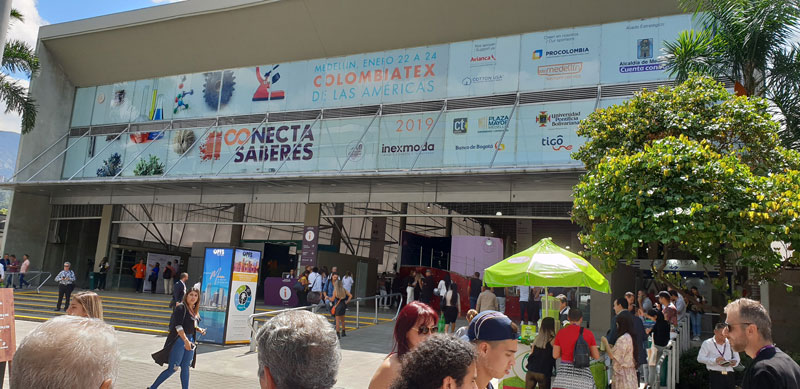
Colombiatex10More than 1,300 business meetings between buyers and exhibitors, together with a general sense of recovery, opened the most important textile agenda in Latin America in ColombiaTex 2019, organized under the Inexmoda initiative.

By Dr. Virgilio L. González, Textiles Panamericanos Correspondent

From January 22 to 24, the textile and clothing sector was on display at ColombiaTex 2019, an event with 30 years of experience, on of the most important shows of its kind in the continent.

In the opening ceremony, Inexmoda highlighted the exchange rate and the inflationary level as factors to improve business, both at the fair and in 2019. In his speech, the Vice Minister of Business Development and Minister in Charge of Trade, Industry and Tourism Saul Pineda Hoyos welcomed exhibitors and national and international buyers who participated. He said: “We invite you to share the optimism and confidence that the National Government has in this sector, which represents 8.5 percent of the manufacturing industry. The numbers grew in November 2018, according to figures from the manufacturing industry report of Dane, exports grew by 7 percent in both sectors, in contrast to the increase in imports of clothing, 15.9 percent and textiles of 25.9 percent in the same period.”

Pineda also highlighted the scope of the productive alliances that are promoted among a group of 86 national garment manufacturers, integrating most of them to the small and medium industry, and 15 large commercial chains to encourage local purchases, in order to stimulate the production and local sales.

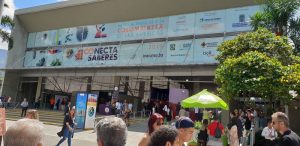
In his speech, the Governor of the Department of Antioquia Luis Pérez Gutiérrez highlighted the strength of Inexmoda to position Colombiatex and Colombia as fashion references in this industrial sector in Latin America, inviting entrepreneurs from the textile chain to “connect knowledge,” a motto also highlighted by Camilo Fernández de Soto, director of the Productive Transformation Program PTP, and Laura Valdivieso Jiménez, vice minister of Foreign Trade of this portfolio. The indicated connection aims to develop the smart textiles that the market demands.

In the same meeting, the Secretary of Economic Development of Medellin Maria Fernanda Galeano stressed that Colombiatex de las Americas generates an economic impact on local tourism of about $11 million, and a hotel occupancy of 86 percent, one of the highest of the year.

Nearly 600 national and international brands were connected at the Plaza Mayor exhibition center in Medellín, in 10,400 square meters of commercial exhibition, receiving 14,424 buyers from 60 countries. In this edition, the business opportunities were $481 million, projection certified by the prestigious INVAMER surveyor. Of these businesses, 42 percent were projected in purchases of textiles, 20 percent in machinery, 15 percent in supplies, 8 percent in yarns and yarns and 4 percent in technical solutions among others.

“From Inexmoda we celebrate the positive dynamics of ColombiaTex de las Américas 2019, starting with the increase in the average purchase ticket, the growth of international buyers and the effectiveness of the more than 1,300 appointments with exhibitors, which were previously arranged through our online business platform that allows us today to have positive results in business expectations that account for the recovery of the Colombian economy,” said Carlos Eduardo Botero Hoyos, executive president of Inexmoda.

Business Conference

With the help of Inexmoda, ProColombia and the Mayor’s Office of Medellín, international buyers connected with new opportunities in business meetings, particularly in finished products and complete package. Through appointments of 65 buyers with 170 exhibitors, $65 million in business was generated, for purchases in swimwear, control clothing, underwear and sportswear.

“We are very optimistic about the results this year because we work as a team with Inexmoda, the Mayor’s Office of Medellín, Propaís, and the Ministry of Commerce, Industry and Tourism, and because the 300 buyers who came from 21 markets with which Colombia has a current commercial agreement, as always stood out the quality and variety, demonstrating the confidence they have in the country as a supplier, and were interested in products and sectors such as woven and knitted fabrics, elastics, underwear, swimwear, uniforms and sportswear,” said Juliana Villegas, vice president of Exports of ProColombia. “Thanks to the different mechanisms we use to bring international demand closer to the Colombian offer, we generated more than 300 appointments in the business meetings, plus the visits that the buyers had to the stands of the fair.” Villegas noted that 126 buyers visited the fair for the first time.

Foreign Vision

According to information from ProColombia, the mission of buyers from the United States was highlighted, among which was Disney. This well-known company had been looking for options for their employees’ uniforms. They did well. Not only were they in Colombiatex but they also have a complementary agenda in Cali, Barranquilla and Bogotá, where 12 companies were visited.

Likewise, negotiators from Edward Garments of Michigan went to the show in search of uniforms from Colombian makers to whom they bought goods 10 years ago. They claimed to have found business opportunities for shirting and grooming items.

Another important delegation was Marferres de México, interested in women’s clothing in knitting. It is the third time that this firm participates in the fair and processed the purchase of 1,200 female and male sweaters that will eventually sell in 50 boutiques in the center and southeast of Mexico.

From Costa Rica representatives of Impomarcas were also at the show. On this occasion, they showed interest in denim because they consider Colombian quality higher than in other parts of the world.

Also, the Axis group from Peru searched for underwear with particular design details, style and materials for this type of garment.

News At The Fair

During the fair, Inexmoda highlighted sustainable organizations, where 18 companies that presented innovations were part of. On the other hand, Inexmoda also appreciated the joint work carried out with allies such as the Mayor’s Office of Medellín, the Ministry of Commerce and Industry and Tourism, the Productive Transformation Program (PTP) and the Government of Antioquia, among others, with which the Institute achieves the transformation of entrepreneurs and entrepreneurs nationwide from different projects, which have improved productivity, income and competitiveness of the Fashion System in Colombia. Some notable exhibitors included:

Lafayette, a Colombia-based company with more than 75 years of experience in textiles, presented a space inspired by the landscapes of Guanajuato, Mexico, where they carried out the production of the calendar and Fashion Film, images that could be seen with digital printing — a whole story narrated on canvas. Lafayette also joined the sustainability route promoted in the show, making visible the best practices of the textile industry, sharing as pillars, water treatment, recycling of reusable materials and entrepreneurship programs with social responsibility such as: Hilando Empresa (Spinning the Enterprise) and Mothers Entrepreneurs.

Cotton USA introduced information on the Trust Protocol for cotton in the United States — an integrated procedure for data collection, measurement and verification that will document the practices used in cotton production in that country and its impact on the environment. These data would be the reference in agricultural advances and goals that would give the global supply chain of textiles, an additional proof that cotton is produced in a responsible manner in the United States.

Among the goals reported were:

  • Increase productivity by 13 percent, implying a reduction in the land used per pound of cotton;
  • Increase irrigation efficiency by 18 percent;
  • Reduce by 39 percent gas emissions to the atmosphere;
  • Reduce by 15 percent the energy expenditure;
  • Reduce soil loss by 50 percent; and
  • Increase the amount of carbon in the soil by 30 percent.

CHT, a Germany-based multinational company that provides the textile industry with innovative products and services, announced his new Be So Effective concept, characterized by meeting international standards that certify products as friendly to the environment. The concept, represented by ten products, showed that each one is designed to offer added value to all the universes of the wardrobe, since it applies to woven and knitted fabrics, denim, natural fibers, synthetics and blends.

The Be So Effective concept is added to OrganIQ, the first eco-friendly bleach for denim fabrics.

Artextil is a Colombia-based company expert in the textile transformation, carrying out processes of printing, dry cleaning and finishing. At this edition of Colombiatex, this mill brought its proposal Avat/Art, technological tool 4.0 that facilitates the textile process and will transform the way of creating fashion thanks to the speed offered by this new technology, allowing the customization of fabrics, its flexibility when choosing the designs and the efficiency of the production chain.

As an objective, Artextil wants to connect this new initiative with designers, both in the graphic market and new designers, involving the creation of a community integrated by 21 Colombian visual and graphic artists, showing the latest trends in textile illustration.

Sutex participated for the eighth time in the fair presenting its consolidated portfolio in fabrics for fashion, beachwear, activewear, decoration and staff. With the slogan “inspired by art passionate about fashion,” Sutex presented a colorful textile collection inspired by the river washer women in rural and artisanal Colombia, along with the designers SOY Diego Guarnizo and María Luisa Ortiz. The process Printing Greentex by Sutex used, cares about the environment by not using any water at all.

Vicunha Textile, a Brazil-based company arrived at Colombiatex with positive growth in its operations and sales during 2018 and expects continuous growing, following zero-tax agreements with Colombia, and the anti-dumping policy.

With an operation that generates 7,500 jobs, the expansion of its plant in Argentina, the modernization of its plant in Brazil and its distribution center in Colombia, Vicunha projects a year of growth in Latin American sales, and the recovery of the Brazilian market.

This company also made part of the Sustainability route of the fair through his SS20 “Future Loading” collection, as well as technology developments to facilitate the design process and different projects that make the company sustainable. In the show visitors to their stand were able to see its software “Match your Rags,” which facilitates developing the chain of denim collections. This software brings together a large database of textiles, laundry finishes, seam types, buttons and appliqués, allowing designers to create prototypes in 3D with images of high quality and precision, reducing costs and real sustainable actions.

EKA Cierres a textile factory in Colombia, showed its new macro trends, with the campaign INSPIRED, with ideas of own style called Exotic nature, Barroque d’or, Urban Beat, Western Bohemian, Oriental Breeze and Denim Much. These trends inspire them to give prominence and differentiating value to their collections through the supplies used for fashion. EKA seeks to fit into a group and at the same time show differentiation and exclusivity, generating an artistic and creative impact.

Enka, founded in 1968 by Akzo Nobel and important Colombian textile companies, manufactures and markets resins, synthetic fibers, contributing to the development of the local industry. Enka presented its resins made of polyethylene terephthalate (PET), filaments based on recycled PET, fibers, industrial threads such as tarpaulin for tires, and was also on the sustainability route of the fair.

Coltejer is a Centennial company that lived, among other things, the birth of denim and  can tell many stories of national and international textile evolution. It presented the Secret Denim Project, with the aim of seeking to integrate the consumer with the textile chain. Hand in hand with 2 influencers of the City, develop garments to the consumer’s taste in terms of fabrics, silhouettes and washed garments. They were active participating in the Denim Day of the fair.

Statements by its director Matías Gaviria, Coltejer will introduce 34 new fabrics to the market. To achieve this transformation, the entrepreneur indicated that 7 million dollars will be invested in processes of sustainability, modernization and technological updating.

Estrela Aviamentos, is the Brazil-based Manufacture of Avíos with a factory in Guarulhos. It presented its biodegradable elastics. Products are made with natural fibers such as linen and cotton promoting differentiated design and aesthetics. Estrela is the first industry of elastics manufactured with the Amni Soul Eco @ of Solvay Tchnology, making its products biodegradable and with remarkable soft touch. The Amni Soul Eco @ technology makes possible to manufacture a biodegradable nylon 6,6 yarn, which has an improved formula, allowing textiles made to decompose quickly after being dumped in sanitary landfills in three years. Other fibers can last for decades or centuries without decomposing.

Estrela also serves sectors such as footwear, automotive, orthopedics, clothing, decorations, Beachwear and intimate fashion.

Huntsman is a major manufacturer of chemical products for textiles. It presented its range of products, including:

  • TERASIL @ Washfast Red Dyes, which have proven to give good performance in polyester dyeing and blending. TERASIL Washfast dyes satisfies the list of restricted substances (Restricted Substance List RSL), in widely known sports brands.
  • Dicrylan @ SD Deep dye technologies, which contributes to greater intensity in the colors sought in all types of fibers. This can be critical in achieving deep-toned blues and blacks.

Fabricato is another Colombia-based company with a long history and tradition that allowed the public, through its stand and walkways, to appreciate its sustainable initiatives. “This will be a year of consolidation that will be observed in the transfer of the RioTex plant from Rionegro to Bello,” said President Carlos Alberto de Jesús. “The land where the knitting plant was would be changed into an industrial park, which will generate new revenues.”

Fabricato recently took a big step in its innovation, acquiring, among other equipment, state-of-the-art Toyota flat looms.

Epson showed a series of printers designed for haute couture, casual fashion and even the printing used with special reference to sportswear. Its equipment features high speed, low production cost and high volume.

Alvanon showed on its stand a wide range of mannequins that guarantee the consistency of sizes, reduce samples and shorten times. The company states that the mannequin as a tool allows a more effective process and cost reduction. Large production brands know this and have put it into practice gradually. In addition to mannequins, Alvanon offers consulting services related to the sizing, climbing of garments and product development, as well as professional training. Among its customers are brands of great fame Customer in Mexico and South America include Walmart Mexico, Almacenes Garcia, Andre Badi, Totto, Liverpool, Shyla, Arturo Calle, Pat Primo, GEF, Punto Blanco, Palacio de Hierro, Scappino, Innova Quality , Línea Directa, Swantex and Price Shoes among others.

Archroma is a well-known manufacturer of a wide range of chemical products for industry. Among its products presented were:

  • Advanced Denim — Indicolor technology has opened a wide range of productive benefits and design possibilities in an ecological way, reducing the use of Sodium Hydrosulfite, making manufacturing more versatile, flexible to production variations and guaranteeing high quality products.
  • Denisol @ Indigo 30 Liq. pre-reduced Indigo color that helps a more effective, more environmentally friendly and high-productivity coloration.
  • OPTISUL dyes that contribute to the achievement of color effects in a simple and economical way. Its use allows greater control in dyeing processes, even in complicated colorations.

Weko showed its latest advances in cutting, both standard and special for different applications. Some are developed in textile branches and compactors with chain of needles, others are applied to cut bent, coated or other processes cutting different types of fibers and substrates.

The Weko range of products includes edge cutters, longitudinal and transverse cuts, and can include through-cylinders for installation in different applications. They can cut textiles, paper and nonwovens among others. The company also presented its innovative rubber applicator at the fair.

Italian Delegation

Through the Italian Trade Agency (ITA), Colombiatex 2019 coordinated the presence of important Italy-based companies involved in the textile sector. ITA promotes and develops commercial and business relations between Italy and foreign markets, paying special attention to the needs of small and medium industry, its consortiums and associations. It also supports the export of Italian goods and services to international markets.

On this occasion were present:

  • MCS — Important manufacturer of high performance dyeing machines;
  • Arioli — Specialized in printing and finishing garments;
  • Beschi — Molded by plastic injection and plastic accessories for textiles;
  • Biancalani — Textile machinery of various types;
  • Caipa — Industrial automation;
  • Itema — Weaving machinery: and
  • Other companies including Ferraro, Mario Crosta, Fadis, Sicam, Tecnorama and Ugolini.

Delegation Of India

Supported by The Cotton Textiles Export Promotion Council of India, 40 Indian firms participated in Colombiatex 2019. These 40 exporters showed their yarns, cotton fabrics, and home textiles.

Members of this large delegation, said that Colombia is an important market for them with total imports of 1,693 million dollars in 2018, of which 163 million came from India. India being the second largest producer of cotton worldwide, there is interest in selling this agricultural item to Latin American countries.

Lastest Trends

In terms of knowledge, fashion and illustration, it was possible to observe at the fair a large number of participants in the Inexmoda – Universidad Pontificia Bolivariana — UPB Knowledge Pavilion, which dealt with topics such as Industrias 4.0 and Orange Economy. There were 22 conferences attended by 8,470 people and connection via streaming of 7,719, from the TeleMedellín signal. 300 people also enjoyed six practical workshops.

“In this edition of the Inexmoda Knowledge Pavilion – UPB we presented two thematic axes: in the first, we  saw how new technologies have impacted industries, forcing them to adapt to a new reality that implies the permanent generation of experiences for the consumer. In the second, we explored the Fashion System in constant change, making its actors see creativity as one of the most important assets of companies, as well as being a fundamental pillar for innovation,” said Lorenzo Velásquez, director of Transformation and Knowledge of Inexmoda.

Like other previous fairs, Colombiatex 2019 did not omit the Denim Day, where assistants paid tribute to this fabric. Some manufactured goods presented were shirts in Chambray, sets, overalls, jeans, cargo, wide leg trousers and jackets. Additionally, fiber exploration was seen, where elastane integration was important for this type of garments.

Walkways

In an event like this one could not miss catwalks, among which parades coordinated by Fabricato, Lafayette, Invista (Lycra) with intimates of Leonisa, Diane & Geordi, Deportivo Flexme Gymco, Intimo Fiorentina and Baths Touché and St Even stood out.

Brazil’s footbridges also stood out in its General Stand and the catwalk – exhibition of Ceci La Lavandera, by Sutex, with traditional themes from rural Colombia.

There is no doubt that ColombiaTex 2019 was a resounding success, and it is not difficult to predict that this fair will continue to be a leader in its style, for the entire Central/South American region. Important to indicate is that in Colombian textiles, the United States continues to b the most important business partner.

April 11, 2019

Marzoli Transport System: Installations In Several Countries With High Customer Satisfaction

Marzoli1  TW Special Report

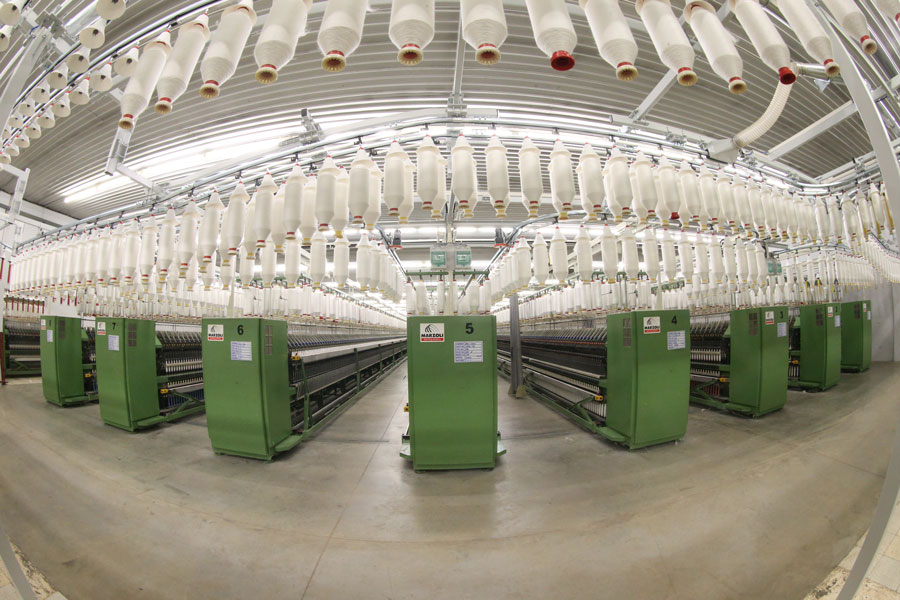
Marzoli, an Italy-based manufacturer of complete lines for cotton and man-made fiber spinning, was among the first companies to introduce automation in transport systems 30 years ago, allowing the reduction of labor costs and the risk of poor handling of roving bobbins.

Thanks to the experience gained in this field, at the textile show ITMA Milano in 2015, Marzoli launched its own transport system MTR, which is able to enhance the efficiency of the transportation of roving bobbins to the spinning frames.

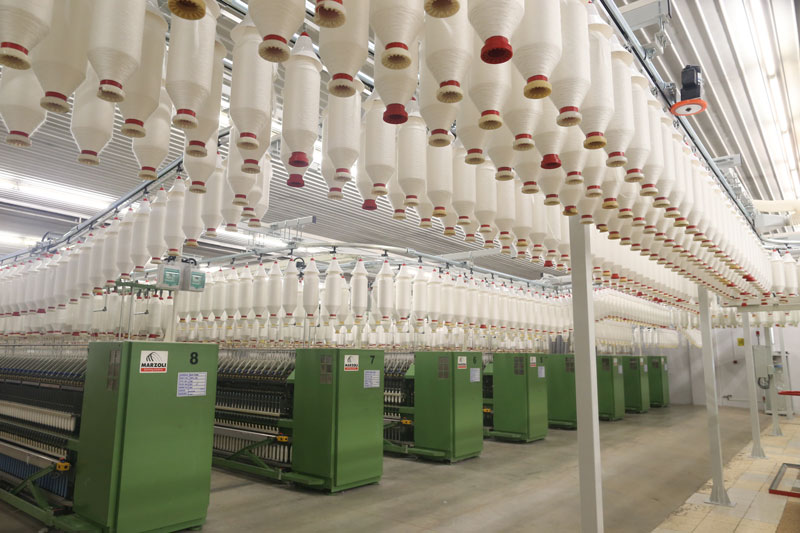
With MTR the bobbins are carried by a closed-circuit overhead chain along the aisles between the spinning frames. The operator changes and pieces them on the spinning frames’ creel.

Marzoli2Since 2015, this transport system has experienced success. It has been chosen by several customers worldwide. Currently, it is installed in eight different countries — Argentina, Iran, Pakistan, Algeria, Turkey, Egypt, Mexico and Uzbekistan — and it is currently serving more than 240,000 spindles.

The MTR has been highly appreciated for its fully-customizable design, its reliability and the advantages of the integration of the bobbin stripper, Marzoli IBC, on the exchanger.

Marzoli IBC was conceived to perform cleaning and exchanging of the tube at the same position with the aim of stopping the chain only once for both operations and consequently reduce the number of stops and the overall chain downtime. Higher efficiency also stems from a faster cleaning operation.

Marzoli3The MTR with IBC represents a reliable and efficient solution for spinning mills with high production and uniform production programs, able to reduce dependence on non-qualified staff and to maximize the efficiency of the whole spinning process.

Marzoli also recently launched the MTT, a new development of the block creeling transport system — currently being installed at a customer’s plant — and that builds on all the advantages of the MTR and IBC. MTT represents the ideal choice for spinning mills with highly flexible production programs.

April 11, 2019

Fabrics That Protect Against Chemical Warfare Agents

ProtectiveTextiles-1500-950x535
To protect against toxic industrial chemicals and chemical warfare agents, researchers are creating textile coatings using water-stable metal-organic frameworks.

By D’Lyn Ford

A new coating for textile fibers shows promise for efficiently capturing toxic industrial chemicals and chemical warfare agents under real-world conditions, including high humidity. The research could lead to improved masks and personal protective equipment for soldiers and others at risk of exposure.

Researchers at North Carolina State University and the U.S. Army’s Combat Capabilities Development Command Chemical Biological Center (CCDC CBC) developed functional textiles that neutralized a blistering agent simulant under conditions of 80 percent relative humidity. The new coating also captured ammonia gas, a commonly produced industrial chemical in the U.S.

“For more than a century, we’ve had threats from chemical warfare agents, from chlorine and mustard gas in World War I to recent attacks against civilians in Syria,” said Dennis T. Lee, a recent Ph.D. recipient at NC State and lead author of an article about the work. “We need to find ways to capture and chemically break down toxic gases for practical, better-performing protective equipment.”

Researchers worked with metal-organic frameworks (MOFs) – coatings that are synthesized over microfibers. There are two significant challenges. The first lies in creating MOFs that can remain stable in the presence of moisture while holding the hazardous compounds in a thin film, a process known as adsorption/absorption. The second is achieving a coating that’s effective in degrading toxic chemicals.

The team created a water-stable copper (Cu)-based MOF film. Instead of working with a powder source, researchers used a solid film deposited on the fiber, which captured three times more ammonia gas than the same MOF powder.

Electron microscope images showed MOFs in crystal formations that grew out radially from the fiber — a distinctive shape that hadn’t been previously reported. The MOFs bonded strongly with the surface of the polypropylene fibers, resisting flaking when handled in the lab and when swept with a nylon brush.

“This alignment formed a dense coating on the fibers, with better integration and adhesion to the surface, and improved adsorptive performance for hazardous gases,” Lee said.

The new MOF-coated composites have potential to be used as a base film in protective textiles, according to Lee. The method would also be suitable for use in smart textiles that have multiple functions, such as sensors, he adds.

Future plans call for testing the new materials with real chemical warfare agents, working with U.S. Army experts at the CCDC CBC.

The article, “Water-Stable Chemical-Protective Textiles via Euhedral Surface-Oriented 2D Cu-TCPP Metal-Organic Frameworks,” appears with a highlight as “Frontispiece” in the journal Small.

Co-authors are Jovenal D. Jamir, NC State undergraduate chemical and biomolecular engineering student; Gregory W. Peterson with CCDC CBC; and Gregory N. Parsons, a professor in NC State’s Department of Chemical and Biomolecular Engineering.

This work was supported in part by the CCDC CBC (Grant W911SR-07-C-0075), Joint Science and Technology Office (Grant CB3934), Army Research Office (Grant W911NF-13-1-1073) and Army Research Office Defense University Research Instrumentation Program (Grant W911NF-17-1-0166).


Editor’s Note: D’Lyn Ford is a public communications specialist at NC State University.


April 11, 2019

UAE Company, Purecog, Set To Disrupt Single-Use Plastic Usage In Three Key Industries

DUBAI, UAE — April 10, 2019 — Purecog, a Dubai-based company focused on minimizing waste and maximizing resource efficiency, has launched an initiative to assess and reduce the harmful and costly plastic footprint of organizations within the tourism, hospitality and healthcare sectors, in the Middle East.

Championing the transition to a Circular Economy, Purecog advocates a cost-effective and regenerative approach to resource management; in contrast to the traditional linear model, which has a ‘take, make, dispose’ attitude to production and use.

Since 1950’s, around 8bn tons of plastic (that’s 800,000 Eiffel Towers) has been produced, only 9% of which has been recycled. It’s easy to see how this figure has accumulated, with 2m plastic bags and 1m plastic bottles bought and used around the world, every single minute. The majority of this plastic ends up in landfill sites or the ocean, killing 1.1 million animals annually. It is statistics like these, which led to an overwhelming vote by members of the European Parliament, to ban all single-use plastics in Europe, by 2021.

By pioneering single-use, thin-film plastic replacement products such as water-soluble polymer shopping bags at the resource end, and upcycling technologies at the waste management end, Purecog is able to work closely with an organization, first auditing and reporting on the single-use plastic footprint in all areas, then offering practical solutions to improve not only a company’s green credentials, but more significantly, its bottom line.

Speaking on the subject Paul Gandy, operations director at Purecog, said: “Our team have a history of leading change, globally, in the field of sustainable business. That puts us in a uniquely advantageous position, ahead of the curve regionally, to assist a wide range of entities in the inevitable move towards a circular economic system, through knowledge sharing and problem solving.”

It is for these reasons that Purecog has brought together a world-class of team of sustainable business experts, to deliver the triple bottom line: People, Planet, Profit.

Posted April 10, 2019

Source: Purecog

Sponsors