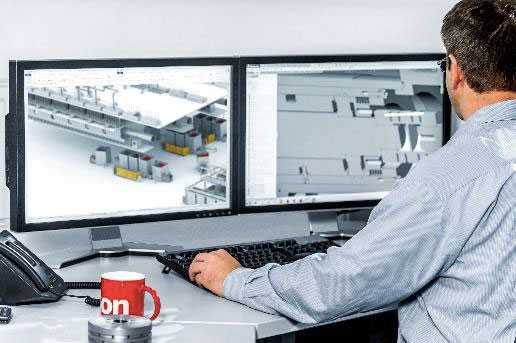
NEUMÜNSTER, Germany — May 28, 2020 — To increase system productivity and to keep service downtimes as short as possible, remote servicing has long been absolutely essential within a globally-networked textile industry. For its Oerlikon Neumag and Oerlikon Nonwoven brands, the Oerlikon Manmade Fibers segment is offering a new secured remote service concept with defined loan-based hardware and software.
A remote connection with remote access to the systems creates new service options that would not have been possible over the phone or by e-mail. With remote servicing, unplanned downtime and the associated production stoppages — which can quickly result in costs running into the tens of thousands — are significantly reduced. Here, the standards for IT security and the requirements for IT components are becoming increasingly decisive. For these reasons, it is all the more important to ensure the requisite hardware and software are constantly up-to-date.
Upon signing a secured remote service contract, Oerlikon Manmade Fibers provides its customers with the necessary hardware and software, exchanges the hardware in the event of changes to security requirements and supplies continuous software updates. “Within the context of a secured remote service contract, we loan the hardware to our customers. This means that our clients do not have additional procurement costs and they do not have to worry about ensuring their technology is constantly up-to-date in terms of security requirements. We assume this task for them,” explained Jan Pauer, technical sales manager responsible for modifications, talking about the benefits of this service concept.
Secured remote service contracts are offered for all Oerlikon Neumag and Oerlikon Nonwoven systems and are available with additional, customer-specific services.
CARY, N.C. — May 28, 2020 — INDA, the Association of the Nonwovens Fabrics Industry, announces publication of the seventh edition of the annual North American Nonwovens Supply Report for its members.
Based on extensive research, producer surveys and interviews with industry leaders, the report provides an overall view of North American supply, including the key metrics of capacity, production and operating rates, in addition to regional trade. The 70-page report contains 34 figures and 11 tables, with four new figures this year.
“This report is the most complete and accurate in existence for North American nonwovens supply information, including data for both rolled goods for sale and also material produced for internal consumption. It also presents the industry operating rate; the essential element for strategic planning and business investment decisions,” said Dave Rousse, INDA President.
The report — and the quarterly INDA Market Pulse and monthly Price Trends Summary — are provided to the approximately 365 INDA member companies and associates as part of their membership. The data gathered for this annual report serves as the foundation for the biannual North American Nonwovens Industry Outlook, which will be available for purchase this fall.
Findings from this year’s Supply Report include:
In 2019, North American nonwoven capacity increased to 5.479 million metric tons, a net increase of only 0.9 percent (51,000 metric tons) over 2018. This growth figure accounts for not only the addition of new lines, but also machine productivity increases and line closures to arrive at a net increase growth figure. In the last three years, 64 lines have come online and 23 lines have been shut-down. The majority of the new lines are making engineered materials for the transportation, home/office furnishings, and filtration markets.
North American imports and exports, in tonnage, decreased 3.0 percent and 18.6 percent respectively year-over-year, led by declines in trade with China. However, the trends of downward exports and upward imports continued, as over the last five years’ exports have declined 7.7 percent annually and imports have increased 7.8 percent annually. Even with the significant shifts in North American trade dynamics, nonwovens tend to stay where they are produced, with the net trade balance (imports less exports) accounting for less than five percent of the region’s capacity.
“It is INDA’s objective to provide valuable data and actionable industry information to enhance decision making. As always, the increasing participation of nonwoven producers — both members and nonmembers — providing their insights and results makes our success possible. In the 2017 report we introduced production by end-use market, this year we are pleased to present production by raw material usage,” said Brad Kalil, director of Market Intelligence & Economic Insights, INDA.
Posted May 28, 2020
Source: INDA, the Association of the Nonwoven Fabrics Industry
NEW YORK CITY — May 28, 2020 — Cellulotech, a company focused on research and development around cellulose, today announced that paper treated with the team’s chromatogeny technology, has passed the blood/fluid resistance test ASTM F1862 in an independent United States laboratory. This test demonstrates the treated paper’s water barrier capabilities, paving the way for medical use, as per the current Food and Drug Administration requirements, furthering Cellulotech’s ultimate goals of offering a technological paper-based solution to the material shortage in mask production. These results come after Cellulotech’s technology successfully passed filtration and breathability tests in France, allowing mask production and distribution in the country.
Chromatogeny, discovered and pioneered by Cellulotech’s Chief Scientist Dr. Daniel Samain, is a green chemistry process that makes any cellulose-based material permanently hydrophobic without affecting the breathability of the material and keeping all its recyclability and compostability properties. Given that cellulose is the most abundant renewable compound on earth, chromatogeny creates a gateway of opportunity for several industries — such as packaging, healthcare, consumer products, fashion or construction — that require the use of paper in different capacities. The ecofriendly material has the potential to save millions of tons of paper as well as replace unsustainable and harmful coatings and chemicals at a much lower cost.
“The news that chromatogeny-treated paper has passed the ASTM F1862 test is an exciting external validation for our chromatogeny technology, and further supports our mission of using treated paper as a way to provide rapidly and massively affordable and effective masks for both individual and medical use,” said Romain Metivet, CEO of Cellulotech. “We have now confirmed our technology could help solve the impending personal mask shortage quickly and provide effective and sustainable protection for all, to ultimately combat the spread of COVID-19.”
The ASTM F1862 is a standard test method that proves the resistance of medical face masks and materials to penetration by synthetic blood. The passing of this test validates the potential of chromatogeny-treated paper as an effective alternative for the massive production of face or surgical masks. This is particularly crucial as capacity and geopolitical issues have arisen, causing complications in the production and procurement of traditionally-used melt-blown fabric. The masks are also much more environmentally friendly than traditional surgical masks, which take around 400 years to biodegrade.
Cellulotech has the capability to work with paper manufacturers worldwide to help combat the global mask shortage. The chromatogeny treatment is both affordable, already industrialized and easy to implement, with the total cost of treating paper estimated to be between 0.1 and 0.2 cents, per mask. Chromatogeny can also be applied to enhancing other PPE shortages — such as gowns and mask filters. A chromatogeny-treated paper mask is also a better alternative to cloth masks, which offer no liquid barrier protection, and capture droplets that can penetrate by capillarity and contaminate the wearer, with very uncertain filtration efficiency.
Cellulotech’s chromatogeny technology has been tested by Switzerland’s SGS, the world’s leading inspection, verification, testing and certification company, and has also passed a series of third-party laboratory tests in France.
WINTERTHUR, Switzerland — May 28, 2020 — Due to COVID-19, a large number of spinning mills have stopped production worldwide. Since the end of March 2020, this has led to low demand for spare parts and wear & tear parts and delays in testing programs during the development of new machines. Customers are postponing investment projects or unable to implement them due to restrictions imposed by national governments. This results in low demand for new machines.
Comprehensive crisis management
Rieter has implemented comprehensive crisis management. Priorities are being given to protecting employees, fulfilling customer commitments and ensuring liquidity. The necessary measures to protect employees have been implemented worldwide.
The order backlog of well in excess of 500 million Swiss francs ($521 million) is being processed largely according to plan, despite the existing bottlenecks in the supply chains. Less than 5 percent of the orders in the order backlog have been canceled.
Rieter has already implemented measures to ensure liquidity and reduce costs. The company has good net liquidity and undrawn credit lines in the mid three-digit million range.
Loss expected in the first half of 2020
As already reported, Rieter expects sales and earnings in the first half of 2020 to be significantly below the prior year level. The effects of COVID-19 will place an additional burden on the first half of 2020. Rieter therefore expects sales in the first half of 2020 to be less than 300 million Swiss francs ($312 million). Despite the countermeasures implemented at the net profit level, this will lead to a loss in the mid double-digit million range.
Plans to introduce short-time working to adjust capacity
Rieter plans to apply for short-time working for the areas with forecasted low capacity utilization at the locations in Switzerland and Germany. The application will be for 40 percent short-time working in the third quarter of 2020. Talks with staff representatives will begin next week. Areas that are responsible for processing the order backlog are excluded from short-time working. This also applies to the assembly of machines in Winterthur, the relocation of which is being implemented as planned.
Similar measures to reduce working hours are planned worldwide where necessary, within the scope of the available legislative options.
As a sign of solidarity, Rieter’s Board of Directors, Group Executive Committee and the senior management will waive 10 to 20 percent of their salaries temporarily.
Rieter is therefore entering the second half of 2020 with a significantly improved cost base.
Implementation of the strategy
In recent years, Rieter has consistently implemented the strategy based on innovation leadership, strengthening the business in components, spare parts and services and the adjustment of cost structures. The company intends to forge ahead with the implementation of the strategy in the coming months, thus strengthening its market position for the time after the COVID-19 pandemic.
The next information on the course of business is planned with the publication of the half-year results on July 16, 2020.
MORRISVILLE, PA. — May 28, 2020 — Today Gelest Inc. announced the integration of the company’s website with its new Enterprise Resource Planning (ERP) system to improve its customers’ website experience.
The integration significantly broadens existing online ordering capabilities including inventory availability, a secure credit card payment option, viewable order history, faster order processing, easier access to frequently purchased items, and more. These enhancements span Gelest’s entire research product portfolio of silanes, silicones, and metal organics.
Another benefit of the enhanced website e-commerce functionality is access and visibility to new products as they are developed. “New product development is the core of Gelest’s open innovation model. We develop hundreds of new and unique products every year to help enable our customer’s technology,” said Dr. Jonathan Goff, vice president of research and development of Gelest. “This enhancement to our website will allow Gelest to introduce these new products to the world as they are developed.
“Customers will be able to gain access to these products as soon as they are available, eliminating the time-consuming manual uploads of the past. New product information on the website will now be instantaneous.”
Sciessent’s CEO Paul Ford discusses antimicrobial and antiviral solutions for textiles.
TW Special Report
Beverly, Mass.-based Sciessent LLC recently announced that in support of the fight against the Covid-19 pandemic, it is working with a consortium of manufacturers to produce 700 million face masks incorporated with Sciessent’s Agion® antimicrobial solution. Sciessent reports: “The Agion treatment incorporated into masks is modeled after the FDA- [U.S. Food and Drug Administration], E.U.- and Canadian-cleared Nexera Medical surgical respirator, which relies on Agion Antimicrobial performance to make FDA-cleared claims to inactivate viruses by 99.99 percent in 5 minutes and kill 99.99 percent of bacteria in one hour.”
Sciessent was founded in 2011 by Agion Technologies Inc.’s senior management team. The company then “… acquired Agion’s intellectual property assets, including the company’s portfolio of national and international patents and patent-pending applications, as well as its proprietary expertise pertaining to anti-odor agents including Agion metal ions-based antimicrobial technology and Agion Active™ dual-action anti-odor technology.”
Sciessent then took over Agion Technologies’ role in “providing sustainable technologies that benefit and enhance people’s lives through medical devices, potable water
and textile applications,” according to the company. It has pledged to remain innovative and to expand applications for its existing solutions and integration with complementary
technologies.
Recently, Sciessent’s CEO, Paul Ford, spoke with Textile World editors about the science behind its antimicrobial solutions, how they work and their effectiveness and role during
the COVID-19 pandemic.
TW: These must be the most interesting of times for the Sciessent team! How are people holding up?
Paul Ford: Folks believe they are contributing to the greater good and feel proud to be delivering a technology that truly performs. While the office staff is all working remotely, our technical team has been working in the labs daily and on weekends to support customers. The regulatory, engineering and healthcare group has worked literally through the night as needed to deliver critical information to the FDA almost immediately.
TW: Sciessent produces a variety of technologies. Can you describe the range and some of the leading applications for the technologies?
Ford: Eight years ago, Sciessent looked at apparel strategically, and determined the market demanded more than antimicrobials. Our technical team innovated and became one of the first suppliers to introduce non-biocidal odor adsorption product that could perform independently or in concert with our Agion Antimicrobial product line. We have since expanded to textile water repellents and other auxiliaries. These textile products are now the larger portion of our business, bigger than the Agion Antimicrobial solutions sold to the medical device, drinking water and footwear segments.
TW: Although Sciessent’s Agion is described as an antimicrobial, it also confers antiviral properties, correct?
Ford: In medical device applications, the FDA reviews the end product directions for use and where supported with robust studies, authorizes antiviral claims. The Nexera Surgical Respirator with Sciessent’s antimicrobial technology has demonstrated 5 minute deactivation of numerous viruses and makes such claims.
TW: In layman’s terms, how does Agion technology work?
Ford: Agion is a mixture of metal ions, including silver, copper and zinc, which in the presence of moisture are delivered at a controlled rate from a zeolite — similar to a sand grain. Zinc modulates the flow of silver and copper, which are doing the heavy lifting
in terms of delivery the antimicrobial performance.
TW: What does “controlled delivery” mean, and why is it important?
Ford: Controlled delivery refers to how the silver and copper ions are released from the zeolite carrier. Other silver antimicrobials just dissolve based on the solubility of the material, which can be too low for efficacy or too high, resulting in shortened use life. The silver in Agion is delivered through an ion exchange process — the silver leaving the zeolite only when another ion, such as sodium, changes place with it on the zeolite. So much like a thermostat controls the temperature, when the silver reaches an antimicrobial concentration the zeolite turns off. If the silver is washed or wiped off, the zeolite turns back on, bringing the silver concentration back up to an antimicrobial level. This metered delivery is why the Agion antimicrobial is known for its longevity and efficient use of active ingredients.
TW: Generically, how are antimicrobial treatments/ finishes tested, rated and what are acceptable results for agencies like the FDA?
Ford: Antimicrobial testing is typically based on standard test methods, for example ISO, ASTM International or American Association of Textile Chemists and Colorists methods. Oftentimes modifications are made to the method to include simulated use of the finished product, to evaluate performance over time and to test against clinically relevant organisms. The antimicrobial claims for the finished product are based on the results of the testing. Performance greater than or equal to 99.9 percent reduction is often specified by the end use customer for FDA-regulated products.
TW: To make antiviral claims, what is permitted and what agencies are involved?
Ford: The EPA does not allow antiviral claims unless the product is registered to make health claims. FDA will review virus claims as part of a device filing. I expect the EPA will have a busy enforcement calendar pursuing companies that have marketed unvalidated antiviral solutions here in the United States after this pandemic winds down.
TW: When used in textile applications, how durable is Agion?
Ford: We can tune the finish to provide performance from 10 home washes up to 100 industrial washes
TW: What do you see in the future for antimicrobial technologies and applications?
Ford: As the market for antimicrobials has become more competitive, we have seen a bit of a shift. Our brand has been built off true performance and durability, backed by test data.
As other technologies move into the market to fill the heightened demand led by the current crisis, in some cases they are rushed to market and so can’t be differentiated with improved performance. In these instances, the suppliers build their brand on marketing their technology differently.
As the crisis continues, I think the consumer will be much more aware of technologies like antimicrobials. Because of this, brands will need to offer a technology that delivers actual performance, not just a marketing claim that is not substantiated with test data. The goal for us as suppliers should always be to deliver the best performing technologies to the consumer. This has always been Sciessent’s approach, one that I know has been appreciated by our customers and by extension, their end users.
Jerusalem-based Seevix Material Sciences Ltd. — the developer of patented, man-made SVX™ spidersilk — announced it is using the spidersilk technology to produce disposable filters that can neutralize coronaviruses including SARS-CoV-2. Incorporating a specific peptide sequence that binds with coronaviruses into the SVX fiber, results in virus-binding sites that can entrap and inactivate the viruses and thus prevent their spread. “SVX fibers with the specific peptide sequence can be incorporated in textiles used in filters, be used to coat the external surface of textiles, or form part of a protective insert to entrap and neutralize viruses and microbes,” according to the company.
“SVX can be woven into a protective physical filter that neutralizes coronaviruses,” said Dr. Shlomzion Shen, CEO, Seevix. “Seevix is currently developing several market-ready anti-COVID-19 applications and will soon be entering into discussions with potential strategic partners.”
In other company news, ASICS Ventures Corp. has invested in Seevix. Together, Seevix and the ASICS Institute of Sport Science will work to develop sporting goods featuring SVX spidersilk.
Panda Biotech, Dallas, reports it will donate more than 60 tons of approved hemp fiber seeds to Texas agricultural producers as part of an educational endeavor designed to jump-start the state’s industrial hemp industry. Farmers accepting the seed will be asked to provide data on their crops, and in return, will receive a free copy of a report based on research conducted using the feedback to be published by Texas A&M AgriLife. The program hopes to ensure the 2021 Texas industrial hemp harvest reaches its full potential. The promotion was coordinated with the Texas Industrial Hemp Council, a group formed by Texas Agriculture Commissioner Sid Miller.
“Under Commissioner Miller’s leadership, we expect to be the nation’s leader in hemp production, but as a brand-new crop, there is much yet to learn about how hemp will respond to Texas soil,” said Eloise Frischkorn, chairperson of the Texas Industrial Hemp Council.
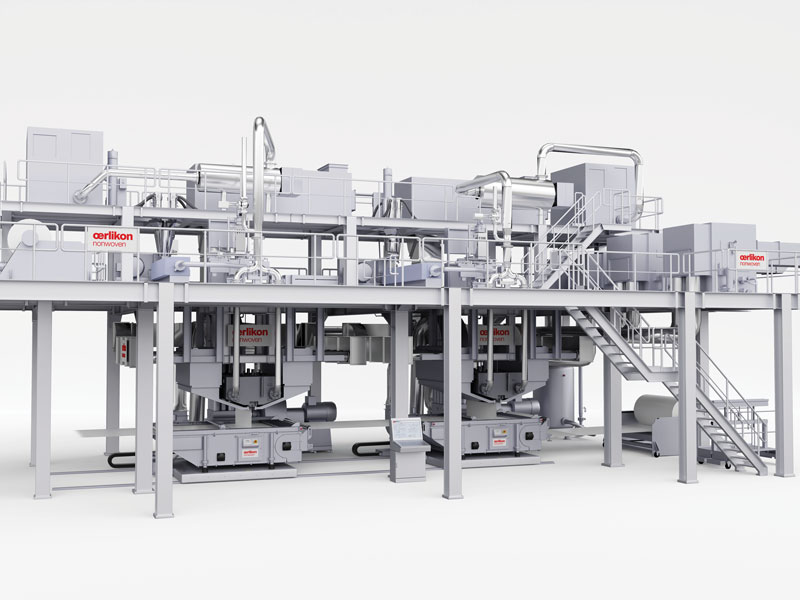
Oerlikon Nonwoven is using its meltblown technology to produce filter media for more than 1 million protective face masks.
Germany-based Oerlikon Nonwoven recently converted laboratory equipment at its R&D Center — typically used for development work and customer trials — to production-scale manufacturing. After realizing the demand could not be met with its initial small runs, Oerlikon invested to enable the equipment to run continuously.
“Since the beginning of the coronavirus crisis, we have received more than 500 inquiries that we are progressively dealing with,” said Andreas Frisch, head of operations, Oerlikon Nonwoven. “To be quite honest, we had initially not anticipated such tremendous interest. But the demand is there, and we quickly further adapted to the challenge.”
Berry Global Group, Evansville, Ind., has expanded its global capacity for Meltex™ meltblown nonwovens to support current demand. In North America, Berry converted a pilot line in Waynesboro, Va., to one that provides full commercial output.
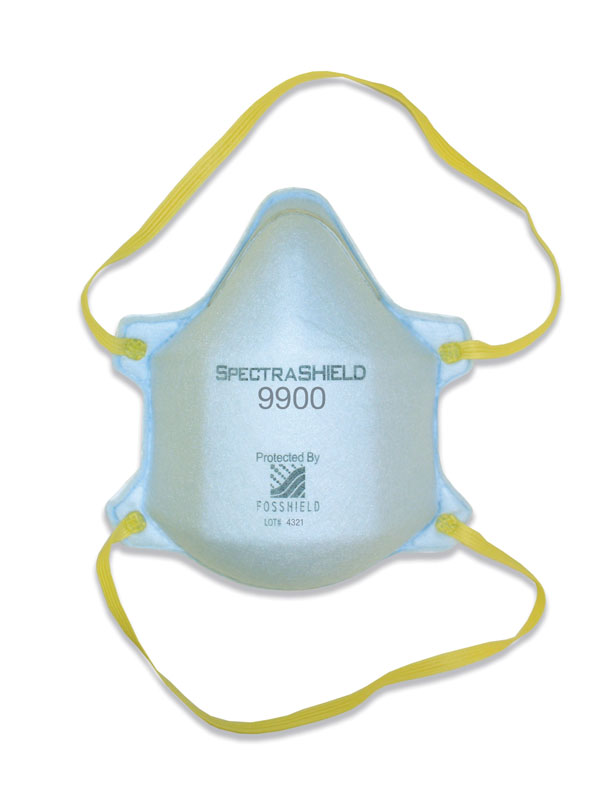
The added capacity will be used for surgical-grade face masks as well as N95 and N99 respirators. In Berlin, Germany, Berry is installing a new production line — expected to be operational in October 2020 — that will focus on the production of highly efficient, premium FFP2 and FFP3 grade filter materials used in N95 and N99 products, respectively.
Berry also has extended its Synergex™ line with the launch of Synergex ONE media for face mask applications. The multilayer nonwoven composite material is produced in Europe and is intended to serve the European market.
“We are now beginning to see the localization of varying forms of equipment that produce materials for PPE, as countries and governments look to be able to react with speed to any future outbreaks,” said Cedric Ballay executive vice president and general manager for Europe in Health, Hygiene, and Specialties.

 NEUMÜNSTER, Germany — May 28, 2020 — To increase system productivity and to keep service downtimes as short as possible, remote servicing has long been absolutely essential within a globally-networked textile industry. For its Oerlikon Neumag and Oerlikon Nonwoven brands, the Oerlikon Manmade Fibers segment is offering a new secured remote service concept with defined loan-based hardware and software.