Dow Unveils New Hybrid Binder For High-Performance, Waterborne Textile Printing Inks

MIDLAND, Mich. — June 11, 2020 — Dow has launched a new generation hybrid binder for the formulation of waterborne screen printing inks achieving superior durability, color brightness and opacity on fabrics made of man-made and natural fibers for the growing streetwear and sportswear markets.

“With boundaries between outdoor and fashion apparel getting vaguer, DOWSIL™ Print 041 Binder helps inks formulators and screen printing shops meet key customer demands for soft hand feel and bright colors that don’t crack, fade or run, while controlling processing costs and achieving superior durability” said Padmadas Nair, senior technical service and development leader for textiles at Dow. “As the fashion industry adopts production practices and materials with reduced environmental impacts to meet tightening regulatory requirements and sustainability commitments, Dow’s innovative printing ink technology can help leading brands to combine stylish look, easy-care, durability, profitability and sustainability.”

An innovative acrylic polyurethane hybrid material, DOWSIL Print 041 Textile Printing Ink Binder enables drop-in, waterborne alternative formulations to conventional textile printing inks, combining high performance, cost-effectiveness, and superior sustainability profile.

Inks formulated with DOWSIL Print 041 Binder combine ease of use in existing screen printing equipment, with superior adhesion and high image opacity in both man-made fabrics and cotton. Printed textiles display excellent resistance to elongation, as well as high washing, rub, and ironing fastness compared to conventional alternatives to PVC inks.

Brand owners and regulatory bodies in Europe, North America and around the world have been progressively restricting the use of textile inks containing PVC and phthalates based on health and environmental concerns over the past several years.

Frauke Baltruschat, EMEAI marketing manager for textiles at Dow, and Padmadas Nair will present the specifics of this novel hybrid binder technology and demonstrate its performance attributes in screen printing ink formulations during a dedicated webinar on Wednesday July 22, 2020 at 2 p.m. Continental Europe Time (CET). Participants are invited to register online.

Dow can provide starting formulation guidelines to serve customers better. For more information about Dow’s technologies for textile printing, visit www.dow.com/textileprinting

Posted June 11, 2020

Source: Dow

Americhem Announces Antimicrobials In Fibers Webinar

CUYAHOGA FALLS, Ohio — June 11, 2020 — Americhem — a designer and manufacturer of custom color masterbatch, functional additives, engineered compounds, and performance technologies — has announced another webinar in its recent series, called “Antimicrobials in Fibers 201” that will take place on June 25, 2020.

This webinar class will teach you how antimicrobials make fiber applications inhospitable to microbes and how you can use them as additives in masterbatch and compound polymeric solutions. And your burning questions answered on the spot!

Key Takeaways:

  • The basics of antimicrobials;
  • Types of antimicrobial options for fiber applications;
  • How to choose the right antimicrobial for your fiber product;
  • What regulatory claims are appropriate for the fibers industry; and
  • Other additives to enhance many fibers such as nonwovens and textiles.

Event Details:

  • Thursday, June 25, 2020
  • 9:00 – 9:30am EST
  • Presented by Robert Baldy and Roger Threadgill

If you want join “Antimicrobials in Fibers 201” webinar on June 25 at 9:00am EST, register at the following link: https://register.gotowebinar.com/register/289273120525828879?source=Press+Release

Posted June 11, 2020

Source: Americhem

ITMF: Worldwide Shipments Of New Textile Machinery Decreased In 2019

ZÜRICH — June 11, 2020 — In 2019, global shipments of spinning, texturing, weaving, knitting, and finishing machines decreased on average compared to 2018. Deliveries of new short-staple spindles, open-end rotors, and long-staple spindles dropped by 20 percent, 20 percent, and 66 percent, respectively. The number of shipped draw-texturing spindles declined by 4.5 percent and deliveries of shuttle-less looms shrunk by 0.5 percent. Shipments of large circular machines contracted by 1.2 percent, while shipped flat knitting machines fell by 40 percent. The sum of deliveries in the finishing segment also dropped by 2 percent on average.

These are the main results of the 42nd annual International Textile Machinery Shipment Statistics (ITMSS) just released by the International Textile Manufacturers Federation (ITMF). The report covers six segments of textile machinery, namely spinning, draw-texturing, weaving, large circular knitting, flat knitting and finishing. A summary of the findings for each category is presented below. The 2019 survey has been compiled in cooperation with more than 200 textile machinery manufacturers representing a comprehensive measure of world production.

Spinning Machinery

The total number of shipped short-staple spindles decreased by about 1.7 million units in 2019 to a level of 6.96 million. Most of the new short-staple spindles (92 percent) were shipped to Asia & Oceania, where delivery decreased by 20 percent. While levels stayed relatively small, Africa and South America saw shipments increasing by 150 percent and 120 percent, respectively. The six largest investors in the short-staple segment were China, India, Uzbekistan, Vietnam, Pakistan, and Bangladesh.

563,600 open-end rotors were shipped worldwide in 2019. This represents a 147,500-units drop compared to 2018. Ninety percent of global shipments went to Asia & Oceania where deliveries decreased by 21 percent to 517,000 rotors. Indonesia and Pakistan, the world’s 5th and 6th largest investors in open-end rotors, increased their investments by 120 percent and 15 percent, respectively. China, Vietnam, India, and Uzbekistan, the world’s 1st to 4th largest investors in 2019 decreased investment by 48 percent on average.

Global shipments of long-staple (wool) spindles decreased from 120,000 in 2018 to nearly 40,000 in 2019 (-66 percent). This effect was mainly driven by a fall in deliveries to Europe (-72 percent) and South America (-80 percent). Eighty percent of total deliveries where shipped to China and India.

Texturing Machinery

Global shipments of single heater draw-texturing spindles (mainly used for polyamide filaments) increased by 12 percent from nearly 22,800 in 2018 to 25,500 in 2019. With a share of 88 percent, Asia & Oceania was the strongest destination for single heater draw- texturing spindles. China and Chinese Taipei were the main investors in this segment with a share of 64 percent and 12 percent of global deliveries, respectively.

In the category of double heater draw-texturing spindles (mainly used for polyester filaments) global shipments decreased by 5 percent to a level of 464,000 spindles. Asia’s share of worldwide shipments decreased to 90 percent. Thereby, China remained the largest investor accounting for 77 percent of global shipments.

Weaving Machinery

In 2019, worldwide shipments of shuttle-less looms decreased by 0.6 percent to 133,250 units. Thereby, shipments in the categories of “air-jet” and “rapier and projectile” fell by 7.7 percent to 30,200 and 22 percent to 25’000, respectively. The deliveries of water-jet looms increased by 12 percent to 78,000. The main destination for shuttle-less looms in 2019 was Asia & Oceania with 95 percent of all worldwide deliveries. Ninety eight percent, 93 percent, 86 percent of all water-jet, air-jet, and rapier/projectile looms went to that region. The main investors were China and India in all three sub-categories. Deliveries of weaving machines to these two countries reached 89 percent of total deliveries. Bangladesh further played an important role in the rapier/projectile segment with 20 percent of global shipments.

Circular & Flat Knitting Machinery

Global shipments of large circular knitting machines fell by 1.2 percent to 26,400 units in 2019. The region Asia & Oceania was the world’s leading investor in this category with 86 percent of worldwide shipments. With 61 percent of all deliveries (i.e. 13,143 units), China was the favored destination. India and Vietnam ranked second and third with 2,670 and 2,210 units, respectively.

In 2019, the segment of electronic flat knitting machines decreased by 40 percent to around 96,000 machines. Asia & Oceania was the main destination for these machines with a share of 92 percent of world shipments. China remained the world’s largest investor with an 80 percent-share despite a 44-percent-decrease in investments from 122,550 units to 68,760 units.

Finishing Machinery

In the “fabrics continuous” segment, shipments of tenters and washing (stand-alone) grew by 34 percent and 0.6 percent. The growth in tenter deliveries is mainly explained by the addition of ITMF’s estimate for the number of tenters. The total number of shipped tenters of 1,700 units thus represents an estimate of the total market for this category.

In the “fabrics discontinuous” segment, the number of jigger dyeing/beam dyeing shipped rose by 35 percent to 561 units. Deliveries in all other machine categories in both finishing sub-segments (i.e. continuous and discontinuous) decreased in 2019.

Posted June 11, 2020

Source: International Textile Manufacturers Federation (ITMF)

Oerlikon Manmade Fibers Opens New Sales And Service Office In Shanghai, China

SHANGHAI/China, REMSCHEID/Germany— June 11, 2020 — After more than eight years in the Intercontinental Business Center on Yutong Road in Shanghai, China, the Manmade Fibers segment has now opened a new sales and service office in the metropolis of millions near the international airport in Hongqiao and the National Exhibition and Convention Center (NECC).

The main reason for the change from Yutong Road to the new address on Zunyi Road was the logistical aspects in a city that has had to cope with increasingly heavy traffic in recent years. “Now we are even closer to our customers,” explains Wang Jun, Oerlikon China President. The proximity to Hongqiao airport and the Hongqiao railway station with its high-speed trains will provide the sales and service staff with even better infrastructure connections.

Furthermore, the local repositioning also takes into account the changes within the Oerlikon Group. “The divestments made within the Oerlikon Group in recent years have now led to a reorganization here in Shanghai. Today, Oerlikon’s business activities in China focus exclusively on the segments Manmade Fibers and Surface Solutions incl. Additive Manufacturing. The time had come to set up the best possible infrastructure for optimum customer service for both business segments,” continues Wang Jun. In addition, in the age of digitalization, sales and service employees in China are increasingly able to work from home. All of this has now led to a changed, adapted and, last but not least, cost-optimized reorganization.

Posted June 11, 2020

Source: Oerlikon

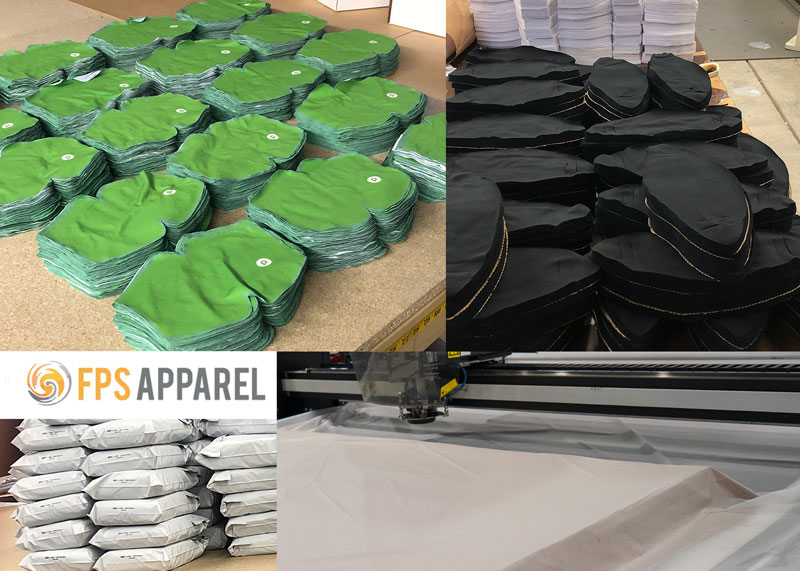
FPS Apparel Empowered To Produce 10,000 Protective Masks Per Week

NEW YORK CITY — June 11, 2020 — With help from Gerber Technology, FPS Apparel was able to quickly transition from producing promotional apparel to producing personal protective equipment (PPE) in just a week. FPS Apparel’s current production allows the company to produce and donate 10,000 masks per week to various healthcare facilities and first responders.

As COVID-19 began to spread to New York City in early March, FPS Apparel knew it had to do its part to protect the health and safety of those fighting the pandemic on the frontlines.

“It’s a priority for all of us at Gerber to ensure our customers have everything they need to successfully transition to PPE,” said Pete Doscas, vice president and general manager, Americas Sales & Service Delivery of Gerber Technology. “With FPS Apparel being in the middle of an epicenter, we knew we had to help them, not only in regards to cutting equipment but through training and by connecting them with our other customers, which allowed them to get up and running as fast as possible so they could do their part to help stop the spread of COVID-19.”

In order for FPS Apparel to produce a large quantity of effective masks, they needed cutting equipment that would allow for fast, reliable and efficient quality cutting. Gerber was able to deliver and install a Gerber Paragon® multi-ply cutter and AccuMark® fashion design software in just a matter of days, allowing FPS Apparel to dramatically increase production. The cutter was able to seamlessly integrate with FPS’ microfactory setting ensuring little disruption to their workflow. Gerber also provided FPS Apparel with production-ready patterns and expertise on PPE production.

“It was truly a team effort with Gerber,” said Dan Feinberg of FPS Apparel. “They delivered and installed the machine in less than a week while providing the support and training we needed to start production right away. They’ve also connected with several of their customers to find capacity for sewing and procurement.”

By converting their production, FPS has not only saved thousands of lives but they’ve also helped save jobs. Rather than temporarily shutting down their production completely when COVID-19 reached New York City, they chose to keep their employees working by giving them the opportunity to use their skills to help keep those on the frontlines safe and healthy.

Posted June 11, 2020

Source: Gerber Technology

Noble Biomaterials Announces Test Results Showing X-STATIC® Technology’s Ability To Reduce Coronavirus Viability On Fabric

SCRANTON, Pa. — June 11, 2020 — Noble Biomaterials today announced the results of third-party laboratory testing of fabric made with its X-STATIC® technology against human coronavirus OC43, a common, strong strain of coronavirus. The lab results, from BioScience Laboratories Inc., showed that the metallized Noble Biomaterials fabric reduced the viability of the virus six times faster than the unmetallized control fabric. Several Noble Biomaterials customers, including mask manufacturers Flaviatex and Filartex, are already using this material.

“As a major supplier to the healthcare, military and consumer industries, we wanted to have a neutral third party test our fabric technology to ensure it could help reduce the viability of the virus,” said Jeff Keane, CEO of Noble Biomaterials. “These lab results provide critical safety information for our partners, particularly in the healthcare industry, where cross-contamination and infection prevention are constant concerns.”

Products made with Noble Biomaterials’ X-STATIC and Ionic+™ technologies can promote a safer healthcare environment by permanently inhibiting the growth of drug-resistant bacteria and fungi and preventing bacterial cross-contamination. The company has supplied partners on five continents with enough antimicrobial products to make tens of millions of pieces of PPE as well as other soft-surface materials that provide antimicrobial protection to patients and healthcare workers.

“Our mission has always been to protect, so we’re grateful that our lab-tested materials are able to provide another layer of protection for healthcare workers, patients and consumers during this healthcare crisis, whether the fabrics are used for scrubs and surgical gowns, bedding and privacy curtains, or consumer masks and apparel,” said Keane.

“Our customers see the value in antimicrobial soft surfaces to help control healthcare-acquired infections,” said Tony Lundin, founder of Silverguard Textiles, a South African company that has been using X-STATIC in its products for years. “With the current crisis, it’s even more important, and a number of leading hospitals, clinics and institutions in Southern Africa are using the full complement of antimicrobial products we make with X-STATIC, including privacy curtains, bedding, scrubs, surgical gowns and reusable masks.”

As a maker of advanced soft-surface protection materials for medical, military and commercial use, Pennsylvania-based Noble Biomaterials is considered a life-sustaining business and was therefore able to stay open during the Pennsylvania shutdown due to COVID-19 to meet increasing demand for materials used in healthcare fabrics. In addition to being registered as an antimicrobial with the US EPA, X-STATIC holds multiple 510(k) FDA approvals for advanced wound-/burn-care dressings and has undergone extensive safety testing. It is also OEKO-TEX Standard 100 certified.

Posted June 11, 2020

Source: Noble Biomaterials Inc.

Unique In France: PRONEEM Launches The First French Anti-Covid-19 Textile Treatment – Proven On SARS-CoV-2

MARSEILLES — June 10, 2020 — A French start-up, with support from France Chimie and Novachim, has manufactured a textile treatment with high antiviral activity that neutralizes the infectivity of SARS-CoV-2 on textile surfaces. A French breakthrough innovation.

PRONEEM, a company specialized in functional technologies applied to textiles in industrial environments, combines sustainable virtues with cutting-edge technologies to bring high added value to the textile industry — antibacterial, anti-dust mite and anti-insect properties. The company is led by Nathalie Hagege, who holds a doctorate in molecular biology and immunology. Its manufacturing processes based on microencapsulation and its major R&D investment currently make it theonly international company to hold a Marketing Authorization (EC number: 283-644-7, FR-2018-0028) for a biocidal treatment to functionalize textile articles intended for domestic use that come into contact with the skin.

In this pandemic period, PRONEEM’s experts, supported by France Chimie and Novachim, have applied their expertise to combatting Covid-19 by developing the only French textile treatment with high antiviral activity, with proven efficacy on SARS-CoV-2. Tested by an independent French laboratory*, the technology forms a lasting and permanent barrier that neutralizes the infectivity of SARS-CoV-2 on textile surfaces. This innovative treatment, VIRALSTOP™, combines the antiviral properties of zinc pyrithione and zinc oxide (ZnO) with other active ingredients, by preventing many viruses such as coronaviruses replicating and by damaging the viral envelope. Tested on samples of different types of textiles, it is currently the only French treatment tested on the SARS-CoV-2 strain shown to be effective in neutralizing the virus. Its virucidal action reduces the viral population by more than 99.99%**, increases the textile’s protection level and limits transmission of the virus. A major innovation. It should be remembered that infected surfaces represent a major vector for contamination and transmission, and that the new coronavirus appears to survive from several hours to several days on textile surfaces.

“Proneem’s collaboration with Chimie France and Novachim is enabling innovation to progress faster and puts French R&D at the forefront. Indeed, for the first time in France, it has been possible to conduct tests on the SARS-CoV-2 strain, proving the performance of a treated textile. With an effective active ingredient and documented textile impregnation systems, we have proved that it is possible to create textiles able to destroy the virus” explains Hagege, founder and president of Proneem.

The researcher, who was a member of the expert committee that drew up the AFNOR document on sanitary masks, is now working to optimize all textile and non-textile materials (including non-woven fabrics) to combat all coronaviruses, including Covid-19, actively. The idea: to enable the manufacture of French anti-Covid-19 textile and non-textile equipment that is easy to use, reusable, competitively priced and accessible to all, which would provide maximum protection for the whole population while also overcoming the risks from shortages of certain materials.

“Today, as we begin to exit lockdown, with activity resuming in various business sectors, it is essential to optimize the performance of sanitary and surgical masks with impregnation systems to provide maximum safety. I am thinking of all the industries, such as tourism or the events sector, that have to be organized differently and relaunch their activities with preventive measures and safety. And I’m also thinking about all the mothers who aren’t sending their children to school out of fear they will catch or pass on Covid-19. With this innovation, my overriding aim is to provide a solution to an unprecedented problem that is bringing the global economy to a standstill. Wearing clothing able to neutralize the virus would go a long way towards overcoming the social distancing problem,” added Hagege.

Functionalized textiles with anti-Covid-19 properties will be used to make gloves, mask sand clothing able to neutralize the virus, which can therefore be used for long periods without fear of the infectivity of many viruses, including SARS-CoV-2.It will also be possible to use VIRALSTOP technology in many applications:textile sprays with antiviral properties for the general public and the hotel sector(hotels, bed and breakfasts, holiday rentals, campsites), antiviral textile cleaners for industrial laundries, hospital laundries, dry cleaners, etc.

Wearing clothes with anti-Covid-19 properties would considerably enhance social distancing measures and issues for tourism and the events sector, currently cancelled or postponed. Beyond the current health crisis, by means of this breakthrough innovation, PRONEEM wishes to accelerate the development of functional textiles, reindustrialize the country and restore the opportunity for France to be a major player on the international scene.

*VIBIOSPHEN, French medical biotechnology laboratory specialized in infectious diseases.

**Results of tests carried out on different synthetic and natural textile samples.

    • Anti-viral effect on the SARS-CoV-2 strain:after 2 hours’ contact on treated textiles, in accordance with the ISO18184 anti-viral standard, VIRAL STOP™ neutralizes the SARS-CoV-2 strain responsible for Covid-19 with 99.99% efficiency.
    • Antibacterial effect: after contact with treated textiles, in accordance with the ISO20743 standard against Gram+ and Gram-bacteria responsible for pathogenic developments linked to nosocomial infections, VIRAL STOP™ neutralizes these bacteria with 99.99% effectiveness

Posted June 10, 2020

Source: PRONEEM

J.Jill Inc. Appoints Shelley Milano To Board Of Directors

QUINCY, Mass. — June 10, 2020 — J.Jill Inc. today announced the appointment of Shelley Milano to its board of directors, effective immediately.

“Shelley is an established industry leader with impeccable credentials, and she perfectly complements the skills and expertise of our current Board,” said Michael Rahamim, J.Jill’s Chairman. “Our ability to attract such an accomplished leader is a testament to the continued strength of our brand, and it reinforces our commitment to all of our stakeholders.”

“I am excited to be joining J. Jill’s Board of Directors,” Milano said. “I recognize that J.Jill occupies an important place in the market and serves an important role in its customers’ lives. I look forward to working alongside the Board and the management team as we build on the legacy of the brand and work to find solutions to the challenges facing retailers today.”

Milano is executive vice president, chief human resources officer for L Brands, owner of the Victoria’s Secret, PINK and Bath & Body Works brands. Before assuming this position, she served as the company’s senior vice president and general counsel. Prior to joining L Brands in 2015, Milano served in executive leadership positions with Eddie Bauer Inc., Starbucks Corp. and Honda of America Manufacturing Inc. Milano is a member of the boards of directors of Urban Hardwoods and Bartell Drugs.

Posted June 10, 2020

Source: J.Jill Inc.

YKK Producing Essentials Parts Supporting Covid-19 Health Workers

RUNCORN, England — June 10, 2020 — YKK are currently producing essential parts at their factory based in Runcorn, Cheshire, to help support the fight against Covid-19.

The UK-based factory is producing critical fastenings for isolation/containment units, medical equipment and PPE (personal protective equipment), mattress protection and ventilator components.

The European R&D facility, also based at Runcorn is presently able to produce around 400 masks for YKK staff who are working in the factory as well as for offer to local schools and care homes.

Matthew Rawston, Leader – Product Development, said: “We were approached to make masks for local health workers and of course during these difficult times, we were more than happy to support — the masks that are currently being made are all using YKK products”

Tony Reilly, UK Group managing director, said, “Without the dedication of our workers and staff involved, this wouldn’t have been possible; to be part of the fight against Covid-19 is something we are proud to support.

Posted June 10, 2020

Source: YKK Europe Ltd.

Arvind Announces Launch Of Revolutionary Anti-Viral Fabrics Under Its “Intellifabrix” Brand — Partners With Swiss Textile Innovator HeiQ

MUMBAI — June 10, 2020 — While fabrics have been usually associated with fashion, as the world faces the COVID-19 crisis, there is an urgent need for antiviral fabrics in our daily lives. Arvind Ltd. today announced launch of anti-viral textile technology for the first time in India under its brand “Intellifabrix.” Arvind has partnered with Switzerland-based HeiQ Materials AG in association with Taiwanese Specialty chemical major M/S Jintex Corp. to introduce this revolutionary anti-virus technology in India.

Research shows that viruses and bacteria, can remain active on textile surfaces for up to two days. Garments treated with HeiQ Viroblock actively inhibit viruses and kill them upon contact, helping to minimize the potential for re-transmission of pathogens through clothing.

Announcing the launch of the anti-viral fabrics under INTELLIFABRIX Kulin Lalbhai, executive director, Arvind, said: “The world is facing an unprecedented crisis due to COVID-19. In this context, we are committed to keep our customers safe and that is why we have tied up with HeiQ to bring its revolutionary Viroblock technology to India. We are excited with this partnership and in a very short period of time we will introduce into the Indian market fabrics that will provide best-in-class viral protection and are fashionable at the same time.”

HeiQ Viroblock is an antiviral product created by HeiQ. HeiQ Viroblock significantly enhances the antiviral log reduction and reduces viral infectivity by 99.99 percent and claims such efficacy on SARS-CoV-2. HeiQ Viroblock has been designed to stay active on treated garments for 30 gentle domestic washes, ensuring safety for the consumer that lasts for a good part of the garment’s life, according to the company.

Talking about the partnership Carlo Centonze, CEO, HeiQ Group said: “HeiQ Viroblock is a special combination of our advanced silver and vesicle technology that has been proven effective against the human coronavirus 229E & SARS-CoV-2, causing Covid-19, with 99.99-percent reduction of virus in 30 minutes. It is a safe, hypoallergenic and patent pending technology. We are pleased to partner with Innovative Brand ‘Arvind’ in India to offer this technology across their range of products”

Posted June 10, 2020

Source: Arvind Ltd.

Sponsors