WINTERTHUR, Switzerland — September 30, 2026 — Thomas Oetterli has decided to step down from his function as CEO, effective October 31, 2026, and hand over the Chairmanship of the Board of Directors.
“After the successful implementation of the Next Level performance program, the structural measures initiated to consolidate the sites and the acquisition of Barmag, the time has come to hand over responsibility to new hands,” explains Thomas Oetterli.
Thomas Oetterli
The eventual separation of the functions of CEO and Chairman of the Board of Directors was planned since Thomas Oetterli took office.
The Board of Directors thanks Thomas Oetterli for his great commitment and his important contributions to the strategic and operational development of Rieter. It is convinced that the measures initiated will strengthen the competitiveness of the Group and create a solid foundation to benefit from a future market recovery.
Daniel Lippuner will take over as CEO of Rieter on November 1, 2026. He combines broad international leadership experience with in-depth knowledge of the textile machinery and components industry. As former CEO of the Saurer Group and previously as Head of Oerlikon Textile Components, he led businesses along the value chain of spinning machines, yarn processing and textile components.
Daniel Lippuner
As Chairman of the Board and co-owner of Heberlein Technology, he also remained closely connected to the chemical fiber industry. His experience in transformation, technology and quality management, operational leadership and Asian markets is particularly relevant for Rieter with its established short-staple fiber business and the newly acquired man-made fiber business.
Carl Illi will assume the role of Chairman of the Board until the next Annual General Meeting on April 14, 2027. Carl Illi has been a member of the Rieter Board of Directors since 2017 and is a recognized textile industry expert.
With the acquisition of Barmag in February 2026, Rieter has expanded its traditional business focused on short-staple fibers to include the attractive man-made fibers segment. The transaction strengthens the focus on the technology leadership of the Rieter Group, opens up additional growth opportunities and creates a broader basis for digital solutions in the textile industry.
ROCHESTER, N.H. — September 29, 2026 — Albany Engineered Composites, a segment of Albany International Corp., announced today that its AEC Advanced Programs, Inc. business has received a new contract, with a total value of $21.2 million over the 30-month period of performance, through the U.S. government’s Industrial Base Analysis and Sustainment (IBAS) program for Strengthening America’s Manufacturing and Defense Industrial Base (SAMDIB).
The award, through the U.S. Army Contracting Command – Rock Island and Cornerstone Other Transaction Authority (OTA), supports the development of carbon-carbon composite thermal protection systems (TPS) for hypersonic vehicles and solid rocket motors (SRM). The effort focuses on advancing, scalable manufacturing capabilities for critical extreme-environment defense applications.
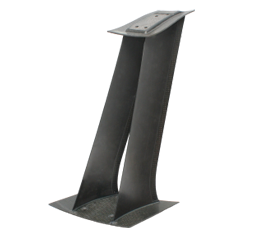
Albany will leverage its experience in advanced composite manufacturing, including 3D-woven, near-net-shape preforms and Resin Transfer Molding (RTM), together with carbon-carbon densification capabilities.
“Hypersonic systems and solid rocket motors place extraordinary demands on the material systems used and the manufacturing processes required to produce them,” said Chris Stone, president of Albany Engineered Composites. “This award brings together Albany’s advanced composite expertise and production-focused capabilities to address an important challenge for the U.S. defense industrial base: establishing the manufacturing capacity required to support next-generation hypersonic and solid rocket motor systems at scale.”
The program focuses on establishing a vertically integrated production facility for carbon-carbon composite manufacturing, creating critical domestic industrial base capacity for the continued development and scalable production of cost-effective thermal protection solutions for hypersonic weapons and SRMs.
“Production readiness is a critical element of both hypersonic and solid rocket motor missions,” said Brent Stevenson, vice president, emerging markets & technology at Albany Engineered Composites. “Albany’s proven experience in 3D-woven near-net-shape composite preforms and RTM provides a strong foundation for advancing scalable manufacturing solutions for these critical missions.”
The effort expands Albany’s capabilities for extreme-environment applications, combining advanced materials technology with manufacturing infrastructure and production engineering. The program includes engineering studies, facility planning, supplier selection, procurement and installation of key manufacturing equipment and development of the infrastructure required to support carbon-carbon composite thermal protection system production.
Advancing Hypersonic and Solid Rocket Motor Manufacturing at Scale
Hypersonic vehicles and solid rocket motors operate in some of the most demanding aerospace and defense environments. Their thermal protection systems must withstand extreme conditions while also meeting increasingly important cost objectives with scalable production.
Through this IBAS effort, Albany applies its advanced composite manufacturing expertise to help strengthen the U.S. industrial base and establish the vertically integrated infrastructure needed to support future hypersonic and SRM production. The award reinforces Albany’s commitment to advanced composite solutions for extreme environments and to expanding domestic manufacturing capabilities for critical aerospace and defense applications.
RALEIGH, N.C.— September 29, 2026 — A new textile used to cover strawberry plants more than tripled strawberry yields in tunnel field tests, without negatively impacting plant health. The technology could also significantly reduce water and pesticide usage in strawberry fields.
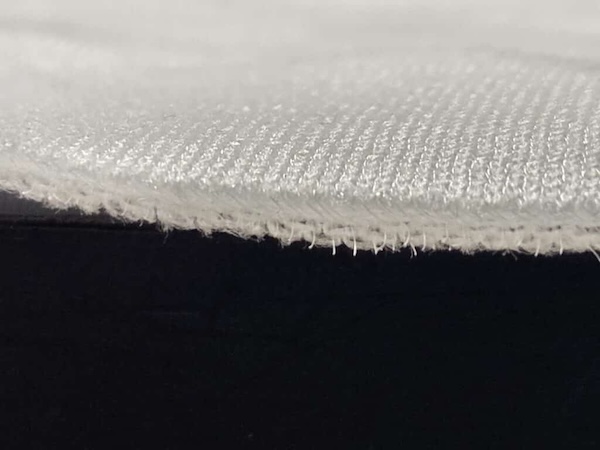
The cover, known as Plant Armor, is a carefully designed fabric that is draped over strawberry plants. The material’s three-dimensional structure prevents insects from reaching the plants beneath. But its multiple layers allow sunlight, rain and airflow to reach the plant.
Strawberries grown with and without the Plant Armor textile cover. The new technology raised berry yields by as much as 3.56 times in tunnel field tests. Photo credit: Gabriel Olawuyi
Tunnel field tests found that Plant Armor increased strawberry yields by as much as 3.56 times, without negatively impacting relative humidity or light access.
“To produce fruit, plants need sunlight,” said Gabriel Olawuyi, a graduate research assistant at North Carolina State University and lead author of a paper on Plant Armor. “We expected that Plant Armor’s seemingly opaque fabric would lead to an increase in vegetative biomass at the expense of fruiting — because reduced sunlight would trigger a ‘shade-avoidance’ response, making the plant divert energy toward stem and leaf growth rather than fruit production. However, we found the fabric did not impede access to light at all, and fruit production increased significantly.”
Plant Armor also provided a consistent warming effect over the three seasons that the plant grows, which Olawuyi said helped the bushes reach the fruiting stage earlier than those without the cover.
“Plants require a certain amount of accumulated heat, calculated as ‘growing degree-days,’ to progress through developmental stages including fruiting. Our plant cover has proven to enhance these,” Olawuyi said. “The plants were in a condition whereby the warmth they need to go through each phenological stage to their production was given to them optimally, and they produced far more than the uncovered plants.”
Plant Armor Gen 2. The fabric’s 3-D structure makes it difficult for insects to reach plants beneath it, while still allowing light, rain and airflow to pass through. Photo credit: Loganathan Ponnusamy.
By deterring insects, Plant Armor could also reduce the need for traditional pesticides in agriculture, Olawuyi said.
Plant Armor was created as a spinoff of efforts to make military uniforms resistant to mosquito bites and more comfortable when wearing body armor – highlighting the importance of collaborative research, said co-author R. Michael Roe, William Neal Reynolds Distinguished Professor at NC State.
“The path to Plant Armor started with trying to make a cloth to go on a soldier’s chest to make body armor more comfortable,” said Roe. “Then, through trial and error, we arrive at a product which could triple the output of strawberry farms here in North Carolina.
“We couldn’t have predicted that when we started. Without all these people here doing research and following the science, we wouldn’t have arrived at this product.”
The paper, “Knitted 3-D, Porous Textile Cover to Enhance Strawberry Fruit Production and Prevent Insect Feeding,” is published in the journal, Agriculture. Co-authors include James Clothier, Matthew Bertone, Grayson Cave, Reuben Garshong, Andre West, Loganathan Ponnusamy and Clyde Sorenson of NC State University.
This project was supported by a grant from the North Carolina Agricultural Foundation (grant number AG00463770). The work was also supported by the Research Capacity Fund (HATCH), project award no. 02853, from the U.S. Department of Agriculture’s National Institute of Food and Agriculture. The Plant Armor Gen 2 fabric studied in this paper was patented by North Carolina State University (US Patent No. 11,582,968 B2; 21 February 2023) and is licensed for commercial development by the University. This work was a collaborative project between the NC State College of Natural Resources, Wilson College of Textiles and College of Agriculture and Life Sciences
WASHINGTON, DC — September 29, 2026 — The latest CapEx Finance Index (CFI), released today by the Equipment Leasing & Finance Association (ELFA), showed that demand cooled in August after an extraordinary July but remained historically strong. Even after the decline, August was the second strongest month in the survey’s history, and the full-year forecast edged up to a new high. Financial conditions also improved, with the average loss rate falling to its lowest level in ten months. Fed rate hikes and elevated energy prices remain risks, but they are likely to have a minimal effect on equipment demand in 2026.
Total new business volume (NBV) among surveyed ELFA member companies was $11.8 billion on a seasonally adjusted basis.
Year-to-date NBV rose by 17.3% relative to the same period in 2025.
Year-over-year, NBV rose by 19.1% on a non-seasonally adjusted basis.
“Cooler demand in August was unsurprising given the strength of demand in July,” said James Cress, Acting President & CEO of ELFA. “July’s volume was nearly 25% above the previous all-time monthly high due to a surge in AI spending. August was still the second strongest month ever, further validating our forecast that 2026 will be, by far, the best year ever for new deal volumes. Credit quality improved as well, with the average loss rate falling to its lowest level in ten months and delinquencies holding near the low end of their two-year range. Higher borrowing costs from additional Fed hikes would put modest upward pressure on delinquencies and losses, but with credit quality this healthy, the industry would face some chop rather than a full-blown storm.”
Demand cooled from a record high but remained strong. Total NBV was $11.8 billion in August, a decrease of 17.3% from July’s all-time high of $14.3 billion. The total new volume series tracks the amount of new activity added by banks, independents, and captives in a given month. August was the second-highest month on record, 3.1% above the previous all-time high set in January 2026. Equipment deal volume is forecasted to reach $137.7 billion in 2026, the highest level recorded in any year since the survey began in 2006 and 14.4% above the previous record set in 2024.
Small ticket volume growth tracks broader economic conditions and is an important barometer of aggregate demand for equipment. Small ticket deals totaled $4.2 billion, down 34.5% from July’s record high. Even so, August was tied for the fifth-highest month on record and 10.9% above the average monthly pace over the 12 months ending in June, before the July spike. Year to date, small ticket deal activity is up 25.9% from the same period in 2025.
Activity at banks reached an all-time high of $6.0 billion, up 9.7% from July and surpassing the previous record set in March 2022. Activity at captives fell 37.2% to $3.6 billion, but that decline reflects the unwinding of July’s surge. Captive volume was still above its average monthly pace over the 12 months ending in June. Activity at independents was $2.2 billion, down 1.2% from July and slightly below its average over the same 12-month period.
Credit approval rate declined for a second month. The industry-wide average fell 2.0 percentage points to 75.4% in August, its lowest level since February 2025. The average small ticket approval rate fell 1.5 percentage points to 78.2%. The rates at captives and independents fell by 3.8 and 4.8 percentage points, respectively, while the rate at banks rose by 0.5 percentage points.
Delinquencies held steady, and losses fell. The overall delinquency rate held steady at 1.8% in August, near the low end of its two-year range and down 0.4 percentage points from a year earlier. The rate at banks fell by 0.09 percentage points, and the rate at captives fell to 1.9%, its lowest level since April 2019. The rate at independents edged up.
The overall loss rate decreased by 0.02 percentage points to 0.44%, its lowest level in ten months. The average loss rate for small ticket deals fell by 0.08 percentage points to 0.65%. The rate at banks fell to 0.28%, its lowest level since January 2023, and the rate at captives fell by 0.10 percentage points. The rate at independents ticked higher.
Industry Confidence
The Monthly Confidence Index tracks the sentiment of executives in the industry. The index in September was 62.4, unchanged from the previous month.
“Over the past quarter, many of our partners and customers have been impacted by various means of uncertainty, geopolitical developments and continued pressure to manage costs in a changing economic environment,” said Mike Janse, General Manager – U.S., DLL. “Amid these headwinds, businesses recognize the need to modernize equipment and invest in technology that drives productivity and resilience. Looking ahead, interest rate trends, regulatory developments and overall business confidence will play an important role in asset finance demand, but we expect our partners and customers to remain focused on strategic investments that support long-term performance.”
Technical Note
New business volume data are concurrently seasonally adjusted each month to capture the latest seasonal patterns. Data in previous months and years may change due to updated seasonal factors.
Posted: September 29, 2026
Source: The Equipment Leasing & Finance Association (ELFA)
NASHVILLE, TN — September 24, 2026 — blc TEXTILES, a supplier of textile products to commercial laundries, healthcare organizations, hospitality businesses, and textile service providers, today announced that Jon Simon has joined the company as Chief Executive Officer.
Simon joins blc one year after 1888 Mills, in partnership with Sapphire USA LLC, acquired a majority stake in blc TEXTILES and its Cambodian manufacturing subsidiary, Cambodian Textiles Worldwide (CTW). He will lead blc as it builds on that partnership, drawing on the group’s manufacturing in Pakistan, Bangladesh, and Cambodia to broaden its product offering and strengthen supply for its customers.
Simon spent 37 years building 1888 Mills, beginning with its predecessor companies, Eastern Imports and Shelnor Mills. He served as President beginning in 1989, became President and CEO in 2005, and led the company through 2020 before joining its board. Most recently, he was Executive Vice President of Global Growth & Strategy at Standard Textile.
“blc has built its reputation on consistent quality and on products that deliver value over their full life, not just on the day they’re purchased,” said Simon. “For a laundry, a hospital, or a hotel, the real cost of a textile is measured over hundreds of wash cycles. With blc’s own manufacturing in Cambodia and the strength of our partners at 1888 Mills and Sapphire, we can build on that reputation and bring it to more products and more customers.”
“Jon knows this business and these manufacturing operations as well as anyone. He’s the right leader to turn this partnership into results for blc’s customers. With years of industry expertise, Jon ensures that our focus remains exactly where it belongs: on our clients,” said Adil Rashid, Executive Chairman of blc TEXTILES and Cambodian Textiles Worldwide.
Simon holds a B.S. from Indiana University and completed the Advanced Management Program at the University of Chicago Booth School of Business.
PARIS LA DÉFENSE — September 28, 2026 — François Desné joins Arkema as Senior Vice President High Performance Polymers and Fluorogases and a member of the Group’s Executive Committee, effective 12 October 2026. He succeeds Laurent Tellier, who was appointed Arkema’s Chief Operating Officer (COO) last July.
François Desné
With nearly 30 years of international experience in the industry, François Desné has recognized expertise in transforming global industrial businesses, accelerating growth and strategic repositioning of companies toward more sustainable business models. His career has been built within leading companies in materials and chemicals.
François Desné had been Chief Executive Officer of the Steel Wire Solutions (SWS) and Bekaert Bridon Ropes Group (BBRG) divisions, and member of the Executive Committee of the Bekaert Group since 2022.
François Desné holds a Master’s degree in Physics from the Université of Paris-Cité (ex-Paris VII Denis Diderot), France, an MBA from the Wharton School, and a Master’s degree in International Business from the Lauder Institute at the University of Pennsylvania. He began his career within Rhodia in China and then in France, holding positions in quality management and application development (silicones). He subsequently joined BASF’s Coatings and Performance Chemicals divisions. Based in Germany and across the Asia-Pacific region (Japan, China, and Singapore), he held various positions in controlling, general management, and Senior Vice President roles across several businesses, including Coatings, Leather & Textile Chemicals, and Water, Oil Field & Mining Solutions. Before joining the Bekaert Group, François Desné served as Chief Executive Officer of the Engineered Foams business and was a member of the Executive Committee at Recticel.
Building on its unique set of expertise in materials science, Arkema offers a portfolio of first-class technologies to address ever-growing demand for new and more sustainable materials. With the ambition to become a world leader in Specialty Materials, the Group is structured into three complementary, resilient and highly innovative segments dedicated to Specialty Materials – Adhesive Solutions, Advanced Materials, and Coating Solutions – accounting for some 85% of Group sales in 2025, and a Primary Materials segment regrouping well-positioned large scale industrials activities. Arkema offers cutting-edge technological solutions to meet the challenges of, among other things, new energies, access to water, recycling, urbanization and mobility, and fosters a permanent dialogue with all its stakeholders. The Group reported sales of around €9.1 billion in 2025 and operates in some 55 countries with 20,700 employees worldwide.
ATLANTA, GA — September 22, 2026 — “For over two decades, Pirelli has been a valued presence in our state, and I’m thankful that our efforts to grow this partnership are paying off with even more jobs for hardworking Georgians,” said Governor Brian P. Kemp. “This historic investment will expand Pirelli’s footprint with roughly five times more positions than they currently employ across the region, and we wish them continued success here in the No. 1 state for business.”
Headquartered in Italy, Pirelli located its U.S. headquarters and manufacturing facility in Rome, Georgia, in 2002. Pirelli currently employs 234 Georgians through its manufacturing, innovation, and headquarters operations in the state.
“The U.S. is one of Pirelli’s most important markets and offers significant opportunities for growth,” said Claudio Zanardo, CEO of Pirelli North America. “The expansion of our Rome facility strengthens our ‘local for local’ strategy, increasing our manufacturing capacity in the U.S. while introducing the latest-generation technologies, such as the Cyber Tyre, and advanced robotics. This investment will allow us to better serve the needs of the local market, create new jobs, and further strengthen Pirelli’s presence in North America.”
Pirelli’s Georgia facility is located at 100 Pirelli Drive in Rome. The company plans to expand the factory in two phases: first adding latest-generation Pirelli robotics equipment, followed by the addition of a traditional manufacturing process which will require more hiring. Pirelli expects to begin the bulk of hiring in 2029, with the facility projected to be at full operations in 2033.
“While we always enjoy news of new business and industry coming to Floyd County, it is even more meaningful when an existing industry announces an expansion,” said Chairwoman Rhonda Wallace, Floyd County Commission. “Pirelli has been a tremendous community partner for more than 20 years, and their new investment and job creation is incredible news for the citizens of Floyd County. We are grateful for Pirelli’s continued partnership and commitment to our community.”
Senior Regional Project Manager Lori Dowdy represented the Georgia Department of Economic Development’s (GDEcD) Global Commerce team on this competitive project in partnership with the Rome-Floyd Development Authority, Georgia Quick Start, and Georgia Power.
“Pirelli’s expansion in Rome is a tremendous investment in northwest Georgia and a powerful example of what can happen when a company and a state build a relationship for the long term,” said GDEcD Commissioner Pat Wilson. “Pirelli was one of the early companies to help build Georgia’s automotive supply chain, and more than two decades later, they are continuing to believe in Georgia and invest in their future here. I have had the opportunity to visit Pirelli’s operations in Floyd County and Italy and see firsthand the innovation and advanced technology driving their vision for the future of mobility. This investment brings that future to Georgia, with advanced robotics, next-generation manufacturing, and technologies that are making the automobile increasingly connected and intelligent. Pirelli has been an important part of Georgia’s automotive story for more than 20 years, and we are proud to partner with them as they help write the next chapter.”
Strength where it counts. A military parachute system must perform flawlessly under extreme dynamic load — every single time. BRM’s next-generation Kevlar® EXO webbings deliver 29,500 lbs. tensile strength
hen policymakers debate defense readiness, the conversation gravitates toward the obvious: semiconductors, rare earth magnets, advanced optics. These are the materials that dominate headlines and drive legislation. What rarely makes the list is the category of engineered technical textiles that equip, protect, and in some cases save the lives of American warfighters every single day.
This isn’t a simple oversight. “Textile” conjures images of fabric bolts and sewing machines, not laboratories, computer-controlled looms, and aerospace certification standards. But the engineered woven fabrics used in military applications are sophisticated systems built from advanced synthetic polymers, designed to meet tolerances measured in fractions of an ounce per yard, and certified and qualified under strict specifications that take years to develop.
Two imperatives explain why this matters: availability and innovation. America needs reliable domestic access to these materials, and it needs manufacturers capable of continuously advancing them. Lose either, and military readiness pays the price.
What Technical Military Textiles Actually Are
The category is broader than most people realize. Parachute components, panel fabrics, seam reinforcements, harnesses, and risers. Armor carriers and soft ballistic panels. Cargo restraints for airdrop operations. Thermal protection systems for aerospace reentry vehicles. Structural composite preforms for aircraft components. These are not off-the-shelf components. They are precision-engineered systems, and the knowledge required to produce them correctly is neither obvious nor easily acquired.
The engineering begins at the fiber level. Where military webbing once relied on cotton or silk, today’s applications demand high-performance synthetics: nylon, Kevlar®, Nomex®, Vectran®, Zylon®, Spectra®, Dyneema® and next-generation materials like Kevlar® EXO. Each has a distinct mechanical profile, such as tensile strength, elongation, abrasion resistance, heat tolerance, chemical stability, and matching the right fiber to a given application requires deep material science expertise.
The Architecture of Performance: Why Weaving Technique Is as Critical as the Fiber
Choosing the right fiber is only half the engineering challenge. How that fiber is woven determines whether its properties translate into real-world performance. This is where the complexity of military textiles becomes most apparent.
BRM’s Multi-dimensional 3D continuous weaving method produces complex net-shape structures used in aerospace, satellite, and missile applications. The weaving architecture — not just the fiber — is what determines whether a component survives the mission. This is the engineering that separates a technical textile from a commodity product, and cannot be stood up overnight.
The most basic structures, including plain, twill, and satin weaves, each offer distinct trade-offs. Plain weaves are the strongest per interlacement and are used in high-load flat webbing for cargo systems and harnesses. Twill weaves add flexibility and more efficient tensile strength, making them well-suited to load-bearing equipment that must optimize strength to weight ratio and survive repeated stress.
Tubular weaves consist of a seamless, hollow structure and are preferred for parachute applications because they are more pliable, better at holding knots, and more resistant to abrasion than flat equivalents. Getting these trade-offs right for a specific military application is not a matter of catalog selection; it requires intimate knowledge of how yarn type, weave density, and loom tension interact under load.
Jacquard looms add another dimension by utilizing complicated, software controlled, weaving equipment. Fiber placement in complicated weave structures is necessary to provide shear strength and interlaminar shear resistance. Fiber load paths increase the strength and ultimately provide the most efficient design for the structure. The failure modes of these structures are improved or eliminated using novel and innovative weave designs.
How the yarns are interlaced within the structure dictate the final performance characteristics of the fabric. Innovations in fiber chemistry has provided our industry with many high-performance material options that have been used as alternatives to Cotton and silk since the invention of nylon, 1941. Weaving technology orients technical fibers such that the inherent
properties of the fibers are carried through to the end-use application. For example, if abrasion resistance is required due to dynamic loading of a parachute system, fibers with extremely low coefficient of fiction are used on the wear surface. These fibers may have low strength. Therefore, multiple fibers are included in the construction. The final end-use requirements dictate fiber and weave design inputs.
Then there is 3D weaving, the most technically demanding frontier in military and aerospace textile engineering. Where conventional looms work in two dimensions (length and width), 3D looms interlock yarns through the thickness of the material as well, creating a single integrated structure with no discrete layers. The performance significance is substantial.
No delamination. Layered 2D composites used in structural aerospace and armor applications are vulnerable to delamination, the separation of layers under impact or cyclic stress, which can cause catastrophic failure. 3D woven composites eliminate this failure mode because the structure is fully interconnected. For aircraft components, armor inserts, and aerospace reentry systems, this represents a fundamental improvement in reliability.
Lighter and stronger than metal. 3D woven composite structures can reduce component weight by up to 30% compared to equivalent metal parts. In aircraft this translates to an estimated $1 million in reduced fuel costs per pound saved over the aircraft’s operational lifetime.
Net-shape manufacturing. 3D weaving produces components close to their final shape directly on the loom, eliminating the time-consuming and expensive hand-layup and machining steps required for 2D laminated composites. For military procurement, this means faster production, lower cost, and reduced manufacturing variability.
Developing 3D weaving capability requires purpose-built loom technology, specialized design engineering, and years of iterative qualification work. It is not a process any company can enter quickly. We began developing these capabilities under a U.S. Air Force Research Laboratory contract in 1991 and have been advancing them continuously since.
Availability: The Supply Chain Risk That Doesn’t Make Headlines
Most of the U.S. commercial textile industry has been lost to offshore competition. In the last 2 years, 40 textile mills and supply chain producers have shuttered their doors. In the last 30 years we have watched our customers who manufactured in the United States, move their factories first to Mexico and then, fully to Asia. While we still supply to US companies with manufacturing operations in Mexico, that market is also more competitive. For what textile fabrication and cut & sew manufacturing is left in the US, US textile producers face competitive imports that are lower in price by over half. These are largely commodity products.
For the time being this fight is over. Tariffs certainly have an impact. Some positive but many negative. It will take years of applied tariffs to impact the US textile industry in a positive way. But technical military textiles are a different category entirely, and the stakes of losing that domestic capacity are severe.
Consider the consequences if the U.S. lacked domestic suppliers capable of manufacturing certified parachute webbing or Berry Amendment-compliant Kevlar® harness components at scale. The knowledge embedded in those products about fiber selection, loom programming, weave architecture, testing protocols, and certification records represents decades of accumulated development. It cannot be reconstructed in months. In a conflict or supply chain crisis requiring rapid production surge, there is no substitute.
World War II delivered this lesson at the worst possible moment. When Japan cut off America’s silk supply in December 1941, silk was the primary material in military parachutes. The subsequent successful pivot to nylon depended entirely on domestic manufacturers who already had the infrastructure, the loom technology, and the military relationships to make that transition work. (See sidebar.) The Berry Amendment exists so that lesson does not have to be relearned.
The amendment (10 U.S.C. § 4862) requires that the Department of Defense/War procure textiles that are domestically manufactured, fiber-forward: yarn itself must be U.S., sourced and produced. A complete chain-of-custody documentation, including affidavits, sourcing records, and lot traceability must flow from raw material through finished component. These documents are included with the shipments. “Made in America” is not sufficient, and neither is domestic weaving with imported yarn. Compliance is demanding and extensively documented, by design.
That documentation infrastructure is itself a strategic asset. Every production lot we supply is accompanied by test reports covering tensile strength, thickness, weight per yard, elongation, abrasion resistance, color fastness and more, alongside the yarn affidavits certifying domestic fiber origin. For aerospace-certified products, the quality management system generating those records must itself be certified, in our case, to both ISO 9001:2015 and AS9100D, the aerospace quality standard
When a tier-one defense contractor submits a finished system for military qualification, the documentation package from their textile supplier becomes part of the certification dossier. Incomplete records stall the entire approval process. Suppliers who cannot produce a complete, auditable paper trail cannot reliably serve the military market. In a surge scenario, that distinction becomes critical. Furthermore, if textiles and raw materials are not produced domestically, US
Defense strategy can be compromised by the trade practices and policies of partner and adversarial countries.
Innovation: The Nylon Moment Is Happening Again
Availability without innovation produces stagnation. Military advantage depends not just on domestic access to today’s materials, but on continuous development of tomorrow’s. Right now, two parallel developments, in the fiber and in the weave architecture, are advancing military textile performance at a pace not seen since the synthetic fiber revolution of the mid-twentieth century.
On the fiber side, DuPont’s Kevlar® EXO represents the most significant step forward in para-aramid technology in decades. Where nylon replaced silk by offering superior strength and domestic availability at a critical moment in 1941, Kevlar® EXO is now redefining what’s possible in the fiber category that has underpinned military parachute systems since the 1970s.
The performance data is concrete. Our current 1¾″ Kevlar® 29 riser webbing certified to PIA-T-87130 achieves an average tensile strength of 23,000 lbs. at 2.41 oz/yd. The Kevlar® EXO version reaches 29,500 lbs. at just 1.77 oz/yd. This represents a 28% strength increase at 27% less weight. Those numbers have direct operational consequences:
Greater payload capacity. A lighter parachute system means the same aircraft can carry more personnel, equipment, or cargo on a given mission. Or it can carry the same load farther on less fuel. Every pound saved in the parachute system is a pound available for mission-critical equipment.
Better packability. Lower-weight webbing with equivalent strength reduces the packed volume of the parachute assembly, allowing more compact storage on the aircraft and easier handling by the operator in the field.
Fuel efficiency across the fleet. Weight savings in individual components compound across a fleet. In military aviation, every pound shed from a recurring component reduces fuel consumption on every mission that component flies, resulting in savings measured in millions of dollars over an aircraft’s operational life.
Achieving these results required an iterative, multi-year development process in collaboration with DuPont and parachute system manufacturers: bench-top analysis, repeated loom trials, rigorous testing against PIA-T-87130 specifications, and qualification through a co-investment model that brought fiber developer, textile manufacturer, and end-user together around a shared technical objective. This is how advances in military materials actually happen: it is not through procurement alone, but through sustained R&D partnerships between companies with deep domain expertise.
That qualification burden applies equally to architectural innovations. A new 3D woven composite structure or a novel tubular webbing geometry may offer compelling performance advantages on paper, but it cannot enter a military system without passing the same exhaustive test regimen: tensile and elongation testing, abrasion and environmental exposure trials, dimensional stability verification, and compliance documentation keyed to the relevant mil-spec /PIA-spec standard or Aerospace/aircraft material specifications.
New architectures often require developing the test protocol itself alongside the product by working with certifying bodies to establish what the acceptance criteria should be before the product can be measured against them. Only manufacturers with established relationships across that ecosystem such as fiber developers, system integrators, military program offices, and standards bodies, can navigate that process efficiently. The institutional knowledge of how to bring a new material or weave architecture through qualification is, in itself, a form of capability that takes decades to build.
Kevlar® EXO is also already proven in military body armor, where its lighter weight extends the duration that warfighters can operate at full effectiveness without the fatigue penalty of heavier protection systems. Its potential across other military soft-goods applications, such as load-bearing harnesses, armor carriers, vehicle restraint systems, is now being actively explored.
What Defense Procurement Needs to Recognize
Technical textile supply is a long-lead capability. The expertise that makes a supplier valuable — material science depth, advanced weaving technology, certified quality systems, active fiber development partnerships, mil-spec product portfolios — takes decades to build and cannot be quickly replicated. When that expertise atrophies because contracts go to lower-cost alternatives, the capacity does not simply move. It disappears.
The supply chain resilience framework now applied to semiconductors and rare earth materials applies equally here. Maintaining domestic technical textile manufacturers, by supporting the R&D partnerships, the mil-spec certification work, the innovation pipeline from fiber developer through weaver to system integrator, is as much a national security decision as any other procurement policy.
Technical textiles protect warfighters, protect air assets, carry loads, absorb impact, and form the structural backbone of aerospace systems. They are engineered to tolerances that take years to master and are certified to standards that take years to earn. They are, in every meaningful sense, part of the arsenal. And the arsenal must be prepared before it is needed.
Editor’s Note: Ted Fetterman is the vice president of sales and marketing at BAlly, Pennsylvania-based Bally Ribbon Mills.
Bally Ribbon Mills (BRM) designs, develops, and manufactures highly specialized engineered woven webbing, tapes, specialty fabrics, woven preforms, and two dimensional and three dimensional structural fabrics. With more than 100 years of textile manufacturing experience, BRM has earned a reputation for meeting new advanced design challenges. Working in aerospace, defense, medical, safety, automotive, commercial, and industrial applications, BRM offers ingenuity, technical know-how, extensive weaving capabilities, and rigorous quality assurance systems.
NEW YORK, NY — September 22, 2026 — F. Schumacher & Co. (FS&CO), the storied American design house founded by Frederic Schumacher in 1889, is proud to announce the acquisition of the vast majority of the Vanoutryve archive. A renowned mill active in France and Belgium for more than 150 years, Vanoutryve not only was critical to the development of the European textile industry during the 19th and 20th centuries, but also had a direct connection to Frederic Schumacher, a Frenchman who worked as a textile agent for Vanoutryve in both France and the United States before launching his namesake company in New York City.
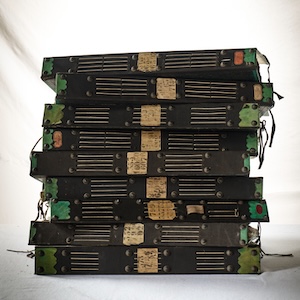
Swatch books after being cleaned and catalogued by Schumacher-1
This impressive acquisition includes more than 75,000 textile samples along with original fabrics and drawings dating from approximately 1870 to 1960, substantially expanding FS&CO’s archival holdings and deepening its rich connection to French textile history.
Founded in Roubaix, France, in 1860 by Felix Vanoutryve, the mill quickly became one of Europe’s most important luxury textile weavers, at one time employing more than 4,500 workers and exporting as much as 60 percent of its production abroad. During the Art Nouveau and Art Deco periods, Vanoutryve’s textiles introduced the emerging French design motifs to the masses, and the mill also worked with some of the era’s leading style arbiters, including Paul Poiret, who was the first fashion designer to establish a lifestyle brand producing fabrics for the home. After Felix Vanoutryve’s death in 1912—the same year that Frederic Schumacher died—the mill remained family-owned until 2013 and eventually closed in 2019. Parrots Moderne, a fabric originally woven at Vanoutryve, is still in production at Schumacher today.
“Acquiring archival pieces directly connected to our company’s founder is a natural extension of our brand heritage,” says FS&CO President and CEO Timur Yumusaklar. “We have always and will always continue to work with the finest mills in the world, and we firmly believe that quality craftsmanship and great design can withstand the test of time. I’m honored to continue preserving and reimagining the artistry of these timeless pieces by introducing them to the U.S., just as Frederic Schumacher did 150 years ago.”
“When I first started going through the Vanoutryve archive in Europe,” recounts Dara Caponigro, the company’s Chief Creative Officer, “what struck me most was the mix of patterns that were produced within a specific time period, which reflected the broad range of aesthetics and varied appetite for design during that era, with modernist Art Deco designs existing right alongside traditional brocades.”
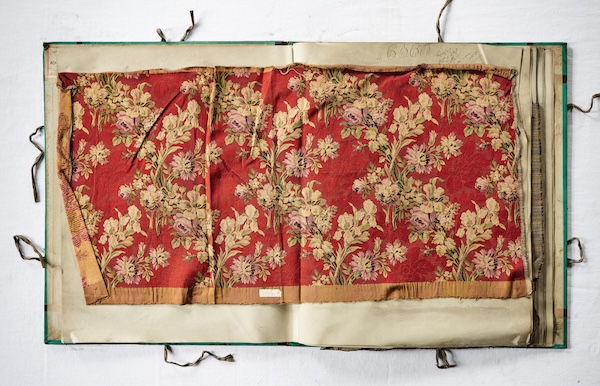
Vanoutryve textile sample
The collection—which spans everything from classic Persian motifs and traditional European florals to early-20th-century French designs and more—comprises fine silks and brocades alongside heavier, more deeply textured fabrics like tapestries and jacquards. More than 1,500 swatch books, along with assorted textiles and drawings, now reside in a climate-controlled facility where they are being conserved and catalogued. Schumacher’s in-house archival staff is leading the effort to document the collection for the long term, ensuring that this critical chapter of design history remains intact.
“Our company’s founder, Frederic Schumacher, began his textile journey at Vanoutryve,” says Kristen Robinson, FS&CO’s archivist, “and this acquisition adds not only to our understanding of Schumacher’s own story, but also to the history of manufacturing and textile design. For more than a century, Vanoutryve was one of the most revered weaving houses in France and Belgium, and now its impact will still be felt in homes around the world.”
As FS&CO continues to grow and expand on its role as an industry leader, Caponigro adds, “This important lesson in the decorative arts will provide inspiration and education for our internal teams, students, and interior designers around the world for many generations to come.”
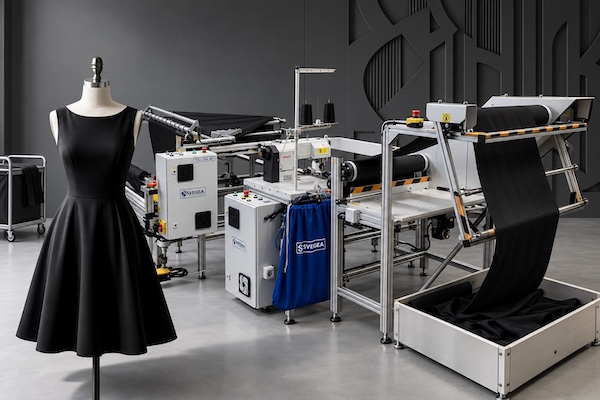
STOCKHOLM, Sweden — September 22, 2026 — The little black dress may be one of fashion’s simplest and most enduring garments, but achieving its characteristic clean lines depends on manufacturing precision of the kind supplied by Swedish textile machinery specialist and TMAS member Svegea.
Ever since Audrey Hepburn appeared in Givenchy’s celebrated creation in Breakfast at Tiffany’s, the LBD has become a wardrobe staple across generations. Its appeal lies partly in its apparent simplicity, but producing a dress that retains its shape, sits cleanly around the neckline and withstands repeated wear requires considerable attention to details that are largely invisible to the wearer.
Bias binding begins with Svegea’s Tube Sewing Unit, which joins open-width fabric to create a continuous tube.
One of those details is bias binding.
Bias binding is produced from strips of fabric cut diagonally across the material rather than along its straight grain. Cutting on the bias gives the strip greater flexibility, allowing it to follow curved necklines, armholes and other edges without puckering or distorting the garment.
It can be used to enclose raw edges, reinforce areas subjected to movement and provide a clean internal finish. While largely unnoticed by the wearer, accurately produced and applied binding can consequently make an important contribution to both the appearance and durability of a garment.
For a home sewer, bias strips can be cut and prepared manually but in industrial garment production, where thousands of identical pieces may be required, the challenge is quite different.
Consistency of width and cut becomes critical, while manufacturers must also control material use and maintain production speeds. It is here that TMAS member Svegea has established a specialist position with automated equipment for bias binding and other fabric cutting operations.
From roll to binding
Svegea’s system is designed to convert fabric rolls into continuously produced bias material in a series of automated operations.
The process begins with the company’s Tube Sewing Unit, which joins open-width fabric to create a continuous tube. This is subsequently handled by the Bias Cutter and Winder, opening and rewinding the material in preparation for accurate slitting.
The equipment can produce narrow strips down to 6mm as well as wider bindings required for heavier fabrics and more structural applications.
Automating these operations enables garment manufacturers to maintain consistent dimensions over long production runs while reducing the variations that can arise when material is prepared manually.
This consistency becomes particularly important where binding has to follow prominent curved areas of a garment. A neckline or armhole that does not sit correctly can immediately affect the appearance and fit of an otherwise well-made product.
The little black dress provides an obvious example. With few patterns or decorative elements to distract the eye, construction details and the quality of the finish become particularly important.
Beyond the LBD
The applications for industrial bias cutting extend considerably beyond dresses.
Bias binding is widely employed in blouses, childrenswear, activewear and other garments requiring flexible edge finishing, as well as in bags, accessories and home textile products.
Svegea has developed its machinery around these varied production requirements, with equipment for bias cutting complemented by collarette cutters for applications such as waistbands and roll slitters for handling larger fabric rolls.
The common requirement is repeatability. As garment production has become increasingly automated, processes that once depended heavily on manual skill have progressively been engineered to deliver consistent results at industrial volumes.
This is also representative of the highly specialised areas in which Swedish textile machinery companies continue to operate.
TMAS – the Swedish Textile Machinery Association – brings together manufacturers supplying technologies across textile and garment production, often addressing individual stages of manufacturing that remain largely invisible in the finished product.
Posted: September 28, 2026
Source: The Swedish Textile Machinery Association (TMAS)

 WINTERTHUR, Switzerland — September 30, 2026 — Thomas Oetterli has decided to step down from his function as CEO, effective October 31, 2026, and hand over the Chairmanship of the Board of Directors.