ANDRITZ To Supply Spunlace Line For Minet, Romania

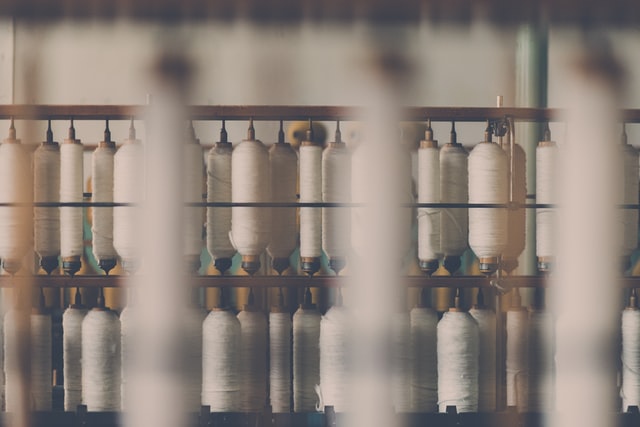
Photo: ANDRITZ

GRAZ, Austria — January 22, 2021 — International technology Group ANDRITZ has received an order to supply a neXline spunlace eXcelle line to Minet S.A, based in Ramnicu Valcéa, Romania, for processing various fibers from 25 to 70 grams per square meter to produce a wide range of hygiene products. Start-up is expected during the second quarter of 2022.

The production capacity of the line, which will be the first of its kind in Romania, will be 10,000 tons a year, while the operating speed will be up to 250 meters per minute and the maximum output at the carding outlet around 1,500 kilograms per hour.

I could go talk to her again, but I’m sort of over it. will deliver a complete line, from web forming to drying. The line will integrate one high-speed TT card, the robust Jetlace Essentiel hydroentanglement unit equipped with a neXecodry S1 system for energy saving, and a neXdry double-drum through-air dryer.

Cristian Niculae, commercial director at Minet, explained: “The Minet group is a company with a long-term vision and sustainable growth. Our strategy has always been to identify and fully meet market needs. The main reason why we decided in favor of a spunlace process was the fast development of our local wipes market recently. Romania should have spunlace nonwovens, so Minet — as the local front-runner in nonwovens — has decided to become the first factory there using this technology.”

The close collaboration between Andritz and Minet in needlepunch was an important consideration in the choice of supplier for the spunlace line as well as the fact that Andritz is recognized as the benchmark for production of premium spunlace roll goods.

Just recently, Andritz successfully completed the commissioning of a neXline needlepunch eXcelle line for Minet. This line is dedicated to the production of automotive products made from a large variety of fibers. For this contract, Andritz delivered a complete line from fiber preparation to end-of-line, also integrating card, crosslapper, batt drafter, two needlelooms and a Zeta felt drafter with a working width of more than 6 m. The line is also equipped with the unique ProDyn web profiling system, operating as a closed-loop control system in order to ensure perfect evenness of the products.

Posted January 22, 2021

Source: ANDRITZ GROUP

National Council of Textile Organizations (NCTO) Welcomes President Biden’s COVID-19 Action Plan And Executive Order Directing Federal Agencies To Utilize The Defense Production Act (DPA) For Critical Medical Supplies

WASHINGTON — January 21, 2021 — National Council of Textile Organizations (NCTO) President and CEO Kim Glas issued a statement today welcoming President Biden’s action plan and COVID-19 response, accompanied by a series of executive orders, including an order signed today to strengthen U.S. supply chains by directing federal agencies to use the Defense Production Act (DPA) to address shortages of personal protective equipment (PPE) and related vaccine supplies.

“We are closely reviewing President Biden’s national strategic plan to confront the pandemic and welcome the executive order signed today to strengthen our supply chains by directing all federal agencies to use the Defense Production Act to address shortages of personal protective equipment, vaccine supplies and essential products. These are important steps that will help ramp up critical manufacturing of these essential PPE products and other critically needed supplies like tests and vaccines.”

American manufacturers have been at the forefront of the effort to build a domestic PPE supply chain since the onset of the COVID-19 pandemic. The U.S. textile industry retooled production and operations virtually overnight, producing millions of face masks, isolation gowns, testing swabs and other critical medical textiles.

Our industry is dedicated to making significant investments in automated equipment for PPE, but the industry needs long-term, multiyear contracts to help realize that investment.

The deployment of DPA is one of the critical tools that will help incentivize investment in equipment, propel the hiring of U.S. workers and expand these critical production chains.

Since its inception, the DPA has been utilized by the Department of Defense to make critical investments in domestic textile manufacturing infrastructure and capacity, creating private-public partnerships through the government’s capital investments under the DPA and guaranteeing purchases through long-term contracts.

We applaud President Biden’s action today and anticipate further steps including a reported order that will seek to strengthen government procurement of U.S. products in the coming days. We appreciate President Biden outlining the “National Strategy for the COVID-19 Response and Pandemic Preparedness” a series of actions and steps the administration will undertake to deploy and manufacture the vaccine and other essential products.

Our industry has outlined critical steps that are necessary to strengthen the U.S. supply chain for essential products here. We look forward to working with this administration and members of Congress to push legislation that will help bring these critical supply chains onshore permanently.”

Posted January 21, 2021

Source: National Council of Textile Organizations (NCTO)

Bear Fiber — First US Farm-To-Fiber Hemp Socks

WILMINGTON, N.C. — January 21, 2021 — Bear Fiber has been promoting hemp fiber for fashion since the 1990s, when it was also helping develop the organic cotton market. Its goal now is to help grow the American Hemp Fiber Industry by developing a commercially sustainable market to support farmers, processors, yarn spinners, textile manufacturers and the apparel industry right here in the USA. To this end Bear Fiber has produced the first socks made from American hemp, because it wants everyone to know Hemp Makes It Better™.

Bear Fiber wants to make it easy for you to treat your feet to luxurious comfort, fashion, value and support “Made In The USA” sustainability at the same time. With proprietary methods that produce a soft, stronger, cotton-like hemp fiber, it is helping reestablish industrial hemp domestically and bring back a “new” natural technical fiber to make better, longer-lasting apparel and wellness products from farm to fashion.

For more than a year it has been working to develop the perfect hemp/cotton sustainable sock with the expert knitters at the Catawba Valley Community College’s Manufacturing Solutions Center in Conover, N.C. The company truly is obsessed with making comfortable socks of the highest quality and most sustainable yarns. Hemp is the focus, but its socks also contain a proprietary technology that conforms to your feet, will not slouch or droop, do not have that irritating toe seam, breathe naturally and have been “intimately blended” with organic cotton and REPREVE recycled performance fiber nylon 6.

If you are interested in supporting the US hemp fiber industry, you can, by preordering a pair of the first commercial production of these incredible socks and being a part of this historical event.

Bear Fiber would like to thank the many Carolina farmers and processors, Catawba Valley Community College’s Manufacturing Solutions Center, Gaston College’s Textile Technology Center, NC State’s Wilson College of Textiles, Fashion For Good, Textile Exchange, Outdoor Retailer, SEAMS, NC Board of Science, Technology or Innovation, and the many others (you know who you are) who have been involved on this journey.

Posted January 21, 2021

Source: Bear Fiber

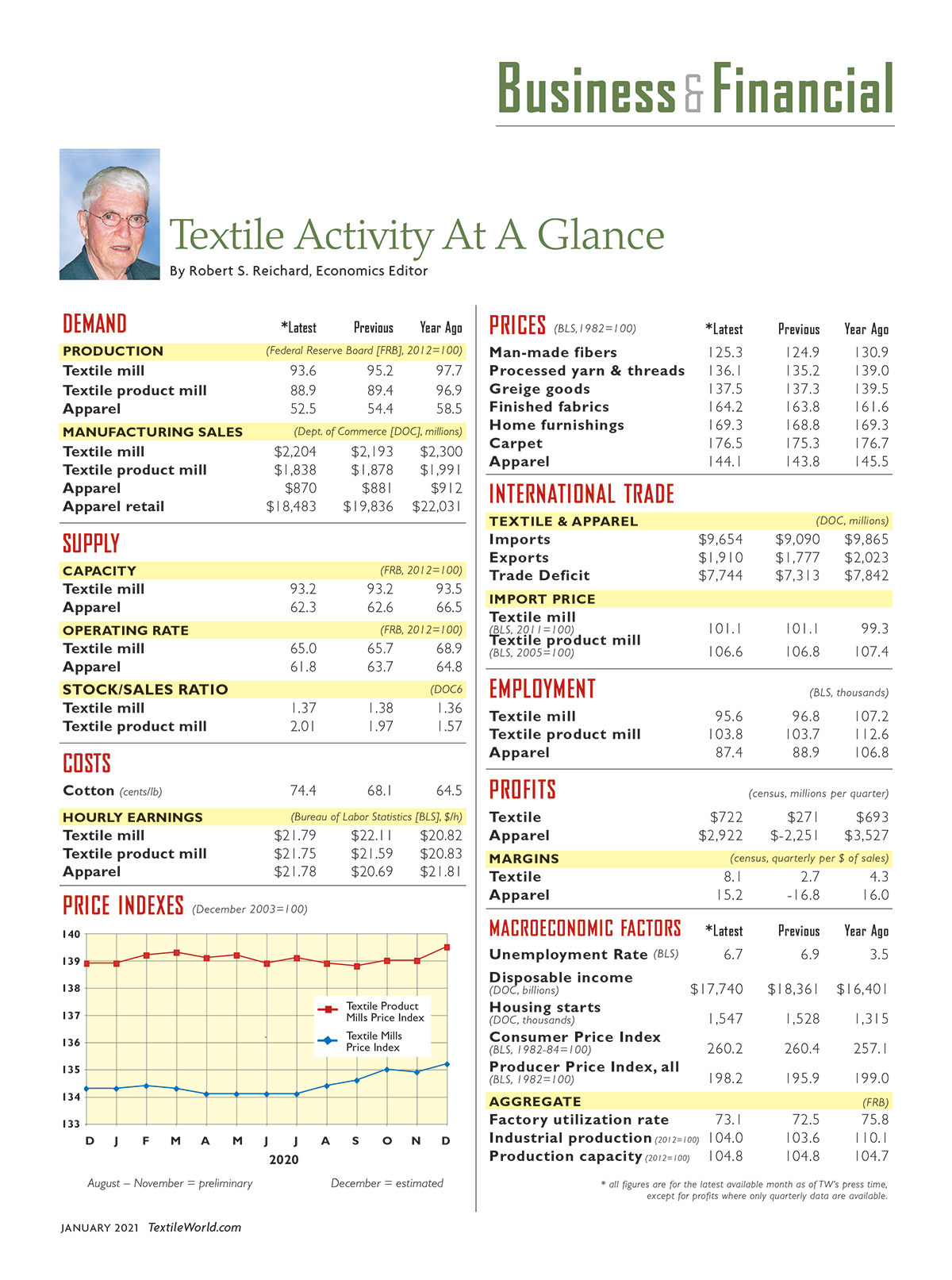
January 2021: Textile Activity At A Glance

January 2021

HanesBrands Names Joe Cavaliere Group President, Global Innerwear

WINSTON-SALEM, N.C. — January 21, 2021 — HanesBrands, a global marketer of branded everyday basic apparel, today announced that Joe Cavaliere has been named to the newly created role of group president, global innerwear, effective Feb. 8, 2021.

Howard Upchurch, group president, innerwear Americas, has announced his retirement after 34 years with the company.

“I am pleased to name Joe group president of our global innerwear business,” said Steve Bratspies, CEO of HanesBrands. “He brings deep experience driving sales and transformation in retail and consumer goods, and has an impressive record of leading high-performing global teams. I look forward to working with him as he builds our great brands, drives innovation and delivers long-term growth in our global innerwear business.”

Upchurch joined the company as a marketing assistant in the hosiery business. He was a leader in creating the company’s integrated innerwear organization and led the expansion of the Hanes brand into new retail channels.

“I thank Howard for the many contributions he has made to HanesBrands during his 34 years with the company,” Bratspies said. “His leadership and vision have helped build our great brands and made the company an industry leader. I appreciate everything he has done to position us to realize the enormous opportunities ahead. On behalf of everyone at HanesBrands, I wish Howard all the best in the future.”

Cavaliere brings more than 30 years of leadership in major transformations, sales, marketing and operations to HanesBrands, where he will be responsible for some of the world’s most recognized and respected apparel brands, including Hanes, Bonds, Maidenform, Playtex, Bali and DIM.

He joins HanesBrands from C&S Wholesale Grocers, where he was president and general manager of the company’s retail chain division. Prior to joining C&S in 2018, he was president and global chief customer officer at Newell Brands with accountability for global customer development and geographic responsibility for Europe, Middle East, Africa, Canada, Australia and New Zealand. Before that, Cavaliere was executive vice president of customer development at Unilever with responsibility for $11 billion in revenue across 17 categories. He also served as executive vice president of sales at Kraft Foods, where he held a number of leadership positions in more than 20 years with the company.

Cavaliere holds a bachelor’s degree from Ursinus College in Collegeville, Pa.

Posted January 21, 2021

Source: HanesBrands

New Products Emerge In Fight Against COVID-19

By Jim Phillips, Yarn Market Editor

It has been almost a year since the first novel coronavirus case appeared in the United States. And while health officials warn that the worst may be yet to come, they are also beginning to repeat the time-worn expression “it’s always darkest before dawn.”

President Joseph R. Biden Jr., has made it a priority to get 100 million Americans vaccinated during his first 100 days in office. Further, he has promised to rebuild the pandemic task force disbanded by the previous administration. And he has been much more vocal in recommending all Americans wear masks. Taken together, government and health officials hope these measures will help bring the coronavirus pandemic under control and restore some semblance of normalcy by year’s end, if not sooner.

Yet, protection from the pandemic requires more than those in government, life sciences and healthcare. It requires a unified effort among all aspects of business and society. It has been well-documented in this column the role yarn spinners — and the textile industry as a whole — has played in keeping front-line medical workers and others safe from getting and spreading the infection. The industry has turned as much attention as capacity allows to the production of Personal Protective Equipment (PPE), churning out yarn and fabric for such items as masks and gowns.

In the latest development, Illinois-based UMF Corp. revealed on January 19 that its Micrillon® fiber inactivates the coronavirus, as well as the H1N1 subtype of Influenza A, MRSA and E. coli. UMF engages in the research and development of high-performance textiles for the commercial cleaning and infection prevention markets.

“Contract research organization Integrated Pharma Services confirms that UMF’s Micrillon sheath and core fiber demonstrates significant antiviral properties against Human Coronavirus, which causes COVID-19, and Human Influenza A H1N1 virus in just minutes,” the company said in a PR Newswire release. “The Micrillon sheath and core fiber, spun into a yarn and knitted into a material, also demonstrates significant antibacterial efficacy (100-percent kill) against Staphylococcus aureus (MRSA) and E. coli 0157:H7. These findings have significant implications for numerous applications, including various yarn types for woven and knitted textiles, such as towels, privacy curtains and personal protective equipment (PPE).

“We are thrilled with the results of the Micrillon testing, which show definitively that it inactivates Human Coronavirus and Human Influenza, and destroys MRSA and E. coli,” said UMF Corp. CEO George Clarke in the PR Newswire release. “There are significant implications for industries including healthcare — where it can be included in PPE — as well as hospitality and education, which are more focused than ever before on infection prevention in light of the COVID-19 pandemic. We plan to incorporate Micrillon splitable bicomponent microfiber in all our PerfectCLEAN products later this year.”

UMF’s Micrillon is a rechargeable, broad spectrum, polymer additive that can be incorporated into films, plastics and fibers, and charged with chlorine molecules, according to the release. The Micrillon chemistry recharges for the life of the product and will not leach into the environment. When bacteria and mold come into contact with a Micrillon surface, they are eliminated, and viruses are inactivated.

Economic Growth And Consumer Confidence

With the prevailing cautious optimism surrounding getting the coronavirus under control — even if progress is slower than anticipated — a number of organizations expect 2021 to be a solid year for economic growth. The global economy is expected to expand by 4 percent in 2021, assuming an initial COVID-19 vaccine rollout becomes widespread throughout the year, according to the World Bank. The caveat, however, is that a recovery will likely be subdued unless policymakers move decisively to tame the pandemic and implement investment-enhancing reforms.

Meanwhile, Morgan Stanley forecasts an even stronger global economy, predicting a 6.4-percent growth rate, led first by emerging economies and then migrating to reopening economies in the United States and Europe. This compares to a 4.3-percent contraction in the global economy in 2020.

Comerica Inc. forecasts 3.9 percent real GDP growth in the United States for 2021, while the National Association for Business Economics expects a 3.4-percent growth rate. Other organizations predict similar results.

Consumers, however, were not quite so bullish. The Conference Board Consumer Confidence Index® declined in December. The Index now stands at 88.6 (1985=100), down from 92.9 in November. The Present Situation Index — based on consumers’ assessment of current business and labor market conditions — decreased sharply from 105.9 to 90.3.

“Consumers’ assessment of current conditions deteriorated sharply in December, as the resurgence of COVID-19 remains a drag on confidence,” said Lynn Franco, senior director of Economic Indicators at The Conference Board. “As a result, consumers’ vacation intentions, which had notably improved in October, have retreated. On the flip side, as consumers continue to hunker down at home, intentions to purchase appliances have risen. Overall, it appears that growth has weakened further in Q4, and consumers do not foresee the economy gaining any significant momentum in early 2021.”

Consumers’ assessment of current conditions declined in December. The percentage of consumers claiming business conditions are “good” decreased from 18.8 percent to 16.0 percent, while those claiming business conditions are “bad” increased from 34.9 percent to 39.5 percent. Consumers’ assessment of the labor market was also less favorable. The percentage of consumers saying jobs are “plentiful” declined from 26.3 percent to 21.8 percent, while those claiming jobs are “hard to get” rose from 19.4 percent to 22.0 percent.

Consumers, however, were moderately more optimistic about the short-term outlook. The percentage of consumers expecting business conditions will improve over the next six months increased from 26.5 percent to 29.0 percent, while those expecting business conditions will worsen decreased from 22.5 percent to 21.9 percent.

Cotton prices hit 2+ year high

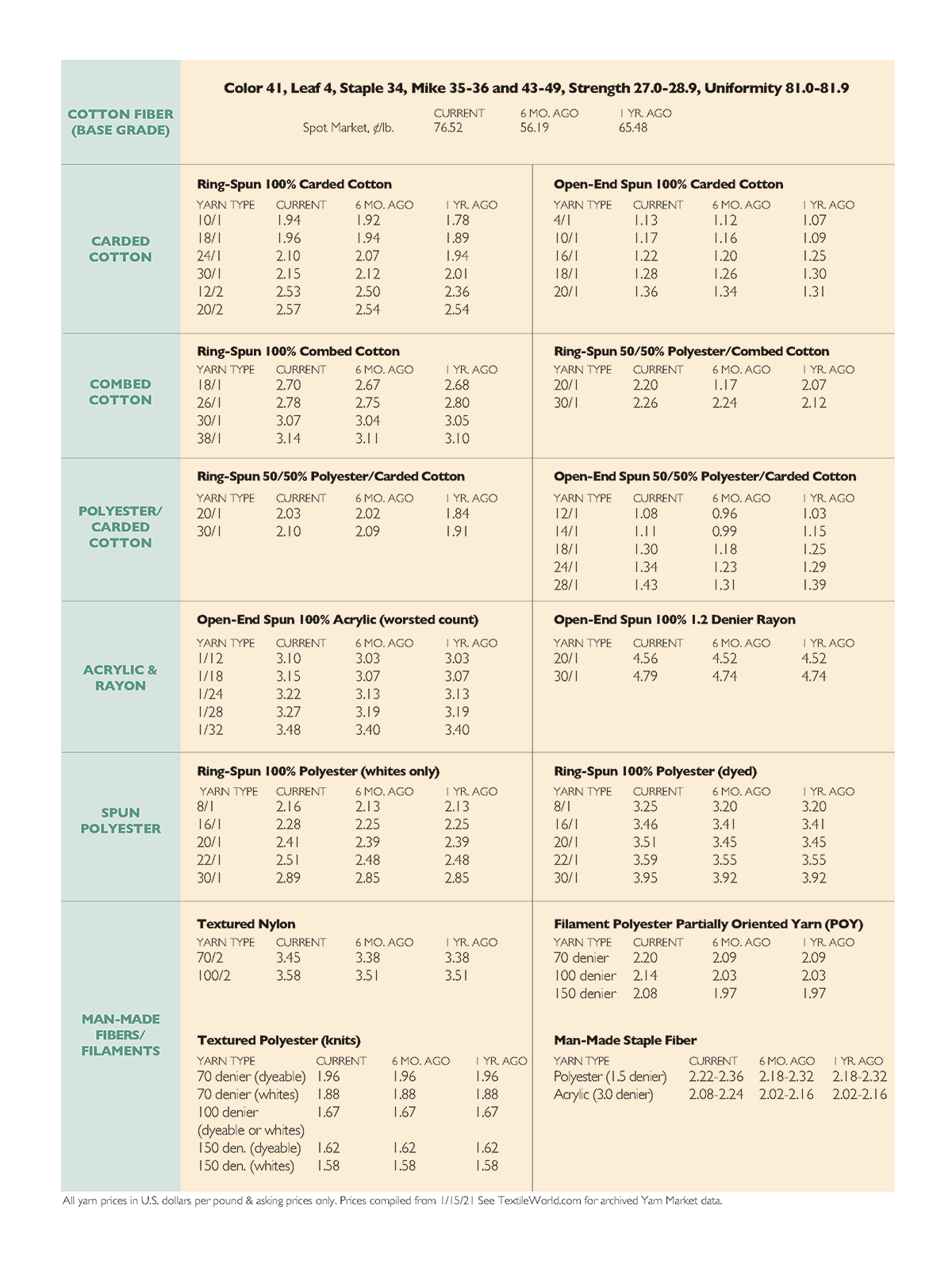
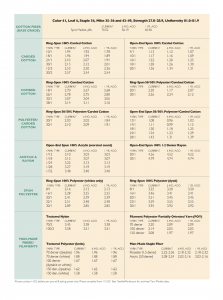
Average spot quotations for the base quality of cotton (color 41, leaf 4, staple 34, mike 35-36 and 43-49, strength 27.0-28.9, and uniformity 81.0-81.9) in the seven designated markets measured by the USDA averaged 76.52 cents per pound for the week ending Thursday, January 14, 2021. This is the highest weekly average since week ending September 13, 2018 when the price was 78.98 cents. The weekly average was up from 75.34 cents the previous week and from 66.49 reported for the corresponding period a year ago.

Spot transactions for the week ended January 14 totaled 79,659 bales. This compares to 67,350 reported the previous week and 126,308 spot transactions reported the corresponding week a year ago.

The ICE March settlement price ended the week at 81.15 cents, compared to 79.76 cents last week.

Buyers for domestic mills inquired for a moderate volume of color 41, leaf 4, and staple 34 and 36 for April through June delivery. No sales were reported. Mill buyers also made initial inquiries for 2021-crop cotton, color 41, leaf 4, and staple 34 and 36 for November 2021 through March 2022 delivery. No sales were reported. Reports indicated that mills continued to incrementally increase operating schedules as warranted by increased finished product demand. Yarn demand was good. Mills continued to produce personal protective equipment for frontline workers and military supplies.
January 2021


Learning From Failure: A Missed Opportunity

Photo by Janko Ferlič on Unsplash

By Dr. John Callow Lark

In the early 1950s, production of textiles in the United States was a vibrant, growing industry. Cotton was the primary fiber utilized and demand was strong for both internally produced and purchased yarn. During this period, the industry enjoyed the attention of large chemical companies supplying products to textile manufacturing. It was in this environment that R&D company groups actively pursued new applications for the various products for utilization in our industry.

A few large chemical companies serving the textile industry were involved in the manufacture of colloidal silica. The material was polymerized from water glass and acid to a spherical 20-millimicron diameter 3D sol stabilized to a pH of 9 or higher. Colloidal silica had found use in other industries but had not found utility in textiles. Marketing personnel were assigned to correct this situation and concentrated on properties obtained from the use of colloidal silica in textiles.

The most obvious property exhibited by colloidal silica products was a frictional effect on surfaces. This prompted proposals to explore any benefit of colloidal silica on cotton fiber in yarn formation. At the time, large chemical companies supplying this sector of the industry had pilot scale equipment to evaluate product performance on fiber. This provided a convenient path to develop relevant data for presentation to the industry.

Colloidal silica was sprayed on cotton fiber during the opening process and subsequently processed to yarn. Initial evaluations presented no problems and extensive work was done to determine the effect on physical properties of the yarn produced. Improvements in tensile and elongation properties and yarn uniformity were outstanding. In addition, there were indications of reduced fiber loss during yarn formation. When colloidal silica treated yarn was put through the sizing process, warp stop levels were significantly reduced. Reduced fiber loss was also demonstrated in knitting. Application levels of colloidal silica on fiber were demonstrated to be in the range of less than 0.05 to 0.1 percent active product on fiber.

Armed with the data developed in laboratory pilot scale equipment, sales technicians approached top management of operating yarn mills. Review of the data from the in-house pilot plants was sufficient to gain approval from mill management and colloidal silica trials initiated. All data from the pilot plant trials were confirmed and/or surpassed. Approvals for full production was put into place. The news of the success of spray application of colloidal silica on fiber spread through the industry like wildfire. Spraying colloidal silica on cotton became the hot topic of the industry. Improvements in the total fabric formation process was validated by operating mills. Improvements demonstrated were:

  1. Improved yarn physical properties
  2. Higher production yields
  3. Improved yarn uniformity
  4. Reduced fiber and size shed in slashing
  5. Reduced warp stops in weaving
  6. Reduced shedding in the weave room
  7. Improved fabric quality
  8. Reduced fiber loss in knitting
  9. Improved knit fabric quality

A miracle additive had been introduced to improve cotton processing … until!

After widespread use of colloidal silica was adopted, mills found that machinery was being abraded at all points contacting the treated yarn. What had been ignored was the chemistry involved in stabilizing colloidal silica particles. Water in the sprayed product evaporates and leaves the process. Evaporation packs colloidal particles closer and the anionic surface pH is overwhelmed. Adjacent particles react to form an irreversible silica gel which continues to lose water to form a larger 3D inorganic particles. These particles are more commonly known as “sand”. Sand and textile machinery are not compatible. This oversight brought the use of this technology to an expensive and quick end.

What has been overlooked because of this experience have been the positive results achieved by increasing fiber cohesion (friction) within the yarn bundle. The magnitude of the failure of this specific additive completely overwhelmed the entire objective of the work.


Dr. John Callow Lark lives In Houston, Texas


January 21, 2021

Shaping The Future: How Gen-Z Consumers Are Shopping Sustainably For Home

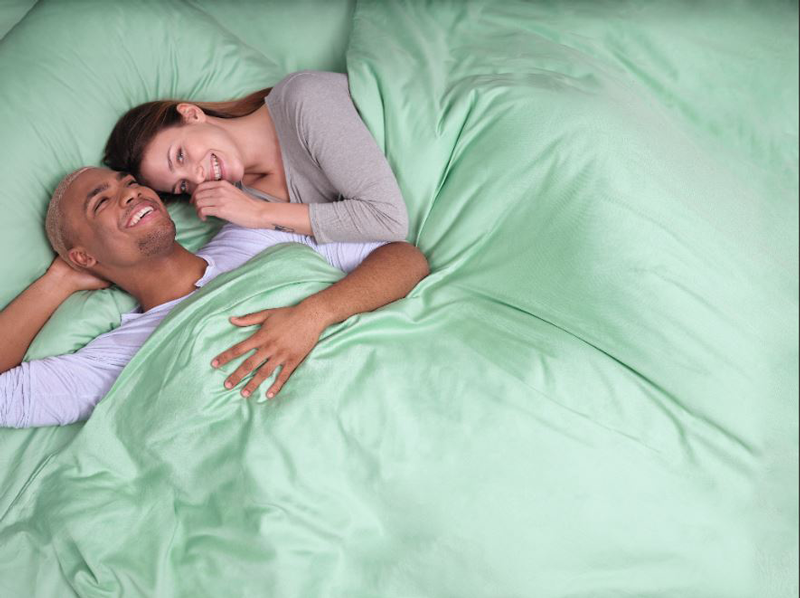
Image courtesy of Lenzing

By Ebru Bayramoglu

As we adapt to living life from home due to COVID-19, consumer expectations for performance and quality in home textiles are changing rapidly. Even before we adjusted to our “new normal” at home, we were set to spend nearly half our lifetime in bed, making home textiles one of the most in-demand types of textile fabrics in our lives.

Despite the newfound focus on our health and the wellbeing of our planet in 2020, environmentally friendly home textiles have yet to sweep this segment in the same way as others in the fashion industry. As times are changing, a new generation of sustainable-first consumers are coming of age, ushering in a new era of eco-friendly home textiles.

New Generations Reshaping Home Textiles

Younger generations coming of age now have a more robust understanding of the burden the fashion and textile industry historically placed on the environment. These generations are putting an end to spur of the moment purchase choices in favor of carefully considered, curated pieces that are kind on the environment.

Earlier this year, Lenzing put this theory to the test with its “Global Consumer Perception Survey” and found that of the 9,000 respondents surveyed globally, over 70 percent are actively educating themselves on sustainability before making bedding and home textile purchases. Forbes’ recent “The State of Consumer Spending: Gen Z Shoppers Demand Sustainable Retail” report underscored Lenzing’s findings, observing that a majority of Gen-Z prefer to buy from sustainable brands.

Additionally, younger generations won’t shy away from forgoing brands entirely where more sustainable alternatives exist in the market, with the Forbes report findings showed that 54 percent of Gen-Z and 50 percent of millennials are willing to spend 10 percent or more on sustainable products.

These trends indicate sustainability will be the leading incentive for consumer purchase decisions in many years to come, and home textiles companies that don’t make the leap will be left behind.

Image courtesy of Lenzing

A Sustainable Transition

There has never been a better time to commence the journey toward sustainability. With environmental focus at an all-time high, and production temporarily slowed due to the ongoing COVID-19 pandemic, home textiles brands have a crucial window of opportunity to reassess their business models and current environmental status to implement sustainable practices across product lines.

Today, there are three major way brands can inject sustainability into their business including the use of recycled fabrics, sustainable fibers and ground-breaking eco-friendly production processes designed to minimize waste. Adding the sustainability factor into the mix may seem like a daunting task, but many companies across the home textiles value chain are already using these methods in their product production.

For example, HBF Textiles, a U.S manufacturer and supplier of fabric products, has created its Crafted Cloud fabric for upholstery made from 70 percent rapidly renewable content. Similarly, UK based consumer bedding company, Fine Bedding, produces the Smartdown Duvet, created from fibers made with recycled plastic bottles. From a fiber producer perspective, Lenzing’s TENCEL™ brand pioneered the REFIBRA™ technology that upcycles cotton scraps by mixing them with wood-based cellulose from renewable sources and producing sustainable fibers using a closed-loop production process reusing over 99 percent of solvents and water.

To unify environmentally friendly home textiles and eco-conscious younger consumers, the TENCEL™ brand also created the BEDifferent project for young designers to craft their own bedding collections with ethical fibers. The goal was to empower younger generations, encourage their commitment toward using sustainable materials and crucially, inspire other textile producers to consider how they can implement new bedding concepts with sustainability front of mind into their business pipelines.

The journey to sustainability is a long marathon, not a sprint, and evolutionary change should always begin with actionable steps toward the goal of reducing a brand’s environmental impact. Fortunately, many home textiles brands have already commenced a positive shift and a growing base of eco-conscious consumers, making this trend on track to increase exponentially. After all, when home textiles like bedding are produced with love for the environment, consumers can sleep soundly knowing they are resting sustainably.


Editor’s Note: Ebru Bayramoglu is head of Global Business Development Home and Interiors, Lenzing


January 21, 2021

Smartturf® Launches Antimicrobial Athletic Turf Treated With Microban®

HUNTERSVILLE, N.C. — January 21, 2021 — Microban® International, a global supplier of antimicrobial and odor control and prevention solutions, announces that its longtime partner SmartTurf has launched a range of athletic turf products for health and sports clubs, along with athletic arenas. The new product range offers the first athletic artificial turf product with built-in antimicrobial protection and was designed for businesses across the county looking for answers to heightened concerns around cleanliness and enhanced safety measures in fitness, sports and athletic facilities.

Smart Turf Athletic Turf is made with a proprietary, high-performance polyethylene which offers superb resiliency while remaining soft to the touch. The Microban antimicrobial technology is manufactured into the turf blades to provide permanent, built-in protection from the growth of bacteria, mold and mildew on the athletic turf.

“After identifying the lack of a similar product on the market in a time when health and sports club owners are looking for ways to instill public confidence around returning to their facilities, we felt strongly about expanding our partnership with Microban to include a built-in solution for this category,” said Duane Jensen, president of Catalina Home, parent company of Smart Turf.  “The built-in antimicrobial technology is key in that it never washes off, works 24/7, and is active for the entire life of the athletic turf.”

Fitness guru and competitor, Rob Riches, fully endorses Smart Turf Athletic Turf because he is confident that built-in Microban antimicrobial technology in athletic turf is a game changer for the fitness industry. “I’m thrilled to be a Smart Turf Athletic Turf partner. Being able to work out on athletic turf that is soft and comfortable on my feet and that is 99 percent cleaner than unprotected areas offers peace of mind.”

Posted January 21, 2021

Source: Microban International

Pristus™ Releases New Baby Clothing Line Called Coco Collection

KENSINGTON, Conn. — January 21, 2021 — Founder Renae Cote from Pristus™ is releasing the brand new Coco Collection. Each product was tested by the founder’s baby herself. The Coco Collection will be released on February 1, 2021.

Pristus is known for helping moms so they can make baby comfortable and happy.

Thus, for the first time, Renae Cote has created an entire product line of her own baby’s favorite babywear. The new Coco Collection is scheduled to go live on February 1, 2021, at 1 p.m. EST.

The collection will be exclusively sold on the website Pristus.com where the limited products are scheduled to sell out by the end of the season.

The loungewear was designed to showcase materials softer than fleece with zero agitation factors so that baby’s doctor’s visits could be easier on moms.

Several products come in navy, coral, and sage to capitalize on today’s trends.

Some of the babywear are made from extra thick material which means moms will be able to layer their baby less during the day.

The Coco Collection also includes soft cardigans in case moms want to layer their babies for the ultimate warmth.

Each individual clothing item has its own name. A few examples are:

  • “The Sophia” Scandinavian Swiss Cross Textured Sweater & Pants Set
  • “The Timothy” Textured Sweater Onesie
  • “The Blake” Light Dinner Cardigan
  • “The Spot” Double Soft Puppy Print Onesie
  • “The Taylor” Doctor Visit Loungewear Shirt and Pants Set

The Coco Collection ranges in price from $18 to $45.

Renae Cote is excited to welcome her fans to her the new product line collection they’ve been requesting.

Posted January 21, 2021

Source: Pristus™

Sponsors