Beverly Knits Inc.: Investing For The Future

Ron and Janet Sytz, who purchased Beverly Knits in 2004, see the company as an incubator for technical fabric solutions.

A combination of its traditional business combined with a special PPE project enabled family-owned Beverly Knits to grow year-over-year.

By Rachael S. Davis, Executive Editor

In 2018, more than 30 million small businesses — companies employing fewer than 500 people, according to the U.S. Small Business Administration — operated in the United States, and many of these businesses are family-owned. The textile industry is no stranger to family-owned businesses, with some of these companies owned by the same family over multiple generations. Gastonia, N.C.-based Beverly Knits Inc. is an example of one such family-owned textile business.

The pandemic brought about challenges and changes for many companies and weathering the storm has been difficult for many small businesses. Many had to pivot and rethink their business models, but the flexibility to do so resulted in growth for some companies.

Beverly Knits is celebrating 41 years as a family business this year, and according to Owner Ron Sytz, the company’s associates have stepped up to the challenges presented by COVID. “A culture of continuing to work as a tightly knit family business is our focus,” Sytz said.
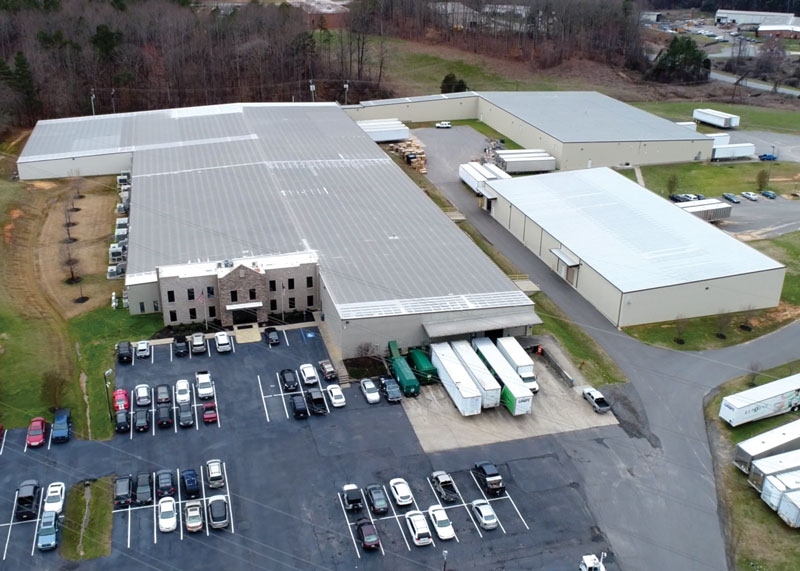
Beverly Knits Inc. (pictured) and sister companies Altus Finishing and Creative Ticking are headquartered in Gastonia, N.C.

The company was established in 1980 by Bob and JoAnn Sytz as a commission circular knit operation serving the North American textile industry. Today, the business — one of the largest circular knitting companies in the United States — is owned by Ron and Janet Sytz who have expanded the company’s capabilities and diversified its customer base. The company comprises Beverly Knits, Altus Finishing, Creative Fabrics and Creative Ticking; and employs approximately 325 associates.

Beverly Knits’ capabilities include specialized knitting, dyeing, finishing, and cut and sew operations. The company’s products are used in performance wear, athletic footwear, intimate apparel, outdoor products, mattresses and bedding, automotive, and industrial applications as well as medical products including personal protective equipment (PPE).

Knitting machine capabilities range from 8-inch machines up to 60-inch-diameter machines in gauges of 7 to 42 gauge in single knit, double knit, electronic jacquard and specialty knitting machines. Beverly Knits uses a variety of yarns — from natural to man-made, fine deniers to coarse, as well as specialty high-performance yarns — to realize the targeted performance characteristics and properties required by the application. The company works in conjunction with its customers to develop, design and create innovative fabrics.

After knitting, fabrics are processed through Altus Finishing using its state-of-the-art finishing equipment. The performance of the fabrics may be enhanced in a variety of ways from adding tactile aesthetics to antibacterial properties or water and soil repellency.

Creative Fabrics is the sales arm of the company, which sells finished products into a variety of markets including the bedding industry under its own Creative Ticking brand. The Creative Ticking division offers customers a one-stop-shop for bedding components and products via its cut-and-sew operation. Products available from Creative Ticking include pillowcases, sheets and full mattress covers, as well as the more recent addition of face masks and protective gowns in a range of personal protective equipment (PPE)

Textile World recently had the opportunity to speak with Ron Sytz to learn more about the company, the challenges presented over the past 12 months and the company’s future outlook.
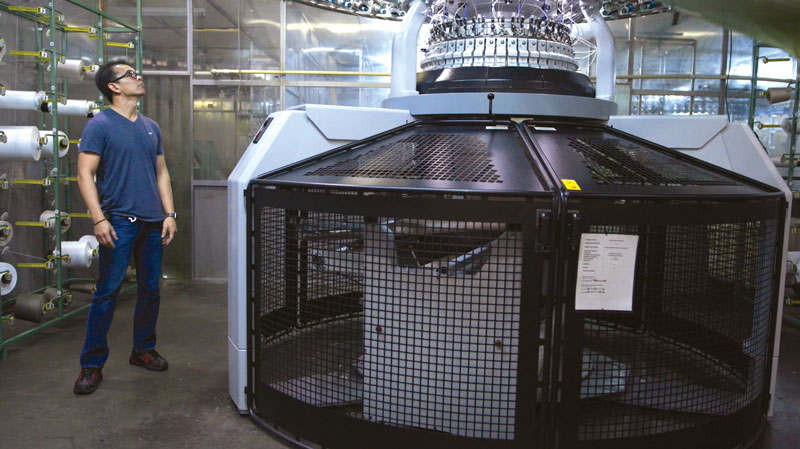
Allan Callera, technical manager at Beverly Knits, inspecting a knitting machine.

TW: What markets are the most important to the company today? What markets do you see as important in the future?

Sytz: Beverly Knits has long been an important supplier to the performance athleticwear market and, in more recent years, has invested in capabilities to penetrate the bedding industry. With continued de-risking and reshoring of supply chains, most all markets will look to have a domestic resource for a larger portion of their demand. However, we see high performance industrial fabrics — including products that make their way into the auto market via seats, headliners and backing for simulated leather — will provide important growth opportunities . Beverly Knits has made recent investments of more than $1.5 million to develop more capabilities to service this market, including the preparation of fabrics for digital printing.

TW: Are technical/medical textiles important to your business? Is this a growing area?

Sytz: Beverly Knits works directly with high-performance technical yarn manufacturers to help engineer specialized technical and medical textiles, with the objective of achieving specific performance characteristics. With continued advances in yarn and fabric chemistries as well as recent investments in specialized finishing capabilities, we see growth in the development and application of high-tech fabrics designed to address specific needs. Medical textiles will continue to be an important growth area for us, both for PPE and unique applications in post-surgical care.

TW: What did the company look like pre-2020 and how has COVID impacted your business? Have you changed your business model at all, or have you introduced any new products as a result of the pandemic?

Sytz: With steady investments in specialized knitting and the expansion of fabric finishing processing, along with cut-and-sew capabilities, our enterprise has experienced growth during the years leading up to 2020. Demand for our traditional book of business started strong in 2020, but clearly slowed significantly during the second quarter with the onset of the pandemic. However, with consumers spending more time in their homes, the second half of the year saw exceptionally strong demand for bedding products. We also saw initial signs of reshoring of products for multiple market segments, generating volumes which just about made up for the reduced volume of the first half of the year.

Additionally, late in the first quarter, we pivoted very quickly to develop facemask PPE products made using circular knit fabric for the U.S. Department of Health and Human Services. We tasked our own assets and quickly developed a network of more than twenty cut-and-sew operations across the country to supplement our own assembly capabilities that produced more than 20 million masks in three months.  a result, we were able to keep all of our associates employed during the entire year.

In summary, the combination of our traditional business and the special PPE project actually enabled our enterprise to grow year-over-year.

The recent acquisition of two state-of-the-art tenter frames gives Altus Finishing customers a myriad of textile finishing options.

TW: Have you made any recent investments, or do you plan to make any investments in the near future? What technologies are of interest to you to maintain/grow your business?

Sytz: Beverly Knits continues to invest in high efficiency and specialized electronically controlled knitting machines. Within Altus Finishing, we recently invested in an additional finishing line and added state-of-the-art topical application technology that allows us to better engineer fabric performance by employing advanced topicals in addition to the properties of the underlying circular knit yarns. In particular, we are developing enhanced cooling fabrics and have developed products with antivirial and antibacterial technologies to build solutions tailored to today’s ever-changing needs.

TW: How do you view the current business climate and how do you see the next several years?

Sytz: We are currently projecting continued growth as we bring on more assets and expand our facilities during 2021. We believe that bedding will continue to provide strength, that apparel supply chains will begin to require more production as they work through inventory gluts from 2020, and that reshoring will gain momentum across all segments. Supply chain managers will continue to de-risk their networks by reshoring more of their critical needs, which will create more opportunities for domestic manufacturing.

TW: What changes have you seen in the knitting industry over the past several years? Are there any particular trends in the United States or particular products in demand?

Sytz: Knitting machine manufacturers continue to advance the technology within their offerings and we have steadily incorporated these capabilities into our fleet. These new technologies allow for faster machine speeds and improved efficiencies for the processing of fabrics for all markets.  Additionally, we continue to see demand for the production of custom engineered mattress covers which lend themselves to the growth of the roll packed bed-in-a-box. There continue to be increases in requirements for the performance enhancements related to the elastification of fabrics to support consumer comfort and fabric recovery. And with the move to lightweight vehicles to increase energy efficiency, more textiles are being incorporated into automotive design and assembly techniques.

TW: Do you have any brands that you promote within the industry? Do you promote any brands at the consumer level?

Sytz: Our Creative Ticking business has developed B2B industry focused brands.

Several years ago, we began to develop and market TioTec® fabrics with technology to help bedding companies to assemble beds faster. The TioTec® technology incorporates the required fire barrier into the decorative cover fabric making it easier and faster to assemble mattresses.

Additionally, we developed and launched Zone 55TM, a performance technology that applies enhanced fabric cooling chemistry to the focused areas of mattress covers that matter most for the consumer to moderate the temperature swings experienced in the bed.

TW: How does your workforce contribute to producing a high-quality product? Do you have skilled workers with a long history at the company?

Sytz: We are fortunate to have a large number of long-term employees, with more than 20 percent having greater than 10 years and 40 percent more than five years with the company.  And we have employees with 20, 30 and even 40 years of service! Over the years, we have trained and developed many experts in circular knitting. This was achieved by giving them the opportunity to play and work on multiple machine types, helping all to be more creative. We have also recruited employees who have many years of experience in the knitting, finishing and cut-and-sew industry. This experience not only helps with the efficient production of high- quality commercial programs, but also supports our product development and prototyping processes.  And we are interested in continuing to build our team with great people that can help us create value.

TW: Over the past decade or so, numerous consumer-driven issues have arisen. For example, issues such as sustainability and full-value traceability have become more important. Are these issues of concern to your company?

Sytz: Initially focused on apparel, we have seen interest in sustainability spread to all markets, including textiles for automotive production. We have always focused on using yarns and fabrics that are environmentally friendly including cotton, wool, and polyester yarns made using reclaimed bottles. We have also helped to develop new fabrics that reduce microfiber shedding. Additionally, as a company we have also attempted to reduce our waste by selling fabrics to recyclers whenever possible. Through this process, fabrics are processed and re-extruded into yarn to be used again.
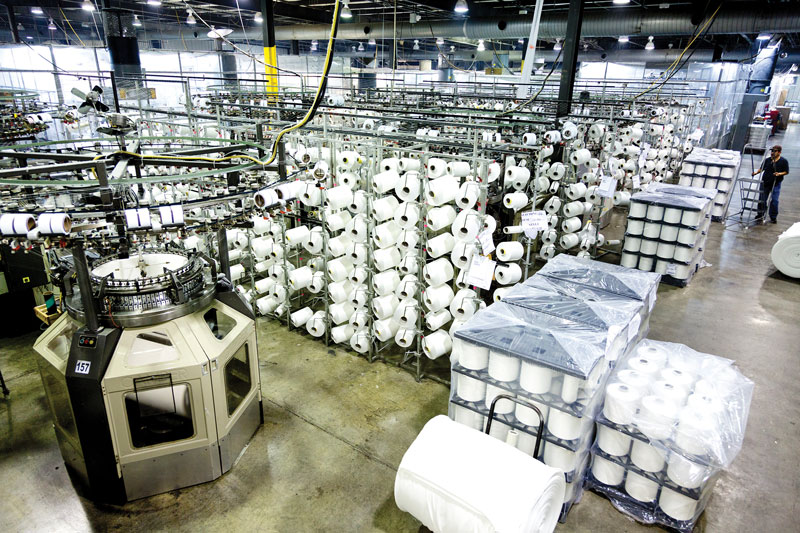
Since 1980, Beverly Knits has grown from 14 knitting machines to more than 300 machines.

TW: How does the company manage change?

Sytz: With a heritage of commission knitting, we have always knit a wide variety of styles for the market. So, managing change is inherent to our company culture — where we are accustomed to managing the production of a complex mix of products. An important element of managing change is the development of a diversely skilled workforce, where intentional cross training of our associates enables them to back each other up and to more efficiently flex with changes in demand and product mix.

TW: What are the company’s biggest challenges?

Sytz: Securing and developing manufacturing labor will be very important, and the companies that do this well will be positioned to grow. We are particularly focused on growing our workforce in order to task our expanding asset base.  And with that, we will look to attract capable leaders with specific skills to help our team grow.

TW: What do you see as the company’s greatest strengths?

Sytz: We have developed and attracted technical and operational expertise to support the research and development and the commercialization of custom solutions to our customers’ unmet needs.  We also apply this expertise to generate innovative proprietary modifications to our equipment, further enhancing our ability to innovate products for our customers.

TW: Please give a quick synopsis of your company’s value proposition. Please tell the readers what makes you special and sets you apart? Please let us know what to expect from your company in the future.

Sytz: Our value proposition is a combination of unparalleled knitting capabilities, tremendous research and development capabilities paired with top notch customer service and fast turnaround times. In a globalized economy, where we compete with companies across the world, we are able to add value through accomplishing what others cannot. In some cases, this means providing faster lead times than can be achieved by foreign competitors, in others it means providing customers with fabrics that can only be manufactured through our proprietary capabilities.

TW: Why do you do what you do? What motivates you?  

Sytz: When Beverly Knits was founded, it focused on developing new fabrics. Our family/team has grown under the creative spirit cultivated by Founder Bob Sytz who was a leader in the industry known for his can-do attitude and ability to create what was needed. The daily challenges are what we use to motivate our team. We believe in creating value and careers for our associates through innovation and manufacturing right here in the United States. We create the opportunity for each of our associates to support themselves and their families and strive to do so with a family environment and strong core values.

January/February 2021
Knitting Technology Developments

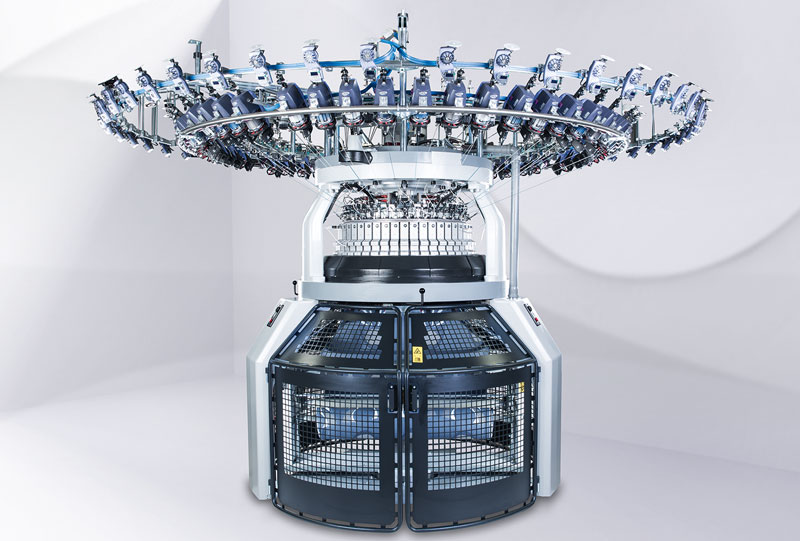
Mayer & Cie.’s OVJA 1.6 EE/2 WT double jersey jacquard machine for multi-colored designs and microstructure elements.

Knitting innovations continue to add value for textile manufacturers during a difficult time.

TW Special Report

Courses, wales, loops, gauge, warp, weft, raschel, jersey, interlock … just some of the terms familiar to people working in the knitting industry. Knitting technology comes in a variety of types and sizes and may be used to make all sorts of products from small vascular heart grafts (see “Prototype Graft Designed To Replace Damaged Heart Vessels Shows Promise In Cell Study”, TW, January/February 2021), to shoe uppers and apparel fabrics all the way to large-scale bedding components and anything in between that requires comfort, stretch and seamless shaping, among other attributes.

Since ITMA 2019 — ITMA typically paving the way for new innovations — and despite difficulties in the machinery market because of the pandemic, knitting technology manufacturers are still innovating and helping their customers provide value. Here is a look at a few new products available to knitters.

Mayer & Cie

After completing field tests, Germany-based Mayer & Cie reports its OVJA 2.4 EM circular knitting machine now is ready for the market. The fully electronic model is designed for mattress cover fabrics with high output and a wide pattern variety. This ready-for-market version builds on the model introduced during ITMA 2019 with the addition of a new thread fluctuation control system positioned on every second feeder. A controlled air stream maintains constant yarn tension especially at high revolutions per minute, which helps avoid thread loops and dropped stitches.

Mayer & Cie.’s OVJA 2.4 EM circular knitting machine is designed for mattress cover fabrics with high output and a wide pattern variety.

“With a feeder density of 2.4 the OVJA 2.4 EM tallies precisely with the current trend toward higher feeder densities that make higher productivity possible,” said Thomas Zizmann, area sales manager at Mayer & Cie. “The OVJA 2.4 EM produces up to 30 kilograms of fabric per hour. That makes it demonstrably the most productive machine of its kind in the world, as shown by its speed factor of 950.”

Relatively new to the mattress market, knitted fabrics have taken off over the last 20 years according to Mayer & Cie in part because of their elasticity and flexibility. However, the market is increasingly competitive, and Mayer & Cie. aims to add value for its customers — mostly premium manufacturers in the United States and Belgium in this sector — by increasing the production output of its mattress machines.

Mayer & Cie also offers the OVJA 1.6 EE/2 WT double jersey jacquard machine for multi-colored designs and microstructure elements including tuck structures, spacer fabrics and double-knit fabric with a lay-in thread. The machine features three-way electronic needle selection in the cylinder and two-way technology in the rib dial. When special needles are employed, the machine can knit yarns up to 1,200 denier in gauges as coarse as E16. Applications include mattress covers, upholstery, transportation seat covers, shoe uppers and outerwear.

In keeping with the digitalization trend, Mayer & Cie. also offers a cloud- and web-based digital solution for the knitting industry via its knitlink technology. knitlink records data from each machine and provides operators with a visual record of the data on a personalized dashboard.

my.shop was recently launched in selected countries, and a web shop for spare parts will be widely available in the near future, according to the company. Additional functions also are in development.

Karl Mayer

On the business side, in 2020 Germany-based Karl Mayer Textilmaschinenfabrik GmbH acquired H. Stoll Ag & Co. KG., an established name in the flat knitting arena. The purchase broadens Karl Mayer’s product offerings to include both warp knitting and flat knitting solutions. Stoll now operates as an independent business unit within the Karl Mayer corporate group.

In the United States, the Stoll and Karl Mayer North American subsidiaries were consolidated into one location in Greensboro, N.C. An investment at the site, scheduled for completion in March 2021, includes a state-of-the-art textile development and visitor center, which offers demonstrations, training, collaboration opportunities with industry partners, prototyping and an assembly operation for both Karl Mayer and Stoll technologies. Stoll’s core team in Greensboro offers business and technical management, textile design and product development, machine programming and customer service.

“With the new development and visitor center and the synergies that come with combining our capabilities, we offer textile producers and all industries that can imagine the use of textiles an extremely strong resource in North America” said Tony Hooimeijer, president of KARL MAYER North America.

The company also has created a Textile Makerspace platform intended to help connect the textile industry with new technologies to encourage innovation. One focus, Textile Circuit, looks at smart textiles and wearables, and projects are underway at the company’s headquarters in Obertshausen, Germany. The Greensboro location also offers a Makerspace area with a modified standard machine and competent service technicians, according to the company, where U.S.-based customers can develop and implement ideas for e-textiles with support from Sophia Krinner, textile technology product developer, who was charged with setting up Textile Circuit. “Customers can come to us with their ideas and work with us to try out different ways to make their ideas a reality,” Krinner noted.

Karl Mayer’s RD 7/2-6 EN double needle bar raschel machine offers up to 30-percent higher speed compared to its predecessor, according to the company.

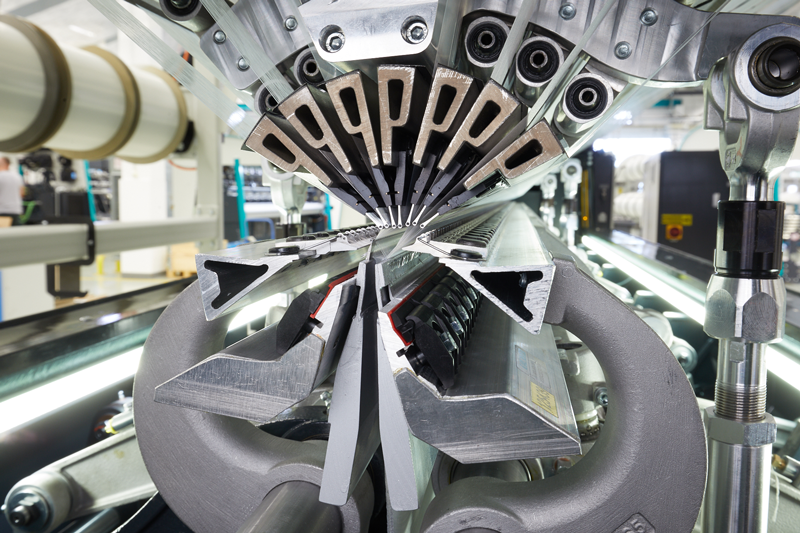
On the technology side, Karl Mayer offers some new technologies for the knitting sector. Its RD 7/2-6 EN double needle bar raschel machine offers up to 30-percent higher speed compared to its predecessor the RD 7/2-12 EN, according to the company. First introduced in 2019, the machine can knit 3D fabrics using a trick plate distance of 2 to 6 millimeters. Its EN pattern drive and maximum shogging movement of 1 inch allow patterning variety with up to 12,000 stitch repeats. The machine is available in working widths of 138 and 77 inches in gauges E 18, E 22 and E 24. Fabrics may be used for footwear, clothing and mattress applications.

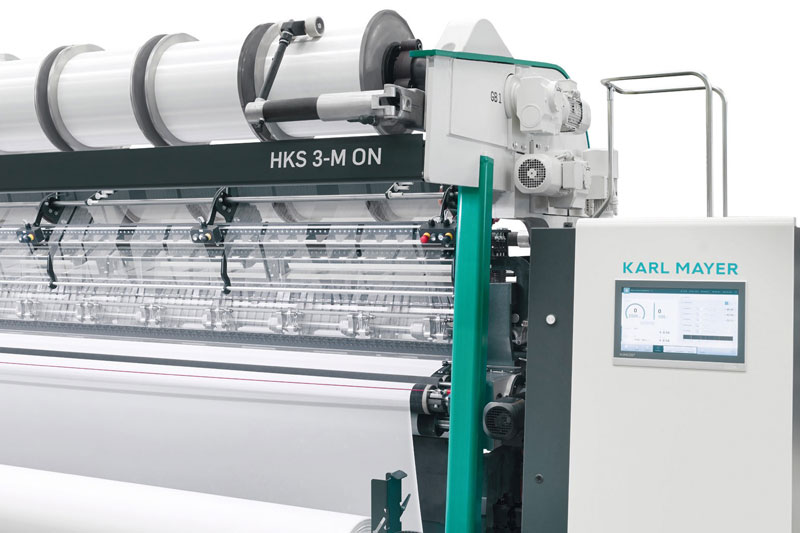
Karl Mayer’s SwapKnit 36 and SwapKnit 36 Flat can be used to purchase lappings for the HKS 3-M ON machine.

Karl Mayer’s HKS 3-M ON was one of the first machines connected with the company’s digital solutions. The machine can directly download pattern data from the KM.ON secure cloud and does not need to use pattern disks, which allows for easy pattern changes found with EL gears at the speeds associated with N pattern drives. The machine recently was issued in a wider working width of 300 inches for wider or side-by-side production, and is up to 15 percent faster than its predecessor, according to the company.

Karl Mayer offers three interchangeable options for purchasing lappings for the HKS 3-M ON — SwapKnit 36 and SwapKnit 36 Flat for designs up to 36 stitch courses; as well as a variant developed for pattern repeats of more than 36 stitch courses. Patterns for the machines are downloaded from Karl Mayer’s Webshop Spare Parts and loaded on to the knitting machine for fast and flexible pattern changes. According to Karl Mayer, the hybrid machine combines the patterning possibilities of a typical N and EL pattern drive in a single machine.

Shima Seiki

In the early days of the SARS-CoV-2 pandemic, Japan-based Shima Seiki Mfg. Ltd. released free knitting data for masks that could be produced using a variety of its knitting machines including the Wholegarment® technology. The goal was to help Shima Seiki machine owners who were looking to switch production to masks to alleviate the shortage of surgical masks as quickly as possible. The patterns were for 3D form-fitted masks featuring integral ear loops that could be knit in one step with no further sewing required. The designs are available at Shima Seiki’s user website located at shimaseiki.com/user/samplesearch.

Shima Seiki’s yarnbank™ online web service allows users to search and view the latest yarns from a wide variety of companies.

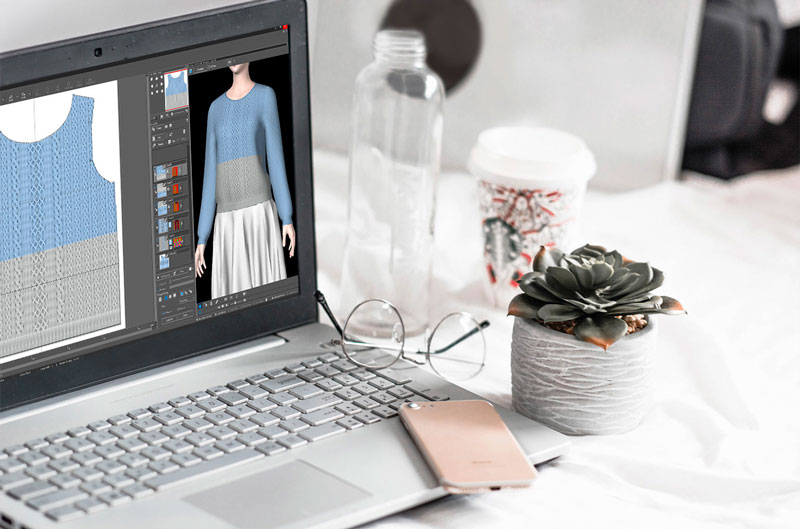
Officially launched in September 2020, Japan-based Shima Seiki Mfg. Ltd.’s yarnbank™ online web service allows users to search and view the latest yarns from a wide variety of companies around the globe, and then download the yarn data for use by fabric simulation and virtual sampling on the Shima Seiki SDA®-onE APEX4 design system. The goal is to give designers the ability to create accurate representations of garments that may be created using yarns that are available for production.

Shima Seiki’s APEXFiz™ is a new subscription-based design software option.

Existing Shima Seiki APEX users can register to use yarnbank free of charge.  In October 2020, the company also launched a subscription-based design software option named APEXFiz™. This offering breaks with Shima Seiki’s tradition of offering only all-in-one proprietary hardware and software packages and allows customers to install the software — available in five different configurations: Design Jr.; Design-Standard; Design-Knit; Design-Weave; and Design Pro — on their individual computers. APEXFiz users also have access to yarnbank.

Shima Seiki reports it “has traditionally promoted design simulation and virtual sampling as an essential part of its ‘Total Fashion System’ concept wherein virtual samples replace physical samples in an effort to reduce time, cost and materials wasted in the sample making phase, further realizing overall efficiency and reduced waste for a sustainable manufacturing supply chain.”

Yarn companies can register their products on yarnbank under a number of different plans. The advantage to yarn manufacturers, according to Shima Seiki, is the ability to “present their yarns directly to their customers.” The yarnbank technology can save time, costs and materials for yarn manufacturers by reducing the dependence on traditional sample books for product promotion.

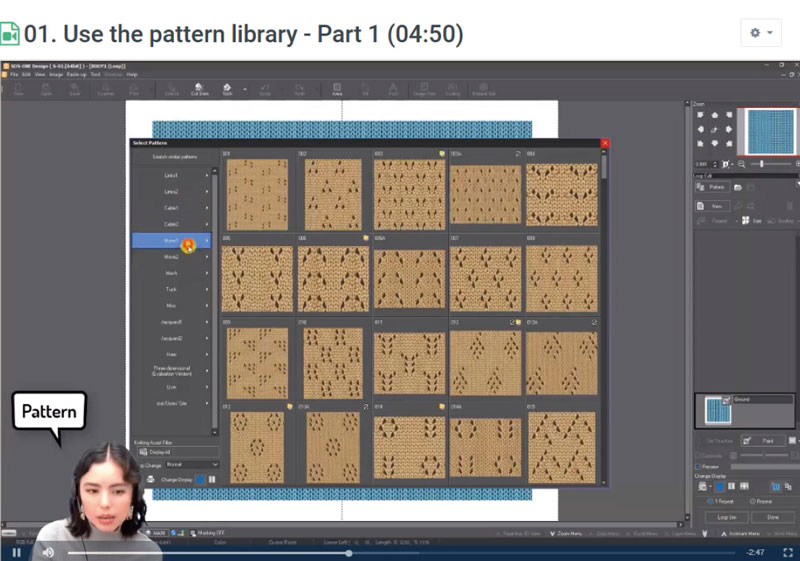
The SHIMANAVI™ e-learning system provides online training for Shima Seiki’s APEX series users.

Shima also recently released the SHIMANAVI™ e-learning system that provides online training for its APEX series users. The flexible system offers support at the user’s pace when and where it is convenient. Several of the courses are available in multiple languages.

Comez

Some recent technology introductions from Jakob Müller Group company Comez Internationl S.r.l., Italy, include the DNB/600-2B, DNB EL-32 and 800 ACO/EL.

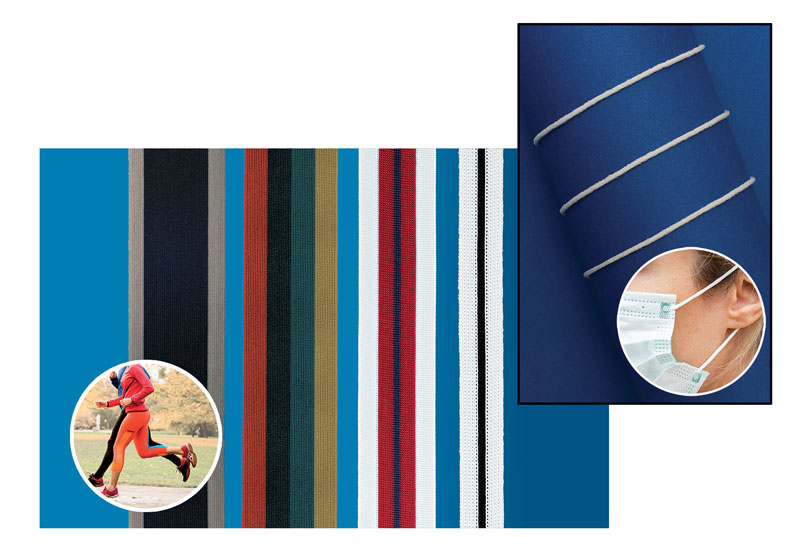
The DNB 600-2B from Comez can produce items such as bands for sportwear accessories and ear loops for surgical masks.

The DNB/600-2B is a high-speed mechanical double needle bed warp knitting machine designed for mass production of items including ear loops for masks and sportswear accessories. The low stitch density required for such articles and high operating speed of the machine equate to very high productivity, according to Comez. Equipped with two mechanically controlled guide bars, the DNB/600-2B can process all types of yarn into double face fabric structures. A compact design and reduced working width result in fast changeovers.

The Comez DNB/EL-32-12B is suitable for knitting technical textiles, medical textiles, shoe uppers and apparel textiles, among other products.

The company’s DNB/EL-32-12B, was first introduced at ITMA 2019. The electronically controlled warp knitting machine is designed for sample production using any yarn in all possible gauges on a single, compact machine. Items that may be produced using the DNB/EL-32-12B include technical textiles, medical textiles, shoe uppers and apparel textiles. The machine’s 12 guide bars and electronic long-throw device with a maximum stroke of 560 millimeters allow more advanced technical fabrics to be produced such as reinforced fabrics, fabrics with continuous weft insertion and technical furnishing fabrics.

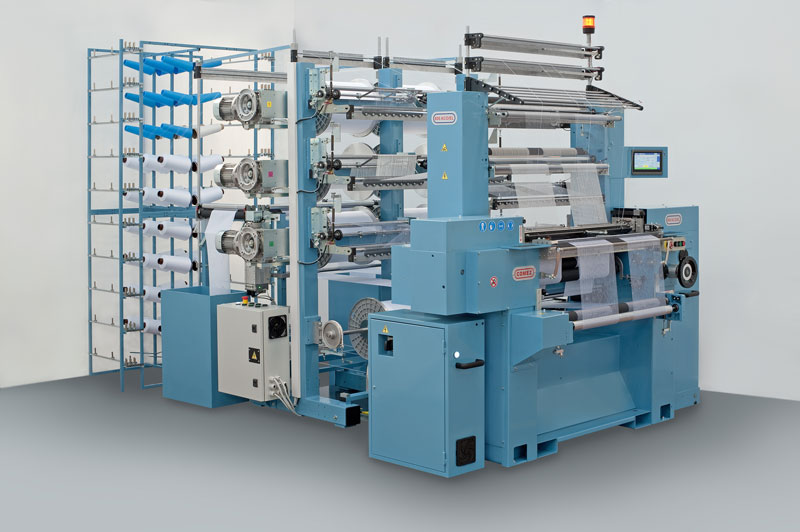
Comez’s 800 ACO/EL

Comez’s 800 ACO/EL crochet knitting machine features compound needles, electronically controlled yarn tension and stitch density regulation. Comez reports the machine is suitable for the production of elastic and rigid fabric and tapes, and is ideal for products requiring a lock-stitch structure such as medical and orthopaedic textiles, closed-loop Astrakhan-style fabrics, furnishing ribbons and tapes, and sportwear ribbons, among other articles. The machine is equipped with eight weft bars and is available with an 800-mm working width.

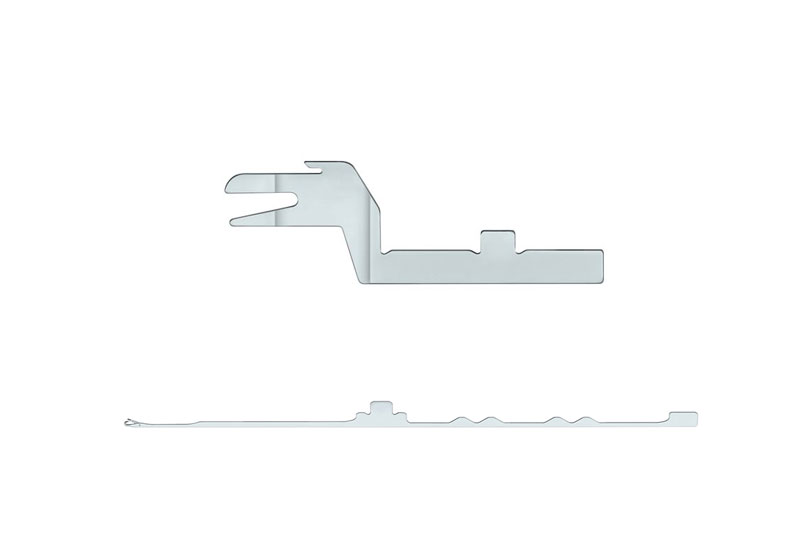
Groz-Beckert developed the SANT™ SF needle and SNK SF sinker for staple fiber yarn knitting applications.

Groz-Beckert

Germany-based Groz-Beckert KG recently introduced the SANT™ SF special application needle and Sinker SNK SF for use when knitting staple fiber yarns with increased fiber fly on large diameter circular knitting machines. In such manufacturing processes, fiber residue, fiber abrasion and dirt can cause deposits in the channels of the needle carrier channel that eventually result in uneven needle seating, tight movement and needle and sinker overheating, which leads to poor quality fabrics and damage to the machine components. The SAN SF needle and SNK SF sinker were designed to reduce dirt accumulation and extend required cleaning intervals to reduce machine downtime.

The staple fiber needle features a closed shank on the back of the needle, and cushions to support the cylinder walls. According to the company, the needle also enhances uniform loop structure.

The sinker has an opening in the front area for lint removal that creates a self-cleaning effect. Use of the sinker reduces fabric defects and wear on machine parts.

Also new from Groz-Beckert is its Academy Mobile Knitting. The company extended its Groz-Beckert Academy with the addition of online seminars that can be accessed from anywhere.

Currently, a new online seminar is available the second Tuesday of each month. Seminars are live and interactive, and attendees can ask the presenter questions using the chat function. The March seminar is titled “Reduced costs when knitting on large diameter circular knitting machines.”  The planned April session is named “Needle handling — Correct cleaning of flat needles.” More information about the seminars can be found at the company’s website.

January/February 2021

Prototype Graft Designed To Replace Damaged Heart Vessels Shows Promise In Cell Study

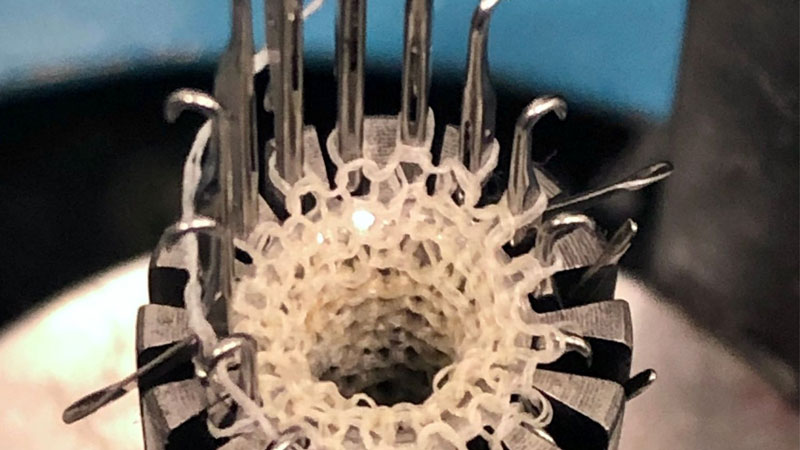
Researchers used a circular knitting machine to make a prototype of a replacement for a coronary artery. Image courtesy of Fan Zhang.

Knitted vascular graft prototype shows promise in preclinical findings.

By Laura Oleniacz

In a proof-of-concept study, Raleigh, N.C.-based North Carolina State University (NC State) researchers reported promising preclinical findings for a prototype of a vascular graft designed as a replacement for a damaged or blocked coronary artery, which supplies blood to the heart.

The findings, which were made in partnership with researchers from Case Western Reserve University, are part of an effort to develop a man-made graft that could replace a damaged or blocked coronary artery when a patient’s own vessels are not available as viable replacements after a heart attack. Ultimately, the graft is designed as a scaffold to aid in regeneration of the patient’s own blood vessels. And while their work is still in early stages, the researchers said their design will help to move the field forward.

In the journal Materials Science and Engineering: C, researchers reported they made their prototype vascular graft by knitting a collagen material with a man-made yarn. They found their design showed improved strength compared to a model that used the collagen material alone, and flexibility that compared to the human coronary artery. Also, in studies with human endothelial cells, they saw increased growth and adhesion of cells on the graft, indicating it could aid in the regeneration of the coronary artery lining.

“We see this as a new direction for research into coronary artery replacement grafts,” said the study’s senior author Martin King, professor of biotextiles and textile technology in the Wilson College of Textiles at NC State. “The use of collagen yarns is very new. We relied not just on one material, but we mixed the materials together and showed the two yarns can provide both mechanical strength and the biological response that we’re looking for.”

Currently, researchers said the “gold standard” is to use a patient’s own blood vessel, such as a vein from the leg or the mammary artery, to replace the coronary artery, but some patients do not have viable blood vessels that can be harvested and used.

“There is a need to find an alternative solution for this kind of patient,” said Fan Zhang, the study’s first author and graduate student at NC State in the Wilson College of Textiles. “That’s why we’re looking to use tissue-engineered vascular grafts.”

There are multiple challenges to designing a synthetic vascular graft that could replace a coronary artery, the researchers said. Some models have failed due to problems with clotting and narrowing of the arteries. Meanwhile, other models aren’t able to stretch and relax with the beating heart.

“The coronary artery is only about three to four millimeters in diameter so it’s a very fine artery, and it’s very easy for it to get blocked,” King said. “The question is: Do we have materials that will serve as a conduit without provoking this clotting on the arterial wall? That is one of the challenges. The other is that the heart is continually expanding and contracting, so we need a structure that can stretch and relax with every heartbeat.”

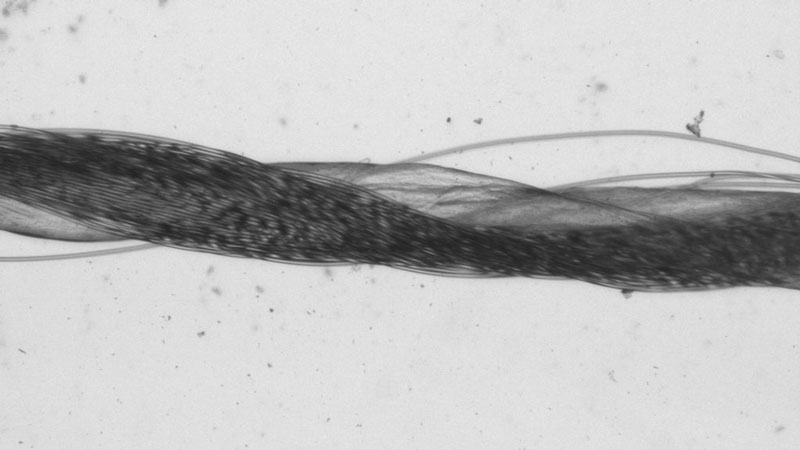
The hybrid yarn is made using collagen and a man-made fiber composed of polylactic acid. Image courtesy of Jiyang Chen, graduate student at NC State.

To develop their design, the NC State investigators collaborated with researchers at Case Western Reserve who have designed a biological yarn made of collagen. They combined that collagen yarn with a man-made fiber made of polylactic acid (PLA), which is biocompatible. When the fiber degrades, it forms lactic acid, researchers said, which is easily tolerated because the muscles in our bodies continuously generate lactic acid.

Researchers said their model is designed to form a temporary scaffold that can regenerate a cell lining similar to the patient’s own blood vessels.

“We’re not designing a prototype that is a ‘final product,’ we’re putting in the ingredients that will allow the patient to heal and use this construct to heal and function as a coronary artery,” King said. “The fibers would eventually degrade and be absorbed into the body.”

Researchers found that by knitting the collagen fibers together with the man-made PLA yarn, human endothelial cells stuck to the scaffold 10 times as much as to the man-made yarn alone. The experiment also showed three times greater cell growth after adhesion.

Also, they found it had excellent bursting strength and compliance, properties that will allow the graft to expand and contract with each heartbeat — similar to a healthy coronary artery.

“We were able to mimic the compliance of the coronary artery,” Zhang said. “This is the most important finding. In addition, with the addition of the collagen yarn component, we were able to promote endothelial cells to grow faster within this structure. That is very important for recovery of the endothelium.”

Their work is still at a preclinical stage and has yet to be tested in a living animal. They still have work to improve their prototype to overcome additional design challenges, including how to reduce the porous nature of the hybrid graft.

However, the team believes their findings show it is possible to combine both biological and man-made materials in the design of a man-made coronary artery graft. They are working on solutions to prevent blood leakage.

“With this combination of materials, we have been able to balance the mechanical performance with the biological response,” King said. “We were also able to manufacture the prototype graft using high speed textile production machinery, which will facilitate future manufacturing scale-up and translation to a commercial graft and the clinic.”

The paper, “A hybrid vascular graft harnessing the superior mechanical properties of synthetic fibers and the biological performance of collagen filaments,” was published online in Materials Science and Engineering, Part C. The paper was co-authored by Tushar Bambharoliya, Yu Xie, Laijun Liu, Hakan Celik, Lu Wang and Ozan Akkus. Funding in support of the work was provided by Donghua University’s 1,1,1 Project B07024 grant from the Ministry of Education of China and from an AATCC Foundation Student Research Support Grant.


Editor’s Note: Laura Oleniacz is Public Communications Specialist at NC State News Services.


January/February 2021
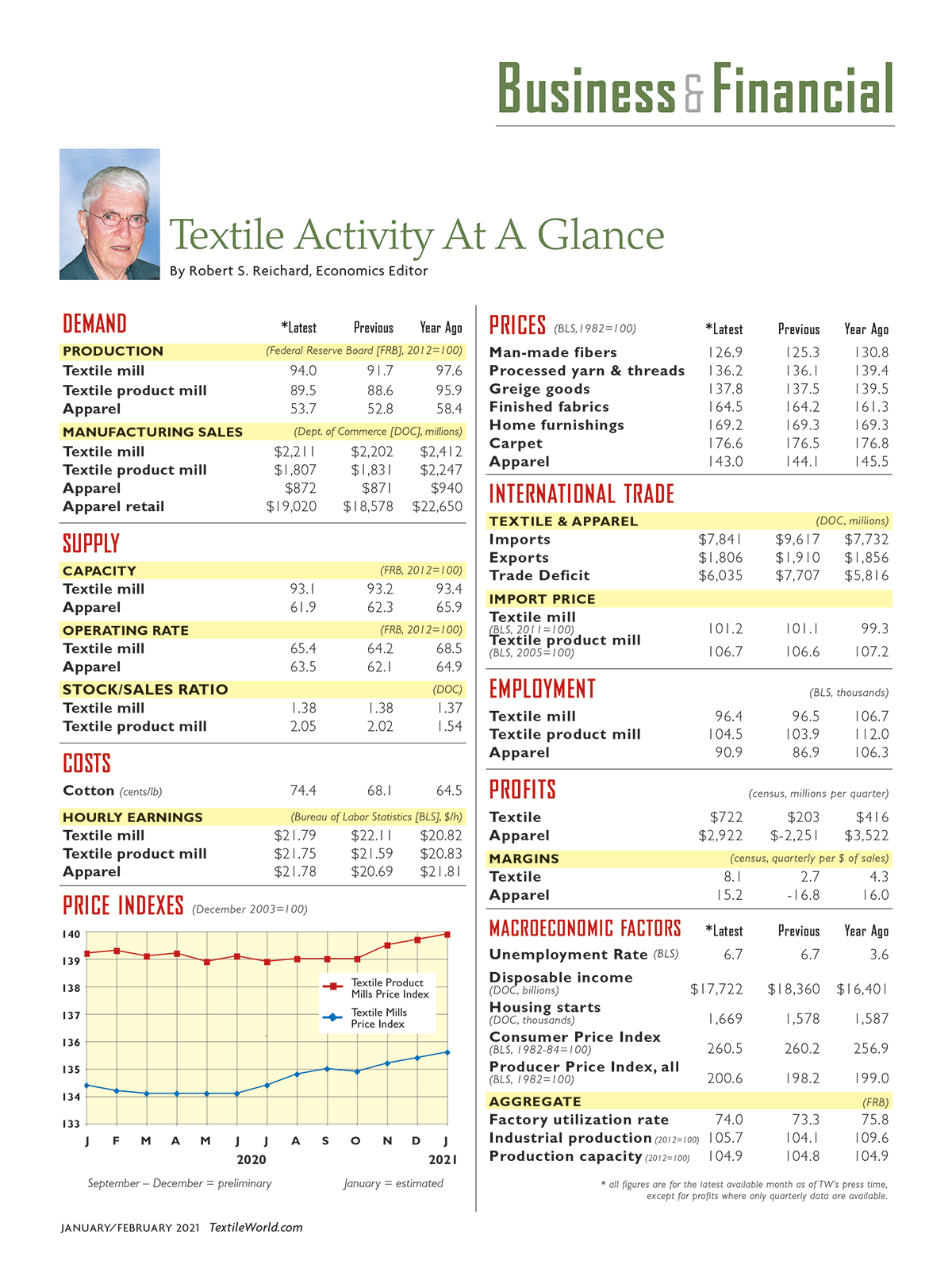
January/February 2021: Textile Barometers At A Glance

January/February 2021

Quality Fabric Of The Month: Culp’s LiveSmart® Gets Smarter

Culp’s newest LiveSmart fabrics — LiveSmart Ultra® and LiveSmart Barrier Plus® — are available in a variety of colors, patterns and styles for the home.

LiveSmart Ultra™ and LiveSmart Barrier Plus™ offer clean home performance in a luxury fabric.

By Rachael S. Davis, Executive Editor

Compelled by the pandemic and a growth in demand for products that keep the home clean, High Point, N.C.-based Culp Inc., recently expanded its LiveSmart® fabric line with the addition of LiveSmart Ultra™ and LiveSmart Barrier Plus™. The new products join existing LiveSmart, LiveSmart Outdoor®, and LiveSmart Evolve® — a fabric made using at least 30 percent or more of Unifi Inc.’s REPREVE® yarn.

According to Tammy Buckner, senior vice president of design and marketing, all LiveSmart fabrics comprise low denier, high-performance polyester fibers that are encapsulated in a nano-based stain repellent, water repellent finish.

LiveSmart Ultra builds on the stain fighting protection of LiveSmart with the addition of a permanently bonded silver ion-based antimicrobial* technology for mold, mildew and odor protection.  Culp partnered with a leader in the health field to adapt its Environmental Protection Agency-approved antimicrobial product to Culp’s fabric constructions to better protect the fabric.

“With the onset of the coronavirus pandemic, keeping the home clean has been top of mind for everyone,” Buckner said. “LiveSmart Ultra goes that extra step for a deeper clean that continues working to kill the odor-causing bacteria, mold and mildew that come into contact with your fabric and furniture. LiveSmart Ultra is recommended for any area of the home where keeping your furniture clean and protecting the fabric from degradation and mold and mildew is a concern.”

LiveSmart Barrier Plus incorporates a polyurethane barrier layer that forms an integrated moisture barrier to safely seal the fabric and take it from water repellent to waterproof. The fabric is easy-to-clean and prevents spills from penetrating into underlying furniture fibers and foams.

“Lift chairs and pet beds both are growing markets and LiveSmart Barrier Plus is the perfect waterproof fabric for these end uses,” Buckner said. The fabric also is suitable for dining chairs, nursery rockers and other high-use furniture that requires extra protection.

“We were already utilizing antimicrobial technology in our contract and hospitality lines to protect the fabric against mold, mildew, and odor-causing microbes, so adding it into our residential fabrics was an easy transition,” Buckner noted. “We believe you shouldn’t have to sacrifice soft and luxurious fabrics for the sake of performance in any environment. Our new lines are offered in the latest designer choices and in a wide array of colors, patterns and styles for your home. This new technology will help preserve your design vision easily and affordably while also delivering lasting performance you can count on.”

Consumers can locate the fabrics by the yard on online outlets including Amazon, Houzz and Overstock as well as on finished furniture sold by online and brick and mortar retailers Target, West Elm and Pottery Barn, among other retailers. For hospitality and commercial end-uses, the LiveSmart fabrics are sold under the Iclean brand.

 *Anti-microbial properties protect fabric against mold, mildew, and odor-causing bacteria but do not protect against viruses or other germs.


For more information about Culp’s LiveSmart fabrics, please contact Tammy Buckner 336-290-8532; TGBuckner@culp.com; livesmartbyculp.com or culp.com.


January/February 2021
Champion® Athleticwear Announces A Multi-Year Collaboration With The G.O.A.T. — Muhammad Ali Brand

WINSTON SALEM, N.C — February 24, 2021 — Champion Athleticwear, makers of authentic athletic apparel since 1919, and Authentic Brands Group (ABG), a global brand development company today announced a multi-year collaboration for the Muhammad Ali brand. Through the partnership, Muhammad Ali will be the muse for a comprehensive, global campaign that will include integration across the Champion platforms and a series of product collections and limited edition drops. Champion will utilize Muhammad Ali’s iconic imagery, quotes, and his six core principles that fueled his journey.

“Champions are defined by how they carry themselves in sports and beyond,” said David Robertson, director of Champion Global Brand Marketing. “Muhammad Ali’s legacy and Champion share a common foundation of authenticity, confidence and inclusivity. We are incredibly excited to see how consumers react to this new collaboration and interpret how we’ve incorporated designs that reflect self-expression to help them feel comfortable, confident and ready to take on any challenge.”

As “The People’s Champion,” Muhammad Ali was the ultimate personification of what it means to be a champion – not for what he did inside the ring but for what was inside of him. The first drop of the Champion X Muhammad Ali collection is based on Ali’s six core principles: confidence, conviction, dedication, giving, respect and spirituality. Champion wants to inspire everyone using these core principles to feel strength from within and to be empowered to start a movement of staying true to oneself, on and off the field.

The partnership kicks off with the launch of the Champion X Muhammad Ali Collection, which evokes Ali’s spirit, celebrates living like a champion, and is an embodiment of sportsmanship. Ali’s core principles are reflected throughout the collection in the apparel designs, which feature iconic images of Muhammad Ali and some of his most famous quotes.

The collection spans sizes XS-2XL and will include Reverse Weave® hoodies, crewnecks and graphic t-shirts in a red, white, gold and black color scheme and a Hyped X Wash. The Special Edition Men’s Reverse Weave Hyped X Wash is a tie dye design, with each hoodie being one-of-a-kind and hand dyed by local Los Angeles artisans. Each hoodie is pre-washed for broken-in softness and has graphics including a photo-realistic, archival Ali image on the sleeve, and an elevated felt and satin The Greatest applique. The collection is rounded out with a limited-edition pin set available as an exclusive gift with purchase while supplies last in select Champion retail stores, that celebrates Ali with iconic images and words that commemorate his journey to greatness. Future collections and drops will be announced in the months to follow.

“The Greatest of All Time and Champion are a natural fit for a partnership, and we are really proud of the Champion X Muhammad Ali collection that drops today,” said Marc Rosen, President, Entertainment, ABG, which in conjunction with Lonnie Ali as trustee of the Muhammad Ali Family Trust (MAFT) owns Muhammad Ali Enterprises. “To quote Ali himself, ‘Champions aren’t made in gyms, Champions are made from something they have deep inside them – a desire, a dream, a vision.’ This partnership will honor that sentiment and we are excited for it to kick off.”

To shop the Champion X Muhammad Ali collection, visit Champion.com, Champion Retail stores, Social Status or RSVP Gallery beginning today. Retailing between $40 and $125, the items are the first of three collection drops with Muhammad Ali in 2021, with the second and third drops slated for later this year and more collections planned for 2022.

Posted February 24, 2021

Source: Champion® Athleticwear

TreeToTextile Builds Demonstration Plant For Upscaling New Sustainable Textile Fiber

STOCKHOLM — February 23, 2021 — TreeToTextile, owned by H&M Group, Inter IKEA Group, Stora Enso, and LSCS Invest, is investing 35 million euros in constructing a demonstration plant in Sweden. It is a critical next step towards commercializing a new sustainable textile fiber, with scalable technology and low manufacturing cost. The aim is to make sustainable textile fibers available to all.

All over the world, sustainable textile fibers are in growing demand. TreeToTextile is committed to enabling brands, companies, and others with a progressive agenda, to have access to sustainable textile fibers. TreeToTextile offers a new technology to produce biobased textile fibers with a low environmental footprint at an attractive cost level. The new fiber is a regenerated cellulosic fiber, produced from renewable and sustainably sourced raw materials from the forest.

TreeToTextile’s strong sustainability performance is confirmed by a third party verified Life-Cycle-Assessment study1. Looking at the sustainability targets, the new technology would mean less use of energy, chemicals and water when benchmarked to the production of conventional fibers. The novel process is deliberately designed to have low energy demand and low chemical need. It is engineered to suit large scale production and includes a recovery system for reusing chemicals.

Our technology has the potential to reduce the environmental footprint of the textile industry significantly. With our owners’ support, innovative agendas, know-how, and size, we assess that TreeToTextile can play an important contributing part globally, in enabling the textile industry to become sustainable and circular, says TreeToTextile’s CEO Sigrid Barnekow.

TreeToTextile is now investing to construct a demonstration plant for upscaling the process technology. The cost is 35 million euros, which is funded with an investment of 27.4 million euros from the owners, H&M Group, Inter IKEA Group, Stora Enso, and LSCS Invest, and a grant of 7.6 million euros from the Swedish Energy Agency. The plant will be established at Stora Enso’s Nymölla mill in southern Sweden, and the construction will start in spring 2021. The production capacity will be 1,500 tons fiber per year.

The key to creating real change is cooperation. We are a young organization and at the beginning of our operations, but by investing in a demonstration plant, we are finally on the go. With it we are turning years of R&D into reality to increase the biobased share on the textile market to support climate action. That is why this is an important point in time, not only for TreeToTextile, says Roxana Barbieru, chairwoman of TreeToTextile; vice president, Emerging Businesses and Alliances Management, Biomaterials at Stora Enso.

Posted February 24, 2021

Source: TreeToTextile

New Crobialcoat™ Antimicrobial Coating Fights Both Corrosion And Bacteria- Leveraging The Power Of Protectaclear® And Microban® For Common High-Touch Surfaces

RANCHO CORDOVA, Calif. — February 23, 2021 — Everbrite Coatings officially announced the release of its newest product, CrobialCoat: a durable, clear coating that provides long lasting product protection on most surfaces from rust, salt damage, tarnish, corrosion and oxidation — as well as offering built-in antimicrobial technology specifically designed for highly polished or matte metals, ceramics, hard plastics, or hardwoods and keeps coated surfaces cleaner by inhibiting the growth of bacteria. Part of an ever-growing line of coatings and protective sealants, CrobialCoat is not sold in retail stores, but is available for direct worldwide consumer purchase from Everbrite online distributors.

CrobialCoat: With ProtectaClear and Microban

“Although the recent pandemic has highlighted the importance of keeping our vulnerable populations safe from unchecked viral spread, it’s become all-too-easy to forget about the host of average germs and microbes that still plague us,” said Everbrite President Teresa Sedmak. “That’s why we’re so pleased to introduce CrobialCoat as a useful tool in this fight. With one coating, it is effective product protection against the growth of damaging bacteria protection against basic microbial growth. You just apply it and know that the surface is protected and the protection will not wash off. It’s really that easy.”

CrobialCoat can be used in both home and commercial settings and is ideal for use in high-touch environments where cleanliness is of special importance, like schools, hospitals, dining and hospitality venues, or restrooms. CrobialCoat’s main features include:

  • ProtectaClear: A tough, durable coating that protects metal surfaces from a variety of problems including tarnish, rust and even fingerprints. ProtectaClear is perfect for railings, door handles, stainless steel grills, sinks and countertops – giving each a freshly polished look with a crystal clear, invisible coating.
  • Microban Antimicrobial Technology: A trusted industry technology that inhibits microbial growth and also hinders proliferation of mold and mildew. Microban disrupts the metabolism of contaminating microbes, preventing their reproduction and colonization.
  • Long lasting and highly adhesive, CrobialCoat will not wash off, offering protection that lasts for the life of the coating.
  • Highly salt resistant for marine and ocean locales. Prevents rust, verdigris, corrosion, and other types of metal degradation resulting from prolonged environmental exposure.
  • Reduces odors and saves time and money by keeping public areas cleaner for a longer duration.

CrobialCoat is intended for use on a large variety of surfaces, including handles, light switches, handicap access push plates, railings, turnstiles, sinks, faucets, elevators, button panels, lockers, bathroom and kitchen hardware, restroom stalls, counters, and any other high-touch surfaces.

Bacteria can thrive on nearly any surface, doubling their number every 20 minutes. This growth can cause staining, unpleasant odors and textures, and deterioration of surfaces, impacting the durability and aesthetics of metals, plastic, and wood. Once microbes begin growing unchecked, constant cleaning is needed to keep that growth under control. The best weapon against any microbial growth is prevention. Lab studies have proven CrobialCoat to significantly reduce the growth of microbes and help surfaces stay 99% cleaner than unprotected surfaces.

Posted February 24, 2021

Source: Everbrite Coatings

Welspun India Reaches Digital Transformation Milestone With STYCHECO And BeProduct

NEW YORK CITY — February 23, 2021 — Welspun India has embarked on the next phase of its comprehensive digitization journey, working with digital innovation and technology implementation firm STYCHECO (Stitch-Co) to deploy the BeProduct platform and to revitalize its international design, development, and production processes.

Welspun India is part of the Welspun Group.  With more than 25,000 employees, a presence in more than 50 countries, and a “farm-to-shelf” model of vertical integration that runs from design to drop shipping. Welspun has a broad product footprint covering bed, bath and flooring categories. In textiles, Welspun produces under license for household names in Asia, Europe, and North America, delivers to major global retailers, and oversees cutting-edge manufacturing worldwide.

To manage this complexity, the Welspun Group has embarked on a company-wide digital transformation project that spans from sales and marketing to sourcing. Welspun’s partnership with STYCHECHO and BeProduct quickly became a vital part of that digital transformation for its textile business, as Chief Marketing and Merchandising Officer Christopher Mooney explains:

“Our objective was to serve our customers better by transitioning all of our data, systems, processes, and people — across the entire value chain — to digital. It was therefore essential to us not only to find a new common IT platform, but to create secure, sustainable ways of working that would allow our design teams in New York to collaborate with their colleagues in India. From that point of view, Welspun’s digital transformation initiative relied on us finding the right technology, but also the right technical and cultural implementation partner. I’m thrilled that we found STYCHECO; with their assistance our digital transformation and growth goals are now in reach.”

“As digital transformation strategies go, Welspun’s is one of the boldest we have ever seen,” added Darioush Nikpour, Founder of STYCHECO. “The scope and the scale of the digitization is gigantic, which is why we were thrilled to be able to step in and assist the Welspun team with defining, executing, and building on their ideas for digitization.

“The goal of the CEO of Welspun, Dipali Goenka, was to connect with their customers and consumers through the collaboration with technology. The STYCHECO team cannot wait to continue its work with Welspun — helping an inspiring business to achieve digital transformation on a truly global scale.”

Posted February 24, 2021

Source: STYCHECO

Sorona® Unveils New Brand Website And Customer Portal

WILMINGTON, Del. — February 24, 2021 — Today, Sorona® unveiled its new website including refreshed iconography and photography in celebration of its Common Thread Fabric Certification program and apparel sub-brands—Agile, Aura, Luxe, Profile, Revive. The new website also includes a dedicated Customer Portal where partners can access brand assets showcasing their commitment to using the sustainably-made fiber.

Inspired by the plant-based element of Sorona polymer, the new sub-brand iconography borrows from nature utilizing hyper-detailed images of various flora that emulate the performance capabilities of Sorona in fabrics. Visitors to the website may also notice fashion forward, apparel-in-action shots, too, captured by award-winning photographer Stan Musilek.

The refreshed Sorona® website is the result of a collaboration between Addis, an integrated creative partner for progressive brands such as MightyLeaf and Kashi; OneMagnify performance marketing company specializing in strategic digital, brand, and customer experience communications; and TYPOConsult, a Copenhagen-based, full-service web consultancy company. In addition to the new iconography and sub-brand pages, the site also has dedicated sections for Sorona faux fur, Sorona for carpets, and a Customer Portal.

Now in its 21st year, Sorona is the revolutionary 37-percent bio-based polymer, offering spinners, mills, and brands a high-quality, eco-efficient fiber that adds softness, durability, and stretch to fabrics without sacrificing performance. Sorona is used in various apparel applications including athleisure and athletic wear, insulation, swimwear, outerwear, suiting, faux fur, and can also be found in Mohawk SmartStrand® carpet.

When used as an alternative to nylon 6, Sorona® is created using 30-percent less energy and releasing 63-percent fewer greenhouse gas emissions. When compared to the production of nylon 6,6, Sorona uses 40-percent less energy and releases 56-percent fewer greenhouse gas emissions.

Sorona is a USDA certified bio-based product with an OEKO-TEX® Standard 100 Certification.

“We are so excited to launch our new website, which signals the natural evolution of our brand messaging and vision. We believe in transparency and traceability throughout the value chain and celebrating the sub-brands through this innovative creative execution felt like an exciting next step,” said Alexa Raab, Global Brand and Communications leader – Sorona.

Posted February 24, 2021

Source: DuPont Biomaterials 

Sponsors