New Indorama Ventures Partnership Will Recycle More Than 1.6 Billion PET Beverage Bottles In The Czech Republic By 2025

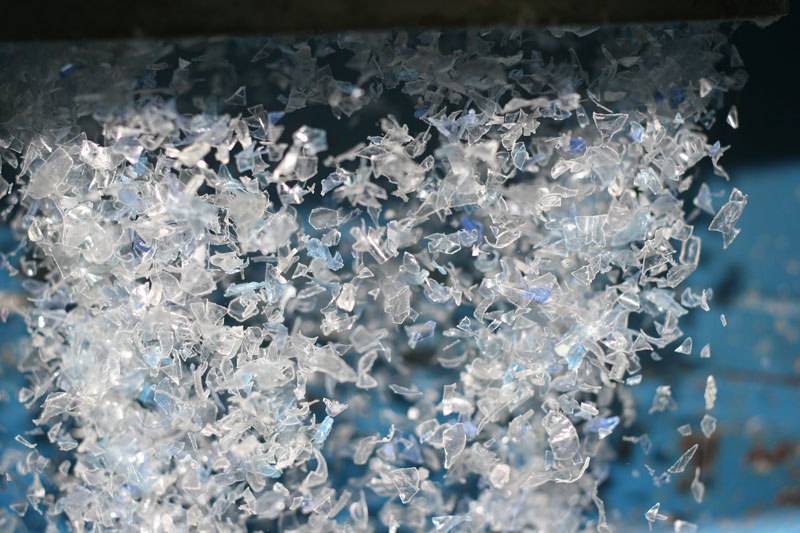
PET flake

BANGKOK, Thailand — February 18, 2022 — Indorama Ventures Public Co. Ltd (IVL), a producer of recycled PET for beverage bottles, today completed a deal for an 85-percent equity stake in Czech Republic-based PET plastic recycler, UCY Polymers CZ s.r.o. (UCY), boosting the country and Europe’s plastic collection and recycling ambitions.

As a result of the investment, IVL will recycle about 1.12 billion additional post-consumer PET (polyethylene terephthalate) plastic bottles in the Czech Republic every year by 2025, increasing the total bottles recycled by UCY across the Czech Republic, Germany and Central Europe to 1.6 billion bottles per year. IVL, a global sustainable chemicals company, is investing $1.5 billion globally to expand recycling facilities and sustainable production, including boosting its recycling capacity to 750,000 tons per year by 2025.

UCY is a strategic fit for IVL as a backward integration into the company’s expanding recycled PET (rPET) footprint in Europe and across the world to secure feedstock for rPET products. UCY can produce 40,000 tonnes of recycled PET flake per year. IVL will develop UCY to serve the increasing demand for recycled PET in Europe.

UCY will work with IVL’s existing PET flake production facilities in the region. These provide the washed and shredded post-consumer bottles as PET flake feedstock to produce recycled PET resin that is suitable for food contact use. PET is fully recyclable and the most collected and recycled plastic packaging in Europe.

D K Agarwal, CEO and CFO at Indorama Ventures, said: “IVL will use our know-how to grow capacity and recycle more and more bottles. As part of our commitment to sustainability and the circular economy, we are building the recycling infrastructure needed to divert PET waste from the environment. By recycling post-consumer PET bottles into new bottles, we give waste an economic value. This drives improvements in waste collection systems, meaning less waste and a cleaner environment.”

Yash Lohia, Chairman of ESG Council at Indorama Ventures, said: “Our partnership will strengthen the recycling ecosystem in the Czech Republic. This growth is made possible because of our customers’ commitment to bottle-to-bottle recycling, which allows us to build the recycling infrastructure Europe needs.”

Maximilian Josef Söllner, CEO, UCY, said, “We look forward to adding our robust supply of post-consumer bottles, well-established technology and proven management team to IVL. Expanding our capacity by 2025 means an extra 896 million more bottles will be recycled in our facilities compared with today.”

Posted: February 18, 2022

Source: Indorama Ventures Public Co. Ltd.
IDEA®22 Exhibitor Preview: BRÜCKNER

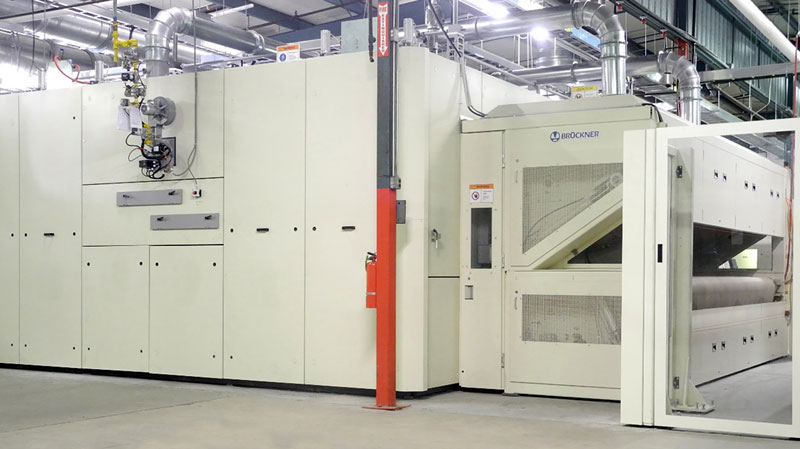
Brückner’s Supra Flow BX

LEONBERG, Germany — February 18, 2022 — For more than 70 years BRÜCKNER has specialized in the construction of drying and finishing lines for the textile and nonwovens industry. In the nonwovens sector, the German family-owned company supplies worldwide thermofusion ovens, dryers, coating and heat-setting lines. On the IDEA 2022 trade fair in Miami Beach, Fla., BRÜCKNER presents together with its American representation FI-TECH new machine concepts and solutions for different applications in the mentioned fields. Convince yourself in a personal conversation with our experts of the innovative technologies of BRÜCKNER. Visit us on our booth no. 4101 directly at the entrance of the exhibition hall.

The production of nonwovens always requires a bonding process after the nonwovens formation, where the loosely laid fibers are bonded to a resilient fiber composite. For this purpose, depending on the process, different ovens and dryers are used. BRÜCKNER offers the specific know-how and supplies the necessary lines for all applications. The production program is completed by different impregnation and coating units as well as slitting and winding equipment. BRÜCKNER’s customers produce geo nonwovens, filter media, hygiene and medical textiles or different fabrics for the automotive and transport industry. For each customer an individual solution and a corresponding line layout is designed.

Recently BRÜCKNER realized several extraordinary installations in the field of highloft nonwovens and geotextiles. For the production of highloft nonwovens the double-belt thermofusion oven SUPRA-FLOW BX is used. This oven system operates according to the air-through principle and can be perfectly adapted to the product requirements in terms of flow speed, flow direction and temperature on a field-by-field basis. Typical end products include mattresses, bedspreads, upholstery, wiping cloths, automotive components or insulating materials. The SUPRA-FLOW BX can produce nonwovens up to a thickness of 280 mm and a basis weight of max. 8 kg/m². The available working widths vary between 2400 and 5200 mm at production speeds of up to 100 m/min.

For geotextile projects, the proven POWER-FRAME stenter is usually used, which impresses with its high uniformity in terms of temperature distribution as well as maximum productivity. In addition, the fabric can be stretched in a targeted manner by transporting it in the stenter chain. This has a controlled influence on fabric width, fiber orientation and fabric shrinkage. Working widths of up to over 7 meters are not uncommon with geotextile finishing systems. Depending on the required width, maximum temperature, stretching forces and other process requirements, the optimum solution is found for each customer. Fabric trials are also possible at any time in BRÜCKNER’s Technology Center in Leonberg, Germany. The expert team of BRÜCKNER and FI-TECH will be pleased to advise you on your very special application.

Posted: February 18, 2022

Source: Brückner Textile Technologies GmbH & Co. KG

Vandewiele-Savio India Have Finalized The Merger Process

MARKE, Belgium/PORDENONE, Italy — January 13, 2022 — Vandewiele NV and Savio India announced today that they had finalized the merging process, creating a global network for their customers. The two companies will operate under the new name of VANDEWIELE-SAVIO INDIA Pvt. Ltd.

“We are convinced that these joined forces provide a comprehensive network of integrated services that will better serve our customer’s needs for the Indian market,” said a company spokesperson.

This strategic alliance is set to immensely benefit the Indian textile industry, as the expertise from these two leading groups, offering complete weaving, winding, twisting solutions to the Indian customers, will give them a sustainable competitive advantage in their business.

Posted: February 18, 2022

Source: Savio Macchine Tessili S.p.A.

Textile World’s Pursuit Of The Digital Issue

By James M. Borneman, Editor In Chief

Founded in 1868 and published for more than 150 years, Textile World magazine has always had two directives: A focus on editorial content that informs and supports the U.S. textile industry; and to maintain a qualified audience of textile industry professionals that are attractive to those trying to reach key members of the U.S. textile community.

Over the years, editors have adapted the editorial focus to meet the changing needs and interests of a dynamic industry. From the early days of wool and cotton processing, content has shifted to include more nonwovens and technical textile topics.

In format, TW has had to adapt to changes in the overall publishing industry including the speed of news delivery and changes in reader preferences. From the days of solely printed magazines, buyer’s guides and directories, the dynamics of delivering content and reaching readers has changed. Today, TW is delivered in print and online. Additional content reaches more than 17,000 readers through the weekly e-newsletter, and the website attracts an average of 65,000 page views per month.

With changes in mind, editors of TW and its sister publication Textiles Panamericanos have been experimenting with the creation of a digital edition. There is nothing new about the digital rendering of a printed magazine. When the technology was first developed more than 20 years ago, the internet was just taking hold with low speeds and other barriers. There was also a strong demand for print in a time with no iPhones, iPads and few laptops. Over the course of the past 20 years, one might observe that all things internet are vastly different.

The turning point for a relook at digital edition technology came when Covid-19 struck. TW editors learned that some tradeshows were going to take a new approach to distributing magazines and discourage print in favor of digital editions to reduce point of contact exposures. This idea presented an opportunity to augment print rather than replace.

Both TW and Textiles Panamericanos have limited circulations, in publishing circles known as “qualified circulation.” In short, that means that the magazines are limited to certain readers based on qualifications such as geography or industry sector. TW rarely goes, with exceptions, to non-USMCA (NAFTA region) readers. Textiles Panamericanos is largely delivered to qualified readers in Mexico, Central and South America.

So, the opportunity is apparent — maintain the qualified print circulations and expand the readership through the digital edition to all readers in, and beyond, the qualified parameters.

The dynamics available in the new technology also add value. All advertising that appears in print will also be present in the digital edition with the ability to be linked for the reader’s convenience. For example, an event ad might have a link to register. Or in an article, a link may be included for a reference or a video.

The editorial team is at the beginning of exploring these new digital possibilities and hope they will enhance the editorial experience of the highly valued TW and Textiles Panamericanos audiences of textile industry professionals.

January/February 2022

Jennifer Knight Appointed U.S. DOC Deputy Assistant Secretary For Textiles, Consumer Goods And Materials

The Biden Administration recently named Jennifer Knight deputy assistant for Textiles, Consumer Goods And Materials at the U.S. Department of Commerce (DOC). She will oversee the Office of Textiles and Apparel (OTEXA), the Office of Materials Industries and the Office of Consumer Goods within the International Trade Administration’s Industry and Analysis unit.

The Washington-based National Council of Textile Organizations (NCTO) was quick to congratulate Knight, praising the administration for its choice.

“Jennifer’s extensive and successful career in U.S. textile manufacturing, as well as her experience in setting up international operations in regions such as Central America, is an enormous asset as she takes on this critical role,” stated Kim Glas, NCTO’s president and CEO.

“As onshoring and nearshoring efforts gain momentum amidst the global supply chain crisis, Jennifer’s appointment could not have come at a more pivotal time. We couldn’t be more delighted with her appointment and strong familiarity with our sector and beyond. Jennifer will be a strong advocate for American workers and industries, and we look forward to working with her on the U.S. textile industry’s top priorities
in the months and years ahead.”

January/February 2022

Mount Vernon Mills To Acquire Facility From Wade Manufacturing

Mount Vernon Mills, Mauldin, S.C., has announced plans to purchase a yarn spinning and weaving facility in Rockingham, N.C., from Wade Manufacturing Co., Wadesboro, N.C. No other Wade Manufacturing assets are part of the deal. Mount Vernon Mills will retain substantially all of the Rockingham facility’s employees, possibly adding new jobs in the future. Financial terms were not disclosed, and the transaction is expected to close in early February.

To begin with, the business will manufacture open-end spun yarns and woven greige goods for Mount Vernon Mills’ flame resistant products.

“The Rockingham facility is a modern,cost-efficient operation with an experienced and stable workforce, making it a great fit as we increase the amount of control that we have over our yarn supply, weaving operations and overall costs,” said Bill Duncan, CEO, Mount Vernon Mills. “We are also proud to expand our footprint in the U.S. and build upon our made in America commitment and heritage.

January/February 2022

Fiber Industries Expanding in Darlington County, S.C.

Polyester staple fiber manufacturer Fiber Industries LLC has announced plans to invest $30 million to expand its operation in Darlington, S.C. The investment includes increased capacity through upgrades and modernization of production lines such as the addition of state-of-the-art control systems, as well as increased warehouse space.

The expansion includes more than 50 new jobs and is expected to be complete by early 2023. The South Carolina Coordinating Council for Economic Development has approved job development credits, and also awarded a $300,000 Rural Infrastructure Fund grant to
Darlington County to assist with the cost of building improvements.

“We are excited about the continuing growth of our facility which is now even better positioned to serve the needs of the American textile industry,” said Fiber Industries CEO Don Bockoven. “We also are proud to be part of the wider effort to reshore jobs and bring textile manufacturing back to the USA. We thank the state of South Carolina as well
as Darlington County for their unwavering support.”

January/February 2022

Walmart Joins Unifi’s REPREVE® Billion Bottle Circle

Unifi Inc., Greensboro, N.C., reports Walmart has purchased the equivalent of 1 billion post-consumer plastic bottles worth of REPREVE® recycled performance fibers. The calculations are based on a standard 16.9-ounce-bottle and how it translates to bottles per pound of recycled polyester (rPET); and tracked pounds of Repreve yarn, fiber and resin sold to Walmart suppliers for store programs. This achievement puts Walmart in the Billion Bottle Circle of Repreve’s Champions of Sustainability program.

“We’ve been using REPREVE’s recycled fibers for 10 years now, and this achievement is the result of not only our commitment to a more sustainable supply chain, but that of our customers, who have purchased products in our stores made with REPREVE,” said Deanah Baker, senior vice president, Merchant, Men’s, Kids, Footwear, Walmart U.S. “This is part of
Walmart’s larger goal to move toward a circular economy, where materials stay in use in a productive way that is better for the environment.”

“Due to Walmart’s scale and reach, commitment to sustainability, and ability to set goals and reach them, we are seeing a shining example of how large retailers can drive change and improve material usage for our earth,” said Unifi CEO Eddie Ingle.

January/February 2022

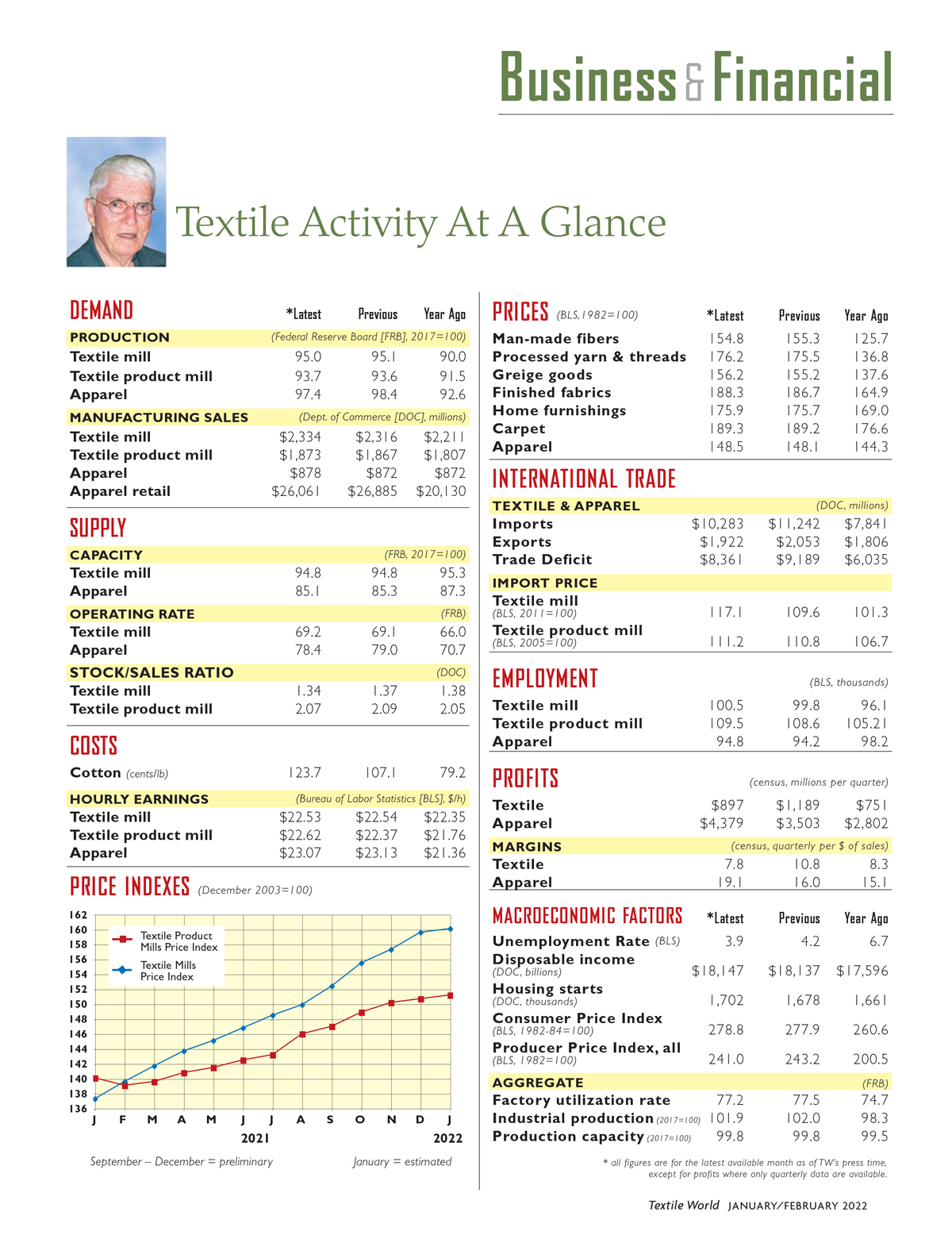
January/February 2022: Textile Activity At A Glance

January/February 2022

Demand Steady; Costs Soar

By Jim Phillips, Yarn Market Editor

Despite soaring raw materials prices, product demand from U.S. yarn spinners remains relatively strong. As has been the case since the economy began to reopen after the first COVID-19 wave, the primary issue has been timely product delivery as a result of a shortage of qualified labor and a muddled supply chain.

However, soaring prices for cotton and petroleum, as well as a general escalation in energy costs, continue to put pressure on margins for many spinners.

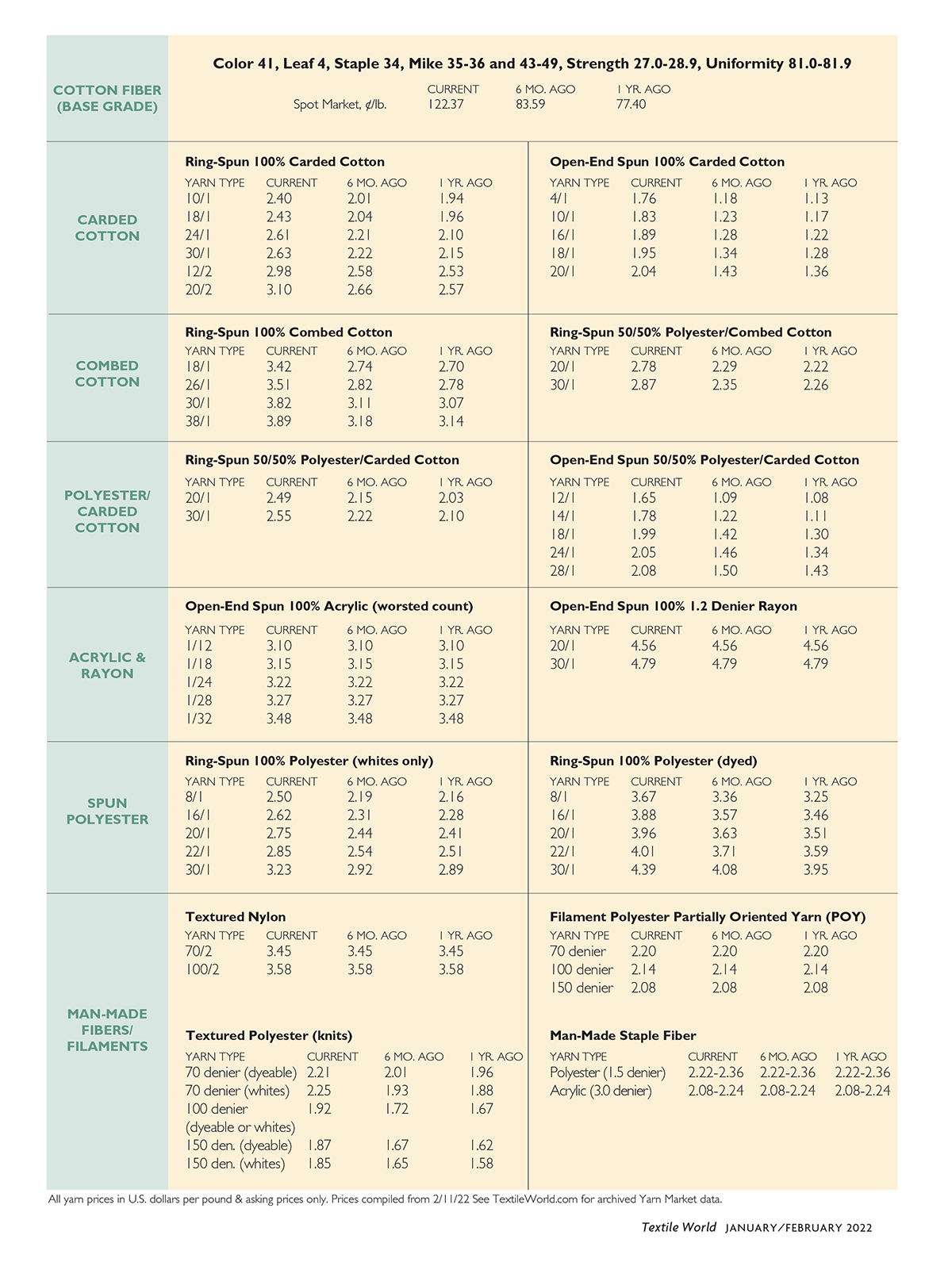
The per-pound price for cotton is at levels not seen for nearly a decade. As of the week ending February 10, spot quotations for the base quality of cotton (color 41, leaf 4, staple 34, mike 35-36 and 43-49, strength 27.0-28.9, and uniformity 81.0-81.9) in the seven designated markets measured by the U.S.Department of Agriculture averaged 122.37 cents per pound. This was slightly down from the previous week, but substantially up from the 81.08 cents reported during the corresponding period a year ago. The ICE March settlement price ended the week at 125.66 cents.

Before the recent surge in prices, the last time cotton exceeded $1.20 per pound was in the first half of 2011. In 2010, cotton exceeded $2.00 per pound for a short period of time.

For petroleum, the crude oil price per barrel was just shy of $94.00 on February 14. This compares to just $20.67 as recently as August 2020.

“Margins throughout the yarn industry have always been on the thin side,” said a research analyst. “The escalating costs across the board put tremendous pressure on spinners. Their customers are facing pricing and sales pressures of their own, so they often push back on large price increases. So, the spinners are caught in the middle. They have to be more efficient and effective. They need to turn product around quickly. And they need to get product to customers as promised — a much more difficult proposition today when the supply chain is still somewhat scrambled.”

COMPETES Act Passes House, But Faces Senate Resistance

The U.S. House of Representatives in late January passed the America COMPETES Act, a legislative package that will help close the de minimis loophole on duty-free imports from China and also renew the Miscellaneous Tariff Bill (MTB), both important provisions to U.S. textile manufacturers, according the National Council of Textile Organizations (NCTO).

Another important provision in the legislation, NCTO says, is that it renews the MTB for two years, which would extend limited tariff relief on a range of manufacturing inputs used by U.S. textile producers.

“We commend the House for passing this sweeping legislation, which contains several critical trade provisions beneficial to American manufacturers,” said NCTO President and CEO Kim Glas. “This legislation contains a provision that would effectively prohibit China from exploiting the Section 321 de minimis mechanism in U.S. trade law, a win for U.S. textile producers and workers.”

Despite the action in the House, the act faces some stiff opposition in the Senate. The next step is to reconcile the bill with its Senate sibling, the U.S. Innovation and Competition Act of 2021, which was passed in June with the support of 19 Republicans. But those same GOP senators say changes will have to be made to the House bill if there is any chance of passage in the Senate.

A number of Republican senators say the House strayed from the bipartisan language of the Senate bill. “Throughout our nation’s history, Republicans and Democrats have worked together on critical national security issues,” said Senator Todd Young (R-Ind.) “In that tradition, last year the Senate followed regular order and an open process to pass the U.S. Innovation and Competition Act (USICA) with strong bipartisan support. I am disappointed that the House did not follow a similar process. To outgrow, out-innovate, and out-compete China, we need to work together and take the fight to the Chinese Communist Party.

“As we head to a conference process, my hope is that the final legislation will reflect the Senate bill and give House Republicans a much better option to support. The Senate-passed bill focuses on directly confronting China, and getting legislation like USICA across the finish line will ensure the United States leads the world into the future,” Senator Young said.

January/February 2022

Sponsors