Soorty Announces Launch Of AI-Generated Denim Collection, HumAIn!

KARACHI, Pakistan — April 13, 2023 — Emphasizing the human value of working together with artificial intelligence and with the launch, Soorty functions to discover how technology and fashion can go hand in hand, owning the responsibility of designing forward-thinking solutions. HumAIn unlocks these potentials, bringing forth purpose-driven designs made with responsible tools and taking consumers closer to a more sustainable future.

Before HumAIn was brought to life, Soorty experimented with artificial intelligence and technology through various ventures. Their journey started 5 years ago when they launched the ever-first digital denim garment in collaboration with The Fabricant, an Amsterdam based digital fashion house, available on the leading digital fashion platform DressX, when launching the C2C line in 2018. Soorty’s C2C GOLD product range is a design system for developing sustainable products based on circular design. It improves the way of making, using & re-using resources, recognizing the biological and technical utilization of the denim fabric.

Soorty works with CLO 3-D, a software with 3D technology and robust simulation engine that allows users to create styles with countless layers and intricate details, and founded Soorty 3D Evolution Studio, successfully working with multiple brands to date. 3D sampling not only helps reduce physical sampling, saving resources, but also speeds up processes and creates an online communication bridge reducing barriers.

Additionally, betting on the approach of human values, social transformation, and advanced technology, during the pandemic, the manufacturer launched Soorty Digital Library and the Future Possibilities website. The Soorty Digital Library is a database of Soorty’s collections – a tool customers can easily access and navigate products, thus facilitating activities via home office. Future Possibilities is a global online and offline platform where denim remains at the heart as a responsible future is co-created, aiming to reach out to global citizens and offer a transparent dialogue to inform, inspire and connect.

With a vast experience in technology, constantly venturing towards the next advancement, Soorty is proud to present their HumAIn collection with Volker’s creativity. Joining forces, Soorty used artificial intelligence to generate the designs, filtering through a number of options and creating a digital collection of over 50 looks and two physical pieces. The digital collection was generated with the help of the popular open-source AI Stable Diffusion. Both Soorty and Volker Ketteniss share an approach that combines technology and innovation to foster sustainability in the denim industry. Generating complete looks and working side by side with artificial intelligence, the collection opens the door to significant, new business opportunities and will enable them to meet customers’ needs on a greater scale.

Ebru Debbag, executive director-Global Sales and Marketing, at Soorty said about collection: “HumAIn is a representation of human interaction with technology where the human value is emphasized and enhanced by technology to discover design possibilities which will not only be relevant for the market but will also drive conscious sourcing and consumption behavior. ”

As the line between physical and virtual reality blurs and the entrance of the industry’s biggest brand names into the Metaverse, Soorty stands strong as one of the only manufacturers experimenting and exploring possibilities with AI every day. Soorty embraces technology as an enabler for designing sustainable and responsible tools for the days to come, taking them closer to a future all would like to live in. AI and technology are already positioned at the heart of how Soorty operates, as they feel the urge to be conscious futurologists who encapsulate and deliver new possibilities. Soorty has been continuing investments on smart technologies and responsibility focused mindset to design products and processes that are purpose driven and made to last.

Soorty’s HumAIn collection will launch in Kingpins Amsterdam on April 13th at the Indigo Museum, a space for exhibitors in the denim industry to educate and engage with viewers, and a unique way for artists, artisans, and brands to share, exhibit, and sell their work. The HumAIn exhibit and the informative sessions will be held at the ExpoK, Green Area and sessions will be held on as April 13th at 12:30 & 3pm. For Fabrics collection, visitors can find Soorty in the Blue Area, Booth 50 and for Garments, it is White Area, Booth 09. At Kingpins Amsterdam, the collection will contain multiple looks generated with AI along with two additional manufactured looks specially created to learn more about the manufacturer’s perspective.

Posted: April 13, 2023

Source: Soorty
Lubricating Textile Machines: Boost Your Production

TW Special Report

Lubrication is rarely a topic that textile manufacturers put into focus. Yet, there are many lubricants in use for spinning, knitting, weaving, and finishing. Needle and sinker oils are the most used lubricants on circular knitting machines for example. Further, compressor oils, hydraulic oils, chain oils, bearing greases and multi-purpose lubricants are needed to reliably operate the machines in the textile industry.

The impact of special lubricants

Considering the impact that lubricants have on your productivity is smart, since special lubricants are available that reduce the energy input by a low coefficient of friction and guarantee a long service life of the moving components, and therefore ensure a resource-conscious and competitive production. This directly affects your carbon footprint. Moreover, a closer look at the small cost factor of lubricants does influence the productivity.

Well-balanced special lubricants

What does make a lubricant special and thus has the potential to positively affect the productivity? Special lubricants are thoroughly tested in the laboratory on its characteristics that are important for its later application. This procedure results in a very well-balanced formulation at the end of the development for the finished product.

Needle and sinker oils according to DIN 62136

Regarding needle and sinker oils the challenges for the lubricant are vibrations, friction, and diverse material compatibility issues also with electronics. Further, the lubricant should not stain the valuable fabrics or at least it should wash out easily with common detergents.

The well-balanced formulation of the FLUID-setral-KN … N series with clear oils and additives results in a colorless, scourable, anti-wear needle and sinker oil. The lubricant series is tested according to DIN 62136-1:2014-03 and is available in ISO VG 22, 32 and 46. A low coefficient of friction allows ideal energy intake without sacrificing wear protection. They performed excellently in wear and coefficient of friction in the tribology test with the translatory oscillating test rig (SRV). The washability has been confirmed by Groz-Beckert® a well-known manufacturer for needles.

The skillful combination of the base oils reduces deposits that could lead to clogging of the needle channels, for example. Therefore, a minimization of the maintenance effort and thus the maintenance costs — also because of the high wear protection — is quite possible. The electrically insulating character of the FLUID-setral-KN … N series means that a good compatibility with electrical components can be expected. These special lubricants are tested on a low corrosion effect on copper and steel.

Other lubrication points

Depending on what part of the textile industry you represent other lubrication points are of interest for a reliable and resource-conscious production. For the finishing of textiles in tenter frames it is significant to use a high-temperature chain oil in the drying oven. Regarding greased bearings either a multi-purpose grease is sufficient or at extreme temperatures a special high-temperature grease is required.

Generally, an excellent gear oil, compressor oil and hydraulic oil on synthetic basis supports the productivity by long oil change intervals supports, less maintenance time and waste oil and, of course, a reliable performance.

April 13, 2023


… And the Award Goes To: Sustainable Fashion On Demand

By Don Whaley

It’s become a common trope that celebrities attending award shows will wear a ribbon or pin to signify their devotion to a cause that’s near and dear to them  — cancer research, peaceful conflict resolution, human rights movements, and so on. When the world is watching, many take the opportunity to show solidarity.

But what if their attire itself reflects a commitment to a worthwhile cause? That is the mindset driving organizations like RCGD Global and its Red Carpet Green Dress™ initiative, which promotes eco-consciousness in global fashion design and production. With the support of celebrities taking to the “red carpet” each awards season, the initiative partners with the Academy of Motion Picture Arts and Sciences to spotlight the cause of making fashion more sustainable.

Celebrities may have the platform to model sustainably-made apparel for the world, but making sustainable apparel accessible — or the norm, the expectation — for consumers worldwide is the true objective, and one that may be closer than many even within the fashion industry may realize.

Reconciling the fashion world with demands for sustainable practices is an ongoing challenge, and one that presents no easy answers. The World Economic Forum estimates fashion and textiles are responsible for one-tenth of the world’s carbon emissions, with more than 85 percent of all textiles produced headed to the dumpster annually. The Harvard Business Review suggests there have been no significant gains for sustainable fashion since 2000, pointing to the increased overproduction of footwear as but one example. It’s well-established that textiles are one of the highest-polluting, most wasteful industries in the world, and measures such as the New York Fabric Act and European Union Strategy for Sustainable and Circular Textiles reflect the continued struggle to proactively drive the industry towards a more responsible, accountable state.

With a growing partner ecosystem spanning the technology and designer communities worldwide, companies like Kornit are committed to changing the equation for what fashion can be, its place in a more demanding and responsible marketplace, and the possibilities it presents for both unleashed expression and profitable business models. We do this by breaking the traditional production models, eliminating dependence on complex and vulnerable global supply chains, and streamlining the journey from creative concept to wearable garment.

Consider what the traditional fashion production model entails. A concept may take more than a year to reach the runway, and to bring a garment to the marketplace requires building inventory. Building that inventory requires stable or cost-controlled access to the necessary raw materials — supply chains subject to bottlenecks, tariffs, human or labor rights concerns, pandemics, acts of God, you name it. You hope to break even by selling enough merchandise to justify that inventory. When the fashion cycle turns, you’re marking down that inventory, with unsold goods ultimately being written off, donated, scrapped, or even burned. Essentially, you’ve gambled on the popularity of your creation, and losing means not only dwindling profit margins, but in many cases a reputation for being a wasteful contributor to the problem. Ask Shein, H&M, or Burberry what that means. Overproduction isn’t sustainable as an environmental model, a business model, or a public relations model.

Digital on-demand production technology is already solving this problem for creators, brands, and fulfillers throughout the world, and that new reality is about to burst into the mainstream. E-commerce has long created a nearly unlimited array of options for the consumer, but a maturing ecosystem of digital technologies is doing the same for designers looking to fulfill their visions without compromise, brands looking to capture and capitalize on social trends the moment they’re perceptible, producers looking to create new products and tap new markets at will, and more. Virtual reality, augmented reality, and the Metaverse are giving designers and consumers alike new ways to engage each other, model concepts in real time, and “try on” any apparel virtually before committing to any one piece. And thanks to digital, only then would you actually produce the garments.

In addition to using pigment-based inks that meet several rigorous environmental standards — such as GOTS, OEKO-TEX Eco Passport and bluesign — on-demand print systems empower designers to bring their creations from concept to runway in mere weeks, with custom fabrics ready to use in minutes — perfect for sampling different materials and graphic effects. Production costs are low and consistent, so fulfilling orders of one or 1,000 yield reliable profit margins. The speed to market, supplemented by efficient workflow and visibility systems to ensure a streamlined, accountable pixel-to-parcel fulfillment process, means producing only what has been sold is a realistic business model, safeguarding operations against unforeseen disruptions, and enabling nearshoring or onshoring of operations to mitigate supply chain risks. For designers and brands, a growing network of digital-enabled fulfillers stands ready to welcome their business, supplying high-quality fulfillment of their concepts in most any materials, ready to wear or ship almost instantly.

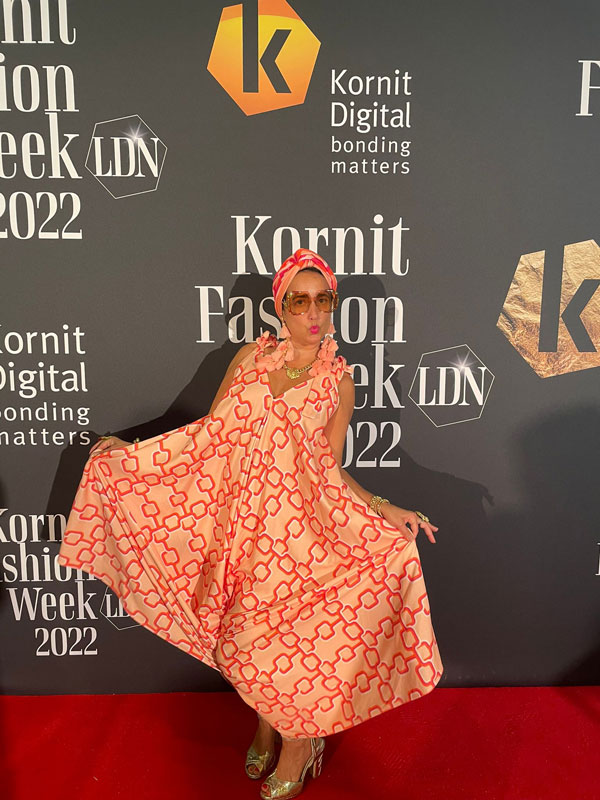
It’s one thing to discuss the mechanics of digital fashion production, but another to see just what the finished product can be. That’s why working alongside such organizations like Red Carpet Green Dress™ is key to highlighting what bold and beautiful creations may come of a process that delivers on the promise of a digital world—using less labor, less material, less energy, less time, and less space to shrink carbon footprints while demanding no compromises, and in many cases even introducing new graphic and tactile possibilities. Our work with threeASFOUR and YesAnd at New York Fashion Week is proof this can happen. Our runway presentations at Kornit Fashion Weeks Los Angeles, Tel Aviv, and London are a testament to these possibilities.

Sustainably-made digital creations will be on the carpet at the Oscars. In the end, the award just might go to sustainable fashion on demand.


Editor’s Note: Don Whaley, Vice President of North America at Kornit Digital


April 11, 2023

New Director Of Product & Engineering To Lead Global Shop Solutions Into The Future

Maynard

THE WOODLANDS, Texas — April 13, 2023 — Success in the highly-competitive Enterprise Resource Planning (ERP) software market requires continual development of new tools and technology advancements that simplify manufacturing. Global Shop Solutions, a leader in ERP software for manufacturers around the globe, is proud to announce the promotion of Trent Maynard to director of Product & Engineering.

“Our primary focus at Global Shop Solutions has always been to simplify manufacturing for our customers,” says Dusty Alexander, president & CEO. “From Trent’s first day with us, he demonstrated a relentless attitude for finding new product advancements and technology to make our customers’ lives easier. That’s exactly the kind of person I want leading our product into the future.”

Maynard began his career in the manufacturing industry working for a company that was a customer of Global Shop Solutions ERP software. Shortly thereafter, he accepted a position at Global Shop Solutions providing software implementation and training for new and existing customers. He then transitioned to an operations and technical consultant and business analyst, where he designed and created tailored solutions for existing and potential customer challenges.

Prior to this promotion, Maynard served as an R&D Manager and created some of Global Shop Solutions most impactful product advancements in terms of meeting customer needs and positioning the company for new growth.

“My focus has been three-fold,” Maynard said. “Number one: hired and retained a team with some of our smartest people to position our ERP product as a technical leader in the industry. Number two: organized our base code to make our product run tighter, faster, and more efficiently, while also enabling customers to implement customizations without having to change the underlying code. Number three: simplified the process for customers to upgrade to new versions.”

Serving Internal and External Customers

As Director of Product & Engineering, Maynard wants to make sure Global Shop Solutions creates an ERP product their customers love to use because it helps them do their jobs more effectively and efficiently. He also wants to attract new customers by offering a better product than they’re currently using.

“Ultimately, it’s all about making sure our product ticks all the boxes for our customers,” Maynard said. “Often they don’t know what is possible, so we have to listen and understand what they’re trying to accomplish and then figure out how the software can solve their pain points. We also want to build a product that appeals to our employees, that our engineers can enjoy working on and be proud of and that attracts top talent to Global Shop Solutions.”

Full Speed Ahead to the Future

One shift popular for ERP software is the ability to integrate with outside software and technologies. Maynard’s responsibilities will include implementing artificial intelligence (AI) testing tools and best practices and modernizing Global Shop Solutions’ software interfaces and tech stack.

“How we build our tech stack has significant implications for what happens downstream with our customers, and I can’t think of a better person to lead the way than Trent,” says Alexander.

Mike Melzer, vice president of Operations & Service at Global Shop Solutions, agrees. “It’s rare to find someone so talented in the technical field who also has extensive shop experience,” Melzer said. “The one thing we’ve been really good about doing as a company is listening when our customers give us ideas on where we can get better. Trent is open to listening and then guiding the ship where we need to go. I trust his knowledge and experience, and his background gives us a huge advantage in our marketplace as our company continues to move forward.”

Posted: April 13, 2023

Source: Global Shop Solutions Inc.

Research Reveals Energy Concerns Impacting Business Competitiveness, The Workforce And Decarbonization

Retrofitting hardware and using energy management solutions at an ABB factory in Italy has led to 30 percent energy savings, according to the company.

TW Special Report

Research shows that businesses around the world remain concerned about the impacts of energy security and prices, which could be a catalyst for a range of environmental, social and economic ripple effects. According to ABB Electrification’s Energy Insights survey1 of 2,300 leaders from small and large businesses across a range of sectors, 92 percent of respondents feel that the continuing instability of energy is threatening their profitability and competitiveness. Energy costs and insecurity are having a significant impact on the workforce with decreased investment in employees. Business leaders are also concerned about potential impacts of meeting their sustainability targets.

Restricting business investment and growth

Rising energy costs and insecurity are forcing business leaders to rethink how they operate and where they invest in their businesses, to grow and remain competitive. The key impacts on businesses due to rising energy costs in the last year include lower profit margins (34 percent) and cuts to spending in some areas (34 percent), leading to a shift away from investment in R&D and other business growth initiatives. Over a third (38 percent) have or plan to reduce technology investment, while a third (33 percent) expect to cut spending on infrastructure and 31 percent foresee a decline in marketing spend.

Impact on employees

Businesses say they have reduced investment in their workforce in the last year because of increased energy costs and the need to implement mitigation measures. This is expected to continue over the next three to five years if energy challenges persist. Three of the top five business areas highlighted for budget reductions are related to the workforce: 42 percent will spend less on recruitment; 38 percent will decrease spending on salaries, overtime and bonuses; and 37 percent will reduce investment in staff training and development.

Delaying decarbonization

Respondents further cite concerns that energy pricing and insecurity could delay progress on climate change, with meeting carbon reduction commitments currently considered less of a priority than reducing energy costs. More than half (58 percent) of business leaders surveyed said the cost of energy could delay achieving their sustainability and carbon reduction targets by anywhere from one to five years. While reducing energy costs is the top priority for 61 percent of companies, only 40 percent currently have reducing carbon emissions within their overall business priorities.

Energy security

Some 83 percent of business leaders express concern about the security of their business’s energy supply, and many are taking action to address this. Over a third — 36 percent — are worried about further rises in energy costs, 31 percent are concerned by power cuts and blackouts, and a quarter by energy rationing. In response, 34 percent have already increased investment specifically focusing on improving their energy efficiency and 40 percent are looking to install on-site renewable energy generation to become less dependent on the grid.

Morten Wierod, president, ABB Electrification, said: “Businesses say they need to insulate themselves from energy prices and insecurity and are re-evaluating current and future spending plans. Taking action to mitigate this is a clear priority, but this doesn’t have to be a catalyst for potential workforce or environmental impacts. Investing in smart and sustainable on-site renewables and energy efficiency technology means businesses can simultaneously cut costs and reduce their emissions. With the right approach, it is possible for industry to achieve cost savings without sacrificing competitiveness, workforces or the journey to decarbonization.”

Taking action

While businesses overall want to take proactive actions to address their energy challenges, a third are being put off by the perceived cost of implementing energy efficiency measures, and almost half (49 percent) feel they don’t have the know-how or resources to proceed.

Much of the technology that can help businesses — large or small — to optimize their energy management and reduce costs, is already widely available and at a reasonable cost. For example, at a telecoms HQ in Hanoi, smart building technology reduced energy costs by 20 percent, while retrofitting hardware and using energy management solutions at an ABB factory in Italy has led to 30 percent energy savings.

To find out more about how ABB and our customers are collaborating to mitigate energy challenges visit Sustainability in Electrification. Businesses can also join the ABB – Energy Efficiency Movement- a global forum of over 300 organizations sharing ideas and solutions that can help industry lower costs, mitigate energy challenges and accelerate climate action.

April 13, 2023

Apex Mills Appoints Joan Izzo as Senior Marketing Manager

IzzoINWOOD, N.Y. — April 13, 2023 — Apex Mills, a fully integrated domestic supplier and manufacturer of custom technical and specialty textiles and fabrics, has named Joan Izzo as new senior marketing manager. She will build greater awareness of the company brand as an innovative supplier and fabricator as well as promote newly expanded capabilities. She brings 25 years of experience with global manufacturers of fibers, fabrics, elastomeric films, and engineered materials across a wide variety of industries.

Most recently, she was marketing director at INDA, the Association of the Nonwovens Industry. Izzo has strong expertise in the Fortune 500 B2B arena, marketing to diverse sectors including apparel, automotive, consumer products, healthcare, filtration and furnishings. Apex Mills’ recent acquisition of the former Hanesbrands Inc. facility in Woolwine, Va., offers new opportunities for its customers, “With her excellent experience, Joan will increase awareness of Apex Mills by marketing our innovative solutions for customers seeking high quality, made in USA products,” said Jonathan Kurz, Apex Mills president and CEO “She will play a critical role in developing and supporting growth strategies.”

The 240,000 square foot facility, operating under the name Insight Textiles, has a long history of producing critical quality elastomeric fabrics for the intimate apparel and shapewear industries. New offerings include elastomeric fabrics used in the orthopedic, medical, hospitality, and home furnishings industries. This plant, in combination with Apex Mill’s increasing capacity and diversity of three-dimensional knitting capabilities further enhances its position as a leading supplier of domestic spacer fabrics known for innovative performance, breathability, and durability. In addition to knitting, this facility provides dyeing, finishing and surface treatments for the most demanding applications.

“I am excited to join Apex Mills and be part of enhancing the customer experience,” Izzo said.

Posted: April 13, 2023

Source: Apex Mills

New MU Study Shapes Understanding Of Adaptive Clothing Customer Needs

Researchers at the University of Missouri find that adaptive clothing retailers must make changes to satisfy an increasingly diverse customer base.

By Courtney Perrett

With the growth of the niche adaptive clothing market comes new challenges for retailers, including making the process of online shopping more inclusive for people with varying degrees of disability as well as expanding the functionality and aesthetic appeal of individual garments.

This study involved mining online reviews to understand the perspectives of adaptive clothing customers. University of Missouri researchers identified two main challenges for adaptive clothing consumers.

Customers said product offerings were inadequate and didn’t meet their specific needs.
Access to the few products that do exist was limited.

“When designing clothing for people with special needs, it’s important to consider functionality as well as fashion, style and self-expression,” said Li Zhao, an assistant professor in the Department of Textile and Apparel Management. “The people who depend on these garments each have unique needs, so their feedback is invaluable.”

Zhao and her team of researchers mined customer reviews from three companies — Amazon, Silverts and IZ-Adaptive — that manufacture adaptive clothing ranging from high-end items to casual wear. Through collocation analysis (the process of identifying closely affiliated with one another), topic modeling and sentiment analysis, the researchers found that, on average, consumers who include folks with disabilities, caregivers and friends and family indicated that the retailers’ websites were not user-friendly and didn’t have features that aid accessibility.

Further, the general trend among consumer reviews indicated that adaptive clothing garments were limited in design and functionality as well as in aesthetic.

“Consumers talked a lot about the fit because they cannot go to physical stores to find the products and try them on,” Zhao said. “First of all, it’s not convenient for some of those consumers, and second, those products are not even carried in brick-and-mortar stores. So, if they must shop online, what are some keywords to search to find an appropriate retailer? For example, on Amazon, there’s so many different types of products. And then how do they know if this product is good? It’s not like they’re some established big name brands where the quality and sizing are known. For this group of consumers, a lot of things are new to them.”

This study filled a gap in the research in that it examined customer experiences not only with adaptive clothing garments but also with navigating an ecommerce environment. Zhao and her team also provided useful guidelines to help retailers design products that are useful to people with a range of disabilities.

“When most people think about adaptive clothing, they think about garments in terms of function, but these consumers are human beings and their needs extend beyond that,” Zhao said. “They want to be confident, and they also need professional garments that they can wear in the workplace. But do we have those products available is the question.”

In this study, researchers suggest that retailers try to better understand the needs of the people for whom they’re making adaptive clothing garments. For example, developing a more accessible and user-friendly website experience that differentiates garments based on categories and/or features. Additionally, this study illustrates a need for retailers to develop more advanced technology to address sizing, fabric, style, color, fit and the function of each garment.

“It is vital to consider every part of your web design or every aspect of the customer shopping journey and consider how you can think differently as to be inclusive for this group of consumers,” Zhao said. “I think that’s something we really want to find out from customer reviews and feedback in the future.”

This study “It is about inclusion! Mining online reviews to understand the needs of adaptive clothing customers” was published in the International Journal of Consumer Studies. Co-authors include Li Muzhen and Sharan Srinivas. This research received no specific grant from any funding agency in the public, commercial or not-for-profit sector.


Editor’s note: Sharan Srinivas has a joint appointment in the MU College of Engineering and the Trulaske College of Business. Courtney Perrett is Editorial Bureau chief, MU News Bureau, University of Missouri-Columbia, Columbia, Missouri.


April 13, 2023

Südwolle Group Proudly Joins The Partners Of ‘The Elephant In The Room’ Exhibition Celebrating Transparent And Sustainable Textile Creations

NUREMBERG, Germany — April 13, 2023 — As part of its commitment to the industry, Südwolle Group is proud to be one of the partners of “The Elephant in The Room,” an exhibition that celebrates the textile creation process and explores the challenges and complexities of the industry. The exhibition, which will take place during the Milan Design Week from April 17-23, 2023, at Castello Sforzesco in Milan, is presented by BYBORRE in partnership with Castello Sforzesco, City of Milan, and several supply chain partners, including Südwolle Group.

The exhibition aims to provide an informative experience that showcases the past, present, and future of textile creation, from sourcing materials to finished products. It emphasizes the importance of transparency, collaboration, and a fair supply chain. The exhibition and experience grants access to and shows the various steps involved in the textile supply chain, from sourcing materials to the creation of finished products. Informative exhibits in the castle’s ‘Sala della Balla’ provide a better understanding of the complexities and challenges in this industry, all while being surrounded by the twelve Trivulzio Tapestries that are a testimony to the rich history and craftsmanship of the textile industry.

Over the course of three days, the consortium of partners and Nieuwe Instituut are hosting panel discussions to bring together experts in design, architecture and material to discuss transparency, collaboration and co-design, and the importance of a (fair) supply chain. In addition, recently launched initiative THE NEW STIJL by …,staat will host a series of talks with creatives across different disciplines and styles, including Sabine Marcelis, Amber Jae Slooten (The Fabricant) and Bas Timmer (Sheltersuit).

Through its participation in “The Elephant in The Room,” Südwolle Group aims to promote the importance of sustainable and transparent practices in the textile industry and highlight its commitment to these values. The company looks forward to contributing to a meaningful and informative exhibition that celebrates the textile creation process and encourages open and honest conversations about the industry.

Posted: April 13, 2023

Source: Südwolle Group

Denim Ingredient Brand ISKO Explores Solutions To Drive Sustainability In Garment Production

LONDON, England — April 13, 2023 — ISKO has made a point of driving sustainability in garment production since the early days with its Responsible Innovation approach, yet there are still challenges ahead for the industry as a whole when it comes to production processes which especially in the denim industry have been recognized as some of the most harmful and impactful.

What the sector needs is advanced technologies, both scalable and affordable, to allow the denim industry to reduce its impact on workers and on the environment, that and collaboration. Melissa Clement, ISKO’s head of product development, added: “The challenge is to invest in new technologies and machineries.”

ISKO has proved times and times again its stance on responsible textile supply chains, building consumer awareness, developing cutting-edge technologies and closed loop processes — Ctrl+Z, material science solution which results in fabrics made from a pure blend of recycled and regenerated content — as well as opening its first UK product development center, in London, to help brands develop their products employing sustainable processes. “Consumers awareness is key because the throwaway culture still needs addressing” stated Melissa Clement.

These were the highlights of the conversation led by ISKO’s Melissa Clement, with denim consultant Amy Roberton at the panel “Closing the denim loop: the power of knowledge and collaboration” held at the Drapers Sustainable Fashion Conference in London.

“As the scenario keeps evolving, it is essential that ISKO as leader gets an important point across as it continues to lead the way of innovation in denim: good practices, whether they regard washing or material, can be implemented at any scale, with the help of important partnerships to drive shared knowledge and bring circular ideas to life.” remarked Melissa Clement.

Posted: April 13, 2023

Source: ISKO

SGS Explores How Digitalization Is Revolutionizing The Process Of Garment Prototyping

TW Special Report

Technological advances have always driven fashion forward. Today digitalization is helping the fashion industry to address concerns over sustainability and rapidly changing consumer demands.

With sustainability a major concern in all industries, including fashion, designers and manufacturers are looking for innovative solutions that allow the delivery of products that consumers want but with a reduced impact on the environment

In a post-pandemic world, the process of designing new garments has not always kept pace with the shifting demands of a global market. Designers, buyers and manufacturers need to work collaboratively, but may live and operate in different countries. This has always slowed down the process of design and delivery but with sustainability now a central concern it has become untenable.

The fashion industry needs a more efficient way to design and prototype garments. The solution must reduce costs, be effective at enabling remote collaboration on a global scale and, to be of true value, fast, accurate and sustainable.

Digitalization in the fashion industry

Digitalization is the new technological paradigm. Industries working with rigid body materials, such as metal and plastic, have been using simulation programs to enhance the design process for several years. However, it was only in around 2020 that advances in computer simulation power began to make it possible for simulation software programs to render non-rigid body materials like leather and cloth.

This has opened up a world of possibilities for the fashion industry. Designers, manufacturers and buyers can now work virtually, collaborating without the need for travel. It reduces disruption, costs and environmental impact while also expediting the process of designing and delivering more efficient and sustainable products.

Fabric digitization

Fabric digitization eliminates the need for physical samples by allowing the creation of true-to-life 3D simulations of a textile or leather object. These high definition ‘digital twins’ exactly mirror the physical sample, including appearance, textures, draping behaviors and physical properties. They accurately describe the physical sample in a digital way that can be shared through the cloud with stakeholders working around the world.

Digital fabric samples have multiple advantages. By removing the need to manufacture and share physical samples, the process of designing, prototyping and approving products is cheaper, faster and more sustainable. Stakeholders can review, comment and feedback instantly and in parallel, re-adjusting designs and reaching agreement far quicker than traditional methods.

Fabric digitization software using a digital twin also allows interested parties to see how a garment will actually fit on various avatars engaged in different activities, creating a virtual fashion show and allowing accurate representations of tension and pressure feel. Designers can also build a digital library of fabric, thereby enhancing all future design projects and improving market outcomes.

SGS solution

SGS’s Softlines Digital Laboratory has developed services to streamline and expedite the textile design process. Its one-stop solution comprises:

Fabric scanning: 3D fabric scanning captures the various appearance and texture aspects of the textile material, including color or print pattern, transparency, toughness, displacement, etc.

Fabric physics: determines the essential physical properties of the textile material for the physical base rendering, including weight, thickness, bending and elongation

A digital fabric file with common format, such as u3ma, etc. is then created. This contains all the essential texture maps and physical properties data needed for common 3D digitalized platforms. Special formatted CVS files for fabric physics are also available for several common software programs, such as Browzwear, CLO 3D and Gerber. These can directly transfer physical properties data to the program.

Files can easily be shared with participating stakeholders via a cloud-based platform.

Benefits of SGS Fabric Digitization

  • Quicker design process;
  • Substantiable design process;
  • Reduces costs and environmental impact from elimination of actual prototype sample;
  • Enable client to build their own textile material library for future applications;
  • Compatible CSV file format for direct transfer of physical properties data to several popular simulation programs

April 13, 2023

Sponsors