INDA And The Waterloo Filtration Institute To Partner For Filtxpo™ 2023

CARY, N.C. — August 17, 2023 — INDA, the Association of the Nonwoven Fabrics Industry, announced that it is partnering with the Waterloo Filtration Institute (WFI) to produce the two-day FiltXPO™ conference program, October 10-11, Chicago. WFI brings decades of filtration experience, resources, and a worldwide network to support the education and technical development of the global filtration industry.

Filtration and separation professionals from the global supply chain will connect at FiltXPO 2023 for advancements, innovations, and business development. The conference portion of the FiltXPO event will focus on advanced filtration technologies and science for products that create a cleaner, healthier, and safer world. More details about the conference will be released at a later date.

“We are excited to partner with INDA on the FiltXPO Conference,” said Dr. Christine Sun, president, Waterloo Filtration Institute. “WFI’s technical experience and reach will bring an added dimension to the event. Our team has already begun planning the conference and we look forward to sharing more details soon,” Sun added.

“INDA is proud to partner with WFI as they bring a wealth of filtration knowledge to the table,” said Tony Fragnito, president, INDA. “We are very fortunate to have their technical expertise in planning the FiltXPO Conference. Filtration professionals can expect a robust program developed with the industry expertise of WFI,” Fragnito continued.

The Nonwovens Institute (NWI) is a valued partner to INDA in bringing educational offerings to the nonwoven and engineered material industry. Dr. Behnam Pourdeyhimi,  professor and executive director, The Nonwovens Institute, and his team will teach the two-day Filter Media Course in conjunction with FiltXPO, October 9-10, at Navy Pier in Chicago.

Professor Pourdeyhimi and his team will share the latest insights in the development, testing, and application of nonwovens in air, aerosol, and liquid filtration. Participants will gain knowledge about the physics of filtration, how nonwoven filter media is designed and used in air, aerosol, and liquid applications, testing standards, unmet needs in filter media, and the latest market trends and intelligence.

For more details about FiltXPO and the Filter Media Course, visit www.filtxpo.com. For a complete list of INDA and NWI educational offerings, visit www.inda.org/training. For questions, contact the Registrar, registrar@inda.org

Posted: August 17, 2023

Source: INDA, the Association of the Nonwoven Fabrics Industry

Embracing The Future: Hayleys Fabrics Leading The Way In Sustainable Textile Production & Technological Innovation

NEBODA, Sri Lanka — August 17, 2023 — Renowned as a trailblazer in the textiles manufacturing industry in Sri Lanka, Hayleys Fabrics Plc incorporates ethical and sustainable practices into every facet of its operations, paving the way for Sri Lanka to be recognized as a responsible manufacturing hub. With an impressive production capacity of 6 million meters of cotton and synthetic fabric per month, the company offers end-to-end solutions from design to manufacture, solidifying its position as a pioneer in this industry area.

With over 30 years of experience in textile manufacturing, the journey of Hayleys Fabrics is marked by numerous firsts. Notably, it was the first apparel company to be listed on the Colombo Stock Exchange in 2003 and played a pioneering role in manufacturing weft knit fabric in Sri Lanka. Furthermore, the acquisition of South Asia Textiles Ltd in April 2021 propelled the Hayleys Fabric Group to become the largest textiles manufacturer in Sri Lanka manned by a team of nearly 3,000 employees.

Partnering with globally renowned fashion and apparel brands including NIKE, Victoria’s Secret, Decathlon, Intimissimi and PVH, the Company’s impact extends beyond Sri Lanka’s borders. Recent accolades, including Asia Sustainability Awards, Sustainability impact awards from Chartered Quality Institute UK, and Presidential Environmental Green Awards, underscore its commitment to environmental sustainability, transparency and culture beyond compliance. This is also reflected in the Company’s annual reports which conform to global standards including GRI (Global Reporting Standards) and Integrated Reporting. ‘Warna by Mahogany’ is its latest step in this journey, a natural dye initiative that exemplifies dedication to greener practices and eco-conscious innovation.

“Having a clearly defined purpose – To strengthen the fabric of society by knitting together a better environment for All, we have implemented comprehensive sustainability standards throughout our supply chain, ensuring all our suppliers adhere to both local and international regulations,” said Managing Director/CEO Rohan Goonetilleke. “Given our close partnerships with European and North American brands, we strictly adhere to ISO standards, notably ISO 14001:2015 for Environmental Management Systems, ISO 50001:2018 for Energy Management Systems, and ISO 45001:2018 for Occupational Health and Safety Management Systems. These certifications affirm our commitment to responsible practices and underscore our dedication to environmental protection, energy efficiency, and the well-being of our workforce.”

The Journey of Excellence in Sustainable Practices

The Hayleys Fabrics facility in Narthupana Estate, Horana is located in a 54-acre complex with an additional 20-acre green belt acquired a few years ago. Underlining its firm commitment to sustainability exemplified by dedicated efforts to reduce carbon footprint and combating climate change the location of the facility has a land to building ratio of 1:1. By participating in the Science-Based Targets initiative, the company has set ambitious goals to reduce greenhouse gas emissions (GHGs). As a significant contributor to the national grid, Hayleys Fabrics generates a significant 6,241,500 kWh of power annually via the largest single rooftop solar installation in Sri Lanka with its impressive expanse of 9,000 solar panels spread across an 18,000 square meter rooftop. This bold endeavour has not only led to a reduction of 4,065.45 tCO2, but produces 20 percent of the factory’s electricity usage.

In addition, the company’s pledge to reduce water consumption is evident with the upgrading of its effluent treatment plant and state-of-the-art water treatment facility, surpassing all applicable environmental standards.

Embracing its responsibility for biodiversity conservation, Hayleys Fabrics actively protects wetland zones and creates lush green belts. These include the ‘Diyathuru Uyana’ wetlands park, a 9-acre plot of land located opposite the manufacturing facility. In collaboration with the Biodiversity Secretariat of the Ministry of Environment, Hayleys Fabrics conducted field surveys from August 2020 to January 2021 to capture ecological data. These surveys revealed an impressive array of biodiversity within the park’s boundaries, with over 140 species of flora and fauna identified, including several endemic, nationally threatened, critically endangered, and vulnerable species. The Company also fosters employee engagement in eco-friendly practices, including the promotion of organic farming.

“Our journey to becoming the most sought-after fabric mill in the region has been rapidly propelled by our strategic adoption of an ESG framework,” explained Goonetilleke. “Rather than solely pursuing large volumes of low-cost orders, we prioritize building strong and lasting partnerships with a carefully selected group of world-class brands that share our dedication to Environmental, Social, and Governance principles. This deliberate focus on ESG not only drives our progress but also reinforces our position as a responsible industry leader, driving positive change and sustainability throughout our operations.”

When sustainability meets innovation – ‘WARNA by Mahogany’

Securing a spot among the Top 10 Global Innovations at ISPO Textrends Spring/Summer 2024 – a leading German platform and melting pot for the world’s most innovative high-performance fabrics, Hayleys Fabric’s groundbreaking natural dye innovation, ‘WARNA by Mahogany,’ was able to elevate the country’s reputation as a leader in sustainable circular fabric sourcing for sports apparel.

Developed by Hayleys Fabric’s Head of Sustainability Leonie Vaas,’WARNA by Mahogany’ is a pioneering waste-to-fashion project, utilizing dye extracted in-house from waste generated by the local furniture industry. This initiative aligns with the surging demand for natural dyes and recycled materials, driven by an environmentally-conscious consumer base. This led to Leonie becoming the first and only Sri Lankan recognized as the UN’s SDG Pioneer in 2021 and is one out of ten in the world to be recognized for her efforts.

“With WARNA, we exemplify our commitment to sustainable textile manufacturing, designed to serve the growing preference for eco-friendly options,” stated Vaas. “The mahogany dye used in the process adheres to strict international standards, ensuring safety for the end customer, the environment and those involved in the entire production process.” Offering a palette 16 hybrid colors across various fabric compositions, the mahogany dye enhances aesthetic appeal while maintaining environmental integrity.

The environmental impact assessment revealed that the use of natural dye has a remarkable 36 percent positive impact on climate change compared to synthetic dyes, reinforcing the initiative’s sustainability. Moreover, the unused dye residue is directly utilized in fertilizer manufacturing and thus supports a circular approach.

Aligned with multiple United Nations Sustainable Development Goals (UNSDGs), including responsible consumption and production, sustainable innovation and infrastructure, clean water and sanitation, life below water, life on land, and climate change, ‘WARNA by Mahogany’ demonstrates Hayleys Fabrics’ dedication to meaningful environmental contributions.

In addition to ‘WARNA,’ Hayleys Fabrics collaborates with other natural dye suppliers to create new ranges of environmentally-friendly products under its INNO brand, aiming to introduce functional, fashionable, value-added fabrics for global apparel markets. This becomes advantageous against a backdrop where the natural dye market is projected to hit $5 billion by 2024, growing at a CAGR of around 11 percent up to 20241.

Looking towards the future

Hayleys Fabrics is renowned for its commitment to innovation, which has given it a constant competitive edge in the industry.

Since the establishment of ‘INNO’ in 2014, the innovation arm at Hayleys Fabrics has been constantly working towards incorporating technological advancements into fabric manufacturing. The team, comprising fashion design experts and highly skilled professionals, consistently analyzes the market and works on new product developments to retain its top-tier clientele.

Hayleys Fabrics also collaborates closely with fashion brands to bring customized fabric concepts to life, meeting specific customized requirements. Amid the pandemic, the Company seamlessly transitioned to digital platforms, leveraging tools like virtual sampling, digital material libraries and 3D rendering of collections for sales, thus strengthening their customer relationships.

The innovation team also recently launched an app to enable end-to-end traceability for its recycled PET fabrics, mostly supplied locally to Sri Lanka’s largest apparel manufacturers. This allows local producers and global retailers to tag individual pieces of clothing with a QR code, which customers can scan to learn exactly how many discarded PET bottles were used to create the item and the exact geographic location the bottles were collected from in Sri Lanka.

Furthermore, the acquisition of South Asia Textiles Limited significantly bolstered Hayleys Fabrics’ manufacturing capacity by more than 45 percent, solidifying its position as the country’s largest fabric manufacturer. This strategic move aligns with the country’s focus on backward integration in the apparel sector, fortifying Sri Lanka’s competitive advantage in this critical industry.

Recognizing the importance of manufactured capital in value-creation processes, Hayleys Fabrics remains committed to nurturing their competitive advantage through ongoing investments. One of the latest investments infused into the Company’s workings is the implementation of AI tools for the procurement of dyes and chemicals. This has complemented forecasting and inventory management, leading to reduced wastage and continuous improvement in accuracy over time.

“As we look into the future, the integration of sustainability and technology becomes paramount for companies to flourish and prosper,” stressed Vaas. “By prioritizing critical concerns such as waste segregation, pollution and energy efficiency, we ensure active engagement from our entire workforce in our pursuit to become a global leader in sustainable textile production.”

1 [1] Natural Dyes Market – Global Outlook and Forecast 2019-2024: www.marketresearch.com/Arizton-v4150/Natural-Dyes-Global-Outlook-Forecast-12201085/

Posted: August 17, 2023

Source: Hayleys Fabrics PLC

Sustainable Benefits With Automated TMAS – The Swedish Textile Machinery Association — Concepts

STOCKHOLM, Sweden — August 17, 2023 — The ITMA 2023 textile machinery show held in Milan from June 8-14 was hugely successful for members of TMAS – the Swedish Textile Machinery Association – with significant new orders secured and a range of new initiatives announced.

“Just a week before the opening of ITMA 2023, the European Parliament voted for the full adoption of the EU Strategy for Sustainable and Circular Textiles,” said TMAS secretary general Therese Premler-Andersson. “It was very clear in Milan that this is already galvanising the textile industry into new collaborations and there was huge interest in the sustainable benefits offered by the latest automated concepts of our members.”

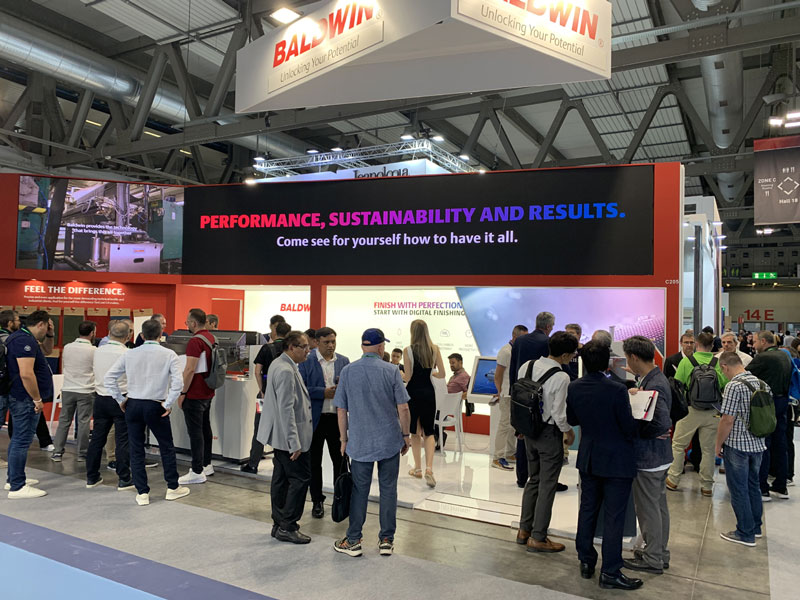
Baldwin’s booth was packed with visitors throughout ITMA 2023.

Non-contact

Rick Stanford, vice president of global business development at Baldwin was in full agreement.

“It was the most enthusiastic show I’ve been involved in in a very long time,” he said. “You hear about the textile industry being down a bit, but that’s not what it felt like at ITMA this year. Everybody’s talking about sustainability and the Baldwin booth was just jammed with visitors throughout the show.”

Baldwin’s TexCoat G4, a non-contact spray technology for textile finishing and remoistening not only reduces water, chemicals and energy consumption, but also provides the flexibility to adapt to a customer’s requirements in terms of single and double-sided finishing applications. TexCoat G4 can reduce water consumption by as much as 50% compared to traditional padding application processes.

Among its many installations, Baldwin now has key reference systems in place for the TexCoat G4 at North Carolina State University and Graniteville Specialty Fabrics in the United States, as well as at Pincroft in the United Kingdom.

“Since its introduction at ITMA 2015 in Milan, global textile finishers have embraced TexCoat and are reaping the benefits,” Stanford said. “They have been able to increase profitability, cut energy use and reduce their carbon footprint in addition to exercising precision control with our patented precision spray technology.”

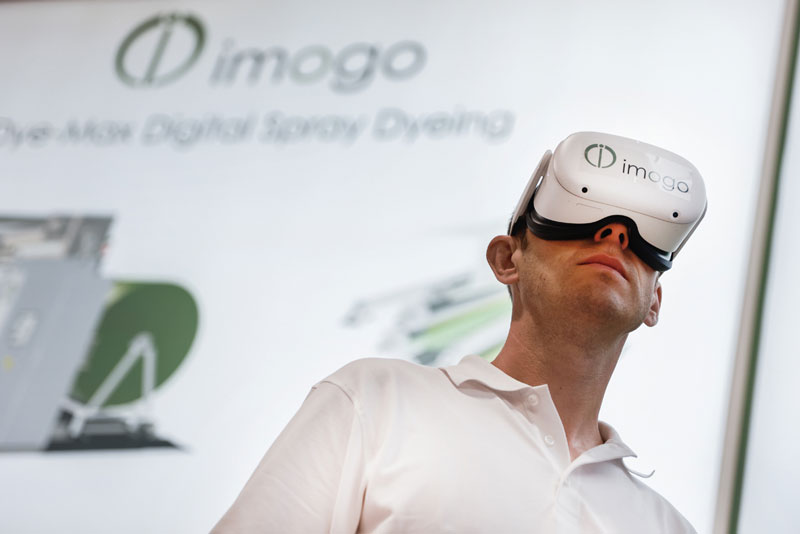
Imogo employed VR headsets to showcase the full capabilities of its technology in Milan.

Plan Zero

Plan Zero is the bold name for the new cross-industry cluster of disruptive companies formed by TMAS member imogo with Revozona from Switzerland and Pluvia from Turkey announced during ITMA 2023.

Together, the three companies will provide complete lines, with imogo’s spray dyeing technology complemented by ozone gas pre-treatment and bleaching and highly efficient after-treatment to substantially contribute to the global net-zero targets set by the textile industry.

“Companies adopting Plan Zero into their processes will experience an increase in profitability, productivity and competitiveness,” said imogo CEO Joacim Wellander. “At the same time, consistent, predictable production output is secured, meeting the highest global standards.”

Imogo employed VR headsets to showcase the full capabilities of its Dye-Max technology in Milan.

Multi-thread options

Coloreel has meanwhile recently secured its 100th patent and taken its instant embroidery thread colouration system to the next level with a new multi-thread software option, opening up new options for designs with special effect threads such as frosted, metallic or neon colours.

“This update expands our technology capabilities and opens up new possibilities for embroidery producers,” said Mattias Nordin, senior vice president of product management at Coloreel.

Coloreel’s technology, which is based on applying dye directly to the thread as it passes through the unit, resulting in precise and vibrant colours, was demonstrated on integrated embroidery systems in partnership with Germany’s ZSK at the Milan show and is also now integrated into the software of Tajima Software Solutions.

ACG’s stand at ITMA 2023.

Robotics

ACG Kinna and ACG Nowo have developed a complete process for robotic pillow filling which they demonstrated at ITMA 2023.

With the ability to fill and finish some 3,840 pillows in an eight-hour shift, demonstrations of the system drew huge and appreciative crowds to witness seamless fiber handling, filling, sewing and packing in action.

Automatex too, demonstrated a sewing and assembly unit for the fully finished production of consumer bags, configured to carry out the automated hemming, handle insertion, cutting, labeling, bag forming and gusset forming which all previously had to be carried out manually, to produce some 540 units an hour.

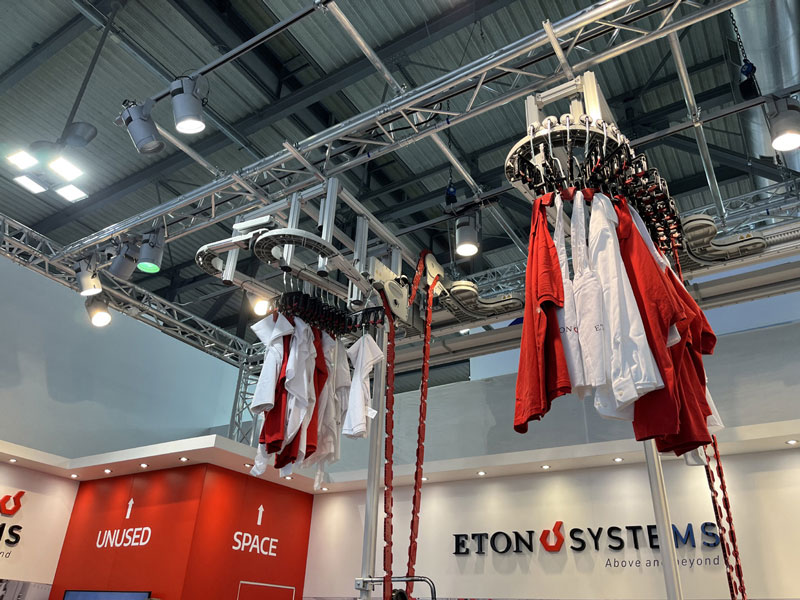
Eton Systems overhead garment automation demonstrated at the show.

“Further automated concepts were demonstrated by Eltex of Sweden, Eton Systems and Svegea, and TMAS also held a vibrant reception at ITMA 2023 and was honoured to have Swedish Ambassador Jan Björklund attend the event as special guest,” said Premler-Andersson in conclusion. “ITMA 2023 really was an upbeat and positive experience and our members now have much to build on from reacquaintances with customers and many new relationships established during the show.”

“If you’re not at ITMA, you’re simply not in the game,” added Brian Hicks, CEO of Eltex of Sweden. “ITMA just keeps getting better and better.”

Posted: August 17, 2023

Source: The Swedish Textile Machinery Association (TMAS)

The Case For rPET Testing: A Call For Authenticity And Sustainability

By Anouschka Jansen

As brands look to meet growing demands and concerns of the consumer for more recycled material usage, the fashion industry has continued its consideration and the use of recycled polyester material (rPET). Turning away from virgin plastic products is essential for a sustainable future, with brands — both decades-old and start-ups — delivering lower impact products by implementing rPET into their lines.

It is, however, extremely important to make sure brand manufacturing partners use authentic rPET which meets the most specific standards. rPET testing is highly encouraged in all industries, to verify each product contains the amount of rPET that is claimed, increasing the quality of recycled materials in the market. Qualitative and quantitative testing helps ensure transparency and authenticity throughout the manufacturing process, while also building a level of trust with consumers who have become extremely conscious of the impact of their buying habits.

Current technology behind rPET chemical testing relies on detecting a specific substance: isophthalic acid (IPA), which is used in the making of plastic drink bottles — the primary source of raw material for recycled polyester. IPA is added during bottle manufacturing process to give them the desired shape and transparency. When these bottles are recycled, a small percentage of IPA is lost, but the remaining amount can serve as a “marker” to confirm whether plastic bottles were used to manufacture the given batch of rPET, and to assess approximate content of recycled polyester in the fiber.

While not without limitations, IPA-detection-based chemical testing is one of the best approaches to obtain laboratory evidence for backing your rPET claims, and provides a high degree of confidence when backed with traceability measures at other stages of the supply chain.

Utilizing reports from rPET testing to substantiate the use of recycled products in their products, brands can level-up, delivering on a commitment to commitment to reducing waste. This can be particularly impactful on younger-generation consumers, who are increasingly concerned about the environment, and more likely to support sustainable brands. rPET testing is an important step in substantiation of green claims, supporting a lower impact fashion industry.

To most effectively understand the need for testing rPET in global manufacturing, consider the following factors regarding the practice:

Pricing — One of the most notable challenges with the use of rPET is its relatively higher cost compared to virgin polyester — some 40 to 50 percent. Yes, it may deter some manufacturers, but the process is worth so much more to the efforts of a sustainable future. With the utilization of rPET, manufacturers are actively contributing to the reduction of plastic waste and supporting a circular economy. Testing for rPET content allows brands to ensure they get what they pay for, guaranteeing the quality and authenticity of the recycled material.

Demand is greater than supply — While demand for recycled material continues to rise, supply has not been able to keep up, only heightening the concern about authentic rPET. Testing, accompanied by product traceability, ensures manufacturers are receiving and properly administering the material through each step in the manufacturing process, from sourcing and purchasing, to bulk delivery of the recycled material. Mitigate the risk of supply chain issues and potentially, unknowingly, using virgin polyester.

Avoid greenwashing — Greenwashing, or misleading “green” claims, is a simple way to spin minimal efforts to seem more eco-friendly. rPET testing allows brands to demonstrate their efforts with transparency and actual, tangible data. Manufacturers must demonstrate transparency and substantiation regarding their use of rPET. Investing the proper time and finances into rPET ensures a genuine approach to providing a product that’s produced authentically.

Documentary traceability is not enough — Yes, documentation may provide valuable insights into the origin and processing of rPET, but it does not provide real-time confirmation of material authenticity. Testing rPET at critical steps ensures the material used meets your desired quality standards — brands can enhance their control over the supply chain, minimizing the risk of counterfeit or mislabeled rPET.

Testing strengthens substantiation, provides essential data to monitor progress in meeting recycling targets, builds consumer trust and makes the process as cost effective as possible. It is important to test rPET at each critical step in the manufacturing process to ensure its quality, authenticity, and adherence to sustainability goals.


Editor’s Note: Anouschka Jansen is director of Sustainability Solutions at QIMA, a Hong Kong-based company offering quality inspections, supplier audits, certification, and lab testing using a digital platform that brings accuracy, visibility and intelligence for quality and compliance data.


August 17, 2023

Moving At The Speed Of Culture … The Rise Of A Digital Supply Chain

By Don Whaley

If you keep pace with manufacturing and production, as we do at Kornit Digital, one common thread that arises repeatedly is how complex and slow-moving the legacy fashion and textile industry is. Offshoring, waste, and inefficiency are the rule, not the exception, and progress towards a more effective and sustainable model is still terribly slow as the industry remains pegged among the worst polluters in the world.

It’s no secret that the World Economic Forum estimates fashion and textiles make up 10 percent of the world’s carbon emissions. If that weren’t bad enough, more than 85 percent of all textiles produced go into dumpsters each year. And while that’s no revelation for those familiar with the industry, what may be surprising is there’s little being done to change this dynamic — despite the call for change.

On the contrary, the Harvard Business Review notes the industry is actually moving BACKWARDS – with reports indicating the call for sustainable fashion hasn’t translated during the past two decades. Production of shorts and shoes creates more waste than ever before — with 75 percent of items produced ultimately being burned or buried in landfills.

So, the question is still, why is material change not happening? Clearly a lack of widespread legislation to incentivize or force change still is a key gap. One small point of light is the recently proposed New York Fabric Act mandating the industry shape up or suffer the consequences. If passed, the legislation will require fashion retail sellers and manufacturers to fully disclose all environmental and social diligence policies. In France, emerging is Digital ID, a unique code existing as a twin both on the garment and in the cloud — allowing for universal traceability of products to slow down waste in the fashion industry. But as they say, actions speak louder than words. And in today’s day and age with a new world of creators calling the shots, Kornit believes the time is coming for change that must be targeted and measurable, while also being broad enough to reflect the truly global supply chain upon which the fashion industry relies.

The good news is that the demand side of the market is likely to become a major driving force simply because mass customization, the velocity of changing consumer preferences, and the need to respond immediately will force more nearshore and onshore production. It’s the only way brands and creatives can compete and win in this new demand model.

With the world experiencing a digital transformation like never before, we at Kornit Digital believe culture is leading the way in change across industries. The post-COVID world saw an acceleration in the creator economy like none of us could’ve imagined. The digital-native generation has come of age, and their revolutionary mindset is making its presence felt. According to Statista, TikTok grew nearly twofold among those aged 15-25 after COVID hit, and brands are challenged to effectively engage these new creators (and consumers). One of Kornit’s most successful customers, a custom-designed fabrics provider called Spoonflower — now a subsidiary of Shutterfly — once spoke of an “Etsy army” that had populated their design library with 1.8 million digital creations, each of them ready to print on demand, to be fashioned into any number of do-it-yourself garments, accessories, home goods, or other textile products.

Customers demand immediacy, capturing the moment as it’s experienced. They don’t want to wait weeks or even months to share what they feel. Just look at the music industry. A song plays; it elicits specific emotions and times that make people happy or sad. They want to keep that feeling going, embrace it. Listeners can make this happen by downloading songs or videos quickly and easily. The immediacy of culture is finally matched by the technology and processes to make it happen. Industry can move at the speed of culture.

This culture shift is taking place across almost all creative industries — from music to art. Consumers get what they want, when they want it. Unfortunately, the one industry that has yet to catch up is fashion and apparel. That’s due to an analog supply chain built for the old way of production. Recently, Kornit Digital attended a popular fashion and textile sourcing event in New York. During one very insightful panel, William Brenninkmeyer, Global Sourcing Manager and Lead of Innovation at C&A, noted, “Chasing trends is impossible with an analog supply chain, where the lead time is 6-8 months. But digital production technologies now enable on-demand fulfillment, so you can bring concepts to production to consumer in two days. It’s incredible.”

This new model taking shape is being driven by digital production. Digital on-demand production from companies like Kornit Digital — empowering producers to channel digital creator and consumer data encompassing buying behaviors, social media listening, and more into a fulfillment strategy — answers demand for a digital supply chain with greater agility and efficacy than the traditional 18-month forecast cycle. Furthermore, it answers the sustainability imperative by aligning supply with demand, thus minimizing the waste that inevitably comes from forecast-based production. The approach also makes it possible to unleash customization and personalization for micro-communities and even the individual. This means both capitalizing on the cultural zeitgeist and creating serious benefits for retailers like C&A.

In this same session, Aaron Day, CEO of Amaze Software, echoed these thoughts: “The analog supply chain was built to meet a certain need at a certain time, but that world has been disrupted by a cultural shift. When you account for all the associated costs, I think we’re nearing a tipping point where an on-demand t-shirt can be produced cheaper than one produced using a traditional printing press.”

For those just entering the industry, adoption of digital processes might not be that difficult. Companies leading with digital production can fully embrace the power of “phygital” technology, which bridges the gap between digitally created imagery and physical fulfillment of those concepts. This production model very effectively allows for authentication and incorporation of emerging trends like AI and NFTs. But what if you’re an old-school producer born and raised on the physical supply chain?

While these exciting technologies are a natural partner for brands with a considerable e-commerce footprint, the challenge is far greater for retailers whose sales model stays tethered to the fortunes of the physical, brick-and-mortar store. Consider European-based retail powerhouse C&A. Founded more than 180 years ago, with more than 1,200 physical locations worldwide, C&A embodies every attribute of powerful retail production — yet is still vulnerable in the age of a web-driven “retail apocalypse.” Counterintuitively, such a business sees considerable upside in Web3 technologies that lean into digital transformation, which tap into both emerging consumer trends and individualized content creation.

According to Brenninkmeyer, C&A is investing heavily in digitization to drive “rightshoring” for tailoring fulfillment strategies based on the most effective means of serving different customers and brands. Directly addressing the needs of a creator economy — and fighting legacy challenges of overproduction, sustainability, and inefficient supply chains — on-demand, digital production makes it possible to digitize key pieces of their supply chains to adopt nearshoring more rapidly. This not only helps eliminate supply chain disruptions, but finally capitalize on the demand for a more sustainable and efficient industry — sidestepping “greenwashing” concerns by making the more sustainable alternative one that also ensures more robust profit margins, as well.

The same shift is playing out industry wide. Look no further than legacy brands like Nike and Gucci that are going “all-in” on NFTs and artificial intelligence. These brands realize this culture shift is demanding change in the way creators engage and produce. For these companies, it may not be a matter of fully adopting digital supply chains, but rather adopting those pieces that work best for them. Companies are evaluating all new options on the table to avoid wasting time on things that won’t work — and zeroing in on technology that moves the needle the most.

The growing ecosystem of available digital technologies provides brands — from the designer who came of age in a digital world and dreams of establishing her own fashion label, to the legacy retailer established before the advent of streetlights — with the capabilities to join and profit from the creator economy; deliver brilliant, uncompromising, high-quality physical goods; and better align demand with supply, eliminating overproduction waste. They can make the products people want, getting it into their hands faster, and minimizing the risks associated with today’s globalized marketplace.

And it’s all happening now … moving fashion at the speed of digital culture.


Editor’s Note: Don Whaley is vice president at Kornit Digital Americas


August 17, 2023

Four Lessons Learned From The Inspiring Story Of Interface

By Kent Gregoire

The relentless pursuit of profit under traditional capitalism has resulted in devastating damage to society and the planet as a whole. As such, many are left wondering whether the system can provide a viable solution to the very problems it created. Yet, in recent years, an alternative model of capitalism has emerged to offer hope. Unlike traditional capitalism, which prioritizes profit for shareholders above all else, stakeholder capitalism seeks to optimize value for everyone affected by a business. This approach has gained momentum as of late, with companies around the world wanting to go beyond harm reduction to benefit creation.

However, the story of Interface, a global leader in sustainability that helped ignite the movement toward stakeholder capitalism, remains largely and tragically unknown. The company, once a billion-dollar carpet tile manufacturer with little regard for its environmental impact, underwent a massive transformation under the visionary leadership of its founder Ray Anderson starting in 1994.

Anderson had an epiphany while reading Paul Hawken’s “The Ecology of Commerce,” which argued that business could either lead to ecological destruction or restorative change. Immediately, something clicked: with its global reach and unmanaged carbon footprint, Interface was in a unique position to enact real change. As such, Anderson challenged his team to pursue a bold new vision: “Be the first company that, by its deeds, shows the entire world what sustainability is in all its dimensions: people, process, product, place and profits — and in doing so, become restorative through the power of influence.”

Calling his project “Mission Zero,” Anderson set ambitious goals for Interface: zero waste, zero impact and zero environmental footprint by the year 2020. But, it took some convincing to bring his team fully into the fold — they questioned how sustainability could possibly apply to an industrial company like Interface. Anderson’s ability to communicate the company’s new purpose was key to its transformation, as he quickly inspired his employees to become part of the shift. Sustainability became a core value of Interface, not just a side initiative, and the planet became one of its most valued stakeholders.

Fast forward to today, on the heels of Interface’s 50th birthday, where the company has dramatically reduced its carbon emissions — so much so that it has become a Carbon Neutral Enterprise. Since Ray’s passing in 2011, Interface continues to inspire and even train other business leaders to find their way beyond zero to positive impact. Sustainability is so intertwined in the company’s culture that it hasn’t changed course since Ray’s initial epiphany. Interface continues to offer an inspirational roadmap for how companies can play a leading role in redefining the role of capitalism in today’s world.

If you find yourself inspired by Interface’s journey and want to follow in Anderson’s footsteps, start with these tips:

Identify your higher purpose: Compliance alone is not enough to drive meaningful change. Ray recognized this and challenged his team with an ambitious mission to achieve true transformation. Although it has not hit absolute zero in every category, Interface has made dramatic shifts in the way it functions, with U.S. and European locations operating with 99-percent renewable energy and 60 percent of materials coming from recycled or sustainable sources. At first, your purpose may feel too aspirational to be realistic — good! This will allow you to achieve so much more than setting an incremental goal that you can easily check off your list.

Create a roadmap: To make your vision a reality, you need a way to measure your progress. While many companies understand the importance of having a higher purpose, a significant number have yet to articulate clear performance metrics around this purpose, let alone a plan for achieving them. To avoid this pitfall, it’s crucial to develop a roadmap that outlines specific performance targets and how they will be achieved. To achieve its ambitious targets, Interface created specific programs called Factories to Zero, Products to Zero, and Suppliers to Zero along with a set of metrics called EcoMetrics to measure and report its progress to the world.

Align your team: Having a clear mission and roadmap is not enough — true progress happens when everyone feels personally invested in playing their part. Interface invested in team building and knowledge development tools to help employees understand the impact they could have through their work. It’s crucial to create space for your team to make their own connections with your newfound purpose.

Don’t be afraid to make mistakes: There is no perfect path when transitioning away from traditional capitalism. You are bound to fail in some way, shape, or form. But, the key to success is embracing failure as a necessary step in your journey. Interface, for example, first tried a recycling process that increased its environmental footprint before finding its current system that has allowed for a 92-percent reduction in the company’s landfill waste.

For Anderson, shifting to a more sustainable way of conducting business was about more than just reducing Interface’s environmental impact — it was about creating a business that would endure the test of time and set an example for the rest of the world to follow. It’s more obvious than ever that stakeholder capitalism is a powerful tool that can reshape the business landscape as we know it and create a bright future for all stakeholders, the planet included.

The journey of Interface has been captured as part of the award-winning feature documentary Beyond Zero, which was recently screened at the American Pavilion during the Cannes Film Festival.


Editor’s Note: Kent Gregoire is the co-founder of Stakeholder Business, a company focused on “demystifying stakeholder capitalism and helping leaders build thriving stakeholder businesses.”


August 17, 2023

Chemical Protective Suit — A New Design With Higher Functionality

A newly developed concept for chemical protective suits is designed to make use more comfortable and safer for the user — new materials and an improved design increase wearer comfort; while the integration of sensor technology enables the monitoring of vital functions.

TW Special Report

In the event of hazards from chemical, biological or radioactive substances, chemical protective suits (CSA) protect people from physical contact. CSAs consist of breathing apparatus, head protection, carrying frames and the suit itself. This adds up to a weight of around 25 kilograms. The construction of a multi-coated fabric makes the CSA stiff and provides for considerable restrictions in freedom of movement. As a result, the emergency forces are exposed to significant physical stress. For this reason, the total deployment time when using a CSA is limited to 30 minutes.

In a joint project with various companies, institutes and professional fire departments, work is currently underway to completely redesign both the textile material composite and the hard components and connecting elements between the two. The goal is a so-called “AgiCSA”, which offers significantly more comfort for the emergency forces due to its lighter and more flexible construction. The DITF subproject focuses on the development of a more individually adaptable, body-hugging suit on the one hand, and on the integration of sensors that serve the online monitoring of important body functions of the emergency personnel on the other.

At the beginning of the project, the DITF received support from the Esslingen Fire Department. They provided a complete CSA that is used as standard today. This could be tested at the DITF for its wearing properties. The researchers in Denkendorf are investigating where there is a need for optimization to improve ergonomic wearing comfort.

The aim is to construct a chemical- and gas-tight suit that fits relatively closely to the body. It quickly became clear that it was necessary to move away from the previous concept of using woven fabrics as the basic textile material and think in terms of elastic knitted fabrics. In implementing this idea, the researchers were helped by recent developments in the field of knitted fabric technology in the form of spacer fabrics. By using spacer textiles, many of the requirements placed on the base substrate can be met very well.

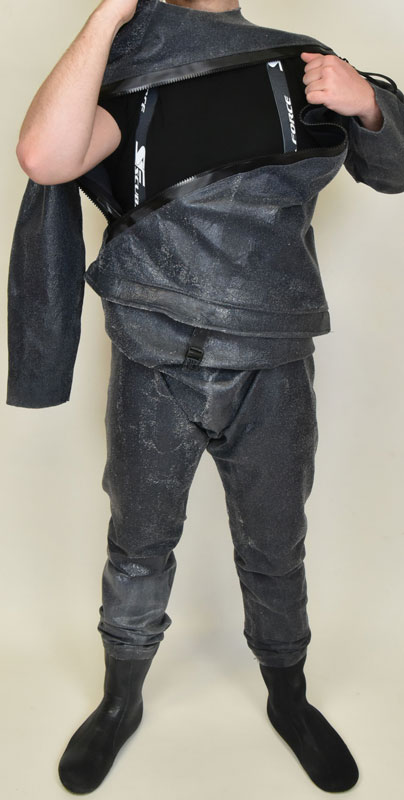
Spacer textiles have a voluminous, elastic structure. From a wide range of usable fiber types and three-dimensional design features, a 3 mm thick spacer textile made of a polyester pile yarn and a flame-retardant fiber blend of aramid and viscose was selected for the new CSA. This textile is coated on both sides with fluorinated or butyl rubber. This gives the textile a barrier function that prevents the penetration of toxic liquids and gases. The coating is applied to the finished suit by a newly developed spraying process. The advantage of this process over the conventional coating process is that the desired elasticity of the suit is retained.

Another innovation is the integration of a diagonal zipper. This makes it easier to put on and take off the suit. Whereas this was previously only possible with the help of another person, the new suit can in principle be put on by the emergency responder alone. The new design is modeled on modern dry suits with diagonal, gas-tight zippers.

The new AgiSCA also features integrated sensors that allow the transmission and monitoring of the vital and environmental data of the emergency worker as well as their location via GPS data. These additional functions significantly enhance operational safety.

For the hard components, i.e. the helmet and the backpack for the compressed air supply, lightweight carbon fiber-reinforced composite materials from Wings and More GmbH & Co. KG are used.

The first demonstrators are available and are available to the project partners for testing purposes. The combination of current textile technology, lightweight construction concepts and IT integration in textiles has led to a comprehensive improvement of a high-tech product in this project.

Project partners:

  • PM Atemschutz GmbH, Mönchengladbach;
  • HB Technologies AG, Tübingen;
  • Wings and More GmbH & Co. KG, Ebersbach; and
  • Bergische Universität Wuppertal.

Associated partners:

  • Plant fire department of Currenta GmbH & Co. OHG, Krefeld-Uerdingen; and
  • Fire department of Viersen.

BMBF project “Development of a chemical protection suit with increased mobility for more efficient operational concepts through increased autonomy of the emergency forces (AgiCSA)”.

The project addresses the objectives of the Federal Government’s framework program “Research for Civil Security 2018-2023 and the funding measure “SME-innovative: Research for Civil Security” of July 3, 2018.

The project is sponsored by the Federal Ministry of Education and Research in Germany.

August 17, 2023

Madewell, First U.S. Denim Brand To Become A bluesign® System Partner

ST. GALLEN, Switzerland — August 16, 2023 — bluesign, a sustainability solutions provider for the textile industry, is proud to announce its official partnership with the fashion and denim lifestyle brand, Madewell as the first US denim company to become a bluesign® System Partner brand. This partnership reflects Madewell’s commitment to reducing its environmental impact through the implementation of the best available techniques and sustainable practices in denim production.

As a comprehensive solutions system, bluesign focuses on sustainable chemistry, employing a holistic approach to drive environmental improvements, enhance worker safety, and increase resource efficiency.

Through rigorous on-site assessments, management of input streams, and verification of chemical inventories, the bluesign team works closely with system partners, including brands, manufacturers, and chemical suppliers. Together, they develop tailored solutions that prioritize the highest level of safety for people, the planet, and consumers.

Madewell’s collaboration with bluesign to produce denim more sustainably launched in October 2022. Their first denim style launched under the partnership was crafted using bluesign Approved ISKO fabrics, a certification that signifies adherence to bluesign’s strict worker safety and environmental requirements as well as elimination of hazardous chemicals from the beginning of the fabric production. This newly signed system partnership further reinforces Madewell’s commitment to sustainable denim production and its dedication to implementing innovative solutions to lead the way towards a more sustainable fashion industry.

CEO of bluesign Daniel Rüfenacht further emphasized the core principles of the bluesign technologies ag, a member of the SGS Group., saying, “Our bluesign Denim initiative aims to revolutionize the way denim is produced, ensuring that clean chemistry and clean production processes are at the heart of the system partner mills and laundries. With Madewell as our first US denim brand system partner, we are taking a major stride towards leading the industry with a transformational approach to denim production. We are expecting more brands to follow Madewell’s footsteps in joining the bluesign Denim initiative.

Madewell’s system partnership with bluesign coincides with the introduction of the solution provider’s “bluesign DENIM” concept, highlighting the importance of clean chemistry and production processes for a sustainable and responsible choice. bluesign Denim represents a commitment to minimizing the denim industry’s negative impact on people and the planet through collaboration with denim partners to eliminate harmful chemicals and ensure sustainable manufacturing processes. With a focus on creating the cleanest denim in the world, the concept covers fabric and garment production steps that meet the strict bluesign Criteria, ensuring safety of workers, the environment, and consumers. Choosing bluesign Denim will allow consumers to embrace the freedom of denim while making a reliable and sustainable fashion statement.

Posted: August 16, 2023

Source: bluesign®

Ortholite Cirql Appoints Matt Thwaites As Vice President And General Manager

HO CHI MINH CITY, Vietnam — August 16, 2023 — OrthoLite®, the global leader of comfort and performance footwear insoles and the company behind OrthoLite Cirql™, a sustainable materials solutions provider for the global footwear industry, announces Matt Thwaites as its new vice president and general manager of OrthoLite Cirql.

OrthoLite Cirql is a patented footwear solution that enables true circularity for brands and factories. This innovative new material solution is the first industrially compostable, recyclable, and biodegradable foam technology for footwear that is free from traditional plastics.

Thwaites brings more than two decades of experience in sales and operations in the textile industry to his new role. He will lead production, sales and go-to-market strategy globally for OrthoLite Cirql, furthering the vision of moving the global footwear industry toward a 360-degree solution of circularity. Matt will be based in Ho Chi Minh City, Vietnam, at the headquarters of OrthoLite Cirql.

“Matt strengthens a very committed and experienced leadership team at OrthoLite Cirql and will drive scalalble commercialization of this game-changing solution for the global footwear industry,” said Glenn Barrett, founder and CEO of OrthoLite. “He joins our great team at a pivotal time and is going to help us achieve our vision of true circularity in footwear.”

Before joining the OrthoLite Cirql team, Thwaites worked as the Global Sales and Marketing director, Footwear Division for Coats, the world’s leading industrial thread company. During his nine years at Coats, Thwaites rose the ranks from Business Development director of Coats Vietnam to ultimately leading a team of more than 300 people through record sales levels, and was a key member of the COVID relief solutions team.

“OrthoLite Cirql is the future of footwear, and I cannot be more excited to help bring this groundbreaking new innovation to OrthoLite’s 500+ global footwear brand partners,” said Thwaites. “This is an absolute career highlight and I feel honored to be a part of a company and team that will forever change how we make shoes.”

The appointment of Thwaites comes on the heels of a partnership announcement between OrthoLite Cirql and Novamont, the international innovator and leader in the advancement, development and manufacture of biodegradable and compostable bio-products. Novamont, based in Italy, is the biopolymer material supplier of OrthoLite Cirql.

Posted: August 16, 2023

Source: OrthoLite®

Lily AI Names Ahmed Naiem As President And Chief Revenue Officer

MOUNTAIN VIEW, Calif. — August 16, 2023 — Lily AI, a retail technology platform specializing in AI solutions for retailers and brands, today announced Ahmed Naiem has joined the company’s executive team as president and chief revenue officer, reporting directly to the company’s co-founder and CEO, Purva Gupta. As Lily AI’s first president, Naiem will have responsibility for its growth strategy and expanding its commercial presence across North America and Europe.

The new position at Lily underscores the rapid growth the company is experiencing and increased demand from brands and retailers looking to leverage AI to improve both customer experience and business efficiency.

“Our growth has accelerated significantly over the past 12 months and Ahmed’s global retail and e-commerce expertise will allow us to expand our reach. Ahmed brings an incredible wealth of high-level relationships across the fashion, beauty, and luxury world,” said Gupta. “His track record of growth will make him a valuable addition to our executive team as we scale our business. We are excited to see the impact he will have on Lily AI’s growth objectives in the coming months and years.”

Naiem is an ecommerce technology and retail industry veteran with over 20 years experience growing leading multinational organizations. He has extensive knowledge of the entire retail ecommerce ecosystem with high-level expertise in strategy, sales, marketing, and client operations on a global scale, having worked closely with the world’s largest retail brands across 6 continents. Since 2014, he served as the chief commercial officer at ESW (formerly eShopWorld), an Asendia Group owned company, where he worked with brands including Nike, Estee Lauder, Victoria’s Secret, and J.Crew. During his tenure, he was an integral part leading the growth of ESW from its early stage to over $1 billion in revenue.

“I am thrilled to join Lily AI at this exciting moment as it continues to post record growth and shape the future of retail through its disruptive technology,” said Naiem. “Purva and the entire team have done an incredible job building Lily AI as a leader in the intersection of AI and retail over the last 7 years and partnering with some of the world’s leading retailers. Lily continues to transform the way consumers discover and engage with their favorite brands by enabling an unparalleled customer centric ecommerce experience that has resulted in significant growth, operational scale and efficiency for brands and retailers. I look forward to an exciting road ahead.”

Posted: August 16, 2023

Source: Lily AI

Sponsors