ACIMIT: The Italian Textile Machinery Industry On Display At Colombiatex 2024

MILAN, Italy — December 15, 2023 — At the upcoming edition of Colombiatex, that will take place in Medellin January 23-25, 2024, the leading Italian manufacturers of textile machinery will be present in the common area organized by Italian Trade Agency and ACIMIT, the Association of Italian Textile Machinery Manufacturers.

There will be 23 companies exhibiting in the Italian pavilion. Among these, ACIMIT members companies are: BTSR, Color Service, Danti, Fadis, Flainox, Isotex, Itema, Kairos Engineering, LGL, Lonati, MCS, Monti-Mac, Nexia, Orox, Ratti, Reggiani Macchine, Salvadè, Santoni, SRS, Stalam, Tecnorama, Ugolini.

The Colombian textile and clothing industry has experienced significant growth in recent years. Consequently, imports of textile machinery have also increased. In 2023, Colombian imports are expected to reach 58 million euros. For the period 2024-2027, the Country’s import growth is projected to be an average of 2.2 percent annually, according to data compiled by ACIMIT.

Italy has long been a technological partner for Colombian textile companies that have invested in the modernization of the production process. Italian exports to Colombia in 2022 exceeded 18 million euros — a 50-percent increase from the previous year. In the first six months of 2023, Italian exports to Colombia reached 9 million euros.

“The consistent presence of Italian companies at last editions of Colombiatex,” commented Marco Salvadè, ACIMIT president, “testifies how our sector is a privileged partner in assisting Colombian textiles in their path of qualitative growth.” Salvadè concludes, “ACIMIT is committed to creating opportunities for meetings between Italian manufacturers and Colombian textile companies. We have done this frequently, organizing various business missions in Italy in collaboration with Italian Tarde Agency. The most recent one allowed selected Colombian textile operators to visit the last ITMA Milan.”

Posted: December 15, 2023

Source: ACIMIT – The Association of Italian Textile Machinery Manufacturers

Self-Driven And Sustainable Removal Of Spills In Water Using Textiles

Figure 1: Adsorption of a drop of waste oil within seconds by a leaf of the floating fern Salvinia molesta.

TW Special Report

Researchers at the ITA, the University of Bonn and Heimbach GmbH have developed a new method for removing oil spills from water surfaces in an energy-saving, cost-effective way and without the use of toxic substances. The method is made possible by a technical textile that is integrated into a floating container. A single small device can remove up to 4 liters of diesel within an hour. This corresponds to about 100 square meters of oil film on a water surface.

Despite the steady expansion of renewable energies, global oil production, oil consumption and the risk of oil pollution have increased steadily over the last two decades. In 2022, global oil production amounted to 4.4 billion tons! Accidents often occur during the extraction, transportation and use of oil, resulting in serious and sometimes irreversible environmental pollution and harm to humans.

There are various methods for removing this oil pollution from water surfaces. However, all methods have various shortcomings that make them difficult to use and, in particular, limit the removal of oil from inland waters.

For many technical applications, unexpected solutions come from the field of biology. Millions of years of evolution led to optimized surfaces of living organisms for their interaction with the environment. Solutions – often rather unfamiliar to materials scientists and difficult to accept. The long-time routine examination of around 20,000 different species showed that there is an almost infinite variety of structures and functionalities. Some species in particular stand out for their excellent oil adsorption properties. It was shown that, e.g., leaves of the floating fern Salvinia molesta, adsorb oil, separate it from water surfaces and transport it on their surfaces (Figure 1 as well as the video below).

The observations inspired them to transfer the effect to technical textiles for separating oil and water. The result is a superhydrophobic spacer fabric that can be produced industrially and is therefore easily scalable.

The bio-inspired textile can be integrated into a device for oil-water separation. This entire device is called a Bionic Oil Adsorber (BOA). Figure 2, a Cross-section of computer-aided (CAD) model of the Bionic Oil Adsorber, shows an oil film (red) on a water surface (light blue). In the floating container (gray), the textile (orange) is fixed so that it is in contact with the oil film and the end protrudes into the container. The oil is adsorbed and transported by the BOA textile. As shown in the cross-section, it enters the container, where it is released again and accumulates at the bottom of the container.

Figure 2: Cross-section of computer-aided (CAD) model of the Bionic Oil Adsorber

Starting from the contamination in the form of an oil film on the water surface, the separation and collection process works according to the following steps:

  • The BOA is introduced into the oil film.
  • The oil is adsorbed by the textile and separated from the water at the same time.
  • The oil is transported through the textile into the collection container.
  • The oil drips from the textile into the collection container.
  • The oil is collected until the container is emptied.

The advantage of this novel oil separation device is that no additional energy has to be applied to operate the BOA. The oil is separated from the surrounding water by the surface properties of the textile and transported through the textile driven solely by capillary forces, even against gravity. When it reaches the end of the textile in the collection container, the oil desorbs without any further external influence due to gravitational forces. With the current scale approximately 4 L of diesel can be separated from water by one device of the Bionic Oil Adsorber per hour.

It seems unlikely that a functionalized knitted spacer textile is cheaper than a conventional nonwoven, like it is commonly used for oil sorbents. However, since it is a functional material, the costs must be related to the amount of oil removed. In this respect, if we compare the sales price of the BOA textile with the sales prices of various oil-binding nonwovens, the former is 5 to 13 times cheaper with 10 ct/L oil removed.

Overall, the BOA device offers a cost-effective and sustainable method of oil-water separation in contrast to conventional cleaning methods due to the following advantages:

  • No additional energy requirements, such as with oil skimmers, are necessary
  • No toxic substances are introduced into the water body, such as with oil dispersants
  • The textiles and equipment can be reused multiple times
  • No waste remains inside the water body
  • Inexpensive in terms of the amount of oil removed.

The team of researchers from the ITA, the University of Bonn and Heimbach GmbH was able to prove that the novel biomimetic BOA technology is surprisingly efficient and sustainable for a self-controlled separation and automatic collection of oil films including their complete removal from the water. BOA can be asapted for open water application but also for the use in inland waters. Furthermore, it is promising, that the textile can be used in various related separation processes. The product is currently being further developed so that it can be launched on the market in two to three years.

Publication: Beek, L.; Barthlott,W.; Mail, M.; Klopp, K.; Gries, T. Self-Driven Sustainable Oil Separation from Water Surfaces by Biomimetic Adsorbing and Transporting Materials. Separations 2023, 10, 592. https://doi. org/10.3390/separations10120592

December 14, 2023

Lignin Coating Makes Geotextiles Made From Environmentally Friendly Natural Fibers Durable

Coating process of a cellulose-based nonwoven with the lignin compound using thermoplastic processing methods on a continuous coating line. Photograph: DITF

TW Special Report

Textiles are a given in civil engineering: they stabilize water protection dams, prevent runoff containing pollutants from landfills, facilitate the revegetation of slopes at risk of erosion, and even make asphalt layers of roads thinner. Until now, textiles made of highly resistant synthetic fibers have been used for this purpose, which have a very long lifetime. For some applications, however, it would not only be sufficient but even desirable for the auxiliary textile to degrade in the soil when it has done its job. Environmentally friendly natural fibers, on the other hand, often decompose too quickly. The German Institutes of Textile and Fiber Research Denkendorf (DITF) are developing a bio-based protective coating that extends their service life.

Nonwoven fabric based on cellulose, coated with the lignin compound as a protective layer against degradation in the soil. Photograph: DITF

Depending on humidity and temperature, natural fiber materials can degrade in the soil in a matter of months or even a few days. In order to significantly extend the degradation time and make them suitable for geotextiles, the Denkendorf team researches a protective coating. This coating, based on lignin, is itself biodegradable and does not generate microplastics in the soil. Lignin is indeed biodegradable, but this degradation takes a very long time in nature.

Together with cellulose, Lignin forms the building materials for wood and is the “glue” in wood that holds this composite material together. In paper production, usually only the cellulose is used, so lignin is produced in large quantities as a waste material. So-called kraft lignin remains as a fusible material. Textile production can deal well with thermoplastic materials. All in all, this is a good prerequisite for taking a closer look at lignin as a protective coating for geotextiles.

Cotton yarns: with lignin coating as a protective layer against degradation in soil and reference material without coating. Photo: DITF

Brittle Material

Lignin is brittle by nature. Therefore, it is necessary to blend the kraft lignin with softer biomaterials. These new biopolymer compounds of brittle kraft lignin and softer biopolymers were applied to yarns and textile surfaces in the research project via adapted coating systems. For this purpose, for example, cotton yarns were coated with lignin at different application rates and evaluated. Biodegradation testing was carried out using soil burial tests both in a climatic chamber with temperature and humidity defined precisely according to the standard and outdoors under real environmental conditions. With positive results: the service life of textiles made of natural fibers can be extended by many factors with a lignin coating: The thicker the protective coating, the longer the protection lasts. In the outdoor tests, the lignin coating was still completely intact even after about 160 days of burial.

Textile materials coated with lignin enable sustainable applications. For example, they have an adjustable and sufficiently long service life for certain geotextile applications. In addition, they are still biodegradable and can replace previously used synthetic materials in some applications, such as revegetation of trench and stream banks.

Cross-section of a cotton yarn coated with lignin by extrusion process. Photo: DITF

Reduced Carbon Footprint

Thus, lignin-coated textiles have the potential to significantly reduce the carbon footprint: They reduce dependence on petroleum-based products and avoid the formation of microplastics in the soil.

Further research is needed to establish lignin, which was previously a waste material, as a new valuable material in industrial manufacturing processes in the textile industry.

The research work was supported by the Baden-Württemberg Ministry of Food, Rural Areas and Consumer Protection as part of the Baden-Württemberg State Strategy for a Sustainable Bioeconomy.

December 14, 2023

Study Tests Firefighter Turnout Gear With, Without PFAS

Researchers expose firefighter turnout gear to heat in equipment similar to a pizza oven. Photo courtesy of Bryan Ormond, NC State University.

By Mick Kulikowski

Transitioning away from per- and polyfluoroalkyl substances (PFAS), which offer water- and oil-repelling properties on the outer shells of firefighter turnout gear, could bring potential performance tradeoffs, according to a new study from North Carolina State University.

The study showed that turnout gear without PFAS outer shell coatings were not oil-repellent, posing a potential flammability hazard to firefighters if exposed to oil and flame, said Bryan Ormond, assistant professor of textile engineering, chemistry and science at NC State and corresponding author of a paper describing the research.

“All oil repellents can also repel water, but all water repellents don’t necessarily repel oil,” Ormond said. “Diesel fuel is really difficult to repel, as is hydraulic fluid; in our testing, PFAS-treated materials repel both. In our tests, turnout gear without PFAS repelled water but not oil or hydraulic fluid.

“Further, oils seem to spread out even more on the PFAS-free gear, potentially increasing the hazard.”

PFAS chemicals — known as forever chemicals because of their environmental persistence — are used in food packaging, cookware and cosmetics, among other uses, but have recently been implicated in higher risks of cancer, higher cholesterol levels and compromised immune systems in humans. In response, firefighters have sought alternative chemical compounds — like the hydrocarbon wax coating used in the study — on turnout gear to repel water and oils.

Besides testing the oil- and water-repelling properties of PFAS-treated and PFAS-free outer garments, the NC State researchers also compared how the outer shells aged in job-related exposures like weathering, high heat and repeated laundering, and whether the garments remained durable and withstood tears and rips.

The study showed that PFAS-treated and PFAS-free outer shells performed similarly after exposure to UV rays and various levels of heat and moisture, as well as passes through heating equipment — similar to a pizza oven — and through washing machines.

“Laundering the gear is actually very damaging to turnout gear because of the washing machine’s agitation and cleaning agents used,” Ormond said.

“We also performed chemical analyses to see what’s happening during the weathering process,” said Nur Mazumder, an NC State doctoral student in fiber and polymer science and lead author of the paper. “Are we losing the PFAS chemistries, the PFAS-free chemistries or both when we age the garments? It turns out that we lost significant amounts of both of these finishes after the aging tests.”

Both types of garments performed similarly when tested for strength against tearing the outer shell fabric. The researchers say the PFAS and PFAS-free coatings didn’t seem to affect this attribute.

Ormond said that future work will explore how much oil repellency is needed by firefighters out in the field.

“Even with PFAS treatment, you see a difference between a splash of fluid and soaked-in fluid,” Ormond said. “For all of its benefits, PFAS-treated gear, when soaked, is dangerous to firefighters. So we need to really ask ‘What do firefighters need?’ If you’re not experiencing this need for oil repellency, there’s no worry about switching to non-PFAS gear. But firefighters need to know the non-PFAS gear will absorb oil, regardless of what those oils are.”

Andrew Hall, another NC State doctoral student in fiber and polymer science and co-author on the paper, is also testing dermal absorption, or taking the aged outer shell materials and placing them on a skin surrogate for a day or two. Are outer shell chemicals absorbed in the skin surrogate after these admittedly extreme exposure durations?

“Firefighting as a job is classified as a carcinogen but it shouldn’t have to be,” Ormond said. “How do we make better gear for them? How do we come up with better finishes and strategies for them?

“These aren’t just fabrics,” Ormond said. “They are highly engineered pieces of material that aren’t easily replaced.”

The paper appears in the Journal of Industrial Textiles. Funding for the research came from the Federal Emergency Management Agency’s Assistance to Firefighters Grants Program.


Editor’s Note: Mick Kulikowski is director of Strategic Communications and Media Relations at NC State University, Raleigh, N.C.


December 14, 2023

Thomas Jefferson University Names Said Ibrahim, MD, MBA, MPH The Anthony F. And Gertrude M. Depalma Dean Of Sidney Kimmel Medical College

PHILADELPHIA — December 14, 2023 — On December 1, Jefferson welcomed newly appointed Anthony F. and Gertrude M. DePalma Dean of Thomas Jefferson University’s esteemed Sidney Kimmel Medical College and president of Jefferson University Physicians (JUP), Said Ibrahim, MD, MBA, MPH. Dr. Ibrahim is an internal medicine physician who has served as a primary care doctor, educator, administrator, and clinician investigator, brings a wealth of higher education, research and healthcare experience to this crucial leadership role, and is nationally recognized for his efforts to combat health disparities.

Said Ibrahim, MD, MBA, MPH

“Dr. Ibrahim has demonstrated a strong commitment to fostering innovation, collaboration and inclusivity within the medical community,” said Susan Aldridge, PhD, Interim President of Thomas Jefferson University. “He brings not only a deep understanding of the evolving landscape of medical education but also a vision for furthering our medical school’s reputation as a hub for academic excellence, cutting-edge research, compassionate patient care, and diversity and inclusion.”

As Dean, Dr. Ibrahim will build upon the existing collaborative, transdisciplinary, and vibrant culture to further position the Sidney Kimmel Medical College and Jefferson Health as a premier academic healthcare institution in Philadelphia and beyond.

“My vision prioritizes strong partnerships between clinical leadership and the academic programs, mentoring and leadership development, strengthening research capacity, training future generations of physicians, and promoting inclusion and belonging among trainees, students, faculty and staff,” said Dr. Ibrahim. “I will work closely with Jefferson leaders on community engagement to address today’s urgent health challenges locally and nationally.”

Dr. Ibrahim joined Thomas Jefferson University from Northwell Health where he served as senior vice president of Northwell Health’s Medicine Service Line. In that role, he was also chair of the Department of Medicine at Long Island Jewish Medical Center, North Shore University Hospital in Manhasset and the Donald & Barbara Zucker School of Medicine at Hofstra/Northwell.

Previously, Dr. Ibrahim was professor of Population Health Sciences and the founding chief of the Division of Healthcare Delivery Science and Innovation at the Department of Population Health Sciences for Weill Cornell Medicine. He was also Weill Cornell’s inaugural senior associate dean for Diversity and Inclusion.

Prior to his role at Weill Cornell Medicine he served as Chief of Medicine at the Philadelphia VA Medical Center and Vice-Chair of Medicine at the Perelman School of Medicine at the University of Pennsylvania.

“We are thrilled to welcome Dr. Ibrahim back home to Philadelphia,” said Jefferson Chief Executive Officer, Joseph G. Cacchione, MD. “He will have an impact on medical education and healthcare now and in the future as we educate the next generation of physicians to provide competent, compassionate and world-class care to the communities they will serve in Philadelphia and across the world.”

Dr. Ibrahim received his Bachelor’s degree from Oberlin College and his Medical degree from Case Western Reserve University School of Medicine. He also holds a Master’s degree in Public Health from Harvard University’s School of Public Health and a Master’s degree in Business Administration from the MIT Sloan School of Management. Dr. Ibrahim completed his internship and residency training in internal medicine at Brigham and Women’s Hospital, a teaching hospital of Harvard Medical School.

In his over twenty years of providing care to Veterans, Dr. Ibrahim learned the importance of access to care, especially access to cutting-edge treatments such as knee and hip replacement surgery.  For more than 25 years, the National Institutes of Health (NIH) funded Dr. Ibrahim’s research has focused on variations in access to needed treatments among patients with knee/hip osteoarthrosis. As the director of the Philadelphia VA National Center of Innovation for Health Equity Research and Promotion (CHERP), Dr. Ibrahim mentored many students and young faculty to pursue research that advances health equity in different healthcare dimensions and diagnoses.

In recognition of his seminal research on health equity, Dr. Ibrahim was this year inducted into the National Academy of Medicine, which is considered one the highest honors in the fields of health and medicine.

Posted: December 14, 2023

Source: Thomas Jefferson University

John Smedley: Shima Seiki’s SDS-ONE APEX4 & APEXFiz Design Software For Improved Work Process

SDS-ONE APEX series design system is used for efficient development of the world’s finest knitwear.

TW Special Report

John Smedley Ltd. is the oldest continuously operating knitwear manufacturer in the world, producing fine gauge knitwear from its Lea Mills, Derbyshire factory since 1784. Crafted from the finest noble fibers of extra-fine merino wool, John Smedley’s Sea Island cotton and other luxury blends, the company is known as creators of the “World’s Finest Knitwear” that is designed to last, made in England and distributed the world over. Its menswear and womenswear ranges are available worldwide via its stand-alone retail stores in the St James’s, Mayfair and Marylebone districts of London; and the Tokyo, Yokohama and Kyoto areas of Japan. Exports are made to more than 47 countries worldwide via international wholesale partners such as Mr. Porter, Selfridges, Harrods, Harvey Nichols, Isetan, Bergdorf Goodman and Le Bon Marche.

Brilliant History Of Achievement

John Smedley holds two Royal Warrants for ‘the manufacturer of fine knitwear” from Her Majesty The Queen & His Royal Highness The Prince of Wales. In Her Majesty The Queen’s Birthday Honors List 2020, Ian Maclean, managing director of John Smedley Ltd. and eighth-generation family member, was awarded an MBE for services to the UK textile industry and the COVID-19 response. John Smedley collaborated with The Emergency Design Network to design and manufacture medical grade scrub garments which were distributed to more than 30 different hospitals, GP surgeries and care homes in the London and Derbyshire areas.

John Smedley has one of the largest knitted garment archives in the world and has counted the likes of Marilyn Monroe, Audrey Hepburn, The Beatles, Sean Connery, Kate Winslet, Robert DeNiro, Ed Skrein, Eva Longoria and more amongst its celebrity fans. Over the years, John Smedley has supported and collaborated with many leading designers to champion British manufacturing including Vivienne Westwood, Paul Smith, Lou Dalton, Sacai, Fragment, Comme Des Garcons and Holly Fulton.

Digital Encounter

By implementing Japan-based SHIMA SEIKI’s SDS-ONE APEX4 design systems and APEXFiz Design software, the company has been able to shorten lead time for development and prototyping as well as to reduce sampling costs, and is now able to spend more time for creativity.

Shima Seiki spoke with Design Director Pip Jenkins about the company’s development process. “We are using SDS-ONE APEX series for both swatch developments and product prototyping,” Jenkins explained. “Before using SDS-ONE APEX series, multiple stitch and pattern developments were done on the production machines before prototyping and every colorway swatch was knit down for the wholesale presenters, which could pan over one month from programming and knitting to washing. From a cost standpoint, there were also a lot of problems with high waste in re-knitting prototypes and swatch development, the need for using high-priced yarns, the need for using programmers to realize designers’ ideas, and the need to use knitting machines for high volume development which prevented them from being used for bulk production.

“After seeing the knit simulations, we decided to stop knitting real swatches for the wholesale side of our business and start producing them digitally using SDS-ONE APEX series. We could also bridge the gap between designer and programmer, meaning product pattern development was correct the first time around. In addition we could develop ideas and check colorways without having to knit anything. Development is now done on the SDS-ONE APEX series, after which we go straight in to prototyping and in most cases we are right the first time. All colorways are now digitally simulated within a few days for our wholesale presenters. This change contributes to reduced waste and lead times, less yarn used during development, fewer programmers, and increased development efficiency due to less use of knitting machines.”

Figure 1

Clear Results

Using SDS-ONE APEX4 and APEXFiz Design software has greatly improved John Smedley’s work process (see Figure 1).

“With virtual samples we are able to see the development of our ideas without having to use a machine for production,” Jenkins added. “And our programmers feel it is clearer what they need to develop, and our designers feel their ideas have been translated correctly. SDS-ONE APEX not only helps our company to go digital, but it also allows for shorter development times, less waste of high value yarn, less time spent on production machines during the prototype, swatch, and colorway developments, as well as more time to exercise our creativity.”

December 14, 2023

Sustainable Home Décor: Embrace Upcycling And Create Stylish “New” Fabrics With Digital Prints

On-Demand digital decoration is key to transforming the fabrics of of lives.

By Omer Kulka

If you’re a textile supplier or decorator, you may think of your old, disfavored fabric stocks as a burden — a sunk cost, something that will inevitably by discarded, a missed opportunity to invest in or create something that would’ve sold. In a market where transforming what was once old into something new and exciting is now in fashion, however, it’s more productive not to consider those out-of-fashion textiles a burden, but rather something to be cherished — something akin to your “special blankie.”

It’s all right to talk about your “lucky” blanket, the one you’ve been holding onto since childhood. Really. More than a few of us have one, even if we don’t talk about it because we think it sounds childish or silly. Embrace it.

It’s probably seen better days. It’s faded, frayed, worn, torn … lived in. But it’s special to you, and you don’t want to let go of it. It’s reliable. It feels like home.

The brands and designers who create home furnishings understand this sentiment. When textile decorators make curtains, rugs, blankets, or furniture upholstery, they’re not simply fulfilling a demand; they’re creating the contours of a buyer’s everyday life. They’re bringing color to an environment that’s to feel like home, because it is home.

Into this home décor market comes the trend of “upcycling,” by which yesterday’s tired objects and materials — like that cherished blanket — are reused or repurposed in a way that revitalizes them, giving them greater value than ever before. Long a staple of Indian living, it would seem the concept has caught the eye of decorators and producers globally.

As the call for reducing waste and improving the sustainability of textiles grows louder – and increasingly enforced by regulatory action — creators turn to upcycling as a key strategy for meeting this demand, directing out-of-favor materials towards innovative new uses instead of landfills. Among many examples to catch my eye, a recent profile on SustainableJungle.com cited Goodee as a marketplace for home décor that prioritizes upcycling as a key component of the ethical and sustainable practices it promotes, holding its brand partners accountable to responsible sourcing and production measures.

Coming from a technology provider that’s committed to making home textiles both more expressive and more eco-conscious, without sacrificing quality or consistency, upcycling speaks to me because it represents flexibility, versatility, adaptability. It means being liberated from the usual supply chains and their unpredictable challenges and uncertainties, and being able to create something of value from what’s readily available — taking what we already have, and creating trendy colors and patterns with that stock.

The market is flush with digital print technologies that apply gorgeous colors and graphics to a wide range of textiles for home use, spanning natural and synthetic fibers. The latest in sustainable digital print technologies offer a versatile, reliable platform that requires no external pretreatments of materials prior to decorating them. From the start, this means textile decorators would need not concern themselves with sourcing pretreated materials. Whatever’s available, odds are this technology is ready to apply durable, consistent, high-quality impressions to that fabric, without limitations of color or graphic detail. Just load the untreated material onto the feeder, select your graphic image or pattern, and within minutes you have a finished custom impression in any quantity required, ready to ship or cut.

Many of those using these systems today, whether they’re decorating textiles for home décor, do-it-yourself cut-and-sew, fashion and apparel, or otherwise, say a key benefit of this technology is that it’s compatible with natural fibers — unlike dye sublimation, which limits your canvas to white polyester, and produces considerable waste in the process. The streamlined production process yields virtually no water waste, can nest multiple jobs within a single run, and requires less labor, energy, time, and floorspace to deliver imprinted materials that meet the most vigorous industry standards for quality, durability, and sustainability. You’re printing graphic images at the push of a button, so you need only produce what’s been sold — making for a highly profitable operation, positioned to scale or adapt to unforeseen market dynamics.

Quick And Simple

This one-step process also makes sampling quick and simple, so designers can fulfill their needs efficiently, with little time and investment. Try new things. See what works and what doesn’t. While most designers will work with cotton, linen, denim, wool, polyester, or blends, we’ve even seen this technology used to decorate latex and vegan leather. It could probably even apply a photograph of 8-year-old you holding your special blankie, to your special blankie.

In the past year, furniture decorator Cozmo has used on-demand digital print to create custom “jackets” for sofas, giving designers the ability to add new life to traditional home furnishings. Created quickly, sustainably, and on demand, these pieces have been showcased at the London Design Festival and ITMA 2023, the world’s preeminent textiles exhibition.

D-house laboratorio urbano used digital on-demand decoration to bring artist and designer Markus Benesch’s immersive Inspirational Living concept to life at Milano Design Week.

Adding digital print capabilities gives New Jersey-based Dye Into Print the flexibility “to get triple or quadruple the number of substrates we’re able to print on,” often decorating materials provided by their customers in hospitality and home textiles.

Due to the fast, agile nature of digital print-on-demand, this technology is also a natural fit for events-based décor customizations. Tel Aviv-based Cadena uses it to offer their customers a more memorable, personalized experience for wedding receptions, bar mitzvahs, and other special occasions.

The technology has even been used for religious expression, as in this project that saw the glass works of renowned artist Dale Chihuly complemented with digitally decorated fabrics at Hampton Synagogue in Westhampton, N.Y.

3D Effects

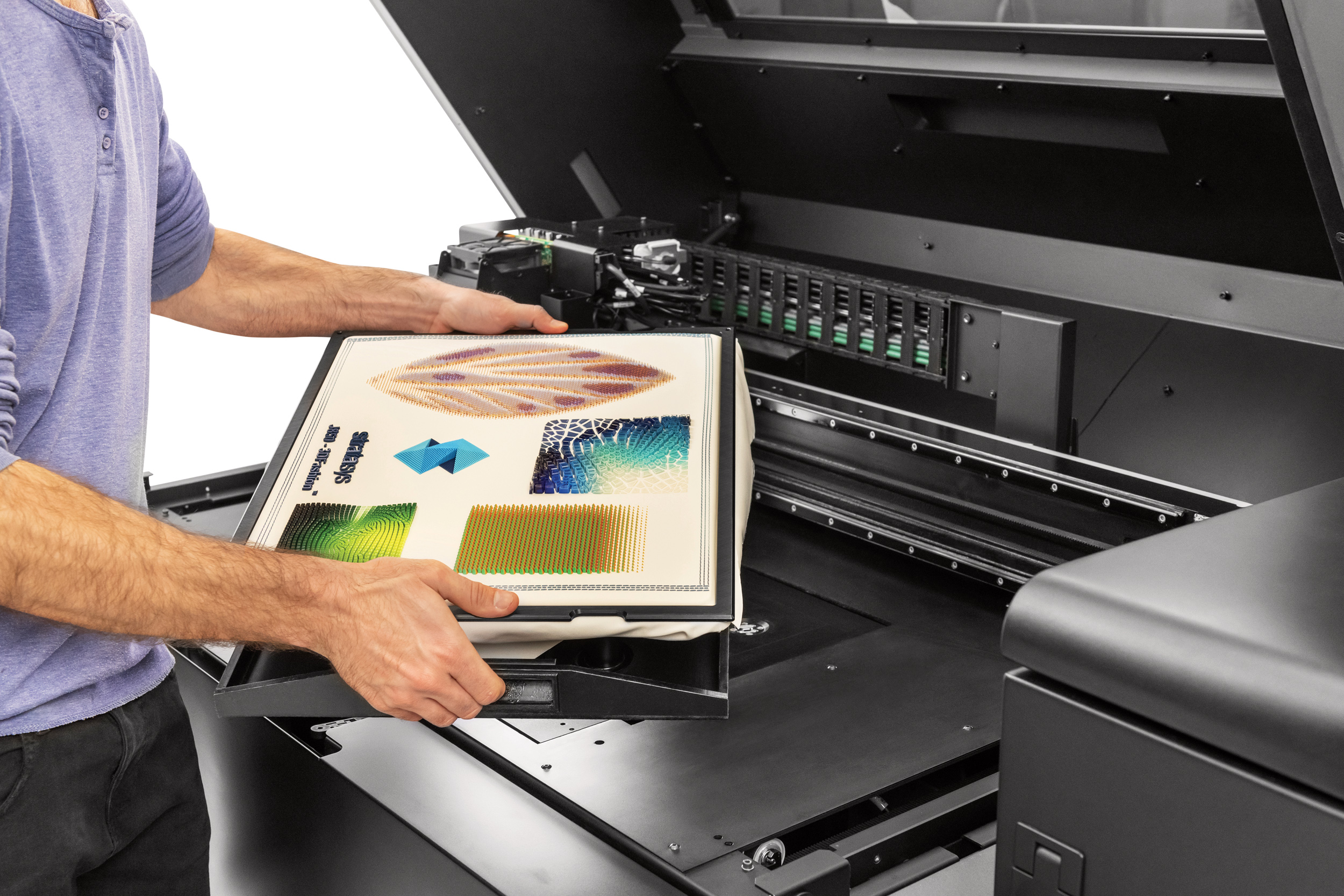
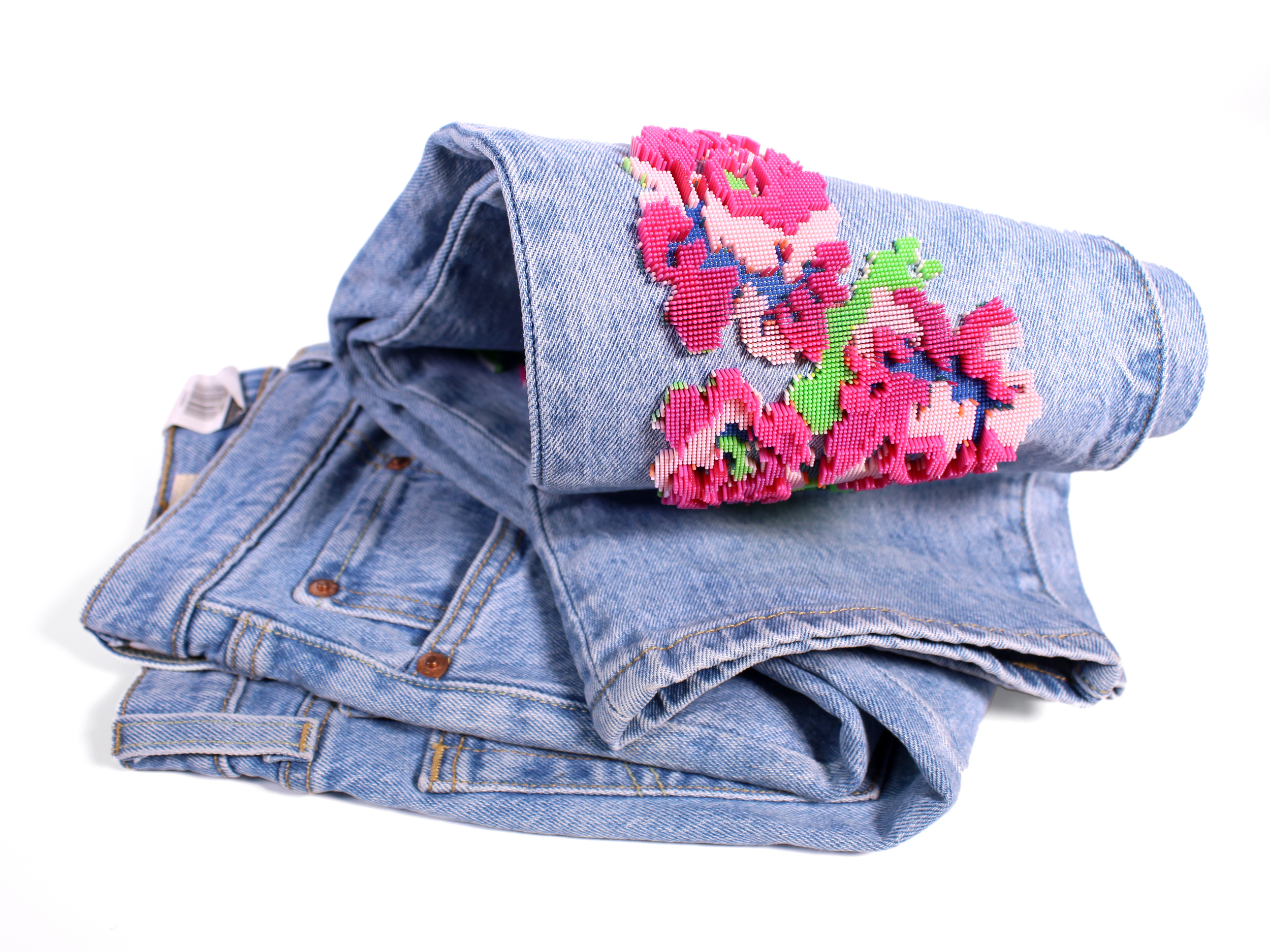
Here’s the kicker: This latest generation of digital on-demand textile decoration systems offers a layering effect, an industry first that adds an entirely new dimension to custom creations — quite literally. Using a single pigment-based ink set, these systems empower decorators to emulate 3D, vinyl, threadless embroidery, and other eye-popping graphic effects. This can include neon accents, or even lenticular imagery — images that appear to change when viewed from different angles. One designer, Fasac, used this system to create a simulated lace effect — all of it printed with white inks, including white-on-dark impressions — for its “Go White” collection, presented at Première Vision in Paris early this year.

Imagine you’re a textile decorator with rolls of fabric in inventory that don’t quite align with what’s selling today. Where once that might become a sunk cost, now you can simply create entirely new textures for that material. The concept is not new: People have long been combining wovens — typically coming from Pakistan or India — and nonwovens — typically coming from China — to create entirely new materials, upcycling what is at their disposal.

Whether you’re a fabric manufacturer or a furniture manufacturer, you can now upcycle your old fabric stocks by printing on them and transforming them into “new” fabrics and designs, taking something old and giving your clients an entirely new, trendy, or fashionable option.

Sensing this trend away from more problematic traditional textile practices and towards more sustainable options — such as upcycling — it’s surely no coincidence several of the producers to adopt these systems most recently herald from locations we’ve long associated with inexpensive offshore textile production — China, India, Turkey and Dubai.

Don’t have the materials you want? Simply take what you have and transform it into something designers and consumers will love. Something that will provide a rich and brilliant décor for their homes, offices, events, and other living spaces with the quality and durability to last, no matter what life throws at it. Something like that special blankie.


Editor’s Note: Omer Kulka, is chief innovation officer at Israel-based Kornit Digital.


December 14, 2023

Naia™ Renew Receives Global Recycled Standard Certification

KINGSPORT, Tennessee — December 14, 2023 — Eastman Naia™ Renew cellulosic fiber received Global Recycled Standard (GRS) certification on December 13. This certifies Naia™ Renew recycled content, chain of custody, social and environmental practices, and chemical restrictions.

Textile Exchange, a global non-profit for sustainable change in the fashion and textile industry, manages the GRS certification process. Certification is achieved through an audit from independent third-party certifying body SCS Global Services and applies to the full supply chain and addresses traceability, environmental principles, social requirements, chemical content and labeling.

“We’re honored to add GRS certification to our list of Naia certifications that support our sustainability goals,” said Claudia de Witte, sustainability leader for Eastman textiles. “Third-party certifications help us build our brand trustworthiness. It’s our goal to make sustainable textiles available to all, and we do that by building trust with our customers and collaborators. This certification adds even more credibility to our fibers and our sustainability story, which we’re proud to share.”

In June 2023, Textile Exchange made an important announcement regarding its Alternative Volume Reconciliation (VR2) policy, which broadened the range of chemical recycling technologies eligible for mass balance. Notably, this expansion now encompasses gasification, the technical description of Eastman’s molecular recycling technology known as carbon renewal technology. Eastman collaborated with Textile Exchange and other stakeholders to educate the industry about the value and contribution of its molecular recycling technology. This policy update is critical for Eastman because it allows the company’s innovative material-to-material recycling technology to be audited for GRS certification.

Molecular recycling technologies at Eastman break waste down into its molecular building blocks allowing the materials to be used in new materials that are indistinguishable from non-recycled materials. By expanding the GRS to include gasification, the global standard now allows for a broader approach to making sustainable textiles accessible to everyone.

“Collaboration is one of Eastman’s greatest strengths,” de Witte said. “That’s why we continually engage with industry leaders and associations to help shape the future of sustainable textiles. We’re thrilled Textile Exchange made the decision to expand the scope of VR2 to include gasification. This is a big win for Naia and the future of textiles sustainability.”

In recent years, the textiles industry has shifted toward circular materials to help tackle one of the largest challenges facing the planet: waste pollution, especially textile waste. Eastman molecular recycling is complementary to mechanical recycling and is a solution for hard-to-recycle waste material, including textiles, which are impacted by factors like fiber blends, chemicals and additives.

Naia Renew is produced from 60-percent sustainably sourced wood pulp and 40-percent GRS-certified* waste materials that would otherwise be destined for landfills through Eastman’s patented molecular recycling technology. The certification verifies the processes of chemical recycling, concentrating, extrusion, and spinning of the undyed yarns and fibers.

*Naia™ Renew recycled content is achieved by allocation of recycled waste material using a GRS-certified mass balance process.

Posted: December 14, 2023

Source: Eastman

DeRUCCI To Unveil Innovative AIoT Sleep Health Technologies At CES 2024

DONGGUAN, China — December 14, 2023 — The DeRUCCI Group, a public company and sleep technology brand, announced today that it will be launching a new line of sleep health technologies at CES 2024, including award-winning smart mattresses, anti-snore pillows, intelligent height adjustable pillows, intelligent voice control panels, curtain tracks, and other smart IoT sleep solutions to help people have a healthier sleep and reduce health risks. The T11 Pro Smart Mattress, winner of the CES 2024 Innovation Award in two categories: Digital Health and Smart Home, and the full DeRUCCI AI IoT line will be showcased at CES 2024 from January 9-12, 2024, at the DeRUCCI Booth #52943 in the Venetian Expo, Level 2, Halls A-D.

A pioneer in the sleep industry, DeRUCCI has pushed the boundaries of innovation to create products that enhance sleep quality and good health. DeRUCCI will be a hub of activity during CES 2024, showcasing the following AI innovations:

  • Smart Mattresses: the DeRUCCI T11 Pro and MWI1 Smart Mattresses are Artificial Intelligence smart sleep IoT solutions based on extensive sleep/health research with international universities and institutions. The DeRUCCI smart mattresses are the first to actually warn users about potential health issues before they are aware of them, monitoring and instantly adjusting to the individual’s health for optimal sleep. The mattresses combine DeRUCCI’s patented AI technologies and software algorithms with sophisticated styling, employing AI sleep/health sensors that automatically track body shape and changes in sleeping position, body temperature, heart rate, and health with air support units that instantly respond to each person. The mattresses also connect to DeRUCCI and other IoT home appliances to control the bedroom’s smart thermostat, air conditioner, aromatherapy, air purifier, sleep-enhancing lighting, meditation products, sleep aids, and other IoT devices.
  • Anti-Snore Pillow: the DeRUCCI Anti-Snore Pillow is the first all-in-one smart pillow that integrates monitoring, screening, and intervention to alleviate snoring and reduce the risk of sleep apnea, which can often be a precursor to serious disease. The Anti-Snore Smart Pillow is an intelligent pillow and app solution that alleviates snoring by adjusting the position of the head for the highest effectiveness on the market, reducing snoring by up to 89% (data from an internal clinical trial).
  • Intelligent Height Adjustable Pillow: The height can be adjusted according to different individuals’ neck curves. Designed for neck support and better sleep, the Intelligent Height Adjustable Pillow monitors sleeping positions and dynamically adjusts the pillow height throughout the entire sleep cycle relieving neck fatigue and ensuring that the user wakes up feeling refreshed. The smart pillow also offers comprehensive sleep support with various sleep assistance modes to help users fall asleep more easily with detailed sleep reports to gain deep insights into sleep habits to optimize sleep quality.
  • DeRUCCI AI Tidal Algorithm: A first of its kind, the DeRUCCI patented Tidal algorithm simultaneously adapts and customizes to each user’s various individual sleeping positions and makes real-time adjustments to perfectly match height, shape, and body areas, such as shoulders, back, waist, hips, and legs. DeRUCCI leverages its research in ergonomics, AI, and big data, and analyzes factors, such as Body Mass Index (BMI), sleeping positions, pressure distribution, height, and firmness.
  • Air Support Units: Piezoelectric ceramic sensors control rubber-sensing airbags and support materials, such as springs, foam, and latex. The airbag’s height and firmness are also adjusted for position and smoothness.
  • AI Sleep Monitoring: analyzes changes in users’ physiological parameters monitoring sleep with reports on sleep quality, making it easier to reach deep sleep. Provides personalized sleep consultations and recommendations with sleep medicine and wellness companies to optimize sleep, exercise, and diet, essential for elderly care and specialized sports.
  • AI Sleep Health Warnings: analyzes users’ disease data, along with geographic location, age, and sleep monitoring metrics to provide early chronic disease warnings.
  • DeRUCCI IoT Products: Other DeRUCCI IoT home products in the new line-up include the Intelligent Switch, Intelligent Voice Control Panel, Intelligent Gateway, and Curtain Track, among others.

The DeRUCCI AIoT line of sleep health products will be available in the U.S. in 2024. DeRUCCI’s mission is to provide innovative sleep solutions that contribute to a healthier, well-rested world. For more information about DeRUCCI’s participation in CES 2024 and its innovative products, stop by the DeRUCCI Booth #52943 at the Venetian Expo at CES or visit the website at https://www.derucci.com

Posted: December 14, 2023

Source: The DeRUCCI Group

Kraig Biocraft Laboratories Announces Early Start To Production Season With Successful Small Batch Delivery Of Spider Silk

ANN ARBOR, Mich. — December 14, 2023 — Kraig Biocraft Laboratories Inc., the biotechnology company focused on the development and commercialization of spider silk, today announces the early start to the production season with the successful manufacture and delivery of the most recent batch of recombinant spider silk. Silk from this production cycle was processed into finished reeled raw silk and happily received on site by the company’s Senior management this week.

The delivery of this silk further reinforces the company’s planned production model. With this successful effort, the company is now accelerating its plans for the upcoming 2024 production season and beyond.

“I am very excited to have produced this small batch ahead of our upcoming field trials scheduled for this spring. This early production bodes very well for the pending trials, and indicates, to me, that we are well on track to meet our spider silk production targets for 2024,” said CEO and Founder Kim Thompson.

Posted: December 14, 2023

Source: Kraig Biocraft Laboratories Inc.

Sponsors