Honeywell To Sell Performance Fibers Business To Sun Capital Affiliate

Honeywell International, Morris Township, N.J., has agreed to sell its Richmond, Va.-based
Performance Fibers business to Performance Fibers Holdings Inc., an affiliate of Sun Capital
Partners Inc., for an undisclosed price. The deal is expected to close by the end of 2004. The
business will operate as Performance Fibers Inc. Performance Fibers, part of Honeywell Specialty
Materials, produces high-tenacity polyester fiber and other materials used in tires, engineered
reinforcements, broad woven/narrow fabrics and rope. Production plants are located in North
Carolina and France. The business also participates in joint ventures in China and Korea.

Sun Capital Partners is a private investment firm with offices in Boca Raton, Fla.; Los
Angeles; New York City; and London. Greg Rogowski, general manager, Performance Fibers, will
continue to lead the business.

“We expect this to be a seamless transition for customers whom we will continue to provide
with the innovative technologies and best-in-class products and services they value,” he said.

“[B]y combining our business expertise at Sun Capital with the strengths of Greg Rogowski and
his management team, we expect to enhance Performance Fibers position in its market niche,” said M.
Steven Liff, principal, Sun Capital Partners. “Through our investment, the company will be able to
take advantage of numerous opportunities that will strengthen its core competencies.”

Following the divestiture, Honeywell Specialty Materials will focus further on select core
businesses including advanced fibers, composites and others.

December 2004

Lund Custom-Designs High-Wear Cutting Systems

Lund Precision Products Inc., Hudson, Mass., now custom-designs and manufactures blades, knives and
systems for recycling, shredding, pulverizing and other high-wear cutting processes. The parts,
made with materials appropriate to the application, feature specific angles, pitch and shear.
Durability is enhanced by means of tungsten carbide hard-facing, multi-zone heat treatments or
other types of surface treatments.

December 2004

New Color Measurement Software From HunterLab Assures Color Quality

HunterLab, Reston, Va., has recently introduced three software packages that can be used with the
company’s line of color measurement spectrophotometers.

EasyMatch® QC for color quality control features seven configurable data views and uses job
files to store and recall data. It also enables job files to be e-mailed or exported easily to
management software.

EasyMatch OL on-line color measurement software provides real-time data from the SpectraProbe
XE on-line spectrophotometer. It enables a user to operate up to four on-line spectrophotometer
sensors using one server. Multiple client computer users may communicate with the sensors via the
server.

HunterLab’s EasyGroup software option, when used with EasyMatch QC, automatically groups
samples of similar shades together and sequences within each group to minimize color variation.

December 2004

Nonwovens In Batteries And Electronic Applications


O
ur society is becoming evermore dependent on electricity and electronic products.
Nonwoven materials are key components in conventional electrical products such as wire and cable,
motors, transformers and batteries. The use of portable battery-powered products encompasses common
items such as watches and flashlights, electronic computers, and communication and entertainment
devices. Several entirely new classes of batteries have been developed over the last 20 years. An
important functional item in batteries is the separator, which in many battery designs is made of a
nonwoven fabric. As the market for such consumer products as hybrid cars grows, the use of
batteries as a key component will grow in importance.

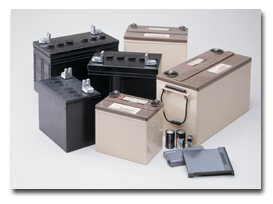
batteries
Batteries, such as those above produced by Hollingsworth & Vose, often contain battery
separators made of nonwoven material.


Batteries And Battery Separators

A battery, which actually is an electric cell, is a device that produces electricity from a
chemical reaction. A cell consists of a negative electrode; an electrolyte, which conducts ions; a
separator, also an ion conductor; and a positive electrode. The first workable device for
generating a consistent flow of electricity was invented around 1799 by the Italian inventor
Alessandro Volta. Volta’s discovery of a means of converting chemical energy into electrical energy
formed the basis for nearly all modern batteries. His first battery consisted of a series of
alternating copper and zinc rings in an acid solution, which functioned as the electrolyte. Volta’s
invention became known as a voltaic cell.

All commercial batteries use separators. Different types of battery systems require
different types of separators. All battery separators have the following in common:

  • the ability to separate positive and negative electrodes;
  • electrical insulating properties that prevent a short circuit;
  • resistance to oxidation by the electrolyte under operating conditions;
  • pores small enough to prevent passage of particulate between  electrodes;
  • pores large enough to allow ions to pass through;
  • strength to withstand assembly operations and stresses encountered during the lifetime of the
    battery;
  • sufficiently low electrical resistance; and
  • sufficient wettability.

Electrolytes used in most common batteries may be aqueous (polar) or organic (non-polar)
solutions. Generally, batteries often are assembled without the electrolyte to facilitate shipping
and handling, and later are activated by adding the electrolyte. Polyolefins are very desirable as
a battery separator material because of their high chemical resistance to most types of battery
electrolytes. The separator must be easily wettable by the electrolyte; however,  battery
separators made of polyolefins such as polyethylene and polypropylene are hydrophobic and not
readily wettable. In order to be effective as battery separators, these materials must be made
wettable.


Types Of Batteries


From a battery user’s standpoint, the two major types of batteries are rechargeable and
non-rechargeable. Non-rechargeable batteries are primarily disposable-type products, usually
primary cells. Rechargeable batteries, or secondary cells, can be reused after being drained of
current-producing ability.

The lead-acid battery, also called a flooded lead-acid battery, is the most common form of a
rechargeable battery and is used in the automobile.

The zinc-carbon battery, also  called a dry cell, is the technological foundation of
today’s growing battery business. In this battery, paper separators containing an electrolyte
solution serve as an electrolyte reserve, and also as a membrane between the electrodes.
Zinc-carbon cells are sold in two general configurations – cylindrical cells and flat cells.

Alkaline-manganese batteries are very popular as multi-use premium products for handheld
computers, photographic equipment, toys, tape recorders, instruments and other high-drain uses.
These batteries have good shelf life and low temperature performance. Separators for
alkaline-manganese batteries use a range of fibers including polyvinyl alcohol, rayon, vinyon and
cellulose.

Nickel-cadmium batteries, commonly abbreviated as NiCd or NiCad, are popular rechargeable
batteries used in portable electronics and toys. Nonwoven materials used for NiCad battery
separators include needled nylon, wetlaid and meltblown polyolefins.

Nickel-metal hydride batteries consist of a positive plate containing nickel hydroxide as
the principal active material, a negative plate composed of hydrogen-absorbing alloys, a fine fiber
separator, an alkaline electrolyte, a metal case and a sealing plate with a self-sealing vent.
Their basic structure is similar to NiCad batteries. Fine-fiber polyolefin fabrics are used as
separators for this class of batteries.

Lithium-ion battery configurations are under evaluation for prototype electric vehicles and
hybrid vehicles. Meltblown polypropylene battery separators are used in lithium-ion batteries.

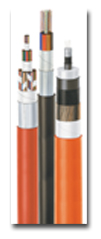
cablewrap
Polymer Group Inc.’s cable wrap provides protective insulation.


Battery Separator Materials And Technology

A wide range of materials has been used for battery separators for dry cell and storage
batteries. These include wheat flour and cornstarch paste, paper, wood veneer, hard rubber, porous
rubber, celluloid, regenerated cellulose, fiber-reinforced cellulose (sausage casings) and nonwoven
fabrics.

Since automotive and other vehicle batteries represent the largest- volume use for battery
separators, a large part of research and development activity has been directed toward these
products. One of the largest producers of battery separators is Daramic Inc., Charlotte. Daramic
traces its origins back to the Dewey & Almy Division of W.R. Grace & Co., which produced
battery separators based on porous rubber as early as 1929. In the late 1940s, Dewey & Almy
started to use fine-fiber nonwovens of fiberglass as separators.

The glass fibers used to produce wetlaid fabrics for use as battery separators include
products such as Denver-based Johns Manville’s MicroStrand glass microfibers. These fibers are
available with diameters ranging from 0.20 microns to 5.50 microns.

One of the largest merchant suppliers of nonwovens for battery separators is Hollingsworth
& Vose Co., East Walpole, Mass. It devotes a considerable amount of its research and
development activity to battery separators. In addition to its wetlaid nonwovens capabilities, the
company is producing meltblown nonwovens from polyolefins.

Meltblown polypropylene has become an important product in the manufacture of battery
separators. The first work on meltblown battery separators was done at Esso Research &
Engineering and EnJay Chemical Co. (now part of Dallas-based ExxonMobil) in the late 1960s and
1970s. One of the earlier patents on this work was assigned to Exxon Research & Engineering.
This patent discloses the formation of meltblown polyolefin into a mat that then is compacted to
form a battery separator with required porosity and other necessary properties. Another related
patent, “Wettable Non-Woven Structures and Components Thereof,” issued in 1977, also was assigned
to Exxon Research & Engineering. A large number of companies now are making battery separators
using meltblown technology.

Although polypropylene has been the preferred material for meltblown battery separators,
products also have been made using polyamides. Recent patents have been assigned to Cargill,
Minneapolis, disclosing separators made from polylactides. Midland, Mich.-based Dow Chemical Co.
has disclosed the use of syndiotactic polystyrene for battery separators.

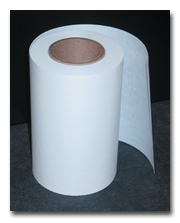
energyguard
Hollingsworth & Vose’s EnergyGuard® nonwoven battery separator material


Future Directions For Battery Separators

One of the areas that will drive research and development efforts for battery separators
will be the activity associated with electric and hybrid/ electric vehicles. A present limitation
with the all-electric vehicle is that the driving range is only between 50 and 130 miles.
Recharging times are in the range of six to eight hours. The success of the hybrid Toyota Prius is
accelerating activity with modifications and improvements of batteries such as NiCad, lithium-ion
and nickel-metal hydride.


Fuel Cells

A fuel cell is an electrochemical device similar to a battery, but differing in that it is
designed for continuous replenishment of the reactants consumed in the unit. It produces
electricity from an external fuel supply, and so does not have the limited capacity of a
conventional battery.

Typical reactants used in a fuel cell are hydrogen on the anode side and oxygen on the
cathode side. In fuel cells, reactants typically flow in and reaction products flow out. In the
case of the hydrogen fuel cell, water flows out.

Nonwovens have potential use in the membrane systems of fuel cells and in filtration systems
for the products flowing into the system. Southeast Nonwovens Inc., Clover, S.C., announced it is
engaging in contract research work for the production of nonwovens for fuel cell components. The
company’s pilot-scale nonwoven equipment can produce drylaid, wetlaid and hydroentangled nonwovens.


Nonwovens In

Textile And Electrical Applications


Cable Wrap For Electrical, Telecommunications Uses


One of the earliest uses of spunbonded polyester fabrics was for electrical wire and cable
insulation. As the growth of electronic and optical cables has escalated, tapes made of nonwovens,
which include additives such as carbon fiber and superabsorbent powders, now are widely used. The
incorporation of the superabsorbent materials in the cable protects against cable failure due to
water intrusion. One of the major suppliers of these tapes is Polymer Group Inc. (PGI), North
Charleston, S.C. PGI has a wholly-owned subsidiary in Bailleul, France, which sells tapes under the
Geca-Tape brand name. PGI also sells fibers made of swellable acrylic fibers for cable filling.

High-Voltage Cable Insulation

For many years, the conventional dielectric material for electrical uses such as oil-filled
cables, cable bushings and cable splices has been an oil-impregnated kraft paper. The paper is made
using deionized water to prevent the absorption of conducting materials. At voltages higher than
345,000 volts, a significant amount of the input power is lost due to heating the oil-paper
insulation system. The dielectric properties of polypropylene in combination with the oil provide a
lower power loss than the kraft paper/oil combination. In the late 1960s, Esso Research (now
ExxonMobil Research) conducted research using compacted meltblown polypropylene webs to replace the
kraft paper in kraft/oil systems. Although this application looked promising, several of the major
utility companies showed little interest in doing further work, because fuel prices were relatively
low during this period. 3M, St. Paul, Minn., also pursued similar insulation work and was issued
patents on the concept. Nippon Kodoshi Corp., Japan, pursued similar work. Since most of the
original patents have expired, this concept might be worthy of further pursuit.

Albis Invests In Neumag AST Technology

Albis S.p.A., Italy, has placed an order with Germany-based Neumag for a 5-meter complete Ason
Spunbond Technology (AST) Bico Spunbond line with multicomponent capability.

Gianni Boscolo, founder and chairman of Albis, said the order signals the company’s plan to
develop innovative products. Albis, a nonwovens roll goods supplier with production capabilities in
Italy, Germany, Israel and the United States, has 220 employees and an annual turnover of 80
million euros.

December 2004

Fabric-Forming Advances At ATME-I 2004


E
xhibitors in the fabric-forming sector – like the yarn, wet processing and quality
control companies surveyed in last month’s article – felt that quality made up for lack of quantity
at the American Textile Machinery Exhibition-International® (ATME-I®) 2004, held at the Palmetto
Expo Center, Greenville
(See ”
ATME-I®
2004: Smaller, But Worthwhile
,” November 2004)
.

“Our expectations for the 2004 show were tempered by the ATME-I 2001 experience,” said Barry
Kelly, sales representative, Mayer Textile Machine Corp., Clifton, N.J. “Generally, the 2004 show
was better attended with managers and owners seriously searching for means of survival in the
coming business cycle. The warp knit segment of the textile industry continues to struggle, but the
survivors should come out stronger in the end.”

Luciano Corain, president and managing director, SMIT S.p.A., Italy, noted that despite some
negative pre-show press, SMIT had customers looking for new equipment at its booth.

“The controversies among the organizers of the show have damaged the presence of exhibitors
as well as of visitors, influenced by the negative advertising spread from the companies which
decided to refrain [from exhibiting at ATME-I 2004],” Corain said. “In any case, the meetings with
customers with investment plans were better than expected.”


Knitting Equipment Has Strong Presence

Germany-based Mayer & Cie GmbH & Co. KG demonstrated two circular knitting machines
in Greenville – the MV 4-3.2 II and the FS 2.0. The MV 4-3.2 II shown was a 44-cut, single-jersey
machine with an open-width fabric cutter and take-up. It had black-and-white Lycra® wheels, which
appear gray when the yarn is running but are clearly black and white if the yarn breaks. The FS 2.0
shown was a 30-inch, 14-cut double-knit machine. It featured electronic tape feed for improved
control of yarn input.
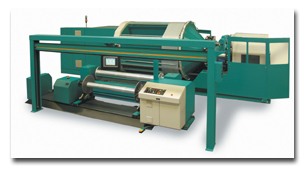
gom
The Gir-O-Matic sample warper from Karl Mayer Textilmaschinenfabrik

Karl Mayer Textilmaschinenfabrik GmbH, Germany, demonstrated two machines: the Karl Mayer
Malimo weft-insertion machine with an advanced weft-insertion system for producing technical
fabrics; and the Gir-O-Matic (GOM) sample warper. Introduced at ITMA 2003, the GOM still got
serious attention from US weavers.

The company’s newly designed 213-inch Malimo weft-insertion machine is designed on the
raschel warp-knitting machine platform and incorporates the new weft-insertion method. It is
capable of speeds of up to 1,600 revolutions per minute (rpm), according to Karl Mayer. The new
weft-insertion method uses a precisely controlled, horizontally reversing system for weft yarn
transfer into the weft chain hooks along with a weft yarn tension-compensating device – both
servo-motor-driven.

The GOM warper is capable of production speeds of up to 1,200 meters per minute (mpm), an
increase of 25 to 40 percent for single-colored warps with simple repeats, and 200 to 600 percent
for colored patterns, according to the company.

Charlotte-based Memminger-IRO showed its complete line of feeders, drives and accessories
including the MPF L feeder, Yarn Meter MLT WESCO, MCF Combi-Feeder and MRA motor drive belt. The
MPF L, the latest generation of the MPF Memminger positive feeder for circular knitting machines,
has an open-design clutch that is easily removed for cleaning. An integrated antifilamentation
device has a U-guide at the output that can be engaged in two positions. The unit makes knitting
with very low tension – up to 1 gram – possible, according to the company.

Italy-based Orizio Paolo S.p.A. demonstrated its BS electronic single-knit, circular knitting
machine for separated seamless garments. The eight-feed machine has electronic needle-by-needle
selection, obtained by means of eight or 16 piezo-ceramic, 16-level actuators. Each feed is fitted
with groups of six independently controlled yarn carriers (four striper fingers). The machine has
modest floor space requirements, and is designed to give knitters a lean production capability to
produce an almost finished garment.
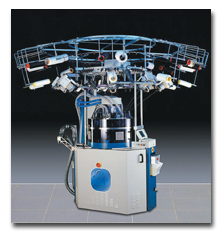
bs
Orizio Paolo’s BS electronic single-knit circular knitting machine knits separated seamless
garments.

Monroe, N.C.-based Nova Knitting Machinery and Taiwan-based Pai Lung Machinery Mill Co. Ltd.
shared an active booth. The companies demonstrated several circular and collar knitting machines
including the KS3B, Elite 72, KS4B-HS and XCSJ/CS3-AP. The KS3B, an ultra-high-speed, single-jersey
three-track machine, was shown in 28 gauge with 102 feeds. The Elite is a 72-inch, 12-cut,
single-cam tandem carriage collar machine. It is computer-controlled and features a touch screen.
The KS4B-HS, an ultra-high-speed, single-jersey, four-track machine, was shown in 22 gauge with 80
feeds. The XCSJ/CS3-AP is a single-knit, electronic, full jacquard knitting machine that was shown
in 24 gauge with 72 feeds.
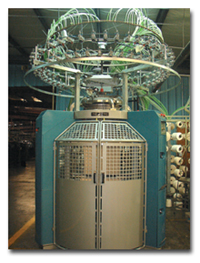
pailung
Pai Lung Machinery Mill Co. Ltd. displayed the KS4B-HS knitting machine at the
show.


Weaving Technology

Becomes More Versatile

Alexander Machinery Inc. (Alexco), Simpsonville, S.C., showed a center-wind take-up for plush
fabrics. The unit doesn’t crush high pile fabrics and also can be used for terry toweling. Alexco
also showed a slimline railway sewing machine and an innovative non-textile device – an adaptor for
three-point tractor hitches.
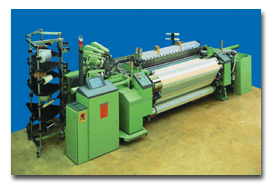
dornier_Copy_8
Lindauer Dornier displayed the PTS 8/S rapier weaving machine at ATME-I® 2004.

Germany-based Lindauer Dornier GmbH drew crowds with the latest generation of its air-jet
(type AS) and rapier weaving machines (type PS).

The rapier weaving machine, type PTS 8/S – a 190-centimeter machine with eight colors – was
shown weaving a “fantasy fabric,” which used a wide variety of filling yarns at speeds of up to 600
rpm. The filling yarns included sensitive, non-reinforced Lurex®, 22-denier fine monofilament,
0.1-millimeter (mm) metallic yarn, 5-mm narrow ribbon tape and various fancy yarns.

“This shows the possibilities and the flexibility of the rigid rapier, especially with a wide
variety of sensitive filling yarns,” said Peter Brust, executive vice president, American Dornier
Machinery Corp., Charlotte.

The company also showed a 360-centimeter double-width air-jet machine producing a leno fabric
on one side with a 22-decitex (dtex) monofilament, and a 78-dtex filament yarn on the other. It was
equipped with the company’s EasyLeno® system, which can be used on Dornier air-jet and rapier
machines to make glass leno, curtain fabrics and carpet backings.

Switzerland-based Grob Horgen AG showed heddles with a new thread-eye dimension for the
increased performance requirements of modern weaving machines, and for the provision of exact shed
formation with precise warp yarn guidance through the heddles.

According to the company, its new 6.5-mm by 2.5-mm thread eye dimension gives an optimized
solution. The height of 6.5 mm offers an advantageous and far more precise vertical shed control of
warp yarns than is possible with 8-mm thread-eye height, according to the company. The width of 2.5
mm facilitates a smooth passage of warp yarns through the heddles with minimized friction.

Mageba Textilmaschinen GmbH & Co. OHG, Germany, displayed its complete range of warping
machines, narrow fabric weaving machines, dyeing ranges, measuring and winding equipment,
festooning machines and edge-layering machines. Equipment shown included the BSC warping machine,
MN 8/30 series needleloom, MN 2/70 HW heavy-duty weaving machine for webbing, and the SFX III
12/30-JS jacquard loom equipped with a Stäubli three-position jacquard mechanism.

Switzerland-based Jakob Müller AG exhibited three narrow fabric machines at the show: the
MDR42 warp crochet knitting machine with weft insertion electronically controlled for patterned
elastic and non-elastic narrow fabrics and lace articles; the NG3 high-speed narrow fabric loom for
light to moderately heavy belts and tapes; and the LCFR label cutting and folding rotary machine
for the high-speed processing of woven labels.

SMIT demonstrated two GS900 rapier weaving machines in Greenville. The first was shown at the
SMIT booth producing a polyester/nylon conveyor belt fabric at 600 picks per minute (ppm). The
second was shown at the Stäubli booth weaving a jacquard upholstery fabric at 550 to 650 ppm. This
fabric had a polyester warp and three types of filling yarn including acetate, viscose and silk.
Both machines displayed were sold and will be installed in the United States.

The GS900 is the next generation of the award-winning G6300 weaving machine and offers
several refinements including an improved rapier, which is closer to the reed for improved
efficiency; a new take-up system; a modified backrest system; and improved dynamic behavior.

To complete its product range, the company also has available a terry version, the G6300 F,
and the JS900 air-jet weaving machine built on the same common platform.

“Our philosophy is to make a machine that can perform in any country for any application at
an economical price due to the modularity of its construction,”  Corain said. “The US market
in particular wants a machine suitable for more different applications.”

SMIT had visitors from the United States, Mexico, Ecuador, Colombia and Guatemala.

Stäubli AG, Switzerland, had one of the busiest booths at ATME-I. The main draw was the
company’s Unival 100 electronic jacquard head, which controls individual warp ends using a stepping
motor. The revolutionary design of the Unival 100 eliminates the need for hooks, knives, magnets
and pulleys, because each harness cord or heddle is directly attached to a stepping motor.

With Unival, shed height can easily be set, and several sheds can be formed. All settings can
be entered electronically without mechanical adjustment. Another advantage of this system is its
independence from the weaving machine drive. The unit has its own drive, and there is no mechanical
drive connection to the weaving machine.Van de Wiele Group, Belgium, showed an array of carpet and
velvet weaving machines including the new MAX63, UCL83 and CRX82 for carpet, and the VTR33 for
velvet.

The MAX63 produces carpets using the Axminster technique. It can handle up to 16 color
frames. The machine’s features include patented bearing-free grippers and a touch-screen user
interface. Production speed is 160 to 200 rpm, according to the company. The award-winning UCL83 is
a three-rapier, carpet-weaving machine capable of simultaneously creating flat weave effects, cut
pile, short loops or long loops all on one carpet. The CRX82 is a double-rapier carpet-weaving
machine that offers 15- to 20-percent greater production capability than the previous generation.
The VTR33 jacquard velvet-weaving machine has a production output 20- to 30-percent higher than
current jacquard velvet models, according to Van de Wiele.


Nonwovens Machinery Offers New Features

Dilo Systems Group, Germany, had one of the largest booths at ATME-I and shared information
about its Hyperpunch and Hyperpunch DI-LOUR needlelooms. The DI-LOOM OUG-II HVSCL Hyperpunch double
needleloom is designed to produce high-quality felts for applications such as man-made leather,
automotive interior linings and technical felts. Its features include kinematic elliptical needling
for low-draft needling and minimal dimensional changes. The loom has DBF feed rollers with
individual drives for optimum precompression of batt and preorientation of fibers. The DI-LOUR IV
dual structuring process increases productivity by doubling the throughput speed, improving the
pile stability by increasing pile density and offering improved patterning options.
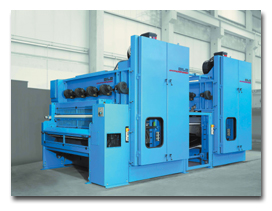
dilour_Copy
At ATME-I® 2004, Dilo Systems Group presented information on the DI-LOUR IV
needleloom.

Austria-based Textilmaschinenfabrik Dr. Ernst Fehrer AG presented information about its
NL11/Twin-SE Carpet Star® structuring needlepunching machine. The machine is designed for the
production of high-quality rib and velour products using two independently operating needle zones.
These allow the creation of a totally new range of large-scale repeats at previously unattainable
speeds, as well as patterned carpets with a surround or borders on all sides. In addition, this
technology  enables production of hobnail patterns at three times the production speed of a
single-board machine, and a combination of rib and velour patterns in one carpet and in a single
pass, according to the company. Fehrer also called attention to its NL21/SRV SuperLooper, which can
produce an innovative rhombic velour design for automotive carpeting.

Fincarde S.p.A., Italy, conferred with customers about its complete line of high-speed
nonwoven cards and crosslappers that can be coupled with a variety of bonding technologies
including needlelooms, hydroentangling machines and thermal bonding equipment. One example is a
card that has an air-management system to prevent fiber buildup at the roller ends. Each doffer is
equipped with a randomizer that can easily be changed over to a rotary comb for the production of
randomized webs and directional webs on the same machine.

Fleissner GmbH, Germany, advised many potential customers about its nonwovens machinery
including the well-known AquaJet spunlace system for nonwoven textile and carpet backing. There was
much interest in the company’s new process for bonding carpet backing using AquaJet for latex-free
carpet production
(See ”
Latex-Free
Tufted Carpets
,” November 2004)
. Bonding the primary and secondary backing without using
latex yields a recyclable carpet.

Commercial and residential interior designers are increasingly looking for fully sustainable
materials. One of the major trends in this area is the move to a cradle-to-cradle cycle instead of
a cradle-to-grave cycle, in which carpet or other interior textiles eventually wind up in a
landfill. The ideal is to come up with materials that have no final resting place
(See ”
Survival
Tactics
,” March 2003)
.

France-based NSC Nonwoven presented information about its complete line of nonwovens
machinery including the CA12 card, AirWeb®, self-regulated ProDyn® system, Ouat!sys® and A.50 rib
needleloom. The ProDyn system continuously and automatically optimizes both machine direction and
cross-direction evenness, and corrects  deviations from the target weight of the final
nonwoven product. The system includes the NSC scanning gauge unit at the end of the production
process. One of the key advantages of ProDyn is fiber cost savings, according to Jean-Noel Cozon,
vice president, N. Schlumberger (USA) Inc., Fort Mill, S.C. “You can tune the basis weight close to
the bottom limit instead of the average,” he said. “The lower basis weight allows you to save huge
amounts of fiber, which is up to 70 percent of the cost of most nonwovens. This is money straight
to the bottom line.”

NSC’s Ouat!sys is capable of increasing the crosslapper speed by more than 30 percent
depending on the fibers, if the rest of the nonwovens line can accept the speed, according to the
company.


Specialty Suppliers Offer Solutions

AB Carter Inc., Gastonia, N.C., showed its S-2000 rings for high-speed spinning, Mesdan air
splicing systems and laboratory testing equipment. The S-2000 rings offer significant surface wear
advantages compared to standard steel rings. These advantages include extended ring life,
consistent spinning performance and improved traveler life, according to the company. AB Carter
also reported a lot of interest in Mesdan air splicing equipment including a new carpet yarn
splicer.

Eldon Specialties Inc., Graham, N.C., exhibited ceramic yarn guides, tension devices,
injection-molded package adapters and creel adapters, creel caps, rollers, air-assist suction guns
and other parts for textile machinery.

Spain-based Electro-Jet S.A. showed its Rovematic ADR automatic roving frame. The company
also exhibited its line of traveling cleaners, bobbin cones and automatic transport systems,
palletizing machines and automatic packing lines.

HSGM Heatcutting Equipment and Machines Inc., Duncan, S.C., demonstrated hand-operated and
tabletop heat cutters and heat-sealing equipment, soldering guns and styrofoam-cutting equipment.
Cutters often are customized to meet specific customer needs, according to Sigrid Axford, vice
president, HSGM. The company’s equipment is widely used in the aerospace, technical textile,
geotextile and marine markets.

Greensboro, N.C.-based Industrial Air Inc. showed modular HVAC and air filtration systems
including Clima-Cell® custom air handler and filtration units, pneumatic conveying, waste
collection and custom controls. The company serves the nonwovens, tobacco, pharmaceutical, carpet
and textile industries. Each of its installations is custom-designed.

Jacobi (C-Port GmbH), Germany, shared information about its automatic traveling cleaners,
bobbin conveying systems, and patented group and single suction devices. Highlights include a new
automatic traveling cleaner for chenille spinning frames, a bobbin transport system and a central
vacuum system for loom cleaning. Jacobi’s cleaner for chenille frames runs on the floor and is
connected directly to the machine by a guide rail. This brings the blowing nozzles very close to
drafting equipment, cutters and spindles to keep these areas clean from fiber fly and waste.

Ontario-based Jomar Softcorp International showed its Web-based enterprise and e-business
application suite including Internet technology, supply chain management, enterprise resource
planning, financials, business intelligence and image processing.

Kellett Enterprises Inc., Greenville, exhibited its LP-13 patented, three-layer, shake
absorber machinery mounting pad. It prolongs machinery life, reduces maintenance costs and dampens
vibration better than competing products, according to the company. Kellett also announced a
partnership with Austin, Texas-based Rumber® Materials Inc.
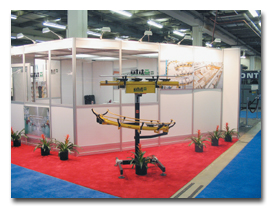
utit_Copy_2
U.T.I.T. Wagner Automation displayed examples of its automation and palletizing
systems.

U.T.I.T. Wagner Automation S.p.A., Italy, displayed examples of its automation and
palletizing systems. The company’s system for transporting bobbins and yarn packages garnered the
most attention from visitors. The bobbin and package transport systems offer high flexibility and
adaptation to existing building and machinery; differences in height easily managed by the use of
spiral track; realization of overhead buffer storage to handle several different yarn counts at the
same time; and high transportation capacity, according to the company.

U.T.I.T. has several US installations and reports major new installations in
Italy.Spartanburg-based Otto Zollinger Inc. demonstrated its well-known OZ® yarn tension control
device. The ingenious ball gravity tension control is used in a wide variety of textile operations
including warping and weaving. According to the company, advantages include constant uniform
tension, reduced yarn breaks and a quick return on investment.

Spartanburg-based Otto Zollinger Inc. demonstrated its well-known OZ® yarn tension control
device. The ingenious ball gravity tension control is used in a wide variety of textile operations
including warping and weaving. According to the company, advantages include constant uniform
tension, reduced yarn breaks and a quick return on investment.

December 2004

More Safeguards Protection Sought By Industry

A  coalition of fiber, textile and apparel manufacturers has petitioned the government to
extend for another year import quotas imposed last December on two product categories using the
safeguard mechanism in China’s accession to the World Trade Organization agreement. Extensions of
quotas permitting 7.5-percent annual growth are being sought for knit fabric and dressing gowns and
robes. A petition covering a third product category brassieres is expected in the near future. In
addition, the coalition has petitions covering eight more product categories pending before the
Committee for the Implementation of Textile Agreements. CITA currently is seeking public comment on
those petitions. China and US importing interests are expected to challenge the extensions and the
other petitions that have been filed on the basis of a threat of market disruption.

December 2004

Industry Gears Up For A Quota-Free World


W
ith textile and apparel import quotas due to expire at the end of this month, importers
and textile and apparel manufacturers are making far-ranging strategic decisions as to how they
will cope with a world of textile trade that, at the moment, is fraught with considerable
uncertainty. Interviews with industry leaders in both the domestic manufacturing and importing
sectors highlight the fact that significant change is about to take place, and how and when it
happens will shape the very future of the US textile industry. Key elements appear to be what will
happen with Chinese trade, and how effectively US manufacturers can be in doing more business with
Western Hemisphere apparel manufacturers. James W. Chesnutt, the highly-respected CEO of National
Spinning Co. Inc., and vice chairman of the National Council of Textile Organizations (NCTO), said
China will be a “force to be dealt with,” and steps must be taken – including new temporary
quotas – to reign in what could be eventual domination of the import market by China. He also
believes that what he calls a “good” Central American Free Trade Agreement (CAFTA) would create
opportunities for US manufacturers to grow their businesses and offset the threat of China and
other Asian manufacturers. Proximity to market and solid partnerships are the key factors. NCTO and
other textile lobbying organizations oppose the version of CAFTA pending in Congress because they
feel it has too many loopholes that will permit non-participating nations, including China, to
benefit from the trade preferences.

Even without CAFTA, manufacturers in countries and regions that participate in preferential
trade programs, such as Mexico, the Caribbean and Canada, can benefit from the fact that there are
no tariffs, which average 16 percent for non-participating countries.


The Chinese View

Chinese government officials contend the quota phase-out must take place as scheduled, and they
are expected to continue opposing use of the safeguard mechanism to impose new quotas. In addition,
China is not likely any time soon to address what US manufacturers see as a subsidy resulting from
its not being willing to unlink the yuan from a fixed exchange rate of 8.28 to the dollar. It says
the more vulnerable producers should be given assistance through programs of the World Bank and the
International Monetary Fund.


The Way Importers See It

Retailers and other importers of textiles and apparel see an inevitable increase in imports,
probably from fewer countries, but not necessarily a big surge. Because of the long lead time in
getting products from design to market, retailers already have been scouring the world for places
where they can get the best products at the best prices with quick delivery. This, of course,
includes both domestic and overseas manufacturers, and increasing hemispheric trade could be an
important factor.

Eric Autor, vice president and international trade counsel for the National Retail
Federation, does not see any evidence of a major increase in trade with China because of a number
of factors: the possibility of new quotas; congestion at the West Coast ports; and the fact that
China already is taking steps to slow down its economic growth. This means retailers are looking to
other areas including Central America because of proximity to market. While Autor said the pending
CAFTA agreement is “at best half a loaf,” he believes it is better than nothing and offers
potential benefits for both retailers and US fabric makers. The problem with some of the regional
trade preference agreements up to this point, he said, is that the requirements to meet the rules
of origin are so complicated they have negated the tariff benefits. He said this has been a factor
in driving more trade to China.

burke

Kevin Burke,  president, American Apparel and Footwear Association

Kevin Burke, president, American Apparel and Footwear Association (AAFA), said apparel
manufacturers have been hamstrung by the quota system, and he believes their removal will give them
more flexibility in their sourcing, as they will not have to cope with the restrictions,
uncertainties and limited choices under the quota system. He sees opportunities for both textile
and apparel manufacturers in increased Western Hemisphere trade. His organization has been
generally supportive of the regional preference agreements, and while he said CAFTA “is not the
best agreement,” he believes it offers some opportunities for US textile manufacturers to sell more
fabric in what is the largest apparel manufacturing area in the world. Without CAFTA, he said
apparel manufacturers would have much less of an incentive to do business in the hemisphere, and
they would be inclined to look elsewhere. The driving force in all textile and apparel trade, he
said, is to get the best products at the best prices with speed to market, and that’s where the
future lies for both importers and domestic manufacturers.


Proposed Quota Renewals Enter Critical Period

The US textile industry’s effort to extend quotas on several categories of Chinese imports will
come to a head within the next 60 days. The interagency Committee for the Implementation of Textile
Agreements (CITA) has ended its public comment period and now is engaged in the decision-making
process. CITA has agreed to at least consider capping imports under the so-called safeguard
mechanism related to China’s accession to the World Trade Organization (WTO) agreement. That
agreement contains language that permits using a threat of market disruption to impose quotas on a
year-to-year basis until 2008, but the textile industry and importers disagree on when and how a
threat of market disruption can be used. A coalition of fiber, textile and apparel manufacturers
has asked CITA to negotiate or place unilateral quotas on socks, trousers, shirts, underwear, yarn
and cotton sheets.

During the public comment period, the textile manufacturers provided evidence of what they
see as a threat of a major market takeover of US markets by China when quotas are removed. They
have cited how Chinese imports skyrocketed after some products were decontrolled in 2002, and they
say similar market disruption can be anticipated when other product categories are removed from
quota control. After a 60-day evaluation period, the US government, if it finds there is a threat
of market disruption, will notify the Chinese government and ask for consultations on a negotiated
quota level and growth rates. If agreement can’t be reached, the United States has the authority to
impose one-year quotas with a 7.5-percent growth rate.

US importers of textiles and apparel are opposed to using the safeguard mechanism. They said
the quotas imposed in 2002 on the basis of actual market disruption did not have merit, and are
against using the threat of market disruption. Laura E. Jones, executive director, US Association
of Importers of Textiles and Apparel, said CITA’s use of the safeguard petitions is “misguided.”
Autor said, “Based on our knowledge of apparel sourcing and the market, we see no evidence to
support the finding of any threat involving these products.”

Chinese government officials say the use of the threat of market disruption runs counter to
the WTO’s commitment to free trade, and they will strongly oppose any new quotas.

If the effort by textile manufacturers is successful in these cases, you can bet they will be
filing even more petitions in the near future.


CPSC Staff Recommends Bedding Flammability Standard

A Consumer Product Safety Commission (CPSC) staff recommendation that the commission consider
issuing an Advance Notice of Proposed Rulemaking is likely to get the ball rolling on a federal
flammability standard covering top-of-bed textile products that would include sheets, comforters,
pillows, mattress pads and other filled bedding products.

At the same time, the CPSC staff issued a draft of a proposed standard covering mattresses.
The top-of-bed proposal is designed to gather information from the industry, consumer groups and
others as to the need for a standard. Following the comment period, the CPSC will determine whether
the next step – a proposed standard – is necessary.

California is close to announcing a top-of-bed standard, and textile officials hope CPSC
action would result in just one standard, similar to the one enacted by California, that would
cover the entire country.


December 2004


Current Trends


T
he year isn’t ending on too bad a note. Overall production and shipment figures continue
to bottom out, with little or no significant change noted over the past few months. And there are
even a couple of bright spots.

For one, the Institute for Supply Management again has textiles on its list of industries
reporting a rise in activity. A few fabric sectors — including high-end offerings, stretch types
with spandex, and denims that sport new looks and washes — also are doing tolerably well.

Equally encouraging are the fairly solid gains in the more highly fabricated textile product
category. Much of this is centered in carpets and rugs, which are being bolstered by strong housing
and home improvement activity. This segment also has been holding up over the long pull — with
aggregate domestic production running close to 7 percent above 1997 levels. Still another sign of
this relatively healthy sector — fairly firm prices. At latest count, prices. Most other quotes
remain somewhat sluggish. The spotty signs of overall firming seem to have disappeared. Indeed,
both greige goods and finished goods actually have been a bit on the shaky side over the past few
months. Result:

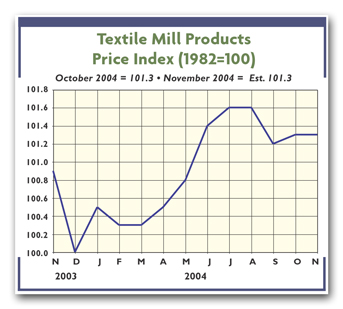
Textile World
’s all-inclusive price index for basic textiles isn’t significantly above where it was a year
ago; and there’s little to suggest any improvement in this key price yardstick over the next few
months.

Luckily, this textile softness is accompanied by equally sluggish fiber quotes. And the
industry has managed to avoid any widening cost-price squeeze. Cotton, recently in the low 40
cents-per-pound range, is a prime example. These low quotes are in sharp contrast to the 70
cents-per-pound and higher levels prevailing last fall. Nor have man-made tags shown any great
strength — certainly not nearly as much as would be suggested by the huge runup in petroleum.

p14_Copy_7


The Trade Front


There’s growing uncertainty on what’s going to happen over the upcoming year when import
quotas are eliminated. The big question marks: How hard will the United States press to put a lid
on incoming totals, and how will China respond?

Washington now seems a bit more receptive to the petitions of a coalition of US trade
associations to invoke trade law provisions limiting import growth. Some requests are already under
study, and more such petitions are anticipated.

In any event, the White House will probably have to make some decisions by late January.
Right now, it seems highly unlikely that such petitions will be entirely rejected. More likely, the
government will try seeking a deal with China to avoid a major trade fight. One possible solution:
having China agree to limit exports to the United States voluntarily — similarly to what occurred
in the 1970s when Japanese autos were flooding the market.


The Exchange Rate


Close monitoring will also be in order on what happens to the value of the Chinese yuan.
There’s pretty much unanimous agreement that the currency is grossly undervalued, thereby making
Chinese exports of textiles and other products unfairly competitive. How much undervalued and what’s
likely to be done about it are questions that still remain unanswered. Some domestic textile
executives put the undervaluation as high as 30 to 40 percent. But few expect the Chinese to agree
to any such huge upward revaluation.

On the other hand, there’s increasing belief the Chinese will at least make partial moves
toward revaluation. Some officials there have already signaled their readiness to relax the yuan’s
tight peg to the dollar.

Commenting on this, Frank Gong, JP Morgan’s chief economist for China, sees about a
7-percent appreciation of the yuan by a year from now. A similar figure is mentioned by a top
Chinese official, who feels the state-owned companies in his country could withstand a 7- to
10-percent increase in the yuan’s value without too much harm.

December 2004

Congress Approves Textile Machinery Duty Suspensions

Congress has approved duty suspensions on imports of four types of textile machinery that are not
made in the United States. The duty suspensions will apply to high-speed shuttleless looms, some
shuttle looms and certain ink-jet printing machines, and what Customs classifications call “other
printing machines.” The duty suspensions were non-controversial, but they had been held off for,
months, as they were part of a bill that did contain some controversial issues. In addition to the
action on textile machinery, the legislation also lifted duties on imported cashmere fibers that,
likewise, do not compete with US products.

December 2004

Sponsors