Fabric Perspectives From The City Of Lights


W
ith

the consolidation of Expofil, Indigo,
Mod’Amont, Le Cuir à Paris and Première Vision into one venue — Première Vision Pluriel — it’s
one-stop shopping in Paris for designers, manufacturers and retailers looking for yarns, surface
design, trimmings, leathers and fabrics. Fabric exhibitors showing at Première Vision also can get
an advance look at colors and yarns for the following season.

Only through a careful selection process are the world’s leading fabric companies chosen to
exhibit their lines here, enabling this show to maintain a reputation for quality and
reliability.


The Wool Sector

There was a lot of activity in the
wool sector at Première Vision. Brian Hinnigan, design and sales director at Scotland-based
Hinnigan Fabrics Ltd., a new exhibitor, said sales to the United States are excellent.

“We have gone back to our traditional roots and brought them up to modern times,” he said,
adding that ultra-lightweight, soft-hand Shetlands “feel as if they were washed in a loch.”

Tonal checks are heathered and misted, reflecting shades of Scottish landscapes.

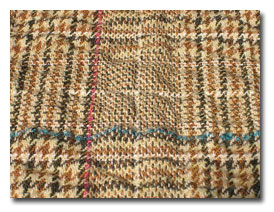
At Abraham Moon and Sons Ltd., England, classic becomes contemporary with new color mixes,
washed finishes and novelty weave effects. There are traditional glen and Prince of Wales checks on
heathered grounds woven with thick-and-thin, bouclé or space-dyed yarns. Subtle touches of sparkle,
geometric jacquards, over-checks woven with thick yarns and combination-weave herringbones are
other offerings.

Surface interest also is selling in the fall line of France-based wool weaver Isoule
Textile. Classic checks and tweeds are crushed and puckered. There are bold ethnic patterns and
stripes that resemble Indian blanket designs. Large plaids and boxy checks are woven with mohair
and thickly brushed.

Technology is a strong suit at Italy-based Milior S.p.A. There are classic fabrics and
patterns with shiny effects, felted designs and seersucker surfaces. Tone-on-tone patterns were
pointed out. A wool/nylon glen check has a superimposed felted flower. The process is the opposite
of devoré. The same treatment is used to create a striped seersucker.

One of Brazil’s premiere worsted mills, Paramount Têxteis, focuses on Super 100’s flannel,
wool/cashmere/ Lycra® and wool/Lycra. The line is classic and of high quality. For womenswear,
there are mini-houndstooth, glen and Prince of Wales checks; classic stripes; and patterned tweeds.
Subtle color gives character to the line. Traditional gray flannel is enlivened with a pinstripe of
an unexpected color.

For menswear, there are seersuckers, Bedford cords, twills and flannels. Some are woven of
100-percent worsted wool, and have warp and weft stretch.
isoule
Isoule Textile exhibited classic wool checks and tweeds that are crushed and
puckered.


Man-Made Fibers

DuPont, Wilmington, Del., is still in
the business of fibers, offering Sorona® — a fiber that processes like nylon or polyester.

Dawson Winch, product manager, DuPont Sorona, said Sorona is softer and more resilient than
nylon. It dyes well; blends with other fibers; has natural stretch; and is easy-care, antistatic
and stain-resistant. Carpets and textiles are target areas. Mohawk Industries Inc., Calhoun, Ga.,
has introduced Sorona in carpets in 8,000-plus retail outlets. The fiber also is going into woven
fabrics, and circular and warp knits.

Trevira GmbH & Co. KG, Germany, focused on functional microdenier, stretch,
antimicrobial, low-pill, flame-retardant and moisture-control yarns.

According to Steffi Bobrowski, marketing and sales/communications, each fiber can be
combined with others for multifunctional purposes, and all are easily blended with natural fibers.
Trevira works with customers to develop individual yarns for each specific end-use.

One combination she pointed out is elastic and antimicrobial Trevira Xpand Bioactive for
activewear and functional workwear. The company also uses Bioactive fiber in homewear applications.

Trevira introduced Trevira MC (moisture control), a new filament yarn that provides improved
moisture conductivity and fast-drying properties, according to the company. Target areas for the
new yarn are knitted and woven fabrics for casual and active sportswear.

Korea-based Hyosung Corp.’s focus for creora® spandex fibers is on three specialized
products: creora H-100X alkali-resistant fiber; creora H-350 high-temperature and
chlorine-resistant fiber; and creora C-400 fiber for seamless and hosiery
(See “
Hyosung
Picks Up The Pace
,”
TW, September 2005)
.

“Denim with creora H-350 delivers comfort and lasting fit for all of the key upcoming
trends,” said Stephanie Ledru, European marketing and brand director. “This product also imparts a
silky-soft hand, and is lightweight and fast-drying when used in knitted garments.”
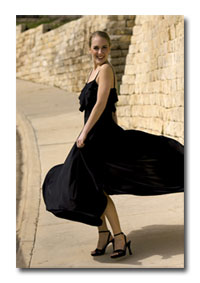

dupontdress

DuPont Sorona®, a fiber that proecesses like nylon or polyester and blends well with other
fibers, is going into apparel fabrics, as well as carpet and other textiles.


Knits And Prints

“Dresses are starting to come back,”
said Federico Boselli, president of Italy-based Marioboselli Jersey S.p.A. “We are selling
beautiful, top-quality, plain fabrics,” he said, showing matte jersey with a warm hand knitted of
wool or spun viscose. “It’s the perfect fabric.”

Novelties in this line are tonal jacquards; soft, lacy transparencies knitted in
angora/wool/nylon blends; wool/cashmere bouclés; Missoni-styled zigzags; burn-outs; and glue
prints. Gold glue printed on velvet and a huge lily burn-out are two fabrics Boselli mentioned.

Zigzag patterns in black and white are popular at France-based Billon Frères. Sheer/opaque
irregular stripes and checked mattelassés are knitted with Lurex®. Jacquards are piece-dyed or
yarn-dyed, supple and lustrous in acetate/Lycra. Novelty knitted corduroys have thick-and-thin or
irregular wales. There are light, lacy crochets; patchwork effects; nubbed tweeds; and viscose
matte jersey.

At Deveaux, France, fabrics are designed to mix and match.

“We are using more cotton for winter,” said Marie-Dulce Gourlat, a company representative. “
We feel there will be a lot of layering and a lot of mixing of different fabrics.”

Spots, dots, circles and swirls; abstract and geometric patterns; paisleys; and vintage
florals turned up printed on a variety of base cloths at Italy-based Miroglio S.p.A. There are
patchwork paisleys and medallions on silk chiffon with silver stripes. Vintage florals are printed
on corduroy. The company also offers iridescent taffeta embellished with appliqués, embroidery and
sequins; printed acrylic stretch lace; abstract Oriental patterns with touches of glitz on nylon
lace; and swirling mohair circles embroidered on corduroy.


The Silk Sector

Prints in the silk sector are
sophisticated, delicate and colorful. At Bucol S.A., France, colorists have been working with
DuPont to develop special inks. Ink-jet prints are bright and intricate. One theme is Fireworks,
with brilliant splashes of color and blurred effects. Floral prints are handpainted, scanned into a
computer and placed on different backgrounds.

Italy-based silk printer Ratti S.p.A. is printing on double-faced coating fabrics of
alpaca/cashmere/wool. Prints are tonal swirling designs. Silk chiffon is printed with camouflage
effects; coupe de velour au sabre has subtle shine. There are bright, sporty-looking prints on
velvet and corduroy; and elegant, lustrous printed satins and chiffons for evening. Flowers and
paisleys have an antique look.

Two Switzerland-based firms, Jakob Schlaepfer and Weisbrod-Zürrer AG, take fantasy to the
extreme.

At Schlaepfer, fringes of sequins cascade from chiffon, enormous flowers are embroidered on
silk organza using fluffy wool yarns, and laser cutouts are sequin-centered and appliquéd to
printed chiffon. There are circles of plastic applied to transparent silks, velvet lace combined
with net, crinkled mousseline covered in sequins, lustered bouclé yarns woven to resemble tweeds,
and silk net decorated with fragile embroidery and splashes of shine. It is a luxurious and
feminine way to go for evening.

There is a lot of coordination at Weisbrod-Zürrer. Black and white floral jacquards pair
with abstract moving stripes, tartans combine with circle patterns, and graphic designs printed on
satin have abstract counterparts.

Creativity is in abundance at this firm. Sometimes it is opposing designs put together on
the same fabric, such as a shaded gray abstract herringbone jacquard with a bright red rose. There
also are jacquards that resemble ancient tapestries. Others are enormous in scale. One reversible
wool jacquard has a one-meter repeat; another depicts fire-eating dragons at an Asian temple.

Lace at Solstiss S.A., France, is not just for evening. An Adidas garment on display
featured lace insets on sweats. Most of this line is opulent. There are nets; chantilly laces; and
thick crochet laces heavily encrusted with bright sequins, beads and feathers, or embroidered with
metallic threads. Shiny palm fronds, leafy tree branches and bright poppies with long, glittery
stems are some recognizable shapes. Puff and quartz prints and abstract combinations of fringes and
embellishments are dazzling.
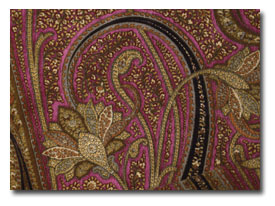
ratti
Ratti S.p.A. showed silk prints in tonal swirling designs.


Techno

Mectex S.p.A., Italy, introduced a
new treatment called Plasmaterial™. Fabrics are completely water-repellent, breathable,
bacteriostatic, washable and wrinkle-free. The same treatment is being applied to fabrics
containing Cordura® and Kevlar®. They are being used for motorcycle jackets, hiking gear and bags.
Other fabrics in this line release aloe vera or fragrance to the wearer.

Schoeller Textil AG, Switzerland, has functional wool fabrics that are double-faced, bonded
and stretch; and bonded stretch fabrics woven of metal/ nylon/elastane. Some are embroidered by
hand.

UCO Textiles, Belgium, comes out with a wide range of new denim styles every year. Stretch
denim is in demand, according to Mark Ix, vice president, sales and marketing. The firm is blending
cotton with Lycra or T-400™. Women, Ix explained, prefer the fit of jeans made with Lycra. Men have
resisted stretch but have caught on to the comfort of jeans made with T-400. Selvage denim with
comfort stretch is another popular look.

Embellished jeans are on the wane, according to Ix. “We are selling dressier and more
comfortable fabrics, and in darker colors,” he said. Two new denims he showed are a blend of
cotton/merino/cashmere; and a double-faced denim that reverses from blue to flannel gray, and has a
100-percent cotton face and a cotton/polyester back.


Texworld

Texworld — the International Trade
Fair for Garment Textiles — was held at the same time as Première Vision Pluriel. Whereas Première
Vision is rooted in high-quality, innovative fabrics mainly from European mills, the majority of
Texworld exhibitors are from Asia.

The focus at Burlington Worldwide, which has offices in Greensboro, N.C., and Hong Kong, is
on cotton and denim.

“We feel strongly about sustainability,” said Nelson Bebo, vice president, sales and
merchandising, showing fabrics woven with yarns made from coconut shell fibers blended with cotton
or polyester. The fibers absorb odors, and have a cool hand and excellent moisture management.

There is a lot of texture in the wool line. “It’s more upscale,” Bebo said.

Best sellers at warp knitter Hornwood Inc., Lilesville, N.C., have the look of ribbon knits.
Fabrics are knitted in China of polyester and polyester/nylon.

Symphony Fabrics Corp., New York City, is selling fabrics to the bridal market in Poland and
printed chiffons to Turkey. Satin, one of its most popular fabrics, is produced in the United
States, Canada and Korea. Pastel shades and Pucci-styled prints were pointed out.

John Heathcoat & Co. Ltd., a first-time exhibitor from England, produces techno fabrics
for a variety of end-uses — from bridal and intimate apparel to military and health care. At
Texworld, there was interest in bonded fabrics for bras, antimicrobial warp knits for lingerie,
stretch mesh and tulle. Other fabrics are flame-retardant and protective; and woven or knitted with
Coolmax®, Cordura or Kevlar.

Raymond Ltd., a vertical woolen and worsted producer from India, pointed out flannel
finishes, comfort stretch of 100-percent wool and machine-washable suitings. Most of its fabrics
are woven of Australian merino wool. There are solids and traditional patterns. Menswear is the
firm’s largest market.

Bebe Cotton Knitting Co. Ltd., Taiwan, sells foil prints on satin. Yarn-dyed plaids,
opaque/sheer crinkles and polyester crushed velvet knits are other popular items.

Jubanitex Inc., the Philippines, uses sheer fabrics woven of pina fiber as a base for its
line of richly decorated fabrics. Fabrics dye well and are sheer and silky. The firm offers a
custom line. Fabrics are piece-dyed, hand-painted, appliquéd, pleated, fringed and embellished with
beads and sequins.

November/December 2005

Royal Ten Cate Acquires Polyfelt

Royal Ten Cate NV, the Netherlands, has acquired Austria-based geosynthetics manufacturer Polyfelt
GmbH from Vienna-based OMV Refining & Marketing GmbH for 70 million euros. As a result of the
takeover, Royal Ten Cate expects to become a world leader in geotextiles with a full scope of
products, a vast distribution network and access to the contracts market.


Royal Ten Cate already operates in
the geosynthetics sector in Europe, Asia and the United States through its Ten Cate Nicolon
subsidiary.


The takeover, which is expected to be
completed by year-end, will strengthen Ten Cate Nicolon’s position in central and eastern Europe
and Asia.

Royal Ten Cate reported the takeover is an important strategic step in its “buy-and-build”
process in five core areas: protective fabrics; aerospace composites; antiballistic composite
materials; artificial grass; and geosynthetics.

November 2005

Cotton Incorporated Celebrates 10th Anniversary Of Mexico Office

Cotton Incorporated is celebrating
the tenth anniversary of its Mexico City office, the first office of its kind for the cotton
industry, servicing textile mills and manufacturers in Mexico, Central America, the Caribbean Basin
and South America.

To celebrate a decade of accomplishments, the Mexico City office will be hosting noted Latin
American textile industry members at the Franz Mayer Museum on November 16, 2005, by invitation
only, for cocktails, dinner and a presentation of fabric developments by Cotton Incorporated.
Representing Cotton Incorporated will be: Dean Turner, senior vice president, global product
marketing; Mike Tyndall, senior director, Latin America & Europe; and Jaime Flores, director
Mexico. Among the honored guests attending are: Larry Rubin, president, American Chamber of
Commerce; Moises Alfie, president, Diesel, Mexico; Luis Camarillo, president, Levi’s, Latin
America; Camilo Maurer, purchasing director, Wal-Mart, Mexico; Rosendo Valles, president, Textile
Chamber, Mexico; and Adolfo Kalach, vice president, Manufacturas Kaltex.

The Mexico City office has been instrumental in establishing relationships with key textile
mills in the region during the last ten years. The office currently offers a variety of services
ranging from fiber economics, fiber quality, fiber processing, dyeing and finishing, fabric
development and apparel and home fashion trend forecasting.

Additionally, the office hosts a complete
COTTONWORKS™ Fabric Library, showcasing cotton fabrics from more than 300 mills,
knitters and converters. The library serves as a one-stop resource for retailers, designers and
manufacturers.

Says Berrye Worsham, president and CEO, Cotton Incorporated, “When we began operation of the
Mexico City office in November of 1995, it was because we recognized that we needed a presence in
the very crucial Mexican, Central American and South American markets to ensure the future success
of the international cotton textile industry. We have forged partnerships with many of the mills
and have introduced new technology to them, which in turn has helped them to grow and thrive. We
look forward to a continued and mutually beneficial relationship with our friends in Mexico and the
neighboring regions.”

Jaime Flores, director, Mexico, Cotton Incorporated, comments, “The future finds great and
challenging opportunities. The Mexico City office acts as a protagonist in the development of a
strong cotton business in Latin America. Our objectives are clear. We will enhance key business
strategies among cotton mills and apparel manufacturers for the adoption of new technologies,
develop new products and promote cotton products. We want to keep cotton as the first choice of the
consumer.”

The Mexico City office has initiated new services in the last ten years, including
specialized training to over 600 technicians at four Cotton Technical Conferences (COTTECH,) and
the Cotton Forum attended by over 500 industry members. The office has assisted seven major Mexican
textile mills with the EFS® system to maintain a higher level of bale management. In addition, the
Mexico City office has been integral in making the Cotton Incorporated seal recognized by 70% of
the Mexican population and holds over 165 Seal of Cotton licenses.

Cotton Incorporated, in conjunction with Cotton Council International, participates in key
textile shows, with participation in Fashion Week, Intermoda, Mexico Textil and Exintex in Mexico;
Colombiatex in Columbia; and Apparel Sourcing in Central America. In addition, Cotton Incorporated
presents over 50 fashion trend presentations per year in Spanish to the top textile and
manufacturing companies in Mexico and Latin America with a ten year attendance total of over 2,500
people.

Press Release Courtesy of Cotton Incorporated

November 2005

Sawgrass Technologies Acquires Rotech Digital

Sawgrass Technologies Inc., a leading
developer of digital printing technologies, announced today that it has acquired Rotech Digital, a
major supplier of sublimation inks. Rotech will continue to operate independently as a wholly-owned
subsidiary of Sawgrass Technologies and maintain its offices and staff in Denmark.

Rotech provides a wide range of digital imaging products including sublimation inks, bulk
ink systems, color management solutions, and transfer papers. The Rotech ink product line is a
platform proven sublimation solution for both small format and production printers. Rotech inks
will serve as the latest brand in the Sawgrass product offering, which includes SuliJet and
ArTainium inks.

“Rotech broadens the Sawgrass production portfolio, providing more choice to the global
marketplace,” said Nathan Hale, CEO, Sawgrass. “With their established brand recognition and
customer base, Rotech increases our global presence and strengthens our leadership in sublimation
technologies.”

“We look forward to working with the talented team at Sawgrass Technologies. Our
complementary products and services are a natural fit, enabling us to take advantage of Sawgrass’
unique color software solutions, industry leading applications support programs, and new transfer
ink technologies to better meet the growing needs of customers,” said Niels Knudsen, managing
director, Rotech Digital.

Press Relase Courtesy of Sawgrass Technologies

November 2005

Fabric And Yarn Production, Yarn Stocks Increase

The latest quarterly State of Trade Report from the International Textile Manufacturers Federation,
Switzerland, reveals second-quarter 2005 world fabric production increased by 4 percent to a new
record level. The gain was due largely to a 10.1-percent South American output increase and a
6-percent Asian increase. Conversely, Europes output fell by 2.4 percent for the third consecutive
quarter, while North Americas production remained steady.


Global fabric stocks fell by 1
percent, with only South America reporting an increase, which amounted to 1.4 percent. North
America’s inventory fell by 2.4 percent, Asia’s dropped by 2.2 percent and Europe saw a 0.7-percent
decline.

Global yarn production rose by 0.2 percent, with regional output reductions of 1 percent in
Europe, 4 percent in South America and 2.6 percent in North America. These decreases were offset by
an output increase of 1.7 percent in Asia — largely due to gains of 10.6 percent in Korea, 1.6
percent in India and

1.5 percent in Pakistan.

Global yarn stocks rose by 0.2 percent. Regionally, however, South American yarn inventories
dipped by 10.1 percent, and inventories dropped by 1.7 percent in Europe and 5.5 percent in North
America. Asia’s inventory rose by 2.9 percent.

Yarn orders fell by 3.6 percent in Europe and 1.6 percent in Brazil, while fabric orders
rose by 6.2 percent in Brazil and 2.4 percent in Europe.


November/December 2005

SDL Atlas Introduces MMT ColorChex Upgraded M233B

SDL Atlas, England, has released a
Moisture Management Tester (MMT) for knitted and woven apparel fabrics, the ColorChex line of
viewing cabinets for color matching and grading, and an upgraded M233B automatic flammability
tester.

The table-top MMT, designed to comply with American Association of Textile Chemists and
Colorists, International Organization for Standardization and Standards Norway (drafting)
standards, measures a fabric’s dynamic moisture-transport properties and provides the
moisture-absorbing rate of its inner and outer surfaces, inner-to-outer-surface transportation
capability and moisture-spreading rate. It also delivers six key indexes including wetting time,
absorption rate, maximum wetted radius, liquid spreading speed, accumulative one-way transport
capacity and overall moisture-management capacity.

The ColorChex cabinets meet and exceed existing international standards, and are priced
lower than conventional cabinets offered by other North American and European companies, according
to SDL. The compact ColorChex N7, designed to meet the requirements of suppliers to the North
American market, provides five different light sources, an ASTM D1729-compliant neutral gray
interior with a surround and ambient field color of Munsell N7, and a remote-control option to
select light sources. The larger ColorChex 60 and ColorChex 120 models offer precision matching to
the requirements of leading British and European retailers, reproducing light source spectral
characteristics and duplicating the interior, which enables users to match results of existing
cabinet users.

The computer-controlled M233B, which features an optional radiator assembly to enable
testing to British Standard EN 13772:2003, includes interchangeable test frames and burners,
automatic flame ignition and flame application timer, and new Windows®-based software.


November/December 2005

Invista Unveils XFIT Lycra®

Wilmington, Del.-based Invista
S.A.R.L. recently unveiled its new XFIT Lycra® fabric at the Rock & Republic® fashion show in
Los Angeles. Xfit Lycra is a patented denim cross-weave technology that delivers better fitting and
more comfortable garments because of its four-way stretch delivery, according to Invista.

“Xfit Lycra fabric provides a wider fit to accommodate more diverse body types, giving the
wearer the best, most flattering rear view,” said Duane Moosberg, Lycra business development
director. “The new sculpting technique also gives jeans lasting good looks because of the improved
shape memory, while looking and feeling like authentic denim.”

Invista worked with Central Fabrics – a division of the Hong Kong-based Central Textiles
Group – to produce Xfit. Central Fabrics is the first production licensee to develop and
commercialize Xfit Lycra fabrics for distribution.


lycra


Invista unveiled its XFIT Lycra® fabric at the RockandRepublic fashion show.

November 2005

Barriers To Entry


P
rotection from nasty viruses and other infectious microorganisms is a paramount concern
within the medical sector. Antimicrobial and sterilization treatments do their part to eliminate
surface contaminants, but there are times when a physical barrier is needed to prevent penetration
of blood- or other fluid-borne pathogens — for example, in a surgical or emergency response
environment where the practitioner or responder may come in direct contact with such pathogens, or
to protect a wound from outside infection while it heals.

omniflex

Waterproof, breathable membranes bonded to fabrics used for surgical gowns and masks, wound
dressing and cast coverings, and other protective clothing can provide such protection. The
membranes may be monolithic or microporous, or a bicomponent film that takes advantage of the
particular attributes of each.

While monolithic and microporous films may provide similar protective and comfort
properties, they differ in their physical structures and ways of functioning.

Microporous films have microscopic pores through which vapor such as perspiration may be
transmitted via gaseous diffusion or convection. Depending on pore size, liquid molecules are too
large to pass through. However, liquids under pressure may be able to penetrate these films; and
contamination by substances such as body oils, pollutants, cleaning substances and others also may
adversely affect the membrane’s water repellency.

Monolithic films contain no pores that might allow liquid penetration, and moisture vapor is
transmitted via a solid-state diffusion process. However, the films will swell and stretch when
wet, which can cause cracking and weakening over time if the film is made from a polymer that does
not offer good stretch and recovery.

Monolithic films made with
thermoplastic polyurethane (TPU), copolyester or ether-amide polymers are said to offer good to
excellent stretch and recovery, reducing the likelihood of cracking and increasing the film’s
durability and abrasion resistance, according to Paul Darby, president, Omniflex Inc. — the
Greenfield, Mass.-based maker of Omniflex Transport®, a line of extruded monolithic films made with
these materials.

Darby said extruded films are more
supple than liquid films, which are coated onto a fabric or a nonwoven, stiffening it in the
process. He also noted there are advantages to using extruded films such as Transport that are made
without the use of processing aids that can reduce the fabric’s breathability and affect the
strength of the bond between film and fabric.

Darby pointed out that TPU, copolyester and ether-amide films are quiet and comfortable and
offer a soft hand — with TPU offering the highest degree not only of these qualities, but also of
stretch and recovery and breathability. Because such films also are chemical- and
temperature-resistant, they are more cost-effective to use than bicomponent films that include
polytetrafluoroethylene to provide those qualities, and yield garments that are lighter-weight and
more compressible than those made with bicomponent films.

November/December 2005

DyStar Develops New Dyes, Unveils Premium Workwear Concept

Germany-based DyStar Textilfarben
GmbH & Co. Deutschland KG has developed a range of new dyes.

Indanthren® Navy SR is a vat dye created for workwear, while Remazol Luminous Yellow FL is
the world’s first fluorescent reactive dye developed for high-visibility end-uses for cotton.

Levafix FastRed CA is the latest addition to the Levafix CA range. It is a copper-free dye
suitable for pale to medium shades that may be applied by all common dyeing methods.

In other company news, DyStar has developed a Premium Workwear Concept that includes select
Indanthren and Dianix® dyes combined with a unique Premium Workwear label. The label will aid
manufacturers in differentiating their offerings from those of their competitors, and will show the
quality of their products at all stages of the supply chain.

In addition, DyStar has been selected as an authorized laboratory for colorfastness testing
for the England-based Marks & Spencer chain of retail stores.

November/December 2005

Asian Fiber Consumption Update


I
n

an early draft aimed at exposing the
risks of unfinished trade agreements with China,

Textile World
commented on the likelihood of a new reality of sinking certainty in the outcome of textile
and apparel quota negotiations between the United States and China.

According to sources at the time, both sides agreed to the need for short-term controls, but
true to form, the devil was in the details of defining a practical, substantive growth rate for
Chinese apparel exports to the United States.

Two scenarios appeared likely: First, no agreement would be reached — and no future talks
would be scheduled — and Washington would apply 7.5-percent annual growth caps on exports until
2008, when the specific quota restrictions agreed to by China to gain admission to the World Trade
Organization (WTO) would expire. This solution apparently was unappealing to both sides; but not
sufficiently so to withdraw the last proposal discussed, which offered a menu of growth rates,
dates and bases from which either side could choose.

A settlement has been reached, one relatively consistent with the parameters of the more
generous proposal previously noted incorporating the following features: Ten-percent increases in
apparel shipments and 12.5-percent increases for textiles for 2006. In 2007, rates settle at 12.5
percent in each category, except for fiberglass and thread, which will be allowed to grow at 15
percent annually. Changes in 2008 will include a 15-percent growth against eight products deemed
sensitive by US producers — cotton shirts and pants, bras and underwear. Four other categories —
thread, fiberglass, knit fabric and window blinds — will be allowed to grow 17 percent, with all
other categories limited to 16 percent. The offset has China agreeing to increase the categories
covered up to 34 and, most importantly, agreeing to extend the pact through 2008, a year overlap,
with said caps originally scheduled to evaporate in that year.

With talks settled, industry watchers need to express greater vigilance. A year ago,

TW
published 2002 data about the levels of consumption in Asian mills
(See “
An
Asian Irony
,”
TW, November 2004)
. Information has been updated through 2003, and a 2004
forecast added. This exercise was begun with a search for changes in consumption by India’s growing
and well-managed fabric industries, and with the hypothesis that recent announcements from Indian
government and private sources projected major expansions in man-made fiber and fabric production.
It did not take long for the study to become complicated by United States/China/WTO negotiations,
leading to the analysis presented here.


Page43


Asian Fiber Consumption

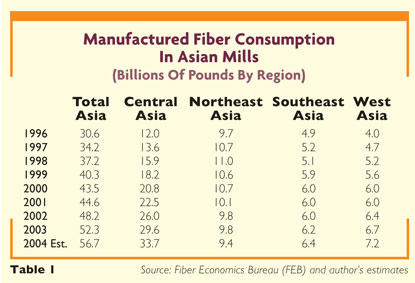
Table 1 details mill consumption of
manufactured fibers — cellulosics plus man-mades — in the larger Asian area from 1996 through a
2004 forecast by the author. By way of identification, the regions are delineated as follows:

• Central Asia — China and Hong Kong;

• Northeast Asia — South Korea, Taiwan and Japan;

• Southeast Asia — Indonesia, Malaysia, the Philippines, Thailand, Myanmar, Singapore and
Vietnam; and

• West Asia — India, Bangladesh, Pakistan and Sri Lanka.


Page44_Copy


As shown in the table, growth of fiber consumption in all of Asia continues at an almost
double-digit rate, virtually doubling in the 1996-2004 period. As reported last year, the Central
Asian region leads the parade, consuming almost 60 percent of the manufactured fibers consumed in
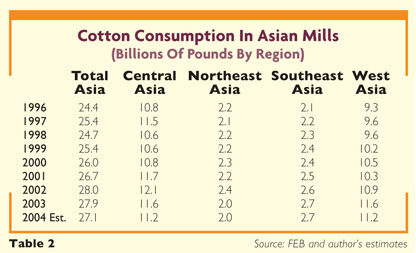
all of Asia. Further, Central Asian mills account for 11-plus billion pounds, or 41-plus percent,
of the total Asian consumption of 27 billion pounds
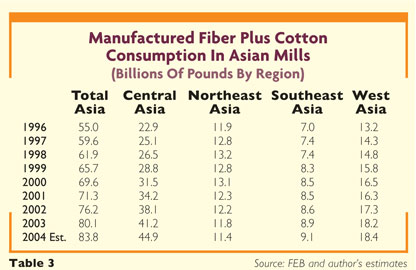
(See Table 2). Together, Central Asian mills consume almost 45 billion pounds of the total
83-plus billion pounds of manufactured fibers plus cotton
(See Table 3).


Page45


China and Hong Kong together consume more than 53 percent of all manufactured fibers plus
cotton — simplistically, polyester/rayon or polyester/cotton blends — consumed in Asia. More
significantly, China and Hong Kong together consume 31-plus percent of all manufactured fibers plus
cotton, consumed in the world, assuming an approximate 143-plus billion pounds of consumption of
all fibers in the world. As an aside, Central Asia consumes almost 60 percent of all fibers
produced in the world.

Continuing the geographic tour, as the post-World War II manufacturing economies of
Northeast Asia are replaced by service and banking economic models, manufactured fiber use among
Northeast Asian mills has stagnated, with indications that further contraction will occur in the
future. Japan continues to unravel its fiber, fabric and apparel complex, remaining industry-active
by providing increasing amounts of capital for other Asian regions’ use in growing from undeveloped
to developing nations.

Southeast Asia is made up of several troubled nations, and its performance in the fiber
economy demonstrates this. Weak economies and questionable governments have bred a lack of access
to world capital, and the area has missed opportunities to employ hordes of economically distressed
workers.

Given the speed with which world fiber markets are changing and growing, it is unlikely that
manufacturers in this area can revise policies and practices and join the capital race from
labor-sensitive to capital-sensitive economies. Considering these countries have existed this long
without the fiber industry, it is fair to conclude their agriculture and chemical industries are
aimed at other basic industries, leaving the textile complex battle to other participants.


The Indian Subcontinent

In a move akin to the formation of
the Ministry of International Trade and Industry’s Japan Inc. to guide Japanese industrial growth
after World War II, India has formed several industry/government consortia to provide similar
leadership. India government programs, together with several major product and brand expansions by
Reliance Industries, have led to the Indian presence being felt increasingly in world markets. The
country faces a birth rate that ensures India will house a population larger than China’s within a
decade. With educational access and achievement limited to the few, India appears determined to
structure its economy to offer employment to the entry-level masses in industries such as textiles
and apparel that will generate trade dollars.

Interestingly, cotton consumption in West Asia equals that in Central Asia. Obviously, total
consumption of manufactured fibers plus cotton in Central Asia overwhelms that in West Asia, but an
interesting pattern is developing. Central Asia runs an almost 3 billion-pound net import balance
of manufactured fibers — 10 percent of regional manufactured fiber consumption. West Asia runs a
smaller import balance — only 3-plus percent of manufactured fiber consumption — which raises two
questions. First, are India and its subcontinent neighbors planning to expand man-made fiber
production to soak up more of the area’s supply of cotton and focus the textile complex
increasingly on polyester/cotton apparel exports? Or, are the area participants satisfied with
their current position, secondary to the giant China colossus?

Government programs, reinforced by the actions of Reliance Industries, point to increased
investment in man-made fibers followed by increased exports to the developed world. Ah, the cycle
repeats, although with an unlikely partner.


Where Will It Lead?

What path will apparel imports take
over the next few years? If it’s possible to negotiate equitable import quotas and duties, will the
US textile industry use the breathing room to restructure/remodel/ refinance/redevelop to enhance
its competitive/productivity stance and be ready to compete in a world market?

Based on the situation, it doesn’t look hopeful. Based upon the recent settlement, another
look at China and a more careful appraisal of India, which just may be settling in as a long-time
rival, are needed. After all, if India could last through several centuries of British
rule-fomented confiscatory trade policies, what’s a few years more in a trade war with China over
dominance of international textile trade?


Author’s Note: To simplify graphs and tables, the usage of wool, olefin and miscellaneous
fibers in this analysis has been omitted. For reference, wool consumption totals approximately 1
billion pounds annually across the total Asian region, and olefin does not directly impact the
import/negotiations theme of this article.

November/December 2005

Sponsors