IKME Finishing & Knitting


M
ilan hosted 225 exhibitors and more than 8,500 visitors at the second edition of the
International Exhibition of Finishing & Knitting Machinery (IKME 2005) held in mid-November
2005. Promoted by the Association of Italian Textile Machinery Manufacturers (ACIMIT) and organized
by Fiera Milano International S.p.A., the show was enhanced by the addition of dyeing and finishing
exhibitors. Thirty-five percent of show visitors came from outside Italy from countries and regions
such as Germany, Turkey, Spain, France, central and Eastern Europe, the Mediterranean Basin and
Latin America.
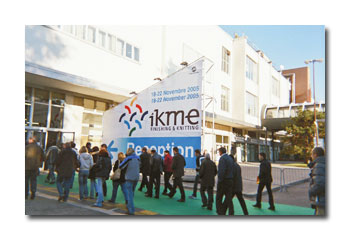
ikmeentrance

“We received orders directly at the fair and established contacts that can be expected to
turn into contracts,” said Paolo Banfi, managing director and shareholder of Italy-based Comez
S.p.A. and newly elected president of ACIMIT. “The manufacturers’ commitment, aimed at improving
the performance of their equipment, was rewarded. Europe, and Italy in particular, confirmed their
leadership on the world textile scene. IKME Finishing & Knitting is one more reason to look
optimistically [to] the future, where technological leadership always wins.”

An IKME Finishing & Knitting and Italian Trade Commission collaboration attracted 60
buyers from Brazil, Russia, Syria, Iran, Morocco, Tunisia and Turkey; along with representatives of
the academic world from Russia, Iran and Turkey.


Excellence On Display


The show featured an Excellence Area that displayed innovative products and techniques
accomplished using exhibitors’ technologies. According to organizers, the area was “designed to
satisfy two objectives: to provide a ‘live’ display of the innovative products that can be obtained
using the existing machines; and to experiment with a new kind of partnership between equipment
manufacturers and users — seen as a true and innovative market driver.”

“[The Excellence Area] introduced two strong messages,” Banfi said. “The first is we are
studying niches in more detail because, like a laboratory, within each of these niches we can find
some winning products, and some ideas for other products. The second is talking and working
together. This is a true revolution that is much stronger than it would first seem. In fact,
customers are increasingly asking for solutions rather than products, and this renewed relationship
with the customer promises to redraw the textile industry.”


Knitting Shines


Flat-bed knitting stalwarts Shima Seiki Manufacturing Ltd., Japan; Protti Fashiontronix
S.p.A., Italy; and H. Stoll GmbH & Co. KG, Germany; among others, attracted high visitor
traffic with their latest innovations.

With a focus on productivity, ergonomics and quality output, IKME gave visitors a first look
at several Stoll products. The company continues to concentrate on flexibility with multigauge
machinery and software developments. Gerhard Berger, communications manager, said this was the
first time the new generation of CMS flat knitting machines was on display.

“The apparel industry is very strong for knitwear,” Berger said. “I am confident it will
continue to grow. The market continues to shift, but with more consolidation and stability. The
knitter needs to offer a quality product with speed, and flexibility is the key issue. Machine
productivity within these parameters offers a return.”

Circular knitting technology also was on display. Companies such as Lonati S.p.A., Sangiacomo
S.p.A. and Santoni S.p.A. — all based in Italy — presented their latest innovations.

Marco Braga, sales area manager, Santoni, pointed to a trend in sportswear and
performancewear markets beyond the intimate apparel so strongly associated with seamless knitting
technology. According to Braga, the goal is to increase the value of the garment and reduce the
number of sewing operations necessary for completion.

Among several new developments he mentioned was the SM4-TR2 knitting machine, which offers
true transfer capability and utilizes a patented needle from Germany-based Groz-Beckert KG that
enables transfer on single jersey.

Warp knitting and crochet technologies also were on view from the likes of Italy-based Jakob
Müller Italiana S.p.A., Spain-based Valentin Rius Clapers S.A. and Comez. This was an area of great
interest, as was apparent in the Excellence Area, where the flexibility of these technologies
beyond traditional end-use applications caught the interest of visitors exploring industrial,
medical and automotive sectors.


Dyeing And Finishing


The addition of dyeing and finishing technology added depth to the exhibition. Leading dyeing
technology companies including Loris Bellini S.p.A., Master S.a.s., Tonello S.r.l., Tecnorama
S.r.l. and Cimi S.p.A. — all based in Italy — exhibited equipment at IKME. MCS S.p.A., also based
in Italy, presented its new Universal rope-dyeing machine featuring horizontal fabric positioning.
The machine’s fabric basket is introduced into the lower end of the dyeing chamber.

Nicola Canziani, president of Italy-based Brazzoli S.p.A., was happy with the turnout. “When
we discussed [this show] three years ago, I was pessimistic,” he said. “Now I realize I was wrong.
Customers have visited from Central and South America, Turkey, India, Iran — almost more than from
Italy. I am happy to be wrong.”

Marco Cortiana, managing director of Italy-based Cibitex S.r.l., introduced customers to the
new “Ready” machine — a shrinkage plant for knits for an in-line process of knit fabric.
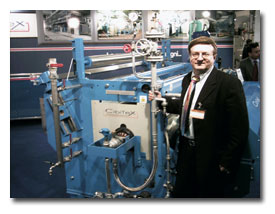
cibitex_Copy
Marco Cortiana presents Cibitex S.r.l.’s new “Ready” shrinkage plant for knits

Tecnorama offered the Dose & Dye® system, which focuses on small-batch quality. On
display was a dyeing unit with a capacity of 10 to 100 grams in sampling and 1 to 10 kilograms in
small production.

Germany-based Lindauer Dornier GmbH, a well-known name in weaving, continues to make headway
in knit-finishing equipment. Andreas Mondry, manager, textile finishing machinery, explained how
Dornier technology allows the knitted fabric to remain in tubular form throughout the finishing
process by using uniquely designed squeezing technology. In addition, Mondry spoke of the company’s
tubular singeing process — which creates a stripe-free finish in tubular form with reduced fabric
loss — as an alternative to enzyme finishing.

Rossano Biancalani, general manager of Italy-based Biancalani S.p.A., spoke of a “very good
response” at the exhibition. “We have had visitors from all over and a good response from South
America,” he said. The company introduced the ONDA washing machine for very light and delicate
fabrics. The machine was developed for customers interested in small batch sizes.

Italy-based Avantec De Franceschi introduced the Turbo Pintora garment-dyeing machine with “
super-high spin.” According to the company, the Turbo Pintora’s design reduces dyeing times by 25
to 30 percent while increasing load capacity.


Show Success


Overall, IKME Finishing & Knitting 2005 was a different experience than IKME 2003, held
just prior to the International Exhibition of Textile Machinery (ITMA) 2003. The knit area was as
strong as expected, and the addition of dyeing and finishing equipment, along with the ability to
draw 35 percent of show attendees from outside of Italy, makes the show a strong contender for
future success.

January/February 2006
InterWrap Launches RhinoSkin™ For Liners, Covers

InterWrap Inc., Canada, has
introduced RhinoSkin™ coated woven polyethylene (PE) industrial fabric for heavy-duty liners and
covers.

The fabric, coated with a low-density black PE blend, is available in three weights.
InterWrap reports RhinoSkin offers superior puncture and tear resistance; is ultraviolet-stable;
and is designed to provide maximum strength and protect against leakage in such applications as
spill and hazardous material containment, landfills, oilfields, environmental uses, ponds, and
truck and rail car liners.

December 2005

Ciba To Sell Sawgrass Sublimation Imaging Inks

Ciba Specialty Chemicals Inc.,
Switzerland, and Sawgrass Technologies Inc., Mount Pleasant, S.C., have signed a license agreement
whereby Ciba’s Textile Effects Segment will act as an authorized Sawgrass licensee to sell inks for
sublimation imaging on textiles.

“The digital sublimation market will have a higher value proposition as an outcome of this
Sawgrass and Ciba license agreement,” said Mickael Mheidle, head of New Business Applications,
Textile Effects Segment, Ciba.

In other Ciba news, two new dyes have been added to the company’s
CIBACRON® S range of reactive dyes for cellulose. Cibacron Red S-2G enables a
variety of deep brilliant red shades to be achieved, often with very little dye. Cibacron Dark Blue
S-GL, used for medium and deep blue shades, is suitable for end products requiring higher fastness
to light, chlorine and repeated laundering.

December 2005

Stringing Lines Feature Honeywell Spectra® Fiber

Sherman & Reilly Inc.,
Chattanooga, Tenn. – an electrical and telephone equipment manufacturer – is using stringing lines
with Morristown, N.J.-based Honeywell International Inc.’s Spectra® fiber to pull electrical wires
through transmission towers to lower voltage areas.

The low elastic stretch lines – manufactured by high-tech rope maker Yale Cordage, Saco,
Maine – are an alternative to traditional polyester lines, which often sag because they are heavy,
and require the use of additional machinery or wire rope to complete installation.

“Our pulling machines loaded with Spectra fiber-based ropes can carry longer lengths and
work greater spans since they have a lower elongation than traditional polyester-based lines,” said
John Whitt, senior vice president, Sherman & Reilly. “In the field, these properties translate
into linemen doing their work faster and safer.”

December 2005

Researchers Find That Tumbling, Not Heat, Shrinks Cotton

The tumbling action in dryers, and
not drying temperatures as previously believed, causes cotton clothing to shrink by evaporating
moisture from the garment, according to research conducted by Cary, N.C.-based Cotton Incorporated.

Researchers found that when they washed a standard load of 100-percent cotton interlock
fabric and put it in a dryer without a heat source, the fabric shrunk more than 20 percent after 45
minutes of tumbling. Likewise, two other loads put in dryers with temperatures of 150 F and 200 F
had the same amount of shrinkage in a less amount of time – proving that temperature affects drying
time, but not the level of shrinkage.

“These findings show that the preferred method of laundering a knitted cotton garment is to
tumble for no more than five minutes to remove wrinkles, then hang them to dry,” said Don Bailey,
vice president, Textile Research and Implementation, Cotton Incorporated.


December 2005

Trade Meeting Will Have Major Impact On Textiles

A make-or-break round of World Trade
Organization (WTO) trade negotiations is underway in Hong Kong this week, with much at stake for US
textile and apparel manufacturers and importers. Trade ministers from the 148-member nation WTO are
working on a framework for trade liberalization negotiations that government officials believe must
conclude in 2006. The basic goals for the negotiations are to knock down tariffs and other trade
barriers and create greater market access for agricultural, industrial and consumer products. The
WTO also is attempting to protect the interests of developing and less-developed countries that run
the risk of being overwhelmed in the growing trend toward globalization.

At this stage of the game, US textile lobbyists are zeroing in on two areas. They want
special sectoral negotiations for textiles and apparel and they are attempting to block an attempt
to grant less-developed countries duty-free and quota-free access to the US market. Down the road,
they will be opposing what they see as one-sided tariff reductions and they will be seeking greater
access to overseas markets that today, in some cases, are virtually closed to US exports.

As the talks got underway, US textile manufacturers were lining up support from members of
Congress and the countries where the United States has free trade agreements. In a letter to
President Bush, 24 members of Congress warned that a European Union-led effort to eliminate tariffs
for less-developed countries would divert textile trade from Western Hemisphere producers and
others who have free trade agreements with the United States and open the doors to products from
less-developed countries that use components from China.

Addressing the question of less-developed country duty elimination, the members of Congress
said: “Such a proposal would eviscerate existing preferential arrangements maintained with Central
America, Africa and Mexico. Countries with enormous and highly developed apparel sectors would have
the right to ship garments duty-free to the United States even though these garments are made from
yarns and fabrics produced in third countries such as China.”

The members of Congress also joined US textile manufacturers and those in countries where
the United States has free trade agreements, urging US negotiators to support the idea of special
textile and apparel sectoral negotiations. The congressional letter to President Bush said textiles
and apparel need to be placed in a Special Textile Sectoral “where the unique and sensitive aspects
of the textile and apparel trade can be addressed in a comprehensive manner and preserve the
foundation of our bilateral and regional free trade agreement and preferential trading programs.”

Those same sentiments were echoed by 13 trade groups in 11 North American Free Trade
Agreement, Dominican Republic-Central American Free Trade Agreement and Andean region Latin
American countries, as well as US textile manufacturing trade associations.

US importers of textile and apparel, however, support the idea of granting special duty
concessions to the less-developed countries. They say US consumers are paying $27 billion in duties
each year while developing countries are finding it difficult to compete in today’s quota-free
environment. Robert Zane, chairman of the board of the US Association of Importers of Textiles and
Apparel, said, “It is ironic that the quota program led the US importers to search out new
suppliers, and often in less-developed countries, but now that the quotas are gone, the
manufacturers in less-developed countries are having a harder time competing because they aren’t as
efficient and don’t have the ability to offer one-stop shopping for US importers and retailers.
Now, to be competitive, they really need a duty advantage.”

Importers also are opposed to sectoral negotiations, because they believe in the past they
led to unwarranted preferential treatment for textiles and apparel.

At the Hong Kong meeting, the National Retail Federation and EuroCommerce, representing
retailers and wholesalers in the United States and Europe, presented a joint statement calling for
substantial reductions and eventual elimination of all tariffs on agriculture, consumer and
industrial goods, including textiles and apparel. The organizations said such actions would benefit
both developing countries and domestic consumers, who, they said, had “for far too long borne a
disproportionate share of the cost of protecting politically powerful domestic industries.” They
also called for rejection of any new permanent safeguard mechanism to impose import quotas and any “
special formula” for textiles and apparel that would result in smaller tariff cuts than those made
for other products, i.e. special sectoral negotiations.


December 2005

INDA’s ITAB Issues Position Statements

The International Trade Advisory
Board (ITAB) of the Cary, N.C.-based Association of the Nonwoven Fabrics Industry (INDA) has
released two position statements regarding global trade issues that may affect the nonwoven fabrics
industry.

“ITAB Support for All U.S. Free Trade Agreements” lists three factors the board will take
into account when considering whether to support any proposed free trade agreement that includes
the United States: ambitious market access obligations; industry-appropriate rules of origin; and
stringent intellectual property standards.

“Even though we have articulated these three requirements to US trade officials for some
time now, INDA’s ITAB wanted a statement that clearly spells out our negotiating objectives for
ongoing and future free trade talks,” said Peter G. Mayberry, director of government affairs, INDA.
“That is exactly what this document is intended to do.”

“Implications of Any New Country’s Entry into the WTO” is the ITAB’s response to the
expanding membership of the World Trade Organization (WTO), which is expected soon to admit Saudi
Arabia as the 149th member country and is considering applications from 30 other countries.
According to the statement, the ITAB will act as a channel to convey potential industry concerns
regarding the conduct of potential WTO members to US officials.

“The ITAB wholeheartedly supports efforts to expand the multilateral trading system,” said
Gonzalo Castro, chairman, ITAB. “Our only concern is that prospective members are held to the same
level of commitment with regards to things like market access, rule of law and intellectual
property rights that is expected of the United States and other existing members.”

The ITAB previously released position statements titled “Imbalances in International Fair
Trade of Nonwovens”; “Rules of Origin”; “Intellectual Property Rights”; and “WTO Negotiations and
ITAB Cooperation with other Industry Groups.” Copies of ITAB position statements may be requested
by contacting Jessica Franken jfranken@aol.com.

December 2005

Quesenberry To Assume USTR Post

Scott Quesenberry, legislative
director to Senator Elizabeth Dole (R-NC), will assume the position of Special Textile Negotiator
in the United States Trade Representative office, effective December 5, 2005. Quesenberry is a
North Carolina native and a Capitol Hill veteran with an in-depth understanding of both policy
issues affecting the textile industry and the real life implications of these policies on
companies, the entire industry and its employees.

Quesenberry replaces David Spooner, who will now serve as Assistant Secretary of Commerce
for Import Administration. Spooner will have oversight responsibilities for the implementation of
textile agreements, including administration of the Department of Commerce Office of Textiles and
Apparel. The American Floor Covering Alliance (AFA) is hopeful that the US Senate acts as soon as
possible to confirm Spooner as Assistant Secretary of Commerce.

Both Spooner and Quesenberry face immediate and significant challenges as the US government
prepares for the upcoming Hong Kong Ministerial Conference of the World Trade Organization.
Quesenberry will take the lead on upcoming textile negotiations included in negotiations for free
trade agreements now underway between the United States and a number of other countries and
regions.

Quesenberry’s appointment was announced to attendees of the November 30 meeting of the
Industry Trade Advisory Committee for Textiles & Apparel. AFA looks forward to working with
Quesenberry as it continues to participate as a member of this committee and to work closely on
textile issues in the free trade agreement discussions. AFA hopes to invite Quesenberry to visit
Northwest Georgia to learn more about the carpet industry and its contributions to the US economy.

Press Release Courtesy of AFA

December 2005

Paxar Unveils Satin Tape That Needs No Finishing Station

White Plains, N.Y.-based Paxar
Corp.’s new 910RFS satin weave single-face tape does not need a finishing station, making it a less
expensive alternative to sonic-cut and loop-folded labels, according to the company. The tape for
sewn-in care labels also features a proprietary fray-resistant coating that lasts up to 50 home
launderings when used with HS1111 ink.

The white, 100-percent polyester tape is ideal for black text and can be printed on both
sides using Paxar’s SNAP 500 printer and 636/656/676 series printers. It also can be printed with
scannable bar codes and by thermal transfer. The 910RFS tape comes in widths of 18 millimeters
(mm), 24 mm and 33 mm at 273 yards per roll and can be used in a variety of apparel markets.

December 2005

BASF Offers Easy-Care, Non-Iron Labels

Germany-based BASF AG’s two new
labels for easy-care leisurewear and non-iron shirts, blouses and pants allow textile manufacturers
to distinguish their products, which have been finished with BASF products, from those of their
competitors.

The Easy Care label designates leisurewear that is easy to maintain and hard-wearing, while
the Non Iron label indicates cotton shirts, blouses and pants that retain their shape and do not
need ironing. The new labels complement the company’s Cosinel label for non-iron, fleecy-soft bed
linens that retain their shape.

“At present, end-users are confused by a variety of quality attributes such as
wrinkle-resistant, easy iron or wash and wear,” said Christina Zörner, textile value chain
marketing, BASF. “The clearly defined BASF labels enable the advantages of the easy-care,
high-quality textiles to be seen at a glance, and thus help the consumer decide what to buy.

December 2005

Sponsors