
Observations Of Changing Technology


T
he major difference between traditional and technical textiles markets is obvious.
Traditional textiles are marketed mainly in terms of style, appearance and quality. Technical
textiles are tailor-made to meet specific requirements related to end-product applications. Many
technical products are innovation-driven and demand constant research and development based on
awareness of customer requirements — requirements that are prerequisites for a successful position
in the marketplace.

New developments in technology can spur opportunities to better meet the technical demands of
specialty textile products. Expositions like the upcoming IFAI Expo in San Diego and the recent
Techtextil in Frankfurt offer significant opportunities to see the latest innovations. Following
are some quick observations of innovative technologies shown at Techtextil.


Filament Twisting, Cabling And Assembling


With the increasing significance of industrial textile applications, man-made fiber
processing has gained importance, requiring flexibility, market knowledge and creativity.
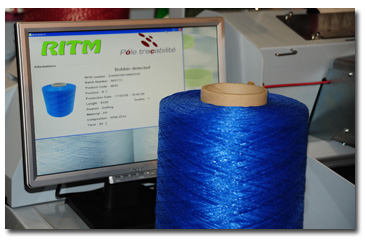
Processing machinery offered by France-based RITM includes: the Universal Twister & Cabler
(UTC) 60, said to enable either two-for-one yarn twisting or direct yarn cabling — a flexible
winding system that enables the user to build the bobbin either in a cross-wound package or by
precision winding and also to define the winding stroke; and the UTW 30, which allows a one-step
assembling and twisting process to produce cabled cord, using individual positions and
state-of-the-art drives for maximum flexibility.
SpecialtyRITM

RITM’s Universal Twister & Cabler 60 includes

an online tracking feature based on

radio frequency identification technology,

enabling tracking of each bobbin during the entire production process.


System Supplier


Groz-Beckert KG, Germany, offers a broad range of needles and other products for knitting,
weaving, felting and sewing. Its litespeed® and compound needles for knitting machines are used
more and more in the technical field. For processing carbon, glass and high-strength fibers as well
as copper, silver and steel wire, the compound needle appears to be indispensable. The SAN® 5
sewing needle was developed to eliminate problems such as needle deflection, stitch hole sticking
and irregular seam appearance related to processing technical materials. The Gebeswitch® enables
quick changeover of needle size on medium-duty lockstitch machines to adjust to the material being
processed, providing constant scarf/hook orientation by displacement of the needle axis over a Nm
80 to Nm 200 size range.


Open-Shed Weaving Technology


New open-shed weaving technology developments for Germany-based Lindauer Dornier GmbH’s
rapier machines are said to optimize fabric quality — including the quality of technical fabrics
woven with aramid, carbon and glass — as well as to minimize waste and maximize production speed.
Dornier reports the machine’s positive controlled rapier head can process virtually any material
that can be wound on a bobbin, from 0.012-millimeter wire or 11-decitex monofilament up to
50,000-filament carbon or Nm 0.5 bulk continuous filament yarn, with a single filling or with
five-fold multiple filling insertion, in single-layer up to eight-layer fabrics.


Weft Insertion Technology


Itema (Switzerland) Ltd.’s Sulzer Textil™ brand offers rapier, air-jet and projectile weft
insertion systems on its various weaving machines, along with special equipment to meet every
requirement. Under the company’s Customized Weaving Technology program, it will tailor-make
machines up to 655 centimeters wide to produce special fabrics such as agrotextiles and
geotextiles, conveyor belts, sailcloth, cinema and theatre screens, filtering fabrics, tarpaulins,
and wire fabrics.


Filament Hydroentanglement


France-based Rieter Perfojet’s Spunjet® in-line filament hydroentanglement process was
developed for nonwovens producers seeking opportunities in new markets such as geotextiles, roofing
or artificial leather. Spunjet is claimed to combine spunbond strength and spunlace softness; and
offers additional fabric properties with regard to softness, drape, tensile strength and isotropic
machine direction:cross direction (MD:CD) ratio.


Lyocell Nonwovens


Cellulose fiber and polymer producer Lenzing Group, Austria, and softwood market pulp
producer Weyerhaeuser, Federal Way, Wash., have commissioned a pilot plant in Lenzing to explore
the commercial potential of TencelWeb™ technology to produce nonwovens directly from lyocell for
industrial and personal care products. TencelWeb offers an alternative to petroleum-based nonwovens
by applying both meltblown and spunbond technology to wood-fiber-based raw materials.


Direct Coating


Dry finishing systems supplier Brückner Trockentechnik GmbH & Co. KG, Germany, and
printing systems solutions supplier Stork Prints BV, the Netherlands, have developed a
patent-pending technology for direct coating of elastic knitted fabric. The process is an
alternative to traditional indirect transfer coating, in which the coating substance is first
applied on a dimensionally stable carrier material on which the fabric is then laid and dried,
followed by separation of the substrates. The new system features a rotary printing screen
integrated in the tenter’s entry zone; fabric centering in front of the introduction to the coating
unit; a very short fabric path between the coating unit and the pin-on point at the tenter;
tension-controlled fabric transport; selective fabric width and length heat-setting using a tenter
with optional fabric support belt; and Stork Prints’ flexible foam processor, which also can be
used for paste processing.


Calender Technology


Calender roll producer Andritz Küsters GmbH, Germany, offers a MycroCoat micron-precision
fixed comma doctor blade for web coating or finishing. The blade’s deflection control facilitates a
precisely defined nip against the optimally bedded counter roll.

Andritz Küsters’ teXcal s-roll calender has a maximum line force of 400 Newtons per
millimeter. Featuring deflection control and adapted surface technology, the roll can be used to
process special applications — such as parachute silk and high-tech outdoor clothing, which require
a defined low air permeability — with optimal compaction results in one passage.

The company’s neXline® wetlaid technology offers solutions for manufacturing niche products
made with aramid, carbon, microglass and other high-tech fibers.


Silicone Technologies


Silicone products supplier Dow Corning Corp., Midland, Mich., launched DS-9000 Eco Repel, a
technology co-developed with Belgium-based niche chemicals manufacturer Devan Chemicals that
enhances softness and hydrophobicity on flame-retardant (FR) finishes without affecting a fabric’s
FR properties. The eco-friendly, fluorocarbon-compatible, formaldehyde-free product is made using a
low-surfactant formula, and its silica shell encapsulated silicone fluid construction makes it
suitable for multifunctional formulations. End-use applications include mattress ticking, tenting,
canvas, upholstery and protective clothing.

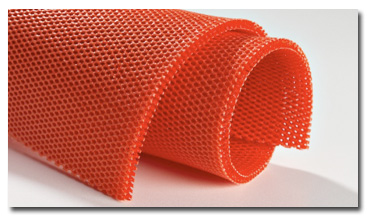
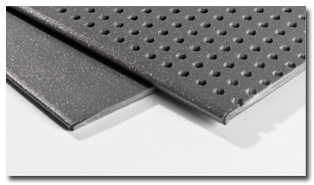
Two new technology platforms for Dow Corning’s demand-activated, impact-resistant Active
Protection System for fabrics are also available: the S-Range, building on first-generation 3-D
spacer technology but lighter-weight with optimized silicone for maximized impact protection and
offering improved washability; and the TP-Range, featuring thermoplastic technology. Both offer
improved comfort and aesthetics over the original technology and comply with a range of
international impact-protection standards. Applications include high-performance sports apparel and
equipment; body armor; sport, medical and military base-layer garments; other military
applications; and personal possessions protection.
SpecialtyDowSrange
SpecialtyTPrange

Top: Dow Corning’s Active Protection System S-Range

impact-resistant fabric features 3-D spacer technology.

Bottom: The TP-Range fabric features thermoplastic technology.


Textile DNA


Product piracy is a global problem, and a number of authentication technologies are available
or in development. Textile technology developer Schoeller Technologies AG, Switzerland, reports its
DNAtex technology gives a product a “unique ID” that is recognized immediately when the article is
electronically scanned. Schoeller claims every element in the textile production chain, from
chemicals to fibers to fabrics to finished products, can apply the technology.

July/August 2009

US-China Dialogue Stresses Cooperation

The first cabinet-level US-China Strategic and Economic Dialogue hosted by the Obama administration
addressed a wide range of issues and stressed the importance of cooperation in order to overcome
economic problems in both countries and the world at large.

While these periodic conferences generally are long on rhetoric and short on action, a joint
statement said the two parties had a “candid and in-depth exchange of views” that will lead to an
understanding of strategic, long-term issues, and laid the groundwork to reduce differences and
promote a “positive, cooperative and comprehensive relationship.”

China’s huge trade imbalance with the United States remains one of top issues on the agendas
of both countries. At the conclusion of the meeting, US Treasury Secretary Timothy F. Geitner, who
chaired the US delegation, said, “We reaffirmed our commitment to open and rules-based trade and
investment, and we renewed our commitment to avoid protectionist measures and to bring about a
successful conclusion of the Doha Round of trade liberalizations negotiations.”

While the talks did not produce much in terms of specific commitments, the Chinese have said
they intend to continue moving away from the export-dominated trade policies that have contributed
to the trade deficit and place more emphasis on domestic consumption. The US government’s statement
did not address allegations of Chinese currency manipulation or other illegal trade practices,
which domestic manufacturers see as major contributors to the trade imbalance.

A Treasury Department statement said a Chinese economy that is powered less by exports and
more by domestic demand growth and greater household consumption will contribute to “stronger more
sustainable and more balanced global economic growth.”

The two days of meetings did produce a memorandum of understanding calling on both countries
to enhance cooperation on climate change. The memorandum calls for an ongoing dialogue dealing with
such things as a technology exchange, cooperation on specific projects and efforts to promote a
transition to low-carbon energy consumption by industries.

Participants said the meetings laid the groundwork for a visit by President Barack Obama to
China later this year.

August 4, 2009

The Rupp Report: Technical Textiles In Sports Politics

The 13th FINA World Championships for swimming in Rome just finished. An unbelievable number of
more than 40 world records set a strange standard for future competitions. And, yes, technical
textiles played a major part in this funny dance of records.


348 Possible Suits?

For years, swimming was a sport dominated by the United States. Names like Mark
Spitz and Michael Phelps are known around the globe. But this situation has changed in the last few
years. With the development since 2008 of new swimsuits — or should one say, racing suits — new
world records have come with almost every competition — more than 150 since 2008. From a humble
swimsuit, the gear changed to high-tech suits, which are far away from the traditional swimwear
made of knitted fabrics. Modern racing suits are more like a kind of full-body scuba diving
equipment. The athlete is now in second place — his efforts are not that important anymore. The
one with the best-performing material is winning the game, and the new world records come
automatically — almost.

Unbelievable? Yes, but according to the list of the International Swimming Federation (FINA),
and the FINA Commission in charge of swimwear approval, 348 swimsuits from 21 manufacturers were
approved on May 18, 2009. Yes, 348.

Back To Swimming?

Just to give an idea of the specifications for a modern swimsuit, here are the main
points, established by the FINA committee for swimming, to be taken into consideration. And, dear
reader, don’t forget, this is for a swimsuit and not for an airplane:

• surface covered;

• type of material;

• flexibility;

• regular flat material;

• outside application;

• thickness;

• buoyancy;

• construction;

• external stimulation or influence;

• consistency; and

• customization.

Back To Textiles!

However, some requirements belong to textiles and their ability to invest new fabrics:

First, the surface treatment of the fabric: “Any material added on to the surface of the
textile fabric (e.g. coating, printing, impregnation) shall not close the original open mesh
structure of the base textile fabric. The treated material shall further comply with all
requirements in particular in regard to thickness, permeability and flexibility. This part of the
rule does not apply to logos and labels. This applies to both the manufacturing level and the
actual use of the swimsuit.”

Secondly, the variety of materials: “Different materials may be used in one swimsuit provided
they are textile fabrics as defined above and they comply with all other criteria including notably
thickness and permeability to apply to total layers. Combination of materials shall further not
create outstanding shape(s) or structure(s). Layered materials must be completely
attached/bound/stuck together except where required to protect sensitive parts.”

And last, but not least, permeability: “Material(s) used must have at any point a
permeability value of more than 80 [liters per square meter per second]. Permeability values are
measured on material with a standard multidirectional stretch of 25%. However, measure on material
which cannot be significantly stretched will be effected on unstretched flattened material.”

However, after the avalanche of world records set in Rome, the list of 348 different
materials is now valid only until Dec. 31, 2009. And a FINA congress voted that “for men, the
swimsuit shall not extend above the navel nor below the knee, and for women, shall not cover the
neck, extend past the shoulder, nor extend below the knee.”

What A Challenge!

What does this mean? It is the challenge for all clever fabric producers to show FINA that
even sportswear is today a technical textile, and the proof that swimming is first of all a human
sport and not a matter of a technical invention. Even some brand names are ready to go back: “We
applaud FINA for finally banning these buoyant wetsuits which have cast a shadow over the
competition.” These words came from Craig Brommers, swimsuit maker Speedo’s senior vice president
of marketing. Speedo is on the list with many fabrics. “We do feel that a 100% textile-only body
suit, as per 2007 world championships, would have been an appropriate solution. Despite that ruling
we will now look forward to innovating within the FINA rules,” he added.

Ok, lets go for it.

August 4, 2009

BRFL Partners With DyStar

India-based fabric and apparel manufacturer Bombay Rayon Fashion Ltd. (BRFL) has signed an
agreement with Germany-based DyStar Textilfarben GmbH & Co. Deutschland KG in which DyStar will
be the exclusive supplier of dyes, auxiliaries and services for the dyeing and printing operations
at BRFL’s plants in Maharashtra and Karnataka.

BRFL is India’s largest shirt manufacturer, processing 150,000 meters of fabric and 100,000
meters of apparel per day at its facilities in Maharashtra and Karnataka, which employ 30,000
people. The company expanding its production capacity, setting up greenfield units for yarn dyeing,
weaving, processing and apparel manufacturing in Maharashtra.

“DyStar has offered us outstanding technical support in setting up our dyeing and printing
processes,” said Prashant Agarwal, managing director, BRFL. “With this agreement, we will have a
reliable partner with an international reach, a wide product and service portfolio to meet
requirements of our global customer base.”

“BFRL’s long term vision, awareness towards quality and ecological requirements go hand in
hand with our commitment to provide complete textile solutions to our most valued customers,” said
Rajesh Balakrishnan, managing director, DyStar India Pvt. Ltd. “This agreement is an important
milestone and we are extremely excited about it.”

August 4, 2009

PBSI Launches DuPont™ Kevlar® XP™ Body Armor

Pompano Beach, Fla.-based Point Blank Solutions Inc. (PBSI) — a producer of body armor solutions
for the US military, government and law enforcement agencies, in addition to certain global markets
— has introduced a line of high-performance ballistic armor systems featuring 100-percent DuPont™
Kevlar® XP™ woven fabric technology. The line includes the company’s KXPIIIA ballistic model,
available in Point Blank Body Armor’s Hi-Lite XP™ and Protective Apparel Corp. of America’s Perform
XP™ versions. The protective solutions meet the National Institute of Justice’s (NIJ’s) .06 testing
requirements and are certified under the Level IIIA performance standard.

PBSI collaborated with DuPont Protection Technologies in developing Hi-Lite XP and Perform XP
to protect officers against increased threat levels and to stop bullets under a range of extreme
field conditions such as heat, cold, humidity and mechanical wear. Independent tests conducted by
DuPont have shown Kevlar XP provides enhanced bullet resistance and reduced back face deformation
and is 10-percent lighter than other commercially available technologies designed to protect
against the 44 Magnum and other ballistic threats. The systems also are engineered to protect
against special threats ammunition.

PBSI will offer Hi-Lite XP and Perform XP with ergonomically improved carriers providing
increased range of motion, flexibility and adjustability, and with protective features such as the
company’s patented Self Suspending Ballistic System™, which adjusts to the body’s contours to allow
improved maneuverability.

August 4, 2009

Naturally Advanced Technologies Contracts With G.J. Littlewood & Son, Hanesbrands To Process Crailar® Organic Fibers

Canada-based Naturally Advanced Technologies Inc. (NAT) — a developer of technology to process
bast fibers including industrial hemp for use in a range of applications — has signed an agreement
with G.J. Littlewood & Son Inc. — a Philadelphia-based commission dyer of man-made and natural
fibers — to process Crailar® Organic Fibers for use in commercial apparel products. Crailar is a
proprietary enzymatic technology for processing bast fiber for use in apparel, home furnishing and
carpeting applications. According to NAT, fibers processed using the technology are a
cost-comparable and sustainable alternative to organic cotton.

“We are excited to have signed the foremost fiber processor/dyer in North America for the
next step in executing our Crailar Organic Fibers commercialization plan,” said Ken Barker, CEO,
NAT. “In September, we expect to begin producing approximately 20,000 pounds of fiber per week for
our apparel partners as well as provide testing yarns to spinning companies for the home
furnishings, denim and work wear markets. As such, we anticipate delivering our first revenue from
Crailar in the fourth quarter. Our agreement secures initial capacity of approximately 40,000
pounds per week, with the capability to aggressively ramp up from there to meet the needs of our
commercialization plans.”

NAT also has signed a multiphase joint development agreement with Winstom-Salem, N.C.-based
Hanesbrands Inc., allowing Crailar to be processed for use in Hanesbrands’ apparel knit products.
NAT will use technology developed with and licensed from The National Research Council of Canada to
retrofit existing dyeing equipment at a Hanesbrands plant to enable commercial production of the
organic apparel-grade fibers. 

“We are eagerly working with NAT to incorporate Crailar Organic Fibers into our production
process,” said Michael Faircloth, vice president of global supply chain support, Hanesbrands. “Our
interest in developing Crailar’s potential for applications in the knit apparel market grew out of
the impressive performance-enhancement characteristics it demonstrates, as well as the economic and
environmental benefits it offers.”

In November 2008, NAT announced test results from trials of Crailar conducted at Raleigh,
N.C.-based North Carolina State University’s College of Textiles
(See
“Naturally Advanced Technologies Completes Successful Trials of Crailar Technology,
www.TextileWorld.com, Nov. 18, 2008
)
. In the trials, sponsored by Hanesbrands, industrial
hemp blended yarn was carded and ring-spun using conventional unmodified cotton equipment and was
knitted into 5-ounce-per-square-yard jersey fabric. NAT reports that using Crailar technology to
produce the fabric resulted in a 50-percent reduction in shrinkage, 45-percent increase in tensile
strength, and 20-percent reduction in dye uptake. The fabric also exhibited wicking capabilities.

August 4, 2009

Miguel Caballero USA Named Official Distributor Of Miguel Caballero Designs

Colombia-based bulletproof apparel manufacturer Miguel Caballero has named Miami-based Miguel
Caballero USA an official distributor of the company’s apparel line in the United States. US
customers may purchase Miguel Cabellero products directly from the Miami office. Later this year,
the company also expects to debut a fully functional website that will feature a virtual store and
information on ballistic protection.

Miguel Caballero combines bulletproof technology with fashion, offering products such as
Italian leather jackets and polo T-shirts. The company also creates tailored bulletproof apparel
lines incorporating pockets and carriers to hold weapons, radios and other gear. Those lines are
targeted for use by agents of government institutions and private security groups.

August 4, 2009

Hohenstein Institute Develops Anti-Mite Mattress

The Institute for Hygiene and Biotechnology (IHB) at The Hohenstein Institute — a Germany-based
textile research and testing laboratory with locations worldwide — in conjunction with
Germany-based mattress manufacturers diamona and MetaTex, has developed an anti-mite mattress
prototype for allergy sufferers. The mattress contains flexible textile heating pads that create a
hygrothermal environment that inhibits house dust mites from settling into the mattress. The new
mattress provides an alternative to the use of either tight-closing mattress covers or chemicals to
treat the dust-mite problem.

Dust mites require moisture from ambient air to survive, and do not tolerate dry, warm
conditions. Hohenstein tests reveal that heating the mattress to 50ºC for one hour once or twice a
week will prevent dust mites from settling in. The heading pads, supplied by Germany-based Rolf
Mayer Strickstoff-Fabrik, are incorporated into the mattress layers at specified distances to
maintain the desired temperature throughout the mattress.

“Using this trailblazing innovation, we are finally able to ensure that sufferers of house
dust mite allergies can have a good night’s sleep,” said Dr. Dirk Hoefer, manager, IHB. “And we
have achieved this without compromising sleeping comfort or having to revert to chemical substances
which in turn create problems with people with heightened sensitivities.”

August 4, 2009

Gander Mountain Debuts Hunting Apparel Featuring DuPont™ Active Layer

Wilmington, Del.-based DuPont and Gander Mountain Co. — a Saint Paul, Minn.-based retailer of
outdoor and recreational apparel, products and services — are debuting DuPont™ Active Layer
technology in Gander Mountain’s SPX rainwear and Active Layer insulated fleece parka and bib.
DuPont Active Layer is an engineered moisture-management film that provides waterproof and
windproof protection in activewear such as ski and snowboard gloves, winter sports jackets, golf
rain gear, hunting apparel and shoes. The film can be recycled if used with 100-percent polyester
fabrics. 

The SPX rainwear and Active Layer insulated fleece parka and bib are now available at Gander
Mountain’s retail stores, with an insulated version to be released September 1.

August 4, 2009

Aerodyne Introduces S Series® Dust Collector

Cleveland-based Aerodyne, a manufacturer of dry-material handling systems, has debuted its S
Series® Dust Collector for separating out fine particles starting at 20 microns. According to the
company, the cyclonic dust collector can pick up dusts including sawdust, fly ash, sand and coffee;
and can easily handle fibrous, sticky, hygroscopic and high-temperature materials that might clog
or damage filter bags or cartridges. It is designed to minimize the amount of dust particulate that
can come in contact with the collector walls, enabling it to handle highly abrasive materials
without the need for special anti-abrasive coatings or extra heavy-duty construction. Aerodyne also
reports that when installed before baghouses or cartridge filters, the S Collector significantly
increases the filter media’s life and lowers labor and material costs.

The S Series Dust Collector may be used as part of a manufacturing process or to meet the
Occupational Safety and Health Administration’s standards for dust control in the workplace. Units
come in sizes ranging from 50 to 18,000 cubic feet per minute and may be mounted vertically or
horizontally.

August 4, 2009

Sponsors


