NRF: Import Cargo Volume Expected To See Year-Over-Year Drop During First Half Of 2026

WASHINGTON — February 9, 2026 — Import volume at the nation’s major container ports is expected to see a significant year-over-year decline during the first half of 2026 as the impact of tariffs continues, according to the Global Port Tracker report released today by the National Retail Federation and Hackett Associates.

“With tariffs still a matter of debate in the courts and in Congress, their effect on imports is being clearly seen,” NRF Vice President for Supply Chain and Customs Policy Jonathan Gold said. “The situation underscores the need for clear and predictable trade policies that support supply chain certainty and reliability, business planning and consumer affordability. Tariffs are a tax on U.S. businesses that is ultimately paid by consumers through higher prices.”

A Supreme Court decision could come at any time on the legality of the administration’s use of tariffs under the International Emergency Economic Powers Act. However, if the court strikes down the IEEPA tariffs, there are concerns that the administration could implement tariffs under other trade authorities, creating further challenges and uncertainty.

Hackett Associates Founder Ben Hackett said tariffs have brought “a global change in trade relations” that is affecting import volumes.

“The continuing use of tariffs against friend and foe alike combined with the uncertainty of when or if they will be implemented makes trade forecasting very difficult,” Hackett said, adding that last year’s government shutdown is still making up-to-date government data difficult to come by. “Following essentially flat container import volumes in 2025 compared with 2024, we expect a decline during the first half of 2026 and likely longer.”

U.S. ports covered by Global Port Tracker handled 1.99 million Twenty-Foot Equivalent Units — one 20-foot container or its equivalent — in December, although the Ports of Houston and Charleston have not yet reported their data. That was down 1.7% from November and down 6.6% year over year. Imports for the full year in 2026 totaled 25.4 million TEU, down 0.4% from 25.5 million TEU in 2024.

Ports have not yet reported numbers for January, but Global Port Tracker projected the month at 2.11 million TEU, which would be up from December ahead of Lunar New Year factory shutdowns in Asia but down 5.2% year over year. February is forecast at 1.97 million TEU, down 3.1% year over year; March at 1.89 million TEU, down 12%; April at 2.05 million TEU, down 7.1%; May at 2.13 million TEU, up 9.3%, and June at 2.12 million TEU, up 8%.

Those numbers would bring the first half of 2026 to 12.27 million TEU, down 2% from 12.53 million TEU during the same period in 2025. The May and June results show a year over year increase largely because of the sharp drop-off in imports during those months last year after “Liberation Day” tariffs announced in April 2025.

Global Port Tracker, which is produced for NRF by Hackett Associates, provides historical data and forecasts for the U.S. ports of Los Angeles/Long Beach, Oakland, Seattle and Tacoma on the West Coast; New York/New Jersey, Port of Virginia, Charleston, Savannah, Port Everglades, Miami and Jacksonville on the East Coast, and Houston on the Gulf Coast. The report is free to NRF retail members, and subscription information is available at NRF.com/PortTracker  Subscription information for non-members can be found at www.globalporttracker.com.

As the leading authority and voice for the retail industry, NRF analyzes economic conditions affecting the industry through reports such as Global Port Tracker.

Posted: February 9, 2026

Source: The National Retail Federation (NRF)

Carrington Textiles And Pincroft Unite Defence Expertise At Enforce Tac

ADLINGTON, UK — February 9, 2026 — Carrington Textiles and Pincroft return to Enforce Tac for the third time, presenting a co-branded stand that brings together textile manufacturing and specialist finishing under one roof.

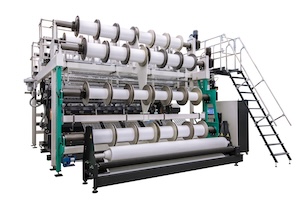
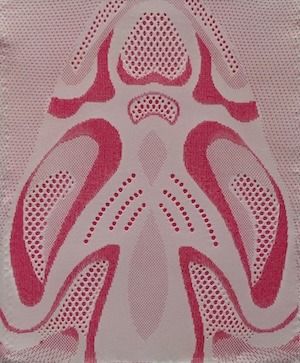
Pincroft’s new Rotascreen TG by Austrian manufacturer Zimmer, with 12 printheads and a magnet system to ensure greater precision, faster reorders and uniform coverage.
Photo — Pincroft Dyeing & Printing

Carrington Textiles will showcase its capability as a global manufacturer of performance and protective fabrics for defence and security markets. The collection spans proven military constructions alongside developments including the Defence Stock Range and the expanded military portfolio featuring ProTact by Haartz?. Together, these fabrics demonstrate a focus on durability, comfort and consistent performance for demanding operational environments.

Pincroft complements this with a service-led offer as a commission dyer, printer and finisher, supporting a wide range of defence, workwear and technical textile programmes. Key capabilities include in-house permethrin application for insect repellent finishes, precision rotary screen engraving and fully managed end to end processing. From artwork development and digital file preparation through screen engraving to final printing, Pincroft controls the entire process, delivering speed, security and repeatable quality.

Paul Farrell, Sales Director, said, “Having Carrington Textiles and Pincroft side by side is incredibly powerful for customers. It allows us to discuss fabric engineering, specialist finishes and print execution in one joined-up conversation, reducing complexity and strengthening confidence in the supply chain.”

Visitors can find both brands in Hall 8, Stand 116.

Posted: February 9, 2026

Source: Carrington Textiles

Alliance for European Flax-Linen & Hemp Expands Bio-Materials Presence at JEC World 2026

PARIS — February 2, 2026 — The Alliance for European Flax-Linen & Hemp is pleased to announce its participation at JEC World 2026, featuring a significantly expanded presence and an enhanced offering for the global composites industry.

Building on previous successes, the Alliance members will be at the core of a newly renamed and enlarged Bio-Materials Village in Hall 5. The village has grown by more than 30%, expanding from 250m² to 333m², and will feature 14 Alliance members and partners representing the full natural fibre composite value chain from fibre cultivation and processing through to semi-finished materials, resins, and industrial applications.

This year’s village welcomes several new members, including Norafin, which brings advanced technical nonwoven expertise using flax and hemp fibres, and innovative start-up Biofibix developing next-generation bio-based composite solutions. Another new participant is GreenPoxy by Sicomin, a leading supplier of bio-based epoxy resins that complement natural fibre reinforcement systems and enable lower-impact composite structures.

Innovations Showcase

The Bio-Materials Village will highlight several award-winning and shortlisted developments, including exhibits from JEC Innovation Award winners and finalists.

Bcomp has received the Automotive & Road Transportation Parts Award for its series-production exterior flax composite components developed for BMW, demonstrating the scalability and performance of flax reinforcements in demanding automotive applications.

Safilin will also present its collaboration with Stratiforme on the Ecotrain project, showcasing the successful integration of natural fibre composites into rail interiors, delivering weight reduction, improved environmental performance, and industrial feasibility.

Biofibix, shortlisted among the 20 finalists of the 2026 JEC Startup Booster, will present its proprietary reinforcement technology designed to overcome one of the key challenges of natural fibre composites : structural consistency. Biofibix develops flax-based reinforcement systems that combine controlled fibre orientation with thermoplastic and thermoset compatibility, enabling improved mechanical performance and process reliability.

Visitors will also discover the Ssuchy-Next project, an initiative focused on wind energy applications. The project explores the use of hemp-based composite solutions for a 12.6m wind turbine blade, combining optimized fibre architecture, bio-sourced materials, and industrial manufacturing processes. Ssuchy-Next demonstrates how natural fibres can contribute to reduced carbon footprint, improved vibration damping, and end-of-life advantages, while meeting the mechanical and durability requirements of the wind energy sector.

Additional cutting-edge innovations on display will be showcased by other Alliance members and partners that include BComp, Circular Structures, DEMGY, Depestele, Ecotechnilin, Emanuel Lang Flax Composites, Flaxco, Libeco, Linificio e Canapificio Nazionale, Norafin, Safilin, Terre de Lin Technique, and many more.

Industry Conference

As part of the JEC Composite Exchange programme, Alliance experts will organize a round-table discussion on Wednesday 11 March at 2:00 pm Agora 5, titled:

“From Data to Applications: How Environmental and Technical Flax-Linen & Hemp Data Help Build Industrial Solutions.” The discussion will highlight how environmental metrics and technical performance data are essential tools for designers, engineers, and manufacturers in accelerating the adoption of natural fibre composites, while exploring the latest technical advances in flax-linen and hemp composites, their environmental performance, and the strategic pathways supporting the industrial deployment of bio-based composites in Europe.

“We are very excited to welcome visitors to our expanded Bio-Materials Village at JEC World 2026, which brings together an extended natural fibre composite value chain under one roof,” said Bruno Pech, Innovation Project Manager at the Alliance for European Flax-Linen & Hemp. “With 14 members and partners from raw materials to finished applications, this showcase demonstrates the maturity, credibility, and innovation capacity of the European flax and hemp composites sector.”

Posted: February 9, 2026

Source: The Alliance for European Flax-Linen & Hemp

BTMA Member Airbond To Receive Recognition For Contributions To The Composites

MANCHESTER, UK — February 9, 2026 — Airbond is the latest member of the British Textile Machinery Association (BTMA) to receive recognition for contributions to the composites industry.

Airbond prototyped and tested a number of structures with different cell sizes and thicknesses before deciding on the optimised structure for its latest range of 3D-printed splicers.

The engineering firm based in Pontypool, South Wales, has just received the Make UK Energy and Sustainability Award for its Lattice 3D Printing project.

The award recognises the company’s use of industrial 3D printing and advanced design methods to reduce material use and waste in the production of its pneumatic splicers, while improving manufacturing efficiency and maintaining the reliability demanded by industrial customers.

“We’ve used 3D printing to do something traditional manufacturing can’t – build strength and performance into the inside of the part, using far less material,” explains Maxim Wright, Airbond’s Head of Design and Development who leads the company’s design engineering and additive manufacturing programme. “Winning a national sustainability award is a big moment for a small team in Pontypool and it shows what modern Welsh engineering can deliver.”

Optimized structure

Pneumatic splicing was invented by Airbond in the 1960s, initially for the textile industry, and has subsequently been widely adopted by companies manufacturing carbon and aramid-based components for the aerospace, automotive and wind power industries.

Using Carbon3D’s Lattice Design Engine, Airbond prototyped and tested a number of structures – Voronoi, Tetrahedral, Kagome –  all with different cell sizes and thicknesses, before deciding on the optimised structure for its latest range of splicers.

Zero mechanical failures and a strong customer response confirmed the design’s robustness and manufacturing viability. The standardised modular design is 33% lighter than previous splicers and has reduced costs in electrical packages, engineering and installation for Airbond, which continues to invest in product development and manufacturing capability in South Wales, applying advanced design to make industrial tools lighter, more efficient to produce and more sustainable.

Interfacing with specialists

Cygnet has just launched a new website for its global audience.

This success follows quickly on the heels of the announcement that fellow BTMA member Cygnet Texkimp has been shortlisted for a 2026 JEC Innovation Award for its collaboration with McLaren Automotive on the ART rapid tape-deposition system. Capable of depositing dry fibre tapes at up to 2.5 metres per second with exceptional precision, ART reduces scrap, shortens cycle times and delivers structural improvements already being realised across McLaren’s composite-intensive vehicle platforms.

As the world’s largest independent manufacturer of prepreg production machinery and handling and converting systems for the composites industry, Cygnet has just launched a new website for its global audience, providing users with easy access to valuable resources and an interface to connect with product specialists.

“The new site gives us a dynamic platform to share our technologies and expertise with our global audience in a way that reflects the ease and professionalism with which we operate,” says CEO Luke Vardy. “We hope it will provide a sense of what it’s like to collaborate with us and a clear view of our commitment to innovation and performance in fibre processing.”

Autoclave advances

Roaches International is marking 15 years of manufacturing autoclaves for composites manufacturers.

A dedicated new LinkedIn page meanwhile celebrates 15 years of growth, development, and engineering innovation in autoclave and thermosetting technologies for a third BTMA member, Roaches International.

Roaches Autoclaves was founded in 2011 and has subsequently become a central part of the West Yorkshire-based business, supporting the development of aerospace components and high-performance automotive structures, as well as the production of components for commercial construction, sporting goods and food production and processing.

The company’s first ever autoclave was installed at Crosby Composites in Brackley, Northamptonshire, with a diameter of 2.5 metres and a length of three metres.

“We started big and the industry instantly wanted more, so happily, we carried on and Crosby went on to order three more autoclaves of the same size, all of which are still in operation today and receive reliable and ongoing service from us,” says Roaches International MD Sean O’Neil. “In addition to the machines themselves, support, service, calibration and collaboration remain the cornerstones of Roaches Autoclaves and our dedicated new LinkedIn platform will allow for more frequent, higher quality communication with the digital composites community.”

Measurable benefits

BTMA CEO Jason Kent

“From additive manufacturing and sustainable product design to high-speed fibre placement and advanced autoclave technologies, our members continue to demonstrate how British machinery and engineering expertise are helping to shape the future of the global composites industry,” says BTMA CEO Jason Kent. “These achievements underline the depth and diversity of engineering excellence across our membership, and what is particularly encouraging is the way they all deliver real, measurable benefits in efficiency, sustainability and performance, while being rooted in long-term investment, collaboration and skills within the UK.”

Posted: February 9, 2026

Source: The British Textile Machinery Association (BTMA)

GenuTrace And Kinset Partner To Help Brands Defend Cotton Claims As Germany Tightens Greenwashing Enforcement And UFLPA Scrutiny Continues

BRIGHTWATERS, N.Y. — February 9, 2026 — As Germany becomes one of the first EU member states to enforce sweeping anti-greenwashing rules and global brands continue to face enforcement under the U.S. Uyghur Forced Labor Prevention Act (UFLPA), GenuTrace and Kinset today announced a collaboration designed to help companies prove cotton origin claims with evidence that can withstand regulatory scrutiny.

The partnership responds to a rapidly changing compliance landscape in which sustainability and origin claims are no longer assessed on intent or documentation alone, but on whether they can be substantiated with verifiable, product-linked proof. Germany’s amended Act Against Unfair Competition—implementing the EU’s Empowering Consumers for the Green Transition Directive—now explicitly prohibits generic or unverifiable environmental claims, while UFLPA enforcement continues to place the burden of proof on importers to demonstrate that cotton is not linked to forced labor.

Against this backdrop, GenuTrace and Kinset are delivering a dual-layer cotton traceability model that connects physical fiber-level verification with Digital Product Passport (DPP)-ready supply-chain data, enabling brands to move from claimed origin to defensible origin.

GenuTrace brings fiber-level isotope testing, a scientific method that assesses geographic origin directly from the cotton itself, independent of documentation. Kinset provides the digital infrastructure to structure, preserve, and connect supplier and location data across the cotton value chain—creating a regulator-legible record aligned with emerging Digital Product Passport requirements.

“Regulation has fundamentally changed the question brands must answer,” said MeiLin Wan, Founder and CEO of GenuTrace. “It’s no longer where did you intend to source from? It’s can you prove that the cotton in this product actually comes from where you say it does? By linking physical origin verification directly to digital records, we help companies respond to enforcement with evidence, not explanations.”

Cotton supply chains are long, fragmented, and prone to aggregation, blending, and loss of origin information—particularly at early transformation stages such as spinning and recycling. This loss of origin integrity directly affects downstream textile mills, apparel manufacturers, footwear brands, and home textile producers, where cotton origin claims are ultimately made to consumers and regulators. While digital traceability systems and certifications remain important, regulators are increasingly testing whether the material reality of the fiber itself aligns with the claims being made downstream. Documentation alone has proven insufficient under both EU consumer-protection law and UFLPA enforcement.

“Digital Product Passports and due-diligence systems only work if the data behind them is credible,” said Katie O’Riordan, CEO and Co-Founder of Kinset. “Our collaboration focuses on connecting existing supply-chain data with independent physical verification, so companies can strengthen compliance without rebuilding their systems from scratch.”

From Sustainability Claims to Enforcement-Ready Evidence

The collaboration is designed to support brands facing increasing scrutiny across multiple jurisdictions. It enables earlier detection of sourcing risk, strengthens audit and investigation readiness, and supports consistent, defensible disclosures across markets as Digital Product Passports become mandatory in the EU.

As Germany’s greenwashing rules take effect and UFLPA enforcement continues to expand, the direction of travel is clear: traceability is no longer about transparency alone—it is about proof. Claims must be limited to what can be substantiated, and systems must be designed with enforcement in mind.

By linking physical evidence to digital traceability, GenuTrace and Kinset offer a practical model for navigating this new compliance reality—one where the most resilient strategies are those that replace promises with proof.

Posted: February 9, 2026

Source GenuTrace, LLC.

Faribault Mill Announces Line Of Blankets In Partnership With The United States Olympic And Paralympic Committee And USA Bobsled Team

FARIBAULT, Minn. — February 9, 2026 — Faribault Mill, the storied Minnesota manufacturer known for crafting premium American-made blankets, throws, and accessories since 1865, today announced a limited edition of United States Olympic and Paralympic Committee and the USA Bobsled Team blankets to support the 2026 Winter Olympics.

USA Bobsled Team Wool Throw Blanket

The line features three styles all crafted in Minnesota from 100% natural materials. They include:

  • USA Bobsled Team: New this year, a 42″ x 65″ red, white, blue and black blanket design inspired by the iconic USA Bobsled team design. Retails for $245.
  • American Flag: A 42″ x 65″ American Flag Wool Throw made of 100% wool and cotton blend. Retails for $245.
  • U.S. Olympic Team Official Puck Logo: A 42″ x 65″ grey blanket with the official U.S. Olympic Team puck logo featuring the iconic five rings. Retails for $245.

A percentage of each purchase of the USA Bobsled and U.S. Olympic Team blankets are donated back to each organization to support the athletes in their pursuit of gold. The partnership with Team USA goes through the 2028 Olympics in Los Angeles.

“We’re incredibly proud to introduce these designs in partnership with the USOC and the USABS – and especially proud to give back to the athletes representing our great country,” said Ross Widmoyer, President and CEO of Faribault Mill. “These blankets are made entirely in the USA, reflecting the same commitment to quality, resilience and heart that define the athletes of Team USA.”

Faribault Mill has been crafting high-quality blankets in Faribault, Minn. for more than 150 years. Hypoallergenic, adaptable to a variety of temperatures, and resistant to fire, water, and odors, a Faribault Mill wool blanket will provide warmth and comfort to your family for generations.

Founded in 1865, Faribault Mill produces timeless, handcrafted blankets, decorative throws, apparel, and accessories. From providing woolen blankets for pioneers heading west and comforting our troops through two world wars, to today’s products that are built to last, the company and its workers are woven into American history. Faribault Mill products are 100% Made in the USA. Visit online at www.faribaultmill.com.

Posted: February 9, 2026

Source: Faribault Mill

BARMAG: New Fiberguard BCF Yarn Tension Sensor — Monitor, Adjust, Perfect

NEUMÜNSTER, Germany — February 5, 2026 — FiberGuard BCF is the name of the new system for real-time monitoring of yarn tension in all Neumag BCF production processes. Barmag, the innovation and technology leader for filament spinning systems, presented this innovation of its Neumag product line at ITMA Asia + CITME in Singapore last November. The new BCF yarn tension sensor is compatible with all current Neumag BCF machines and can be easily retrofitted to existing Neumag BCF S8 machines.

FiberGuard BCF uses sensors and software to ensure that process stability and product quality are improved in the long term.

In FiberGuard BCF, sensors and software ensure that process stability and product quality are sustainably improved. The intelligent system continuously measures the yarn tension between twisting and winding in real time. If there are deviations in the yarn tension, FiberGuard BCF automatically intervenes and adjusts the process independently. The result is less waste, higher efficiency, and greater sustainability.

Operators can use the HMI to call up live data, define individual reporting thresholds, and activate automatic adjustments. In addition, the system enables the creation of customer-specific reference curves for yarn tension during the doffing process.

The solution has been well received by customers, says Jan Pauer, Head of Service Products in Neumünster and responsible for the new system: “Our discussions with interested BCF producers at ITMA Asia have shown that we have listened to our customers. FiberGuard is the next step in all Neumag BCF processes. The combination of hardware and intelligent software opens the door to a new production possibility characterized by reliable thread tension measurement and automated process adjustment.”

Posted: February 8, 2026

Source: Barmag – A Subsidiary of the Rieter Group

Toray Achieves National Center for Advanced Materials Performance (NCAMP) Qualification For Next-Gen 3960 Prepreg System, Enabling Aerospace And Defense Certification

TACOMA, Wash. — February 4, 2026 — Toray Composite Materials America, Inc., a manufacturer of advanced composite materials, has achieved NCAMP (National Center for Advanced Materials Performance) qualification for its next-generation, highly toughened prepreg system. The design allowable data, now available in the NCAMP database, enables aerospace and defense manufacturers to streamline material selection and certification.

Toray 3960 Unidirectional Prepreg

“Achieving NCAMP qualification for our next-generation prepreg system is a significant milestone for Toray and reinforces our commitment to delivering high-performance composite materials,” said Jeff Cross, principal director of defense programs at Toray. “This qualification provides aerospace and defense manufacturers with a reliable, FAA-recognized material system that reduces certification risk and accelerates time to market.”

Toray completed a NCAMP five-batch qualification testing of its 3960 prepreg system in unidirectional (UD) format, with NCAMP reports approved. The 3960 prepreg system, featuring TORAYCA™ T1100 intermediate modulus plus (IM+) carbon fiber, delivers exceptional toughness, hot/wet, and tensile performance for primary structural materials used in aircraft, launch vehicles, and satellites. This qualification establishes a substantiated material baseline for these applications and reports are available to commercial and defense customers via the NCAMP website.

Toray, in collaboration with NCAMP, developed NMS 397, an FAA- and EASA-accepted material and process specification along with test plans for the 3960/T1100 prepreg system. All products can be readily procured to NMS 397. Testing for the 3960/T1100 plain weave (PW) format under NMS 397/2 is complete, with the report under NCAMP review and release expected soon.

A three-batch allowable dataset for the 3960/T1100 prepreg system with Automated Fiber Placement (AFP) processing was generated in support of the U.S. Air Force Research Laboratory (AFRL) Modeling for Affordable Sustainable Composite (MASC) program. The dataset represents an industry-first public allowable for an automated fabrication approach. Fabrication and testing were managed by the National Institute of Aviation Research (NIAR), further validating the performance and versatility of the 3960/T1100 system.

The 3960/T1100 prepreg system is part of a broader portfolio of Toray composite materials qualified for major aerospace and defense programs supporting both primary and secondary structural applications.

Posted: February 8, 2026

Source: Toray Composite Materials America, Inc.

JUSTRUG Redefines Rugs: Custom Sizes, Standard Prices, Fast Shipping — From Loom To Doorstep In 96 Hours

LEWES, Del. — February 3, 2026 — Historically, ordering a custom-sized rug meant waiting 4 to 8 weeks for specialized production. JUSTRUG (https://www.justrug.com) has disrupted this model by digitizing its entire weaving process at its state-of-the-art production facility in Turkey, a country world-renowned for its textile heritage.

Through this new logistical framework, a customer in the United States can configure a precise 2’4″ x 12′ runner, and the order is instantly queued for weaving. Despite being Made-to-Order in Turkey, the integrated logistics network allows the finished product to arrive at a US customer’s doorstep in as little as 4 days—faster than many domestic ground shipments.

Seamless All-Inclusive” Delivery Experience 

“Our US customers don’t need to worry about borders, customs, or international complexities,” said Serhat Akkaya, Head of Operations at JUSTRUG. “We have engineered a ‘Zero-Friction’ delivery pipeline. When a customer in California clicks ‘buy,’ the manufacturing, international air freight, and final mile delivery are instantly synchronized. The price they see is the final price. We handle all logistics and importation processes in the background, so the experience feels exactly like ordering from a local warehouse, but with the premium quality of Turkish craftsmanship.”

Technological Edge: The Integrated One-Piece Design

While the washable rug market has seen various iterations, JUSTRUG focuses purely on a streamlined user experience. The company’s new collection features premium cotton washable rugs that prioritize ease of use and durability.

Key Technical Advantages:

  • One-Piece Integrated Construction: JUSTRUG products are engineered as a single, cohesive unit. The non-slip backing is fused directly to the woven cotton-blend surface. This eliminates the need for assembly and ensures the rug lays flat immediately.
  • Premium Cotton-Blend: Unlike fully synthetic alternatives, JUSTRUG’s proprietary weave utilizes a high percentage of cotton. This provides a softer, natural texture that mimics traditional wool rugs while maintaining machine-washable practicality.
  • Built for Real Homes: The rugs are specifically tested for high-traffic households with pets and children, engineered to withstand frequent machine washing without losing their non-slip properties or color vibrancy.

Adapting to Modern Architecture Globally

This operational flexibility positions JUSTRUG as the primary solution for modern residential architecture worldwide. Open-floor plans and unique hallway dimensions often render standard rug sizes obsolete.

With a digital library of over 1,000 designs—ranging from trending checkered patterns to classic vintage motifs—consumers globally can now adapt any design to their exact spatial requirements without compromising on speed or style.

Frequently Asked Questions (FAQ)

Q: Where are JustRug products made? A: All JUSTRUG products are proudly manufactured in our specialized facilities in Turkey, combining generations of textile expertise with modern agile manufacturing technology.

Q: Does the 4-7 day shipping apply to Custom Sizes? A:  Yes Thanks to our Agile Manufacturing Framework, a custom-size order enters the same high-speed production line as a standard order. The 4-7 day window covers the entire process: production, international express shipping, and delivery to your door.

Q: Are there extra fees for international delivery to the US? A: No. JUSTRUG operates on an all-inclusive pricing model. The price you see at checkout includes the product and expedited shipping. We handle all customs and importation procedures seamlessly.

Posted: February 8, 2026

Source: Justrug LLC

California’s Costly Fashion Burden Threatens Greenest State Status: $99 Million A Year Spent Sending Textiles To Landfill

LOS ANGELES — February 4, 2026 — California can cement its role as the nation’s leader on environmental policy by supporting textile reuse, according to a new report released today by USAgain in collaboration with Cascadia Consulting Group.

The report estimates that in 2021, nearly 1.2 million tons of textiles were sent to California landfills, creating avoidable disposal costs and environmental impacts. It estimates Californians spend around $99 million per year simply to landfill textiles that could – with improved systems and infrastructure – be reused or responsibly recycled to improve our economy and sustainable quality of life.

Under California’s Responsible Textile Recovery Act (SB 707), California is shifting the responsibility for recovery from taxpayers to producers, requiring clothing and other textile companies to fund and operate a statewide system.

Today’s report concludes that California could unlock significant benefits if a percentage of textiles could be diverted from landfill to responsible reuse and recycling markets: diverting 10% of textiles to reuse could create 1,000 green jobs, while 24% could create 2,500 jobs. The report also finds that if reused clothes replaced newly produced ones, the state could significantly reduce emissions and save resources. Up to 1.7 million metric tons of CO2 could be saved if 24% of clothes currently landfilled were put back into circulation instead – equivalent to nearly five gas-powered industrial plants.

However, there is a practical implementation challenge: improving Californians’ access to a collection system that can handle the increased recovery of used textiles. While donation bins are one of the easiest and most scalable methods to collect clothes from consumers, local siting and permitting rules can unintentionally restrict the very collection infrastructure on which SB 707 depends. Requirements such as permits, zoning limits, spacing rules, and servicing obligations may make it harder to build an accessible statewide network, particularly in communities that already lack drop-off options.

“Reuse should always come first,” said Mattias Wallander, CEO of USAgain, who commissioned the report. “Keeping clothing in use delivers the biggest environmental benefit because it preserves the water, energy, dyes, and materials already used in textile production. SB 707 is a real opportunity for California to lead, but success depends on making it simple for people to do the right thing with their unwanted clothing through convenient, community-based collection. And because international reuse markets help keep textiles circulating for longer, we also need a system that supports responsible end markets and transparency.”

“California has a strong foundation to build on,” said Julie Cerenzia, Director at Cascadia Consulting Group. “The biggest win will be designing a system that works in the real world, and an important part of that system is convenient access to collection points. Each community in California has an opportunity to support this access for its residents, including through early engagement and updated regulations. With the right implementation, SB 707 can become a landmark circular economy success.”

Key findings and what comes next:

The report outlines the scale of the opportunity and the actions needed to deliver it:

  • Scale the collection network quickly: A convenient, statewide system of used clothing collection is essential to achieving SB 707’s goals and keeping textiles out of landfills. The key is making participation in textile donation effortless, with donation bins an important part of the solution.
  • Remove friction in local siting rules for collection: City and county ordinances can be modernized to enable safe, well-managed donation bin collection points while maintaining community standards.
  • Prioritize reuse and responsible end markets: Reuse delivers the highest environmental benefit compared to recycling, incineration, or landfilling, and strong oversight and transparency can build public confidence in where used textiles go.

The report notes that the next two years of rulemaking and municipal decision-making will help determine whether SB 707 becomes a nationally recognized model for textile circularity or falls short due to implementation roadblocks.

Full report can be accessed here: https://www.usagain.com/california-textiles-epr-study

Posted: February 8, 2026

Source: USAgain

Sponsors