Bondex, based in Columbia, S.C., has invested $18.8 million to add a new needlepunch line to its facility located in Trenton, S.C. The investment created 13 new jobs and will serve growing demand from global customers for filtration, automotive and laundry felt products, among other products.
“At Bondex, we are proud to deepen our roots in Edgefield County with this expansion,” said Bondex President Brian Little. “This investment is a testament to our team’s dedication to innovation and to the growing demand for our high-quality products. Our reputation in the area as a great place to work is something we take seriously, and we’re excited to continue building that legacy by creating new opportunities for growth and employment. We look forward to advancing both our capabilities and the local community as we grow in South Carolina.”
Cone Denim®, Greensboro, N.C., has inaugurated its first rooftop solar panel installation in Jiaxing, China. The action will generate 9 megawatt hours of electricity per year and reduce the plant’s annual greenhouse gas emissions by 17 percent, according to Cone, which is in line with the company’s 2030 sustainability goals.
“This project is a great accomplishment for Cone towards our sustain-ability efforts,”said Cone Denim Vice President of Manufacturing Brad Johnson.“The solar panel installation demonstrates our commitment to continued innovation across our manufacturing facilities and platforms to reduce greenhouse gas (GHG) emissions. This launch provides Cone Denim the opportunity to scale our efforts on clean energy and carbon reduction, all on-site in Jiaxing. By implementing this on our industrial site, we are preserving the natural landscape without requiring any additional surrounding land resources.”
The Brickle Group, based in North Smithfield, R.I., and operating as Hyman Brickle and Son Inc., has acquired Family Yarns based in Etna, Maine. Brickle provides berets, blankets and other cold-weather gear to the U.S. Department of Defense in addition to providing industrial nonwovens, trading raw materials and recycling waste fiber. The purchase of Family Yarns, which specializes in coarser count yarns in a variety of fiber types, adds 1 million pounds of woolen spinning capacity to support the company’s yarn needs.
Brickle also recently opened a yarn plying operation in North Smithfield that offers 2-for-1 twisting up to 4-ply to cater to companies requiring specialized yarns.
“Our commitment to vertical integration and enhancing our value-added services continues with these investments,” said President Max Brickle. “We are excited about the opportunities that the Family Yarns acquisition and our new plying operation will bring to our clients and partners in the textile industry.”
Shawmut Infinite, a newly created affiliate of Shawmut LLC, West Bridgewater, Mass., recently acquired warp knitter Fairystone Fabrics, Burlington, N.C. Shawmut Infinite plans to continue Fairystone’s contract knitting and warping service operation in Burlington retaining both the management team and 100-percent of the work-force. Over the next two years, Shawmut plans to invest $8 million to retrofit the facility with new, digitally controlled prototyping, knitting and warping technologies. The transaction was structured as a purchase of assets.
“The Fairystone acquisition marks the realization of Shawmut’s long-standing vision for operating a fully integrated textile and textile composite supply chain in North America, and for deploying new digital tools that enable big leaps for-ward in productivity and innovation,” said Shawmut CEO James Wyner. “It’s just one more way in which Shawmut is enhancing its position as a preferred global partner to automotive and industrial OEMs”.
It is over. With the 2024 election in the books, the road is clear — or clearer — to chart a course into 2025 and beyond. Whether the candidate you supported won or lost, it is reassuring to know the election was held without any major disruptions; a definitive outcome was achieved with both the electoral college and popular vote — for the first time in a very long time — aligning; and all signals now pointing to a peaceful transition of the government.
The table is set for clarity and reduced risk in planning short-term, mid-term and long-term strategies — from raw material suppliers, manufacturers and retailers —through all sectors associated with today’s integrated supply chains.
Sure, there is always room for a political discussion, but with a known quantity — of either stripe — set to take charge for the next four years, strategic risks are reduced and there is an improved ability to anticipate the business climate affecting the industry.
For manufacturers, this may be a bright spot. The opinion that lower energy costs, a pro-U.S. manufacturing sentiment and improved emphasis on nearshoring may be in the cards is palpable.
Retailers and sectors that have chosen to rely on imports may need to reevaluate their positions. And suppliers of inputs, machinery and technology may need to shift gears to realign with changing industry forecasts.
It is an opportunity to reboot. Consider the level of certainty entering decision making, mitigating planning risk and — probably — a business-friendly environment for many.
There will undoubtedly be some dust-ups on the way, with tariff talk on the horizon, regulation and taxation front and center, and globalism’s effects under scrutiny.
However, this clearer environment coincides with a plethora of game-changing technologies maturing — think artificial intelligence (AI), machine learning and commercialized circularity.
This could in fact be the forefront of a new era of manufacturing boosted by the lessons learned during the pandemic, the awareness of supply chain vulnerabilities and the giant steps made in technology influencing all facets of daily life.
It is a time to be embraced — one of openness to opportunity and of acknowledgment of the persistence of technology to innovate and reinvent the future.
Of course, it is not all hearts and flowers. The realities of making manufacturing work in the current environment is not for the faint of heart. The promise of technology is not always easy to manifest and make an immediate impact, but the potential is there, and the test cases have shown positive results.
Will AI make your company more efficient, more responsive to the marketplace, and a better place to work for your employees? Will confidence in a firmer planning horizon make your ability to commit financial resources embolden a growth story for your company? Will the company have fresh eyes on the future and embrace opportunities with confidence?
As the nation enters 2025, there is no doubt that the environment has changed. Impacts on various sectors of the industry will differ and need adjustment.
Maybe — just maybe — the question won’t be to invest in new machines and technologies or not, but rather, to pay in cash or bitcoin!
Mason Myers recently spoke to Textile World about investments in “pre-middle” market businesses and textile companies.
TW Special Report
Mason Myers is the founder and CEO of Jackson, Wyo.-based Greybull Stewardship, a private equity firm that focuses on investments in the “pre-middle”market. Myers defines this market as businesses with less than $5 million in profit.
Myers founded the business in 2010 with the goal of supporting these pre-middle market business owners and entrepreneurs to strengthen and scale their companies.“I’ve been involved in small businesses since my twenties,” Myers noted. “As a former small business owner myself, I see tremendous opportunity in this space to help these high potential businesses become stronger, bigger and better.”
Myers’ first business was an early Internet company he founded with a friend. The company eventually merged with another company and obtained $20 million in venture financing before going public. “We were acquiring smaller companies and, in doing so, discovered the abundance of overlooked, solid businesses that are too small for larger private equity firms,” Myers said. “The traditional venture capital model was not a good fit for their needs. I really love small businesses — I have lived the experiences, challenges and opportunities of these companies. It is so fun to support them because you can see the direct impact you’re having on the customers and employees by improving the businesses and helping them create tremendous value.”
Myers recently shared some insights on his investment strategies and recent textile industry investments with Textile World.
TW: What makes a company attractive as an investment? What parameters attract you?
Myers: The most important factor we look for in companies is an attractive business model and the potential to grow and become a solid larger company — whether their business has strong bones. That strong foundation and opportunity for scale are what Greybull is here to support. To us, an attractive business model is recurring or highly repeating revenue, has attractive margins and a business that can scale without requiring a lot of additional capital for working capital or capital expenditures.
Our team is comprised of many functional experts who came from these types of businesses and have grown their own. They have the firsthand experience to help founders who may have never done something like this before.
For us, it’s about the people. First and foremost, we strive to build relationships with the owners and leaders of these companies, work with them to understand their visions and then collaborate and leverage our expertise to execute on that with their partnership.
TW: What drew you to explore textiles?
Myers: The textile industry is poised for major growth in the next few years, and we see exciting investment opportunities in the space. Issues of supply chain efficiency, manufacturing, sustainability and technological innovation continue to be top-of-mind for the industry.
The demand for innovation and push for a greener future creates opportunities for unique companies to fill whitespace and offer differentiated solutions. We have identified some small businesses with nuanced capabilities and forward-looking visions that focus on addressing customer needs. We’re keeping an eye on numerous developments in the space as the industry continues to evolve.
Our current investments in the space — Clothes Bin, Green Earth Cleaning and Reclaimed Textiles — have great potential for expansion in the industry. Through our partnerships with these companies, we get to tap into this dynamic market and be a part of the ongoing innovation.
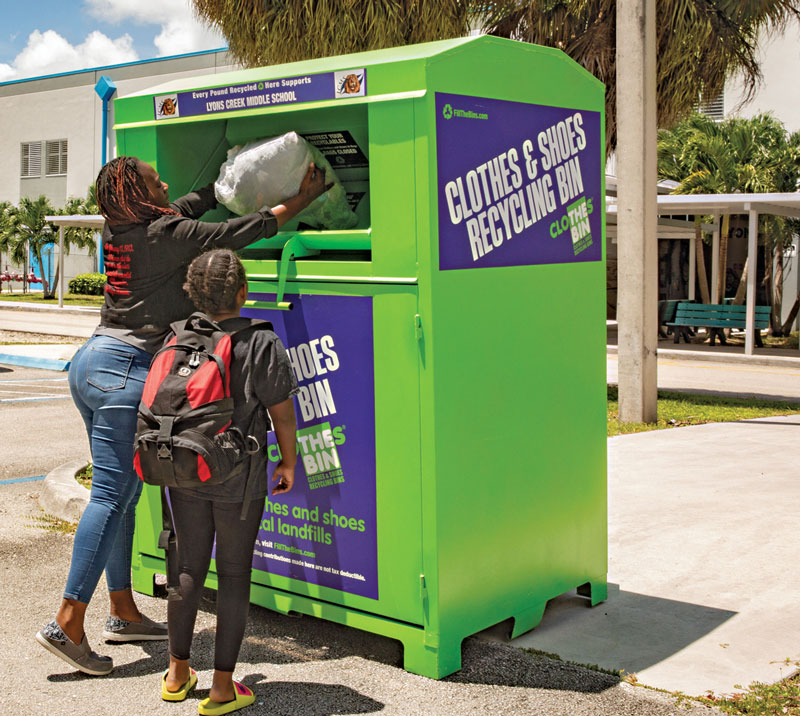
Clothes Bin places bins in convenient locations, such as outside schools, to allow for easier, more accessible recycling of clothes, shoes and textiles in local communities.
TW: What textile-related investments has Greybull pursued?
Myers: Greybull first entered the textiles space in 2021 with our investment in Clothes Bin, a U.S.-based textile recycling franchisor that helps people conveniently recycle their clothes, shoes and textiles to make it easier to keep these materials out of landfills. Local franchises place bins at schools and other accessible locations and manage the collection of the items to recycle.
We acquired Green Earth Cleaning in 2022, a company that provides environmentally friendly solvent to dry cleaners around the world. The industry is moving away from petroleum-based solvents because Green Earth works better and is better for the environment.
We acquired Reclaimed Textiles Co. in 2023. Reclaimed Textiles repurposes a range of textile products to give them new life, promote sustainability and help address unique, evolving needs in the industry.
TW: As an investor, how do you see your role?
Myers: I see Greybull’s role as supporting the smaller pre-middle market business owners and founders to help their companies reach their maximum potentials. We have a long history of demonstrated success in this space — we know how to create value and avoid potential pitfalls. Our goal is to partner with business leaders to fully understand their operations, business practices and strategies to help them further strengthen their businesses and have a greater impact. Aligning with their visions enables us to effectively identify how we can best support and scale their businesses while maintaining their visions and core missions.
We have functional expertise in accounting, finance, strategy, technology, sales, marketing, planning, operations and more so that we can lend and apply our knowledge. Our involvement is also about the emotional investment of empowering owners, so they feel confident to work alongside us and take their businesses to the next level.
TW: How does Greybull’s pre-middle market investment strategy differ from more traditional private equity models, and why is this focus particularly valuable in the textiles and recycling sectors?
Myers: Our pre-middle market investing strategy focuses on smaller, growing businesses where we believe our team’s operational expertise and resources can have the greatest impact and value-add.
We use pre-middle market to mean businesses with revenues of $5 to $50 million and profits of less than $5 million — a segment of the market that is often overlooked and underserviced by traditional private equity. We see enormous value in this space, and there are many companies that fall in this category and do not have any capital focused on supporting them. This is the need that Greybull is stepping in to fill; we partner with these companies and help them grow and scale to the middle market.
For textiles specifically, we see particular opportunity to have a distinct impact. The pre-middle market includes companies that significantly benefit from operational, strategic, and financial guidance. We are able to make a noticeable impact in an industry that is evolving to be more green-focused.
With our expertise in textile recycling combined with our functional experts that know how to assist and support businesses of this size, we are the perfect partner for a company in this space that has potential to get to the next level.
TW: When do you enter and when do you exit an investment? What is the strategy to achieve an exit?
Myers: We enter when the company matches our investment criteria — revenues of $5 to $25 million, profit under $5 million — and has a proven and high-potential model with a clear opportunity to add value through operational improvements and capital injection. The business must show promising growth prospects with a need for our niche support capabilities.
While private equity investments typically have hold periods of around four years, the Greybull model is built around the idea that longer investments can create greater scale and position businesses to sustain growth in the long term. Our average hold period is approximately eight years, and we have held companies for up to 11 years. We see tremendous value in enabling these businesses to develop practices at a pace that will help them thrive long after our investment ends. An ownership change can be disruptive to the customers and employees, so we prefer a model where we provide stability over a long time horizon so that the company can focus on creating value in the business. We want to avoid unnecessary disruption wherever possible.
Most often, we will consider an exit when the management recommends that we do so. We do not like to bring arbitrary timelines and constraints to our companies, and we prefer to hold and allow the value creation to compound. We do not have a requirement to exit on any certain time-frame, and so we are motivated to focus on what is best for the business.
TW: With the textile recycling market expected to grow significantly by 2028, how do you see private equity playing a role in driving innovation and expansion in this space?
Myers: For every company, there comes a time when the opportunity is so big or attractive that the company needs additional expertise and capital to achieve its potential.That is where we step in.This is likely to happen more and more in the textile recycling market, and we will be there to support good companies with potential who want a collaborative partner along-side them as they pursue their maximum potential.
Although different from Greybull’s strategy, traditional private equity will also be there for businesses who want help with a quick flip of their company in three to five years.
Depending on the company, that strategy can be the right fit.
After people make donations, local franchises manage the collection of items to recycle, ensuring that materials are kept out of landfills and providing a source of clothes and shoes in the United States.
TW: Can you elaborate on Greybull’s long-term partnership with Clothes Bin?
Myers: To have a sustainable environmental impact, it is important to have strong systems and a sustainable business model. Clothes Bin was an excellent business for both the franchises in the system and the franchisor. We were able to make it even better and help them build the systems to scale the business, which makes the entire system and every franchise stronger.
As Clothes Bin becomes larger, it is easier for the franchises and the company overall to partner with cities and states to have even more environmental impact. These entities want to help keep materials out of landfills and it is easier for them to engage with a larger company like Clothes Bin. In this way, Clothes Bin is able to impact environmental policy and more.
TW: What lessons from your work with Clothes Bin could apply to other growing businesses in the textile space?
Myers: We have experience growing textile businesses of this size and the specific knowledge of textile recycling and other environmentally friendly efforts and industries that can all help a growing good business with potential in this market.
One lesson is to work on the infrastructure of your business before you want to scale. Important factors of that include accounting, technology and people, all of which enable businesses to handle significant growth and size. You cannot shortcut that process. It has to be done well before you can scale, or you are asking for difficulty down the road.
Another lesson is to be constantly looking to improve efficiency in your systems and processes to make the business model better and more sustainable. This is critical not just for the environment, but also for the long-term growth of the business.
To scale beyond a certain size also requires focus and trade-off decisions. What got your company to one level will not be what gets your company to the next level. In the entrepreneurial phase of developing a business, it is important to consider every opportunity and be constantly on the look-out for the best opportunity. In the scaling phase, it becomes important to focus on only a few opportunities in the optimal sequence and focus on internal execution and systems. This is often a different skill than the entrepreneurial phase and achieving this transition through different phases is critical.
TW: What is your opinion of the U.S. textile industry?
Myers: It’s a highly fragmented industry between traditional manufacturing and a growing segment of textile recycling organizations that are evolving to adopt more modern and sustainable practices. Consumer preferences are beginning to lean toward more sustain-able operations and companies are finding ways to prioritize waste reduction.
We are optimistic on the U.S. textile industry’s continued growth and expansion and anticipate further innovation in the space.
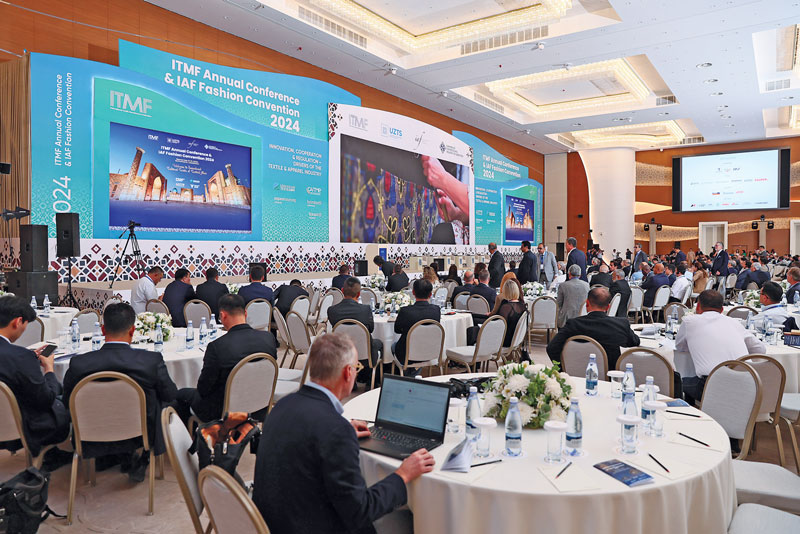
Approximately 400 delegates from 40 countries gathered in Samarkand, Uzbekistan, for three days of discussions and presentations covering a broad array of textile topics.
Themed “Innovation, Cooperation, and Regulation — Driving Forces of the Textile and Apparel Industry” the ITMF’s recent annual conference was hosted in partnership with the International Apparel Federation (IAF) in Samarkand, Uzbekistan.
By James M. Borneman, Editor In Chief
The Zurich-based International Textile Manufacturers Federation (ITMF) recently held its annual conference in conjunction with The International Apparel Federation (IAF) World Fashion Convention in Samarkand, Uzbekistan.
The three-day event included discussions and presentations covering a broad array of topics affecting the future of the global textile supply chain.
“The conference convened with 400 delegates for three days with 40 presentations by as many industry experts,” noted Dr. Christian Schindler, ITMF director general. “Participants came to Samarkand from 40 countries from around the globe. The general theme of the conference, ‘Innovation, Cooperation & Regulation — Drivers of the Textile & Apparel Industry,’ served as a framework for presentations covering a broad tapestry of important issues facing global textile manufacturing.”
Strong Presentations
The opening day of sessions took a deep dive into global issues facing cotton and man-made fibers.
The Cotton Fiber session, moderated by Muhammad Anees Khawaja, of Pakistan-based Mahmood Group featured presentations by Uday Gill, Indorama Corp.; Nezihi Aslankeser, Cotton Council International; Rama Janarthanan, Arise; Terry Townsend, Cotton Analytics; and Corin Wood-Jones, Better Cotton.
The Man-Made session, moderated by Stefan Hutter, of Singapore-based Saentis Textiles featured presentations by Alexei Sinitsa, Wood Mackenzie; Nezihi Aslankeser, Cotton Council International; Jay Sardana, Reliance; and Florian Heubrandner, Lenzing. An interesting take-away was the realization of how far Uzbekistan has come with cotton cultivation and textile manufacturing, as well as the need to develop the man-made fiber component of Uzbek textile production to continue a growth trajectory in the industry.
The first day of the conference concluded with a session titled “Audit Fatigue — Progress Made & Way Forward” that addressed the challenges associated with international compliance. Anne Sutanto of Indonesia-based Pan Brothers moderated the panel featuring Janet Mensink, SLCP; Michael Cai, Décor; and Nate Herman, American Apparel and Footwear Association (AAFA).
Setting The Stage
Day two of “Innovation, Cooperation, and Regulation” opened with a keynote address by Uzbekistan Deputy Prime Minister Jamshid Khodjaev.
Khodjaev’s focus was the positive effect of moving past the cotton boycott that Uzbekistan had faced in recent years and embracing Better Work and Better Cotton Initiatives.
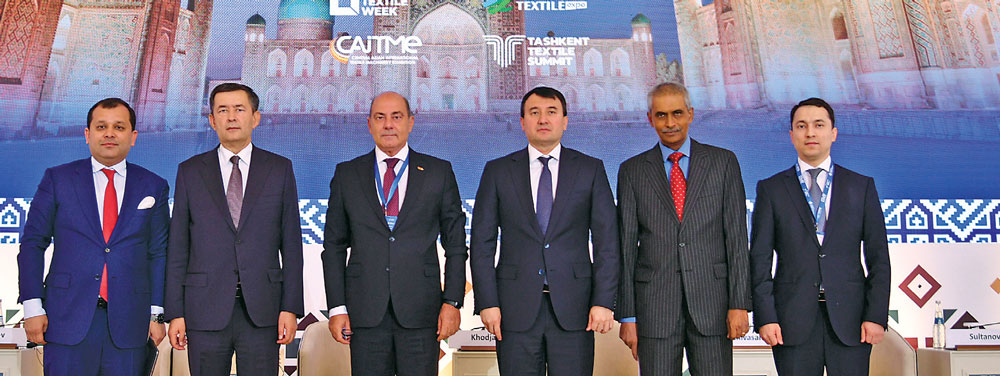
(left to right): Republic of Uzbekistan Chamber of Commerce and Industry Chairman Davron Vakhabov, Governor of Samarkand Region Erkinjo Turdimov, International Apparel Federation (IAF) President Cem Altan, Uzbekistan Deputy Prime Minister Jamshid Khodjaev, International Textile Manufacturers Federation (ITMF) President K. V. Srinivasan and Uzbek Textile & Apparel Industry Association (UZTS) Acting President Mirmukhsin Sultanov.
Moving Beyond The Boycott
As a matter of context, the meeting occurred in the Uzbekistan post-cotton-ban-era. This global boycott of Uzbek cotton, a time also known as the Cotton Pledge, was initiated in 2010 by the Cotton Campaign. At the heart of the matter was child labor, a State-Run system of forced labor as well as human rights violations. During the ban, more than 330 companies, including brands like Gap and C&A, pledged not to use Uzbek cotton. Cot-ton was a significant export for Uzbekistan, and the boycott significantly negatively impacted exports. The boycott lasted 11 years, from 2010 to 2022.
According to sources, following President Shavkat Mirziyoyev’s rise to power in 2016, Uzbekistan implemented significant reforms to address forced labor.
With campaigns by The World Bank and International Labor Organization, by 2021 it was determined by independent monitors that systemic forced labor had been effectively eliminated from the cotton harvest in Uzbekistan. In March 2022, the Cotton Campaign officially ended the boycott, allowing companies to reengage with the Uzbek cotton sector. Some of the major effects of the reforms were privatization and a transformation in cotton textiles from simply producing raw cotton for export to the domestic creation of higher value textile products.
By 2022, 100 percent of the cotton grown in Uzbekistan was further processed domestically — and the country no longer exported raw cotton. Textile product exports, on the other hand, rose from hundreds of millions of dollars during the ban to $3.2 billion dollars in 2022.
Wages grew within the industry, foreign investors showed interest, and the shift into manufacturing/processing cotton created new jobs.
Uzbekistan’s focus turned to the 130 newly established private cotton clusters embracing quality control, innovation and establishing inroads throughout the textile value chain.
Embracing the latest technologies as well as practices regarding sustainability and traceability are key elements in rebuilding Uzbekistan’s reputation from its tarnished past. These ideas were center stage in Deputy Prime Minister Khodjaev’s presentation.
An International Welcome
Uzbek Textile & Apparel Industry Association (UZTS) Chairman Mirmukhsin Sultanov, ITMF president K. V. Srinivasan and IAF President Cem Altan welcomed delegates and dignitaries from around the globe to the 2024 event.
Major sessions included presentations regarding:
• Textile & Apparel Industry in Uzbekistan;
• Sustainability & Regulation;
• Digitalization;
• Artificial Intelligence in the Textile Value Chain; and
• Collaboration
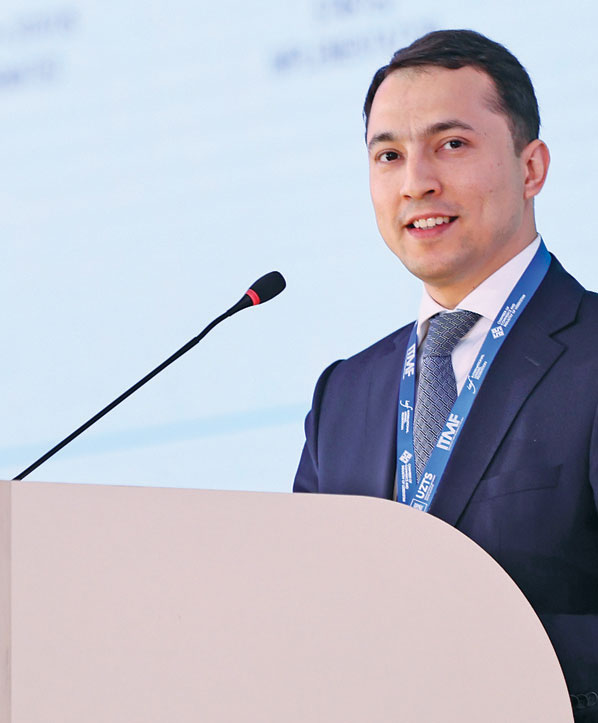
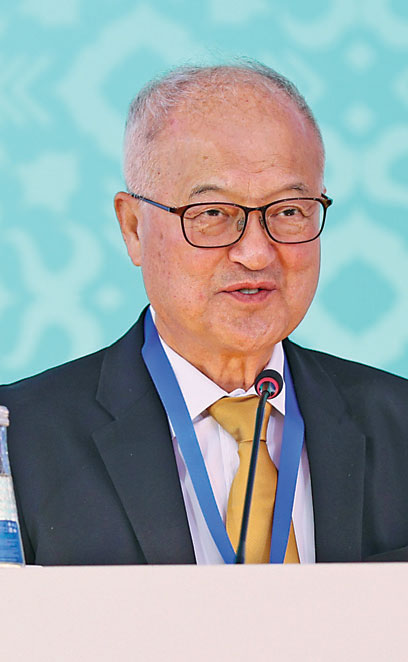
The first session titled, “Textile & Apparel Industry in Uzbekistan” was moderated by Aziz Akhrarov of Uzbekistan-based Samarkand Apparel and featured presentations by Kihak Sung, Youngone; Abu Yousuf, Better Work; Karim Shafei, Gherzi; Muzaffar Razakov, Global Textile; and Mirmukhsin Sultanov, UZTS. This session was a showcase of the host country’s textile transformation and vision for a textile focused future.
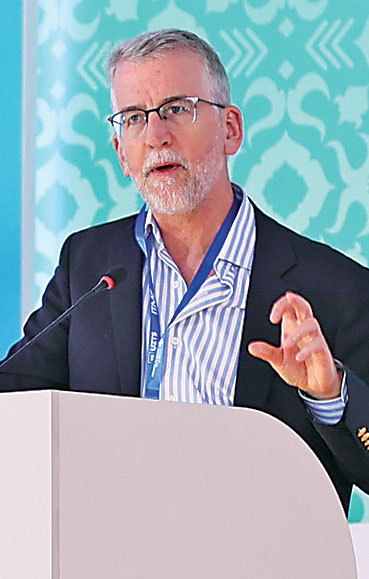
The “Sustainability & Regulation” session, moderated by Mustafa Denizer of Turkey-based Diktas, featured presentations by Dirk Vantyghem, EURATEX; Kenichi Tomiyoshi, JTF; Yan Yan, CNTAC; and Steve Lamar, American Apparel and Footwear Association (AAFA). The session drove home the point that there is a burgeoning regulatory environment brewing in Europe; Environmental, Social and Corporate Governance (ESG) compliance continues as a hot button issue globally; and regarding the United States, exporters need to keep an eye on state as well as federal regulations. The THREADS Fashion Protocol also was discussed in the context of creating harmonized regulations.
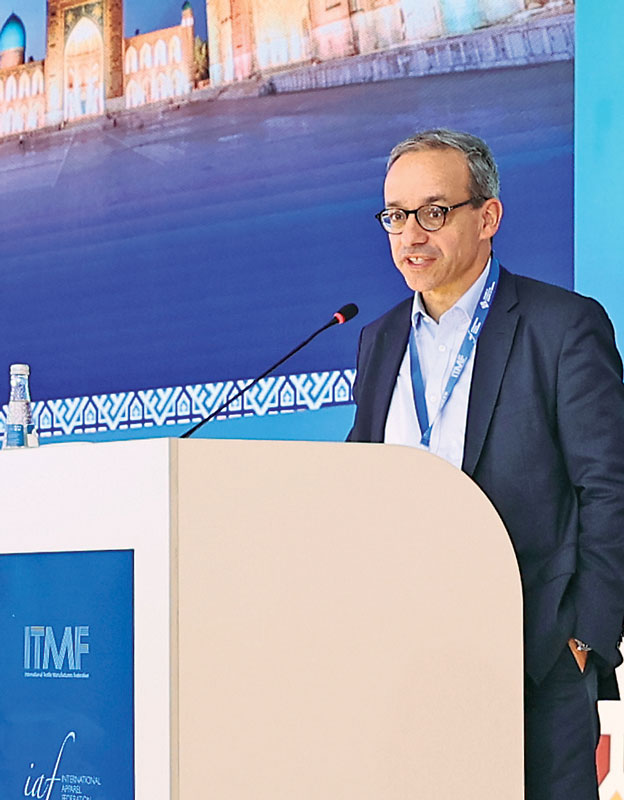
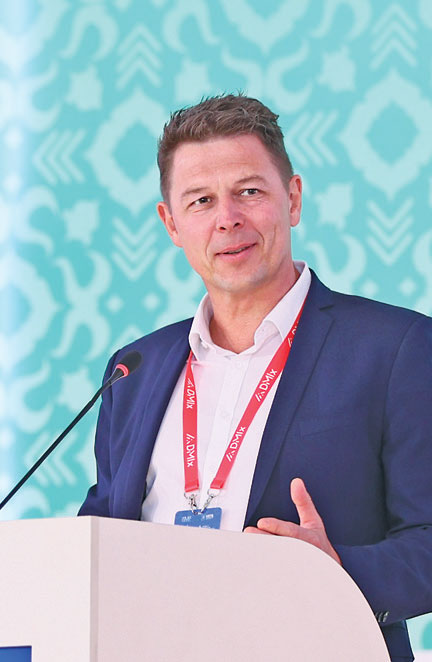
The “Digitalization” session, moderated by Stefano Festa Marzotto of Italy-based Miles Manifattura, featured presentations by Nate Herman, AAFA; and Christian Lott, DMIx. Herman highlighted the need for the adoption of digital garment labeling, while Lott presented the DMIx SamplR — an intriguing technology that “creates precise digital replicas of flat physical materials.” Lott also hammered home the need to pay attention to the coming regulations of the Digital Product Passport (DPP), offering a stern warning that those who are not in compliance could find themselves “out-of-business” in Europe.
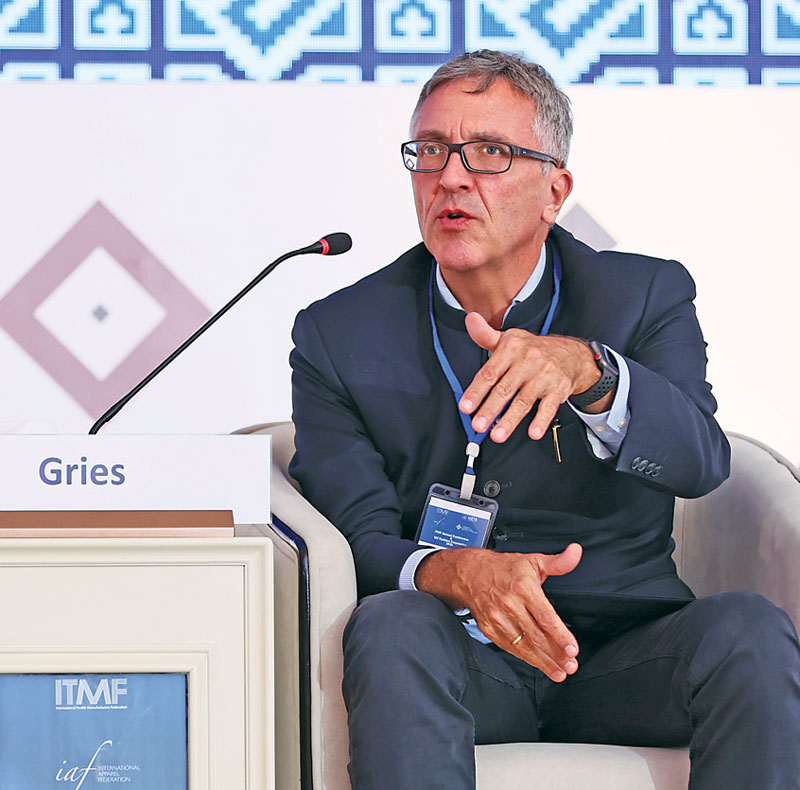
The “Artificial Intelligence in the Textile Value Chain” session, moderated by Rafael Cervone of Brazil-based ABIT, featured presentations by Thomas Gries, ITA Group; and Povilas Sugintas, Euromonitor.
The final day of the conference opened with a session titled “Collaboration.” Fazlee Shamim Ehsan of Bangladesh-based Fatullah Apparel moderated a panel featuring Felix Poza Peña, Inditex; Akila Fernando, Epic Group; and Femi Akinrebiyo, International Finance Corporation (IFC) —the financial arm of the World Bank.
The speakers highlighted how companies were working together to affect a range of issues from micro-plastic pollution to climate change and the complexity of the supply chain. IFC’s Akinrebiyo explained that the IFC was less of a bank and more of a development partner focused on waste reduction opportunities in the textile value chain.
Showcasing Innovation
The ITMF Startup Awards honored companies breaking new ground in textiles.
Tae Jin Kang of Seoul National University, Korea, moderated the first panel which featured the following innovations:
Bylon — scalable, melt-spun fibers without oil or waste developed by Sci-Lume Labs, Oklahoma City, Okla.;
SYCORE-TEX — materials of topological softgel for ultra-thermal insulation from China-based Sycoretec CAS;
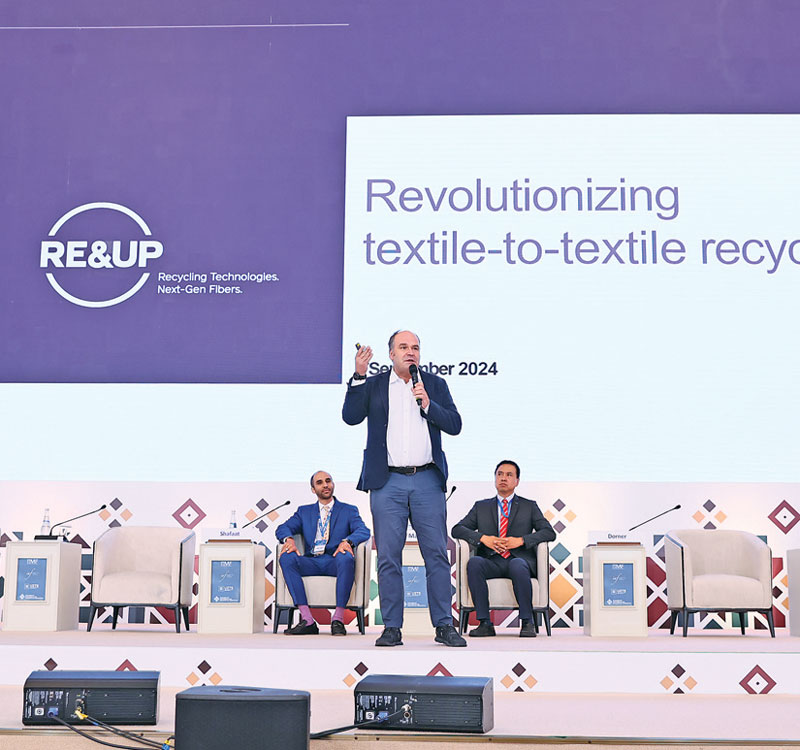
RE&UP — scalable recycling technologies for high-performance fibers developed by RE&UP Recycling Technologies, the Netherlands; and
Syre — hyperscale textile-to-textile recycling from Syre Impact, Sweden.
Juan Pares of Spain-based Textil Santanderina presented the winners of the ITMF Innovation & Sustain-ability Award 2024, which were:
High-Technique Fiber Co., China, for low-carbon & sustainable innovation in PET fiber industry;
HeiQ AeoniQ, Switzerland, for Hyperscaling HeiQ AeoniQ; and
Samsara Eco, Australia, for Infinite plastic recycling — a solution for end-of-life textiles.
International Cooperation
Winners of the ITMF International Cooperation Award 2024 included:
• Next generation cellulosic filaments from hemp — DITF, Germany & RBX Creations, France; and
• Open lab — HKRITA, Hong Kong, China.
Scratching The Surface
Although every presentation deserved to be highlighted, the quality of the work was difficult to present in such an abridged fashion. However, the presentations were catalysts for further discussions, networking, and in-depth analysis.
“The presentations provided the participants with relevant insights thus assisting them to better assess the current and especially the future business environment,” said Dr. Schindler. “It was important to see how regulation will shape the evolution of the textile value chain around the world. Likewise, to see all the innovation presented in the session about the various ITMF Awards Winners 2024 was impressive — recycling, circularity, sustainability are important forces driving innovation and collaboration.”
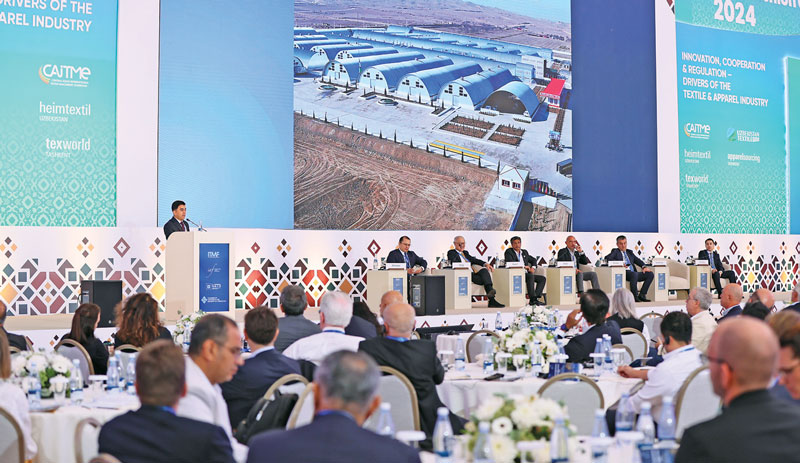
Jamshid Ismatullaev, owner and CEO of Chust Textile, Uzbekistan, presented his com-pany’s accomplishments during the conference. Chust opened in 2007 as a small work-shop employing 50 people. Pictured is its GULZOR dyeing facility established in 2019.
Understanding Uzbekistan
Muzaffar Razakov, CEO of Uzbekistan-based Global Textile presented “From tradition to innovation — how Uzbekistan is expanding its textile horizons” in the first session — a fitting topic for Global Textile. According to the company, Global Textile has been at the forefront of Uzbekistan’s textile transformation and development of the cotton “cluster” model.
This model integrates the production value chain from cotton field through finished products.
Global Textile is a fully integrated textile company managing the entire production cycle from cotton cultivation to garment manufacturing. Global cultivates 12,960 hectares of cotton fields, primarily in Uzbekistan’s Fergana region, producing 160,000 metric tons of cotton annually.
It spins 47,000 metric tons of yarn, processes 21,000 metric tons of fabric in its knitting facilities, and dyes 10,000 metric tons of fabric each year.
Global also has garment manufacturing capacity that produces 3 million items annually
According to Razakov: “Uzbekistan’s textile industry has seen remarkable growth, driven by reforms aimed at creating a competitive, investor-friendly environment. Global Textile has capitalized on these reforms, adopting value-added production processes that meet inter-national standards and facilitating expansion into new global markets.
“The government’s support through tax incentives, financing programs, and modernization subsidies has allowed companies like Global Textile to embrace cutting-edge technologies, particularly in sustainability, he added. “Our company has benefited from export support and modernization assistance, making us more competitive on the global market.”
Regarding Uzbekistan’s selection as the host for the ITMF IAF Joint Conference Razakov commented, “This is a significant milestone for Uzbekistan, demonstrating that the global textile community once again trusts our industry.
“The conference provides a platform for Uzbekistan to showcase its achievements and potential to an international audience, further strengthening its role in the global textile landscape.”
Forward To Yogyakarta, Indonesia
“The ITMF & IAF Conference 2024 in Samarkand showcased in an impressive manner how much the Uzbekistan’s cotton, textile and apparel industry was transformed since the start of the reform policy initiated in 2017 by President Mirziyoyev,” Dr. Schindler noted. “A state-monopoly that focused on exporting most of the cotton was transformed to a market-driven private economy that is adding value by producing yarns, fabrics, garments, and home textiles.”
As the event closed, Dr. Schindler acknowledged the extraordinary hospitality that was extended to the conference participants by the host associations, the Uzbek Textile and Apparel Industry Association and the Chamber of Commerce and industry in Uzbekistan.
“In completing a successful ITMF & IAF Conference 2024, the ITMF and IAF have decided to jointly hold their events also in 2025 which will be hosted by the Indonesian Textile and Apparel Industry Association (API) in the city of Yogyakarta from October 23-25, 2025,” Dr. Schindler shared at the end of the conference.
“We are very much looking for-ward to gathering in Indonesia in October 2025 back-to-back with ITMA+CITME Asia 2025 in Singapore October 28 through 31, 2025.”
2024 Quarterly Issue IV
1 of 11
Dr. Christian Schindler, International Textile Manufac-turers Federation (ITMF)
Christian Lott, DMIx
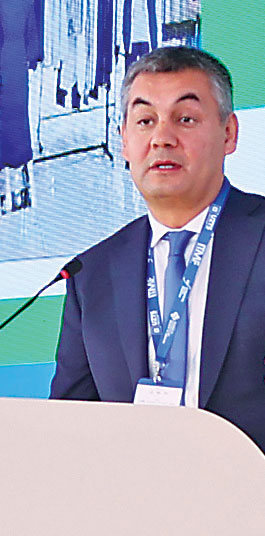
Muzaffar Razakov, Global Textile
Steve Lamar, American Apparel and Footwear Association (AAFA)
Mirmukhsin Sultanov, Uzbek Textile & Apparel Industry Association (UZTS)
Thomas Gries, ITA Group
Kihak Sung, Youngone
Andreas Dorner, RE&UP Recycling Technologies
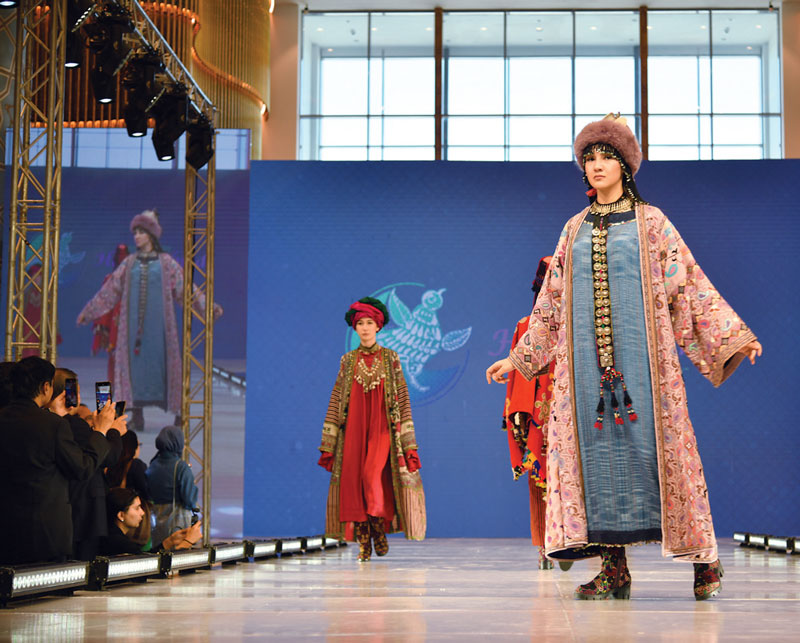
The conference featured a fashion show highlighting both traditional and contemporary Uzbek designs.
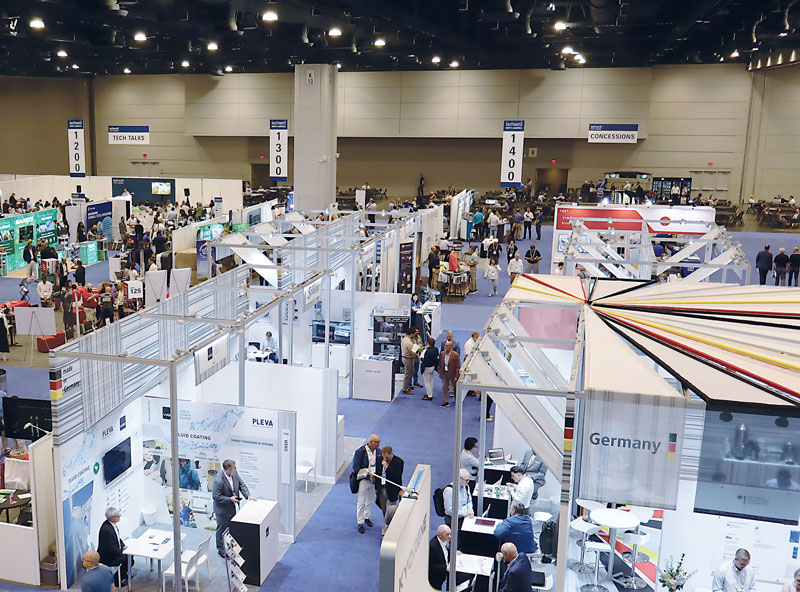
Raleigh, N.C., provided the backdrop for networking and learning at the recent TTNA trade show.
TW Special Report
The technical textiles industry recently convened in Raleigh for the 2024 edition of Techtextil North America (TTNA). The event, held at the Raleigh Convention Center, was the first trade show after the summer lull, and it seemed participants were glad to see old friends, network and make new connections.
The event, organized by Atlanta-based Messe Frankfurt Inc., runs in opposite years to the North American flagship Techtextil show held in Atlanta every two years. As such, Raleigh was a smaller show, but just as worthwhile.
“Back in Raleigh after two editions, Techtextil North America 2024 was a great success,” stated Kristy Meade, vice president, Technical Shows, Messe Frankfurt. “We were thrilled to return to the heart of the textile industry, exceeding expectations in exhibitor support and overwhelming visitor satisfaction. Techtextil North America continues to be the platform for product solutions, industry advancements and networking.”
The show was filled with the buzz of symposium sessions, Tech Talks on the show floor, a student poster program, as well as the bustling exhibit floor. In conjunction with the 125th anniversary of the Raleigh-based Wilson College of Textiles at NC State University, the show floor featured the “History of Textiles Museum,” showcase. The exhibits comprised early technology and artifacts through modern innovations and textile creations to illustrate the historical beginnings and possible future inventions.
Attendee Steve Zawislak Engineering director, Norfab & Amatex, Davlyn Group companies both based in Norristown, Pa., thought Techtextil North America 2024 was a worthwhile endeavor. “Techtextil, over the years, has always been a show to connect on a personal level with current, former, and potential suppliers and customers,” Zawislak reported. “The most recent show in Raleigh lived up to that standard in a big way. Traveling with a sales colleague, we were consumed with meetings, planned and impromptu, for the two days we had scheduled to walk at the show. Many of the meetings were impactful on the success of our business. We plan to make the show an annual event on our calendar. I really enjoy seeing old friends and making new ones amongst the best minds in the textile industry.”
Future Events
Messe Frankfurt is busy planning the collocated Techtextil North America 2025 and Texprocess Americas 2025 events that will take place in Atlanta May 6-8, 2025, at the Georgia World Congress Center. Exhibitors are booking booth space and in a few short months, visitor registration will begin.
“Techtextil North America 2025 will once again be collocated with Texprocess Americas, the event for Equipment and Technology for the Development, Sourcing, and Production of Sewn Products,” Meade said. “The collocation creates an unmatched opportunity for attendees to experience the full production and sourcing pipeline under one roof. With new features on the show floor, cutting-edge technology on display, forward-thinking education sessions, and a powerhouse lineup of industry experts we are confident and excited to address the current challenges, deliver solutions and set the stage for the future of our industry.”
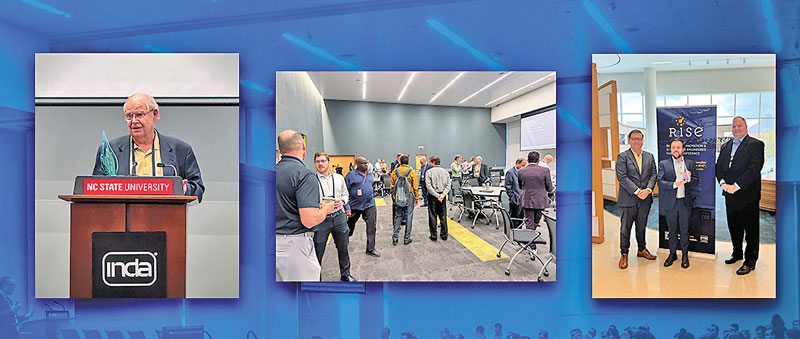
Arnold Wilkie received the INDA Lifetime Technical Achievement Award (far left) and Matthew Mead, founder and CEO, Hempitecture Inc., with the 2024 RISE Innovation Award (far right).
The 14th RISE® conference brought new innovations to light, conferred awards and highlighted student research.
TW Special Report
The Cary, N.C.-based Association of the Nonwoven Fabrics Industry (INDA) recently held the 14th iteration of its RISE® — Research, Innovation & Science for Engineered Fabrics — conference at a new location on the NC State cam-pus — the James B. Hunt Jr. Library on Centennial Campus, Raleigh, N.C. The two-day event was co-organized by INDA and The Nonwo-vens Institute (NWI).
RISE focuses on emerging technologies and ideas with the aim of connecting innovations with real-world applications for professionals in the nonwoven/engineered fabrics industry.
Speakers included experienced industry, government and academic personnel. Topics covered sustainability and biobased materials, plastic regulation, circular economy strategies, and process technologies and product design, among other topics.
“Two highlights really stood out at this year’s RISE conference,” said Matt O’Sickey, director of Education & Technical Affairs. “The program brought together presenters that shared varied but surprisingly complementary views on end-of-life considerations for fabrics. They emphasized that there is no ‘silver bullet’ solution for all end-of-life questions and that some combination of mechanical recycling, chemical recycling, advanced recycling, up-cycling, biodegradation and compostability will be necessary to most advantageously address and utilize the end-of-life input streams.”
Award Winners
Hempitecture Inc. was the winner of the 2024 RISE Innovation Award for its PlantPanel™ insulation material made using 100-percent biobased and recycled material. INDA also conferred its Lifetime Technical Achievement Award to Arnold Wilkie, president and owner of Hills Inc., Melbourne, Fla. Wilkie has more than 40 patents and applications relating to yarns, fibers, filaments, nonwovens and polymer processing innovations.
Event Highlights
Other RISE related events included a golf tournament, tour of The Nonwovens Institute to view the analytical labs and pilot lines, and an evening reception featuring graduate student posters. The students — who came from a variety of nonwoven, textile and fiber programs — had the opportunity to share their work and engage in attendees about their research.
“An exciting addition to RISE was inclusion of more than 30 posters from students & faculty from multiple leading universities,” O’Sickey said. “RISE is unique in sharing both immediately actionable innovation as well as fundamental enabling research.”
“While environmental responsibility is frequently highlighted in marketing materials, RISE provided direct access to the scientists and thought leaders — from innovative startups and emerging companies to established Fortune 500 firms — who are driving meaningful change from a technical perspective,” said Rishi Gurnani, director of Software Engineering & Algorithms, Atlanta-based Matmerize; first time RISE attendee and speaker. “The conference offered invaluable learning and networking opportunities. I believe Artificial Intelligence will play a significant role in addressing the ongoing challenges in the nonwovens sector, particularly in advancing sustainable solutions.”
“I was honored to be an invited speaker at the INDA RISE conference,” said Aaron Hall, founder and CEO, Intropic Materials Corp., Oakland, Calif. “At Intropic Materials, we are developing enzyme-based additives enabling plastics and fibers to self-degrade at end of life without producing microplastics — unlocking high performance and more sustainable products. The crowd at RISE was engaged, motivated, and so many wonderful innovations were show-cased. It was my first time attending, and I’m excited for continued collaboration with INDA, the Nonwovens Institute, and companies in the space.”
RISE will return to NC State University for the 15th edition of the event October 14-15, 2025.
ARCO, Italy — November 20, 2024 — Aquafil Group, the company that produces ECONYL® regenerated nylon, has launched a new collection of sustainable yarns in finishes inspired by natural materials. The ECONYL Bespoke Collection is a tailored product portfolio offering a rich variety of textures and finishes inspired by natural materials available in both solution-dyed and dyed regenerated nylon 6 yarns.
The collection is designed to meet the highest standards and performance demands of contract, hospitality, and residential spaces. Applications include handmade and machine-made rugs, tufted and woven rugs, and residential and commercial wall-to-wall carpets.
There are three finishes available of ECONYL Bespoke:
ECONYL ReLana — Inspired by the classic and timeless appeal of wool, ECONYL ReLana is a 2-ply dyed twist yarn.
ECONYL ReSeta — Recalling the softness and luster of silk, ECONYL ReSeta is a 2-ply dyed twist nylon available in bright and dull finishes.
ECONYL Terra — A sustainable and durable alternative to natural raw fiber, ECONYL Terra is a high-count air-entangled solution-dyed nylon with a unique collection of colors in stock.
“We are excited to bring a new collection of ECONYL nylon finishes to our global customer base,” said Giulio Bonazzi, chairman and CEO of Aquafil Group. “Our team has done a great job of finding innovative ways to reimagine our ECONYL yarn to meet the growing demands for sustainable, luxury materials. We’ve already seen a positive response to the Bespoke Collection, and we look forward to seeing the beautiful rugs and carpets that are created with our circular yarn.”
Key performance elements of the Bespoke Collection yarn include:
Long-lasting texture and appearance retention;
Easy-to-clean, with inherent stain resistance;
Superior colorfastness against light, bleach, peroxides, and other chemicals;
Efficiency in tufting and weaving; and
Excellent dyeing capabilities.
India is one of the world’s largest rug suppliers, and Aquafil has strengthened its presence here by locally stocking ECONYL Bespoke finishes. With a dedicated technical support team and robust traceability measures, Aquafil ensures the authenticity of ECONYL nylon at every stage of a rug’s life cycle. These rigorous certification processes protect against counterfeits, verifying that each rug and carpet is made with genuine ECONYL nylon.
Carpet and rug makers can create beautiful flooring that has the aesthetic beauty of natural materials, the performance attributes of ECONYL regenerated nylon, and a lower impact on the environment. All ECONYL nylon is made from 100 percent pre- and post-consumer nylon waste, is 100 percent recycled and infinitely regenerable. ECONYL also offers traceability, is certified by OekoTex® and Cradle to Cradle (C2C®), and contributes to LEED v4, BREEAM, and WELL.