ZÜRICH, Switzerland — April 4, 2025 — The U.S. administration’s decision to unilaterally impose sweeping tariff increases on imported goods represents a significant challenge to the existing global trading system, which has long been structured around multilateral (WTO), regional, and bilateral (FTA) trade agreements.
Mr. K. V. Srinivasan, President of the International Textile Manufacturers Federation (ITMF), emphasized that “these substantial tariff hikes will have a major impact on textile imports, particularly apparel, into the U.S.”
Currently, approximately 95% of apparel sold in the U.S. is imported, with the majority sourced from China (about 30%), Vietnam (13%), India (8%), Bangladesh (6%), and Indonesia (5.5%). To put this into perspective, these countries, which previously faced tariffs of 11-12%, will now see rates surge to 38-65%. In response, U.S. apparel importers are seeking alternative sourcing options in countries with lower tariffs. However, many of these alternatives have higher production costs and often lack the required product ranges or production capacities.
Reshoring apparel manufacturing to the U.S. would also pose significant challenges. Labor costs are substantially higher, and many essential textiles for apparel production would still need to be imported—now at increased costs. Additionally, the U.S. faces a shortage of skilled workers in the apparel sector. Whether through higher tariffs on imports or costly domestic production, the outcome will be increased apparel prices, ultimately contributing to higher inflation.
Mr. Srinivasan further stated: “The trade policy pursued by the U.S. administration will disrupt textile and apparel supply chains, increasing uncertainty, and driving up prices. Rather than implementing unilateral tariff hikes across all product categories, it would be far more beneficial for the global textile and apparel industry if governments engaged in negotiations and collaborative policymaking.”
For more information about ITMF, please go to www.itmf.org
Posted: April 4, 2025
Source: International Textile Manufacturers Federation (ITMF)
The utility of PFAS has led to their widespread use in garments, particularly high-performance wet-weather clothing.
Daniel Waterkamp, head of bluesign® ACADEMY, part of SGS, explores the regulatory landscape and challenges surrounding the elimination of PFAS in textiles.
TW Special Report
Per- and polyfluoroalkyl substances (PFAS) have been widely used in textiles and apparel for their water- and stain-resistant properties. However, concerns over their environmental persistence and toxicity have led to stricter regulations, pushing businesses to replace PFAS with safer, more sustainable alternatives.
The utility of PFAS has led to their widespread use in garments, particularly high-performance wet-weather clothing. Consequently, alongside broad regulations restricting PFAS in consumer products, the textile sector is also subject to specific legislation.
January 1, 2025
New Year’s Day saw the implementation of three important regulatory changes for textile and apparel businesses operating in the United States.
Firstly, California Assembly Bill No. 1817 prohibits the manufacture, distribution, sale or offer for sale of any new textile article containing a regulated PFAS that is intentionally added or present at a level above a set threshold. Manufacturers are required to provide a certificate of compliance stating that their products do not contain a regulated PFAS.
Secondly, New York has implemented a ban on the sale or offer for sale of any new apparel containing an intentionally added PFAS. However, this prohibition will not apply to outdoor clothing for severe wet conditions until January 1, 2028.
Finally, Colorado recently initiated a phased approach to prohibiting PFAS in outdoor clothing for severe wet conditions. Initially, products containing PFAS can still be sold if they carry the disclosure notice: ‘Made with PFAS chemicals.’ However, from January 1, 2028, all outdoor apparel for severe wet conditions and textile articles with intentionally added PFAS, primarily used in households and businesses, will be banned.1
These are just the latest PFAS bans affecting consumer products, and the trend toward greater restriction is expected to continue. For example, businesses operating in Europe should be aware that the European Chemicals Agency (ECHA) is advocating for a universal ban on PFAS under REACH. Once accepted, other countries, including the UK and Canada, will probably align with the new requirements.
Challenges
Textile manufacturers, retailers and brands face several challenges when seeking to eliminate PFAS, including:
Compliance — Businesses need to stay informed to adapt their supply chains to rapidly evolving regulations and remain compliant
Performance — Alternatives need to display the same durability, water repellency and stain resistance as PFAS
Transparency — It can be difficult to monitor the use of PFAS-based chemicals in supply chains with multiple operators
Consumer trust — Headlines such as, “Fast fashion is made with alarmingly high amounts of toxic chemicals,” have heightened consumer awareness of PFAS risks, increasing demand for independently verified products free from harmful substances2
Approaches to PFAS-free textile production
Businesses must take a proactive approach to maintaining compliance in an ever-changing regulatory landscape. Available options include adopting alternative chemistries, such as water- and silicone-based repellents, biobased coatings and advanced polymers. Manufacturers and brands can also implement a rigorous testing system to ensure products conform to regulatory requirements.
However, rather than testing end products for compliance, it is more cost-effective to ensure that inputs are free from PFAS. This approach requires transparency and effective oversight of the entire supply chain. Partnering with suppliers certified to strict chemical management standards is an effective starting point. Independent verification not only ensures regulatory compliance but also enhances brand trust in markets where sustainability is a key driver of success.
Daniel Waterkamp
PFAS phase-out
bluesign, an SGS company, has been at the forefront of supporting sustainability in textiles since 2000. In 2015, it banned long-chain PFAS (C8 chemistry) in products carrying the bluesign logo.
In response to the growing body of evidence on the damaging effects of PFAS, bluesign is now expanding its ban to phase out short-chain PFAS (C6 chemistry). From January 2025, all bluesign APPROVED and bluesign PRODUCT items must be free from intentionally added PFAS, with limited exceptions for essential uses.
Exceptions apply where there is a significant socioeconomic justification and no viable alternative, such as personal protective equipment (PPE) classified under risk category III and textiles used in automotive or aerospace engine bays. In these cases, the bluesign SYSTEM PARTNER must provide evidence to qualify for the exception.
Timeline for change
July 2022 – New PFAS-containing chemicals were banned from registration in bluesign FINDER, the online database of bluesign-certified chemical products
July 2023:
All existing PFAS chemicals were removed from bluesign FINDER and certification was banned
New articles/materials that are treated with PFAS-containing chemical products were banned from registration in the bluesign GUIDE, the online database for bluesign-certified articles (unless exempted)
July 2024 – Registration of any new bluesign PRODUCT containing materials/articles treated with PFAS-containing chemicals is no longer possible in the bluesign GUIDE (unless exempted)
January 2025:
All articles treated with PFAS-containing chemical products, and any bluesign PRODUCT containing these materials/articles, were removed from the bluesign GUIDE (unless exempted)
New articles containing a PTFE membrane are no longer eligible for registration in the bluesign GUIDE (unless exempted)
January 2026 – All articles and any bluesign PRODUCT falling under exemptions will be removed from the bluesign GUIDE, and labeling of these materials/articles as bluesign APPROVED is no longer permitted
Bluesign solution
The bluesign SYSTEM offers a comprehensive solution for manufacturers, retailers and brands seeking to demonstrate sustainability and regulatory compliance across their products and supply chains.
A proactive approach to PFAS and other hazardous chemicals ensures safer products for workers, consumers and the environment. Beyond safety and sustainability, certification supports market growth by differentiating products for eco-conscious consumers. The bluesign logo is a trusted symbol that enhances brand reputation and signals a commitment to environmental and social responsibility.
References:
1 New York and California: Bans on PFAS in Textiles and Apparel Begin January 1, 2025 – Publications
2 Fast fashion is made with alarmingly high amounts of toxic chemicals, say authorities. 5 substances can affect your immune system.
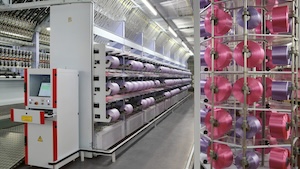
REMSCHEID, Germany — April 3, 2025 — With a clear focus on sustainability, Barmag, a subsidiary of the Swiss Oerlikon Group, is presenting comprehensive solutions from its product brands Oerlikon Barmag and Oerlikon Neumag for DTY and carpet yarn production at the Morocco Stitch & Tex Expo in Casablanca. From May 13 to 15, trade visitors can talk to experts from Barmag and the joint venture BB Engineering (BBE) at the Unionmatex booth (booth B4) to get an idea of the portfolio of the chemical fiber machine manufacturer.
The eAFK Big V multi-spindle texturing machine is a central component of the Oerlikon Barmag product brand for manufacturing high-quality, high-titer yarns.
Sustainable and efficient – the production of DTY yarns
Oerlikon Barmag offers a wide range of DTY machine configurations for the efficient and sustainable production of high-quality textured yarns made of various polymers – from polyester and polyamide to polypropylene, PLA and PTT. The modular machines – whether manual or automatic – produce yarns for excellent downstream processing at optimal OPEX costs.
Fancy yarns increasingly in demand
The demand for textiles with special characteristics is continuously increasing. For the production of these effect yarns, such as cotton-like DTY, linen-like DTY or wool-like DTY, Oerlikon Barmag offers a variety of processes and additional components. With its high-quality and flexible technology as well as its detailed knowledge of the yarn path and the required parameter settings, Oerlikon Barmag is the ideal partner for the successful and flexible production as well as the continuous further development of these specialty yarns.
Extended product range for carpet yarns
Thanks to its comprehensive knowledge of all relevant technologies in manmade fiber spinning, Oerlikon Barmag is the only manufacturer worldwide that can expand its range for the production of carpet yarns. The system concept, based on a POY and texturing process, is designed for the carpet and home textile sector and produces particularly soft and bulky polyester threads with BCF-like properties. The aim is to produce yarns with a titer of up to 1300dtex and over 1000 filaments, such as 1300dtex f1152, 660dtex f1152 and 990dtex f768. The machine concept includes the well-known WINGS HD POY winder and the eAFK Big-V texturing machine.
Innovative bicomponent BCF yarn for the carpet market
Quality, efficiency and performance – with its latest development in the field of bicomponent yarns for carpet production, Barmag’s product brand Oerlikon Neumag is meeting the carpet market’s demand for innovative BCF yarns. The new BICO-BCF yarn is characterized by a richer and higher volume and simultaneously significantly reduces the raw material consumption during carpet manufacturing.
VarioFil® – versatile compact spinning system for diverse applications and specialties
The VarioFil® system from BBE is ideal for a broad range of products, whether it be carpets, upholstery fabrics, fashion, sports, seat belts or airbags. This compact turnkey spinning line is particularly suitable for producers of small batches or specialized products. It flexibly processes various polymers such as PET, PP, PA 6, PA 6.6 and PBT. In combination with Oerlikon Barmag texturing machines, a wide range of textile standard yarns as well as textured yarns with BCF-like properties can be produced.
The VarioFil® R+ enables the direct recycling and processing of PET bottle flakes and PET waste from the start-up process into POY. This sustainable machine concept offers a high degree of product flexibility, including the production of spun-dyed yarn.
JeTex® air texturing offers a versatile product portfolio
BB Engineering also offers flexible solutions for the subsequent texturing of yarns. The JeTex® air texturing system perfectly complements the Oerlikon Barmag DTY systems and expands the product portfolio to include high-quality ATY based on POY and FDY for various textile applications. The centerpiece of the system is the texturing box developed by BB Engineering, which ensures gentle yarn treatment with reliable texturing effects and production efficiency.
“From waste to value” with VacuFil and Visco BBE’s VacuFil PET recycling system transforms textile waste into high-quality rPET melt. The technology is based on decades of experience in extrusion, filtration and spinning and combines gentle large-area filtration with targeted IV control. VacuFil processes various input materials, from bottle flakes to production waste and post-consumer waste. The patented Visco+ component removes volatile contaminants and automatically regulates the IV. The recycled melt can be added to the main melt stream, pelletized into chips or fed directly back into the spinning mill. The VacuFil system is modular and flexibly adaptable to customer needs.
Posted: April 3, 2025
Source: Barmag, a subsidiary of the Swiss Oerlikon Group
BRASÍLIA, Brazil — April 3, 2025 — Better Cotton, the world’s largest cotton sustainability initiative, has launched a new effort uniting key stakeholders across Brazil’s agricultural and textile sectors to build an ambitious vision for more sustainable cotton production.
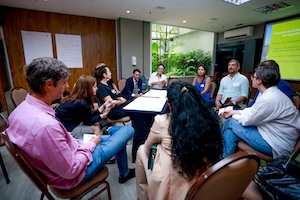
The inaugural Multistakeholder Dialogue, held in Brasília on 26 March, brought together representatives from cotton producers and exporters, textile associations, retailers, brands, civil society, researchers, government agencies, financial institutions, and NGOs.
Attendees of Better Cotton’s Multistakeholder Dialogue discuss common challenges and opportunities. Photo — Better Cotton / Bárbarah Queiroz
Together, participants identified climate resilience, traceability, and greater collaboration as priority areas to shape future actions, help define best practices and tackle systemic agricultural challenges.
Lena Staafgård, COO at Better Cotton, said: “Brazil’s agricultural industry is vast and is not only a leading producer and exporter of cotton, but of many other commodities. By bringing together key stakeholders across Brazil, we create a platform to overcome mutual challenges and champion best practices. Together, I’m confident we can accelerate change, and I look forward to future meetings.”
Better Cotton has worked in Brazil’s cotton sector for more than a decade in collaboration with its Strategic Partner ABRAPA, the country’s association of cotton producers. Márcio Antonio Portocarrero, Executive Director at ABRAPA, said: “I see dialogue as a way for us to build a coalition of ideas and solutions together with diverse sectors that often tend to isolate themselves and think differently. This can only lead to progress and improvement.”
As cotton is grown in rotation with other crops, closer collaboration across sectors is essential to addressing shared challenges and driving best practice adoption.
This initiative offers Brazilian cotton growers a platform for stronger engagement with industry stakeholders, to gain insights into their work and perceived risks, and for increased innovations to address sector-wide challenges.
Kamila Garantizado, Sustainability Specialist at Brazilian clothing department store Lojas Renner, noted: “This was a highly educational environment, with very active listening. It became very clear that the needs [of others] are relatively similar to ours—like improving communication.”
Participants committed to continuing their collaboration and will reconvene in the coming months to drive further progress towards a more sustainable cotton production in Brazil.
SOMERSET, England — April 3, 2025 — Nonwoven fabric-tech company Nonwovenn is investing £1.5 million in its ProTech division to strengthen its market-leading position in personal protection and harm reduction. The investment is part of a long-term growth strategy, with a business unit target of £16 million turnover by 2028.
A major focus of the investment is in the research and development of CBRN (chemical, biological, radiological, and nuclear) protective solutions for first responder and military safety and protective clothing. Nonwovenn is also working closely with ministries of defence, and first responders across the globe.
Nonwovenn accelerates expansion in ProTech division
To support this ambitious growth, Nonwovenn has strengthened its specialist team with four key appointments, expert recruits with considerable understanding and experience.
Nonwovenn is therefore, also making significant strides in product innovation, with new CBRN solutions set to launch throughout 2025 and 2026. Among these are advancements in protection systems for firefighters focused on volatile organic compound (VOC) filtration, as well as next-generation protective solutions tailored towards military and first responders.
Andrew Fisher, Head of ProTech at Nonwovenn, said: “This is an exciting time at Nonwovenn. Not only are we investing in cutting-edge R&D, but we’re also building a strong team to bring these innovations to market and fully support our customers. By combining our advanced technology with real-world application insight, we are setting new standards in personal protection and harm reduction.”
Nonwovenn chairman, David Lamb added; “Our focus on growth, innovation and talent acquisition reflects our commitment to advancing protective solutions for the industries that need them most. With our ambitious R&D programme, strategic partnerships and industry-leading team, we’re confident in our ability to become the leading player in this segment of the market.”
Nonwovenn offer complete support to customers working intimately with them on new concepts, through innovation, product design, business development, commercialisation and supply of products, offering complete ‘end to end’ supply expertise. This ranges from ‘live chemical’ agent instruction, and fully planned and audited supply chain management for large and small projects in addition to its outstanding expanding portfolio of products.
BRUSSELS — April 3, 2025 — The US is EU 5th most important trading partner, with total trade exceeding €9 billion. American customers enjoy high end fashion items, but also technical textiles coming from Europe. Adding a 20% duty will hamper that relationship.
EURATEX Director General Dirk Vantyghem warned against this tariff escalation: “This decision is like going back in time; it will lead to a loose-loose relationship within the global textile industry. EURATEX stands for free but fair trade, based on common rules which are respected by all; the EU and the US should lead by example, and promote high quality and sustainable textile products.”
Posted: April 3, 2025
Source: The European Textile and Clothing industry (EURATEX)
STOCKHOLM — April 3, 2025 — Circulose, a global recycled pulp producer, has reached a strategic partnership agreement with Tangshan Sanyou Chemical Fiber, a frontrunner in the cellulose fiber industry. This collaboration marks a significant milestone in the commercialization and scaling of CIRCULOSE®, while also propelling Tangshan Sanyou’s brand toward greater international recognition. The two companies will work together to ensure that ReVisco™ fibers, produced using CIRCULOSE® pulp, meet market demands in terms of quality, supply capacity, and pricing, thereby advancing both brands in the high-quality and innovative development of circular and renewable materials.
“We are thrilled to establish a strong strategic partnership with Tangshan Sanyou,” said Jonatan Janmark, CEO of Circulose. “This represents a crucial step forward in our global expansion strategy, fostering closer, more in-depth collaborations with innovative fiber producers and like-minded brands. As the first major strategic partnership since the restructuring of Circulose, this collaboration will serve as a cornerstone of our success. Together with Tangshan Sanyou and our brand partners, we will ensure the scalable development of ReVisco™ fibers by using CIRCULOSE® pulp in a predictable and controlled manner. We highly value our long-term partnership with Tangshan Sanyou and look forward to achieving mutual success as we shape the future of the industry.”
Recognized as a top-tier company in Canopy’s authoritative Hot Button Report, Tangshan Sanyou has gained international acclaim for its achievements in sustainability and circular development. Since the founding of Re:newcell, Sanyou has been a key strategic partner of Circulose and remains the world’s largest user of CIRCULOSE® pulp for fiber production. Now, with a renewed commitment to sustainability, Tangshan Sanyou is taking a leadership role in advancing large-scale textile circularity, setting a benchmark for both China and the global textile industry.
“Tangshan Sanyou has always believed in the strong potential of recycling cotton textile waste, which is essential for fostering a green and sustainable industry,” said Zhang Dongbin, Executive Vice President of Tangshan Sanyou Chemical Fiber. “We have unwavering confidence in the market potential of CIRCULOSE® and its new strategic direction, and we are excited about our future collaboration. With the long-term investment support of Altor Capital and the market-driven, brand-focused strategies led by Helena and Jonatan, we believe Circulose will bridge the gap between brands and suppliers, pioneering a new era for the circular textile industry.”
This strategic partnership further strengthens both companies’ shared commitment to scaling up the application of ReVisco™ innovative and circular materials, accelerating the transition of China’s textile industry toward a more circular and renewable future. By combining Circulose’s world-leading state of the art textile recycling technology with China’s large-scale supply chain, Tangshan Sanyou’s innovative ReVisco™ fiber will not only meet the growing market demand for sustainable textiles but also drive a transformative shift from raw materials to fabrics (T2T) on a global scale — ushering in a new era of circular economy in the textile industry.
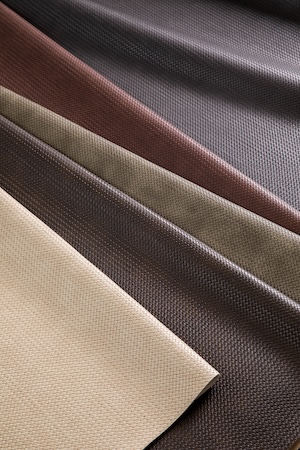
NEW YORK, NY — April 2, 2025 — LebaTex, a renowned commercial textile company dedicated to producing high-quality, sustainable textiles, has announced its latest collection: a faux leather line that includes over 100 unique colors and textures. The range is comprised of polyurethane, vinyl, and silicone fabrics that can be used in both indoor and outdoor commercial and residential settings.
All 101 faux leathers combine exceptional durability with luxurious appeal, having undergone rigorous testing of 100K–500K double rubs to guarantee long-term comfort and beauty. Demonstrating the brand’s commitment to healthier, well-designed living spaces, the collection is also PFAS-free, meets or exceeds ACT minimum standards, and complies with NFPA 260 and CAL 117-2013.
“I developed this new faux leather line to provide beautiful textile choices for designers to use in a multitude of spaces,” says Stacy Garcia, CEO & Founder of LebaTex. “Through my experience observing trends and working with designers across every industry, I saw the need for durable materials that will last through several seasons and maintain the same stunning look and feel.”
With colors ranging from classic neutrals to exciting reds, oranges, and blues, this faux leather collection is designed to complement any space, whether a home, hotel, patio, deck, public area, or even select marine environments. Each fabric is expertly crafted with LebaTex’s signature stain-resistant and antibacterial finish, ensuring lasting beauty and durability.
To view the full collection and learn more about the fabrics, please visit https://www.lebatex.com/.
WASHINGTON, D.C. — April 3, 2025 — The National Council of Textile Organizations (NCTO), representing the full spectrum of U.S. textiles from fiber, yarn and fabrics to finished sewn products, issued the following statement from President and CEO Kim Glas regarding President Trump’s reciprocal tariff plan.
Statement by NCTO President and CEO Kim Glas:
NCTO President and CEO Kim Glas
“We strongly commend President Trump and his administration on their tariff reciprocity plan to finally begin rebalancing America’s trade positioning in markets at home and abroad. We want to thank President Trump on behalf of the U.S. textile industry and the 471,000 workers we employ.
“We are particularly pleased with the administration’s decision to preserve duty-free trade for imports from Mexico and Canada that are compliant with the U.S.-Mexico-Canada Agreement (USMCA) rules of origin.
“The U.S. textile industry ships $12.3 billion, or 53 percent, of its total global textile exports to Mexico and Canada and those component materials often come back as finished products to the United States under the USMCA. It is by far the largest export region for American textile producers, representing $20 billion in two-way trade that spurs enormous textile investment and employment in the United States.
“Preserving duty free, qualified trade is absolutely critical to the U.S. textile industry and will provide incentives for more companies to onshore even greater production capacity, giving a boost to American textile manufacturers and their workers.
“We are also grateful to the Trump administration for getting tough on the predatory trade practices of China, Vietnam and other Asian suppliers that have long undermined domestic textile and apparel manufacturing through the rampant use of unfair trade practices, which the U.S. textile industry has been raising concerns about for decades.
“We encourage the administration to keep these penalty tariffs on finished textile and apparel products in place long-term with countries like China and Vietnam to provide the necessary market signals to recalibrate the global textile and apparel supply chain.
”Doing so, will help level the playing field for U.S. textile and apparel producers once and for all, given our industry has been victimized by predatory trade practices that have offshored critical jobs across the United States.
“Additionally, we hope the Trump administration extends the exemption for duty-free qualified trade from other Western Hemisphere free trade partners, such as the countries of the Dominican Republic-Central America Free Trade Agreement (CAFTA-DR). This is a critical supply chain for U.S. textile exports that are essential to the American textile industry and our workers.
“The Western Hemisphere as a whole accounts for nearly 70 percent of all U.S. textile exports, represents $34 billion in annual two-way trade and supports 2.6 million jobs.
“Equally as important, the USMCA and CAFTA-DR production platforms serve as an alternative and counterweight to the China-led, Asia-based production platform that competes based on illegal tactics, such as the used of forced labor, subsidies and counterfeits, and has largely come to dominate global trade.
“We would also like to commend the Trump administration for its substantial and long overdue reform of the de minimis loophole. This loophole facilitates 4 million shipments a day to the United States that often hide illegal and unethically made products, unsafe goods and illicit fentanyl and other narcotics that reach our doorsteps. Countries such as China currently avoid billions in U.S. duties through the use of de minimis to the United States.
“We applaud the fact that the President’s announcement will essentially close de minimis on a global scale once the Secretary of Commerce puts the mechanism in place to collect duties on these imports. Half of de minimis shipments are estimated to be textile and apparel products, and NCTO has long called for the closure of this destructive loophole. We encourage the full closure as soon as possible and stand ready to help the Administration in any way to formulate plans for its effective implementation.
“Finally, President Trump emphasized the importance of holding trade cheaters accountable in his Rose Garden event on Wednesday. The U.S. textile industry looks forward to working with the administration to develop a robust enforcement plan to help President Trump achieve the important goals outlined his new tariff plan to ensure fraudulent actors and cheaters are penalized.
“We are grateful to President Trump and his administration for their strong support for our industry. If aggressively enforced coupled with long-term certainty, there is a huge opportunity to reshore production and grow jobs in the United States.”
Posted: April 3, 2025
Source: The National Council of Textile Organizations (NCTO)
Electrically conductive printing paste. Image courtesy of DITF
TW Special Report
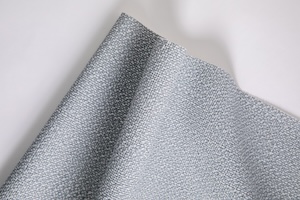
Electrically conductive prints on textiles are the basis for functional textiles with electronic functions, so-called smart textiles. Conductive inks and binders must be well matched to ensure permanent conductivity even under external mechanical influences such as stretching, pressure and bending. The DITF are working on new ink formulations that meet these requirements.
Sports, fashion and the automotive industry – textiles with integrated electronics are used in many areas of everyday life. Textile-integrated electronics help monitor human vital parameter and performance data, and enable the fashion industry to integrate interactive elements into clothing. It is used in a variety of ways in the automotive industry, where it enhances passenger comfort and safety.
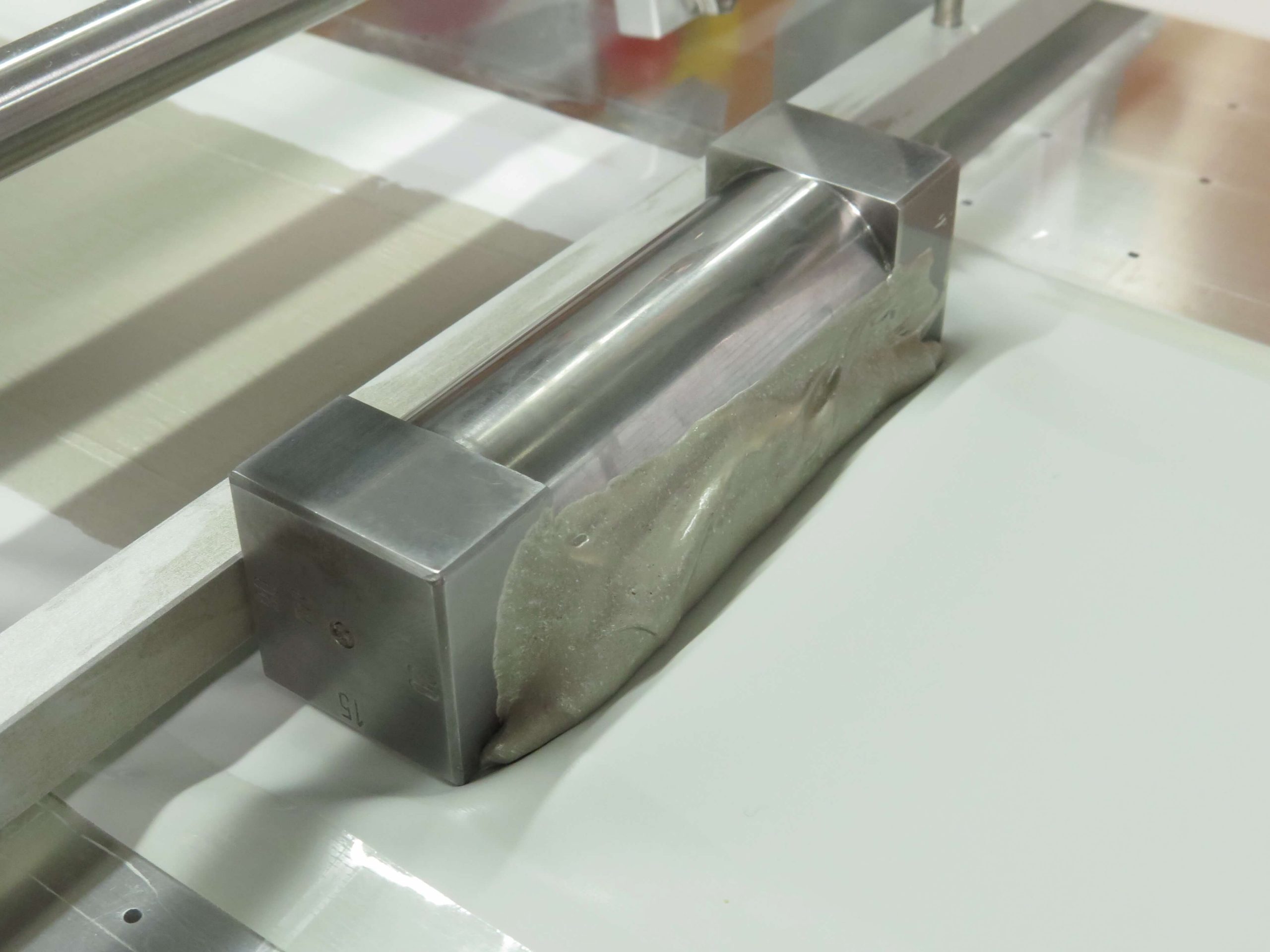
Applying the conductive layer with a squeegee. Image courtesy of DITF
The most common conductive components used in textiles to date are wrapped yarns and tension-relieved conductive yarns arranged in loops. They ensure a reliable flow of electricity even in textiles subject to high mechanical stress. Their production is complex. As a result, they are expensive and only partially suitable for the mass market. Printing conductive structures on textile surfaces using screen printing or chromojet technology, a digital spray printing technique, is much more cost-effective.
However, there are several challenges in producing printed conductive textiles. One of the biggest difficulties is ensuring the conductivity of the printed materials while maintaining the flexibility and softness of the textile. In addition, the durability of the prints can deteriorate, especially with frequent washing or mechanical stress. Stretching or movement can cause the prints to break or tear. Electrical conductivity is often impaired even under low mechanical stress, when the stretching of the conductive layer is not reversible. The adhesion between the print application and the textile can weaken with repeated stretching. This results in poor long-term stability. The integration of electronic elements into textiles is also often hampered by the fact that the connection between the conductive elements and the electronic components is prone to failure.
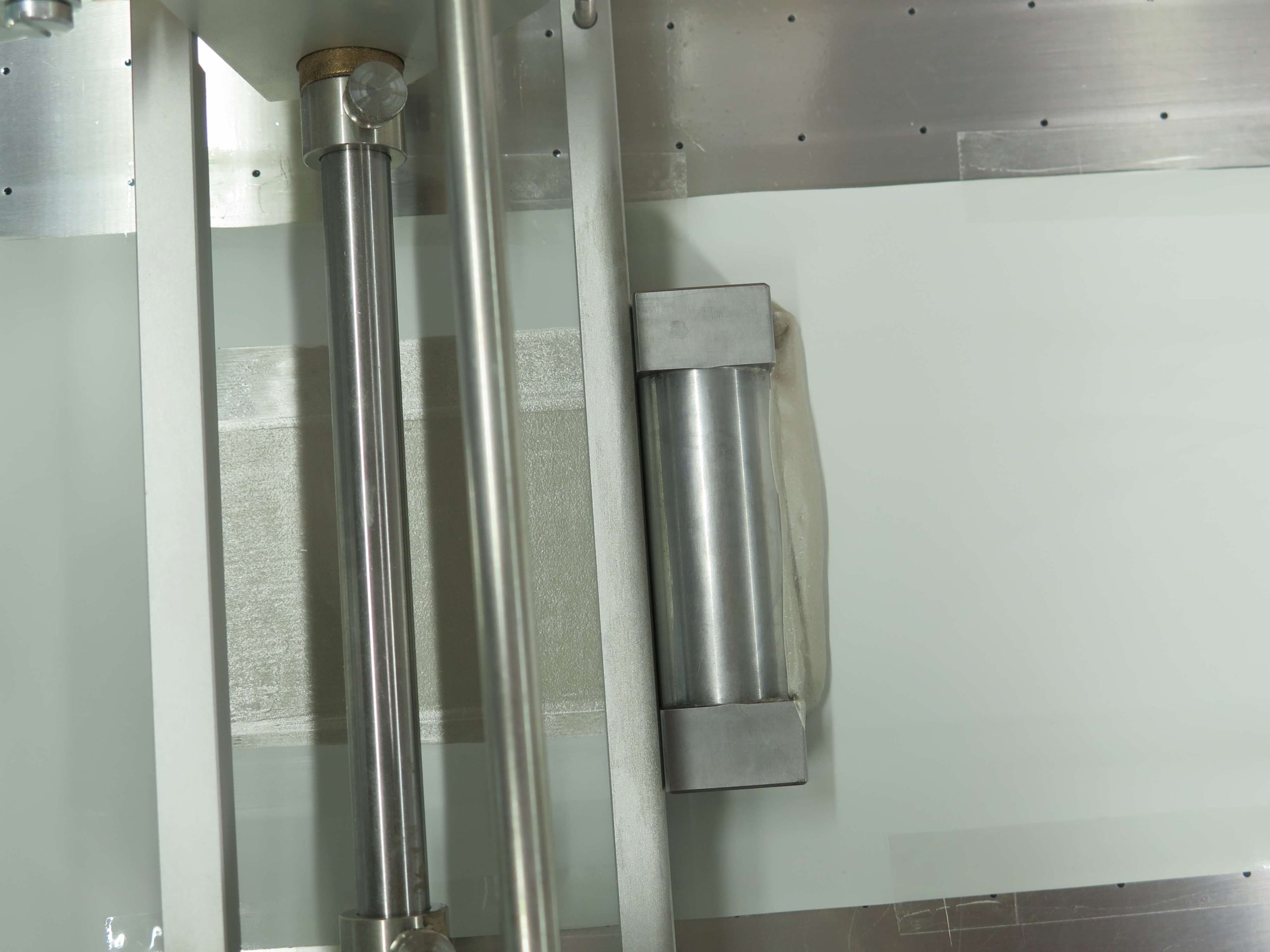
Applying the conductive coating. Image courtesy of DITF
The DITF are working on new solutions to address these challenges. The Color- and Functional-Printing Working Group is working on new ink and paste formulations based on conductive particles and elastic binders. The aim is to improve the elongation behavior of prints while maintaining good electrical conductivity. The elastic properties of the binder are largely determined by the auxiliaries and additives used. The DITF determine the interactions between these components and derive knowledge for the formulation of new elastic and highly conductive inks.
The hysteresis properties of new ink formulations are of central importance. Hysteresis refers to the ability of a material to maintain its properties under repeated strain or stress. Well-matched hysteresis supports the conductivity of printed structures even under continuous mechanical stress. Suitable materials can adapt to the movement of the textile without compromising the conductive properties.
Dried conductive, elastic layer on the textile surface. Image courtesy of DITF
The goal of the research team at the DITF is to expand the knowledge of the interactions between conductive particles and binders, between additives and textile auxiliaries, in order to produce highly conductive inks and pastes. This will make it possible to produce the best possible and most resistant print coatings for different textile substrates and different applications, enabling reliable conductivity.
Under these conditions, the costs for mass production of textile electronics can be reduced.

 ZÜRICH, Switzerland — April 4, 2025 — The U.S. administration’s decision to unilaterally impose sweeping tariff increases on imported goods represents a significant challenge to the existing global trading system, which has long been structured around multilateral (WTO), regional, and bilateral (FTA) trade agreements.