The Impact Of Fast Fashion On Sustainability: A Call For Change

By Rohit Dev Sethi

In an era of rapid technological advancements and consumerism, the fast fashion industry has emerged as a dominant force. Brands churn out new collections at breakneck speed, enticing consumers with trendy designs at low prices. While this business model has democratized fashion, it comes at a significant cost to the environment, society, and long-term sustainability. This article explores the multifaceted impact of fast fashion and advocates for a paradigm shift toward more sustainable practices.

Environmental Consequences

  1. Resource Depletion: The fast fashion industry is notorious for its voracious appetite for natural resources. Producing a single cotton T-shirt, for instance, requires approximately 2,700 liters of water—enough for one person’s drinking needs for 2.5 years. In comparison, Patagonia, an outdoor clothing brand, has pioneered the use of organic cotton and water-efficient processes, reducing water consumption significantly.
  2. Pollution: The dyeing and treatment of textiles contribute significantly to water pollution. Toxic chemicals from untreated wastewater are often discharged into rivers, affecting aquatic ecosystems and communities relying on these water sources. Additionally, microplastics shed during washing synthetic garments end up in oceans, posing a threat to marine life. To counteract this, Levi’s has introduced its Water<Less® technology, which reduces water usage in denim finishing by up to 96%.
  3. Waste Accumulation: With fast fashion’s emphasis on disposability, millions of tons of clothing end up in landfills annually. These garments take decades to decompose, releasing methane and leaching chemicals into the soil. Initiatives like H&M’s garment collection program aim to address this issue by allowing customers to return used clothing for recycling or repurposing.

Social Implications

  1. Exploitation of Workers: Fast fashion thrives on low production costs, often achieved by outsourcing to countries with lax labor laws. Workers endure long hours in unsafe conditions for meager wages, perpetuating cycles of poverty and inequality. The 2013 Rana Plaza disaster in Bangladesh, which killed over 1,100 garment workers, underscores the urgent need for better labor conditions. Brands like Everlane prioritize transparency and ethical manufacturing, showcasing the real costs of production.
  2. Cultural Dilution: The global standardization of trends can erode local cultures and traditional craftsmanship. Artisanal skills, which take generations to perfect, are often overshadowed by the mass production of low-quality imitations. For instance, initiatives like Nest, a nonprofit supporting artisan businesses, help preserve traditional textile-making practices while ensuring fair wages for workers.

Economic and Ethical Concerns

While fast fashion creates jobs, its economic benefits are often short-lived and concentrated among a few stakeholders. Ethical concerns arise from misleading marketing practices, such as “greenwashing,” where brands exaggerate their sustainability efforts to attract eco-conscious consumers. An example is H&M’s “Conscious Collection,” which has faced scrutiny for not being as sustainable as advertised.

A Call to Action

To mitigate the adverse impacts of fast fashion, a collective effort from consumers, brands, and policymakers is essential:

  • Consumers:
    • Embrace conscious consumption by buying fewer but higher-quality items.
    • Support ethical and sustainable brands like Patagonia, Reformation, and Eileen Fisher.
    • Extend the lifecycle of clothing through repair, upcycling, and donating.
  • Brands:
    • Adopt transparent supply chains and fair labor practices, as demonstrated by Everlane.
    • Invest in sustainable materials and circular business models, such as clothing rental or recycling programs, seen in Rent the Runway.
    • Reduce overproduction and prioritize quality over quantity.
  • Policymakers:
    • Enforce stricter regulations on environmental practices and labor conditions, similar to the EU’s Circular Economy Action Plan.
    • Provide incentives for sustainable innovation in the fashion industry.
    • Educate the public about the environmental and social costs of fast fashion.

Conclusion

The fast fashion industry’s current trajectory is unsustainable, jeopardizing the planet and the people who inhabit it. However, by fostering awareness and encouraging action, we can collectively steer the industry toward a more ethical and sustainable future. Real-world examples demonstrate that change is possible, and the power to drive this transformation lies in our choices — let us use it wisely


Editor’s Note: Rohit Dev Sethi is managing director at India-based ColossusTex


February 25, 2025

The Society Of Dyers And Colourists launches Global Colourist Award 2025 Celebrating Emerging Talent In Coloration

BRADFORD, England — The Society of Dyers and Colourists (SDC) announces that entries are now open for the prestigious Global Colourist Award 2025. This international award recognizes outstanding talent and innovation within the coloration industry, celebrating the achievements of colorists in the first 10 years of their career.

The Global Colourist Award is designed to highlight the depth of knowledge, creativity, and diversity within the industry. Open to professionals across various sectors, including textiles, dyes and pigments, leather, food, paint, production dyeing, shift dyeing, and printing, the award is a benchmark of excellence for those shaping the future of color science and application.

Entries opened on February 1, 2025, with a submission deadline of June 30, 2025. The winner will be announced mid-September and the award presented at the SDC Day of Celebration in October 2025 in the UK.

Last year’s winner, Joanna Kay ASDC of Heathcoat Fabrics Ltd., was celebrated not only for her technical knowledge and creativity but also for her perseverance in achieving Associateship of the SDC while balancing full-time work. Nominated by her manager Sarah Marshall, Joanna was recognized for her outstanding contributions to innovating dyeing processes, improving recipes, and bridging the gap between design and technical knowledge.

Reflecting on her award, Kay expressed her gratitude: “I was, and still am, incredibly grateful for this recognition and the support I received throughout my journey. Balancing full-time work with my studies was challenging, but the experience has been invaluable. The award reinforced my passion for colour science and motivates me to continue pushing the boundaries of innovation in the industry.”

Dr. Graham Clayton, SDC CEO, commented: “The Global Colourist Award is an important initiative that showcases the remarkable talent emerging in the coloration industry. We are proud to recognize and celebrate the achievements of early-career colorists who are shaping the future of our sector with their innovation and expertise.”

The winner will receive a £1,000 cash prize, generously sponsored by Advanced Chemical Holdings Ltd., along with a fully funded trip to the awards ceremony in the United Kingdom, offering networking and professional development opportunities. They will also be featured in The Colourist magazine, showcasing their success and contribution to the industry.

The award is open to colorists working in any field, including development, application, testing, color management and quality control. Whether they are a production dyer, a pigment specialist, or a printing colorist, if they are in the first 10 years of their career, this is an opportunity to gain global recognition for their contributions to the industry.

To enter or nominate a deserving colorist, visit the SDC website for full details on submission requirements and eligibility criteria.

Posted February 15, 2025

Source: Society of Chemists and Colourists (SDC)

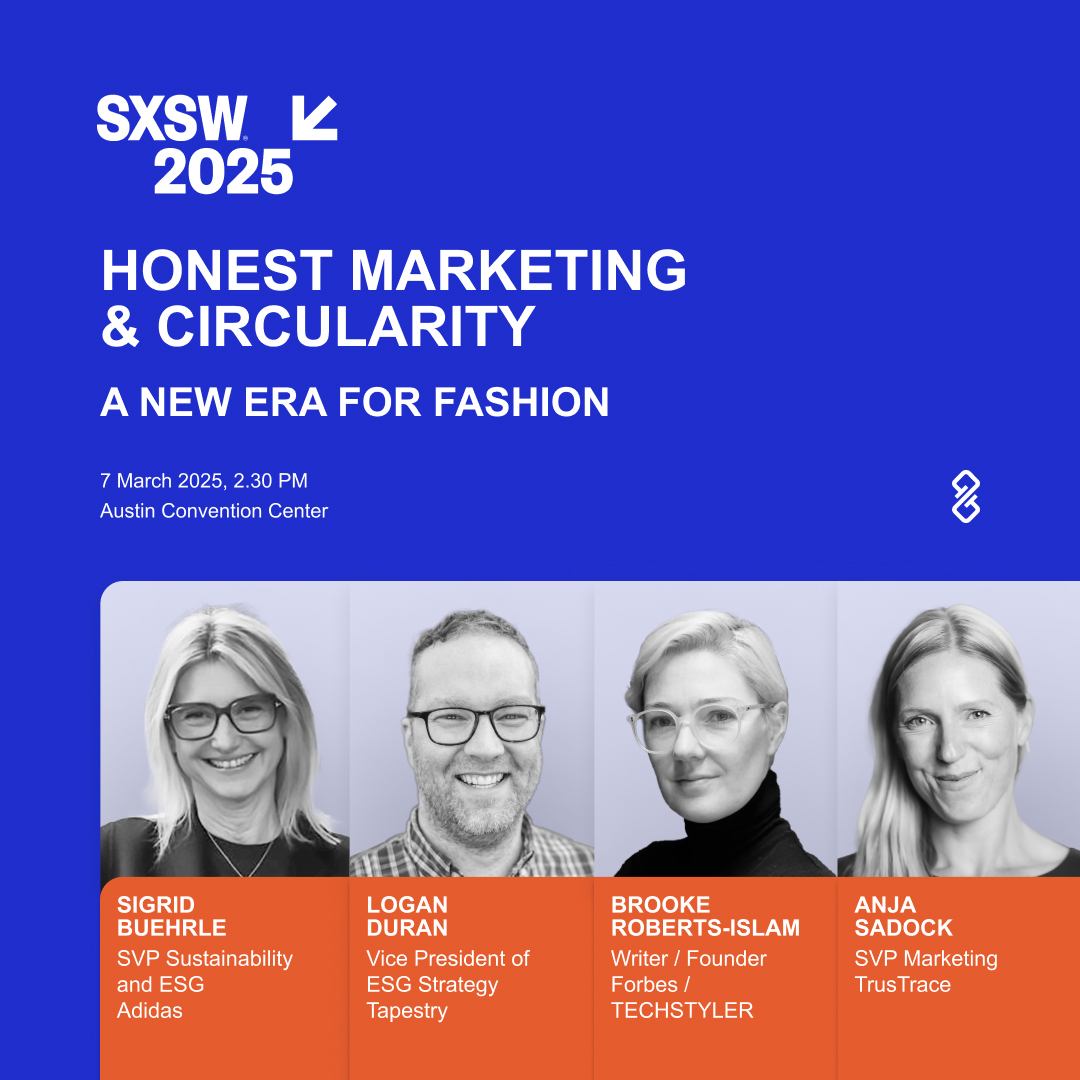
TrusTrace, adidas, Tapestry And TECHSTYLER Lead The Charge Towards Honest Marketing And Circularity At SXSW 2025

STOCKHOLM, Sweden — February 25, 2025 — Pioneering a new era in sustainable fashion, TrusTrace, adidas, and Tapestry are set to headline a thought-provoking panel at SXSW 2025 titled “Honest Marketing and Circularity: A New Era for Fashion.” This session will delve into the imperative of transparent data in guiding consumers towards environmentally conscious purchases and the transformative role of data and Digital Product Passports in fostering deeper brand-consumer connections. Registration is now open here.

Kicking off SXSW on opening day, March 7, at 2:30 p.m. CT, this panel will bring together industry leaders to share key sustainability insights and explore fashion’s evolution from a storytelling-driven industry to one built on transparency, featuring:

  • Sigrid Buehrle, adidas senior vice president, Sustainability and ESG;
  • Logan Duran, Tapestry vice president of Environmental, Social and Governance (ESG), and Sustainability;
  • Anja Sadock, TrusTrace senior vice president of Marketing; and
  • Brooke Roberts-Islam, TECHSTYLER founder, Forbes Senior Contributor Sustainability (Moderator).

“For years, adidas has been dedicated to increasing the use of recycled materials in our products, incorporating third-party certified cotton and ensuring our leather is processed to the highest standards set by the Leather Working Group,” said Sigrid Buehrle, senior vice president, Sustainability and ESG at adidas. “However, tracking material information from raw material to finished products needs robust data and systems. Providing transparent information about our products is of utmost importance to adidas, as we know that it drives trust and credibility with consumers and other stakeholders.”

“Transparency in sustainability claims and reporting is simply a business imperative.” said Logan Duran, vice president of ESG and Sustainability at Tapestry. “Brands that ground communication in facts and not promises build stronger trust with their customers, investors, and stakeholders. Companies that prioritize transparency and data-driven accountability can drive real environmental impact while ensuring they meet the rising expectations for corporate responsibility.”

“We’re on the verge of a major shift in the fashion industry,” said Anja Sadock, senior vice president of Marketing at TrusTrace. “Advancements in technology and AI have made data-driven transparency more accessible than ever, unlocking new opportunities to drive real impact, strengthen consumer trust, and empower shoppers to make more sustainable choices.”

Brooke Roberts-Islam, a renowned writer and consultant on sustainability in the fashion industry, will moderate the discussion, using her expertise to explore how brands can navigate the evolving landscape of sustainability and consumer expectations. “Fashion marketing has long been marred by unsubstantiated and confusing sustainability claims. Brands now have an obligation–and a powerful opportunity–to share evidence-based sustainability information to empower consumers, level the playing field and re-build trust.”

Posted February 25, 2025

Source TrusTrace

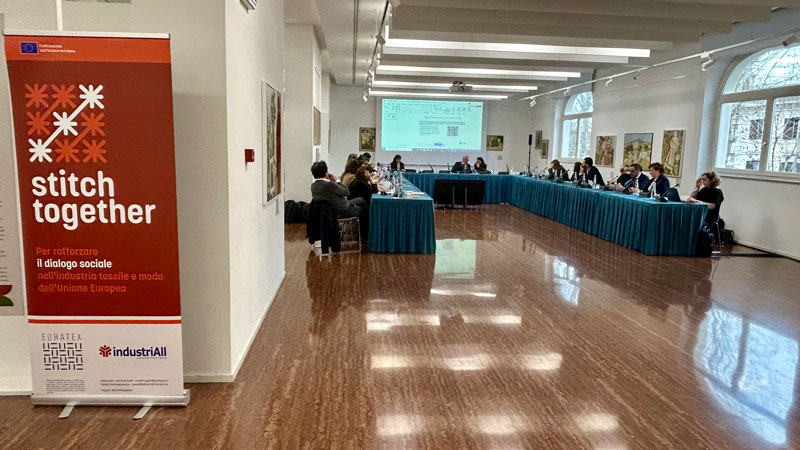
The StitchTogether National Seminar In Italy Presents The Rome Declaration To The Italian Government And European Union

BRUSSELS — February 25, 2025 — On February 19-20, 2025, social partners from the Italian textile and fashion industry met in Rome to deepen their understanding of the upcoming EU legislations and their impact on the Italian textile industry, as well as to further discuss the next step in their effort for a more broad and effective social dialogue. In the context of the EU co-funded StitchTogether project, which aims at promoting social partnerships in the European Textiles and Clothing Industry, the meeting was also the occasion to draft the Rome Declaration: a joint statement to emphasize the social partners’ strong commitment to work together.

The meeting in Rome brought together representatives of the Italian textile industry, including the Italian employer association (Confindustria Moda), national trade unions (Femca-Cisl, Filctem-Cgil and Uiltec-Uil), regional clusters and companies to discuss the future of the industry. Together, they discussed the proposal for a sectoral industrial policy strategy to present to the Italian Government and the EU Commission for the support, consolidation and development of the textile-clothing supply chain.

The Rome Declaration includes a series of priorities, confirming social partners’ commitment in working together for a more competitive and fair Italian textile industry. The Declaration also calls upon the Italian Government and the European Union to support the upcoming transformation of the textile and clothing industries, technology and skills upgrades, regional development and just transition.

Judith Kirton-Darling, IndustriAll Europe’s general secretary, stated: “The Italian textile industry employs around 300,000 workers, or 24 percent of the European workforce in the textile and clothing sector, making it the largest in Europe. In a context of numerous challenges for the European textile industry, such as unfair globalization, green and digital transition, social dialogue is a real lever for improving working conditions and job security. We are committed alongside our Italian partners to a resilient and attractive textile industry in Italy”.

Dirk Vantyghem, EURATEX director general, stressed that: “Italy represents 36 percent of the total European textile and fashion industry; it is critically important therefore to maintain a strong Italian textile industry, which can be a benchmark for other countries. Combining quality, creativity and innovation is the recipe for success. This requires a dynamic company spirit, where employers and employees work hand in hand.”

Posted February 25, 2025

Source: Euratex

Advancing The Fashion Industry in Austin: Getting To Know Nina Means & the Lectra-Supported Austin Community College Fashion Incubator

RALEIGH, N.C. — February 25, 2025 — Join SPESA in Austin for the 2025 Advancements in Manufacturing Technologies Conference where you’ll get to hear from Nina Means, a woman recognized for shaping Austin’s future. Nina will talk about her work in building the city’s fashion industry through the Austin Community College (ACC) Fashion Incubator — a collaborative initiative between the ACC, the City of Austin, and Lectra. She will be joined by SPESA Board member Leonard Marano, President of the Americas at Lectra to discuss the efforts being made to add fashion — and advancements in fashion technology — to the list of Austin’s burgeoning industries.

On April 3, the sewn products industry will gather at the Austin Central Library — named one of the world’s most futuristic libraries — for SPESA’s 2025 Advancements in Manufacturing Technologies Conference.

This is an annual event that strives to defy traditional education, by focusing specifically on how the sewn products industry is advancing — and who the people and companies are behind that movement. In a strategic effort to meet more and more of these industry innovators, SPESA moves its Advancements Conference to a new market each year. In 2024, the event was held in Los Angeles and brought together SPESA members with a wide range of technological expertise along with local leaders from US Standard Apparel, the Garment Worker Center, Fashion Index, Rewilder, Variant 3D, the University of Southern California, KolAi Denim, and more, to speak about the work being done in AI, sustainability, waste management, on-demand manufacturing, robotics, and automation. And how that work, rooted in L.A., supports both the local and global sewn products industry.

In 2025, the event travels to Austin, Texas. Like Los Angeles, Austin is home to some pretty influential people and organizations putting in the time and resources needed to advance the industry locally and regionally.

This is where we introduce you to the illustrious Nina Means, an Austin changemaker who has cultivated a lifelong love for the fashion industry into a successful career as the inaugural Director of the technology-driven Austin Community College (ACC) Fashion Incubator. Announced as a collaborative investment between ACC, the City of Austin, and Lectra, the ACC Fashion Incubator is a 7,500-square-foot facility that offers career-technical training, transferable credits, a residency program, leasable space, and is committed to industry advancements. The Incubator’s creation was backed by data that suggested Austin’s $86 million dollar fashion industry was primed for growth, given the right support and resources.

For the past several years, Means has devoted herself to this growth. While being the creative strategist at the helm of ACC’s Fashion Incubator, she has successfully launched and managed three core programs: The Future of Fashion, a virtual series sponsored by Macy’s; Designers-in-Residence Incubator program; and, ATX+EGYPT global fashion exchange accelerator, sponsored by the U.S. Embassy Cairo. Initiatives like these connect Austin to the vast fashion industry that exists globally.

During the 2025 SPESA Advancements in Manufacturing Technologies Conference, Means will be joined by SPESA Board member Leonard Marano, president of the Americas at Lectra. During the conversation, Means and Marano will talk about their collective efforts to shed light on the industry that exists in Austin. Marano will also speak to industry 4.0, emerging technology trends, and how the ACC Fashion Incubator is leveraging industry advancements.

The 2025 SPESA Advancements in Manufacturing Conference will take place April 3, 2025, in Austin, Texas.

Posted February 25, 2025

Source: SPESA

UNIFI®, Maker of REPREVE®, Reinforces Environmental Commitments With 2024 Sustainability Snapshot, Including Further Growth In Textile-to-Textile Recycling

GREENSBORO, N.C. — February 25, 2025 — UNIFI, Inc., the maker of REPREVE®, today released its 2024 Sustainability Snapshot. The Snapshot highlights significant progress in textile-to-textile recycling, which is becoming an even more important part of the next generation of REPREVE® recycled offerings.

UNIFI’s momentum in the circular textile sector is spurred by the 2024 launches of REPREVE Takeback™, a portfolio of performance circular polyester, and ThermaLoop™, an award-winning circular thermal insulation product.

“Our fifth annual Sustainability Snapshot demonstrates both our progress and our drive,” said Eddie Ingle, CEO of UNIFI. “We continually push boundaries in recycling, waste reduction, and innovation to make sustainable manufacturing available at scale.”

UNIFI’s 2024 Sustainability Snapshot highlights include:

  • 950 million T-shirts’ worth* of textile and yarn waste recycled to date, on track to reach 1.5 billion t-shirts by FY2030;
  • 42 billion plastic bottles diverted from landfills, progressing towards 50 billion bottles by
    December 2025;
  • Zero non-compliant water discharges across local municipalities and per national regulation;
  • 8 percent reduction in Scope 1 and 2 greenhouse gas (“GHG”) emissions, advancing toward a 30 percent reduction by FY2030;
  • REPREVE accounted for 32 percent of FY2024 revenue and targeting more than 50 percent by FY2030

In addition, during 2024, the company invested in two new third-party, peer reviewed, life cycle assessments (LCAs) for REPREVE Takeback staple fiber and ThermaLoop. When compared to virgin polyester production, the results show both products reduce:

  • GHG emissions by 42 to 77 percent;
  • energy consumption by 47 to 84 percent;
  • fossil fuel consumption by 48 to 85 percent; and
  • freshwater consumption by 46 to 71 percent.

ThermaLoop insulation has been recognized for its circular innovation, winning the 2024 Just Style Award for Product Launch – Circularity, which honors the most significant achievements and innovations in the apparel and textile industries. ThermaLoop was also recently honored with the 2025 SEAL Sustainable Product Award, which celebrates innovative and impactful products built for a sustainable future.

The 2024 Sustainability Snapshot underscores UNIFI’s ongoing commitments to environmental progress and supporting global brands in achieving circularity and sustainable materials goals.

For more details, access the full Snapshot HERE. Except where otherwise noted, the Snapshot has been guided by the Global Reporting Initiative (GRI) and Sustainability Accounting Standards Board (SASB) frameworks.

*“T-shirt equivalents” refers to the weight of material equal to that of a single polyester T-shirt.

**Scope 1 reflects direct GHG emissions from owned or controlled sources and Scope 2 reflects indirect GHG emissions from purchased electricity. “Intensity” refers to the normalization of our Scopes 1 and 2 GHG emissions against the revenue for our Americas and Brazil business segments.

Posted February 25, 2025

Source: Unifi Inc.

Noble Biomaterials And Coolcore® Launch COOLPRO Fabric: A Revolution In Cooling Performance Fabric At Performance Days Munich

SCRANTON, PA — February 25, 2025 —  Noble Biomaterials, a global supplier of antimicrobial and conductive solutions for soft surface applications, has partnered with Coolcore, a pioneer in chemical-free thermoregulation fabrics, to introduce COOLPRO fabric, a breakthrough fabric technology that delivers advanced cooling performance with permanent antimicrobial protection. Noble and Coolcore® will showcase COOLPRO at Performance Days Munich, March 5-6, at booths T13 and T12.

COOLPRO fabric will debut at Performance Days Munch as a new fabric innovation collaboration between Noble Biomaterials and Coolcore. COOLPRO is the first fabric to combine Ionic+® Pro yarn technology with Coolcore® Biomimetic Fiber Geometry™.

Noble’s new Ionic+® Pro antimicrobial technology removes odorous bacteria on fabric beyond 100 washings. Its proprietary technology can be spun or extruded into nylon or polyester yarns and blended with other natural or synthetic fibers. Ionic+® Pro is permanently embedded into the fabric and will not wash out.

Coolcore® utilizes a proprietary process of fiber selection and fabric construction to accelerate moisture transfer, enhancing evaporative cooling without relying on additives. Its Biomimetic Fiber Geometry™, inspired by natural thermoregulation systems, optimizes fiber shape and structure to deliver sustained cooling performance.

COOLPRO fabric integrates the Ionic+® Pro yarn with the Coolcore Biomimetic Fiber Geometry™, creating a first-of-a-kind advanced performance fabric.

“Performance Days offers us the perfect venue to showcase our latest innovation, and we’re thrilled to introduce COOLPRO as the next extension of performance textiles,” said Allon Cohne, Senior Vice President, Ionic+® and Chief Marketing Officer at Noble Biomaterials. “By merging our Ionic+® Pro technology with Coolcore’s proprietary cooling technology, we’re offering brands a valuable textile solution that delivers lasting performance in a multi-benefit platform.”

Additional benefits of COOLPRO include:

  • Chemical-free fabric technology
  • Certified performance: EPA-registered and OEKO-TEX® certified
  • Versatile design: A fully dyeable fabric that seamlessly blends with natural and synthetic fibers
  • Fabric options: Stretch Woven (recycled), Single Jersey Super Micro (recycled), and coming soon Ultra-Soft Stretch Jersey (recycled)

“We are proud to partner with Noble Biomaterials to launch COOLPRO, a technology that truly represents the future of performance fabrics,” said Eric Schenker, CEO of Coolcore. “At Coolcore, we strive to develop innovative, sustainable cooling solutions. COOLPRO takes this mission further by combining our chemical-free advanced cooling technology with chemical-free and long-lasting antimicrobial benefits, offering brands a versatile, high-performance fabric that lasts.”

COOLPRO will be on display Performance Days Munich, March 5-6, at Noble’s booth T13 and Coolcore’s booth T12.

To learn more about Noble Biomaterials and the Ionic+® portfolio, visit www.noblebiomaterials.com or contact sales@noblebiomaterials.com to schedule a meeting at upcoming tradeshows.

Posted: February 25, 2025

Source: Noble Biomaterials, Inc.

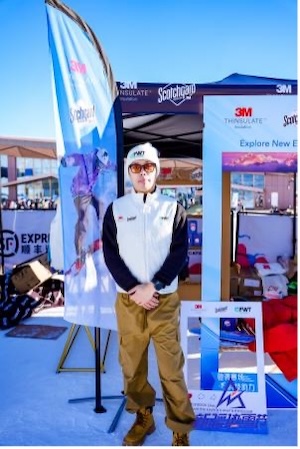
3M Joins The Recent Freeride World Tour Qualifier In Hemu, China

ST. PAUL, Minn. — February 24, 2025 — 3M, a global supplier of insulation and surface modification technology for apparel and accessories, recently joins the Freeride World Tour (FWT) qualifier event in Hemu, China.

The Freeride World Tour Qualifier, held in the heart of the Altai Mountains, requires participants to tackle steep descents, snow-packed slopes, and dynamic weather conditions, testing their skills and resilience.

3M provided cutting-edge technology for the event by incorporating 3M™ Thinsulate™ Anti-Static Insulation (Type AS) and 3M Scotchgard™ Protector into race apparel.  Athletes received a vest featuring 3M Thinsulate Anti-Static Insulation (Type AS) and 3M Scotchgard Protector. The vests are designed specifically for the demanding conditions of mountain environments and helped keep athletes warm by trapping heat, essential for staying comfortable in extreme cold temperatures. The anti-static properties reduce the buildup of static electricity, which is common in dry, cold conditions. Additionally, 30% of the fibers in the Type AS insulation are made from recycled post-consumer plastic bottles.

3M Scotchgard Protector Water Resistant treatment enhances fabric performance with water repellency and stain resistance. This treatment helps the fabric to maintain softness and breathability, helping to keep the wearer dry by preventing water absorption while maintaining fabric breathability in wet and snowy conditions.

Racers also received 3M ski hats, incorporating 3M Thinsulate Brand technology to provide extra warmth without adding bulk, to help participants stay comfortable in extreme conditions. The lightweight and breathable material in the hats was perfect for high-intensity outdoor activities, blending functionality with style.

“We were thrilled to partner with the Freeride World Tour and support these incredible athletes,” said Melissa Blakely, global portfolio director for Thinsulate Brand. “3M Thinsulate Insulation and 3M Scotchgard Protector technology are designed to keep athletes warm, dry, and comfortable, even in the harshest winter conditions. We’re proud to play a role in helping these athletes achieve their goals.”

Posted: February 25, 2025

Source: 3M

Envalior Drives Innovation In Lightweight And Sustainable Composites At JEC World 2025 

PARIS — February 25, 2025 — Envalior’s Bond-Laminates will present its latest fiber composite innovations at JEC World 2025, focusing on new mobility and sustainability. The showcased applications demonstrate how Envalior’s materials and engineering expertise support lightweight construction, safety, and environmental responsibility.


The convertible roof beam is a JEC Innovation award finalist. Photo: Envalior

Innovative applications on display:  

  • Convertible roof beam – A JEC Innovation Award Finalist, this thermoplastic fiber composite replaces magnesium, achieving significant weight reduction while maintaining structural strength. Now in series production for a German premium OEM, it is manufactured using a hybrid molding process in collaboration with Röchling Automotive and key industry partners.
  • Full-scale battery enclosure prototype – A large-format thermoplastic composite part for EV battery enclosures, developed with Sabic and Engel. Made from Tepex® PP/Glassfiber composite and Long Glass Fiber Reinforced PP Compound (PP-LGF), it highlights scalable, efficient production.
  • Thermoplastic pressure vessel for hydrogen storage – Produced by AFPT/Alformet this hydrogen tank utilizes UDea® UD tapes and Envalior liners to achieve fully thermoplastic design offering both lightweight durability and full recyclability. The PA410 CF60 UD tape, a partially biobased material, enhances sustainability while ensuring durability. Designed for both low- and high-pressure hydrogen storage.
  • Underbody protection for German sports cars – A hybrid injection-molded PP-GF composite providing optimized stiffness with reduced weight. Its mono-material design improves recyclability, while the one-shot process at HBW Gubesch ensures cost-efficient production.
  • Sustainable high-performance materials – Envalior expands its Tepex® composite portfolio with sustainable and high-performance materials. EcoPaXX® PA410-based Tepex provides a biobased alternative, reducing environmental impact while maintaining exceptional mechanical performance. Tepex composites, made from carbon or glass fabrics embedded in high-performance polymer matrices, are now also available in Stanyl®-, Xytron™-, and Arnitel®-based variants.

Envalior’s presence at JEC World 2025 highlights its commitment to advancing fiber composite technologies for structural performance, lightweight design, and sustainability. Visit Envalior at Booth P39, Hall 5 to explore these innovations firsthand.

For more information about Envalior’s products and services visit: www.envalior.com.

Posted: February 25, 2025

Source: Envalior

Epson Announces Junkichi Yoshida  As New President 

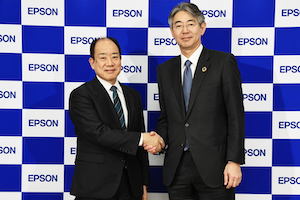
Yasunori Ogawa (left), Chairman and Director, Seiko Epson Corporation and Junkichi Yoshida (right), President and Representative Director, Chief Executive Officer, Seiko Epson Corporation.

SINGAPORE — February 24, 2025 — Epson announced that a meeting of its board of directors had approved a change of representative director and the appointment of a new president, effective April 1, 2025.

Details of change:

Yasunori Ogawa

  • New Position – Chairman and Director
  • Previous Position – President and Representative Director and CEO

Junkichi Yoshida

  • New Position – President and Representative Director CEO
  • Previous Position – Director, CEO, Operating Officer, Printing Solutions Division

Reasons for change

Epson aspires to achieving sustainability and enriching communities as part of its Epson 25 Renewed corporate vision. Accordingly, its businesses are focused on solving societal issues through a philosophy of efficient, compact and precise innovation.

The 2025 fiscal year is the final year of Epson 25 Renewed. It is also a year during which Epson will finish formulating its next strategic corporate vision for driving future growth.

It is important for the company to steadily execute its plans for the next generation and rapidly develop pioneering products and the technologies that support them in both growth and new areas.

This transition in leadership, which was deliberated by the Director Nomination Committee and resolved by the Board of Directors, is thus intended to accelerate the construction of a solid management foundation aimed at enhancing corporate value, under a new management team that will be responsible for everything from formulating the next corporate vision to executing the strategies therein.

Date of appointment

April 1, 2025

Posted: February 25, 2025

Source: Epson

Sponsors