Schwing Technologies: Thermal Cleaning Ensures Nonwoven Production For Respirators And Medical Protective Clothing

NEUKIRCHEN-VLUYN, Germany — April 14, 2020  — Production lines for nonwovens are running at full speed worldwide: In times of the coronavirus pandemic, the material is urgently needed for the production of medical textiles. There is a shortage of masks, surgical or protective gowns everywhere. In order to secure the production processes of nonwovens and supply of medical protective material, precise working machine parts are critical. It is therefore essential to reliably clean the polymer-contaminated toling and return them to the production process quickly.

SCHWING Technologies cleans machine parts in nonwovens production

“More than ever before, we have to use our know-how to reduce machine downtimes with short cleaning times and make tools available again quickly,” emphasizes Thomas Schwing, Managing Director of SCHWING Technologies. The equipment manufacturer specializes in thermal cleaning systems. Systems by the medium-sized, German company clean machine parts — for example, spin packs, spinnerets up to six meters long or melt-blown and spunbond dies. In addition to PET, PP and PE, other polymers are also removed. At the NRW headquarters in Neukirchen-Vluyn, SCHWING also cleans process components as a 24/7 service provider, supplementing its service with the corresponding logistics.

Optimized cleaning process with two-side sound

In order to accelerate the cleaning of machine components in nonwoven production, the SCHWING development team has optimized the ultrasonic cleaning process. Thanks to the new two-side sound, even large machine parts no longer have to be manually turned. This saves time and, above all, manpower. In addition to a thermal vacuum pyrolysis system, the company uses other post-treatment equipment, including ultrasonic cleaning systems. Previously, this process required two steps, explains Schwing: “What’s new is that with two-side sound, the time-consuming turning of machine parts is no longer necessary.” Savings in personnel costs, rapid use of tools and reduced machine downtime are the advantages, the expert knows. At the same time, the process minimizes the risk of damaging dies. The entire process, which takes about 8-12 hours, includes several cleaning steps: These imply thermal polymer removal as well as subsequent high-pressure and ultrasonic cleaning. The final drying phase is followed by a final inspection.

24/7 cleaning service and logistics

SCHWING offers its customers complete cleaning services at the company headquarters in Neukirchen-Vluyn: this includes disassembly, thermal cleaning and, depending on the component size, post-treatment and inspection. The systems run around the clock 24/7 at the location on the Lower Rhine. Seven specialists contribute their entire know-how and experience from many years of cleaning very sensitive parts reliably and without residue. In addition, four drivers work up to ten hours a day to collect contaminated tooling and return the clean components to customers throughout Germany and neighbouring countries.

Posted April 14, 2020

Source: Schwing

Sandler Group Invests In An Additional Production Line For Nonwovens For Respirator Masks

SCHWARZENBACH, Germany — April 9, 2020 — Sandler Group has decided to invest in a new high-tech nonwovens line for the production of nonwovens for respirator masks. The start of production is already scheduled for the middle of the third quarter. The annual production capacity of the line will enable Sandler to additionally produce nonwovens for the manufacture of up to 800 million masks. The investment totals a single-digit million Euro amount. Founded in 1879, Sandler Group is a high-tech manufacturer of nonwovens for use in construction/technical applications, filtration — including materials for respirator masks — home textiles, hygiene, transportation and wipes and supplies companies and institutions.

“The demand for our nonwovens for respirator masks is unbroken — and has been for weeks,” underlined Dr. Christian Heinrich Sandler, president and CEO, Sandler. “Despite around-the-clock production, seven days a week, we cannot accept new orders from manufacturers of respirator masks until June. On the other hand, we are also aware of the still challenging situation in the health sector and therefore we decided last week to invest in a further production line for nonwovens for respirator masks at the Schwarzenbach site in Upper Franconia.“

German Federal Government plans support programme

The family entrepreneur is pleased that the German Federal Government intends to address the shortage of materials in Germany and Europe by promoting such investments, with Federal Minister of Health Jens Spahn even performing valuable mediation work with the relevant manufacturers of production equipment. “We have been producing nonwovens for air filtration for more than 20 years, successfully establishing our position in the global market,” Sandler noted. “Until now, the product category ‘nonwovens for respirator masks’ did not receive much public attention, as previous epidemics fortunately affected the country less.”

Due to the unfortunate development of the COVID-19 pandemic, the demand from Germany and all over Europe has now increased significantly and is likely to remain high in the long term. “We therefore greatly welcome the establishment of complete value chains in Germany.”

Start of production planned for the middle of the third quarter

With this capacity expansion, Sandler Group intends to contribute to rapidly counteracting the severe shortage of filter materials for respirator masks. “We will put all our commitment and dedication towards advancing the installation of the new production line, which is scheduled to commence in June,” explains Sandler. He adds that this schedule, however, can only be met if there are no additional restrictions in the coming weeks, for example pertaining to logistics.

Decline in demand from other sectors

The market for respirator masks is booming. Business with nonwovens for hygiene products — including diapers and feminine hygiene articles — is consistently high. Nevertheless, the current global economic situation will also leave its mark on Sandler Group. Industries particularly affected by the shutdown, such as the automotive, construction and furniture industries, are also important turnover generators for the Upper Franconian company. The market environment in these sectors is challenging. At present, however, the company has no plans to apply for short-time work compensation.

Posted April 14, 2020

Source: Sandler AG

Koch Separation Solutions Expands Manufacturing Of Membrane Technology By 50 Percent

WILMINGTON, Mass. — April 14, 2020 — Koch Separation Solutions (KSS) today announced it is expanding the manufacturing capacity of its innovative PURON® reinforced hollow fiber membrane technology by 50 percent. This manufacturing expansion reflects KSS’s significant growth and an increased ability to quickly serve businesses that utilize its reinforced hollow fiber membrane technologies for their industrial and municipal water and wastewater treatment needs.

“Expanding our PURON membrane manufacturing capacity represents the exciting growth we’re seeing at KSS and is a testament to our strength and the value of our solutions, which are essential in supporting many industries and business globally,” said Manny Singh, President of KSS. “At KSS we are continually seeking to add greater value to our customers, and this expansion increases our ability to offer our technology and know-how to businesses that operate in key economic sectors.”

KSS’s reinforced hollow fiber membrane solutions are among a suite of KSS’s membrane offerings and include PURON MP, PURON HF, PURON MBR, and PULSION MBR. At its core, the PURON hollow fiber membrane has a robust composite structure that makes it virtually unbreakable. Its uniquely engineered ultrafiltration pores facilitate high productivity and rejection while minimizing fouling and cleaning requirements; these membranes are crucial in water and wastewater treatment needs such as solids separations and pathogen removal. KSS’s advanced reinforced hollow fiber membranes allow businesses to operate reliably at high-performance while meeting energy efficiency, reducing overall system footprint, and cutting long-term operational costs.

“Industrial water sustainability and reuse, coupled with PURON technology advantages, are driving the growth we’re seeing in water and wastewater treatment operations,” added Singh. “We recognize the importance of businesses meeting their goals while also operating responsibly and sustainably, and our membrane technologies allow for optimal performance that also save energy and resources.”

Posted April 14, 2020

Source: Koch Separation Solutions

Avgol Supports Circular Economy Drive

ISRAEL — April 14, 2020 — Avgol, a global manufacturer of high-performance nonwoven fabric solutions, has reinforced the nonwoven sector’s move towards a circular economy.

The business has joined an initiative spearheaded by the Ellen MacArthur Foundation. Launched in 2018, the cross-industry scheme is backed by the World Economic Forum and is intended to promote circular economy principles and activities.

Avgol takes a strong stance on sustainable manufacturing solutions and identifies the importance of supporting eco-friendly principles throughout the supply chain. In acting as a signatory with parent company Indorama Ventures Ltd. (IVL), Avgol anticipates significant step-change towards creating a responsible economy of material, protecting the long-term growth of the hygiene industry, as well as the environment.

Tommi Bjornman, chief commercial officer, at Avgol, commented: “We are seeing significant changes throughout the sector, and one of the most exciting is the drive towards closing the plastic loop. The lifecycle of plastics has a great deal to do with how the consumer lives, but manufacturers have a significant responsibility too. At Avgol, we always aim to lead by example, and to effect real change without compromising on the product performance takes ambition and commitment. We’re proud to support the initiative alongside IVL and look forward to playing our role in moving plastic from a linear to circular economy.”

Using its impressive research and development processes, the business has previously demonstrated that sustainability and performance are not mutually exclusive with its natureFIT™ family of technologies. The non-woven technology development platform replaces several traditionally synthetic components with naturally derived alternatives to displace resin and polymer content with a specially designed mineral-based filler, bestowing cotton-like qualities into the material.

Bjornman concluded: “We stand united with our sister businesses in pushing for a robust circular economy. We’ve already started to play our role in the development of our natureFIT model, and we count ‘reduce, replace, displace’ as one of our core tenements of business. By reducing the use of plastics, resins and polymers in the hygiene supply chain, we are working to safeguard the environment.”

Posted April 14, 2020

Source: Avgol Nonwovens

Beverly Knits Collaborates To Make Face Masks

The COVID-19 Response Team logo was created by A. Lava & Son for the Beverly Knits group of manufacturers. T-shirts are being printed with the logo for all team members.

GASTONIA, N.C. — April 14, 2020 — The Beverly Knits group of U.S. textile and garment manufacturers continues to work together to provide face masks for the U.S. Department of Health and Human Services. The number of companies in the group of outstanding American textile companies continues to grow. Currently there are 31 quality U.S. companies on the team.

Fabric is now in production in factories in North and South Carolina. Cutting and sewing of the masks has begun across the U.S. with partners in many states. Production started the week of April 3, 2020 after all facilities were qualified. The production goal is 200,000 masks during the first week and ramping up to 2 million masks produced per week shortly thereafter.

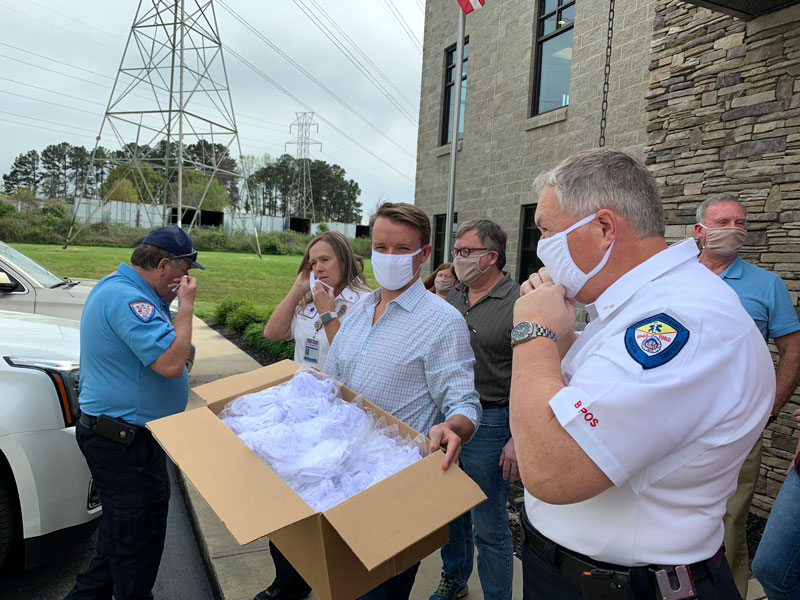
Beverly Knits representative Parker Sytz (right) presented face masks to Officer Keith McCabe of the Gastonia Police Department.

“We have tremendous U.S. textile companies that are retooling quickly to make these masks,” said Ron Sytz, Beverly Knits CEO. “The cooperation of the group is amazing in sharing information and parts as well as working together. Our goal is to make it happen as fast as possible to flatten the curve on COVID-19.”

Companies on the Beverly Knits team include:

  • Clover Knits ;
  • Contempora Fabrics;
  • Carolina Cotton Works;
  • South Fork Industries;
  • Altus Finishing;
  • National Safety Apparel;
  • A. Lava & Son;
  • Wells Hosiery;
  • Jomel Industries;
  • LA Corp.;
  • Hemingway Apparel;
  • BeoCare;
  • Culp;
  • The Filter Shop;
  • Keep it Here Inc.;
  • Two-One-Two New York;
  • ICS North America;
  • UCS Inc.;
  • Colonial LLC;
  • Riegel Linen;
  • Pacific Athletic Wear;
  • Louis Vuitton;
  • SND Mfg;
  • Ethan Allan;
  • Inside Out;
  • Royal Apparel;
  • La La Land Creative;
  • Elizabeth M. Designs;
  • A Plus Apparel;and
  • American Leather/Lee Industries.
Pictured is Beverly Knits representative Parker Sytz and members of the Gaston EMS.

As part of Beverly Knits’ ongoing commitment to flattening the COVID-19 curve, the company recently donated face masks to Gaston EMS and the Gastonia Police Department in Gastonia, N.C.

Posted April 14, 2020

Source: Beverly Knits

Promethean Particles Puts Its Nano-Copper To The Test In The Fight Against Viruses

NOTTINGHAM, England — April 14, 2020 — United Kingdom-based manufacturer Promethean Particles is collaborating with textile companies and leading research facilities to explore the anti-viral effects of its novel copper nanoparticles designed for use in fabrics and personal protective equipment (PPE) for the healthcare sector.

Dr. Selina Ambrose, technical manager at Promethean Particles, said: “At Promethean, we have traditionally developed nano-copper for the printed electronics market, due to the conductive properties of copper. Copper is also well known for its antimicrobial properties and during the past few years we have researched this further in the funded Innovate UK project, ACTIn.

“We are now looking to take that a step further to consider the potential effect copper could have on viruses. If we can show evidence of anti-viral properties from the testing currently being carried out, then it’s particularly relevant to the current Covid-19 outbreak, and we may see a lot more urgency in its development.”

Promethean Particles played a key role in the ACTIn project, funded by the Newton Fund, which saw Mexican and U.K. companies and research institutes successfully develop durable antimicrobial textiles for the healthcare sector. By embedding nano-copper into polymer fibers, such as nylon, via a melt extrusion process, it was found that the antimicrobial effect lasted longer than other similar antimicrobial fabrics on the market, which tended to be surface-coated and therefore lose functionality with each wash.

Now, in conjunction with the Mexican research institute, CIQA, and textile trade association, NWTexNet, fibres embedded with copper nanoparticles manufactured by scientists from Promethean, have been sent to independent laboratories in the United States and United Kingdom for anti-viral testing to ISO standards. If certified, it could open the door to the manufacture and supply of nonwoven fabrics and Personal Protective Equipment (PPE), such as garments, face masks, hats, uniforms and bed linen, which is resistant to viruses — such as the coronavirus that causes Covid-19 — and will offer much needed improved protection for frontline health workers.

By using nano-copper, as opposed to larger copper particles, a smaller mass of active material is required to achieve the same antimicrobial effect bringing both cost and process benefits to the manufacturer.

Dr. Ambrose added: “Prior to the Covid-19 pandemic, this research was a strategically important focus area for both the UK and Mexico due to the significant economic and social impact of healthcare acquired infections that lead to extended patient stays in hospitals, higher healthcare costs, and thousands of deaths globally each year. With current events, clearly it has become absolutely critical that progress is made now.”

Promethean says there is potential to further develop its nano-copper materials for use in coating applications for door handles, handrails and beds within the healthcare sector.

The company, a developer of high specification nano-materials for a wide range of sectors, is also in talks with a manufacturer to develop a transparent antimicrobial coating containing its nano-copper technology suitable for glass. Ideal for incorporating into a range of touchscreen personal devices, as well as those found at train stations, cinemas and fast-food restaurants, the coatings would inhibit the growth of bacteria and mold on surfaces. By using nano-copper particles, glass transparency is retained.

“For most applications, having both antimicrobial and anti-viral functionality will be of huge benefit to manufacturers,” Dr. Ambrose added.

“Our nanomaterials offer many advantages over others on the market. Our liquid dispersions are easier to process and provide a more effective, functional final product. We are pleased to say that the success we have seen with our work with CIQA to date has provided us with the opportunity to supply more of our copper dispersions to them for other projects they are leading.”

Posted April 14, 2020

Source: Promethean Particles

Delta Apparel Shifts Production To Produce Cotton Face Masks To Help Fight Spread Of COVID-19

GREENVILLE, S.C. – April 14, 2020 – Delta Apparel Inc., a provider of core activewear and lifestyle apparel products, today announced that it will leverage its manufacturing facilities to begin producing cotton face masks. The Company has joined a coalition of iconic apparel brands that are responding to urgent calls for companies to help produce face masks during the COVID-19 global pandemic. Once fully ramped up, the coalition, inclusive of Delta Apparel, expects to produce up to 10 million face masks per week in the United States and in Central America.

Robert W. Humphreys, Delta Apparel Inc.’s chairman and CEO, commented: “We are extremely proud to offer the resources we have available for the manufacture of face masks to help support those hospitals and health care workers on the front lines, as well as all Americans battling the spread of COVID-19. We have already begun production of the face masks in our sewing facility in North Carolina and expect to begin production in Honduras this week.”

The U.S. Center for Disease Control recently issued recommendations on wearing cloth face coverings in public settings where other social distancing measures are difficult to maintain, such as grocery stores and pharmacies, and especially in areas of significant community-based transmission. In addition to the production of face masks with the coalition, Delta Apparel is also producing and selling non-medical grade face coverings.

Humphreys concluded: “We are proud of our dedicated workforce who wanted to participate in these efforts and quickly took on the challenge to retool our production lines to begin making these masks and face coverings. Of course, the safety of our employee base is of utmost importance to us. We are following the recommended protocols within our facilities, including providing face masks for our employees to wear, implementing social distancing protocols, and increasing sanitation and cleanliness measures.”

Posted April 14, 2020

Source: Delta Apparel Inc.

Lectra Opens Atlanta Technology Center To Partner With Volunteers To Create PPE

ATLANTA — April 14, 2020 — Lectra — a provider of technology solutions for the fashion, upholstered furniture and automotive interior industries — is opening the Technology Center at its Atlanta headquarters to create personal protective equipment (PPE) for healthcare and other essential workers to help combat COVID-19 in the Atlanta and Georgia communities.

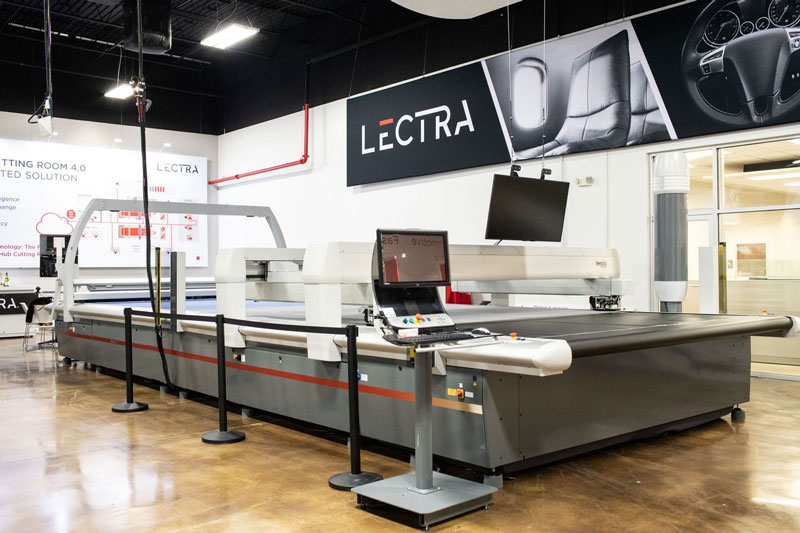
Lectra has a fully operational cutting room usually used for tests and demonstrations, and is making the facility and the company’s leading experts available to produce life-saving PPE. However, Lectra needs volunteer partners to provide fabric, sewing and distribution, and is looking to collaborate with groups or organizations that would like to join forces.

“Our company and our industry as a whole are committed to helping the communities we serve during this pandemic,” said Edouard Macquin, president, Lectra Americas. “We are enthusiastic to partner with any organizations that would like to volunteer their services and are making the full resources of our company and our experts available to help in any way possible.”

Any organization that would like to be part of this volunteer effort can contact Daniella Ambrogi, vice president of marketing for Lectra Americas, at d.ambrogi@lectra.com.

In addition to producing PPE at Lectra’s Technology Center, the company is also providing its experts to help clients pivot manufacturing technology to the production of PPE across Lectra’s service lines.

Posted April 14, 2020

Source: Lectra

Eastman Donates Material To Purdue For Protective Lenses, Face Shields

KINGSPORT, Tenn. — April 13, 2020 — As part of the world’s collective effort to respond to the coronavirus pandemic, Eastman is donating materials to produce protective lenses and face shields for medical personnel.

Eastman donated 600 square feet of material to Purdue University. More than 40 volunteer faculty and staff members are using the school’s laser cutting system to produce up to 3,000 lenses and 4,000 face shields. The protective equipment will be distributed to hospitals across Indiana.

“I’m proud of the speed at which the Eastman team was able to get material to the teams at Purdue,” said Brendan Boyd, vice president, Specialty Plastics & Fibers Technology. “The need for more protective equipment is urgent. We value these innovative partnerships that can meet a significant community need quickly and effectively.”

Personal protective equipment (PPE) plays an essential role in protecting medical personnel and others on the front lines battling the epidemic. Safety glasses and face shields protect people from droplets produced by coughing and sneezing and can help prevent workers from touching their faces.

Purdue’s Bechtel Innovation Design Center is using a pilot-scale manufacturing facility to make protective glasses and face shields. “Under guidance from medical professionals, we have redesigned and manufactured complex fittings for ventilators and are actively producing laser cut, waterjet cut, and 3D-printed parts for face shields and safety glasses,” said David McMillan, assistant director of the center.

In addition to the Purdue donation, Eastman employees around the globe are serving an essential role in the response to COVID-19. Eastman has donated material to organizations in Tennessee, Virginia, and Brazil for the production of face shields. In Europe, the company has donated resins to customers that are making hand sanitizer instead of cosmetics.

Posted April 13, 2020

Source: Eastman Chemical Co.

Ford To Produce Respirators, Masks For COVID-19 Protection In Michigan; Scaling Up Production Of Gowns, Testing Collection Kits

DEARBORN, Mich. — April 13, 2020 — Ford is expanding its efforts to design and produce urgently needed medical equipment and supplies for health care workers, first responders and patients fighting coronavirus.

In addition to the current production of more than 3 million face shields in Plymouth, Mich., Ford-designed powered air-purifying respirator production begins Tuesday, April 14. Ford also is now producing face masks and leading an effort to scale production of reusable gowns for health care workers. Lastly, Ford started providing manufacturing expertise to help scientific instrument provider Thermo Fisher Scientific quickly expand production of COVID-19 collection kits to test for the virus.

“We knew that to play our part helping combat coronavirus, we had to go like hell and join forces with experts like 3M to expand production of urgently needed medical equipment and supplies,” said Jim Baumbick, vice president, Ford Enterprise Product Line Management. “In just three weeks under Project Apollo, we’ve unleashed our world-class manufacturing, purchasing and design talent to get scrappy and start making personal protection equipment and help increase the availability and production of ventilators.”

Ford and 3M Collaboration Leads to New PAPR

Since late March, Ford manufacturing, purchasing and supply chain experts have been embedded at 3M manufacturing facilities to help increase production of urgently needed products.

With this additional help, 3M and Ford were able to increase the output of PAPRs and N95 respirators at 3M’s U.S.-based manufacturing facilities.

“3M is dedicated to helping to protect our heroic health care workers and first responders globally, including sharing our scientific expertise to increase supply of needed PPE,” said Bernard Cicut, vice president, 3M Personal Safety Division. “We are proud to stand together with Ford in this effort, as they have helped us increase manufacturing of existing 3M PPE products and, together, we have rapidly designed a new PAPR to help protect these heroes.”

Ford will start producing an all-new PAPR design to help protect health care professionals on the front lines fighting COVID-19. Rapidly designing components and prototyping in accordance with federal guidelines and with 3M expert support and guidance, Ford teams reduced PAPR development time to less than four weeks.

“By working collaboratively with 3M to quickly combine more than 100 years of Ford manufacturing and engineering expertise with personal protection equipment design and expertise, we’re getting much-needed technology into the hands of frontline medical workers to help when they need it most,” said Marcy Fisher, Ford director, Global Body Exterior and Interior Engineering.

Approximately 90 paid UAW volunteers will assemble PAPRs at Ford’s Vreeland facility near Flat Rock, Mich., with the ability to make 100,000 or more.

The newly designed PAPR includes a hood and face shield to cover health care professionals’ heads and shoulders, while a high-efficiency (HEPA) filter system provides a supply of filtered air for up to 8 hours. The air blower system — similar to the fan found in F-150’s ventilated seats — is powered by a rechargeable, portable battery, helping keep the respirator in constant use by first-line defenders.

The development team has been supported by the CDC’s NIOSH National Personal Protective Technology Laboratory. NIOSH provided timely guidance to Ford and other US manufacturers to encourage the development of protective public health emergency PAPRs to respond to the COVID-19 emergency. Ford expects to achieve the temporary, limited NIOSH approval by the end of April.

Pending approval, 3M will distribute the newly designed PAPRs through its U.S. network to help bring these technologies quickly and efficiently to health care workers who urgently need them. 3M and Ford will donate any profits they earn from the sale of the PAPR to COVID-19 related nonprofit organizations.

Face Mask Production

Meanwhile, Ford is now manufacturing face masks for internal use globally and pursuing certification for medical use its Van Dyke Transmission Plant. Face masks can help slow the spread of the virus and help people who may have the virus and do not know it from transmitting it to others.

The CDC is now encouraging all U.S. residents to use masks to curb the spread of the virus.

Ford’s global manufacturing and purchasing teams quickly sourced the necessary materials and equipment from its network of equipment manufacturers around the world. Production began earlier this week.

Approximately 30 UAW paid volunteers will start making masks in the plant’s ISO Class 8 cleanroom, which is a controlled environment with extremely low levels of pollutants, enabling the safe production of face masks for medical use. Eventually, approximately 80 UAW paid volunteers will make masks as production increases.

“UAW Ford members continue to step up and volunteer to work during this difficult time as we expand at the facility across from Flat Rock to make respirators and at the Van Dyke Transmission Plant to make face masks for medical use,” said Gerald Kariem, vice president, UAW Ford Department. “The UAW also continues to work with Ford to follow stringent CDC guidelines and go above and beyond protections for these members who are so proudly volunteering to serve their communities and their nation.”

Gown Production

To help further protect health care workers, Ford is leading efforts to manufacture reusable gowns with airbag supplier Joyson Safety Systems. The go-fast project has created re-usable gowns manufactured from material used to make airbags in Ford vehicles.

Production of gowns will reach 75,000 gowns a week by Sunday and scale up to 100,000 gowns for the week of April 19 and beyond. By July 4, Ford-supplier Joyson Safety Systems will cut and sew 1.3 million gowns, which are self-tested to federal standards and are washable up to 50 times.

Ford worked with Beaumont Health in Metro Detroit to quickly design the gown pattern and test for sizing during fit and function trials. More than 5,000 gowns have already been delivered to the hospital.

“The need to protect our medical teams is heightened — Ford’s gown production could not come at a better time during this crisis,” said David Claeys, president of Beaumont Health hospitals in Dearborn and Farmington Hills. “Our front line health care workers are working around the clock to treat COVID-19 patients and we need the necessary supplies to support them.”

Collection Kits for COVID-19 Tests

Ford is helping scale production of collection kits for COVID-19 tests at Thermo Fisher Scientific.

Thermo Fisher’s engineering team at the company’s site in Lenexa, Kan., realized their expertise, combined with the manufacturing expertise of Ford’s nearby Kansas City Assembly Plant engineering team, could help set up additional collection kit production machinery. The Ford team also helped Thermo Fisher adapt machinery that currently runs glass vials for other products to run plastic vials required in drive-through coronavirus test collection.

“Ford’s engineers brought a fresh perspective to production expansion, and together, we’ll more than triple the number of collection kits we can deliver each week starting April 20,” said John Reuss, senior director, microbiology business for Thermo Fisher. “It’s great to see different industries coming together to solve a common problem.”

Additional Efforts

“We are doing all we can to expand production and availability of personal protective equipment to help keep the true heroes — medical personnel — and our communities safe in the fight against COVID-19,” said Adrian Price, director, Global Core Engineering for Vehicle Manufacturing.

Ford also is continuing to manufacture transparent full-face shields for medical workers. As of April 13, Ford had produced more than 3 million face shields for medical personnel and first responders. Besides the U.S., face shield production also has started globally at Ford facilities in Canada and Thailand and with Ford joint venture partner Mahindra & Mahindra in India.

Work at Rawsonville, Mich., Components Plant is underway to transform a portion of the plant to manufacture a third-party ventilator, in collaboration with GE Healthcare, with production expected to start the week of April 20. Built by paid UAW volunteers, the goal is to produce 50,000 Model A-E ventilators by July 4 to help COVID-19 patients.

Ventilator pre-production activities are also underway in the U.K., where Ford and an industry consortium are preparing to make ventilators from Penlon. Ford is providing manufacturing engineering capability, project leadership, purchasing support and assembly of the ventilators at its Dagenham engine plant. This production will help meet demand for 15,000 ventilators ordered by the U.K. government.

Posted April 13, 2020

Source: Ford Motor Co.

Sponsors