
IACMI Brings Composites Leadership Community To Dayton, Ohio, For Winter 2020 Members Meeting

KNOXVILLE, Tenn. and DAYTON, Ohio — February 7, 2020 — The Institute for Advanced Composites Manufacturing Innovation (IACMI) – The Composites Institute hosted its Winter 2020 Members Meeting in Dayton, Ohio, in collaboration with its partners JobsOhio and the University of Dayton Research Institute (UDRI).

The meeting kicked off with tours of the expanding Dayton Composites Center, where UDRI is growing the space to meet the composites industry’s dual technology needs. The tours included materials and process demonstrations from UDRI, as well as from Ohio-based defense and aerospace-related companies including Globe Machine, SEPMAtech, Presidium, Owens Corning, Teijin, Composites Research Group, SpinTech, NAWA, and NanoSperse.

The meeting then continued with more than 225 attendees gathered at the University of Dayton Marriott for presentations focused on innovations in materials and processes making impacts in the composites industry, and how these innovations are fueled by collaborations among the public private partnership. The meeting kicked off with welcome remarks from Alex Fitzsimmons, Acting Deputy Assistant Secretary for Energy Efficiency (DAS-EE) at the U.S. Department of Energy. Fitzsimmons spoke about how the White House prioritizes supporting the U.S.’s manufacturing security and how IACMI has been at the center of manufacturing innovations since it is supporting the industries of the future. Fitzsimmons said, “Energy innovation in manufacturing is more important than ever before, and the IACMI consortium’s advanced manufacturing and workforce development initiatives support the Trump Administration’s goal to position the U.S.’s position as a global leader in manufacturing.”

The Members Meeting continued with presentations about advanced composites innovations in Ohio and the impact of advanced manufacturing in the state from Glenn Richardson with JobsOhio; Ohio Lt. Governor Jon A. Husted; Joe Zeis, the Senior Advisor for Aerospace & Defense for Governor DeWine; John Leland, the Vice President for Research and Executive Director of UDRI; and John Wilczynski, Executive Director of America Makes.

Keynotes, Julia Attwood with Bloomberg NEF, discussed the role for composites in energy, transport, and manufacturing with projections for the trends in the future of composites; and Michael Guckes with Gardner Intelligence, discussed the composites industry economic picture, analyzing former trends that have impacted the current composites industry.

IACMI technical project leads discussed the innovations and outcomes of their technical research projects. Soydan Ozcan with Oak Ridge National Laboratory led the discussion about recycling and creating materials and processes that incorporate and advance a circular economy perspective with presentations from Jordan Harris with Vartega, Chuck Ludwig with CHZ Technologies, and Mohamed Bouguettaya with BASF.  Lt. Governor Husted met with several Ohio industry members at the event and praised their progress. “Innovation is driving the change to make our world a better and more sustainable place, and is the key to Ohio’s success,” noted Ohio Lt. Gov Jon Husted.

Brian Rice, one of IACMI’s technology area directors, and distinguished research engineer at UDRI, led a panel to provide insight on rapid, low-cost manufacturing for aerospace structures. Panel participants included Amanda Simpson with Airbus Americas, Andrea Helbach with the Air Force Research Laboratory, Robert Koon with Lockheed Martin, and Jessica Sisk with the U.S. Army Combat Capability Development Command, Aviation & Missile Center. “IACMI has created a unique opportunity for UDRI to leverage and expand its composites research expertise in aerospace to support commercial application in wind, compressed gas storage, and automotive markets.  In doing so, UDRI expanded its technology and supply chain knowledge to bring innovation back to the aerospace sector. A panel later this morning led by Air Force, Army, Lockheed, and Airbus Americas highlighted future challenges and opportunities regarding synergies across application markets,” stated John Leland.

Ohio is the birthplace of aviation and a national resource for aerospace research, development and innovation, so it was most appropriate the event’s reception was held at the United States Air Force Museum, the world’s largest military aviation museum. Attendees were in awe of the opportunity to walk through decades of history and innovation in the hangars that housed research and development galleries, historical replicas and the Presidential Gallery, that features 10 historical aircraft representing more than 70 years of dedicated presidential service.

“Ohio continues to be a great partner for IACMI, being a central location for many Midwest IACMI members and a state that prioritizes support for innovations in advanced manufacturing. We are thankful for the partnership that has allowed the IACMI community to develop research projects that address the comprehensive adoption of advanced composites – creating new materials and manufacturing processes that incorporate composites in novel applications, and supporting the integration of a circular economy that puts environmental sustainability at the center of the consortium’s initiatives,” said John Hopkins, IACMI CEO.

IACMI has unveiled its new membership structure that extends beyond the current model and looks forward to the continued initiatives that will propel the institute into future innovation spaces. Tom Dobbins, President of American Composites Manufacturers Association (ACMA), highlighted the importance of future support for the institute during his remarks to the audience. The Society for the Advancement of Material and Process Engineering (SAMPE) CEO, Gregg Balko, and Jeff Edwards, Executive Director for Utah’s Advanced Materials & Manufacturing Initiative (UAMMI) were also in attendance and provided strong support for the institute, its mission, and its members.

IACMI’s next Members Meeting is scheduled for July 14-16, 2020, in Detroit, Michigan.

Posted February 7, 2020

Source: The Institute for Advanced Composites Manufacturing Innovation (IACMI) – The Composites Institute

Ascent Aerospace Will Exhibit At Key Manufacturing Events In March

MACOMB, Mich. — February 7, 2020 — Ascent Aerospace — a provider of tooling systems, factory automation and integration services to the aerospace industry — will be exhibiting at a number of aerospace conferences and exhibitions in March 2020: JEC World 2020, AeroDef Manufacturing and AeroTech 2020.

From March 3-5, Ascent will be present at the JEC World 2020 event in Paris. As the premier composites event in the world, JEC features groundbreaking solutions as well as unique manufacturing technologies. JEC also offers many new business opportunities for aerospace tooling and systems manufacturers. Ascent will be in Hall 5, Booth P6, where we will be highlighting our new additive manufacturing capabilities, our considerable experience with composites and our patented HyVarC tooling solution.

Following JEC, Ascent will head to Fort Worth, Texas, for the AeroDef Manufacturing exhibition from March 16-19. This key conference for the aerospace and defense industry provides access to leading companies with innovative manufacturing processes and integrated manufacturing solutions. Visit booth 523 to learn about the new drilling products, automation applications and advanced integrated solutions Ascent has to offer.

Concurrent with AeroDef Manufacturing, Ascent will be present at the SAE AeroTech conference from March 17-19, in Pasadena, Calif This comprehensive aviation event focuses on every facet of modern aircraft development as well as the latest technology from suppliers and manufacturers of integrated systems, tooling and materials.  Join Ascent in booth 206 to discuss the latest developments regarding our next generation end effectors and fastening systems.

Posted February 7, 2020

Source: Ascent Aerospace

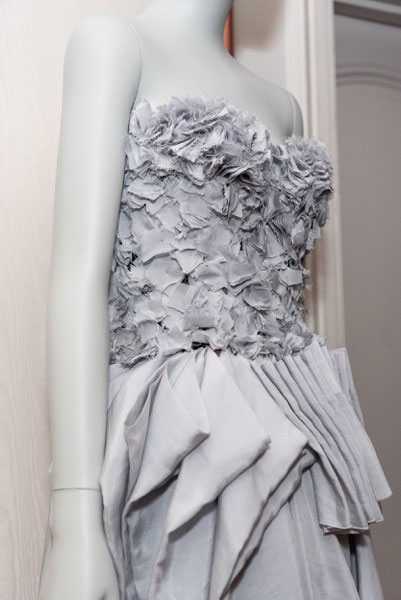
Red Carpet Green Dress™ Collaborates With Lenzing’s Tencel™ Luxe To Launch Sustainable Eco-Couture Textiles And Announces Ambassadors For Oscars® 2020 Campaign

LOS ANGELES — February 6, 2020 — In an exciting new step to expand its impact within the global fashion industry, Red Carpet Green Dress™ has collaborated with textile giant Lenzing’s new luxury brand TENCEL™ Luxe to launch a range of eco-couture textiles. The inaugural launch will deliver a game-changing solution to the fashion world, particularly red carpet fashion, which lacks a comprehensive range of natural material solutions.

The RCGD X TENCEL Luxe textiles will be unveiled on the 92nd Academy Awards red carpet as couture gowns worn by actress Léa Seydoux (Spectre, Bond: No Time to Die), and Oscar® nominated producer Elena Andreicheva (Learning to Skateboard in a Warzone- If You’re a Girl). A stunning design created by leading ethical luxury designer Benedetti Life was featured at the Red Carpet Green Dress (RCGD) Pre-Oscar Gala in Los Angeles on February 6th. Also representing the campaign and making a sustainable style statement on the Oscars red carpet will be Golden Globe & BAFTA nominee Kaitlyn Dever (Booksmart & Unbelievable).

RCGD is a women-led global change-making organization founded by leading environmental advocate, Suzy Amis Cameron. RCGD has delivered its noteworthy Oscars red carpet design initiative with the Annual Academy Awards for over a decade, dressing ambassadors such as Naomie Harris, Emma Roberts and Lakeith Stanfield in sustainable formal wear.

“When we started the Red Carpet Green Dress journey 10 years ago, the hunt for textiles was both challenging and a cause for reflection,” shares Suzy Amis Cameron, Founder of RCGD. “Sustainable fabrics were just not easy to find, and even with dedicated resources, finding the right fabric for an Oscars worthy gown nearly proved impossible. Fast forward 10 years and sustainable fashion has become the mainstay we always knew it would.”

RCGD has collaborated with some of the top fashion brands from around the world including Louis Vuitton, Vivienne Westwood, Reformation and Armani, and has delivered global student- focused programs with fashion colleges including ESMOD Paris since 2009. RCGD will now take its work beyond the red carpet to create an industry movement with its partnership with TENCEL™ Luxe. A revolutionary milestone for sustainable textiles, TENCEL Luxe will set a new benchmark in the future of eco-couture. In a world where clothing represents more than 60% of the total textiles used globally, this launch has the potential to create significant positive change.

TENCEL Luxe branded filament yarns are of 100% botanic origin and are produced using a renewable wood source. Made specifically for the high-fashion sector, the yarns will come in a variety of weights with varying mixes of the revolutionary TENCEL Luxe yarn, including a luxury textile derived exclusively from the filament yarn, a lush silk blend, and a rich cashmere fusion.

“We are proud to partner with our friends at Red Carpet Green Dress to introduce sustainable alternatives for eco-couture,” added Harold Weghorst, vice president of Global Brand Management, Lenzing AG. “We are thrilled that more world-leading organizations are taking a bigger stride to promote sustainability, and we will continue to work closely with brands and industry partners to not only drive sustainability in day-to-day fashion, but also in haute-couture and red carpet looks.”

Under the leadership of the new CEO of RCGD, Samata, the textiles will be milled in Asia and available worldwide later this year to emerging and established designers. “Only a tiny percentage of the leading fashion brands are capable of tracking their garments back to the fiber origin, and with our TENCEL Luxe collaboration we plan to be part of the movement to make this the norm,” shared Samata. “We are excited to be part of providing a solution for the global fashion industry market.”

Posted February 7, 2020

Source: Red Carpet Green Dress/Lenzing – TENCEL Luxe

Mimaki’s New Hybrid Textile Printer To Headline 15-Strong Product Lineup At FESPA 2020

AMSTERDAM — February 7, 2020 — Mimaki Europe today announces that its brand-new hybrid digital textile printer, the Tx300P-1800 MkII, will headline their product line-up at FESPA 2020, Madrid, Spain, 24-27 March, Stand 7-C20. Uniquely designed with versatility at its core, the new printer enables both direct-to-textile and transfer printing, with interchangeable platens and three different ink combinations — providing unrivalled flexibility within a single system and opening new doors for print service providers.

With Mimaki’s Tx300P-1800 digital textile printer having previously led the way for high-quality, cost-effective printing, the evolved Mimaki Tx300P-1800 MkII now adds sublimation transfer printing to its capabilities, opening up a host of possible new materials and applications. The capability to fulfill diverse applications from fashion textiles to interior fabrics and wallpaper within one system makes the printer an ideal entry-level solution. It affords both smaller print service providers and large volume production houses all of the well-known benefits of digital print technology not attainable with analogue print methods still prevalent in the modern textile printing industry, including more cost-effective short runs and faster turnarounds, benefits that make this technology ideal for sampling.

“We are delighted to be bringing the Tx300P-1800 MkII to FESPA this year to show customers exactly how game-changing it can be for their businesses,” comments Danna Drion, Senior Marketing Manager at Mimaki EMEA. “With the introduction of this new hybrid printer, we are not only delivering an affordable, streamlined single-system solution for printing on both paper and textile, but we are also providing print service providers with the versatility to continue exploring different substrates and applications as they grow their businesses into the future. We anticipate a very bright future for digital printing in the textile industry and have no doubt that our new printer, at the cutting edge of this sector, will have a role in realizing this transition.”

The ability of the Mimaki Tx300P-1800 MkII to switch between direct-to-textile and transfer printing is enabled by its interchangeable platens. When printing direct-to-textile, excess ink penetrated through the fabric is drained by a platen with an ink-receiving channel. When printing on heat transfer paper however, this platen can be quickly and easily exchanged for a vacuum platen needed for paper printing — without the need for service engineers. The hybrid printer is also able to facilitate either a traditional one-way ink set, configured with any one of five ink types, as well as various combinations of inks, providing unparalleled flexibility. Users are able to select from three different ink combinations — textile pigment/direct sublimation, textile pigment/sublimation transfer, or direct sublimation/sublimation transfer — to provide the best results across various applications.

“At Mimaki, our goal is to consistently provide the best products in each market, which is why we have also worked meticulously to provide a number of clever adaptations to ensure that the print quality and reliability exceed expectations,” continues Drion. “These technologies, such as our Nozzle Check Unit to provide uninterrupted printing and minimise downtime, our MAPS4 system to reduce banding, and our new ‘high head gap’ printhead to ensure accurate ink droplet placement, are just some of the ways in which we ensure that products such as the Mimaki Tx300P-1800 MkII have the substance to continually impress our customers and provide really valuable changes to their businesses.”

The new hybrid digital textile printer will form part of an impressive exhibition line-up from Mimaki of more than 15 products at FESPA this year, including the brand-new SWJ-320EA large format solvent printer, JFX200-2513 EX large flatbed UV inkjet printer and two models of the recently launched Plus series in the large format sector alone. Visitors can also explore Mimaki’s 3D print technology through full-color samples created on the 3DUJ-553 3D printer, capable of faithfully replicating more than 10 million colors. Focused on providing inspiration and encouraging visitors to “experience print”, Mimaki will also be celebrating real-life customer, partner and collaborator examples and success stories, with a host of creative applications for visitors to delve into on the stand.

Posted February 7, 2020

Source: Mimaki Europe BV

JEC World 2020: SGL Carbon Presents New Solutions For Automotive, Aerospace And Industrial Sector

WIESBADEN, Germany — February 7, 2020 — Tailor-made large-scale fabrics production at SGL Carbon, ideally suited for highly efficient realization of rather plane components such as battery enclosures and many more.

  • Composite battery enclosures for e-mobility;
  • Flexible new leaf spring generation for rear axles;
  • Innovative component designs for passenger airplanes, helicopters and air taxis; and
  • Extremely lightweight and stable transfer beam for mechanical engineering.

At this year’s JEC World, the largest trade fair for composites held from March 3-5, 2020, in Paris, SGL Carbon will focus on the topic of serial production for the automotive, aerospace and industrial sectors. The key is customized solutions with individual component designs combined with tailored materials and production processes ready for large scale production. Under the motto “The Solution Provider,” the company will present selective innovative component solutions from all three areas in Hall 6, Booth D25.

“Thanks to our integrated value chain, from fibers to finished components, our Lightweight and Application Center, and our increasing portfolio of realized series-ready concepts, we offer our customers smart, tailor-made solutions all from a single source. In the future, we will increasingly apply our comprehensive expertise and highly efficient materials from the automotive industry into the aerospace and industrial sectors too,” explains Dr. Andreas Wöginger, Head of Technology of the Composites – Fibers & Materials business unit at SGL Carbon.

Selective applications with focus on serial production

In the field of automotive applications, SGL Carbon will present at the JEC World composite battery enclosures as a promising new application driven by increasing demand for electric vehicles and the resulting new flexible chassis platforms. The company demonstrates a prototype of a battery enclosure based on carbon fibers. However, hybrid composites with a mixture of glass and carbon fibers are also possible. In early January, SGL Carbon received a major order from a North American automotive manufacturer for the serial production of top and bottom layers for battery enclosures, with production to begin at the end of 2020.

In addition, SGL Carbon showcases for the first time a new leaf spring generation made of glass fiber composite that is used as a longitudinal leaf spring for the rear axle of the Ford Transit. In comparison to conventional leaf springs, the innovative composite leaf spring weighs up to 50 percent less while offering increased security standards and supporting a one-to-one compatibility with standard springs. The Ford leaf spring complements SGL Carbon’s large-scale production of transversal leaf springs for a great variety of Volvo models and the Mercedes Sprinter. In total, SGL Carbon has delivered more than 1.5 million leaf springs.

In the aerospace sector, SGL Carbon is also expanding its portfolio of realized projects and expertise relying on the trend to use more efficient materials and processes in this industry too.

In the area of primary structure components, the company will present a demo exhibit for the door frame of a passenger airplane realized in collaboration with external partners and based on 50k carbon fiber from the SGL Carbon, which is suitable for serial production. To further speed up its growth in the sector, the company entered into a development cooperation with Solvay at the end of last year to bring fiber materials for primary structural components based on large-tow carbon fibers to the market for the first time. Today, SGL Carbon already offers a wide range of semi-finished products for non-structural aerospace applications such as interior elements.

Additional submarkets in aerospace emerge for composite applications in small aircrafts, helicopters and air taxis. Here, SGL Carbon offers the full range of services, from engineering to finished components. On display at the JEC World is a carbon fiber-based concept for an innovative rotor arm for urban air mobility applications (air taxis) made with an innovative manufacturing technology. At the beginning of the year, the company started serial production of landing gears made of braided carbon fiber material, which will be used around the world in air taxis of an international manufacturer over the course of the next two years.

As an example for industrial applications, SGL Carbon will showcase at the JEC world a crossbeam made of carbon fiber reinforced plastics (CFRP) used in automated Schuler press lines. Besides weight savings of up to 40 percent compared with conventional materials, the crossbeam made of composites features a high rigidity and strength, as well as a low thermal expansion and especially good damping performance, which in turn minimizes machine vibrations. The use of CFRP not only boosts the production efficiency of the system, it also increases lifetime, due to lower wear and tear expectancy.

Live simulations and intense exchange at the booth

On all three exhibition days, visitors to the SGL Carbon booth (Hall 6, Booth D25) can experience live how their ideas can be implemented both sustainably and cost-effectively in composites thanks to simulations. Experts from the company’s own Lightweight and Application Center demonstrate the path from the concept to virtual prototypes using simulation software, with the result visible either to the entire audience or just individual visitors. To prepare, interested parties can contact the team now at the following link: https://www.sglcarbon.com/anmeldung-jec.

On March 4, 2020, the SGL Carbon stand will host its traditional get-together for customers and friends starting at 4 p.m. – no registration necessary.

Posted February 7, 2020

Source: SGL CARBON SE

HDry, A Sustainable Choice For Waterproof Footwear Based On The “More Efficient Use Of Less Material” Approach

BUSTO ARSIZIO, Italy/MUNICH, Germany — February 7, 2020 — The standard system in the industry is currently based on a sock-shaped waterproof lining — also known as a “bootie” — which is completely separated from the external shoe layer, the upper, leaving room for water to penetrate the shoe. As a result, the shoe may soak up water, making it damp, heavy and cold. To compensate for this lack, conventional shoe upper materials are heavily impregnated with unhealthy perfluorinated chemical compounds (PFCs).

HDry technology introduces a completely new waterproofing method by the ‘one-step’ direct 3D lamination of the waterproof and breathable membrane onto the upper inner side: The direct fusion of upper shoe material with the waterproof membrane effectively stops the water right at the outside of the shoe, before it can penetrate the inside layer. As a result, the shoe offers an extremely dry and warm overall performance, while altogether eliminating the possibility of moisture build-up between the outer layer and membrane. And with no or very limited use of DWR treatment on the upper material.

In a nutshell, by a more efficient use of less material, the waterproof function is greatly enhanced.

Materials

HDry compound is made by a polyurethane ester-based waterproof/breathable membrane combined with thin polyester knit. Material saving and lightness are the greatest advantages. HDry is absolutely PTFE-free and no perflourinated compounds (PFCs, PFOS, PFOA etc.) are used on its production. HDry does not contain any substance of the REACH – ECHA list.

Design – more freedom and desireability

With HDry, lining is completely independent and separated from the membrane, and it can be made by any suitable materials (leather, textile etc.). This dramatically facilitates the use of Sustainable and recyclable lining.

Production – owed to sustainability and durability

HDry lamination process is realized by hot melt glue. There is therefore no need for the use of a solvent glue base which are widely used in standard ‘bootie’ process to keep it in correct position and also in the attempt to limit the water penetration through the upper material and the seams. Seam sealing taping of the lining membrane is also eliminated and replaced, in the HDry system by a thin membrane welding by high frequency. Moreover, having the membrane directly laminated to the upper back instead of to the lining, the shoe volume is reduced (it is usually possible to wear an 1⁄2 size less than with a conventional bootie system): this means up to 5% saving on materials (textile, leather, rubber, glue etc.) in footwear manufacturing.

Product Lifetime – to reduce the environmental footprint of waterproof footwear

In shoes made with the bootie construction, the largest part of shoe components (toe puff, reinforcements, insole, etc.) keep in between the upper and the lining membrane and therefore get soaked in rain conditions. Conversely, inside shoes made with HDry technology, these components remain on the dry side of the HDry membrane. As result, shoe is no longer getting soaked and damp without hydrolysis effects on its components: the product lifetime is greatly enhanced, which is actually the most effective way to reduce footwear environmental footprint.

Posted February 7, 2020

Source: GREENSIDE

PyroTex® Specialty Flame And Heat Resistant Fiber Now Available For Private Use

HAMBURG, Germany — February 7, 2020 — Fiber being used for home and outdoor textiles for the first time It offers the safest and most skin-friendly way to protect yourself from flames with textiles. The high-tech fiber PyroTex® is already used in areas that require fire resistance, for example in aircrafts, work clothing or in filtration. Now there is the first product for end consumers that is made from the fiber: a multifunctional blanket that is not only flame-resistant, but also a well-designed accessory for living, car, outdoor and leisure.

Robert Jarausch, Managing Director of PyroTex Industries GmbH, Hamburg, explains: “Thanks to its unique inherent properties, our fiber can do much more than protect against fire. PyroTex is soft and warm. In addition, it is permanently antibacterial without any chemical additives. ”It was an obvious step that manufacturers of lifestyle products would also like to use the fiber, especially since it is certified in accordance with Standard 100 by Oeko-Tex. It just makes sense to combine security and comfort in the area of home textiles.”

Spreading innovation internationally

“There are sales opportunities for our fibers especially where there are special and very complex requirements,” Jarausch said. Example public transport: In the event of a fire, the risk of suffocation from flue gases is often greater than the risk of injury from fire. Because PyroTex does not develop toxic fumes, it is used for the covers of aircraft seats and the fire blockers underneath.

In classic applications, including construction, the requirements are clearly exceeded. “In sum, the properties of the PyroTex fiber cannot be compared to any of the flame-resistant fibers available to date,” summarized Jarausch.
The new multifunctional blankets, for example, have been awarded the M1 certificate.

PyroTex Industries GmbH is already active on five continents. Over the next few years, the management plans to increasingly address manufacturers of consumer products in addition to the technical areas. “Approaching the topic of security from the fiber and thinking inherently: This is where we see the future. The multi- functional blanket made by our customer ‘Ask the Fox’ will not only be found in private households, but also in hotels or on cruise ships – and in many cars.” The sale initially takes place via the Ask the Fox online shop. The blanket will soon also be available in furniture stores, hardware stores and outdoor shops .

Posted February 7, 2020

Source: PyroTex Industries GmbH

Extraction Technology Pioneer KEMPER Increases Turnover By 11.5 Percent

VREDEN, Germany — February 7, 2020 — KEMPER GmbH has closed the business year 2019 with a record result. The turnover increased by about 11.5 percent compared to the previous year. The manufacturer of extraction units and filter systems thus once again exceeded the previous sales record from 2018. Growth was driven in particular by the markets in Southern Europe, Great Britain and after-sales service. KEMPER has already set the structural course for further growth and is looking positively at the development in the coming years. In the course of a personnel increase in all business areas, the number of employees in 2019 will rise by 13 percent to more than 400.

“In the past fiscal year, we once again significantly strengthened our international market position,” said Björn Kemper, CEO. “The demand for effective occupational safety in metalworking continues to grow — and KEMPER is responding to the increasing demand with smart solutions”.

Booming international business

One of the success factors is the strong European business. In the UK, the manufacturer has been benefiting from stricter health and safety regulations since February 2019, which is fuelling demand for welding fume extraction systems. This is due to the reclassification of welding fumes by the Health and Safety Executive (HSE). It no longer only classifies hazardous substances as carcinogenic when welding stainless steel, but also when welding mild steel. KEMPER has the world’s most comprehensive portfolio of extraction systems for protection against carcinogenic welding fumes.

Last year, the manufacturer from the Münsterland region founded a subsidiary in Russia, repositioned its original equipment manufacturer (OEM) business and strengthened all business areas with new personnel. Sales also increased significantly in the services segment, in particular thanks to the restructured after-sales services. With Frederic Lanz, a proven welding technology expert and industry insider joined the KEMPER management team, who has been actively shaping the development of the company since January 2019.

Further growth targeted

“The course is set for further growth in the coming years – both structurally and in terms of personnel”, says Frederic Lanz, Managing Director Marketing & Sales at KEMPER. “Our solutions offer significant added value beyond pure extraction”. This is exemplified by the new KEMPERbeats extraction hood with integrated Bluetooth speaker.

In addition, the continuing shortage of skilled workers and increasing health awareness among welders remain important growth engines for KEMPER. Metalworking companies are increasingly focusing on “soft” factors when recruiting employees, such as a pleasant working atmosphere and a healthy working environment. This sends positive signals to applicants. “Discussions with our customers show quite clearly: clean factory buildings and a high level of occupational safety are an absolute must”, says Lanz.

Posted February 7, 2020

Source: KEMPER GmbH

Technical Textile Producer RÖKONA Trusts In Technology Made By BRÜCKNER

LEONBERG, Germany — February 7, 2020 — Shortly after the end of World War II, Gerhard Rösch established in 1949 with only one knitting machine the textile company Gerhard Rösch GmbH in Tübingen in the South of Germany. At that time the company produced mainly sleepwear textiles for ladies and polo shirts as well as men’s shirts. With the foundation of RÖKONA GmbH & Co. KG in 1963, the company established itself also as innovative textile producer beyond the clothing industry and provided very soon well-known automotive manufacturers with technical textile solutions. Today RÖKONA develops and produces a wide range of demanding textiles for the complete mobility sector as well as for industrial applications, from building protection to medical textiles and cut protection for forest workers.

Flexibility and high process safety are basic prerequisites for a successful and customer-oriented production. Equally important is an efficient machine park. For more than 40 years RÖKONA trusts in BRÜCKNER lines for the finishing of their high-quality textiles. The German textile machinery producer supplies not only tailor-made lines for textile finishing but also the necessary technology. In narrow cooperation with the customer BRÜCKNER develops the perfect solution for any application and for any process. The successful partnership of both family-run companies was continued and confirmed just recently with the commissioning of another extremely wide stenter system. In cooperation with the customer’s project team several fabric paths within the line have been planned to allow the finishing with low tension of RÖKONA’s many different fabric types.

In front of the tenter is a drum washing machine with a newly developed impregnation padder. This prevents as far as possible excess residual liquor. A straightening unit with intelligent drive system in the entry of the tenter provides for a precise fabric flow without bow and diagonal distortions. The temperature homogeneity in the interior of the stenter is extremely high over the complete dryer length and width. This is due on the one hand to the alternating arrangement of the heating sources every 1.5 meters and on the other hand to the sophisticated air circulating system of the BRÜCKNER tenter. The absolutely homogeneous heat-setting ensures the highest possible fabric quality.

The newly developped non-lub tenter chain provides for clearly less maintenance and less costs for the customer. Further cost savings are provided by installed sensors minimizing the energy required by the process and energetically optimized fan motors. For a traceable management and control of the production the line is connected via a data interface to the customer’s ERP system. At the end of the new 6-chamber line the fabric is wound up nearly without tension on a dyebeam thanks to a highly sensitive dancer control. This is extremely important for RÖKONA to achieve an absolutely homogeneous and equal dyeing of the fabric.

RÖKONA is also very active in the field of sustainability and environmental protection. The recently commissioned line is together with all other tenters connected to a regenerative post-combustion system integrated into the district heating system of the municipality of Tübingen. The hot exhaust air of the tenter is first thermally cleaned and is then used for the heating of water which is supplied directly to the public utility network. This saves every year approx. 350.000 l of fuel oil.

Regina Brückner, owner of the textile machinery producer BRÜCKNER located in Leonberg, is particularly happy about this successful project between RÖKONA and the public utility of Tübingen. “It is good to see our customers breaking new ground and continuously optimizing their processes. In order to be successful in today’s world and to be able to withstand increasingly tough competition in the future, we urgently need a sustainable business policy.”

Posted February 7, 2020

Source: Brückner Textile Technologies GmbH & Co. KG

Lise Aangeenbrug To Lead Outdoor Industry Association

BOULDER, Colo. — February 6, 2020 — Outdoor Industry Association (OIA) is excited to announce Lise Aangeenbrug as its new executive director. Aangeenbrug is currently the executive director of the Outdoor Foundation, OIA’s philanthropic arm that focuses on getting kids and families outside. The OIA Board of Directors and an executive search committee, guided by Koya Leadership Partners, spent six months vetting and interviewing candidates. They connected with almost 400 potential candidates, conducted more than 50 interviews and spent many hours in discussion and deliberation. Aangeenbrug’s proven history with building collaborative relationships, her success with driving engagement and collective action and her clear vision for the power and purpose of Outdoor Industry Association earned her unanimous approval following the final round of interviews.

Aangeenbrug joined the Outdoor Foundation in early 2018 and transformed its work to provide multi-year capacity building grants to underserved communities. Outdoor Foundation’s Thrive Outside Community grant program launched in 2019 in four pilot communities: Atlanta, Oklahoma City, Grand Rapids and San Diego. In each community, the Thrive Outside approach connects existing organizations — including the Trust for Public Land, YMCA, Boys & Girls Clubs, local nonprofits, local school systems and local leaders — to create repeat and reinforcing outdoor experiences that are unique and culturally relevant to each community’s local kids and families.

“Lise’s strategic vision, conservation expertise and track record of coalition building make her the right leader to move the outdoor industry’s important work forward,” said Nora Stowell, OIA Board chair and fabric sales and marketing divisional leader at W.L. Gore & Associates. “Time and again, Lise has proven that collaboration creates action and cements positive change.”

“OIA has a unique role around bringing together voices and ideas to support thriving outdoor businesses, to empower and build thriving outdoor communities and to ensure a thriving planet,” said Aangeenbrug. “This is a dream job, and I am excited to collaborate with the outdoor industry and other organizations to build a big tent that leads to powerful action.”

“Lise’s role as executive director of OIA will further strengthen the work of and partnership with the Outdoor Foundation and its mission,” said Jen Mull Neuhaus, Outdoor Foundation Board chair. “For the health and wellbeing of people, communities and the outdoor industry, it has never been more important to get Americans outside.”

Before joining the Outdoor Foundation, Aangeenbrug was the executive vice president of the National Park Foundation (NPF), playing a key role in the organization’s strategic plan and direction. Prior to that, she served as executive director of the Great Outdoors Colorado (GOCO) Trust Fund. In that capacity, she was responsible for the overall management and operation of Colorado’s constitutionally chartered fund which benefits the state’s rivers, trails, parks and open spaces. Her experience includes working with a 17-member governor-appointed board, grant-making, managing an 18-member staff, fundraising and governmental affairs.

Aangeenbrug began her career in natural resources as a field biologist in the Maasai Mara Game Reserve and has held positions as a presidential management fellow with the U.S. Department of the Interior and the California Department of Fish and Game. She earned her master’s degree from the Yale School of Forestry and Environmental Studies and her bachelor’s degree from St. Lawrence University. Aangeenbrug is a board member of the Land Trust Alliance, Resources Legacy Fund and Global Dental Relief.

Aangeenbrug will start her position as executive director of OIA in March after a thorough transition from her role at the Outdoor Foundation. She will remain as president of the Outdoor Foundation when she moves to OIA, and the foundation will start a search for a new executive director to continue the momentum of the important work to increase outdoor participation.

Posted February 6, 2020

Source: Outdoor Industry Association

Sponsors


