Spinners Help Front-Line Workers
 By Jim Phillips, Yarn Market Editor
The latest controversy surrounding the COVID-19 pandemic is based on differing views of how quickly to reopen the U.S. economy and the likelihood of a resurgence of infections.
The White House maintains the COVID-19 crisis is on the wane, setting up a safe reopening of the economy. Meanwhile, the Centers for Disease Control and Prevention warns that opening too quickly and without proper procedures could produce a deadly new wave of outbreaks.
There is a vaccine almost ready for mass distribution, or there isn’t. An effective treatment either exists or it doesn’t — all depending upon the source.Regardless of which side is right, one fact is certain: U.S. spinners have played a significant role in helping fight the epidemic. Instead of closing up shop and waiting until either the disease goes away or their resources deplete, more than a few spinners have turned their attention to helping protect the doctors, nurses and other personnel on the front lines of combatting the spread and symptoms of the SARS-CoV-2 virus.
For example, Unifi Inc. is supplying yarns and fibers to more than 100 companies that are producing masks, gowns, and other personal protective equipment needed by first responders, and medical and military personnel, according to the company. Unifi’s fiber is an essential ingredient in the production of hundreds of critical components and products. One Unifi customer, Lumberton N.C.-based Contempora Fabrics Inc., normally supplies fabric for baseball uniforms this time of year, but this season’s fabric is shifting to the production of medical masks and gowns. The factory using Contempora’s fabric is owned by sports gear producer Fanatics. The repurposed fabric is 100-percent polyester sourced from Unifi’s operations in Yadkinville, N.C.
“We’re honored that our fabric is able to help the medical staff, first responders, and military personnel who are putting their lives on the line every day to combat the COVID-19 outbreak,” said Contempora’s President Ron Roach said. “Only in the American textile industry will you find the ingenuity to solve a mask shortage with baseball uniform fabric.”
Another Unifi customer, Landrum, S.C.-based Phenix Engineered Textiles Inc., uses Unifi fiber and yarn to make elastic strapping for face masks. The yarn for the familiar yellow straps is dyed in Unifi’s
dyehouse in Reidsville, N.C.
Even companies that aren’t currently operating because of the virus are contributing. Gildan Yarns, Eden, N.C., has donated
a supply of N95 masks to
a North Carolina county health and human services department to help shore up depleting inventories. Because of the nature of
its business, Gildan also provides N95 masks to employees during normal operations. With production currently suspended, the supply the company had on hand exceeded its needs, leaving 320 masks available to donate to health care professionals.
Ideal Yarns And Fabrics For Home Masks
Demand for medical textile products is likely to remain steady until there is a noticeable decline in new cases. A preliminary study by University of Chicago and Argonne National Laboratory researchers suggests that a combination of masks made of high-thread-count cotton with natural silk fabric or a chiffon weave can effectively filter out aerosol particles — if the fit is good.
“There is a huge interest and need for homemade cloth masks, but we found little data on how good various fabrics are as filters for masks,” said senior author Supratik Guha, professor with the University of Chicago’s Pritzker School of Molecular Engineering and a scientist at Argonne. “According to these results, it’s possible to get very good filtering with commonly available fabrics, but the wearer only gets maximum protection if the fit is very close to your face.”
Their tests revealed that one layer of a tightly woven cotton sheet, combined with two layers of polyester-based chiffon — a sheer fabric often used in evening gowns — filtered out the most aerosol particles — from 80 percent to 99 percent, depending on particle size. Substituting the chiffon with natural silk or a polyester-cotton flannel, or simply using a cotton quilt with cotton-polyester batting, produced similar results.
May/June 2020
Beverly Knits Receives Sewing Machine Donation From Brother International For Face Mask Production
GASTONIA, N.C. — May 27, 2020 — Beverly Knits has announced a donation of industrial sewing machines from Brother International Corp. This donation will allow Creative Ticking, the cut and sew division of Beverly Knits, to support the need for face masks during the COVID-19 pandemic. The face masks will be supplied directly to the U.S. Department of Health and Human Services (HHS).
The donated machines include five Brother S7250A-403 single needle lockstitch industrial sewing machines. The donation will allow Beverly Knits to significantly increase its current face mask production numbers.
“Brother remains committed to aiding our communities during these challenging times,” said Don Cummins, president, Brother International Corp. USA. “Given the severe and growing shortage of personal protective equipment, Brother is proud to donate our products to support these stalwart manufacturers with their efforts in making masks for our frontline workers.”
Beverly Knits partnered with 30 other companies in the textile industry across the United States to produce face masks for HHS. The goal is to produce up to 2 million masks per week.
“Continued support and collaboration within the textile industry is key to flattening the COVID-19 curve,” said Ron Sytz, CEO of Beverly Knits. “We appreciate this generous donation from Brother that will help the industry advance the cause at a more rapid pace.”
Anyone that wants to participate can email USAfacemask@beverlyknits.com to get involved on flattening the curve.
Posted May 27, 2020
Source: Beverly Knits
May/June 2020
Greensboro, N.C.-based Unifi Inc. has appointed Edmund “Eddie” Ingle CEO, effective July 1, 2020. Ingle, a long-time Unifi employee, is returning to Unifi after a brief time as an executive with Indorama Ventures. Current Unifi President and COO Thomas H. “Tom” Caudle Jr. announced he will retire June 27, 2020. Caudle spent more than 40 years at Unifi.

Switzerland-based Loepfe Brothers Ltd. has appointed Dr. Ralph Mennicke CEO. He replaces Maurizio Wermelinger who retired.
Delta Apparel Inc., Greenville, S.C., has extended the employment contract for Chairman and CEO Robert W. Humphreys for two additional years. Humphreys joined the company as CEO in 1998. He was named chairman of the board of directors in 2009.
Brian Lehr and Doug Venuti have joined American Textile Co., Duquesne, Pa., as vice president of eCommerce and vice president of information technology, respectively. The new hires will help support the company’s capabilities needed to thrive in the ever-changing retail market.
Higg Co. — a company spun out of the Sustainable Apparel Coalition last year that supports apparel, footwear and textile industries to scale digitalization of sustainability data
across supply chains — has hired Del Hudson as vice president of marketing
and communications.
Charles “Nubert” McDaniel recently retired from his role as plant manager at Weavetec Inc., a jacquard fabric weaving company in Blacksburg, S.C. McDaniel was a long-time employee, and Weavetec renamed its Plant #2 the Charles N. McDaniel Plant in his honor.

Lukas Guenthardt was named president and CEO of Eriez®, Erie, Pa. He replaces Timothy Shuttleworth who recently retired.
Delos Rugs Inc., Calhoun, Ga., has hired Kate Cave as design consultant to supports its growing custom hospitality business.
Sujata “Suji” Sullivan has joined The Davlyn Group, Spring City, Pa., as vice president of sales.
Under Armour, Baltimore, has appointed Lisa Collier chief product officer. She reports directly to CEO Patrik Frisk.

The Industrial Fabrics Association International (IFAI), Roseville, Minn., has appointed Fred Chuck executive director of its Geosynthetics Materials Association. Chuck brings more than 38 years of experience in the geosynthetics industry with him to his new IFAI role.
Molly Langenstein was promoted to CEO and president of Fort Myers, Fla.-based Chico FAS. She will also join the board of directors. Current CEO and President Bonnie Brooks will transition into a new role as executive chair of the board of directors, continuing to oversee the company’s strategic direction. Board member William “Bill” Simon will take on a role as lead independent director. David Walker will remain on the board. All appointments are effective June 24, 2020.
Norway-based Hexagon Composites ASA has named Karen Romer senior vice president, communications.
Ann Hebert, vice president of global sales at Nike Inc., Beaverton, Ore., was named vice president, general manager of North American Geography. She succeeds Tom Peddie who is retiring from Nike.

Matt Buck was named vice president of sales and business development for the Jones Family of Companies, Humboldt, Tenn.
 The European Committee of Textile Machinery Manufacturers (CEMATEX), Belgium, has named Cornelia Buchwalder secretary general. She replaces Maria Avery who retired.
Switzerland-based Uster Technologies has named Oswald Baldischwieler head of its Textile Technology department. He was also added to Uster’s executive committee.
St. Louis-based knitting company Evolution St. Louis has hired knit programmer Kristen Barnes. She will help the company produce a wide-range of products including fully fashioned knits, complex shapes, footwear and smart textiles.

Dr. Jonathan O’Dwyer was named vice president, commercial operations, of MFG Chemical, Dalton, Ga. Dr. O’Dwyer is responsible for marketing, sales and product management.
Organic Dyes and Pigments LLC, Lincoln, R.I., has hired Vince Hankins as vice president of sales.
May/June 2020
May/June 2020
Belgium-based Picanol reports it recently produced it 100,000th rapier machine — an OptiMax-i — that will go to a customer in Vietnam. The year 2020 also marks 45 years of rapier weaving machine production for Picanol.
 FESPA Mexico 2020, originally scheduled to take place in September, has been postponed until November 26-28, 2020.
The July Functional Fabric Fair powered by PERFORMANCE DAYS has been moved to January 25-26, 2021 at the Javits Center, New York City.
Cleveland, Tenn.-based Manufacturers Chemicals, a Synalloy Corp. company, has introduced Manawet V-8, a 100-percent active anionic textile surfactant suitable for most types of dyeing equipment including jet-dyeing machines.
Greer, S.C-based ATI Corp. was named the first U.S. distributor for testing consumables from England-based SDC Enterprises Ltd.
The Association of the Nonwovens Fabrics Industry (INDA), Cary, N.C., has rescheduled its World of Wipes® (WOW®) International Conference to August 24-27, 2020.
Midland-Mich.-based Consolidated Pathways Inc., is a new brand and technical representative for Sanitized® odor-management, hygiene function and material protection technologies from Sanitized AG, Switzerland.
Japan-based Shima Seiki Mfg. Ltd. has released knitting data for a variety of knitted masks that may be made using the company’s computerized knitting machines. The data can be downloaded from the Shima Seiki Users’ Site, an archive featuring more than 10,000 knit samples for use by customers.
Atlanta-based Messe Frankfurt announced the Summer editions of Texworld USA, Apparel Sourcing USA and Home Textiles Sourcing Expo, scheduled to take place July 21-23, 2020, will now be accessed via a live, virtual platform. Messe Frankfurt also announced new dates for Techtextil North America and Texprocess Americas. The collocated events will be held October 1-3, 2020, and not in December as was previously announced.
May/June 2020
Quality Fabric Of The Month: Time-Honored Protection

With disposable PPE currently scarce, reusable XALT™ and Maxima® fabrics from Burlington are playing a critical role.
By Rachael S. Davis, Executive Editor
It is said good technology will stand the test of time. For 20-year-old XALT™ and 40-year-old Maxima® — reusable medical barrier fabrics from Greensboro, N.C.-based Burlington Performance Fabrics — this adage certainly holds true as the technology is perhaps more relevant today than it has ever been. With the advent of the COVID-19 pandemic, providers across the world are looking for short-term solutions to shortages of vital, life-saving personal protective equipment (PPE) for front line healthcare workers. In response, Burlington is working tirelessly to ramp up production of Maxima and XALT as the advantages of reusable fabrics are becoming more apparent in the face of global disposable PPE shortages.
XALT HC is a three-layer laminate composite comprising a filament polyester woven or knit face fabric bonded to a protective film barrier with a lightweight tricot knit backing. The fabric also features a proprietary durable invisible barrier fluid repellent technology.
Burlington offers an extensive line of Maxima fabrics to meet the needs of many different medical end uses. Maxima fabrics may be densely woven, incorporate antistatic yarns for static control, exhibit hydrostatic performance, and feature fluid repellent finishes or non-linting polyester fibers and air-textured yarns for improved hand and comfort with cotton-like aesthetics, to name just a few variations. Wider-width fabrics also are available.
“The Maxima line of fluid resistant surgical fabrics are engineered for safety,” said Nelson Bebo, vice president, Burlington Performance Fabrics. “These reusable fabrics are ideal for all applications of the medical market — isolation gowns, surgical gowns, lab coats, surgical
sterilization wraps, surgical drapes, aprons and table covers — anywhere you need high-performing, lint-free fabrics.”
Burlington’s complete collection of medical barrier fabrics provides protection across American National Standards Institute (ANSI)/The Association for the Advancement of Medical Instrumentation (AAMI) PB70 Levels 1 through 4. “Our Maxima brand includes fabrics suitable for Levels 1-2, while XALT fabrics provide higher levels of protection and are certified to meet both ANSI/AAMI PB70 Level 3-4 and EN13795 high performance, critical area standards,” Bebo said. In addition, an XALT HC Level 4 surgical gown is impervious and meets the ASTM F1671 test method requirements — a measurement of a fabric’s resistance to viral and bloodborne pathogens.
Bebo highlighted several key advantages offered by Burlington’s XALT and Maxima including supply, cost and sustainability. “Increasing production of disposable items takes time, but very quickly a hospital or third-party linen service can increase the speed and frequency of laundry services, as well as sanitizing soiled items for reuse,” Bebo said. “In addition, the cost of using reusable PPE is significantly less than using disposable products, and using reusable fabrics significantly decreases the amount of hard waste disposed in landfills.
“Burlington remains committed to being a world leader in high performance reusable medical fabrics providing the most effective barrier products in the healthcare industry,” Bebo said. “It is, and has always been, our product promise.”
For more information about Burlington’s collection of medical barrier fabrics, please visit burlingtonfabrics.com.
May/June 2020
Wake Forest Baptist Health Teams Up With Renfro Corp. To Offer Premium Face Masks At Scale To Help Combat COVID-19
MOUNT AIRY, N.C. — May 21, 2020 — North Carolina natives Renfro Corp. and Wake Forest Baptist Health teamed up to design and manufacture the Nightingale™ Mask to help communities across the country combat the spread of COVID-19. The Nightingale face mask was designed to help consumers abide by the Center for Disease Control’s recommendation to wear cloth face coverings, and was tested by medical professionals to ensure superior fit, reusability and protection. The mask is manufactured in the USA.
“Renfro’s century of experience combined with facilities that are uniquely suited to produce textiles at great scale — along with Wake Forest Baptist Health’s medical expertise – enabled us to swiftly convert our manufacturing equipment over to face mask production and commercialize the product in ten days,” shared Stan Jewell, president and CEO of Renfro. “This speed and scale are allowing us to produce more than one million masks every week, and we plan to continue doing so for the foreseeable future.”
“The Nightingale Mask features an innovative tri-zone ergonomic design, superior comfort, protective properties, and is washable and reusable,” added Dr. William M. Satterwhite, III, JD, chief wellness officer at Wake Forest Baptist Health. “Our early internal research identified a wide range of particle filtration efficiencies of various materials in face masks, both homemade and commercially manufactured. Consequently, we were able to use this knowledge to work with Renfro to develop a product in which we have high confidence. Additionally, we created a unique design that addresses common problems in most face masks: a lack of breathability, discomfort caused by elastic straps, and a mask shape that conforms poorly to the wearer’s face. As a result, the final product features soft, adjustable ties for a secure and customizable fit, and nose and mouth pockets to increase breathability and comfort, and yet is constructed of high-performing materials. We are very proud of the product we brought to life together with Renfro.”
The Nightingale Mask may be purchased for $7.50 at www.nightingalesafe.com.
This announcement comes after Renfro and Wake Forest Baptist Health’s collaboration on the first batch of Nightingale face masks, 390,000 of which were distributed throughout Winston-Salem, N.C., as part of the city’s Mask the City initiative this past April.
Posted May 26, 2020
Source: Renfro Corp.
TTG Introduces Innovative Composite Fabric For Medical Face Masks
HIGGINSVILLE, Mo. — May 26, 2020 — Trinity Technology Group’s (TTG) latest AIRADIGM™ innovation takes healthcare personnel protection to the next level. Leveraging years of expertise in filtration and membrane engineering with extensive performance fabric design knowledge, TTG created a new AIRADIGM three-layer composite medical face mask media delivering incomparable value for the healthcare industry.
“We are proud that our proprietary AIRADIGM technology can help better protect people on the front lines of healthcare today,” said Greg Vas Nunes, TTG’s CEO. “We applied our significant experience in membrane and fabric construction to create a composite material that provides several unique performance features not currently available.”
Three Layers of Protection for Performance, Comfort, Extended Product Life, and Sustainability
AIRADIGM composite face mask material is a proprietary design that features:
- Spun-lace polyester outside layer for durability;
- ePTFE membrane core for enhanced filtration and breathability;
- Spun-bond polypropylene inside for softness and moisture management; and
- The composite media is sonically laminated for integrity and increased mask lifespan.
This unique, lightweight, bonded composite keeps fluids and particles out but allows body heat and vapor to escape for long term comfort. Also, the composite’s membrane core is breathable and increases the wearer’s protection. Studies have shown that PPE comfort is a must for user compliance and concentration, both of which are absolutely critical in medical settings.
The proprietary membrane provides filtration capabilities that do not degrade with humidity unlike traditional melt blown mask materials. Microbe and particle protection levels stay consistently high for all-day protection without frequent mask replacement. Masks made with the special AIRADIGM media can be autoclaved and safely reused. These benefits relieve the stress on the PPE supply chain and improve return on investment. Plus, substantially fewer masks end up in landfills.
Third party testing and certification is under way at Nelson Labs to confirm that the AIRADIGM surgical grade face mask media exceeds ASTM F2101 for Bacterial and Viral Penetration, ASTM F1862 for Blood Penetration, and ASTM F2299 for Particulate Infiltration, key criteria for N95 and ASTM Level 3 face masks.
AIRADIGM composite fabrics are manufactured in the USA in a clean, resource considerate, state-of-the-art facility for high quality, quick customer support, and reliable deliveries.
Posted May 26, 2020
Source: Trinity Technology Group’s (TTG)
SHIMA SEIKI Produces Knitted Masks For Schoolchildren
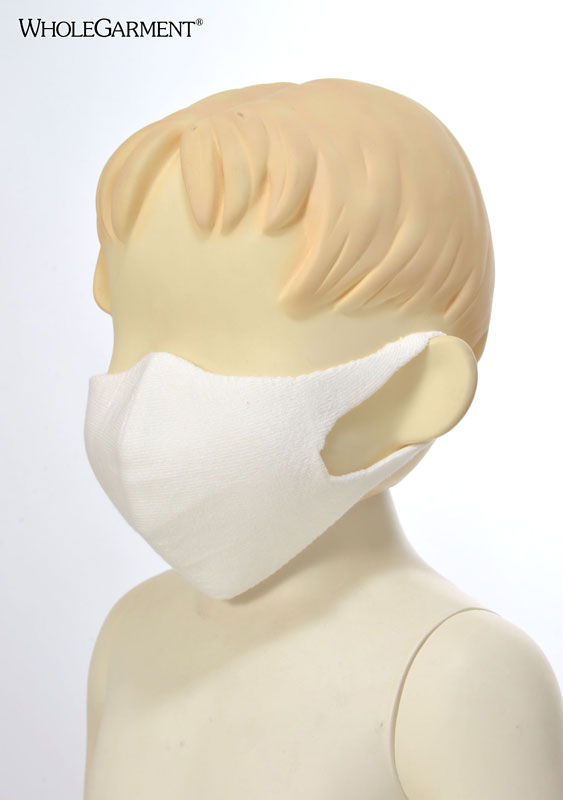 WAKAYAMA, Japan — May 26, 2020 — Japanese flat knitting solutions provider SHIMA SEIKI Mfg., Ltd. has produced 3D knitted masks for use at elementary schools and junior-high schools (primary and intermediate schools) in Wakayama Prefecture where the company is based.
The masks are produced at Shima Seiki headquarters by request of the prefectural government of Wakayama, based on knitting data for one of several types of masks released by the company since March 19 in its effort to help alleviate the worldwide shortage of masks due to the spread of the CoVID-19 coronavirus infection. The data is originally intended for Shima Seiki users to knit masks on their own knitting machines, and is available for download from the Shima Seiki Users’ Site, a knit sample archive featuring over 10,000 items. There have been over 300 downloads for various mask data so far.
The mask data drew interest from the prefecture, which promptly made its request for mask production. It is rare for Shima Seiki to accept requests for knit production in mass quantities, but the company views it as an opportunity to contribute to its community, which it has continuously cherished. The arrangement also benefits children of Shima Seiki employees who attend school in those school districts.
8,000 children’s masks have been produced on Shima Seiki’s SVR093SP computerized flat knitting machine in 14 gauge. Although a conventional shaping machine, SVR093SP is capable of producing masks in one-piece without the need for sewing afterward, identical to the WHoLEGARMEnT® masks whose data is also available for production on the company’s SWG-n2 series WHoLEGARMEnT knitting machines. The children’s masks are available in three sizes to cover the wide age-range of schoolchildren.
The 3D form-fitted masks provide superior fit and comfort. Integral ear straps that are knitted along with the mask portion reduces stress on the ears, and require no further sewing for quick response production. A filter-pouch is knitted-in for inserting commercially available virus filters and other filtration fabrics. Holes are also knitted-in for insertion of wires that provide further adjustment for improved fit.
The knitted cotton masks can be washed and reused repeatedly. Unlike common non-woven surgical masks however, knit masks do not have virus- and pollen-filtration functionality. Their main purpose is to contain spray from coughing and sneezing, and for reducing exposure to allergens.
Mask Data Details
- Mask type: Shaped 3D knit mask
- Size: Kids’ S, M and L sizes
- Material: Cotton, nylon, polyurethane
- Machine: SVR093SP computerized knitting machine
- Gauge: 14G
- Quantity: 8,000 pcs.
Posted May 26, 2020
Source: Shima Seiki Mfg. Ltd.
Sateri Enters China’s Lyocell Fiber Market With New 20,000-Ton Lyocell Line In Shangdong
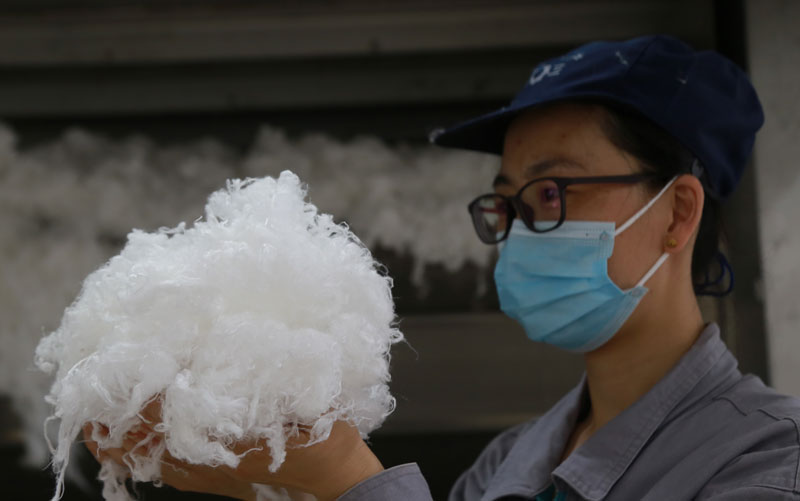 SHANGHAI — May 25, 2020 — Sateri reports it has successfully commenced production of Lyocell fiber in Rizhao, Shandong, China. In collaboration with Asia Symbol, China’s leading producer of pulp and packaging board, the newly installed 20,000 ton per annum production line will broaden Sateri’s portfolio of high quality fiber products, and bolster Lyocell supply to the textile and non-woven markets.
Industry associations such as the China National Textile and Apparel Council (CNTAC) welcome the news. Duan Xiaoping, deputy president of CNTAC and president of the China Chemical Fibers Association (CCFA), said: “Lyocell is not only a higher value product but also an eco-friendly fiber that is bio-based and minimizes chemical use and emissions. Sateri’s investment in Lyocell is very much aligned with the aim for technical and product upgrading for China’s textile industry.”
A natural and biodegradable fiber, Sateri’s Lyocell is made from wood pulp sourced from sustainable plantations. It is manufactured using closed-loop technology, requiring minimal chemical input during the production process, and utilizing an organic solvent that can be almost fully recovered and recycled. Lyocell is used to produce high quality textiles and personal hygiene materials. Textiles made from Lyocell possess high tenacity and bright luster, and share similar qualities with textiles made from viscose — soft and silky with good drape, breathability, and absorption.
Allen Zhang, president of Sateri, said: “The in-house development of Lyocell is part of Sateri’s pursuit of innovation. We have worked intensively on developing this in recent years. While we may be the world’s largest viscose producer, we are not wedded to any single technology or process for fibre production. We are steadfast in our commitment to innovation and continuous improvement even in the face of global health and economic challenges currently confronting us.”
Sateri is part of the RGE group of companies which has committed to investing $200 million to advance next-generation textile fiber innovation and technology. In March this year, Sateri achieved a breakthrough in commercial production of viscose using recycled textile waste.
Posted May 26, 2020
Source: Sateri