
FORLOH Is First Hunting Brand To Integrate RECCO® Rescue Technology

WHITEFISH, Mont. — November 4, 2020 — FORLOH, the first hunting brand to manufacture high-end technical apparel that is 100-percent made in the USA, will also be the first to pioneer hunting outerwear equipped with RECCO®, a technology that makes the user easier to locate in the event of an emergency. Starting this month, RECCO reflectors will come integrated into all of FORLOH’s AllClima Rain and SoftShell Jackets.

While this rapid-response rescue technology has been used for years in winter sports gear — such as ski and snowboard jackets and boots — FORLOH is the first hunting brand to adopt the technology for use in the hunting market.

FORLOH’s integration of this search technology comes as RECCO is working with search-and-rescue teams in the U.S. and around the world to expand use of the RECCO SAR helicopter detector that allows helicopters to rapidly search for people on the ground across vast areas. By pioneering this technology in the hunting industry, FORLOH is working with RECCO to help increase the margin of safety for consumers.

“The very nature of hunting means the hunter is attempting to go undetected to their prey, which means hunters are extremely difficult to find in the event of an emergency or accident,” said Andy Techmanski, founder and CEO of FORLOH. “Given RECCO’s push to expand this technology with the helicopter operations of search-and-rescue teams, we were amazed to learn that it hasn’t yet been integrated into hunting apparel, and we jumped at that chance. Being prepared is one of the basic requirements when planning any hunt, and the integration of RECCO reflectors into our gear gives our customers and their families back home an added margin of safety and additional peace of mind.”

RECCO technology is a patented technology that allows professional rescuers to perform rapid searches for missing people in the outdoors year-round. It is a two-part system. Rescuers use RECCO detectors to locate a RECCO reflector which is carried by the user, integrated into clothing or other gear.

The RECCO reflector is a passive transponder embedded into a garment and enables someone to be more quickly found in the event that they get lost or injured while outdoors.

The newly introduced RECCO SAR helicopter detector is a larger detector unit. It is mounted under a helicopter and enables rescue teams to vastly reduce the amount of time it takes to search large areas.

In the last two years, as its new helicopter-based detector unit has come into use, RECCO has worked to get that technology into use with five search-and-rescue teams in North America, including Two Bear Air, a philanthropy-funded organization that provides aviation support for search and rescue teams in Montana, Idaho and eastern Washington. In Europe, a dozen search and rescue teams are using it, and RECCO is working to facilitate its adoption by more SAR teams in North America and globally. Along with western Montana, SAR teams in Salt Lake City and Seattle, as well as Vancouver and Canmore in western Canada, are  equipped with helicopter-based detector units. More than 90 SAR teams in North America and hundreds worldwide already are equipped with the hand-held RECCO units.

“Working with FORLOH, we are excited to enter the hunting market, a completely new segment for us, and to help make hunters searchable with the help of RECCO technology,” said Fredrik Steinwall, CEO at RECCO.

Posted November 4, 2020

Source: FORLOH
BGN Technologies Announces Research Collaboration With ECOIBÉRIA For Biodegradation Of Plastic

BEER-SHEVA, Israel — November 4, 2020 — BGN Technologies, the technology transfer company of Ben-Gurion University of the Negev (BGU), announced today that it had signed a research collaboration agreement with ECOIBÉRIA in the field of plastic recycling by bacteria, based on research from the team of Professor Ariel Kushmaro and Professor Alex Sivan, both from the Laboratory of Environmental Biotechnology and Avram and Stella Goldstein-Goren Department of Biotechnology Engineering at BGU.

Polyethylene terephthalate (PET) is the most abundantly used polymer in the world, with multiple applications in the textile industry as well as in food and beverage packaging. It is estimated that about 56 million tons of PET are produced yearly worldwide, mostly as single use packaging material. Therefore, intense efforts are directed towards recycling and reuse of the PET plastic materials.

Prof.’s Kushmaro and Sivan and their team have been studying plastic biodegradation and have discovered several bacteria species that are able to biodegrade PET, which was previously considered a non-biodegradable plastic mainly because of the highly stable carbon−carbon (C−C) bonds of the polymer backbone.

Based on these findings, the research collaboration project will assess the biodegradation of PET by previously identified bacteria as well as novel ones, with the aim of developing an efficient biodegradation process of PET whose products will be used as raw materials for recycled PET in the future.

“Plastic-containing products is one of the biggest environmental challenges facing modern society, and degradation and recycling of plastic are one crucial strategy for dealing with the environmental impact of PET,” Kushmaro said. “Existing technologies, such as thermo-mechanical recycling impair the mechanical properties of the polymer and suffer from other disadvantages such as the need for organic solvents, high reaction temperatures and intensive waste sorting. Bacterial degradation of PET into recyclable materials that can be then reused to manufacture new PET products is therefore a promising strategy that can have a global environmental and economic impact.”

“ECOIBÉRIA’s mission is to guarantee the sustainability of the production and consumption models and assist in the transition from the linear economy to the circular economy, through the transformation of PET plastic waste into valuable secondary raw materials,” said Jorge Lemos, CEO at ECOIBÉRIA. “We believe that BGU’s  innovations in the field of bacterial biodegradation of PET complements our technologies and has the potential to become an important contribution to our plastic recycling efforts.”

Shirley Sheffer, vice president, Business Development at BGN Technologies, added: “Prof.s Kushmaro and Sivan are world experts in the field of plastic biodegradation. We are very pleased to partner with ECOIBÉRIA, a leading European company in the field of plastic waste recycling, for further researching this important field. This research collaboration holds the potential of implementing future findings into ECOIBÉRIA environmentally-friendly materials and products.”

Posted November 4, 2020

Source: BGN Technologies

The Road To Recovery: How The TENCEL™ Brand Responds To COVID-19 With Ambitions To Further Strengthen The Global Sustainability Movement

LENZING, Austria — November 4, 2020 — As 2020 draws to an end, the world is still confronting challenges caused by the COVID-19 pandemic. People, corporations, and countries have suffered insurmountable losses, and the future is murky. Nonetheless, the unified spirit and efforts of people to social distance and stay-at-home have brought positive impacts, and the TENCEL™ brand observed that it has led to a renewed focus on quality of life: personal health, the wellbeing of people around us and future generations, and the environment.

Despite unconventional challenges, the Tencel brand has remained driven in its advocacy for sustainability toward textile business customers and consumers. The brand conducted an extensive global survey to analyze consumers’ purchasing trends and behaviors in ethical apparel and home textiles, as well as unveiled its “true carbon zero” campaign to commit to a 50-percent reduction in its carbon emissions by 2030 and a net-carbon-zero goal by 2050. Looking forward to a holistic recovery, the Tencel brand will continue to work closely with stakeholders to initiate projects and collaborations to further promoting greater eco-consciousnesses and sparking industry reform.

Here is an overview of the latest Tencel brand stories:

Lenzing turns commitment into action and launches carbon-zero Tencel branded fibers to kickstart the decarbonization of the textile industry

Lenzing unveiled its Tencel “true carbon zero” campaign and carbon zero Tencel branded lyocell and modal fibers in another bold move towards lowering carbon emissions and energy consumption across its supply chain. Lenzing also introduced a leading approach to carbon neutrality with “reduce-engage-offset”, designed to lead the company to a 50-percent reduction in emissions by 2030 and net carbon-zero status by 2050.

Lenzing Survey shows that “Transparency” is key for apparel and home textiles brands to win consumer trust

Surveying 9,000 conscious consumers across nine countries, Lenzing released its “Global Consumer Perception Survey on Sustainable Raw Materials in Apparel and Home Textiles” to access their perceptions and behaviors towards sustainable clothing and home textile products. Key findings of the survey provide insights to better understand consumer habits, what influences their buying decisions, and the need for greater industry transparency.

TENCEL™ brand wins global awards for integrated marketing communication efforts to advocate for sustainability

This year, the Tencel “Feels So Right” movement won the “Global PR Breakthrough” award at the PRWeek Global Awards, and three awards at the SABRE Asia-Pacific Awards. Additionally, at the Content Marketing Awards, the Tencel Denim team also won the “Best Topic Specific Blog” for “Carved in Blue”. Each prestigious award is a testament to the Tencel brand’s hard work through various communications channels and activities to advocate for the fiber industry and eco-conscious fashion.

Camper collaborates with Tencel to launch sustainable fibers footwear collection through innovative techniques to create a sleek winter style.

The Tencel brand joins forces with Camper to continue pushing the boundaries with design-driven innovation and unique seasonal collections. Camper is the first footwear brand to feature a knitted upper women’s boot using TENCEL™ branded lyocell fibers, and the TENCEL™ brand strives to continue collaborating with like-minded partners to further drive sustainability in the industry.

Sustainability is not only a trend: Flavia La Rocca on her latest TENCEL™ Luxe-based collection

For many designers, creating fashion in a responsible and sustainable way has become increasingly important, but for Flavia La Rocca, an award-winning designer from Italy, it’s now the only way. Lenzing spoke with Flavia to talk about her love for TENCEL™ Luxe branded filament yarns, her passion towards eco-fashion, and how being environmentally responsible means joining forces with brands who are committed to sustainability.

TENCEL™ Insights: Views from Lenzing experts on post COVID-19 and sustainability trends for the textile industry

The Tencel brand launched its first-ever Lenzing Executive Q&A series — “Tencel Insights” to provide expert perspectives and guidance on key industry topics to keep the sustainability conversation flowing. Topics covered from specific industry hot issues to general trends in the textile industry e.g. post-pandemic outlook. Please look out for more articles in the future!

TENCEL™ spearheading circularity with REFIBRA™ technology to drive greater sustainability for the textile industry

As consumers are rapidly gaining awareness around circularity and brands are placing pressure on the supply chain to address the significant textile waste issues, the Tencel brand, Officina +39 and Meidea created the bespoke “The Circle Book”, to explore these issues. The Tencel brand is pushing forward sustainable models and upgrading innovative technologies like REFIBRA™ to set an example of how companies can collaborate to achieve greater circularity. “The Circle Book” provides further insights into the solutions being developed and applied within the industry.

Posted November 4, 2020

Source: TENCEL

Textile Exchange Adds Depth To Senior Leadership

LUBBOCK, Texas — October 30, 2020 — Textile Exchange is adding strength and depth to the organization’s leadership as part of the essential foundation needed to deliver the organizations 2030 Climate+ Vision. These exciting changes include that La Rhea Pepper, a co-founder of Textile Exchange, will serve as CEO and Claire Bergkamp joins Textile Exchange as COO on November 1. This added depth is an exciting evolution in the leadership team and happens at a vital time as the organization is leading the textile industry to reduce GHG emissions by 45 percent by 2030 with its Climate+ strategy.

“This is the decade for change! Now is the time to accelerate the adoption of proven solutions. Claire brings insight, experience, and passion to our 2030 Climate+ Vision. I am excited for her to join us in Creating Material Change,” Pepper said.

Bergkamp is joining Textile Exchange from Stella McCartney, where she held the position of Worldwide Sustainability and Innovation Director for more than eight years. In this role, she led the global environmental, human rights, and innovation strategy for the brand. During her time at the brand, she built a qualified, high-functioning sustainability department and team, a purposeful strategy, and an ambitious project portfolio. She helped to develop and cement the brand’s reputation as a leader in sustainability and innovation. Because of her long and impactful relationship with the brand, she will maintain a connection with the brand after her official departure, acting as senior advisor to the CEO and board of directors.

In addition to her brand-specific work, she also serves in advisory and leadership positions for a wide range of collaborative initiatives. Notably, she is currently serving on the steering committee for the UNFCCC’s Fashion Industry Charter for Climate Action, where she is the co-chair for the Raw Materials Working Group. She also serves on the steering committee for the British Fashion Council’s Institute of Positive Fashion.

Building on an eco-system of leadership within the organization, Bergkamp and Pepper will co-lead the organization as it enters an important phase of growth, not only for Textile Exchange, but for the industry as a whole. Pepper will maintain a focus on industry engagement and standards while continuing to provide visionary leadership for the organization. Bergkamp will oversee the implementation of the 2030 Climate+ Vision, the acceleration and fiber centers, as well as the Shared Measurement Systems and digitalization needs, and operations.

Posted November 3, 2020

Source: Textile Exchange

David Zarrilli Named Director of Global Sales And Marketing For Thwing-Albert Instrument Company

WEST BERLIN, N.J. — October 16, 2020 — Thwing-Albert is pleased to announce that Mr. David Zarrilli will be assuming the role of Director of Global Sales and Marketing. As David has been with Thwing-Albert for nearly 30 years, having spent most of that time in various sales and marketing positions, he brings a solid foundation and understanding of materials testing and the instrumentation required to meet the demands of today’s vigorous testing needs. For the past 10 years, he was a regional account manager responsible for direct interaction with clients to identify and provide testing instrumentation that was optimized for their specific testing needs. As an organization, the primary focus is serving customers by providing them with the products, services and technical expertise that they have come to expect over the companies 120 year history.

To that extent, we have assembled a team of account managers and support staff that are dedicated to this goal and bring over 100 years of combined experience. Each of the members of the team can assist with simple to complex materials testing solutions and we take pride in the ability to develop solutions for unique customer applications regularly.  These changes bring opportunities to continue to move forward with the focus on customers and the changing industry needs for quality materials testing equipment.

Posted November 3, 2020

Source: Thwing-Albert

Ascend Announces Price Increases For Intermediate Materials

HOUSTON — November 3, 2020 — Ascend Performance Materials announced today a price increase for intermediate materials.

The price increase takes effect immediately and includes the following terms:

Material Price Increase Terms
Hexamethylene diamine (HMD) $600/MT • As contracts allow

• Non-contract business – price determined on an order-by-order basis

Adiponitrile (ADN) $600/MT
Acrylonitrile (AN) $200/MT
Adipic acid (AA) $200/MT

Customers should contact their local sales representative for additional information.

Posted November 3, 2020

Source: Ascend Performance Materials

SDL Atlas Expands Capabilities Of AutoFlamm Flammability Tester

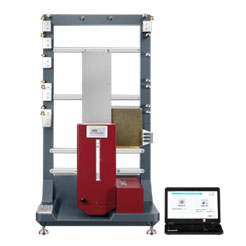
ROCK HILL, S.C. — November 3, 2020 — SDL Atlas has released the next generation of its popular AutoFlamm Flammability Tester. The AutoFlamm performs tests for general apparel and vertically oriented fabrics to European standards.

The AutoFlamm has been purposefully redesigned to now meet EN 71-2 Safety of toys – Part 2. The burner tip can be easily adjusted to meet the different configurations required to fully meet the various parts of the standard including vertically oriented for parts 5.2 and 5.4 and 45° inclination for parts 5.3 and 5.5.

Most controls of the AutoFlamm are now fully automated to ensure testing precision. These include the automated burner tip motion and motor driven gas burner which fires through automatic gas ignition and automatically positions to the correct alignment.

Another upgrade to the AutoFlamm is the revolutionary clamp design which makes mounting the threads easier and holds them firmly in place for precision testing. Users are also able to quickly and easily reconfigure the instrument with a wide range of interchangeable precision test frames and thread and burner arrangements to meet a variety of different standards.

The AutoFlamm is now fully controlled through a computer or tablet connected via Bluetooth or USB cable rather than separate control unit and comes with intuitive PC software. The most popular standards and routines are preprogrammed into the software.

Posted November 3, 2020

Source: SDL Atlas, LLC

Continuous Composites Opens A New Manufacturing Facility With Industry Leaders At Their Side

COEUR D’ALENE, Idaho — November 2, 2020 — Continuous Composites announced its opening of a 7,500 sq-foot facility for research, development, and additive manufacturing in Coeur d’Alene, Idaho. The new building demonstrates its patented Continuous Fiber 3D Printing (CF3D®) technology at the largest scale to date, increasing their previous build volume by 25 times.

Over the past five years, Continuous Composites built relationships and partnerships with industry leaders to bring their disruptive CF3D technology to commercialization. These partners play a key role in unveiling the new demonstration facility and are intricately involved in the technology ecosystem that Continuous Composites is generating.

Siemens, a technological pioneer, empowers the CF3D solution with their Sinumerik 840D CNC system and Run MyRobot/Direct Control platform to achieve high-accuracy, multi-axis robotic control for automated manufacturing with CF3D.

Arkema, through its Sartomer Business, a world leader in photocurable resin solutions, is developing a library of N3xtDimension® thermosetting resins with Continuous Composites. These resins, part of the 3D Printing Solutions by Arkema platform, are tailored for CF3D’s novel printing technique and customer-specific applications to enable industrial adoption of CF3D technology.

“As an industry leader in automation, Siemens is excited to be sitting side-by-side with Arkema to support Continuous Composites’ development,” says Tim Bell, Additive Manufacturing business manager, Siemens Industry Inc. “We recognize Continuous Composites has brought together prominent industry players to be successful in commercializing this technology.”

“Sartomer is excited to support Continuous Composites with their technology ecosystem and partners as CF3D accelerates towards commercialization with our leading materials sciences,” says Sumeet Jain, senior director of 3D Printing Worldwide at Arkema. “We are tailoring advanced liquid resin solutions for CF3D to introduce a variety of high-end applications, and we believe there is a strong market opportunity for this technology and our innovative materials.”

Comau, an industrial automation company, provides Continuous Composites with the most flexible and automated systems in robot kinematics and motion controls, leveraging their six-axis robotic arm for CF3D.

Güdel, a manufacturer of high-precision machine components, partners with Continuous Composites to scale CF3D technology, utilizing their TrackMotion Floor 50-foot linear rail for accuracy, efficiency, and rigidity.

These dynamic corporations are coming together to develop real customer applications, including advancing CF3D for one of their strategic customers, the Air Force Research Laboratory.

“These partnerships were mutually selected, us choosing them and them choosing us, knowing that by joining efforts, CF3D technology will rapidly scale to the next phase of its capabilities,” states Tyler Alvarado, Continuous Composites CEO. “Our new facility allows us essential access to research and development that is completely in stride with a powerhouse team of strategic partners and customers.”

An unveiling of the newly launched demonstration facility will debut at Formnext Connect 2020 during the virtual event on November 10-12.

Posted November 3, 2020

Source: Continuous Composites

Auburn University Researchers Aim To Fuel New Markets From Hurricane-Ravaged Timber

AUBURN, Ala. — November 3, 2020 — A team of researchers from Auburn University’s School of Forestry and Wildlife Sciences is exploring ways to give new life to downed timber that has been decimated by hurricanes.

The body of research, coined “The Downed Timber Initiative,” aims to develop new methods of retrieving these fallen trees and branches that would otherwise go to waste or become fuel for wildfires, and then develop innovative products from the salvaged wood.

The research is funded by a $1.05 million federal appropriation to the U.S. Forest Service, an agency of the USDA. These funds will be allocated to four Auburn research teams led by faculty members Sole Peresin, assistant professor of forest biomaterials; Tom Gallagher, the Regions Professor of Forest Operations; Brian Via, the Regions Professor of Forest Products; and Yucheng Peng, assistant professor of sustainable packaging systems. Each researcher will work with a Forest Service representative.

Graeme Lockaby, the Clinton-McClure Professor in the School of Forestry and Wildlife Sciences, said the idea began as he spoke to landowners who were facing the ravages of Hurricane Michael, a Category 5 tropical cyclone that made landfall Oct. 10, 2018, and obliterated hundreds of millions of dollars’ worth of timber in the Southeast.

Landowners had just 30 days to extract downed timber because the region’s hot, wet climate leads to rapid decomposition. Lack of access to the wood for extraction exacerbated the dilemma. In addition, the immense volume of flattened timber in hurricane-impacted areas quickly saturates the market, resulting in dropping and often disappearing wood prices as mill quotas overflow.

When landowners asked for solutions, Lockaby had to tell them: “At this point, there’s not very much you can do.”

That led to discussions with a group of faculty, who envisioned developing a harvesting machine component capable of extracting fallen timber and the potential for making commercially valuable products from partially decayed wood.

Lockaby and the faculty then met with representatives from the office of Brian Keeter, the university’s then-executive director of public affairs, who responded positively.

Lockaby said research often doesn’t translate well to the people it will benefit the most. This case was an exception.

“Our work is technical, we’re passionate about it, but it’s difficult to understand if you’re not trained in a specific discipline. Oftentimes people wonder, how relevant is that? Is it going to touch my life?” he said. “This will clearly touch people who live in those areas, especially forest landowners who depend on timber sales.”

Hurricanes break off, tangle and lay down timber horizontally, Gallagher said, making harvesting difficult when using the equipment currently available. He is developing a new attachment that loggers could borrow — rather than buy — to make collecting the scattered timber easier.

Via is developing methods to use acoustics to measure timber strength and degradation of downed timber as a resource for making cross-laminated timber, or CLT, which is lumber glued together at 90 degrees into three or more layers.

“Stronger timber can be sent for use in structural applications like lumber and CLT, while partially degraded timber might be salvaged into other product areas,” Via said.

Timber rated as “weak” or “degraded” by acoustics will be sent to develop other product streams such as wood composites, nanocellulose and wood plastic composites.

Peng will use good-quality wood fibers from downed timber to develop bio-based composites for value-added applications in automobiles, construction and packaging.

“The goals are to maximize the utilization of our renewable natural resources for sustainability and to get the maximum return for the landowners, lowering their loss during natural disasters,” Peng said.

Peresin will work with the USDA Forest Products Lab to process partially decayed timber into micro/nanomaterials, or CNMs, which will form the basis of an array of products that will allow harvested downed timber to penetrate large markets. Her team will also upscale CNM production and design bio-based carriers for pesticides and controlled-release nutrients for soil remediation.

“The innovative research of our faculty has the potential to offer significant business and economic opportunities to the forest industry,” said Janaki Alavalapati, dean of the School of Forestry and Wildlife Sciences.

The Auburn University School of Forestry and Wildlife Sciences is a flagship institution for natural resources-based degrees including natural resource management, geospatial and environmental informatics, and sustainable biomaterials and packaging. The school is also the backbone to Alabama’s $24 billion forest, wildlife and natural resources industry. Its mission is to create future professionals and leaders and to develop new knowledge and science-based solutions and share them with individuals, families, communities and industries so they can make informed decisions to advance their business and well-being.

Posted November 3, 2020

Source: Auburn University

ORORO Heated Apparel Introduces The World’s First Carbon Nanotube Heated Socks

LAS VEGAS — November 2, 2020 — ORORO Heated Apparel announces a technology for heated socks in a new Kickstarter campaign beginning November 2. The new “Redwood” Carbon Nanotube Heated Socks will be the first in the world to use ultra-thin u-shaped carbon nanotube heating elements.

This significant innovation allows for instant heating and even heat distribution. The u-shape expands the heated area to be closer to the toes while being barely noticeable when worn. Like ORORO’s other heating clothing, the Redwood socks contain UL-certified batteries with up to 10 hours of continuous heat.

ORORO’s co-founder Mark H. stated: “Redwood socks include a precise temperature controller to prevent overheating and also have the market’s first ever elastic connecting cable, which offers more comfort and range of motion.”

Redwood Socks are available in classic black, brown and gray.

ORORO continues to make affordable heated apparel with your comfort in mind. From keeping hard-working medical workers warm to helping alleviate Raynaud’s symptoms, ORORO is the heated apparel for you and your loved ones.

Kickstarter backers will be the first consumers to experience the warmth of this pioneering carbon nanotube heating technology. Customers can join ORORO’s new Toasty Club program to earn points on every purchase and redeem for gift cards and free products.

Posted November 3, 2020

Source: ORORO Heated Apparel

Sponsors



