Microplastics & The Textile Industry

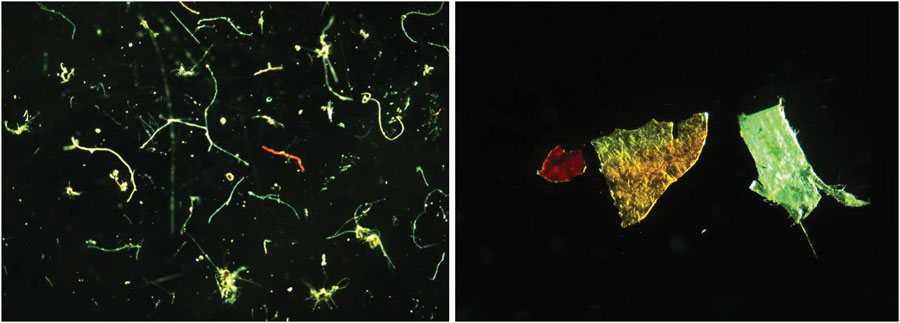
Microplastic fibers (left) and microplastic fragments (right) both from Tyrrhenian Sea seafloor cores at a depth of approximately 800 meters.

The textile industry can work together to formulate solutions to tackle to complex issue of microplastics in the environment.

By Dr. Davis Lee, Dr. Erin Kirkpatrick, Dr. A. Sydney Gladman and Dr. Donald Ripatti1

Microplastics are a growing concern for the textile industry, compounding the complexities of the broader sustainability discussion. Yet, there is much to be discovered about this multifaceted issue, and how to best respond to it.

At present, there is no broad-based agreement on a single definition for microplastic. The National Oceanic and Atmospheric Administration (NOAA) defines micro plastics as “plastic pieces less than 5 millimeters [mm} long which can be harmful to our ocean and aquatic life.” 2

The European Chemicals Agency (ECHA) are more specific in its proposed definition:

“‘microplastic’ means particles containing solid polymer, to which additives or other substances may have been added, and where ≥ 1 [percent] w/w of particles have:
(i)        all dimensions 0.1 µm [micrometers] ≤x ≤ 5 mm, or
(ii)       for fibers, a length of 0.3µm ≤ x ≤ 15 mm and length to diameter ratio of >3.” 3

The study of marine microplastics is not new. Woods Hole Oceanographic Institution (WHOI) has been conducting research and publishing on this subject since the 1970s.4 Other organizations have been active as well. For instance, the Science Advice for Policy by European Academies (SAPEA) consortium has published an extensive review pointing out the need for standardization and harmonization of testing methodologies. SAPEA states that there is “no evidence of widespread risk to human health from [nano/micro plastics] at present.” 5

While the quantification of the ocean plastics issue remains a challenge, researchers estimate that 4.8 to 12.7 million tons of plastic waste are expected to enter the ocean every year, with current accumulation estimated at 50-150 million tons.6 As of 2014, researchers have estimated that a minimum of 5.25 trillion pieces of plastic, weighing roughly 269,000 tons, persist at the surface level of our world’s oceans.7 In surface water, sampling studies have indicated that microplastics may exist in a wide range of concentrations; roughly 1×10⁻³ to 10 particles per liter for particles greater than 0.3 mm.8

As regulatory bodies are actively engaged in drafting rules and regulations that could affect the industry as well as consumers, it is important to understand the issues in order to respond appropriately.
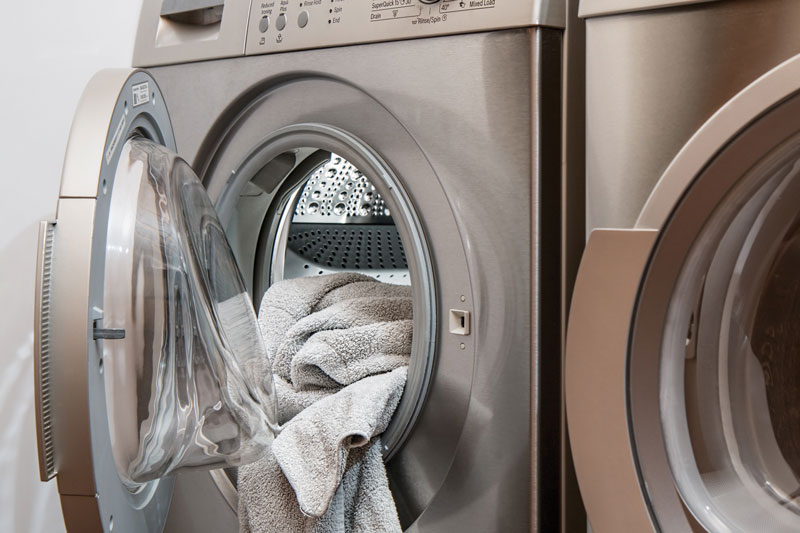
Home laundering, which can release microfibers from articles of clothing, is understood to be one source of microplastics entering the waterways. (Steve Buissinne/Free Images)

The Problem For Textiles

Current aquatic sampling for microplastics finds that fibers are the second most identified “shape” of microplastics.9 However, the focus on surface-skimming sampling methods may not accurately quantify the amount of fiber that is present. Polyethylene terephthalate (PET), nylon, and acrylic fibers have densities greater than seawater, and are thus thought to accumulate at the seabed — an emerging subset of microplastic research.10 While researchers generally believe most microplastics originate from the fragmentation of larger pieces of plastic over time, it is unclear if this is the case for textile-derived microplastics.11

Many studies on microplastic release from textiles have focused on home laundering as a source of fibers entering the waterways. These studies have found shedding to be dependent on the properties of the textile article including fiber material, yarn size, fabric construction, fabric weight and fabric finishing.12 For example, polyester fleece has been identified in multiple studies to release higher fiber counts — >7000 fibers/m-2/L-1 — than other types of polyester fabrics.13 Variability in laundering equipment and settings as well as detergents also can influence the amount of fibers released from a garment or article, where both washers and dryers can result in shedding of textile fibers. Other studies have identified a 3.5-fold increase in fiber release during tumble drying as compared to the wash process for polyester fleece articles.14

Other potential sources of textile-derived microplastics in the environment may include fragmentation of fishing ropes and netting, or from breakdown of improperly discarded nonwoven hygiene products.15 In addition, the role of household-level filtration and wastewater treatment in preventing the release of microplastics to the environment requires further investigation.

Standards And Certifications

Currently, there are few standards to guide the industry on best practices for measuring the emission rates of microplastics from textiles. Industry recognized standards and environmental labels like ISO 14000 environmental management standards, ASTM environmental standards, Global Organic Textile standard, EU Ecolabel, OEKO-TEX® labeling standards do not yet include an evaluation of fiber shedding.

However, other industry testing organizations and independent researchers have been working to develop reproducible methods to help educate and support the industry. For example, the American Association of Textile Chemists and Colorists (AATCC), Research Triangle Park, N.C., is developing a gravimetric method of calculating fiber/mass loss using an accelerated laundering machine.16 The Hohenstein Institute, Germany, has developed a suite of test methods designed to provide a quantitative analysis of microfibers. These test methods include a gravimetric method adopted from the University of Leeds/The Microfibre Consortium Method, an assessment of fiber count, shape, and size distribution using Hohenstein’s method for Dynamic Image Analysis, and an assessment of cellulosic versus non-cellulosic content.17 Further, there are some standardized test methods that that may have the ability to be modified to directly evaluate microplastics. For example, test methods for evaluating dry lint count and laundering.18

Quantifying the amount of microplastics in oceans is a challenge for researchers. (Miha Rakar/Unsplash)

Regulations

Currently, microplastics legislation has primarily targeted the sale or production of personal care products which contain microplastics. However, more comprehensive legislation is on the horizon. In August 2019, the European Chemicals Agency (ECHA), drafted an amendment to Registration, Evaluation, Authorization and Restriction of Chemicals (REACH) that would ban the sale of “microplastics on their own or in mixtures where their use will inevitably result in releases of microplastics to the environment, irrespective of the conditions of use” in the European Union zone. The proposed amendment defines microplastic (see ECHA definition above) containing materials as:

“… a substance on its own or in a mixture as a microplastic in a concentration equal to or greater than 0.01 [percent] w/w.”

Polymers that occur in nature and that have not been chemically modified — other than by hydrolysis — are excluded, as are polymers that are biodegradable. In addition, this proposed legislation would only apply to intentionally added microplastics, which are present at the point of use and could foreseeably be released to the environment. Products which generate or shed microplastics at the point of use or disposal, but did not originally contain added microplastics as defined above, would not be subject to this proposed regulation. Committee for Socio-economic Analysis (SEAC) will issue a final opinion on the legislation by September.19 A draft of the legislation by the European Commission is due in December 2020,20 and will likely be put to a final vote in 2021.

Currently, unmodified natural and biodegradable polymers are not regulated as microplastics under the proposed regulation. Natural fibers are defined under REACH as per their origin, not by their chemical structure. For example, polymers which occur naturally but are polymerized in an industrial setting would be regulated.21 The biodegradability of a polymer will be assessed by ISO 17025 certified laboratories which conduct approved tests outlined in the proposed REACH legislation to ensure that a polymer meets the target specifications for a biodegradable material.22

In the United States, microplastic regulations are being debated at the state level. In June, the California State Water Board adopted a definition of microplastics following the requirement in California Senate Bill No. 1422. The definition of microplastics in drinking water are defined as:

“Solid polymeric materials to which chemical additives or other substances may have been added, which are particles which have at least three dimensions that are greater than 1 [nanometer] and [have a volume] less than 5,000 micrometers (µm).3 Polymers that are derived in nature that have not been chemically modified (other than by hydrolysis) are excluded.” 23

Due to the dimensional constraints given, the threshold length for a man-made fiber will ultimately depend on its diameter. In addition, SB 1422 requires that a quantification methodology for the above definition of microplastics in drinking water be developed by July 1, 2021.24 Another California senate bill, SB 1263, mandates that a statewide microplastics strategy to protect ocean waters from microplastics to be developed on or before December 31, 2021.25

State-level legislation related to microplastics is expected to grow. And, as fibers are a commonly detected microplastic shape,26 it is likely that the textile industry will be impacted. What can the industry do? Become familiar with the issues and consumer concerns and work with trade associations, standards organizations, regulatory bodies and research organizations to formulate coherent and sensible solutions. Microplastics in the environment is a challenging and complex issue. However, working together, and employing sound science to understand and address the issue should help to provide a better environment and a stronger industry.

References:

1 The authors are consultants in the Polymer Science and Materials Chemistry practice of Exponent, Inc., a science and engineering consulting firm. This publication was authored by employees of Exponent, Inc. No portion of this publication has been funded or paid for by external sources.

2 What are microplastics? National Ocean Service website, https://oceanservice.noaa.gov/facts/microplastics.html, accessed on July 6, 2020.

3 Committee for Risk Assessment and Committee for Socio-economic Analysis: Opinion on an Annex XV dossier proposing restrictions on intentionally-added microplastics,  https://echa.europa.eu/documents/10162/5a730193-cb17-2972-b595-93084c4f39c8 accessed on July 30, 2020.

4 Lubofsky, E. Microplastics in the Ocean – Separating Fact from Fiction, https://www.whoi.edu/oceanus/feature/whoi-viewpoint-microplastics-in-the-ocean-separating-fact-from-fiction/, accessed on July 6, 2020.

5 SAPEA, A Scientific Perspective on Microplastics in Nature and Society, https://www.sapea.info/wp-content/uploads/report.pdf accessed on 7/6/20.

6 Jambeck, J., et al. Plastic waste inputs from land into the ocean. Science, 347. 6223:768–771 (2015).

7 Eriksen M, Lebreton LCM, Carson HS, Thiel M, Moore CJ, et al. (2014) Plastic Pollution in the World’s Oceans: More than 5 Trillion Plastic Pieces Weighing over 250,000 Tons Afloat at Sea. PLoS ONE 9(12): e111913. doi:10.1371/journal.pone.0111913

8 A.A. Koelmans et al. Microplastics in freshwaters and drinking water: Critical review and assessment of data quality. Water Research 155 (2019) 410-422.

9 A.A. Koelmans et al. Microplastics in freshwaters and drinking water: Critical review and assessment of data quality. Water Research 155 (2019) 410-422.

10 F. Salvador Cesa et al. Synthetic fibers as microplastics in the marine environment: A review from textile perspective with a focus on domestic washings. Science of the Total Environment, 598 (2017) 1116–1129; Kane et al., Seafloor microplastic hotspots controlled by deep-sea circulation Science 368, 1140–1145 (2020).

11 Kormann, C. Where Does All the Plastic Go? The New Yorker (2019).

12 F. Salvador Cesa et al. Synthetic fibers as microplastics in the marine environment: A review from textile perspective with a focus on domestic washings. Science of the Total Environment, 598 (2017) 1116–1129; Carney Almroth, et al. Quantifying shedding of synthetic fibers from textiles; a source of microplastics released into the environment. Environ Sci Pollut Res (2018) 25:1191–1199; Cai et al. Systematic Study of Microplastic Fiber Release from 12 Different Polyester Textiles during Washing. Environ. Sci. Technol (2020) https://dx.doi.org/10.1021/acs.est.9b07395

13 Carney Almroth, et al. Quantifying shedding of synthetic fibers from textiles; a source of microplastics released into the environment. Environ Sci Pollut Res (2018) 25:1191–1199; Cai et al. Systematic Study of Microplastic Fiber Release from 12 Different Polyester Textiles during Washing. Environ. Sci. Technol (2020) https://dx.doi.org/10.1021/acs.est.9b07395; Pirc, U., et al. Emissions of microplastic fibers from microfiber fleece during domestic washing. Environ Sci Pollut Res (2016) 23:22206–22211.

14 Pirc, U., et al. Emissions of microplastic fibers from microfiber fleece during domestic washing. Environ Sci Pollut Res (2016) 23:22206–22211.

15 F. Salvador Cesa et al. Synthetic fibers as microplastics in the marine environment: A review from textile perspective with a focus on domestic washings. Science of the Total Environment, 598 (2017) 1116–1129.

16 UL: Addressing the environmental impact of microfibers in textiles, https://crs.ul.com/wp-content/uploads/2019/07/CRS_041_Microfiber-White-Paper_v4.pdf accessed July 7, 2020.

17 Hohenstein. Real data for sustainable material development: Quantitative analysis of microfibers, https://www.hohenstein.us/en-us/expertise/sustainability/microfibers/ accessed on July 14, 2020.

18 Jonsson, C., et al. Microplastics Shedding from Textiles—Developin Analytical Method for Measurement of Shed Material Representing Release during Domestic Washing. Sustainability 2018, 10, 2457; International Organization for Standardization. ISO 9073-10:2003 Textiles—Test Methods for Nonwovens—Part 10: Lint and Other Particles Generation in the Dry State; International Organization for Standardization. ISO 105-E03:2010 Textiles—Tests for Colour Fastness to Chlorinated Water.

19 ECHA. Registry of restriction intentions until outcome: microplastics, https://echa.europa.eu/registry-of-restriction-intentions/-/dislist/details/0b0236e18244cd73 accessed July 30, 2020; Committee for Risk Assessment and Committee for Socio-economic Analysis: Opinion on an Annex XV dossier proposing restrictions on intentionally-added microplastics,  https://echa.europa.eu/documents/10162/5a730193-cb17-2972-b595-93084c4f39c8 accessed on July 30, 2020.

20 ECHA. Restriction procedure, https://echa.europa.eu/regulations/reach/restrictions/restriction-procedure accessed July 30, 2020.

21 Committee for Risk Assessment and Committee for Socio-economic Analysis: Opinion on an Annex XV dossier proposing restrictions on intentionally-added microplastics,  https://echa.europa.eu/documents/10162/5a730193-cb17-2972-b595-93084c4f39c8 accessed on July 30, 2020.

22 ECHA. ANNEX XV Restriction Report: intentionally added microplastics, https://echa.europa.eu/documents/10162/05bd96e3-b969-0a7c-c6d0-441182893720 accessed on August 1, 2020.

23 California Water Boards. Proposed Definition of ‘Microplastics in Drinking Water,’ https://www.waterboards.ca.gov/drinking_water/certlic/drinkingwater/docs/dfntn_jun3.pdf accessed July 30, 2020.

24 California Senate Bill No. 1422, https://leginfo.legislature.ca.gov/faces/billTextClient.xhtml?bill_id=201720180SB1422 accessed July 30, 2020.

25 California Senate Bill No. 1263, https://leginfo.legislature.ca.gov/faces/billTextClient.xhtml?bill_id=201720180SB1263 accessed July 30, 2020.

26 A.A. Koelmans et al. Microplastics in freshwaters and drinking water: Critical review and assessment of data quality. Water Research 155 (2019) 410-422.


Editor’s Notes: Dr. Davis Lee is senior managing scientist, Dr. Erin Kirkpatrick is managing scientist, Dr. A. Sydney Gladman is manager, and Dr. Donald Ripatti is a scientist in the Polymer Science & Materials Chemistry practice of Exponent Inc. — a multi-disciplinary engineering and scientific consulting firm.


September/October 2020
Global Fiber Technologies — Preserving Authentic Heroes

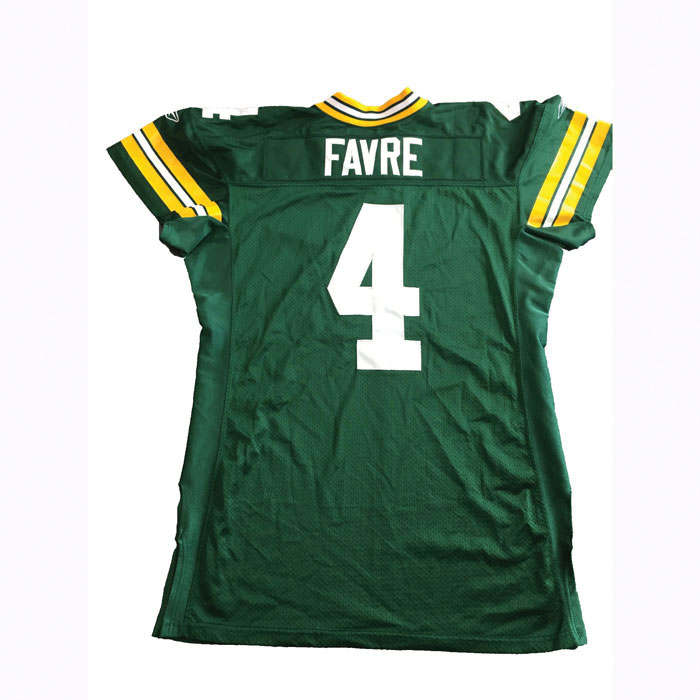
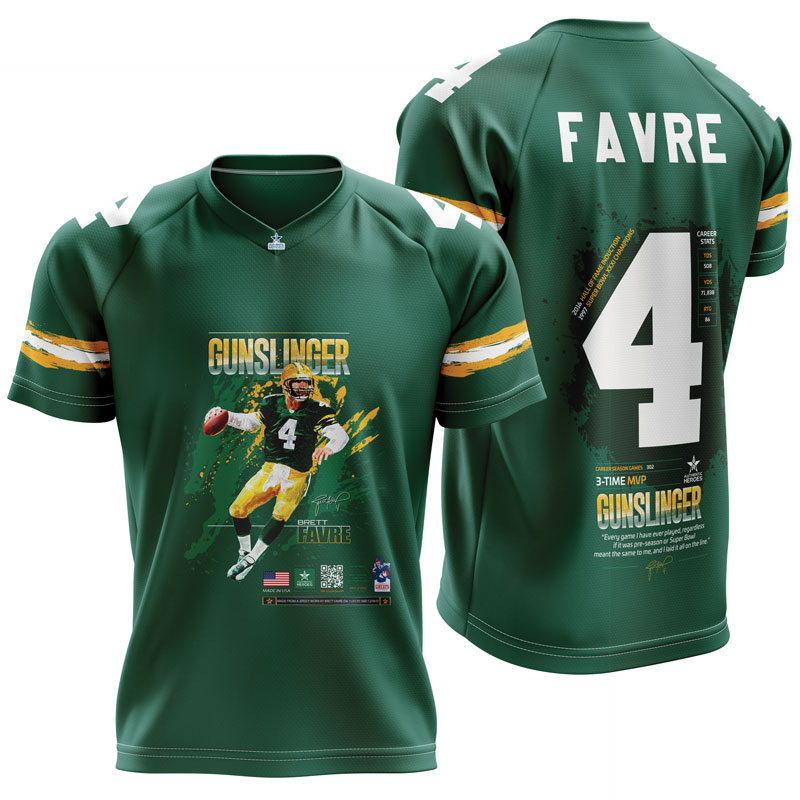
The commemorative jersey, containing reclaimed fiber from Brett Favre’s game-worn jersey, is now a piece of history — authenticated, preserved and shared with Brett Favre fans.

Eco Tek 360 and Authentic Heroes divisions create unique collectible clothing directly from original stage or game-worn items from historic artists and athletes.

TW Special Report

Global Fiber Technologies, Princeton, N.J., is a publicly traded fiber technology company founded in 2016 with the goal of creating repurposed fiber from end of life uniforms. The company operates three divisions: Eco Tek 360, Authentic Heroes and Fiber Chain.

“We utilize trade secrets we developed to treat the articles of clothing with our proprietary formulas before they enter a sequencing process on our textile opening line,” said Chairman and President Chris Giordano.

The Eco Tek 360 division has a unique, end-to-end supply chain that recovers the fiber from corporate uniforms at the end of their useful life and uses the recovered fiber to produce new products for their client companies.

The 360-degree concept is working with clients to develop a full circle — cradle-to-cradle — supply chain, reclaiming the fiber and putting it back into the chain. The Eco Tek process works with a wide range of fabric content including natural, man-made and blends.

The recovered fiber can either be used to make the same rejuvenated garment — for example, a polo shirt at the end of useful life is used to make new polo shirts — or the recovered fiber may be used to make other textile products that are required in the clients’ business such as tote bags, place mats or furnishings. Clients are not limited to uniform supply companies and also could include institutions and prison systems.

Provenance is a key issue in any supply chain. Knowing the true source of materials in a textile supply chain, all the way back to the fiber level, assures end product quality as well as fabric content and country of origin. It also can substantiate advertising claims related to use of branded fiber or sustainability claims.

Eco Tek Spawns Authentic Heroes Idea

The concept of Authentic Heroes’ garments is to share the original game- or stage-worn garment with a broader audience “allowing more fans to own a piece of history.”

Understanding the provenance provided by the Eco Tek 360 process, Authentic Heroes sources original game- or stage-worn items directly from athletes or musicians and reclaims the fiber from these authenticated garments. The fibers are then used to create unique, collectible clothing.

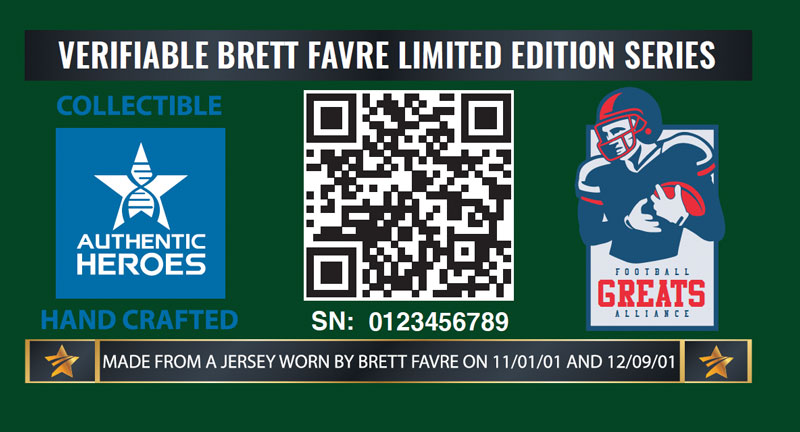
Under U.S. patent, the reclaimed fibers from the original garment are treated with a scientifically identifiable process and spun with new fiber to create a reclaimed fiber blended yarn. The blended yarn is then knit or woven into fabric that is used to sew a unique collectible garment with original designs and individual serial number.

Hall of Famer and former Green Bay
quarterback Brett Favre’s jersey worn
in match-ups against Atlanta and Chicago
in 2001.

Preserving Authentic Heroes

Authentic Heroes’ unique end-to-end supply chain connects more fans than ever with the unique wearable memorabilia of athletes and music artists.

“Our first Heroes are Brett Favre and Warren Sapp,” Giordano said. “These football legends will have limited edition series created with reclaimed fibers from game-worn jerseys.”

Hall of Famer and former Green Bay quarterback, Brett Favre, shared a jersey he wore in match ups against Atlanta on November 1, 2001, and Chicago on December 9. 2001. “With recovered fiber from Favre’s jersey, his commemorative jersey is now a piece of history — authenticated, preserved and shared with Brett Favre fans.

“Fans’ ownership is recorded in a database which eventually will be kept in a block chain,” Giordano said. “By tracking provenance through strict chain of custody from original through all production, sales, shipping and transfer of ownership of final garments end-to-end throughout their life, the company is able to assure the authenticity of these collectibles.”

Authenticity of the collectible garment is guaranteed using a a strict chain of custody from original to final garment.

Future Opportunities

“We are excited about the future and the talent we’ve brought on board with both the Eco Tek 360 commercialization and Authentic Heroes,” Giordano said. “On its own, I believe the Eco Tek 360 technology will provide a 360-degree sustainable solution for companies dealing with high volumes of apparel where rejuvenation makes sense. And with Heroes there are opportunities with individual players in multiple sports, but also energetic musical artists with tremendous fan-bases that are a perfect fit for authentic memorabilia.

“With Eco Tek 360, we could even create a commemorative jersey that represents and incorporates an entire winning team’s game worn jerseys. So many possibilities …

“Currently we are in negotiations with several popular musical artists and expect to sign 10 more licenses in 2021,” Giordano concluded.

The company also recently announced that Eco Tek 360 signed a collaboration agreement with Broadalbin, N.Y.-based Fiber Conversion Inc. to further the commercial viability of Eco Tek 360’s rejuvenation technology.

“We are now at the point where we feel confident that we can start making commercial grade repurposed products from what are known as end-of-life fabrics that are headed for a landfill or incinerator,” Giordano said. “The collaboration with Fiber Conversion is particularly important because it allows us to see how our process for rejuvenating textile fibers works on a large commercial grade machine in comparison to our pilot line at the facility in Somerset, N.J. Fiber Conversion has a large facility inclusive of two commercial grade recycling lines and a full machine shop which will allow us to start testing our commercial viability immediately.”

“The principals of Fiber Conversion have deep expertise in recycling that spans almost 100 years,” reported Paul Serbiak, CEO, Global Fiber Technologies. “After recent discussions both parties found it mutually advantageous to take the relationship to another level. There is more work to be done but our most recent in-house results to date are extremely encouraging. We have now moved our sample line to their facility so we can bring efficiencies, cost savings and further know-how to the process and the goal of potentially developing large-scale commercial scale projects together.”

September/October 2020

A Study In Collaboration

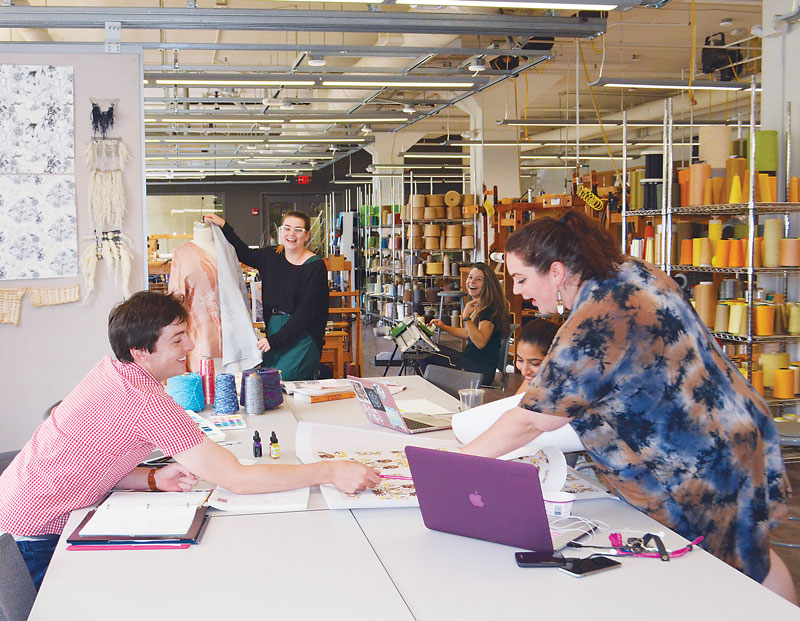
M.S. and B.S. Textile Design students
in the ITA Textile Design Collaborative Studio

Thomas Jefferson University positions students well for the real world with its collaborative, transdisciplinary approach.

By Jim Kaufmann, Contributing Editor

Collaboration is generally defined as the act of working with others towards a common purpose, usually to create or produce something. There are numerous examples of successful collaborations bringing out the best in virtually every aspect of the arts and design. “You design because of an identified opportunity,” said Marcia Weiss, director, Fashion and Textiles Futures Center at Philadelphia-based Thomas Jefferson University. “Design inspiration and the resultant ideation process are where collaboration often lives. For me, it’s also where the joy and excitement happens. Finding that innovation consistently would be next to impossible without some level of collaboration.”

In all areas of business, including the fashion and textiles industries, there are numerous examples of strong collaborations throughout each level of the product supply chain, where effective communication is critical, regardless of what the product happens to be. In practice however, though the benefits may appear obvious, effective collaboration in any form is often easier said than done, which makes it rather unique to discover a university that prides itself in actively fostering and encouraging collaboration as an essential component of the learning it instills.

Two Universities, One Common Goal

Today’s Thomas Jefferson University (Jefferson) is the result of a unique merger between institutions of higher learning — Jefferson and Philadelphia University (Phila U) — that was finalized in July of 2017. The merger combined two well established institutions with “a shared and unique approach to education creating a professional university that defies convention and dedicates itself to collaborative, transdisciplinary and inter-professional approaches to learning by offering a vibrant and expandable platform for education; setting tomorrow’s standards by breaking today’s.”

Jefferson was founded in 1824 as the Jefferson Medical College with the intent of exploring and reshaping how medicine was taught throughout the United States. In 1877, it established the Thomas Jefferson University Hospital becoming the second medical school in the United States with a separate teaching hospital. In 1891, it added the Jefferson Hospital Training College for Nurses, and in 1967 the College of Applied Health Sciences before officially being recognized as Thomas Jefferson University in 1969. Jefferson’s continued growth and evolution included the addition of the College of Biomedical Sciences, the Sidney Kimmel Cancer Center and the Schools of Nursing and Health Professions and eventually the merger with Phila U.

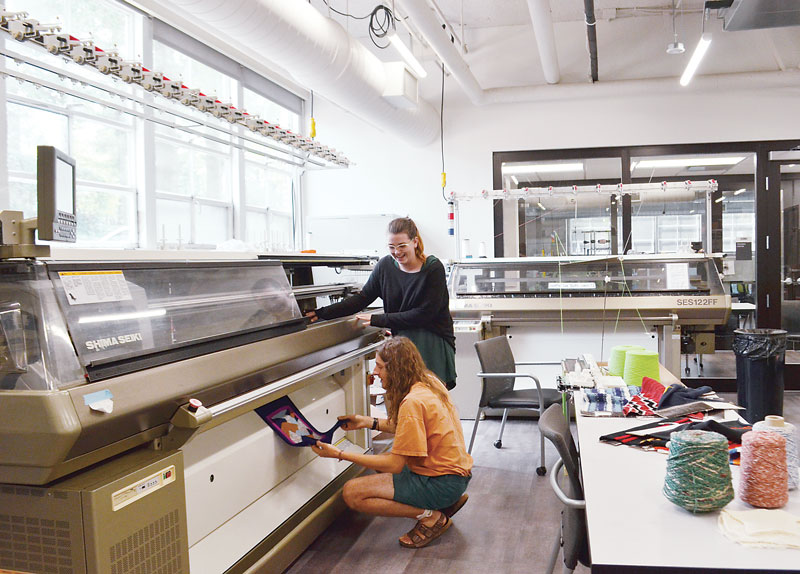
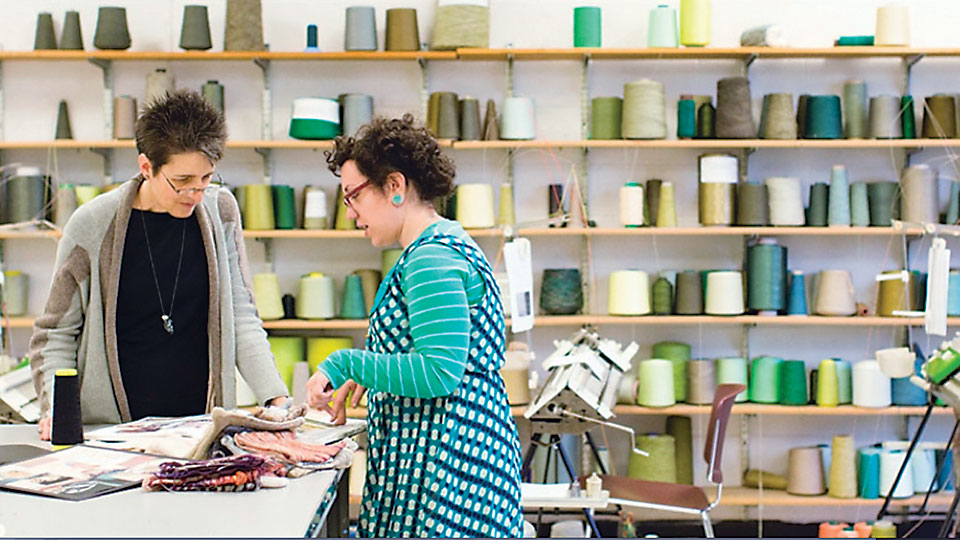
Textile Design and Textile Material Technology students collaborate in the Knitting Center of Excellence.

Phila U was founded as the Philadelphia Textile School in 1884 by local textile manufacturers looking to improve the quality of U.S. textile products after finding themselves falling behind competitors in technology and ability. In 1949, after gaining the rights to award baccalaureate degrees, it changed its name to the Philadelphia Textile Institute (PTI) and moved to the current East Falls, Pa., location. As its curriculum grew and broadened, PTI became the Philadelphia College of Textiles and Sciences (PCT&S) in 1961. With its continued growth and diversity of program offerings, PCT&S was granted university status in 1999 and renamed as Philadelphia University. Advancing to current day, Phila U is now referred to as Jefferson’s East Falls Campus where the collaborative teaching environment continues to thrive.

Collaboration Becoming a Common Theme

The East Falls Campus has always been small, diverse and tight knit, with a“sense of community that is authentic.” Here, fashion and textile programs have continued to persevere and advance, despite the ups and downs of the textile industry. Coupled with additional disciplines ranging from design and engineering to health and architecture inspires a spirited culture. The origins of its collaborative environment appear to be more of a progression that had its roots in textiles versus a specific plan or concentrated effort.

“When you think about it, textiles have always been about collaboration,” suggested Dr. Brian George, associate professor of engineering and textiles. “Fabric and how it performs is essentially a collaboration between the fiber chosen, how it is processed into yarn, the fabric construction, weave, knit, nonwoven and maybe a finish or coating employed. The textile industry exists because of collaborations. It couldn’t exist if it weren’t able to bring all different sorts of mindsets together throughout the supply chain to create the right textile product for the application.”

According to Dr. Chris Pastore, professor of Transdisciplinary Studies, who actually began his career as a lab assistant at PCT&S: “The emphasis on collaboration just sort of evolved over time. I don’t think there was ever a conscious effort made. It’s more part of the heritage or DNA from Philadelphia Textile than anything else. Over the years, various professors would bring in industry projects and engage students and others to help in those problem-solving efforts. The projects all had textiles as the core, but many had applications that were spreading out beyond traditional applications into emerging technical and performance driven arenas, inspiring collaborations in new directions. It’s transcended over time into the other disciplines here and became a large component of who we are and how we work.”

The result is an effortless collaborative climate that has simply evolved into a way of learning and a way of life, which almost appears to be taken for granted around campus and second nature to most there. Yet, this climate is what many feel is truly special about Jefferson’s East Falls Campus. “Here interdisciplinary work is something you don’t really think about,” Pastore said. “It just happens. We don’t have barriers between departments or disciplines and the departments don’t exist in their own silos, which only fosters collaboration. We can work with anyone we want without raising any eyebrows. You see someone from yours or another department and just start talking, asking questions, maybe answering them, discussing or debating as ideas get formed. It really is liberating and makes it easy for me to come to work every day.”

When asked how the two different cultures of Jefferson and Phila U interacted initially, Pastore said, with a smile: “They’re coming to understand how our collaborative environment is beneficial. It definitely had a different feel at first, but we’re training them!”

“Our new colleagues from Jefferson have embraced our environment, but in some of the first opportunities where they saw the interactions we had with each other and how we were working so closely with the students, one of them asked ‘how can you work this way?’ to which my immediate thought was, how can you not?” Weiss added, also with a smile.

The collaborative environment certainly appears to be growing on their new Jefferson colleagues. “The merger of the schools has resulted in natural collaborations,” George explained. “Jefferson’s medical school never really had in-house design or engineering departments or direct access to textile technologies in the past. Now that they do, we’re seeing more people interested in textiles from Jefferson’s medical side. They know what they want and what they need from their perspective and we’re able to translate that into textile products and potential opportunities.” Some of these new collaborations include more effective helmets based on reinforced composites technology; innovations in personal protective equipment (PPE) in large part a result of the COVID-19 pandemic; novel bandages that are more easily removed from the skin; new fiber, yarn and fabric concepts; and potentially implantable devices for unique applications inside the body.

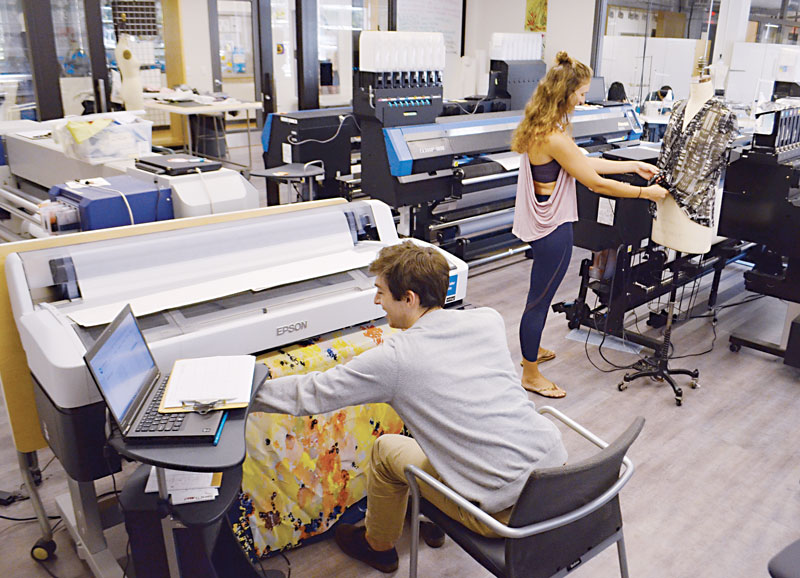
Textile designers fulfilling their vision in the Center for Excellence in Digital Printing.

Various Forms of Collaboration

As one might surmise, collaborations can take on many forms at Jefferson. There are numerous opportunities between students and professors and different disciplines that can be by design or simply informal in nature. Collaborations also can extend to and involve other universities and industry partners. These interactions position Jefferson students well for the real world and for answering the often-asked interview question of “What can you do for this company?” It appears Jefferson’s collaborative environment and philosophy are working well because the university boasts an impressive 97-percent success rate for undergraduate students in securing jobs or going on to graduate school.

“I loved school and it remains a go to resource for me,” reported Jodi Wallis, a 2014 Phila U graduate and director of research and development at Scranton, Pa.-based Nobel Biomaterials. “I knew nothing about textiles when I arrived yet graduated with a degree in textile materials technology. There was a lot of hands on work, and the exposure provided to me through the school’s relationships with industry proved to be very helpful in starting my career.”

Nathalie Bouchard, a current senior in the textile design program, added: “I really feel like I’m learning something new every day. The faculty is very nurturing and supportive. Textiles have a lot of niche subject matter that you need to absorb, but you can’t fully comprehend how to thread a knitting machine or program a jacquard pattern online. So, you seek out interaction with faculty and other students to learn. You build those connections and they stay with you. Even with the current remoteness of COVID, I still feel the connection.”

“We’re very hands on at Jefferson and want students to take advantage of every opportunity they can while here,” Weiss explained. “What does collaboration look like from a design, engineering and/or marketing perspective? In many cases it’s defined by the student and their goals. That is what’s special about Jefferson and the highly collaborative nature of the education we provide.”

This sentiment was emphasized by Samantha Fletcher, a recent Textile Design Master’s program graduate and creative manager for the design team at flooring manufacturer Mannington Commercial, Calhoun, Ga. “To be an effective designer, you need to make that connection between the design, the machine and manufacturing.”

Marcia Weiss (left), director, Fashion and Textiles Futures Center at Philadelphia-based Thomas Jefferson University, advising a former student on a project.

Industry Involvement

Along with the informal interactions throughout the campus, Jefferson also offers several structured and innovative collaborative options for students to participate in. There’s the Sunbrella® What’s Next Design Competition which is held every two years and sponsored by Glen Raven Inc., Glen Raven, N.C. Its genesis was Glen Raven’s interest in next generation designers. The company provides Jefferson with its latest pallette of various yarns and colors from the Sunbrella brand for the competition. Students then are tasked with creating unique and novel fabric designs, with very few restrictions. The biennial competition is held over an academic year and open to anyone at Jefferson, but the bulk of participants tend to be textile designers or textile product science majors.

According to Weiss: “Glen Raven has been very involved and supportive of this competition, which we’re in our eighth year of holding. They participate in the competition’s introduction to the students, bring in employees and clients as judges, provide the monetary awards, and sponsor networking opportunities with a great range of industry professionals for the students to interact with. The interactions have led to student internships and even full-time careers. It’s been a great partnership for us.”

A course in Integrated Engineering Product Development is centered around a collaboration project which is open to undergrad and grad students. “The course pulls in students from different backgrounds and education levels who then work with select outside companies to find new uses for their product offerings,” George explained. “Basically, here’s what we currently do with it, what else can we do with the product? The course gives students the experience of communicating directly with industry professionals to gain knowledge they wouldn’t necessarily get from the classroom. It usually ends up being a friendly competition of sorts between several teams which can be fascinating to observe.”

Jefferson is laden with opportunities for students to explore options and influence the program’s direction. Internships, assistantships, innovation programs and collaborations with other universities are available within the United States and abroad, occasionally with students actively consulting with their advisors to create their own destinies. “I really loved that Jefferson allowed me the flexibility to shape my Master’s program into what I wanted it to be,” said Fletcher, who incredibly managed to orchestrate and spend time studying in Finland, China and Senegal as part of her Master’s degree program at Jefferson. “They helped me figure out who I am and where I wanted to be.”

Collaborations at Jefferson can also lead to new cutting-edge technologies and innovative products brought to market. For example, the company Hemp Black, Greensboro, N.C. — a subsidiary of Georgetown, Ky.-based Ecofibre — began as a collaboration between Australia-based Ecofibre and Phila U to test, analyze and explore opportunities for hemp fiber. “Hemp Black is a unique opportunity and a great example of real world experience preparing students for the future,” according to Mark Sunderland, vice president of Innovation and Technology. “Research for research is important, but in today’s world, it is getting harder to pay for. Collaboration is the key in helping research to become real as with Hemp Black. Jefferson participated in much of the research to bring an original concept for using hemp into a commercial product. A number of students have been involved in this research and subsequent bio-protocol activities which began in 2016. Now Hemp Black employs four Jefferson grads full-time. The research is winding down as the company grows into itself, but it’s been a positive experience and a real benefit to all involved.”

“A textile education is a colorful, vibrant, valid and enticing path forward. And we position students well for the real world,” Weiss said. “When a perspective employer asks our students ‘what can you do for this company,’ they typically have a pretty good answer!”

Thomas Jefferson University, a study in collaboration indeed. Where does one enroll?

September/October 2020

Supply Chain Management Software for Textile Networks

Datamon+’s Route 4.0 Alliance provides relevant information so companies can make sustainable business decisions.

A myriad of advanced planning and scheduling (APS) software offerings give textile companies the ability to choose the best systems for their production needs.

Dr. Kristin A. Thoney-Barletta

At ITMA 2019, a variety of different types of textile software were showcased. There were many textile supply chain solutions among the options, and this article focuses specifically on advanced planning and scheduling (APS) for supply chains tailored to the textile industry.

A software company’s focus on the textile industry can be a key advantage for a textile manufacturer looking for an APS system, since this focus often means software company employees are much more familiar with textile processes. In addition, the software usually incorporates more of the functionality required to plan and schedule textile processes, which may require less customization to successfully implement the system within a textile company. Textile functionality can save a textile company significant time and money to get the software fully operational.

Computer House

Italy-based Computer House S.r.l.’s PROTEX software contains an enterprise resource planning (ERP) solution with an Oracle database. The ERP solution consists of a sales module and a production module. Functionality within the production module includes cost control and quality control. Schedules are created that minimize a cost function. The user can assign different weights to different parts of this cost function, and the cost function can include meeting delivery dates. PROTEX also is a manufacturing execution system (MES), a warehouse management system (WMS), and a customer relationship management (CRM) system. It is not a product lifecycle management (PLM) solution, but Computer House does collaborate with a specific PLM vendor if this functionality is required by the client. PROTEX can be used in spinning, knitting, warping, weaving, dyeing, finishing, and cut and sew operations. It has many applications in all segments of the textile industry, including apparel and home textiles.

According to Computer House, advantages of PROTEX ERP include that it is developed entirely in-house, is an integrated and easy-to-use with intuitive graphics, and is multi-company and multi-language.

Datamon+

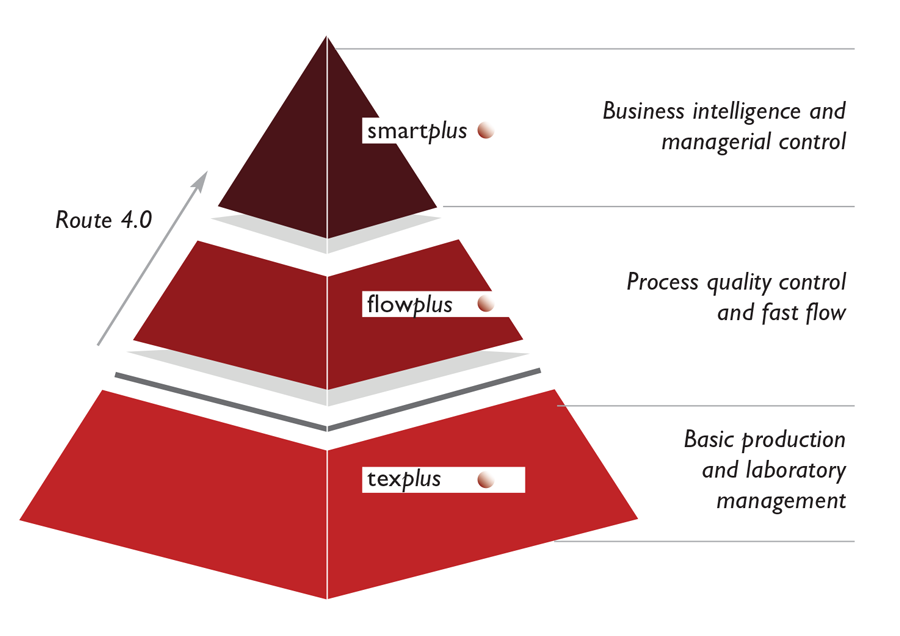
Spain-based Datamon+ offers TEXPLUS, an ERP system that has costing and quality control. It plans production and performs scheduling with dispatching rules. The software has specialized solutions for spinning, weaving, dyeing, finishing, printing, and industrial laundries. The company currently sells its software in Spain, Portugal, and Latin America.

Datamon+ software offers control, improvement, and cost effectiveness, according to the company. Its main benefits include increased profitability, immediate information for negotiations and decision making, inventory optimization, quick response to problems, and meeting customer quality specifications.

Datatex

Datatex has offices in Switzerland, Germany, India, Israel, Italy, and the United States. Its ERP system incorporates sales and customer service — including CRM — planning and scheduling, production order management, quality management, inventory and warehouse management, purchasing, costing, and financial management functions. Application-specific products include shop floor automation, fabric inspection, machine capacity management, machine queue management and PLM. Datatex has many solutions including those for fiber, spinning, knitting, weaving, printing, dyeing, apparel, nonwovens, technical textiles and carpet.

Shannon McCarthy, vice president of Business Development, Datatex, said that are several advantages of Datatex products. The company focuses exclusively on the textile industry — except for a few cases in which one of their textile customers has expanded into another industry — and the software has been developed for more than 20 years in response to their customers’ needs. Not only does Datatex do detailed scheduling, it handles load balancing among machines in different locations.

Datatex reports: “Textile and apparel manufacturing have very different and particular planning and scheduling requirements. Therefore, the Datatex planning and the Datatex scheduling systems have proven to be one of the key success factors to our customers.”

Halo GmbH’s Inteos® software package is an ERP, MES and monitoring solution suitable for use in weaving, knitting, finishing, printing and apparel operations.
(Image courtesy of inteos®)

Halo

Austria-based Halo GmbH offers its Inteos® software package, which is an ERP, MES and monitoring solution. Inteos also has quality control and warehouse management functions. In terms of planning and scheduling, it handles capacity planning and reservation, rough and detailed planning, optimization, and simulation. The software does not have PLM capabilities. Inteos can be used in weaving, knitting, finishing, printing and apparel operations.

Stefano Sampietro, salesman at Halo, said that he feels that that the main advantage of Inteos is that the company is continuously developing and innovating. For example, it recently added tablet capability, and also is moving into augmented reality. According to the company: Inteos provides “a product that can be integrated quickly and smoothly into current operations. The system is customized to suit your individual needs and the user-friendly and easy-to-understand platform allows for a minimum of training and guarantees maximum acceptance among users.”

Intex

Intex is ERP and MES software developed by Germany-based Intex Consulting GmbH. The company also has offices in China, India and Brazil, among other locations. It partners with Oracle and also is a member of the SAP Extended Business Program. Modules within Intex include sales, production, inventory, purchasing, costing and quality management. Scheduling is based on both meeting due dates and minimizing costs. Intex also contains a shipment model and has CRM and PLM functionality. It allows the user to schedule sampling on machines and provides detailed tracking of sampling costs. Intex can be used in fiber, spinning, warping, weaving, dyeing, finishing, and cut and sew operations. The software has been implemented in a variety of industries, including apparel and home furnishings.

According to Dileep Kumar, senior consultant, Intex Consulting Group, there are many advantages of Intex. It has integrated planning across the system and is a finite capacity scheduler. Actual costing is performed throughout the supply chain. Intex also enables users to estimate accurate delivery dates during the course of a phone conversation and suggests similar products if the desired product cannot be produced on time. Additionally, it allows companies to determine who their best customers are from a profit point of view. The company reports: “Including our co-operation partners and our international subsidiaries, more than 100 textile and software specialists are selling and implementing our solutions worldwide.”

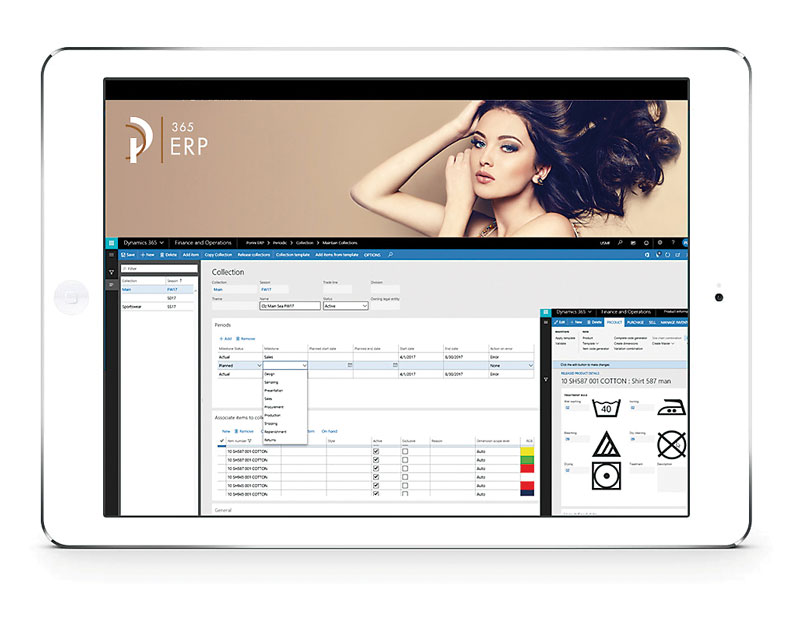
The Porini Suite for Microsoft Dynamics 365 include Porini 365 ERP, among other capabilities.

Porini

Italy-based Porini S.r.l. distributes its software through a channel of partners. The Porini Suite for Microsoft Dynamics 365 consists of Porini 365 ERP, Porini 365 CRM, Porini 365 Apps and Porini Analytics. Porini 365 CRM is a solution for fashion retailers. Porini 365 ERP is for fashion, retail, footwear and textiles. It includes functionalities for spinning, weaving, knitting, dyeing, finishing, printing, cut and sew, and distribution. The scheduling module calculates requirements based on due dates and process constraints.

The system suggests a schedule based on one of several different algorithms, including first in, first out (FIFO) and priority schemes. Porini takes into account quality control, and if quality specifications are not met, it blocks work-in-process (WIP) from advancing on its route and finished goods from shipping to the customer. The software has MES, advanced warehouse management capabilities and PLM capabilities.

According to Fernando Pereira, international sales director, Porini, a major advantage of Porini is its offer of a complete suite of integrated software components based on the latest Microsoft technologies. All software is cloud-based and deployed with a subscription fee and is accessible by browser. Updates occur seamlessly. Porini integrates easily with Microsoft PowerApps, Power Automate and PowerBI, as well as the standard Office suite. Porini reports the company has more than 350 projects in the different streams and 25,000 active users.

Schaeffer Productique

France-based Schaeffer Productique’s software includes the ERP/CRM SOLINSyst and has capabilities in inventory management, costing, scheduling, quality control and logistics. It can be used in knitting, weaving, dyeing, and cut and sew operations. The software, used primarily by European companies although there are some implementations in North Africa, has been implemented in many industries including apparel and home textiles.

The company reports “We integrate the changing needs of the international textile industry with the latest advances in digital technologies to support our customers in their evolution. We regularly bring them the most relevant solutions, at the best conditions.” Schaeffer Productique counts 200 customers in 12 countries.

Up Solutions

Italy-based Up Solutions S.r.l. offers the Just MES software, which is not an ERP system, but is compatible with many ERP systems. Up Solutions is a Microsoft partner. The Just SUITE consists of the following four integrated solutions: just plm, just planning, just monitoring and just quality control. There is one just SUITE for fashion, and a separate one for textiles and technical textiles. Companies only have to purchase the integrated solutions that they need. For example, carpet manufacturers often only use the just monitoring textile solution. With the textile just planning solution, there are specific programs for spinning, knitting, weaving and dyeing. The just planning solution also has warehouse management functionality. Just MES does not yet have a program for cut-and-sew operations. The just planning solution incorporates the option to source production or schedule production. When the user decides to schedule, priority is selected within scheduling heuristics. Just MES has been implemented in such industries as home textiles, apparel, shoes, and carpet. Most recently, it has been used in the automotive industry.

In describing Just MES, Up Solutions reports: “We have now achieved a fundamental goal for us: to offer a complete solution capable of managing and monitoring the entire manufacturing process of the company … Thanks to our consolidated experience in the textile and apparel sector, we are now able to satisfy all those production companies that need to monitor and improve their supply chain.”Just MES currently has 160 customers in 30 countries.

Interlem GP Omega

Italy-based Interlem GP Omega S.r.l. focuses mainly on small and medium-sized enterprises. Its products include the Arianna Textile ERP solution, the Arianna Printing ERP solution for digital printing and the Net@Pro MES solution. The software has functionality to be used in spinning, warping, weaving, dyeing, printing and finishing. It is not currently for cut-and-sew operations. The software has been used for many end applications, including apparel, home textiles and making carbon fiber. The software has finite capacity scheduling, and the user may put weights on different factors, including due dates and costs. It has CRM and WMS capabilities with order picking. It does not have PLM functionality. Interlem GP Omega sells primarily to the European market, and its ERP solution is generally not sold outside of Italy.

Andrea Picone, managing partner, Interlem GP Omega, said that one key advantage of its system is its flexibility. According to the company, other benefits of using the software include speed improvement, production lead time reduction, waste reduction, delivery completeness, punctuality and resource optimization. Net@Pro has more than 16,000 users in Italy and 200 user companies.

Zeta Datatec GmbH’s
LOOMDATA® software includes plant monitoring, quality control and
warehouse tracking.

Zeta Datatec

Switzerland-based Zeta Datatec GmbH offers LOOMDATA® software, which is both an ERP and MES system. The company delivers both the hardware and software. The system includes plant monitoring, quality control and warehouse tracking. It also can be used for planning. LOOMDATA did not historically have a lot of automated scheduling functionality. However, one of its new features is forward and backward scheduling of orders. Furthermore, the company is willing to customize the software for clients who require more scheduling functionality. Its software is specifically for weaving, knitting and finishing. It is not used for spinning or sewing operations. The software also does not have PLM capabilities. Industries Zeta Datatec serves include textiles, technical textiles, plastics, pharmaceuticals, cosmetics, food and paper.

Zeta Datatec Co-Owner Werner Zberg said that there are a lot of advantages to using LOOMDATA. He believes that LOOMDATA can more quickly integrated into companies. The software runs on an HP server with Sun Solaris, and he believes that this is a more stable environment. “Having installed more than 550 systems in 50 different countries around the world, our over 35 years of experience in providing powerful monitoring and planning solutions for the textile industry has given us the ability to produce the most stable and reliable system in the world today,” reported the company.

Choosing A Supply Chain APS System

There are a lot of options available when choosing a supply chain APS system. Among the software options discussed above, there are significant variations in the software capabilities, types of textiles processes for which the software system was designed, and the final products of textile companies in which the software has been implemented. In addition, some of the software companies have a strong international presence, while others have focused on a particular region. Some of these regional companies may be looking for new opportunities to expand, while others may be content to be regional players.

Before evaluating different supply chain APS software, textile companies should:

  • clearly define the benefits expected by implementing the new software;
  • determine how the software will integrate with and/or replace existing software;
  • decide how the software will fit into existing business procedures; and
  • agree on the essential software functions necessary to achieve the desired benefits based on business procedures.

This information, combined with textile company product and process details, can be used to narrow down which commercial packages seem to best match the company’s requirements.

The remaining supply chain APS software can be further evaluated based on a more detailed assessment of both software capabilities and whether company constraints can be met. In terms of software capabilities, having an APS system that automatically generates detailed finite capacity schedules and outputs dispatching lists for individual machines might be very important to a company. If that is the case, can the software provide that capability? If so, how are those schedules generated?

Textile companies should also develop a comprehensive list of business and manufacturing constraints, in conjunction with production managers and machine operators. They should find out which if these constraints can be modeled in the base software system and which would necessitate customization. In addition to evaluating commercial APS systems, textiles companies should consider the alternatives of developing software in house and/or hiring a consultant experienced in supply chain planning and scheduling to develop specialized software. A cost-benefit analysis of each acceptable option should be performed based on a detailed cost breakdown and a well-thought-out estimate of the anticipated financial benefits.

Many APS software packages for textile supply chains were presented at ITMA 2019. By carefully analyzing requirements and constraints, in conjunction with software benefits and costs, textile companies can make the most informed decision as to whether such a system; a generic, non-textile-specific APS system; developing software in house; or hiring an experienced consultant is the best decision for the company.


Editor’s Note: Dr. Kristin A. Thoney Barletta is professor, head & director of Undergraduate Programs in the Textile and Apparel, Technology and Management Department at NC State’s Wilson College of Textiles.


September/October 2020
Delta Galil To Acquire Bare Necessities

Israel-based Delta Galil Industries Ltd. has signed an agreement to acquire Bare Necessities, an online retailer of intimate apparel, swimwear, lingerie, sleepwear and hosiery, based outside of New York City. The company’s website sells more than 6,400 styles from some 160 brands, and is known for its wide range in sizes. Delta Galil reports the website will carry its own brands once the deal closes.

“This transaction reflects our strategic growth objective to diversify our distribution channels,” said Isaac Dabah, Delta Galil CEO. “As the digital space currently represents the fastest growing segment in our industry, we are very pleased to acquire such an authority in online intimates. Bare Necessities can significantly enhance Delta Galil’s presence in the digital world, as we continue to pursue growth online. I look forward to partnering with the senior leadership of Bare Necessities to achieve strong, profitable growth.”

September/October 2020

Avery Dennison Engineers Bio-PP Tag Fastener

Avery Dennison Corp. Fastener Solutions, Fitchburg, Mass., has introduced the bio-PP Fastener, a tag fastener for the apparel industry made using a proprietary blend of polypropylene (PP) material designed to degrade in under a year when exposed to soil
without leaving any microplastics or harmful substances behind. The company reports a typical PP fastener can take 20 to 30 years to break down.

“Plastic fasteners, which attach price tags and other product information to garments are on 90 percent of the approximately 80 billion garments manufactured each year and that adds up to a whole lot of plastic — the equivalent of the same amount of plastic found in 761,581,156 single-serve 0.5 liter PET water bottles,” said Dan Riendeau, senior marketing manager, Global Packaging and Retail, Avery Dennison Fastener Solutions. “Brand owners and retailers are increasingly seeking ways to reduce their environmental footprint and this product innovation helps to do that.

As a materials science innovator, we’re excited to grow this product line and offer our customers more options and a solution that is not dependent on consumer recycling behaviors.”

September/October 2020

Huntsman Introduces High IQ® Lasting Black Eco

Singapore-based Huntsman Textile Effects has added High IQ® Lasting Black eco to its High IQ brand assurance program. The color-retention program is based on Huntsman’s Avitera® SE Black reactive dye and is aimed at helping manufacturers, brands and retailers ensure eco-friendly black colors maintain their intense black color through the lifetime of the garment. Huntsman reports its Avitera Black SE dye can reduce the use of water and energy by up to 50 percent during processing, thus making it an economic and environmentally sustainable choice.

“With HIGH IQ Lasting Black eco, Huntsman Textile Effects continues to lead the industry in providing sustainable dyeing solutions for eco-friendly black shades that deliver excellent value through color performance,” said Jay Naidu, Vice President Strategic Marketing and Planning, Huntsman Textile Effects.

Huntsman also recently reported that more than 130 million liters of water have been saved in the year since its ERIOPON® E3-SAVE textile auxiliary for polyester processing was introduced. Dyeing polyester and polyester blends has traditionally been a resource intensive, costly, time-consuming endeavor. Eriopon E3-Save was developed to address these issues, and allows mills to combine the prescouring, dyeing and reduction clearing steps into a single bath.

September/October 2020

GIS Launches Customer Hub

England-based Global Inkjet Systems (GIS) has launched a new Customer Hub. Replacing its ticketing system, the hub allows GIS customers to access commercial and technical information on GIS Atlas® software, hardware and ink/fluid delivery systems 24 hours a day, seven days a week. Designed as a comprehensive knowledge-based, the hub offers technical support, software updates, documentation, and order and returns tracking.

“With the introduction of the Customer Hub, GIS continues to offer higher levels of customer support, further minimizing time to market,” said Laura Able, head of customer experience. “The new portal takes our service to the next level, giving businesses complete visibility on their service, commercial, training and ordering needs — their teams can access all the information they need, whenever they need it.”

September/October 2020
Dyeing & Finishing Technology Update

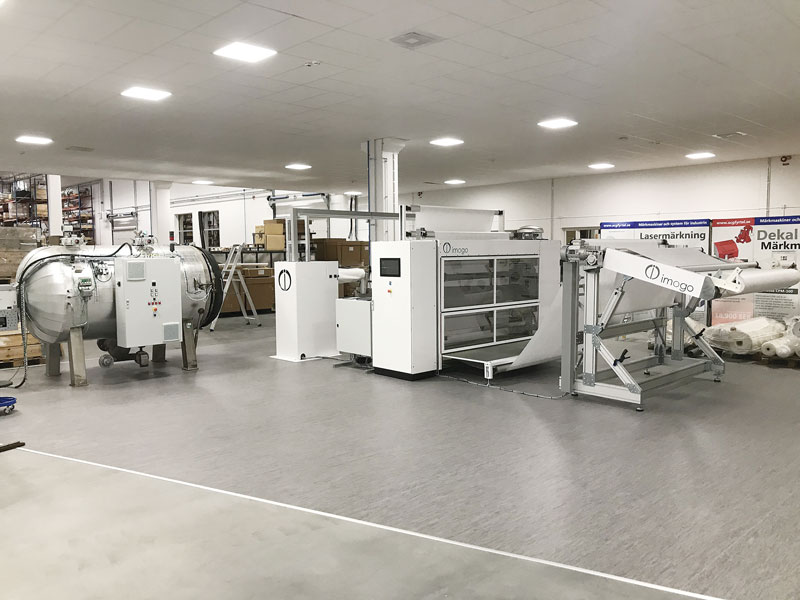
Imogo AB’s Dye-Max machine uses spray cassettes to dye fabrics using an extremely low liquor ratio.

The dyeing and finishing industry continues to make strides in developing technologies that make the processes more environmentally friendly and sustainable.

TW Special Report

As is the case for many areas of the textile industry, sustainability is at the forefront of machinery innovations for the dyeing and finishing sector. Developments firmly focus on reductions in energy, chemicals and water use. The sector also is working on Industry 4.0 solutions and intelligent machine controls. What follows is a look at just some of the latest technologies available for dyeing and finishing.

While digital textile printing technologies are advancing at a rapid rate for decorative fabrics, England-based Alchemie Technology Ltd. is using digital printheads to color fabrics in a different way. A newcomer to the dyeing industry, Alchemie recently debuted its Endeavour Waterless Smart Dyeing process — a digital, on-demand textile dyeing process for polyester fabrics. Alchemie reports it is trying to solve pollution issues, reduce costs and increase flexibility in the dyeing process. The Endeavour system is not completely waterless, but according to the company, it reduces wastewater by more than 95 percent, and offers significant savings in energy use, materials and labor costs compared to traditional dyeing processes. The digital application system allows manufacturers to “dye on demand” and offers quick changes and fast runs similar to digital printing at 25 meters per minute (m/min) — minus the images or patterns. The technology has demonstrated color consistency of +/- 1 percent and excellent wash and rub fastness, according to Alchemie.

Sweden-based imogo AB is another newcomer to the dyeing industry with its Dye-Max spray dyeing technology. Imogo partnered with ACG Kinna, Sweden, to build the first Dye-Max line, and the technology made its debut at ITMA 2019.

Imogo reports the Dye-Max reduces the use of fresh water, wastewater, energy and chemicals by as much as 90 percent compared to conventional jet-dyeing systems. These savings are achieved with an extremely low liquor ratio of 0.3 to 0.8 liters per kilogram of fabric and by using a series of spray cassettes located in a closed chamber. Precision nozzles in the cassettes accurately and consistently apply the dye in conjunction with the patented imogo pro speed valve that controls the volume of dye that is applied. The closed system is kept free from contaminating particles with an exhaust system and droplet separator.

“The spray cassettes are a key part in the Dye-Max line,” explained Imogo’s founding partner Per Stenflo. “There is one set of spray cassettes for each of the three separate dye dispersion feed lines and they can be easily exchanged without the need for tools in less than a minute. This allows for extremely fast changeovers between different colors without the need for cleaning. And because the spray cassettes are removable, all maintenance can be performed offline. After applying the dye dispersion the fabric is rolled onto a shaft and moved to the autoclave for deep dye fixation via heat and pressure.”

Dye-Max operates at up to 50 m/min. The company also offers a Mini-Max for laboratory-scale runs. “With the Mini-Max it is possible to run miniature production tests to set the precise color recipe,” Stenflo said. “… The user simply sets the recipe with the Mini-Max and transfers the parameters to the Dye-Max recipe database for the system to be fully production ready.”

The company recently opened a showroom to fully demonstrate its technologies to potential customers.

The Netherlands-based DyeCoo Textile Systems BV offers a patented waterless dyeing technology that uses reclaimed carbon dioxide (CO2) from its closed-loop system as the dyeing medium instead of water. The CO2 is pressurized into a supercritical form, which has high solvent power and can easily dissolve the dye. According to the company, the dyes are transported easily and deeply into the fibers resulting in vibrant colors. The process boasts a 98-percent uptake of dye and no additional processing chemicals are required. With no water used during production, cost savings are achieved also in wastewater treatments; and further processing to dry the fabric is unnecessary resulting in additional energy savings. DyeCoo reports the technology has been proven to deliver great results on an industrial scale.

Italy-based Karl Mayer Rotal S.r.l., a subsidiary of Germany-based Karl Mayer GmbH & Co. KG, recently launched Greendye® indigo dyeing technology. The development dyes the yarns in a nitrogen atmosphere, which reduces the environmental impact of indigo dyeing by limiting the number of baths required and chemicals needed. According to the company, with a high concentration of dye in the bath, the dye diffuses and migrates more intensely into the fiber in the nitrogen atmosphere and the fiber can absorb three times more dye compared to conventional dyeing processes. The use of hydrosulfite and caustic soda may be reduced by as much as 50 percent, which reduces costs and also makes the process more environmentally friendly. Also, because the nitrogen atmosphere fixes the dyestuff well, less water is needed during washing.

Karl Mayer acquired the patents for this nitrogen dyeing technology from Italy-based Master S.r.l. in 2018. After fine-tuning the technology, Karl Mayer Rotal expanded its denim center of excellence with a competence center featuring a Greendye pilot line, showroom, meeting rooms and academy for training. The 13-meter-long pilot line maps the industrial process at a scale of 1:10.

China-based CHTC Fong’s International is a group of textile companies — Fong’s National Engineering Co. Ltd., A. Monforts Textilmaschinen GmbH & Co. KG, Monforts Fong’s Textile Textile Machinery Co. Ltd. and Fong’s Europe GmbH — focused on textile dyeing and finishing machinery.

Fong’s National Engineering’s Tecwin high-temperature piece dyeing machine is designed for versatility. Patented features include:

  • A combined air and front spray nozzle to increase the degree of dye liquor exchange;
  • an automatically controlled adjustable nozzle;
  • a liquor dispersion storage chamber designed for improved liquor dispersion;
  • an upper overflow to maintain pump operation with a low water level to prevent disturbance when rinsing at a high water level;
  • and lower overflow adopted for conventional overflow rinsing.
Monforts now offers its digital twin system and apps with all of its machine ranges.

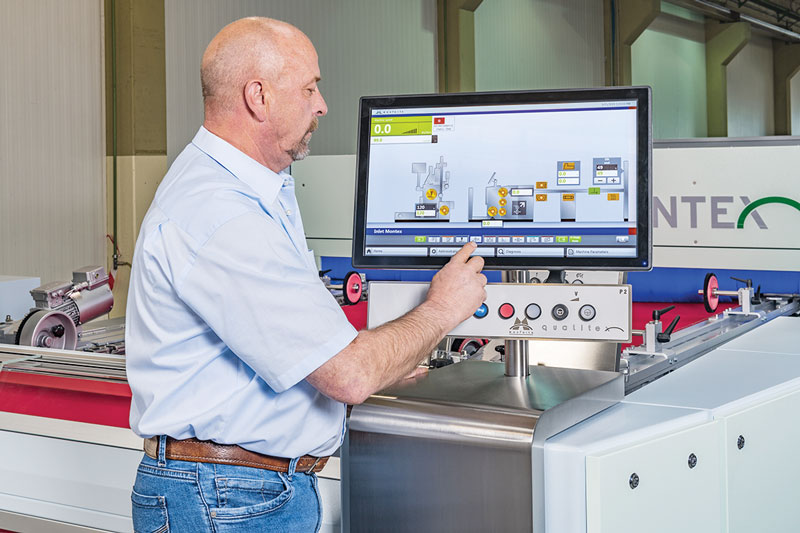
Germany-based A. Monforts Textilmaschinen had many innovations to share at ITMA 2019. Two that were of great interest to customers included the MonforClean exhaust air treatment system and the CYD [continuous yarn dyeing] multicolor yarn dyeing system.

The MonforClean module is incorporated into its Montex tenter frame, which simplifies the configuration and supporting structures typically required to process the exhaust air to adhere to emissions limits. Waste heat from the drying process is utilized to preheat the drying air to reduces the conventional heat supply required. An automatic exhaust air filter washing system is designed to automatically clean the module, ensuring consistent efficiency of the filter and heat recovery modules. The MonforClean system automates the heat recovery and exhaust air treatment processes making sure exhaust air is “highly purified” before it is released into the surroundings.

“The latest energy-optimized Monforts tenter frame — especially combined with a downstream Eco Applicator — sets new benchmarks in terms of energy efficiency and helps conserve resources,” said Klaus Heinrichs, Monforts vice-president. “Setting the initial moisture content requirement for a specific process, before drying to a minimum value with an automated process, helps reduce heat evaporation and consequently, energy consumption.”

The Eco Applicator, when installed in front of a Montex tenter, can minimize the amount of finish that is applied compared to a padder/foulard, according to Monforts.

“In addition, the hermetic sealing of the tenter frame prevents the loss of heated air as well as the ingress of excessive cold air — which has to be heated back up,” Heinrichs noted. The MonforClean module automates the heat recovery and exhaust air treatment processes, while eliminating odors. As a result, the maximum possible energy savings no longer depend on the machine operator, but are instead harnessed in automatic operation.”

Monforts’ CYD multicolor yarn dyeing technology is based on the Econtrol® pad-dry technique. Econtrol, a registered trademark of Dystar Colours Distribution GmbH, refers to an established dyeing process for denim fabrics in which the reactive dyestuff is fixed to the cellulose fibers during drying. Monforts now has applied this concept to yarn dyeing with the CYD system. The company reports improvements in fabric quality and dye fixation; as well as time, water and energy savings.

The CYD system allows spinning, direct beaming, warping, assembly beaming, sizing and dyeing to be incorporated into the weaving preparation process. The multicolor technology also includes the addition of an Eco Bleach step combined with the washing units and prior to dyeing. This is compared to a conventional system where bleaching occurs in a separate processing step. CYD makes it possible to process short batches of up to 10,000 meters of yarn to produce up to 300 meters of fabric in a single continuous process. The CYD multicolor yarn dyeing system integrated into the Econtrol process offers manufacturers full dyeing pretreatment.

Monforts’ Industry 4.0 offering is a digital twin capability using the latest advanced sensor technology to virtually map technical machine data in the cloud in real time. Users can access the data using the Monforts Smart Support and Smart Check apps. Smart Check sensors notify operators when maintenance is required or key components need replacing to prevent machine downtime, among other advanced operations. “The Monforts digital twin system and apps are being made available for all of our machine ranges going forward and will make the operations of our customers considerably smarter, and at the same time, simpler,” Heinrichs concluded.

Fong’s Europe GmbH comprises the European brands Goller, Then and Xorella.

Germany-based Goller recently introduced the Knit Merc, a machine designed for dry-on-wet mercerization of cotton and cellulosic fiber knitted fabrics using the lowest possible tension with less than 3-percent variation in dimensional stability. According to the company, Knit Merc can accommodate 8.4 meters of fabric in its impregnation compartment as well as 4 meters in the first chain section. Total production speed is 25 m/min at 30 seconds dipping time. The Knit Merc features an inlet comprised of scroll and slat rollers to guide the fabric, a Tandematic uncurler in front of a rubberized de-airing roller, and a grooved 320-millimeter (mm) bottom roller paired with 320 mm and 600 mm perforated upper drums. An integrated lye tank and automated circulation and filtration units ensure a low liquor ratio. The Knit Merc may be combined with Goller’s Sintensa Cyclone drum washing compartment.

Germany-based Then recently introduced the THEN Supratec LTM hydraulic long-tube dyeing machine and the Smartflow TSF hydraulic high temperature dyeing machine.

The angle of the Then Flexkier featured on the Supratex LTM can be varied to accommodate either dry/jet or wet/overflow modes. This allows the dye liquor ratio to be optimized from 1:15 to 1:4 depending on the material processed. The Supratec LTM can handle woven and knitted fabrics in weights ranging from 25 to 380 grams per linear meter. The low

lifting height between the variable nozzle and plaited fabric means the fabrics are handled under very low tension. Each kier has a capacity of up to 230 kilograms (kg), and operating speeds range from 80 to 600 m/min. “Existing Supratec machines on the market are providing excellent performance for a wide range of delicate synthetic fabrics, from polyester to polyamide with high content of elastane,” said Fong’s Europe Director of Sales and Marketing Richard Fander. “Heat-setting often can be avoided, which improves the handle of the material and saves costs and the lengthwise-elongation of the fabric being treated is lower than on winch-driven machines.”

The Smartflow TSF high temperature dyeing machine was designed to achieve low energy and water consumption rates compared to other jet dyeing machines. According to the company, for a full load of up to 300 kg, liquor ratios of 1:3.5 for cotton and 1:2.5 for man-made fabrics may be achieved. The fabric transport design is just one feature of the machine that is patent-pending. Then reports this winchless fabric transport system eliminates the need for a loading rope, and a circular plaiter with programmable rotation speeds offers full filling of the drop zone. The Smartflow TSF offers flexibility with dyeing chambers that can accommodate variable loads in terms of weight and material type, and each machine can be equipped with up to eight chambers while taking up 40-percent less floor space than other systems, according to the company. “The newly-developed nozzles and reel-less transport in combination with smart controlled circular plaiting and variable chamber adjustment provide even fabric treatment without entanglements and the highest loading capacity with the lowest kier volume,” Fander explained. “As the process times of jet machines have been continuously optimized over the past few decades, they have required an increasing number of service tanks for dyes, auxiliaries and hot water, adding both expense and additional space requirements. Our new BPU and satellite tank, with its automatic dosing and mixing programs, working in combination with the Then temperature management system, ensures the recipes are supplied in exact quantities, with dyes and auxiliaries well diluted and heated to the required temperature extremely rapidly.”

Germany-based Xorella offers conditioning and heat setting equipment for textiles. The latest company development is a reengineered controller and software. The company reports the latest generation offerings were designed with easy operation by less skilled personnel in mind. New interfaces with pictograms assist with troubleshooting. Data also can be saved and shared with the company’s service department for analysis and support. Additionally, Xorella’s controller allows the machines to be connected to external systems allowing for integration with customers and other third parties.

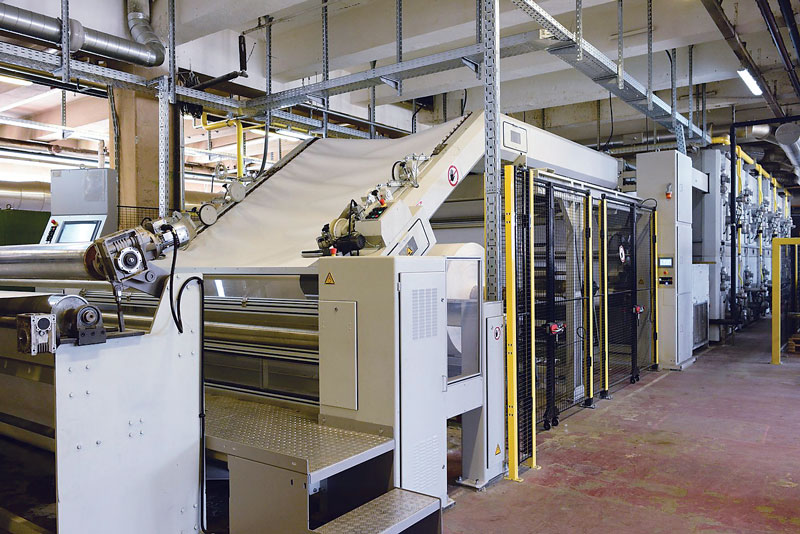
Brückner’s Power-Frame VNE multi-layer tenter frame features the company’s patented splitflow air
circulation system.

Germany-based Brückner Trockentechnik GmbH & Co. KG offers drying, coating and finishing machines for fabric, nonwovens, carpet and glass. In recent years, the company has heavily invested in digitization and Industry 4.0 technologies to increase productivity, improve quality and reduce resource use. One area of focus is on intelligent assistance systems to monitor machine settings that can be used to optimize production parameters. Such optimization “can increase production speed by up to 40 percent and/or reduce energy consumption by up to 30 percent,” according to Brückner.

The company also has invested heavily in developments for the denim sector. The Brückner Sanfor line POWER-SHRINK is particularly useful in denim finishing. The process compacts and stabilizes woven fabrics at speeds of up to 100 m/min, while imparting a shine and soft hand to the fabric. According to the company, large diameter compacting rollers extend the service life of the machine’s rubber belt; bearings are positioned outside the wet machine area to eliminate bearing corrosion; and an integrated rubber belt grinding unit can be operated using a menu to eliminate operator errors. An optional automatic shrinkage control system also is available.

Brückner also offers the Brückner Power-Frame VNE multilayer tenter that features the entry and exit on the same side, thus requiring only one operator per machine and less floor space for installation. According to the company, such multilayer tenters are suitable for finishing woven or dimensionally stable knits, nonwovens, needle felts, technical textiles or wool fabrics. The VNE dryer is equipped with Brückner’s patented split-flow air circulation system, and an alternating arrangement in each half compartment ensures optimum and uniform air circulation as well as thermal treatment of the fabric, according to Brückner. The machine’s lubricant-free transport chain offers the additional advantage of zero oil in the dryer’s interior, thus removing the potential of oil stains on the finished fabrics.

Germany-based Thies GmbH & Co. KG has introduced a new generation of T390 controllers for Industry 4.0 applications and interfacing appropriate MES systems. The latest version of the company’s Maintenance Manager software features the Condition Monitoring module. The software schedules, executes and controls all maintenance and servicing, including procuring spare parts and providing digital technical documentation, according to the company.

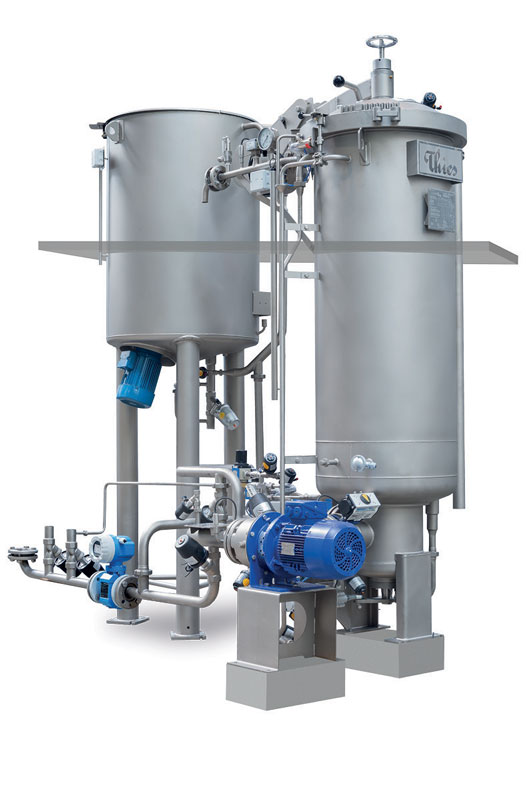
The soft-TRD SIII, the third generation of Thies’ universal dyeing machine, offers liquor ratios starting at 1:5 and is designed to run fabrics sensitive to processing — including wovens, knits and nonwovens — in a gentle manner. The machine can be configured with up to four chambers with maximum nominal loadings of 100 kg, 150 kg and 200 kg per chamber for versatility in production. According to Thies, free material flow and a low intensive transport zone coupled with a swimming material transport design guarantee relaxation and uniform rope treatment for a wide range of fabric types and weights.

The Thies iCone operates
with low liquor ratios starting at 1:3.6

The Thies iCone is used to bleach and dye fibers in a variety of forms including packages, warp beams, combed tops or flocks. The machine may be operated in a traditional manner using reciprocating liquor circulation, or may be operated using a single flow direction and ultra-short liquor ratio starting at 1:3.6.

Last year, Switzerland-based Benninger AG celebrated its 160th anniversary. The company specializes in continuous open-width treatment of knit and woven fabrics, and also offers systems for tire cord production. Some of the company’s latest textile offerings include the Benninger-Küsters CPB dyeing center — a salt-free cold pad batch dyeing process for knits and wovens; the Tempacta washing steamer for knitted fabrics; and the Benninger-Küsters Multipad for complex impregnation jobs.

The CPB process features the Benninger Küsters DyePad; as well as the original S-roller technology, which produces an even dyeing result across the entire fabric width.

The Tempacta washing steamer is designed for low-tension washing including diffusion washing. According to the company, the unit features a consistent counterflow water supply, and measures the degree of contamination in process in order to regulate the amount of fresh water needed to guarantee the lowest amount of water is used at the same time.

The new Benninger Küsters Multipad unit comes with an optional double impregnation feature that makes it suitable for both very lightweight knitwear and heavy denim and other fabrics in between. The Multipad may be used for cold bleaching and knitwear pretreatment, as well as denim over-dyeing and mercerizing.

Polyester, nylon or acrylic carpet yarns may be space dyed using Superba’s MCD/3 machine.

France-based Superba Sas, a Vandewiele company, recently launched the MCD/3 space dyeing machine for carpet yarns. The machine can handle a layer of 72 ends of bulk continuous filament or spun yarn. Dye is applied using a high-pressure spraying technique for even impregnation in a “one-pile/one-color” process. When paired with the TVP3 heat-setting line, the MCD/3 can space dye polyester or nylon yarns in up to six colors. Bicolored printing effects also can be achieved. In conjunction with Superba’s high capacity DL/5 heat setting line, the MCD/3 can also be used to space dye acrylic carpet yarns.

According to the company, benefits of the technology include:

  • Improved carpet coverage because the yarn dyed without tension for a bulky and round yarn;
  • Reduced production costs with no minimum lot size;
  • No wasted dyestuff;
  • Reduced water consumption;
  • No dyestuff migration; and
  • High color fastness.

When used with Superba’s new MF400 stuffer box, space dyeing, frieze application and heat setting can all take place in a single continuous process.

Austria-based J. Zimmer Maschinenbau GmbH’s (Zimmer Austria’s) Magnoroll is a multipurpose coating machine that offers endless possibilities through use of exchangeable modules. Liquids, pastes, lacquers and foams can be applied to a variety of substrates including traditional textiles, nonwovens, carpets, foils, glass, plastics. The Magnoroll can be modified for each customer depending on their coating needs.

Available modules include:

  • Magnoroll coating module for magnetic low add-on or magnetic direct roll coating;
  • Single or double screen coating module equipped with magnet roll rods or magnet blade squeegee;
  • Magnoknife Over-Roll or Over-Air coating module featuring a reversible high precision knife holder, and two knives each containing two blades;
  • Magnojet module for paste or foam coating in a closed system; and
  • Variopress module for stable and metastable foams.

The modules can be changed out in a few simple steps to minimize downtime.

Zimmer also markets the Magnoroll for pre- and post-coating in pigment digital printing processes for improved rubbing fastness. Using the Magnoroll to precoat the fabric removes the need to purchase an expensive preprepared substrate for digital printing.

Process automation equipment manufacturer Baldwin Technology Co. Inc., St. Louis, introduced the TexCoat 4G last year. This non-contact spray application system — which has its origins in a 35-year-old spray system used in the paper industry — can apply a variety of chemistries in a precise manner to either one, or both, sides of a fabric at the same time. The spray nozzles overlap slightly to ensure total coverage, but using smart technology, are programmed to cycle on and off to avoid overlapping spray that could cause striping. The technology does not employ a pad bath so there is no dilution of the chemistry, which solves the problem of tailing out. Also, because the system is totally enclosed, there is virtually zero chemistry waste or contamination. Instead of dipping fabric or padding a coating on, the fabric simply passes through nozzles in a controlled manner which results in a high-quality, uniform and consistent application. Clean-up is greatly simplified, and changeovers can be done quickly and efficiently via the fully automatic flushing system that performs a chemistry change in less than five minutes. A wide range of low-viscosity water-based chemistries, including water repellents, softeners, antimicrobials and more, have been effectively demonstrated to date with more developments in the works. Brands have taken notice of the sustainability and eco-friendly nature of the technology coupled with its flexibility. Baldwin recently completed several installations of the TexCoat in the United States.

The dyeing and finishing industry continues to make strides in developing technologies that make the processes more environmentally friendly and sustainable. Innovation in the sector is continuous and adoption of these technologies will create a more sustainable global textile industry.

September/October 2020
September/October 2020

Wise

T. Henderson Wise was promoted to president and COO of A.B. Carter Inc., Gastonia, N.C.

Germany-based Brückner Textile Technologies GmbH & Co. KG has named Michael A. Tuschak sales director, and Lars D. Hensen service director of the company.

Winston-Salem, N.C.-based HanesBrands has named Kristin L. Oliver chief human resources officer.

The Netherlands-based Teijin Aramid has appointed Isabelle Damen CFO. She replaces Peter ter Horst who was named Teijin Aramid CEO earlier this year.

Robert W. “Bob” Gore

Robert W. “Bob” Gore, the inventor of GORE-TEX® technology and chairman emeritus of the board of directors of W. L. Gore & Associates, Newark, Del., recently passed away at the age of 83. His 1969 discovery of expanded polytetrafluoroethylene (ePTFE) led to the development of Gore-Tex waterproof, breathable outerwear fabrics. Continued research in applications for ePTFE helped the company grow into a wide range of industries and turned Gore into a billion-dollar enterprise.

VF Corp., Denver, Colo., named Winnie Ma president, Greater China.

Jones Family of Companies, Humboldt, Tenn., has named Brian Trent director of Supply Chain, and Leonardo Franzinetti business analyst and IT resource.

The Crypton® CompaniesCrypton LLC and Nanotex LLC — based in Bloomfield Hills, Mich., has appointed John Edelman executive chairman of the board.

Orwig

Dan Orwig joined Peerless Clothing International, New York City, as president. He succeeds John Tighe who recently left the company.

Dr. Marina Crnoja-Cosic was appointed head of new business development and member of the management board at Germany-based Kelheim Fibres.

September/October 2020

Sponsors