H&M Selects Eastman Naia™ Renew For New Collection

Eastman Chemical Co., Kingsport, Tenn., reports fashion retailer H&M is the first company to introduce products made using Eastman Naia™ Renew cellulosic yarn. The fashion retailer selected Naia Renew for its Conscious Exclusive Autumn/Winter 2020 collection. Naia Renew is made using 60-percent certified wood fibers and 40-percent recycled waste plastics. The product — available in both filament yarn and staple fiber form — is fully traceable and certified to biodegrade.

“We’re delighted to collaborate with H&M as we work toward building a circular fashion economy,” said Ruth Farrell, global marketing director of textiles for Eastman. “Together, Naia and H&M are working toward a vision to make sustainable fashion accessible for all, playing active roles in conserving resources, fostering innovation and demonstrating a
passion for sustainability that will help transform our industry.”

November/December 2020


Color From Home: How The Textile Industry Can Manage Color Remotely

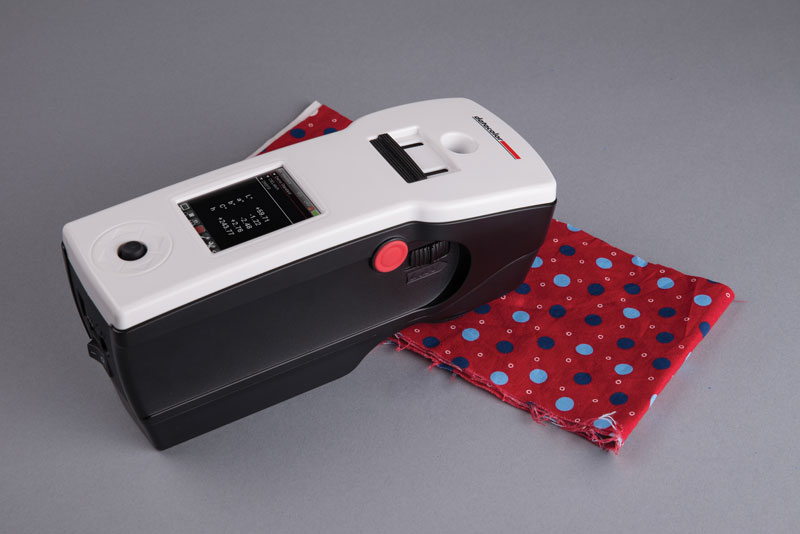
The Datacolor CHECK3 portable spectrophotometer provides high-precision color measurement performance, ideal for the formulation and quality control needs of color professionals.

Working from home complicates the color decision making process, but a digital workflow and portable technologies can help the supply chain successfully manage this process.

By Ken Butts

The coronavirus pandemic has impacted nearly every industry across the globe. As it continues, millions of workers are still working from home and most likely will continue to do so into 2021. The same goes for the textile industry, which was certainly not considered a remote work industry prior to this pandemic. Textile and apparel supply chains have spent most of 2020 adapting to the constraints of conducting business remotely.

Color decisions traditionally have been a collaborative effort requiring multiple physical samples and team meetings. Textile brands and mills, although now not working from their typical on-site and in-person environments, are still expected to make color decisions and keep production running without delays, all while maintaining efficiency and quality. As working environments continue to shift, the need for a fully digitalized supply chain in the textile industry that minimizes the need for physical samples has been magnified.

A digital color workflow encompasses everything from initial color selection by designers to the delivery of the final products to a store shelf, plus every step in between. Digitalization brings objectivity and efficiency to an otherwise slow and subjective process made more difficult by current conditions. With a digital workflow, it is possible to accurately and effectively evaluate color acceptability while working from a home computer, reducing the need for physical samples and high shipping costs to get samples to decision makers.

Those who already had a comprehensive digital color management strategy and digital workflow in place prior to the pandemic were able to meet the unique challenges of working remotely with less disruption and minimal down time. Those who did not already rely on a digital strategy had to quickly adapt to keep up.

However, the textile industry is finding ways to successfully manage color in this new age of remote work.

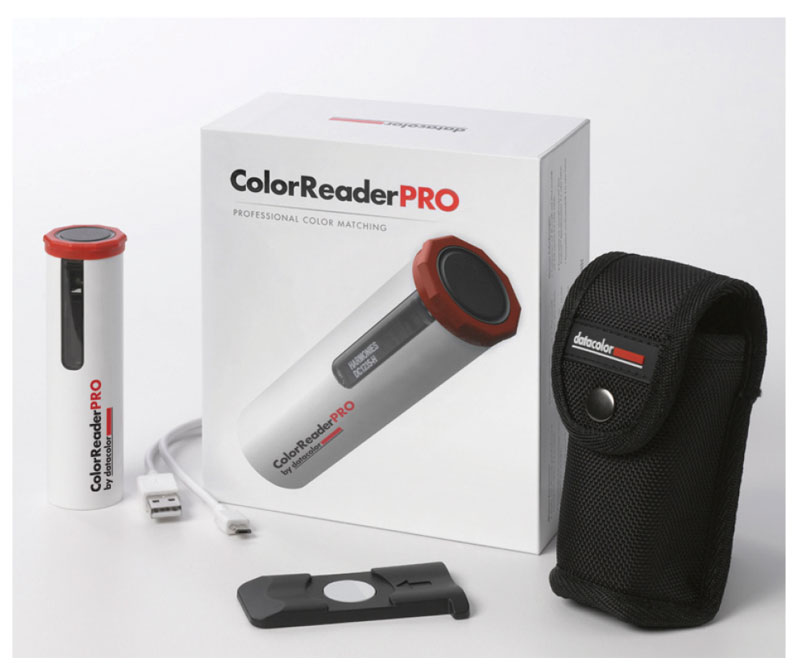
Datacolor’s ColorReaderPRO is an ultra-portable, Bluetooth® connected color selection device that provides on-the-go color lookup to digitize the process of selecting palette colors.

Measuring Color From Home

Measuring color and making important color decisions remotely can be challenging for those who are accustomed to using large benchtop spectrophotometers because they cannot easily be transported for use at home. But it is still important even from home to utilize state-of-the-art equipment to accurately measure color. Because of this, there is an increase in the popularity of sophisticated portable spectrophotometers that support decision making away from the office or mill. Portable spectrophotometers enable color measurements to be made anywhere in the world and instantly transferred across the supply chain to decision makers.

Many of today’s portable spectrophotometers are more accurate than ever before, making them ideal for use in remote work scenarios. Inter-instrument agreement (IIA) is critical to the remote color measurement process when using portable spectrophotometers. IIA refers to how closely two or more spectrophotometers measure the same color. The closer the IIA, the closer the readings will be to one another, and the more likely it is that instrumental color decisions will be consistent across products, materials and locations.

If a user operates a single spectrophotometer in a single location and does not share digital data, IIA is less important. But, when working in home offices and needing to make color decisions in multiple locations, it is essential that the instruments are in excellent agreement with one another. Many portable spectrophotometers have evolved to feature excellent IIA with their benchtop counterparts, making it possible to continue to accurately measure samples in the remote office.

In addition to having the right equipment on hand, it is critical that those measuring color from home follow instrument manufacturer recommendations for environmental conditions to ensure the instrument functions as accurately as possible. Maintain a room that is free of chemical vapors or smoke, and also keep a spectrophotometer, whether portable or not, away from direct sunlight because heating the instrument can lead to inconsistencies in sample measurement. Sample conditioning is also an important consideration — and one that may be a challenge to address in the home office — as some samples can show significant color change with shifts in temperature and humidity.

On-Screen Color Evaluation From Home

A potential challenge of elimination of physical samples is any uncertainty that might arise with making color decisions based solely on color measurement data. To support the decision making process, it can be very helpful to display the color of samples on a monitor.

For this process to be reliable, it is critical that the monitor be color calibrated and the lighting in the room be minimized. While monitors cannot display all of the colors that we can see — and some monitors are better than others — that does not mean they cannot be effectively used to support color decisions. Once the monitor is color-calibrated using appropriate technology, a virtual color development process can be implemented from design through to final product quality control.

Empowering Brands With Digital Color

An additional benefit of a digitalized supply chain is that it helps to speed up the textile development and manufacturing processes, making it possible to make product decisions at the point of manufacturing without heavy brand oversight. A digital workflow means the manufacturer can reject samples that they know are outside of specification and make revisions without going through multiple iterations of costly sample shipments. The manufacturer will immediately know if a sample meets the customer’s color expectation and avoid waiting days for a response.

Working from home is likely here to stay, and digitalization is the key to managing color in this age of remote work. Having a digital color management strategy in place has always been an important consideration in the textile industry; however, remote work has showcased the ways in which digital color management can increase speed, efficiency and accuracy across the globe. Digitalized workflows will not only prepare the industry to deal with future disruptions, but also position everyone to meet the future needs of the market. The supply chain will to continue to embrace digitalization and eventually accept it as the standard throughout the industry.


Editor’s Note: Ken Butts has more than 25 years of experience as a solutions consultant in the textile and apparel industry. While with Datacolor, he has analyzed existing product development processes and implemented effective color management solutions for more than 40 of the world’s most well-known retail/brand apparel companies and their global supply chains.


November/December 2020

Continental Structural Plastics’ Advanced Technologies Center Unveils Lightweighting, Battery Enclosure and Materials Innovations

AUBURN HILLS, Mich. — December 9, 2020 — Continental Structural Plastics (CSP), along with its parent company Teijin, today unveiled an innovative honeycomb Class A panel technology and an advanced, multi-material EV battery enclosure that can be molded in any number of CSP’s proprietary composite formulations. These component technologies were developed at the company’s new Advanced Technologies Center located on Harmon Road in Auburn Hills, Mich. This Advanced Technologies Center is CSP’s second R&D facility in the city.

The Advanced Technologies Center is a 47,500 square-foot facility of which 24,000 is dedicated to R&D efforts to develop next generation materials and processes to move CSP and Teijin beyond just SMC and into new markets and technologies. Equipment includes:

  • 4000-ton press with leveling and vacuum;
  • 750-ton press with vacuum;
  • 400-ton press w/ 10’ bed;
  • 6 thermolators;
  • 2 Fanuc Robotics; and
  • CMM.

The team at the Advanced Technologies Center currently includes 5 engineers and designers. CSP’s Advanced Technology Department, in combination with R&D and Product Development, is comprised of over 80 engineers, designers and scientists. Before CSP was acquired by Teijin, this facility was a Teijin R&D center, and is where the Sereebo® manufacturing process was developed. This is the process now in use to manufacture the PACE Award winning GMC Sierra Denali CarbonPro® pickup box — the industry’s first carbon fiber pickup box.

“We are developing technologies and processes here that leverage CSP and Teijin’s expertise in thermoplastic and thermoset composites, carbon fiber and manufacturing to provide our customers with new options for existing and future vehicle programs,” said Hugh Foran, executive director, New Business Development, New Markets & Technologies. “We can reduce weight while improving durability and occupant safety — all key features needed for autonomous, connected and electric vehicles.”

Honeycomb Technology

Following Teijin’s acquisition of CSP, the Advanced Technologies Center began transitioning to include broader R&D capabilities. The first of these projects is the new honeycomb manufacturing process which produces ultra-lightweight Class A panels. Considered a “sandwich” composite, these panels use a lightweight, honeycomb core, clad with natural fiber, glass fiber, or carbon fiber skins that are wetted with PUR resin. This process enables the molding of complex shapes and sharp edges, and results in panels that offer very high stiffness at a very low weight.

Multi-material Battery Enclosure

CSP is currently in development and production of more than 34 different electric vehicle battery box covers in both the US. and China. However, to expand their offering and provide customers with a superior battery enclosure, CSP and Teijin have developed a full-sized, multi-material battery enclosure featuring one-piece composite cover and one-piece composite tray with aluminum and steel reinforcements.

Automakers face a number of challenges with current multi-piece steel and aluminum EV battery enclosures, including the overall weight of case (typically more than 1,000 pounds), and the need for multiple welds, fasteners and bolts which can ultimately result in leaks. By molding the cover and the tray each as one piece, CSP has created a system which is easier to seal and can be certified prior to shipment. The company has two patents pending for its innovative box assembly and fastening systems.

The company also developed a mounting frame utilizing a structural foam for energy absorption. This enables a reduced frame thickness and weight, while improving crash performance. Additional benefits of the multi-material battery enclosure include:

  • Non-conductive;
  • Can be molded in complex shapes;
  • Less complexity in tooling;
  • High strength;
  • Dimensional stability;
  • Mold-in sealing features;
  • Ability to mold-in shielding, including EMI and RFI protection;
  • Corrosion resistance; and
  • Reduced tooling cost.

All told, the CSP multi-material battery enclosure is 15-percent lighter than a steel battery box. Although it is equal in weight to an aluminum enclosure, the CSP enclosure offers better temperature resistance than aluminum, especially if the phenolic resin system is used. Additionally, the one-piece design for the tray has no through holes, so no sealing or sealant are required. This not only eliminates the chance of leaks, it reduces overall production costs and complexity.

Materials Make it Possible

Many of these benefits could not be achieved without the superior composites chemistry developed by CSP’s materials R&D team. This assortment of advanced composites allows customers to select the formulation for the cover and/or base that best meets their specifications. CSP’s battery enclosure materials options include:

  • Traditional high-fill polyester/vinyl ester ATH system that uses conventional SMC chemistries, is easily adapted to existing tools and will give excellent baseline performance in the right design.
  • Intumescent system utilizing similar chemistry to traditional SMC, but with better flammability and thermal runaway performance.
  • Phenolic system which is ideal for high temperature applications where parts must meet fire safety, smoke emission, combustion and toxicity requirements. A phenolic system will have excellent flame retardance, heat and chemical resistance, and electrical non-conductivity characteristics.

Each of these chemistries can be adapted utilizing different fiber types or formats (e.g. glass/carbon/blended/other, chopped and/or continuous), and any can be formulated to achieve the most stringent VOC requirements.

“The work being done at the Advanced Technology Center, combined with the materials advancements being achieved at our R&D facility at headquarters, is enabling CSP to maintain our leadership position in advanced composites, and establish us as a global player in the multi-materials field,” said Steve Rooney, CEO of CSP. “Together with the carbon fiber and materials expertise that Teijin brings, we are developing light weight solutions that enable our customers to think outside the box when it comes to vehicle design.”

Posted December 10, 2020

Source: Continental Structural Plastics, a Teijin Group company

HanesBrands Appoints Cheryl K. Beebe to Board of Directors

WINSTON-SALEM, N.C. — December 9, 2020 — HanesBrands, a global marketer of branded everyday basic apparel, today announced that financial executive Cheryl K. Beebe has been appointed to the company’s Board of Directors.

With the appointment of Beebe, whose term runs until the 2021 annual meeting of stockholders, the HanesBrands Board has nine members. Beebe will serve on the Board’s audit committee.

“Cheryl brings extensive experience in global strategy and a deep background in all aspects of financial operations,” said Steve Bratspies, chief executive officer, HanesBrands. “Her knowledge will be particularly valuable as we build our strategy to unlock long-term growth and put the consumer at the center of everything we do.”

Beebe’s prior leadership experience includes a decade as executive vice president and chief financial officer of Ingredion, a leading global ingredients solutions provider, where she was responsible for all aspects of the company’s financial operations. Beebe also had responsibility for the global IT and procurement functions and played a key role in setting the strategic direction of the company.

In more than 30 years with Ingredion, Beebe held a number of other leadership positions in the company, including senior advisor to the CEO, vice president finance and corporate treasurer. She is a current member of the board of directors of Packaging Corporation of America (PKG) and The Mosaic Company (MOS). She also serves as a member and chair of the Board of Trustees for Goldman Sachs Asset Management GSTII funds and a member of the Board of Trustees of Fairleigh Dickinson University, New Jersey’s largest private university.

“We’re pleased to have a leader with Cheryl’s record of financial leadership and strategic insight join the team,” said Chairman of the Board Ronald L. Nelson. “We welcome Cheryl and look forward to her contributions and leadership as we transform HanesBrands.”

Beebe holds a bachelor’s degree in accounting from Rutgers University and a master’s degree in business administration from Fairleigh Dickenson University.

Posted December 10, 2020

Source: HanesBrands

Levi Strauss & Co. Appoints Elliott Rodgers To Board Of Directors

SAN FRANCISCO — December 9, 2020 — Levi Strauss & Co. announced today that its board of directors has appointed Elliott Rodgers as a member of the board, effective immediately. Rodgers currently serves as chief information officer of Ulta Beauty Inc. and has more than a decade of experience in the retail industry.

“Elliott has deep knowledge of ecommerce, digital transformations and how to drive operational excellence in today’s omnichannel supply chain,” said Stephen C. Neal, chair of the board of Levi Strauss & Co. “His expertise in all of these areas will be invaluable as we focus on direct-to-consumer and continue to look for innovative ways to get our products to our consumers when, where and how they want them.”

Rodgers became chief information officer of Ulta Beauty in September after having held several supply chain roles since joining the company in November 2013, most recently serving as chief supply chain officer. Prior to joining Ulta Beauty, Rodgers was director of operations, Target.com & Mobile, at Target. In this role, he was responsible for Target’s ecommerce website and fulfillment operations and co-led Target’s omnichannel supply chain pilot programs. Previously, Rodgers held operational leadership roles spanning retail, financial services, and logistics at Target, Citibank and the United States Army.

“I am honored to join the board at Levi Strauss & Co., a company I’ve long admired as a leader of industry and culture,” Rodgers said. “I hope to complement the strength of the current board of directors and management team with my experience and passion as we all work toward the company’s continued success.”

Rodgers holds a B.S. in political science from the United States Military Academy at West Point and an MBA from the Harvard Business School.

Posted December 10, 2020

Source: Levi Strauss & Co

Gerber Technology And Burlington Medical Form Long-Term Partnership To Support Burlington Medical’s Digital Transformation Initiative

NEW YORK CITY — December 10, 2020 — At the height of the COVID-19 pandemic, when all elective surgeries were cancelled and healthcare facilities were limiting outside visitors, Burlington Medical knew they had to pivot production in order to avoid layoffs and keep their community safe. Burlington Medical, a manufacturer of radiation protection, leveraged Gerber Technology’s AccuMark®, AccuMark Made-to-Measure, and AccuNest™ as well a GERBERspreader™ and GERBERcutter® to quickly pivot their supply chain. They also utilized Gerber’s PPE Task Force to retool their supply chain in about three weeks. In recent weeks, Burlington has continued their journey towards digital transformation by implementing 3DLOOK’s patented body scanning technology to their current AccuMark workflow.

“When crises, such as the COVID-19 pandemic happen, manufacturers need to be prepared to adapt their production,” said Mohit Uberoi, CEO of Gerber Technology. “We are gratified and proud to see that Burlington Medical was able to not only do their part to keep their community safe during the pandemic but also keep their doors open and ensure their employees still have jobs.”

With support from Gerber, Burlington Medical was able to leverage production-ready patterns and the latest technology to quickly transition to producing a variety of PPE including: surgical and cloth masks, disposable gowns, face shields, protective eyewear, intubation boxes, and disinfecting wipes. At their peak, the Virginia-based company was producing 15,000 surgical masks a week. Additionally, they were able to save over 100 jobs and even hire more workers.

“If there’s anything this pandemic taught us it’s that we need to invest in the latest technology so that we can take people out of the equation and remain agile,” said Murry Pitts, CEO of Burlington Medical. “I’ve been a Gerber customer for over 20 years and am very impressed with their team and the ability they bring to the table.”

Burlington Medical was able to easily pivot back to their normal production by August and has since invested in new technologies that will allow them to easily meet market demands. By leveraging 3DLOOK’s body scanning solution, Burlington Medical will get precise body measurements remotely with just two photos and then seamlessly import them into AccuMark. This new workflow will allow the company to create production-ready radiation protection garments that fit perfectly.

Posted December 10, 2020

Source: Gerber Technology

Osmotex: New Revolutionizing Self-Sterilizing Technology

ZÜRICH — December 10, 2020 — Osmotex has developed the Osmotex Steriliser Technology that can make textiles and personal items virus and bacteria free. The company has now launched the first series of masks for early adopters at the crowdfunding platform Indiegogo. With the Covid-19 outbreak and other virus infections, the market for sterilizing facemasks and personal items is increasing and Osmotex considers its solution a real breakthrough.

“With the Covid-19 pandemic, we saw new opportunities for our proprietary osmosis technology. To help make surfaces virus and bacteria free, we have developed the Osmotex Steriliser Technology which we are working to rapidly bring to the market,” said Joacim Holter, chairman of the board at Osmotex.

“In addition to the very high sterilizing effect, the most important benefit of the technology is the fact that the effective sterilizing happens within a few minutes, says Holter.

Osmotex Steriliser Technology is a unique and ground-breaking technology based on Osmotex’ core commercialized technology, electronically controlled moisture migration in fabrics based on an electro-osmotic and electro-chemical process. By applying an electric puls, the Osmotex Steriliser technology effectively sterilize the textile and any objects in direct contact within minutes. The technology is already proven to have a strong sterilizing effect.

“Over the past months, we have worked hard with intensive testing to further develop the technology. Internal tests have continuously shown instances of disinfecting agents able to exterminate virus and bacteria, and independent studies from the Zürich University for Applied sciences (ZHAW) confirm a 99.999-percent efficacy on virus and 100-percent efficacy on bacteria,” Holter said.

The technology stimulates a controlled interaction of moisture and electric pulses which form the highly disinfecting compounds Ozone (O3) and Hydrogen Peroxide (H2O2). The compounds are broadly used for sterilization in different industries and medical treatment and cause an active anti-viral and anti-bacterial effect inside and on the surface of a textile.

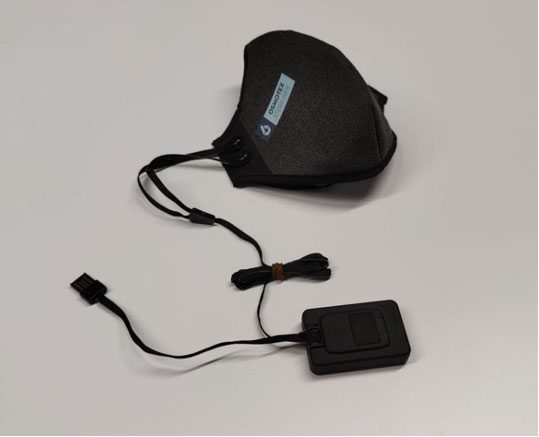
The first product with the Osmotex Steriliser technology integrated are re-usable facemasks. Additionally, Osmotex plan for launching textile bags for sterilization of personal items. The applications will be re-usable and driven solely with moisture and an electric pulse. There are no chemicals added and the technology is environmentally friendly. The facemask will consist of Osmotex Steriliser textile with a N95 filter added for extra safety, electronic connectors and a control-box with rechargeable battery.

Being based on electrochemical reactions also opens up the development for new functionalities and applications. As a result, Osmotex will explore how the technology can be applied in other industries in the future. Including other touch-surfaces, such as seats and interior in public transport and sheets and mattresses to hospitals and hotels in the long term.

Posted December 10, 2020

Source: Osmotex AG

Berry Global On Track For North American Capacity Expansion For Sustainable, Breathable Films

EVANSVILLE, Ind. — December 10, 2020 — Berry Global Group Inc. announced today that phase one of the three phase, $20 million Sof-Flex™ film expansion plan is on track to be operational in December 2020. This announcement comes as an update to its January 2020 announcement to expand its hygiene, healthcare, and specialty films platform in North America. The expansion will span Berry’s United States network of breathable film producing plants and is scheduled to be completed by 2022.

As reported earlier this year, the company’s investment addresses both extrusion and printing capabilities, in support of growing breathable film and sustainable product market demands in the North American region. The investment will include added capacity for Berry’s proprietary Sof-Flex technology and the addition of the newest flexographic printing equipment. The Sof-Flex technology allows for the sustainable, down-weighting of breathable films while maintaining best-in-class performance.

“We are excited to expand our Sof-Flex breathable film capacity. Our patent protected technology enhances hygiene and healthcare products across the globe. From sustainable and cost effective solutions through light-weight product designs, to new breathable functionality in incontinence products, Sof-Flex enables our customers to achieve their most critical product performance objectives.” said Robert Weilminster, executive vice presient and general manager, for Berry’s hygiene markets in the United States and Canada.

In support of new business awards beyond the scope of the three phase expansion plan, Berry is pleased to also announce the investment and start-up of a second flexographic printing line with unique embossing capabilities in 2020.

Berry announced its sustainability strategy, Impact 2025, last year. In alignment with this strategy, the company will focus on three key sustainable product improvement areas in hygiene — light-weighting, sustainable materials, and designing products that are easily recyclable, reusable, or compostable. The expansion of Berry’s down-weighted, breathable films supports this strategy by reducing unnecessary materials as well as facilitating the use of sustainable raw materials without compromising product performance.

Posted December 10, 2020

Source: Berry Global Group, Inc.

LMI Stands Apart From Its Competition As The First In Latin America With An EFI VUTEk FabriVU 340i Soft Signage Printer

FREMONT, Calif.— December 10, 2020 — Already the owner of five EFI™ VUTEk® machines, Mexico City-based Laboratorio Mexicano de Imágenes (LMI) has expanded its printing capabilities with a sixth, becoming the first Latin American company to install an EFI VUTEk FabriVU 340i printer from Electronics For Imaging Inc. The 3.4-meter dispersed dye-sublimation inkjet printer puts LMI ahead of the competition with high production capacity, speed and print quality. LMI also benefits from the printer’s differentiating features, such as online fixation — an innovative technology that eliminates the need to use a separate process to create soft signage on textiles.

With 25 years of experience, more than 200 employees and a philosophy based on excellence, innovation and being close to the customer, LMI has a strong market presence and invests in new technologies to continue being competitive. “Our mission as a company is to always be cutting edge, offering quality products, and the purchase of the FabriVU underscored this commitment. We are proud to offer complete solutions that exceed expectations,” said Javier Gómez, spokesperson for LMI.

With customers in the B2B and B2C market requiring a broad range of products — from basic photographs to campaigns for brands such as Vans® — LMI has a strong presence in the publicity, art and decoration sectors. As a leader of the graphics sector that makes every effort to respect its clients’ budgets and delivery times, the company has won over the many agencies, museums, artists, architects and designers it has in its customer portfolio.

Market demand

Gómez described the moment his company realized the need to purchase technology that would respond to new demands. “We spent a lot of time working with classic sublimation printing, on paper and with a heat press, but the market has grown and demands more,” he said. “We started to focus our efforts on digital marketing, and we began to receive a lot of new orders.”

The company consulted with a local authorized EFI distributor, TSG, S.A. de C.V., about its soft signage needs. TSG, headquartered in Santiago de Querétaro, Mexico, sold the VUTEk FabriVU 340i to LMI.

LMI’s new printer delivers high efficiency on premium soft-signage textile graphics, with speeds up to 500 square meters per hour and print resolutions up to 2,400 dots per inch. It is the only production-level solution in its class that offers direct-to-fabric production and in-line sublimation without a separate heat press. VUTEk FabriVU printers — which are also available in 180- and 520-cm widths — use aqueous dye-sublimation inks from EFI.

Few printers achieve output equivalent to the EFI VUTEk FabriVU 340i, which offers high speed, an industrial build and high image quality. “Our products feature high-impact color that attracts attention, and this is the excellence the customer is seeking,” Gómez said. “We do not yet have ROI and investment recovery figures for the machine because, unfortunately, we had to suspend production with the pandemic, but the increase in productivity is evident and visible. Other industry companies that consult with us have also noticed.”

Support and training

The support of the EFI team and EFI’s attentive training left an impression on Gómez. “EFI started the work with some preliminary visits and, later, the process took an educational approach,” he said. “It is not sufficient to just have better technology, but the support is important so operators can fully absorb everything that the machine is capable of producing. From the board to our vendors, everyone learned about the equipment.”

According to Gómez, this concern for educating the market is a differentiating feature of EFI, which is reflected in the production and profitability of LMI’s work on the printer. “Because they are well trained, our employees are capable of offering differentiated products and we are capable of producing a lot more. In addition to training the teams, EFI support has helped our customers, and this exchange offers more security in carrying out any project,” he stated.

Future projections

LMI has bold plans to increase its growth and productivity with the printer. “We need to take a step forward sometimes and invest in new technologies because they make the difference, and customers are excited by being able to carry out different projects with the equipment,” said Gómez. “The investment has already borne fruit!

“My suggestion for smaller companies,” he added, “is to make a shared purchase on a machine because, like LMI, they can have a positive yield. We are optimistic despite the economic instability at the moment, and we are investing now to reap the rewards when the market stabilizes.”

Posted December 10, 2020

Source: EFI™

Tearfil Chooses Dupont™ Sorona® Fiber For Sustainable And High-Performing Staple Yarn

WILMINGTON, Del. — December 10, 2020 — DuPont™ Sorona® and the Portuguese spinning mill Tearfil today announced a collaboration to develop sustainable and high-performing staple yarns for the apparel industry. Tearfil is committed to creating smarter, cleaner and more sustainable yarns, and choosing Sorona® was a natural solution for the spinning mill.

“We believe collaboration is the key ingredient to creating the best products. We recognize that our magic is only possible thanks to our trusted fiber and technology partners. Sustainability or performance: why not have it all? Through working with the Sorona team, we prove how future-oriented high-performance textiles can also be eco-friendly and eco-conscious,” said Maria de Belém Machado, CEO at Tearfil.

Sorona is made up of 37 percent renewable plant-based ingredients. Offering a sustainable alternative to traditionally non-recyclable materials, the eco-efficient fiber is the choice of many renowned brands, such as The North Face, Helly Hansen and Stella McCartney. Sorona® features many performance attributes, including softness, stretch, shape recovery, flexibility, ease-of-care and stain-resistance without the need for topical treatments. From flexible yoga wear to denim to everything in-between, Sorona can make any textile look good, feel good and do good.

The Sorona fiber turns a formerly chemically-based process into a biological one, using 30 percent less energy and releasing 63 percent fewer greenhouse gas emissions than Nylon 6. Sorona is also a member of the Textile Exchange, The Sustainable Apparel Coalition and the Ellen McArthur Foundation. It is a USDA certified bio-based product and received OEKO-TEX® Standard 100 Certification.

Posted December 10, 2020

Source: DuPont Biomaterials

Sponsors