CARY, N.C. — May 20, 2021 — INDA, the Association for the Nonwoven Fabrics Industry, highlights global and regional insights from industry thought leaders on the future of nonwoven and engineered materials supply, production capacity and demand at the triennial IDEA® conference program March 28-31, 2022, in Miami Beach, Fla.
The conference program will address the pandemic impacts on the global nonwoven supply chain and recovery for China, South America, Asia, North America, and Europe from a diverse group of presenters from Fitesa, INDA, EDANA, China Nonwovens and Industrial Textiles Association (CNITA), and Asia Nonwoven Fabrics Association (ANFA).
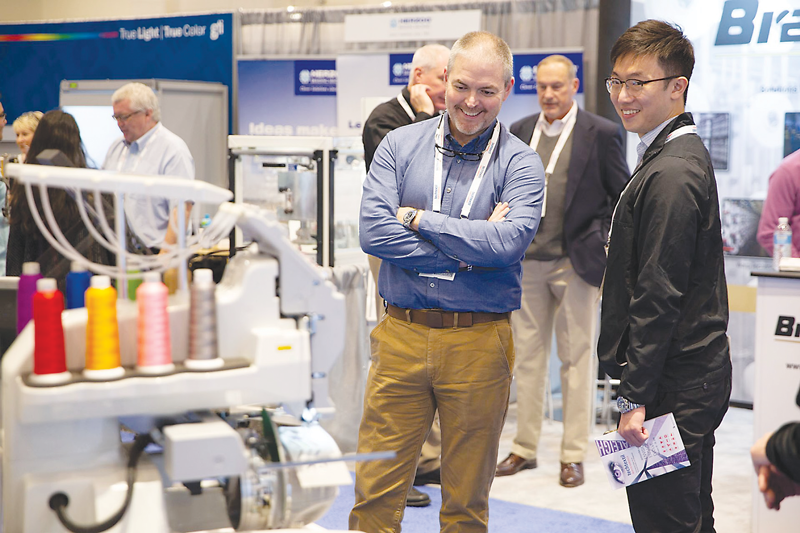
IDEA22 is the World’s Preeminent Event for Nonwovens & Engineered Fabrics and expected to attract more than 6,500 senior-level delegates and more than 500 exhibitors from myriad industry sectors, including absorbent hygiene, wipes, filtration, medical/surgical products including personal protective equipment, home & office furnishings, transportation, geosynthetics and building construction sectors from over 60 countries.
The 2022 event marks the 21st anniversary of IDEA, with the show originating in 1971. Exhibition and registration details are available here.
Other Highlights
IDEA® Achievement Awards will honor brilliant innovations in the nonwovens and engineered materials industry across six categories on March 29, 2022. INDA in partnership with Nonwovens Industry magazine will jointly present the awards with emcee hosts Dave Rousse, president of INDA, and Rod Zilenziger, president/owner of Rodman Media Corp.
The IDEA®22 Achievement Awards categories include:
IDEA® Sustainability Advancement Award;
IDEA® Equipment Achievement Award — Best New Equipment Introduction;
IDEA® Roll Goods Achievement Award — Best new roll goods introduction;
IDEA® Raw Material Achievement Award — Best new fiber/raw material introduction;
IDEA® Short-Live Product Achievement Award — Best new disposable product using engineered fabrics; and
IDEA® Long-Life Product Achievement Award — Best new durable product using engineered fabrics.
Visit https://www.inda.org/awards/IDEA-Achievement-Award.html for full details. IDEA will also offer a series of short course training opportunities called “Nonwoven Essentials,” led by industry experts. Courses include: The basics of nonwovens, industrial wipes, consumer wipes, absorbent hygiene cores, and patent searching. Each course provides a detailed overview designed to give newcomers basic skills or to enhance their knowledge about patents for new business strategies, for details visit: https://www.ideashow.org/training.html
As part of the registration fee, conference and short course participants also receive an exposition hall pass to connect with exhibitors showcasing their latest innovations and technologies on the IDEA show floor.
For full details about the conference, short courses, or to register, visit www.ideashow.org
Posted May 20, 2021
Source: INDA, the Association of the Nonwoven Fabrics Industry
WASHINGTON — May 20, 2021 — The National Retail Federation (NRF) today joined eight other business organizations to release “Imports Work for American Workers,” an economic impact study which found that imports support more than 21 million American jobs.
The study focuses on the net impact of imports on U.S. jobs — including statistics on sectors such as retail, apparel, transportation, manufacturing and consumer technology. The study also looks at how imports support jobs in states across the U.S. as well as trade policy initiatives pending before Congress and the administration with the potential to preserve or diminish import-related jobs.
“Imports are a vital component of the U.S. economy,” said Jonathan Gold, NRF Vice President of Supply Chain and Customs Policy. “Not only do they expand the product market and lower the overall price of goods for consumers, but they also help create and support millions of American jobs.”
Among the key findings:
Imports support more than 21 million American jobs across the country, including a net positive number in every U.S. state. The 10 states accounting for the largest number of import-related jobs are California, Florida, Georgia, Illinois, New Jersey, New York, Ohio, Pennsylvania, Texas and Virginia.
Imports from key trading partners — including Canada, China, the European Union and Mexico — support a net positive number of U.S. jobs.
Import-related jobs are good jobs that pay competitive wages. Nearly 8 million of the jobs related to importing are held by minorities and 2.5 million jobs are held by workers represented by unions.
The vast majority (96 percent) of companies who import are small or medium-sized businesses.
U.S. trade policies, many now pending before Congress and the administration, have the potential to both support and hurt these jobs.
The American Apparel and Footwear Association, the American Chemistry Council, the Consumer Technology Association, the National Foreign Trade Council, the National Retail Federation, the Retail Industry Leaders Association, the U.S. Chamber of Commerce, the U.S. Fashion Industry Association and the U.S. Global Value Chain Coalition commissioned the study, which was prepared by Laura M. Baughman and Dr. Joseph F. Francois of Trade Partnership Worldwide, LLC.
The study is being released during “World Trade Week” as part of “World Trade Month” to highlight the essential role that imports play in the U.S. and global economy.
The Electrospinning Co. has developed a fully automated process for attaching biomedical textiles to heart valve frames
Confluent Medical Technologies Inc., Scottsdale, Ariz., has made a strategic investment in The Electrospinning Co. Ltd., an England-based company offering biomaterials development and manufacturing services. Electrospinning has developed a proprietary electrospinning process that has applications in the structural heart biomedical market and can attach biomedical textiles to heart valve frames in a fully automated process. This technology pairs with Confluent’s nitinol metal frame and biomedical textile knowledge to expand design options for Confluent’s customers.
“The investment In Electrospinning reinforces Confluent’s strategy of applying materials science to medtech innovation,” said Dean Schauer, CEO and president of Confluent Medical. “This partnership creates an opportunity for our two companies to facilitate further expansion of innovative structural heart products on behalf of our customers.
Ryzing Technologies LLC, Staunton, Va., is expanding its facility with a $149,000 investment that is expected to create 31 new jobs. Ryzing offers textile-based engineering solutions including engineered textiles, rigid inflatable structures and rapid prototyping.
Customers of the company include industrial and commercial clients as well as the U.S. military, allied forces and governmental clients. The company was established in 2015 after its founders, Ryan Gundling and Ryan Long, took part in Staunton’s Bright Rewired Business Plan Competition. The company was awarded a Phase II Small Business Innovation Research grant from the U.S. Army Natick Soldier Research, Development and Engineering Center in 2017, which helped the company develop its adjustable, reusable platform for expeditionary military shelters.
“Supporting the growth of Virginia’s small businesses is a top priority, and we are thrilled that the expansion of Ryzing Technologies will result in 31 new highly-skilled positions,” said Virgina Governor Ralph Northam. “We commend the City of Staunton for fostering an environment of innovation and entrepreneurship where companies like Ryzing Technologies can develop pioneering solutions for a wide range of industries, including the military.”
“Ryzing Technologies was started five years ago in Staunton for two reasons: the founders personally saw value for their families to live in the area and were confident the area had the amenities required to attract the right talent to grow a successful business,” said Ryan Gundling, Cofounder and CEO of Ryzing Technologies. “This has been accurate, and we have put together an incredible team. … Virginia has been an incredible place to start a business, and we are excited to be expanding to create more jobs for the area.”
The Senate Homeland Security and Governmental Affairs Committee recently passed the bipartisan legislation introduced by U.S Senators Rob Portman (R-Ohio) and Gary Peters (D-Mich.) Their Make PPE In America Act aims to strengthen the onshoring of personal
protective equipment (PPE) in the United States by requiring federal agencies to issue long-term contracts for U.S.-made PPE.
“The ongoing COVID-19 pandemic has made it evident that the American people should not have to rely so heavily on foreign countries for personal protective equipment, and that’s why we must bring PPE production back to our shores,” said Senator Portman, Ranking Member of the Senate Homeland Security and Governmental Affairs Committee. “When I talk to PPE manufacturers about re-shoring this production to America, the number one thing I hear about is the need for long-term contracts. Multi-year contracts give producers the certainty to know that their investment in the United States will be worth it because the government will be there to buy the PPE they produce.”
“I have long raised the alarm that our overreliance on foreign manufacturers for masks, gloves and medical devices is a serious national security concern,” said Senator Peters, Chairman of the Senate Homeland Security and Governmental Affairs Committee. “Due to ongoing efforts by the Biden Administration to boost PPE production, we are making progress, but there is more work to do. I am pleased this commonsense legislation, which will create jobs and improve our response to the ongoing and future pandemics, has advanced in the Senate and I will continue fighting for its passage into law.”
The Washington-based National Council of Textile Organizations (NCTO) thanked the committee for adopting the act.“This legislation will incentivize investment in and the viability of domestic PPE manufacturing, ensuring our nation remains prepared for future crises,” said NCTO’s President and CEO Kim Glas.
This issue of Textile World attempts to capture the breadth of the textile industry’s burgeoning focus on sustainability.
The issue was originally planned as a man-made fiber industry focus with recent developments, technology and a company profile. But as editorial started to take shape, it became clear that the sustainability theme was going to steal the show.
So, editors shifted gears. The industry’s response to Earth Day, a focus on sustainability initiatives, new green products and the ever more present corporate sustainability reports became central to the issue.
As one peels back the layers, there is a lot of activity in the sustainability space. It appears that consumers and brands are creating a demand for manufacturers to pursue greener technologies and manufacturing methodologies — and consumers want to know about them.
It is no longer about a good recycling story, but about reducing the entire carbon footprint. And when one thinks about it, that has real implications. How are manufacturers powering their operations? What are the impacts on employees and the communities within which they work? What is the lifecycle of the products they make and how can that be improved? What is the environmental impact and how can waste be prevented?
These are all questions to which textile companies are paying attention.
It also is apparent there is a trend in forming partnerships. Researchers and manufacturers, and manufacturers and brands, seem to find success in aligning their sustainability focus for maximum impact.
As highlighted in “Sustainability In Fiber Manufacturing” in this issue, “A circular economy cannot be achieved by acting alone,” stressed Angelo Radici, president of RadiciGroup. “As upstream players in the supply chain, we have always tried to share our knowledge of materials and deliver solutions featuring both better performance and respect for the environment. Furthermore, it is also crucial to find customers who are equally sensitive to these issues and can become strategic partners in the development of innovative and sustainable solutions. With Macron [an apparel brand with which they are partnering], we have worked as a team to create winning sports socks, because they are made from recycled materials, using all-Italian technologies, and are the result of a zero-kilometer, measured and traceable production and supply chain.”
It’s not just with Radici — this trend is playing out through much of the industry. Sustainability seems to be a neutral goal with broad support and a wide array of proponents.
It is not new in textiles, but the consumer and brand support have taken it to a place where real and tangible investments and practices are taking hold. No longer is it at topic of fringe environmentalists — it has entered the mainstream.
Sustainability initiatives in textiles face challenges, but they aren’t happening in a vacuum. If those achievements are rewarded by brands and consumers, that is all the positive motivation necessary to make sustainability goals front and center.
The new Aqualung XSCAPE wetsuit. Photograph courtesy of Alicia and Jim Ward/Aqualung
Aqualung’s new XSCAPE collection was designed with the environment in mind from the sustainable fabric choices down to the eco-friendly packaging.
By Rachael S. Davis, Executive Editor
France-based Aqualung, a global designer and manufacturer of dive and water sports gear, just launched the XSCAPE collection comprised of a wetsuit, rashguards and leggings
for water sports including snorkeling, freediving and paddling.
The 4+3 millimeter wetsuit is designed to be thicker in places where additional thermal protection is required, but flexibility is not an issue, such as in the torso; and slightly thinner in the arms, legs and armpits to increase flexibility in those areas of the body. The suits are for warm waters between 20 and 28°C.
The company’s goal was to create the “ultimate eco-friendly wetsuit.” With that in mind, Aqualung selected Yulex® rubber instead of traditional neoprene. The composite wetsuit material features the Yulex natural rubber core layer, which is laminated to XFlex™ polyester fabric using a water-based Aqua ™ glue. The XFlex fabric is made from 100-percent recycled material.
“Traceability in sustainability and confidence in high performance products led us to choose Yulex,” said Catherine Botalla, Wear R&D manager, Aqualung. “Yulex produces natural solid rubber from FSC®-certified forests [Forest Stewardship Council], meaning there is not deforestation, no pesticides and no human rights violations. The Yulex rubber we use is also cleaned from impurities, has little to no odor, improved elongation and protects against type 1 latex allergy.”
Additionally, the XSCAPE wetsuit comprises a ThermoShield™ chest panel — a fleece layer strategically placed on the chest for additional warmth; and SupraTex™ kneepads, for flexible, high-abrasion resistance. The wetsuit is constructed with double-glued, double-thread stitched seams that are sealed inside the suit for comfort and to prevent bursting.
Aqualung’s XSCAPE collection also features a rash guard and leggings for women. Photograph courtesy of Alicia and Jim Ward/Aqualung
The XSCAPE collection includes a coordinating long-sleeved rashguard and matching leggings for women, as well as a short-sleeved and long-sleeved rashguard for men. The rashguards, which may be worn as an additional layer under the wetsuit, protect from sunburn as well as jellyfish stings. The ultraviolet protective top and leggings are 85-percent polyester and 15-percent spandex, with the chloride-resistant polyester produced from 100-percent recycled plastic bottle material.
All products come in plastic-free packaging and carry recycled cardboard hangtags.
“Aqualung is committed to using environmentally-friendly materials and processes whenever possible to help reduce our carbon footprint, and we made design choices to ensure the XSCAPE collection was as sustainable as possible,” said Laurent Boury, senior vice president of Brands at Aqualung Group.
“The XSCAPE collection continues Aqualung’s legacy in innovation, and their tireless work to create the most forward thinking and eco-conscious dive company in the world,” said Aqualung global ocean ambassador Philippe Cousteau Jr., the grandson of one of Aqualung’s original founders, Captain Jacques-Yves Cousteau. “We all have the power to change the world with the choices we make, and the XSCAPE sets the new standard for wetsuits and rash guards that are stylish, functional and sustainable.”
For more information about Aqualung’s XSCAPE collection, visit aqualung.com
Nearly three quarters of manufacturers and distributors are optimistic about their business prospects in the next six months, according to a new industry report from Sikich LLP, a global company specializing in technology-enabled professional services. Seventy-two percent of respondents ranked their level of optimism at a seven or higher, on a scale of one to 10, in Sikich’s Industry Pulse: Manufacturing and Distribution. The survey also found that more than half of manufacturers and distributors are looking to expand their workforce in the next six months.
Sikich’s report is well in line with the recent optimism shown by spinners and others in the U.S. textile industry. “It been a dark time — especially at the start,” said one executive about the global COVID-19 pandemic. “But, beginning mid-year or so last year, things began to pick up, and we were able to salvage many of our initial goals. Now, with an ever-increasing number of vaccinations, Americans are beginning to get on the move again. And that has translated into a significant uptick in business.
“As the world slowly opens back up, manufacturers have a lot to look forward to,” said Jerry Murphy, partner-in-charge of Sikich’s manufacturing and distribution team. “This past year has showcased the resilience of the manufacturing industry. From quickly implementing safety protocols in their facilities to maintaining production in a fast-changing environment, manufacturers impressively adapted throughout the past year. Having
navigated a tumultuous 2020, the industry appears primed for growth.”
High-Tech Textiles Gain Momentum
Nanotechnology is among the more notable advances aimed at creating new and more diverse fibers for various uses in both high-technology applications and everyday fabrics. Nanotechnology deals with dimensions and tolerances of less than 100 nanometers, especially the manipulation of individual atoms and molecules.
Nanotechnology is being used to impart certain aspects to natural fibers, such as antimicrobial properties, self-cleaning properties and enhanced durability. Such textiles are being increasingly adopted by sectors such as medical apparel. Nanotechnology is also being used to develop natural alternatives to artificial fibers. For instance, graphene-strengthened natural jute fiber composites have high strength and durability. This trend is expected to have a strong influence on textile product mills, especially in North America and Europe.
In the healthcare industry, fabrics can be created for use in drug delivery and the healing of wounds. Silver nanoparticles, according to an article by Dr. Priyom Bose, who holds a Ph.D. in Plant Biology and Biotechnology from the University of Madras, India, can be used in products for burn dressings and scalds. They can also be used to screen heart rate, body temperature and breathing rhythm.
Further, Bose said, nano-fibers provide a high degree of resistance to extreme temperatures, are durable, embedded with antibacterial properties and can include multipurpose nano-sensors. These attributes make them valuable for various military applications.
Market research firm Technavio has recently released a report on the “E-textile Market by End-user and Geography – Forecast and Analysis 2020-2024.”
According to the report, the electronic textiles market is poised to grow by $1.85 billion between 2020-2024, progressing at a CAGR of over 18 percent during the forecast period.
The demand for health-monitoring wearables is one of the key drivers of the e-textile market, which helps vendors improve their market position. Moreover, this market report also provides information on the competencies and capacities of the leading vendors along with the details of the product they offer. Technavio says that factors such as demand for health-monitoring wearables will help companies create strategies to make the most of future growth opportunities.
The firm projects that 37 percent of the market’s growth will originate from North America during the forecast period. The United States and Canada are the key markets for the e-textile market in North America. The E-textile market’s growth in this region can be attributed to the rising number of lifestyle diseases. According to the company key market drivers are high demand for health-monitoring wearables, the rising number of lifestyle diseases and increased awareness of healthy lifestyle.
Glen Raven’s CEO Leib Oehmig discusses the company’s first corporate sustainability report, “Continuing A Pattern Of Good”
TW Special Report
Founded in 1880, Glen Raven Inc., Glen Raven, N.C., has grown from its cotton mill beginnings to a global performance textile leader offering branded fabrics including Sunbrella®, Dickson®, GlenGuard®, and Strata®. The company’s three divisions — Glen Raven Custom Fabrics, Glen Raven Technical Fabrics and Trivantage® — bring a wide variety of upholstery, marine, technical shading, automotive, military, geotextile and protective workwear products to the marketplace.
Today, Glen Raven is global with locations in 23 countries and sales in more than 120 countries.
The company recently issued its first Corporate Sustainability Report (CSR), titled “Continuing A Pattern Of Good.”
“As the world evolves, we feel it is important to be more transparent about our actions, acknowledge the work we’ve done and continue to challenge ourselves to be an even stronger champion of sustainability,” Glen Raven’s CEO Leib Oehmig said about the CSR. “We owe it to future generations to continue to be a business that demonstrates success while contributing to the greater good of our planet.”
The report establishes baseline metrics across two foundational pillars:
Pillar 1 – Supporting Our People and Communities; and
Pillar 2 – Sustaining Our Planet
Each pillar focuses on four key areas — associates, communities, environmental impact and circular economy.
Textile World recently had the opportunity to speak with Oehmig about Glen Raven’s first CSR.
TW: What prompted GR to issue a report this year?
Oehmig: If you know Glen Raven well, you know this is not something that we have felt compelled to do. Glen Raven doesn’t seek publicity or seek credit for the work we do. We’re really about the work and doing the right thing for all of our stakeholders, whether that is our customers, associates or suppliers. But our stakeholders now want to know. They want us to be more transparent and want us to hold ourselves more accountable. Glen Raven
is clearly interested in this because it will make us a better company.
The “Recycle My Sunbrella” program will reach 1 million pounds of recycled material in 2021.
TW: In reviewing Glen Raven’s Corporate Sustainability Report, it is clearly both detailed and comprehensive with a high level of employee involvement. Is there a financial metric that comes into play with selecting which programs will be implemented and on what timelines?
Oehmig: At Glen Raven, one of the privileges we have as a privately-held company is that we can take a long-term view. Financial metrics are not top of mind when we start thinking about how we’re going to impact all the communities that we serve, our customers, or
our employees. What we do believe, is that if we stay true to our values and we do the things that are right for all of our stakeholders, business success will follow.
These things are so equally important to us — built around leadership and safety and volunteerism, and certainly sustainability — and we will find a way to bring things along together.
This is a journey, but we want to have a high level of urgency surrounding all of the goals.
TW: Glen Raven is known for innovation and is a past recipient of the Textile World Innovation Award. What technology advances do you see having the greatest impact on the company’s sustainability goals?
Oehmig: Equipment manufacturers are making investments and they are thinking about the same things that we are. We work hand-in-hand with them and have partnerships with our suppliers — and I’m not speaking just for textile processing, but all things related to our broader textile manufacturing processes — and are working together on how to make the process more efficient, create less waste and consume less energy. Even in our building construction. Our last major greenfield project, which was our distribution center — and people generally don’t think much about a distribution center and a warehouse — but it was important to us that that project be LEED [Leadership in Energy and Environmental Design] certified. We keep that top of mind in everything that we do, and for our projects going forward, we’ll continue to work hand-in-hand with our contractors, system providers and all of our equipment providers to make sure that we are leading in terms of the equipment we are deploying.
I also want to say that a large part of our focus over the past decade has been on reducing waste and reducing waste streams with a goal of having all of our global operations producing no waste that ends up in a landfill. We’re still on that journey, but we are very close. Part of that is reducing the materials that we use and also providing other applications and creating other products to utilize those waste streams.
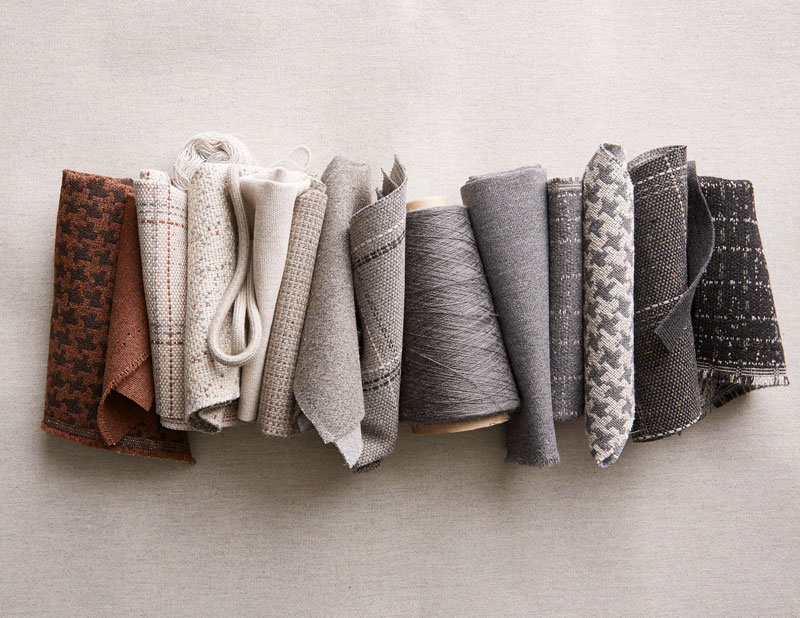
Sunbrella’s RETWEED Collection, which is made using up to 93-percent recycled content, is liked by customers for its unique characteristics.
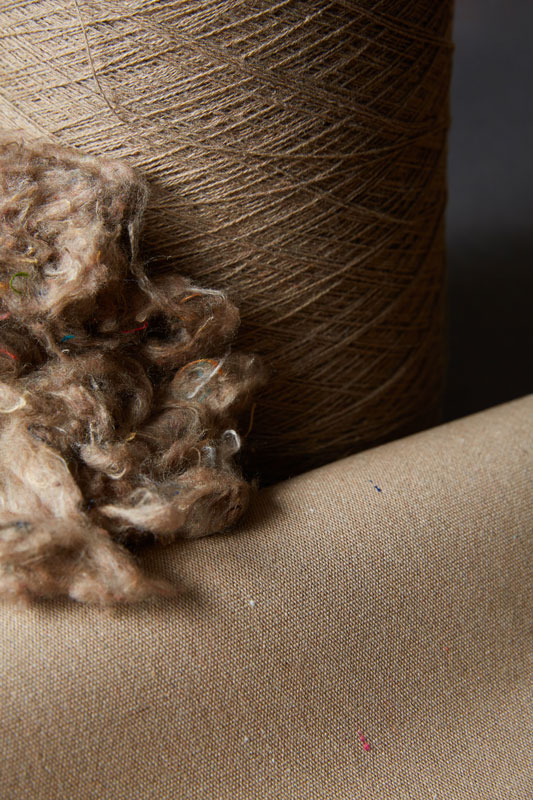
Through some innovation, new technology and our design work, we’ve been able to take these waste streams and create beautiful products from them. In 2020, we launched our RETWEED Collection, which is part of our Renaissance fabric program that began in 2008. And it’s interesting —we wanted to be able to utilize our waste streams and have products that were created with a high level of recycled content and we thought it was something that would really resonate with our customer base, which it did. But what was also interesting was the design elements that resulted [The composition of Renaissance yarns results in the occasional natural variation in shade or specks of color that add to the visual interest of the fabric]. People were choosing those products as much for the aesthetic value as they were for the environmental consciousness that went into creating them.
In 2009, we created the Recycle My Sunbrella program. To date, we have processed nearly 1 million pounds of waste into new products through this program. We want to double that utilization by 2025. We have such momentum and are very comfortable with that goal. But the point is, all of this is something that we have been focused on for well over a decade now as it relates to these recycled waste streams, which goes into this broader picture of “How do we become less impactful on the environments in which we operate?”
TW: Merit, opportunity and inclusion have always been central to Glen Raven’s culture. How can you ensure the diversity goals continue to support these tenets?
Oehmig: If you look at Glen Raven’s ethos, something fundamental to us is a heart for people. We believe having a different point of view and bringing all those viewpoints together makes you better. And we’ve learned that in many ways, but definitely through globalization. As the company has created a global footprint and really embraced the cultures and communities in which we operate, we have seen the value that is created when you bring different points of view together with a single-minded focus on pushing the business forward and continuing to do good things. We want to elevate that and expand that idea. Diversity is something that we haven’t always thought about in terms of just diversity. We thought about it in terms of “How do we bring a group of people together with a range of life experiences, a range of work experiences and a range of points of view all based in what is foundational to Glen Raven’s values so we can work together and
create something special?” We have seen the benefits of that throughout the company’s history, and we want to elevate and accelerate that. We felt like making our goals around diversity and inclusion more transparent will not only challenge us, but will also hold us accountable for achieving those goals and exceeding them.
TW: Many of the sustainability initiatives set 2025 as the targeted timeline. Is this aggressive, or representative of the current level of momentum and progress?
Oehmig: We’ve had so many of these practices in place throughout Glen Raven’s history and definitely have great momentum around these initiatives. Most of the efforts are already in flight and have been in flight for a long time. So now it’s just driving a stake in the ground and holding the company accountable to not only those goals, but really to exceed those goals. And Glen Raven is perfectly comfortable with the timeline, and we’re confident we will exceed the goals that we have established.
TW: How does sustainability impact Glen Raven’s multi-phase, global expansion plan?
Oehmig: To the extent that the sustainability report would impact our capital investment plans, it really is just informing those plans. When our engineers are meeting contractors, and our manufacturing engineers are meeting with the equipment manufacturers, we’re talking through these same opportunities in their development and asking what we can do differently and what can we do to lean in and do to really push technology in support of our sustainability reporting. Our partners have been very supportive. Everybody has a role in this whatever position you play in the total value chain.
It’s going to take all of us working together in order to have the greatest impact both in the communities and on the planet.
TW: How do you see Glen Raven’s position in the industry as it relates to corporate responsibility?
Oehmig: If a company like Glen Raven is leading a collaborative effort and working with our equipment manufacturers and our raw material suppliers and informing and educating and trying to create new innovations that may address many of the issues we are facing, that’s a position we’d like to be in.
We all have our intellectual property that we seek to protect. But at some point, you have to find a balance. We have people in this industry who are very talented and we’ve got to figure out a way to work together to have a positive impact on the future.
Techtextil North America returns to Raleigh, N.C., August 23-25, 2021, for the textile industry’s first major in-person event since the pandemic shut down.
TW Special Report
For many in the textile industry, Techtextil North America (TTNA) has been a staple for meeting old friends, networking with members of the industry and exploring the latest innovations in the technical textiles space. Event organizers Atlanta-based Messe Frankfurt North America are looking forward to “reuniting the industry for three days of networking, education, and business development,” when the show returns to Raleigh, N.C., August 23-25, 2021.
“We have received so many positive and hopeful messages from both exhibiting and visiting companies about the upcoming show in August,” said Kristy Meade, show director for Techtextil North America and group show director at Messe Frankfurt North America. “After such a tough year, we’re really looking forward to getting back to business, starting with reuniting the industry on the show floor.”
Adding Pavilions
Aside from the latest innovations and supply chain solutions for the technical textiles industry including high-tech fibers, functional apparel fabrics, smart textiles, composites and nonwovens, TTNA is adding two new pavilions. The 2021 edition of the show will include the first-ever Texprocess Americas pavilion, supported by The Sewn Products Equipment & Suppliers of the Americas (SPESA). The pavilion — featuring manufacturers and distributors of machinery, equipment, parts, supplies, systems, technology, supply chain solutions, and other products and services used for the development of sewn products — is designed to foster new business opportunities and strategic partnerships between exhibitors and attendees. Leaders from across the industry will be given the chance to meet, learn, and see equipment functionality firsthand.
According to the Messe Frankfurt, SPESA also will once again collocate its Advancements in Manufacturing Technologies Conference with Techtextil North America in 2021. The conference features presentations and panel discussions from SPESA members about the products they make, as well as the challenges they face as they aim to improve efficiency, speed, and accuracy in sewn products manufacturing.
Textile Care
The second new pavilion is the Textile Care Pavilion, powered by the Clean Show. This area will showcase the latest products and technologies for the textile care sector from treatment to finishing to after-market care. The Textile Care Pavilion aims to include innovative products and services in:
Washing, drying equipment;
Water technology, utilities, energy saving;
Green product technology;
Agents and systems for the cleaning, finishing and disinfection of textiles; and
Logistics and material flow.
Accelerating Technology Focus
The Techtextil North America Symposium is dedicated to showcasing advancements in research and technology for the textile industry, highlighting the latest trends and innovations, with a focus on sustainable textile practices. Attendees will have the opportunity to expand their expertise and gain a competitive edge throughout seven presentation and panel-style sessions, where industry leaders and subject matter experts will cover the hottest topics around the post-pandemic supply chain — exploring lessons learned, adaptations made, and future-oriented insights on the industry as a whole. Session content this year will also touch on topics related to the expanded product groups brought by the Texprocess Americas Pavilion and Textile Care Pavilion.
Symposium topics include:
Reinventing and Reimaging the Supply Chain ;
Digital Transformation Strategy;
Government Policies and Regulations;
Sustainability in Laundering and Textile Care;
Circular Economy;
Fabric and Materials ID; and
Nonwovens & PPE.
The Academy
New this year will be a show floor feature called The Academy, which combines Tech Talks and The Lab Sessions hosted at previous shows. According to the Messe Frankfurt, throughout the three-day event, The Academy will feature a lineup of mini-sessions, demonstrations, and panel-style discussions covering groundbreaking technical advancements and highlight the latest in textile testing for applications across industries. There also will be a Student Research Poster Program on the show floor featuring both undergraduate and graduate level research and textile innovations. Up-to-date schedules and full speaker lineup for all show floor features will be announced exclusively via the Techtextil North America 2021 mobile app, which will be available for download later this summer.
Reduced Pricing Through June 18, 2021
Visitors to Techtextil North America can register to attend and purchase exhibit hall badges and symposium passes online. Messe Frankfurt is offering reduced pricing for advanced registration until June 18, 2021.
A New Start
As the COVID-19 restrictions wane and vaccinations take hold, TTNA is just the medicine needed to return to a level of normalcy in the industry. Last March, the industry was poised to meet in Atlanta for TTNA when the pandemic took hold cancelling all in-person opportunities. The industry has not been in hibernation — far from it — and the mobilization to attack the personal protective equipment shortages was immense. Now, as a new normal sets in, what was missing is the feeling of community, interaction among colleagues and the ability to stumble upon new and interesting ideas. For the editors of Textile World, that is what always seems to happen at TTNA and it’s an opportunity to see the industry in person.
For more information about Techtextil North America 2021, including the full pricing structure and deadlines, visit techtextilna.com; or register now bit.ly/33stddX.

 CARY, N.C. — May 20, 2021 — INDA, the Association for the Nonwoven Fabrics Industry, highlights global and regional insights from industry thought leaders on the future of nonwoven and engineered materials supply, production capacity and demand at the triennial IDEA® conference program March 28-31, 2022, in Miami Beach, Fla.