LOS ANGELES — April 15, 2021 — Barco™ Uniforms today announced the appointment of Ron Wagenseil as its president and CEO.
The change in executive leadership underscores the company’s continued commitment to purposeful innovation, global growth and, most importantly, passion for honoring and serving those who serve others by delivering Barco’s meaningful and globally recognized apparel brands.
Wagenseil joined Barco’s Board of Advisors in 2020 to help the company begin its journey of digital transformation, offering invaluable counsel based on his innovative mindset and leadership experience in consumer products. His contributions while serving on the board made it clear that he would be instrumental in leading Barco to elevate its mission to innovate with purpose.
Wagenseil has worked with some of most influential and impactful global brands of the last century, including Nike, VF Corp., Disney, Reebok and Delta Apparel. Throughout his career, he has held various executive leadership roles and been influential in the accelerated revenue growth for direct-to-consumer channels in the apparel and consumer goods industries.
“At Barco, purposeful innovation is in our DNA. We honor healthcare professionals and essential workers by creating products that enhance their performance and make a difference in their lives,” Wagenseil stated. “Our passion to serve those who serve others fuels our desire for continual growth and improvement. That will play a significant role in how we position the company for continued market share growth and differentiate Barco from its competitors.”
Founded in 1929 by Morris Barker, Barco’s journey began in 1936, when his stepson, Kenneth Donner, took the reigns as its innovative and passionate leader, developing Barco’s DNA around a culture of caring for over 90 years.
Kenneth wanted to honor and celebrate healthcare workers with better options that fit and functioned exceptionally well. His vision was simply to lift human spirits by redefining the power of professional apparel with style and quality.
Since 2006, Barco has partnered with ABC to curate authentic Grey’s Anatomy™ by Barco Professional Wear. It quickly achieved global success as the scrub brand of choice for millions of healthcare professionals around the world by helping them look, feel and perform better while taking care of patients. Barco’s purpose is also evident in two of its best-selling sustainable scrub brands, Barco One and Skechers™ by Barco, both made from recycled plastic bottles in an effort to reduce the volume of plastic in the ocean.
Barco continues to see dynamic market share growth and will continue to build on the global popularity and success of its apparel brands while staying true to its purpose of making a difference in the world and in the lives of essential workers.
Challenging times have a way of adding caution to the mindset of even the most optimistic business people. That being said, the evidence continues to mount that manufacturing — including the textile mill and apparel sectors —
continues to grow in the United States.
The latest Manufacturing ISM® Report On Business® stated: “The manufacturing sector grew in March. The March Manufacturing PMI® registered 64.7 percent, an increase of 3.9 percentage points from the February reading of 60.8 percent. This figure indicates expansion in the overall economy for the 10th month in a row after contraction in April.”
Keep in mind that that includes a lot of COVID-intense months and any PMI reading above 50 percent represents economic growth.
The reported also noted: “Of the 18 manufacturing industries, 17 reported growth in March, in the following order: Textile Mills; Electrical Equipment, Appliances & Components; Machinery; Computer & Electronic Products; Apparel, Leather & Allied Products; Furniture & Related Products; Fabricated Metal Products; Food, Beverage & Tobacco Products; Primary Metals; Plastics & Rubber Products; Paper Products; Transportation Equipment; Chemical Products; Nonmetallic Mineral Products; Miscellaneous Manufacturing; Printing & Related Support Activities; and Petroleum & Coal Products. No industries reported contraction in March.”
Yes, that is correct — Textile Mills leads the list of growing manufacturing sectors with Apparel in sixth place out of the 17 growing sectors.
As the editors worked on this issue of Textile World, it became apparent that the industry really has some bright spots. This issue’s investment roundup piece, “U.S. Textile Investment Roundup,” indicates no shortage of interest in buying into the future of the U.S. textile industry. And while interviewing prominent textile executives, highlighting technological developments or discussing new alternative fibers, an air of optimism was apparent.
Hearing from National Spinning’s President and CEO Jim Booterbaugh about its winning strategy of diversification and yarn evolution from predominantly wool and acrylic for apparel, to include a broad mix of fibers for technical applications, illustrates how innovation is at the heart of long-term success. The company celebrates its 100th anniversary this year! (See “National Spinning: 100-Years-Strong,” TW, this issue).
There is also growing optimism about the economy opening up and normalizing day-to-day business. As vaccinations sweep through the nation, there is a sense of a horizon and there will be a time when the industry can meet, share ideas and celebrate the achievements so many in the industry have accomplished during such difficult times.
Sights are set on Techtextil North America 2021, to be held August 23-25 at the Raleigh Convention Center in Raleigh, N.C. It seems a distant memory, but the 2019 edition also held in Raleigh, had the show’s highest attendance for an odd-year with 3,185 visitors.
One wonders if that record may be broken once again. How large is the hunger to see colleagues, share developments and renew business relationships? Will the risks be low
enough and will the industry come together once again? Time will tell.
The Biden Administration has awarded contracts to Parkdale Mills and Ferrara Manufacturing Inc. for the production of more than 17 million U.S.-made face masks.
Parkdale, the country’s largest cotton yarn spinner based in Gastonia, N.C., has partnered with New York City-based tailored clothing company Ferrara to make the Berry-compliant reuseable masks that are part of the president’s pledge to procure millions of Made in America masks to be distributed at community health centers, food pantries and soup kitchens.
Parkdale will contribute yarn spun at its North Carolina, Virginia and Georgia mills, while Ferrara will use its cut-and-sew operations to complete the masks. The partners will contract other U.S.-based companies from throughout the manufacturing supply chain to assist in the effort including: Clover Knits, American & Efird, America Knits, Apex Elastic, Texlon Plastics, Cotswold Industries, South Fork Industries, USC Bag, Fitessa, Unionwear, Lynda Studios and Domoi Collection.
“The entire Parkdale team wants to thank President Biden and his administration for this opportunity to make reusable cotton face masks for millions of Americans,” said Davis Warlick, Parkdale Mills. “By procuring 100-percent American-made masks, we are putting thousands of workers across the United States to work to help our most vulnerable communities. We are excited to partner with Ferrara Manufacturing and are proud of our supply chain partners and their hard work to make this product crafted with pride in the United States.”
Kim Glas, president and CEO of the National Council of Textile Organizations, said: “We want to sincerely thank President Biden for his leadership and support of American manufacturing workers. We appreciate the administration’s commitment to purchase fully made in America masks and we believe this is a significant opportunity to continue to showcase our incredible domestic textile industry and all of its capabilities. We have a once-in-a-generation opportunity to onshore these critical supply chains long-term and we look forward to working with the administration and Congress to advance long-term policies to bolster this critical production capacity here in the United States.”
Stein Fibers Ltd., Albany, N.Y., reports it has purchased Charlotte, N.C.-based Consolidated Fibers and J.E. Herndon Co., Kings Mountain, N.C.
Consolidated Fibers specializes in man-made fibers for the nonwovens industry. In addition to polyester and viscose fibers, Stein reports the acquisition adds “a complement of speciality and niche products to its portfolio. Bob Kunik, owner and president of Consolidated Fibers, as well as several other key sales and operational associates will remain with the company.
J.E. Herndon specializes in the purchase and processing of textile mill fibers and by-products. Its finished fiber blends are used globally in diverse applications including industrial yarns and banknote paper. J.E. Herndon President and Owner Patrick Mullen has joined the Stein Fibers sales and marketing team, which is based in Charlotte.
“The diversification and opportunities that J.E. Herndon will bring to our business will complement our core focus, as well as those brought by our recent acquisition of
Consolidated Textiles,” said Chip Stein, owner, Stein Fibers. “We are fortunate to have such well-respected and successful businesses as a part of Stein Fibers.”
Fibertex Nonwovens Inc., Greenville, S.C. — a division of Denmark-based Fibertex Nonwovens A/S — has announced plans for a $49.5 million expansion. The company will add a second state-of-the-art spunlace nonwovens line for rolled nonwoven fiber products at its location in Gray Court, S.C. The expansion also includes the acquisition of an 84-acre industrial plot adjacent to the existing facilities. The expansion, which will create 39 jobs, is expected to be complete in 2023.
Laurens County, S.C., was awarded a $100,000 Rural Infrastructure Fund grant to assist with costs related to the project by the Coordinating Council for Economic Development.
“Market trends are finding support in the added focus on health and hygiene, more emphasis on local production and on sustainability, which is to our benefit,” said Fibertex Nonwovens CEO Jorgen Bech Madsen. “With this new investment, we’ll be able to build an extremely strong position in the important North American market for, among other things, high-performance wipes for sanitizing and disinfection purposes in the healthcare/ medical sector, sustainable personal care products, a range of industrial applications, as well as in the automotive industry and the construction sector.”
“We are proud to celebrate the expansion of yet another South Carolina company,” said Governor Henry McMaster. “Fibertex’s decision to further its commitment to Laurens County is proof that South Carolina’s economic development strategy is working, and we look forward to continued success for this great company.”
Nearly 400 years ago,an English theologian named Thomas Fuller first wrote the words, “It’s always darkest before dawn.” From the reality of 2020, to the forecasts for the remainder of 2021, perhaps at no time in U.S. history have such words been more appropriate.
Even as vaccinations against COVID-19 accelerate, new outbreaks are occurring — largely in states and cities that have rescinded mandatory mask ordinances and reduced social distancing requirements. The CDC estimates that nearly 600,000 Americans will have lost their lives to the pandemic by the end of April.
At the same time, the rate of vaccinations continues to increase. COVID-19 vaccine distribution began in the United States on December 14. Through the last week
of March, more than 147 million doses have been administered, fully vaccinating over 53.5 million people or 16.1 percent of the total U.S. population. In many states, vaccination stages have escalated much more quickly than expected. Most initially thought it would take until late Spring to get through Stages 1a and 1b. However, as of the end of March more than a dozen states are making — or preparing to make — vaccines available to all adults.
As a result, those who look toward the future with expert eyes are making aggressive — even staggering — projections about U.S economic growth the year. Economists at Goldman Sachs, for example, project GDP to grow at a rate not seen in this country for70 years. In a note to its clients, the company wrote, “We have raised our GDP forecast to reflect the latest fiscal policy news and now expect 8 percent growth in 2021 (Q4/Q4) and an unemployment rate of4 percent at end-2021.”
The last time U.S. GDP grew at 8 percent was 1951. Goldman Sachs’ prediction is more aggressive than most. The average prediction among Wall Street analysts is in the range of 4.5 to 5 percent.
Consumers are also optimistic about the economy. A recent release from the Conference Board shows that the Consumer Confidence Index® surged in March to its highest reading in a year, after a modest increase in February. The Index now stands at 109.7 (1985=100), up from 90.4 in February. The Present Situation Index —based on consumers’ assessment of current business and labor market conditions — climbed from 89.6 to 110.0. The Expectations Index — based on consumers’ short-term outlook for income, business and labor market conditions — also improved, from 90.9 last month to 109.6 in March.
“Consumer confidence increased to its highest level since the onset of the pandemic in March 2020,” said Lynn Franco, senior director of Economic Indicators at The Conference Board. “Consumers’ assessment of current conditions and their short-term outlook improved significantly, an indication that economic growth is likely to strengthen further in the coming months. Consumers’ renewed optimism boosted their purchasing intentions for homes, autos and several big-ticket items. However, concerns of inflation in the short-term rose, most likely due to rising prices at the pump, and may temper spending intentions in the months ahead.”
Business Gaining Steam In Fibers, Yarns, Fabrics
Economic growth is already apparent in U.S. fiber, yarn and fabric mills. While output for 2020 was down, significant growth was apparent in the last several months of the year, said NCTO Chairman David Roberts in his recent “State of the U.S. Textile Industry” address. “I’m happy to report that, at least anecdotally, business is coming back at
a fast clip in the first quarter of this year, as orders continue to bounce back in line with rising consumer demand and retail sales.”
A primary objective of NCTO is to significantly increase personal protective equipment (PPE) production in the United States. To that end, NCTO recently announced that the Biden Administration has awarded contracts to Parkdale Mills and Ferrara Manufacturing Inc., following through on the president’s pledge to procure millions of fully Made in America face masks for community health centers, food pantries and soup kitchens across the country. A third contract is expected to be awarded to a small business early next week.
Gastonia, N.C.-based Parkdale Mills, the nation’s largest cotton yarn spinner, and Ferrara Manufacturing, a tailored clothing company based in New York City’s garment center, are to manufacture more than 17 million reusable masks. The government said it could purchase up to a maximum of 22.2 million masks under the contracts. The masks will be Berry compliant and, as a result, 100-percent U.S.-made.
The seventh edition of the combined ITMA Asia + CITME, though postponed and rescheduled, prepares to move forward in June.
TW Special Report
ITMA Asia + CITME will be held at the National Exhibition and Convention Centre (NECC) in Shanghai June 12-16, 2021. In light of the global coronavirus pandemic, show owners CEMATEX and Chinese partners, the Sub-Council of Textile Industry, CCPIT (CCPIT-Tex), China Textile Machinery Association (CTMA) and China Exhibition Centre Group Corp. (CIEC) postponed and rescheduled the joint exhibition originally planned for October 2020.
At the time, Fritz P. Mayer, then president of CEMATEX, said: “We seek your understanding as this decision has been made with the safety and health concerns of our participants and partners in mind. The global economy has been severely affected by the pandemic. On a positive note, the International Monetary Fund has predicted that there would be global economic growth at 5.8 per cent next year. Hence, it is more prudent to look at a date around mid of next year.”
Wang Shutian, honorary president, CTMA added: “Our exhibitors, especially those from other parts of the world, are deeply affected by the lockdowns. Therefore, we believe that the combined show with the new exhibition dates would be timely when the global economy is predicted to improve. We would like to thank the exhibitors who have applied for space for their strong vote of confidence in the combined show.”
Proceeding With Safety
According to the organizers, “The show owners and organizers are committed to working closely with the authorities, such as the Joint Prevention and Control Mechanism of the State Council and the Shanghai Convention and Exhibition Industries Association (SCEIA), to implement preventive and social distancing measures to enable the combined exhibition to be held safely.”
“We would like to assure that the safety of our participants, partners and staff during the exhibition is of utmost importance to us,” said Ernesto Maurer, current CEMATEX president. “Strict safety measures will be implemented on-site. Visitors should purchase their badge online to avoid onsite queues and allow better and smooth entry process,” he urged.
Despite the COVID-19 pandemic, organizers report the seventh edition of the exhibition is expected to feature a gross exhibition space of 170,000 square meters; and to date, has attracted the participation of 1,500 exhibitors, including many established machinery manufacturers from 24 countries. The last combined show in 2018 attracted the participation of 1,733 exhibitors from 28 economies and registered a visitorship of more than 100,000 from 116 countries and regions.
Online Registration Is Open
Visitors who purchase their badge at itmaasia.com or citme.com.cn will enjoy special online rates. Early-bird rates of 60 renminbi ($9.10) for a five-day badge and 30 renminbi ($4.60) for a one-day badge are available until June 6. Standard onsite rates cost 100 renminbi ($15.20) for a five-day badge and 50 renminbi ($7.60) for a one-day badge. Visitors who register online will be also given access to the exhibition e-catalog.
The organizers report ITMA Asia + CITME 2021 intends to be a huge showcase of cutting-edge solutions for textile makers with strong support from all major trade associations around the world. The exhibition is showcased by product category for the convenience of visitors with stringent control in force to protect intellectual property.
The exhibits will be arranged using the following categories: Braiding; Weaving; Knitting & Hosiery; Research And Innovation; Printing; Garment Making And Embroidery; Finishing; Recycling; Colorants & Chemicals; Nonwovens; Spinning & Man-Made Fiber; Winding, Texturing & Twisting; Testing: Logistics, Software, Equipment For Plant Ops & Services For Textile Industry
ITMA Asia + CITME is organized by Beijing Textile Machinery International Exhibition Co. Ltd. and co-organized by ITMA Services. The Japan Textile Machinery Association also is a special partner of the combined show.
For more information about ITMA Asia + CITME 2021, visit itmaasia.com or citme.com.cn.
NCTO Chairman David Roberts outlined key industry facts and economic data, and recapped NCTO’s PPE and other legislative efforts in 2020 during his “State of the U.S. Textile Industry” address during NCTO’s 17th annual meeting, which was held virtually.
By David Roberts
Let me begin by saying what an honor and privilege it has been to serve as Chairman of NCTO over these past several months.
The year 2020 was marked by a once-in-a-generation pandemic and health crisis that profoundly impacted our businesses, creating challenges and new opportunities that we are still navigating through today and will be confronting for the foreseeable future.
During my tenure, NCTO has had fast-paced engagement with the Trump administration and Capitol Hill — and more recently, the new Biden administration.
The pandemic and ensuing shortages of personal protective equipment (PPE) sparked an unparalleled national response from our industry as we increased our engagement with the Trump administration and Congress to secure long-term government contract and build a permanent personal protective equipment (PPE) supply chain.
This turbulent environment has required constant focus and engagement on the part of our staff and industry leadership to ensure that we effectively partnered with the government to address the emergency needs of our frontline medical providers.
I would like to give special thanks to NCTO President and CEO Kim Glas and her staff for their tireless advocacy and leadership on behalf of our industry. I also want to thank the entire NCTO staff — Sara, Kristi, Todd, Rebecca, Don, Robin and Auggie — NCTO has engaged at every level of the administration and Congress to ensure our industry has a place at the table to provide input on critical policy issues impacting our daily operations.
Perhaps most of all, this past year has demonstrated to Capitol Hill, the White House and the nation our industry’s resilience, know-how and innovation — and the indisputable fact that our government must focus on policies that: support U.S. textile manufacturing jobs and investment; strengthen trade enforcement; expand the Berry Amendment to medical PPE; and build a permanent domestic PPE supply chain.
In fact, many of you have participated over the last several weeks in several Zoom calls with House and Senate leadership and with our congressional footprint. Your participation in these discussions matter and are critical to pushing our issues collectively. As many of you have seen, we have had record attendance in our meetings from Members of Congress who are eager to hear how they can help our industry onshore and succeed moving forward. Many thanks to the entire NCTO staff for this enormous effort and to all the NCTO members who participated in these critical discussions.
By The Numbers
As everyone in this audience knows, the U.S. and global economies were severely impacted by the COVID-19 pandemic, which triggered a deep recession and high unemployment levels in 2020.
The metrics for our industry and the U.S. manufacturing base as a whole, mirrored that of the overall economy, with output falling in the first five months of 2020, but slowly regaining ground in the latter half of the year.
Economic activity in the U.S. manufacturing sector grew in December, marking the eighth consecutive month of overall economic growth, according to a closely watched business survey.
Of 18 manufacturing industries, textile and apparel was among the 16 sectors that reported growth in December, according to the Institute for Supply Management’s manufacturing index. We have also seen these positive trends repeated in the Institute’s January and February surveys this year.
Here are a few key industry facts:
In 2020, the value of U.S. man-made fiber, textile and apparel shipments totaled and estimated $64.4 billion. While output was down for all of 2020 versus 2019, the last several months of 2020 saw an upward trend as shipments gradually recovered from a low in April (Source: Bureau of Economic Analysis).
U.S. exports were also down last year compared to 2019. Exports of fibers, textiles and apparel were $25.4 billion in 2020 (Source: U.S. Department of Commerce data for Export Group 0: Textiles and Apparel).
Building on innovation, productivity, and an improved policy environment, the U.S. textile industry remains the second largest individual country exporter of fibers, yarns, fabrics and sewn products.
Capital expenditures have remained strong. Investment in yarn, fabric, apparel and sewn product products manufacturing in 2019 (the latest figure available) hit $2.38 billion. Since 2010, capital investment in U.S. yarn, fabric, apparel and sewn products manufacturing totals $19.9 billion.
The Western Hemisphere supply chain continues to be a vital economic engine for the textile and apparel sectors.
Last year, we had $28.5 billion in two-way trade with the Western Hemisphere, which supports 2 million direct jobs in the entire regional supply chain.
Taking all things into consideration, the volatility in supply chains and in demand that we saw in the first half of 2020 began to stabilize somewhat in the second half. We began to see increased economic activity and an uptick in demand, pointing to promising signs of a recovery — which was fragile — but steady.
I’m happy to report that, at least anecdotally, business is coming back at a fast clip in the first quarter of this year, as orders continue to bounce back in line with rising consumer demand and retail sales.
Policy Issues
NCTO has been actively engaged in shaping policies in Washington that have major implications for small, medium and large businesses in our industry.
Our staff worked diligently to support the industry’s needs through not one — but four — economic stimulus bills that passed Congress, providing important benefits to businesses and unemployed workers.
Of paramount importance was NCTO’s role in securing a win in the FY 2021 National Defense Authorization Act (NDAA) and helping shape policies and legislation designed to secure a long-term strategy to establish a permanent domestic production base for PPE.
I want to extend my appreciation to our dedicated members who have been at the forefront of
PPE production, pivoting overnight to stand up these production lines and answer the call of the nation.
PPE Efforts
I cannot stress enough how intensely engaged NCTO staff has been in providing input on PPE policy and legislative development.
We all know how critical it is to garner support for long-term PPE government contracts and policies that will expand the Berry Amendment and establish a permanent domestic supply chain.
NCTO was engaged at every level of government contracting and procurement issues, bringing together the entire domestic PPE supply chain, while also closely coordinating with White House advisers, congressional allies and others to get vital PPE product to frontline workers battling the COVID-19 pandemic.
With NCTO’s engagement and lobbying efforts, lawmakers introduced four separate PPE-related bills in 2020.
One bill I would like to highlight in particular is The American PPE Supply Chain Integrity Act, co-sponsored by Congressman Patrick McHenry of North Carolina and Congressman Bill Pascrell of New Jersey, which would expand the Berry Amendment to nearly all federal purchases of PPE.
In addition, Kim testified in several hearings before Congress and the U.S. International Trade Commission, and supplied comments to the administration on the U.S. public health industrial base and necessary policy reforms.
National Defense Authorization Act
I would venture to say that the vast majority of NCTO members present today are familiar with and benefit from the existence of the Berry Amendment. It is for this reason that NCTO maintains an extremely active Government Textiles Committee that directly engages with our Defense Department and Homeland Security customers, analyzes policy proposals, and supports our advocacy efforts.
Their hard efforts paid off in 2020.
I would like to extend my appreciation to the NCTO staff for securing a major, long-sought-after win for the U.S. textile industry in the FY 2021 National Defense Authorization Act (NDAA).
Specifically, we were able to lower the contracting threshold for the Berry Amendment to $150,000 — after it has been raised to $250,000 by Congress in the FY 2017 bill — and chain future increases to the consumer price index — a feat that took considerable effort on our part.
Lowering this threshold will reserve an additional $50 million-plus in Berry-compliant contracts for domestic textile manufacturers who supply the U.S. military.
There are numerous other issues requiring NCTO’s focus and resources, such as the need to pass a new Miscellaneous Tariff Bill that grants relief on unavailable component materials but doesn’t allow unnecessary duty relief on sensitive finished textiles — and continued engagement with the Hill to vigorously oppose attempts by importers to expand the Generalized System of Preferences to apparel and footwear.
Time simply will not allow for me to go into detail on all these important issues. With that said, please know that without exception, NCTO is highly engages on every policy matter that affects the U.S. textile industry with the intent of shaping policy determinations in a manner that directly benefits U.S. textile investment, production and workforce.
That concludes my formal remarks.
On a personal note, I am honored to serve as chairman of such an incredible organization on behalf of a vitally important industry.
Through our leadership, NCTO has carved out a seat at the policy table in Washington and that is critical in terms of ensuring our industry’s interests are represented and reflected in critical policies and legislation.
It has been a year marked by challenges and resiliency and our industry has remained strong throughout this crisis.
I am optimistic about the future, knowing that I am part of an industry that made such an incredible commitment to our nation, along with the willingness to come to those in need of aid.
Editor’s Note: David M. Roberts is CEO of Clover, S.C.-based Cap Yarns. He served as the 2020 NCTO chairman. At the annual meeting, Roberts was re-elected chairman for 2021; and David Poston, president of Palmetto Synthetics, was elected vice chairman.
Shawmut Corp. has made investments at its West Bridgewater, Mass., facility.
In a year marked by COVID-19 and a very challenging economic environment, U.S. textile companies continued to invest.
TW Special Report
Surprisingly, under the pall of the COVID-19 pandemic, the news pages of TextileWorld.com reveal a fair amount of recent investment by the U.S. textile industry.
Investments including general investment in plant and equipment, polymer and fiber technology, furniture manufacturing, bedding and a strong investment trend in support of domestic production of personal protective equipment (PPE), have defied business challenges in support of new opportunities.
PPE: Domestic Source Focus
Domestic PPE production has become a matter of national security and has the attention of the Federal government.
PPE independence and rebuilding the Strategic National Stockpile (SNS) has also garnered attention at the state level.
In Georgia, Governor Brian Kemp announced the roll out of House Bill 304, the Georgia Made Medical Manufacturing Act. The bill, “will incentivize the production of medicines and medical devices in Georgia, limiting the state’s need to compete with other states or foreign nations for critical supplies.”
“One of the lessons we learned early on in the pandemic is that we cannot waste time in bidding wars with others for life-saving supplies,” Governor Kemp said. “Last session, we incentivized the production of PPE in the Peach State to alleviate that problem, build up our stockpile, and make it easier to stay in business in the era of COVID-19. HB 304 is a natural next step to that program and will help us build on Georgia’s momentum to become a leader in all sectors of the health care industry.”
The Fallon Co. partnered with Shawmut Corp. on a domestic N95 respirator production operation.
Masking Up
Late last year, The Fallon Co. and Shawmut Corp. announced a new domestic manufacturing operation to produce N95 respirators. A press release noted: “State-of-the-art manufacturing equipment installed in an expanded facility based in West Bridgewater, Mass., will enable end-to-end production of up to 180 million masks per year. Additionally, the operation is expected to create as many as 300 new jobs in Massachusetts.”
Then in February 2021, Shawmut announced the creation of a new Health & Safety business unit. The company is making isolation gowns and N95 respirators in a 70,000-square-foot retrofitted space in its West Bridgewater facility. Shawmut also invested in almost 60 tons of specialized, high-precision, meltblown machinery from Germany, installed a fully automated and flexible production system to support its N95 particulate respirator line, and installed roughly 50 new assembly lines for gowns and masks, some of which are augmented with advanced robotics capabilities.
Not all PPE investments were on such a grand scale, but still were important in supporting demand. In Harrisonburg, Va., Valley Guard Supply LLC announced investment of $1 million to establish PPE manufacturing. “A service-disabled, veteran-owned company, Valley Guard produces three-ply disposable masks that are 100-percent made in the United States and intends to manufacture other types of safety and security gear in the future. The project will create 45 new jobs,” announced the company.
“Domestic manufacturers of personal protective equipment are critical as we battle this global pandemic, and we thank Valley Guard Supply for answering the call right here in Virginia,” said Virginia Governor Ralph Northam. “The company’s new Harrisonburg operation will play an important role in localizing our supply chain and keeping health care workers and citizens safe.”
Polymer And Fiber Investments
Eastman Chemical Co. recently announced plans to “build one of the world’s largest plastic-to-plastic molecular recycling facilities at its site in Kingsport, Tenn.” The company plans to invest approximately $250 million over the next two years in the facility and “will use over 100,000 metric tons of plastic waste that cannot be recycled by current mechanical methods to produce premium, high-quality specialty plastics made with recycled content.” According to the company, “Eastman was one of the pioneers in developing methanolysis technology at commercial scale and has more than three decades of expertise in this innovative recycling process.”
Milliken & Company recently purchased Zebra-chem to support its long-term focus on sustainability.
Also following the trend and investing in the recycling arena is Spartanburg, S.C.-based Milliken & Company as it recently announced the acquisition of Zebra-chem GmbH. In a release, the company noted: “With more brands and governments globally setting goals to increase their use of recycled materials, plastics manufacturers are faced with the challenges of using recycled plastics effectively. Peroxide masterbatches, like those from Zebra-chem and Milliken, make it possible to incorporate up to 100-percent recycled content into these new plastics.”
“Milliken’s long-term focus on innovation and sustainability encourages us to consider how we contribute to some of today’s leading challenges, like how to effectively incorporate recycled plastics in manufacturing,” said Halsey Cook, Milliken & Company president and CEO. “I’m excited to welcome the exceptional talent within Zebra-chem as they join the passionate team at Milliken to move the needle on sustainable innovation.”
Rome, Ga.-based Integrated Fiber Solutions (IFS) announced it will invest $30 million to expand its operations to meet growing demand. IFS — a manufacturer of man-made bulked continuous filament (BCF) yarns for the carpet, rug, and automotive industries — was established in 1986 to serve the man-made yarn needs of multiple carpet and rug industries in Georgia with locations in Rome, Dalton, and Lafayette, Ga.
In other fiber-related news, Duluth, Ga.-based FiberVisions Corp., a subsidiary of Indorama Ventures Public Co. Ltd., will invest $48 million to expand its polyolefin fiber manufacturing operations in Newton County, Ga. According to the company, “This expansion, which comes in response to a sharp increase in demand for hygiene products made with bicomponent fibers such as face masks and baby wipes, will create 21 additional jobs.” Installation of this bicomponent fiber line is expected to be complete during the first half of 2021.
Keeping Up With The Strategic Plan
Burlington, N.C.-based Glen Raven Custom Fabrics announced the progress of its “Multi Phase Expansion Plan” with its first phase initiated at the end of 2019. The plan includes new equipment as well as upgrades “to support the continuing growth of Sunbrella® fabrics and other Glen Raven textile products in the company’s U.S. and Asia facilities.” The customized equipment will be brought online in stages during the first half of 2021. According to the company, the expansion “will not only increase output, but also reduce energy and water usage, laddering back to Glen Raven’s sustainability commitments.”
In addition, Glen Raven announced the purchase of a production facility in France. “Taken together, these actions represent an investment of more than $65 million in expanded production capacity to support its customers and the increased demand for Sunbrella, Dickson® and other Glen Raven fabrics. Future phases of the program include additional production and distribution capacity for the U.S. and Asia markets.”
Nonwoven Moves
Nonwoven manufacturer, Fitesa Simpsonville Inc., announced expansion of operations in Greenville County, S.C. The $100 million investment will expand overall capacity and include the installation of a new melt-blown production line to produce materials for the healthcare market. The expansion is expected to be completed by 2023.
Atlanta-based Georgia-Pacific LLC announced that it has reached an agreement to sell its nonwovens business to Glatfelter, a global supplier of engineered materials, headquartered in Charlotte, N.C., for $175 million. According to a press release: “The proposed transaction includes Georgia-Pacific’s nonwovens operations located in Mt. Holly, N.C., along with a research center operation in Memphis, Tenn. The nonwovens operations in Mt. Holly produces airlaid nonwoven material for commercial customers used to make table top, wiping, food pads, hygiene and related products. In the proposed transaction, current Georgia-Pacific nonwovens employees, totaling approximately 150 people, will become employees of Glatfelter at the time the deal closes.”
Kernersville, N.C.-based Texwipe, a global manufacturer of contamination control supplies, will invest more than $4.5 million to locate a manufacturing facility in Mount Airy, N.C. “Our state’s economy continues to grow, despite public health and economic challenges,” said North Carolina Governor Roy Cooper. “Companies like Texwipe choose to grow in North Carolina because of our talented workforce and our state’s strong management of the pandemic.” Texwipe has been headquartered in Kernersville since 1991.
Greenville, S.C.-based Fibertex Nonwovens Inc., just announced an expansion at its Gray Court, S.C., spunlace production location. The $49.5 million investment is expected to create 39 jobs. The expansion includes a second spunlace line for rolled nonwoven products as well as the acquisition of an 84-acre industrial plot adjacent to the company’s facilities.
“With this new investment, we’ll be able to build an extremely strong position in the important North American market for, among other things, high-performance wipes for sanitizing and disinfection purposes in the healthcare/medical sector, sustainable personal care products, a range of industrial applications, as well as in the automotive industry and the construction sector,” said Jorgen Bech Madsen, CEO, Fibertex Nonwovens.
Bedding Makes News
Multiple companies recently announced investments in the bedding market.
Mattress manufacturer and retailer Brooklyn Bedding officially announced plans to expand in its home state, breaking ground on a new state-of-the art manufacturing facility and corporate headquarters in Glendale, Ariz. According to the company: “The new manufacturing facility and corporate headquarters will merge the capacity of both the company’s current factory and warehouse. The plan entails an investment of more than $72 million to make Brooklyn Bedding nearly 100 percent vertically integrated.”
Tempur Sealy International announced expansion of its manufacturing operation in Scott County, Va., with an investment of $16.7 million. “Tempur Sealy has expanded a number of times since opening in Scott County in 2001, and this expansion will enable the Duffield plant to increase its production and support the growth of Tempur Sealy’s award-winning products,” said Scott Thompson, Tempur Sealy Chairman and CEO. “We have developed a strong relationship with the community, and we are fortunate to have a well-educated workforce committed to excellence in quality, safety, productivity, and environmental compliance. The company reports the expansion will be mostly complete by the end of 2021 with capacity increases realized by 2022.
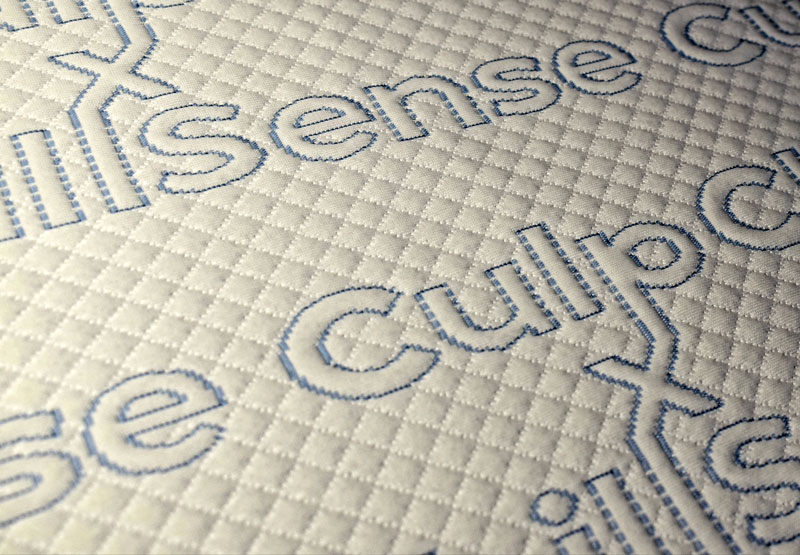
High Point, N.C.-based Culp Inc. together with its consolidated subsidiaries, CULP — recently announced “strategic investments and enhancements to its global cut and sew mattress cover platform.” CULP will purchase the remaining 50-percent ownership interest in an unconsolidated joint venture in Haiti. The business produces cut and sew mattress covers. Upon completion of the transaction, CULP will be the sole owner and operator of the Haiti operation. “We are very pleased with our Haiti operation, which has proven to be an ideal location for our growing sewn mattress cover business,” said Iv Culp, president and CEO of Culp Inc. “Through our strategic investments, we have demonstrated our ability to improve our operating efficiencies, and we believe there are additional opportunities within CULP to leverage the production capacity and distribution capabilities from Haiti.
Furniture, Home Furnishings & Flooring
Raleigh, N.C.-based furniture and home furnishings manufacturer Riverside Furniture Corp. announced a $5.4 million investment for a warehouse and distribution center in Caswell County, N.C. A recent press release reported: “Founded in 1946, Riverside Furniture Corporation designs, manufactures and distributes residential furnishings to 3,000 furniture retailers across the United States. Since opening their first plant in Arkansas nearly 75 years ago, the company has experienced exponential growth. Riverside’s additional 300,000-square-feet of distribution and warehouse operations in Caswell County will reduce shipment lead times to retailers in the Eastern United States from receipt of order. “
“Riverside’s investment in North Carolina, including both the new High Point showroom and the Caswell County distribution center, is a combined $15 million, which is a reflection of our growth as a company and the expansion of service to our customer base,” said Fred Henjes, CEO and president of Riverside Furniture. “Because the distribution center is situated on 50 acres of land, the campus will give us the ability to expand.”
Lawndale, N.C.-based Ison Furniture Manufacturing Inc. will invest $3.5 million to acquire and renovate the recently closed A.C. Furniture Co. Inc. facility in Pittsylvania County, Va. The company also will purchase new equipment for the assembly and full production of its upholstered furniture products. The company’s supplier, Dogwood Global LLC, will locate to a vacant 30,000-square-foot building on-site, investing $500,000 in new equipment to manufacture high-end wood tables and custom furniture frames that will be upholstered by Ison Furniture.
“We are pleased to welcome Ison Furniture Manufacturing and Dogwood Global to Southern Virginia,” said Governor Northam. “Manufacturing is an important pillar of many communities across our Commonwealth and is key to rebuilding our economy in the wake of the ongoing global pandemic. The region’s strong history with textiles and furniture combined with the caliber of the existing upholstery and furniture-building workforce makes this project a natural fit for Pittsylvania County, and we look forward to the future success of this new operation.”
Skutchi Designs Inc., a national contract office furniture company, recently announced a more than $3.5 million investment and plans to expand operations in Horry County, S.C. The company specializes in producing office cubicles, interior glass office walls, and desks and conference room furniture, among other workplace products. According to the company, the expansion is expected to be completed by 2022.
On the flooring front, Mohawk Industries Inc., a global manufacturer of residential and commercial flooring products based in Calhoun, Ga., announced an investment of $22.5 million to expand an operation in Carroll County, Va. The Hillsville facility will grow by 19,000 square feet to house new extrusion and loom equipment for increased production speeds. The expansion will create 35 jobs. According to a press release about the expansion: “Mohawk employs more than 900 Virginians. The company’s Hillsville facility manufactures carpet-backing from 100 percent recycled post-consumer materials, which is then used to manufacture commercial carpet at its Rockbridge County facility as well as other Mohawk carpet manufacturing locations across the Southeast.”
Knitting And Apparel
Pennsylvania-based AKAS Tex has announced an increase in its knitting capacity. According to the company: “Due to overwhelming demand of the fabrics that are used for face masks and surgical gowns, AKAS Tex has added five knitting machines in the year 2020. Two machines are for double knits, such as its the ProCool® interlock; two machines are for its Zorb® Dimple spacer fabric; and one machine is for its TransWick® 1-Way Wicking fabric. These five machines will add 200,300 pounds per year to the existing knitting capacity and generate much needed employment.”
In the childrenswear space, New York City-based United Legwear & Apparel Co. (ULAC) has acquired TicTacToe, a brand of infant, toddler, and children’s legwear, accessories and apparel. According to the company: “The acquisition of TicTacToe allows ULAC to offer a wholly-owned brand to retailers who want to give their customers top-quality children’s apparel and accessories at a good value. Additionally, ULAC is developing a global licensing program across all categories in the kids’ market, from layette, infant, and toddler sets to baby blankets, underwear, toys, and more.”
Denver-based VF Corp. recently announced the completion of its acquisition of Supreme®, a privately-owned global streetwear brand, for an aggregate base purchase price of $2.1 billion. Supreme now is a wholly owned subsidiary of VF Corp. “The acquisition of the Supreme brand accelerates VF’s consumer-minded, retail-centric, hyper-digital business model transformation and builds on a long-standing relationship between Supreme and VF, with the Supreme brand being a regular collaborator with VF’s Vans®, The North Face® and Timberland® brands,” VF Corp. stated in a press release. “The Supreme brand is expected to contribute at least $500 million of revenue and $0.20 of adjusted EPS in fiscal 2022.”
Investment Continues
As the pandemic trends downward and the economy opens up, one would expect growth and consumer spending to strengthen. U.S. textiles is poised for that growth and looks forward for additional opportunities.