“Digital Denim” Is A Pretty Good Match For The Real Thing

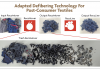
NC State researchers asked a team of textile experts to compare traditional denim to digital denim fabric.
Photo courtesy of Ming Wang.

NC State researchers report team of textile expert say fabric printed to resemble denim was a good match for the real thing.

By Laura Oleniacz

Drop by drop, researchers from North Carolina State University printed ink on cotton fabric to make “digital” denim fabric resembling six different styles of jeans. When they asked a team of textile experts, they found that overall, the samples made with the computer and printer were a good match on average for denim made using traditional, more labor-intensive methods.

However, in the Journal of Imaging, Science and Technology, the researchers reported that certain styles of jeans were easier to replicate using inkjet printing than others, and certain features, like color, were more easily replicated. With further study, researchers said they expect digital printing will be a viable method for making new jean products in the future, with less waste.

Writer Laura Oleniacz recently spoke with study co-author Lisa Chapman, associate professor of textile and apparel technology and management at NC State, Raleigh, N.C., and lead author Ming Wang, a former graduate student at NC State, about the study.

Oleniacz: Why were you interested in printing jeans digitally?

Chapman: Denim is a staple of our wardrobe. Almost everybody has several pairs of jeans in their closet. It’s a really popular item. It’s also one of those garments that’s sold worldwide. But the process for making denim is water-intensive. One of the things the industry is looking at is: How do you reduce the amount of water that’s used for denim?

Wang: To make jeans, the cotton yarn is dyed, and then there are finishing and washing processes that give jeans a certain look. Those processes can have a lot of negative environmental impacts such as water pollution and energy consumption. I wanted to explore another way to produce the same look of the denim that is more environmentally friendly.

Oleniacz: What is inkjet printing? Why is it used in textile manufacturing?

Chapman: Inkjet printing is really similar to your inkjet printer at home in that it’s going to jet droplets of ink onto the fabric. But in this case, it’s dropping textile colorant onto the surface of the fabric.

We consider it an emerging technology in that it’s still fairly small market share in textiles. But it has potential mainly because it uses less water, it uses less energy and it’s a print-on-demand process. So you’re eliminating some of the steps in the coloration process, and you have unlimited colors. To print using the traditional process, as you increase the number of colors, you increase the cost of the design. Inkjet printing is not like that; 200 colors is the same as two colors in cost.

At one point in the history of apparel, and in home furnishings, we had a lot of the same products. We would print lots of yards of the same design. Now we’ve moved to a consumer group that demands a lot of variety. When you have a lot of variety, you have more prints and you have smaller production runs and costs of the screen can be really expensive. Inkjet printing becomes more cost effective.

Oleniacz: In your experiment, how did you create the digital denim?

Wang: I used a high-resolution scanner to scan a very high-resolution image of the jean samples, then transferred it to a computer file that can contain the color and transparency information. Then I chose a pre-treated fabric that has the same weight and texture as the traditional jean samples. In the digital print lab, I had access to four different inkjet printers. After struggling to find the right ink and printer, I chose the latex printer, which is more environmentally friendly. I chose six different denim types that have different washing effects. We found digital printing can reproduce all of those effects.

Oleniacz: What did the expert panel say about the digital denim quality?

Wang: We found 12 experts from the textile industry who have a lot of experience, especially on denim and color matching. We asked them to compare the digital denim and the traditional jean samples. For color, the traditional and digital denim were very close. On a scale from one to five, with one as the greatest difference, five means there is no difference, the average score for color was around three or above three. Which means we had a good match for color.

Besides color, we also evaluated the line quality, the texture, the lightness, and overall match. What we found is that it’s very hard to achieve the line quality and texture. We think the reason might be that the traditional dyeing has high ink penetration. But for digital printing, it’s printing on the surface of the fabric, and it’s not penetrating that much into the fabric. That could cause the difference in line quality and texture.

Oleniacz: What is the future of digital denim?

Wang: If someone could solve the ink penetration problem, I think we could mass produce denim products with a high-speed printer. It could bring the cost of production down. However, since mass production is not quite realistic yet, we could use digital printing for high-end denim products like for home textiles or apparel. For kids, they are growing every day, so you could have something that looks like jeans.

Chapman: It may be difficult to replace traditional denim, but there are other markets where this could do a much better job. Jeggings is a great example. In addition to infant wear, there are situations where you want the denim look, but you want a higher drape and a softer fabric, like dress shirts or women’s dresses.

Oleniacz: What is the future of digital printing for textiles?

Chapman: While there is a pretty high learning curve for digital printing, there are also advantages with reduced energy use, chemicals, and water waste when we’re comparing digital printing to screen printing. The dot-com market is also going to drive digital printing. We’ll be looking at new technologies that speed up the production cycle to get goods to consumers faster.


Editor’s Note: Laura Oleniacz is Public Communications Specialist at NC State News Services.


November/December 2021
Adopting Digital Pigment Printing Technology

Digital printing developments in various dye classes present challenges to adoption by traditional textile printers.

TW Special Report

From its introduction in the early 1990s, the promise of digital textile printing was enticing, but slow to develop. Initially, digital printing became a sample and development tool for designers in a preproduction environment. The technology was expensive, but found a niche in commercial printing for banners and signage.

Development Of Digital Printing

Printing speeds for early jet technologies were relatively slow compared to traditional printing methods and this hampered adoption by the textile industry. But printhead development brought speed into the equation; dyes, inks and substrates improved; and the color gamut available to the printer increased. Scanning technology and computational power also expanded capabilities.

Easing The Transition

For some textile printers, the transition from traditional to digital printing involves only minor changes to established processes, and offers great savings in the engraving and storage of traditional screens and other pre-print necessities and design constraints.

A traditional reactive printer adopting digital reactive printing will face fewer challenges than those printers trying to adopt a new dye class with significant processing changes.

Conventional And Digital Mix

Data provided by long time printing technology supplier Austria-based Zimmer Austria points to a 97 to 3 percent traditional to digital printing product mix, with 45 percent of the traditional printing achieved using pigments and 57 percent of the digital printing performed using a sublimation — transfer paper — process. Conventional printers also produce 27 percent of their output using reactive dyes, while digital printers use 36 percent reactive.

This presents an interesting contrast into the penetration of digital printing into the traditional market and the challenge for traditional pigment printers to adopt new dye class processing technologies.

Conventional Dyestuff Selection Criteria

When adopting digital printing for textiles, dye selection has not really changed regardless of the system. The addition of pre- and post- fabric coating options in digital printing can enhance the digitally printed fabric’s appearance and performance, which is a bonus for digital processes.

Reactive, pigment, vat, acid, and disperse dye classes, or inks, all retain the performance achieved through the years of traditional printing development.

Printheads and processes, including dye circulation, have evolved. For instance, reactive and acid dyes don’t require circulation in the digital print process, while pre-metalized dyes benefit from dye circulation. Disperse, pigment and vat dyes must be circulated.

These developments have reached a point where digital printing can meet the needs of the printer’s final product performance and where each dye class performs at its best.

Where Pigments Shine

There are many reasons why pigment printing holds a 45-percent share of the conventional printing market. Pigment printing is versatile in that it has few substrate constraints so one printing and processing system can print on many different fabrics — unlike for many of the other dye classes. It is also a fairly uncomplicated printing system, whether a conventional or digital printing platform is used. “What you see is what you get,” unlike the mysteries of other dye classes as they go through sometimes complex finishing processes to reveal the final color.

There also is the benefit of little wastewater, no solvents and low energy consumption combined with low initial investment and ability to achieve low print costs when using pigments.

End Uses

According to Zimmer, pigment-printed fabrics are suitable for applications in:

  • home textiles;
  • bed-Linen;
  • upholstery;
  • cushions;
  • window fashions;
  • outdoor fabrics; and
  • print on panels.

Although there are many digital printing technology developers and suppliers in the evolving textile space, Zimmer Austria stands out with the development of its Colaris technology.

As a printing systems manufacturer, the company builds on more than 140 years in the textile printing industry and 45 years in digital printing with a deep knowledge of the complete textile and print process.

Zimmer’s Digital Path

In 1986, Zimmer offered the CHROMOJET 16 dpi for carpet printing, and introduced the high resolution 76 dpi printer for carpet in 2006 and towel printing in 2007.

In 2009, Zimmer developed the CHROMOJET 76 dpi with process color printing.

The following year, COLARIS entered the market targeting applications in home textiles, fashion, and flags and banners. The Colaris technology introductions continued with new products for narrow fabrics, digital carpet printing and more.

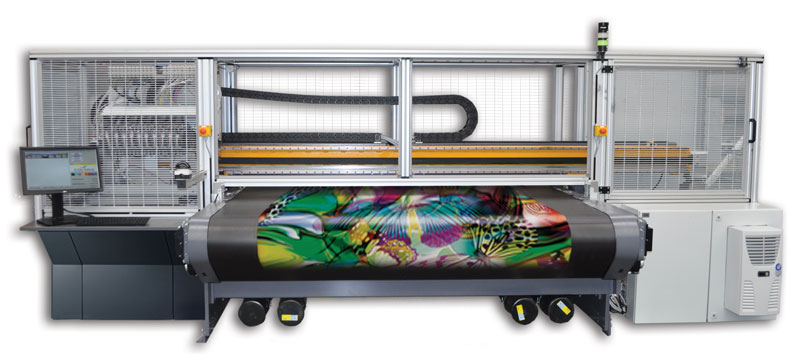
Zimmer Austria’s six-color Colaris digital printing machines feature Fujifilm Dimatix StarFire™ industrial printheads and an “open-ink” system for flexibility in ink and dye choices.

Digital Printhead Solution

The Colaris digital printing technology utilizes the Fujifilm Dimatix StarFire™ industrial printhead. Originally developed for the ceramics industry, the head features 1,024 nozzles per head, the RediJet™ ink circulation system and an integrated heating system. The printhead’s modular design makes it repairable with the changing of individual components. In order to add value and extend the system’s useful life, Zimmer opened the Colaris Printhead Reconditioning Center offering a repair service for a nominal fee.

Interestingly, Zimmer’s technology features an “open ink system,” which allows the printing company to choose its ink or dye supplier. Zimmer does test inks and dyes for performance in its printheads and system and can make recommendations to Colaris users.

Colaris Pigment Printers

The StarFire industrial printhead currently is the centerpiece of a family of seven Colaris pigment printers. The models range from print widths of 74 millimeters (mm) up to 3,400 mm, and feature square meter per hour (sqm/h) performance at 400 X 800 dpi from 140 up to 1,060 sqm/h. The Colaris family features six-color machines with a maximum 2 to 16 heads per color, depending on the model.

A Digital Future

As the promise of digital textile printing technology seemingly rounds the corner from a sample and development tool for designers in a preproduction environment to a full blown production process offering speed, quality and efficiency — digital print adoption by traditional printers is looked upon with optimism.

Solutions for conventional pigment printers to adopt digital solutions utilizing familiar finishing processes are available. Certainly costs matter and will the process transition savings — like screen engraving, rotary screen storage and management, repeat design constraints, and a smaller manufacturing footprint offset the costs of digital inks and maintenance? Those analyses are underway in many places and a digital future may happen sooner than expected.

November/December 2021

Thies: Five Generations, Modern Approach

The family-owned textile dyeing machinery company continues to innovate to meet today’s dyeing industry challenges.

TW Special Report

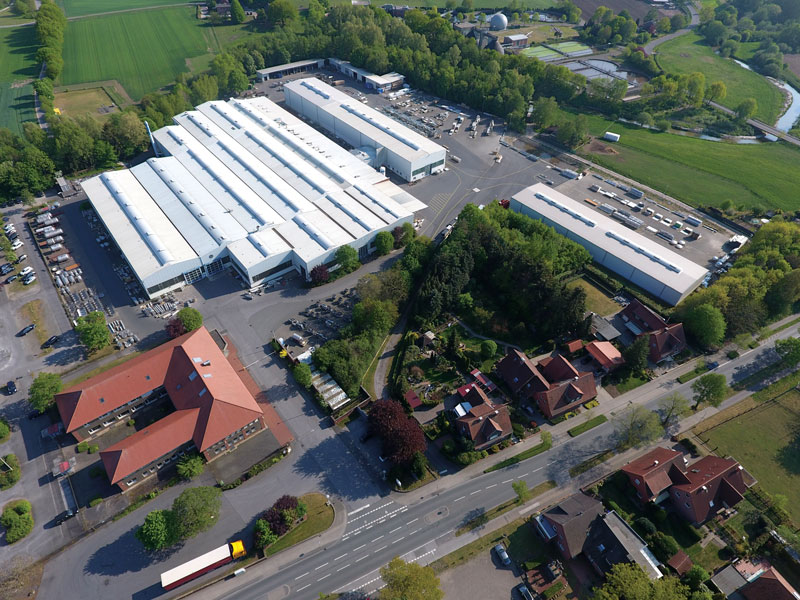
Thies GmbH & Co. KG is a family-owned and -run custom textile dyeing machinery company established in 1892. Currently, the fifth generation — siblings Verena, Christiane and Alexander Thies — manage the export-oriented business. Thies’ production facility in Coesfeld, Germany, produces its dyeing machines using components made by subsidiary companies based in Poland and Slovenia. “With a qualitatively and quantitatively strong team of young and experienced employees, we strive to develop innovative and sustainable solutions for practical use,” said Verena Thies. The company also promises a customer partnership with investment security and strong service. “We have built up a comprehensive network of dedicated service technicians, salespeople and agencies over the past six decades,” Thies added. “Hence, customers are optimally looked after locally, in their time zone and language.”

Thies iMaster

Modern Machines, Intelligent Controls

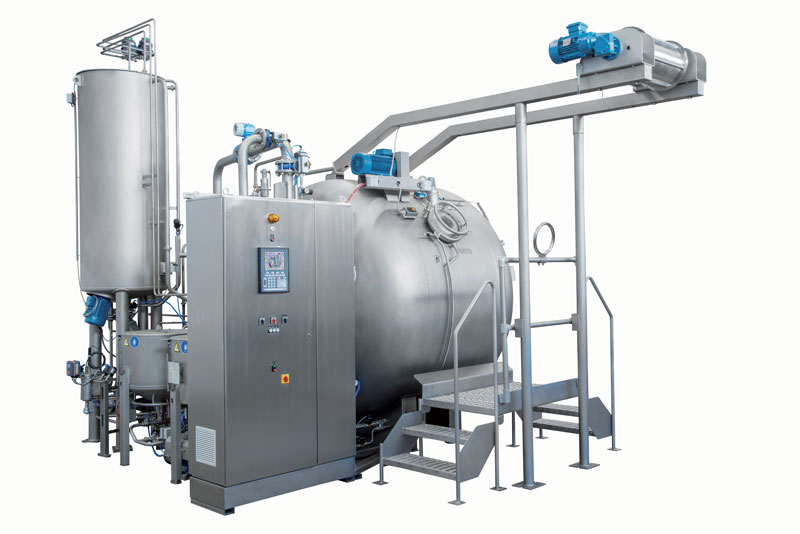
Thies strives to build dyeing machines that consume extremely low amounts of water and energy and feature efficient control technologies. It’s state-of-the-art iMaster series embodies these concepts in a modern dyeing machine. Chemical consumption, primarily measured in grams per liter (g/L) is largely dependent on the water consumption. In 1980, the complete dyeing cycle — including washing, dyeing and rinsing — required approximately 105 liters of water per kilogram of fabric. Today, the Thies iMaster series can achieve on average 28 L/kg on medium shades, which represents a reduction of 73 percent.

Sustainable Technologies

Sustainability is the driver for change. With this in mind, Thies has developed a new machine series — the Signature Series.

According to the company, the Signature Series not only achieves a further reduction in water consumption, but also lowers dye consumption and significantly reduces the amount of total dissolved solids (TDS) when processing cotton fabrics. Solids production as well as their treatment in wastewater treatment systems is very complex and ties up many resources.

Thies emphasizes that when talking about sustainability goals, the entire finishing process must be considered. “Fabric preparation — consisting of scouring and/or bleaching — and after-treatment processes often are not considered and sustainability efforts are limited to one process part — the dyeing,” Verena Thies noted.

Digital measurement and analyses of dyeing processes are key to process optimization, according to Thies. The company offers several tools for this purpose that optimize the recipes and dye curves. DyeControl, for example, is an automated system for more water-efficient dyeing and rinsing. This is achieved by individually adapting the required amount of water during the wet finishing process. Rinsing, washing and dye baths are measured and analyzed online. The visual representation of the process curves enables both a control of the turbidity and a determination of the dye extract from the liquor.

Thies offers systems for heat recovery in a dyeing plant.

Heat Recovery Systems

According to Hardy Sullivan, sales, Thies Corp., Rock Hill, S.C., heat recovery systems are often not used in U.S. dye houses or they are undersized based on the needs of the plant. This is because they weren’t promoted initially when dye houses were purchasing equipment. However, today this is a technology included from the beginning when investing in new dye house equipment.

The Thies heat recovery system uses hot wastewater to heat up cold, fresh water needed for dyeing processes. According to the company, the level of benefit increases depending on the temperature difference, ∆t, between the hot wastewater and cold water. For example, a machine with a dyeing capacity of 500 kg dyeing three batches of cotton per day can save up to 80 percent of the steam needed with the consistent use of a heat recovery system. This results in a significant reduction in production costs as well as carbon dioxide emissions.

“It’s easy for dye houses without heat recovery systems to add one,” Sullivan said. “The Thies system is scalable for increased production. The closest installations of Thies heat recovery systems are in Central America, but several North American companies are showing interest, in part because of the savings in carbon dioxide emissions.”

Automation

The demand for automated machinery continues to grow. The advantages of automation are diverse — productivity rates can be increased and stabilized by the reduction of unproductive waiting times; automation increases occupational safety and the attractiveness of the work itself; and automation also may be used to counteract an ever-increasing shortage of skilled workers.

In yarn dyeing, bobbins are placed on the spindles of the bobbin carrier, which in the case of a 500 kg yarn carrier and a package weight of 1 kg, means 500 yarn bobbins must be loaded and unloaded. Thies offers robotics that can take on this time-consuming and physically demanding work, as well as locking/releasing the locking devices. The robotics can be programmed to avoid waiting times for the machines, and the bobbins and locking devices are damaged less frequently as a result of the automatic unloading. The prepared carriers can also be automatically loaded and unloaded into a horizontal yarn dyeing machine.

The gravimetric Thies MPS-G combines the functions of the MPS-L, MPS-D and MPS-S and can supply up to 30 chemicals to the dyeing machines automatically.

Thies also offers Multi Product Supply (MPS) systems for automated dye and chemical storage, weighing and dispensing. The system comprises MPS-L for liquids; MPS-D for dissolving dyes; MPS-S for solids; the gravimetric MPS-G; and at the highest level, the MPS-Colourmatic, which controls the entire path of the dyes from the warehouse to the dyeing system including storage, weighing, dissolving and provision in an automatic cycle.

According to the company, some of the advantages of the MPS systems include:

  • Reduced occupational safety hazards for employees who less frequently or no longer come into contact with dyes and chemicals;
  • No danger of spills, thus preventing plant damage;
  • Automatically managed stock levels and auto-generated order proposals if stock falls below a predetermined level; and
  • Increased productivity and reproduction rates.

Thies MPS system is a modular concept that can be implemented in small or large dye houses. The system can also be implemented gradually, making the investment economical. The systems also create a more transparent dyeing process, according to Thies. All additions are documented, and incorrect measurements and product mix-ups are prevented thus maximizing reproducibility. Down time also is avoided because the systems can prepare the dyes, chemicals and auxiliaries in advance. The synchronized system and production sequence ensures each product is available in the right quantity at the right time at the right machine.

The delivery precision of Thies’ liquid dispensing system is automatically checked, monitored and optimized. Therefore, recurring calibration is not necessary. The measurement of the supplied chemical quantities is performed volumetrically with the help of a magnetic-inductive measuring system. With integrated small quantity measurement, small amounts as little as 5 millimeters can be precisely supplied.

Sullivan reports that a relatively new manufacturer, American Merchant, Bristol, Va., has recently adopted Thies’ dye dissolver and chemical dispensing equipment. The terry towel manufacturer operates under the philosophy of supporting local farmers and workers by producing all-American made towels. American Merchant took over an abandoned factory space and invested a significant amount to bring in all new looms and other machinery including the Thies equipment. Its brand, American Choice Textiles, provides products direct to the consumer, and the company also supplies high-quality bath linens to retailers of all sizes.

Today And Tomorrow

It is clear that this established firm is dedicated to developing innovative and sustainable solutions for practical use. That being said, a company with five generations of institutional knowledge reaching back to 1892 definitely takes its craft seriously. But it’s the blend of history and ability to focus on the future that makes a difference — automation, sustainable technologies and modern machines featuring intelligent controls — that is Thies’ story today.

November/December 2021

Omni-Heat™ Infinity: “Gold Beats Cold”

Columbia Sportswear’s new Omni-Heat™ Infinity advanced thermal-reflective technology is the “Gold Standard in Warmth.”

By Rachael S. Davis, Executive Editor

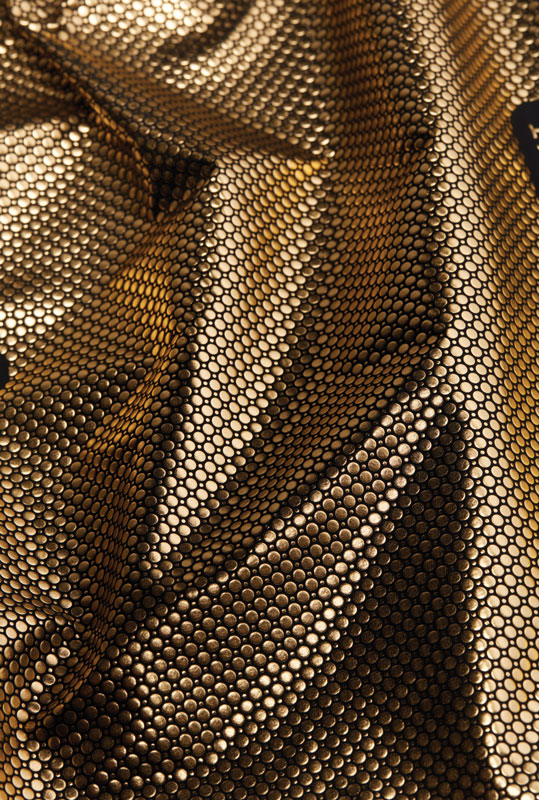
Gold Beats Cold” is the marketing slogan for Portland, Ore.-based Columbia Sportswear’s latest addition to its Omni-Heat™ product line. Omni-Heat Infinity is an extension of the company’s successful patented Omni-Heat Reflective product, which features small, silver, aluminum dots  on the surface of the fabric to provide reflected radiant heat to the wearer.

The new Omni-Heat Infinity takes that concept to the next level by significantly increasing the amount of aluminum metal on the surface and differentiating the fabric from its predecessor with an eye-catching gold color.

“Most consumers are familiar with the NASA space blankets and emergency thermal blankets,” said Dr. Haskell Beckham, senior director, Innovation. “Columbia just figured out how to apply the same technology in a pattern that still allows the fabric to breathe.” Omni-Heat Reflective features approximately 30-percent aluminum metal on the surface of the fabric. The relationship between heat reflection and surface coverage is quite linear — more metal on the fabric equates to more reflected heat. However, too much metal on the surface and the breathability, and therefore comfort, is impacted. “We knew we could increase the surface coverage of the metal, but the question was by how much before the fabric is no longer breathable,” Beckham said.

After researching variables and plotting moisture vapor transfer rate (MVTR) as a function of surface coverage, the answer to the question was, “that we can actually go pretty high, and don’t see much of a drop in breathability until 65-percent-plus surface coverage, at which point the MVTR really plummets,” Beckham noted.

Omni-Heat Infinity products feature a pattern of small and larger dots with between 50 and 60 percent aluminum coverage — doubling the foil coverage compared to the Omni-Heat Reflective technology.

Then the question became how to differentiate the fabric at the consumer level. “If you look at the products from a distance, it would be very difficult for a consumer to detect that there is a difference in the surface coverage of the metal, even though the printed pattern is different,” Beckham said. “We came up with the idea of making the foil gold, and were able to place a colored pigment in the protective transparent coating over the aluminum layer without reducing the reflectivity of the aluminum foil.

“The nice thing about the technology is that it is very visible,” Haskell added. “It’s not some invisible ingredient hidden within the garment that we have to try convince people is effective. It’s also conveniently a surface-applied technology that we can apply to different base materials, which is helpful in creating a variety of different products.”

“The inaugural collection for Infinity features 80 pieces across the new winter collection making it one of the largest launches ever for the company,” said Andy Nordhoff, senior manager, public relations. “Primarily it’s featured in jackets, but also hats, gloves and boots — in both adult and kid’s styles. With our Omni-Heat platform, we are really focused on building the most versatile collection we can. People might wear our products to walk their dogs, while others may be at the top of a mountain where it is 10 degrees below zero. The more options we can provide to people so they can stay outdoors longer, the better!”


For more information about Columbia Sportswear’s Omni-Heat™ Infinity, please visit columbia.com/gold


November/December 2021

Dunmore Launches New Universal Tamper Evident Label Films

BRISTOL, Pa. — December 8, 2021 — Dunmore, a Steel Partners company announced today the launch of new tamper evident label films. These tamper evident label films are used to prevent tampering and provides an extra layer of brand protection brand. The new security features consist of four new tamper evident designs, which are universally known around the world. This allows label printers to hold fewer SKUs while still conveying the appropriate message when a product is tampered with.

Dunmore’s new line of security label films consists of 4 unique security designs. Each pattern is intended to protect the product and make it obvious when a label was tampered with. The new product options include universal designs and a multi-language option, so it can clearly be seen that the label has been tampered, no matter the location in the world. The security label films are 2 mil white polyester (PET) based products with proprietary release technology and a print receptive surface. The tamper evident feature is hidden until the label is peeled away from the surface. The surface will show the distinct security feature embedded in the label film.

In addition to the critical security features, the new security films have a print receptive surface. The film is compatible with printers such as flexo, offset, gravure, screen, thermal transfer, and UV inkjet. The printable surface provides excellent ink adhesion, print resolution, and consistent printing results run-to-run. While our new tamper evident film products are white, the new security features can be integrated into a silver label.

The new security labels can be used for a variety of applications and the release technology is compatible with many pressure sensitive adhesives. Some common applications include barcode tracking, drug closures, original equipment manufacturers (OEMs) labels, and thermal transfer labels.

According to Gabe Maxwell, Dunmore’s director of sales & marketing, “Dunmore is excited to offer new tamper evident labels to the market. We understand the importance of brand protection for OEMs and we have new security features that help solve this global issue.”

Posted December 8, 2021

Source: Dunmore

We aRe SpinDye (WRSD), Björn Borg Enter Into Collaboration Agreement

STOCKHOLM — December 8, 2021 — Today We aRe Spin Dye (WRSD) presents a collaboration agreement between the two companies that paves the way for jointly reducing the environmental impact from dyeing of textiles in production of Björn Borg’s collections.

The companies have agreed on the forms of cooperation and a plan for the implementation of WRSD’s technology. Today’s agreement lays the foundation for the possibility of a long-term collaboration that is positive for both the companies and the environment.

“We are sincerely happy to be able to present today’s news of a collaboration between Björn Borg and WRSD. From WRSD’s perspective, Björn Borg is a brand with a product range that fits exceptionally well with WRSD’s offering,” said Andreas Andrén, CEO of WRSD.

“With sustainability as one of three focus areas for our operations, we are committed to following the UN’s 1.5-degree goal and the cooperation with WRSD is completely in line with that,” said Mija Nideborn, Product and Sustainability manager at Björn Borg AB. “As much as 98 percent of our emissions come from production and a significant part of it lies in the dyeing process. With WRSD’s process, we drastically reduce both water and chemical use, but also waste, energy consumption and carbon dioxide emissions. Initially, we will use WRSD for a number of garments in our Spring / Summer, High Summer, and Autumn/Winter collections 2023.”

Posted December 8, 2021

Source: We aRe Spin Dye (WRSD)

Scott Bader Commits To The Irish Composites Market

WELLINGBOROUGH, United Kingdom — December 3, 2021 —  Scott Bader has further committed to the Irish composites market through the incorporation of its Irish office.

Previously part of Scott Bader UK, Scott Bader Ireland was established as its own legal corporation in Ireland during 2021. The investment will ensure Scott Bader Ireland continues to serve their loyal, longstanding customers throughout Northern and Southern Ireland.

Originally established in 1984, Scott Bader has long been committed to the Irish composites market. It is the only global composites manufacturer to have invested in a presence in Ireland. From its office in Dunboyne, Co Meath, the Irish team offer Scott Bader’s high-performance range of Crystic resins and gelcoats, alongside its GRP roofing system CrysticROOF and Crestabond MMA primerless structural adhesives.

Anthony Dunne, Business Director for Scott Bader Ireland, said: “Incorporating our Irish business is a significant moment for Scott Bader Ireland and another example of our commitment to our great Irish customers. We look forward to working with them for many years to come.”

Alongside the incorporation of its Irish office, Scott Bader has recently announced the establishment of a new $16 million manufacturing site in North Carolina and a new sales office in Italy.

Posted December 7, 2021

Source: Scott Bader

Heimtextil, Scheduled For January 2022, Is Cancelled

FRANKFURT, Germany — December 3, 2021 — Against the background of the worsening pandemic situation in Germany over the past two weeks and the associated restrictions, Heimtextil, scheduled to take place in the second week of January, is cancelled. Messe Frankfurt is working with the industry to determine whether and in what form a new offering in the summer of 2022 can be organized to run parallel to the Techtextil/Texprocess trade fair duo. Later events such as Ambiente, Christmasworld, Creativeworld, Paperworld and Frankfurt Fashion Week are still planning to take place at the present time.

Due to the unforeseeable dynamics in the development of the pandemic, the reciprocal and cumulative effects of the relevant factors, as well as the extreme escalation and deterioration of the pandemic situation in Germany within a very short period of time, including the decisions taken at the Conference of Minister Presidents on 02.12.2021, the date of Heimtextil right at the beginning of the year, in the second week of January, cannot be kept. Heimtextil, the leading international trade fair for home and contract textiles, will be cancelled. Messe Frankfurt is working closely with all industry partners to find out whether and within what framework Heimtextil can be held parallel to Techtextil and Texprocess from 21 to 24 June 2022.

Heimtextil as an international trade fair has always kicked off the spring trade fair season and is the first major international trade fair in Germany directly after Christmas and New Year with exhibitors and visitors from over 135 countries. The exponential increase in the number of infections in a very short period of time and the accompanying multitude of developments and resolutions that are clearly outside the realm of influence of the organiser have led to a significant deterioration in the general conditions and necessary requirements for holding Heimtextil as a major trade fair of international relevance at this early stage. These developments include in particular the classification of Germany as a high-risk area and the associated travel warnings, international and intercontinental travel restrictions in India, Japan, the United States and Great Britain, as well as the quarantine obligation and “2G” (only with vaccinated and recovered status) requirements without recognition of the WHO vaccine list in Germany. Equally important are the steadily rising infection figures and the accompanying urgent appeal, including by the Robert Koch Institute, to reduce contacts to a minimum and to cancel all major events.

A large number of the exhibiting and visiting companies at Heimtextil are currently reacting to this with travel and trade fair attendance bans out of an obligation of concern towards their employees to protect them from health risks. The global willingness to travel is continuing to fall rapidly.

The planning and staging of the other spring trade fairs Ambiente, Christmasworld, Creativeworld and Paperworld is not affected. Due to their later dates in the year, at the end of January and mid-February respectively, these fairs are still planning to take place at the present time. Compared to Heimtextil, which is the most international trade fair at the Frankfurt location, Frankfurt Fashion Week currently has a much lower international profile and from this perspective can therefore still take place. The extremely volatile situation is continuously reviewed and evaluated in close exchange with the relevant authorities and industry partners.

Posted December 7, 2021

Source: Messe Frankfurt

140-Year-Old Ulster Weavers Relaunches As A Contemporary Homeware Brand

ULSTER, Northern Ireland — December 3, 2021 — Ulster Weavers, the 140-year-old textile manufacturer from Northern Ireland, is going through its biggest change in generations as it repositions its business as a contemporary homeware brand targeting the millennial audience.

The company, which has customers in 50 countries, is introducing new contemporary kitchen textile and homeware collections that are inspired by the places and culture of Northern Ireland as part of the major brand relaunch.

Ulster Weavers has its roots in Northern Ireland’s famous linen industry, having been founded in 1880, and today is renowned for its vibrant textiles, with products including tea towels, aprons, and oven mitts.

The new collections will also include a range of new home furnishing items in contemporary designs which will be unveiled at Spring Fair in Birmingham in February 2022.

The brand relaunch is allied to a pledge by Ulster Weavers to grow sustainably, with a commitment to align its strategy with UN Sustainable Development Goals 9, 11, 12 and 14 and to make approximately three quarters of its new retail products in Northern Ireland.

As a result of the relaunch, Ulster Weavers plans to increase turnover 100 percent between now and September 2024.

Gillian McLean

Gillian McLean, managing director of Ulster Weavers, said: “Ulster Weavers have been linen makers and shapers since 1880. But we are set to go through the biggest change that the company has experienced in at least a generation, as the launch of our contemporary kitchen textile and homeware collections repositions our brand to connect with young millennial families worldwide.”

“The roots that ground us are a powerful combination for a brand in today’s marketplace — from our linen heritage and provenance to our local craftsmanship, textiles specialism, and quality of design and product. In a highly competitive category, we now need to retell our story, connect with a new and burgeoning audience and deliver on our purpose to enrich homes and lives everywhere.

“Our commitment to operating sustainably for the benefit of our customers’ businesses and our consumers’ lives is a key part of our strategy and makes business sense. Producing locally, responsibly, and sustainably not only supports the social and economic welfare of our local community but also protects the environment for future generations,” she adds.

Annie David, head of Innovation at Ulster Weavers, said: “We carried out a global audience and market research programme. Our goal was to map the macro trends impacting our category and identify white space, key lifestyle movements, and consumer audiences that offered opportunity. This knowledge and insight provided the bedrock for our brand rejuvenation and informed our vision to bring inspiration and craftsmanship to every home in the world. We are very proud of our rebrand and new collections and look forward to showcasing them at Spring Fair. We will also continue to keep our finger on the pulse of consumer and design trends into the future. This will inform ongoing new product development, enabling us to create relevant products on an ongoing basis that meet and exceed the needs, wants and expectations of consumers for the benefit of our customers.”

Posted December 7, 2021

Source: Ulster Weavers


11th ITMF Corona-Survey: Business Situation, Expectations Are Very Good Along The Global Textile Value Chain

ZURICH — December 3, 2021 — In the first half of November 2021 the ITMF conducted the 11th ITMF Corona-Survey among more than 330 companies around the world in all segments along the textile value chain. For the fourth time since May, companies were asked the same set of questions about their 1) business situation, 2) business expectation, 3) order intake, 4) order backlog, and 5) capacity utilization rate.

On average across all regions and all segments, the business situation has improved significantly since the 10th survey in September. The balance between companies with a good and a poor business situation jumped from +10 percentage points (pp) to +28 pp (see graph below). When it comes to business expectations in six months’ time (May 2022) the balance is +33 pp. This means that significantly more companies are expecting business to be more favorable than less favorable by May 2022. Nevertheless, expectations were slightly higher in the previous surveys.

A look at the different regions reveals that the business situation improved on average in most regions except for East Asia. Business expectations are optimistic in all regions.

As for the different segments the gap between the upstream segments — fiber producers, spinners, and textile machinery producers — on the one hand and the downstream segments — weavers/knitters, finishers/printers, and garment producers — on the other hand is narrowing.

As far as order intake is concerned the very positive situation (+40 pp) is the source for the above-mentioned very good business situation. Order intake expectations increased again from an already high level to +41 pp.

Order backlog has remained almost unchanged since May and is around 2.5 months. By nature, the textile machinery segment has on average a much longer backlog (6 vs. 1.5 months for spinners). The capacity utilization rate has increased slowly but continuously since May 2021, indicating that the supply chain disruption is still a big — but hopefully diminishing — concern.

Posted December 7, 2021

Source: ITMF

Sponsors