DURHAM, N.C. — March 4, 2026 — AATCC is now accepting nominations for various AATCC Leadership positions and awards. Please submit your nominations by March 31, 2026.
AATCC Leadership Positions for 2027-2028
AATCC is seeking members who are looking to improve and shape the Association’s future. The following positions are:
President Elect
Chemical Applications Interest Group Chair
Concept 2 Consumer Interest Group Chair
Materials Interest Group Chair
RISE Interest Group Chair
Please submit your nominations by March 31, 2026.
2026 AATCC Awards
Each year, AATCC recognizes members who have shown dedication to the Association and the textile industry. The award recipients will receive complimentary registration to receive their award at the AATCC International Summit, which will be held October 4-6, 2026, in Wilmington, North Carolina. AATCC is now accepting nominations for the following awards:
The Louis Atwell Olney Medal
The Harold C. Chapin Award
The AATCC Technical Committee on Research Service Award
The AATCC Future Leader Award
To nominate a fellow member, please visit https://www.aatcc.org/awards/. To learn more about the AATCC International Summit, visit https://www.aatcc.org/annual-conference/. Please submit your nominations by March 31, 2026.
Posted: March 7, 2026
Source: The American Association of Textile Chemists and Colorists (AATCC)
SOUTH SAN FRANCISCO, CA — March 4, 2026 — Bioforcetech (BFT), a Bay Area-based developer of waste transformation and carbon-negative solutions, announces a new collaboration with textile company RDD and Virus Inks to develop a new class of circular, high-performance textile materials and garment options.
The collaboration brings together three innovators committed to their shared mission: to rethink and redefine how “we make what we wear.”
At the center of the collaboration is OurCarbon, Bioforcetech’s carbon-negative material derived from sewage sludge, which will be integrated into advanced textiles by RDD via a sustainable black screen-printing ink infused with OurCarbon, made by Virus Inks.
Together, the companies aim to challenge conventional material practices that rely heavily on fossil-derived inputs and instead demonstrate how waste streams can be transformed into high-performing, scalable solutions for the textile industry.
“Collaboration has to be at the heart of the great transition all of our industries must go through to shift our production to one that supports life. Infusing OurCarbon into Virus Inks’ formula to be applied to RDD’s textile technology shows what is possible when organizations work together to build a circular product,” said Garrett Benisch, Chief Development Officer, Bioforcetech.
More than each individual part, the sum of the collaboration between the three innovators results in a complete package for brands to build lines around: cutting-edge sustainable textiles, high-performing water and bio-based ink, and a deeply circular material innovation in OurCarbon.
“What make this project with RDD and OurCarbon® truly special is the opportunity to collaborate with teams who share a strong vision, deep expertise, and genuine enthusiasm for progress. This collaboration proves that circular innovation is not a future concept, it is more than ready for production today,” said Laura Quaglia, COO, Virus Inks®.
The project takes a deep look at current industry material practices, which are often extractive, emissive, and polluting, and instead delivers a new class of durable, healthy, high-performing materials with a huge impact from an unexpected source: sewage sludge.
Dario Presezzi
“When we set out to build Bioforcetech back in 2012, we knew we could work to shift the way we handle our waste. Step by step, we created a viable option for an energy-free transition from ‘waste’ to a valuable material. Now, seeing the possibilities with OurCarbon coming from our full-scale facilities has completely put the theory into practice. There is no waste in nature, and there should be no waste in our cities or our garments,” said Dario Presezzi, CEO, Bioforcetech.
Product Descriptions, Development and Applications
Rethink Black – Virus Ink- Durable, sustainable, screen printing formula
Most screen printing inks rely on plastisol and solvents, resulting in the emission of VOC’s in factories and the infusion of PVC polymers into garments. Virus Inks instead created a 100% water-based, plant-based formula completely free of PVC, phthalates, formaldehyde, VOCs, and other substances hazardous to human health or the environment. With this Wet-On-Wet technology, textile printers can apply layers without drying between colors, saving time and energy and reducing emissions. When tinted black with OurCarbon, this specialty formula avoids the use of carbon black, the standard pigment derived directly from fossil fuels.
Rethink Black® is Oeko-Tex Class 100 certified, complies with the most stringent Restricted Substances Lists (RSLs), is 80% bio-based, and is suitable even for babywear production (0–3 years). It is exclusively tinted with OurCarbon.
RDD – Redefining the Future of Textiles
RDD, a leader in textile innovation, put Rethink Black through rigorous performance tests—and it easily passed. In a comparative study, Virus Ink’s Rethink Black’s performance matched or exceeded industry standards on durability with a deep black color and an incredible handfeel.
This collaborative innovation embodies RDD’s commitment to reshaping the way textiles are made and perceived by designing materials that unite innovation, performance, and sustainability in every thread. ReThink Black with OurCarbon realizes this vision, repurposing harmful waste streams while avoiding fossil‑based pigments, toxic VOCs, and polymers–without sacrificing performance or beauty.
Bioforcetech (BFT) – Redefine, Rethink, and Build a Future that Endures.
Bioforcetech turns its most basic form of waste–sewage sludge–into OurCarbon®, a circular, carbon‑negative material already in use across multiple cities. This innovative process turns a material burden into sustainable production, reducing greenhouse gas emissions and eliminating contaminants, including PFAS.
The Bioforcetech system is an innovation in and of itself, coupling a proprietary bacterial drying process with a unique, zero-oxygen heated conversion that can produce OurCarbon® from this wet, low-heating-value input at net zero thermal energy demand. Fundamentally distinct from combustion, the Bioforcetech process fixes carbon in place and thermochemically converts it into OurCarbon.
To learn more about this collaboration or inquire about a project, visit: https://rddtextiles.pt/
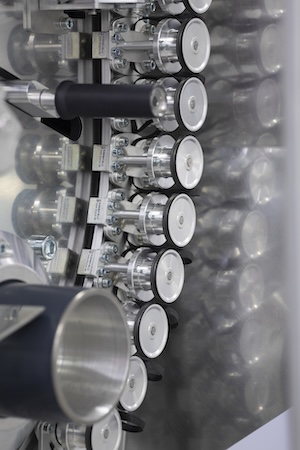
REMSCHEID, Germany — March 4, 2026 — With POY 2.0, Barmag is introducing a completely redesigned spinning concept that takes the production of partially oriented yarn (POY) to a new level in terms of technology and economy.
Barmag presented its innovative POY 2.0 spinning concept at ITMA Asia + CITME 2025. The new WINGS POY 2.0 winder integrated into this concept features an automatic string-up function for the first time.
The solution, which was presented to a selected audience of experts for the first time at ITMA Asia + CITME 2025, was met with great enthusiasm: several yarn producers worldwide immediately expressed their interest in a pilot plant
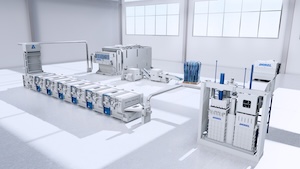
At the heart of the development of the new POY 2.0 spinning concept was a comprehensive analysis of the entire process chain – from spinning to winding – by Barmag engineers.
The result: optimized core components, improved energy efficiency, and significantly simplified operating processes. The highlights along the production process:
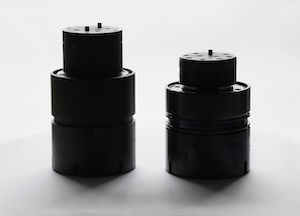
Optimized DIO spin pack: more compact, more sustainable, more powerful.
The new generation of the DIO spin pack has been further optimized in terms of its rheological properties and ensures even more homogeneous filament quality.
The new generation of the DIO spin pack is significantly more compact.
The more compact design reduces the need for filter sand by around a third and the weight of the component by more than 30 percent. This lowers material consumption and makes handling easier. The spinning beam also benefits: the modified design reduces the surface area, resulting in energy savings of up to ten percent.
EvoQuench 2.0: higher process stability and easier operation
The EvoQuench radial quenching unit remains a central component of the process for uniform cooling of the filaments. The new EvoQuench 2.0 version makes it much easier to adjust the convergence length. More accessible controls shorten setup times and reduce the amount of waste material.
WINGS POY 2.0: automated string-up and lower waste rate
The heart of the new spinning line is the WINGS POY 2.0 winding machine. For the first time, the machine features an automatic string-up function – a long-awaited feature in the market that keeps string-up times consistently short and reduces waste in the long term. At the same time, the number of personnel required at the take-up level is reduced, which is a considerable advantage for many spinning companies given the increasing shortage of skilled personnel.
The new active quick returns facilitate the adjustment of product-specific parameters, especially for frequently changing yarn products and demanding qualities. They also ensure improved bobbin formation without overthrown yarn ends. Additional shielding of the chuck and bobbins permanently prevents the formation of fluffs. It stabilizes the yarn path and supports trouble-free production.
The new yarn end fixation also ensures greater process reliability: loose yarn ends are a thing of the past, which avoids unplanned machine downtime due to faulty sensor signals in subsequent automated logistics processes. The optimized XPT housing with a larger rotor stroke extends the parking time and increases flexibility during the doffing process. Overall, the system runs more stably and productively.
Digitally networked with atmos.io
POY 2.0 is fully integrated into the digital system world of atmos.io. Various apps give the operator a complete overview of the production process – from the polymer to the finished yarn. Quality parameters are continuously monitored so that operating personnel can intervene quickly if necessary. The result: reduced waste quantities, higher product quality, and improved margins thanks to fully networked production.
SHANGHAI — March 5, 2026 — The home textiles industry is ready to gather in Shanghai next week as Intertextile Shanghai Home Textiles – Spring Edition 2026 prepares to open at the National Exhibition and Convention Center from 11 – 13 March.
Bringing together more than 360 exhibitors from six countries and regions, the fair will showcase an extensive array of home textiles, including bedding, towelling, carpets, home textile technologies, textile design and more, serving as a forward‑thinking hub where design, sustainability and smart living converge.
Set against China’s rapidly evolving consumer market and growing interest in the ‘sleep economy,’ the fair will spotlight eco‑conscious products, functional home textiles and sleep‑oriented solutions, offering visitors an in‑depth showcase of next‑generation materials and concepts poised to shape the future of home interiors and wellness‑driven lifestyles.
Visitors can source across the full spectrum of home textiles at the fair, highlighted by sustainable options from O Jia He Home Textile (booth number 5.2G06), showcasing carpets made from recyclable, degradable materials with subdued patterns, and Tourgo (5.2E17), presenting bedding products including pillow cores made from 100% naturally degradable materials, alongside Foshan Recoton Textile (5.2G30), Nantong Textile Innovative Plaza (5.2E38), Suzhou Synteks (5.2J02), and Wujiang City Yunjie Textiles (5.2E09). Meanwhile, Jiangsu Rayfull Textile Technology (5.2E48) and Nibo Sixiang Home Technology (5.2G42) will make their debut this edition.
Pavilion highlights: Designer Pavilion creativity and Uzbekistan Pavilion debut
Enhancing these offerings, the Designer Pavilion will spotlight a concentrated showcase of creativity-led innovation from leading exhibitors. Haoyun Home Decoration (Nantong) (5.2E86) will present original hand-drawn textile printing patterns, beautifying home textile aesthetics with culturally rich designs crafted by a team from the Lu Xun Academy of Fine Arts. Nantong Banxia (North Star) (5.2C83) focuses on premium home textiles R&D, blending ergonomics, material science, and aesthetic design to create a ‘featherlight, silk-like’ sleep experience. Meanwhile, Nantong Xinganxian Home Textile Design (5.2B81) will highlight frontier sleep technology and aesthetic solutions, providing high-design, functional duvet and pillow cores for top brands through innovative materials, structures, and cross-industry collaboration.
New to this edition, the Uzbekistan Pavilion (5.2A53) is organised by the Agency for the Development of Light Industry under the Cabinet of Ministers of Uzbekistan and will feature approximately 10 companies showcasing the country’s textile strengths across the value chain. The pavilion will present its bedding and bath offerings, highlighting high-quality cotton yarn, traditional craftsmanship, and sustainability-focused practices. These elements combine softness, durability, and distinctive Central Asian-inspired design, appealing to international buyers. Additionally, the pavilion will also reflect Uzbekistan’s strengths in apparel fabrics and garment production, building a bridge to the concurrently held Intertextile Apparel.
Elite buyers target next-gen home textile opportunities
The fair continues to attract renowned industry players across the global retail and supply chains, including Adairs, Lidl & Kaufland, MUJI, Otto Group, Sainsbury’s, Tesco, The Home Depot, Williams-Sonoma alongside key domestic buyers. It offers a crucial platform for both buyers and exhibitors to exchange ideas on product development that align with market trends – particularly within the expanding ‘sleep economy’ and sustainability-driven purchasing, which forges new partnerships and facilitates the adoption of commercially viable trends.
Fringe programme: revamp spotlights four key themes
This year’s fringe event features a bold transformation with expert-led forums, seminars, and panels centred on four key themes: Palette, NextGen, Go-Green, and Connector. These sessions will deliver fresh insights into sleep trends alongside other market drivers, relating directly to the evolving demands shaping the future of home textiles.
Sleeping Aid Summit 2026: will bring together industry leaders, researchers, and experts to explore sleep health integration with home textiles, launching the 2026 Sleep Aid Report on emerging trends and featuring the Sleep Aid Display Area (5.2L96) with innovative products for immersive, design-driven sleep experiences.
Colour Sense*Ability: Transforming a Home into a Personal Haven in 2027 Through Multi-Sensorial Design: led by Pantone Color Institute Vice President Ms Laurie Pressman, this session will explore multi-sensorial home designs that combine colour, scent, tactility, sound, and light – drawing inspiration from nature and personal wellbeing.
Additional highlights include Fibres at the Core, Life Reborn – Lenzing Innovative Fibre in Home Textile and Interior Applications and Freudenberg Performance Materials Group’s discussion on Evolon Anti-mite Material Used for Bedding Application, rounding out a dynamic fringe lineup focused on sustainable fibres and future-ready textiles.
Intertextile Shanghai Home Textiles – Spring Edition 2026 will be held concurrently with Intertextile Shanghai Apparel Fabrics – Spring Edition, Yarn Expo Spring, CHIC and PH Value at the National Exhibition and Convention Center. The fair is organised by Messe Frankfurt (HK) Ltd; the Sub-Council of Textile Industry, CCPIT; and the China Home Textile Association (CHTA).
To find out more about this fair, please visit: www.intertextilehome.com.
REMSCHEID, Germany — March 3, 2026 — In the German research project bioPEtex, BB Engineering (BBE) is working with other partners to develop textiles made from 100% bio-based polyethylene (PE). The aim is to make use of this polymer, which has hardly been used in the chemical fiber industry to date. BBE is contributing its spinning and texturizing expertise and developing the texturing process on an industrial scale. The first promising results are already available – opening up new opportunities for sustainable and economically attractive applications in the textile industry.
For years, the global chemical fiber market has been dominated by PET, a technically mature, versatile, and cost-effective polymer for textile applications. However, despite its advantages in terms of processability, strength, and economic availability, PET has come under criticism: its dependence on fossil raw materials, high CO2 emissions along the value chain, and challenges in recycling PET products are drawing the attention of researchers and industry to alternative materials that are both economical and sustainable.
Biopolymers are an important keyword in this context. However, PET cannot be produced on an industrial scale in a 100% biobased manner. Clothing made from 100% other biopolymers only exists in studies, as it is too expensive for the mass market. In this context, the German research project bioPEtex is investigating a polymer that, due to its properties, has previously been considered unsuitable for chemical fiber production: polyethylene (PE). This is because bio-based PE is inexpensive to procure and environmen- tally friendly. However, it has not yet been developed for use in the textile industry.
BB Engineering (BBE) is one of the industrial partners working with RWTH Aachen University to implement the project funded by the German Federal Ministry of Research, Technology, and Space. The aim of the project is to develop textiles made from 100% biobased polyethylene that are both environmentally friendly and economically viable. BBE is a supplier of spinning, texturizing, and recycling equipment as well as extrusion and filtration technology, and supplies customers all over the world. BBE therefore has extensive expertise in the manufacture of synthetic fibers and their
return to the recycling cycle. The company is contributing this long-standing expertise to the bioPEtex project. On the one hand, BBE is providing consulting support for the development of the spinning process. On the other hand, BBE is responsible for the crucial process step of texturizing, which has a significant influence on the subsequent textile performance of the developed fibers.
“With our participation in the bioPEtex project, we don’t just want to contribute to the development of sustainable solutions, we also want to focus on the economic benefits for our customers,” explains Dr. Klaus Schäfer, Managing Director of BBE. “Bio-PE textiles offer companies the opportunity to reduce their production costs while tapping into new market segments.”
PE and its role in the chemical fiber industry
PE is one of the most commonly produced polymers worldwide. Particularly durable, hydrophobic, lightweight, and chemically stable, it is used not only in its main area of application, the packaging industry, but also in various other areas such as building materials and consumer goods. However, PE has so far played hardly any role in textile fiber production. From a technical point of view, this is mainly due to processing challenges. PE crystallizes at low temperatures and therefore offers a narrow temperature window for spinning and texturing. In addition, the low polarity of PE makes it difficult to dye.
Today, PE is used exclusively as a functional component in composites, geosynthetics, or special high-performance fibers (e.g., UHMWPE)—but hardly ever in traditional clothing or home textile segments. Yet the material structure also offers properties that are highly attractive for certain textile applications:
very low density resulting in extremely lightweight fibers,
excellent chemical resistance,
very good dimensional stability and abrasion resistance,
potentially good recyclability due to clear polymer structure,
water-repellent and quick-drying with a cool feel.
The issue of difficult dyeability could be resolved by spinning dyeing.
As a result, PE could become relevant for applications where lightweight construction, hydrophobicity, robust performance, and recyclability are required—for example, in sports textiles, outdoor products, technical textiles, or hygienic disposable products.
“This opens up completely new product architectures for our customers. A material such as PE, which has hardly been represented in the textile market to date, could – provided that processing is optimized – enable highly attractive applications in economic terms,” explains Dr. Klaus Schäfer.
Bio-based PE – Economic and ecological potential for the textile industry
Unlike PET, bio-based PE is chemically identical to its fossil-based counterpart: both materials are completely identical in terms of structure and properties. The only difference lies in the origin of the monomers used. Bio-based PE is usually produced from fermented sugar (e.g. from sugar cane) or starch (e.g. from corn).
Compared to fossil-based PE, it has a significantly better carbon footprint and opens up the possibility of a completely bio-based textile recycling cycle without any loss of quality. Since the low melting point reduces the energy required for processing and (bio)PE is widely available globally, energy and material costs are potentially lower. The textile industry can benefit here from the established raw material flows of the packaging and plastics industries. In addition, the introduction of PE fibers enables the development of new, highly specialized product segments and opens up additional differentiation opportunities for manufacturers through sustainable material alternatives.
BB Engineering develops PE texturizing process
BB Engineering builds spinning and texturizing lines. (Source: BB Engineering)
However, before PE can be used on an industrial scale as a material for the chemical fiber industry, it must first be systematically researched and tested. The bio-PEtex project is currently working on this. Within the consortium, BBE is responsible for developing and adapting the texturizing processes. This step is crucial, as it is the texturing that defines the subsequent haptic, functional, and mechanical properties of a fiber. The challenge lies in modifying PE under the novel process conditions in such a way that it becomes compatible with established textile applications.
“Our many years of experience in developing chemical fiber production plants and our in-depth understanding of process management enable us to develop innovative solutions that go far beyond the current state of the art,” says Ralf Morgenroth, Head of Engineering Texturizing at BBE.
Overall, the project comprises several innovative steps:
Material development: Development and production of spinnable bio-PE compounds by TECNARO containing bio-based color pigments.
Prozess optimization: Melt spinning and false twist texturing processes, which are being scaled up for industrial use at theInstitute for Textile Technology at RWTH Aachen University and at BBE.
Textile production: The partner FALKE is conducting initial knitting trials to validate the yarn in the form of demonstrator T-shirts.
The results so far show promising progress: the bio-PE yarns have suitable mechanical properties and are comfortable to wear with a cooling effect, which is desirable in sportswear, for example. At the same time, a design-for-recycling approach is being pursued in order to efficiently recycle the textiles at the end of their life cycle. A particular milestone in the project is the successful production of a first white t-shirt — a first step toward testing marketability. Further development steps and optimizations are of course still necessary here.
“We are very positive about the results so far. They show that PE has real potential in textile value creation and can offer significant economic and ecological advantages for the industry in specific applications. We are delighted to be involved in this pioneering project. It is our aim to provide our customers with sustainable and profitable innovations,” says Dr. Klaus Schäfer.
MALMÖ, Sweden — March 3, 2026 — Polygiene, an innovator of odor control technologies for textiles, has announced the launch of Polygiene OdorCrunch2.0, a next-generation odor capture technology designed to significantly reduce odors in apparel and textiles through a non-metal capture mechanism.
Building on the development of the original Polygiene OdorCrunch technology, Polygiene OdorCrunch2.0 delivers enhanced odor absorption performance across a wider range of fabrics, including lightweight 100 % polyester, blended constructions, and natural fibres. The technology works by capturing environmental odor molecules within the textile structure, preventing them from being released during wear and helping garments stay fresher for longer.
Unlike conventional odor control solutions, Polygiene OdorCrunch2.0 is heavy-metal free and uses an odor capture mechanism that retains odor molecules without compromising fabric comfort, breathability, appearance, or performance.
Polygiene OdorCrunch2.0 has been engineered for modern textile production environments and can be easily integrated into existing finishing processes, including padding and exhaust application methods. It delivers durable odor absorption performance and has been shown to provide a high level of odor reduction in accordance with ISO 17299-3, including on lightweight 100 % polyester.
In addition to performance and activewear, Polygiene OdorCrunch2.0 is well suited to textile items that are not easily or frequently washed, such as garments requiring dry cleaning or specialist care. By maintaining freshness between cleaning cycles, the technology supports garment longevity due to less frequent cleaning whilst improving wearer confidence across a broader range of apparel categories.
Polygiene OdorCrunch2.0 is designed to support growing sustainability expectations within the textile industry. The technology contains no heavy metals, no PFAS, and its biodegradability properties are currently under testing. By enabling garments to be worn more times between washing, Polygiene OdorCrunch2.0 has the potential to support reductions in water and energy usage over a product’s lifetime.
With its combination of high-performance odor absorption, broad fabric compatibility, ease of application, and future-ready sustainability profile, Polygiene OdorCrunch2.0 represents the next evolution of Polygiene’s odor control portfolio.
For more information about Polygiene OdorCrunch2.0, please visit www.polygiene.com.
ZURICH, Switzerland — March 4, 2026 — Haelixa, the Swiss pioneer in DNA-based traceability and product authentication, today announced that Petri Alava, founder and former CEO of Infinited Fiber Company, has joined its Board of Directors.
Petri Alava
Alava founded Infinited Fiber Company and, over a 10-year journey, led it through the stages of development to the threshold of its industrial scale-up phase, transforming breakthrough textile-to-textile recycling technology into a globally recognised material innovation platform. During his tenure, the company secured more than €100 million in strategic funding from H&M Group, Inditex, Adidas and Zalando, and established over €200 million in long-term commercial offtake agreements with brands including Patagonia and PVH.
His appointment follows Haelixa’s recent €2M capital raise and accelerating international deployment across textiles, luxury goods and high-value materials, bringing operational scale experience to complement the company’s deep scientific expertise.
The industry is navigating tightening regulation, margin pressure and geopolitical instability. As scrutiny over origin, authenticity and product claims intensifies, verification is becoming central to supply chain risk management and resilience.
Haelixa embeds invisible, forensic DNA markers directly into materials, giving brands product-level proof across supply chain due diligence and luxury authentication. Its newly launched DNA-based Authenticity Service extends this capability to enable rapid verification across resale, repair and distribution channels, addressing growing demand as counterfeit risk increasingly intersects with operational and reputational exposure.
“Global supply chains are built on documents and declarations. These systems are increasingly unreliable. Haelixa embeds proof into the product itself, creating a scalable trust layer that works across industries. That’s what makes it powerful. Not just for one sector, but as infrastructure for global supply chain trust.”
Patrick Strumpf, CEO of Haelixa, said the appointment reinforces the company’s next phase of growth. “We’ve built deep scientific and regulatory expertise. Petri brings experience in turning breakthrough innovation into industrial adoption. That combination matters as traceability becomes foundational rather than optional.”
GRAZ, Austria — March 5, 2026 — International technology Group ANDRITZ will be presenting its innovative nonwovens production and textile solutions at Techtextil in Frankfurt, Germany, from April 21 to 24, 2026 (Hall 12, B95). ANDRITZ will focus on technologies for durable and technical nonwovens, sustainable fiber processes, textile recycling, and life-cycle services.
SPOT ON SUSTAINABILITY AND CIRCULARITY
ANDRITZ reXline tearing line for recycling of textile waste
ANDRITZ continues to advance industrially viable solutions for sustainable nonwoven and textile production.
Key topics at Techtextil include textile sorting and recycling, natural fiber processing for durable nonwovens, and complete man-made cellulosic fiber (MMCF) production plants. All innovations aim to support circularity and long-term value creation.
Complete MMCF production solutions for lyocell
ANDRITZ introduces its competences in production plants for MMCF, namely lyocell – a rapidly growing market driven by demand for sustainable materials. The solutions cover the full scope, from engineering to specialized equipment like flash dryers and pulp preparation systems. With decades of expertise in pulp and paper, ANDRITZ also provides audits and upgrades for existing plants. The lyocell process stands out for its environmental benefits and high-quality output, making it a key technology for the future of textiles and nonwovens.
Natural fibers for durable nonwoven
ANDRITZ highlights the growing potential of bast fibers such as hemp, flax, jute, and kenaf. These fibers offer a strong potential across industries including automotive, insulation, geotextiles, construction, and technical textiles. With their low environmental footprint, local sourcing potential, and zero-waste characteristics, bast fibers support the shift toward circular, climate-friendly production models. ANDRITZ offers complete solutions, including dry cleaning, decortication and refining systems enabling energy-efficient processing and high-quality fiber production. This process can be perfectly combined with neXline airlay technology resulting in sustainable durable nonwovens.
Textile sorting and recycling: one century of heritage
With over a century of expertise, ANDRITZ Laroche provides solutions covering the entire textile recycling chain – from automated textile sorting and advanced fiber preparation to mechanical and chemical recycling, as well as integrated process combinations.
At Techtextil, ANDRITZ places a strong focus on predictive and automated textile sorting – key elements in closing the gap toward true circularity in the textile industry. The AI-based ANDRITZ teXscan unit evaluates fabric quality prior to recycling, enabling efficient material routing for chemical recycling, nonwoven or spinning. Complementing this, the automated sorting system classifies garments by composition and color, removes hard components such as buttons and zippers, and prepares materials for further fiber processing.
Together, these technologies create an efficient pathway for transforming post-consumer and post-industrial textile waste into fibers suitable for spinning, nonwovens, and composite applications.
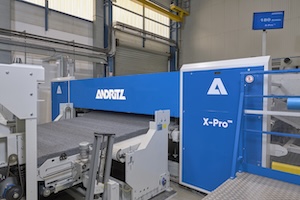
PRODUCT INNOVATION: HIGH-SPEED PRODUCTION WITH THE ANDRITZ X-PRO™ CROSSLAPPER
ANDRITZ X-Pro crosslapper for high-speed production for needlepunch and spunlace lines
ANDRITZ introduces the new X-Pro™ crosslapper, a groundbreaking innovation in the crosslapping process for needlepunch and spunlace lines. This new machine sets unrivalled standards in speed, productivity, and quality, overcoming traditional limitations. Its unique “X-path” design ensures precise fiber control, eliminating distortion and enabling flawless overlap regardless of web characteristics. The system maximizes throughput and fabric homogeneity while maintaining superior quality. Additionally, it is fully compatible with ANDRITZ’s ProWin™ profile correction system, enhancing performance and efficiency to unprecedented levels.
ADVANCED TECHNOLOGIES FOR TECHNICAL FIBERS
ANDRITZ will also present its technologies for processing technical fibers such as carbon, aramid, glass, and ceramic fibers. Its complete needlepunch and wetlaid lines enable precise fiber control and consistent quality for demanding end uses, including filtration, composites, construction, and industrial materials.
LIFE-CYCLE MANAGEMENT: ANDRITZ SYNERGY SERVICE CONTRACTS
ANDRITZ SYNERGY™service agreements provide efficient and cost-effective solutions to ensure uninterrupted productivity by complementing customers’ in-house capabilities with customized service packages. These agreements are designed to match the life-cycle of the equipment, including regular expert visits, preventive maintenance, retrofits, and upgrades to keep your operations running smoothly and reliably. Discover more at Techtextil.
The entire ANDRITZ Nonwoven & Textile team is looking forward to welcoming customers and partners at booth B95 in hall 12.
DURHAM, N.C. — March 5, 2026 — The AATCC Stain Release Replica is the essential tool to evaluates a fabric’s ability to release stains from corn oil (AATCC TM130) and household soils (AATCC TM215). We’re excited to announce advancements that make it more sustainably manufactured.
Oils and Soils: An everyday laundry problem
One of common challenges that everyday consumers and laundry professionals alike face is removal of oily stains. To evaluate this, testing labs have depended on AATCC Test Method 130: Test Method for Soil Release: Oily Stain Release for nearly 60 years. Now, a newer test method, AATCC TM215: Test Method for Soil Release: Household Soils, developed in 2023, also utilizes the AATCC Stain Release Replica. AATCC Research Committee RA56: Stain Resistance Test Methods, developed both of these essential test methods.
The AATCC Stain Release Replica is the essential tool to evaluates a fabric’s ability to:
release an oily stain after home laundering, or
release household soils during home laundering
Today we highlight the advancements of this essential evaluation tool.
Functions of the AATCC Stain Release Replica
The AATCC Stain Release Replica is a dependable tool to evaluate oil release and household soil release in textiles, using two AATCC Test Methods, AATCC TM130 and TM215.
The principle of AATCC Test Method 130: Test Method for Soil Release: Oily Stain Release, is that an oil stain is applied to fabric specimen, weight is applied to the stain, and the fabric is washed using standardized home laundering conditions. To make this repeatable, the standardized laundering conditions are followed including standardized laundry detergent, AATCC Standard Reference Powder Detergent.
Similar concepts are applied in AATCC TM 215, in which the testing operator applies household stains (including red wine, ketchup, mustard, coffee, grape juice) to fabric, Next, standard weight is applied to each stain, and the operator conducts a standard laundering procedure.
To evaluate the ability of the fabric to release the oil stain (AATCC TM130) or the household stain (AATCC TM214), the stain on the washed fabric is compared to the AATCC Stain Release Replica.
Improvements to the AATCC Stain Release Replica
Recent advancements for this product have allowed AATCC to reduce some of the adhesives and paper used in its manufacture. This benefits customers with a way of continuing this essential testing with less impact on the environment.
Features:
The trusted 5 rating scale provides for clear assessment and grading
Can be used in both AATCC TM130 and TM215
Used alongside the AATCC Standard Reference Detergent, Glassine Paper, and 5 Lb Stainless Steel, and AATCC Blotting Paper
An authentic AATCC Testing Product used for conducting AATCC Test Methods.
Benefits:
Enables visual assessment with the human observer in a standard viewing environment.
Labs: enhance your offerings, allowing for conducting of two popular test methods, AATCC TM130 and AATCC TM215.
Companies: Evaluate the performance of your textile products, using stain standardized stain release test methods to aid in their acceptance testing of fabrics.
What’s New in the AATCC Stain Release Replica
Improved Sustainability Manufacturing: Produced using a direct printing method, reducing paper and adhesive materials
Same consistent rating system
Highlights:
The AATCC Stain Release Replica is the essential tool to evaluate how well a fabric releases an oily stain after home laundering.
It’s used in two global test methods:
AATCC Test Method 130: Test Method for Soil Release: Oily Stain Release
AATCC TM215: Test Method for Soil Release: Household Soils
AATCC Stain Release Replica now features an improved manufacturing processes, reducing paper, adhesives, and improving sustainability
To place an order visit: https://members.aatcc.org/store/stain/
Posted: March 7, 2026
Source: The American Association of Textile Chemists and Colorists (AATCC)
WASHINGTON, DC — March 5, 2026 — The American Medical Manufacturers Association (AMMA), the only national voice for U.S.-based medical product manufacturers and suppliers, today announced the election of its 2026 Board of Directors.
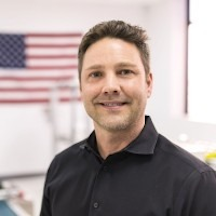
Tom Allen
Tom Allen, President of New York-based PPE manufacturer Altor Safety, has been elected President of AMMA.
Tom is a longtime entrepreneur and his efforts to grow a domestic manufacturing operation have been featured in national and local media.
Altor is located in Valley Cottage, NY.
Allen is joined on the board by:
Vice President Donny Chan, who serves in a leadership role at Maxter Healthcare Inc. As the flagship American manufacturing hub for the global Supermax Corporation, this Texas-based facility is in active production, delivering high-quality, domestically made medical nitrile gloves through large-scale, high-volume manufacturing.
Treasurer Doug Wynalda leads Wynalda Packaging, a long-standing provider of premium packaging solutions including FDA-sensitive pharmaceutical and medical packaging.
Secretary Alan Rust represents SafeSource Direct, a Louisiana-based American manufacturer of nitrile exam gloves and other personal protective equipment.
“These leaders represent the best of American manufacturing. They are innovative operators who invested in U.S. production when it mattered most and who understand what it will take to keep critical medical products made here at home,” said Eric Axel, Executive Director of AMMA.
AMMA also announced that Michelle Feinberg from the New York Embroidery Studio and Dan Adams from American Armor will also join the AMMA Board.
Axel added, “These individuals and the companies they represent have proven that U.S. manufacturers can compete on quality, reliability, and scale. Their experience will be invaluable as AMMA builds a durable, pro-American manufacturing agenda.”
New President Tom Allen said, “In the months ahead, AMMA will deepen our engagement with Congress and the Administration to advance targeted tariffs, smart procurement rules, and other pro-American policies that reward resilient domestic supply chains.
Allen continued, “Our new board is committed to working with policymakers from both parties to ensure that the next generation of gloves, masks, syringes, supplies, and packaging is designed, engineered, and manufactured in the United States.”
The new board will guide AMMA’s advocacy on federal and state policy, promote long-term contracting and strategic purchasing for the U.S.-made products, and support workforce and innovation initiatives that strengthen America’s medical industrial base.
Posted: March 7, 2026
Source: The American Medical Manufacturers Association (AMMA)

 DURHAM, N.C. — March 4, 2026 — AATCC is now accepting nominations for various AATCC Leadership positions and awards. Please submit your nominations by March 31, 2026.