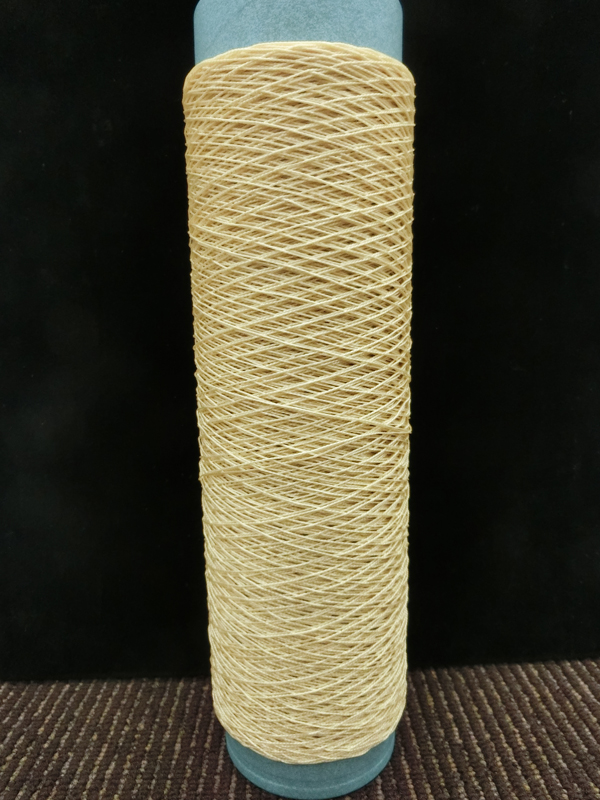
Kraig Biocraft Laboratories Engages Textile Expert To Develop New Innovative Yarns And Fabrics Applications For Dragon Silk™

ANN ARBOR, Mich. — September 12, 2022 — Kraig Biocraft Laboratories Inc., the biotechnology company focused on the development and commercialization of spider silk, announces that it has contracted textile expert Jeff Dorton to assist the company in developing new and innovative yarns and fabrics utilizing Dragon Silk™.

Kraig Labs is leveraging Dorton’s expertise and proven record of innovation in textiles to create new and exciting composite yarns and fabrics utilizing spider silk. The initial customer for these yarns and fabrics will be Spydasilk Enterprises, the company’s joint venture apparel brand, headquartered in Singapore. Following the launch of Spydasilk apparel, the company plans to expand collaboration with Dorton to create several additional yarns and textiles, for applications spanning the performance and luxury textiles market and beyond.

Dorton brings a passion for material development, a proven track record of innovation, and a wealth of experience working with some of the best textile mills worldwide. He has led some of those most disruptive innovations in next-generation textiles that permeate the performance wear segment.

Utilizing his extensive network of mills and spinners around the globe, Dorton is currently working to drive the manufacture of the first spider silk fabrics.

“I have known Jeff since his time with The North Face, and I am thrilled to partner with him to create Kraig Labs’ first custom yarns and fabrics. Jeff is a highly regarded textile expert with a storied history of developing new textile technologies. He has directed key initiatives for some of the planet’s biggest brands, and we can’t wait to see what we can do together. While his ability to develop high-performance yarns and fabrics may be unmatched, we share Jeff’s passion for sustainability and textiles that are functional and desirable,” stated Company COO Jon Rice.

Jeff Dorton

Dorton is vice president of product development and Material Innovation at LifeLabs Design. Previously he directed material innovation efforts for The North Face and Under Armour.

Dorton’s career highlights include developing Intellectual Property in fabric and insulation commercialized by leading performance wear brands around the globe. He has balanced this work in innovation with a solid commitment to environmental responsibility and drive to sustainability. Dorton led initial efforts to develop Nano spun membrane called FutureLight, the most advanced fabric and largest commercial launch in The North Face’s (TNF) history. Dorton expanded the franchise offering of “Thermoball” insulation through construction and material innovation for TNF. He coordinated with the sustainability team at VF Corporation to create the Responsible Down Standard that was later gifted to Textile Exchange to ensure ethical and sustainable sourcing for natural insulations. Dorton assisted in moving the entire supply chain at TNF to a more eco-friendly C0 DWR finish and shifted over 80% of fabrics into recycled content.

Posted: September 12, 2022

Source: Kraig Biocraft Laboratories, Inc.

Gadoon Textile Mills Ltd. (Pakistan) Joins ITMF As Corporate Member

ZURICH — September 12, 2022 — Gadoon Textile Mills, a part of the Yunus Brothers Group (YBG), one of the largest spinning an textile companies in Pakistan has joined the International Textile Manufacturers Federation (ITMF) as a new corporate member on September 7, 2022.

Established in 1988, Gadoon Textile Mills is a pioneer of quality and innovation in the textile manufacturing sector of Pakistan. The company manufactures and processes all types of cotton and manmade fibers, while leveraging its state-of-the-art manufacturing plants in Karachi and Gadoon Amazai, Pakistan.

The ITMF founded in 1904 is the international forum of the global textile value chain from fiber to finished products. Its members are from textile and apparel-producing countries representing 90 percent of global production.

“By becoming a Corporate Member of ITMF, Gadoon Textile Mills will join associations and companies from around the world that are active in the entire textile value chain like fibre, textile, garment, home textile, textile machinery or chemical producers as well as other organisations and companies affiliated with the textile industry. This exclusive exposure will provide Gadoon Textile Mills with additional and unique access to international partners from around the world. On the other hand, ITMF and ITMF’s members will benefit from Gadoon’s extraordinary expertise and experience. Bringing like-minded people together on ITMF’s platform for a better understanding of the dynamics of global trends and for sharing best practices is one of the several advantages of ITMF,” stated Dr. Christian Schindler, Director General of ITMF.

Sohail Tabba, CEO of Gadoon Textile Mills, stated that “in a fast evolving, dynamic and integrated world, the ITMF represents a growing ecosystem of industry leaders, experts, and key stakeholders from the global textile industry. This corporate membership unlocks a valuable knowledge-based platform for us in terms of industry analytics which will help the team at Gadoon Textiles build bridges through numerous networking and collaboration opportunities across the global textile value chain. Gadoon Textile Mills is honored to be a part of the forum.”

Posted: September 12, 2022

Source: The International Textile Manufacturers Federation (ITMF)

Pincroft To Provide Innovative Non-Skin Contact Vector Protection For Military Fabrics

ADLINGTON, England — September 12, 2022 — Pincroft — a commission textile dyer, printer and finisher with more than 90 years of experience supplying armed forces and defence companies around the world — has announced the adoption of an innovative precision spray technology that allows the application of many finishes for textiles, including permethrin for vector protection.

The system is a more versatile and environmentally friendly alternative to the traditional application method of padding and offers the possibility of applying the chemistry either face side or both sides of the fabric across the full width.

The benefits of this new equipment are countless not only for the end user but also for the environment. The system allows for a reduction of energy, water and wet pick up of up to 50 percent, while 100 percent of the chemistry is recycled. Thanks to the equipment’s precision application technology, less water and chemistry are needed, and its no immersion system means the fabric would require less saturation and a shorter drying time.

In terms of end user advantages, the new precision spray technology adopted by Pincroft, solves the issues linked to the use of permethrin for vector protection in contact with the skin, a common occurrence in soldiers who require protection against mosquitos, ticks and other insects during combat.

Mike Collins, Pincroft’s managing director, said: “This innovative equipment can be used in two ways. The single sided spray finishing can be used where the full effectiveness of the finish is only required on the face side of the end item, for example, vector, fluorocarbon and antimicrobial protection. The dual spray finish may be used to simulate the traditional padding method where full effectiveness of the finish is required dependent on end use, for instance, crease recovery, fabric softening, soil release and moisture management.”

The vector protection solution provided by Pincroft is ACTIGARD®, a branded technology developed by Sanitized AG, with long lasting active ingredients that have proved highly effective against mosquitoes and ticks. This product endures a high number of washes, is suitable for military uniforms and conforms to Standard 100 by Oeko-Tex®.

Posted: September 12, 2022

Source: Pincroft

BASF At Simac — 
Go! Create Your Shoes With BASF Materials

LUDWIGSHAFEN, Germany— September 12, 2022 — From September 20-22, 2022, Simac, the international machinery and technology exhibition for shoes, will once again be opening its doors. This year BASF (hall 14 booth, F33/F37/G34/G38) will exhibit its wide range of new solutions for the shoe industry: a concept shoe made entirely out of BASF materials, boots which stay soft even at minus 40 degrees, light and high rebound soles for safety shoes and sustainable footwear solutions. On top BASF will present 3D printed shoes as well as coatings solutions to protect the soles.

From sports to safety shoes: low density, high elasticity

Light and high rebound are main requirements when it comes to the midsole of sports shoes. In this field BASF is one of the top suppliers of polyurethane (PU) materials. But what is valid for sports shoes should also be true for safety shoes. High rebound which guarantees soft dampening effects and lightweight soles are decisive for the comfort also of safety shoes. BASF transferred their knowledge from the sports sector to the safety shoe sector. The result are PU materials that safety producers waited for — it allows highest productivity by the direct soling process and comes with conformance to all safety norm requirements.

Winter boots made from PU stay soft even at minus degrees

Thanks to close cooperation with boots manufacturers, BASF further improved the performance of Elastopan® polyurethane systems for boots. The result is a PU system for winter boots that provides outstanding properties: highest thermal insulation, keeping the feet warm, and provides high comfort even at low temperatures until minus 40 degrees. That makes this Elastopan® perfect for boots to wear during your winter adventure or — if combined with a toe cap — even on an oil rig in Alaska.

BASF offers a broad portfolio of sustainable footwear solutions

BASF will present a concept shoe that is entirely made of sustainable products — the athleisure shoe “MADGAMMA – Intertekk Saturn.” The upper of the shoe is made with the 100-percemt recyclable monofilament fiber Freeflex™ thermoplastic polyurethane (TPU). The replaceable midsole consists of the comfortable and biobased Elastopan® N polyurethane series. Another replaceable midsole option is made with TPU foaming, which has a lower density, high energy return, and is recyclable. Beside these products, other sustainable solutions such as the biomass balance approach and Ccycled Infinergy®, will be shown. BASF experts will be glad to discuss with you the right material for your environmental goals.

Footwear Design Content: In the lockdown we lived in bubbles, which now appear in award winning shoes

The creations from the last design contest of the school for design Calzaturiero Politecnico, Padua, Italy reminds us to the how we lived during Covid — like in bubbles. This feeling inspired the designers for the soles — the outsole is a transparent tread made of multiple bubbles. These bubbles enable us to look through to the midsole, which is bright and colorful. For the upper the students used recycled material from footwear and textile manufacturing scraps. The perfect combination between technology and craftsmanship can be found in the three winning shoes which are presented at Simac.

Less is more – the first in-mold coating with integrated demolding properties

Furthermore, BASF will present NovaCoat-D that combines in-mold coating and release coating in a new way. Besides its demold properties, the coating provides additional functionalities for soles such as protection against sunlight, scratches, and dirt. Thanks to its many years of expertise, BASF can offer a wide range of colors and effects. NovaCoat-D can be applied either manually or automatically.

3D Printing materials and solutions for the footwear industry

Forward AM, the brand of BASF 3D Printing Solutions GmbH, will present information at SIMAC 2022 on 3D printing materials and solutions for the complete design and development process of footwear. Along with samples of molds, lasts and soles, visitors can discover 3D printed climbing shoes made with the flexible Ultrasint® TPU01 powder. By leveraging the principles of design for Additive Manufacturing, the first individualized 3D printed climbing shoe came to life. This innovative technology not only simplifies the assembly of the shoe, but also reduces the production time required for customized footwear. Forward AM’s flexible materials, such as Ultrasint® TPU01, are based on Elastollan® by BASF, which offers customers across industries broad cross-technology solutions.

Posted: September 12, 2022

Source: BASF

58th Edition Of Filo: Sustainability And Creativity — From New Textiles To New Fashion

BIELLA, Italy — September 12, 2022 — The opening ceremony of the 58th edition of Filo on “Sustainability and creativity: from new textiles to new fashion” takes place Wednesday, September 14, 2022 at 10:30 in the Allianz MiCo-Milano, Filo Networking Area.

“Sustainability and creativity: from new textiles to new fashion”: the title encompasses various issues, on which Filo has been committed for some time: first of all, sustainability but also a new vision of the textile-fashion system, which has at its core manufacturing and a supply chain capable of building a true and productive dialogue among the different steps. This enhances the intrinsic value of a centuries-old textile tradition, to be combined, however, with the most innovative research and attention to sustainability.

After the speeches by Paolo Monfermoso (Responsible of Filo), Pier Francesco Corcione (President of ITS-TAM Biella) and Elena Chiorino (Councilor for Education, Work, Vocational Training, Right to University Study of the Piedmont Region), the ceremony continues with the round table moderated by the journalist Elisabetta Invernici. The debate involves stylists from different generations, who will propose their visions of fashion to the public, also in the light of the technical developments obtained from research on materials and the necessary ever closer collaboration with textile manufacturers.

Paolo Monfermoso, Responsible of Filo, explains: “Filo’s commitment to sustainability has been consolidated and recognized for some time. Our commitment is not limited to promoting the dutiful compliance with environmental and labor protection standards, but extends to creativity, to the new style that comes from innovative textile solutions, proposed by companies that are always at the forefront of quality and research, such as those exhibiting at Filo. If today’s textile-fashion is expressed in different “Languages”, the goal remains the same as always: the “well done”, the result of creativity and passion for one’s work. To that, the exhibitors of Filo and the guests of the inauguration ceremony are witnesses of the highest level.”

The 58th edition of Filo takes place on the 14th and 15th of September 2022 at Allianz MiCo – Milano (via Gattamelata 5).

Posted: September 12, 2022

Source: Filo

Teijin Frontier Develops Tire Cord Made From Eco-Friendly Adhesive And Recycled Polyester

TOKYO — September 12, 2022 — Teijin Frontier Co. Ltd., the Teijin Group’s fibers and products converting company, announced today that it has developed an eco-friendly tire cord made from an adhesive that does not contain resorcinol formaldehyde (RF) — which is harmful to the human body and the environment — and also incorporates a low-environmental impact chemically recycled polyester fiber for rubber reinforcement. According to the company, this is the world’s first commercialization of a tire cord that combines an RF-free adhesive and a chemically recycled polyester fiber.

Teijin Frontier will now begin to develop reinforcing-fiber applications for various rubber products, including tire cords, belts, hoses and other diverse uses. The company will start test production of its new tire cord in 2023, targeting annual production of 200,000 tons by 2030.

Teijin Frontier, guided by its THINK ECO® environmental initiative, is striving to improve its environmental value by developing greener materials and products for applications ranging from clothing to industrial materials. The new tire cord is a result of the company’s increasing emphasis on low-environmental impact solutions.

Thanks to its use of an adhesive polymer compound instead of RF, the new tire cord reduces the environmental impact of adhesive processing. In addition, due to its strong affinity with fibers and rubber, its adhesion performance is equivalent to that of conventional resorcinol-formaldehyde-latex (RFL) adhesives. Also, its chemically recycled fibers, which are made from polymers produced with chemical recycling method, maintain their strength, fatigue resistance, dimensional stability and heat resistance. Compared to conventional tire cords made from petroleum-derived polyester fiber, the new tire cord achieves the same levels of quality and performance in addition to reducing CO2 emissions during production.

The demand for more eco-friendly tires is growing due to rising environmental awareness. In response, Teijin Frontier has been actively developing eco-friendly materials and products for tires as well as other rubber products. In 2008, it launched the world’s first tire cord incorporating chemically recycled polyester fiber, and in March 2020 the company introduced an eco-friendly rubber-reinforced fiber cord that does not contain RF.

The newly developed tire cord will be exhibited at the International Tire Exhibition and Conference, one of North America’s largest tire-related exhibitions and conferences, in Akron, Ohio, September 13-15.

Posted: September 12, 2022

Source: Teijin Group

aeSolutions Launches Client Success Model, Appoints Chris Neff To Head New Project Development Team

GREENVILLE, S.C. — September 8, 2022 — aeSolutions — a consulting, engineering, and systems integration company — today announced the launch of the company’s Client Success Model, which will be managed by the newly formed Project Development team. Led by certified Project Management Professional (PMP) Chris Neff, the Client Success Model is a relationship-focused business strategy designed to help clients achieve their goals while using aeSolutions’ products and services to drive their success.

Under the Client Success Model, aeSolutions’ Project Development team will guide clients to drive project development throughout the entire project lifecycle, from concept to go-live. As the Project Development team’s understanding of each client’s objectives and obstacles grows, the value of aeSolutions’ guidance will grow. Benefits derived from the Client Success Model include:

  • A collaborative approach with each client’s team to drive project development from early engagement;
  • A strategy that ensures an understanding of client objectives for optimum-value alignment of aeSolutions’ products and services;
  • Early identification and removal of obstacles to the client’s success; and
  • Highest possible alignment between the client’s objectives and the Project Execution teams.

“At aeSolutions, we are humbled by our role as a trusted guide for our clients’ success,” said Ken O’Malley, aeSolutions co-founder and president. “With our Project Development team, senior leadership is completely committed to the Client Success Model. We are excited to begin formally offering this unique service to our new and existing clients.”

Chris Neff, PMP, has been appointed to lead the new team as Vice President of Project Development. In this role, Neff will be responsible for building, maintaining, and continually improving an effective project development and front-end loading (FEL) organization, and for guiding clients to a broader perspective in developing their projects. Prior to his promotion, Neff served as a senior director for aeSolutions’ Fired Equipment Program. Neff’s 25 years of experience includes successfully pursuing, securing, and executing capital projects in diverse industries, including chemical, onshore and offshore oil and gas, utilities, infrastructure, power, and mining. Prior to joining aeSolutions, Neff served as Senior Vice President of Project Development for a global Engineering, Procurement, and Construction (EPC) company and spent nearly a decade working in project development for operating companies.

“I am thrilled to be spearheading the new Project Development team that was formed to drive the Client Success Model,” said Neff. “I am committed to growing value for all aeSolutions stakeholders while continuously focusing on the customer. At aeSolutions, we are known for our ability to engage with clients from the very beginning, conceptual stages of projects all the way through to the delivery of incredibly complex, engineered solutions. I am proud to be part of a company that offers complete project solutions built on trusted expertise, and that endeavors to understand clients’ needs in a way that ensures client success.”

Posted: September 8, 2022

Source: aeSolutions

Seeing Beyond The Patterns With New Fabric Inspection Technique From Shelton Vision

The patent-pending system has been validated through factory trials on a purpose built full scale in-house demonstration system.

MANCHESTER, England — September 8, 2022 — A ground breaking and unique new fabric inspection technique for accurately detecting the most subtle of defects on patterned fabrics during high speed production has been developed by British Textile Machinery Association (BTMA) member Shelton Vision, of Leicester.

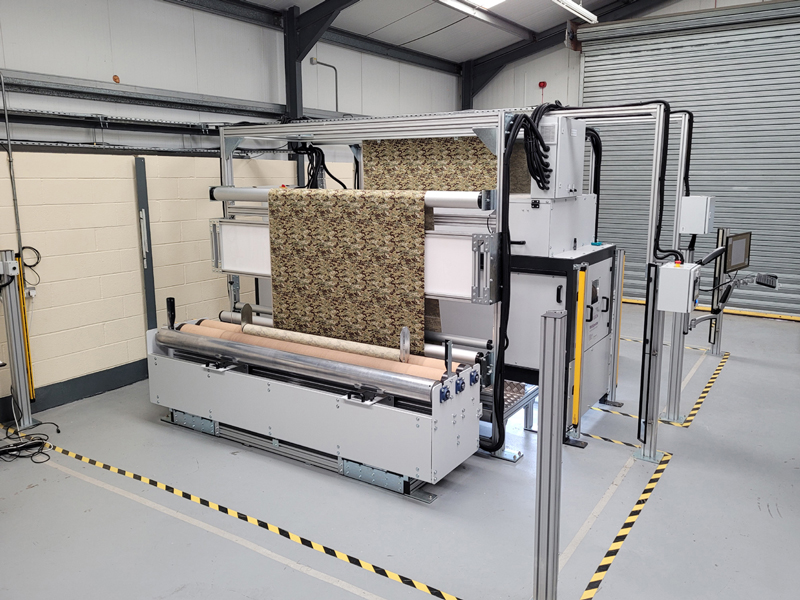
The patent-pending system has been integrated into the company’s WebSpector platform — already a powerful plain fabric inspection system — and validated through factory trials on a purpose-built full scale in-house demonstration system with sophisticated fabric transport capabilities.

As a result, a first system has already been ordered by a manufacturer of both plain and patterned fabrics, including camouflage, in Colombia.

This follows the successful conclusion of a 21-month Innovate UK project in which techniques for the resolution of complex pattern deformations were developed by machine vision and computer scientists in the company, backed up by the machine vision and robotics department at Loughborough University.

The Shelton WebSpector machine vision system offers a sophisticated platform for automated defect detection of more than 97 percent.

Restrictions

Traditional methods for defect detection rely on human inspection which is ineffective, with detection rates under 65 percent, while the Shelton WebSpector machine vision system offers a sophisticated platform for automated defect detection of more than 97 percent, but until now has been restricted to plain textiles.

“What our new system basically does is essentially make the ‘good’ pattern invisible to the detection software,” explained Shelton Vision Managing Director and CEO Mark Shelton. “Building on our market leading vision system for plain textiles, we have developed template matching techniques for the resolution of complex pattern deformations in order for the system to pick up defects in the pattern as well as underlying defects.”

While pattern matching and neural network approaches have previously been tried for patterned textiles they have failed to provide a practical solution due to the extreme complexity associated with pattern matching on deformable substrates like textiles, as well as the time required to train a neural network for each pattern type.

Challenges

“The challenge is that fabrics are not rigid and can be creased or stretched and are also subject to local distortion,” says Mark. “As a result, inspection without the technique we have developed, would lead to thousands of false positives. Our sophisticated pattern inspection software techniques ensure a clean image, allowing the detection of faults on fabrics running at speeds of up to a hundred metres a minute.”

The full system consists of:

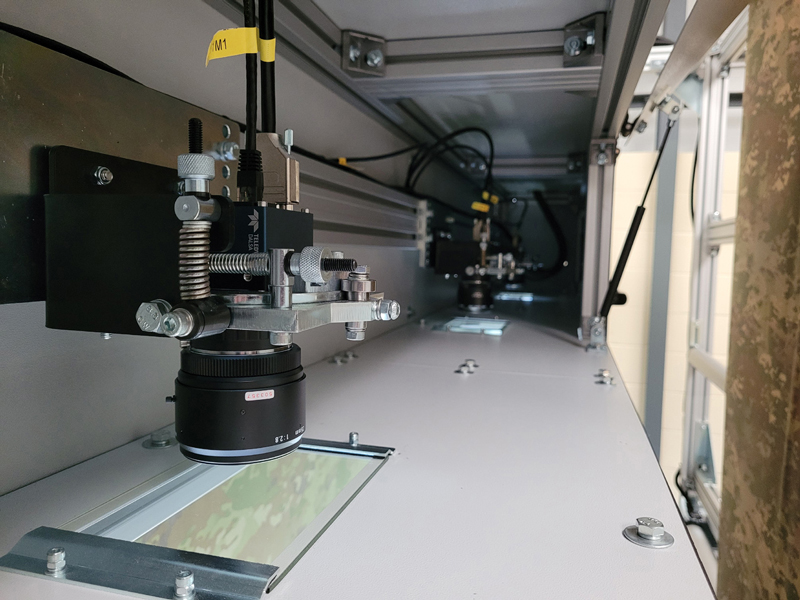
  • A camera and lighting system for optimum image capture at high speed and associated image processing hardware.
  • Self-training software utilizing statistical analysis to automate the system configuration for new textile products.
  • An advanced suite of defect detection algorithms for the detection of all textile defect types.
  • An AI-driven defect classification system which learns and automates defect naming in real time, as well as a real time defect grading capability based on client decision rules.
  • A system for recording and retrieving complete roll map images for subsequent review and quality control.

The generation of textile roll maps with complete defect data allows for an optimized textile cut plan, improved downstream processing and quality assurance.

“Defect detection represents a major industry challenge,” says Jason Kent, CEO of the British Textile Machinery Association. “The failure to provide textiles within defect tolerance limits can lead to whole batch recalls, resulting in costly customer claims and downstream production delays. Poor defect management is also a major source of industrial waste. The potential addressable market for patterned textile vision systems is estimated to be well in excess of £5 billion when considering on loom, on knitting machine, in process and final finished fabric inspection. No other vision system on the market offers these features for patterned textiles, so it’s a great example of UK innovation at its best.”

Founded in 1940, the British Textile Machinery Association actively promotes British textile machinery manufacturers and their products to the world. The non-profit organization acts as a bridge between its members and the increasingly diverse industries within the textile manufacturing sector.

Posted: September 8, 2022

Source: British Textile Macninery Association (BTMA)

Freudenberg Performance Materials Awarded EcoVadis Silver Medal

WEINHEIM, Gerrmany — September 8, 2022 — Freudenberg Performance Materials (Freudenberg) has been awarded its first EcoVadis Silver Medal for its two U.K. facilities in Ebbw Vale and Littleborough. The company manufactures solutions for advanced wound care and ostomy products at these two locations. With the award, EcoVadis recognizes the company’s performance in the categories of environment, ethics, labor and human rights, and sustainable procurement. The award means that Freudenberg Performance Materials LP with its two facilities in Ebbw Vale and Littleborough ranks among the best 25 percent of companies rated by EcoVadis.

“The good EcoVadis rating confirms our consistent implementation of our sustainability strategy. We are working systematically to minimize our footprint and maximize our handprint,” said Dr. Henk Randau, general manager and senior vice president of the Global Business Division Healthcare at Freudenberg Performance Materials. “That means we are continuously improving our energy efficiency and use of resources while at the same time supporting our customers in the medical products industry to make their processes more efficient and roll out sustainable products” Randau added.

Examples

Compostable wound pad

Only recently, the bio-based M 1714 wound pad with superior absorption for more challenging wounds was endorsed with the ECO-CHECK label. The dressing consists of a mix of bio-based fibers derived from natural sources and exhibits a smooth wound contact layer. The product has been evaluated for industrial compostability and conforms to ISO 13432.

Fewer processing steps for hydrophilic PU foam

A hydrophilic foam with a direct coating of silicone adhesives offers a significant sustainability benefit for advanced wound care. A smaller number of production and processing steps reduces complexity and energy consumption for both manufacturer and customer. Moreover, the Freudenberg solution works without additional layers of film or other liners with acrylic adhesive, which is required as a silicone carrier in conventional products.

Reduction in CO2 emissions

In 2021, Freudenberg achieved a significant year-on-year reduction in CO2 emissions at the Ebbw Vale and Littleborough locations alone. The key factor for this achievement was the switch to green power. It is planned to implement further energy efficiency measures on a yearly basis. Currently, the focus lies on installing heat exchanger technology.

Posted: September 8, 2022

Source: Freudenberg Performance Materials

Makroser Tekstil’s Carpet Production Soars With A Mimaki TS300P-1800

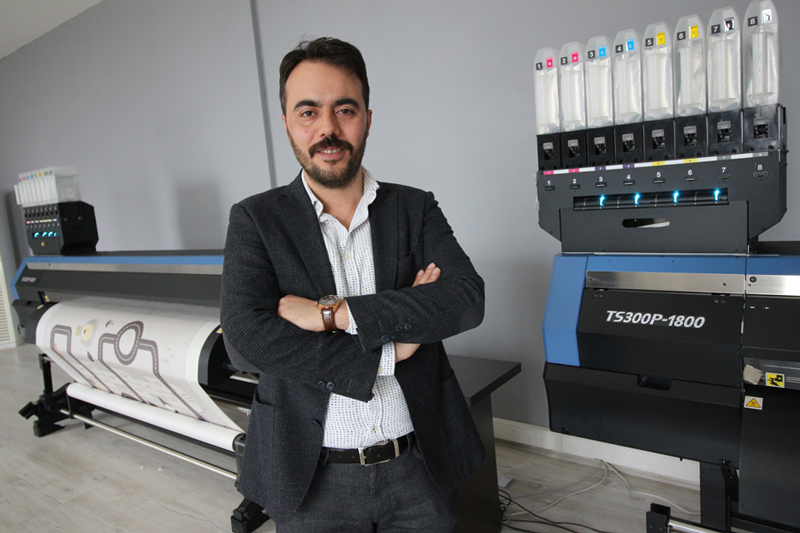
NAGANO, Japan — September 8, 2022 — Makroser Tekstil has expanded its digital product range and increased production capacity. Established in Istanbul at the end of 2016, Makroser Tekstil serves as a raw material supplier in the supply chain, a manufacturer of carpets and home textiles and carries out studies for the development of the digital printed carpet industry. The company invested in a Mimaki TS300P-1800 sublimation transfer printer in August 2020 and with it gained a significant competitive advantage in the digital printed carpet business.

Alongside carpets, the company also offers other solutions to the carpet industry by producing backing and other materials. Makroser Tekstil’s co-founder, Talha Güldeste explained: “As a company of 250 employees, we have positioned ourselves as a comprehensive manufacturer in the supply chain. We started to produce intermediate goods and materials that we use in the production of digitally printed carpets ourselves, and then sell them on to other carpet manufacturers.”

Acting as both a seller and a supplier, Makroser Tekstil has an approximate monthly output of 150,000 square meters of final product and sells about 70-80,000 square meters of intermediate goods per month. “Our market has four main pillars, including chain market groups, export, e-commerce and our own retail network. We have gained serious momentum in the sales of our final products in recent years, and we attach great importance to our sales and marketing processes, in addition to production, so to increase our profitability. We are currently exporting 35 to 40 percent of our production, and our branding and e-commerce activities show that we are making significant improvements,” Güldeste said.

A new era of carpet production

Talha Güldeste’s area of expertise is in digitally printed carpets, a market that he has seen remarkable growth in over recent years. Observing the wider industry, Güldeste said; “Digitally printed carpets have succeeded in getting ahead of woven carpets with their ease of use, low cost, and plenty of colour and pattern options. The consumption habits of our society have changed. Previous generations used to buy thick woven carpets and use them for 20-30 years, as an insulating material in homes. However, due to the widespread urbanization and natural gas infrastructure, the need for carpets to insulate the home has disappeared. We are now in a period of faster consumption, and low prices have increased the interest in these products, alongside them being much easier to maintain. The carpet now stands as a decorative element in homes and living spaces, to be changed seasonally or to match with the interior design.”

Opting for a Mimaki TS300P-1800 to reach top tier quality

Makroser Tekstil decided to invest in a Mimaki TS300P-1800 sublimation transfer printer back in August 2020, with the aim to strengthen their position in the digitally printed carpet market. “The investment in the TS300P-1800 has enabled us to have the capacity to respond quickly to e-commerce orders,” Güldeste commented. “Product quality is the main criterion in the supplies we provide to both online and retail outlets. We made this investment because we saw that we would increase our quality and customer satisfaction in the carpets we print. The Mimaki printer met our expectations, providing the results we wanted from the very first print after installation.” Considering the increased demand, Güldeste aims to further boost their printing capacity with investment in several more Mimaki printers.

Güldeste noted that the quality and consistency of the colours and patterns they see in digitally printed products, no matter how much time has passed. “We have not seen differences between patterns, whether they have been printed once or a thousand times. Knowing that we’ll be able to print in the same colour and quality each time, we are able to meet the increasing quality expectations of our customers, while freeing us from the need of keeping stock in this process.”

Efficient printing was also a key consideration as the company looked to up the speed of production, Güldeste added, “Along with consistent quality, the safe operation of the machine, ease of use and maintenance were also incredibly important to us, and we were conscious of how problems, such as print head clogs, could hinder our work. The TS300P-1800 is a tireless machine. Mimaki’s core technologies allow for uninterrupted printing and have made managing multiple printers with a single operator and computer so much simpler, saving the company both time and money. We have not encountered into any problems, even when the machine is running 24 hours, allowing us to respond quickly to demand and ultimately giving us greater profit in the long run.”

In addition to the printer itself, Makroser Tekstil uses original Mimaki ink in the printer, which has helped the company optimise its ink consumption. “While it is necessary to use 4 ml to print 1 square meter of paper with a similar ink, we can easily do the same with 2 ml of Mimaki ink. We have reduced our ink consumption by 30%, all while maintaining our print quality. As well as saving on cost, Mimaki’s inks are certified to be harmless to human health and environmentally friendly and made incorporating them into our production line a clear choice”, added Güldeste. “Mimaki has made a great contribution to our growth plans in the coming period thanks to the printing technology. With it at our disposal, we feel encouraged and able to grow in our current market as well as to enter new application areas.”

Posted: September 8, 2022

Source: Mimaki Engineering Co. Ltd.

Sponsors