MUMBAI — June 8, 2026 — Grasim Industries Limited, the flagship company of the Aditya Birla Group and a global leader in cellulosic fibres, today announced an investment of ₹3,094 crore, for Phase II Lyocell capacity of 110K TPA at Harihar, Karnataka. This expansion will consist of 2 lines of 55K TPA (150 Tons per day) each. The first line is expected to be commissioned by 2028, and the second line is expected to be commissioned by 2030.
This additional capacity will complement the Phase I Lyocell plant of 55K TPA currently under construction at Harihar, which is expected to be commissioned by mid-2027. Upon completion, Grasim’s total Lyocell capacity, will reach nearly 210K TPA, making it one of the largest Lyocell producers globally.
Mr. Kumar Mangalam Birla, Chairman, Aditya Birla Group, said, “The Aditya Birla Group has always demonstrated the willingness to invest ahead of the curve in sectors that will define India’s future competitiveness and economic resilience. This investment carries forward that legacy. It is a vote of confidence in the scale and promise of the Indian market, aligns closely with the aspirations of Make in India, and will help position India as a more competitive and resilient force in the global textile industry.” He added, “This investment also marks another significant step in Grasim’s strategic expansion of advanced fibre capabilities, catering to the growing global demand for sustainable and high-performance textile materials. This fresh expansion will catapult Grasim’s overall Cellulosic Fibres capacity beyond 1 million tonnes per annum, reinforcing its position as a global leader in sustainable Man-Made Cellulosic Fibres (MMCF).”
Mr Vadiraj Kulkarni, Business Head, Grasim Pulp & Fibre added, “This expansion strengthens our position in the evolving MMCF landscape by scaling a high-value, future-ready fibre segment. By expanding Lyocell capacity, we are accelerating the shift towards high performance fibres with a lower environmental impact. Lyocell enhances our product mix, supports premium applications, and aligns with our focus on delivering differentiated, sustainable solutions to global markets.”
Lyocell is a versatile, next-generation fibre widely used across apparel, home textiles, and technical textile applications. Manufactured through a highly efficient closed-loop process, Lyocell offers a compelling combination of durability, breathability, comfort, and lower environmental impact. The expansion would strengthen the Company’s Specialty product portfolio and solidify its position as a key player in the global sustainable fibre industry. Grasim’s Specialty portfolio share (including Lyocell, Modal, Dope-dyed and Recycled fibres) would increase to 35% by 2030.
WASHINGTON — June 8, 2026 — Import volumes at major U.S. container ports are expected to see a skewed year-over-year bump again this month in anticipation of more tariffs and rising fuel prices but then remain below last year’s levels into the fall, according to the Global Port Tracker report released today by the National Retail Federation and Hackett Associates.
“We expect to see a year-over-year increase this month that’s partly driven by retailers bringing in merchandise early because of higher costs from tariffs or fuel prices that could come starting in August,” NRF Vice President for Supply Chain and Customs Policy Jonathan Gold said. “Nonetheless, the ongoing trend is for lower imports as the conflict in Iran continues to cause higher inflation and economic uncertainty.”
Hackett Associates Founder Ben Hackett said the year-over-year gain expected in June is partly because of the comparison against import levels that dropped sharply after President Donald Trump announced “Liberation Day” tariffs in April 2025. But higher shipping costs and worries about additional tariffs imposed after those tariffs were ruled illegal by the Supreme Court are also a concern.
“We have increased our outlook for June cargo volume as retailers bring forward their peak season cargo to mitigate increasing shipping costs as carriers pass along the sharply rising cost of fuel and because of concerns about punitive replacement tariffs,” Hackett said. “The current import surge will likely last into July, with an early peak season that resembles the more recent pattern of raised volume rather than a sharp peak. After this, we expect a weakening in import volume as consumer uncertainty remains high and the impact of increasing inflation takes its toll.”
U.S. ports covered by Global Port Tracker handled 2.05 million Twenty-Foot Equivalent Units — one 20-foot container or its equivalent — in April, although the Port of New York and New Jersey has not yet reported its numbers. That was down 5.1% from March and down 7.3% year over year.
Ports have not yet reported May numbers, but Global Port Tracker projected the month at 2.14 million TEU, up 9.7% from a year earlier, when imports were down sharply because of last year’s “Liberation Day” tariffs. June is forecast at 2.25 million TEU, up 14.3%, with the increase also because of low imports a year earlier. July is forecast at 2.19 million TEU, down 8.4% year over year; August at 2.12 million TEU, down 8.6%; and September at 2.06 million TEU, down 2.2%. October is forecast at 2.08 million TEU, up 0.1%.
Those numbers would bring the first half of 2026 to 12.6 million TEU, up 0.6% from the same period in 2025 thanks, in part, to the May-June increases.
Global Port Tracker, which is produced for NRF by Hackett Associates, provides historical data and forecasts for the U.S. ports of Los Angeles/Long Beach, Oakland, Seattle and Tacoma on the West Coast; New York/New Jersey, Port of Virginia, Charleston, Savannah, Port Everglades, Miami and Jacksonville on the East Coast, and Houston on the Gulf Coast. The report is free to NRF retail members, and subscription information is available at NRF.com/PortTracker. Subscription information for non-members can be found at www.globalporttracker.com.
As the leading authority and voice for the retail industry, NRF analyzes economic conditions affecting the industry through reports such as Global Port Tracker.
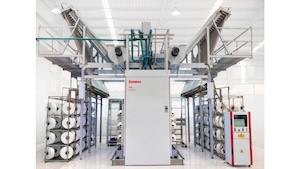
REMSCHEID / SUZHOU / SURAT— June 9, 2026 — Barmag (Suzhou) Technology Co., Ltd. and Hitech Automation Solutions PVT LTD. of Surat, India, have agreed to an exclusive partnership to jointly market Hitech’s Doffmatic automation solution for Barmag’s proven manual eFK texturing machines. In many texturing facilities, manual doffing processes remain heavily operator-dependent – resulting in issues such as increased scrap, inconsistent quality, and limited productivity.
Exclusive partnership for automation solutions for manual texturing machines
The goal of the joint solution for texturing customers is to create technological and economic value –with a solution positioned between manual and fully automated concepts, offering an attractive alternative for numerous operational and investment scenarios with a clear focus on rapid ROI and improved yarn quality.
For new machines and upgrades: Automation as a (retrofittable) solution
The agreement covers both the sale of new eFK texturing machines in combination with Doffmatic, under the name eFK Doffmatic, as well as upgrades to existing Barmag machines (retrofits), which will continue to be marketed under the familiar names eFK and Doffmatic. In this way, the two partners offer customers solutions for two key aspects: investment decisions for new equipment as well as the rapid, step-by-step modernization of older machines.
The eFK Doffmatic – the perfect combination of cost-effectiveness, productivity, and reduced reliance on operators.
Technically, Doffmatic is designed as an add-on system that integrates into eFK texturing machines without requiring additional space. This enables the auto-doffing function while maintaining the well-known consistently high yarn quality. Customers benefit from a fast and low-risk modernization path with short payback periods – both for new installations and for retrofit projects. This makes it attractive for yarn producers who do not (yet) use automatic texturing machines but still want to achieve significantly greater efficiency, process stability, and product quality.
Efficiency and reproducible quality
Doffmatic aims to automate the doffing process while ensuring that bobbins have exactly the same length – a key prerequisite for consistent quality and seamless downstream processing. “Through this exclusive partnership, we combine local market insight, engineering expertise, and localized service –offering texturers an automation solution that addresses both efficiency and yarn quality,” summarizes Oliver Lemke, Sales Director at Barmag. And Brij Patel, Managing Director of Hitech, adds: “Doffmatic was developed to offer seamless automatic doffing functionality for new and retrofit projects. Together with Barmag, we are now expanding our machine portfolio – with a clear focus on our customers’ operational requirements.”
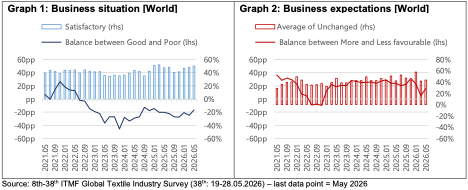
ZÜRICH, Switzerland — June 8, 2026 — The global textile industry appears to be turning a corner, but this is more likely a fragile and possibly temporary improvement than the start of a durable recovery. According to the 38th ITMF Global Textile Industry Survey, conducted worldwide during the second half of May 2026, business sentiment, order intake, order backlogs and capacity utilization all improved versus March — yet every indicator remains weak by historical standards, and rising costs cast doubt on how long the upturn can last.
The new survey shows a business situation balance rising to −17 percentage points (pp) from −25pp in March. Business expectations climbed to +16pp (from +5pp), order intake to −9pp (from −25pp), backlogs to 2.5 months and capacity utilization to 74%. Order cancellations stayed contained and inventories lean low. The direction is encouraging, but the levels rest on a thin and fragile cushion.
The upturn was geographically uneven. Africa led on business situation, order intake, backlog and expectations, alongside gains in Europe and North & Central America. The Asian production hubs lagged, with East Asia weakest on both current conditions and the six-month outlook. Along the value chain, segments closest to the end-consumer slightly fared best, while capital-goods and upstream segments trailed.
Cost and demand pressures persist: weak demand remains the major concern for 53% of participating textile manufacturers, followed by raw-material prices (52%) and energy prices and geopolitics (42% each).
The survey links rising costs to the war in Iran, which has pushed crude oil to around USD 100 and lifted gasoline prices by roughly 50% since March, feeding inflation and squeezing margins. Whether the May reading holds will depend largely on energy prices and the resolution of ongoing conflicts.
For more information, please see www.itmf.org or contact secretariat@itmf.org.
Posted: June 9, 2026
Source: International Textile Manufacturers Federation (ITMF)
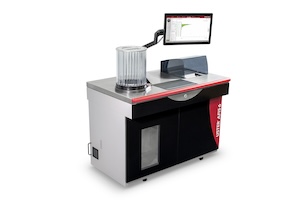
USTER, Switzerland — June 9, 2026 — Uster AFIS 6 now offers the key data for better decisions when blending recycled fibers. Process control is decisive in determining the quality and economic outcome. The new R Recycling Module of AFIS 6 introduces the Recycling Opening Index (ROI), so spinners can optimize their circularity credentials. It is officially launched at ITM 2026 in Istanbul, Türkiye.
Cotton recycling has become a strategic priority for brands, regulators, and technology providers because it directly addresses the textile sector’s biggest challenges: growing volumes of waste, resource scarcity, climate impact, and regulatory pressure.
Recycled waste and the use of it
Uster AFIS 6 – The fiber process control system
Recent industry data shows that most textile waste is post-consumer waste (75% by volume) while post-industrial (pre-consumer) waste makes up around 25%. However, when it comes to recycling – turning this waste into quality new yarn – the situation is different.
Even though it’s a smaller share of total waste, about 95-99% of post-industrial waste is already being reused. Almost every scrap of factory waste is already being collected and spun back into yarn. That’s because it’s clean, consistent, and relatively easy to process.
Spinners generally see it as the safer option to start their recycling activities with post-industrial waste. These raw materials are more predictable in their behaviour, so it’s simpler to refine spinning techniques to suit them. An optimized process can then be developed for blending in pre- and/or post-consumer waste.
Controlling processes with recycled raw materials
Now, objective measurement data from Uster is available to give clear indicators of processability and profitability when using recycled raw materials. This comes with the Recycling Opening Index (ROI), together with the total yarn pieces value. The ROI is a metric in the Uster AFIS 6 R Recycling Module, which describes the effectiveness of the opening process in the recycling of cotton fibers. It is defined as the ratio of opened fibers to remaining yarn pieces (hard ends). ‘Total yarn pieces’ means the sum of yarn fragments present in the raw material that have not yet been fully opened into individual fibers.
If a low ROI value is indicated, this suggests a poor degree of opening, which can disrupt the spinning process and cause issues such as yarn irregularity (IPI), weak spots and uneven surface structures.
So, the ROI is a vital metric for evaluating the quality of recycled cotton materials. For the first time, spinners can have a quantitative assessment of the opening process.
R Recycling Module of Uster AFIS 6
Uster AFIS 6 with the R Recycling Module supports better decisions through real measurements. The concept of the Recycling Opening Index (ROI) combined with the number of yarn pieces per gram, provides spinners with a more precise evaluation of recycled material processing. The R Recycling Module also offers advanced recycling parameter measurements, as well as a refined short fiber content analysis with < 6.35 mm indicating the non-spinnable fiber content. In addition, the module enhances fiber quality assessment by incorporating detailed nep and fiber length parameters. The R Recycling Module on AFIS 6 is an optional, on-demand feature designed exclusively for this latest model.
The new module fits perfectly within Uster AFIS 6, with its expanded measurement range for 100% synthetic fibers giving details of cut length and denier/fineness, to help spinners make proper raw material selections. The updated reporting package simplifies complex data analysis, and the integrated Uster Statistics remains the essential tool for spinners to optimize intermediate process steps – finally empowering full control of their processes.
MILAN — June 8, 2026 — Q-NOVA®, Fulgar’s sustainable polyamide 6.6 yarn, has been selected by R-Evenge for the production of its collection of technical socks dedicated to wellness, fitness and water-based activities.
R-Evenge, the first 100% Made in Italy barefoot company, was founded with the aim of restoring the foot’s natural functional freedom, encouraging a more direct connection with the ground and greater awareness of plantar sensations. Through technical footwear and socks designed according to the principles of foot biomechanics, the brand promotes an approach that enhances balance, stability and proprioceptive sensitivity.
R-Evenge socks are conceived as “technical tools” designed to support a wide range of disciplines. The collection made with Q-NOVA® includes the Wellness Classic, developed for bodyweight workouts, stretching and functional training; the Yoga One Finger, featuring a separated big toe design to improve stability and balance during yoga practice; the Pilates Classic, engineered for both mat and equipment-based exercises thanks to its ergonomic construction and non-slip grip; and the swimming pool line, designed to provide traction and protection even in wet environments. All styles share a common goal: supporting the foot’s natural functionality during physical activity while ensuring comfort, breathability and stability.
In this context, the choice of Fulgar’s Q-NOVA® reflects the shared commitment of both companies to sustainability throughout the entire supply chain. The yarn stands out for being produced through a mechanical recycling process that reduces the use of virgin resources and gives new value to industrial waste, while maintaining high standards of quality and performance. Alongside its sustainable credentials, Q-NOVA® also delivers comfort, lightness and a pleasant next-to-skin feel, making it particularly suitable for technical products designed for wellness and movement.
“Partnering with R-Evenge is a tangible example of how textile innovation and sustainability can be successfully combined in the development of high-performance products,” said Daniela Antunes, Marketing Manager at Fulgar. “Q-NOVA® was created with the specific goal of providing brands with a responsible solution that delivers uncompromising quality, performance and comfort.”
Through this partnership, Fulgar continues to support brands developing innovative technical collections for the active and wellness sectors, reinforcing its commitment to researching and delivering advanced, sustainable, and Made in Italy textile solutions.
STOCKHOLM, Sweden — June 8, 2026 — At FILTECH 2026, taking place in Cologne from June 30th to July 2nd, members of TMAS – the Swedish textile machinery association – will highlight how the country’s engineering expertise is enabling filtration manufacturers to increase productivity, improve traceability and reduce dependence on labour-intensive manual processes.
Technical woven and nonwoven fabrics are used in a wide variety of products in filtration systems for air, gas and liquid filtration, touching on almost every facet of life in the 21st Century. They are crucial to aerospace and road transportation and a vast range of industrial processes and to be found in every home, hotel and institutional building in air conditioning systems and household appliances such as washing machines and vacuum cleaners.
Interfil produces a staggering range of over 15,000 filter media variants.
At its Skjåk manufacturing plant in Norway, for example, Interfil manufactures an annual 230,000 air filter units from a staggering range of some 15,000 variants, with 9,000 products moving continuously through the differing stages of the plant at any time each day, and a daily finished output of 1,100 products.
It’s a similar situation at the US plant of Filtration System Products (FSP) in Farmington, St Louis, which now has a daily production of over 2,200 filter hoses and media.
Material handling
Both Interfil and FSP rely on the automated material handling expertise of TMAS member Eton Systems in Sweden.
The individually addressable product carriers of Eton Systems are designed to eliminate manual transportation and minimise handling throughout a manufacturing plant, ensuring each individual product arrives at its correct position precisely when required for each separate process step.
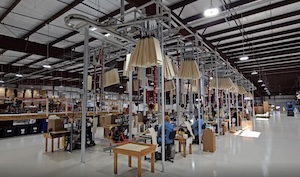
Eton Systems automation at Interfil consists of a 50-metre overhead UPS conveyor system designed and installed to link the company’s two production halls at the Skjåk plant, eliminating the need for manual handling and truck transport between the facilities. This has resolved the challenge of having semi-finished products made far from the final assembly area, not only improving efficiency, quality control and component traceability across all parts of production, but also increasing on-site safety due to the need for fewer trucks.
Eton Systems automation at FSP in St Louis.
FSP has meanwhile calculated that since installing an Eton System in 2023, it has increased its production output by 60%, using the same number of operators and the same working hours as with the previous manual system. An inbuilt quality system also ensures that only 100% perfect products are unloaded from the system, allowing for a much more efficient quality control process. In addition, Eton’s compact method of moving single units through the production process has saved floor space and created a safer and more ergonomic work environment.
“FSP wasn’t sure if it was possible to find an automated production system that could handle the varying demands of filtration media production, due to the many style variations, but our system enables all carriers to be tracked in real-time and proved to be the perfect solution,” says Eton Systems CEO Jan Molin.
Filter bag production
A fully automated micro factory to produce fully finished filter bags has meanwhile been developed by TMAS member ACG Kinna Automatic.
Until now, woven or nonwoven needlefelt filter bags have been assembled and finished in laborious and time-consuming cut and sew operations by third party suppliers.
ACG has developed a microfactory for filter bag production.
“The automation of these essential steps eliminates the need for the many hours of labour-intensive manual work that has previously been necessary,” says ACG Kinna Automatic Marketing and Sales Manager Tomas Aspenkog. “The output is 120 finished filter bags per hour, and the entire configuration is guided by precise automatic steering and alignment, with quality control handled by the latest high-definition vision cameras. This type of automation is the way forward, not just for filter bags, but for many industries who heavily rely on such consumables in their operations.”
The ACG microfactory’s configuration is based on two separate interconnecting modules – the Automatic Filter Tube Line (KA-156) and the Automatic Filter Bag Production Line (KA-177).
The Automatic Filter Tube Line handles the fabric feeding from rolls and its folding prior to seam construction, which can either be by automatic sewing, welding or with sewing and taping, depending on specifications. Very rapid changeover of the modular seaming methods can be achieved during product changes. The specific size of the now fully tubular fabric is then precisely cut to size for each individual unit and further folded ready to be fed into the Automatic Filter Bag Production Line.
The Automatic Filter Bag Production Line then automatically attaches the reinforcement, bottom and snap rings onto the filter tube with a second Juki sewing head on a robotic arm, to form the fully finished filter bag ready for packaging.
“The innovations coming from our companies are far-ranging and characterised by an advanced grasp of automation techniques and the need for more sustainable processing methods that is being demanded by their customers,” says TMAS Secretary General Therese Premler-Andersson. “At FILTECH 2026 TMAS members will demonstrate why limiting manual transportation and minimising handling is essential for textile manufacturers, especially across Europe and the United States, in providing competitive advantages.”
Posted: June 8, 2026
Source: TMAS – The Swedish Textile Machinery Association
CARY, N.C. — June 8, 2026 — INDA, the Association of the Nonwoven Fabrics Industry, has announced that registration and exhibit reservations for Hygienix™ 2026 are now open. Hygienix will take place Nov. 16-19 at the Hyatt Regency Houston in Houston, Texas.
Hygienix will bring together industry leaders, innovators, and business professionals from across the absorbent hygiene products (AHP) industry for expert-led conference sessions, product showcases, networking opportunities, Lifetime Service Awards, and the presentation of the Hygienix Innovation Award™.
Hygienix Program Highlights
Attendees will gain valuable insights across key areas driving the future of hygiene:
Industry collaboration or “coopertition”
Market intelligence and global economics
Regulatory and trade environment
Innovation in products, materials, and processes
Sustainability and end-of-life solutions
Consumer and end-user insights
Startups, entrepreneurs, and emerging technologies
Business Opportunities and Networking
The Exhibits will showcase the latest innovations in the absorbent hygiene industry, offering a platform for companies to demonstrate their products and services to potential partners and clients.
Hygienix 2026 will once again feature Lightning Talks—a series of fast-paced, five-minute presentations by nearly 20 companies scheduled for Nov. 17-18 in the afternoon.
Hygienix Innovation Award™
Recognizing breakthrough products, technologies, and solutions that are making a significant impact in the hygiene sector, the Hygienix Innovation Award will be awarded at the event.
Nominations will be accepted until Sept. 14th. Finalists will present their products on Nov. 17, and the winner will be announced on Nov. 19 to close the event. Last year’s winner was Confitex Technology for their Washable Nonwoven Sanitary Pads, the world’s first washable nonwoven sanitary pads designed for sustainability and scalability without the need for SAPs.
Lifetime Service Award Recipients
Carl Cucuzza and Pricie Hanna are receiving the Lifetime Service Awards. Both industry veterans are being recognized for their key contributions to the advancement of the nonwovens industry and INDA. Cucuzza and Hanna will accept their awards Tuesday, November 17th at 4:30 pm.
For registration and exhibit reservations, visit www.hygienix.org
Posted: June 8, 2026
Source: INDA, the Association of the Nonwoven Fabrics Industry
MOUNT PLEASANT, S.C. — June 4, 2026 — Americas Apparel Producers’ Network (AAPN) and The Apparel and Textile Association of Guatemala (VESTEX) have partnered to launch Source Guatemala, a sponsored sourcing experience designed exclusively for brand and retailer sourcing leaders.
Taking place August 19–20, 2026, in conjunction with the Guatemala Apparel Show, the program offers participants a firsthand look at Guatemala’s textile and apparel supply chain through a combination of factory tours, networking, and supplier engagement.
The experience includes:
Access to the Guatemala Apparel Show
Executive networking reception
Factory tours of Indiana Knitwear, Apparel & Textile Sourcing/Palin, and Texpasa
Up to three hotel nights
Up to a $500 travel stipend for approved participants
Designed for sourcing and supply chain leaders who influence sourcing strategy and supplier selection, Source Guatemala provides an efficient way to evaluate regional capabilities, strengthen supplier relationships, and explore opportunities in the Western Hemisphere.
Participation is limited to qualified brand and retailer professionals. Space is limited and attendance is subject to approval.
For additional information and to request an invitation, visit Source Guatemala:
WASHINGTON, D.C. — June 5, 2026 — The National Council of Textile Organizations (NCTO), spanning the entire spectrum of U.S. textiles from fiber to finished sewn products, issued a statement today commending the House Armed Services Committee (HASC) for passing the Fiscal Year 2027 National Defense Authorization Act (NDAA), which contains reporting requirements aimed at strengthening the Berry Amendment’s 100 percent Made in America rules.
The House NDAA bill, which authorizes funding levels and provides authorities for the U.S. military, includes several important reporting requirements directing divisions within the Department of Defense (DOD) to strengthen compliance with the Berry Amendment and Buy American requirements for textiles and apparel. The Berry Amendment requires the DOD to purchase 100% U.S.-made textiles and clothing.
In the legislation, the committee directs the DOD to fulfill the following reporting requirements: an assessment of waiver usage under the Berry Amendment, evaluation of supplier verification and auditing practices and actions to align contracting strategies with the long-term health of the domestic defense textile industrial base; an assessment of the feasibility of narrowing the exception for Berry Amendment small purchases from $150,000 to $20,000, broadly and specifically for textiles; an examination of flame-resistant textile production capacity and resilience; and an examination of potential non-Berry compliant Army service uniforms.
NCTO President and CEO Kim Glas
NCTO President and CEO Kim Glas:
“We applaud the HASC for passing the FY 2027 NDAA and including provisions that, if enacted, will lead to increased government purchases of more Made in America textiles and bolster domestic manufacturing and meet the mission-critical needs of our Armed Forces. We appreciate the leadership of Congressman Don Davis (D-NC) and Congressman Pat Harrigan (R-NC), co-chairs of the House Berry Amendment Caucus, who led efforts to strengthen Berry in the House this year.
“These provisions reinforce a simple but vital principle: America’s military should be equipped with American-made products whenever possible. Strong enforcement of the Berry Amendment helps ensure our armed forces have access to reliable, high-quality textile products while sustaining the domestic manufacturing base that supports military readiness and national security.
“The U.S. textile industry supplies approximately $1.8 billion in advanced textile materials and components to our military each year. These reporting requirements send an important signal that Congress recognizes the strategic value of maintaining a strong domestic textile supply chain and is committed to protecting it.
“NCTO looks forward to working with House and Senate lawmakers to ensure these provisions are included in the final FY 2027 NDAA and to advance policies that strengthen the domestic textile industrial base.”
Posted: June 5, 2026
Source: The National Council of Textile Organizations (NCTO),

 MUMBAI — June 8, 2026 — Grasim Industries Limited, the flagship company of the Aditya Birla Group and a global leader in cellulosic fibres, today announced an investment of ₹3,094 crore, for Phase II Lyocell capacity of 110K TPA at Harihar, Karnataka. This expansion will consist of 2 lines of 55K TPA (150 Tons per day) each. The first line is expected to be commissioned by 2028, and the second line is expected to be commissioned by 2030.