NCTO President And CEO Kim Glas To Testify At U.S. Trade Representative’s U.S. Industry Forced Labor Hearing

NCTO President and CEO Kim Glas

WASHINGTON, D.C. — July 9, 2026 — National Council of Textile Organizations (NCTO President and CEO Kim Glas is set to testify this morning at the U.S. Trade Representative’s (USTR) hearing on proposed actions in the Section 301 Forced Labor Investigations.

Glas will outline NCTO’s positions and recommendations at today’s hearing, taking place at the U.S. International Trade Commission at 10 a.m. in Washington D.C.

See her prepared remarks here.

NCTO has also filed a written submission to USTR, which can be found here, outlining the U.S. textile industry’s positions on the USTR forced labor investigations.

Posted: July 9, 2026

Source: National Council of Textile Organizations (NCTO

Burlington Celebrates Commissioning Of State-Of-The-Art Dyehouse At Raeford, NC Manufacturing Facility

RAEFORD, N.C.— July 7, 2026 — Burlington Industries (“Burlington”), U.S. manufacturer of advanced textile solutions, today celebrated the commissioning of its newly modernized dyehouse at its manufacturing operation in Raeford, NC, marking a significant investment in the future of domestic textile production and the continued support of the U.S. military.

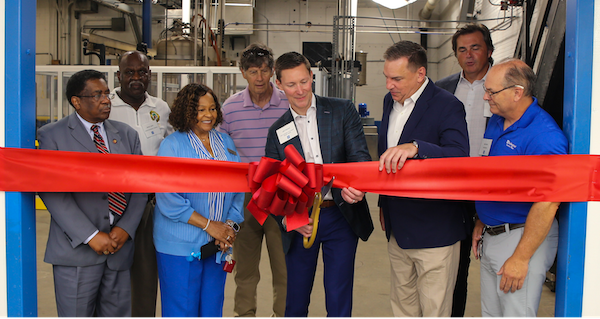
The commissioning ceremony (l to r): NC Rep Garland  Pierce, County Commissioners Chairman James Leach, County Commissioner Mary Blue McCollum, Raeford Mayor John McNeill, Elevate CEO Jeffrey P Pritchett, US Rep Richard Hudson, Burlington President Guy Lucas, and Raeford Plant Manager Keith Mims.

The commissioning ceremony brought together company leaders, employees, community partners, and elected officials to recognize the completion of the project and the important role the Raeford operation continues to play in America’s textile manufacturing base.

“Our Dyehouse investment demonstrates our confidence in the Raeford operation, our employees, and the critical role this facility plays in supporting those who protect our freedoms, ” said Jeffrey P. Pritchett, Chief Executive Officer of Elevate Textiles, the parent company for Burlington. “We are proud to continue a legacy of serving the military while strengthening American manufacturing capabilities right here in North Carolina. ”

The Raeford facility produces the specialized fabrics used in military dress uniforms and remains the only U.S. manufacturer producing these fabrics domestically. The Raeford operation currently supplies fabrics supporting dress uniform programs for the Air Force, Army, Coast Guard, Marines, Navy, and Space Force.

“As we celebrate this investment, we also celebrate the employees whose dedication and expertise have made the Raeford operation an industry leader for more than 70 years,” said Guy Lucas, President of Burlington. “Their commitment to excellence has helped ensure that military personnel across all six branches of the U.S. Armed Forces receive the highest-quality uniform fabrics. This new state-of-the-art dyehouse is an investment in our future, but it is also an investment in our people, giving them the tools and technology needed to continue that tradition well into the future.”

A ribbon-cutting ceremony featuring company leaders and attending officials formally marked the commissioning of the new dyehouse. Burlington extends its sincere thanks to U.S. Representative Richard Hudson, NC Representative Garland Pierce, Raeford Mayor John K. McNeill III, Hoke County Board of Commissioners Chairman James Leach, and Hoke County Commissioner Mary Blue McCollum for their attendance and continuing support.

As Burlington looks to the future, the company remains committed to investing in its employees, supporting the communities in which it operates, and preserving critical domestic manufacturing capabilities that serve both national defense and the U.S. textile industry.

Posted: July 9, 2026

Source: Burlington Industries LLC / Elevate Textiles

NCTO Recommends Additional Steps To Strengthen U.S. Textile Manufacturing In USTR Section 301 Forced Labor Investigations

WASHINGTON, D.C. — July 7, 2026 — The National Council of Textile Organizations (NCTO), representing the full spectrum of the U.S. textile industry from fiber, yarn, and fabric production to finished sewn products, provided recommendations on the U.S. Trade Representative Office’s proposed actions as part of its Section 301 investigations of the acts, policies, and practices of various economies related to goods made with forced labor.

“Forced labor remains prevalent in global textile and apparel supply chains and unfairly disadvantages U.S. textile manufacturers. “The administration now has the opportunity to take meaningful actions in the investigations to revitalize the domestic textile industry and to defend it from unfair, predatory trade practices like forced labor,” NCTO states in its written comments. “The right approach could potentially double industry capacity; the wrong solution will cost U.S. jobs and create irreparable harm.”

See NCTO’s full written submission here. NCTO President and CEO Kim Glas is set to testify at the USTR hearings on the Section 301 forced labor investigations on July 9.

Among its recommendations, NCTO urged USTR to:

  • Impose Section 301 duties on imports of apparel and finished textile products from China and South and Southeast Asian countries that utilize forced labor in manufacturing.
  • Preserve critically important duty-free treatment for USMCA/CAFTA-DR qualified textiles and apparel.
  • Make necessary reforms to the proposed textile mechanism to support domestic industry growth.
  • Strengthen customs enforcement.

In response to the textile mechanism proposed by USTR as part of its forced labor investigations, NCTO voiced opposition to the mechanism “as it stands” and proposed three reforms to ensure it “does not harm U.S. textile manufacturers and instead encourages growth of the domestic industry:”

  • Exclude raw cotton from the proposed textile mechanism as it rewards offshoring of U.S. yarn, fabric and apparel production and rewards Asia.
  • Exempt textile manufacturing inputs and machinery not available domestically from additional Section 301 tariffs to enhance U.S. competitiveness.
  • Incentivize more sourcing of U.S. textiles and apparel from the Western Hemisphere to boost domestic textile manufacturing and reward supply chains without forced labor.

Further, the association urged USTR to adopt an alternative textile and apparel incentive program developed by textile, apparel, and retail industry groups to support the U.S.-Western Hemisphere textile and apparel supply chain and grow U.S. manufacturing jobs.

“USTR should include an innovative textile proposal that would reward the whole textile and apparel supply chain, including U.S. cotton through a novel program developed by NCTO and brands and retailers to create over 56,000 jobs in the United States,” the submission stated.

Posted: July 7, 2026

Source: The National Council of Textile Organizations (NCTO)


Wipes Leaders Advanced Their Business At The 2026 World Of Wipes® Conference

CARY, N.C. — July 7, 2026 — The World of Wipes® (WOW) International Conference brought the global wipes industry together for four days of insights, innovation, and connections, June 29-July 2, at the Grand Hyatt Nashville, in Tennessee. WOW featured expert-led presentations, exhibits, and the presentation of the 2026 World of Wipes Innovation Award®.

World of Wipes Innovation Award

The 2026 World of Wipes Innovation Award was presented to Rockline Industries for their First Defense™ Fentanyl Detection Wipe. In collaboration with Visual Detection Systems, Rockline developed the First Defense Fentanyl Detection Wipe, a single-use presumptive test that rapidly detects trace fentanyl through a visible color change. Featuring specialized indicators bound to viscose fibers with a starch-based system, the wipe improves field usability and reliability. Tested with pharmaceutical and street-grade fentanyl and other opioids, it is designed for law enforcement, first responders, military, airports, schools, and correctional facilities.

“Rockline is honored to receive the 2026 World of Wipes Innovation Award for the First Defense Fentanyl Detection Wipe. This recognition reflects the innovation, passion, and dedication of our team to develop a first-of-its-kind solution that helps protect first responders, EMS, law enforcement, and others with a convenient, single-use product that performs effectively in real-world environments.” – Doug Cole, Vice President – Global Product Development, Rockline Industries

Fellow finalists The Clorox Company, with their Clorox™ Refreshables™, and Lenzing Fibers, Inc., with their Lenzing™ DualWipe, were also honored for their innovation and market potential. Nominations for the 2027 World of Wipes Innovation Award® will open August 7, 2026.

2026 Lifetime Technical Achievement Awards

INDA was proud to honor Tom Daugherty and Carey Hobbs with Lifetime Technical Achievement Awards, recognizing their lasting contributions to the advancement of nonwoven technologies, business innovation, and the continued growth of the industry.

“It has been a great privilege to spend nearly 45 years collaborating with so many talented individuals in this industry to improve the lives of consumers worldwide. I am truly humbled to receive the INDA Lifetime Technical Achievement Award. My deepest thanks to my colleagues at P&G, partners across the supply sector, The Nonwovens Institute at NC State, the INDA community, and my wife and family for their amazing partnership. Here’s to the next generation of innovation!” – Thomas Daugherty, Associate Director, Procter & Gamble, and Deputy / Operations Director, The Nonwovens Institute (retired)

“I was shocked to learn that I’m receiving this Lifetime Achievement Award. I have devoted my professional career to making cars quieter, making jackets warmer, defending our country, and helping families enjoy quilting. This honor humbles me and lets me know that my career has positively impacted people’s lives.” – Carey Hobbs, President, Hobbs Bonded Fibers (retired)

Thoughts from Wipes Leaders

“WOW brought together an excellent mix of people, ideas, and commercial opportunity. The quality of the presentations was very strong, but what stood out most was the value of the conversations — connecting with customers, suppliers, and industry leaders in a setting that was both highly engaging and commercially meaningful. The organization of the event was excellent, and the INDA team created a professional, welcoming environment that made it easy to engage, exchange ideas, and strengthen relationships across the wipes and nonwovens industry.” – Nigel Gautry, Corporate Marketing and Sales Director, Saudi German Co. for Nonwoven Products

“WOW provided a fantastic experience and a valuable opportunity to share Soane Materials’ technology platform with leaders across the wipes industry. The presentations offered meaningful insight into where the market is headed, and the networking breaks created high-value conversations around innovation and new business opportunities.” – Elizabeth Huth-Helreigel, Business Development Director, Soane Materials

“WOW was a great experience from the moment I arrived. Within the first hour, I was already connecting with industry colleagues, customers, and partners for meaningful conversations about current business trends and future opportunities. The quality of the networking made it clear very quickly that WOW brings the right people together in one place.” – Robert Langill, Senior Director Sales, Precision Concepts / Comar

“Participation in WOW26 was an energetic and highly productive event that made it possible to consolidate relationships with existing customers, develop new business opportunities and gather strategic indications on the evolution of the North American wet wipes market. The networking was excellent, and the conversations we had with customers, partners, and industry leaders create valuable opportunities.” – Michael Lynch, Director – North America, IMA Tissue & Nonwoven

WOW Program Highlights

The program featured presentations and panel discussions on:

  • Consumer trends, growth opportunities, and innovations in wipes
  • Standards, regulations, labeling, and policy issues
  • Sustainable substrates and flushable material design
  • Manufacturing, converting, and performance innovations
  • Packaging sustainability and EPR requirements
  • Formulation, preservation, and product development advances

The event opened with the Wipes Development Course, held June 29-30 and led by Heidi Beatty, CEO of Crown Abbey. This 12-session course provided a comprehensive overview of wipes development, from concept to commercialization, covering materials selection, formulation design, and packaging considerations.

INDA announced that the next edition of the World of Wipes® Conference will take place June 7-10, 2027, in Indianapolis, Indiana.

Posted: July 7, 2026

Source INDA, the Association of the Nonwoven Fabrics Industry

U.S. Textile, Apparel, And Retail Groups Unite Behind Innovative Textile And Apparel Trade Incentive Program To Strengthen U.S. Manufacturing

WASHINGTON, D.C.  — July 6, 2026 — Industry organizations representing U.S. textile manufacturers, apparel brands, and retailers urged the Trump administration to adopt a newly developed textile and apparel trade incentive program they proposed in a joint submission to the U.S. Trade Representative’s Office (USTR) today. This is the first time these organizations have teamed up to publicly advocate for a joint trade policy initiative.

In their written submission to USTR related to proposed actions in Section 301 investigations of various economies’ policies on goods made with forced labor, the groups—which normally take strongly divergent policy positions on trade—jointly proposed a program designed to “reshore domestic manufacturing, stabilize and grow Western Hemisphere textile and apparel supply chains, and help brands and retailers to diversify sourcing at a critical time.”

“Our joint efforts have resulted in the development of a novel trade incentive program that would achieve various important goals,” including “the revitalization and growth of U.S. textile manufacturing, exports, and investment, resulting in over 56,000 new jobs” in the United States.

Increased U.S. textile exports under the program could “drive billions of dollars of new domestic investment” and benefit the entire supply chain, including cotton farming.

The program is designed to “allow brands and retailers to earn tariff credits when they buy U.S. textiles and qualified apparel goods from key Western Hemisphere U.S. free trade agreement (FTA) partners. Brands and retailers could then apply those credits to offset potential Section 301 tariffs from eligible countries—a win-win strategy to unlock significant growth for U.S. textile manufacturers, brands, and retailers,” they state in their joint submission.

See a link to the full USTR submission here.

The associations developed and put forth the new incentive program in response to a textile mechanism proposed by USTR as part of the Section 301 investigations on forced labor.

“We believe with the right incentives we can grow jobs substantially in the United States, reopen shuttered factories, and make the critical investments needed to maintain and to grow America’s textile industry by also helping brands and retailers find new opportunities. As such, we respectfully request the United States Trade Representative to consider including our proposed incentive program as a component of any remedy that results from the Section 301 investigations currently underway.”

If adopted by the administration, the groups note their textile and apparel trade incentives program “has the potential of doubling U.S. textile exports to the Western Hemisphere, reaching a total of $29 billion annually. This significant increase in U.S. textile exports would create substantial new U.S. jobs and unleash a much-needed wave of textile sector investment in the United States.”

The public submission was filed by the National Council of Textile Organizations (NCTO), American Apparel & Footwear Association (AAFA), United States Fashion Industry Association (USFIA), and the U.S. Industrial and Narrow Fabrics Institute (USINFI).

Learn more about the associations:

National Council of Textile Organizations : https://ncto.org/

American Apparel & Footwear Association : https://www.aafaglobal.org/

United States Fashion Industry Association  : https://www.usfashionindustry.com/

U.S. Industrial and Narrow Fabrics Institute : https://usinfi.textiles.org/

Posted: July 6, 2026

Source: National Council of Textile Organizations (NCTO), American Apparel & Footwear Association (AAFA), United States Fashion Industry Association (USFIA), and the U.S. Industrial and Narrow Fabrics Institute (USINFI)

Cygnet Texkimp Develops 500kg VHD PAN Precursor Unwinding Creel To Increase Efficiency In Carbon Fiber Production

CHESHIRE, England  — July 2, 2026 — Fiber handling and composites technology specialist Cygnet Texkimp has developed a VHD (very heavy duty) creel solution capable of handling 500kg packages of fibre as part of an industry collaboration to increase efficiency in carbon fibre manufacturing.

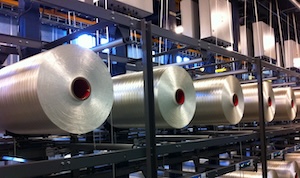
The large-scale creel will be used to unwind bobbins of PAN precursor fibre into carbon fibre production lines. Its development signals a major leap in capability for the carbon fibre manufacturing industry which has, for over a decade, relied on fibre packages weighing up to 350kg. The impact of the new technology will be to reduce operational downtime and increase efficiency by cutting the frequency of package changeovers and allowing longer continuous run cycles between package changes.

Cygnet Texkimp is a market leader in the manufacture and supply of VHD creels to the carbon fibre industry with over 70 VHD creels in operation globally, processing in excess of 24,000 bobbins of fibre.

Peter Stevenson, Director of Projects at Cygnet Texkimp, explains:

“A 500kg bobbin offers an immediate win over a 350kg bobbin in terms of line efficiency by extending the length of continuous operation that can be achieved. The creel also supports the work of manufacturers to process higher tow count fibres, such as 24k or 48k tows, and achieve faster line speeds by increasing the size and weight of the PAN precursor bobbin.

“We’ve developed this new capability as part of our ongoing consultation with the industry and driven by sustained growth in carbon fibre production capacity globally. In particular, the technology addresses the needs of a growing number of high-volume industrial applications around the world, many of which are designed to establish new sovereign capability.”

The solution uses an operator-managed lifter loader system to unload the packages of PAN fibre from the winding system and load them onto the creel, with the option of a bespoke handling solution incorporating a higher degree of automation. Like all Cygnet Texkimp’s VHD Creels, it is equipped with an electronic tension control system that uses a closed-loop dancer arm mechanism to maintain near-constant fibre tension while unwinding packages of fibre into the process.

Posted: July 4, 2026

Source: Cygnet Texkimp

EDANA: Joint Statement On The Single-Use Plastic Directive (SUPD) Evaluation

BRUSSELS, Belgium — July 1, 2026 — The undersigned associations, representing several European industrial sectors, call on EU institutions to maintain the current legal text of the Single-Use Plastic Directive (SUPD), adopted in 2019. While the signatories recognise the importance of ensuring that the SUPD delivers measurable and meaningful environmental outcomes, reopening the Directive now will create legal uncertainty, add disproportionate burden for economic operators that are already navigating partial and often divergent national transpositions, and increase the risk of regulatory overlaps or contradictions with existing and upcoming legislation. Moreover, there is currently insufficient evidence on the effectiveness of the current SUPD to justify a revision, as described below:

  • Insufficient evidence to inform a revision of the SUPD. An impact assessment of the SUPD cannot be carried out at a moment when several of its provisions are not yet in place. While a first report on the state of implementation of the SUPD was published in April 2026, it remains partial, and reporting is not harmonised, preventing meaningful comparison of data across countries. Taking the example of consumption reduction targets, Member States and other EEA countries only reported data on SUP products placed on the market in 2022 and, even for this report, did so using different indicators. Crucially, since the target on consumption reduction is set for 2026, no data are yet available on whether that target has been achieved. In summary, the partial application of the SUPD and the limited data available suggest that a revision of the SUPD would be premature at this time.
  • Preventing further fragmentation and gold-plating. The transposition of the SUPD has produced  significant regulatory fragmentation, uneven enforcement, and widespread instances of gold‑plating, creating persistent uncertainty for companies active across multiple Member States. The result is a patchwork of national rules that undermines the integrity of the Single Market, inflates compliance costs, and fails to deliver proportionate environmental benefits. These structural shortcomings must be fully recognised in the evaluation of the SUPD and effectively addressed prior to considering a reopening of the Directive.
  • Ensuring legal certainty for economic operators. A revision of the SUPD would create legal uncertainty for companies and Member States that are still implementing several of its provisions. While the SUPD entered into force in mid-2021, the date of application for most of its provisions is at a later stage. Furthermore, the EU Commission has only recently adopted some of the implementing decisions and guidelines on the current SUPD. Any change to the SUPD at a moment when companies are still adapting to new obligations, and Member States are still in the process of implementing some key provisions, would create legal uncertainty for economic operators who do not know whether targets or the scope of the SUPD may change. Legal uncertainty carries significant economic costs for economic operators, notably in terms of investment delays likely to persist throughout the entire SUPD revision process (2–3 years).
  • Avoiding overlaps with other legislation. Revising the SUPD while the Ecodesign and Packaging  Regulations are still being implemented, and as negotiations on the Circular Economy Act (CEA) begin, increases the risk of regulatory overlaps and contradictions. These frameworks cover intersecting areas[1] and a revision of the SUPD in parallel with the CEA would almost inevitably lead to duplicative or conflicting provisions. Even if the EU Commission ensured full coherence in its proposal, the co-legislators could still introduce provisions that diverge from or contradict the SUPD framework, further undermining legal certainty and the functioning of the Single Market.

At a time when EU leaders have made regulatory simplifications and a fully integrated Single Market central to Europe’s competitiveness agenda, we urge EU policymakers to focus legislative efforts where they are most needed and avoid reopening a framework that has yet to deliver concrete results.

[1] It should be recalled that the SUPD is a lex specialis in relation to Regulation (EU) 2025/40 and, in case of conflict, it should prevail within the scope of its application.

Posted: July 4, 2026

Source: EDANA

IFDA’S Educational Foundation Announces Design Student Scholarship Winners For 2026

LEWISVILLE, N.C. — July 2, 2026 — The Educational Foundation (EF) of IFDA, the International Furnishings and Design Association, is pleased to announce its design student scholarship winners for 2026.  Since the early years of this 79-year-old global design industry alliance, EF has awarded scholarships to high-achieving design students.  This year the 10 scholarship winners received a total of $27,500.  The judging was conducted by a subset of the EF’s Board of Trustees.

“We are very pleased to present these scholarships to such exceptional students,” said Karen Dzendolet, Chairman of the Board of the Educational Foundation of IFDA.  “Their shared commitment to improving the world through design is commendable, whether the focus is on sustainability, biophilic design, neurodivergent design, health and well-being or community engagement and giving back.”

Earline Feldman, FIFDA, Director of Scholarships & Grants, echoed the sentiment.  “True to our mission, we awarded 10 scholarships to outstanding students whose talent, creativity and dedication distinguished them among an exceptionally competitive field.  With applications from across the country, selecting the winners was no easy task for our judges.”

Applicants must be currently enrolled, and scholarships are paid to the school for the 2026 fall semester tuition.  The 10 scholarship winners are as follows:

Sophia Royale won the new Avalon Flooring Scholarship for $2,000. Sophia is an emerging interior design professional with a background in sales and client relations.  She graduated from the University of Arizona in 2023 before transitioning into the design industry.  Sophia currently works full-time at Amanda Stefanski Interiors in Wayne, Penn., while furthering her education through the Interior Design Certificate Program at Moore College of Art & Design in Philadelphia.  Combining strong communication skills with a passion for thoughtful, functional spaces, she is dedicated to developing her expertise in residential interior design and creating environments that are both beautiful and purposeful.

Troy Rudolph was awarded the Tony Fusco Scholarship for $6,000, another new scholarship open to New England residents currently enrolled in interior design or related programs at the full-time undergraduate or graduate level.  Troy is  currently pursuing a Master of Architecture degree at Boston Architectural College after earning his bachelor’s degree in Urban Studies and Visual Arts from Fordham University in New York City in 2024.   In 2025, he was recognized at the IFDA New England Awards Gala, receiving both the Best Student Architecture Residential and Commercial Project awards.  His  goal is to design civic architecture in order to create meaningful spaces that engage and support the communities in which they exist.

Gabriella Sutherland, a dual-degree student in Interior Design and Psychology, minoring in Cognitive Science, Neuroscience and Environments and Sustainability at Mississippi State University, won the FBN Leaders Commemorative Scholarship for $3,000 open to full-time undergraduate students.  She’s passionate about how the built environment shapes human experience, well-being and behavior.  Her academic work and research interests lie at the intersection of sustainable design, environmental psychology and universal accessibility; especially in educational, institutional and hospitality spaces.  She’s pursued opportunities that allow her to investigate how space impacts cognition, mental health and inclusivity, with a particular focus on neurodivergent individuals and those with disabilities.

Chelsea Brown, a third-year interior design student at Indiana University in Bloomington, Ind, was awarded the Part-Time Student Scholarship for $1,500. She made a career pivot after nearly a decade in sales.  Her design philosophy focuses on sustainable design practices and centering occupant well-being.  While all stages of design development pose a creative challenge, she most enjoys the puzzle of crafting effective and succinct floor plans. Outside of class her hobbies include travel, reading and more recently trying her hand at drawing and painting.  This upcoming fall semester she will be working as an undergraduate teaching assistant for IU’s Design Methods course.

The IFDA Student Member Scholarship for $2,000, open to full-time IFDA student members, went to Kirsten Jones, a recent graduate of Endicott College in Beverly, Mass., with a BFA in Interior Architecture.  She has always had a passion for interior design and always knew this was the path for her.  She is also excited to go back to school to earn her master’s degree in interior architecture with a focus in education.  She is very much looking forward to continuing her education and seeing what the future holds.

 

Gianna Palazzolo of the University of Idaho captured the Vercille Voss IFDA Graduate Student Scholarship for $2,000.  She has always felt a calling to design. Her previous years of education revolved around the life sciences and arts and, eventually, she found that these two passions aligned perfectly within interior design.  “Design, in my eyes, is a nexus between creativity and human health,” said Gianna.  Throughout her college career, she has explored this interest.  She’s learned about sustainable practices and earned her LEED Green Associate credential.  She has also learned more about my community through qualitative research and a service-learning project.  In graduate school, she hopes to further understand how the built environment can improve quality of life.

Sophia Hancock, an undergraduate Interior and Furniture design student at the Savannah College of Art and Design in Atlanta, Ga., walked away with the Ruth Clark Furniture Design Scholarship for $4,000.  This scholarship is open to full- or part-time undergraduate or graduate students.  Sophia has a passion for transforming everyday spaces through movement, texture and sustainability.  In tandem with her interests in nature and rock climbing, she hopes to create spaces that integrate the belief that furniture and interior spaces shouldn’t just fill a space but tell stories; the hands that made them, the people who live them and the lives they live beyond them.

Marissa Scheid won the Tricia LeVangie Green/Sustainable Design Scholarship for $1,500. It is open to full- or part-time undergraduate students.  She is an interior design student at Palomar College in San Marcos, Calif., pursuing a bachelor’s degree in Building Performance and Environmental Design.  After spending eight years in marketing and operations, she transitioned to design to create spaces that enhance well-being, foster connection and support environmental responsibility.  Her work is inspired by biophilic principles, thoughtful material selection and the belief that design can positively impact both people and the planet.  I am passionate about creating human-centered spaces that are beautiful, functional and sustainable,” she said.

Open to full- or part-time undergraduate and graduate students with course emphasis on Textile Design, the Barbara Beckmann Textile Design Scholarship for $3,000 was awarded to Nina DiCicco, a Junior Fibers major at the Savannah College of Art and Design with a concentration in Print & Pattern Design, and a minor in Business Management and Entrepreneurship.  Her passion for surface design begins with the origin art. Reinterpreting everyday objects in a new space reminds her that even the smallest details have meaning and purpose.  Each collection begins with a singular, hand-drawn motif, emphasizing artisanal craft in a primarily digital age.  Much of her color palette and overall work is inspired by fine art and the essence of joy and childhood.

Joshua Paul captured the IFDA Philadelphia Scholarship for $2,500, which this year focuses on Designs and is open to two-, three- or four-year interior design or related program students.  He is an undergraduate graphic design student at Anderson University in Anderson, S.C.  His passion is to glorify Jesus Christ through creative excellence.  Whether designing a bespoke typeface for a Christian summer camp, an Instagram post for his college’s campus ministry or a cohesive visual campaign to address homelessness in Anderson, Joshua seeks to give through creativity.  Design, to Joshua, is about reflecting the heart of his Creator through creativity and generosity.  Long-term, he is interested in starting a freelance graphic design studio that specializes in branding for non-profits, churches and small businesses.

IFDA Educational Foundation is a non-profit, tax exempt, 501©(3) organization.  Its 10 scholarships support both full and part-time undergraduate and graduate students in the areas of interior, green/sustainable, product and textile design.  In addition, five grants support professional development opportunities for IFDA members and other design industry professionals as well as needed resources for design schools.  Visit instagram.com/ifdaef/ and facebook.com/ifda.educational.foundation/

Posted: July 4, 2026

Source: The Educational Foundation (EF) of IFDA, The International Furnishings And Design Association


Hyosung TNC Presents Sustainable And Performance Textile Solutions At Functional Fabric Fair NYC

SEOUL, South Korea — July 2, 2026 — Lower-impact materials and scalable technologies are driving the future of the textile industry. To discover and learn more about the latest sustainable textile innovations, brands and retailers will gather in New York City next week to attend the Functional Fabric Fair (FFF) taking place July 7-9.

Hyosung TNC, a complete textile solutions provider and major manufacturer of spandex supplying the broadest range of stretch fiber offerings, is looking forward to presenting how its bio-based spandex is progressing toward broader commercial adoption through infrastructure, and its latest collection of functional materials designed for trends shaping tomorrow.

Hyosung will launch its participation at the trade show as a sponsor of the FFF DAY 0 Sustainability Workshop on July 7, 2026. Bringing together industry experts, brands and manufacturers, the workshop will feature practical insights into key sustainability topics, the latest industry developments, and real-world implementation examples. Attendees will engage in interactive activities and roundtable discussions designed to provide actionable knowledge and practical strategies from day one of the Fair.

On FFF days one and two (July 8-9) , Hyosung will showcase the following:

regen™ BIO Spandex – Your bio transition, powered by sugarcane

Hyosung will present the scale-up of its regen™ BIO Spandex derived from sugarcane at its fully integrated production facilities in Vietnam, where raw sugar is fermented into bio-BDO (a primary spandex ingredient) then transformed into Bio-PTMG and ultimately regen™ BIO Spandex for apparel applications. Hyosung’s sugarcane feedstock is verified through the VIVE Sustainable Supply Program.

Identical to conventional BDO, bio-BDO is a drop-in spandex component, allowing regen™ BIO Spandex to be exactly the same as conventional spandex with regards to performance and quality over time including elongation and recovery. Keeping production in Vietnam creates an integrated vertical supply chain, reducing carbon emissions tied to transportation. This localization also builds in risk mitigation and speed, helping to prevent supply disruptions.

“We’ve seen strong interest in our regen™ Bio Spandex from brands seeking high-performance stretch solutions made with renewable and responsibly sourced materials to complement their natural fiber offerings,” said Malvina Hoxha, US Marketing Director, Hyosung TNC. “At the show, we’ll showcase a capsule collection of garments and fabrics featuring Lenzing’s TENCEL™ and regen™ BIO Spandex, alongside additional natural fiber and bio-based spandex innovations, to help brands envision how bio-based stretch solutions can be integrated into their future product portfolios.”

To provide a practical case study showing how fiber producers, mills, and brands can work together to bring commercially viable lower-impact materials to market, Malvina Hoxha, Hyosung US Marketing Director and Dana Davis, Brand Strategist and Consultant, will host an expert talk titled Innovation to Adoption: Launching Hyosung BIO Spandex Through Brand Collaboration on Thursday, July 9 at 1:05 -1:50PM. This session will explore how next-generation fiber innovation reaches the consumer through strategic brand collaboration, showing how mills, fiber producers, and brands can work together to bring commercially viable lower-impact materials to market.

CREORA® functional textiles – Comfort engineered to endure

Through continuous innovation, Hyosung stays ahead of evolving brand and consumer expectations by developing multifunctional textile solutions that enable brands to deliver performance apparel to keep wearers cool, fresh, comfortable, and stylish.

For instance, Hyosung’s CREORA® Coolwave Nylon provides enhanced moisture management so pople can feel cool, fresh, and confident.

As glossy finishes continue to gain momentum in the activewear and bodywear markets, CREORA® Rexy 2 captures this trend with a luxurious, luminous sheen that enables garments to transition effortlessly from street to studio. For those who love the performance of polyester but the natural feel of cotton, CREORA® Cotna and Conadu Polyester magically brings the best of both fibers into one. CREORA® EasyFlex Spandex allows wearers to enjoy soft, supportive, and lightweight garments throughout the day. Its gentle stretch provides a comfortable fit, making it suitable for diverse body types and lifestyles.

Hyosung invites FFF attendees to visit booth 426 to explore and experience its latest sustainable and performance innovations, and discover how these solutions can support the future of apparel development.

Posted: July 4, 2026

Source Hyosung TNC

KARL MAYER’s HKS 2-SE Expands Possibilities For Premium Stretch Warp Knits

OBERTSHAUSEN, Germany — July 2, 2026 — Warp knitted fabrics with a woven look are more in demand than ever in the fashion and apparel industries.

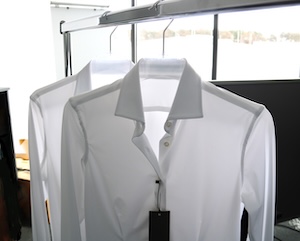
Stretch WARP KNITS, in particular, impress with their freedom of movement, breathability, and virtually wrinkle-free wear – thereby opening up new style worlds such as smart casual or business casual.

When it comes to the highly efficient production of premium-quality stretch WARP KNITS, the HKS 2-SE has long been the machine of choice. KARL MAYER’s best-selling tricot machine produces standard elastic fabrics characterized by high gauges, smooth, delicate surfaces, and a soft hand feel.

With its unmatched precision, efficiency, and reliability, the HKS 2-SE leads the market; two new variants now offer additional benefits for customers: A 312″-model complements the existing offering with working widths of 130″ (expandabel by 4″) and 156″, thereby ensuring even greater productivity and application versatility. New use and fabric qualities are also made possible by the HKS 2-SE TWO two-in-one machine with the new E 40 gauge.

HKS 2-SE TWO in E 40 for hybrid classics

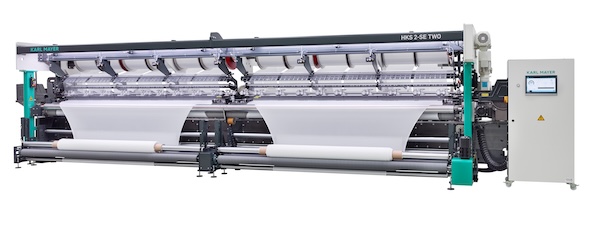
The HKS 2-SE TWO is the first model in a fresh line of two-bar tricot machines from KARL MAYER that sets new standards for efficiency with double the output. With a working width of 2 x 134″, this two-in-one model simultaneously produces two fabric panels of identically high quality – all at an impressive speed and with an easy operation.

The HKS 2‑SE TWO is now – and this is new – available not only in gauge E 36 but also in gauge E 40. This makes the machine, which is ideally suited for producing durable fabrics with smooth textures, particularly appealing for polo shirts and pants.

HKS 2-SE now also available for bedding

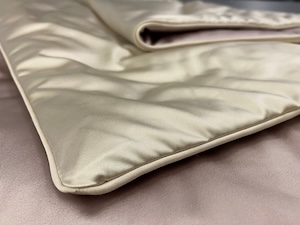
Another new addition is an HKS 2-SE with a working width of 312″. The increased width and a working speed of 3,800 min-1 set new productivity standards for large-format applications such as bedding. In particular, duvets made from supple fabrics with a satin finish and a smooth, cool feel against the skin are in extremely high demand during the hot summer months – and expand the HKS 2-SE’s range of applications to include home textiles in addition to sportswear, swimwear, and lingerie.

The machine is available in E 36 and E 40 gauges, operates with an N-pattern gear drive, and is equipped with KAMCOS® 2.

Posted: July 4, 2026

Source KARL MAYER

Sponsors