MILAN — May 18, 2023 — The textile machinery orders index for the first quarter of 2023, as processed by the Economics Office of ACIMIT, the Association of Italian Textile Machinery Manufacturers, declined markedly compared to January-March 2022 (-35%). In absolute terms, the index stood at 84.8 points (basis: 2015=100).
This result is mainly due to a reduction in the orders intake recorded by manufacturers on foreign markets. Indeed, foreign orders dropped by 40%, whereas the domestic market showed a 14% increase. The absolute value of the index settled at 78.3 points abroad, while it measured in at 148.1 points in Italy. During this year’s first quarter, booked orders stood at 4.2 months of guaranteed production.
ACIMIT president Alessandro Zucchi stated that, “The order index for the first quarter confirm a trend of the past few quarters, where uncertainty still predominates in global markets, both in terms of a macroeconomic framework that is characterized by a penalizing inflationary trend and ongoing geopolitical tensions. This is a scenario that this does not facilitate investment plans for businesses.”
However, this uncertainty does not appear to affect the sector’s operators, who are nonetheless permeated by a sense of optimism, as is also testified by the positive data drawn from a comparison with orders from the previous quarter (October-December 2022), for which total orders had been slightly on the rise at +3%. Indeed, the president of ACIMIT confirms that, “Manufacturers in our sector don’t lack for work, having filled up on orders last year and are now busy fulfilling them. The forecasts for 2023 remain positive”. Zucchi concluded, “I expect this confirmation of a healthy manufacturing sector to come from ITMA Milan, the world’s premier trade show dedicated to textile and clothing technologies, slated to open on June 8th at the Rho Fiera exhibition spaces. The exhibit will feature over 400 Italian manufacturers, taking up approximately 30% of the entire exhibition space. This figure is in itself a result that confirms the leadership role of Italy’s textile machinery manufacturers”.
Posted: May 19, 2023
Source: ACIMIT, the Association of Italian Textile Machinery Manufacturers
NORTHFIELD, VT — May 18, 2023 — Darn Tough Vermont, the number one brand in the premium outdoor space and the fastest growing family owned American sock manufacturer, announces the merger of two sales territories into one territory – as it once was. The Mid-Atlantic focused Hudson Valley Sales Group, led by Adam Shapiro, will be joining forces with 20-year Darn Tough veteran Hal Ellms and the Pinnacle Outdoor Group which covers the New England territory.
“The combination of these two outstanding agencies and leaders creates twice the dedication to supporting our customers.,” said Mark Comcowich, Director of Sales at Darn Tough. “Adam and his team have an incredibly strong reputation in the mid-Atlantic. Having the opportunity to combine his team and leadership with the experience Hal has with the Darn Tough brand as the original sales representative in that territory, was one I could not pass up”.
Established in 2016, Hudson Valley Sales Group has remained a staple in the area and has shown profitable growth to its retail base throughout the Mid-Atlantic territory. Bringing extensive knowledge in the footwear category specifically, the group boasts close to 50 years of combined experience. With other notable outdoor brands in their portfolio such as Mountain Hardwear, NEMO and Stanley – Darn Tough will now be represented alongside them in the New York, New Jersey, Pennsylvania, Maryland, and Delaware markets.
“Darn Tough is a perfect fit for us, and we are thrilled to represent them here on the east coast,” said Adam Shapiro, Principal Rep at Hudson Valley Sales Group. “Having other outdoor brands in our wheelhouse made this a no-brainer for our team, we are excited to use our experience for the American-made brand.”
“Adam and I currently have a similar and very successful partnership with other brands in the territory,” said Hal Ellms. “being able to bring Darn Tough into that partnership was a natural progression and one that is set up for success”
Darn Tough makes premium, all-weather outdoor and lifestyle socks backed by the industry’s only unconditional guarantee for life. This guarantee represents the brand’s mission to both the product and community – never sacrificing quality and continuing to provide consumers with the best socks imaginable.
TOKYO, Japan — May 18, 2023 — As climate change has a large impact on the global society and economy, industry, governments and academia are making efforts to reduce environmental impact including greenhouse gas (GHG) emissions through energy conservation, green energy and life cycle assessment (LCA).
As a people-focused company, the Teijin Group provides innovative solutions for enhanced quality of life and works to minimize any negative impact on the environment or society through its business activities. Teijin considers environmental management to refer to management that reduces the environmental impact over the entire life cycle of the product, including all processes from material procurement to production, product use and disposal.
Climate change mitigation & adaptation
With raised targets for reducing CO2 emissions, Teijin’s long-term environmental targets have been adapted to an ambitious level of 30% reduction. With a further target of reducing the portion of emissions that accounts for over two-thirds of the overall supply chain emissions by 15%. Establishing targets that are achievable whilst also being ambitious has been key for us in leading the way to a carbon neutral future. The Teijin Group’s targets for GHG emissions are now officially validated as Science Based Targets (SBT) as the first Japanese chemical manufacturer. The objective of SBT is to help achieve the Paris Agreement’s goal of limiting global temperature rise to well-below two degrees Celsius above pre-Industrial Revolution levels, which is expected to significantly reduce the risks and impacts of climate change.
Achievement of a circular economy
Teijin established a method for calculating CO2 emissions during the manufacture of TenaxTM carbon fibers, which has made it possible to conduct Life Cycle Assessment (LCA) of all carbon fibers offered by Teijin. By doing so, Teijin became the first company in the industry to be able to achieve this. Not only calculates its own manufacturing processes, but Teijin also evaluates the carbon footprint of its customers’ manufacturing process with this method.
Teijin Aramid, a core aramid business of the Teijin Group headquartered in the Netherlands, has improved the carbon footprint of its para-aramid product called Twaron® by 28% compared to 2014 according to the applicable ISO standards 14040 and 14044. The benefit of using Twaron® can be calculated economically and environmentally by the Customer Benefit Model (CBM) developed by Teijin Aramid.
Teijin is also at the cutting edge of what is possible to exceed demands in our ever-changing world. Providing solutions to help reduce vehicle weight, which in turn helps reduce gas emissions and improves overall fuel performance, means we are impacting countless journeys around the world. Teijin Automotive Technologies’ has one of these solutions called TCA Ultra Lite®, a 1.2 specific gravity ultra lightweight sheet molding compound formulation that uses glass fiber reinforced plastic (GFRP). Carbon fiber reinforced thermoplastic (CFRTP) Sereebo® is another example. Conventional carbon fiber-reinforced plastic (CFRP) that utilizes thermosetting resins requires several minutes to several hours to mold, making it unfit for components used in mass-produced automobiles. However, by making use of thermoplastic resins, we have been able to significantly reduce these molding times. This has allowed Teijin to establish the world’s first mass production technology that is able to mold CFRP in only one minute.
In addition to this, the Teijin Group’s fibers and products converting company Teijin Frontier offers to apparel manufacturers numerous products that help reduce CO2 emissions, including ECOPET®, a recycled polyester fiber that utilizes used PET bottles and fiber scraps as raw materials, and SOLOTEX®, which uses plant-derived ingredients for a portion of its polymers. Teijin Frontier has also developed a system to calculate CO2 emissions within the polyester fiber manufacturing process, thereby enabling the implementation of LCA. It will gradually expand the scope of its operations to cover more textiles, including those used for weaving and dyeing, while working with its partner companies to evaluate the entire life cycle of polyester fiber products.
Teijin is leading the way towards the goal of a carbon neutral future across industries.
LYNDHURST, N.J. — May 11, 2023 — Lion Brand Yarn Company — a global marketer and distributor of knitting and craft yarn and a fifth-generation, family-owned business — is proudly celebrating its milestone 145-year anniversary. Founded in 1878, Lion Brand has been at the forefront of the American crafting community throughout its long history, evolving and connecting with consumers through numerous cultural shifts, including recently developing fully sustainable products and partnering with nonprofit organizations that promote mental health and work to combat discrimination.
“Few creative mediums have proven their longevity and adaptability across cultures and trends throughout the years as much as the fiber arts, and Lion Brand Yarn is proud to have been at the forefront of this wonderful, inclusive community since 1878,” said Adam Blumenthal, president, CEO and fifth-generation family member of Lion Brand Yarn. “Our success and longevity are a testament to many things, including the quality, trust and value associated with our brand, our continuously evolving product portfolio, the comfort our products provide to our amazing, highly engaged Lion Brand customers and the continued support of our retail partners.”
Throughout the next several months, more than 1 million followers across Lion Brand’s social channels will be treated to historical content looking back at past fashions in the fiber arts category, shout-outs from aficionados and opportunities to win Lion Brand gift cards, among many other surprises.
Lion Brand Yarn’s history and resilience are significant: The brand was founded before the automobile, motion pictures, the Hershey Bar and Coca-Cola. Today, the company continues to be a market leader, driven by core legacy brands including Wool Ease®, Wool-Ease Thick & Quick®, Hometown®, Heartland®, Homespun® and Pound of Love®; meaningful new innovative product introductions including Hue & Me® and Mandala®; and an extensive natural and sustainable fiber portfolio including Re-Spun® and Coboo®, all of which are supported by leading-edge social and digital media.
In addition, Lion Brand Yarn supports knitters and crocheters by offering more than 8,000 free patterns on lionbrand.com and promoting community engagement via a diverse array of respected bloggers and influencers. The company has a long history of charitable endeavors, working with nonprofit organizations including Mental Health America, Knit the Rainbow, Warm Up America, HatNotHate, It Gets Better Project and St. Jude Children’s Research Hospital, which has received over $2 million in proceeds from sales of Vanna’s Choice®, a brand launched in collaboration with longtime Lion Brand spokesperson and “Wheel of Fortune” star Vanna White.
Notable company milestones include:
In 1904, Lion Brand’s first advertisement appeared in the Ladies’ Home Journal.
In 1951, Lion Brand was one of the first companies to introduce nylon and orlon into the market, forever changing the hand-knitting world.
In 1965, Lion Brand became the first hand-knitting company in America to receive the coveted Woolmark, a globally recognized symbol of quality and authenticity in 100% wool products.
In 1978, Lion Brand received an official declaration from the City of New York in recognition of its 100th anniversary.
In 1981, Lion Brand introduced Jamie Yarn, the first yarn line with a photo on the label.
“Wheel of Fortune” star and knitting and crocheting aficionado Vanna White became Lion Brand’s spokesperson in 1994, later launching the best-selling Vanna’s Choice® line of pattern books and yarn.
In 2002, Lion Brand ignited the Fun Fur craze, inspiring millions of new knitting and crocheting enthusiasts.
In 2004, Lion Brand’s website received hundreds of thousands of downloads of the free pattern for Martha Stewart’s now-iconic prison release poncho.
In 2013, Lion Brand was awarded the highly coveted Family Business Award of Excellence by Ernst & Young.
In 2020, Lion Brand acquired Silk City Fibers, a leading marketer and distributor of fine yarns to designers and discriminating consumers.
In 2021, Lion Brand partnered with renowned Black crochet artist Aniqua Wilkerson to create Skein Tones, a product line that complements a wide spectrum of skin tones. The product was honored with a 2022 Gold Stevie Award from the American Business Awards.
In 2022, Lion Brand’s Truboo, Coboo, and Re-Spun yarns were named Sustainability Product of the Year by the Business Intelligence Group’s Sustainability Awards.
New approaches to investigate damage due to environmental fluctuation on textile artifacts by image processing.
TW Special Report
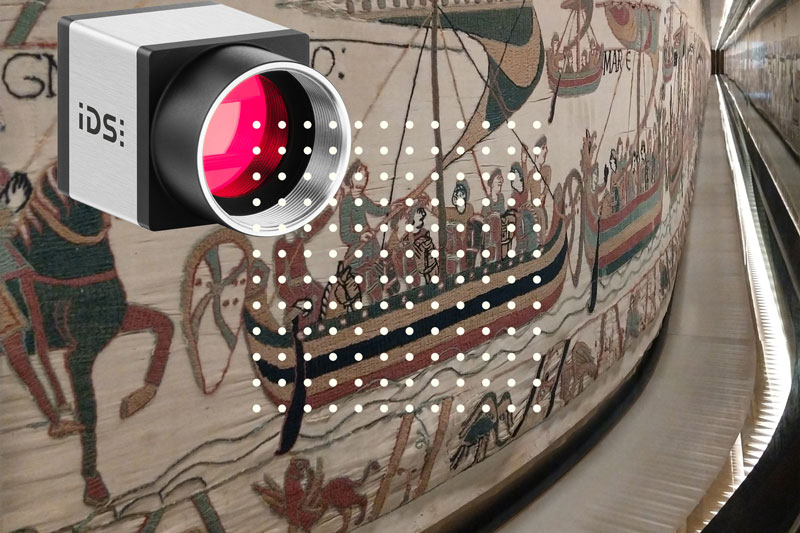
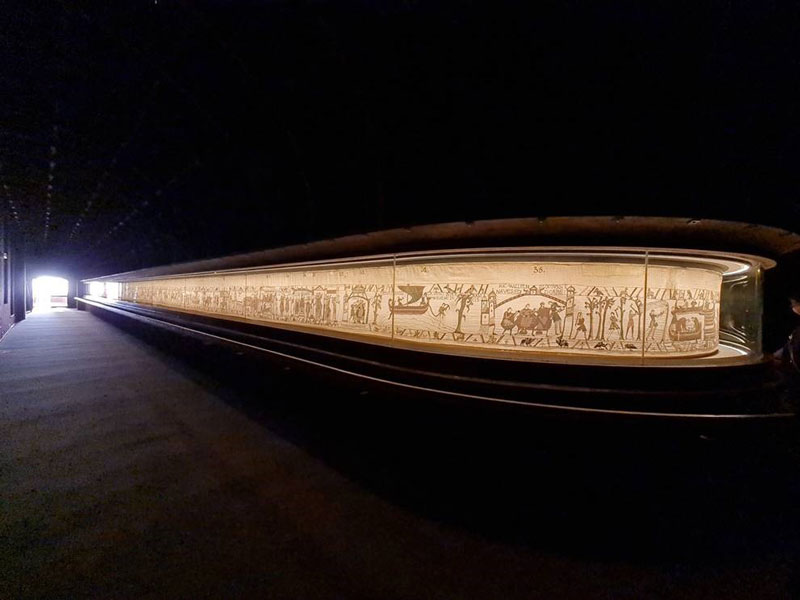
Preventive conservation plays an important role in the preservation of art and cultural assets. In order to preserve their condition for as long as possible, it is essential to slow down ageing processes and evaluate factors that alter materials. To do this, it is necessary to grasp and have an holistic understanding of the artefact. Cultural heritage science and engineering methods for understanding material behaviour require an interdisciplinary approach. Textiles are among the most sensitive art and cultural heritage objects. In the course of their production and handling, their presentation and storage, they are often exposed to influences that can have a damaging effect. The French start-up company S-MA-C-H has studied the Bayeux Tapestry as part of a research project and, with the help of IDS cameras, has developed a system that provides valuable insights for the conservation-optimized storage and presentation of this delicate and extraordinary artifact. The expertise of conservators, combined with state-of-the-art technology, helps to identify potentially damaging factors at an early stage, to minimize them or, at best, to exclude them altogether.
The system was designed for a comprehensive study looking at the mechanical behavior of the Bayeux Tapestry, commissioned and funded by the Normandy Regional Office for Cultural Affairs. “We contributed our expertise in mechanical engineering by fully monitoring the stress and strain on the tapestry. In addition to monitoring, we helped to devise conservation solutions. This involved classifying and assessing the degree of risk and sensitivity of the tapestry in its surrounding indoor climate,” explained Cécilia Gauvin, co-founder and managing director of S-MA-C-H.
A multidisciplinary team of textile and preventive conservators as well as heritage conservation scientists characterized the artifact’s response to appropriate environmental fluctuations. “The project addressed two main questions: what are the optimal parameters for a presentation on sloping supports and how does the tapestry react to its microclimate?”
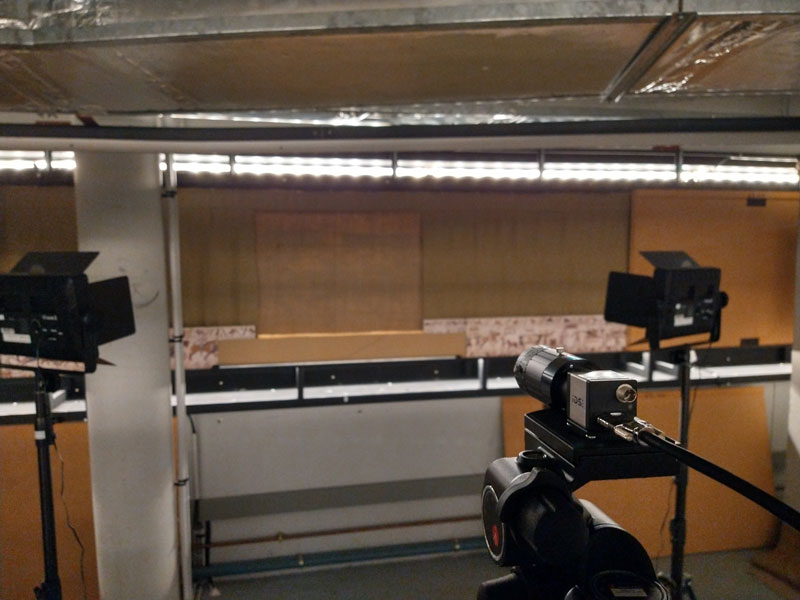
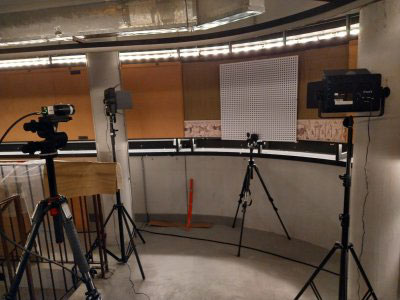
To be able to answer these questions, the tapestry was monitored by temperature and humidity sensors as well as by force sensors to record the gravity pressure. The heart and brain of the system: a non-contact 2D full-field Digital Image Correlation (DIC), consisting of an IDS camera and specially developed software for digital image correlation.
Figure 1: A calibration plate is used to calculate the 2D position of the camera in relation to the object and to correct any kind of distortion caused by the camera and lens.
“Digital image correlation is an image processing technique that can be used to analyze movements and deformations of objects. For this purpose, high-resolution images of the object’s surface are captured and then evaluated with the help of software algorithms to detect changes in the shape, position or size of the object,” explained Patrick Schick, IDS product marketing manager. In the search for the right camera model for the system, parameters such as interface, sensor and price-performance ratio were the main deciding factors. “For the analysis of the tapestry, extremely high-resolution images with low image noise are required to capture the smallest details.” The USB 3 uEye CP meets these requirements thanks to the particularly light-sensitive IMX183 rolling shutter CMOS sensor from Sony’s STARVIS series. With BSI technology (“back-side illumination”), this sensor ensures outstanding image quality even under difficult lighting conditions. “The camera is thus ideally suited for demanding image evaluations such as this monitoring, which takes place in low light for conservation reasons. The USB3 Vision camera records high-resolution images at a very low frequency over a longer period of time,” Schick added. For the research project, for example, the monitoring ran around the clock for a month, with only one image capture per hour.
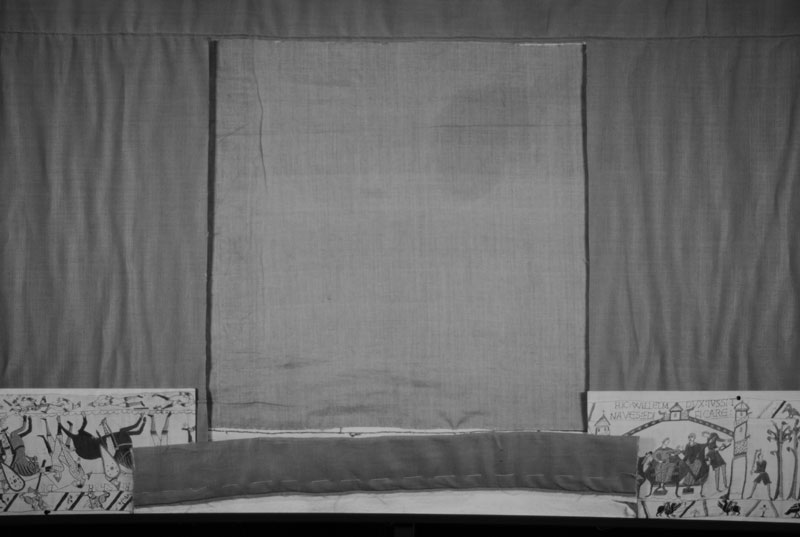
Figure 2: IDS camera point of view for 2D strain analysis
“The Python interface of the IDS peak API allowed us to quickly and easily develop software to parameterise the camera and capture images,” explained Cécilia Gauvin. The images are then processed with DEFTAC3D, a software developed by the French Pprime Institute specifically for digital image correlation. This results in full-surface measurement data of the object’s surface based on thousands of 2D or 3D coordinates with very high resolution. The displacement of the image points within the examination period is interpreted as a deformation that is due to a mechanical load or stress on the object. Based on the results, full-field strain maps as well as deformation maps are generated. Full-field strain maps illustrate the strains in a material over the entire surface. They therefore show whether and how the tapestry has deformed as a whole. Deformation maps, on the other hand, provide information about the local deformations in a material. They provide S-MA-CH staff with information on whether and how the tapestry has deformed at specific points.
The full-field strain maps are processed together with the environmental variation findings to understand the hygromechanical behavior of the Bayeux Tapestry. Hygromechanical behavior refers to the interplay between moisture and the mechanical properties of the textile. This can be influenced by a number of factors, including the type of yarn used to make the fabric and the type of weaving or embroidery technique used to make the tapestry, which adds to the complexity of the study.
In order to incorporate scientific data into the decision-making process, tests were carried out on both facsimiles and the tapestry itself. On the facsimiles, the full-field strain maps were combined with the stress results from the force sensor measurement and the climate measurements (temperature and humidity). The results allow conclusions to be drawn about the climate regulation for optimal storage of the artifact.
The data collected by the sensors and camera system was documented in real time to analyze long-term trends. With the help of the information provided, it can be ensured that the climatic conditions in the Bayeux Museum are within the optimal limits to avoid damage to sensitive art objects or historical exhibits, such as the Bayeux Tapestry.
Outlook
The market for the protection and preservation of cultural heritage is slowly opening up to structural diagnostic procedures. “Our goal is to develop appropriate systems for conservators in a plug-and-play system,” Gauvin explained. In addition, the French start-up wants to use vision systems to monitor structural damage to paintings in museum galleries and historical monuments in the future. This approach across disciplines makes it possible to assess the condition of exhibits so comprehensively that the appropriate conservation measures can be taken.
“Our knowledge of mechanical engineering, combined with industrial image processing, opens up new approaches, expands the range of actions and produces innovative solutions.”
An elaboration of the conservation conditions for handling, storage or presentation of artifacts based on these interdisciplinary research results offers protection against further damage. Historical as well as modern products of textile art can thus be preserved in the best possible way for the future. Image processing components make a valuable contribution to this.
Data and facts about the exhibit
68 meters long;
52 cm high;
9 panels of woven linen fabric;
4 seams;
10 colors of woolen yarn;
58 individual scenes;
623 people;
202 horses;
55 dogs;
505 other animals;
27 buildings;
41 ships and boats; and
49 trees.
The Bayeux Tapestry, is an embroidered work created in the second half of the 11th century on a strip of cloth about 52 centimeters high. Depicted in images and text over 68 meters in 58 individual scenes, the Conquest of England is considered one of the most remarkable pictorial monuments of the High Middle Ages because of its abundance of detailed individual depictions, well thought-out iconography and quality of craftsmanship. Despite its name, the Bayeux Tapestry is not actually a tapestry but a narrative embroidery. It consists of images and text inscriptions and comprises nine interconnected linen panels.
VANCOUVER, B.C. — May 17, 2023 — Performance BioFilaments Inc. is pleased to announce the start-up of the world’s largest nanofibrillated cellulose (NFC) commercial production plant at Resolute’s Forest Products, Kénogami paper mill in Quebec. A daily production capacity of 21 metric tons is now available to supply customers for commercial orders in concrete and mortar, nonwoven, industrial fluid, biocomposite plastic, thin film and mineral consolidation applications. A small dose of this nano-scale biomaterial has a significant impact, therefore, capacity of 7,000 metric tons per year will go a long way.
Nanofibrillated cellulose is a natural, renewable and sustainable biomaterial derived from well-managed, certified forests. It provides a low carbon additive to enhance performance-driven advanced materials and specialty chemicals.
“The Performance BioFilaments team and development partners have dedicated years of effort to bring this low-carbon biomaterial to market,” said Gurminder Minhas, managing director of Performance BioFilaments. “We have collaborated extensively across a range of industrial supply chains, integrating nanofibrillated cellulose to achieve cost, quality and dramatic performance improvements. The availability of commercial volumes means we can readily support large-scale opportunities across a number of major industry sectors.”
COLUMBIA, S.C. — May 17, 2023 — Xerxes, a subsidiary of Shawcor Ltd., today announced plans to establish its first South Carolina operations in Richland County. The company will create approximately 80 new jobs.
Shawcor Ltd., the parent company of Xerxes, will expand its composite systems segment production capabilities in the United States, with an additional production facility for its Xerxes business. Xerxes manufactures market-leading, fiberglass-reinforced plastic underground storage tanks, primarily used within the retail fuel, storm water and wastewater markets.
Shawcor Ltd. is a growth-oriented, global material sciences company serving the infrastructure, energy and transportation markets. The company operates through a network of fixed and mobile manufacturing and service facilities. Its three business segments — composite systems, automotive and industrial, and pipeline and pipe services — enable responsible renewal and enhancement of critical infrastructure while lowering risk and environmental impact.
Located at 141 Hobart Road in Blythewood, Xerxes plans to lease a new production facility that will expand the company’s capability to deliver market-leading underground fuel and water storage tanks.
The facility will be populated in a phased manner. It is expected to be operational by the end of 2024 and to approach normalized levels of production in 2026. Individuals interested in joining the Xerxes team should visit the company’s contact page.
“Our new Xerxes facility will bring 80 jobs to Blythewood while positioning us closer to our U.S. customer base and expanding our ability to serve the eastern-U.S. market with underground storage tanks,” said Shawcor Ltd. Composite Systems segment President Martin Perez.
“South Carolina is proud to welcome Xerxes as they join our thriving business community,” said Governor Henry McMaster. “Their decision to establish operations in Richland County and generate 80 new jobs serve as yet another victory for our state.”
“This announcement is exciting news for Blythewood, and we are proud to welcome Xerxes to South Carolina,” said Secretary of Commerce Harry M. Lightsey III. “Our state’s substantial resources will help Xerxes build a solid foundation for success and, in turn, continue to elevate economic opportunities in Richland County and beyond.”
“Xerxes’ investment in Blythewood will add to the growing vibrancy of Richland County and position the county for future economic development,” said Richland County Council Chair Overture Walker. “Richland County is ripe with prosperity, and we are thrilled to welcome the Xerxes family to our region while enhancing the quality of life in the communities we serve.”
Five Fast Facts
Xerxes, a subsidiary of Shawcor Ltd., is establishing its first South Carolina operations in Richland County.
The company will create approximately 80 new jobs.
SEOUL, South Korea — May 17, 2023 — To continually deliver creative innovation and sustainable textile solutions across the entire value chain, Hyosung’s Fashion Design Center (FDC), an interactive fashion studio that spans the U.S., Europe, and Asia surveying progressive brands & retailers researching consumer insights, has released its forecasted SS 2025 Textile Trend report provides a vision of the key materials major apparel brands will be incorporating into their collection next year.
FDC’s overarching textile trend for SS 2025, is called Regenerative Life, which reflects an uplifting and positive mindset that focuses on the well-being of self and our planet. According to Gary Oh, Team/General Manager, Hyosung FDC, consumers are seeking long-lasting, multi-function apparel made with eco-friendly materials from purpose-driven brands that they feel good about wearing.
With this insight in mind, FDC has categorized Regenerative Life into the three following themes where it recommends apparel applications made with Hyosung’s broad portfolio of sustainable creora® spandex, performance nylon and polyester yarns.
Active Essentials: Basic functions such as cooling, and comfort stretch that are expected in performance activewear among today’s consumers, have now become essential in street and fashion apparel. Within this category’s Not-so Basic Basics, Next Level Comfort, Vacation Bound and All-Ready Active sub-trends, FDC presents how these performance features can be woven into eye catching apparel with eco-friendly, functional fabrics.
Great Escape: This theme focuses on outdoor fabrics geared to consumers who are seeking physical and mental health by escaping in nature, regardless of the conditions that are thrown to them, in its four sub-trends – Nature Gym, Protective Basic, Everywhere Layers, and Bleisure Travel.
Wellness Strategy: While rest was considered a short-term solution for reducing stress, it’s now considered a long-term strategy for a positive lifestyle and sustainable well-being. Wellness Strategy addresses comfort fabrics for loungewear and intimate apparel in its Travel-Ready Essentials, Comfort Everyday, Feel-Good Texture, and New Femininity sub-trends.
“For SS 2025, we predict textile trends focusing on materials that allow consumers to feel the best they can be both physically and emotionally,” said Oh. “It’s such an exciting time for textile innovation and our team finds great joy in providing creative solutions that align with our global partner network’s needs.”
Hyosung will be displaying fabrics and concept garments made with recommended yarns from the SS 2025 Textile Trend report at the following trade shows this summer – Outdoor Retailer Salt Lake City, June 19-21, Future Fabric Expo London, June 26-28, Interfilière Paris, July 2-4, Functional Fabric Fair NYC, July 18-19, Preview in Seoul, August 23-25, and Intertextile Shanghai, August 28 – 30.
Additionally, more detailed information on FDC’s SS 25 Textile Trends will be presented in a weekly Trend Byte series featured on the Hyosung Performance Textiles blog and LinkedIn page.
LOS ANGELES — May 17, 2023 — YKK, a global fastening manufacturer, and VNTANA, the 3D infrastructure technology company, announced today the launch of the first ever 3D trim configurator to make it easier for brands to visualize trim options, design trims, and generate item codes instantly. The new platform, YKK Trim Creator, brings a new level of stress-free standardization and efficiency for brands incorporating custom zippers and fasteners in their designs.
As more brands look to provide virtual product samples and renderings as part of the end-to-end product development strategy, many are turning to 3D/AR solutions. The YKK Trim Creator with VNTANA’s patented optimization algorithms enables YKK’s customers to view thousands of customized options instantaneously. It makes it easy for designers to specify the correct fastener components, see the design in real-time 3D, and even share the 3D model easily through a URL. These capabilities enhance the efficiency of the zipper design and adoption process and minimize the need for physical zipper samples, decreasing costs and carbon footprint by cutting back on waste and shipping while improving the sales process for buyers.
“So many designers and brands lose valuable time using legacy, analog tactics such as catalogs and item samples for product selection,” said Ashley Crowder, co-founder and CEO of VNTANA. “The YKK Trim Creator is an example of how VNTANA’s software can provide the back-end infrastructure needed to improve the digital design process to make it functional and effective for brands.”
In 2022, YKK surveyed its customers on how it could most improve customer service. The results showed that many wanted the ability to customize a finished zipper — size, material, function, and color selection — digitally and to identify the correct item descriptions and item codes for their customized zippers. The YKK Trim Creator was designed to address those customer needs.
“As we constantly evolve to provide the best service for customers, we are laser focused on speed, quality, and sustainability,” said Takayuki Kato, vice president, Global Marketing Group, YKK Corp. “Digitalization through a tool like the YKK Trim Creator helps us achieve all three. It immediately displays the design in 3D, which improves visualization, reduces the need for customers to request physical samples, speeds up the design process, and decreases waste and the need for shipping samples around the world.”
VNTANA’s 3D infrastructure software provides the back-end “plumbing” that enables brands to scale 3D quickly and across digital platforms such as eCommerce sites, B2B virtual showrooms, social media and the metaverse. This allows for seamless collaboration from design to sales, ensuring the highest quality and accuracy across every phase of the process. With this integration, YKK customers will see a significant time savings in the design process.
SEATTLE, Washington — May 17, 2023 — Respected long-time sign-making software developer, XFCut Software, announces the much-anticipated release of XFCut 6, a major upgrade to its best-in-class vinyl cutting desktop software plug-in for Windows and Mac OS X. And for the first time ever, XFCut is now available for CorelDRAW and Adobe Illustrator, With intuitive interface, advanced specialized tools and one-click options, XFCut 6 will make your sign design and cutting tasks a pleasure while increasing quality and productivity.
XFCut is the vinyl cutting plug-in designed to work for sign makers currently using a desktop design application – CorelDraw or Adobe Illustrator. It allow you to automatically add registration marks into your designs, create contour for printing and cutting jobs, and output jobs directly from Illustrator or CorelDraw to your vinyl cutting plotter. No need to export/import files between design and production applications.
XFCut gives you the freedom to use almost any vinyl cutter and cutting plotter. It supports almost all common vinyl cutters and cutting plotters from various manufacturers, including Roland, Graphtec, GCC, Vevor, Saga, Refine, USCutter, UKCutter, Vinyl Express, Secabo, Yinghe, JiaChen, Liyu, Redail, Summa, Mutoh, Houston, Mimaki, PCUT, Mycut, Vicsign, KNK, E-Cut, Jinka, Desay Master, Seiki, Pixmax, ANAgraph, Ioline, and others.
“We are very excited about the release of XFCut V6” said David Kinney, vice president of sales and marketing at XFCut Software. ” The features included in it were specifically developed based on feedback from our major manufacturers, distributors as well as key customers. For example, simple and straightforward print-to-cut workflows, adding shadow layers, double-head support for specific cutting machines, etc.”
XFCut 6 includes dozens of key features that focus on productivity, design and compatibility enhancements. Here are some of the highlights:
Seamless support with the latest versions of CorelDRAW (Windows only). Not compatible with Home and Student Suite.
Seamless support with the latest versions of Illustrator (Windows and macOS).
All popular cutting plotters are supported (700+).
Complete, efficient print and cut workflow.
Support of cutter’s optical alignment methods to guarantee precise contour cutting around pre-printed graphics.
Support of the TCP/IP protocol to communicate with the cutter.
Set cutter speed and pressure.
Add registration marks to your design for print and cut workflow.
Weld overlapping objects and text.
Cut of entire job or selected elements.
Automated, precise contour cut interface.
Automatic detection of optical alignment methods’ registration marks.
Multiple job queue.
Corel DRAW direct workflow plug-ins.
64 bit speed.
macOS 13 (Ventura) and Apple Silicon fully supported.