CARY, N.C. — August 21, 2023 — INDA, the Association of the Nonwoven Fabrics Industry, announced the conference program for Hygienix™ 2023, November 13-16 to be held at The Roosevelt New Orleans Hotel, New Orleans, La. The program details can be found on the Hygienix website.
The keynote speaker is Courtney Scharf, chief client officer, Trend Hunter. Trend Hunter leverages big data, human researchers, and AI to identify consumer insights, and deep dive opportunities for the world’s most innovative companies, such as Unilever, Colgate-Palmolive, Georgia-Pacific, Kroger, Johnson & Johnson, Reckitt Benckiser, Samsung, and Bacardi. Trend Hunter utilizes Artificial Intelligence and research to identify and curate top insights and trends to advise brands and businesses in their pursuit of innovation.
The Hygienix program will feature thought leaders in consumer-centric innovations, the circular economy, raw material advancements in sustainability, opportunities for advanced recycling in absorbent hygiene, optimizing the packaging footprint, new approaches for odor control, and market trends and drivers.
Experts presenting at Hygienix include:
Aquapak Polymers Ltd. – “Creating Sustainable Nonwovens for Hygiene Applications with Thermally Processable Polyvinyl Alcohol; A Water Soluble, Environmentally Friendly and High-Performance Polymer”
Confitex Technology – “Reusables Production: It’s Not All Green”
Egal Pads Inc. – “Closing the Circularity Gap One Used Pad at a Time”
Essity – “Diaper Collection & Recycling in Australia”
ExxonMobil Chemical Co. – “Innovate New Levels of Strong Comfort with Hygiene Solutions”
Henkel Corp. – “Reducing the Packaging Waste from Personal Hygiene Products”
INNOVATEGRN – “Accelerating Innovation / Embracing a Consumer-Centric Approach”
Kuraray Europe GmbH – “Safe and Eco-friendly Elastics for Absorbent Hygiene Products”
Nexus Circular – “Increasing Plastics Circularity for the Hygiene Segment Through Advanced Recycling”
W. Pelz GmbH –“Disposable Pads Meet Reusable Underwear”
Sequel – “Spiraling into Business: How a Dramatic Innovation to the Tampon Met the World’s Largest Manufacturer of Feminine Hygiene”
Sparkle Innovations Inc. – Sustainability and Circularity in the Absorbent Hygiene Products Industry”
The Hygienix program will offer a hands-on workshop as well as two pre-conference webinars. Jim Robinson, Principal, Absorbent Hygiene Insights LLC, will lead the in-person workshop on AHP Absorbent Hygiene Systems, Monday afternoon, November 13. This workshop evaluates SAP absorption for different SAPs and participants have the opportunity to deconstruct and examine several hygiene products including infant, adult, and period care products to increase the understanding of these systems.
The pre-conference webinars include:
“Period Care Products—The New, the Old, and the Old-New,” by Heidi Beatty, CEO, Crown Abbey, LLC, October 25, 11 a.m. ET
“Global Trends in Diapers, Baby Pants & Adult Underwear,” by Natalia Richer, COO, and Irene Richer, Market Analyst & Partner, Diaper Testing International, November 8, 11 a.m. ET
A highlight of Hygienix is the Hygienix Innovation Award™. Finalists will present their innovative absorbent hygiene products on Tuesday, November 14. The winner of the award will be announced Thursday morning, November 16. Last year’s award recipient was Pads on a Roll™ by Egal Pads. Pads on a Roll is a wrapped super-thin absorbent period pad that dispenses like toilet paper in public bathroom stalls, preventing the personal embarrassment of not having a menstrual product when needed.
For more details on the program, registration, and tabletop exhibits, visit the Hygienix website: https://www.hygienix.org/index.html
Posted: August 21, 2023
Source: INDA, the Association of the Nonwoven Fabrics Industry
LONDON — August 21, 2023 — Eco-Age today announced that after four successful years at the NGO Changing Markets Foundation, George Harding-Rolls will be heading its new Advisory Division, focusing on policy and regulation in the fashion sector.
Building on the company’s 15-year track record, the new division will guide businesses through the evolving landscape of emerging legislation and directives happening at the EU Level and beyond, such as the Eco Design for Sustainable Products Regulation, the Green Claims Directive, and the NY Fashion Act.
During his four years at the Changing Markets Foundation, Harding-Rolls ran several hard-hitting corporate investigations pushing for accountability and advocating for legislative change. He led the inception of the Fossil Fashion campaign, exposing the industry’s environmentally disastrous reliance on fossil fuels during the climate crisis as well as the organisation’s greenwash.com project.
Prior to Changing Markets George worked across the civil society sector with a focus on strategic communications, working for Forum for the Future, for Beijing-based philanthropic advisors, Charitarian, and for leading digital agency, Jellyfish. Harding-Rolls is also an advisory board member of the Conscious Advertising Network.
Livia Firth, Eco-Age founder and creative director says: “I have known George for several years and am a huge fan of his work. The Changing Markets Foundation has pioneered some of the most important investigative reporting highlighting the intrinsic link between oil and the fashion industry, driven by George. His wealth of experience and knowledge of the global policy and regulatory field, together with our highly skilled team and sustainable fashion and textile expert Philippa Grogan, takes Eco-Age to a whole new level of consultancy and advocacy”.
Harding-Rolls said: “I am delighted to be joining Eco-Age at such a pivotal time as the fashion industry heads into a new era of scrutiny and regulation. Now is the time for truly ambitious organizations to be stepping up and doubling down on systemic change, such as much-needed legislation. With this new focus Eco-Age is positioning itself to be the partner of choice in this crucial mission.”
This new division will build on the agency’s wealth of experience and expertise to guide its clients, ensuring compliance with the new regulations and effective planning for the incoming rules as part of the EU Green Deal.
Harriet Vocking, Eco-Age CEO, said: “The EU landscape is changing fast, one only must look at the recently announced German Supply Chain Due Diligence Act and the French Environmental Labelling requirements to see how the landscape is finally moving from voluntary CSR requirements to mandatory due diligence. Eco-Age has been working at EU regulatory level in the last few years and was the first agency to focus on reputational risk creating a new “insurance service” for clients, so it’s a natural extension of our services”.
The division will offer a suite of services, including EU Policy landscape analysis, multi-stakeholders and industry collaboration and convening, knowledge building through supporting research or evidence, internal training and education, and messaging dissemination and application, including campaign activations.
PORTLAND, Ore. — August 18, 2023 — Columbia Sportswear Co. — a global supplier of designing, sourcing, marketing, and distributing outdoor, active and everyday lifestyle apparel, footwear, accessories, and equipment products — has named Tom Gyles its new senior vice president, Global Distribution Network in Canada.
Gyles oversees North America and Europe wholesale, retail, and ecommerce company-owned distribution operations (2,000 employees). He is also accountable for the of the global third-party logistics network, strategy and operations including critical 3PL partnerships within the Asia Pacific region.
Gyles has more than 20 years of logistics and distribution network experience across several industries. He has spent the last 10 years in the apparel industry with PVH Corp and Gap Inc. While living in Toronto, Shanghai, New York, and most recently Hong Kong, he was accountable for logistics and distribution operations supporting retail, wholesale, online and franchise businesses for multiple brands. Gyles’ experience includes company owned and operated and 3PL-managed facilities. He also led a 3PL business in Canada.
Gyles will partner at the highest level with Columbia Sportswear’s executive teams globally, and is ultimately accountable for defining and delivering innovative models that serve future business strategy and uplevel consumer experience in a continuously changing supply chain landscape. He is based in Ontario, Canada and reports into Lisa Kulok, executive vice president, chief supply chain officer.
As consumers and governments become proactive about sustainability, SGS investigates the solutions available to retailers and brands wishing to improve input and output management in their supply chains.
By Keith Tsang
The textile industry has traditionally used high volumes of water and chemicals and is viewed as environmentally unfriendly in terms of chemically polluted wastewater.
Global problem
Manufacturing one cotton T-shirt requires raw materials, chemicals for processing and dyeing, energy to manufacture and transport, and 2,700 liters of water to process and finish.1 Global clothing sales increased by 60 percent between 2000 and 2014, and it is estimated that if this trend continues the textile industry will triple its resource use by 2050.2
This is unsustainable. There is already intense competition on the planet for resources. All industries need to find better ways to monitor, control and reduce their consumption of resources, especially those that present a direct threat to the planet.
Consumers and regulators are becoming increasingly concerned about the harmful effects of the chemicals used in textile manufacturing upon human health and the planet. The global textile chemical sector is currently growing at a rate of 2.7 percent per annum, and too many of the chemicals used are ending up in the environment.3 Wastewater is the primary source for this pollution. It is estimated the textile industry currently accounts for about 20 percent of global industrial wastewater and 20 percent of freshwater pollution.4
Brands and retailers hoping to respond to legislative and consumer demands for proof of greater sustainability need to ensure their supply chains are transparent. This clarity can only come through better monitoring and managing of resource inputs (chemicals, fresh water) and outputs (chemicals, wastewater).
Global supply chains
Textile and footwear supply chains are now global. Raw materials may come from one country, be processed in a second, turned into dyed textiles in a third, before being manufactured and sold in a fourth or fifth. At every stage, potentially harmful chemicals are used and there is the potential for polluted wastewater to be released into the environment.
Managing supply chains on a global scale, with multiple operators, is a challenge. However, with consumers seeking ‘green’ choices and governments introducing legislation to improve sustainability, manufacturers, brands, and retailers can no longer afford to ignore the need for effective oversight. They must find an effective way to demonstrate the sustainability of their products and supply chains.
Managing chemicals in the supply chain
The key to improving resource use and disposal in global supply chains is effective oversight. Understanding chemical inputs and outputs along an entire supply chain will give brands and retailers confidence in increasingly sustainability-led markets.
Effective chemical management requires a system that the brand or retailer can trust, but which can also be used by every operator along the supply chain. It must be capable of collecting data from a variety of sources and in multiple formats, standardizing the results to ensure all bias is removed. The system must also be capable of analyzing the data in a way that is understandable to pinpoint areas for improvement.
The road to sustainability is long. To be effective, a chemical management system must also be capable of improvement actions set against benchmarks that continuously evolve over time. These actions may include chemical risk assessment, training and knowledge management or the implementation of best practice. Working in this way, suppliers can verify their practices and brands/retailers can monitor and improve the overall sustainability along the complete supply chain.
Problems associated with effective chemical management might include difficulties in collecting data across long, multi-partner supply chains. Apart from the logistical issues associated with numerous suppliers, data may also be stored in legacy formats that are not easy to convert.
Brands and retailers may also lack specialized knowledge to interpret data and then present it in a way that is trusted and understandable. They may also lack the ability or global reach to ensure improvement actions are carried out both internally and externally, a primary requirement in any supply chain where continuous improvements in chemical management are required.
Finally, running an in-house process for chemical management along a global supply chain is costly and time-consuming.
SGS solution
SGSmart CARES helps operators in the textile, apparel, leather, and footwear industries to monitor and analyze performance in their chemical and environmental management systems. This advanced digital platform goes beyond compliance to support practical improvement actions that advance sustainability along the complete supply chain.
SGSmart CARES can collect data from any operator in the supply chain, processing that data using powerful analytics to provide insights that drive continuous improvements in chemical management. Fully customizable, it records and manages a facility’s chemical inventory list (CIL) and safety data sheets (SDSs), conducts multidimensional analytics on CIL and wastewater testing data and, with permission, enables the sharing of data with approved stakeholders, for example, the Zero Discharge of Hazardous Chemicals (ZDHC) Performance InCheck report.
At a time when governments and consumers are increasingly looking for evidence of efficient chemical management in textile and footwear supply chains, SGSmart CARES offers a simple, cost-effective solution, all backed by SGS’s global network of experts.
References
1 Handle with Care | Magazine Articles | WWF (worldwildlife.org)
2 global_20170228_global-middle-class.pdf (brookings.edu) & Style that’s sustainable: A new fast-fashion formula | McKinsey & The Apparel Industry’s Environmental Impact in 6 Graphics | World Resources Institute (wri.org)
3 Global Textile Chemicals Industry (reportlinker.com)
4 Frontiers | Current status and research trends of textile wastewater treatments—A bibliometric-based study (frontiersin.org) & The impact of textile production and waste on the environment (infographic) | News | European Parliament (europa.eu)
Editor’s Note: Keith Tsang is senior Service Development manager at Geneva-based SGS
The VKR 32000-HS roll-to-roll machine at Horizon Digital Print.
TW Special Report
Horizon Digital Print’s investment in a digital machine from Vanguard Europe — the first in Ireland – is the central focus of Horizon’s sustainability drive that has resulted in scooping Ireland’s national Green Manufacturer Award ahead of the likes of global brands such as Coca-Cola.
Described as a fabulous user-friendly machine printing excellent quality products 10 times faster than previously at a fraction of the cost, Dublin-based Horizon Digital Print has also announced a major investment in Vanguard Europe parent company Durst’s LIFT ERP software as it continues its growth and transformation into one of Europe’s most sustainable and innovative printing companies.
Coca-Cola HBC Ireland and Northern Ireland was among the 10 finalists in the Green Business and Sustainability Green Awards 2023 in which Horizon triumphed in The Green Manufacturer category. The robust Vanguard VKR3200-HS roll-to-roll UV-LED printer runs at speed of up to 3,000 square feet per hour. Horizon Digital Print, which employs 100 people, has an 11 million euro turnover and is based across two sites in Navan Road, Dublin. Its primary markets outside of Ireland are the United Kingdom and France.
Celebrating sustainability success with Vanguard Europe technology: Horizon Assistant Print Manager Gavin Sherwin (left) pictured with Declan Kelly and the certificate in front of the VKR3200-HS press.
“The Vanguard is a fabulous, versatile and user-friendly machine — uncomplicated and the quality of print is excellent,” said Declan Kelly, Print manager at Horizon Digital Print. “It has super-fast turnaround time, and the cost of the power consumption is predicted to be a tenth of the power our previous system, thanks to the LED functionality. The Vanguard is so versatile — from fabrics, PE, paper, mesh, PVC vinyl among many the materials we print on. It is an ideal product for our needs, with perfect image quality, and is extremely reliable. For one of our clients in Dublin, JCDecaux, we have many positive comments about the quality of the lightbox skins that are all produced on the Vanguard. We had a painless installation that only took two days followed by a couple of days training.”
Already an established Durst production house, Horizon has now invested in Vanguard Europe technology.
Derek Gillen, managing director of Horizon Digital Print, said: “As an already established Durst production house, investing in yet more state-of-the-art technology — this time from Vanguard — is an important step forward. Our big focus has been on energy reduction, which is why we were even more delighted to be win the Green Manufacturer Award this year, in the process beating the likes of household names such as Coca-Cola and others. The decision to purchase the Vanguard was at the center of sustainability drive — it’s because of its green credentials.”
Fabian Sottsas, managing director of Vanguard Europe, said: “We are delighted with this first installation in Ireland and to have played our part in the Horizon sustainability and wider company success story. It is all part of the Vanguard growing your business strategy where we work in partnership to help deliver new opportunities through our technology. The Vanguard VK3200 roll-to-roll machine sets new standards with high print quality and performance that is available at a competitive price point.”
Jörg Hartmann, one of the authors of the book “Color in Knitting: By Designers, for Designers,” explains the aims of the new reference work
TW Special Report
The reference work “Color in Knitting: By Designers, for Designers” was recently published. The book not only contains a large number of diverse flat knitting patterns for inspiration, but also provides information on how the creations are implemented using the technical solutions provided by STOLL, the flat knitting division of the KARL MAYER GROUP, Germany. The authors of the book include Anna Gitelson-Kahn and Luca Missoni, as well as Jörg Hartmann. Ulrike Schlenker from Karl Mayer Group’s Corporate Communication team recently spoke to the head of the Fashion & Technology department at STOLL about the details of the practical compendium.
Schlenker: How did the idea for this book come about?
Hartmann: The idea for this book had been in our minds for many years but became more concrete in discussions with colleagues on the planning of ITMA 2023, the celebration of 150 years STOLL brand and the release of our latest STOLL Trend Collection, about a year ago. While exchanging our ideas, we also touched up on our traditional anniversary books from the past. We all felt that literature of this kind loses attractiveness rapidly and thus collect dust on book shelfs. Therefore, we wanted to issue a seminal reference work as an alternative. We imagined a guidebook for daily use, a publication that could support our indirect and direct customers alike with basic know-how on designing knitwear based on the STOLL technique. This approach allowed us to reference our samples from our historical archive — and thus for our jubilee — for our new Trend Collection and for the concept of our ITMA presentation. Skill shortage is one of the biggest customer pain points today which makes the book a valuable knowledge source for further qualification of staff.
Schlenker: Who are you addressing with the book and what do you want to achieve?
Hartmann: Our target group are creatives from all design disciplines. Be it in apparel, textile, or industrial design.
What we wanted to achieve with this book can be described in an example scenario: imagine a fellow designer is currently creating an artwork for a specific knitted product, for example a fabric for seating furniture, a speaker cover, or a garment. For research and inspiration purposes, they pick up an illustrated book from the design studio book collection or browses the internet. They will find a plethora of image materials but will be left without any substantial information on how these images can possibly be translated into knits. Now let us assume further, that among the available books they discover “Color in Knitting, By Designers, for Designers”. They would not only be led through pattern images but also learn how these patterns were technically made, say on a STOLL ADF technique, and how they can modify them further. Imagine they are not familiar with ADF techniques but like the outcome, they will certainly study the technical details in the technology chapter or get straight into contact with the companies’ vendors and ask for ADF technology. The book can help in communication with vendors as it also provides designers with the proper technical terms and even stitch diagrams.
There are countless scenarios on how the book can be instrumental for designers and manufacturers alike.
Schlenker: The book offers a comprehensive overview of the design possibilities of flat knitting and is not limited to patterns and colors. The necessary flat knitting techniques are also presented. How large was the STOLL team for developing the wide-ranging content? Which departments were involved?
Hartmann: The entire team of the Fashion & Technology department was involved in the book development. Every single employee contributed with their knowledge and skills.
We all were well aware of how deep we are actually rooted in the subject matter and thus had always concerns as to whether we would be able to present the content in a way that outsiders could understand. For this reason, we asked Professor Anna Gitelson-Kahn from the Rhode Island School of Design to contribute as co-author with her academic perspective and experience from teaching practice.
Schlenker: What content are you particularly proud of and why?
Hartmann: I was very touched by Luca Missoni’s foreword as it is his testimonial as a teenager exploring his creative self-efficacy in direct contact with knitting technique, colors, structures and haptics. The young person so aptly and exemplarily describes exactly that “mysterious” experience that so many novice knitters experience when operating a hand flat-knitting machine. Be it in a course at STOLL or at one of the many technical- or design colleges. The foreword is written very personal and a wonderful gift from a customer.
Schlenker: Digital media have become firmly established as sources of information in our daily work. You have chosen a book format. What prompted you to do so?
Jörg Hartmann
Hartmann: The short answer is that designers love books. The long answer is that the physical manifestation of the book has a special effect on how the reader interacts with it. There would be a lot to say about this, but it would go beyond the scope of this article. I would like to mention one aspect, however, and it is related to my remark at the beginning, namely that designers love books. The most outstanding characteristic property of textiles is their tactile information which they unfortunately lose when being photographed. This particularly applies to digital representations on screens.
The medium of the book can be experienced haptically, by flipping through the pages. One can sense the change of different paper surfaces such as coated and uncoated ones. It is therefore why Designers who work with textiles give particular importance to tactile products. Statistics speak their own language as it is fact that eBooks only account for a fraction of the entire book market. In Germany, for example, eBook sales are stagnating at 5 percent of the market.
Moreover, digital content tends to vanish into the depths of hard drives or the web. Content in book form, on the other hand, is always accessible, for example in libraries.
Schlenker: If you could dedicate the book to someone, what names would be on the page right after you open it?
Hartmann: STOLL!
Schlenker: Thank you very much for the interesting conversation.
Sanders-Kauffmann has been shaping textile manufacturing in Bramsche for more than 130 years.
Bedding manufacturer Sanders-Kauffmann relies on Germany-made straightening technology
TW Special Report
The many half-timbered houses that characterize the image of Bramsche, Germany, already show: The town in Lower Saxony is a historical place of craftsmen. As early as the 16th century, the clothiers’ guild made the town on the Hase its headquarters. In the mid-19th century, the guild built a cloth factory with more than 100 master craftsmen‘s workshops to produce high-quality fabrics for Germany and beyond with modern textile machines. Today, the former production site houses the clothmakers’ museum and makes industrial history visible on running machines.
One company that has shaped textile processing in Bramsche from industrialization to the present day is Sanders-Kauffmann GmbH. Founded in 1885 by Gustav Wilhelm and Otto Sanders, the European company with its headquarters in Germany today looks back on more than 130 years of experience in finishing the finest down-proof fabrics and manufacturing high-quality bedding. The group of companies combines several innovative companies with a total of four traditional brands, all specialized in the production of bedding made of feathers and down as well as fine-threaded fabrics.
“We use our finest Bramscher cotton fabric for our pillow and duvet covers,” said Norbert Grüter, production manager at Sanders-Kauffmann. “These are particularly breathable, soft and high-quality fabrics.”
Equipment manager Peter Klein and Uwe Briede, head of maintenance, are more than satisfied with the new facility
As early as the 18th century, the name Bramscher Tuch was considered a seal of quality that distinguished particularly fine fabrics. The House of Sanders is the last Bramsch cotton finisher to carry on this craft tradition and seal of quality.
To ensure that the bedding from Sanders-Kauffmann maintains its exclusive quality, fabrics with a high thread density are used. These are not only particularly cuddly, but also tight against escaping down. For these high-quality products, in which the German national football team bedded down during the European Championship in Poland/Ukraine in 2012, the highest precision must be applied in the entire production line.
“The fabrics consist of a vertical warp and a horizontal weft thread. Only if these are exactly at right angles in the end product does it meet our standards,” Grüter said. Production is also a challenge because of the high number of threads in the fabrics. The people responsible at Sanders Kauffmann thought about how to master this challenge early on — and found the right partner more than 30 years ago in Germany-based Mahlo GmbH + Co. KG.
The bedding manufacturer was looking for a reliable automatic straightening system that could meet the highest quality standards. Who better than MAHLO with decades of experience. As early as the end of the 1980s, Sanders- Kauffmann installed a 7-span tenter frame with an ORTHOMAT straightener, type RFMC-9. The automatic distortion detection and correction was the most modern technology on the market at the time.
“Even then it was clear that the device had to run absolutely reliably and accurately,” Grüter said “Plus points, besides the technology, were the production in Germany, the short distances and the good direct contact.”
In addition, the stable design was convincing. How reliably a MAHLO straightener runs became clear over the years. It was only in 2021 that the device had to make way for a new installation.
“In the course of a production expansion, we decided to invest in a new stenter frame, and thus also to replace the automatic straightener with a device of the latest generation.”
The Orthopac RVMC-15 is integrated into the new tenter frame.
Of course, the decision again went to a MAHLO system: the ORTHOPAC, type RVMC-15.
MAHLO sales manager Thomas Höpfl explains what distinguishes the machine manufacturer‘s core product: “Its particular strength is its high straightening accuracy and progressive straightening speed,” he said.
A stepless positioning drive of the straightening rollers combines the shortest positioning times with the highest precision and lowest maintenance requirements. “The fabric run concept is optimized so that the system responds quickly to rapidly changing fabric distortions,” Höpfl added. The 15th generation of machines was specially developed to meet the requirements of the market and optimized for almost all applications.
At Sanders-Kauffmann, the new automatic straightening system ensures that the weft alignment adheres even more precisely to the corresponding specifications than before.
“In addition, the fabrics can be sewn better due to the exact angular position of the warp and weft threads,” Grüter said describing the improvements that have become apparent after the system was put into operation. Another advantage: reduced fabric waste, especially at the beginning and end of a batch. In times of rising costs and shortage of raw materials, this is an important step towards efficient production and profitability.
Figure 1: Major concerns of related to the textile industry (Source: International Textiles Manufacturers Federation (ITMF))
By TG Sarathy
The textile industry is a global industry that employs millions of people worldwide. It is a major contributor to the global economy, generating trillions of dollars in revenue each year. Textile industry has a major production and consumption centers in Asia, Europe, and North America.
India’s Textile Industry: A Global Powerhouse
India’s textile industry is a major contributor to the country’s economy. The industry is experiencing a shift towards sustainable and eco-friendly practices. India’s textile industry has immense potential in the global market. The government has implemented various initiatives to support the growth of the textile industry such as “Make in India” to promote domestic manufacturing and aims to position India as a global manufacturing hub. Special focus is being given to skill development programs, technological upgradation, and infrastructure development to enhance the industry’s competitiveness. India’s textile industry has immense potential in the global market. The country’s rich textile heritage, skilled workforce, and cost competitiveness position it as a key player. With its diverse product range, including traditional handloom fabrics, intricate embroideries, and contemporary fashion apparel, India has the capability to meet the varied demands of global consumers. The industry is on a trajectory of growth, but addressing challenges is crucial for its long-term success. Additionally, steps have been taken to improve logistics and reduce lead times, making Indian textiles more attractive in the global market.
Challenges
The global textile industry is facing a number of challenges, including weakening demand, inflation, and high energy prices, rising labor costs, increasing competition from low-cost countries (global competition), environmental regulations, infrastructural bottlenecks, outdated machinery, limited access to finance, fluctuating raw material prices and changing consumer preferences. Despite its promising outlook, the Indian textile industry faces challenges that need to be addressed for sustained growth. These challenges have led to a decline in business conditions, order intake, and capacity utilization.
Weakening Demand — Weakening demand is the top concern for the global textile industry. This is due to a number of factors, including the war in Ukraine, rising inflation, and supply chain disruptions. As a result, consumers are spending less money on clothing and other textiles.
Inflation — Inflation is another major challenge for the textile industry. The prices of raw materials, energy, and transportation have all been rising, which has put pressure on margins. In addition, rising inflation is making it more expensive for consumers to buy textiles, which is further suppressing demand.
High Energy Prices — High energy prices are also a major challenge for the textile industry. Textile mills use a lot of energy to operate, and the rising cost of energy is making it more expensive to produce textiles. This is leading to higher prices for consumers and reducing profits for businesses.
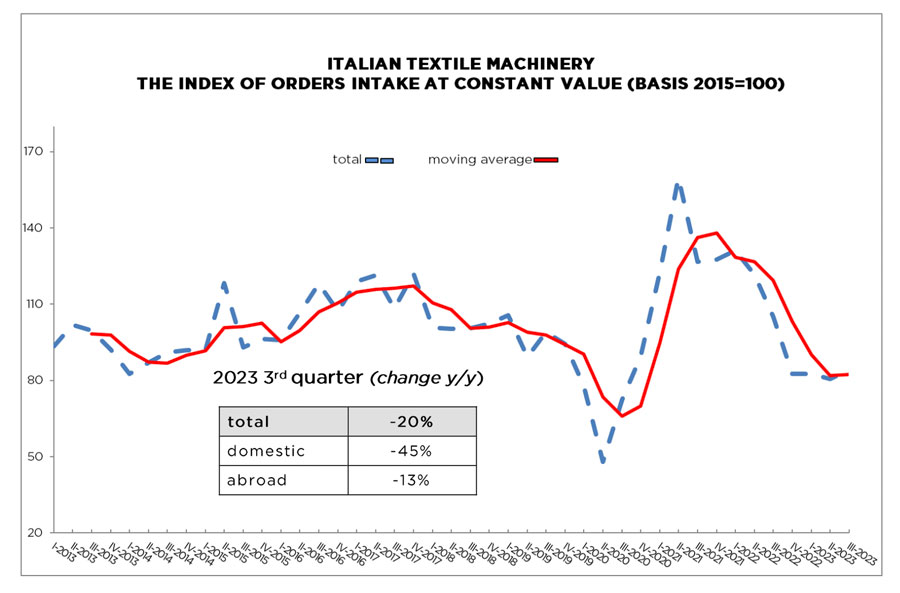
Order Intake — The decline in demand has led to a decrease in order intake for the textile industry. In May 2023, the order intake index fell to 70, which is the lowest level since 2017. This decline in order intake is a sign that the industry is facing a tough environment.
Capacity Utilization — The decline in demand has also led to a decrease in capacity utilization rates. In May 2023, the capacity utilization rate fell to 70%, which is the lowest level since 2017. This decline in capacity utilization is a sign that the industry is not operating at full capacity.
Rising labor costs — As wages in developing countries rise, textile manufacturers are facing increasing pressure to keep costs down.
Increasing competition from low-cost countries — Countries like China and India have become major textile exporters, and they are able to produce textiles at a much lower cost than developed countries.
Environmental regulations — Textile production can be a major source of pollution, and governments are increasingly imposing stricter environmental regulations.
Infrastructural bottlenecks — These bottlenecks can include inadequate roads, railways, and ports, as well as poor storage facilities. These can lead to delays in the transportation of raw materials and finished goods, which can increase costs.
Outdated machinery — Outdated machinery can be less efficient and produce lower quality textiles. This can make it difficult for Indian textile manufacturers to compete with foreign manufacturers who have more modern equipment.
Limited access to finance — This can make it difficult for SMEs to invest in new machinery and technology, which can prevent them from becoming more competitive. Additionally, limited access to finance can make it difficult for SMEs to weather economic downturns.
Changing consumer preferences — The textile industry is also facing changing consumer preferences. Consumers are increasingly demanding sustainable and ethical textiles.
Opportunities in the textile industry
The following opportunities provide a great potential for growth in the textile sector in India.
The global apparel market is expected to reach $1.9 trillion in 2025.
India offers a complete value chain solution from farm to fashion.
The Pradhan Mantri Mega Integrated Textile Region and Apparel (PM MITRA) Parks are being established across seven states of the country.
PM MITRA Parks will lead to reduction of logistic costs due to cluster-based approach of manufacturing and production of quality products with appropriate testing facilities.
India is actively considering the possibility of Comprehensive Economic Partnership Agreements (CEPAs) and Free Trade Agreements (FTAs) with various countries, these agreements will help to boost exports of Indian textiles and open up new markets for the sector.
The global apparel market is expected to grow at a CAGR of 4.3 percent from 2020 to 2025. This growth is being driven by factors such as increasing disposable income, growing urbanization, and rising demand for comfortable and stylish clothing. Global exports of MMF & MMF blended Textiles witnessed around CAGR 5 percent during last 18 years. Amongst the four segments, Made ups recorded highest CAGR 7.4 percent, followed by Yarn 4.4 percent, Fabrics 4.2 percent and MMF 3.2 percent.
India is well-positioned to capitalize on this growth as it has a strong textile manufacturing base and a large pool of skilled labor. The country is also home to a number of leading textile brands and retailers.
The PM MITRA Parks are expected to create around 1 lakh direct and 2 lakh indirect jobs per park. They will also help to reduce the logistic costs of the textile industry, making Indian textiles more competitive in the global market.
Promoting “KASTURI Cotton ” as a premium brand by enhancing international perception & valuation of Indian Cotton, Positioning it as a reliable quality product, thereby facilitating premium pricing and thereby enhancing export opportunities.
To ensure the availability of high-quality products throughout the value chain, the government has introduced Quality Control Orders (QCO) for polyester products such as Terephthalic Acid (PTA), Ethylene Glycol (MEG), and Polyester Fiber. The objective is to regulate the import of sub-standard goods and promote the manufacturing of superior products within the country.
Overall, the textile sector in India has a bright future. The opportunities mentioned provide a great potential for growth in the sector. There are some signs of improvement in the global textile industry. Order cancellations have decreased, and inventory levels are under control. In addition, the industry is expected to recover in the second half of 2023. The textile industry is a large and diverse industry with many opportunities globally. There is growing demand for sustainable textiles, personalized clothing, e-commerce, and new technologies.
These opportunities include:
Growing demand for sustainable textiles — There is a growing demand for sustainable textiles. Consumers are increasingly concerned about the environmental impact of textiles and are demanding more sustainable options.
The rise of e-commerce — The rise of e-commerce has created new opportunities for the textile industry. E-commerce allows textile manufacturers to reach a wider audience and sell their products directly to consumers.
New technologies — New technologies are also creating new opportunities for the textile industry. These technologies include 3D printing, artificial intelligence, and robotics. These technologies can be used to improve the efficiency and productivity of the textile industry.
Textile Revolution: How TTS is Changing the Game
The textile industry is facing a number of challenges, but Texcoms Textile Solutions (TTS) is helping to address them. TTS is uniquely positioned to help the textile industry overcome challenges and seize opportunities. TTS is a textile management consulting company that was founded with the goal of becoming the most dependable and trustworthy company for customers, shareholders and employees.
TTS believe that operational efficiency, with a commitment to quality, is the way forward to safeguard the value of the textile industry. TTS working across the globe for over a decade, and has helped more than 60 textile companies to realize their performance potential through sustainable shop floor implementation. TTS capabilities include:
Industry Specialists — With decades of experience, TTS consultants have earned the capability to advise the Industry and entrepreneurs.
Practical Implementation — TTS operates manufacturing facilities around the globe ensuring globally benchmarked efficiencies and profit levels.
End-to-End Solutions — TTS is unique in its ability to provide services from concept to commissioning and beyond.
Global Presence — TTS has developed an understanding of the subtleties of the industry, giving it a competitive edge.
Conclusion
The textile industry is facing a number of challenges. However, the industry also has a number of opportunities. The industry is expected to recover in the second half of 2023, but it is important to monitor the situation closely. According to the ITMF’s Global Textile Industry Survey (GTIS) conducted in the first half of July 2023, the business situation improved on average worldwide in July 2023. An increasing number of companies have adapted to the harsh business environment and are now reporting improvements. A regional analysis shows that Asia is struggling the most and South America is back in positive territory. In recent years, the industry has grown significantly, tapping into current trends while facing challenges that require strategic interventions.
By focusing on innovation, sustainability, talent, and Operational Consulting efforts, the textile industry can overcome these challenges and seize the opportunities that lie ahead. The global textile industry is facing a number of challenges. TTS is committed to helping the textile industry achieve excellence by overcoming the global competition and challenges. We believe that by working together, TTS can help the industry thrive in the years to come.
Editor’s Note: TG Sarathy is the director of India Operations at Texcoms Textile Solutions (TTS), a provider of operational consulting services to the global textile industry.
By Pierre Lanfer, Justin Kühn, Lukas Lechthaler and Thomas Gries
The potential of digitalization and sustainable production in the textile industry is still partly untapped and can be explored using the innovation space of the “SmartMill,” a fully networked spinning mill that combines digitalization and the circular economy. The innovation space serves as a model factory for interconnected textile production, enabling monitored production from fiber to yarn. The implementation of the SmartMill follows a seven-step approach, incorporating sensor technology, data analysis, and dynamic control loops. After and during the implementation the gathered data can be used to demonstrate the digitalization potential in yarn production as well as advance sustainable textile development.
Introduction
Digitalization and the production of sustainable or recycled textiles are two global megatrends that have not been focused on in the textile industry in recent decades. Here, however, the economic innovation potential of sustainable production and a circular economy for clothing and other textiles is enormous. On the one hand, the pressure to innovate is increasing for the textile industry, while on the other hand, opportunities are arising for the development and marketing of new textiles and the technologies needed to produce them. For the core spinning technologies, such as ring and rotor spinning, the state of the art is already well researched with the means of conservative mechanical engineering. Many processes are automated or monitored by sensors, although the process data from the sensors used are used in isolation and not collected to draw conclusions about the overall process.
In the following, a possibility is shown to address topics of digitalization and the circular economy in parallel by setting up the cross-process innovation space “SmartMill” and uncovering synergies. The SmartMill is a digitalized and fully networked spinning mill with spinning preparation, which is currently under development and is to be set up as a demonstrator at the Institute of Textile Technology. The Institute of Textile Technology (ITA) at RWTH Aachen University combines research along the entire textile process chain, from fiber production to the textile surface, under one roof and also has expertise in the area of digitalization. This provides excellent conditions for tapping unused potential.
Current State of the Digitalization within the Textile Industry
In order to be able to manage the earth’s raw materials sustainably, innovative and sustainable fibers must be considered as a raw material for the textile industry of the future. An alternative to cotton as a conventional natural fiber for clothing is hemp and flax, which require less water and pesticides in comparison. In addition, the use of fibers from agricultural or consumer waste offers an opportunity to reduce carbon dioxide emissions, as these fibers would otherwise only be used for the production of energy. However, the processing possibilities of these fibers differ in part from the processing of cotton to such an extent that modified or basic production technology and adapted process parameters have to be developed.
One possibility to identify suitable process parameters lies in the sensor-based monitoring of the textile process chain. Many process steps between the fiber material and the yarn are already equipped with sensors that record process properties online. For example, in the regulating draw frame, the unevenness of the sliver is recorded and used to dynamically adapt the drawing to the unevenness of the sliver. This control loop can be used to reduce the unevenness of the sliver. Likewise, each yarn produced is checked for intolerable thin and thick spots in the yarn either directly at the spinning position or during rewinding and these are automatically removed from the yarn. The sensor technology applied also detects imperfections and quantifies the non-uniformity. This gives the yarn manufacturer an overview of the quality of the yarn produced. However, the textile machines commercially available at the moment are limited to this monitoring only and neglect the potential of a cross-process analysis of the data collected anyway.
Vision for the SmartMill
Using the SmartMill innovation space, it will be demonstrated how the potential of networked textile production can be scientifically identified step by step and how ecological and economic advantages can be used. This addresses the megatrends of digitalization and sustainability simultaneously. The innovation space enables monitored production from fiber to yarn at ITA, which serves as a model factory for interconnected textile production on a laboratory scale for a quantity of a few grams to 10 kg at a time. Figure 1 shows the concept for the material, signal and information flows in the SmartMill innovation space, which can be used for cross-process analysis.
Figure 1: Concept for material, signal and information flows in the SmartMill innovation space
Within the scope of the innovation space, an infrastructure for a wide variety of research questions is generated through the digitization across machines. Two examples of current research issues that build on the implemented digitization of the machines are given below.
Possible Research Issue I: Digitalized Yarn
In current research, a distinction is made between the digital twin and the digital shadow. While the digital twin describes its physical original as accurately as possible, the digital shadow is limited to the level of detail required for the application. The core of the digital shadow lies in a reduction of the information to the essential in each case and thus in an efficient performance for a chosen application. Before the digital shadow can be designed, in the case of the SmartMill, a digital twin is created for the yarn for research purposes. This “Digital Yarn” contains all the information about the yarn recorded from the beginning to the end of the process in relation to the run length and thus enables tracking across all process stages. This means that data exists on past states and process steps as well as on the current state. With the help of this data, correlations can be made between anomalies and their past causes. It is also possible, for example, to model and simulate the future process steps and states of the yarn in the area in order to predict problems in the process and faults in the area. Data is used to create value. In the long term, this makes it possible to decide which information about the yarn is relevant, so that the digital twin of the yarn can be converted into a digital shadow.
Possible Research Issue II: Process Modelling
If a model describes a process sufficiently well, it establishes a mathematical relationship between different process variables. With the help of the correlation, predictions for output variables can then be derived by specifying input variables (e.g. sensor values). A common application of a model that describes a production process is the development of a control concept. The behaviour of the modelled system is simulated with the help of the model and the control loop is designed in this way. Another application of process models are soft sensors. Soft sensors generate values for process or product variables that cannot be measured directly using sensors. These models are used for quality control, for example in control engineering or in condition monitoring, where conclusions about wear are drawn by means of deviations between model and reality. For the pure calculation of the underlying values, the type of model is irrelevant as long as it is accurate enough. While physical models that describe the process by simple formulae or equations work most efficiently, data-driven solutions such as neural networks, on the other hand, often require greater computing capacity. Nevertheless, data-driven solutions are becoming increasingly interesting for various applications due to the constantly increasing computing power. In the scope of SmartMill, process modelling can be carried out on the basis of both physical and data-driven models. This identifies which type of model offers advantages for which application.
Approach for Implementing the SmartMill
In order to implement the complex and extensive version of SmartMill, an iterative approach is chosen, which is iterated through. The implementation is based on the Industrie 4.0 Maturity Index and the 4 stages of Smart Factory, which are combined to form a 7-stage approach to implementation.
Figure 2: Seven-step approach to implementing the SmartMill
In the first stage, the individual process parameters are digitally recorded and the necessary sensors for comprehensive data acquisition from the machines are implemented at the ITA. In the second stage, all data is compiled online in a data lake and in the third stage, their interdependencies are presented. In stage four, causal relationships behind the correlations are searched for and process models are then created from the findings. In stage five, the physical infrastructure is enabled to intervene dynamically in the process via actuators, while in stage six, models are created that enable prediction of future errors. The predictions can already be made available to the operator as an aid. Finally, the same models are used in stage seven to react to and prevent the errors with the help of the previously created dynamic control option. The realization of stage seven thus forms an intelligent factory that independently detects errors, makes decisions and actively intervenes in its processes.
Conclusion
Through a step-by-step, iterative further development of sensor technology, data storage and data processing, an innovation space is being created at the ITA with the SmartMill that demonstrates the potential of digitalization for yarn production. At the same time, developments are required in the field of sustainable textiles, which can also be addressed within the scope of the SmartMill. The innovation space of the ITA SmartMill allows the agile development of production technology and process parameters and the use of small amounts of raw materials, as data is already recorded during the processing and made usable for improving the process behavior. In this way, the transformation to sustainable textiles is shaped.
Editor’s Notes: Co-authors Pierre Lanfer and Justin Kühn are researchers, Lukas Lechthaler is head of Staple Fiber Technology, and Thomas Gries is director at the Germany-based Institut für Textiltechnik of RWTH Aachen University. The research is funded by the German Research Foundation (DFG) as part of the Excellence Strategy of the Federal Government and the Länder – EXC-2023 Internet of Production -390621612.
BRENTWOOD, Tenn. — August 17, 2023 — Tractor Supply Co., a rural lifestyle retailer in the United States, the Tractor Supply Company Foundation and Carhartt, America’s premium workwear brand, today announced the launch of the 2023 “Support the Trades” exclusive apparel collection to help advance skilled trades in the United States.
Support the Trades launched in 2021, offering exclusive branded merchandise in Tractor Supply stores and at TractorSupply.com. For this year’s third Carhartt-designed collection, the lineup has expanded to include short- and long-sleeved shirts in a variety of colors, three different ball caps and two knit hats.
For every item sold, a portion of the proceeds will be donated to SkillsUSA, a nonprofit that serves middle school, high school and college/postsecondary students preparing for careers in trade, technical and skilled service occupations. These include welders and machinists, plumbers and landscape architects, and beyond. Tractor Supply Company, the Tractor Supply Company Foundation and Carhartt each committed a $50,000 donation for a total of $150,000.
“Many of our Team Members and customers either work in the skilled trades or have deep connections to them,” said Jamie Martin, vice president, divisional merchandise manager at Tractor Supply. “Support the Trades provides financial assistance to help young people pursue these in-demand but often overlooked opportunities — jobs that are so critical to sustaining Life Out Here.”
According to a forecasting model developed by Associated Builders and Contractors, this year alone, the construction industry will need to attract an estimated 546,000 additional workers on top of the normal pace of hiring to meet the demand for labor. With only a small portion of those who do join the construction industry entering the skilled trades, the number of skilled workers is growing at a slower pace than that of construction laborers, and in some cases, declining. Nearly one in four construction workers is nearing retirement age, making the skills shortage especially concerning.
Since the start of the pandemic, there has been a renewed focus on the importance of skilled trades and the need to close the skills gap, thanks to initiatives like “Support the Trades.” In response, enrollment in construction trade programs grew 19.3 percent from 2021 to 2022, and mechanic and repair trade programs saw an enrollment increase of 11.5 percent. SkillsUSA’s fiscal year 2023 membership levels are projected to be the highest in the organization’s history.
“We are thankful to have partners like Tractor Supply and Carhartt that so firmly believe in SkillsUSA as America’s proud champion of the skilled trades. Our mission is to empower students to become skilled professionals, career-ready leaders and responsible community members,” said Chelle Travis, executive director at SkillsUSA. “There is a brighter light shining on the skilled trades today. With the ongoing support of our partners, we can help students develop the personal, workplace and technical skills to succeed at work and in life.”
SkillsUSA partners with students, teachers and industry professionals to build America’s skilled workforce. Their proven framework provides students with workplace and technical skills grounded in academics, as well as valuable industry connections. Its curriculum covers 130 job categories, creating a pipeline of talented entry-level workers. With the donations from the Support the Trades campaign, which total $300,000 to date, SkillsUSA will have the ability to expand its reach and offer its training capabilities to even more students.
“We are inspired by SkillsUSA’s mission to develop and strengthen the workforce and are proud to continue to work alongside Tractor Supply to support and attract students to the rewarding careers in the skilled trades,” said Janet Ries, vice president of marketing at Carhartt. “Carhartt has a longstanding history and commitment to hardworking people in the skilled trades and we are proud to extend our partnership to help the next generation close the skills gap, pursue their passions and build their own legacies — each and every day.”