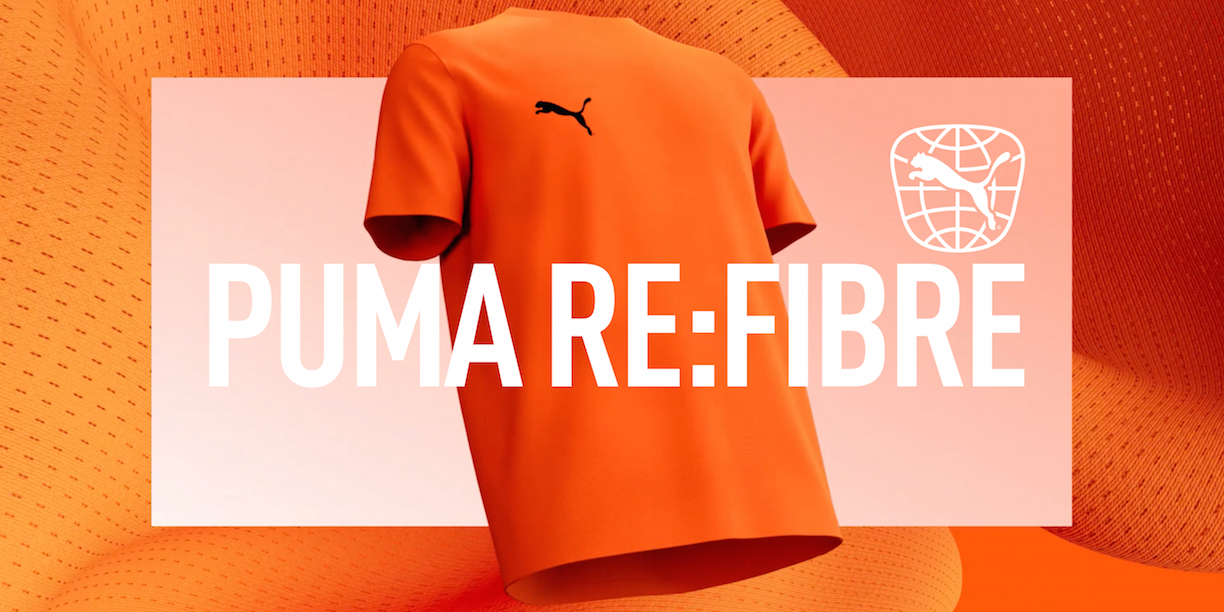
HERZOGENAURACH, Germany — December 5, 2023 — Global sports company PUMA has today announced that it has scaled up its textile recycling innovation, RE:FIBRE, replacing recycled polyester with RE:FIBRE technology in all PUMA football Club and Federation replica jerseys from 2024 onwards.
Since the launch of the pilot in 2022, which saw PUMA produce recycled training jerseys for their sponsored football clubs, RE:FIBRE technology has been used to create Switzerland and Morocco replica kits for the Women’s World Cup as well as Girona’s 2023/24 season Third kit. In 2024, official PUMA football replica jerseys* including those for the Euro and Copa América tournaments will be manufactured using RE:FIBRE recycled materials that were made of old garments and factory waste rather than only recycled plastic bottles.
Through the RE:FIBRE program, PUMA is keen to address the challenge of textile waste via a long-term solution for recycling. The technology also looks to diversify the fashion industry’s main source of recycled polyester in garments from being less reliant on clear plastic bottles.
The RE:FIBRE process uses any polyester material – from factory offcuts, faulty goods to pre-loved clothes which allows new garments to be recycled from any color textile to any colour desired.
The four-step process of RE:FIBRE sees:
Collect and Sort: Collecting and sorting textile waste and other previously wasteful materials.
Shred and Mix: Shredding and mixing the collected materials down to the minimum.
Dissolve, Filter and Polymerize: Melting down the shredded polyester and ridding them of previous dyes through a chemical recycling process.
Melt, Spin, Knit and Sew: The melting allows the newly produced polymers to become ready to be spun and sewn into shape to create good as new RE:FIBRE fabric which can be recycled again and again.
Managing waste has today become a necessity, which is why PUMA is ramping up its investment into resource-efficient manufacturing processes in a move to reduce textile waste.
“Our wish is to have 100% of product polyester coming from textile waste,” said Anne-Laure Descours, chief sourcing officer at PUMA. “Textile waste build-up in landfills is an environmental risk. Rethinking the way we produce and moving towards a more circular business model is one of the main priorities of our sustainability strategy.”
To help make the technical process of RE:FIBRE more digestible for the everyday consumer who wants to know more, PUMA has harnessed the storytelling power of Computer Generated Imagery to take viewers through the RE:FIBRE process, right down to the molecular chemistry at work. View the video here. https://about.puma.com/en/re-fibre
The video builds on the brand’s ongoing commitment to ensure PUMA’s sustainability initiatives are simplified for everyone to engage with. This comes after research conducted by PUMA found that 71% of young people felt their voices were not being heard when it comes to the environment and would like to see brands making more commitments (49%), communicating their goals better (40%) and being more transparent (34%).
As part of this commitment to communicate better, PUMA released The RE:GEN REPORTS podcast in June 2023. Making dense information in their Sustainability Report more accessible and tailored to a Gen Z audience.
PUMA’s ongoing efforts in sustainability has shown the brand improving its rankings on Corporate Knight’s Global 100 Sustainability Index from 77th to 47th, and the journey is not over. You can read further on PUMA’s sustainability targets and RE:FIBRE on foreverbetter.com.
*excluding locally replicas for Fenerbahçe SK, Shakhtar Donetsk and locally sourced kits.
CARY, NC — December 5, 2023 — INDA’s World of Wipes® (WOW) International Conference is accepting abstracts on wipes products, markets, and technologies to be presented in Minneapolis, MN, June 17-20, 2024. The deadline for abstract submissions is January 12, 2024.
Experts in dry and wet nonwoven wipes, sustainability, end-use markets, substrate formation, raw materials and fibers, liquid ingredients, packaging, machinery, and market trends and data are encouraged to submit a brief abstract. The abstracts may be submitted via the WOW website.
Topics for consideration include:
Dry and wet wipes;
Circular economy;
Sustainability / End-of-life implications;
Substrate formation;
Skin care formulations;
Raw materials;
Packaging;
Machinery and equipment;
Market trends and consumer insight;
Regulations; and
E-commerce/Retail channels.
Presenting at WOW is an opportunity to be recognized for your innovation, connect with senior-level leaders, gain potential partners and customers, and change the future of wipes.
For questions, contact Deanna Lovell, Event Coordinator, dlovell@inda.org. For more information about WOW 2024, visit https://www.worldofwipes.org/.
Posted: December 5, 2023
Source: INDA, the Association of the Nonwoven Fabrics Industry
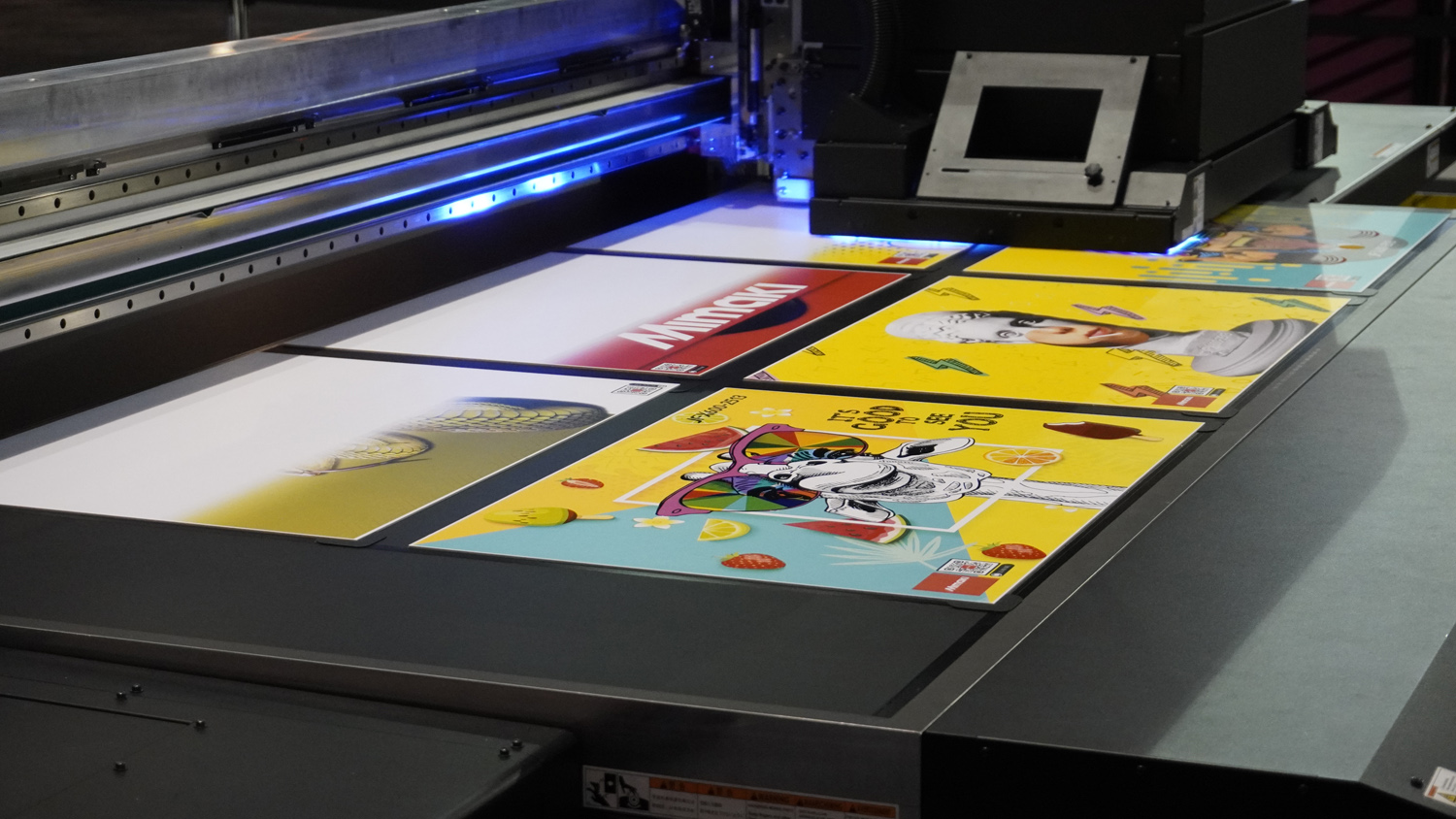
DIEMEN, the Netherlands — December 5, 2023 — In today’s competitive market, staying ahead of the curve is crucial for businesses seeking success. Here at Mimaki we are committed to create a more efficient and advanced industrial printing sector. With that in mind, we developed our latest large format LED-UV flatbed printer, the JFX600-2513, which stands out as a game-changer in this field. This cutting-edge printer combines precision, speed, and versatility, offering an array of state-of-the-art features that make it an unbeatable choice for professionals in the printing industry.
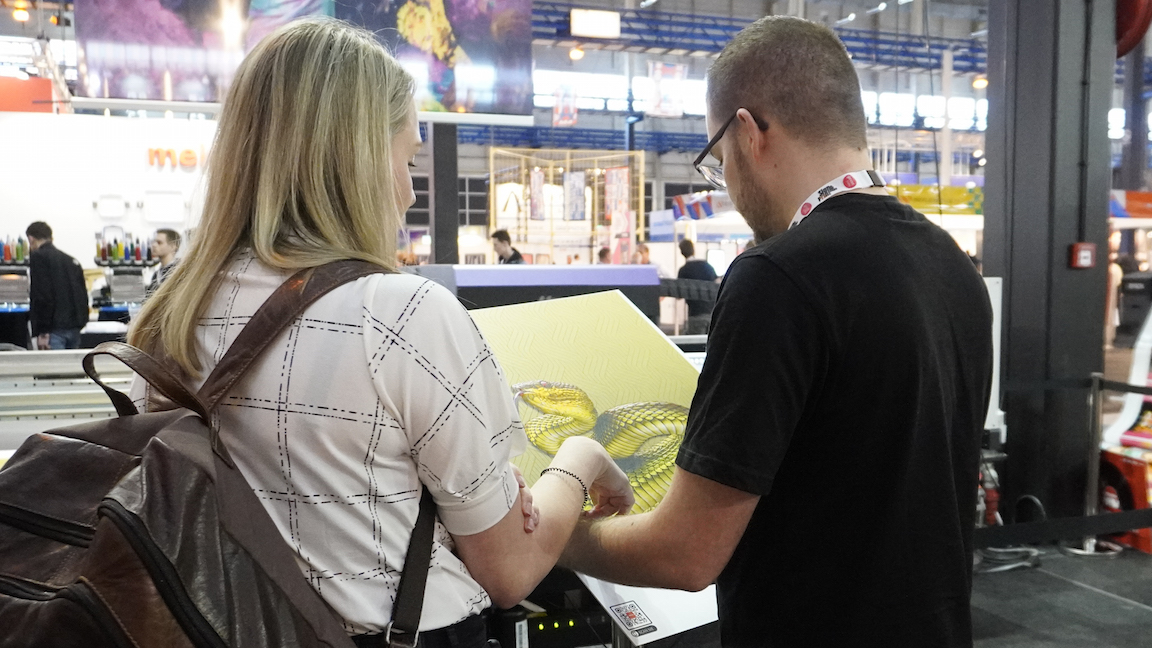
Mimaki JFX600 printing
In this blog we will explore the potential that the JFX600-2513 has to transform print shops, discussing some of its vital functions, and delving into how it can benefit our customers, positioning them for success.
Versatility
Adaptability is key, and the JFX600-2513 ensures you’re ready to take on any project that comes your way. Glass, wood, metal, from flat surfaces to textured substrates. You name it, this machine can print on it. It’s this versatility that makes Mimaki’s 7th generation LED-UV technology so beneficial for customers. Users are able to pursue creativity without limitations on a printing bed size of 2.5 x 1.3 meters, allowing for both large and small prints.
Moreover, various types of ink can be used with the JFX600-2513, including rigid and flexible, depending on the type of application you’re going for and the material being printed on. This means that materials such as glass, can have the right ink to best match with the surface texture and still provide the upmost quality. These inks can be printed with up to 17 layers, with a thickness of up to 0.5mm to allow for 2.5D textured prints, with differing effects, such as embossed and debossed.
Speed
Time is money, and we at Mimaki understand that. Developing new technologies is largely about improving efficiencies and productivity, and the JFX600-2513 does just that. Boasting higher speeds, over three times faster than its predecessor, the machine can reach printing speeds of up to 200m²/h depending on the job at hand. This is achieved with the use of 16 printheads – more than in any of our previous UV flatbed printers – ensuring quick turnaround times. Now printers can painlessly meet deadlines, satisfy customer demands, and maximize their overall efficiency.
Functionality
User-friendliness and functionality are paramount with the JFX600-2513, pre-equipped with the intuitive Mimaki Printer Controller software. This combines machine setup, printer operation and job control via a large user-friendly touch panel. From this display dashboard, customers can monitor and control settings remotely, switch effortlessly between jobs, and even be provided with important machine alerts, such as when the ink is running low. The automated maintenance features and advanced ink circulation system minimize downtime and simplify routine tasks, saving valuable time and effort.
Additionally, the interface streamlines operations, making it easy for beginners and seasoned professionals to have seamless control over job management. The printer also comes IoT ready, allowing for smooth integration into large-scale production lines.
Precision & Quality
The 16 printheads previously mentioned don’t only give the machine a hefty speed boost, but they have also improved the quality of the final print. They enable much more precise printing, with a 4-colour configuration, or 8-colour configuration for higher definition finishing. These printheads also go hand in hand with our Mimaki Advanced Pass System (MAPS4) technology, which uses algorithms to calculate the best way to inject the ink drops on the varied materials. The stunning output helps businesses to impress with a competitive edge in the market.
Sustainability
Mimaki’s commitment to environmental sustainability shines through with the JFX600-2513, as it utilizes UV-LED technology. This technology helps printers reduce energy consumption and minimise environmental impact, allowing users to reap the benefits of a greener printing solution without compromising on performance.
Potential
Many Mimaki customers have already discovered the unique applications and lucrative opportunities that our technology presents. Starglas, a Mimaki customer from Germany, have used our UV technology to master the niche of printing digitally on all things glass. In fact, 90% of the detailed and intricate products they create are completely unique. With the JFX600-2513 having an effortless and one-touch workflow, printers handling bespoke projects like this can switch between jobs and design with ease. With the additional speed and quality afforded, it’s clear to see how this will increase efficiencies all round, especially for companies looking to run larger scale operations. For customers like D-POS, who create indoor and outdoor decorations using glass, metals, woods, plastics and more, the JFX600-2513 brings significant benefits. There is no limit to the potential of their creative applications, from decorative kitchen splashguards, to detailed finishes for outdoor wooden panelling. It’s no surprise that the JFX600-2513 is a great option for any company looking to further enhance their offerings without having to sacrifice quality.
Whether you’re aiming for demanding industrial prints, unique personalization and decorations, or artistic creations, it empowers you to achieve extraordinary results. Don’t miss out on the chance to revolutionize your printing capabilities and unlock endless possibilities with the Mimaki JFX600-2513.
Posted: December 5, 2023
Source: Mustafa Okanovic, Senior Product Specialist, Mimaki Europe
PARIS — December 5, 2023 — After exploring a world where the senses are once again at the centre, Louis Gérin and Grégory Lamaud, the artistic directors of Texworld Evolution Paris, offer a more personal interpretation of this future humanity. Our wardrobes reflect our individual levels of commitment to the “truth”. Faced with the modern paradox of growth versus sustainability, each of us expresses our own vision of the world. These points of view are reflected in the four themes of this new trend book.
Creative themes imagined with AI
Based on the analysis of emerging signals detected in the artistic, economic and social fields, these approaches incorporate elements of artificial intelligence for the first time. The artistic directors have incorporated them – by identifying them – into the ‘pattern design’ boards that bring together the colours and silhouettes used for each creative universe.
Credit – Lena Ekert, @lena.ekert – Tweeter @BreathlesssAsh
#1 Belief.
This theme, which isn’t very assertive and is rather introverted, expresses itself with elegance and discretion. The colour temperatures remain calm, in the background. The colour universe is oriented towards more “conservative”, mineral shades, dominated by green and blue. The textures express matter and vibrations.
Credit – David Deweerdt – daviddeweerdt.com – @davidpeintladifference
#2 Immanence.
While this proposal remains conservative and mystical, it is more visible than the previous one. It expresses a more talkative “bohemian- chic” universe, asserting its point of view through a relatively cynical approach:
“these are the new rules of our common life. You have to live with them”. The colour range is expressive and warmer, but remains fairly classic. It is expressed more in knitwear or embroidery, materials with relief or a frosted appearance.
Credit – Pneuhaus – www.pneu.haus -@pneuhaus
#3 Knowledge.
This is all about affirming yourself. This theme, which also draws on classic sources of inspiration – nature, plants, flowers – sets out to transform them radically. The colours are strong, contrasting, in opposition, and are applied to materials that express the future, with crumpled, liquid or transparent textures.
This is the most committed theme in the field of subjective truths. “Trust only yourself. […] Don’t believe. Test […] trust no one. Learn from your own experience”. The colours are very bold: we wear them to attract attention. Acidic, sweet shades are king, as are materials that evoke urban or sporty codes: rips, shiny aspects, organic (second-skin type), but also lace and transparency.
All these worlds will be showcased in two Trend Forums: one at Texworld Paris for fabrics, the other at Apparel Sourcing Paris for finished products (a new feature in February 2024). Visitors will be able to discover looks inspired by the fabrics and products selected by the show’s art directors. There will also be new areas with samples to illustrate each of these themes: Highlights Texworld, Highlight Apparel Sourcing, Highlights Elite and Highlights Denim.
BRUSSELS — December 1, 2023 — During its first General Assembly, 18 European companies and organisations have formally joined ReHubs. They represent different segments of the circular textile value chain and share a common commitment to invest in textile recycling capacity in Europe. Additional partners are expected in the near future as ReHubs is receiving a widespread interest and companies may join at any time.
Current ReHubs partners are:
BASF
Boer Group
Coleo
Concordia Textiles
Decathlon
EURATEX
Gherzi Textil Organisation
Inditex
Indorama Ventures
Mango
PEPPER-i2
Purfi
Ratti
Recover
Refashion
Resortecs
Rester
RETEX.GREEN
TEXAID
All partners will support ReHubs Executive Director, Chris Deloof, to kick start activities in the coming months. ReHubs partners will elaborate together on further steps and activities for the forthcoming work plan and the development of the European Textile Recycling Roadmap.
Chris Deloof commented on this important step forward: “I am delighted to see such a strong group of organisations teaming up with ReHubs. They are a great example of how to establish a new circular textile value chain in Europe. We need to focus now on rolling out ReHubs investment projects and further expanding our partners and investors network.”
DUBAI — December 5, 2023 — Alpine Group — the end-to-end textile innovation and apparel manufacturing group whose brand partners include Lululemon, The North Face, Under Armour and Columbia — has today announced that it will join forces with fashion industry titans including TrusTrace, The Apparel Institute, Keel Labs, Samata Pattinson, Founder and CEO of Black Pearl and Julia Gulatee, One Young World Climate Ambassador, to host a first-of-its-kind panel at COP28 – the world’s most highly regarded gathering for climate action.
Taking place December 6 at 13.30 at the Climate Action Stage at the Sustainable Innovation Forum, “Beyond Aspirations: Taking Concrete Actions in the Fashion World” hosted by the Alpine Group, will bring fashion industry transformation to the forefront of global conversation by providing concrete, implementable strategies for fashion industry players to adopt sustainable practices.
Panellists will explore innovative technologies, green processes and next-gen materials that can drive significant reductions in carbon emissions throughout the supply chain to inspire action. Additionally, the panel will delve into the complex relationship between policy, regulation and consumer expectations amongst the growing concern of greenwashing in the fashion sector.
Clare Woodford, global director of Impact and Engagement, said: “Alpine Group recognises the pivotal role it plays in shaping the industry’s sustainable future and is committed to being at the forefront of catalyzing concrete changes across the fashion supply chain. Hosting key industry experts is not just an opportunity; it’s a collective commitment to addressing the challenges head-on and unveiling actionable solutions.
The importance of implementing concrete change across the industry cannot be overstated. Through collective and tangible actions, we have the opportunity to not only meet consumer expectations, but to redefine industry standards and pave the way to make fashion fit for the future.”
A key challenge in understanding and improving the impact of the fashion industry has been the lack of visibility into deeper tiers of the value chain, which has made it difficult to gather the validated data necessary to discover and manage ESG risk across full portfolios. However, scalable solutions do exist to enable brands and suppliers to collaborate and to facilitate funding for sustainable transformation.
“Concrete actions to improve Fashion’s impact on climate have not been thoroughly explored at COP gatherings in the past, and we’re proud to elevate this conversation to the global stage and inspire brands to take action with the methods and technologies available to them today,” said panellist Saravanan Parisutham, co-founder and COO of TrusTrace. “By bringing together key fashion industry experts, we can provide insight into how brands can turn their sustainability goals into actions with transparency and data traceability.”
Panellists include:
Moderator Clare Woodford, Global Director, Impact and Engagement, Alpine Group
Saravanan Parisutham, COO of TrusTrace
Lewis Perkins, President of the Apparel Impact Institute
Samata Pattinson, Founder and CEO, Black Pearl
Julia Gulatee, One Young World, Climate Ambassador (Fashion Pact and formerly Chanel’s policy team)
Aleks Gosiewski, Co-Founder and COO at Keel Labs
For more information, visit – https://www.cop-28.org/whats-on/climate-action-stage.
To watch the session live, visit – https://www.cop-28.org/whats-on/climate-action-stage.
LUDWIGSHAFEN, Germany— December 5, 2023 — From early 2024 onward, BASF will offer its products 1,4-butanediol (BDO) and polytetrahydrofuran (PolyTHF®) as “LowPCF” products. BASF has calculated the individual product carbon footprints (PCF) of both chemical products.1 The results were compared with assessments of market-wide average carbon footprints of the corresponding products of third parties.2 The analysis shows that due to BASF’s production setup, the PCFs of BDO and derivatives such as PolyTHF are significantly below the global average PCF of the corresponding third-party chemicals that are all produced from fossil-based raw materials.
On its journey to achieve net zero CO2 emissions by 2050, BASF is the first large chemical company to make available to its customers the individual PCFs of all its sales products. The PCF comprises the total greenhouse gas emissions that occur until the product leaves BASF’s factory gate for the customer: from the extraction of resources through manufacturing of precursors to the making of the final chemical product itself.
Various factors contributing to a low product carbon footprint
The PCF is determined by various factors. For example, energy generation in BASF’s own gas-fired combined heat and power plants generates significantly less greenhouse gas emissions compared to other conventional energy generation methods. In addition, production processes of LowPCF intermediates are characterized by high production efficiency in terms of energy and raw material consumption due to BASF’s integrated Verbund system and continuous efforts in operational excellence. Finally, LowPCF intermediates generally use oil, natural gas or Verbund by-products, but not coal, as primary raw materials. Due to its chemical properties, the use of coal generally results in a higher carbon footprint of downstream products compared to those based on natural gas or oil.
“Company CO2 emission reduction targets are playing an increasingly important role in the value chains we serve. With our LowPCF intermediates, we are supporting our customers in achieving their targets: They now have the option to consciously choose a product with a carbon footprint significantly below the global market average,” said Ketan Joshi, head of BASF’s Intermediates operating division. “By making CO2 emission data at the individual product level available to our customers, we also offer a level of transparency that is unique in the chemical industry.”
BDO and PolyTHF: Essential raw materials in many value chains
BDO is mainly used for the production of PolyTHF. BASF’s customers use PolyTHF for example to produce elastic spandex and elastane fibers that are used for a wide range of textiles such as swimsuits, sportswear and underwear, but also outerwear such as shirts and stretch jeans. The elastic fibers ensure wearing comfort in the long run, they are resistant to moisture and microbes. PolyTHF also serves as a chemical building block for the production of thermoplastic polyurethanes (TPU), which BASF customers use to make highly abrasion-resistant and elastic hoses, films and cable sheathing, primarily for the automotive industry. Other applications include thermoplastic polyetheresters, polyetheramides and cast elastomers for the manufacture of wheels, for example for skateboards and inline skates. With a total of five production plants for PolyTHF in Europe, North America and Asia Pacific, BASF is one of the world’s most important suppliers of this versatile intermediate.
BDO is also a starting material for polybutylene terephthalate (PBT), an engineering plastic that is used successfully (under the BASF trade name Ultradur®) in the automotive, electrical and electronics industries. BDO also serves as an intermediate for the production of tetrahydrofuran (THF) and N-methylpyrrolidone (NMP), whose main applications are as essential solvents in the manufacturing of pharmaceuticals and for lithium-ion battery cathodes e.g., for electrical vehicles.
Ermenegildo Zegna, Chairman and CEO of Ermenegildo Zegna Group , at the Group’s headquarters, in Milan, Italy, Wednesday, July, 12, 2023. – Francesca Volpi for Financial Times
NEW YORK CITY — December 5, 2023 — Ermenegildo Zegna N.V. today will host its second Capital Markets Day at the New York Stock Exchange where the Group will unveil the next iteration of its strategy and its updated medium-term financial objectives, including its ambitions for Tom Ford Fashion. A new chapter in Our Road To Tomorrow strategy.
Ermenegildo “Gildo” Zegna, chairman and CEO of the Zegna Group, said: “Almost two years ago, we stood in this same historic place to ring the Opening Bell and begin our life as a public company as the very first Italian luxury fashion company to be listed on the New York Stock Exchange. It was a proud moment for me, for my family, and for the entire Group — the culmination of a personal dream, and the starting point of an exciting new phase for the Group and of Our Road To Tomorrow.
Several months later, at our first Capital Markets Day held at Oasi Zegna in May 2022, we shared our medium-term financial outlook. I am pleased to say that today we are ahead of the plans we presented back then.”
He added: “Our financial performance today paints a very clear picture: we are a stronger, more thriving company than ever before — we achieved these results while strengthening our brands, and this despite the challenging geopolitical and macroeconomic conditions over the past two years.
Our goals — strategic and financial — have always been rooted in our values. Earlier this year we have added another incredible name to our portfolio: TOM FORD FASHION, which has become the third pillar of the Group. Our results so far demonstrate our ability to execute on the ZEGNA and Thom Browne strategies. This is why, as we start to execute on TOM FORD FASHION, I am confident in our ability to deliver on the objectives we are sharing today for the Group as part of our business strategy, building on the strong portfolio of our three complementary luxury brands and on the different stages in their growth cycles.”
As part of the update being provided today, the Group has set the following strategic goals and financial outlook:
At the Group level, beginning in FY 2023, the goal is to deliver over 10 percent compounded annual revenues growth (“CAGR”) in the medium term, with Adjusted EBIT CAGR of around 20 percent. This will generate significant cash surplus even while taking into consideration higher, targeted investments in marketing and capital expenditure to enhance brand desirability and drive growth.
ZEGNA expects further store productivity increases and market share gains globally, building on the strong results achieved through the successful implementation of the ZEGNA One Brand strategy and a product offering that meets the continued strong consumer demand for quiet luxury. Store productivity at ZEGNA is expected to grow by almost 50% in 2023 from the 2021 baseline, ahead of our May 2022 medium term guidance. It is projected to further increase at a ca. 10 percent CAGR in the medium term compared with 2023.
Thom Browne, building on its 20 year anniversary, expects a high teens compounded average growth in DTC revenues in the next years, with a streamlined wholesale distribution.
Tom Ford Fashion expects to grow its revenues by more than 10 percent compounded annual growth rate in the medium term2, capitalizing on the potential of the brand, whose strength today is much larger than its business, and by leveraging Group synergies to fuel its growth.
Capital Markets Day Live Stream
A live stream of the event and a copy of the presentation will be made available at ir.zegnagroup.com on Tuesday, December 5, 2023, at 8am EST / 2pm CET. An online archive of the broadcast will be available on the website after the live call and will be available for twelve months.
Non-IFRS Financial Measures
Zegna’s management monitors and evaluates operating and financial performance using several non-IFRS financial measures, among which adjusted earnings before interest and taxes (“Adjusted EBIT”) and Net Financial Indebtedness/Cash Surplus. Zegna’s management believes that these non-IFRS financial measures provide useful and relevant information regarding Zegna’s financial performance and improve the ability of management and investors to assess and compare the financial performance of Zegna with that of other companies. They also provide comparable measures that facilitate management’s ability to identify operational trends, as well as make decisions regarding future spending, resource allocations and other strategic and operational decisions. While similar measures are widely used in the industry in which Zegna operates, the financial measures that Zegna uses may not be comparable to other similarly named measures used by other companies nor are they intended to be substitutes for measures of financial performance or financial position as prepared in accordance with IFRS.
Adjusted EBIT
Adjusted EBIT is defined as profit or loss before income taxes plus financial income, financial expenses, exchange losses/(gains), result from investments accounted for using the equity method, impairments of investments accounted for using the equity method, adjusted for income and costs which are significant in nature and that management considers not reflective of underlying operating activities.
Zegna’s management uses Adjusted EBIT for internal reporting to assess performance and as part of the forecasting, budgeting and decision-making processes as it provides additional transparency regarding Zegna’s underlying operating performance. Zegna’s management believes this non-IFRS financial measure is useful because it excludes items that management believes are not indicative of Zegna’s underlying operating performance and allows management to view operating trends, perform analytical comparisons and benchmark performance between periods and among segments. Zegna’s management also believes that Adjusted EBIT is useful for investors and analysts to better understand how management assesses Zegna’s underlying operating performance on a consistent basis and to compare Zegna’s performance with that of other companies. Accordingly, management believes that Adjusted EBIT provides useful information to third party stakeholders in understanding and evaluating Zegna’s operating results.
Net Financial Indebtedness/Cash Surplus
Net Financial Indebtedness/(Cash Surplus) is defined as the sum of financial borrowings (current and non-current), derivative financial instrument liabilities, loans and certain other financial liabilities (recorded within other non-current financial liabilities in the consolidated statement of financial position), net of cash and cash equivalents, derivative financial instrument assets, securities and financial receivables (recorded within other current financial assets in the consolidated statement of financial position). Zegna’s management believes that Net Financial Indebtedness/(Cash Surplus) is useful to monitor the level of net liquidity and financial resources available to Zegna. Zegna’s management believes this non-IFRS financial measure aids management, investors and analysts to analyze Zegna’s financial position and financial resources available, and to compare Zegna’s financial position and financial resources available with that of other companies.
Capital Expenditure
Capital expenditure is defined as the sum of cash outflows that result in additions to property, plant and equipment and intangible assets.
Next Scheduled Announcement
The next scheduled announcement will be the full year 2023 preliminary revenues on January 31, 2024. To receive email alerts of the timing of future financial news releases, as well as future announcements, please register at https://ir.zegnagroup.com.
1 Starting from FY2023 pro-rated on a 12 month basis.
2 Starting from FY2023 pro-rated on a 12 months basis. The Tom Ford Fashion business is consolidated in the Zegna Group’s financial statements as of April 29, 2023, following completion of the acquisition of Tom Ford International.
MUMBAI, India — December 5, 2023 — The new partnership aims to create sustainable, biodegradable, and zero-waste solutions for the textile industry.
In a move towards sustainable textile manufacturing, Algaeing™, a front-runner in clean textile innovation, has teamed up with the global leader in man-made cellulosic fibers, Birla Cellulose. The parties have signed an agreement to develop and introduce a unique, algae-powered cellulosic fiber that is environmentally friendly and offers multiple benefits to the end-user.
Commenting on this collaboration, Dr. Aspi Patel, the chief technology officer of the Aditya Birla Group and Birla Cellulose, said: “This developmental collaboration with Algaeing aligns well with Birla Cellulose’s focus on offering more sustainable fibers to consumers. We are keen to develop and scale this innovative new cellulosic fiber in collaboration with Algaeing”.
Harnessing the vibrancy of nature, this unique fiber redefines the textile manufacturing process. Infused with algae’s rich and varied hues, it offers a palette of naturally occurring colors, eliminating the need for traditional dyeing processes.
This innovation aims to bring a variety of dyeless garments to the market while significantly reducing the environmental impact associated with conventional dyeing processes. By streamlining production and embracing the inherent beauty of algae, we present an innovative solution that is both visually appealing and ecologically responsible.
The fiber offers additional advantages, such as toxin-free production and enhanced first-of-its-kind user benefits stemming from the rich nutrients, minerals, antioxidants and botanical properties inherent in the algae added to the fiber.
Renana Krebs, co-founder and CEO, Algaeing, said “Our collaboration with Birla Cellulose marks a significant milestone in our joint mission to detoxify the textile industry and promote sustainable innovation. Joining hands with a global leader like Birla Cellulose amplifies our impact, allowing us to bring affordable, superior products to consumers and branch into new industries. Together, we are carving a path for a brighter future, where fashion and sustainability seamlessly converge.״
Posted: December 5, 2023
Source: Birla Cellulose, the pulp and fibre business of the Aditya Birla Group
NOIDA, India — December 5, 2023 — Ginni Filaments Ltd., a listed company manufacturing traditional and technical textiles, has divested its spinning, knitting and processing unit to consolidate financial standing.
Board of Directors of Ginni Filaments approved in its meeting, held on December 1, 2023, the transfer of its entire spinning, knitting and processing undertaking located at Chhata, Distt. Mathura (U.P.) to M/s. RSWM Ltd., a listed company having its presence, interalia, in textiles, on slump sale basis on a consideration of Rs. 160 Crores.
Ginni Filaments is engaged in the manufacturing of traditional textiles comprising of yarn, fabric and garments and technical textiles comprising of nonwovens and consumer products. RSMW is one the largest and well-established manufacturers of textile products. It is positioned to infuse capital and strengthen its position in this segment. The employees of the various units of Ginni will be secure and have future growth prospects.
Shishir Jaipuria, chairman and managing director of Ginni Filaments, said: “The transfer of the spinning, knitting and processing undertaking would strengthen the financial position of the company since traditional textile business continues to suffer on account of adverse global geopolitical situation. Ginni wants to focus on technical textile where it has a leadership position.”
Saket Jaipuria, executive director of Ginni, says that the company has been producing technical textile products for hygiene and medical applications and has a strong customer base. It has also started manufacturing cosmetic products and is seeing substantial growth on this front. It wants to strategically focus on this new emerging segment and is exploring several exciting opportunities. The slump sale process is expected to be completed in three months’ time.
“We would like to express our gratitude to all the stakeholders for their trust and look forward to our shared success in future,” Jaipuria said.

 HERZOGENAURACH, Germany — December 5, 2023 — Global sports company PUMA has today announced that it has scaled up its textile recycling innovation, RE:FIBRE, replacing recycled polyester with RE:FIBRE technology in all PUMA football Club and Federation replica jerseys from 2024 onwards.