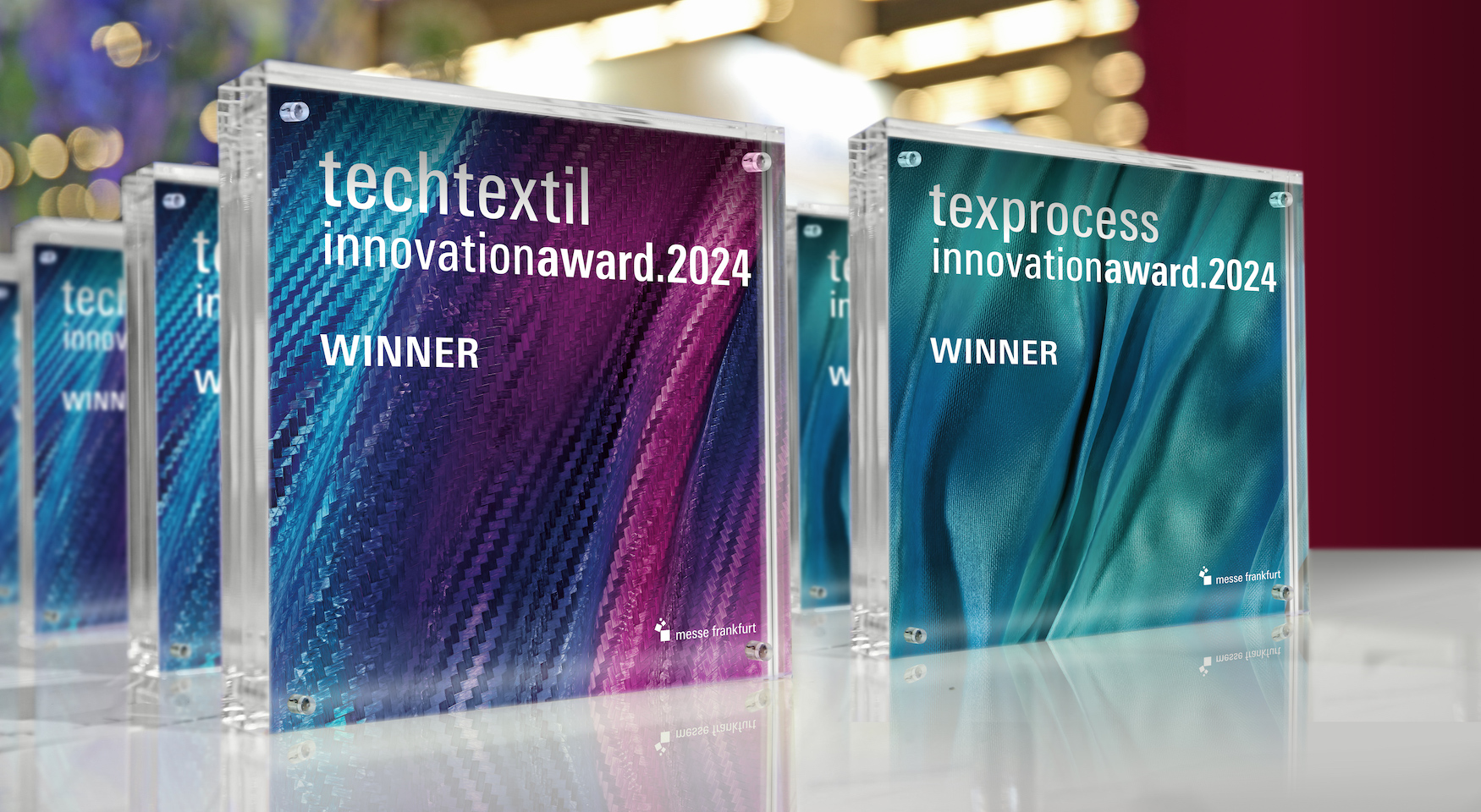
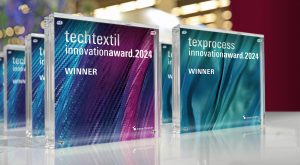
 FRANKFURT AM MAIN, Germany — April 16, 2024 — The winners of this year’s Innovation Awards given by the leading international trade fairs, Techtextil and Texprocess, have been chosen. A total of 15 winners in eight categories receive the coveted awards for their pioneering research, new products, processes or technologies. The award-winning innovations show clearly that textile solutions are vital driving forces for future developments in numerous branches of industry, such as aviation, automotive, medicine and construction.
How can temperature increases due to climate change be mitigated in cities? How can aeroplanes be recycled more effectively? What helps in the fight against septicaemia? How can CO2 emissions be reduced in the construction and building sector? How can the circularity of textiles be improved? Answers to these and other urgent questions regarding the future are offered by the winners of the Techtextil and Texprocess Innovation Awards.
“Innovations in the textile industry enable completely new solutions for innumerable applications. New materials, processes and products are boosting the future of the sectors. What was inconceivable yesterday is possible today – thanks to smart minds in the textile industry. Accordingly, we are really pleased to honour the best ideas with the Techtextil and Texprocess Innovation Awards,” said Sabine Scharrer, director, Brand Management Technical Textiles & Textile Processing, Messe Frankfurt.
Techtextil Innovation Award winners
Improving aircraft recycling
Lighter than many metals and flexible in design: fiber composites have become an integral part of modern aviation and aerospace. The textile-reinforced lightweight materials, usually a mixture of glass or carbon fibers and synthetic resin, reduce the weight of aircraft — and thus fuel consumption — to such an extent that some modern aircraft now consist of more than 50 per cent of them. This raises the increasingly urgent question of how to recycle these composite materials. The Belgian textile research institute Centexbel receives the Techtextil Innovation Award in the ‘New Approaches on Sustainability & Circular Economy’ category for a new process designed to improve the recycling of aircraft parts made from thermoplastic fibre composites in the future. The award-winning process, the development of which according to Centexbel was closely followed-up by Airbus, utilizes induction heat. It can be used to heat welded thermoplastic, textile-reinforced composite materials and then separate them from each other. Stringers, parts of wings and other textile-based aircraft parts should be easier to separate and reuse in future. “The Techtextil Innovation Award motivates us to continue working on projects to improve sustainability in various industries such as the aerospace industry,” says Myriam Vanneste, R&D manager Textile Functionalisation & Surface Modification at Centexbel-VKC.
Smart roof
The Techtextil Innovation Award in the ‘New Product’ category goes to the Portuguese Technological Center for the Textile and Clothing Sector, CITEVE, for an intelligent, textile-reinforced waterproofing system for flat roofs. The “Smart Roofs System” (SRS) consists of a thermally reflective, water-based liquid sealing membrane and an intelligent textile reinforcement structure made from a jacquard fabric of recycled polyester. This contains electronic yarns which react to heat, temperature and moisture. According to CITEVE, the innovative system offers better technical performance and is more sustainable than previous solutions for liquid membranes. “Being honoured with an Innovation Award from Techtextil, the leading international trade fair for technical textiles and nonwovens shows, that our innovation is among the best in the world at a top level. It is a great recognition for CITEVE, the other SRS partners and Portugal,” says Augusta Silva, Innovation Manager of Textile Printing and Coating at CITEVE.
Three winners in the ‘New Technology’ category:
Self-cooling textiles to combat the effects of climate change
A new type of coating for self-cooling textiles developed by the German Institutes of Textile and Fiber Research Denkendorf (DITF) has received a Techtextil Innovation Award in the ‘New Technology’ category. Unlike sunshades or awnings, which only block the sun’s rays indirectly, the coating enables textiles to actively cool themselves. To this end, it not only reflects sunlight, but also re-emits heat energy. “Our tests show that this allows textiles to be cooled to below the ambient temperature,” says Cigdem Kaya, Team Lead Barrier Textiles at the DITF’s Competence Center Textile Chemistry, Environment & Energy. Kaya explains that the development of the coating is also taking place against the background of rising temperatures caused by climate change. According to Kaya, the demand for energy for cooling in cities rose by 23 per cent between 1970 and 2010. Until now, fans and air-conditioning systems have been the main means of cooling. However, they consume a lot of electricity and, as far back as 2018, the International Energy Agency (IEA) estimated that air-conditioning systems and fans account for around ten per cent of global electricity demand. According to the IEA, air-conditioning systems could be the second largest driver of global energy demand after industry by 2050[1]. “Textiles that actively cool and do not require electricity could become a real alternative on building façades and roofs,” says Kaya.
Better protection against sepsis pathogens
Also known as blood poisoning, septicaemia is responsible for one in five deaths worldwide, as figures show. The cause of the infection are often microorganisms such as bacteria, fungi or viruses, which can be found in hospital linen and enter the body via wounds. The German company Heraeus Precious Metals receives a Techtextil Innovation Award in the ‘New Technology’ category for a new antimicrobial technology designed to better protect hospital patients from infections caused by septicaemia pathogens. This involves a precious metal-based additive called AGXX. Thus, tomorrow’s clothing and bed linen in hospitals and care facilities can be expected to have better antimicrobial properties than current solutions. And this is how it works: incorporated into textiles, AGXX triggers a catalytic reaction through the interaction of two precious metals, silver and ruthenium. In turn, this reaction generates reactive oxygen, which effectively kills microorganisms. According to Heraeus, the antimicrobial efficacy of the award-winning new development has so far been proven to be effective against 130 different microorganisms and have been shown to remain in the textiles after as many as 100 washes.
Smart textile pump keeps garments dry
Comfort is one of the most important aspects of clothing. It suffers quickly when a garment gets wet, for example through perspiration. The Swedish company LunaMicro has developed an intelligent moisture management technology to remove this from shirts and jackets while they are being worn. Their technology is a multi-layered, porous textile that is connected to a small battery. Integrated into an item of clothing, this smart textile pump actively transports liquids such as sweat from the inside of the garment to the outside, keeping the wearer dry. The company was awarded a Techtextil Innovation Award in the ‘New Technology’ category for the electro-osmotic textile pump patented in Sweden and the USA. The innovation will soon be used in outdoor and protective workwear as well as in personal protective equipment (PPE). Nate Robinson, founder and CEO of LunaMicro explains: “The Techtextil Innovation Award is recognition of our innovative work. The award raises our profile and opens up new development and growth opportunities for us.”
Two winners in the ‘New Concept’ category:
Sustainable building: Up to 30 percent less concrete used
Currently, the construction and building sector is responsible for around 40 per cent of global CO2 emissions. Huge amounts of CO2 are released, particularly during the production of concrete, one of the most important building materials. The Institute of Textile Machinery and High Performance Material Technology (ITM) and the Institute of Concrete Structures (IMB) at the TUD Dresden University of Technology have received one of two Techtextil Innovation Awards in the ‘New Concept’ category for a new process that uses carbon to manufacture precast concrete elements and promises to save up to a third of concrete. The idea: to save material, hollow core slabs are used in new buildings. These are precast concrete elements which, in contrast to solid steel reinforced concrete slabs, contain cavities and therefore require less concrete. With the new manufacturing process, which the institutes have developed with companies from the textile and construction industries, precast hollow core slab elements can be produced with carbon fibre, which should save even more concrete and therefore CO2 in the future. “Hollow core slabs made from carbon concrete using our new process require 28 percent less concrete than conventional steel-reinforced concrete hollow-core slabs – with the same load-bearing capacity,” says ITM research group leader Lars Hahn. With the award-winning process, it should soon be possible to build private and industrial buildings in a more sustainable and resource-saving way than before.
Vegan leather made from hemp waste
Biotech start-up Revoltech is also honoured with a Techtextil Innovation Award in the ‘New Concept’ category. The young German company receives the award for its vegan, fully recyclable leather substitute made from hemp fibres called ‘LOVR’ (an acronym for “leather-like, plastic-free, vegan, residue-based”). According to Revoltech, LOVR is the “world’s first truly circular leather substitute.” Vegan leather alternatives, explains Lucas Fuhrmann, co-founder and CEO of Revoltech, have often had two problems to date: either they are not purely plant-based because they contain petroleum-based components, or they are grown in laboratories and are therefore difficult to scale. LOVR, on the other hand, combines scalability and 100 percent compostability: “It is a truly circular material that will fundamentally change the market for traditional leather and artificial leather,” believes Fuhrmann. The hemp waste used for LOVR comes from industrial hemp cultivation. According to Revoltech, the award-winning leather substitute is already being used for shoes and in a concept car from car maker KIA. Moreover, it will soon be used in upholstered furniture, car interiors and clothing to ensure greater sustainability. “The Techtextil Innovation Award is a particular honour and is a great incentive for us to continue our pioneering work in the field of sustainable textiles,” says Fuhrmann.
Two winners in the ‘New Technologies on Sustainability & Recycling’ category
More sustainable bonding of fibres into 3D shapes
In the ‘New Technologies on Sustainability & Recycling’ category, a Techtextil Innovation Award goes to Norafin Industries from Germany. The award honours the new ‘Hydro-Shape’ process, which uses high-pressure water jets to bond fibres into a 3D shape. “Instead of just creating textile fabrics, the new process can be used to produce three-dimensional structures in a single stage, from the fibre to the end product. Energy and material are only used where they are really needed,” says Marc Jolly, Head of Research and Development at Norafin. The result is a 3D textile product that not only breaks new ground in terms of waste reduction but can also be made from biodegradable natural fibres. According to Jolly, the technology was also developed against the backdrop of the Single-Use Plastics Directive, an EU regulation aimed at combating single-use plastics, which came into force in 2021. Norafin will present the award-winning joining process to the public for the first time at Techtextil.
Organic insulation textiles instead of synthetic insulation materials
Good thermal insulation of buildings is important for climate protection because it reduces energy consumption and, therefore, the amount of heating energy required. Insulation materials such as polyurethane or polystyrene insulate well but also include fossil raw materials. To replace such synthetic materials and insulate more sustainably in the future, the German start-up SA-Dynamics joined forces with industrial partners to develop recyclable insulating textiles made from bio-based Aerogel fibres. For this, the company has been honoured with the second Techtextil Innovation Award in the ‘New Technologies on Sustainability & Recycling’ category. Maximilian Mohr, Chief Technical Officer (CTO) at SA-Dynamics says, “Society and industry are facing one of the greatest challenges since industrialisation: the sustainability transformation.” The EU and governments of many countries are focusing more and more on regulatory measures for greater climate and environmental protection when it comes to building insulation, explains Mohr. The new insulating textiles made from Aerogel fibres, which consist of over 90 percent air and can be processed on textile machines, will even outperform synthetic insulating materials in terms of their protective effect. As Mohr says, “We aim to revolutionise the world of construction.”
Texprocess Innovation Award winners
“World novelty for decorative and ornamental seams”
The Texprocess Innovation Award in the category ‘Innovation for quality improvement’ goes to industrial sewing machine manufacturer Dürkopp Adler from Germany for a CNC sewing automat with rotating sewing kinematics for medium heavy industrial sewing applications. According to the company, the new CNC ‘911Revolve’ sewing automat is a “World novelty for decorative and ornamental seams.” Moreover, “It is the first CNC system of its kind that permits perfect sewing in all directions,” adds Sebastian Kinnius, Head of Product Management and Marketing at Dürkopp Adler. In future, automotive suppliers, manufacturers of high-quality leather goods and technical textiles, for example, will be able to sew car seats and interiors, airbags, medical bandages, filters and handbags with greater precision and quality. For Kinnius, the new sewing automat is also a step towards greater sustainability because, depending on the application, the 911Revolve eliminates the need for additional machines in the production process, which improves resource efficiency and saves energy. “We are proud that our new development has been honoured with this year’s Texprocess Innovation Award, because it shows once again that our investments in research and development are paying off,” says Kinnius. Dürkopp Adler is planning to officially launch the 911Revolve at this year’s Texprocess.
The three winners in the ‘Economic Quality’ category are:
Innovative sewing machine
One of three Texprocess Innovation Awards in the category ‘Economic Quality’ goes to Juki Central Europe for its innovative industrial sewing machine ‘DDL-10000DX‘. While sewing processes in garment production, particularly regarding three-dimensional sewing, were previously dependent on the handling skills of individual operators, Juki explains, that anyone can now master sewing with the award-winning new development. This is achieved through the use of a special conveyor belt, which is designed to support the operating personnel in handling the machine. It is set to facilitate the feeding of the fabric for all types of materials and patterns to the extent that the operator no longer has to handle it manually. According to Juki, DDL-10000DX is a “world novelty in the sewing machine industry”.
Automated sewing
While the textile industry is already largely digitalising and automating design, printing and cutting, one of the most important production steps is still completely manual or at most semi-automatic: sewing. In the ‘Economic Quality’ category, a Texprocess Innovation Award goes to the Danish company Mikkelsen Innovation for ‘FastSewn’ – a patented technology that enables digitally controlled automatic sewing and cutting from rolls without pre-cutting on a single platform. Frames and templates no longer have to be loaded and off-loaded manually. With FastSewn, two-dimensional textile products like industrial filters or custom pillows are automatically transported to a flatbed sewing system, which is designed to enable the joining of any contours – even complex ones. „The system is also able to laser cut the sewn patterns at the same time further reducing handling,“ says Steve Aranoff, Business Development Director at Mikkelsen Innovation. According to Aranoff, FastSewn is initially targeting the production of airbags, car seats and sewn furniture parts. The company plans to present the award-winning innovation in full size for the first time at Texprocess.
Greater sustainability in the textile-care sector
VEIT from Germany also receives a Texprocess Innovation Award in the ‘Economic Quality’ category for its patented ‘CF20 DesFin’ compact finisher, which is designed to eliminate odours, mould, stains and pathogens from garments without the use of chemicals. It has been developed by VEIT, manufacturer of ironing boards, fusing and laminating machines, in cooperation with the German wfk – Cleaning Technology Institute. In future, the company expects it to be used in clothing logistics, by online retailers, laundries and dry cleaners. “Clothing from returns or goods transported over long distances by ship can be disinfected, deodorised and ironed at the same time without chemicals using the new compact finisher,” says Christopher Veit, Managing Director of the company of the same name, which counts Hugo Boss and Zara among its customers. According to VEIT, the award-winning ‘DesFin’ technology will be presented to a broad international audience of trade visitors for the first time at this year’s Texprocess.
Two winners in the ‘Digitalisation + AI’ category:
Improving textile recycling with AI
Less than 1 per cent of used garments are reprocessed into new clothing. Recycling is complicated by the fact that garments often contain parts such as zips, buttons, labels or elastic bands. Removing them requires a thorough sorting process, often still carried out by hand today. In order to increase the textile recycling rate in future, the Belgian company Valvan has now developed a machine that automatically recognises and removes non-textile parts from old garments. The company received one of two awards in the ‘Digitalisation + AI’ category. “The award is a great recognition of our work in the field of the textile circular economy,” says Jean-François Gryspeert, Sales & Business Developer at Valvan. How the idea for Trimclean came about is quite curious: the inspiration apparently came from quality control in the production of Belgian fries. “We asked ourselves whether a technology that sorts out faulty fries would not also be able to recognise non-textile parts in textiles,” says Gryspeert. According to him, the sorting software used also benefits from recent advances in the field of artificial intelligence (AI): “We use AI in combination with a special camera to better separate fabric parts from non-textile parts.” This works so well that, unlike other solutions, Trimclean can even remove patches, seams and prints. “The AI technology making Trimclean possible did not even exist a few years ago,” says Gryspeert.
New measurement method for better-fitting bras
The second Texprocess Innovation Award in the ‘Digitalisation + AI’ category goes to the Institute of Textile Machinery and High-Performance Material Technology (ITM) and the Chair of Development and Assembly of Textile Products at TUD Dresden University of Technology for a new evaluation method for body scans using 4D scanning technology. The award-winning process is designed to make it possible to measure soft body parts such as the female breast in motion and not, as is the case with many 3D body scanners, only when the person is stationary. According to ITM, this allows the creation of dynamic 4D body scans that are much more accurate and can also be compared digitally. In future, clothing manufacturers could use 4D body data such as this to develop, among others, more individualised bras with improved wearing comfort, as well as saving time and costs during product development.
The Techtextil Innovation Awards jury:
- Eng. António Braz Costa, Technological Centre for the Textile and Clothing Industry of Portugal (CITEVE), Portugal
- Johannes Diebel, Forschungskuratorium Textil e.V. (FKT), Deutschland
- Dr. Heike Illing-Günther, Saxon Textile Research Institute e.V., Germany
- Dr. Jan Laperre, Centexbel, Belgium
- Prof. Dr. René Rossi, Swiss Federal Laboratories for Materials Science and Technology (EMPA), Switzerland
- Dr. Thomas Stegmaier, German Institutes of Textile and Fiber Research (DITF), Germany
- Prof. Dr. Henry Yi Li, The University of Manchester, Great Britain
Texprocess Innovation Awards jury:
- Alexander Artschwager, German Institutes of Textile and Fiber Research; Center of Management Research Digital Engineering, Germany
- Jürgen Brecht, HAUBER-GRUPPE FERD. HAUBER GmbH, Germany
- Prof. Dr. Thomas Gries, RWTH Aachen University; Institut für Textiltechnik, Germany
- Prof. Dr.-Ing. habil. Yordan Kyosev, Institute of Textile Machinery and High Performance Material Technology, TUD Dresden University of Technology, Germany
- Claudia van Bonn, dfv media group, Textile Technology, Germany
- Walter Wählt, adidas AG, Germany
- Prof. Dr.-Ing. Kerstin Zöll, Department of Textile- and Clothing Technology, Hochschule Niederrhein University of Applied Sciences, Germany
All winners and award categories at a glance:
| |
|
|
|
| Unternehmen
|
Projektname
|
Award-Kategorie
|
Techtextil/
Texprocess
|
| Centexbel-VKC |
Debonding of welded thermoplastic textile reinforced composites by induction heating |
New Approaches on Sustainability & Circular Economy
|
Techtextil |
| CITEVE (project coordinator) and project partners Saint-Gobain (project leader), Têxteis Penedo, CeNTI and iTecons |
Smart Roofs System (SRS) |
New Product |
Techtextil |
| DITF Denkendorf |
Self-cooling textiles – energy-free method using radiative cooling technology |
New Technology
|
Techtextil |
| Heraeus Precious Metals GmbH & Co. KG |
AGXX – The innovative antimicrobial technology |
New Technology
|
Techtextil |
| TUD Dresden University of Technology,
Institute of Textile Machinery and High Performance Material Technology (ITM) |
3D textile lattice girder for sustainable production of lightweight carbon concrete precast elements |
New Concept
|
Techtextil |
| LunaMicro |
LunaMicro’s active moisture-pumping textile |
New Technology |
Techtextil |
| Norafin Industries (Germany) GmbH |
Hydro-shape – 3-dimensional textile structures formed from water |
New Technologies on Sustainability & Recycling
|
Techtextil |
| Revoltech GmbH |
LOVR™ |
New Concept |
Techtextil |
| SA-Dynamics (Startup at the Institut für Textiltechnik,RWTH Aachen University) |
High performance insulation textiles made from cellulose aerogel fibres |
New Technologies on Sustainability & Recycling |
Techtextil |
| Dürkopp Adler GmbH |
DÜRKOPP ADLER 911 Revolve – Perfection in every stitch |
Innovation for quality improvement |
Texprocess |
| TUD Dresden University of Technology,
Institute of Textile Machinery and High Performance Material Technology (ITM) |
Standardizing Movement Patterns to Compare Textile-Soft Body Interactions |
Digitalisation + AI
|
Texprocess |
| Juki Central Europe Sp. z o.o. |
DDL-10000DX – World’s first machine with Feed belt |
Economic Quality |
Texprocess |
| Mikkelsen Innovation ApS |
FASTSEWN – Innovative Sewing & Cutting Automation |
Economic Quality |
Texprocess |
| Valvan |
Trimclean |
Digitalisation + AI |
Texprocess |
| Veit GmbH |
Compact Finisher CF20 DesFin |
Economic Quality |
Texprocess |
About the Techtextil and Texprocess Innovation Awards
The Techtextil and Texprocess Innovation Awards are given in recognition of outstanding research results, products, materials, solutions and technologies from the international textile manufacturing and textile processing industry and will be presented for the 17th time this year. The winners are selected by juries of internationally renowned experts. In the industry, the awards are considered to be important indicators of relevant trends in the global textile industry and reflect the innovative strength of the sectors.
Presentation of the Techtextil and Texprocess Innovation Awards on 23 April 2024
The awards ceremony will take place on 23 April 2024 at 12.30 pm in the Texprocess Forum in Hall 9.0. The award-winning exhibits can be seen in Hall 9.1 up to and including 26 April 2024. Guided tours to the stands of the winners of the Texprocess Innovation Awards will be offered by members of the jury on 23 and 24 April.
The events Techtextil and Texprocess will be held from 23 to 26 April 2024.
Posted: April 16, 2024
Source: Messe Frankfurt Exhibition GmbH

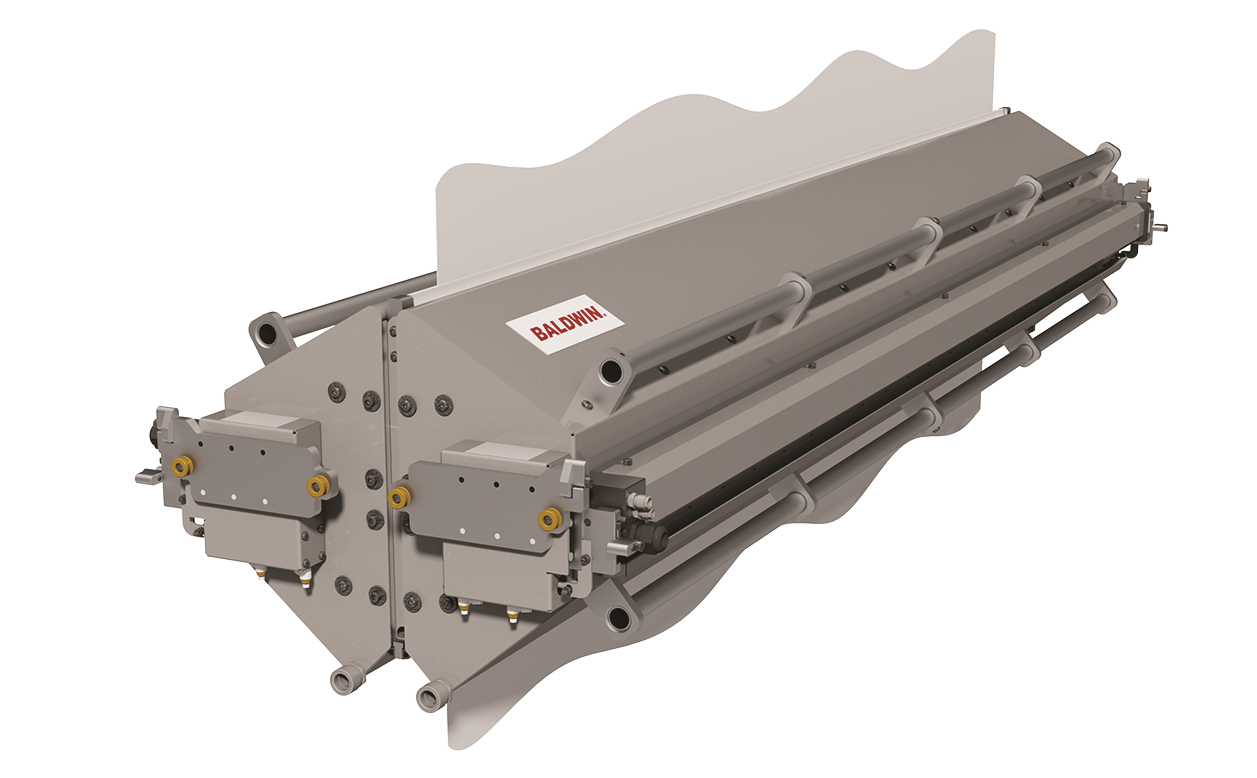
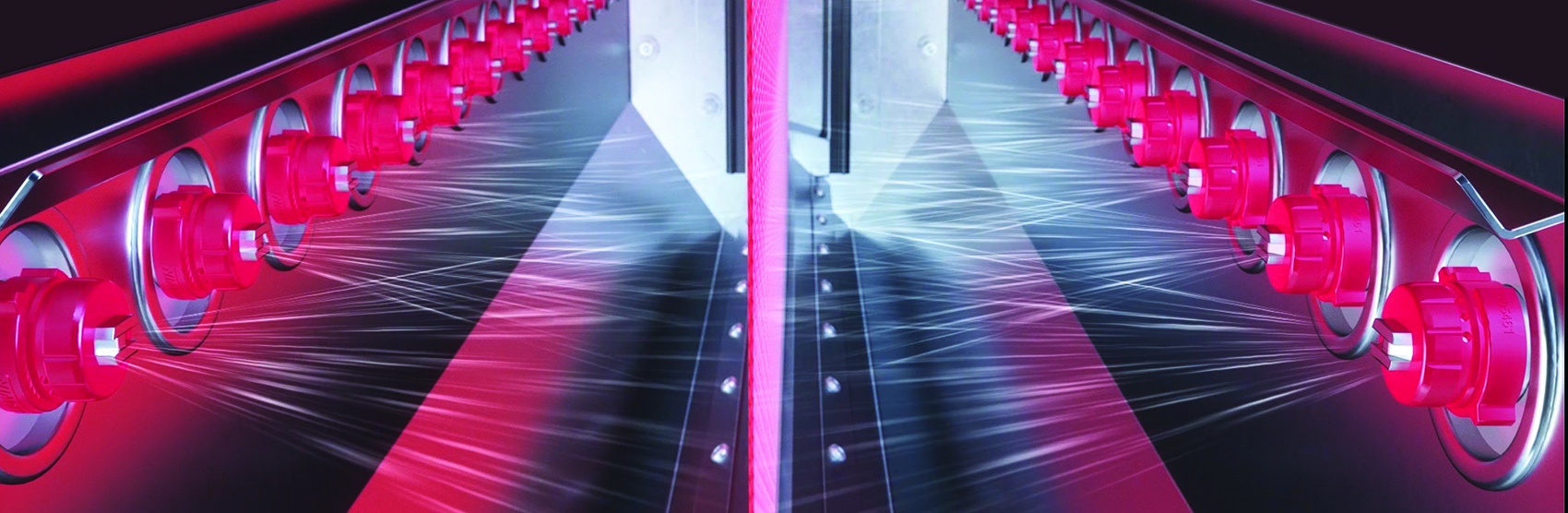 “[TexCoat] allows us to have full control over where we spray the chemicals, and allows us to save money in the process” stated James McKenzie, Graniteville Maintenance and Facilities manager. “With the machine in production, it is a rocketship compared to a rock.”